
Almost every household has its own tried-and-true method for cooking rice. Some people pour water “two fingers above the grain”—a trick that worked for grandmothers and is presumed to work today. Others recall a formula of one cup of rice to one and a half cups of water. Many simply boil the grains until they are soft, drain the excess, and never give it a second thought. Sometimes, these methods yield acceptable results.
The problem arises when the type of rice changes. Yesterday’s long-grain rice might have produced a decent, fluffy side dish. Today’s jasmine rice turns out softer and moister, with grains sticking together. Tomorrow’s short-grain rice might resemble porridge rather than individual grains. Throw basmati, brown rice, parboiled varieties, wild rice blends, or Spanish bomba for paella into the mix, and the universal formula completely falls apart.
Different grains absorb water, release starch, and hold their shape in their own unique ways. Achieving fluffy rice is not about a “secret technique,” but rather understanding the properties of a specific variety.
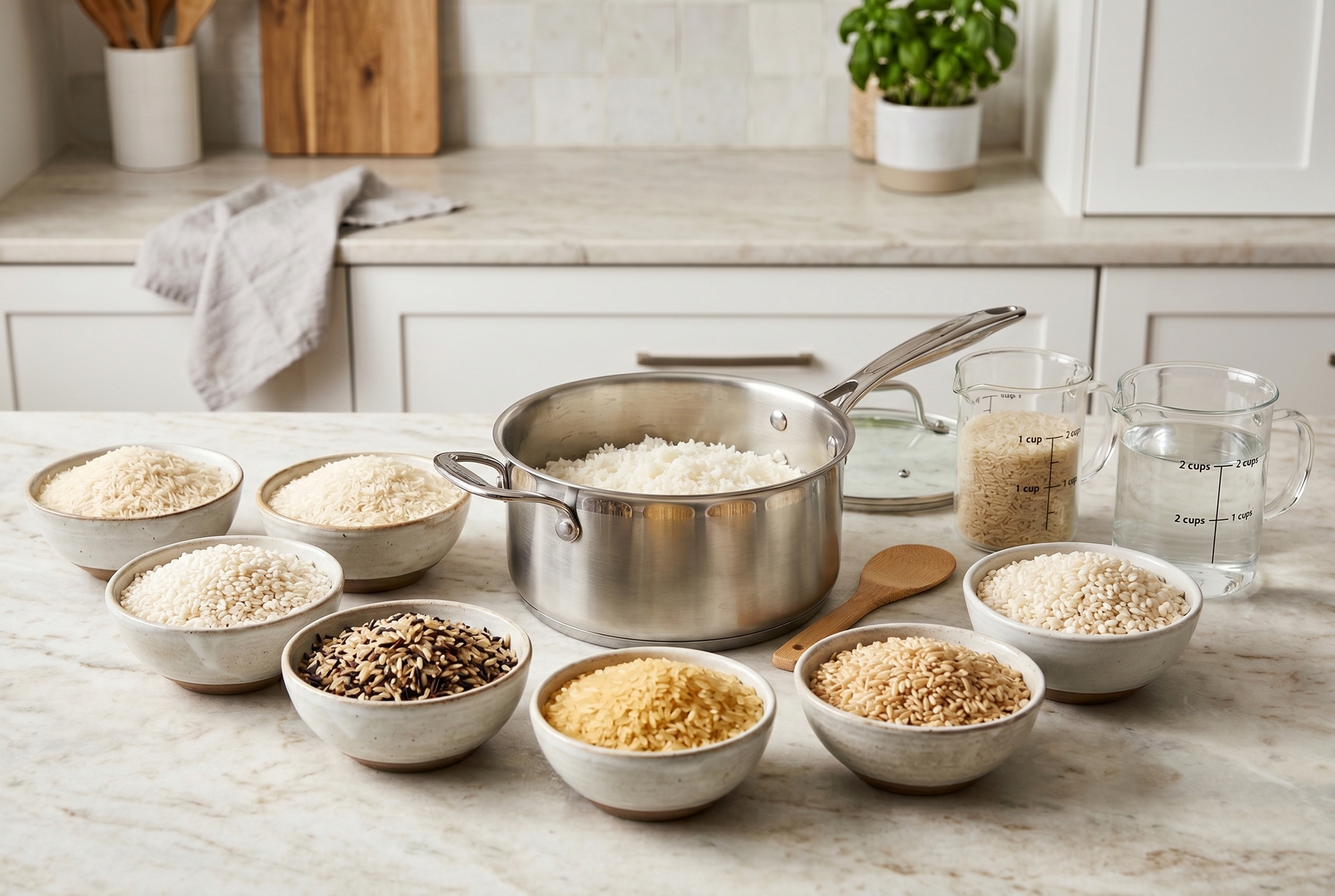
Preparation for cooking: choosing the right rice variety and accurately measuring the water-to-grain ratio is the first step toward a perfect side dish.
Table of Contents
- Why Some Rice Fluffs and Other Rice Clumps
- What to Know Before Measuring Water
- Rice for Different Tasks: Side Dishes, Pilaf, Risotto, Paella, and Fried Rice
- Rice to Water Ratios: How Much Liquid Different Varieties Need
- Cooking Table: Exact Water Proportions per 1 Cup of Rice
- Step-by-Step Method: How to Cook Fluffy Rice in a Pot
- Why Rice Clumps or Burns: Troubleshooting Errors
- How to Adjust Proportions for Your Own Pot
- The Secret to Consistent Results
- A Quick Cheat Sheet When the Table Is Out of Reach
Why Some Rice Fluffs and Other Rice Clumps
A grain’s behavior on the stove depends on its variety, starch ratio, and processing.
Many long-grain varieties, especially basmati, naturally contain more amylose. This type of rice remains dry, firm, and separated into distinct grains after cooking. Jasmine is also a long-grain rice, but it is softer and slightly more sticky, which is its natural texture.
Medium- and short-grain varieties typically feature less amylose and a higher proportion of amylopectin. During cooking, these grains readily release starch into the liquid, causing the water to thicken and the grains to bind together into a creamy or sticky texture. This starchiness is ideal for risotto, porridges, casseroles, and sushi, but it is less suited for a dry, fluffy side dish.
Factory processing also influences cooking behavior. Parboiled rice is highly forgiving, as steam treatment alters the starch structure, resulting in a firmer, less sticky grain after boiling. With brown rice (which is not a distinct variety, but rather an unpolished grain), the bran layer and germ slow down water absorption, requiring a longer cooking time and yielding a chewier, firmer texture.
Yet, even high-quality long-grain rice can be ruined by improper technique. Starch dust coats the surface of white grains. In hot water, this dust swells, clouds the liquid, and glues the grains together. Rinsing literally washes away this excess surface starch. Vigorously boiling or stirring the pot breaks the grains and releases even more starch, ensuring a fluffy side dish becomes an impossibility.
What to Know Before Measuring Water
To Rinse or Not to Rinse
Side dishes and pilafs require thorough rinsing until the water runs almost clear. Basmati is washed long and patiently, while jasmine requires a gentler touch to prevent its delicate grains from breaking. Arborio for risotto should never be rinsed, as this washes away the essential starch. Bomba rice for paella also remains unwashed, allowing the grains to better interact with the broth and the flavors of the pan. Sushi rice is always rinsed, though the goal there is proper stickiness rather than fluffiness.
Risotto and Paella: Why They Follow Different Rules
In risotto, rice is intentionally cooked to release starch and create a cohesive, creamy, fluid mass. Fluffiness is entirely undesirable. Grains of arborio or carnaroli absorb broth gradually under constant stirring, releasing exactly what is needed for the perfect consistency. This process is the exact opposite of the fluffy side dish method.
Paella operates on a different logic. The grains must not turn into mush, yet classic dry fluffiness is not the goal either. The rice needs to absorb the rich broth, saffron, oil, and the juices of seafood or rabbit while remaining intact and full of character. This requires entirely different proportions and specialized cookware.
Soaking: When It Helps and When It Hinders
Soaking is not beneficial for every variety.
Basmati is soaked for 15 to 30 minutes, allowing the grains to elongate, cook more evenly, and reduce the risk of a hard center. Brown rice is soaked for 30 to 60 minutes to soften its tough bran layer and slightly reduce cooking time. Standard long-grain white rice does not require soaking; a thorough rinse is entirely sufficient.
Short-grain rice is best left unsoaked; otherwise, it will completely break down into mush.
The Pot Matters More Than You Think
A tight-fitting lid, a heavy bottom, and moderate width are the conditions required for table proportions to work predictably. A pot that is too wide causes water to evaporate too quickly across its large surface area. A loose lid lets valuable steam escape. A thin bottom means the rice might scorch at the base while the top remains undercooked.
If steam does manage to escape, lowering the heat and letting the rice finish cooking gently is far better than peeking inside every three minutes.
Using the Same Cup for Rice and Water
The most convenient home method is measuring by volume rather than weight. One part of rice pairs with the necessary amount of identical parts of water. Any cup works—a standard kitchen measure, a coffee mug, or whatever is closest at hand. The only crucial rule is measuring both the rice and the water with the exact same vessel.
Recipes often contradict one another because of differences in cookware and stoves. One author might use a tight lid and a heavy-bottomed pot, while another cooks with a wide pan on a powerful gas burner. Water evaporates differently, and a ratio written in a London cookbook might behave differently in your own kitchen. The upcoming table provides starting guidelines, not absolute laws.
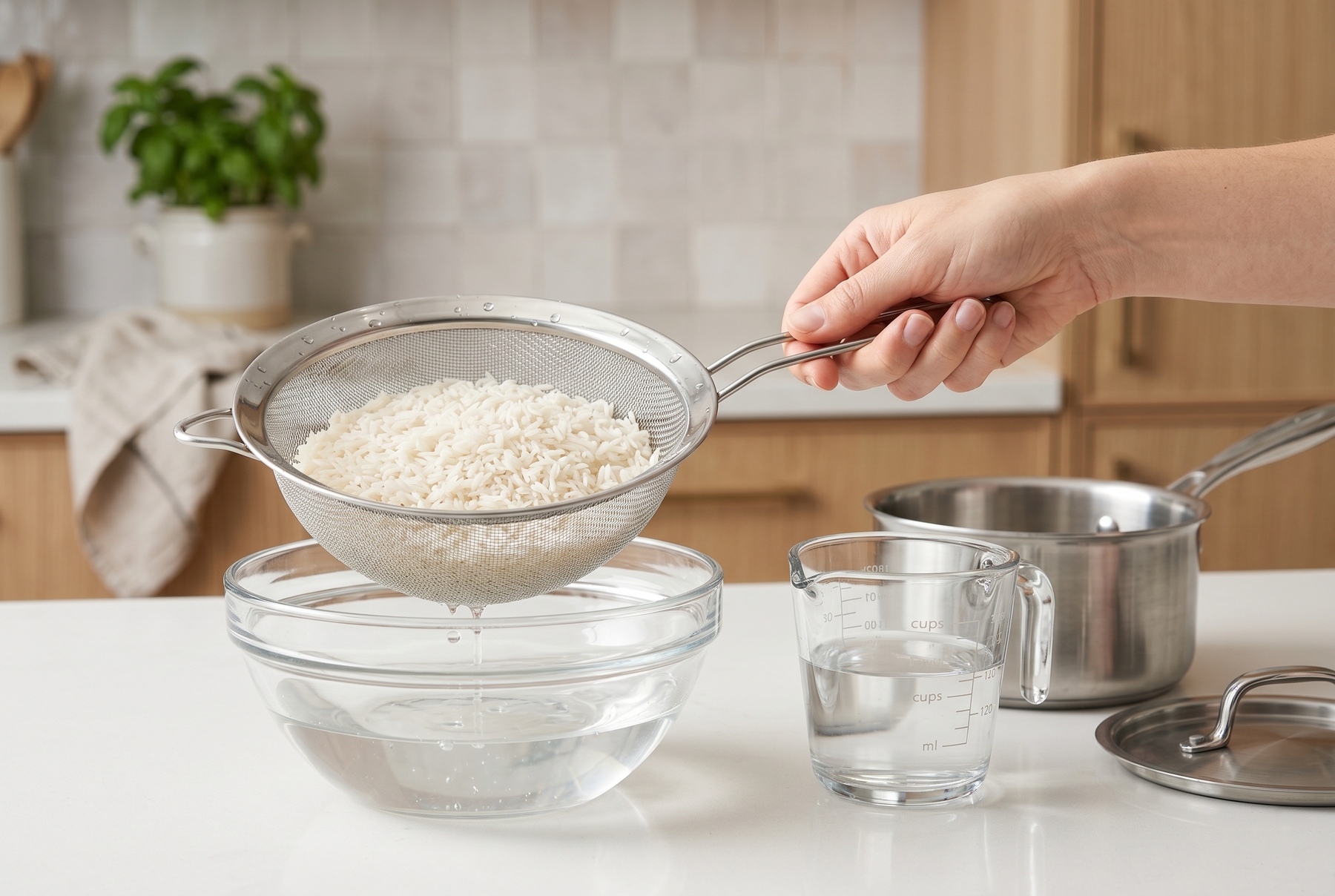
Thoroughly rinsing rice washes away excess starch, which guarantees fluffy, separate grains after cooking.
Rice for Different Tasks: Side Dishes, Pilaf, Risotto, Paella, and Fried Rice
Side Dishes
Long-grain white, basmati, jasmine (for a soft, aromatic texture), or parboiled (for stability). The goal is distinct grains, moderate moisture, and a neutral or delicately aromatic flavor that supports the main course.
Pilaf
The rice must withstand fat, broth, meat, carrots, and spices without turning to mush. This is a serious structural demand. Devzira, laser, basmati, high-quality long-grain rice, and certain firm medium-grain varieties work well. Proper rinsing and exact liquid measurements are especially critical: pilaf requires precisely the right amount of water from the start, with no additions later.
Risotto
Arborio, carnaroli, and vialone nano are the standard choices. The rice is not washed. It is toasted in fat, then hot broth is added gradually with a ladle, stirring frequently. The grain releases its starch, creating that signature creamy, enveloping texture. Everything written above about fluffiness does not apply to risotto at all.
Paella
Bomba or other Spanish paella rice is essential. It is cooked in a wide pan with a large volume of rich broth. The rice is never stirred after the liquid is added, allowing it to absorb the broth evenly while forming a crispy bottom crust (socarrat in Spanish), which is considered the best part of the dish. Proportions depend heavily on the pan’s surface area, burner temperature, and the specific recipe, meaning a strict universal formula simply does not exist.
Fried Rice
The absolute best fried rice is made from leftovers. Freshly cooked rice is far too moist and soft; frying it causes the grains to clump, stick together, and adhere to the pan. Rice that has spent a night in the refrigerator dries out, the grains separate, and they behave entirely differently in a hot wok. Each grain fries individually, developing a slight crust, and properly fried rice carries a slightly nutty, smoky aroma.
If fried rice is needed today: cooking long-grain or jasmine rice with slightly less water, spreading it in a thin layer on a baking sheet, and chilling it thoroughly before frying works better than attempting to fry a fresh batch.
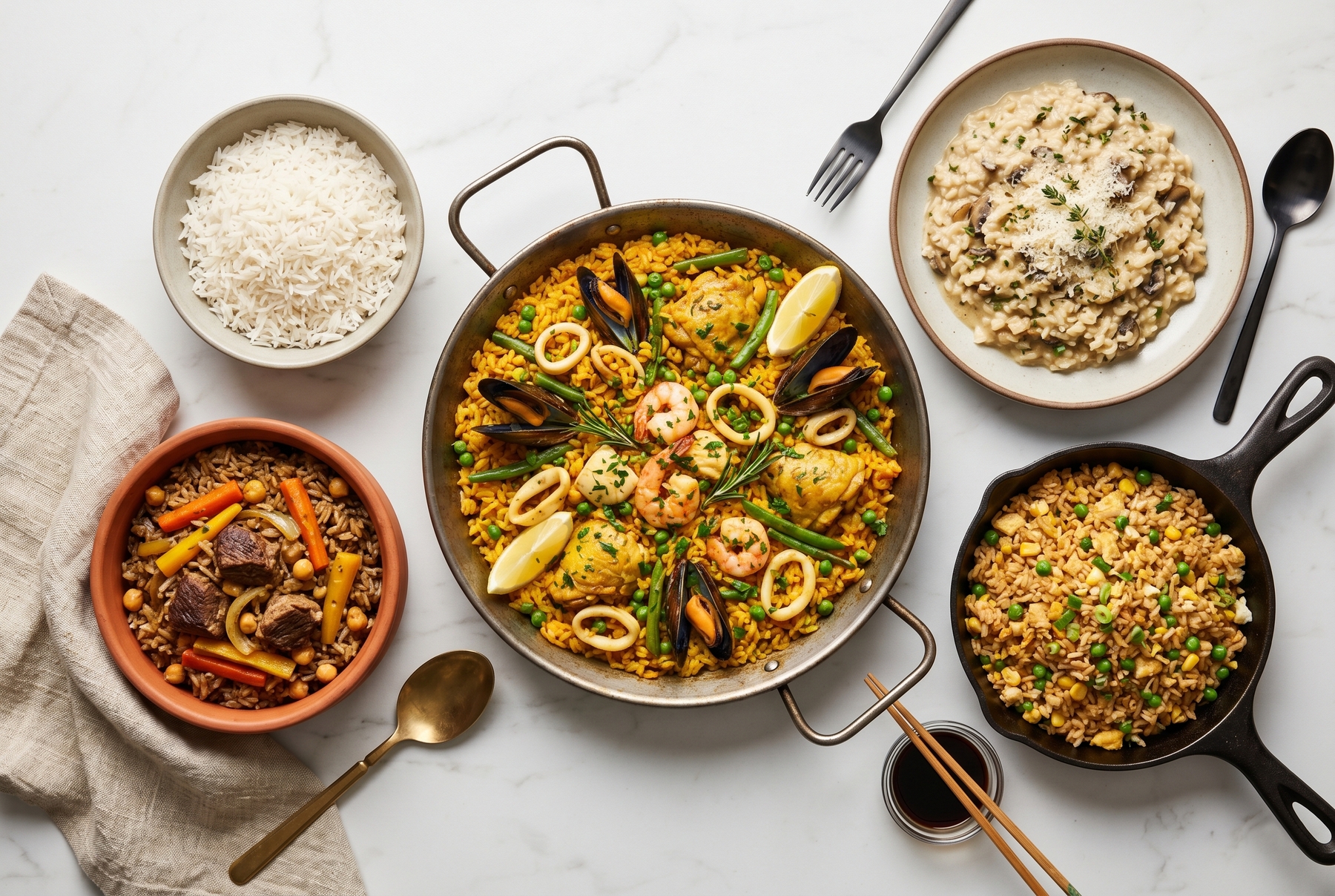
Selecting the correct rice variety unlocks authentic dishes, ranging from creamy Italian risotto to fluffy pilaf and Spanish paella.
Rice to Water Ratios: How Much Liquid Different Varieties Need
Long-Grain White Rice
Ratio: 1 part rice to 1.5–1.75 parts water.
This is the most familiar everyday side dish, perfect alongside fish, goulash, vegetables, or meatballs.
Using 1.5 cups of water per cup of rice works perfectly for well-rinsed grains, a tight lid, and consistent minimal heat. Pushing it to 1.75 cups is advisable if the pot is wide, the lid is imperfect, or the previous batch turned out too dry.
Heat must be reduced immediately after boiling begins; the rice should not continue to boil vigorously. It needs 12 to 15 minutes on low heat, followed by 10 minutes resting under the lid off the heat. The lid must remain untouched.
Basmati
Ratio: 1 part rice to 1.25–1.5 parts water.
Basmati is more frequently ruined by excess water than by a lack of it. Finished basmati should be light, elongated, aromatic, and feature sharply distinct grains. If it turns out soft and clumpy, the culprit is usually too much water or heat that was too high.
The main rule is washing until the water runs almost clear, optionally soaking for 15 to 30 minutes, and draining thoroughly through a sieve afterward. Water retained in the grains quietly alters the cooking ratios. If the basmati was soaked, starting with 1.25 parts of water is safer, as the soaked grain has already absorbed moisture, and 1.5 parts might yield a mushy result. Unsoaked basmati requires closer to 1.5 parts. Cooking demands minimal heat, zero stirring, and a mandatory resting period under the lid.
Basmati pairs wonderfully with curries, spiced stews, chicken, and fish in sauce, as well as Indian and Middle Eastern dishes where aromatic, lightweight grains are essential.
Jasmine
Ratio: 1 part rice to 1.25–1.5 parts water.
Jasmine is more delicate and softer than basmati. It carries its own signature aroma—slightly floral and highly characteristic. It is naturally moister and a bit sticky, making attempts to turn it into an absolutely dry side dish entirely pointless. Perfect jasmine rice is soft, fragrant, and slightly tacky, with grains holding together while remaining individually distinguishable.
Washing should be gentle, avoiding aggressive rubbing. Jasmine grains are fragile and break easily under rough handling.
It is highly suited for Thai dishes, curries, and meals featuring coconut milk. If jasmine fried rice is the goal, cooking it in advance, cooling it, and chilling it in the refrigerator for at least a few hours is mandatory.
Parboiled Rice
Ratio: 1 part rice to about 2 parts water.
Parboiled rice undergoes steam treatment before milling, which alters the starch structure within the grain. Consequently, it holds its shape far better during cooking, resists turning to mush, and almost always remains fluffy even when proportions are not perfectly exact.
Its flavor is neutral and largely scentless. However, it is incredibly reliable. It makes a fine choice for batch-cooked side dishes, rice salads, and stuffings. It is difficult to ruin, serving as an ideal option for weeknight dinners when standing by the stove is unappealing.
Short-Grain Rice
Ratio for a somewhat fluffy result: 1 part rice to 1.3–1.5 parts water.
Short-grain rice is naturally starchier than long-grain varieties, serving entirely different culinary purposes. It excels in porridges, casseroles, meatballs, stuffed cabbage, dairy-based dishes, and sushi.
Yet, if short-grain rice is the only option in the pantry and a relatively neat side dish is required, it is manageable. Thorough washing, reducing the water amount, avoiding stirring, maintaining low heat, and allowing a resting period will yield much better results than skipping these steps.
Incidentally, standard short-grain rice is an excellent ingredient, simply meant for different tasks. Expecting basmati-like properties from it is a mistake.
Brown Rice
Ratio: 1 part rice to 2–2.5 parts water.
Brown rice retains its bran layer and germ, meaning it cooks significantly longer and requires more water. Its texture is firm, boasting a nutty, slightly earthy flavor. The grains will never be as airy as white basmati, nor are they supposed to be.
Pro tip: soaking for 30 to 60 minutes before cooking, boiling for 30 to 40 minutes on low heat after simmering begins, and resting for 10 to 15 minutes under a lid works best. Excellent brown rice emerges slightly chewy and firm with real character—cohesive, not hard in the center, and not overcooked into a mush.
Wild Rice and Blends
Ratio: 1 part blend to 2.5–3 parts water.
Authentic wild rice is not rice in the traditional sense, but the seed of an aquatic grass. It cooks slowly, blooms differently, and is rarely encountered in its pure form in a standard home kitchen. It is most often found blended with long-grain or brown rice, with cooking times dictated by the specific blend.
Such blends perform beautifully in salads, as a side for poultry and fish, and in baked dishes. They demand patience—significantly more than standard white rice. However, they look striking on the plate: the dark, elongated wild grains contrasting sharply with lighter grains in both color and texture.
Bomba Rice
Ratio for paella: about 1 part rice to 3 parts hot broth. Depending on the pan, heat intensity, and specific recipe, this range can shift from roughly 2.5 to 3.5 parts liquid. The recipe and the pan’s diameter outweigh any universal formula here.
Bomba is a short-grain Spanish rice highly prized for paella. Its primary feature is its ability to intensely absorb broth and flavor while maintaining its shape better than most other short- and medium-grain varieties. The grains swell, becoming firm and slightly springy, without ever disintegrating into a porridge.
Bomba is never used as standard side-dish rice. Its purpose is absorbing rich broth, the color of saffron, and deep aromas directly in a wide pan. Cooking it in a pot using the “one cup of rice to one and a half cups of water” method places it entirely out of its element.
Bomba can sometimes be difficult to find. If it is unavailable, searching for short- or medium-grain rice labeled “for paella” is a better strategy than simply grabbing whatever is closest to the register.
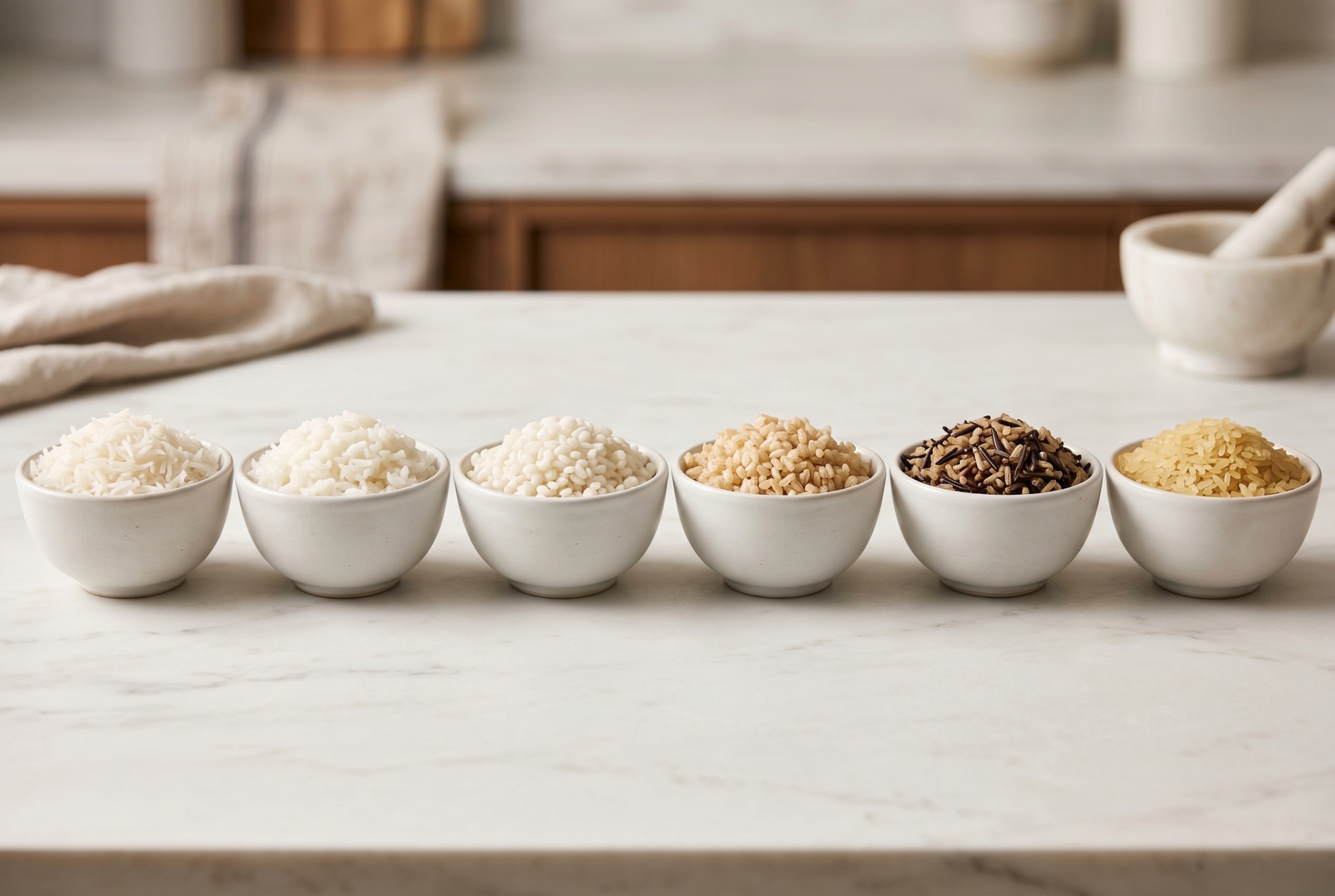
From long-grain basmati to wild rice blends, every variety features unique water absorption properties and textures.
Cooking Table: Exact Water Proportions per 1 Cup of Rice
| Rice Type | Water per 1 Cup of Rice | Time After Boiling | Resting Under Lid |
|---|---|---|---|
| Long-Grain White | 1.5–1.75 cups | 12–15 minutes | 10 minutes |
| Basmati | 1.25–1.5 cups | 10–12 minutes | 10 minutes |
| Jasmine | 1.25–1.5 cups | 10–12 minutes | 10 minutes |
| Parboiled | about 2 cups | 18–20 minutes | 10 minutes |
| Short-Grain | 1.3–1.5 cups | 12–15 minutes | 10 minutes |
| Brown | 2–2.5 cups | 30–40 minutes | 10–15 minutes |
| Wild Rice Blend | 2.5–3 cups | 35–45 minutes | 10 minutes |
These are starting points. If the lid is loose, the heat is high, the pot is wide, or the rice was soaked, results may vary. After a few attempts, it becomes obvious how a specific grain behaves in your pot and on your stove.
Step-by-Step Method: How to Cook Fluffy Rice in a Pot
Step 1. Rinse
Washing continues until the water becomes noticeably clearer. Achieving perfect transparency is unnecessary, but removing the cloudy starch “fog” is highly recommended. Basmati requires especially thorough washing. Jasmine needs a gentle approach without pressure. Short-grain rice, if a neater result is desired, demands thorough rinsing as well.
Step 2. Let the Water Drain
After rinsing, transferring the rice straight into the pot along with the residual washing water alters the proportions. Letting it drain in a sieve for at least a few minutes is crucial.
Step 3. Measure the Water and Add Salt
Measuring water according to the table and salting it is the next step. Optionally, adding a little oil or a spoonful of ghee enhances the aroma. Fat softens the flavor slightly, but it never replaces correct proportions or fixes an excess of water.
Step 4. Bring to a Boil and Immediately Reduce Heat
The pot is brought to a boil over medium heat. The moment it boils, the heat is dropped to the absolute minimum. The rice must not continue to boil aggressively. It should finish cooking under the lid at a very gentle simmer.
A gentler simmer guarantees more intact grains.
Step 5. Do Not Stir
Stirring breaks the grains and helps starch escape. Spreading the rice evenly across the bottom of the pot once at the very beginning is fine, but it must be left entirely alone afterward.
Step 6. Let It Rest Under the Lid
Once the water is absorbed, the heat is turned off, and the pot sits closed for another 10 minutes. This is an active part of the cooking process, not just idle waiting. During these minutes, residual moisture distributes evenly inside the grains, the texture normalizes, and the rice becomes much easier to fluff.
Step 7. Fluff With a Fork
Using a standard fork rather than a spoon or spatula—working gently from the bottom up—is the best approach. The grains separate without turning into a uniform mass. If the rice is cooked perfectly, it smells slightly nutty and light at this stage, free from any heavy, starchy odor.
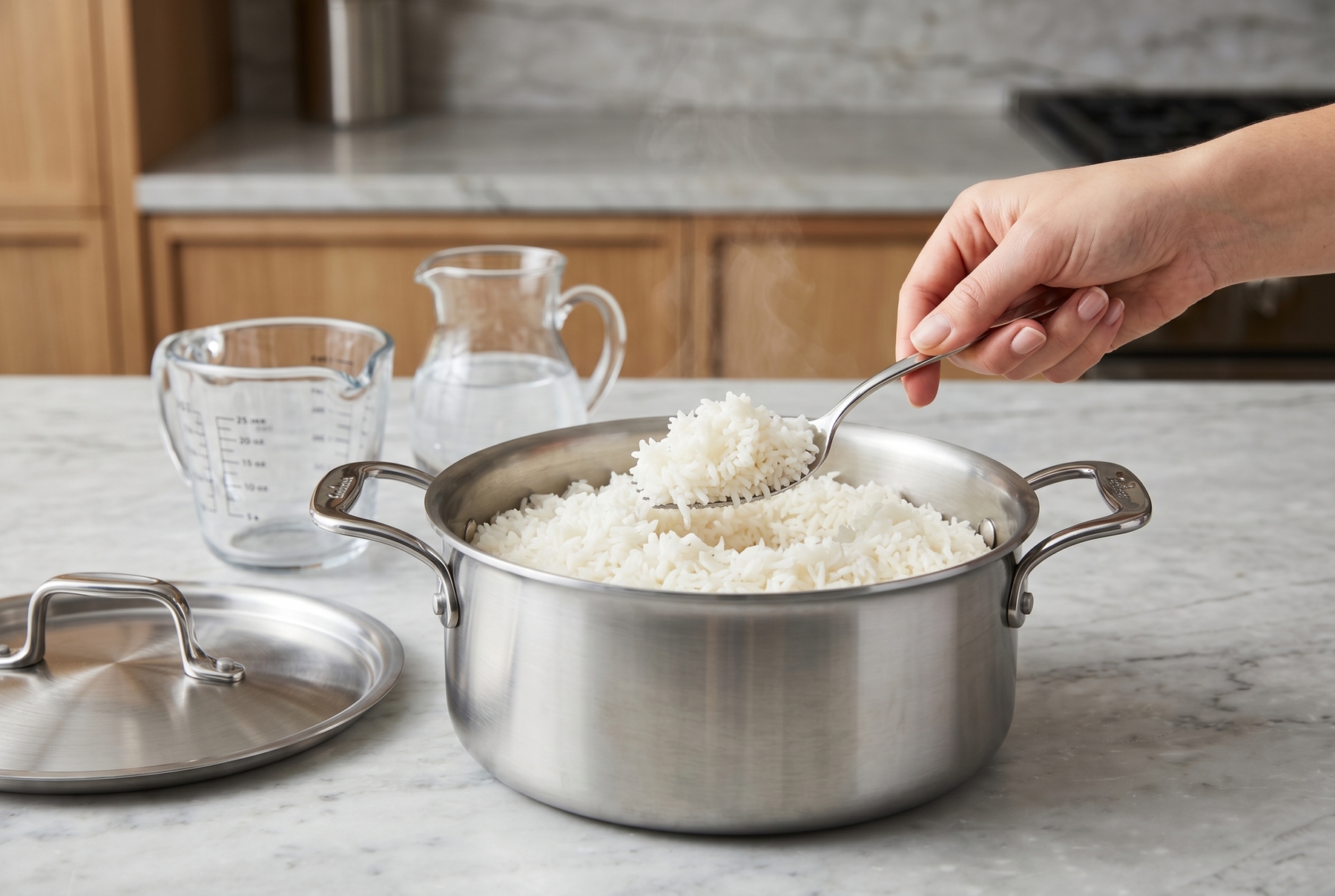
Perfectly cooked rice: the grains are distinct, have retained their shape, and fully absorbed the water.
Why Rice Clumps or Burns: Troubleshooting Errors
Rice Is Soft, Mushy, and Has Lost Its Shape
Too much water was used, the rice was kept on the heat for too long, or the variety itself is naturally starchy and soft. Another common culprit is stirring during cooking or failing to let excess moisture escape after cooking: removing the lid too early or skipping the resting period.
In this scenario, removing the lid, holding the pot over minimum heat for 1 to 2 minutes, turning off the heat, letting it rest, and then fluffing gently often helps.
If the rice has already transformed into porridge, it is better repurposed into a casserole, rice patties, or stuffing for bell peppers.
Burned on the Bottom, Undercooked on Top
The heat was too high, causing the water to evaporate before the rice could finish cooking. A smell of burned starch emanates from the bottom, while the top grains remain hard and dry.
Reducing the heat to the absolute lowest setting immediately after boiling is essential. If a gas stove’s lowest setting is still too strong, a heat diffuser solves this issue far better than any experimental water proportions.
Rescuing the dish requires adding 2 to 3 tablespoons of hot water, closing the lid, and letting it finish cooking off the residual heat.
Rice Clumped Into a Solid Mass, Grains Are Indistinguishable
Stirring during cooking is the most likely reason. Or the heat was too high. Or both occurred simultaneously.
Stirring damages the grains, forces starch out, and causes the rice to clump aggressively. A fluffy side dish was the goal, but a dense porridge is the result.
Rice Feels Uneven Right After Cooking: Dense in Places, Normal in Others
Skipping the resting phase is usually the cause. Turning off the heat and leaving the pot covered for 10 minutes without opening the lid is often all it takes for the texture to even out.
How to Adjust Proportions for Your Own Pot
Table proportions act as a midpoint, calculated for standard conditions. Your pot and stove might behave differently.
If the rice consistently turns out too dry, adding 2 to 3 tablespoons of water per cup of rice next time or slightly lowering the heat helps. The most common reason is water evaporating faster than it can be absorbed.
If the rice consistently turns out moist, reducing the water by 2 to 3 tablespoons or letting the rice rest longer under the lid after the heat is off works best. Sometimes, residual heat finishes the job without additional burner time.
If the bottom consistently burns, the issue lies in heat distribution, not proportions. A pot with a heavier bottom resolves this far better than altering the water amount. A heat diffuser for a gas stove serves as a simple, inexpensive tool that eliminates hot spots.
If the top is raw but the bottom is done, the water escaped too quickly. Adding 2 to 3 tablespoons of hot water, covering the pot, turning off the heat, and letting it sit on the residual heat for another 10 minutes fixes the problem.
The Secret to Consistent Results
The true secret to consistent results is to stop cooking by eye. Nailing the right proportions for your specific pot and stove once is all it takes to cook without surprises ever again.
Rice is ruined not by a lack of technical knowledge, but by unnecessary fussing. Washing it, measuring accurately, placing it on the heat, and leaving it completely alone is the formula. There is no need to peek under the lid, splash in extra water “just in case,” or stir the pot.
A Quick Cheat Sheet When the Table Is Out of Reach
- Long-Grain White: 1 to 1.5–1.75.
- Basmati: 1 to 1.25–1.5 (closer to 1.25 if soaked, closer to 1.5 if not).
- Jasmine: 1 to 1.25–1.5.
- Parboiled: 1 to 2.
- Short-Grain for reasonable fluffiness: 1 to 1.3–1.5.
- Brown: 1 to 2–2.5.
- Wild Rice Blend: 1 to 2.5–3.
- Bomba for paella: about 1 to 3 (broth), adjusted for pan and recipe.
Rinsing, measuring the water, lowering the heat, and leaving it alone guarantees success.
0 comments