
Apricot marmalade is a brilliant, wholesome summer treat. You can pour this thick, luscious apricot preserve into small jars to keep in the fridge, or pour it into a shallow tray to set, slice into neat cubes, and roll in sugar if you prefer a classic fruit jelly candy presentation. This recipe uses very little added sugar. Summer fruits are naturally bursting with sweetness, so I advise letting nature's flavor shine through. We add just a touch of sugar to elevate and balance the tart notes. This apricot marmalade makes for the most incredible toast topping: take a toasted (but cooled!) slice of good white bread, layer on a thick slab of this marmalade, and top with fresh berries. It feels as luxurious as an elegant pastry!
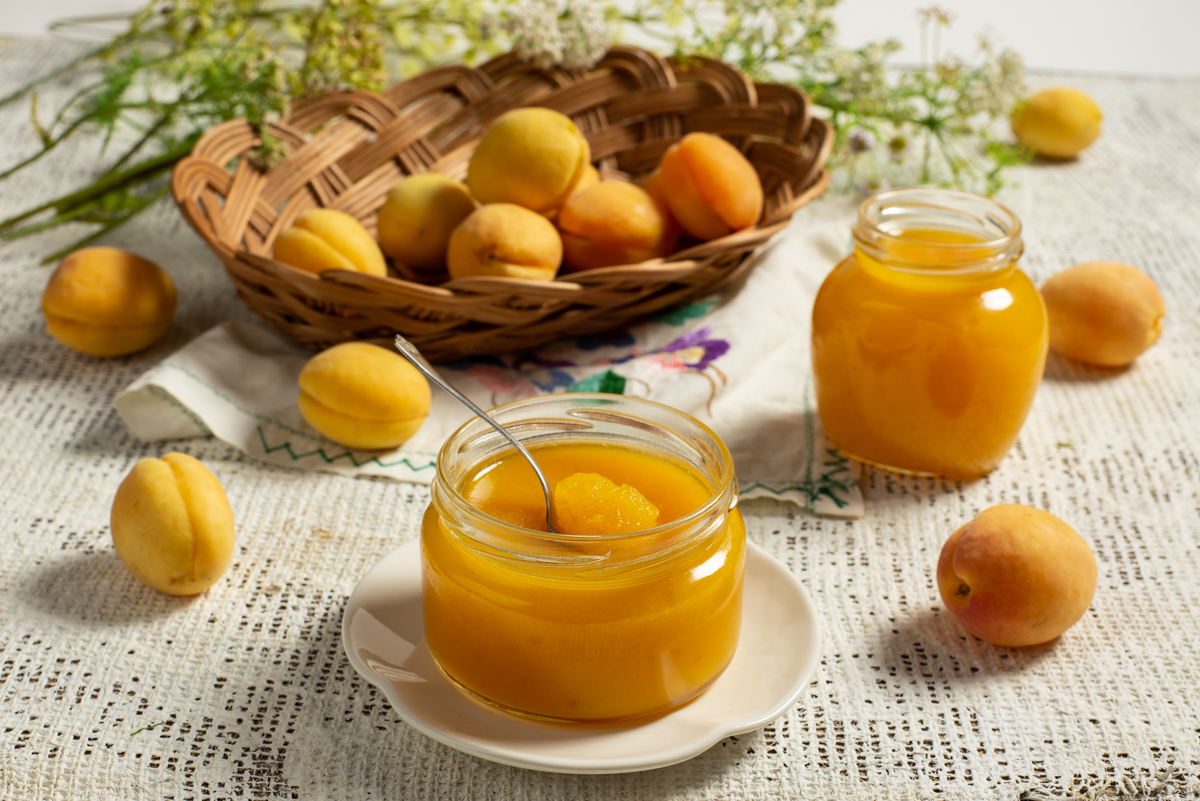
This delicate, highly aromatic homemade apricot marmalade will quickly become a favorite sweet treat for the whole family.
Ingredients
- 400 g (14 oz) ripe apricots
- 15 g (0.5 oz) powdered gelatin
- 100 ml (3.4 fl oz) boiled water, chilled
- 35 g (1.2 oz) granulated sugar
How to Make Apricot Marmalade
Begin with the gelatin. Pour the powdered gelatin into a bowl and add chilled, previously boiled water. This is crucial! The water must be ice-cold, not lukewarm or room temperature. You can chill the water with ice cubes beforehand to ensure it is ice-cold before measuring.
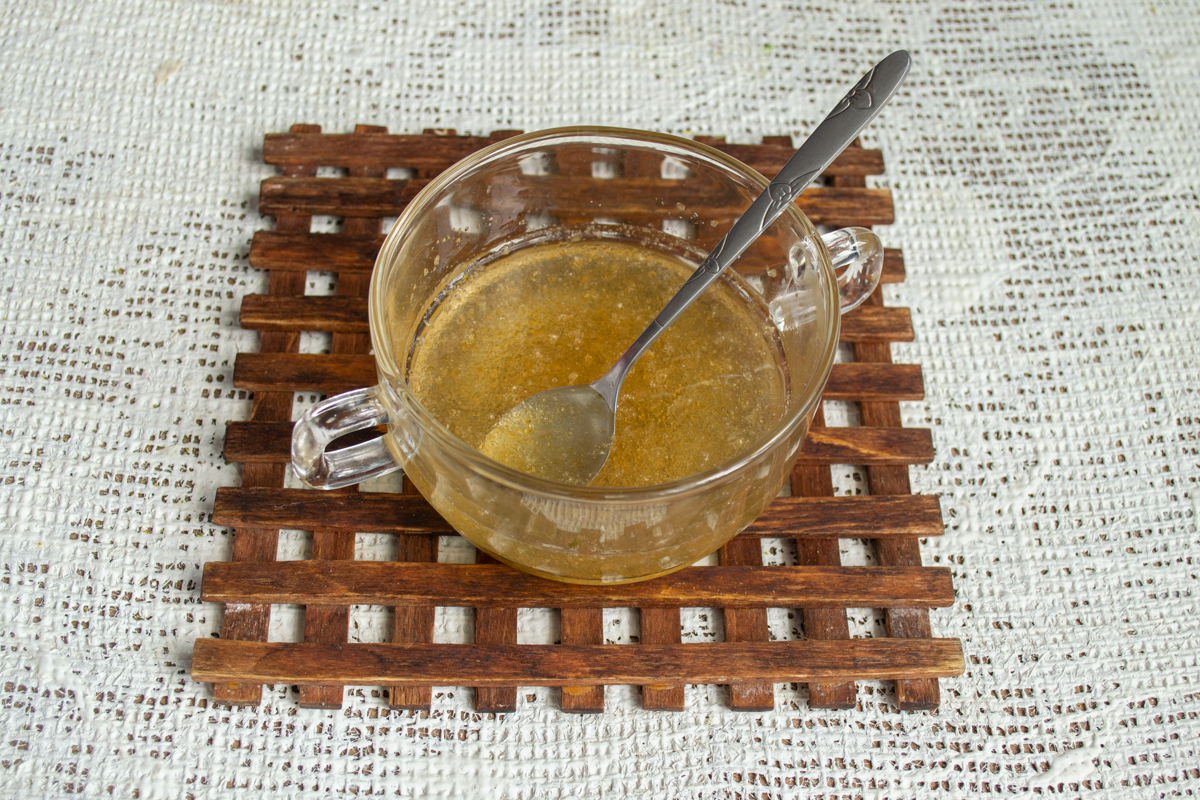
To achieve the perfect marmalade texture, it is absolutely essential to bloom the gelatin in ice-cold water.
Let the gelatin bloom for 20 to 30 minutes. Once it absorbs all the water, becomes spongy, and leaves no free liquid pooling around it, it is ready to use. If you are using sheet gelatin, prepare it according to the package instructions; sheet gelatin can be bloomed in any generous amount of cold water.
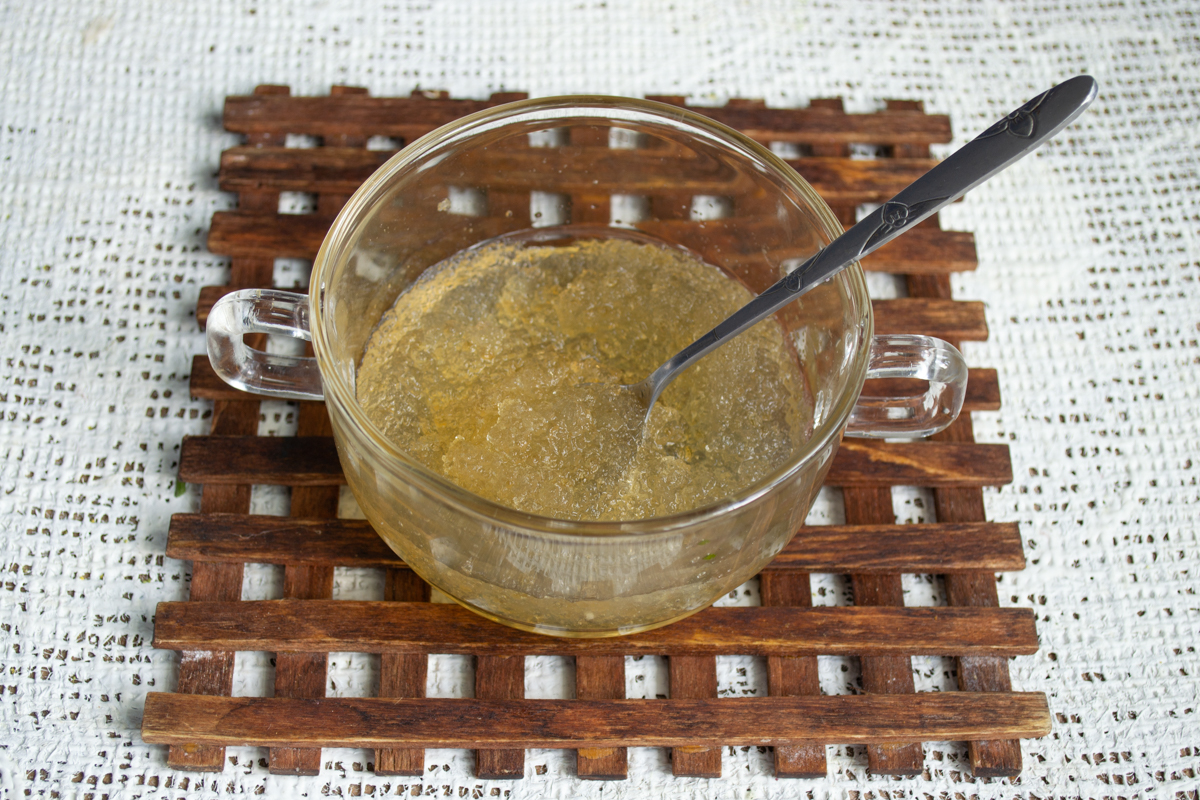
Once the gelatin has absorbed all the liquid and turned spongy, it is perfectly prepped to be mixed into the hot fruit base.
Overripe, soft fruits are absolutely perfect for marmalade, provided there are no signs of spoilage or rot. Wash the apricots thoroughly under cold running water.
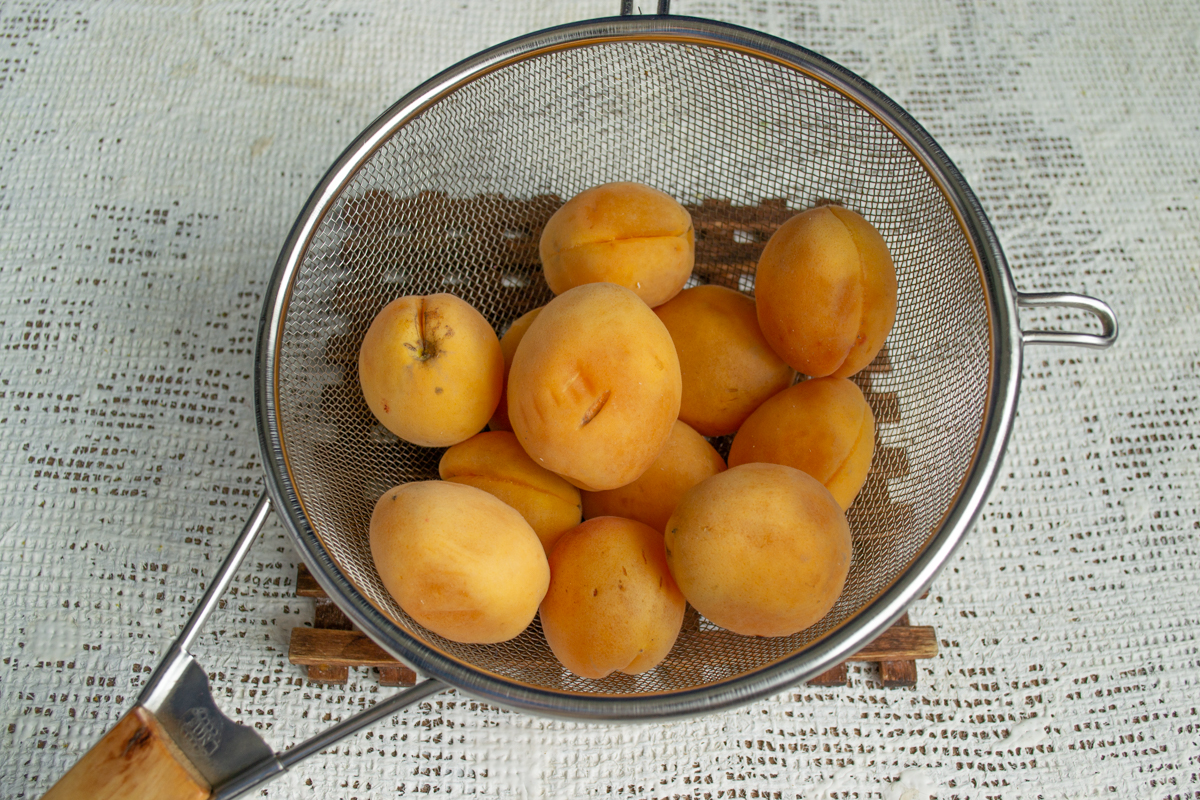
Wash the fruits thoroughly. For the best marmalade texture and flavor, use the softest, ripest apricots you can find.
Halve the fruit and remove the pits. Place the prepared apricot halves into a heavy-bottomed saucepan.
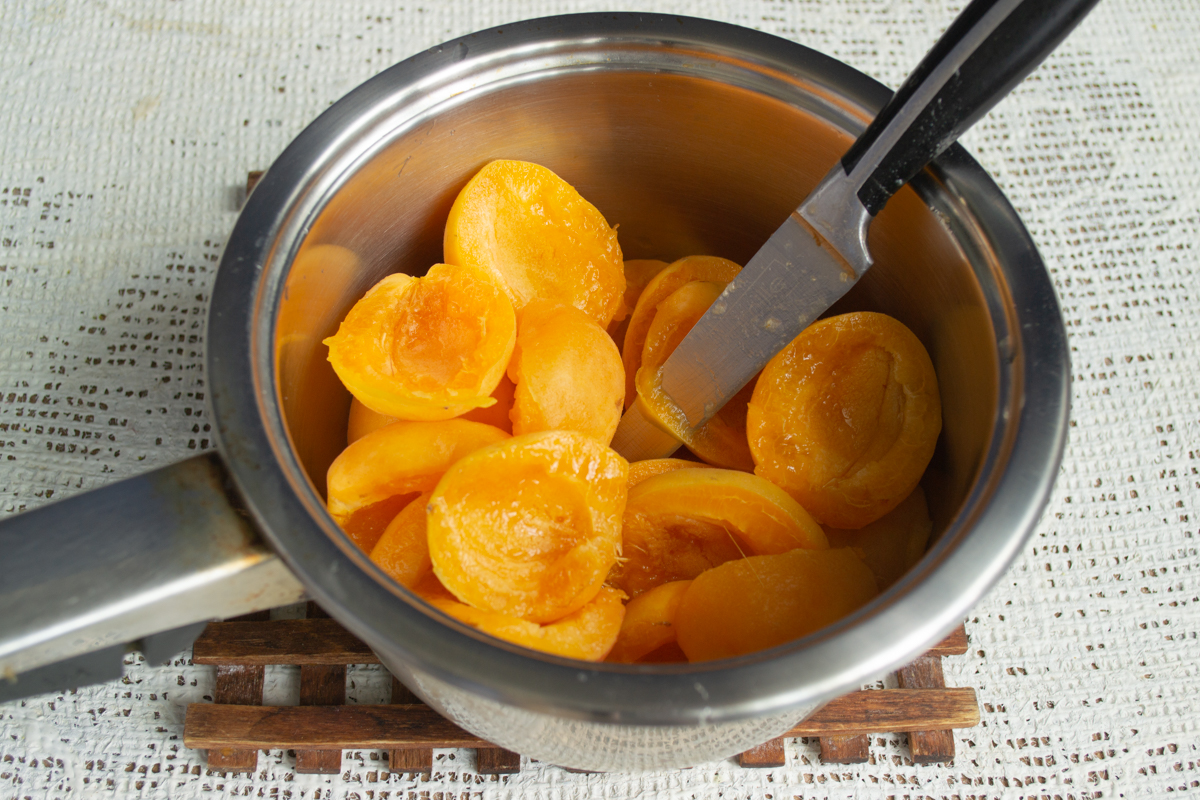
Remove the pits and arrange the fruit halves in a heavy-bottomed saucepan for gentle, even cooking.
Sprinkle in the granulated sugar and pour 2 to 3 tablespoons of water over the bottom of the pan to kickstart the cooking process.
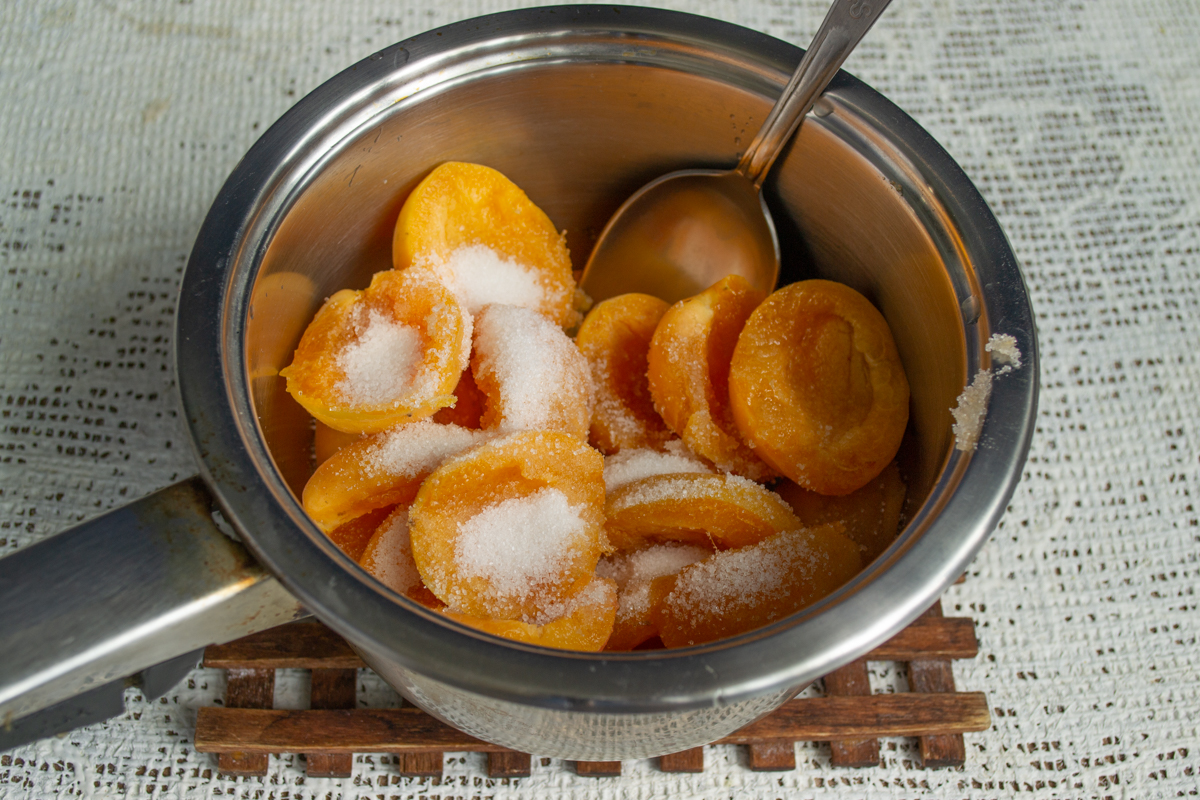
Sprinkle the fruit with sugar and a splash of water to help release the natural juices quickly.
Cover the saucepan tightly with a lid and simmer the apricots over medium heat for about 10 minutes. Resist the urge to open the lid, as you want to trap the steam inside to soften the fruit.
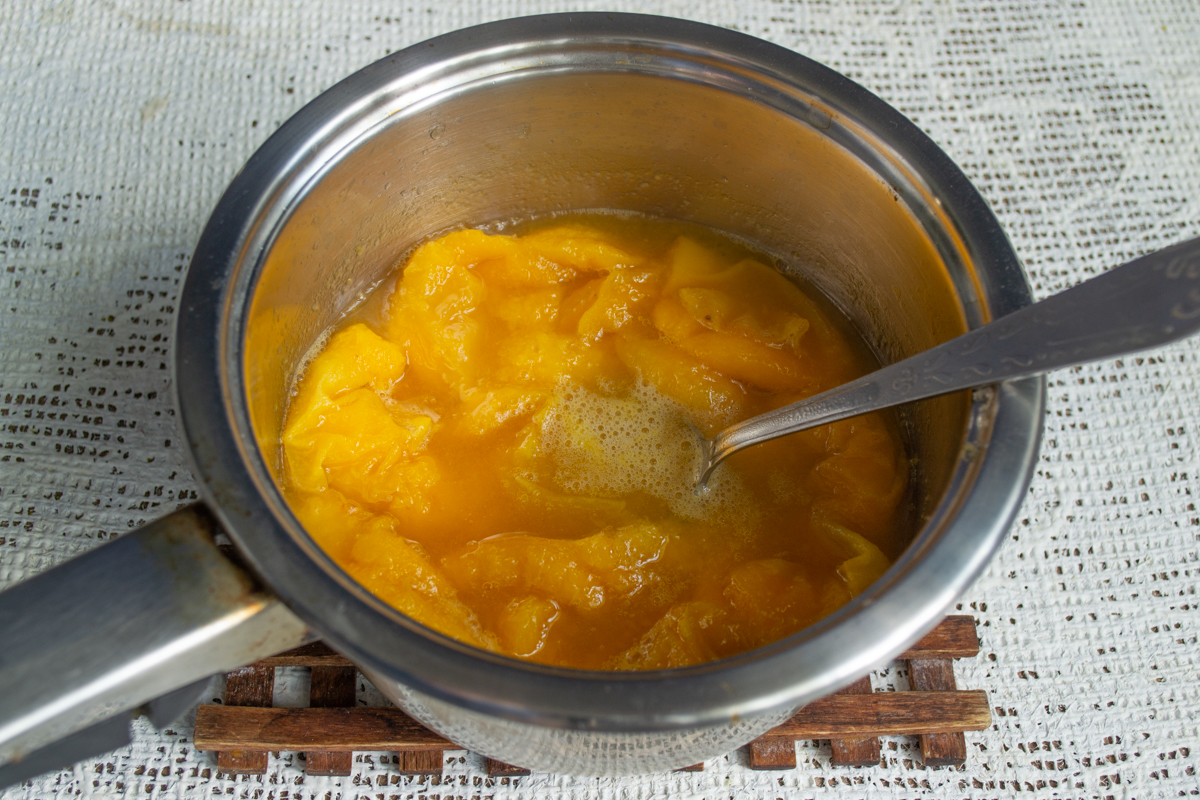
Gently simmer the fruit under a tight-fitting lid until soft enough to be effortlessly mashed into a puree.
Transfer the softened apricots to a fine-mesh sieve and press the fruit through using a tablespoon. You will be left with only a small amount of apricot skins in the sieve.
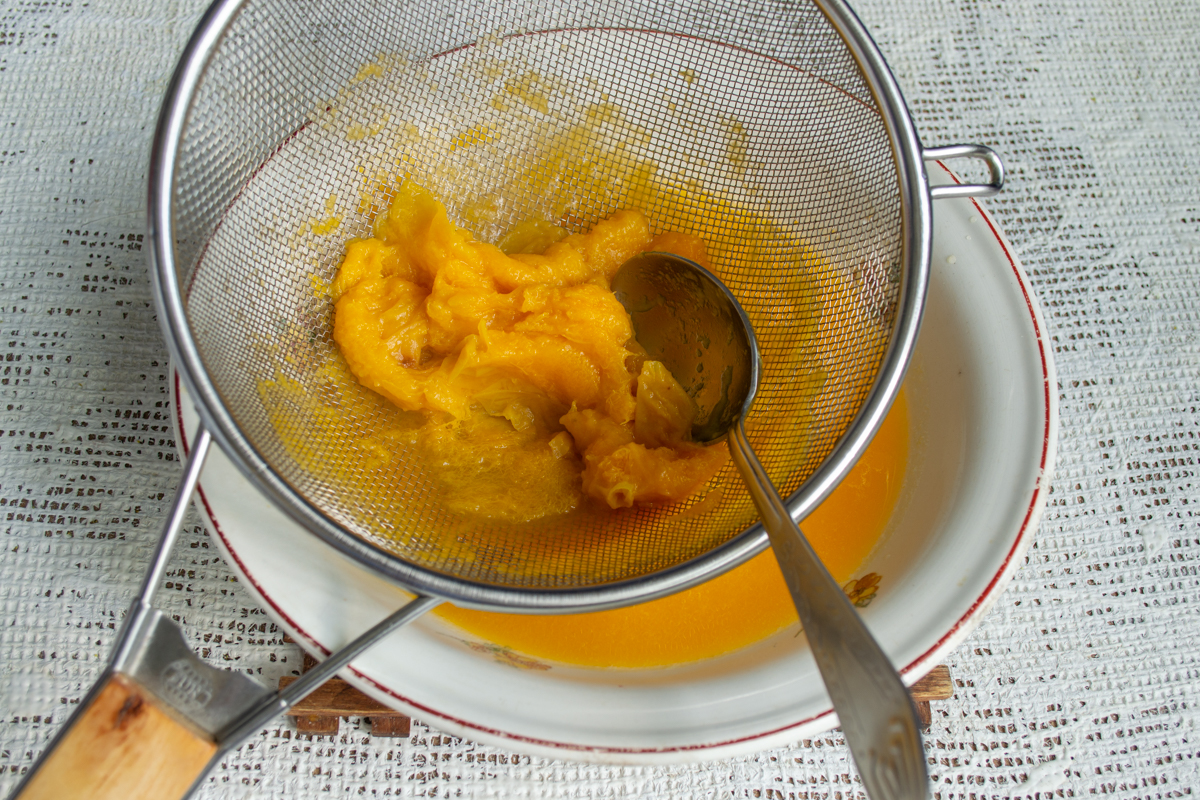
Pushing the mixture through a sieve removes the skins and ensures a flawlessly smooth, silky texture for your dessert.
What you now have in your bowl is a vibrant fruit puree—thick, sweet-tart, and incredibly aromatic. This is the foundation of our marmalade, which we now need to thicken.
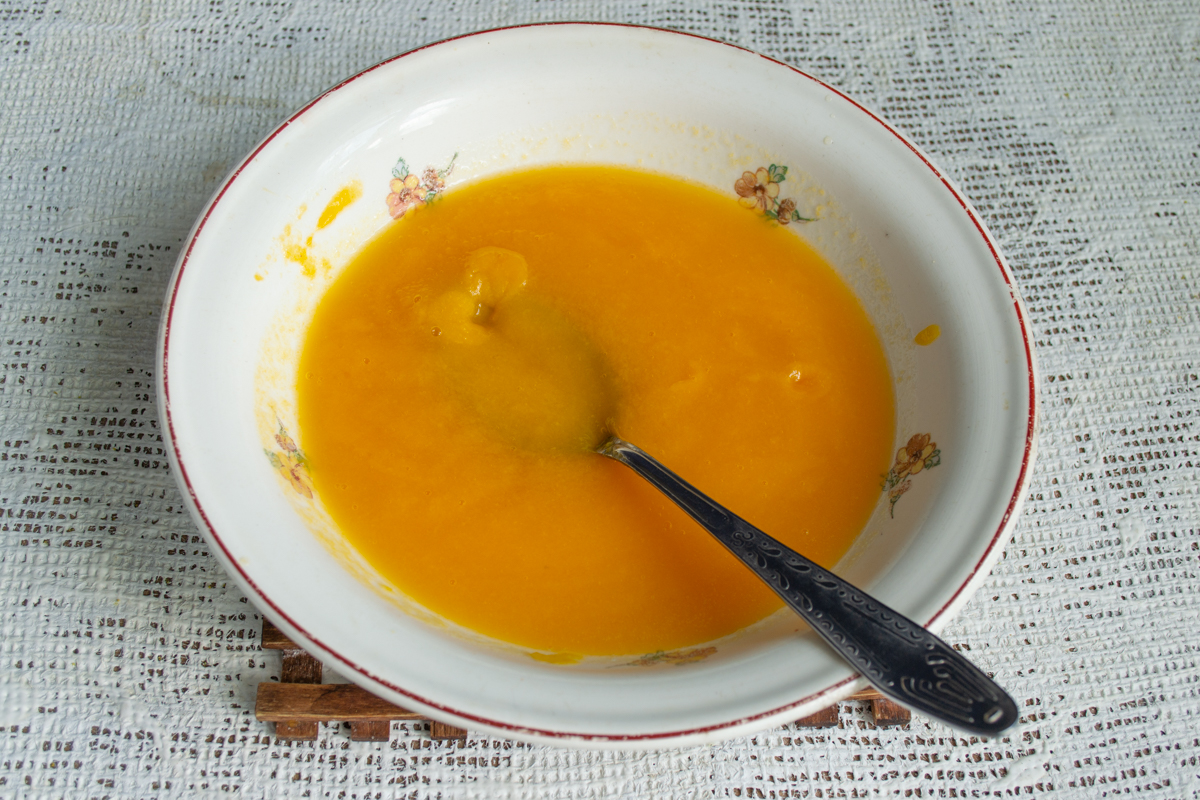
The resulting puree boasts a vibrant color and concentrated flavor, forming the ideal foundation for the marmalade.
Return the fruit puree to the saucepan and place it back on the stove. Heat it just until it reaches about 80°C (175°F); bringing it to a full boil is unnecessary and should be avoided.
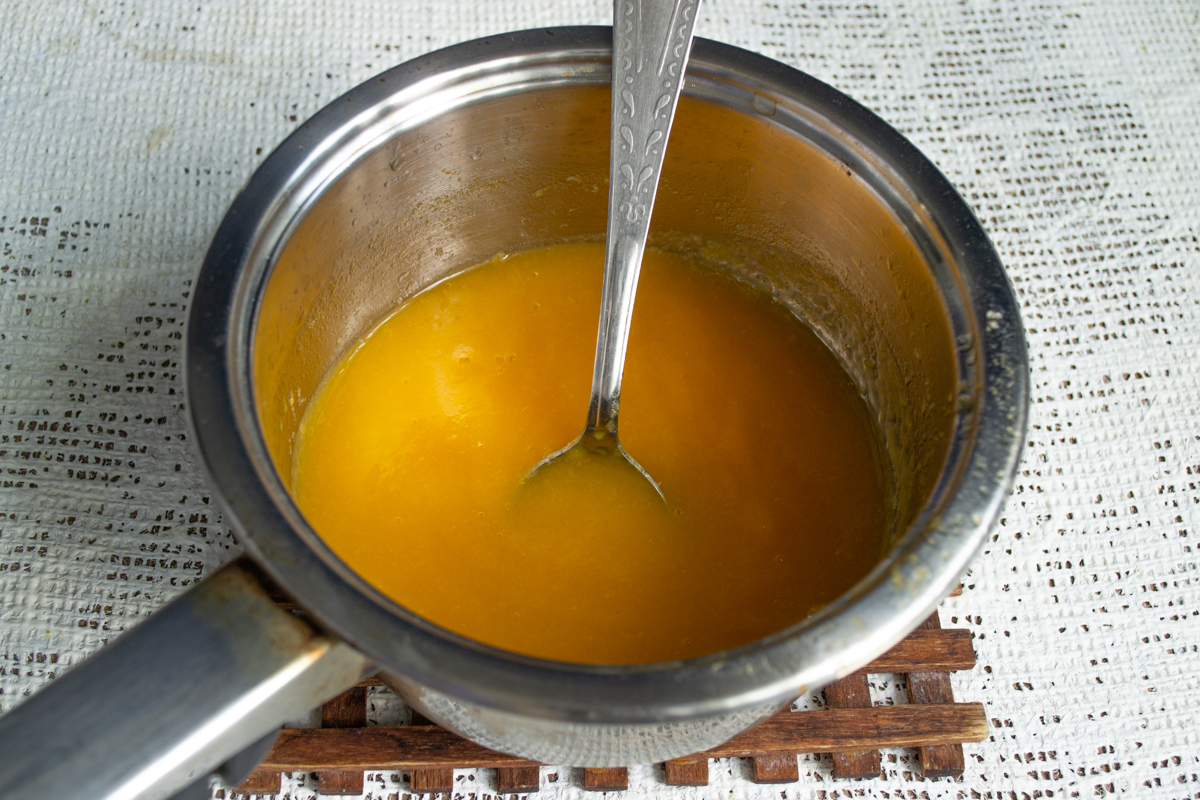
Warm the puree until hot, reaching about 80°C (175°F), to ensure the bloomed gelatin dissolves seamlessly.
Add the bloomed gelatin to the hot fruit puree and stir vigorously to combine. If you spot any stubborn, undissolved gelatin granules, simply pass the mixture through a sieve once more to ensure a silky texture.
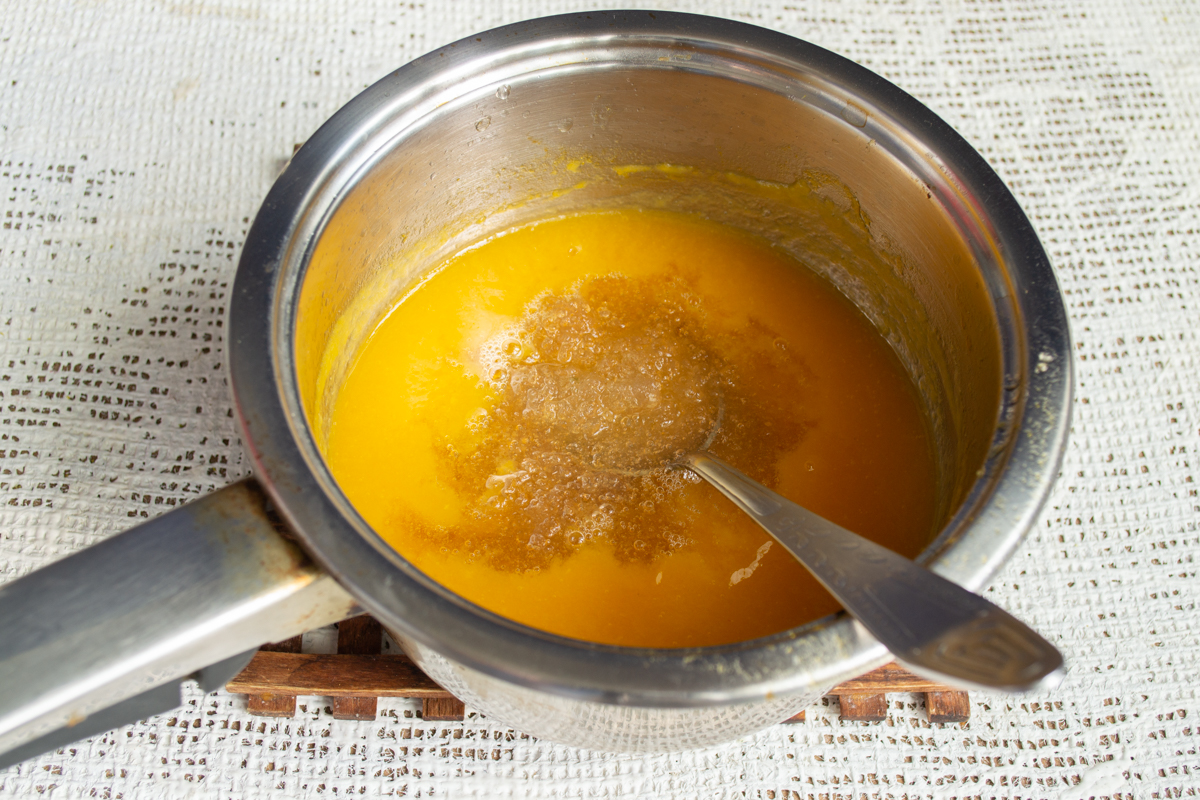
Whisk the bloomed gelatin into the hot fruit puree until completely smooth, ensuring no granules remain.
Pour the liquid puree into clean, dry glass jars, or spread it into a shallow tray lined with lightly oiled parchment paper. Transfer the marmalade to the refrigerator for a few hours, though letting it set overnight is best. Once set, the marmalade becomes wonderfully thick and can be sliced or scooped into neat portions using an ice cream scoop.
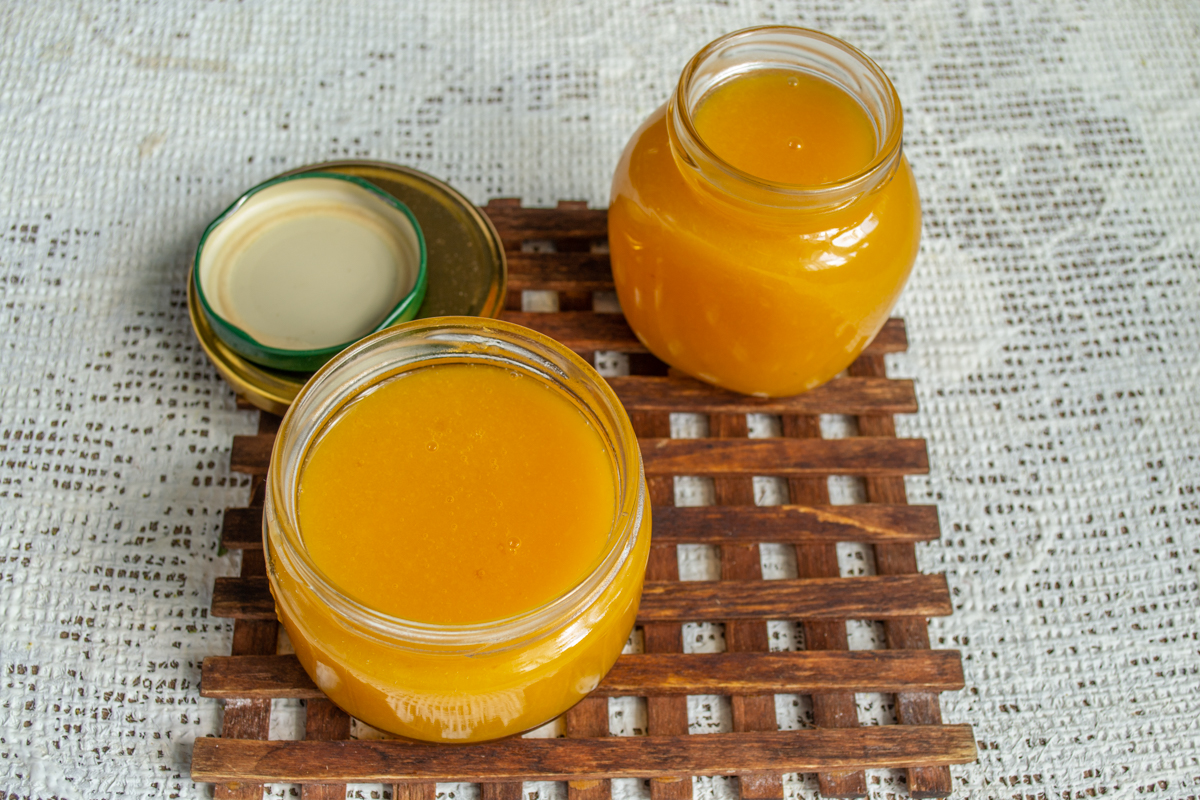
Pour the mixture into jars and let it chill until completely set. Your homemade marmalade is now ready to serve!
Your finished apricot marmalade makes an exquisite accompaniment to your morning tea or as a light afternoon snack. If you want to truly impress your guests, try serving it alongside soft cream cheese, or press a walnut half into the center of a marmalade slice for a refined Mediterranean touch. For festive occasions, toss the set marmalade cubes in shredded coconut or a blend of powdered sugar and cinnamon.
Be sure to store this homemade dessert exclusively in the refrigerator in a tightly sealed container to prevent it from absorbing other odors. Thanks to the high natural pectin content of the apricots and the quality gelatin, this marmalade holds its firm texture for up to a few weeks. It is a delightful, fiber- and carotene-rich treat that fully deserves a permanent spot in your culinary repertoire.
0 comments