
You open the top drawer. There sits a torn packet of khmeli suneli (a traditional Georgian spice blend) rolled into a tube and secured with a rubber band, a tin of paprika with a lid that refuses to close, three identical packets of cumin—where did they all come from?—and something in a paper envelope labeled “vanilla,” dated last year.
You pour a couple of spoonfuls of khmeli suneli into your kharcho (a hearty Georgian beef and walnut soup). The color is present. The aroma is missing. The soup turns into merely a reddish broth with meat, and you start suspecting the manufacturer of cutting corners on ingredients. The manufacturer is likely not to blame.
The problem lies in treating spices like a dry powder without special storage requirements. In reality, this is a temperamental product—it spoils quietly and unnoticeably.
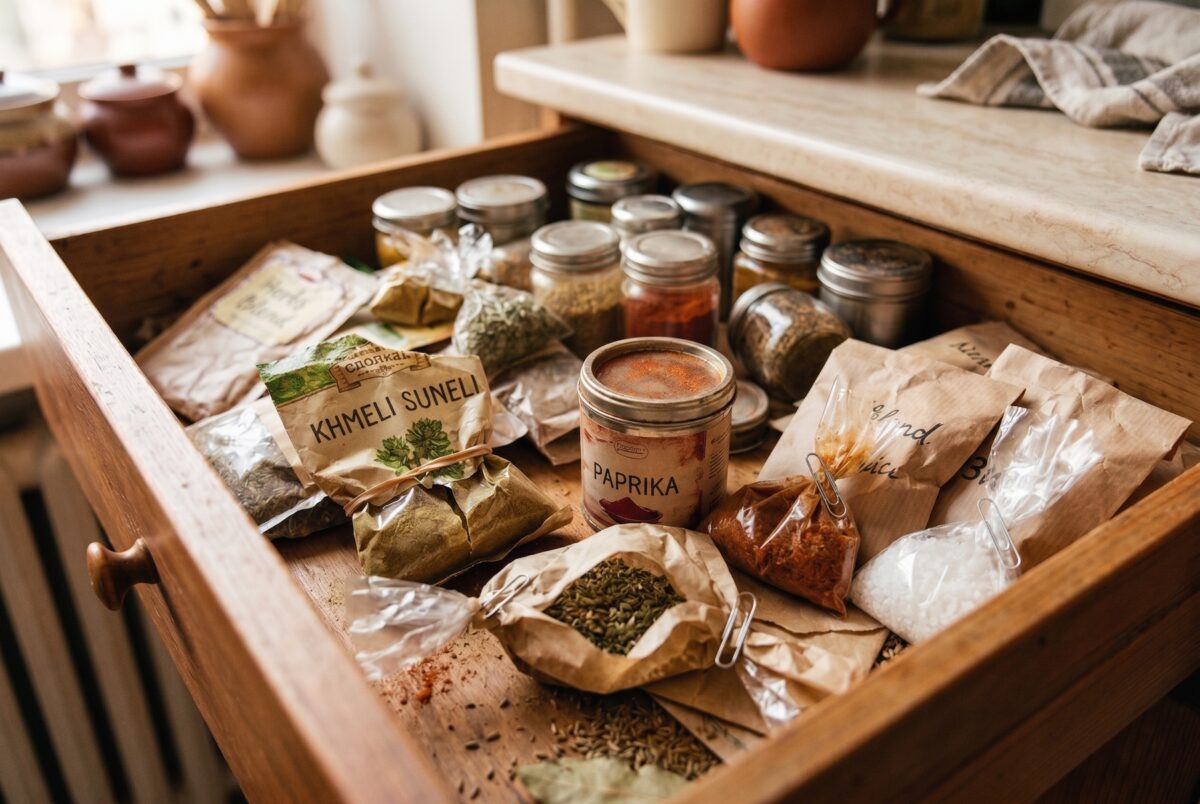
Open packets and a lack of airtightness remain the primary reasons your favorite spices lose their aroma in just a few weeks.
Table of Contents
Where the Aroma Disappears
All the flavor and aroma of spices come from essential oils. These oils give khmeli suneli its fragrance, paprika its sweet depth, and cumin that distinct fatty-nutty note that lingers on your fingers after rubbing.
As long as the spice remains whole—seeds, pods, sticks—these oils sit inside and go nowhere. Once they are ground, the oils emerge, make contact with the air, and begin to evaporate. This process starts at the moment of grinding, and it cannot be stopped, only slowed down.
Three elements accelerate evaporation: heat, light, and oxygen.
This brings up the main question about those beautiful glass jars on the shelf above the stove. The image migrates across culinary blogs and seems correct: everything is visible, beautiful, and within arm’s reach. For storage, however, this represents a disaster. Clear glass offers no protection from light. Above a working stove, the temperature rises to 35–50°C (95–122°F) and stays there for hours. Every time you open a jar over a boiling soup, hot moist air rushes inside.
Under such conditions, a ground spice loses a significant portion of its aroma in two to three weeks. Not in a year—in weeks. After that, only pigment and cellulose remain in the jar. Color and dust.
Inventory and Testing
First of all, disregarding the date on the packet is essential. “Best before” on spices is merely the date after which the manufacturer disclaims responsibility. This date means nothing: a spice standing over the stove for a month will prove worse than a three-year-old yet properly stored one.
The real test takes exactly ten seconds.
Taking a pinch, rubbing it between your thumb and index finger, and immediately smelling it does the trick. The warmth of your hands releases the essential oils, revealing instantly whether the flavor remains. If the aroma is sharp, distinct, and slightly tickling to the nose, the spice works. If it smells vaguely musty or like nothing but paper and dust, it belongs in the bin.
Parting with that 2018 packet of Herbes de Provence requires no hesitation.
A separate note applies to resuscitation. If a spice has faded a bit but still holds some potential (rubbing it still reveals something), toasting it in a dry frying pan helps: 15–20 seconds over medium heat, stirring constantly. The aroma becomes intensely bright for a moment. Adding the spice to a dish right then yields a noticeably better effect than pouring it cold from the jar. This is not a way to preserve a spice. It is simply a way to squeeze the last bits of flavor out before throwing it away.
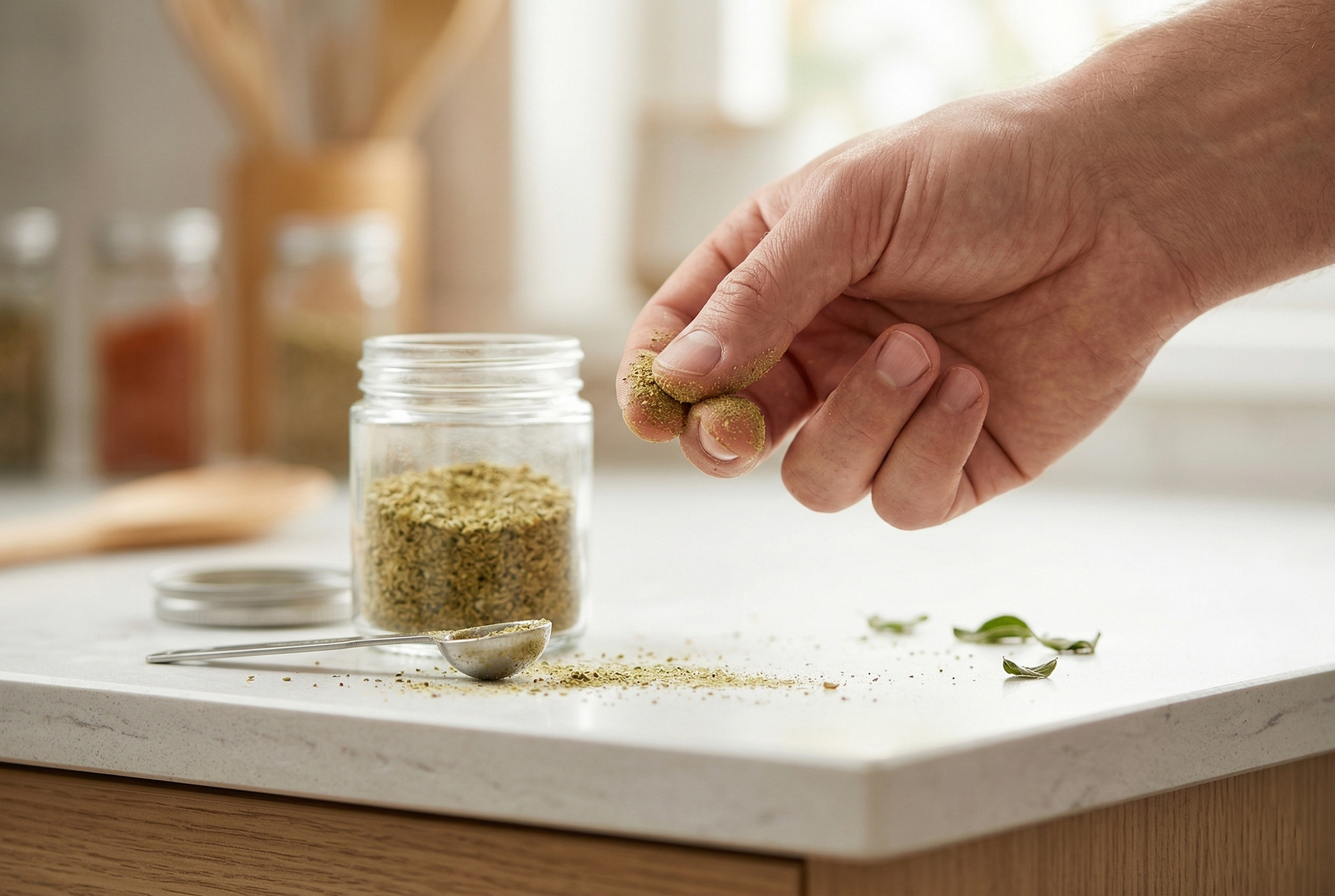
A simple test involves rubbing a pinch of spice between your fingers. If the aroma fails to become bright and sharp, the essential oils have evaporated, signaling it is time for a replacement.
Three Rules for Organization
Rule One: Darkness and Coolness
A closed drawer or cabinet, positioned away from the oven, radiators, and any heating surfaces, works best. The ideal storage range for ground spices remains a stable 15–20°C (59–68°F). A pantry, the lower section of a kitchen cabinet against an exterior wall, or a drawer near a window (not directly above the stove) all fit the bill. Temperature fluctuations cause as much harm as constant heat: during cooling, moisture condenses inside the jar, which only accelerates spoilage.
In professional kitchens, this stands as an ironclad rule.
Rule Two: Proper Containers
Paper packets let air straight through. Thin plastic with loose-fitting lids does nearly the same. Cheap plastic containers eventually absorb odors and transfer them back to the next spice. The optimal choice involves glass or tin jars with tight-fitting lids. Glass is chemically neutral; it neither absorbs nor releases odors and washes easily.
Storing spices in opaque tin jars works excellently, as light is no longer an issue. If using glass, moving them into a closed cabinet solves the light problem completely.
Rule Three: Labeling
This seems like a minor detail until you start storing ten identical glass jars filled with something light brown in a drawer. If the jars stand in a drawer and you look at them from above, labels belong on the lids. If they sit on a shelf at eye level, labels go on the side. The essence is identical: identifying the name without taking out the jar saves time and frustration.
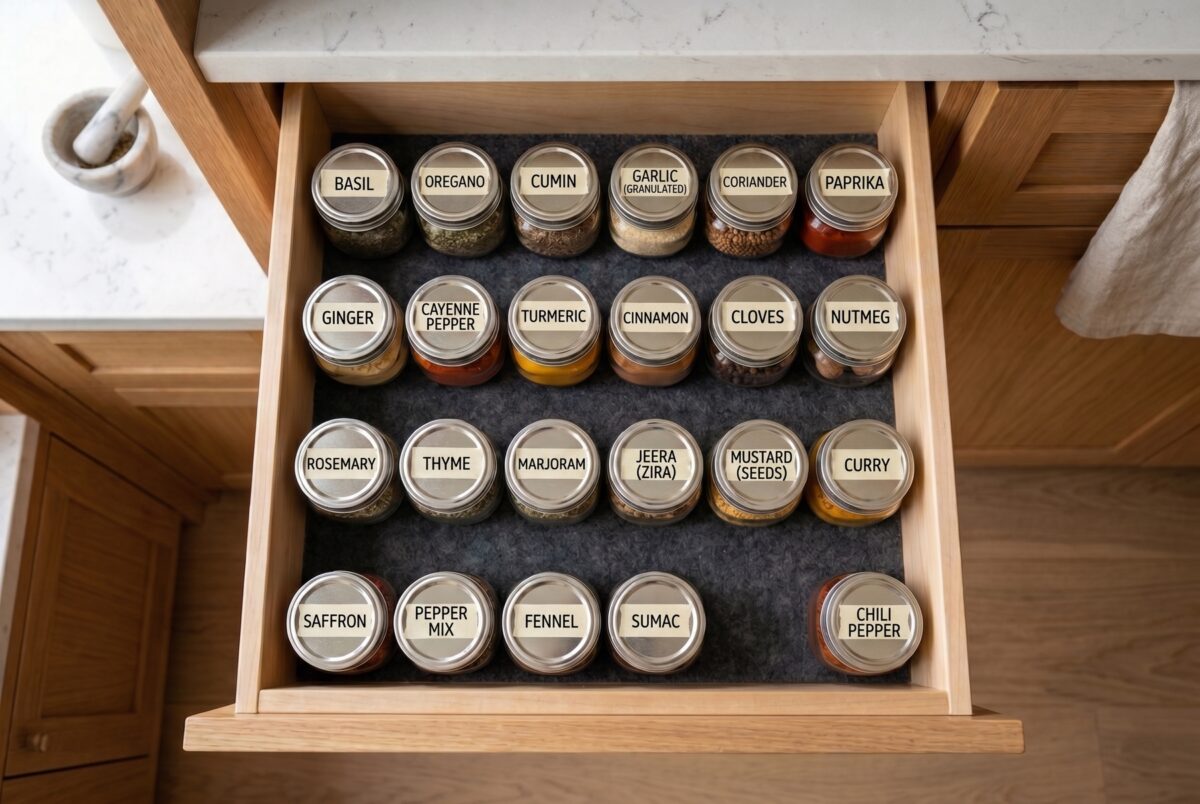
Proper organization featuring airtight glass jars in a dark drawer preserves the flavor of seasonings for many months.
Whole Spices: When You Want Real Flavor
These rules only save what is left. Discovering the true flavor of cumin or coriander requires buying them whole and grinding them right before cooking.
Whole seeds last incomparably longer than ground ones. Essential oils remain locked inside and only emerge upon grinding. The difference in aroma between pepper fresh from a mill and ground pepper from a jar that has sat for half a year presents a contrast noticeable even without special culinary training.
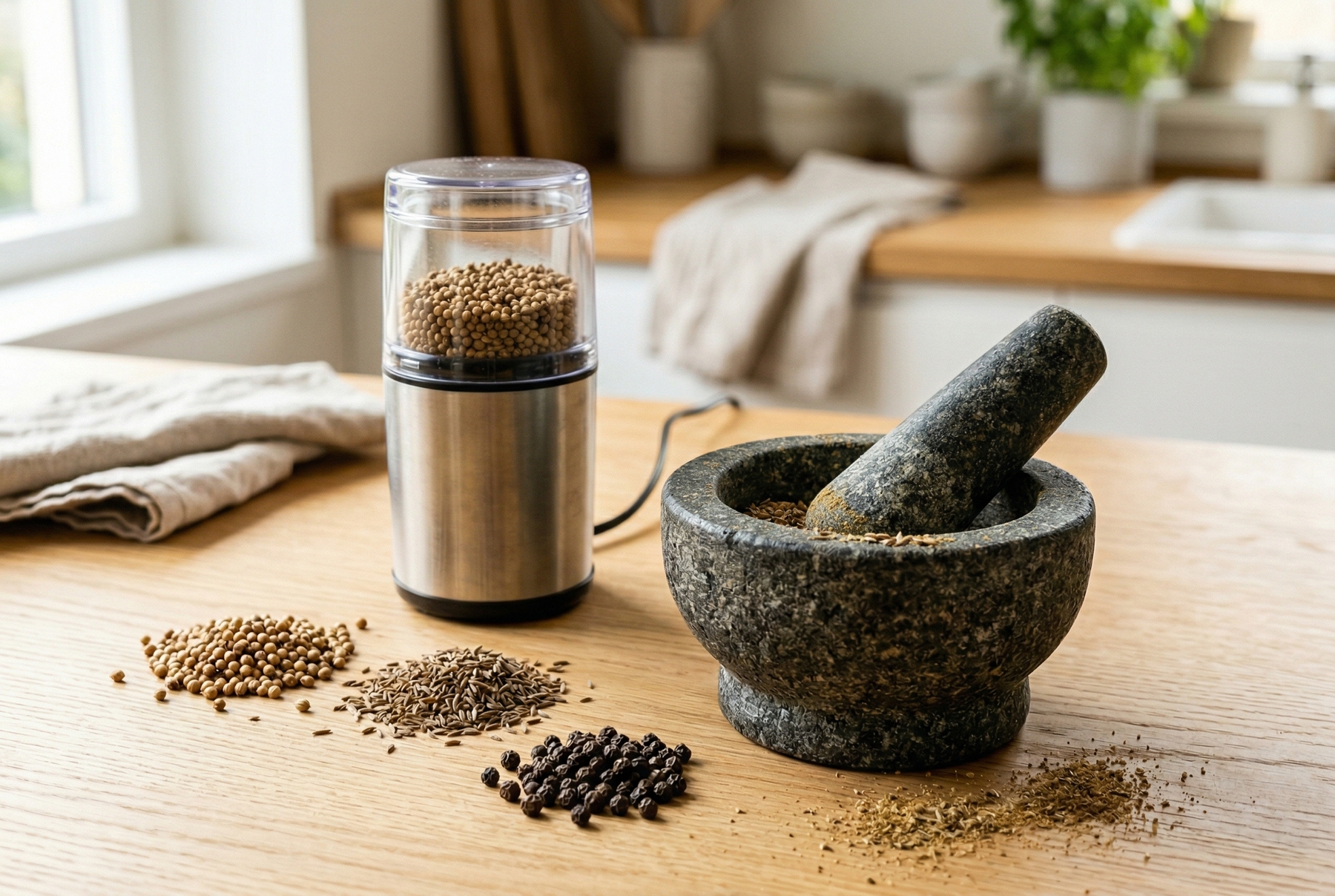
Freshly grinding whole seeds with a mortar or a dedicated coffee grinder yields vastly more flavor and aroma than store-bought pre-ground blends.
Grinding does not demand professional equipment. A mortar and pestle work beautifully for small volumes, while a cheap electric coffee grinder (dedicated solely to spices) handles harder seeds. A simple grinder effortlessly manages cumin, pepper, and coriander. Pre-toasting on a dry skillet before grinding—30–40 seconds until the first wisp of smoke appears—opens up the seed structure and amplifies the final aroma.
This alters a dish more profoundly than changing the manufacturer, brand, or quantity of spices.
Khmeli suneli stored in a properly sealed glass jar, tucked away in a dark drawer, far from the stove, retains a working aroma for about six months after opening. Ground black pepper under the same conditions lasts four to five months. Whole black pepper stored this way survives two to three years, and its smell upon rubbing stays sharp, with a pungent resinous note, almost as if freshly opened.
0 comments