
The final credits roll, the screen goes dark, and you sit with your phone, scrolling through recipes for that sizzling pork with glass noodles the main character ate straight from the pan in the middle of the night. The image in your head remains clear: a dark red sauce, the smell of fried garlic, and perfectly crusted meat.
Next comes the supermarket.
You stand in the Asian foods aisle, surrounded by various localized brands and three packages covered in characters where the English translation technically exists, but it features a font and color that make it practically invisible. The clerk does not know what is inside. You do not know. Everyone pretends to know.
Korean cuisine functions much more simply than this chaos suggests. It possesses a clear flavor logic, and once you understand the foundation, this entire aisle stops looking like a puzzle. We will break down exactly where you should start.
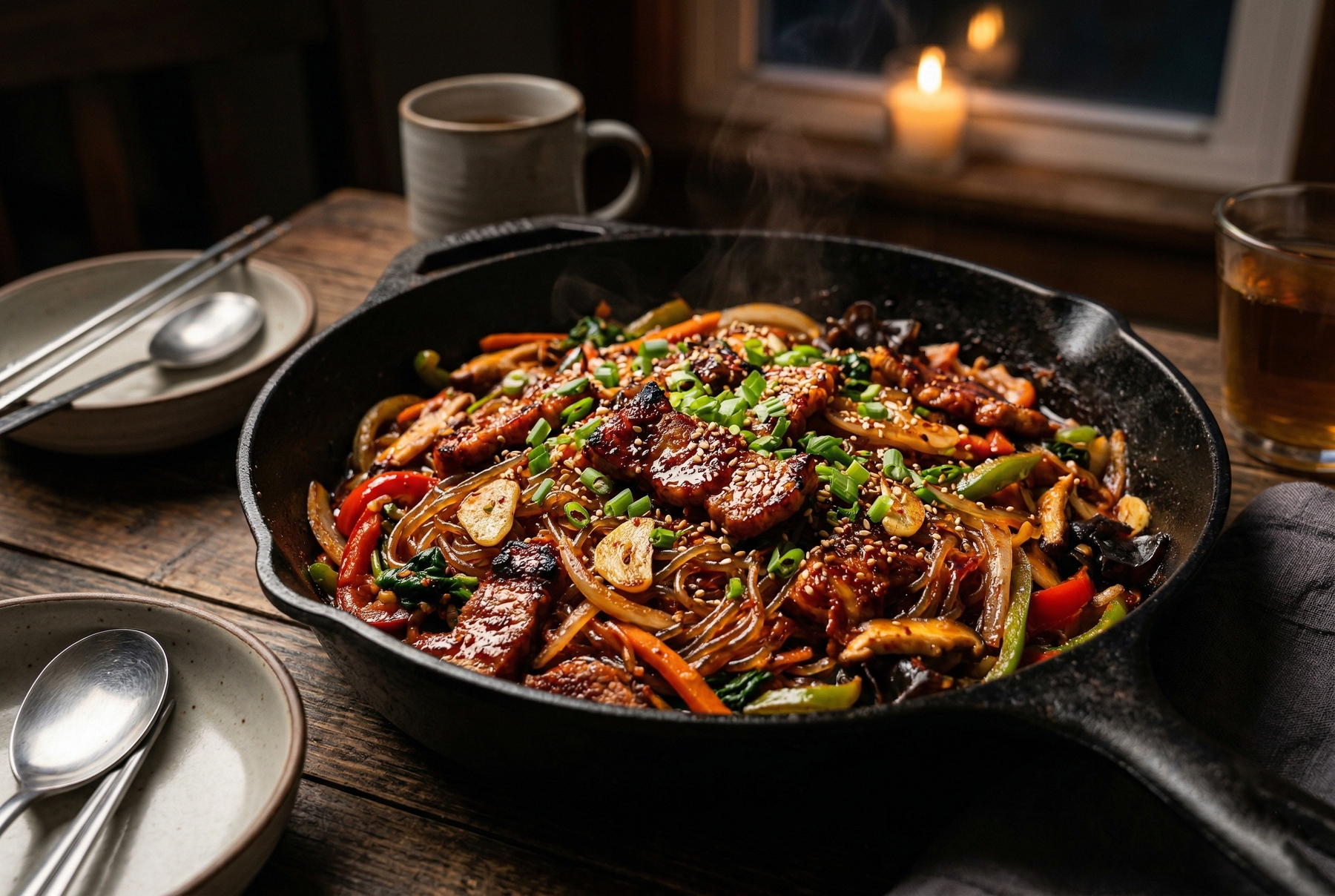
The unmistakable flavor from K-Dramas: fried pork with vegetables and glass noodles in a thick sauce.
Table of Contents
The “Holy Trinity” of Korean Cuisine
Korean cuisine relies heavily on a few fermented pastes. This goes beyond exotic appeal; fermentation plays the same role here as aged cheese or cured meat does in European cooking. It concentrates flavor, adding depth and umami. The three primary pastes you need are sold in standardized, color-coded packaging in Korea. This acts not as marketing, but as a practical navigation tool for buyers.
Gochujang: The Red Box
Gochujang (fermented chili paste) appears as a thick, dark red mass with an aroma that simultaneously delivers heat, sweetness, and a slightly smoky note. Its base consists of fermented chili peppers, glutinous rice, and soybeans. The taste lacks sweetness in the traditional sense, but it features a distinct sweet background that beautifully balances the heat.
Gochujang serves as the foundation for marinades, braising liquids, and dressings. Without it, you cannot create tteok-bokki (simmered rice cakes), jeyuk-bokkeum (spicy stir-fried pork), or most of the dishes you see in television dramas.
Online marketplaces typically sell gochujang in 500-gram (1.1 lb) containers. This represents the optimal volume for beginners. Purchasing a full kilogram right away often proves unwise; while the paste stores exceptionally well, you need to develop the habit of cooking with it first. Otherwise, it simply sits in the refrigerator for six months as a silent reproach.
You should search for “gochujang”. The most common brands available include Chung Jung One, O’Food, and Sempio.
Doenjang: The Brown Box — An Umami Bomb
Doenjang is a fermented soybean paste. Visually, it resembles a dark brown putty with an uneven texture and a rather heavy, earthy, and sour-salty aroma. The smell might surprise the uninitiated, especially those unfamiliar with long-fermented products.
On the palate, the umami feels dense and almost enveloping, delivering a saltiness without unnecessary harshness. In Korea, cooks use doenjang to boil everyday soups like doenjang-jjigae, incorporate it into marinades, and use it as a seasoning for stewed vegetables.
If you cannot find doenjang locally and prefer not to order it online, light Japanese miso paste (shiro miso or shinshu miso) works as an absolute last resort. It appears in almost every store. The flavor profile will remain milder and less intense, offering a slightly different register of umami, but it suffices for a base. Dark (hatcho) miso proves too concentrated and carries a vastly different character, so skipping it remains the best choice.
Ssamjang: The Green Box — A Sauce for the Lazy
Ssamjang (seasoned dipping paste) offers a ready-made mixture of gochujang and doenjang, enriched with garlic, sesame oil, and occasionally onions. Essentially, it provides a lazy solution for those who prefer not to mix pastes themselves. The flavor profile feels more balanced and less aggressive than each paste individually.
In Korea, diners dip barbecue meat into it when wrapping a piece in a lettuce leaf with rice. However, this sauce works perfectly at a backyard barbecue as well. Serving ssamjang alongside a pork neck skewer yields excellent results. The combination of fatty, smoky pork with this umami-rich, mildly spicy paste seems non-obvious but functions flawlessly.
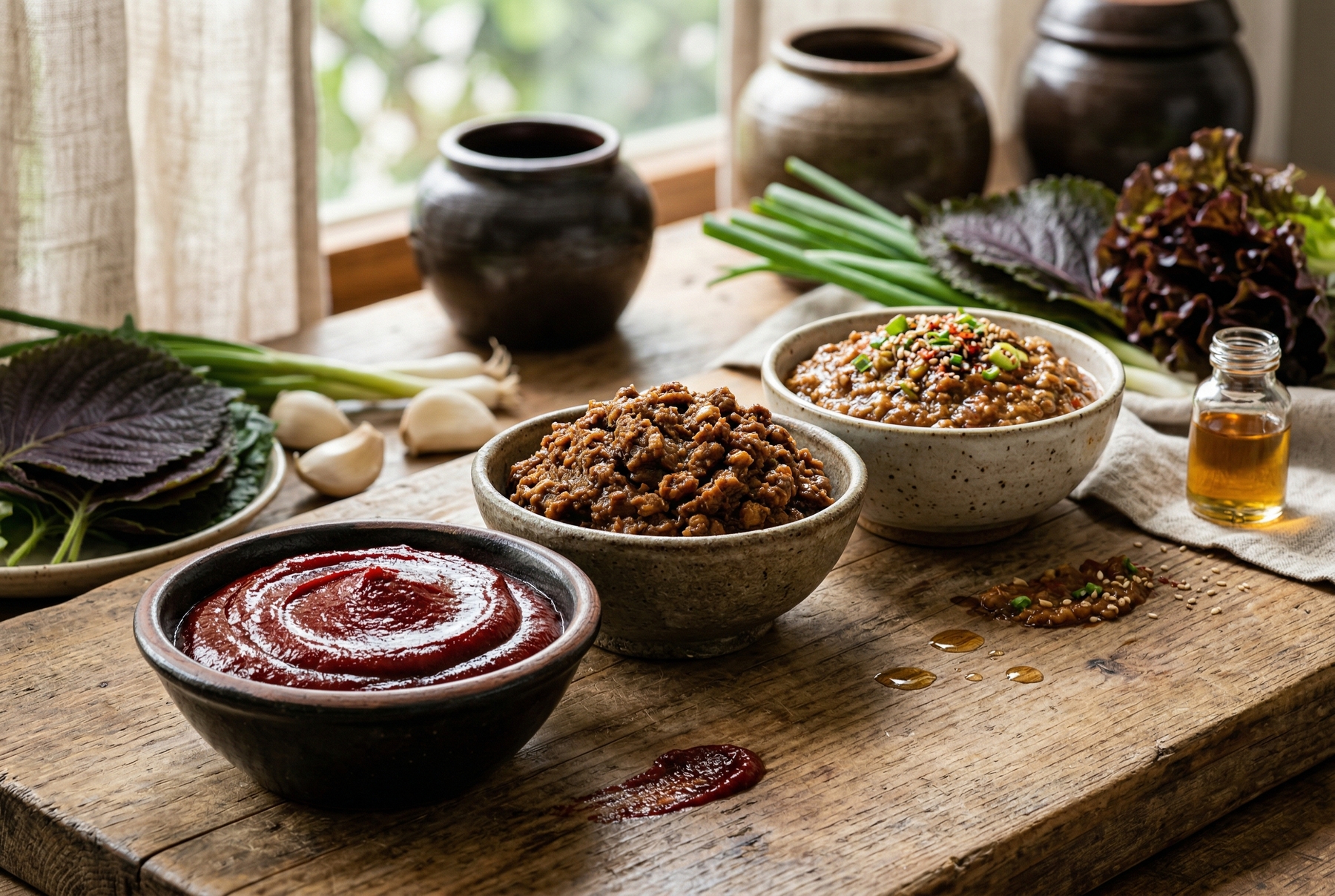
The “holy trinity” of Korean cuisine: fermented pastes that build deep flavor in any dish.
Gochugaru: Not Just Red Pepper
Adapting Korean cuisine often leads to one massive mistake. When a recipe calls for “2 tablespoons of chili flakes,” people instinctively reach for a packet of ground red pepper from the nearest store, assuming that red pepper simply means red pepper.
It does not.
Gochugaru (Korean chili flakes) represents a specific product with a distinct profile. The peppers dry in the sun before being ground into coarse flakes. The taste delivers moderate warmth, a subtle sweetness, and a slightly smoky undertone. It imparts a rich, brick-red color to the dish. The heat level sits much lower than most ground peppers found in European spice racks.
Substituting regular hot ground pepper for gochugaru results in an inedibly spicy dish that tastes flat and loses its vibrant color, turning a dull brown instead of a lively red. This goes beyond mere flavor differences; it essentially involves a completely different product.
You must search specifically for gochugaru. While rarely found in physical supermarkets, Asian grocery web stores carry it consistently. Stored in a sealed bag in the refrigerator, it retains its color and aroma for several months.
The Base You Already Have at Home
Three fundamental Korean ingredients likely already sit in your kitchen.
Soy Sauce. A nuance exists here. Many supermarkets carry thick, dark sauces labeled “for sushi” or “teriyaki,” which tend to be sweet, occasionally containing added sugar or starch. Korean marinades require classic light soy sauce without additional flavorings. It pours as a thin liquid, appears transparent brown in the light, and tastes salty without excess sweetness. Standard Kikkoman serves as a reliable benchmark.
Sesame Oil. The variety sold almost everywhere works perfectly, provided one condition is met. The oil must be dark (pressed from toasted seeds) and emit a sesame aroma strong enough to detect through the cap. Pale yellow, odorless oil indicates refined cooking oil, which completely misses the mark.
Garlic. Domestic garlic, especially varieties grown outdoors, packs a sharper and more intense flavor than the average Asian garlic featured in Korean recipes. If a recipe demands 6 cloves, starting with 4 provides a safer approach. Overcooked, overly pungent garlic introduces a lingering bitterness into a marinade.
The Universal Constructor: A Marinade Formula
Most authentic Korean flavors arise from variations of the exact same proportion. Mastering it once allows you to adapt it for any meat and any desired spice level.
The basic marinade formula for 500–600 g (1.1–1.3 lbs) of pork belly or chicken thighs includes:
— Gochujang: 2 tablespoons
— Soy sauce: 1.5 tablespoons
— Sesame oil: 1 tablespoon
— Garlic (grated): 3–4 cloves
— Sugar or honey: 1 teaspoon
— Ginger (grated, fresh): approximately a one-centimeter piece
Mixing everything until smooth and coating the meat prepares it perfectly. Leaving it for a minimum of 30 minutes works, but an overnight rest yields better results. A gochujang-based marinade operates slowly, penetrating deeply without destroying the meat’s structure.
On a skillet or grill, the meat behaves predictably. The sugar caramelizes rapidly, granting the surface a dark, slightly sticky crust carrying the scent of roasted pepper and garlic. This exact aroma mimics what you observed on screen.
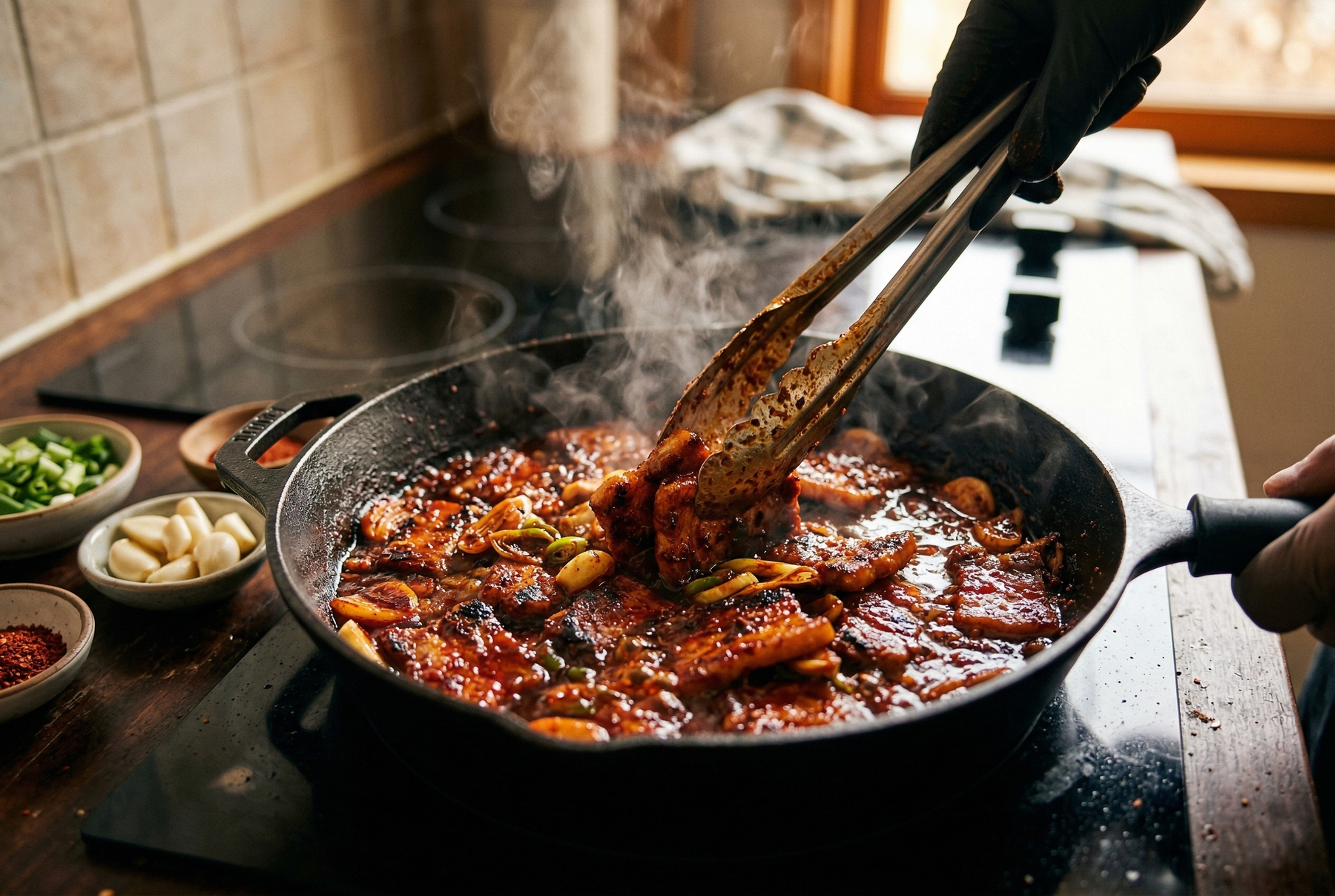
A proper gochujang-based marinade caramelizes during frying, creating that legendary crust.
How to Replace Exotic Ingredients
A few ingredients in Korean recipes appear intimidating but swap out easily.
Rice Syrup (Jocheong). This thick, light syrup imparts a mild sweetness devoid of caramel notes. Liquid, non-floral honey or a standard 1:1 simple syrup works as a suitable replacement. The flavor shifts slightly, but the difference remains minimal within a marinade.
Mirim (Korean cooking wine, often listed as mirim or cheongju). Finding this takes effort. The closest alternative involves a splash of dry white wine or water mixed with a pinch of sugar. Apple cider vinegar serves only as a last resort in very small quantities, as it introduces an acidity absent in the original recipe.
Asian Pear (Pyrus pyrifolia, or Korean pear). Cooks add this to marinades as a meat tenderizer; its high enzyme content effectively breaks down proteins. A regular ripe pear or a kiwi serves as an excellent replacement.
Using kiwi demands attention. Its enzymes act aggressively. Leaving meat in a kiwi marinade for over 20–30 minutes breaks down the texture too quickly, turning a juicy cut into something resembling pâté. You should allow a maximum of half an hour and absolutely avoid overnight kiwi marinades.
How to Store This Wealth
Purchasing a pound of gochujang and preparing a single dish leaves you with a large tub sitting on the shelf. The next steps matter.
Fermented pastes (gochujang, doenjang, ssamjang) boast a long shelf life. They survive in the refrigerator for several months to a year after opening. One strict rule applies: you must never dip a dirty or wet spoon into the paste. A single contact with foreign microflora or water triggers unwanted mold growth.
The routine remains simple: use a dedicated clean spoon, extract the required amount, seal the lid tightly, and return the tub to the refrigerator. Flattening the surface of the paste and pressing a piece of plastic wrap directly against it removes air contact and extends the product’s lifespan.
Sesame oil requires different storage. Once opened, it oxidizes quickly when exposed to light and heat, turning rancid as its pleasant nutty aroma shifts to an unpleasant sharpness. Storing it in a dark place, preferably the refrigerator, preserves it. If the oil begins to smell pungent rather than nutty, discarding it immediately proves the best course of action.
Gochugaru requires storage in a tightly sealed bag, ideally inside the refrigerator. Exposure to air and light quickly strips away its vibrant color and aroma, leaving it dull and flat.
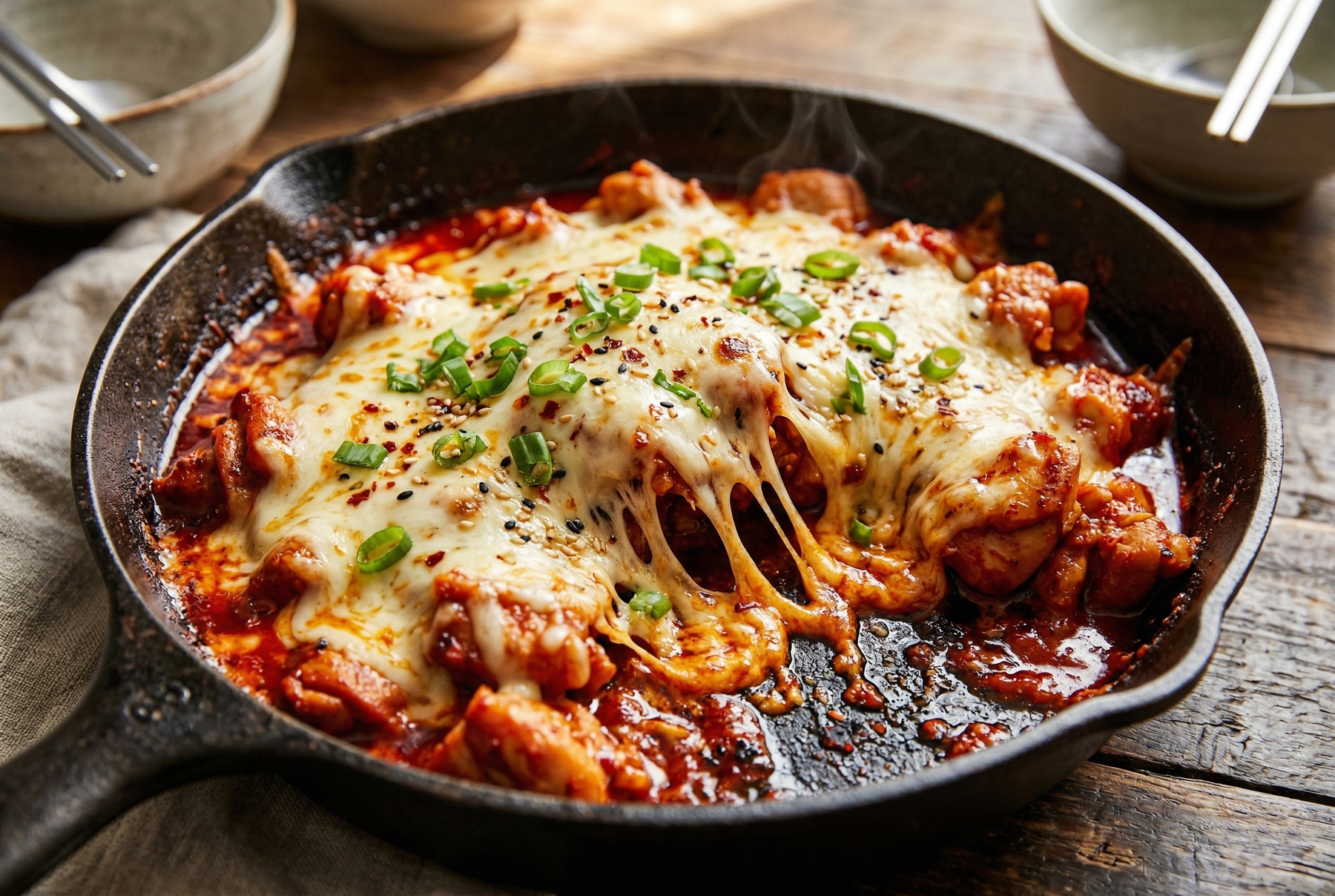
Mozzarella cheese serves as the perfect rescue for overly spicy dishes, adding a tender texture.
What to Do When Food Turns Into Lava
Mistakes happen. Adding too much gochujang or tossing in gochugaru by eye can result in steam that brings tears to your eyes.
Several reliable methods exist to salvage the situation:
Sugar or Honey. A small amount of sweetness effectively neutralizes heat by distracting the flavor receptors. Adding it gradually, half a teaspoon at a time, and tasting after each addition works best.
Rice. Boiled rice sitting next to a spicy dish acts as a fire extinguisher. The starch gently coats the mouth. While it does not fix the dish itself, it renders the meal edible.
Coconut Milk or Cream. If the dish features a liquid base, such as a soup or stew, adding a fatty base dilutes the concentration of spice. The flavor profile will shift toward a spicy curry, but this outcome beats throwing the food away.
An unexpected savior arrives in the form of cheese. In Korea, diners traditionally consume extremely spicy chicken (buldak, or “fire chicken”) with stretchy mozzarella. Melted, neutral cheese physically reduces the sensation of heat while simultaneously creating a textural contrast: spicy, fatty, and stringy. This combination transcends street food novelty; it represents a Korean hit that has long since infiltrated chain restaurants.
If your chicken turns out overwhelmingly spicy, sprinkling it with grated mozzarella and placing it under the grill (or oven broiler) for 3–4 minutes will likely save your dinner.
0 comments