
There is a category of people for whom a boiled carrot on a plate feels almost like a personal insult. They demand something familiar, hearty, and preferably meat-heavy. Yet the body, even the most conservative one, requires fiber to keep its internal systems running smoothly. If the unspoken rule in a family dictates that “the best fish is sausage,” charging straight ahead is useless. A more subtle approach is required.
Replacing a steak with broccoli as a show of force only leads to a ruined evening. Instead, the vegetables are hidden so that the texture of the dish remains familiar, while the nutritional value increases. This does not require lectures on vitamins and fiber—only the right technique. Technique is the deciding factor here: it determines whether a vegetable dissolves into the meat juices or sticks out of a patty as an unwanted identifying marker.
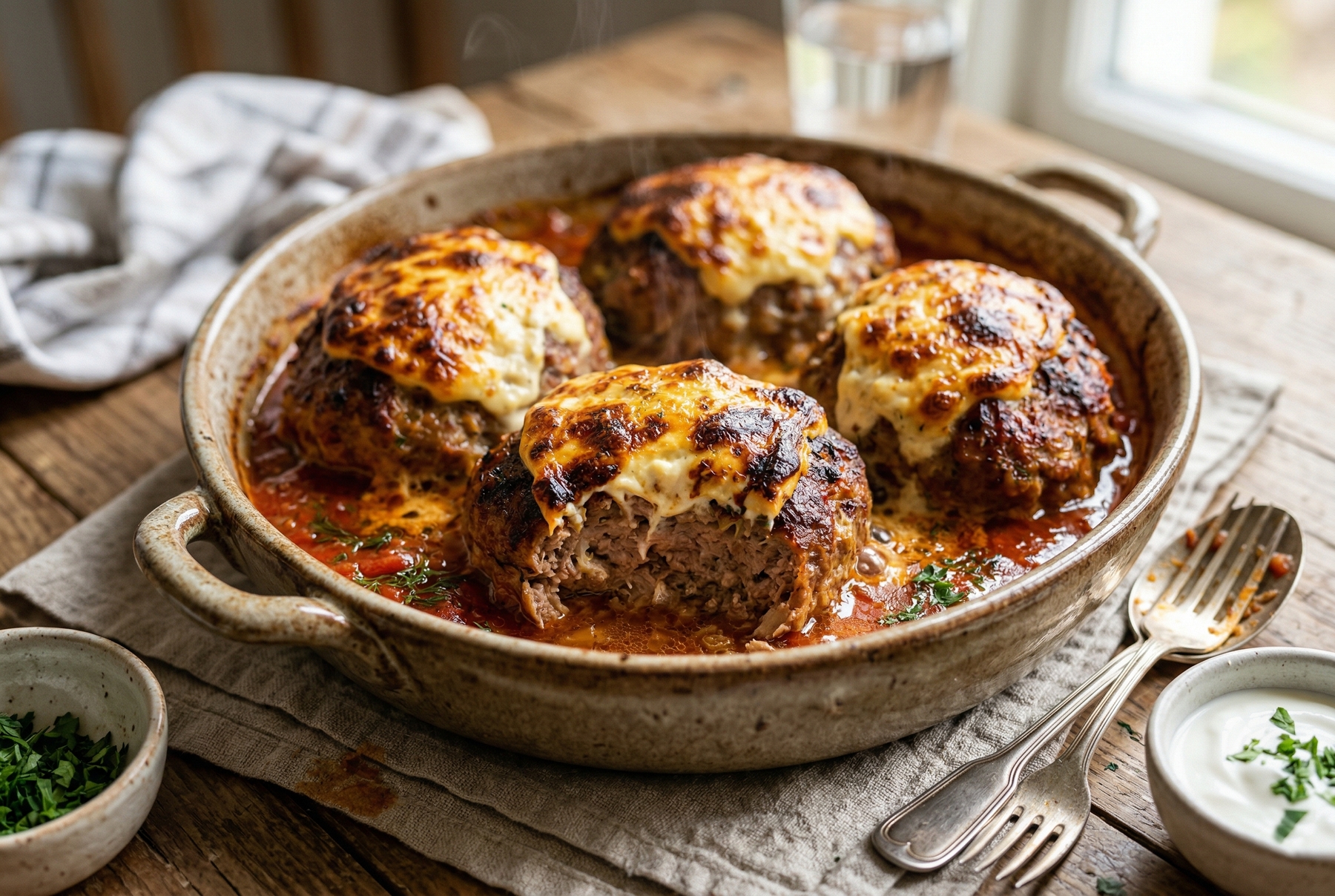
Proper cabbage shredding and baking under sour cream and cheese turn ordinary golubtsy into an exquisite meat dish.
Secret-Stuffed Pelmeni (Russian Dumplings)
The filling in traditional pelmeni (Russian meat dumplings) often turns out dense and slightly dry precisely because it consists entirely of meat. Napa cabbage corrects this issue: the same trick that makes Asian gyoza so juicy works perfectly here. The cabbage is finely shredded, salted, and left for about ten minutes. Then it is squeezed with full force to produce a dry pulp without any excess water. This is mixed with fatty pork (or a 1:1 blend of pork and beef). During boiling, the cabbage dissolves into the meat juices, resulting in a soft, almost creamy filling that bears no resemblance to the hastily made dumplings from store-bought ground meat. The family will not even realize what the trick is.
Lazy Golubtsy (Cabbage Rolls) Without the Cafeteria Taste
Forget the cafeteria-style golubtsy with their massive sheets of overcooked cabbage. Here, proper meat patties are crafted, with the vegetable acting merely as a textural enhancer. The cabbage is shredded into thin strips, similar to a salad but shorter. The ratio is crucial: 30% cabbage to 70% ground meat. Chopping it coarsely requires a long braise, which dries out the meat and gives the cabbage away. Finely shredded cabbage cooks in the same amount of time as the meat, while its thin fibers trap the juices inside, making the patty remarkably fluffier than usual. A few minutes before they are done, a spoonful of sour cream is placed on each patty and covered with a lid, or better yet, transferred to the oven for 5 to 10 minutes. The sour cream bakes into a golden crust, enriching the flavor profile.
Crispy Chopped Nuggets With a Secret Ingredient
Whining inevitably begins the moment children spot a hint of a vegetable on their plate. Here, the secret agent—zucchini—vanishes completely, leaving behind neither color nor aftertaste. The process is straightforward: it is grated on the finest grater, salted, and left for five minutes. Then—and this is critical—it is squeezed through cheesecloth or simply wrung out by hand down to the last drop of moisture. Skipping the squeezing step results in a shapeless mush. The dry pulp simply disappears into the ground meat, preventing the protein from seizing into a dense lump and keeping the inside of the nugget perfectly tender.
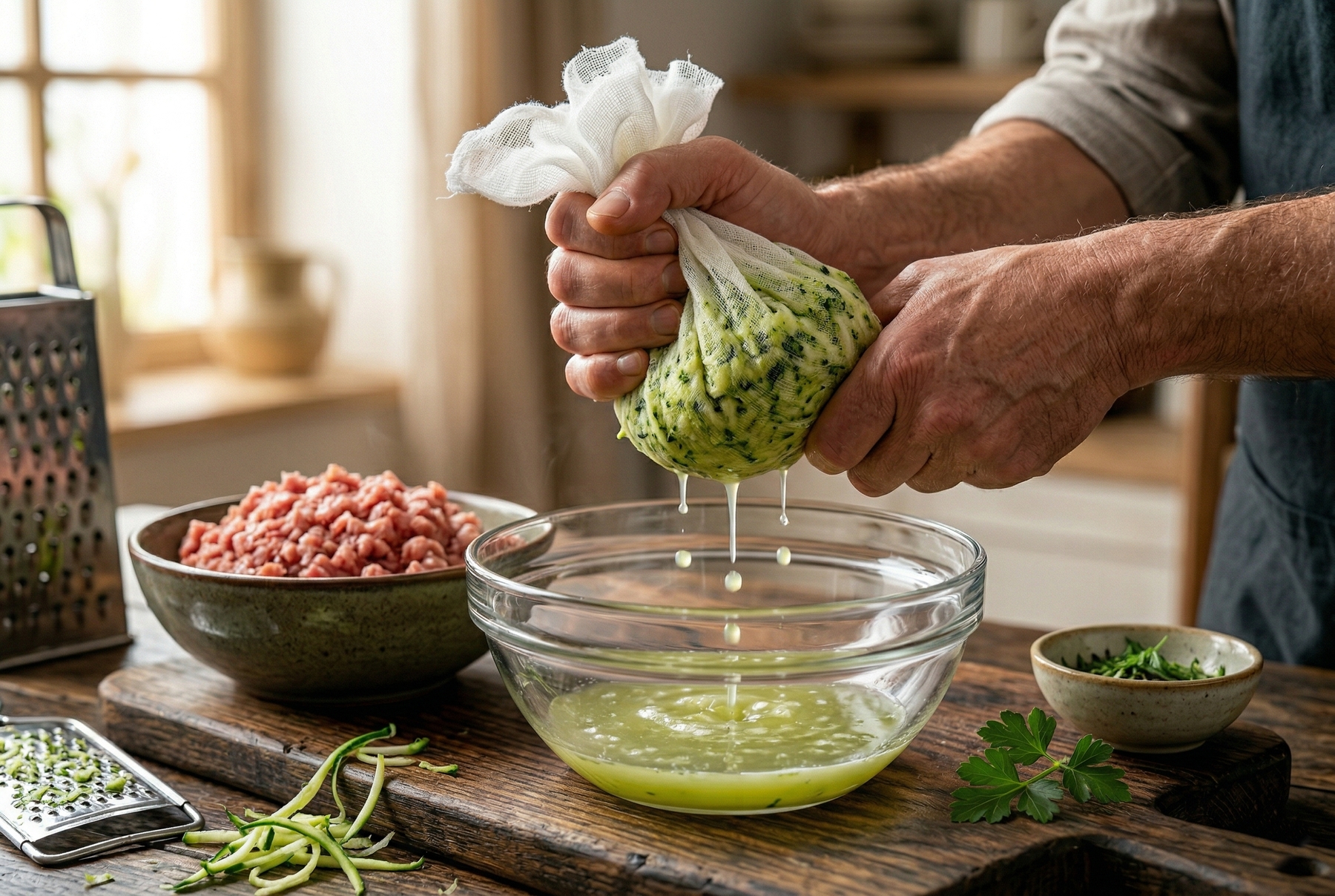
A critically important step: the zucchini must be squeezed dry so the nuggets hold their shape and do not turn into mush.
Next comes the crust. Standard breadcrumbs tend to get soggy and offer empty calories, so they are replaced with equal parts finely ground oat bran and grated Parmesan. The nuggets are coated in this mixture and sent to a skillet or oven. The exterior develops a robust crunch, amplified by the melted, baked cheese. Nobody will guess that the breading features oat bran.
Chili Con Carne: The Bean Mimicry
Red beans in a thick, spicy sauce behave very cleverly when given enough time. Canned beans are rinsed to remove their viscous liquid, which can introduce an unpleasant aftertaste. They are then simmered slowly alongside the ground meat for 40 to 60 minutes over low heat. During this time, the skins thin out, and the centers turn creamy. Two cans are confidently used per half a kilogram (1.1 lbs) of ground meat. Thanks to the chili peppers and spices, the beans disguise themselves flawlessly as tender morsels of meat.
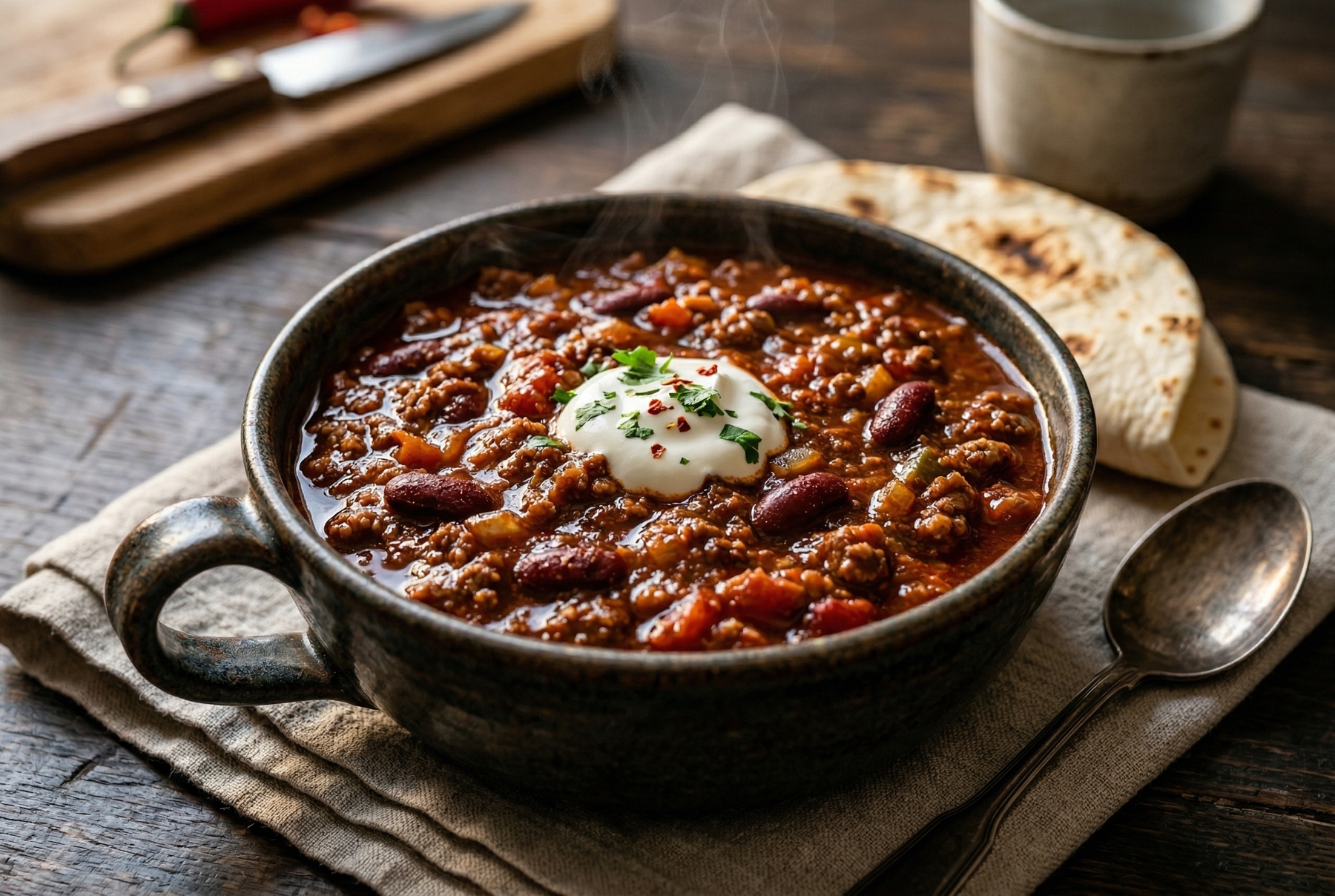
Prolonged simmering softens the bean skins, allowing them to blend perfectly with the texture of the ground meat.
Meatballs on a Chickpea Foundation
Chickpeas offer an excellent alternative to conventional rice (pure starch) or bread. Canned chickpeas (rinsed) work well, or dry ones can be soaked and boiled until completely soft. Uncooked dry chickpeas will pull all the moisture out of the meat and remain rock-hard—a mistake best avoided. The cooked chickpeas are pulsed in a blender in short bursts until they form fine crumbs (a hummus texture is not the goal) and mixed with ground beef. Chickpeas possess a mild nutty flavor that pairs unexpectedly well with beef. The resulting meatballs are dense and deeply satisfying.
Navy-Style Pasta: A Neo-Classic
Ordinary navy-style pasta (a classic Russian comfort dish of macaroni and ground meat) transforms when celery root, grated almost to dust, is added to the sautéed base. Frying it with onions eliminates its sharp odor, replacing it with a deep, broth-like aroma that invites eating it straight from the spoon. A generous handful is added directly to the meat. Visually, the celery blends right into the meat granules, rendering the sauce thick and robust. Moderation is key here: an extra cup of grated celery will leave the kitchen smelling like a vegetable warehouse. A handful is perfectly sufficient.
Plov: The Double Carrot Method
Carrots in plov (Central Asian rice pilaf) surprise no one, but the approach here gets a slight adjustment. One portion is cut in the standard way for the zirvak (the aromatic base), yielding color and sweetness. The second portion is shredded on a mandoline to resemble Korean-style carrots and added a bit later. These long, thin strips do not cook down to mush. In the finished plov, they provide a delicate, slightly sweet addition while quietly boosting the fiber content more than coarsely chopped carrots ever could.
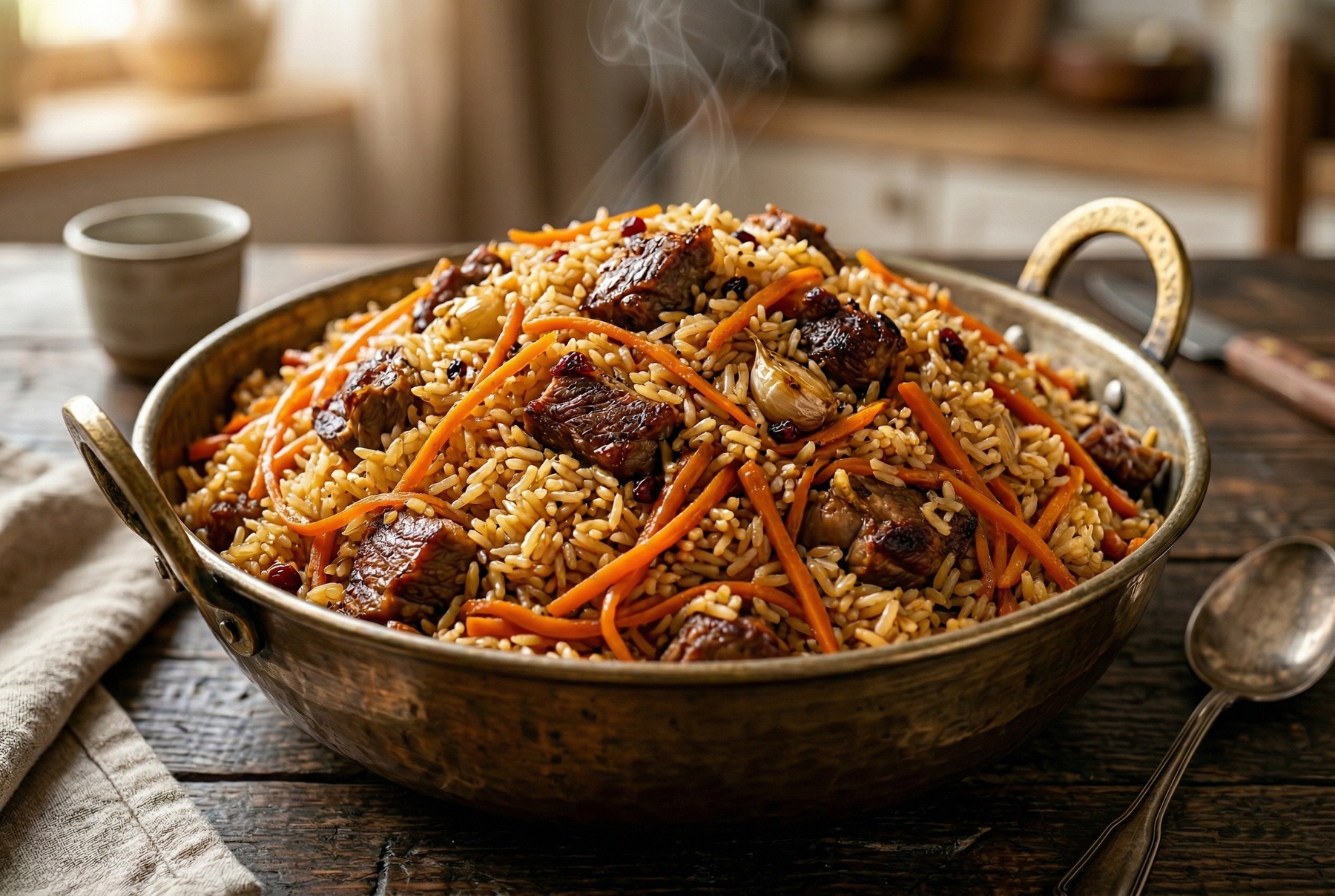
Using two different carrot cuts adds more fiber while preserving the classic taste and appearance of the plov.
Spinach Meatballs
This sounds terrifying to culinary conservatives. In reality, it holds a black belt in disguise. Fresh spinach cannot simply be tossed into the ground meat, as it releases water and causes the patty to fall apart. It must be blanched (scalded with boiling water or flashed in a hot skillet for a second), thoroughly squeezed, and only then finely chopped. A handful of this prepared spinach goes into 300 to 400 grams (10.5 to 14 oz) of meat. It shrinks significantly upon heating, turning into tiny green specks inside the meatball that completely vanish on the palate when covered in sauce. The meat, however, becomes noticeably juicier.
Pasta Bolognese: A Double Strike
The classic base of onion, carrot, and celery is pureed in a blender into a fine paste and sautéed until thick, allowing the vegetables to dissolve completely into the sauce without leaving a trace of their presence. This rich sauce is paired not with regular macaroni, but with legume-flour or whole-grain pasta. Color can be introduced via vegetable juices like beet or spinach. Making homemade pasta is quite straightforward, and the nutritional profile elevates the meal entirely. It turns out hearty, and no one at the table will ever suspect they are consuming a double portion of fiber.
Umami Meatloaf
A meatloaf made merely with mushroom pâté might seem somewhat bland. Mushrooms contain chitin, a type of dietary fiber, though not quite on the level of legumes or bran. They require backup. Adding a couple of finely chopped sun-dried tomatoes or a dash of Worcestershire sauce to the mushroom mixture (sautéed and blended mushrooms) works wonders. These additions amplify the meaty flavor of the mushrooms, ensuring that absolutely no one picks the filling out of their slice.
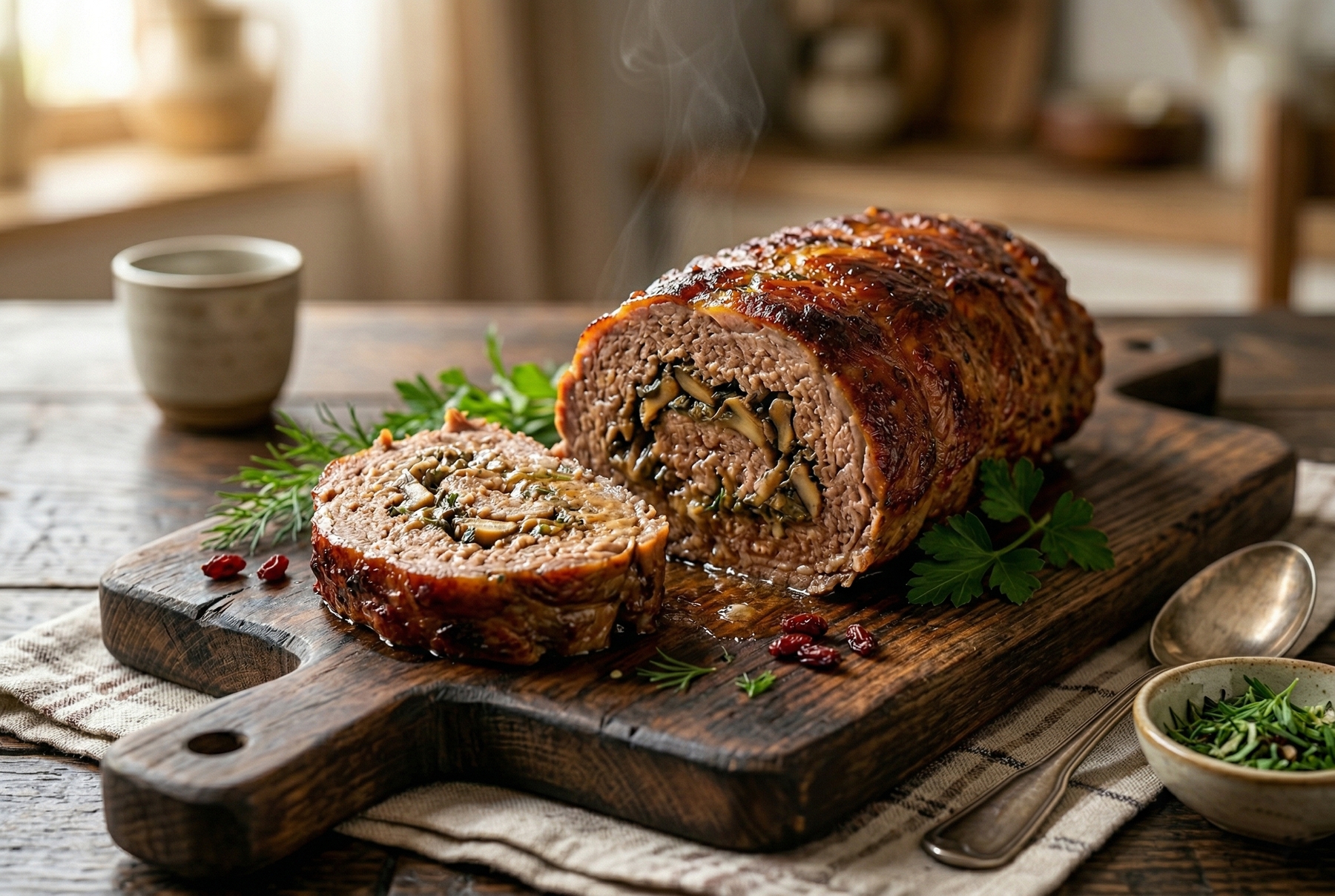
Mushrooms and sun-dried tomatoes create a deep umami flavor, making the meatloaf even more satisfying and aromatic.
Mock Mashed Potatoes
This represents a risky move. Yet, when executed correctly, it never fails. Mashed potatoes are blended with cauliflower purée (roughly a 70/30 ratio in favor of the potatoes). The cauliflower is boiled until completely tender and rigorously pressed through a fine sieve into a flawless cream; otherwise, lumps remain, and the entire trick collapses. Provided it features a generous amount of good butter, no one detects the substitution. The texture becomes even airier than that of pure potatoes.
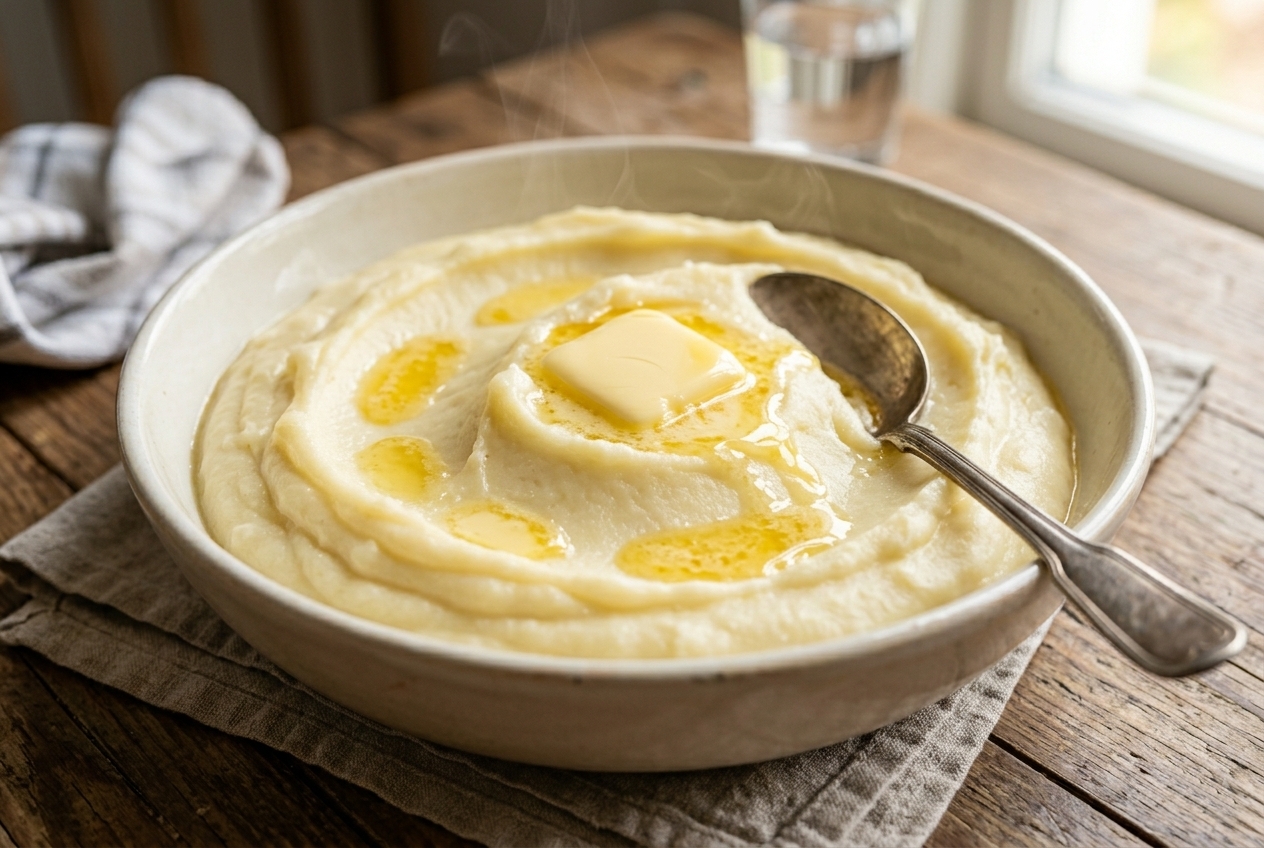
Blending potatoes with pureed cauliflower makes the side dish lighter and airier while retaining its familiar taste.
Flaxseed Burgers
One to two tablespoons of ground flaxseed are incorporated into half a kilogram (1.1 lbs) of burger meat. It is simply mixed into the ground meat before shaping and allowed to rest for about ten minutes. The flax absorbs excess meat juices, swells, and acts as a binder. The patty holds together beautifully during grilling, developing a firmer texture.
Scare tactics have long claimed that flax contains phytoestrogens that lower testosterone in men. Studies dismantled this myth long ago: a couple of spoons of flax a day has zero impact on hormonal balance. Thus, manhood remains intact, while the heart reaps significant benefits, particularly for those over forty.
Introducing all these techniques is best done quietly, without grandiose speeches about transitioning to a healthy diet. The goal is not to medicate, but simply to cook delicious food.
0 comments