
In 2009, Lebanon set a Guinness World Record for the largest plate of hummus. In January 2010, Israel broke it. In May 2010, Lebanon reclaimed the title, and it has remained theirs ever since. This tells the story of chickpeas, tahini, and the ongoing debate over which neighbor invented the appetizer they both have eaten for centuries.
I have observed the hummus wars for years. The longer you watch, the clearer it becomes that this was never a dispute about a recipe. It is a debate about belonging. It centers on who can claim ownership of a dish prepared in the Levant long before modern states existed. Chickpeas and tahini serve as a shared cultural landscape where different nations tell their stories.
Removing politics and focusing solely on the cuisine makes the picture grow more intriguing. Hummus is not a monolith. The name conceals several distinct dishes, each with its own character.
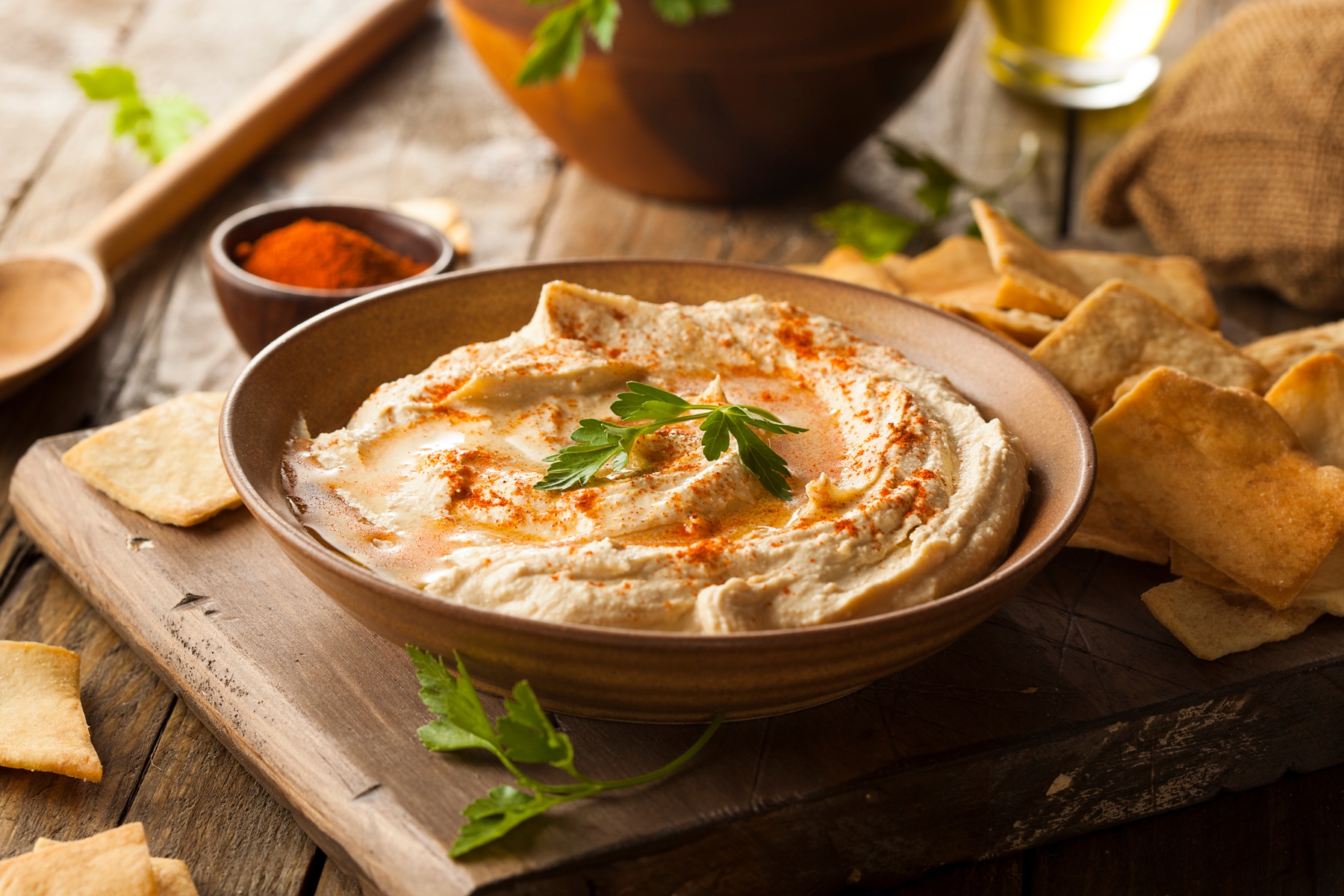
The classic presentation of hummus with olive oil, paprika, and crispy pita represents the gold standard of Levantine cuisine.
Table of Contents
A Map of Flavors: Three Main Poles of the Hummus World
The Ultra-Smooth Emulsion
Most of us recognize this hummus from Lebanese restaurants. It is light, almost airy, and swirled into a perfect circle with a wide spoon. Tahini (a rich sesame seed paste) acts as a co-author rather than a mere addition here. The ratio of tahini to chickpeas is sometimes so high that the paste clings to the spatula like heavy cream, thick and unyielding.
The secret to this texture lies in the sequence. Whipping the tahini with lemon juice until it forms a dense, slightly pale mass before introducing the chickpeas makes all the difference. Ice water finishes the process. The result lands somewhere between a purée and a mousse: silky, slightly bouncy, with a subtle sesame bitterness beneath a bright lemon topnote. The chickpea grain dissolves completely in this variation, serving only as a backdrop for the tahini.
Chefs prepare this hummus the day before, let it rest overnight in the refrigerator, and serve it with a pool of oil and a few whole chickpeas on top purely for aesthetics. Beirut hummus shops sometimes call it simply “white hummus”: clean, unadulterated, and straightforward.
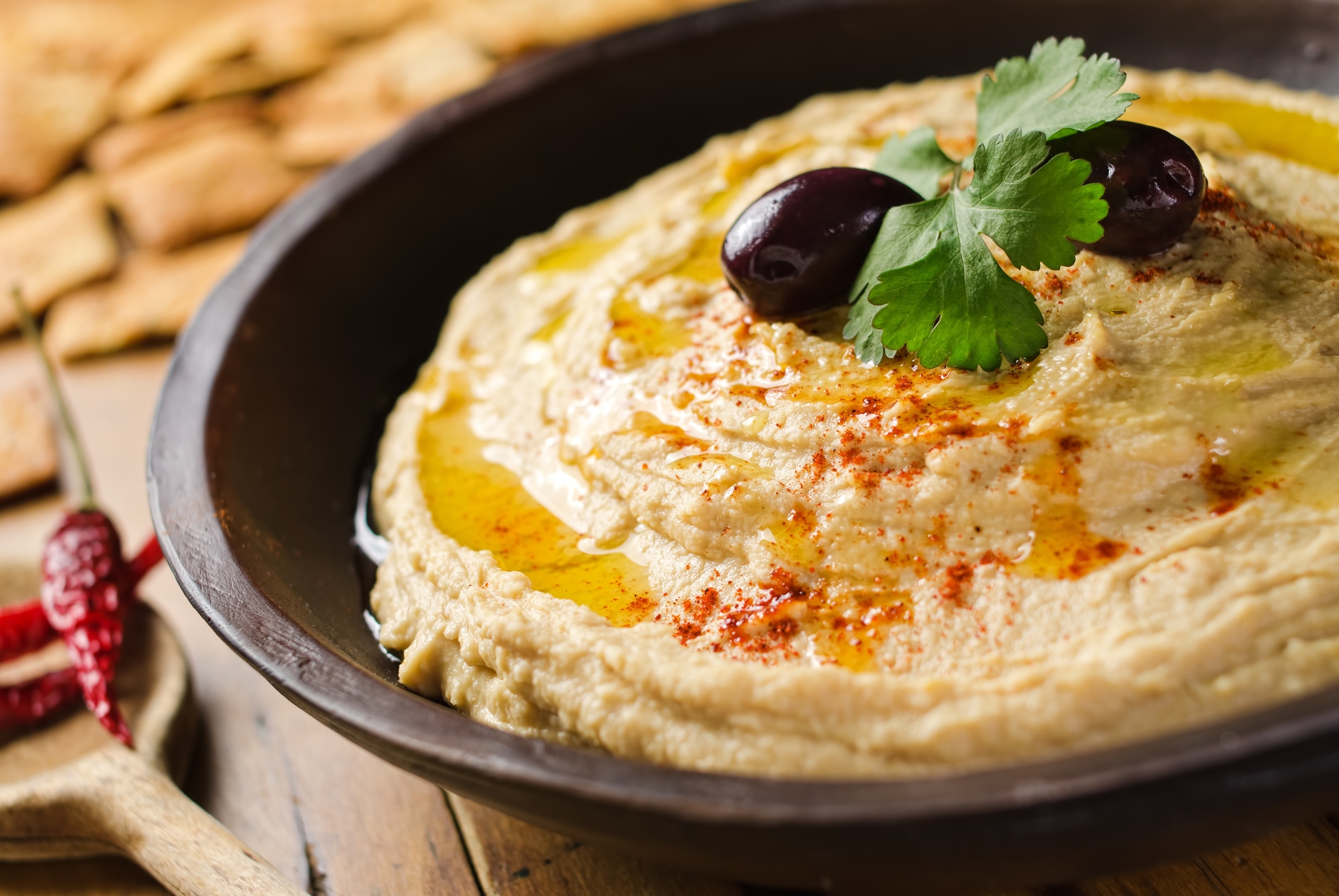
The Lebanese version of hummus features perfect smoothness and a high tahini content, transforming the paste into a delicate mousse.
Musabbaha and the Charm of a Coarse Grind
Musabbaha (a warm, deconstructed hummus dish) stops pretending to be a smooth paste. The chickpeas retain their shape here. Cooks crush them coarsely and unevenly, leaving large chunks. Sometimes, a portion of the grains remains entirely whole. Pouring the tahini over the warm chickpeas allows it to absorb slowly rather than blending through.
Old Jaffa hummus shops, which open in the morning and close by noon (treating hummus as breakfast rather than a snack), serve musabbaha hot. It comes straight from the pot. Tahini, cumin, parsley, and a generous pour of oil crown the dish on a messy, asymmetrical plate, exactly as food meant for eating rather than photographing should look.
This dish feels heartier than “white” hummus. The difference lies in consistency rather than calories. It feels heavier, warmer, and more tangible. The bread meets resistance when dipping. This serves as a lunch format, eaten as a main course rather than a starter before meat.
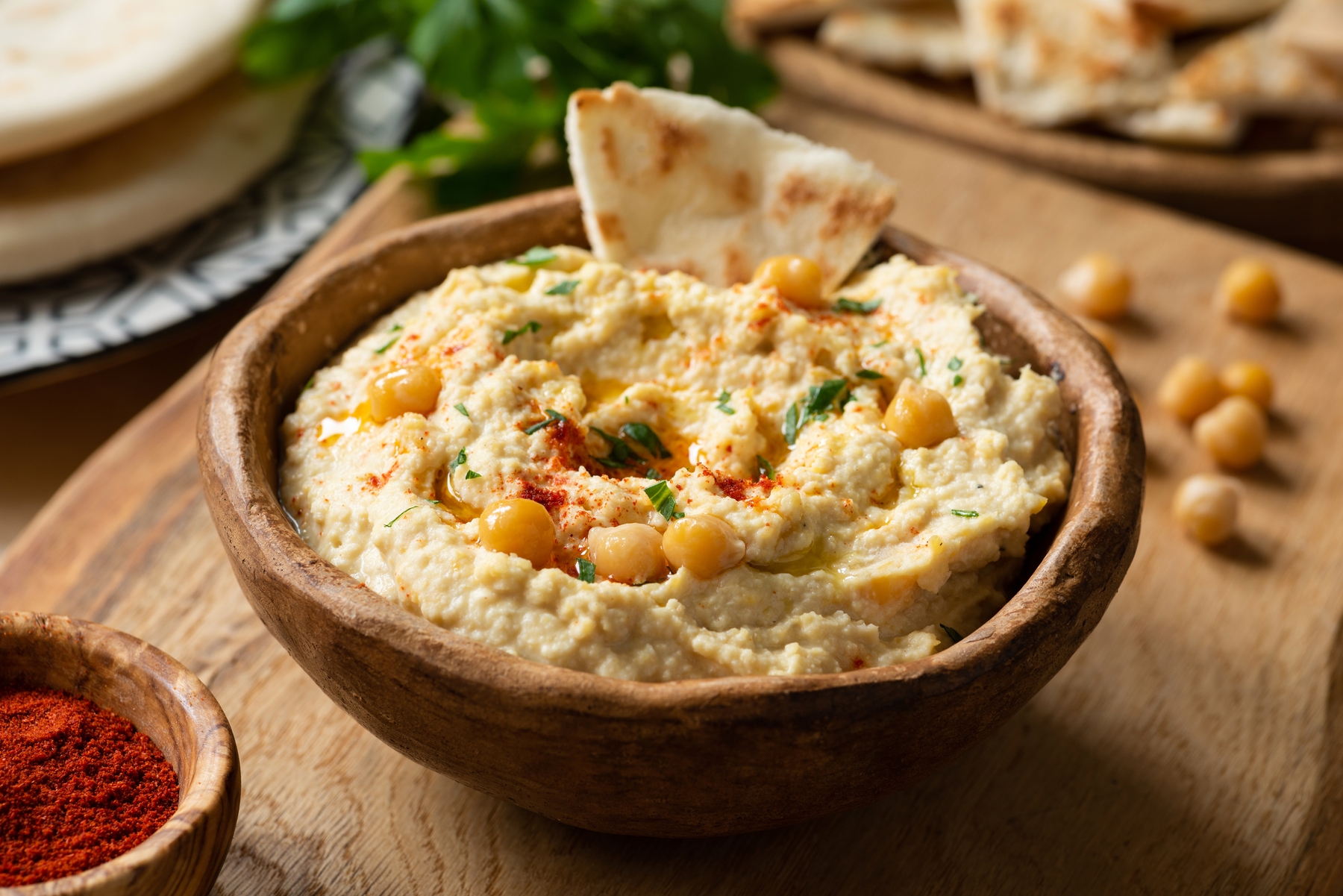
Musabbaha (a warm, deconstructed hummus dish) provides a hearty, coarsely ground variation traditionally served warm as a main course.
The Search for Lightness and Acidic Accents
Syrian and Jordanian hummus versions often shift the balance toward lemon. They feature less tahini, or a more diluted version. The paste emerges lighter, with a distinct acidity that demands accompaniments like olives, fresh herbs, or pickled peppers.
A related dish is fatteh (a layered Levantine dish made of toasted flatbread, chickpeas, yogurt, and tahini sauce). Hummus steps back from the solo spotlight here to become part of a broader flavor profile. The lemon’s acidity and the yogurt’s tartness complement each other without clashing.
If Lebanese hummus resembles a solo concert, the Syrian and Jordanian variations perform as an ensemble. They might seem less expressive on their own, but they truly shine alongside other dishes.
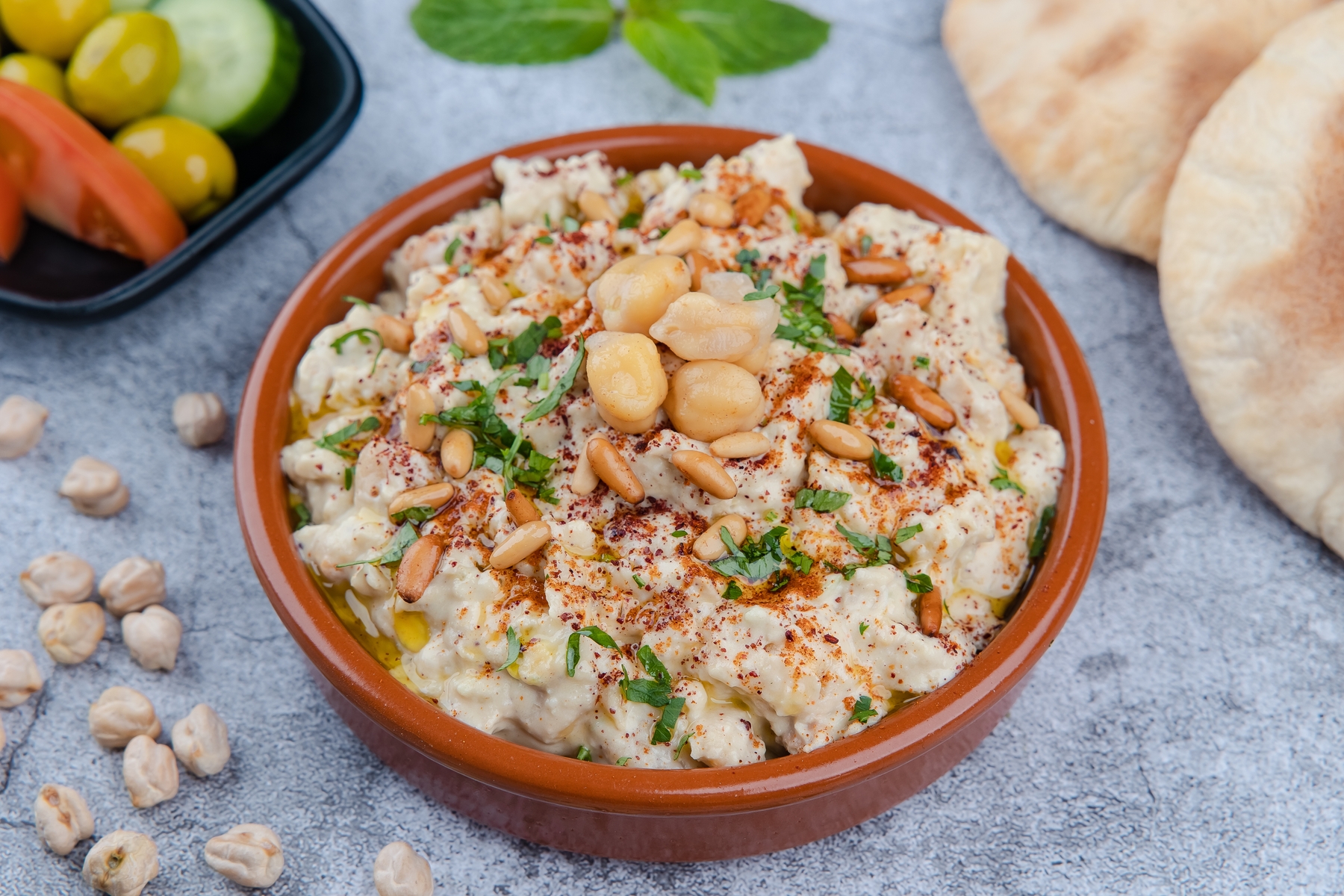
Jordanian and Syrian versions of hummus often emphasize the acidity of lemon and incorporate crunchy elements like pine nuts.
Basic Technique: The Foundation of Everything
The Constant Ingredients
Compromising on these components ruins the final result.
Chickpeas. Relying strictly on dried chickpeas guarantees success. Canned varieties introduce a metallic aftertaste and a mushy texture. Small chickpeas shed their skins faster during soaking and boiling. Large chickpeas hold their shape better, making them ideal for musabbaha. This serves as a guideline rather than a rule, as the specific result depends on the variety, growing region, and storage time.
Tahini. This sesame paste acts as the soul of the hummus. It must feel alive: fatty, slightly bitter, with a sesame aroma that permeates the lid. Dead tahini smells like cardboard or has no scent at all. Hummus made from dead tahini tastes as flat as wet cardboard. Lebanese and Israeli brands made from whole sesame seeds work most reliably. European “organic” versions in glass jars with beautiful labels often fall short.
Water. Ice water remains essential. Taking it straight from the freezer creates magic. In this technique, cold water whips the texture into a lighter, airier state.
Lemon. Fresh lemons are mandatory. Bottled juice imparts a preservative aftertaste. Rolling the lemon across the table with a palm before cutting extracts significantly more juice.
How Leon Bernard Does It
Leon Bernard, our project chef, is a Frenchman with twelve years of kitchen experience. He firmly believes that hummus requires the same attention as a veal bone reduction. His process reflects this dedication.
The night before, he soaks 500 g (1.1 lb) of dried chickpeas in cold water with a teaspoon of baking soda. The baking soda breaks down the pectin in the skin, softening the grains. Without it, the chickpeas require significantly longer boiling, and the skins remain rubbery.
In the morning, he rinses them, adds fresh water with another half teaspoon of baking soda per pot, and brings them to a boil. He skims the foam during the first ten minutes, then reduces the heat to a gentle simmer.
Control Point 1. Determining chickpea readiness relies on touch, not time. Leon takes a grain, places it on his palm, and presses it with his thumb. It must mash effortlessly and dissolve completely into a paste without a hard white core inside. If a core remains, he continues boiling. Hummus made from undercooked chickpeas turns out grainy and heavy, leaving a sensation of raw starch in the mouth.
He drains the hot chickpeas through a colander, reserving some of the cooking water in a glass for later use.
Control Point 2. Tahini and lemon enter the bowl first. He places 250 g (8.8 oz) of tahini and the juice of two lemons into the blender, without the chickpeas. He blends until smooth: the paste lightens, becoming dense and nearly white. He then adds 80–100 ml (2.7–3.4 fl oz) of ice water and blends again. The mass begins to resemble a thick cream: glossy with firm peaks. Only then does he add the chickpeas. Blending hot chickpeas with a cold tahini base creates the correct emulsion: stable, uniform, and resistant to splitting. Following this order guarantees the perfect texture.
Finally, he adds more water a tablespoon at a time until the hummus reaches the desired consistency. Leon uses the reserved cooking water here: its starchy, slightly cloudy nature binds the texture better than plain water. He adds about a teaspoon of salt and more lemon to taste. Letting the hummus rest covered for twenty minutes before serving allows the flavors to meld beautifully.
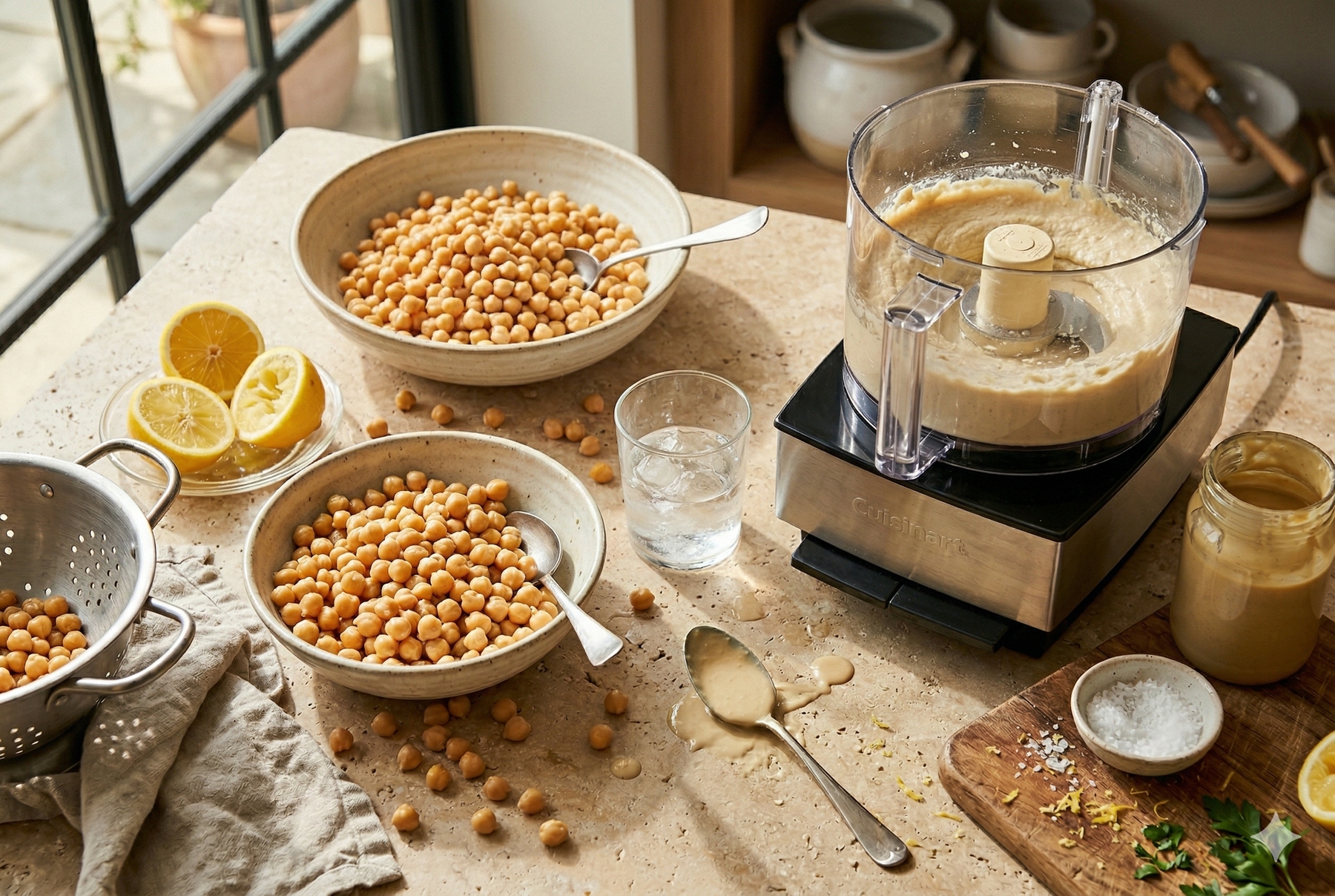
Proper technique requires whipping tahini with ice water and lemon into a creamy state before adding the chickpeas.
Author’s Observations
On chickpeas. Small chickpeas truly shed their skins faster. After soaking, the skins slip off easily by hand. Peeling at least half the chickpeas manually elevates the smoothness to an entirely different level. It takes time, but the result changes dramatically, leaving zero tough fragments in the final dish.
On oil. Tradition dictates pouring olive oil into and around the hummus. This involves flavor profile as much as taste. Olive oil from the region carries a bitterness, a peppery bite, and an aroma best described as green and slightly pungent, providing the necessary counterpoint to the fatty tahini. Lacking olive oil means using what is available. Unrefined sunflower oil yields a different hummus: more neutral in acidity, with a distinct aroma. It represents an honest home adaptation, though calling it “Middle Eastern” hummus becomes less accurate.
On garlic. Consensus remains elusive even among the chefs I consulted. Some add a single small clove of raw garlic for the entire batch. Others omit it entirely. Leon skips it, arguing that raw garlic overpowers the tahini. Testing both methods reveals that hummus without garlic tastes cleaner. Adding garlic brings sharpness but sometimes sacrifices delicacy. Frankly, I usually prepare it without.
Hummus Beyond Borders: From Tradition to Global Trend
At some point, hummus left Middle Eastern neighborhoods and entered every supermarket. Plastic containers flooded the shelves. “Mediterranean” restaurants began serving it with packaged pita bread. Then came TikTok. I view this calmly. Hummus has survived far more intense conditions than internet trends.
However, drawing certain distinctions remains important. Certain adaptations work brilliantly. Beetroot hummus stands out as one of them. The beet provides a vibrant color, and its earthy sweetness pairs wonderfully with tahini. Avoiding over-roasting the beet or making it too acidic creates a dish with its own distinct purpose. Calling it “authentic” hummus is impossible, but it makes no such claim.
Other versions exist solely for photographs. Matcha hummus. Activated charcoal hummus. Raspberry hummus. They contain chickpeas, tahini, and an additive that destroys the emulsion. This transforms the appetizer into a dessert or completely ruins the flavor.
The difference between a successful experiment and clickbait lies in whether the new ingredient adds substance to the dish or merely changes its color.
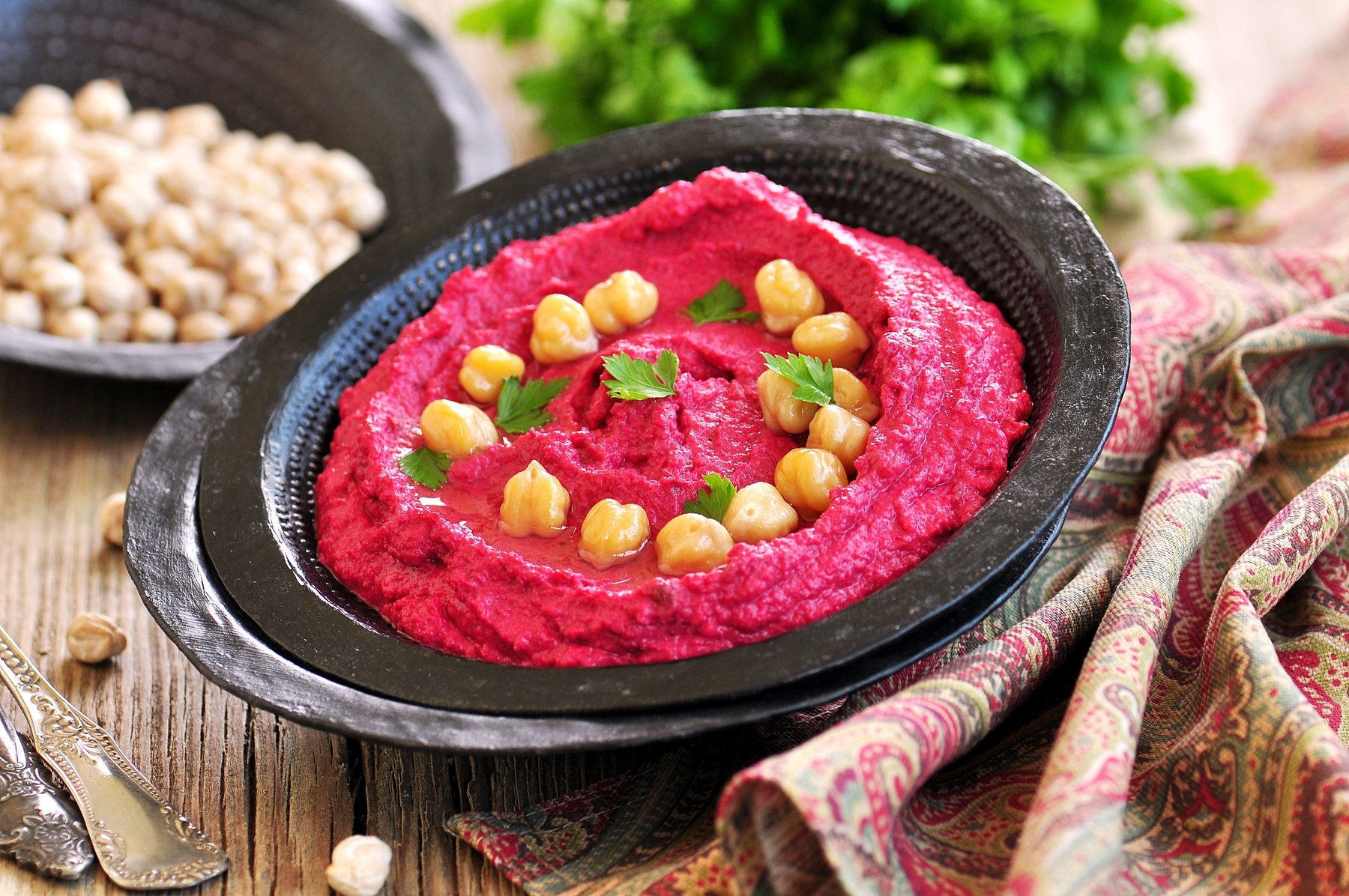
Beetroot hummus offers a popular modern variation, combining the traditional base with the earthy sweetness of roasted root vegetables.
Cheat Sheet: Which Hummus Fits Your Mood Today?
Seeking a smooth, velvety, almost white hummus. Using more tahini and ice water, then blending it into a mousse achieves this perfectly. Removing the chickpeas from the heat slightly later than necessary softens them perfectly. Manually peeling the skins from at least half the grains elevates the texture.
Seeking a warm, textured hummus with chunks. Musabbaha answers this craving. Leaving the chickpeas partially unprocessed by mashing them with a fork builds incredible texture. Serving it hot with unmixed tahini poured over the top completes the dish.
Seeking a light, acidic hummus. Reducing the tahini while increasing the lemon yields a brighter profile. Adding a little yogurt (a fermented dairy staple) on the side or directly into the paste works beautifully. This pairs perfectly with fresh vegetables or as part of a mezze (a selection of small dishes) alongside acidic marinades.
The Etiquette of the Shared Plate
Diners rarely eat hummus alone, due to the structural nature of the Levantine meal. A large plate sits in the center of the table, and everyone scoops a portion with a piece of flatbread. Moving from the edge to the center represents proper form: folding the flatbread in half, scooping up a portion, and dragging it toward the middle of the plate ensures the paste stays firm and the bread remains intact.
Forks and spoons remain optional here. Restaurants outside the region often provide them automatically, which does no harm. However, the true communal rhythm of the meal gets lost in the process.
0 comments