
Sunday. It is seven forty-five in the morning, the coffee is still dripping, and outside the window is that soft light you want to capture on your phone. You take out a pack of tvorog (Eastern European farmer’s cheese), find a five-star recipe with four hundred comments, and mix everything according to the list. The pan is heated. You place the first round in it.
And it slowly, with dignity, spreads out.
The mistake was made even before the stove and the flour—at a stage that internet recipes usually stay silent about.
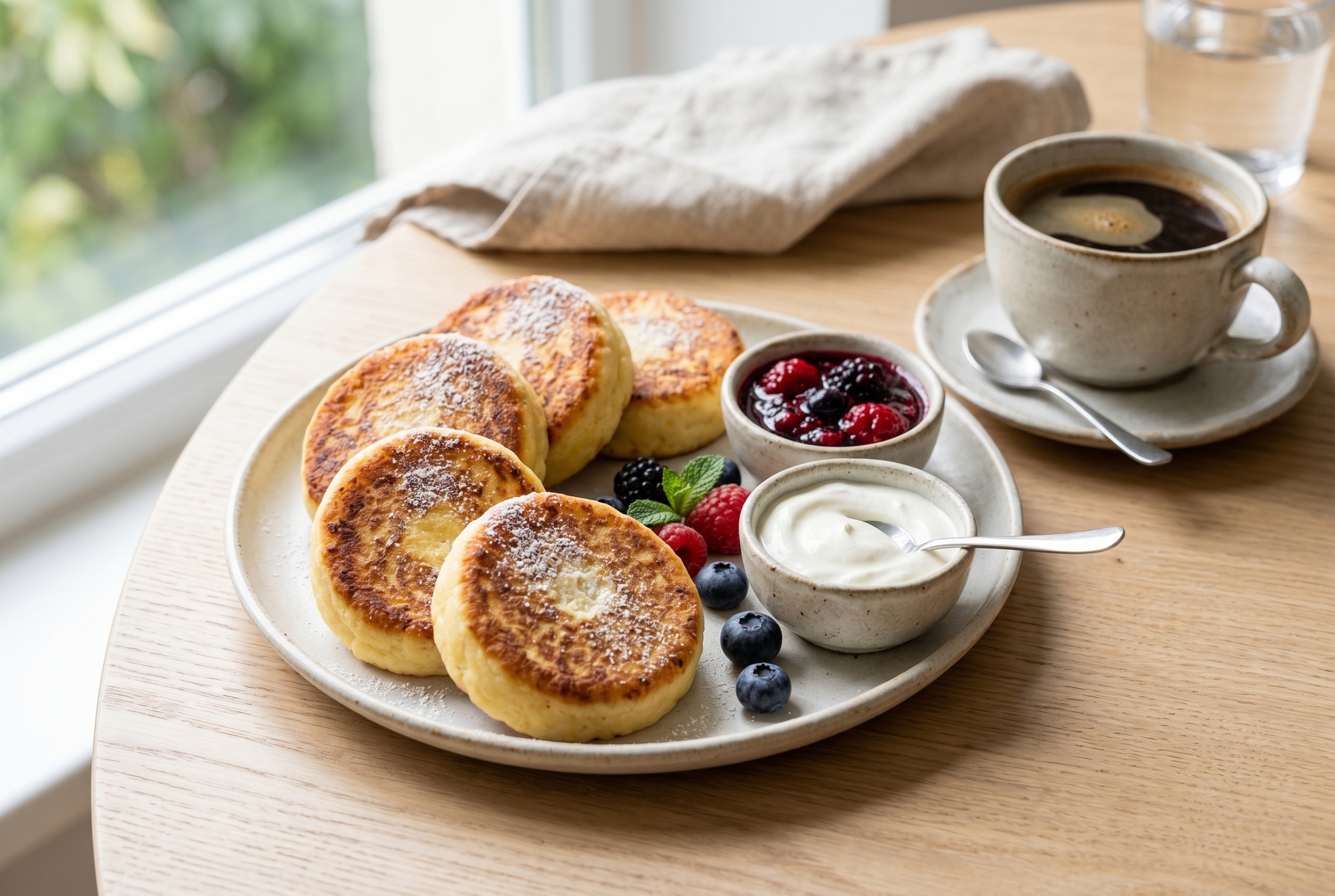
Perfect result: fluffy syrniki with a golden crust, served with fresh berries, sour cream, and a cup of aromatic coffee.
Table of Contents
It Is Not About the Amount of Flour
The first reflex when the dough spreads in the pan is to add flour. The logic is understandable. But this is exactly where the problem usually begins.
Flour itself is not the enemy. It is necessary, and without it, a syrnik (cheese pancake) will not hold its shape. The issue lies elsewhere: if the farmer’s cheese is initially too wet, the dough will not hold its shape anyway. You will gradually add more flour until it somehow comes together, and as a result, you will get not a syrnik, but something between a pancake and a dumpling. It will have a characteristic floury aftertaste and lack a pure creamy flavor.
Chefs in professional kitchens do not rely on luck. They remove excess moisture from the cheese beforehand, instead of trying to save the dough later.
Why Packaged Farmer’s Cheese Lets You Down
Russian-style tvorog in packages is not a uniform product. Fat content, producer, shelf life, and even how it was stored in the store all affect the whey content. A 9% fat package from one brand can be as dense as soft cheese. A package from another brand with the same fat content can be so wet that it leaves a puddle underneath.
Internet recipes do not take this into account. They give you grams of flour per gram of cheese, without adjusting for the specific type of cheese in front of you. Hence the instability.
For syrniki, pressed block-style tvorog (5–9% fat) is the most convenient: it is generally denser than the soft variety in a tub and holds its shape better. The soft cheese in a tub is usually too watery. Grainy cottage cheese can also be used if desired, but it is better to push it through a sieve first; otherwise, the pancakes will have hard curds. A wet block often requires additional squeezing. A dry and dense one is sometimes perfectly ready to work without this step.
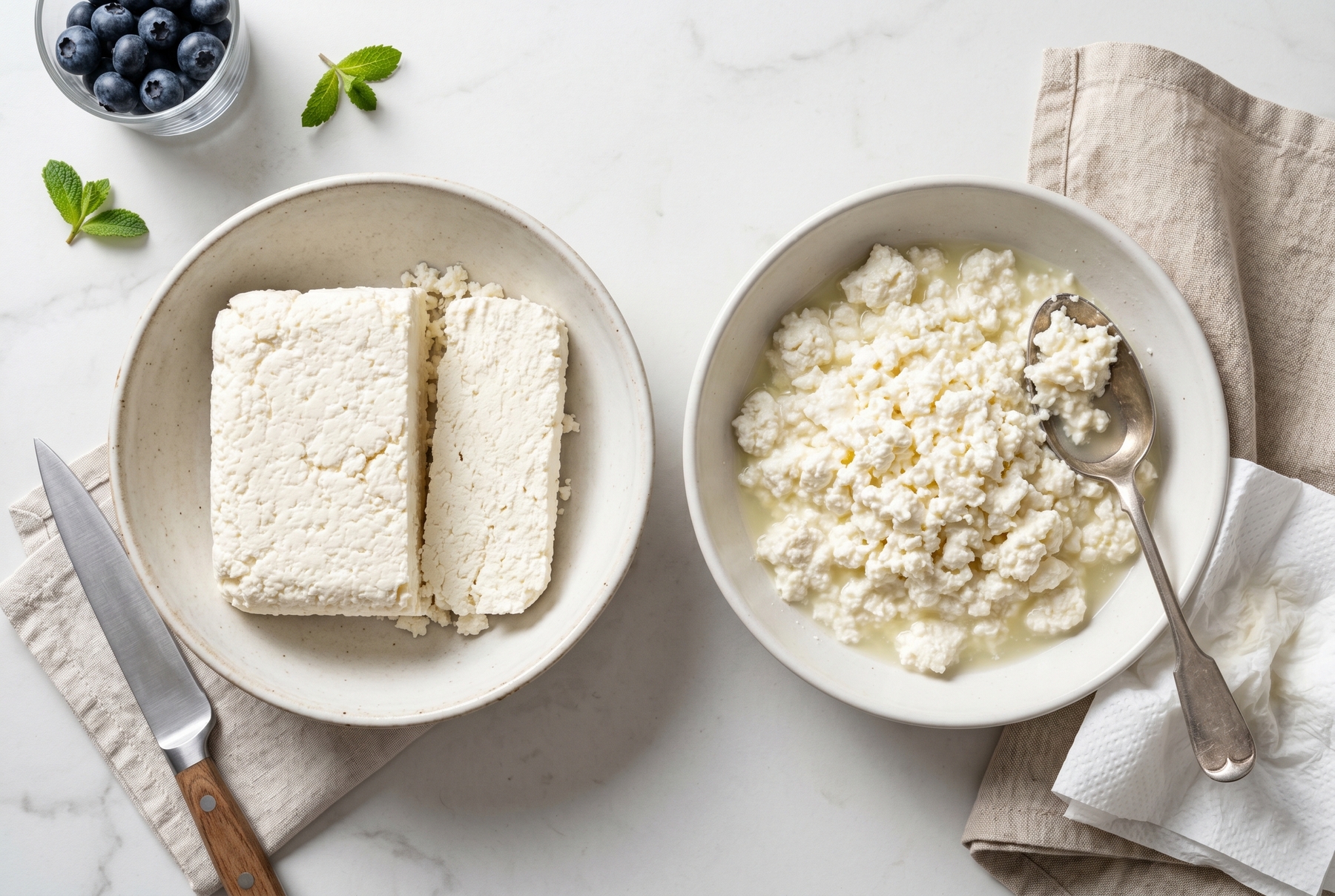
The texture of the cheese determines success: dry, block-style farmer’s cheese (left) holds its shape much better than the wet variety (right).
The Main Secret: Removing the Moisture
Taking two layers of paper towels, cheesecloth, or a clean kitchen towel works best. Placing the cheese inside and squeezing it well—for about thirty seconds with effort—makes all the difference.
Looking at how much liquid remains on the paper almost always surprises people the first time.
Squeezed cheese takes significantly less flour. The flavor remains cheesy, with that signature slight tanginess, and the mixture holds its shape without extra flour.
Now about the eggs. A whole egg is a working option, and many good recipes use it. However, using one egg yolk instead of a whole egg makes the dough slightly less wet and gives it a more tender texture.
The final mixture in the bowl consists of the squeezed cheese, an egg yolk, salt, sugar to taste, and flour. Starting with two tablespoons per 400 grams (14 oz) of cheese is a good guideline; the exact amount depends on how dry the cheese turned out. The dough might stick slightly to the palm, which is normal: the main thing is that it can be shaped into pancakes, rolled in flour, and won’t spread out. Achieving a completely non-sticky dough means you have gone overboard with the flour.
How to Shape Without Stress
Shaping with a glass is a game-changer:
Dusting the board with flour is the first step. Pinching off a piece of dough and rolling it into a ball—about the size of a golf ball—sets the foundation. Placing it on the board and taking a glass of a suitable diameter (7–8 cm / 3 inches: it should cover the ball with a small margin at the edges) and placing it upside down over the dough is the next move. Holding the glass by the bottom and making quick circular motions on the table—without pressing down, just rotating—shapes the pancake perfectly. The glass rolls the ball in a circle: the top and bottom of the dough are leveled against the board, while a smooth wall forms on the sides. After five to seven rotations, a neat, tall cylinder with even edges emerges. Hands do not even touch the dough; the glass does all the work.
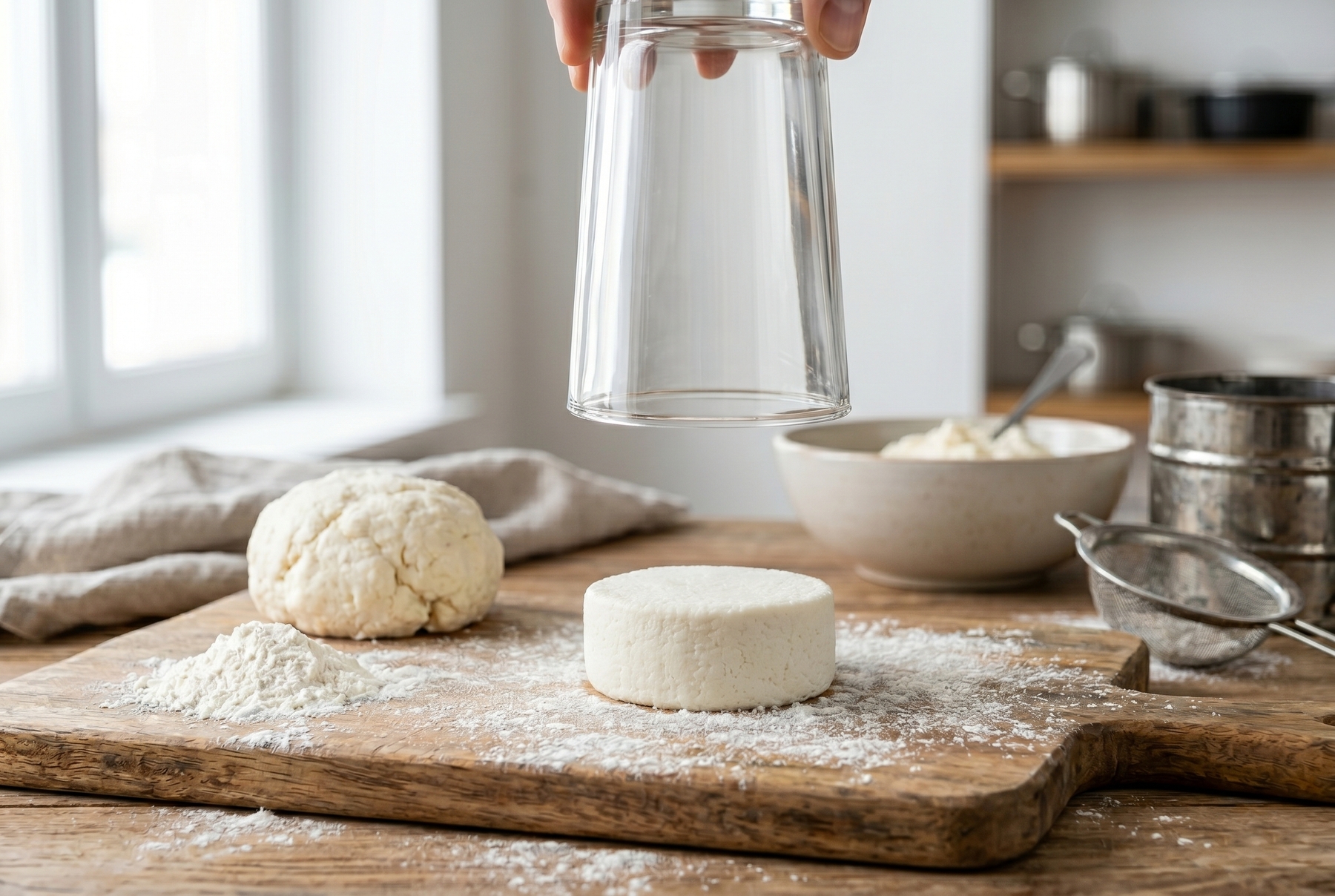
A professional trick: using an ordinary glass helps give the syrniki a perfect cylindrical shape without making your hands sticky.
How to Fry and What to Watch For
Heating the pan over medium heat is essential. Adding fat—clarified butter or neutral vegetable oil plus a piece of regular butter for aroma—yields better color and less of a burnt milk smell. Waiting until the oil slightly sizzles but does not smoke ensures a proper sear.
Placing the syrniki in the pan and leaving them completely untouched is crucial.
They need about two to three minutes on medium heat. Understanding when it is time to flip is easy: a golden crust will appear along the bottom edge. Flipping them and slightly reducing the heat is the next step: this side no longer needs a hard sear, but rather gentle heat reaching the center. This takes another minute and a half to two minutes.
A finished syrnik is firm under the spatula; it springs back but does not collapse. If liquid is felt inside when pressed, it needs another minute.
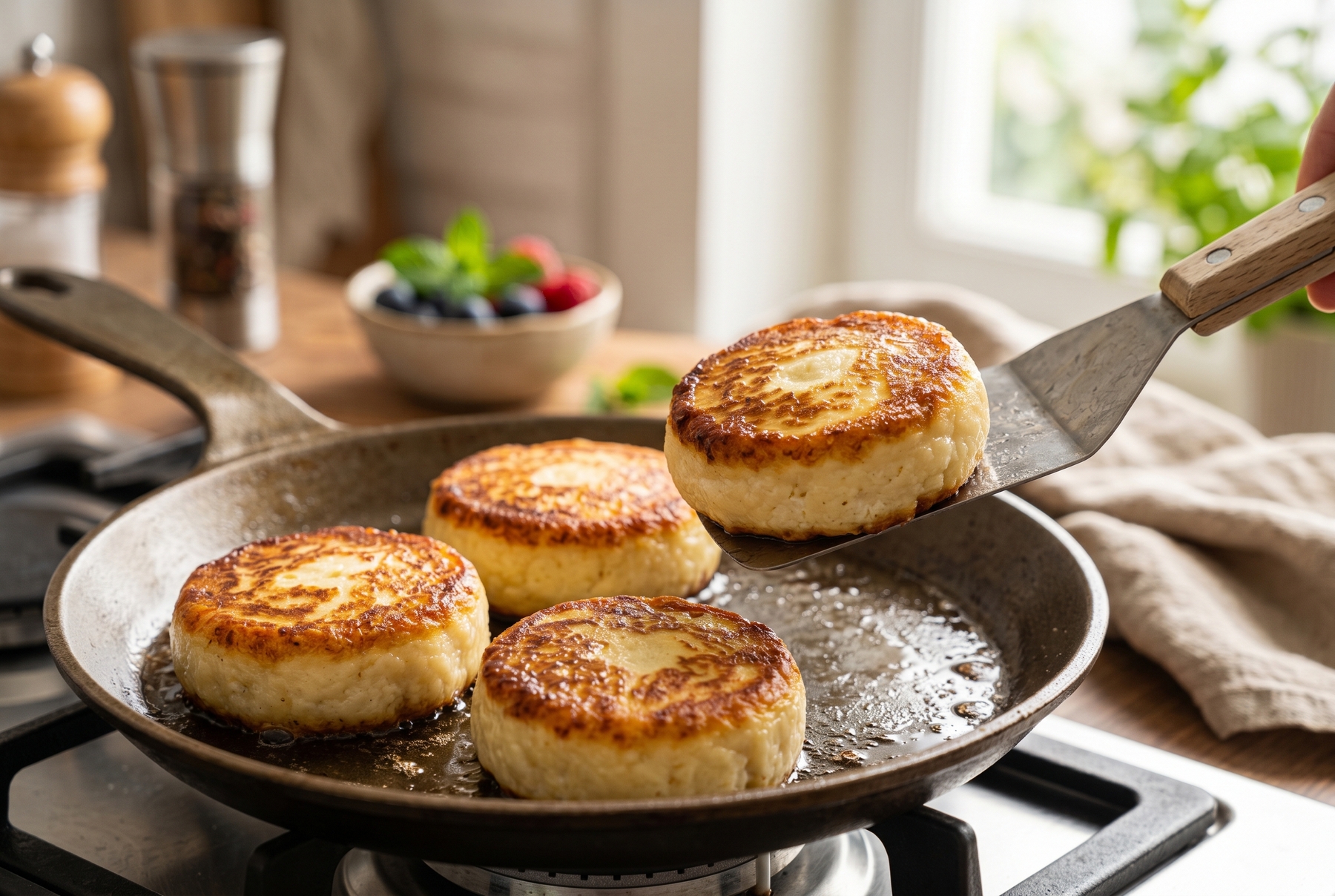
Frying the syrniki over medium heat until a confident golden crust forms ensures they hold their shape and cook through.
Plan B: If the Dough Is Still Runny
It happens. The cheese was too wet, not squeezed enough, and it refuses to hold its shape.
Placing the dough in a small baking dish, adding frozen or fresh berries on top, and baking it in the oven at 170°C (340°F) for about twenty-five minutes saves the day. This results in a baked casserole with uneven edges and a soft, slightly moist center. It is served straight from the dish, with sour cream or a spoonful of jam.
This, by the way, is a completely separate dish, and in this form, it definitely does not fall apart.
The moisture level of the cheese is more important than the grams of flour. Squeezing wet cheese is much more reliable than trying to save runny dough with an extra spoonful of flour. Wet cheese and excess flour are the entire story behind most failed Sunday breakfasts.
0 comments