
Cooking in bulk remains exceptionally convenient right up until the moment you open a container after freezing. Yesterday’s hearty stew suddenly separates into water and meat, potatoes become dry and mealy, and the breading on chicken turns into a soggy napkin without a hint of crunch.
The main myth suggests that the freezer ruins everything in its path. This is fundamentally untrue. It simply handles different textures differently—some dishes lose almost nothing after thawing, while others fall apart exactly where they were weakest. The difference between an excellent freezing candidate and a culinary disaster is not about the quality of your cooking. It revolves entirely around water, fats, and structural proteins.
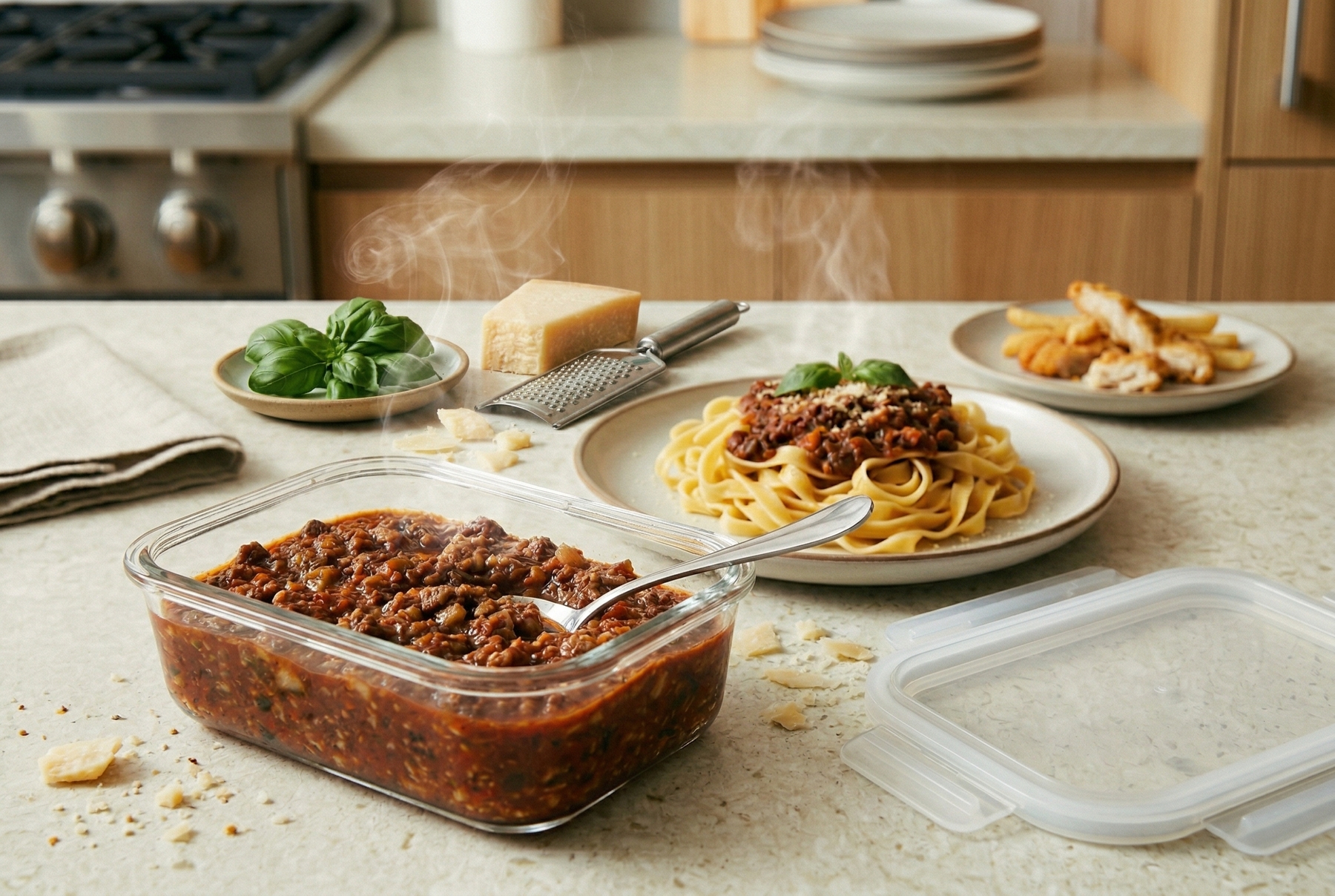
Bolognese sauce serves as the ultimate candidate for the freezer. After thawing and reheating, its flavor profile becomes even richer, while its texture remains virtually unchanged.
The Biggest Mistake Is Expecting the Same From All Dishes
Flavor suffers much less frequently after freezing than commonly believed. A well-prepared Bolognese smells almost as fresh even after a month in the freezer. A meat stew with beans only improves after three weeks—the flavors have time to meld. Braised beef survives without question. The issue almost always lies in texture.
This is precisely why stews and sauces emerge from the freezer intact: they carry no structural obligations. Their entire value lies in richness, in fat, and in the layer of flavor the sauce holds around pieces of meat. Conversely, fried potatoes, crispy breading, and fresh cucumbers consist of 80 percent texture. Removing that texture turns the dish into a parody of itself.
Table of Contents
- Frost Kills Structure First, Not Flavor
- What You Can Freeze Safely, and What Only if Absolutely Necessary
- How to Tell if a Dish Will Survive Freezing
- How to Freeze Without Suffering Later
- How to Thaw Without Ruining the Dish
- What You Should Purposely Cook in Bulk
- The Freezer Is an Excellent Tool If You Understand Its Limits
Frost Kills Structure First, Not Flavor
Here is what happens to food at -18 °C (0 °F).
Water inside the product’s cells freezes. During slow freezing, ice crystals grow large and sharp, literally tearing cell membranes and drawing water out. This is exactly how a standard home freezer operates.
During thawing, the water does not return anywhere: there is nowhere for it to go. It simply leaks out. This explains the puddle at the bottom of a container with cucumbers, the wet base under a once-crispy schnitzel, and the broken cream sauce that turns into an oily film over a watery sludge when heated.
This process is known as syneresis, which occurs when liquid simply escapes from destroyed cells. It involves no spoilage or bacteria.
Certain products survive this process without significant losses. They either possess a cellular structure less sensitive to rupturing (such as legumes and meat with connective tissue), or the free water was already bound within a sauce, leaving it nowhere to escape during thawing. Other ingredients—like lettuce leaves, fresh cucumbers, and strawberries—consist of cells filled with water much like tiny balloons. Their shape cannot be restored after freezing.
Why Soup, Stew, and Lasagna Usually Survive
In a soup or stew, the majority of the water already resides outside the cells, suspended in the broth or sauce. During freezing, this water crystallizes, and upon thawing, it returns to the exact same place. Syneresis occurs, but it happens in a space explicitly designed for water.
Fat, on the other hand, does not freeze the way water does. It becomes solid but avoids forming the sharp, needle-like crystals that tear structures apart. In sauces where fat is evenly distributed among other components, it actively helps maintain structure during the thawing process.
Collagen presents a separate story. In braised meats rich in connective tissue, prolonged cooking turns collagen into gelatin. Gelatin holds water in a gel state, preventing it from escaping. When heated above 35 °C (95 °F), it returns to a liquid state, allowing the sauce to regain the exact stickiness that gives it body.
Lasagna succeeds for an entirely different reason: the layers of pasta, meat, sauce, and cheese behave as a single unified block during freezing and thawing. There is simply nothing there to lose its structure.
Why Cream Sauces, Lettuce Leaves, and Crispy Crusts Do Not
A cream sauce acts as a classic emulsion: fat, water, and an emulsifier (milk proteins or egg yolks) remain stable only under specific temperatures and mechanical actions. Freezing breaks the emulsion as fat droplets clump together and water escapes. Heating it results in a greasy film on top and a watery liquid on the bottom. Sometimes this emulsion can be partially reassembled, which we will cover later.
Lettuce leaves and fresh cucumbers maintain their shape strictly through turgor—the water pressure inside the cell. Once the cells break during thawing, the turgor vanishes. The cucumber turns into a limp rag: it bends, loses all crunch, and releases a small puddle when pressed.
Fried potatoes face a similar fate. During frying, starches form a crust through the Maillard reaction and the dehydration of the surface layer. Moisture redistributes during freezing, with some migrating to the surface, causing the crust to absorb condensation and become soggy upon thawing. The mealy texture inside comes from starch recrystallization: upon reheating, the starch chains rearrange into a structure that leaves a sensation of dry powder in the mouth.
Breading suffers an even worse fate. Moisture from the meat pushes outward directly through the breading layer during thawing.
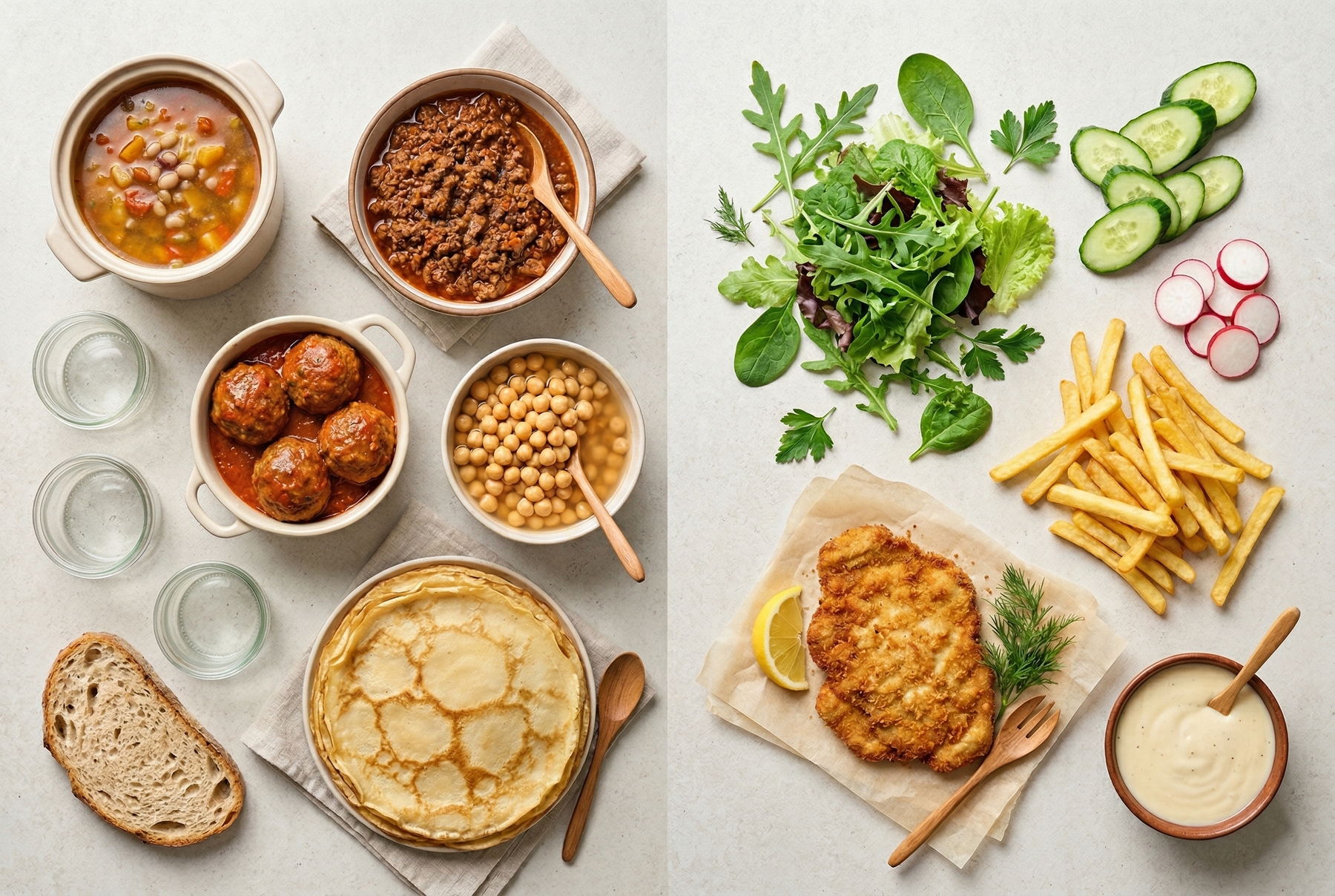
A visual guide: saucy dishes, legumes, and blini handle the cold exceptionally well, whereas fresh vegetables, greens, and fried potatoes lose their structure irreversibly.
What You Can Freeze Safely, and What Only if Absolutely Necessary
Excellent Candidates for the Freezer
Broth-based soups (excluding creamy ones) perform beautifully. Freezing them without finely chopped herbs works best; adding fresh greens upon serving elevates the dish. Broth itself acts as an essential base. Freezing it in ice cube trays creates flavor bombs that can later rescue a dry sauce or form the foundation for a quick soup.
Meat sauces, such as Bolognese, pasta ragù, or thick bean sauces, actively benefit from freezing. After a couple of weeks in the cold, they mature and become even richer than they were straight off the stove. Keeping a standby container of Bolognese in the freezer saves those evenings when work leaves no energy or desire to cook. Warming the sauce and boiling some pasta secures an excellent dinner.
Braised dishes with connective tissue, including beef cheeks, shanks, and ribs, thrive. The gelatin formed during long braising behaves predictably during thawing.
Meatballs and patties in sauce survive easily, as the sauce compensates for any minor texture losses. They endure without sauce as well, though they tend to be drier.
Pilaf freezes remarkably well. The fat beautifully coats the rice, preventing it from turning into mush. Thawed pilaf is almost indistinguishable from fresh, provided the meat avoids overheating.
Meat- or vegetable-based casseroles remain solid choices, provided they lack a crispy crumb topping, which will inevitably turn soggy.
Legumes (either alone or in dishes) handle freezing almost perfectly. Chickpeas, lentils, and beans can be frozen cooked without liquid.
Blini (thin Eastern European crepes) stuffed with meat or farmer’s cheese work wonderfully. The dough acts as a thermos, keeping the filling juicy while excess moisture evaporates during reheating in a pan. Freezing them stacked on a cutting board, separated by parchment paper, prevents them from sticking together permanently. After about forty minutes in the freezer, they can be transferred to a bag while remaining individual pieces.
Syrniki (Eastern European farmer’s cheese pancakes) are best frozen raw. Frying them straight from the freezer over low heat yields an even more tender texture, preserving their signature creamy flavor inside. The same parchment method applies—freeze them in a single layer before bagging.
Bread benefits greatly from freezing. The freezer is the best way to save a baguette or loaf if it cannot be finished immediately. Tossing a slice into the oven for 10 minutes fills the kitchen with the scent of a fresh bakery all over again.
Tolerable, Keeping Nuances in Mind
Boiled pasta should only be frozen al dente—slightly firm in the center. During thawing, it will absorb moisture and reach standard doneness. Pasta cooked completely before freezing turns into mush.
Rice follows the same rule: cooking it until it is still slightly firm works best. Storing it in portioned bags and freezing it in a single thin layer yields optimal results. Thawing it in the microwave with a spoonful of water on top brings it back to life.
Fried meat without sauce, such as chicken breasts, steaks, and individual cuts, loses juiciness as muscle fibers release moisture upon thawing. Thawing them slowly in the refrigerator and reheating gently with a pat of butter under a lid or in a small amount of broth mitigates this.
Dishes with heavy cream almost always require emulsion restoration after thawing. Heating them slowly while stirring constantly and adding a splash of fresh cream or a spoonful of butter at the end helps stabilize the sauce.
Baked vegetable omelets from the oven lose their airiness, but the underlying structure remains intact.
Mashed potatoes survive only if they contain a large amount of butter. The fat partially protects the starch structure. Adding hot milk or butter during thawing and mixing vigorously is essential. Without fat, the potatoes turn into glue.
Better Left Unfrozen Completely
Leafy salads turn into dark green puddles after the freezer. There is no saving them.
Dishes featuring raw cucumbers, radishes, or celery stalks rely entirely on turgor for structure. After thawing, they become damp rags.
Crispy fried foods, such as schnitzels, battered fish or vegetables, and French fries, almost always fail when frozen post-frying. If absolutely necessary, freezing them raw in their breading and frying directly from frozen yields better results.
Homemade mayonnaise and egg-based sauces separate and become distinctly grainy.
Gelatin desserts, like milk jellies or gelatin-based mousses, restructure during freezing, developing a grainy or rubbery texture.
Custard almost inevitably separates upon thawing.
Cakes featuring meringue or unstabilized buttercream lose all their incorporated air, transforming into a dense, greasy mass rather than a light dessert after thawing.
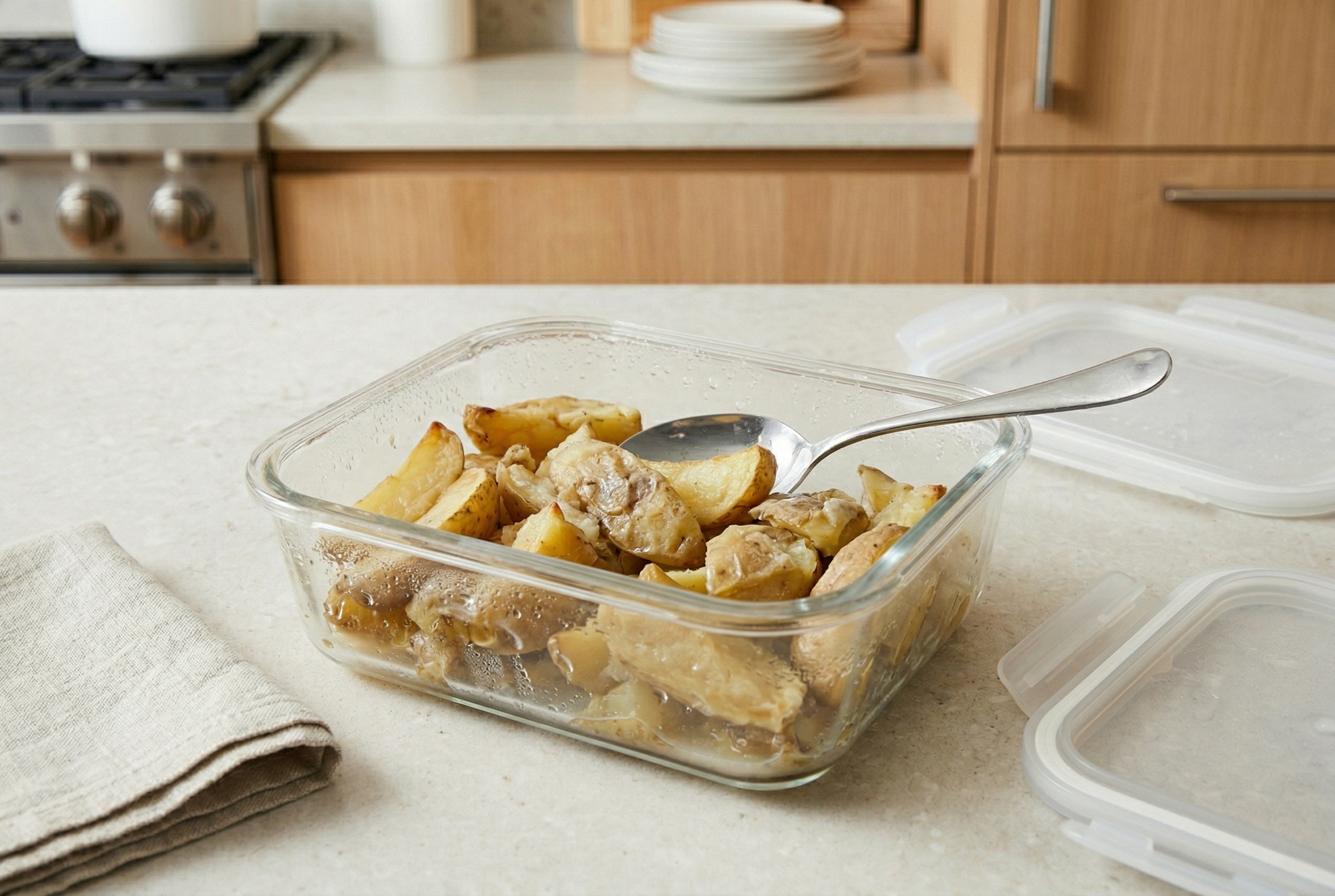
Fried potatoes lose their primary asset—a crispy crust—after freezing. The starch recrystallizes, rendering the texture thoroughly mealy and dry.
How to Tell if a Dish Will Survive Freezing
Three Questions to Ask Before Closing the Container
Does the dish contain a significant amount of free water? This is not about the general moisture of the dish, but about water that acts independently. Squeezing a cucumber makes juice spray out. That represents free water, which crystallizes into ice during freezing and destroys the texture. Squeezing Bolognese yields no spray; the water is firmly held by fat and meat. Freezing such dishes remains completely safe.
Is a crisp or springy texture crucial to the dish? If yes, freezing will almost certainly destroy that exact quality.
Does the dish feature a dairy or egg emulsion? Cream sauces, custards, and mayonnaise-based dressings all suffer instability during phase transitions.
Answering ‘yes’ to at least two out of these three questions dictates freezing with extreme caution. Answering ‘yes’ to only one suggests the dish will likely survive.
What to Look For After Thawing
The issue goes beyond whether the dish has spoiled. Several specific signals indicate changes:
A distinct puddle of water separates. In saucy dishes, this is perfectly normal, and the water will reincorporate during heating. In salads or dishes with delicate vegetables, the water will never return.
The aroma becomes muted. Aromatic compounds oxidize and partially evaporate even at -18 °C (0 °F), albeit slowly. Fresh herbs and delicate spices suffer the most, requiring compensation during reheating.
The texture turns grainy or tough. Graininess points to a broken emulsion or starch recrystallization. Toughness in meat results from overdrying during reheating or excessively long storage. When temperatures fluctuate in the freezer, proteins gradually lose their ability to retain moisture.
The crust completely disappears. Condensation during thawing destroys any crispy coating. Restoring it requires a separate step: utilizing an open oven at a high temperature or placing it under the broiler for a few minutes.
The moral here remains simple: thawed food acts as a semi-finished product, even if it was fully cooked before hitting the freezer. It consistently requires a final touch.
How to Freeze Without Suffering Later
Cool, Portion, Label
Placing hot food directly into the freezer represents the most common mistake. The dish passes through the danger zone (+5 to +60 °C or 41 to 140 °F) far too slowly, creating condensation inside the container and partially thawing everything nearby. The rule is straightforward: allow the food to reach room temperature first, chill it briefly in the refrigerator, and only then transfer it to the freezer.
Labeling deserves a separate conversation. Once, I reheated a container absolutely certain it held Bolognese, only to discover a bean stew I had frozen weeks prior. While no disaster occurred, anticipating one dinner and receiving another breaks the culinary spirit. Since then, a marker has hung right next to the freezer. Writing the name and date takes two seconds and entirely eliminates surprises.
Most prepared dishes maintain optimal quality for two to four months. Three months for Bolognese is excellent. Seven months remains completely safe, but noticeably poorer in flavor.
The Flat Bag Versus the Tall Container
Freezing speed dictates the size of ice crystals, which directly correlates to structural damage. A standard home freezer operates slowly. Accelerating the process requires one specific adjustment: reducing the thickness of the layer.
Soup in a flat zip-top bag (poured in and laid horizontally to form a ‘pancake’ about 2–3 cm or 1 inch thick) freezes three to four times faster than the same volume in a tall container. Additionally, these flat frozen blocks can later stand vertically, saving significant freezer space.
Portioning food into single servings is crucial. Thawing a 600 g (21 oz) bag for just one bowl makes little sense. Every freeze-thaw cycle adds structural damage and heightens the risk of bacterial growth.
Cook Slightly Less Than Usual
Pasta, rice, and potatoes continue to ‘cook’ during thawing and reheating. Freezing them at a state of complete doneness guarantees they will be overcooked after reheating. Leaving pasta al dente and rice grains slightly firm preserves their integrity.
Adding delicate vegetables to stews (like zucchini, peas, or spinach) near the very end of cooking—or omitting them entirely to add fresh during reheating—yields the best results. They retain flavor during freezing but completely lose their texture.
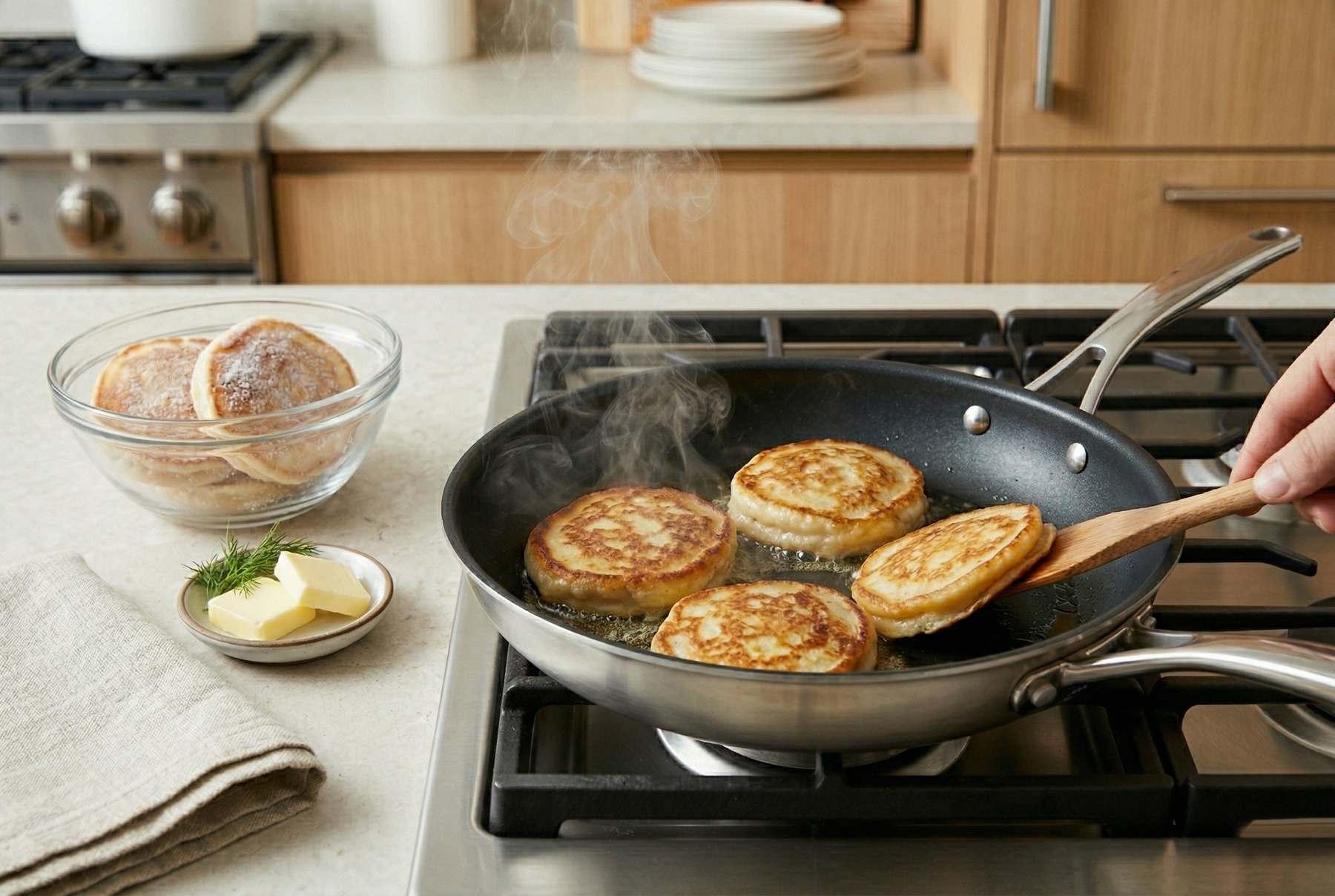
Syrniki (Eastern European farmer’s cheese pancakes) and blini are best reheated straight from the freezer over moderate heat with a lid. This allows them to warm completely through while retaining their juicy interior.
How to Thaw Without Ruining the Dish
Refrigerator, Pan, Oven, Microwave
The refrigerator provides the gentlest method. Simply moving the container to the bottom shelf the night before allows soups or sauces to thaw naturally overnight. A thin cut of meat takes one night, while a large bag requires 24 to 36 hours.
Blini and syrniki should go straight into the pan from the freezer. Covering them over medium heat allows the inside to warm thoroughly without the outside burning. Removing the lid at the very end restores their beautiful crust.
Casseroles and lasagna perform best when sent to the oven covered with foil, preventing them from drying out while the center thaws. Removing the foil 10 minutes before finishing allows the cheese to bubble and brown beautifully.
In the microwave, food heats erratically: boiling in one spot while remaining solid ice in another. If utilizing a microwave, heating in short one-minute bursts and stirring thoroughly each time remains the only way to avoid drying out the edges.
When to Reheat Straight From Frozen
Liquid dishes like soups or stews require zero waiting time. Tossing the icy brick straight into a saucepan over the lowest heat works flawlessly. Five to ten minutes under a lid results in a piping hot lunch.
How to Bring Freshness Back to a Dish
Fresh herbs belong exclusively in the serving bowl. Tossing dill or cilantro into a reheating pot guarantees their entire aroma will vanish alongside the steam.
A drop of acid works wonders. If a sauce feels somewhat dull post-thaw, incorporating a splash of lemon juice or wine vinegar instantly brightens and elevates the flavor profile.
A touch of fresh fat, whether butter or high-quality olive oil, seals the flavor and provides that glossy finish typically reserved for freshly cooked meals.
A spoonful of sour cream not only mellows the flavor but effectively masks minor textural flaws that may have developed in the cold.
Freshly ground pepper should only go directly onto the plate. Over months in the freezer, the spices within the dish itself lose their potency. A fresh grind restores that deeply appetizing aroma.
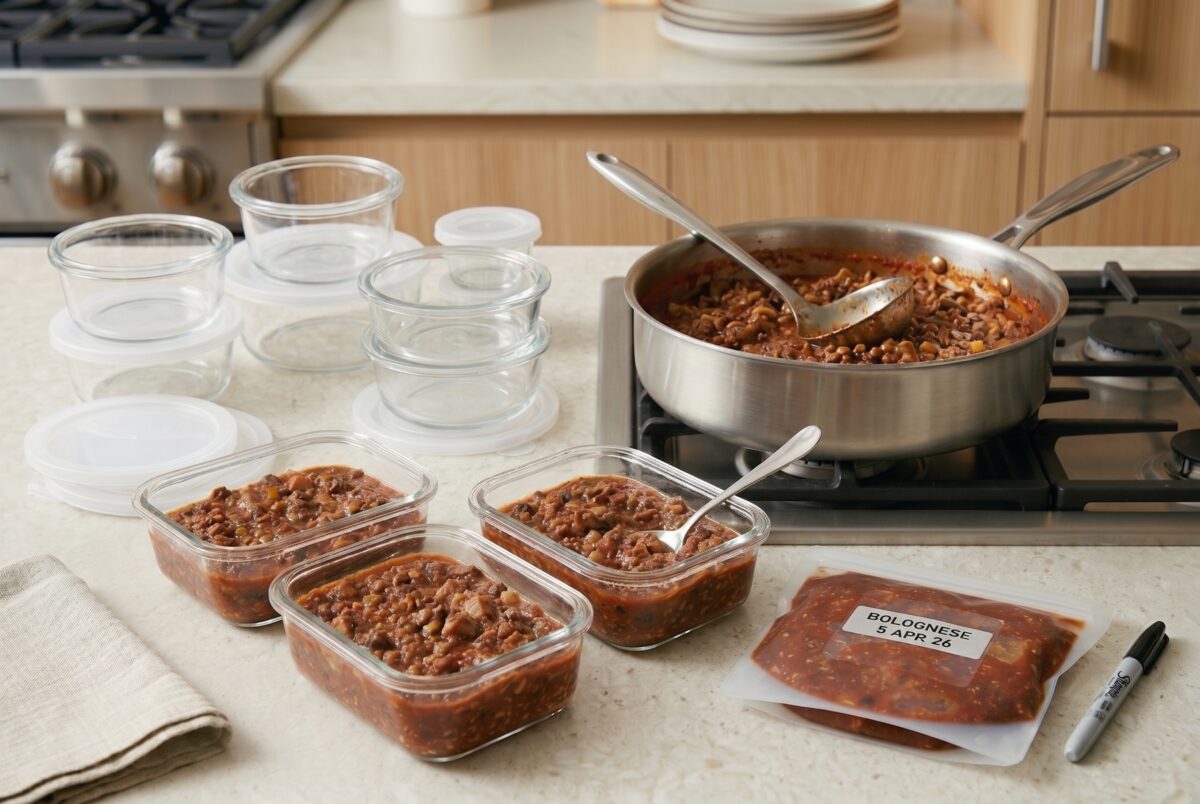
Utilizing flat zip-top bags significantly accelerates the freezing process, while clear labeling with dates and names completely eliminates dinner surprises.
What You Should Purposely Cook in Bulk
Dishes That Benefit From Freezing
Bolognese. Tasting better on the second day, it tastes roughly just as exceptional three weeks out of the freezer. As a portion of water evaporates during freezing, the flavor profile becomes highly concentrated.
Meat stew with beans. Legumes softening slightly post-freeze serves as an advantage, while the spice profile deepens and smooths out.
Braised chicken or meat in tomato sauce. The sauce protects the protein, and the acidity of the tomatoes stabilizes the flavor. Upon thawing, it tastes almost indistinguishable from fresh.
Bone-in braised meat, including beef shanks and ribs. Upon reheating, the gelatin turns back into liquid, creating a luxuriously silky sauce.
Thick legume soups, such as pea, lentil, or bean. Cooking down slightly post-freeze, the soup develops a richer, thicker body.
Prep That Saves Weeknights in Ten Minutes
Boiled rice portioned into 150–200 g (5–7 oz) bags. Reheating it in the microwave with a splash of water solves the side dish dilemma in a mere three minutes.
A robust tomato base featuring slowly sautéed onions, carrots, garlic, and tomatoes in oil. In twenty minutes, this base transforms into a pasta sauce, a soup foundation, or a stew starter.
Meatballs. Baking a massive batch, freezing them without sauce in a single layer, and then transferring them to a bag allows you to drop them straight into a simmering sauce while still frozen.
Caramelized onions. Sautéing them takes time and soils the pan. Preparing a kilogram, portioning it out, and freezing it saves immense effort. Onions lose their shape less than other vegetables upon reheating and have already imparted their bitterness to the oil, making them an incredibly convenient prep ingredient.
Ready-made fillings for blini, whether sweet farmer’s cheese (with egg, sugar, and vanilla) or savory meat (minced meat with onions and spices). Frying fresh blini while pulling the filling from the freezer balances effort and quality.
Fried garlic in oil. Freezing lightly sautéed cloves in vegetable oil using an ice cube tray works brilliantly. Tossing them frozen directly into a pan means they melt in seconds, delivering a mellow, unburnt garlic aroma.
Three Freezing Failures You Can Actually Fix
Pasta in a cream sauce separating upon reheating. Adding a few tablespoons of hot water or milk and heating over low heat while stirring constantly helps. For severe separation, vigorously mixing in a spoonful of butter at the very end improves it. While it will not restore perfectly, it becomes highly palatable.
Mashed potatoes turning gummy and grainy. Graininess stems from recrystallized starch, which cannot be entirely reversed. Heating slowly with hot milk and butter while mixing thoroughly helps. If the texture remains unacceptable, repurposing the mash as a filling for hand pies, croquettes, or potato pancakes salvages the dish.
Chicken turning dry after reheating. Slicing it thinly, covering it in hot broth or sauce, and letting it rest under a lid for five minutes works magic. It will not return to its original state, but it stops resembling wood. The absolute best strategy involves repurposing it into a casserole, soup, or filling where it plays a supporting role.
The Freezer Is an Excellent Tool If You Understand Its Limits
Dishes relying on sauce, fat, and general ‘mass’ survive freezing best. When the culinary construction feels monolithic and does not depend on the precise texture of each individual component, freezing works flawlessly. Bolognese, bean stews, braised meats, broths, and casseroles all fit this profile beautifully.
The absolute worst cases involve dishes where all the value rests in crunch, freshness, or an airy texture. These are dishes that only truly exist in the exact moment they are served.
It took me several years and a significant number of ruined schnitzels, broken sauces, and rubbery omelets to truly learn these rules. Today, the freezer stands as one of the most hardworking tools in my kitchen. However, this success only came when I stopped throwing everything inside indiscriminately and started asking a crucial question: what exactly holds the flavor in this dish? If the answer is sauce, fat, or richness, freeze it boldly. If the answer involves crunch, freshness, or air, you are much better off eating it right now.
The problem never actually lies with the freezer, but rather with the simple fact that not every dish was created to endure the cold.
0 comments