
Evening arrives. I empty the backpack. Out falls a crumpled planner, three erasers (where did three come from?), one sock, and a lunch container. Untouched. Complete with the exact same sandwiches that took twenty minutes of my morning time. Next to it sits a blackened banana I packed “just in case.” That case never came. All of this is so familiar it does not even spark anger anymore.
We have three children. The eldest is fourteen, the middle is nine, the youngest is six. I went through all the stages: from perfect lunchboxes with cookie-cutter sandwiches to total capitulation in the form of a bag of croutons. Then I realized something. Not immediately. It happened by the time my second child arrived.
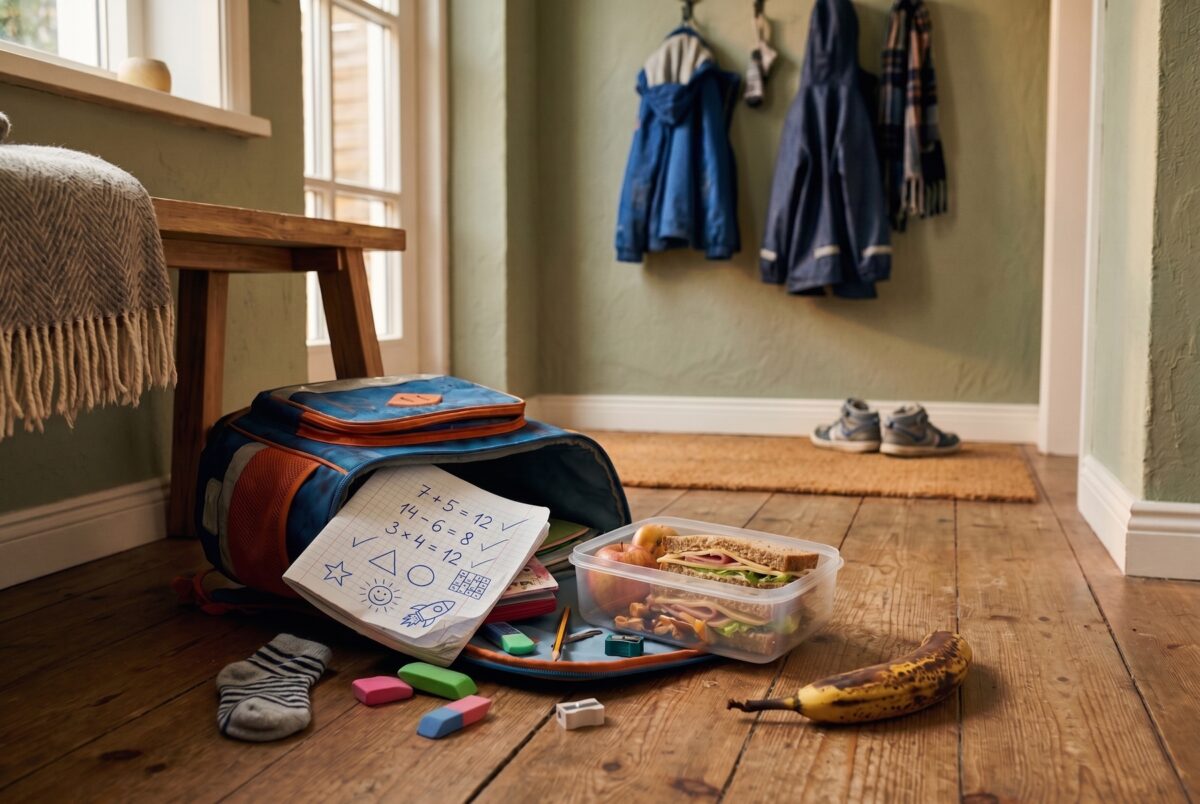
A familiar sight: an untouched lunchbox and a browned banana in a backpack at the end of the school day.
The core issue is that schools provide food. Hot breakfasts, set lunches—it is all there. However, children eat this with wildly varying degrees of enthusiasm. Cold buckwheat with a patty at half past twelve inspires almost no one. The casserole looks suspicious. The soup is either oversalted or bland. My middle child insisted on eating only bread and butter from the entire school menu for three months straight.
After six classes or two hours of after-school care, a child comes home hungry and exhausted. They eat everything in sight, even things that are not technically food. A lunchbox in this situation is not a second lunch, nor is it an attempt to feed a child according to all dietary guidelines. It is a safety cushion. A small, dense cushion that survives until break and does not require me to wake up at five in the morning.
That is exactly what we are going to discuss today.
Table of Contents
Why Store-Bought Sweet Bars Are Not The Best Choice
Our family doctor once explained it simply: a standard snack bar provides a sharp energy spike, and by the next class, the child is hungry again and consequently irritable. Children vary, of course, but with mine, this rule is ironclad. My eldest complained of a headache after the second period in third grade. We checked everything, and eventually discovered the culprit: every morning she ate a “high-energy” bar instead of a proper breakfast, leaving her hungry and wired by noon.
The working formula for a lunchbox is simple: satiating (complex carbohydrates that digest more slowly) plus protein (which sustains fullness and is essential for a growing body) plus crunch or color (a vegetable, fruit, or something visually interesting).
Three components. Not ten, thankfully. Just three.
One More Crucial Detail To Remember
Meat, eggs, and cottage cheese in a warm backpack pose a risk. Therefore, I pack all chicken muffins, syrniki (Eastern European cottage cheese pancakes), and meatballs exclusively in an insulated bag with an ice pack. It is better to be safe than sorry.
Snacks from the second and third sections—lavash (thin flatbread) chips, roasted chickpeas, nuts, dry cookies, and fruit leather—do not require an ice pack.
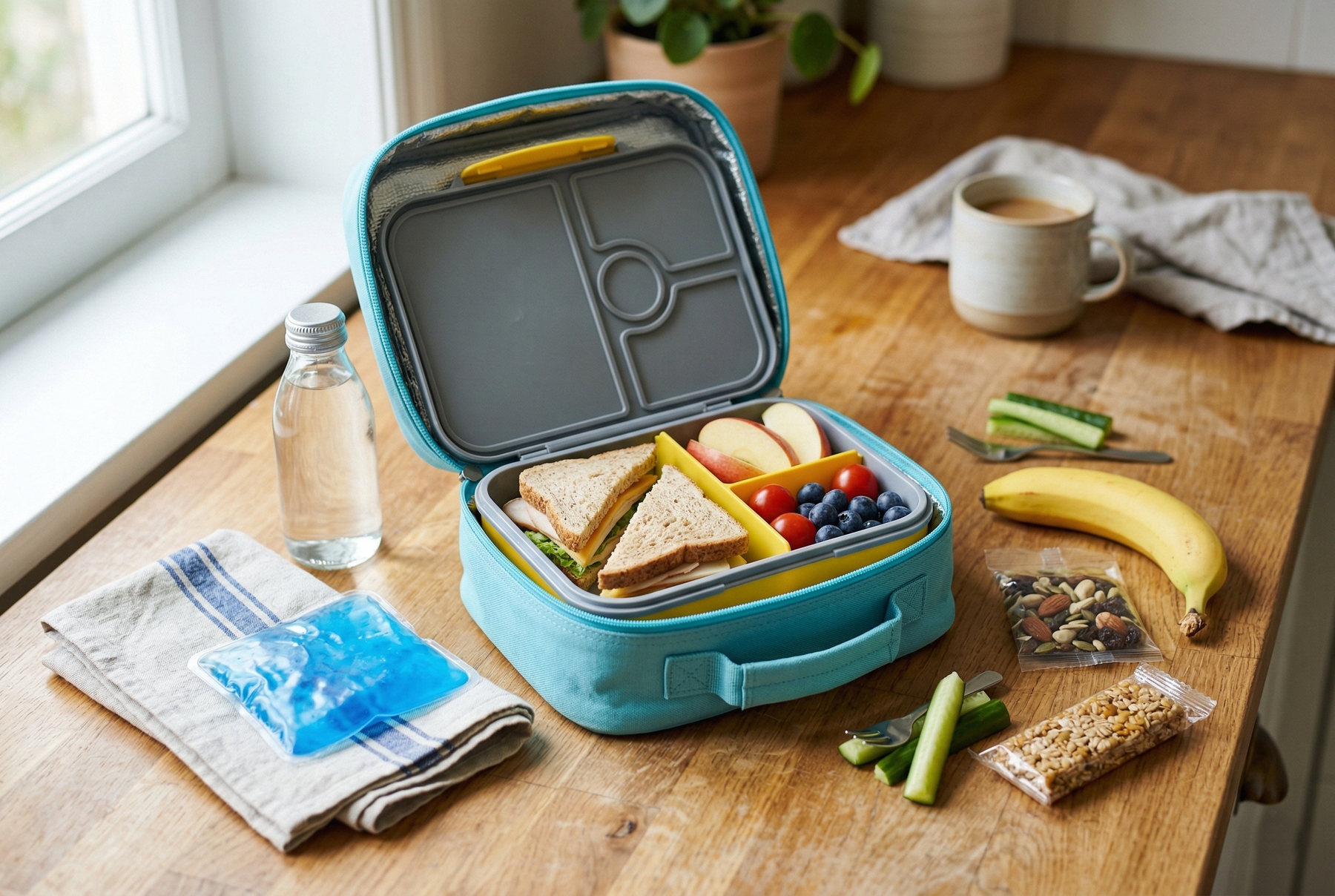
Using an insulated bag with an ice pack preserves the freshness of meat and dairy products right up until break.
The Snack Constructor: 20 Ideas That Will Come Back Eaten
I categorized these by mood, not by nutrients. There is simply no time to count macros in the morning. There is only time to pick a category and grab the right items from the fridge or freezer.
Hiding Vegetables (For Days When School Lunch Is Ignored)
This applies when a child refuses cafeteria food or eats only bread and butter. Everything in this group goes into an insulated bag with an ice pack.
1. Zucchini Cheese Waffles. Grating a small zucchini finely and squeezing it thoroughly through a towel is essential. Skipping this step leaves excess water, resulting in soggy waffles that stick to the iron in chunks. The batter requires two eggs, about 100 g (3.5 oz) of hard cheese, a cup of flour, and a pinch of salt. Add about 150 g (5 oz) of grated zucchini. There is absolutely no zucchini smell after baking. A child will never identify it. This has been rigorously tested on three children.
I pack these for school in a container lined with a paper towel: it absorbs excess steam, ensuring the waffles retain their crust rather than becoming soggy.
2. Chicken Carrot Muffins. Ground chicken breast (or breast pulsed in a blender for tenderness), finely grated carrots, one egg, a little flour or oat flakes for binding, and salt. Baking them in silicone molds at 180°C (350°F) for twenty-five minutes yields a great texture. The carrot provides a slight sweetness that children notice and receive positively.
3. Shrek Rolls With Green Spread. Starting with standard lavash (thin Middle Eastern flatbread), we first make a spread: blending cream cheese with a handful of fresh spinach and a quarter of an avocado creates a vibrant green paste, almost a vibrant shade of fresh grass. You can call it whatever you like—we call it “Shrek sauce.” My youngest asks no questions and requests seconds. Placing a thin slice of turkey or chicken on top, we roll it tightly and slice it crosswise into “coins” about two centimeters (0.8 inches) thick.
The coins are important. The child sees a green cross-section, making it intriguing rather than threatening. There is no pulling out the filling because there is no filling that can be pulled out.
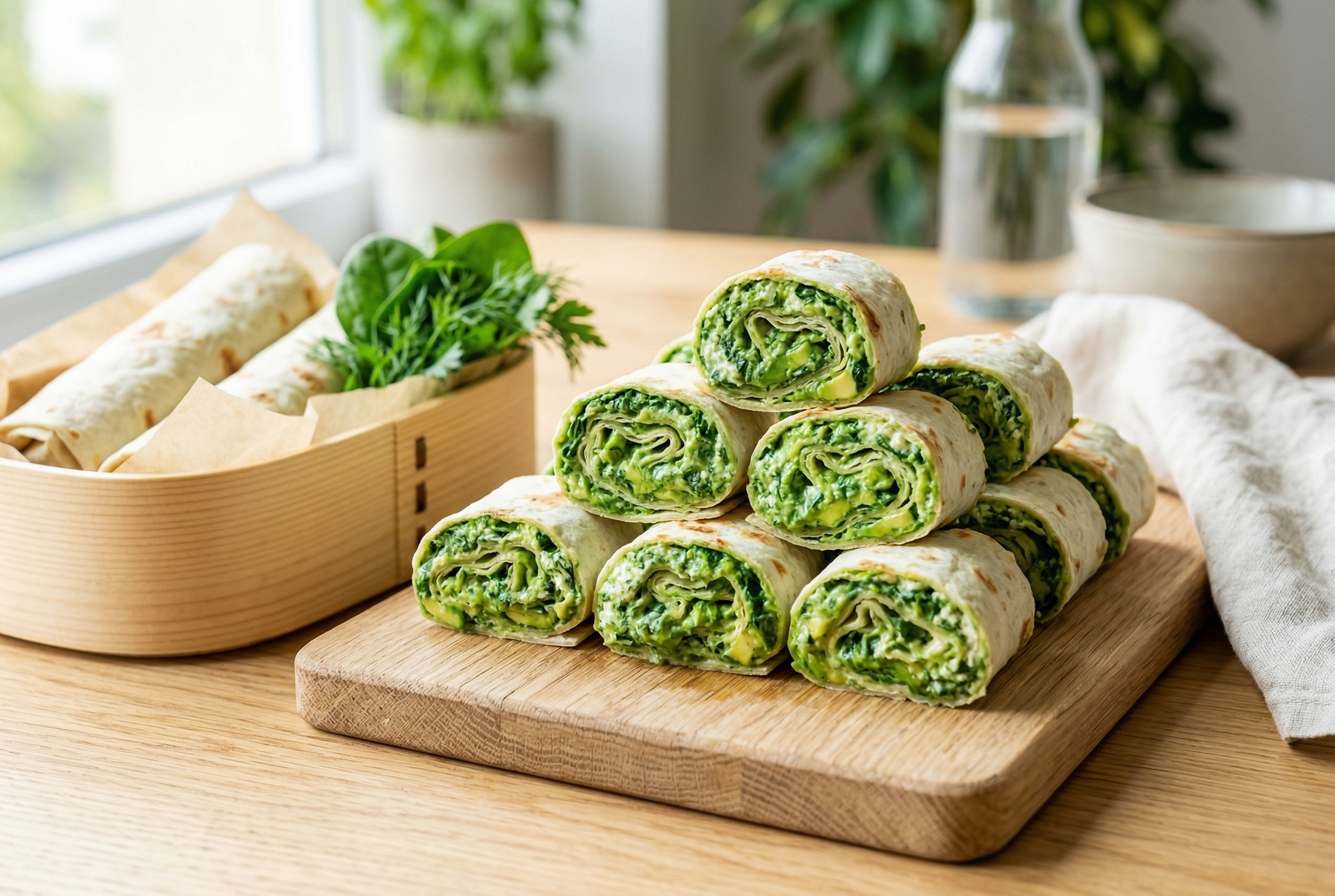
Vibrant green “Shrek rolls” with spinach and cream cheese look engaging and appetizing to children.
4. Spinach Crepes. Thawing frozen spinach, squeezing it dry, and blending it with kefir (a fermented milk drink) and eggs prepares the base. After that, it is standard crepe batter. Filled with cream cheese or ham, they are rolled into tubes. Calling them “turtle crepes” for my youngest works flawlessly every time.
5. Mini Turkey Broccoli Patties. Turkey tends to be dry on its own, so adding a bit of onion and a teaspoon of sour cream to the minced meat helps. Boiling broccoli until soft, mashing it with a fork, and mixing it into the meat creates the base. Baking them on a baking sheet instead of frying is preferred. Packing them in a lunchbox with small skewers makes them easier to eat and keeps hands cleaner.
6. Lazy Cauliflower Pizza Muffins. Cauliflower is the ultimate vegetable for disguise: it is white and remains invisible in both batter and cheese. Breaking a raw head into florets and pulsing it in a blender until finely crumbed starts the process. Mixing it with grated mozzarella or suluguni (a Georgian brined cheese), one egg, and a spoonful of flour, plus salt and a pinch of dried oregano, forms the dough. Dividing it into silicone molds and baking at 200°C (400°F) for about twenty minutes produces a golden crust. It tastes like pure, slightly stringy cheese pizza, but it actually delivers a solid portion of fiber in every muffin.
7. Juicy Meatballs With A Secret On A Stick. Finely grating zucchini or carrots into minced chicken or turkey—making sure to squeeze the vegetables through a towel to prevent the meatballs from spreading—is the trick here. The juice drains away, but the moisture remains locked inside the meat. These spheres stay juicy even when cold, three or four hours out of the oven. Baking them at 190°C (375°F) for twenty minutes and threading them onto wooden skewers in pairs or trios finishes the dish.
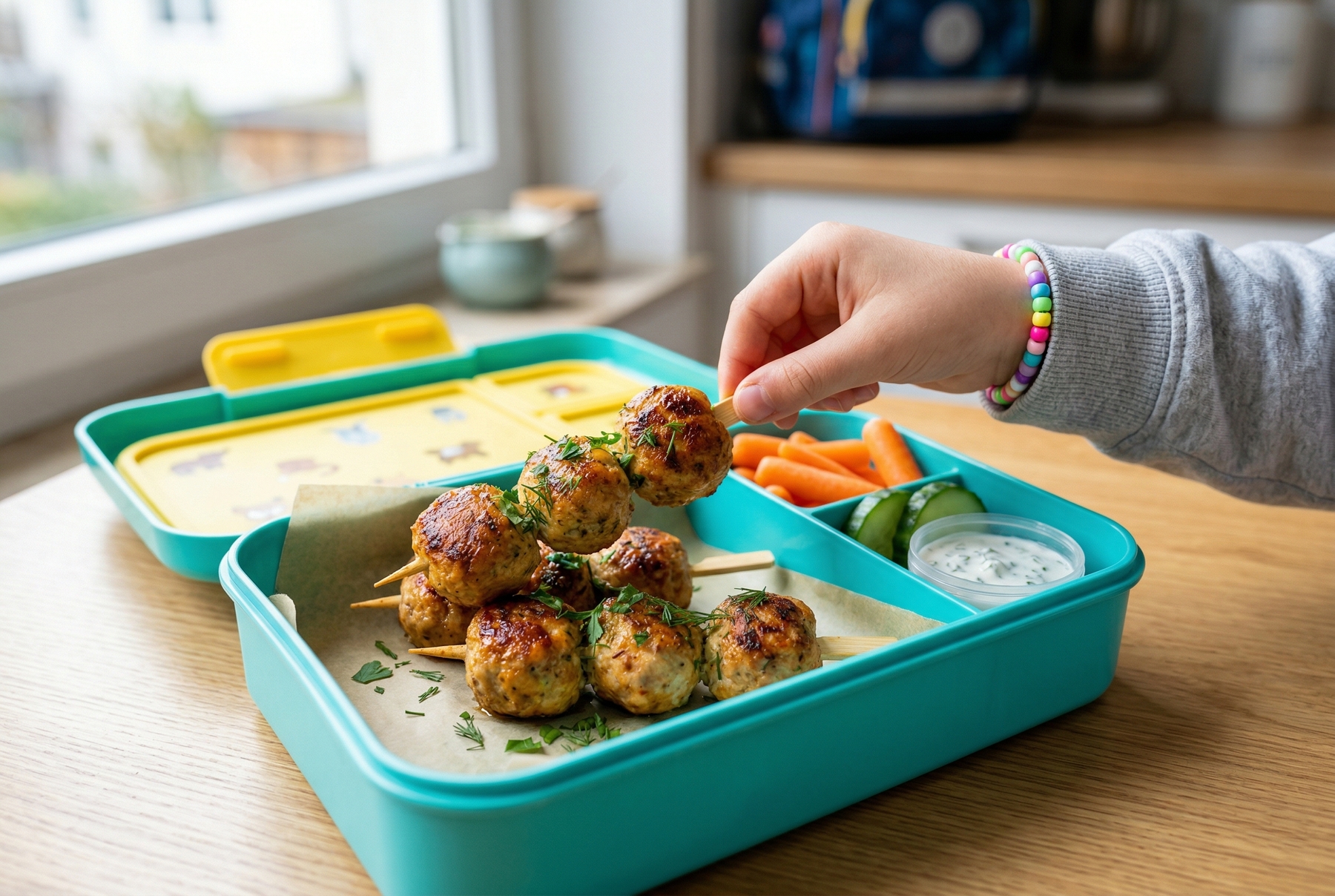
Meatballs on skewers are convenient to eat with your hands, and adding vegetables keeps them juicy even when served cold.
Just For The Crunch (Mine Devour These First)
Crunching is a distinct dietary need, especially at school, where everything else is either soft or liquid. Children reach for chips not only because they taste good, but also because chewing something hard is physically satisfying. Providing this texture without resorting to a bag full of flavor enhancers is the objective. Snacks in this section do not require an ice pack.
8. Homemade Lavash Chips. Cutting lavash into triangles or strips, drizzling it with olive oil, sprinkling with coarse salt, and drying it in the oven at 160°C (320°F) for fifteen to twenty minutes is simple. Adding paprika or dried garlic elevates the flavor. They keep in an airtight container for three to four days. My middle child finishes them faster than I can bake the next batch.
9. Crispy Roasted Chickpeas. One crucial rule: the chickpeas must be dried. Rinsing canned chickpeas, draining them on paper towels for twenty minutes, and then patting them dry again is necessary. Damp chickpeas will bake soft on the inside and merely hard on the outside—a highly unpleasant texture. Dry ones produce genuinely crispy spheres, almost like popcorn. Using any spices works well; we prefer paprika with turmeric or coarse salt with rosemary.
10. Vegetable Sticks With Hummus. Pre-slicing carrots, cucumbers, and celery and storing them in a sealed container in the fridge ensures they are ready to eat within a couple of days. A small jar of hummus sits right next to them. It takes three minutes in the morning: grab, pack, close. It is best to pack bell peppers separately, as they release a lot of juice and will make neighboring items soggy within a few hours.
11. Cheese Cubes With Grapes. Dicing a semi-hard cheese like Gouda and placing it next to a few clusters of grapes offers a satiating and balanced option. Avoiding soft cheeses like Brie is wise: by recess, they develop a strange consistency and emit a stronger odor than they should.
12. Homemade Apple Chips. Slicing an apple into thin rounds and arranging them on a baking sheet is the first step. The oven is set to 100°C (210°F) for about three hours. It takes a long time, yes, but it happens in the evening without human intervention. The chips emerge translucent, lightly caramelized in color, and perfectly crisp. The apple’s natural sweetness intensifies during drying, eliminating the need for added sugar. They store well in a paper bag for up to a week.
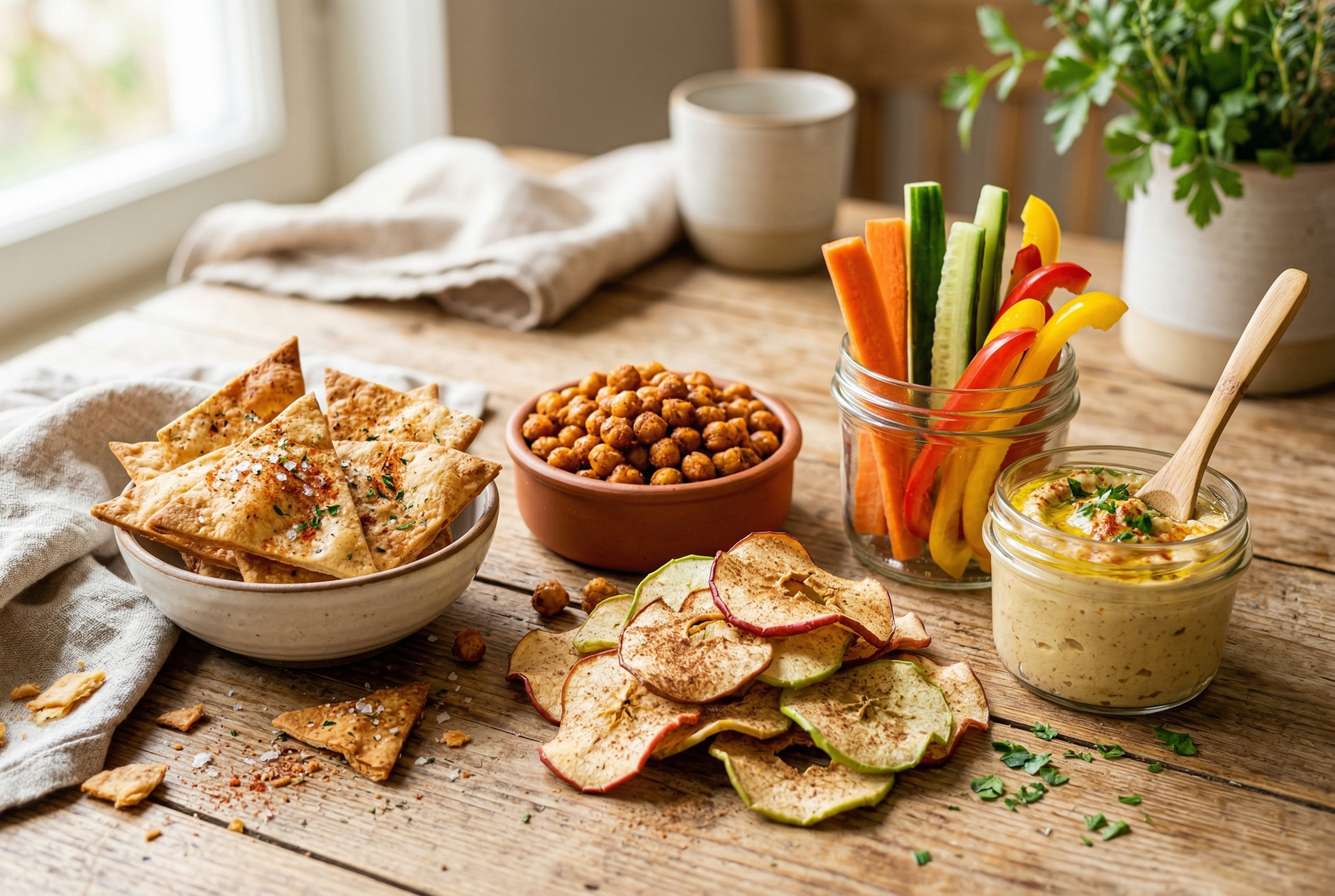
Crunchy appetizers: lavash chips, roasted chickpeas, and vegetables with hummus make an excellent alternative to store-bought snacks.
Instead Of Candy
Here, the sweetness comes from fruit, not added sugar. However, a caveat regarding dried fruits: dates, raisins, and fruit leathers are sticky, making them less than ideal for frequent snacking from a dental perspective. Dentists recommend consuming dried fruits during meals rather than as a standalone daily snack. Treat these as an occasional delight rather than a permanent fixture.
13. Energy Date Balls. After soaking the dates in boiling water for ten minutes and drying them, blend them with oat flakes, peanut or any nut butter, and a pinch of cocoa. The mixture is pulsed into a smooth, dense mass, rolled into balls, and coated in shredded coconut or ground nuts. They can get slightly sticky in warm environments, so placing them in paper candy cups makes them look like truffles and prevents them from smudging.
14. Banana Oat Cookies. Two ripe bananas and a cup of rolled oats make up the entire dough. Optional additions include raisins, dark chocolate chunks, or cinnamon. Baking at 180°C (350°F) for fifteen minutes produces a dense, slightly chewy texture. The only requirement is that the bananas must be incredibly ripe, sporting black spots on the skin. Underripe ones impart a bitter note.
15. Belyov Pastila Without Added Sugar. I do not make this myself; I buy it. For the uninitiated, this traditional Russian confection is similar to a thick, airy fruit leather made exclusively from apple purée and egg whites, containing no refined sugar. It remains sweet thanks to the natural fruit base. It is dense and travels exceptionally well. Cutting it into small pieces and placing it in a container works perfectly.
16. Baked Syrniki With Raisins. Pre-soaking the raisins in hot water for fifteen minutes and drying them is a must. Dry raisins straight from the packet create hard inclusions and carry a slight bitterness. Soaked raisins remain soft, juicy, and sweet. The syrniki (farmer’s cheese pancakes) are made from quark or cottage cheese and an egg, then baked rather than fried to reduce oil usage and maintain a more even shape.
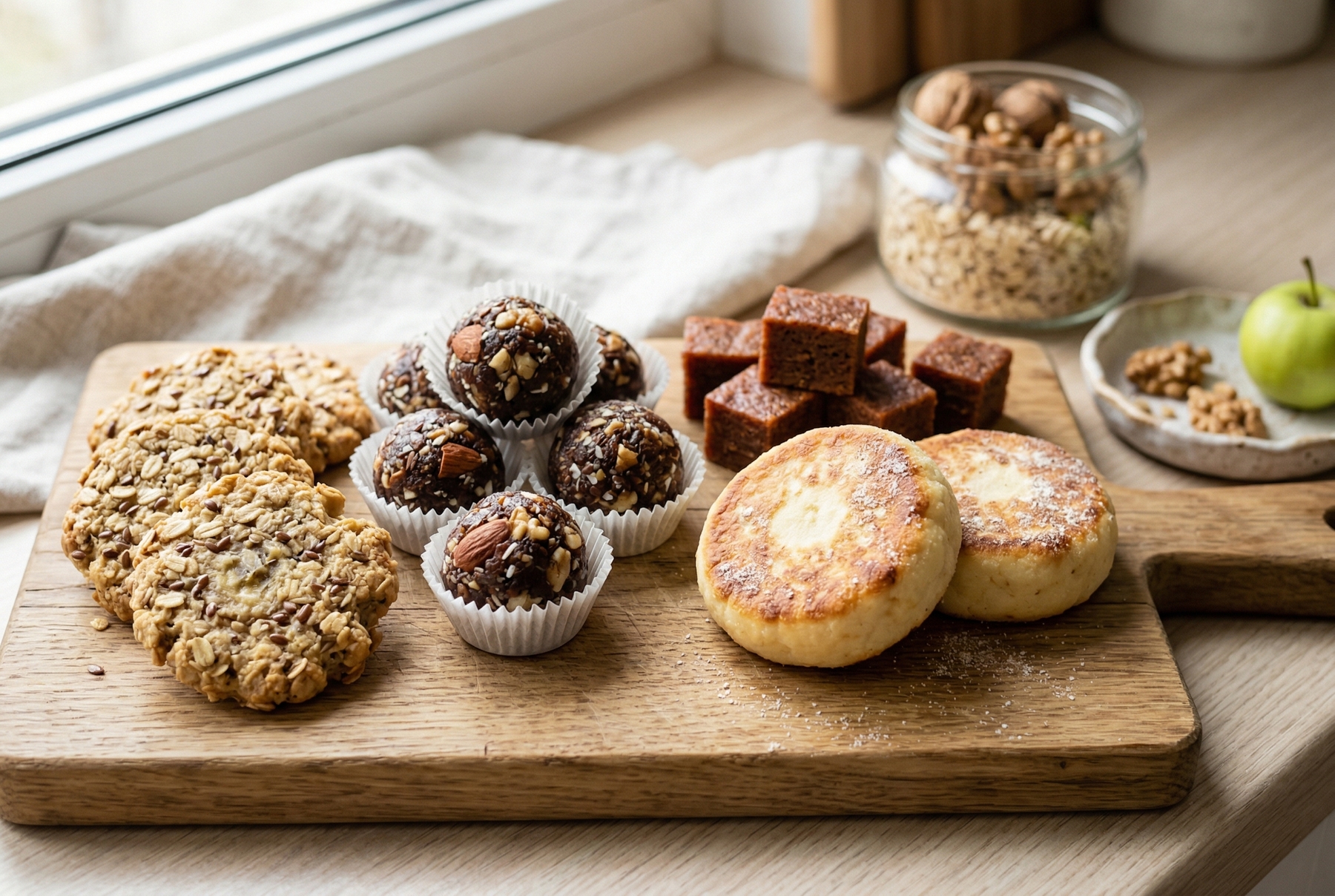
Energy date balls and baked syrniki offer a satiating snack that perfectly replaces conventional candy.
17. Cottage Cheese Dough Crescents With Apples. The dough requires about 100 g (3.5 oz) of soft quark or cottage cheese, an equal amount of room-temperature butter, a cup of flour, and a pinch of salt. Mixing it and chilling it in the refrigerator for an hour prepares it for rolling. Rolling it out, cutting it into triangles, placing a slice of cinnamon-dusted apple on each, and then rolling them into crescents. Baking at 180°C (350°F) for twenty minutes yields a crumbly texture similar to good shortbread. The apple inside caramelizes and softens beautifully.
18. Deceptive Apple Purée Muffins. The base consists of a jar of unsweetened baby apple purée and one heavily overripe, fork-mashed banana. These two provide both sweetness and a moist, dense texture. Adding an egg, a cup of flour, a teaspoon of baking powder, and a drop of melted butter forms the batter. Frozen berries are folded in at the very end, folding them in gently—vigorous mixing will cause them to release juice straight into the batter and dye the entire muffin. Baking at 180°C (350°F) for eighteen to twenty minutes is optimal. The banana intensifies the sweetness during baking, while the apple purée adds a mild tartness.
19. Nut And Fruit Mix. This is the simplest option on the list. Combining walnuts, cashews, and almonds in any ratio with a little dried cranberry or cherry and a couple of dark chocolate squares creates a quick mix. Packed in a small container, it takes a minute to prepare and lasts for weeks. One caveat: nuts are banned in some schools due to classmates’ allergies, so checking with the teacher beforehand is essential.
20. Fruit Skewers. Threading alternating pieces of strawberry, grape, and mandarin onto skewers makes eating fun. Children are far more likely to eat anything served on a stick, a rule that holds true regardless of age. My middle child remains no exception to this day.
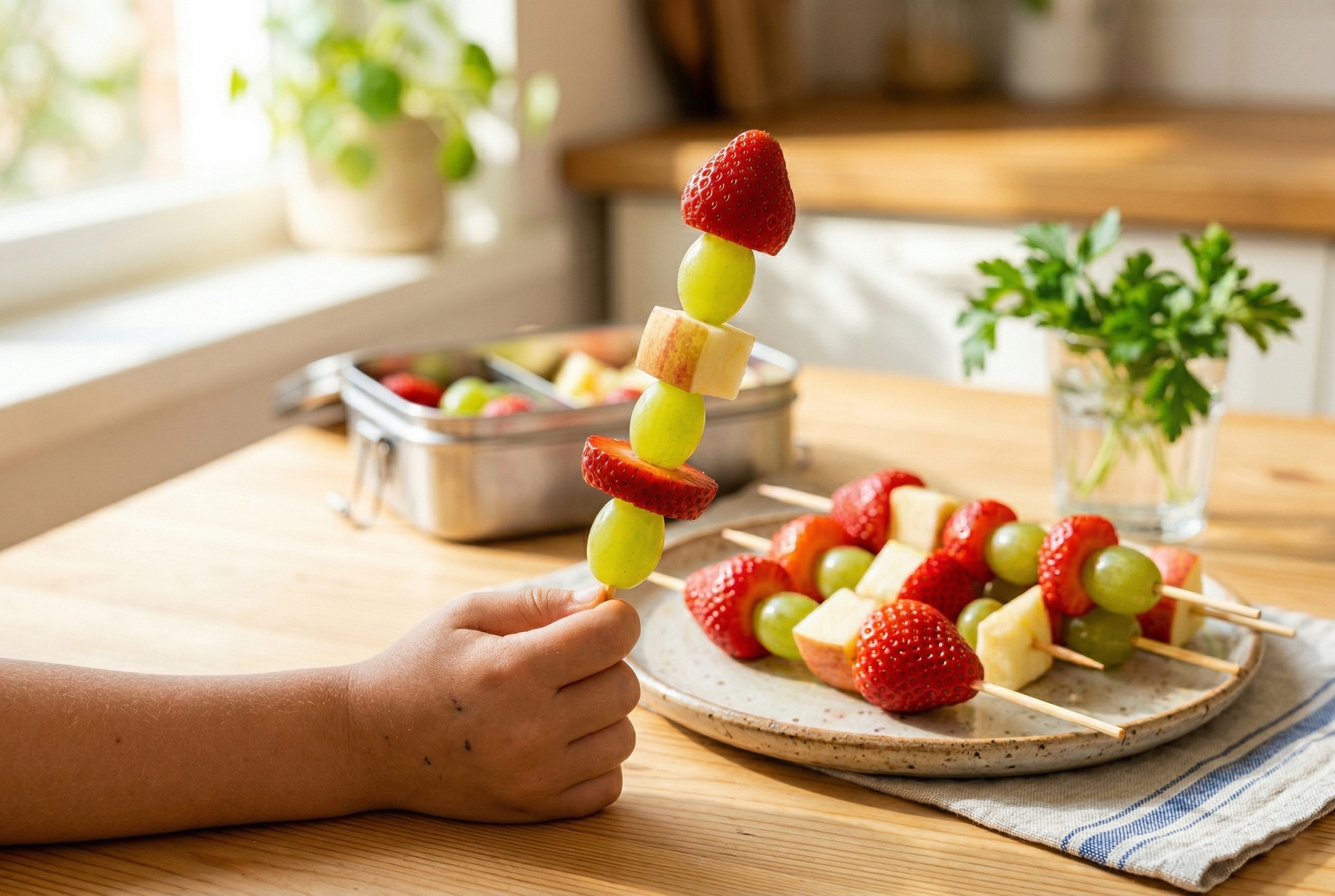
Children are much more eager to eat fruit that is sliced and threaded onto skewers rather than whole pieces.
Morning Life Hacks And Salvaging Failures
The Browning Apple
One of the most frequently asked questions is how to save an apple from turning brown. Slicing the wedges and submerging them in lightly salted water for three minutes does the trick. A quarter teaspoon of salt per cup of water is sufficient. Rinsing and drying them afterward ensures the slices stay white and crisp for hours without any lingering salty taste. This method works equally well for pears. It is unreliable for bananas, which are better packed whole.
The Soggy Sandwich
Packing tomatoes in a wrap or sandwich often turns the bread into a wet rag by recess, especially in summer or if the lunchbox sits in a warm backpack. The first solution is packing whole cherry tomatoes in a separate small container. The second, if sliced tomatoes inside are absolutely necessary, is creating a barrier using a lettuce leaf or a slice of cheese between the tomato and the bread. It is not perfect, but it works. Berries in muffins create the same effect if the muffins have not cooled down completely; always pack them cold.
When There Is Absolutely No Time In The Morning
When nothing is prepared, there are no ready-made options, and the backpack is already by the door, rely on whole-grain crispbreads straight from the pack, slices of hard cheese, a whole apple (do not slice it, and it will not brown), and a packet of nuts. It takes five minutes. Done.
The Container
This is rarely discussed. The juice from sliced fruits or vegetables in a standard container without dividers will mix with everything else the moment the backpack flips. Containers with sections or small individual jars are inexpensive. Another key point: the lid must be easy to remove with one hand. Children at recess do not wrestle with lids; they simply put the container away.
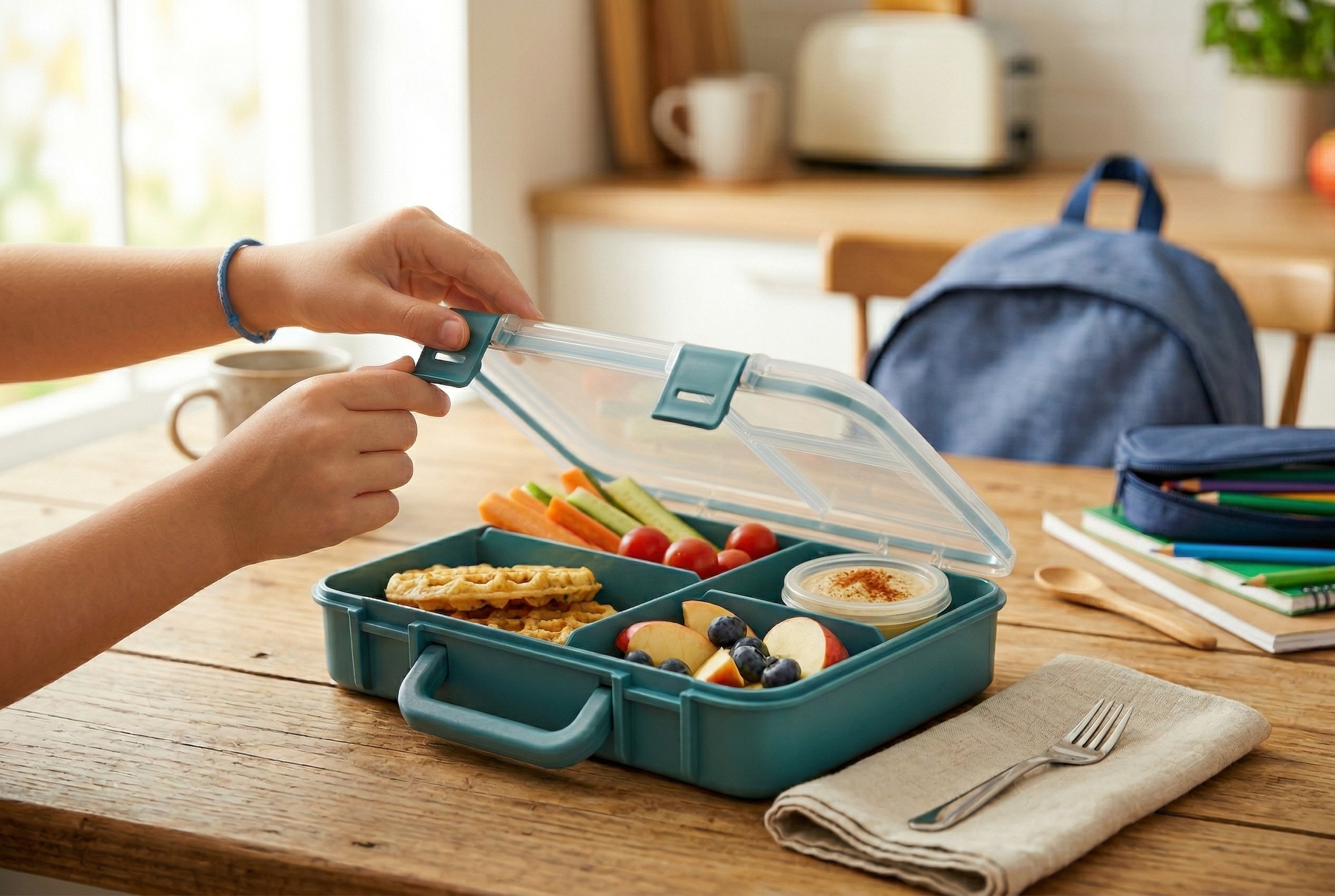
A multi-compartment container prevents foods from mixing and maintains an appetizing appearance.
Cheat Sheet For Lazy Mornings: What To Freeze On Sunday
Cooking every single morning is unrealistic. Batch cooking once a week on Sunday is entirely different.
The process is straightforward. Muffins, meatballs, patties, and syrniki go directly into standard zip-top bags. If stacked in multiple layers, placing parchment paper between them prevents sticking. Waffles and crepes get the same treatment. Crescents and date balls rest comfortably in a lidded container.
The lazy routine: transferring the needed portion from the freezer to the fridge in the evening ensures everything is ready to jump into the insulated bag by morning. Tossing waffles into the toaster for thirty seconds revives their crunch. Date balls can actually be eaten straight from the freezer; they do not turn to stone and reach room temperature after an hour in the backpack. Banana-oat cookies and apple purée muffins require no defrosting at all: half an hour at room temperature, and they are ready.
Sunday meal prep for the week takes an hour and a half at most. One large batch of waffles, muffins, and meatballs covers three days. It has become a habit.
And the most important thing:
A school lunchbox comes back empty not because you cooked something extraordinary, but because you nailed the format: it is easy to hold, does not leak, offers a satisfying crunch, or provides a touch of sweetness without excess. Sometimes it is a zucchini waffle that a child eats for three weeks straight. Sometimes it is a randomly discovered combination of nuts and dried cranberries that they claim as “their thing.”
My middle child still does not know that his favorite muffins use banana and apple purée instead of sugar. He only knows they taste good. And that is enough.
0 comments