
I remember my daughter’s first solid food experience in detail. Boiling a zucchini took an hour. Blending it took another half hour, with the appliance roaring so loudly it woke my husband. Portioning the purée into silicone molds bought specifically for this day felt like a ritual. My daughter swallowed half a teaspoon, proceeding to smear the rest over her face, hair, and the sleeve of my t-shirt.
Sitting in the kitchen and looking at the mountain of dishes, I thought, “Is this how it goes until she turns one? Every single day?”
Spoiler: no, it does not. Starting solids fits smoothly into your life once you stop reinventing the wheel and understand a few basic facts about how a baby’s body works.
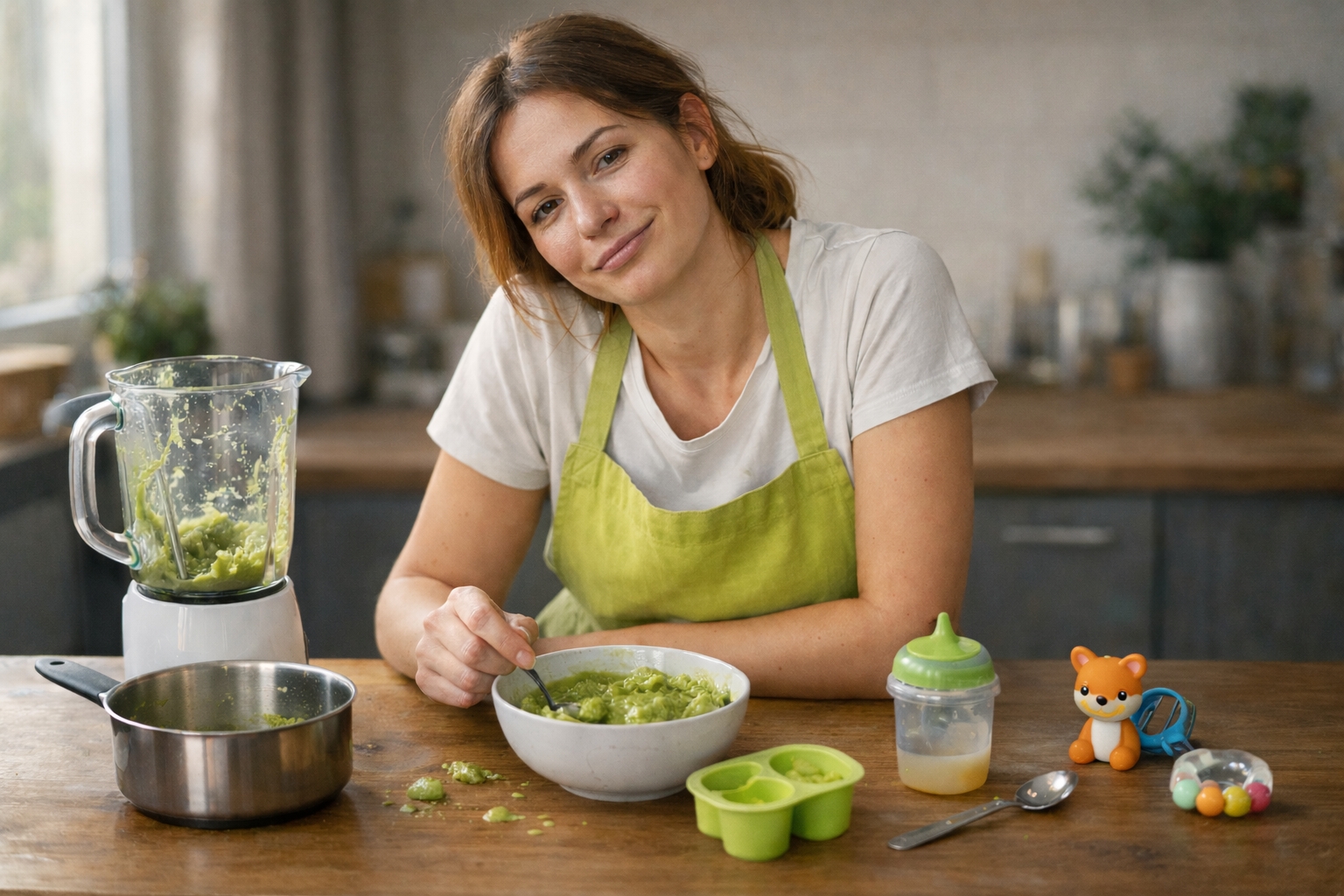
Preparing homemade purée and organizing the kitchen simply helps parents start solid foods without stress and at their own pace.
Why Not Before Six Months (And It Is Not Just a Grandma’s Tale)
Before six months of age, a baby’s stomach simply lacks the readiness to digest anything other than breast milk or formula, and this remains a physiological fact rather than a nod to tradition.
The reason lies in salivary amylase, the enzyme responsible for breaking down carbohydrates. It only reaches sufficient levels around 5 to 6 months. This means that before this age, even perfectly puréed broccoli simply passes through the digestive tract without providing the body with useful nutrients. The pancreas matures simultaneously, beginning to produce enzymes for proteins and fats. Without them, feeding a four-month-old tvorog (a traditional Eastern European fresh farmer’s cheese) creates an unnecessary physiological strain.
Insisting on a strict “exactly 6 months, not a day earlier” rule is unnecessary. If a pediatrician recommends starting at 5 months due to anemia or low weight gain, that presents a specific situation requiring an individual approach. However, on average, most babies are physiologically ready closer to the six-month mark, making this a hard fact to dispute.
Steam, Water, and No Crusts (For Now)
Once the body signals readiness, it is time to put this into practice. A common temptation arises to prepare food the way adults enjoy it—roasted or lightly sautéed in a pan. However, the rules shift entirely for a baby’s first foods.
When vegetables roast or fry at high temperatures, amino acids and sugars interact to create that beloved golden crust. While this sounds appetizing, it fails as a choice for early solids. The crust is much harder to digest, and the hard edges pose a risk of injuring a baby’s delicate oral mucosa.
A zucchini roasted at 200 degrees Celsius (390°F) turns dense, loses its delicate nature, and acquires a slightly bitter aftertaste. While adults find this normal and even enjoyable, a baby discovering new tastes might find such intensity repulsive.
This explains why the first weeks rely on steaming or boiling, keeping vegetables soft and preserving their clean, natural flavor. Later, around eight or nine months, introducing baked or lightly sautéed foods becomes appropriate, but allowing the baby to taste the product in its most basic form matters initially.
Interestingly, boiling transfers most of the nitrates into the water. The golden rule of starting solids dictates never using vegetable broth (the water used to boil zucchini or carrots) to thin out a purée. Adding clean water or breast milk provides a much safer alternative.
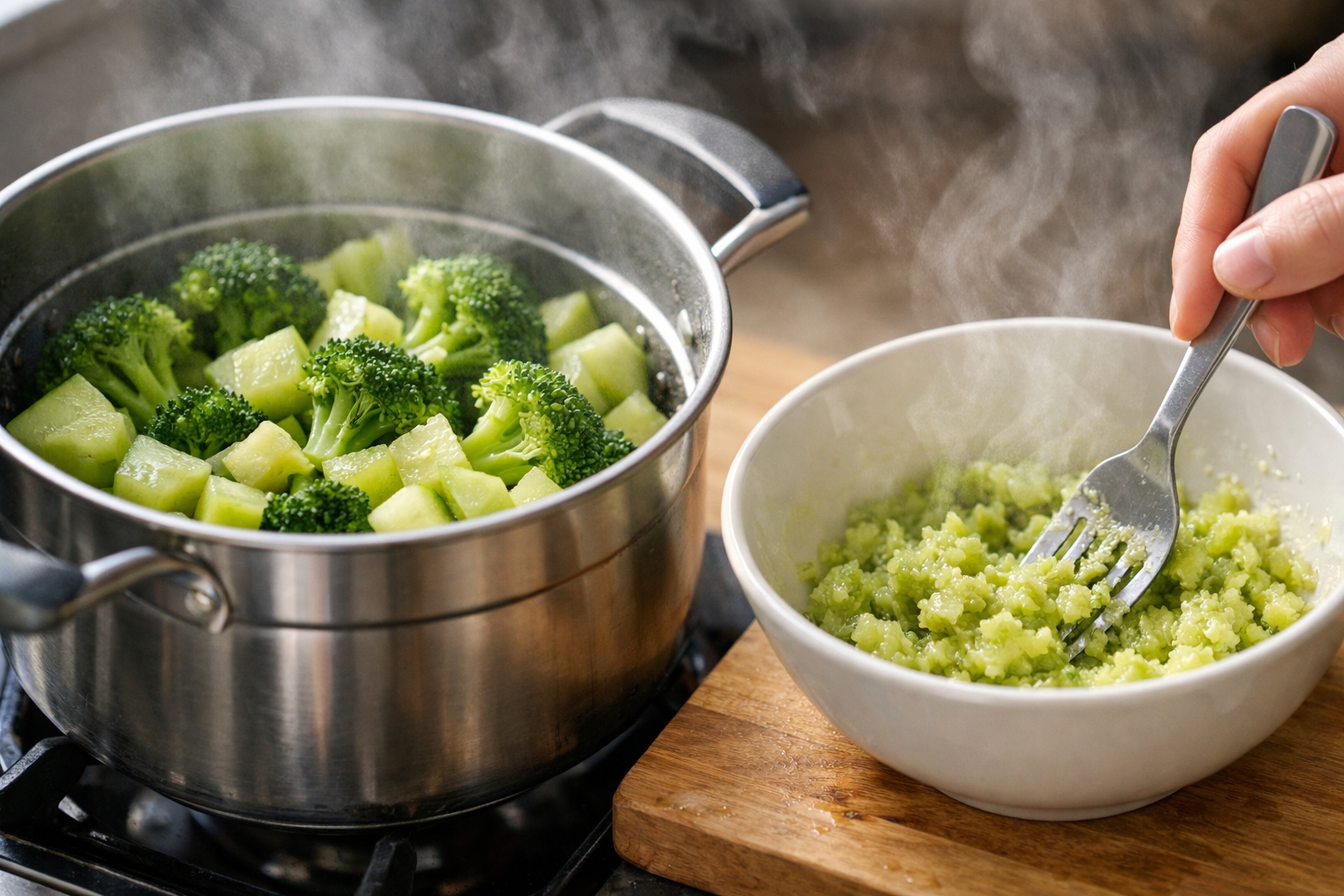
Tender vegetables easily transform into the perfect texture for those first spoonfuls after steaming or boiling.
From Purées to Pieces: When and How
A primary parental fear often sounds like this: “What if they choke?” This anxiety leads many to blend purées to a cream-like consistency, continuing this practice almost until the baby turns one. Yet, food texture serves not only for safety but also for teaching a baby how to chew. Sooner or later, stepping away from perfectly smooth purées becomes necessary.
The first 2 to 3 weeks do require a smooth, lump-free purée, making a blender, sieve, or simply a fork highly useful. However, within a month, gradually thickening the texture and leaving tiny, soft chunks helps the baby adjust to new sensations.
The fork test acts as the main guideline. Pressing a boiled vegetable with a fork should effortlessly turn it into mush. This guarantees that the baby will easily crush it with their gums, even without teeth. Introducing new textures happens in several ways:
- For the youngest (6–7 months): Offering soft vegetables shaped like long sticks, about the size of an adult finger, encourages babies to try holding food. At this age, gripping a “column” with their whole palm and gnawing at the top piece feels natural.
- For older babies (8–10 months): Once the pincer grasp develops, transitioning to soft, pea-sized pieces like boiled carrots, broccoli, potatoes, or ripe pears becomes appropriate.
An Important Rule: Giving a child whole round foods (grapes, cherry tomatoes, large berries, or round sausage slices) poses a severe risk. Their shape can completely block the airway. Slicing such foods lengthwise into halves or quarters remains a strict requirement.
Temperature: 36–37 Degrees Celsius (97–99°F)
The ideal temperature for a baby’s first meals closely matches body temperature, hovering around 36–37 degrees Celsius (97–99°F). Food that runs too hot burns the mucous membranes, as babies lack the instinct to blow on a spoon and do not recognize extreme heat as a danger signal. Cold food not only tastes unpleasant but also digests poorly.
Testing the temperature without a thermometer works simply: dropping a bit of purée onto the wrist, where the skin is thin and sensitive, provides an accurate read. Feeling warm but not hot indicates readiness. Feeling nothing at all suggests the food is too cold and requires warming.
Another vital detail involves never reheating the same portion twice. Discarding leftovers or finishing them yourself proves safer if the baby leaves some behind. Reheating destroys remaining vitamins and gives bacteria a prime opportunity to multiply.
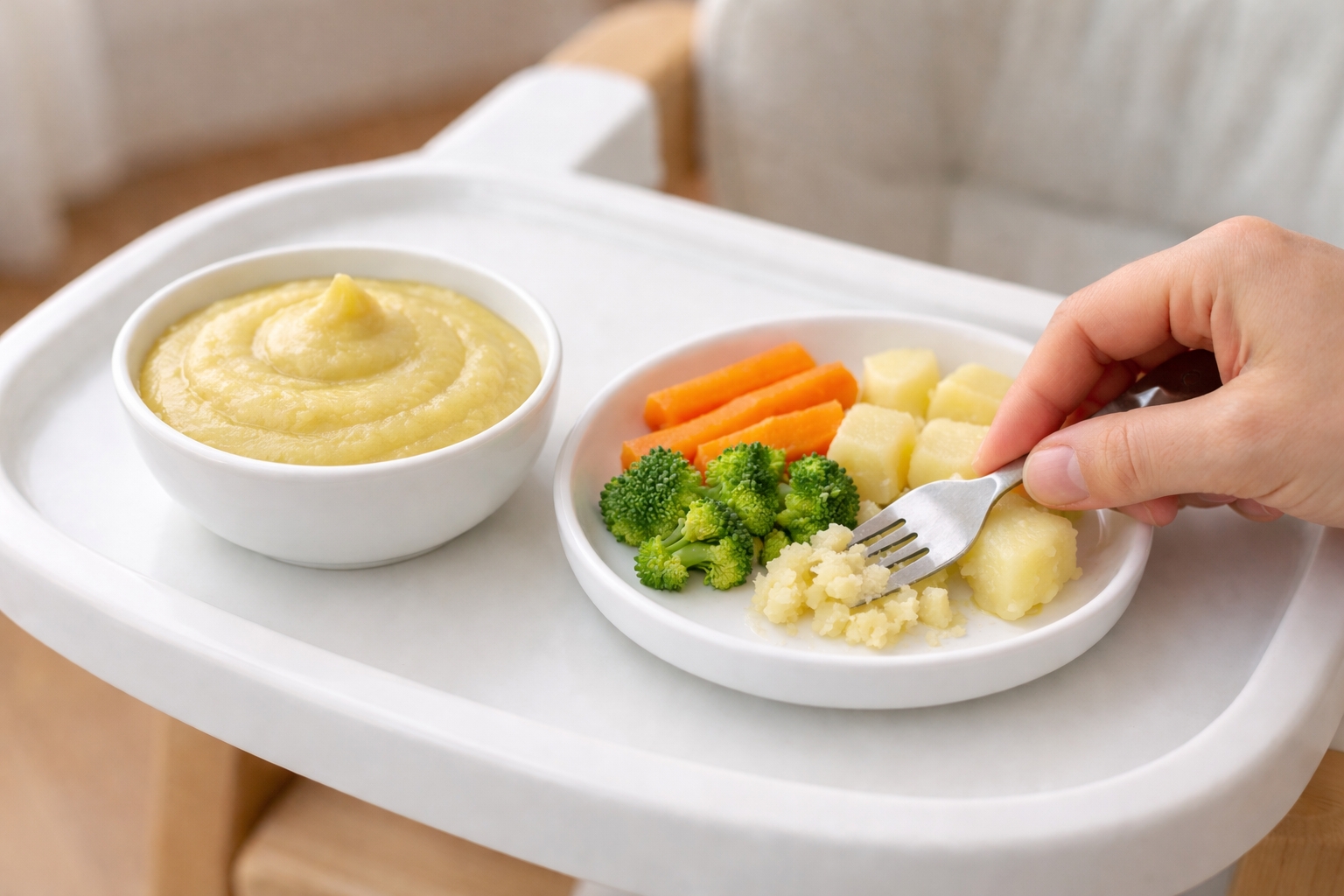
Offering various textures like purées and soft pieces works well without rushing or expecting perfect cleanliness.
Where to Start: Quick Flashcards
Understanding the physiology and cooking principles naturally leads to wondering which specific foods to introduce first. A few proven options provide a solid starting point.
Zucchini or Squash
A neutral taste, extreme rarity of allergic reactions, and a soft texture make this an ideal start. Peeling the skin, removing seeds, cutting into cubes, and boiling for 10 to 15 minutes works best. The prepared purée lasts a day in the fridge, or freezing it in 50–70 ml (1.7–2.4 oz) portions provides a supply for up to two months.
Broccoli
Rich in Vitamin C and folic acid, broccoli satisfies well. Overcooking it, however, releases a bitter taste and that notorious smell that lingers in the kitchen for days. Breaking it into florets and boiling for no longer than 7 to 10 minutes prevents this. It stores for a day in the fridge or up to two months in the freezer.
Cauliflower
Milder in flavor and texture than broccoli, cauliflower serves as a great option for babies prone to constipation. Boiling takes about 10 minutes. Storage matches the others: one day refrigerated, two months frozen.
Gluten-Free Cereals: Buckwheat, Rice, Corn
These act as an excellent source of complex carbohydrates for energy. Grinding the grains in a coffee grinder (enduring the noise at 7 AM builds character) and cooking them with water or breast milk to a runny consistency works perfectly. Keeping cooked porridge is not recommended; storing only the dry mix and avoiding freezing remains the standard. (Note: Buckwheat is a highly nutritious gluten-free seed incredibly popular in Eastern European diets).
Delaying gluten introduction (wheat, oatmeal) past 8-9 months is not recommended, as it may increase the risk of celiac disease later in life.
Baked Apple
Soft fiber and sweet flavor offer a gentle introduction to fruits. Removing the core, baking at 180 degrees Celsius (350°F) for 20 minutes, and then peeling off the skin yields a perfect dessert. It lasts a day in the fridge or a month in the freezer.
The Core Rule: Introducing one new product every 3 to 5 days is highly recommended. Offering it in the morning allows ample time to monitor for any allergic reactions. Starting with half a teaspoon and gradually reaching a portion of 50–80 g (1.8–2.8 oz) by the end of the week builds tolerance.
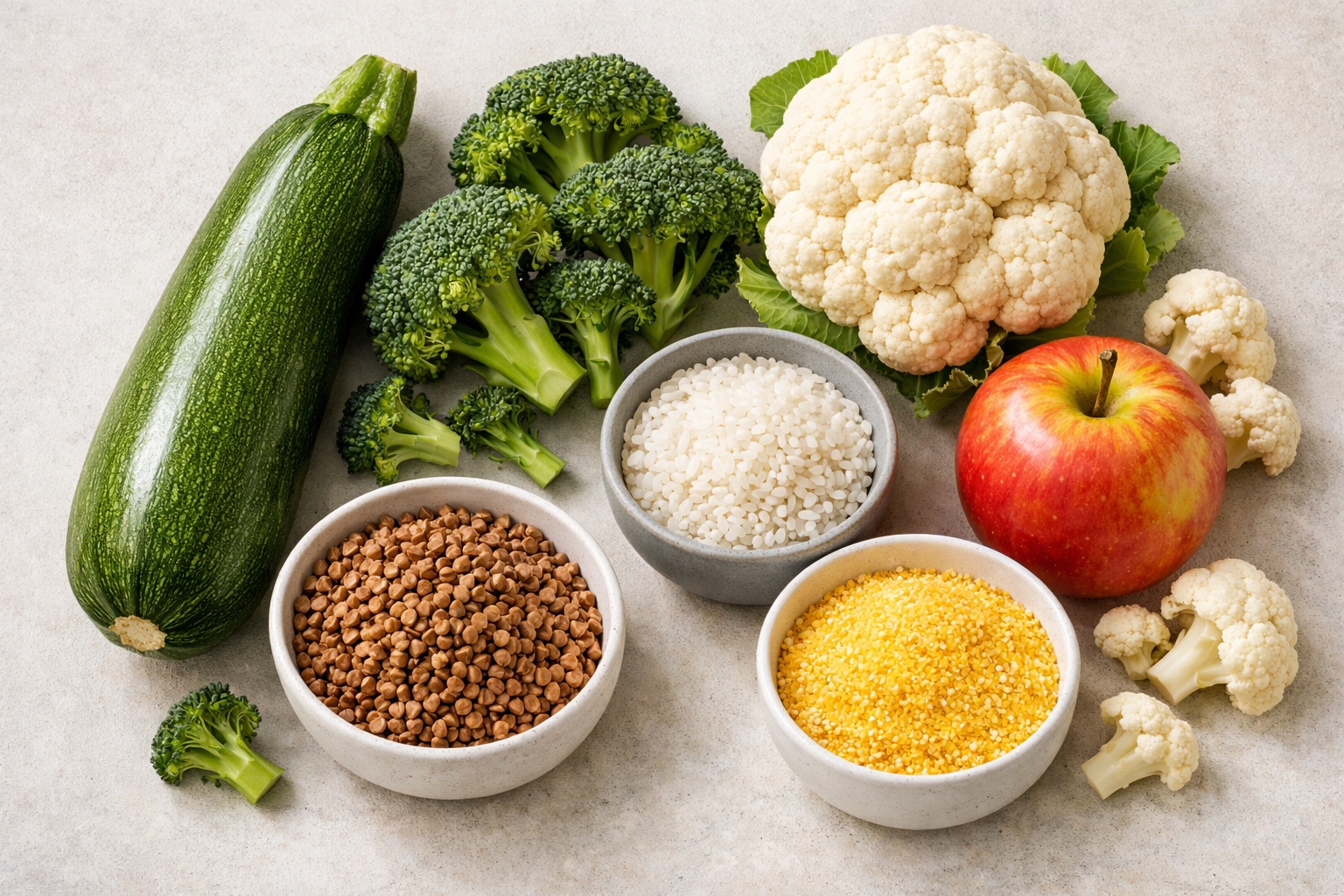
A foundational set of ingredients serves perfectly for early meals and the gradual expansion of a child’s diet.
If Your Baby Refuses
Refusing a food happens constantly and naturally. Offering the same vegetable 10 to 15 times often proves necessary before a baby accepts it, as taste buds develop gradually. However, noticing persistent rejection—spitting out, turning away, or crying at the sight of the spoon—calls for trying an alternative with similar nutritional properties.
If Zucchini Fails:
Trying cauliflower offers a softer texture and a slightly sweeter flavor. Pattypan squash provides a similar profile to zucchini but brings a mild nutty hint. Pumpkin serves as another low-allergen alternative with a naturally sweeter taste.
If Broccoli Fails:
Switching to cauliflower minimizes the strong flavor. Green beans introduce a different texture while maintaining neutrality. Green peas mash easily and taste a bit sweeter, which often appeals to babies more.
If Cereals Fail:
Cooking the porridge with breast milk or a familiar formula brings a comforting, recognizable taste. Once fruits enter the diet, adding a drop of baked apple provides natural sweetness. Swapping the grain works too; substituting rice for buckwheat or corn might solve the issue.
Remembering that a refusal signifies neither parental failure nor baby capriciousness saves a lot of stress. Children’s taste preferences shift almost weekly. Today’s rejected food might become next month’s favorite meal.
What to Do With Leftovers (And Other Practical Questions)
The situation feels painfully familiar: cooking 200 ml of purée, watching the baby eat 30 ml, and standing over the sink wondering what to do with the rest. Rushing to throw it away is unnecessary when several great methods exist for utilizing leftovers.
Vegetable Purée Transforms Into Pasta Sauce
Zucchini, broccoli, and cauliflower act as fantastic bases for creamy sauces. Adding a splash of light cream, some garlic, and a pinch of salt, then heating it for a few minutes creates a dish that hides its baby-food origins perfectly.
Leftovers Make Great Vegetable Fritters
Mixing the purée with an egg, some flour (or ground oats), and a pinch of baking powder creates a quick batter. Frying them in a pan or a waffle maker yields a healthy snack for parents or older siblings.
Freezing in Portions Saves Time
When cooking large batches, spooning the purée into ice cube trays or muffin tins—where one slot holds roughly 30–50 ml—creates perfect single servings. Once frozen, popping the cubes into a zip-lock bag and labeling the date simplifies meal prep. They defrost quickly and eliminate the need to stand by the stove daily.
Starting Solids at a Restaurant
Parents possess every right to leave the house and meet friends; starting solid foods does not equate to house arrest. Feeding a baby in a café or restaurant remains entirely feasible if a few simple guidelines are observed.
What to Order for a 6–8 Month Old:
Boiled potatoes without salt or butter—requesting them prepared separately works well. Steamed vegetables present another option; specifying no spices and avoiding heavily roasted parts is key. Oatmeal cooked with water or a baked apple from the dessert menu also fits perfectly.
What to Bring Along:
Carrying a small container of familiar purée guarantees a backup if the menu offers nothing suitable. Bringing a familiar silicone spoon, a bib with a catch pocket to protect the restaurant floor, and an abundance of wet wipes ensures a smooth experience.
If a waiter looks confused when asked to mash a potato with a fork on a child’s plate, staying calm works best. Paying for food grants the right to adapt it to a child’s needs. Calmly stating, “We need it without salt or spices for the baby,” usually resolves the matter instantly.
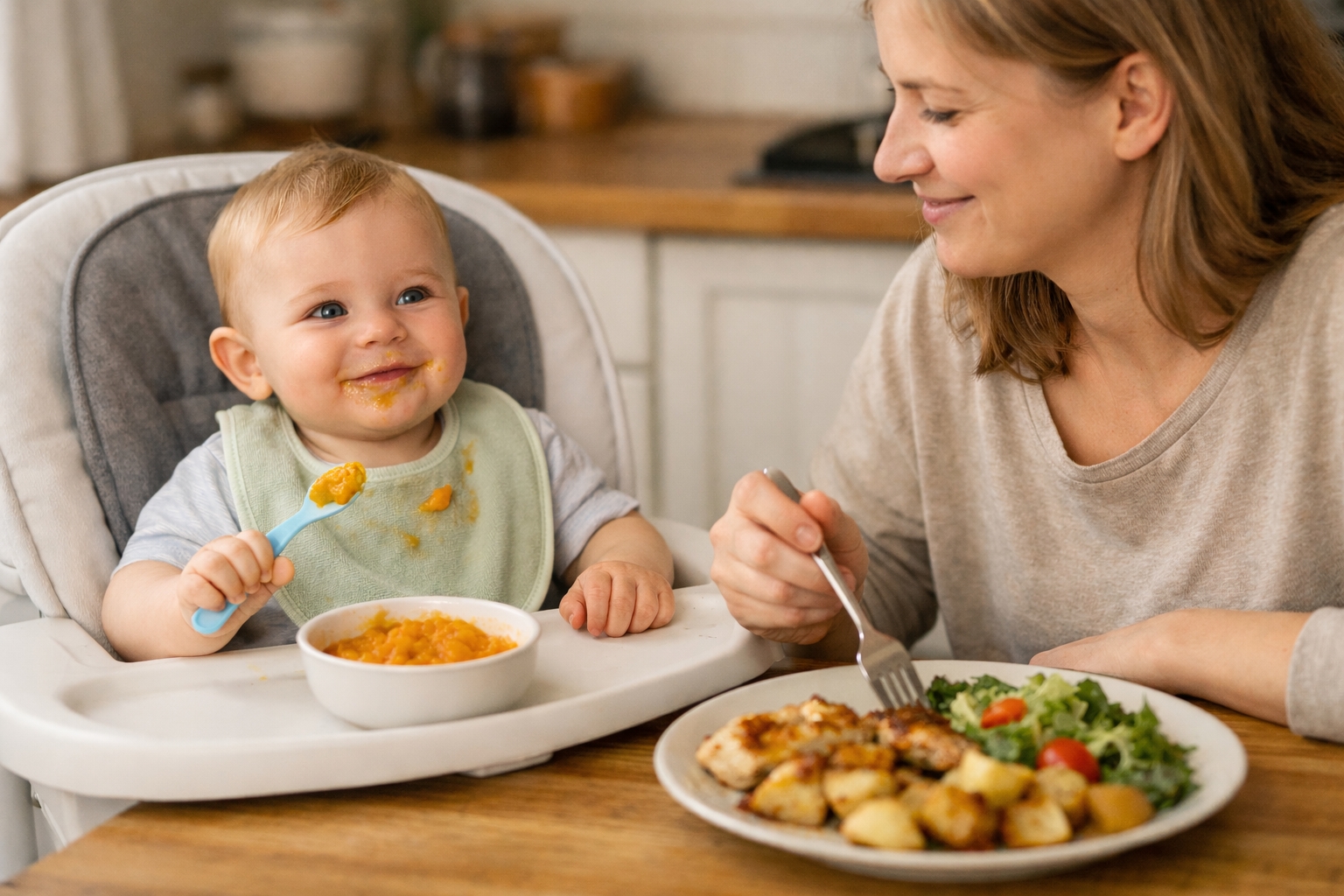
Sharing meals normalizes the process, as the baby learns by example and tries new foods more calmly.
About the Mess, Burned Omelets, and Your Anxiety
The hardest part of introducing solids involves neither boiling broccoli perfectly nor achieving the exact temperature. The real challenge lies in overcoming the feeling of needing to execute everything flawlessly.
The myth of the perfect mother suggests she cooks perfectly on the first try, the baby finishes every bite while smiling, and walls remain spotless. Reality operates quite differently, and accepting this brings immense relief.
A burned omelet simply means laughing it off, tossing it, and making a new one. Purée smeared across the table represents a sensory experience where the child touches, squishes, and studies food textures. Refusing a meal means “I don’t want it today,” not a personal insult, and tomorrow might bring a different attitude.
I remember my daughter rejecting porridge for a whole week while I spiraled into anxiety over texture, temperature, and timing. Finally, I exhaled, removed porridge from her menu for two weeks, and reintroduced it later. She ate it without any drama, acting as if the previous battle never occurred.
Children read parental anxiety with striking accuracy. Approaching with a tense face, expecting a battle, guarantees one will happen. Offering food in a relaxed manner and calmly accepting refusal encourages the child to relax and behave naturally.
A Few Rules for Peace of Mind:
Avoid Forcing Them to Finish
If a baby turns away, closes their mouth, or plays with the food instead of eating, they feel full. Even if they only swallowed three spoons, their body knows exactly what it needs.
Avoid Comparing With Other Children
If a friend’s six-month-old eats like a teenager, that is wonderful for them. A baby eating less simply follows their personal norm, which requires zero justification.
Embrace the Mess
Food ending up in hair, on the floor, and on the walls feels irritating, but it remains temporary. Placing a mat under the highchair, putting on a sleeved bib, and taking a deep breath helps. In six months, these moments will evoke a smile.
Eat Together
Children learn through imitation. Eating nearby encourages the baby to reach for the adult’s plate. Theatrical “yum-yum” noises are unnecessary; simply eating calmly and naturally sets the best example.
Keep the Table a Battle-Free Zone
If a child refuses food for several days but remains active, sleeps well, and gains weight, panicking is unwarranted. Teething, a mild illness, or just a phase might cause it. Observing without applying pressure remains the best strategy.
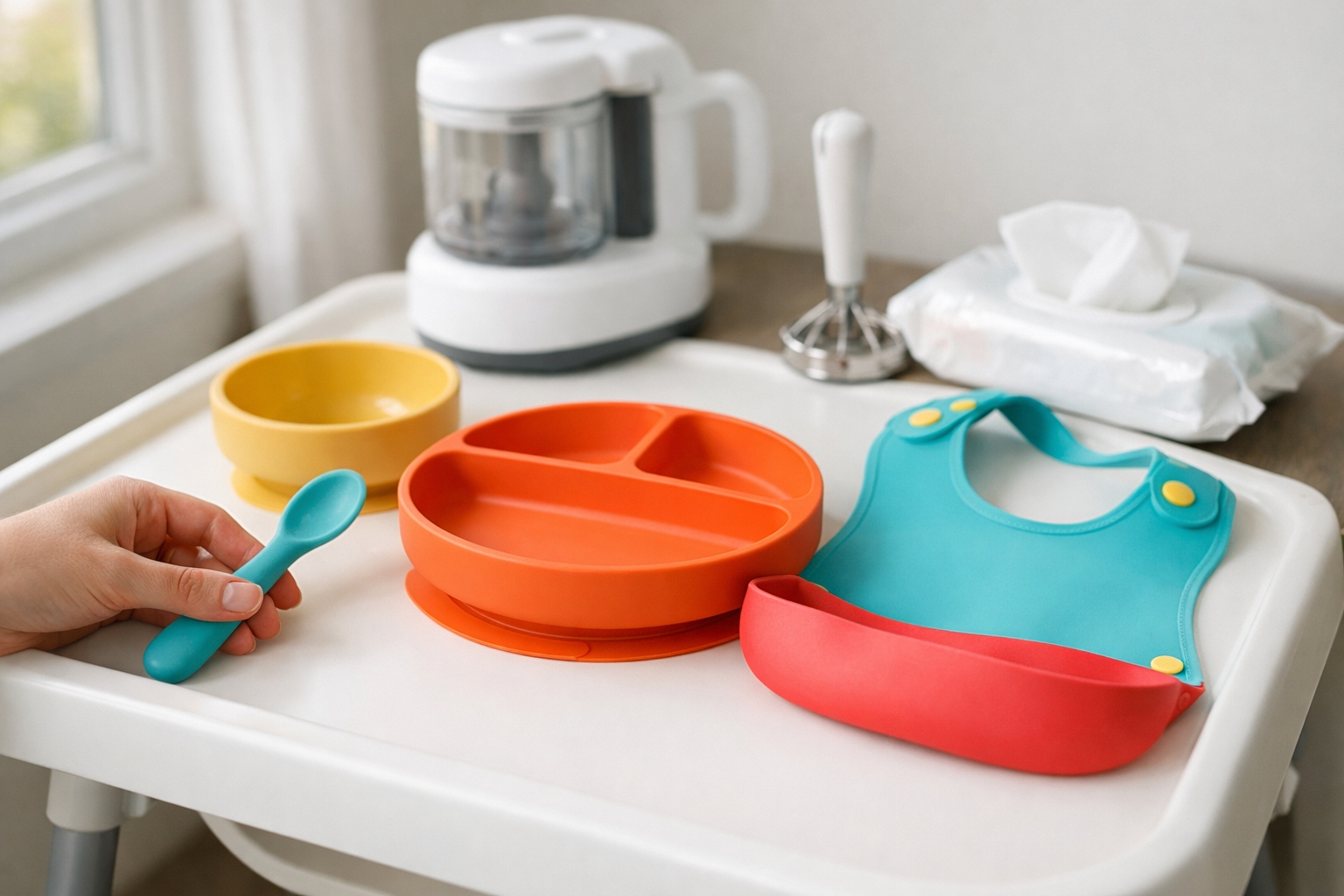
Using practical accessories like a suction plate, bib, spoon, and wipes minimizes the mess and boosts confidence.
The “Ready to Start” Checklist
To determine readiness for the weaning journey, reviewing this list helps. If 80% of the answers are “yes,” starting confidently is the next step.
About the Baby:
☐ Around 6 months old (or a pediatrician advised starting earlier/later based on medical indicators)
☐ Sits with support or independently
☐ No longer automatically pushes a spoon out with their tongue
☐ Reaches for adult plates, looks with interest, opens their mouth
About You:
☐ Feel calm regarding potential food refusal
☐ Ready for a messy kitchen and highchair area
☐ Understand that early solid foods act as an introduction, not a replacement for breast milk or formula
☐ Do not plan to measure success by the number of grams consumed
☐ Possess time to cook (or feel comfortable using commercial jarred food, which is perfectly fine)
What is at Home:
☐ A highchair or another safe seating arrangement
☐ A soft silicone spoon
☐ A small plate, preferably with a suction base
☐ A blender or masher for home cooking
☐ A bib, ideally one with a catch pocket
If a “no” appears but starting feels right, then starting is the correct choice. This list promotes awareness and calmness rather than seeking perfect preparation.
Introducing solid food represents a months-long process full of trials, errors, and small discoveries, rather than a race or a maternal exam.
The child learns to eat, the parent learns to feed, and eventually, looking back reveals a journey passed calmly and without drama.
And if those carrot purée stains never wash out of that favorite t-shirt, it genuinely will not matter anymore.
1 comment