
Welcome to a delightful twist on a timeless classic! Borscht is more than just a soup; it's a cultural icon, a comforting hug in a bowl, cherished across Eastern Europe. While there are countless variations, this recipe for Borscht with Tomato Juice offers a uniquely fresh and vibrant take. By swapping traditional tomato paste for juice, we create a soup that is lighter, subtly sweet, and bursting with a beautiful ruby-red color. Whether you're a longtime borscht lover or trying it for the first time, this recipe is sure to win you over with its rich, earthy flavors and simple, wholesome ingredients.
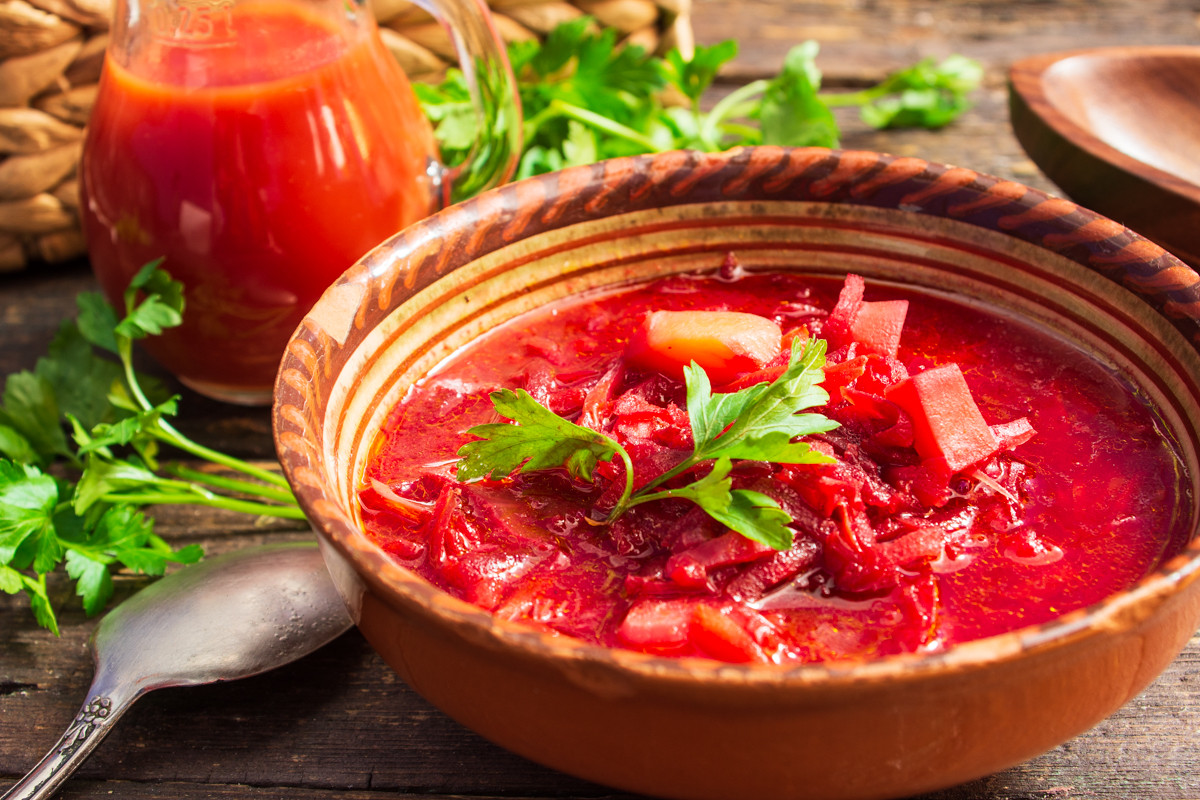
Borscht with tomato juice
Ingredients for Borscht with Tomato Juice
- 2 medium beets
- 1 cup tomato juice
- 1 onion
- 1-2 celery stalks or a bunch of parsley stems
- 1 carrot
- 3 medium potatoes
- 1 cup thinly shredded cabbage
- 1 liter chicken or meat broth
- 2 tablespoons vegetable oil
- salt, black pepper
How to Make Borscht with Tomato Juice

Preparing the base for borscht with beets and tomato juice.

Sauté the beets over medium heat for 10 minutes, stirring to prevent burning.

Pour in the tomato juice.
Let’s prepare the beet and tomato juice base for our borscht. Pour 1 tablespoon of odorless vegetable oil into a frying pan. Peel two medium beets and grate them on a coarse vegetable grater. Add the grated beets to the pan.
Sauté the beets over medium heat for 10 minutes, stirring occasionally to prevent them from burning.
Pour in the tomato juice. This recipe uses regular, salted tomato juice without added sugar. I won’t advertise a specific brand; choose the one you like best.
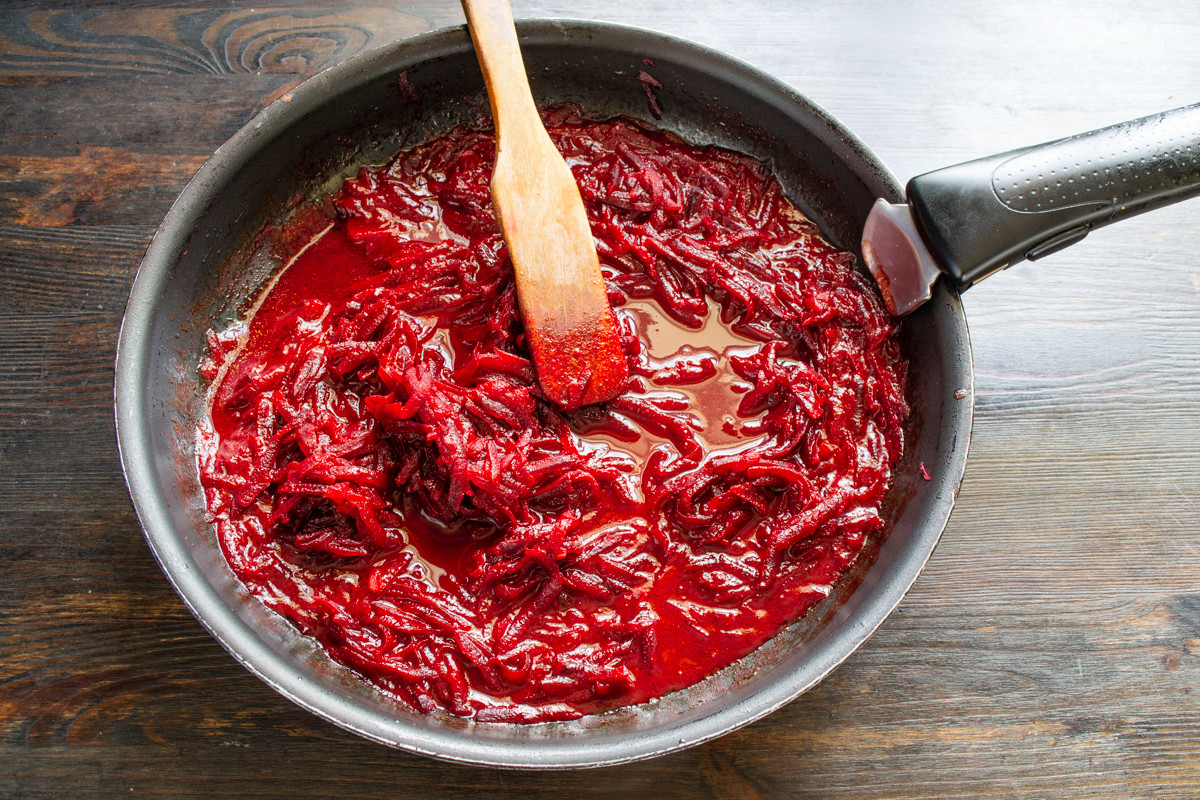
Simmer the beets with tomato juice for 7 minutes; no need to add salt yet.
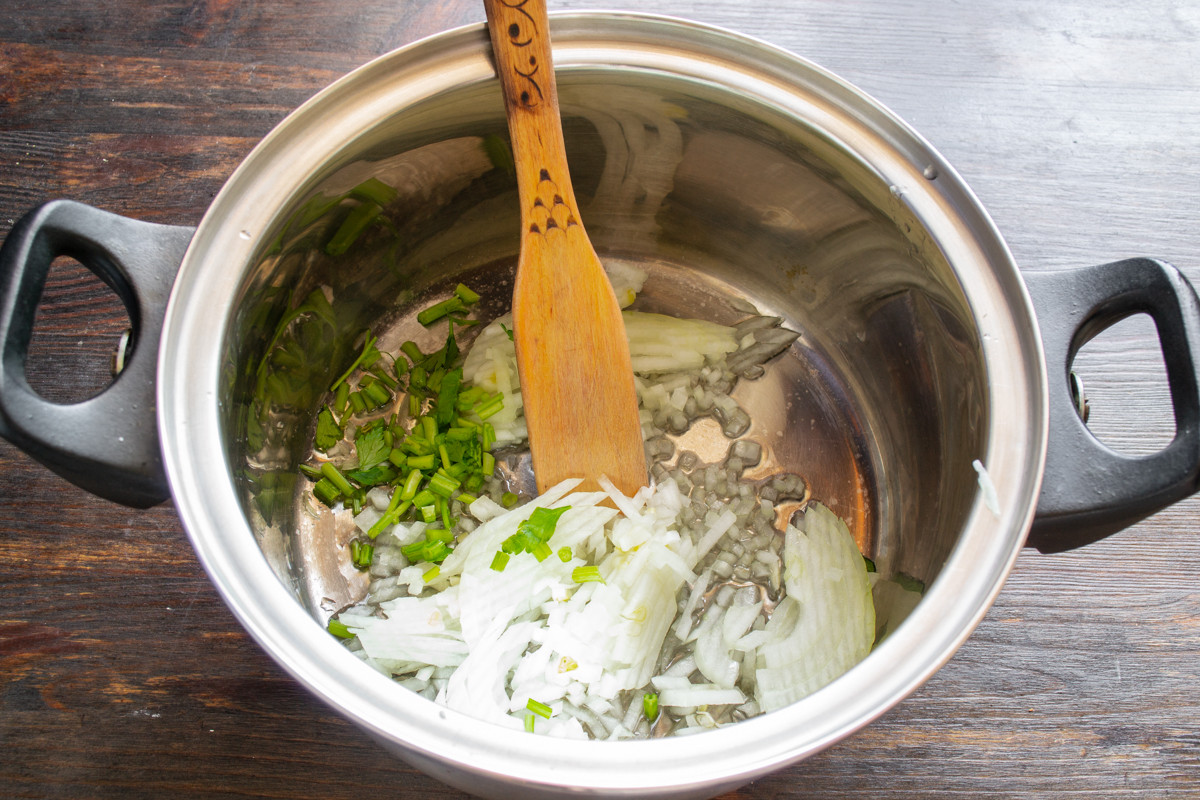
Sauté over low heat for 5-7 minutes until the onion is soft.
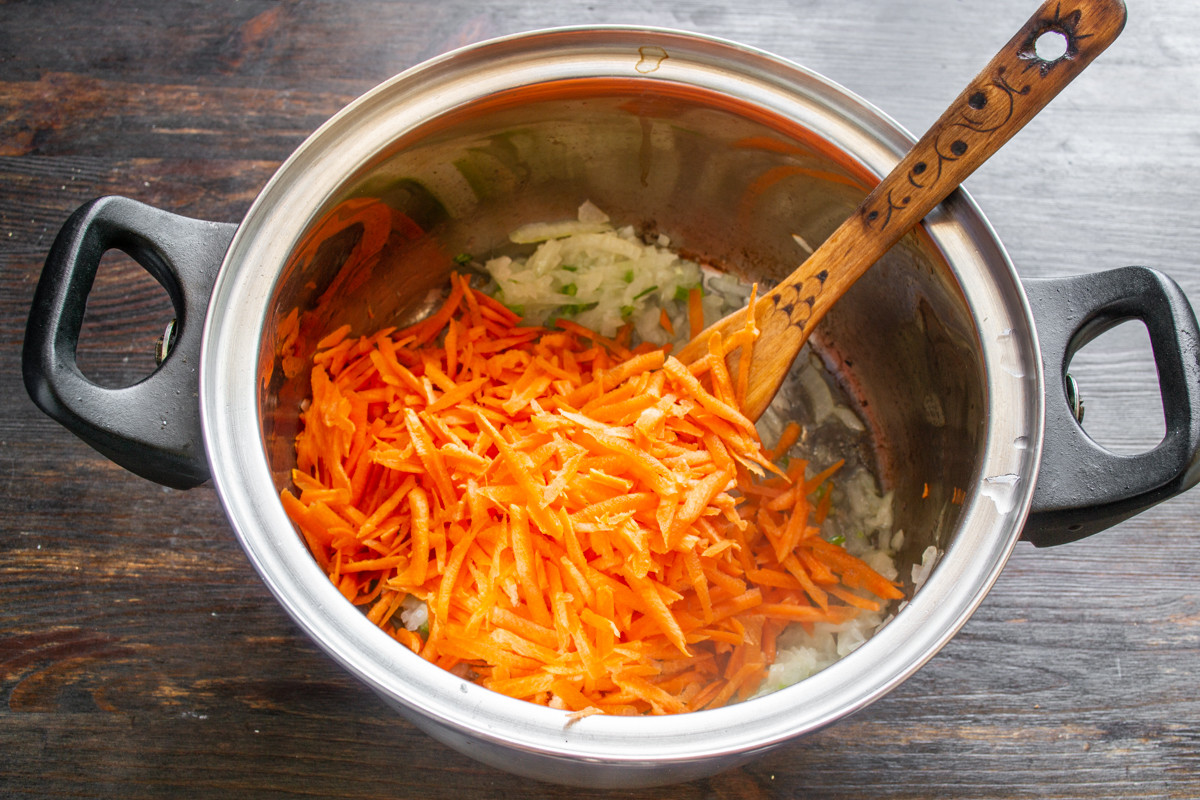
Peel the carrots and grate them on a coarse grater.
Simmer the beets with the tomato juice for 7 minutes. There’s no need to add salt at this stage. Firstly, the juice is already salted. Secondly, it’s better to salt the finished dish at the end of cooking, as you’ll likely need less salt overall.
Pour a tablespoon of vegetable oil into a heavy-bottomed pot. Finely dice one onion. Finely chop celery stalks or a small bunch of parsley stems. Add the chopped vegetables to the pot. Sauté over low heat for 5-7 minutes, until the onion becomes soft.
Scrape the carrot and grate it on a coarse grater. Add the grated carrot to the pot.
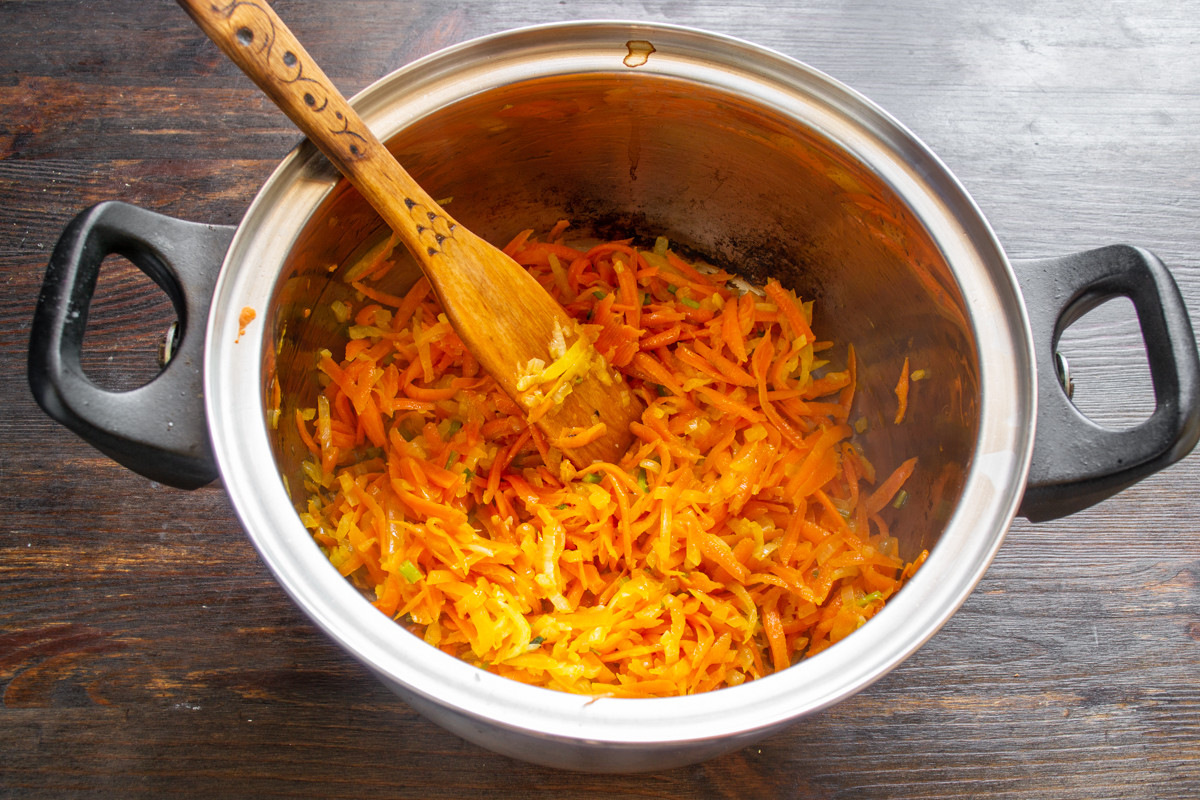
This creates a sautéed vegetable base, used in many soup, sauce, and stew recipes.
Sauté the vegetables over medium heat for about 10 minutes. Stir to prevent the carrots from burning. This will create a sautéed vegetable base, which is used in many recipes for soups, sauces, and stews.
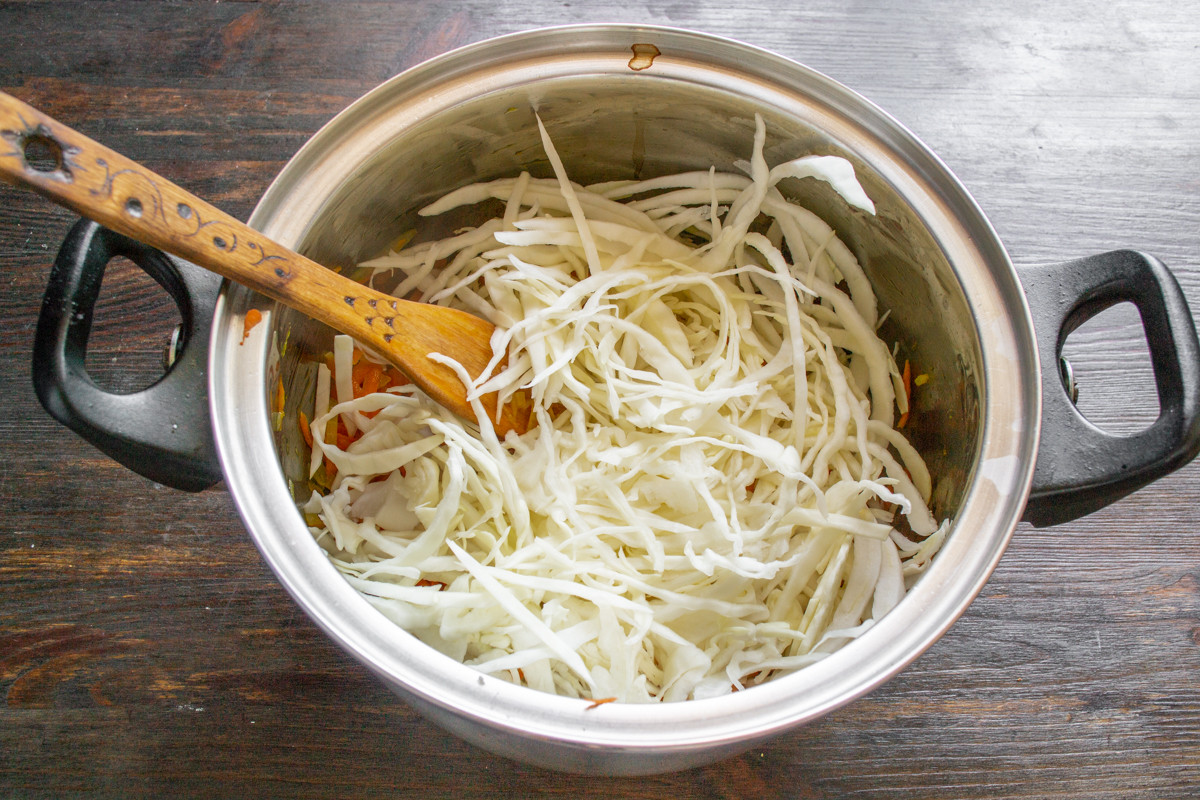
Thinly shred the white cabbage.
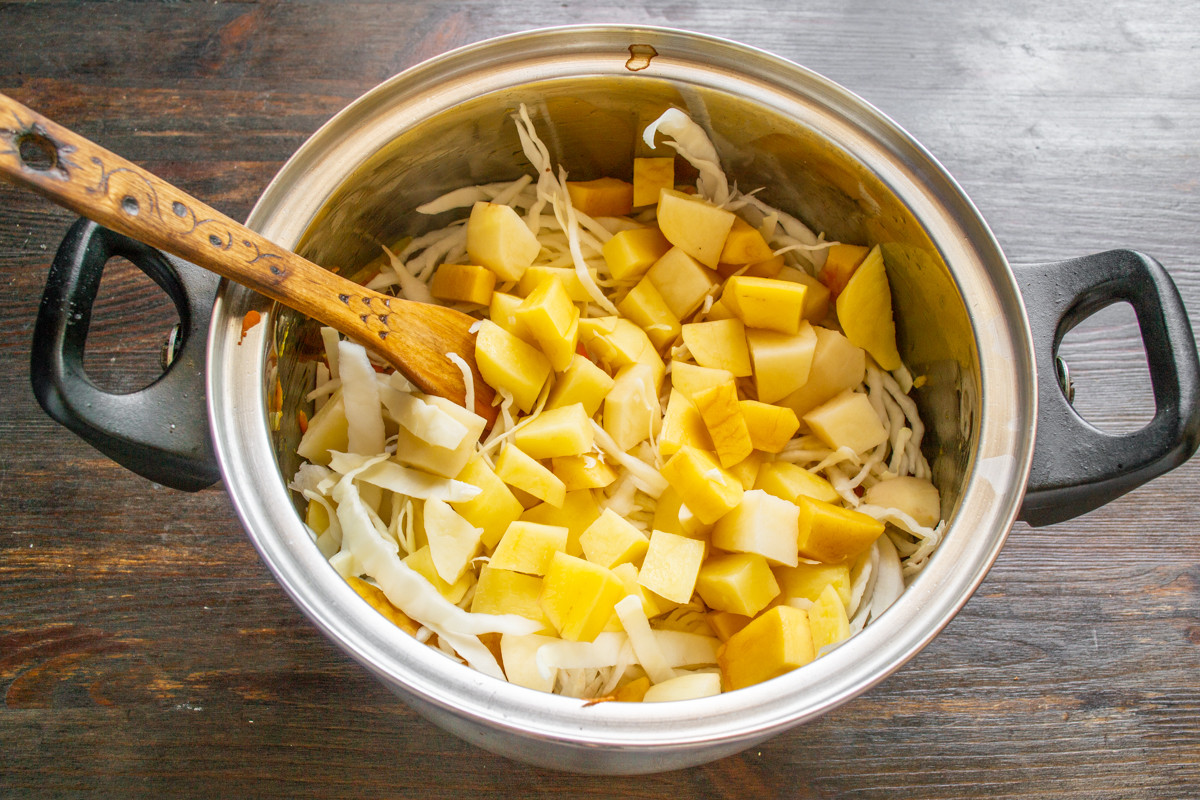
Add the diced potatoes to the pot after the cabbage.
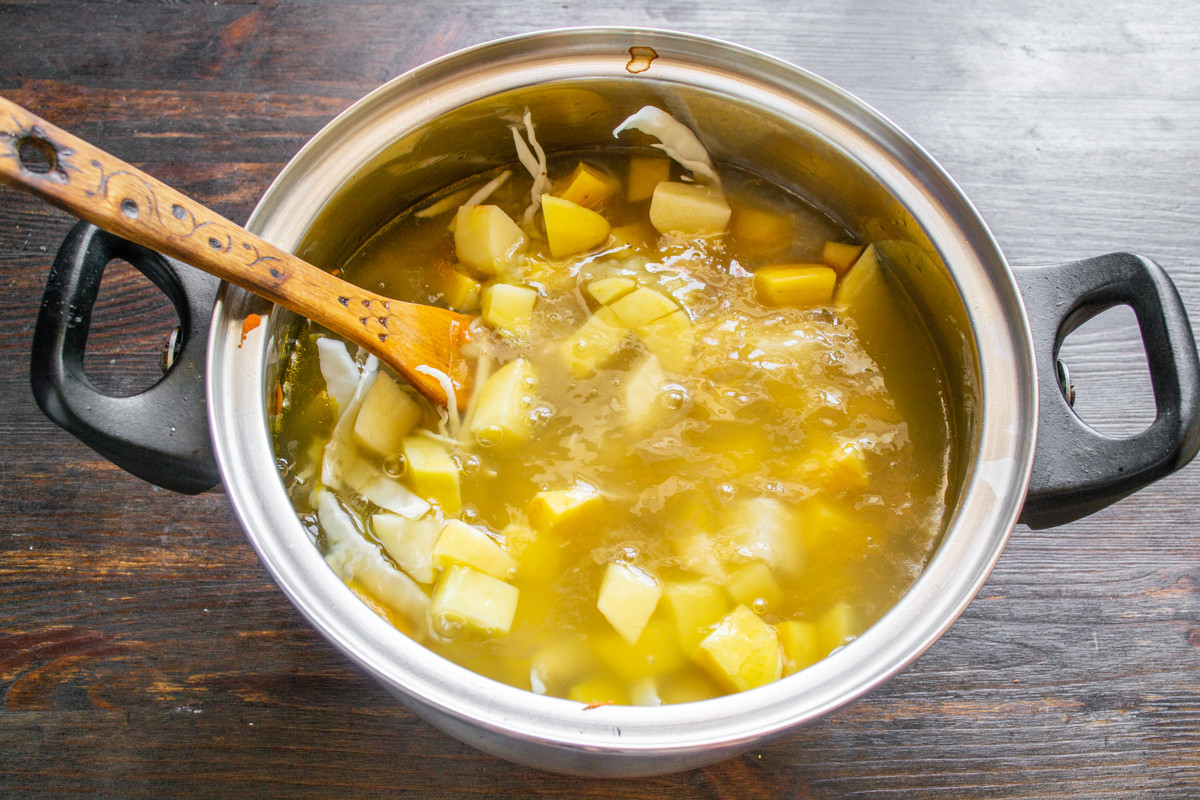
Pour in the chicken or meat broth.
Thinly shred the white cabbage. The thinner you slice the cabbage, the faster it will cook. Add the shredded cabbage to the pot.
Peel the potatoes and cut them into cubes. Add the diced potatoes to the pot right after the cabbage.
Pour in the chicken or meat broth. One liter is enough to make a thick borscht. For a vegetarian recipe or for a Lenten meal (a period of fasting in Orthodox Christianity), replace the meat broth with vegetable broth or boiling water.
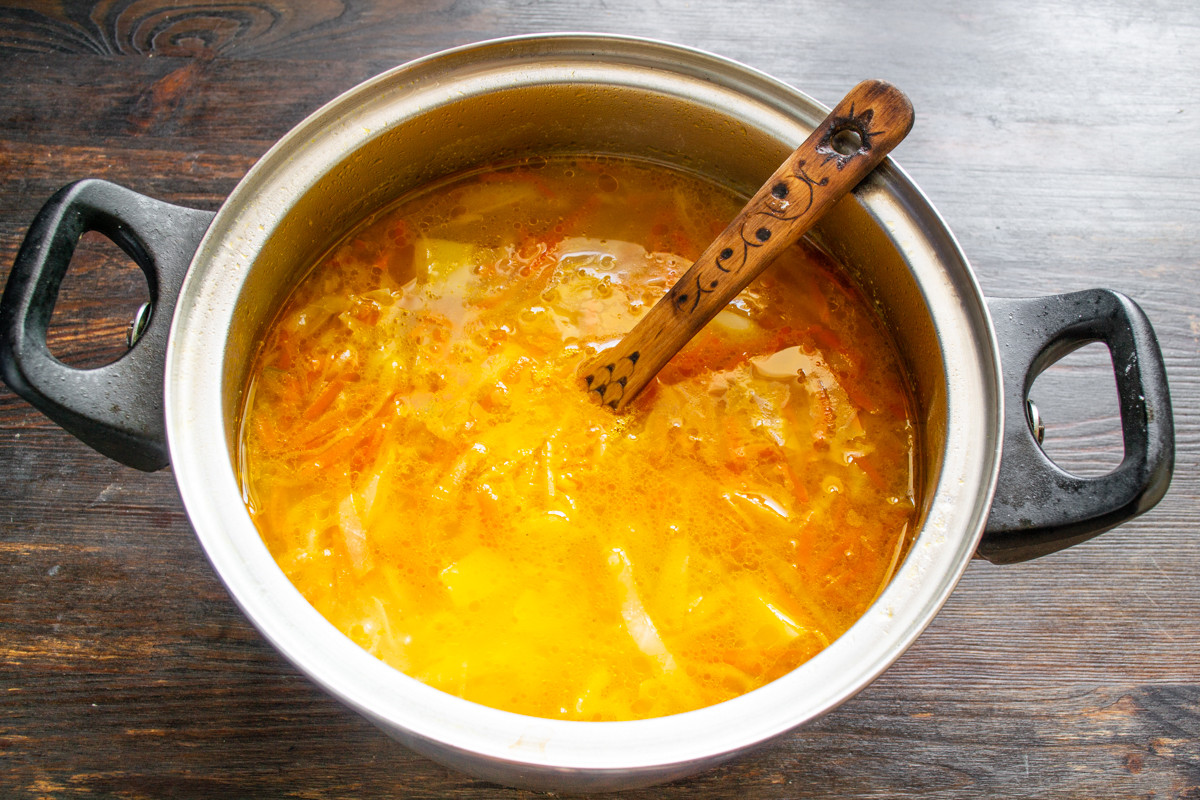
Cook over low heat for 20 minutes, or until the cabbage is tender.
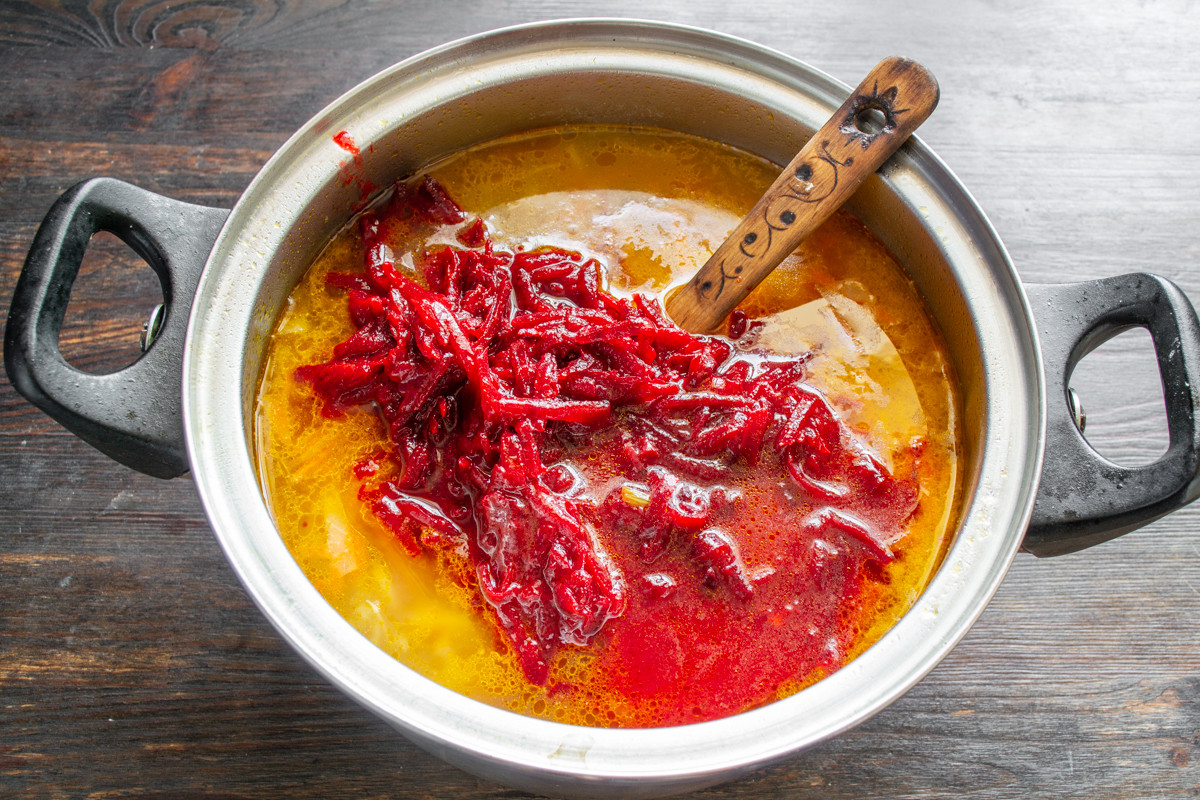
Once the vegetables are cooked, add the beets simmered in tomato juice to the pot.
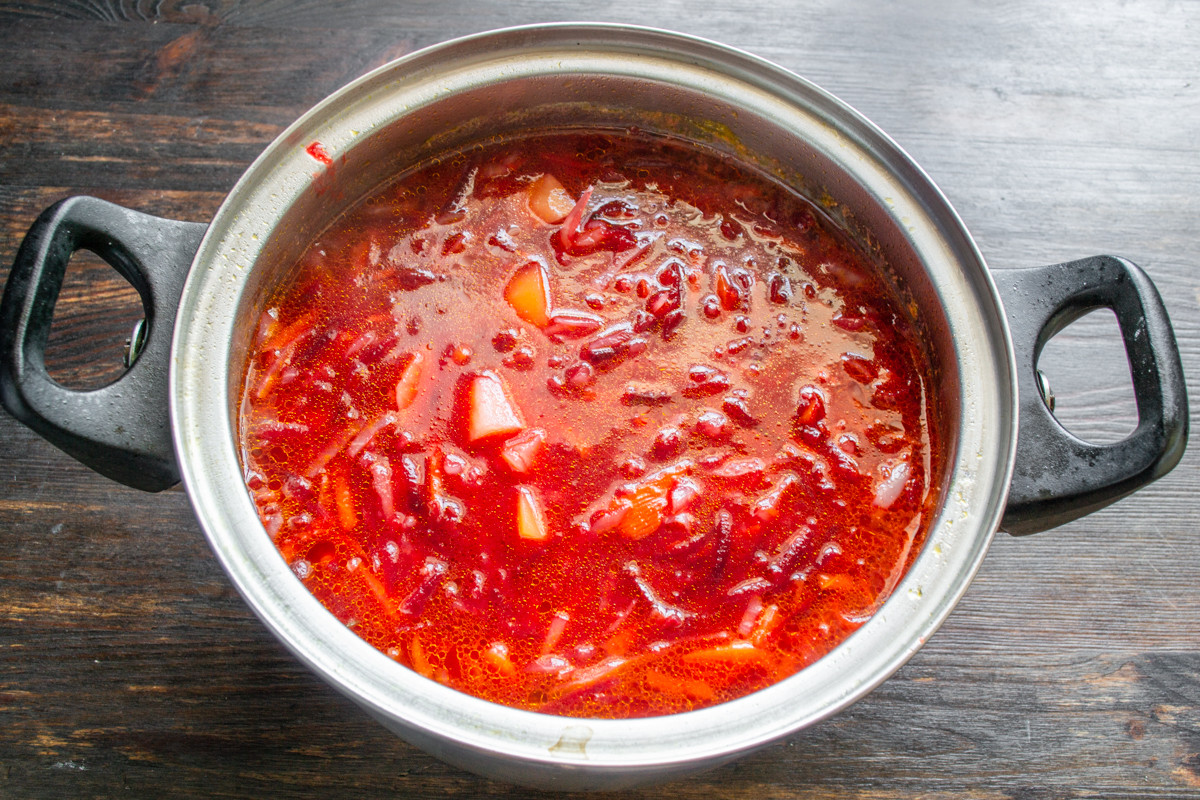
At the very end, season the borscht with salt to taste, heat until almost boiling, but do not boil.
Bring to a boil. Cook over low heat for 20 minutes, or until the cabbage is tender.
Once the vegetables are cooked, add the beets that were simmered in tomato juice to the pot.
At the very end of cooking, salt the borscht to your taste. Heat it until it’s almost boiling, but do not let it boil. Remove the pot from the heat. If you boil soup with beets, its beautiful red color will fade, turning brownish-red or almost brown.
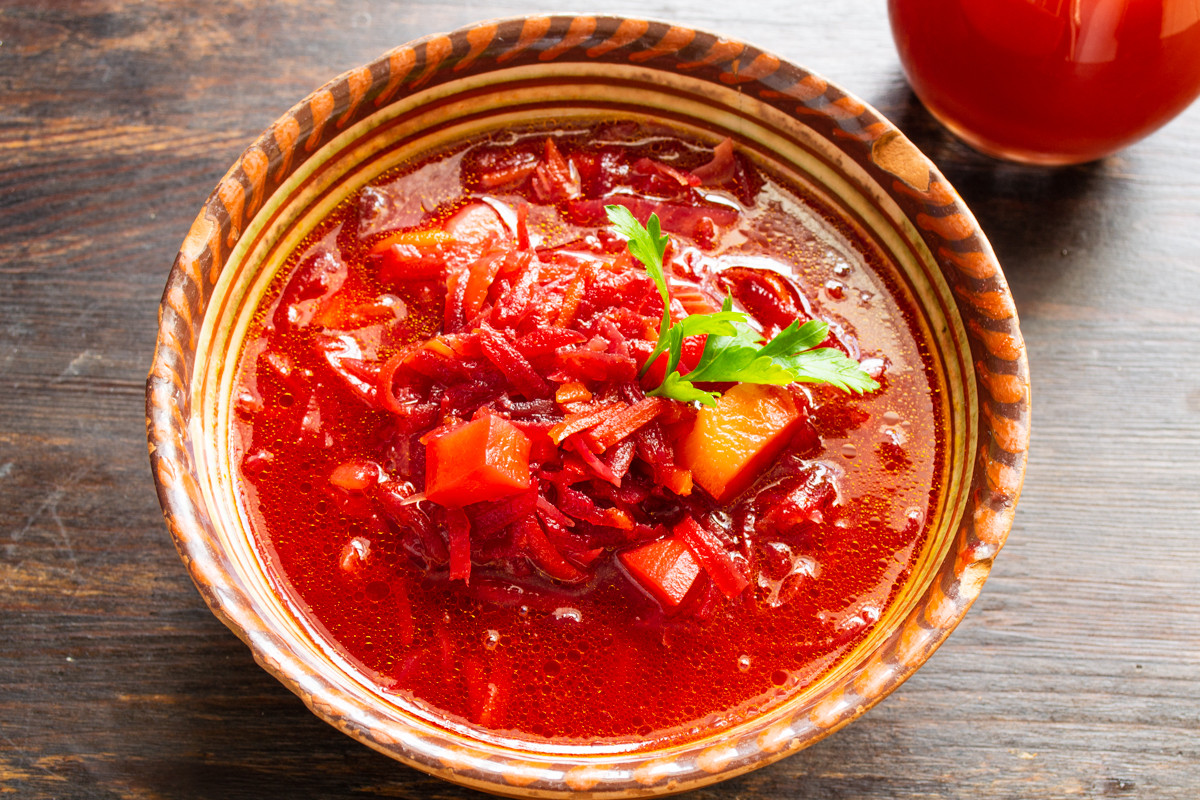
Serve the borscht hot. You can season it with crushed garlic, ground black pepper, and sprinkle with green onions.
Serve the borscht hot. You can season it with crushed garlic, ground black pepper, and sprinkle with green onions. It’s delicious with smetana (a popular Eastern European sour cream), or for a lighter option, use unsweetened yogurt.
And there you have it – a beautiful pot of homemade Borscht with Tomato Juice, ready to warm you from the inside out. The best part about borscht is that its flavors deepen over time, so don't be surprised if it tastes even more delicious the next day! Serve it hot, traditionally with a dollop of smetana (sour cream) and a side of dark rye bread or garlic pampushky (soft garlic rolls). We hope this recipe brings warmth and joy to your table. Enjoy the process, and feel free to share your borscht-making experience with us!
0 comments