
Welcome to the wonderful world of home fermentation! This recipe for Fermented Cabbage with Carrots and Horseradish is a classic Eastern European staple, similar to sauerkraut but with a delightful, spicy kick. Fermenting vegetables is a time-honored tradition used not only to preserve the harvest but also to create incredibly flavorful and nutrient-rich foods. The addition of horseradish, or 'khren' as it's known, transforms simple cabbage into a zesty, pungent condiment that's packed with probiotics. It's a fantastic way to boost your gut health while enjoying a crunchy, tangy side dish that pairs perfectly with almost anything.
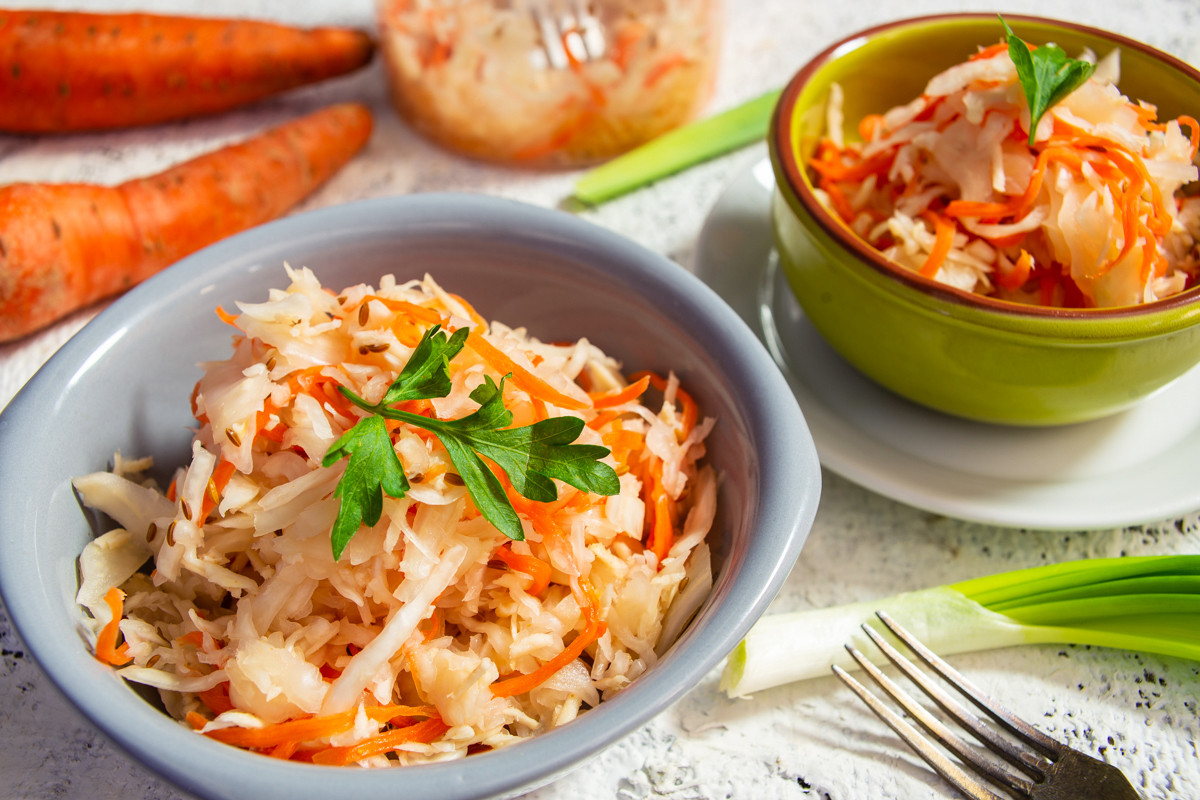
Fermented cabbage with carrots and horseradish
Ingredients for Fermented Cabbage with Carrots and Horseradish
- 1 kg white cabbage
- 100 g carrots
- 2 khren (horseradish) roots, each about 10 cm long
- 8 g sea salt, without additives
- 1 tablespoon caraway seeds
- 1/3 teaspoon red pepper flakes (optional)
- water
How to Make Fermented Cabbage with Carrots and Horseradish
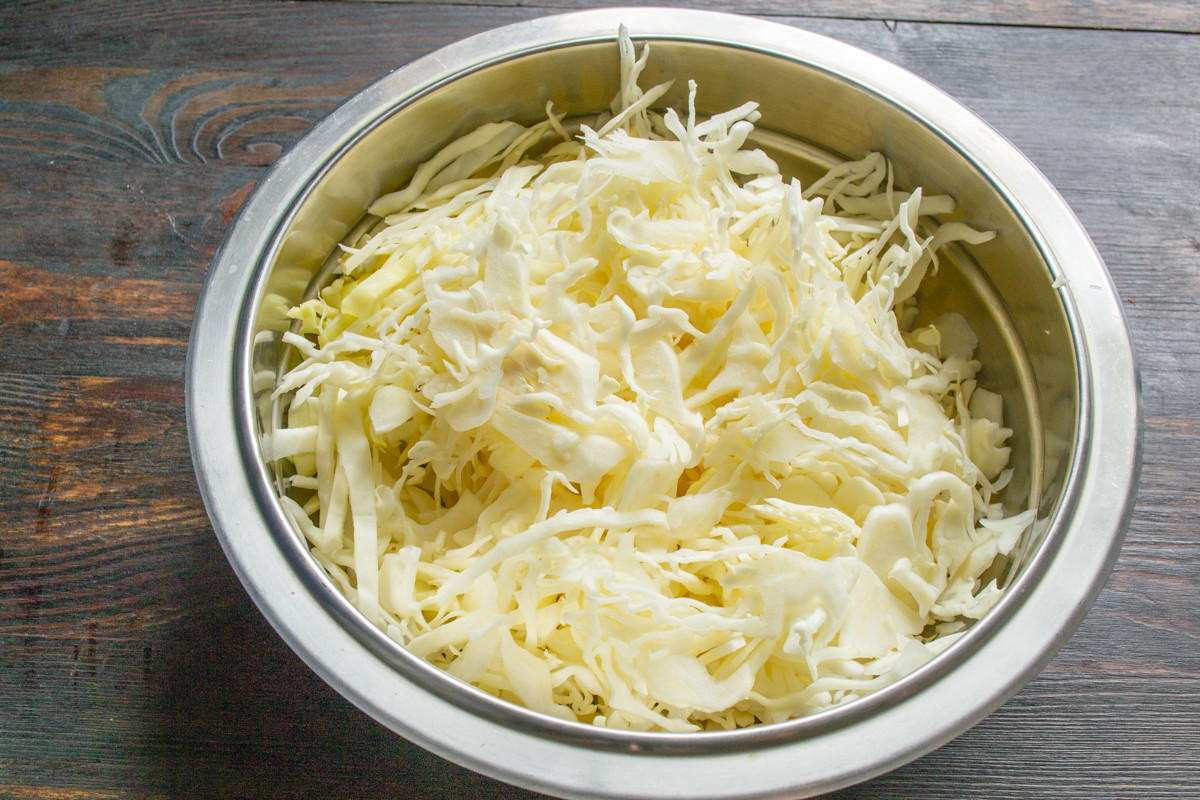
Shred the cabbage into thin strips; the thinner, the better.
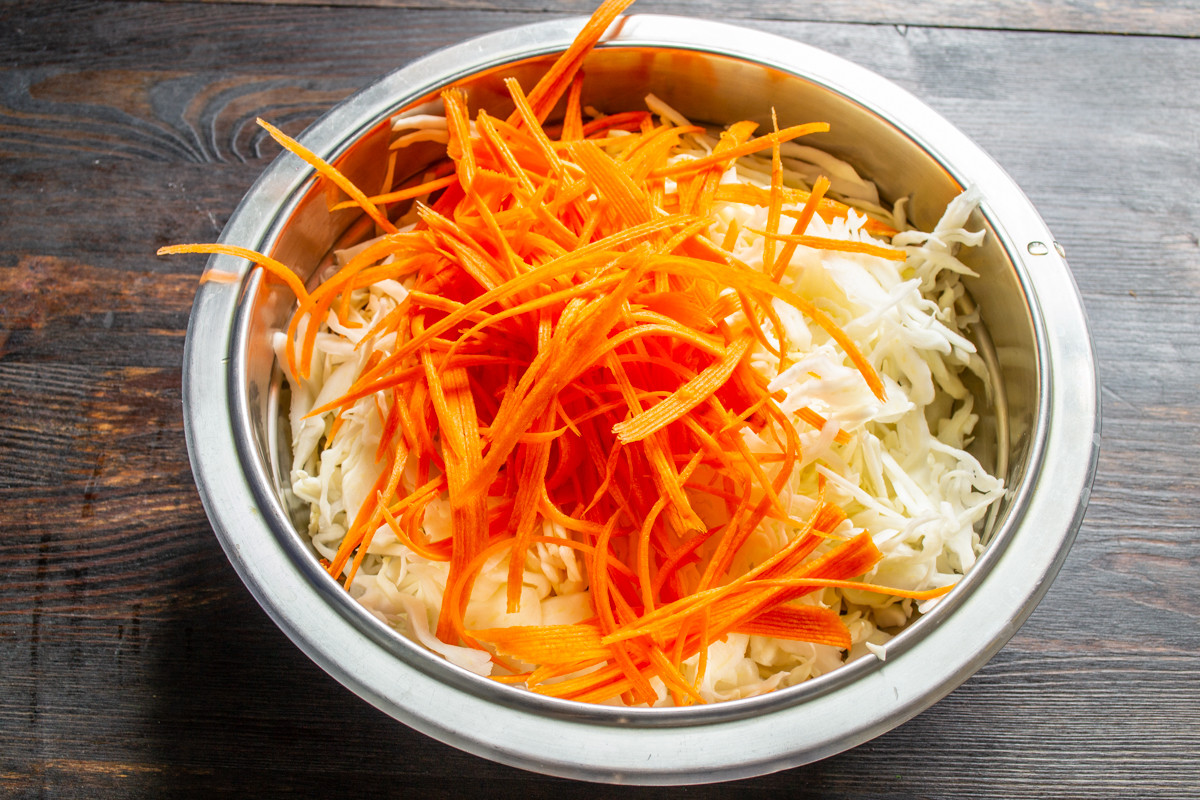
Using a vegetable peeler with a special attachment, slice the carrot into long, thin strips.
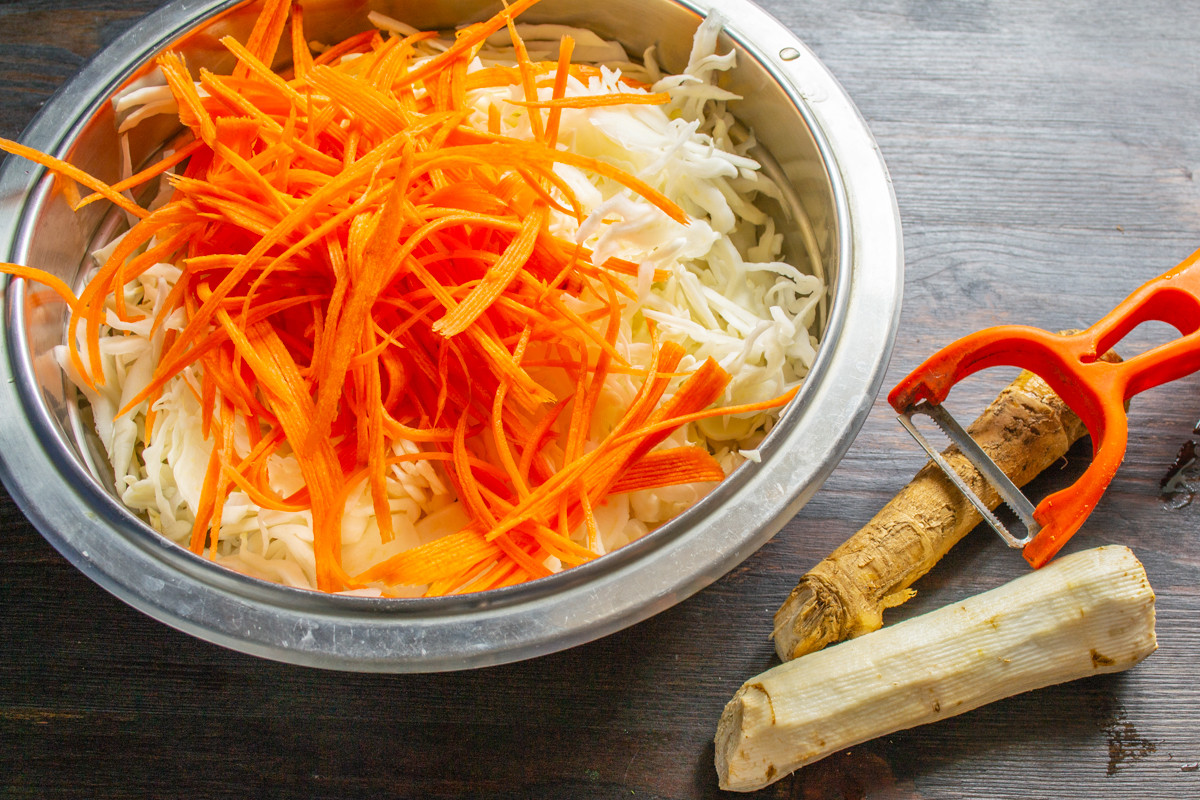
Soak the horseradish roots in cold water and wash them thoroughly.
For this recipe, winter cabbage is best; you need a dense head, as early cabbage won’t yield good results. Cut the head in half and remove the core. Shred the cabbage into thin strips—the thinner, the better. Place the shredded cabbage in a large pot or a wide bowl.
Wash the carrots with a brush and scrape them clean. Using a vegetable peeler with a special attachment, slice the carrots into long, thin strips. You can also grate the carrots on a coarse vegetable grater if you don’t have any other tools.
Soak the khren (horseradish) roots in cold water and wash them thoroughly. Peel the khren with a vegetable peeler. By the way, horseradish roots can be stored for a long time. Just wash them, place them in a plastic bag, seal it tightly, and store it on the bottom shelf of your refrigerator. Sprinkle the khren with water periodically, and it can last for several months.
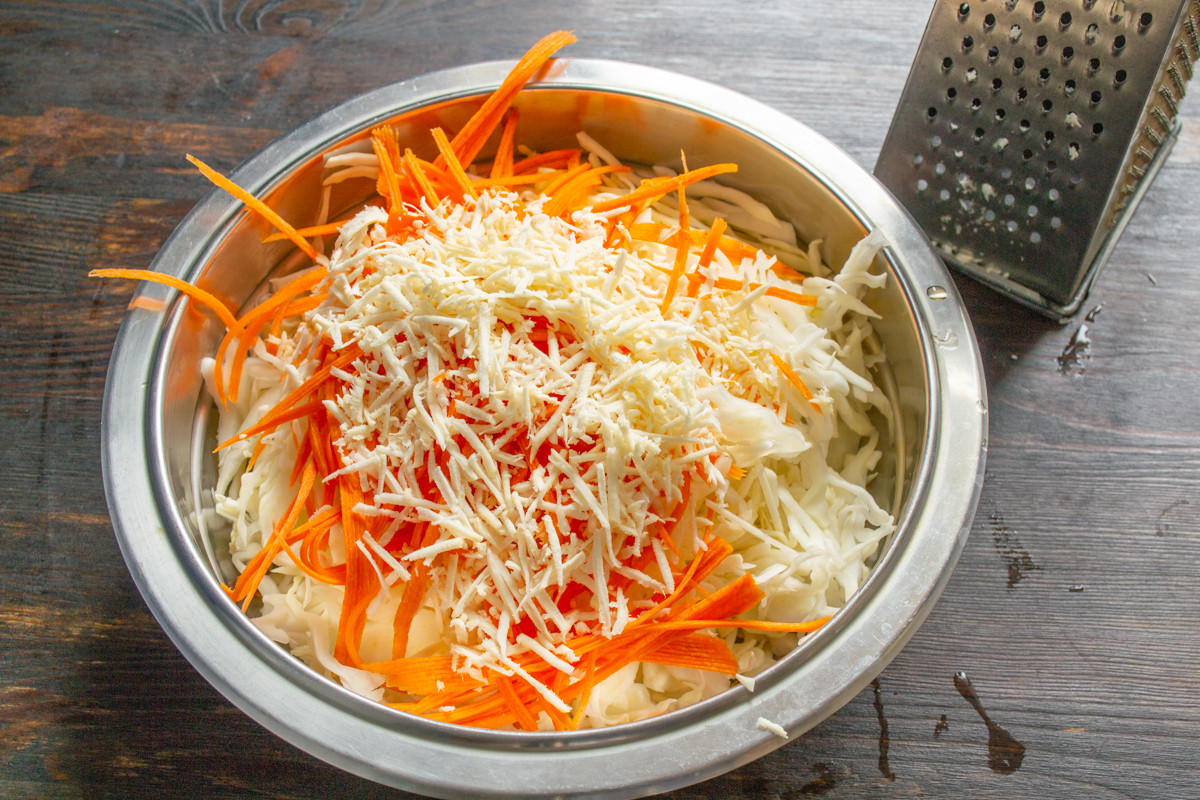
Grate the peeled horseradish root on a fine grater.
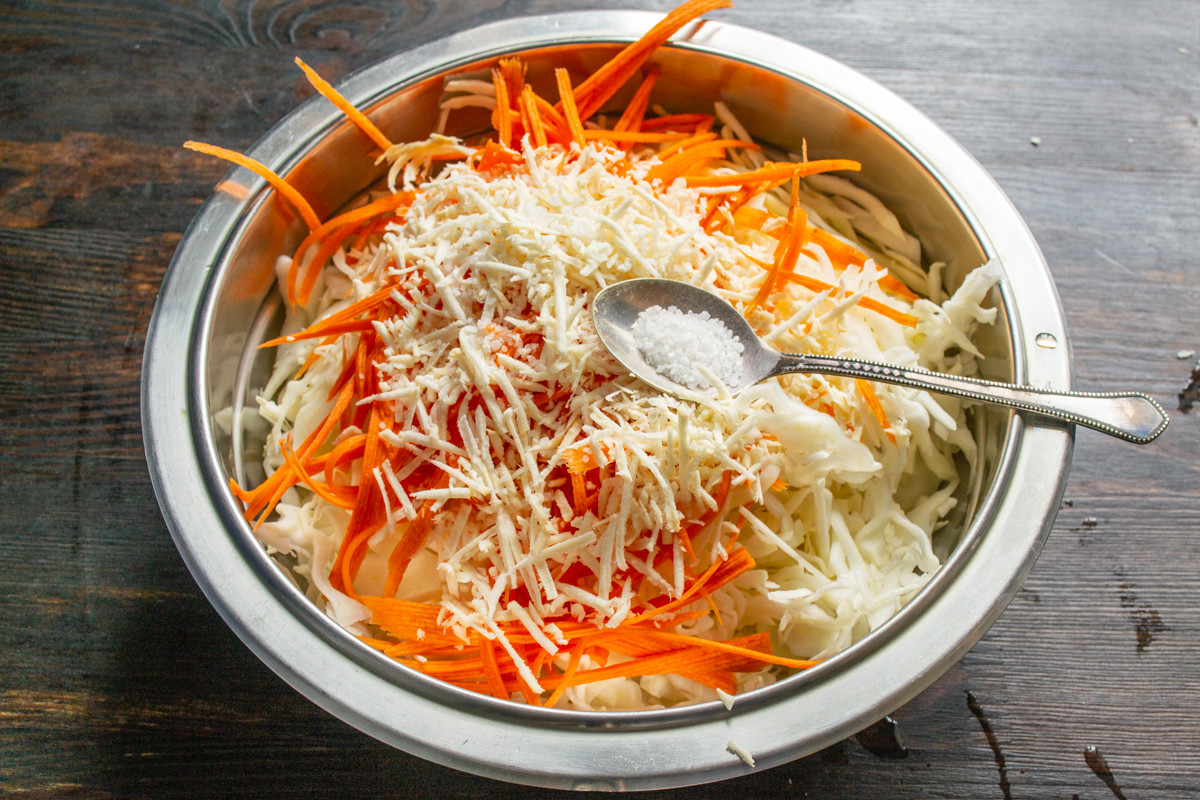
Add the sea salt.
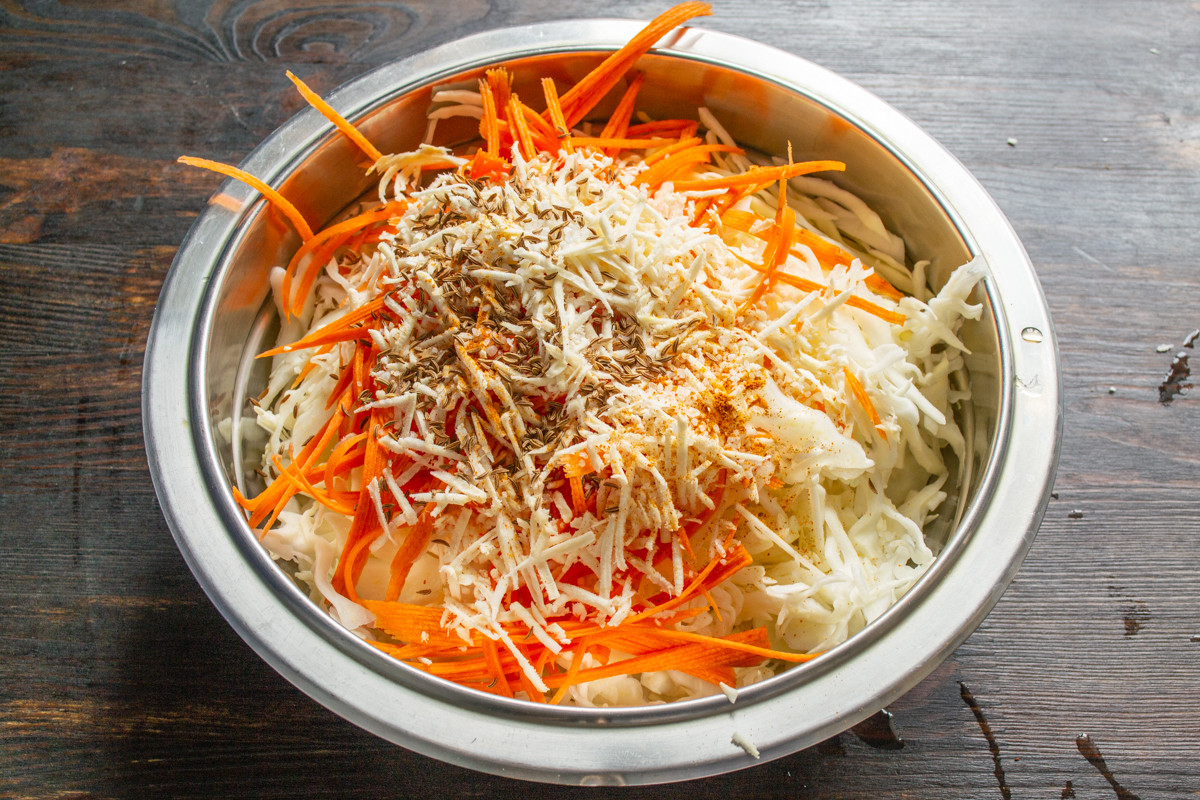
Add the caraway seeds and, if desired, the red pepper flakes.
Grate the peeled horseradish root on a fine grater. If the pungent smell that brings tears to your eyes bothers you, there’s a way to avoid it. Attach a plastic bag to the nose of a meat grinder, securing it tightly with a rubber band. Chop the horseradish finely and pass it through the meat grinder (using the plate with the smallest holes). Add the grated horseradish to the other vegetables.
Add the sea salt. You can use any salt in this recipe, but sea salt makes it tastier and healthier. If the salt is non-iodized and free of additives, it’s suitable for fermenting.
Add the caraway seeds and, if desired, some ground red pepper to give it a spicy kick.
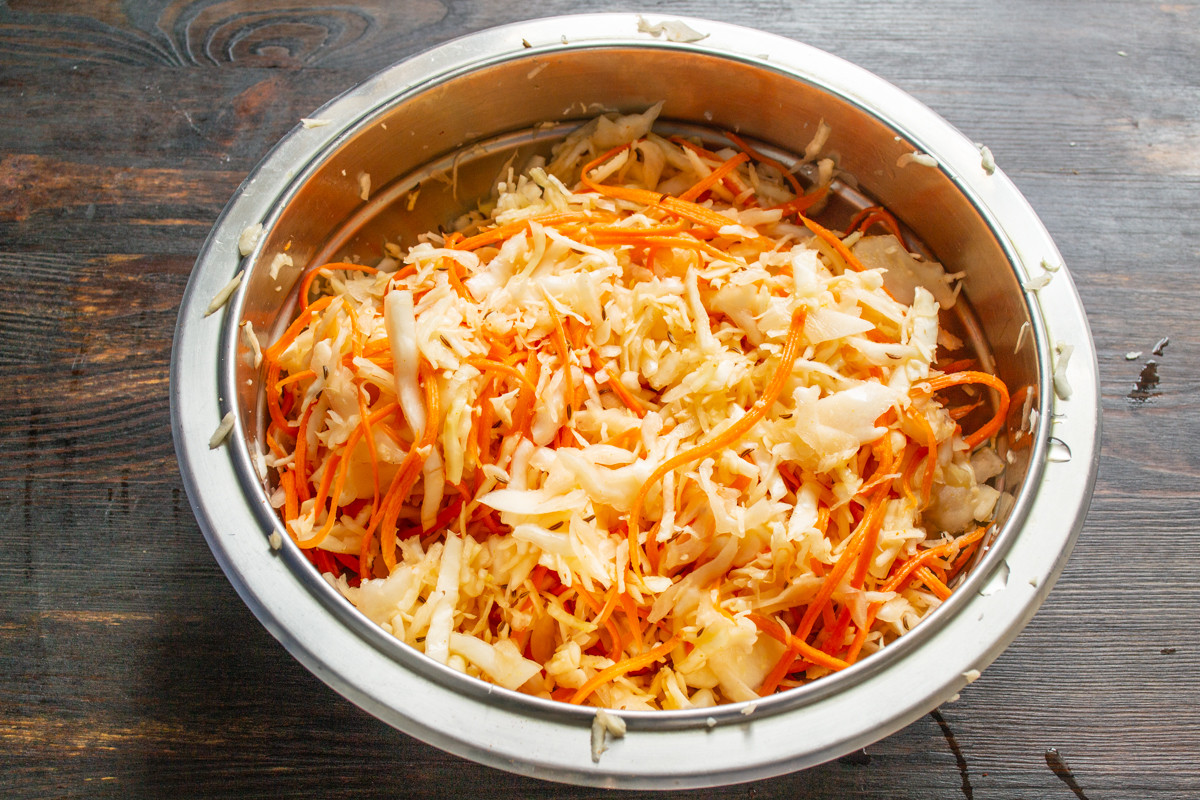
Put on thin rubber gloves and massage the vegetables with the salt.
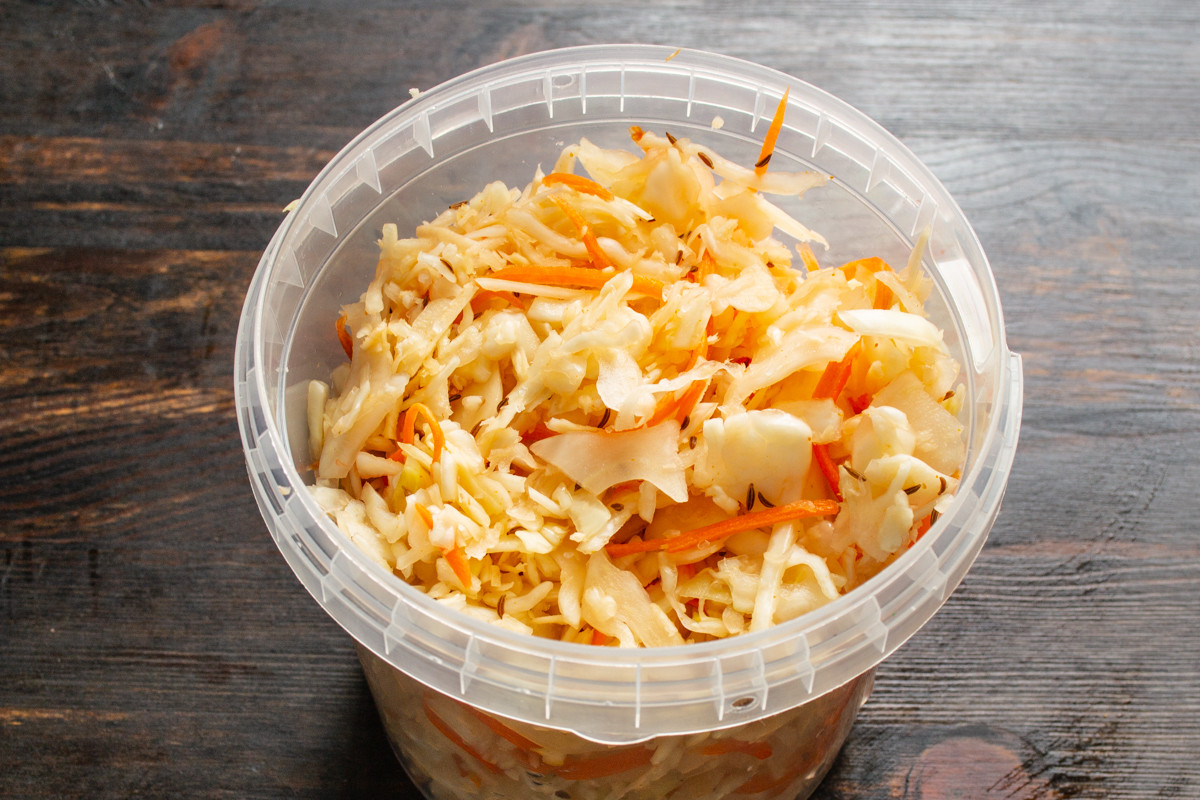
Press down slightly and pour in cold filtered or boiled water.
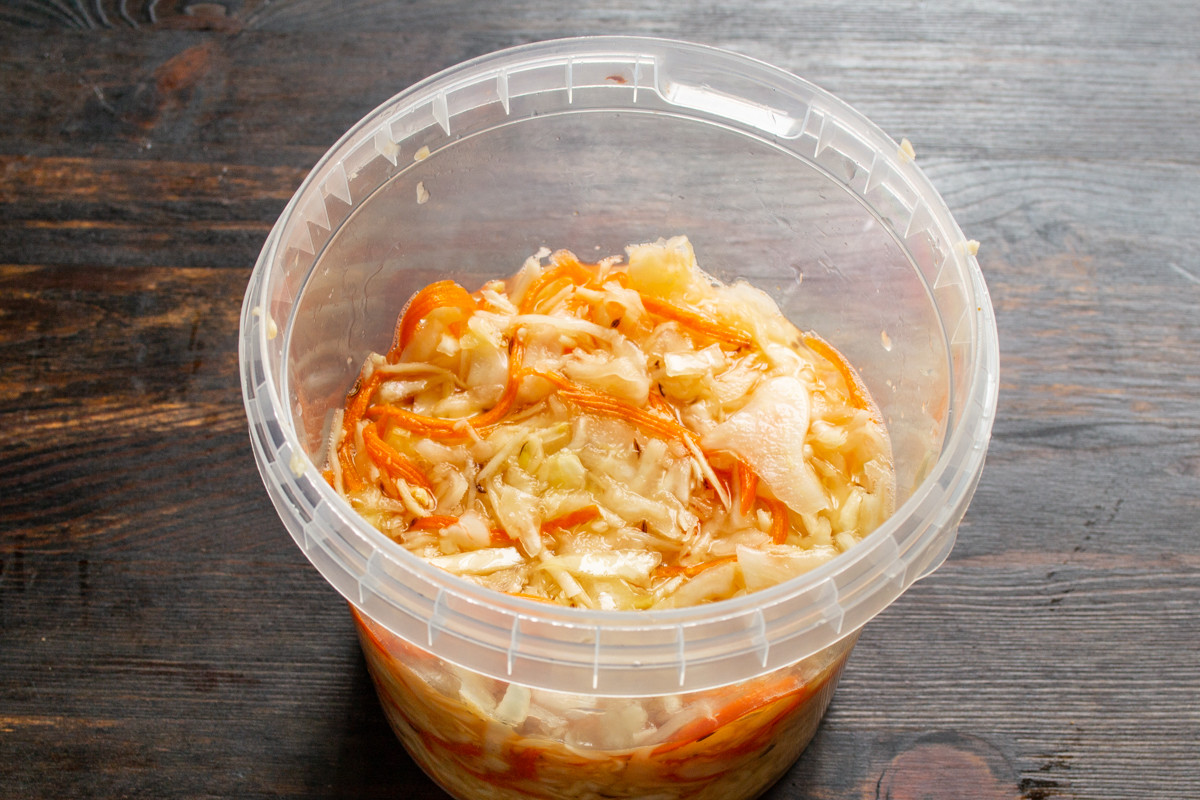
Leave the cabbage at room temperature for 72-96 hours (3-4 days).
Put on thin rubber gloves and massage the vegetables with the salt until they become soft.
Pack the cabbage with horseradish into glass jars or plastic containers. Press it down slightly and pour in cold filtered or boiled water until the cabbage is completely submerged. If it seems like there isn’t enough salt, you can add a little more to the water.
Cover the containers with lids. Leave the cabbage at room temperature for 72-96 hours (3-4 days). The room temperature should be between 22-24 degrees Celsius (72-75 degrees Fahrenheit). If the room is cool, the fermentation process will slow down.
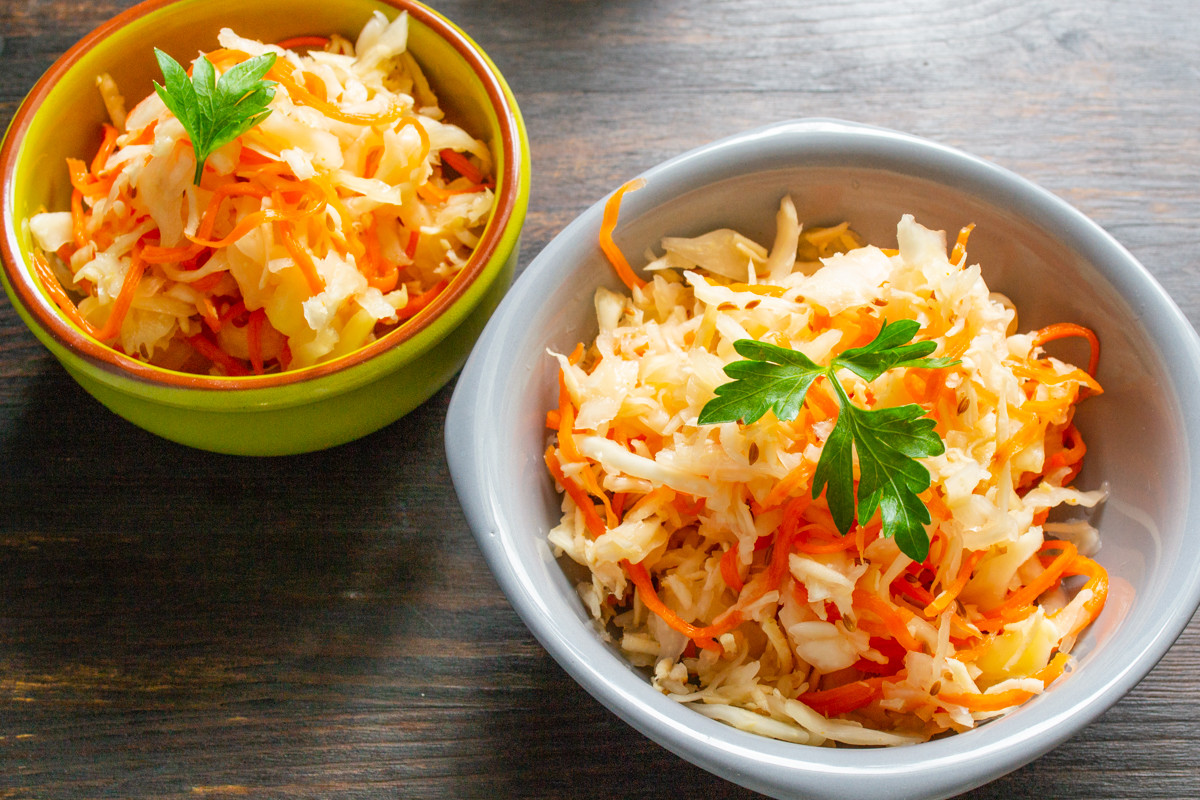
After 3-4 days, move the cabbage to the bottom shelf of the refrigerator.
After 3-4 days, move the cabbage to the bottom shelf of the refrigerator. It can be stored in the fridge for several months and will only get tastier over time.
And there you have it—your very own jar of vibrant, spicy, and healthy fermented cabbage! We hope you enjoy the crisp texture and bold flavors that develop over time. This versatile dish is fantastic as a side for hearty meats, a topping for sandwiches and salads, or simply enjoyed on its own as a probiotic-rich snack. Don't be afraid to experiment with other spices like dill seeds or juniper berries in your next batch. Enjoy the satisfaction of making this traditional superfood right in your own kitchen. Happy fermenting!
0 comments