
There's something truly magical about baking your own sourdough bread, and this Sourdough Rye Bread with Honey and Caraway is no exception. Rooted in the rich baking traditions of Eastern Europe, where rye bread is a staple, this recipe offers a delightful blend of flavors. The deep, earthy taste of rye is perfectly balanced by the subtle sweetness of honey and the warm, aromatic notes of caraway. It’s a hearty, wholesome loaf that fills your home with an irresistible aroma and provides the deep satisfaction of creating something wonderful from scratch.
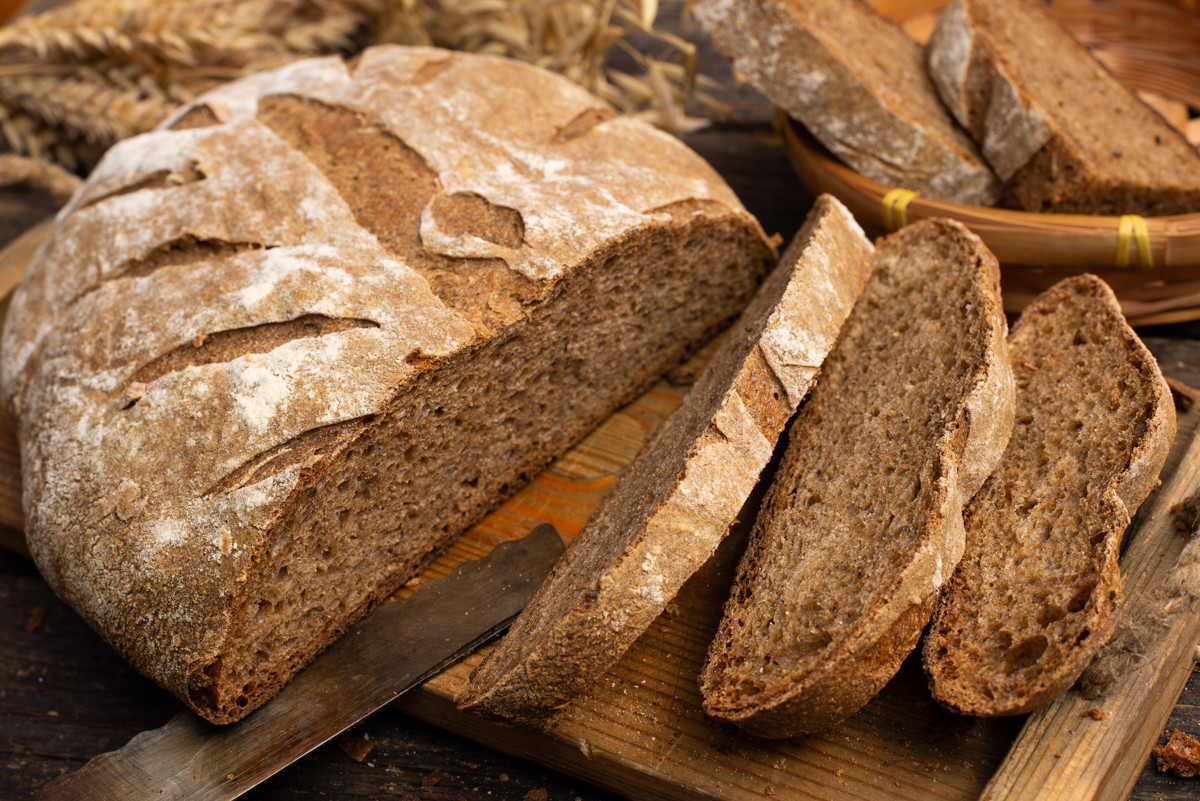
Sourdough Rye Bread with Honey and Caraway
Ingredients for Sourdough Rye Bread with Honey and Caraway
- 100 g sourdough starter (fed with 40 g flour and 40 g water)
- 200 g bread flour
- 130 g whole grain rye flour
- 40 g fermented rye malt (a natural dough conditioner for color and flavor)
- 265 g water or tvorog whey (whey from cheese-making)
- 1 tablespoon caraway seeds
- 1 teaspoon sea salt
- 1 tablespoon honey
- 1 tablespoon rapeseed oil (canola oil)
- flour for dusting
- active dry yeast, optional
How to Make Sourdough Rye Bread with Honey and Caraway
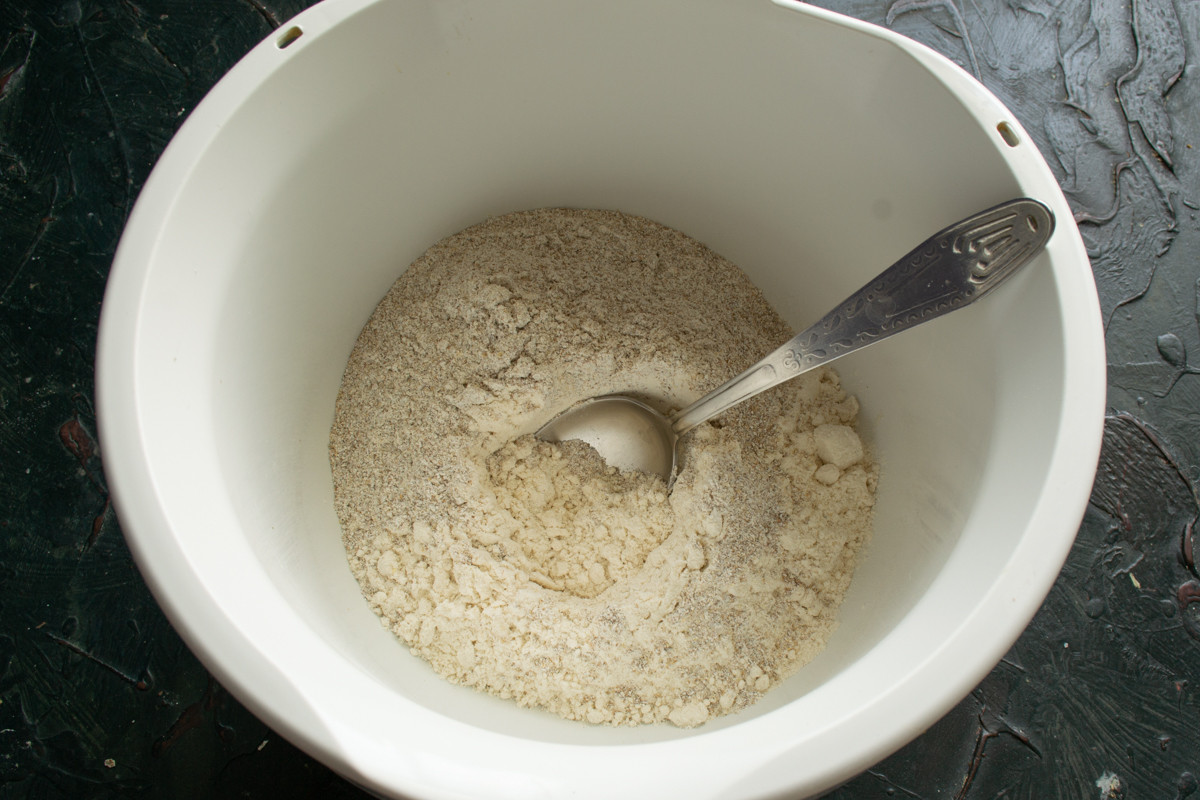
In a bowl, combine the wheat and rye flour.
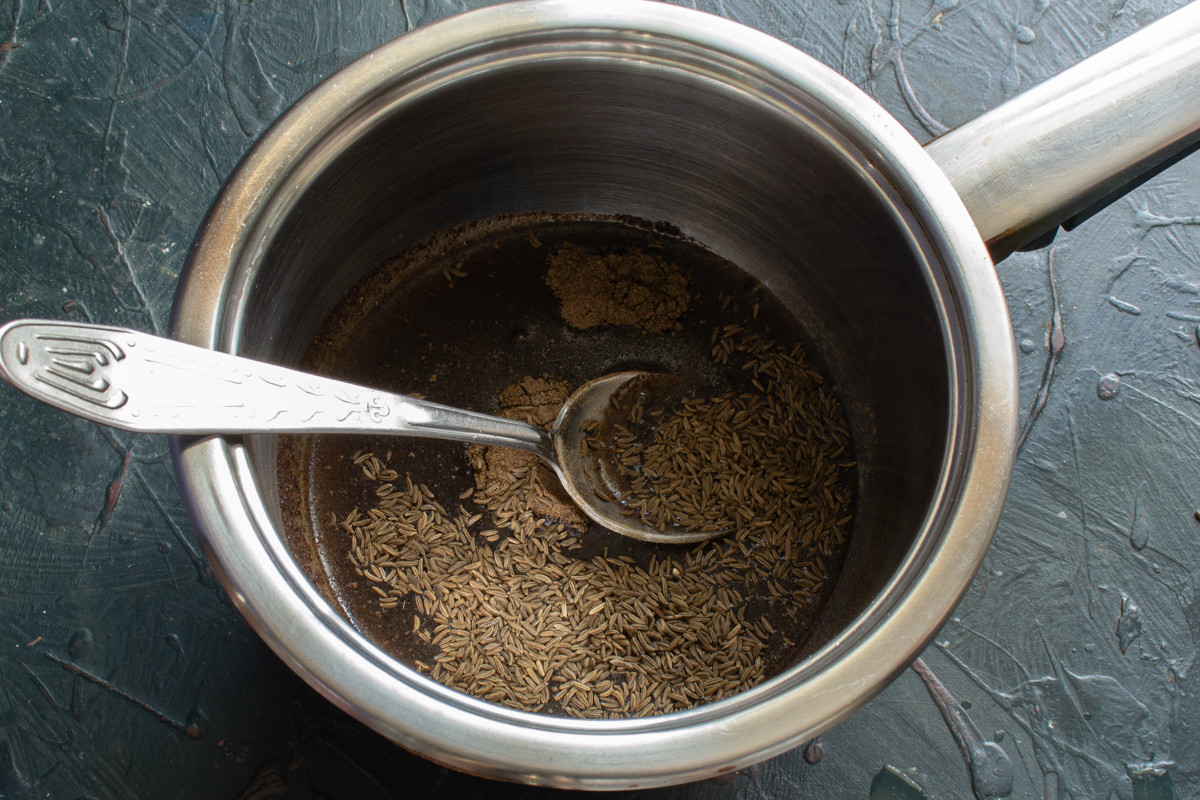
Pour 100 g of water or whey into a saucepan.
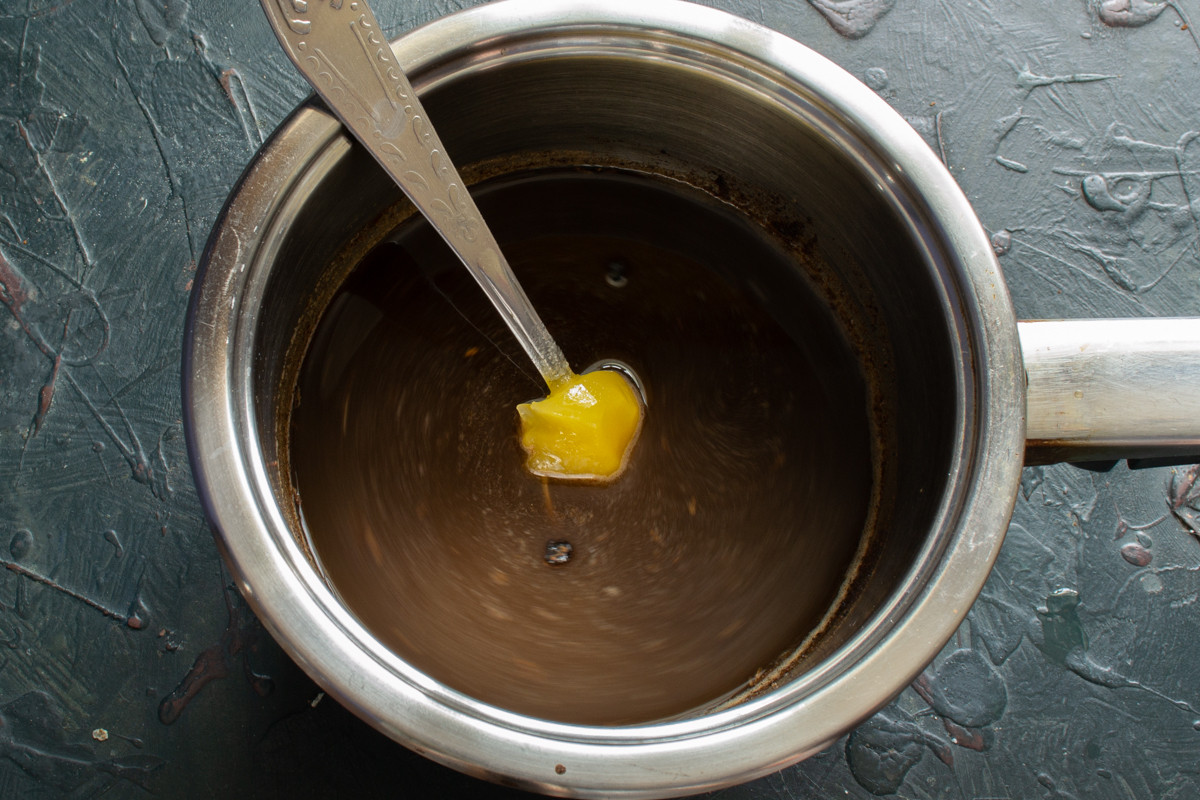
Add honey and rapeseed oil.
In a bowl, combine the wheat and whole grain rye flour. Using whole grain rye flour in this recipe makes the bread not only delicious but also wholesome.
Pour 100 g of water or tvorog whey (whey from cheese-making) into a saucepan. Add the fermented rye malt (a natural dough conditioner that adds deep color and a malty flavor) and one tablespoon of caraway seeds. Heat over low heat until it starts to boil; the mixture will gradually thicken like porridge. Remove from heat immediately.
Add the honey and rapeseed oil (canola oil). Stir in the sea salt and pour in the remaining water or whey. Mix the liquid ingredients well.
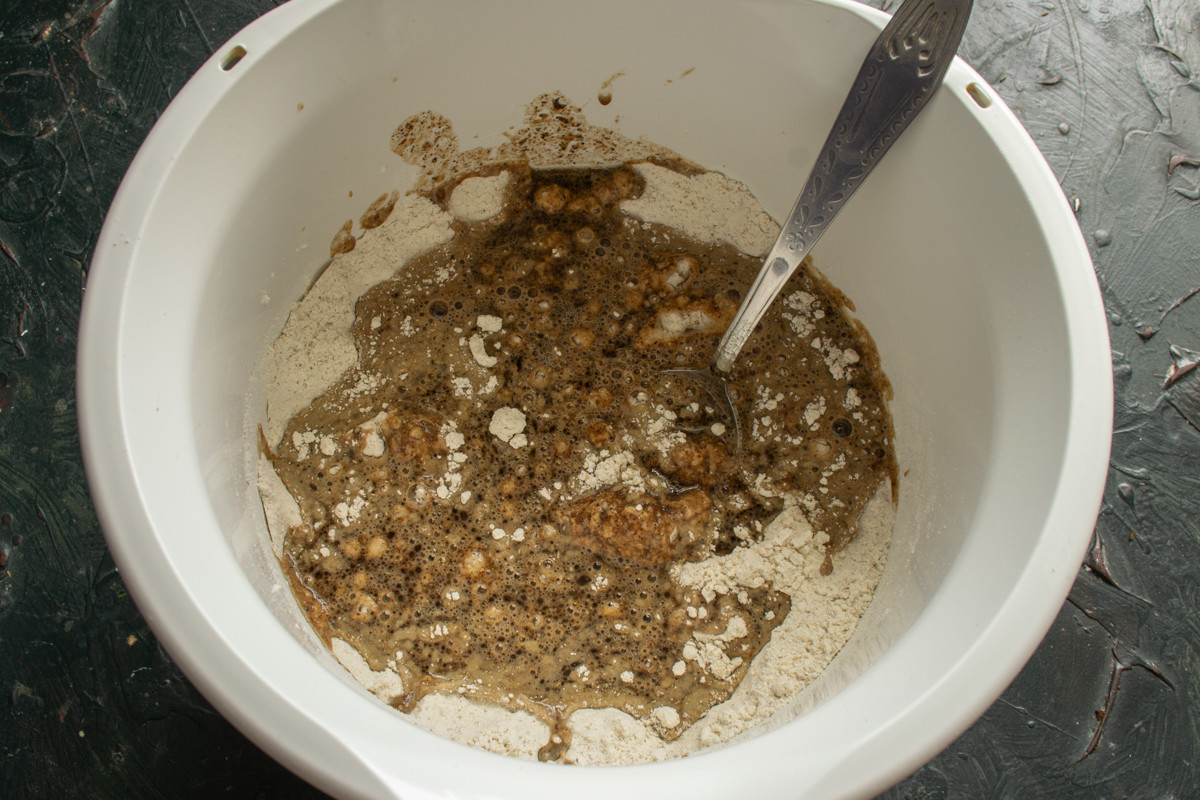
Add the liquid ingredients to the bowl with the dry ingredients.
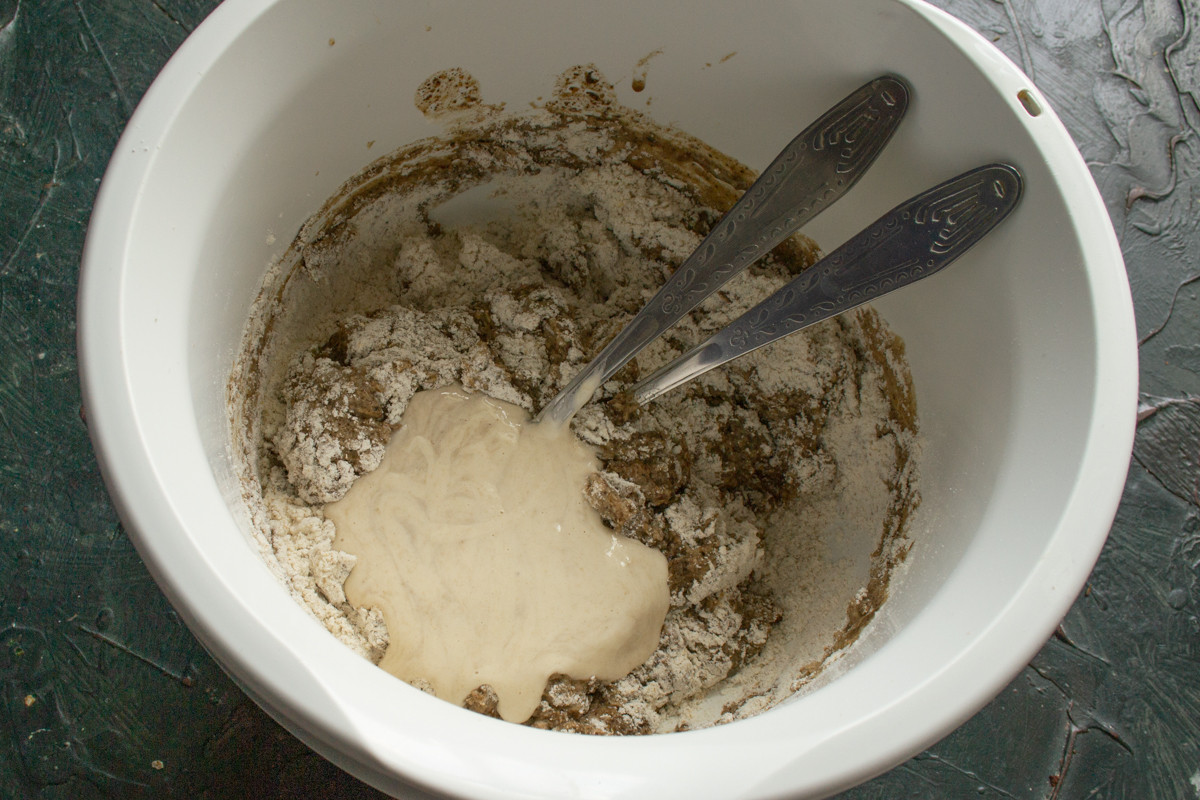
Add the active sourdough starter.
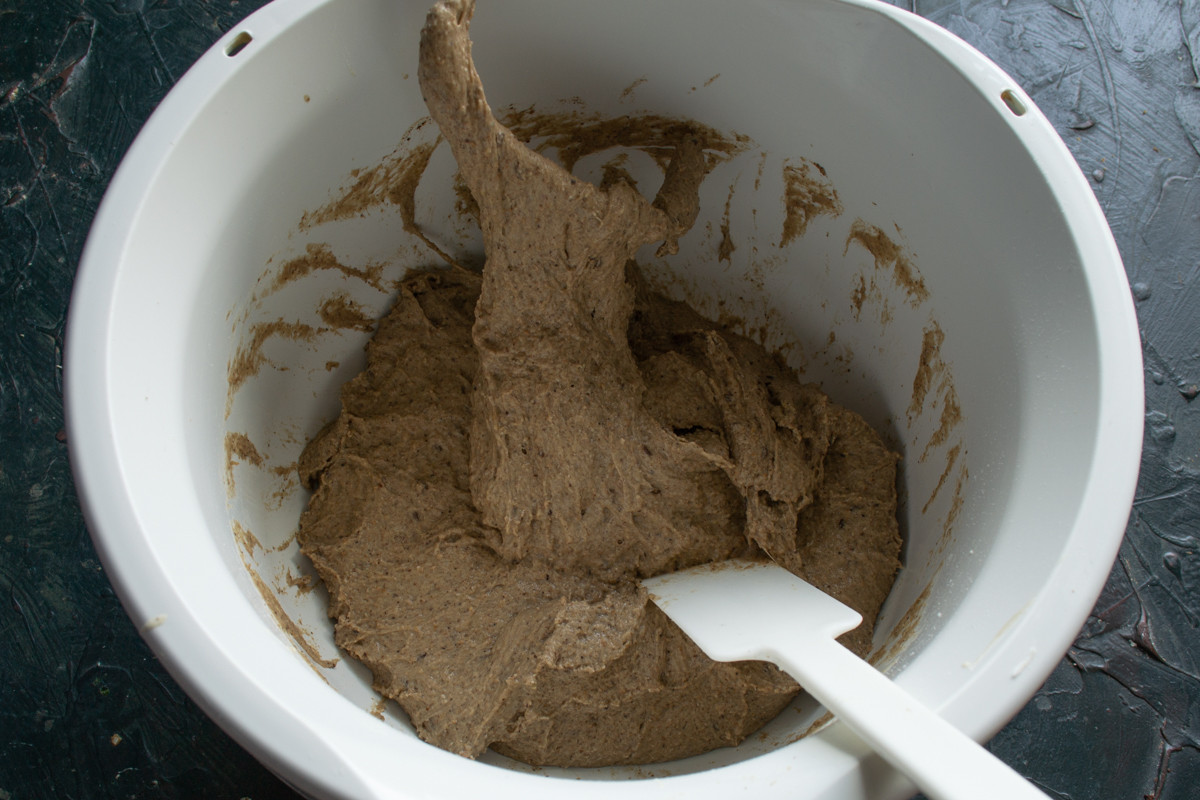
Attach the dough hook and knead the dough for 15-20 minutes.
Add the liquid ingredients to the bowl with the dry ingredients. If desired, you can add a pinch of active dry yeast at this stage, no more than a quarter of a teaspoon.
Add the active sourdough starter. Professional bakers say the starter should be at its peak at this moment. Mix the dough.
Attach the dough hook and knead for 15-20 minutes. You can take a 5-7 minute break after 10 minutes and then continue kneading.
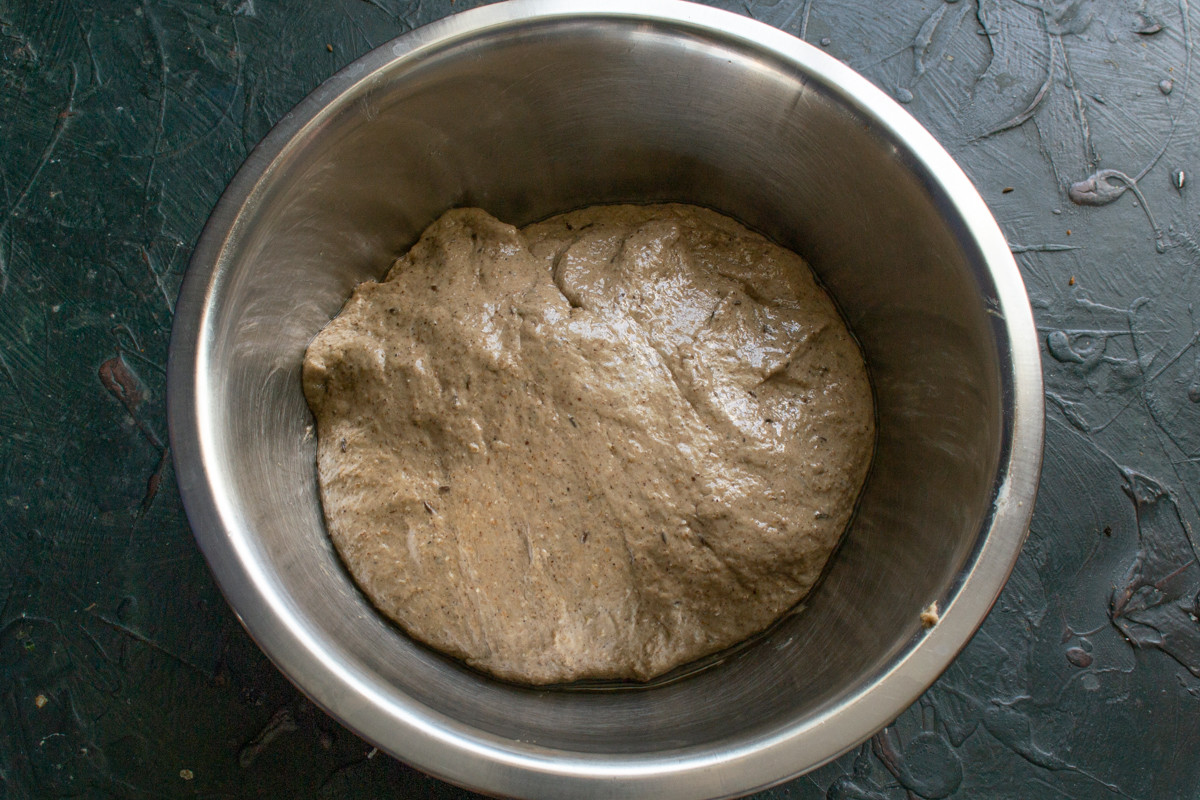
Grease a bowl with rapeseed oil and place the dough inside.
Grease a bowl with rapeseed oil and place the dough inside.
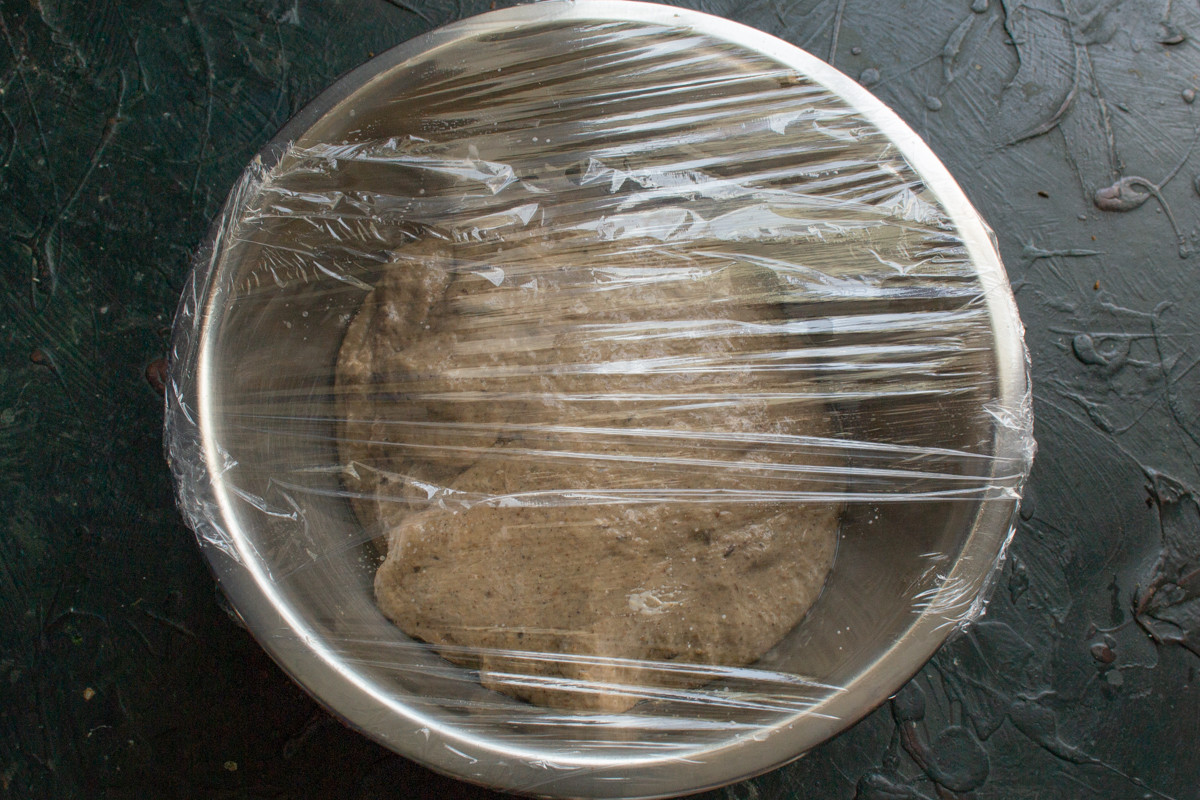
Cover the bowl tightly with plastic wrap.
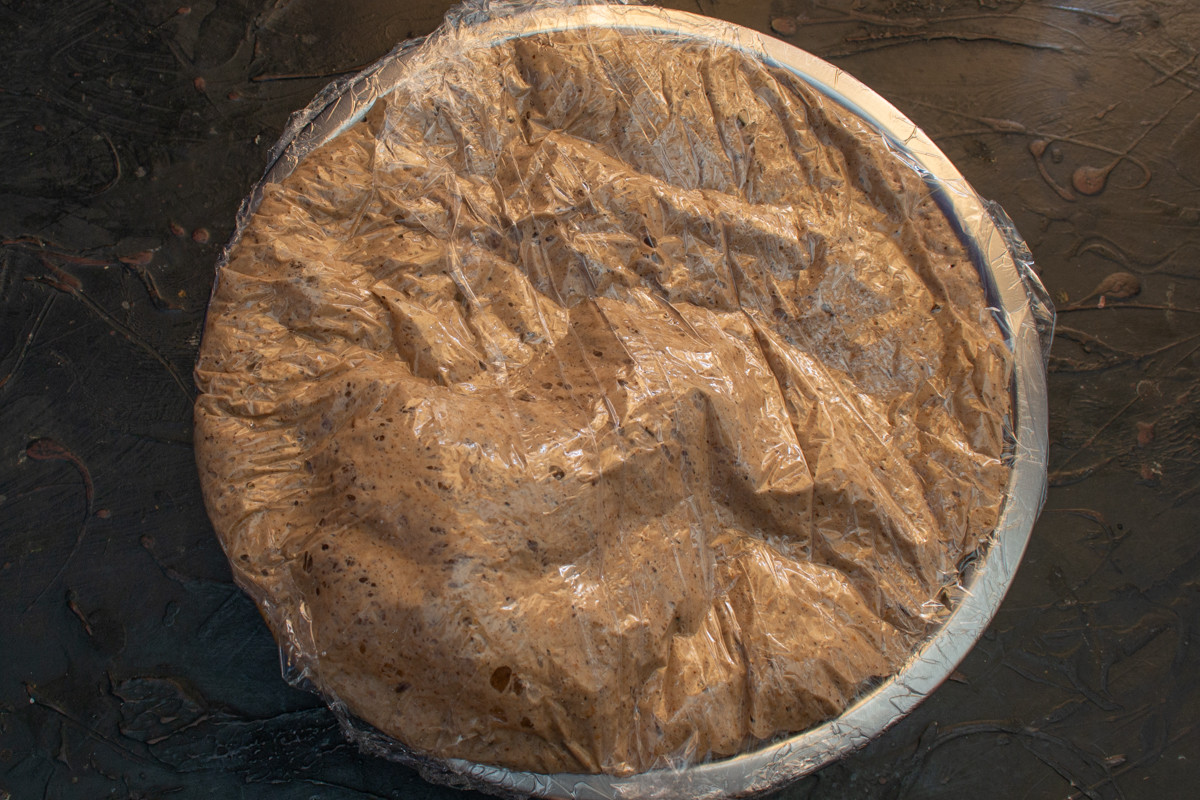
Leave in a warm place for 6-8 hours.
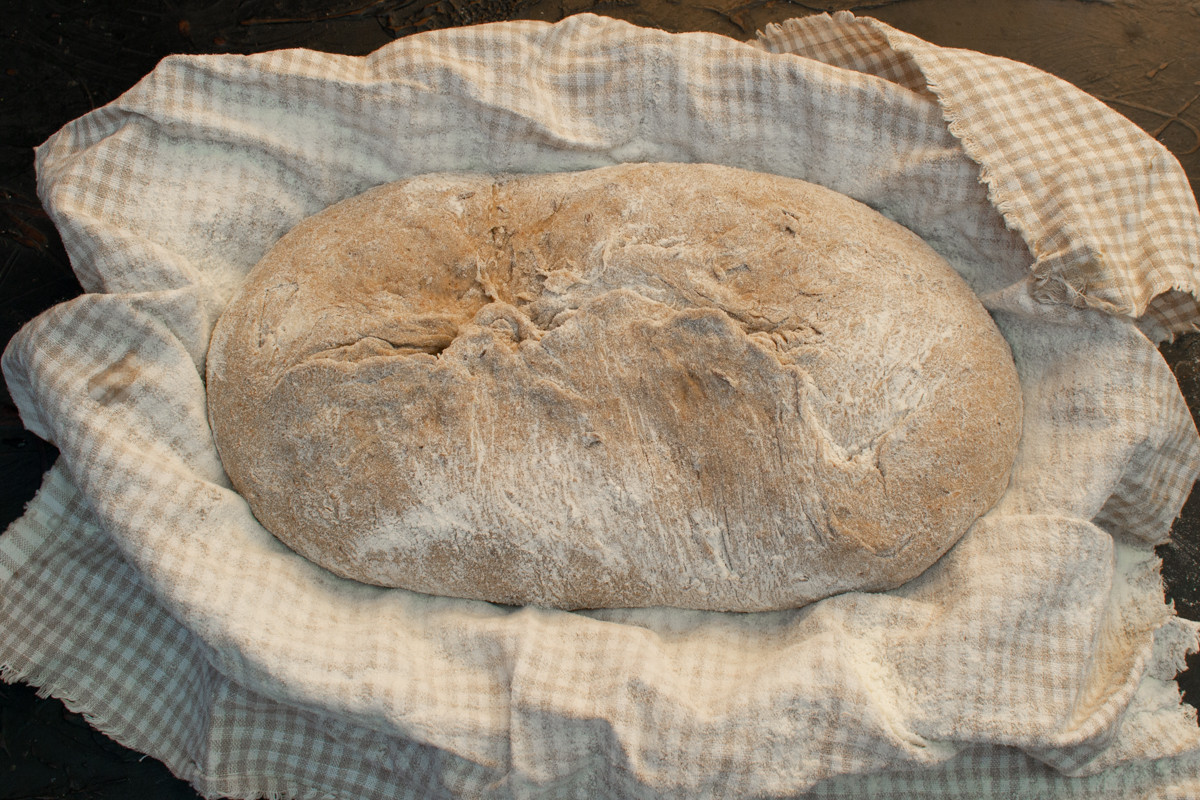
Turn the dough out onto a floured surface.
Cover the bowl tightly with plastic wrap.
Let it rest in a warm place for 6-8 hours. The dough will rise significantly during this time.
Place a linen cloth or towel inside a wicker proofing basket (banneton) and sprinkle with flour. Turn the dough out onto a floured surface. Degas the dough and shape it into a loaf. Place the loaf seam-side up in the basket.
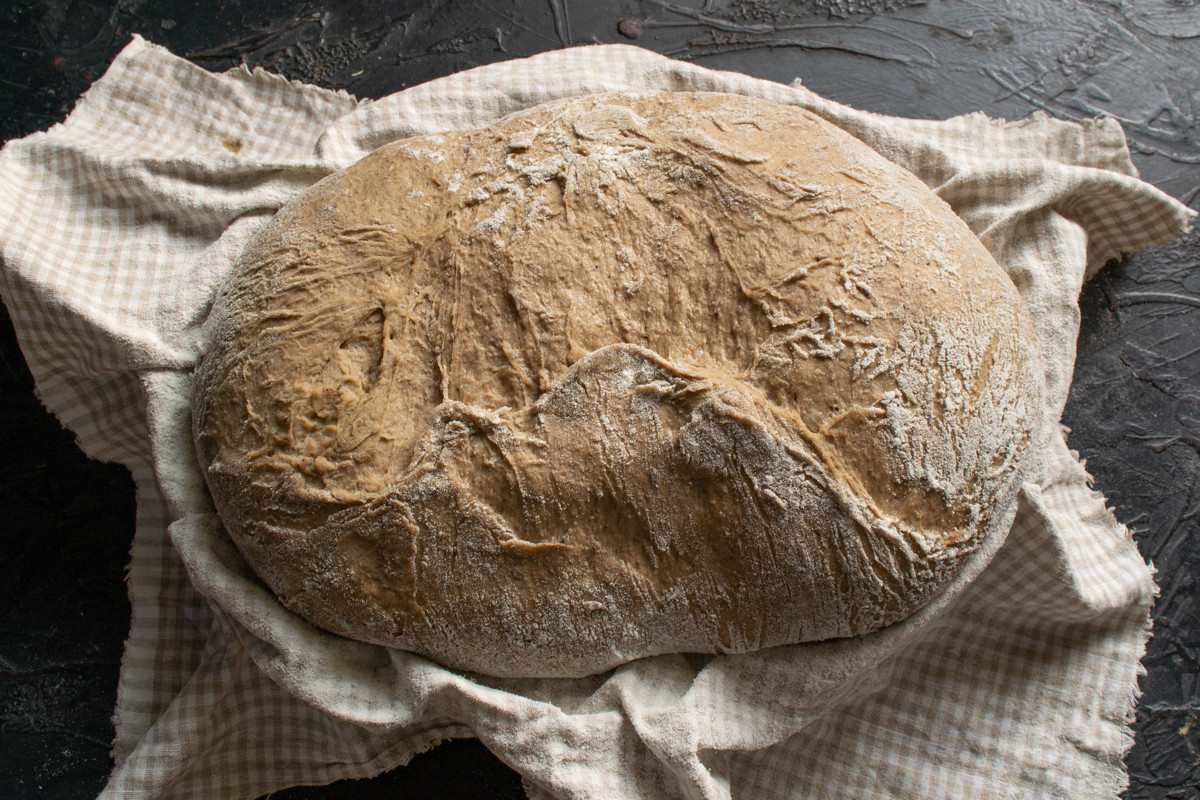
Cover the loaf with the overhanging cloth and refrigerate for 6-8 hours.
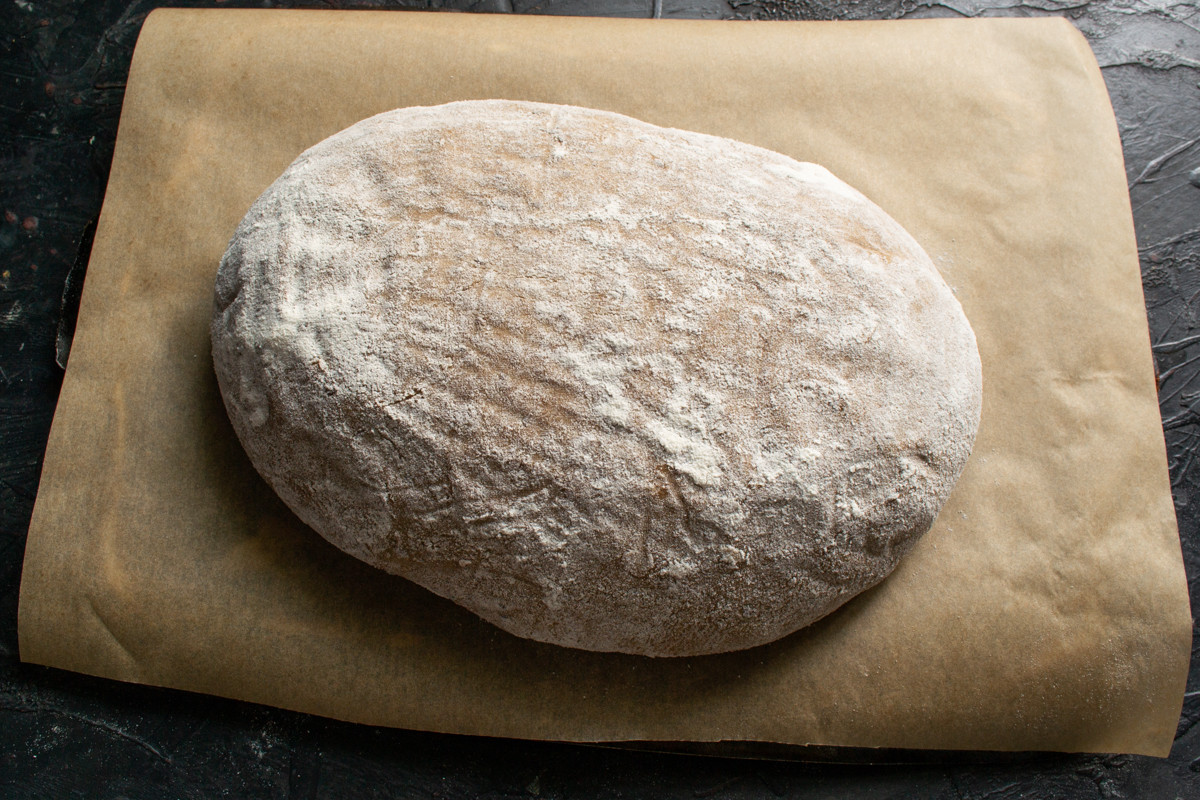
Carefully turn the proofed loaf out onto parchment paper.
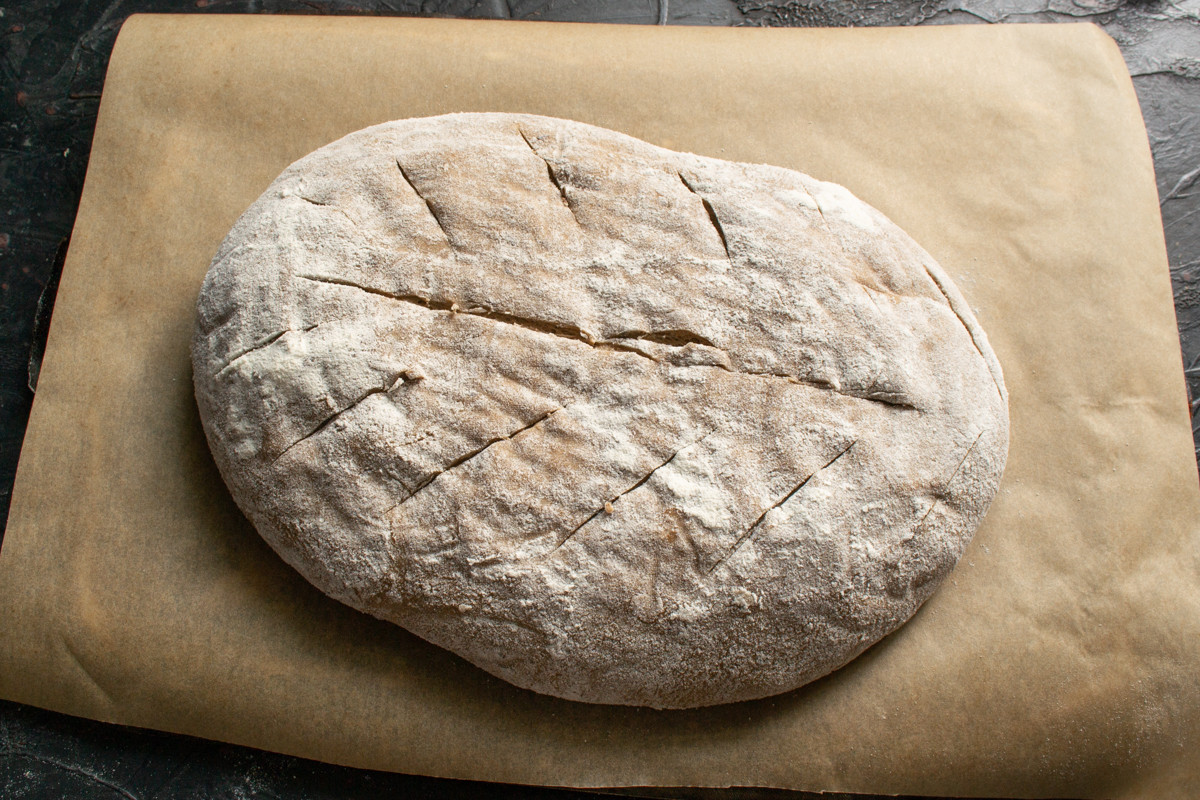
Make one long score down the middle and several smaller cuts on the sides.
Cover the loaf with the overhanging cloth and refrigerate for 6-8 hours. Keep an eye on the process, as sourdough can be unpredictable. It might need more time. A cold proofing time of 8-12 hours is normal.
Carefully turn the proofed loaf out onto parchment paper.
Make one long score down the middle and several smaller cuts on the sides.
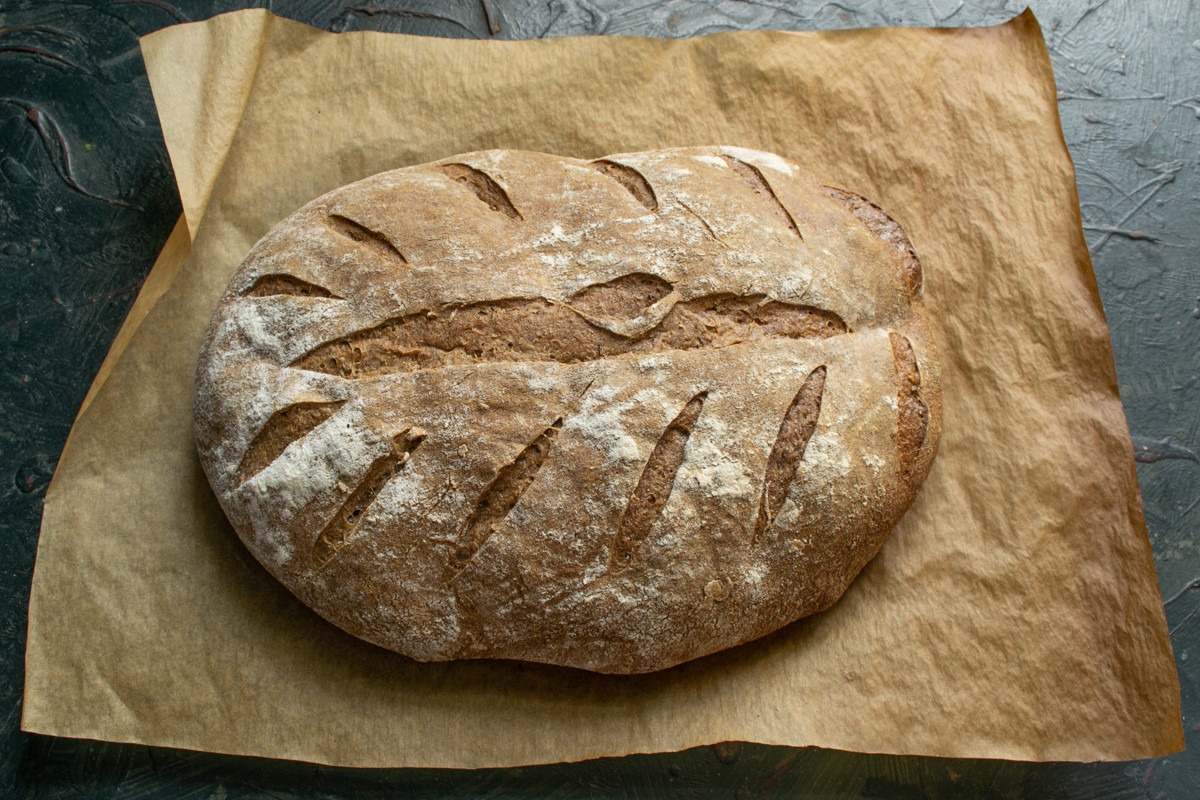
Bake for 40-50 minutes at 210°C (410°F).
Bake for 40-50 minutes at 210°C (410°F). Place a baking sheet with water on the bottom rack of the oven and spray the oven walls with a spray bottle to create steam.
Once your beautiful loaf is baked to a deep golden-brown, allow it to cool completely before slicing. This is crucial for the crumb to set properly. Enjoy a slice on its own, slathered with butter, or serve it alongside a hearty soup or stew. This bread also makes fantastic open-faced sandwiches with cheese or cured meats. Store it in a bread box or a paper bag at room temperature to maintain its wonderful texture. We hope you enjoy the rewarding process of baking and the delicious, rustic flavor of your homemade sourdough rye bread!
0 comments