
Embrace the cozy seasons with a jar of homemade Quince and Mandarin Jam! This isn't just any preserve; it's a celebration of autumn's finest offerings. In many Eastern European homes, the art of making 'varenye' is a cherished tradition, a way to capture the essence of the harvest for the cold months ahead. This recipe pairs the uniquely fragrant, slightly tart quince with the sweet, zesty brightness of mandarins, including their aromatic peel. The result is a beautifully textured, amber-colored jam with a complex flavor that is both comforting and exciting. Let's get started!
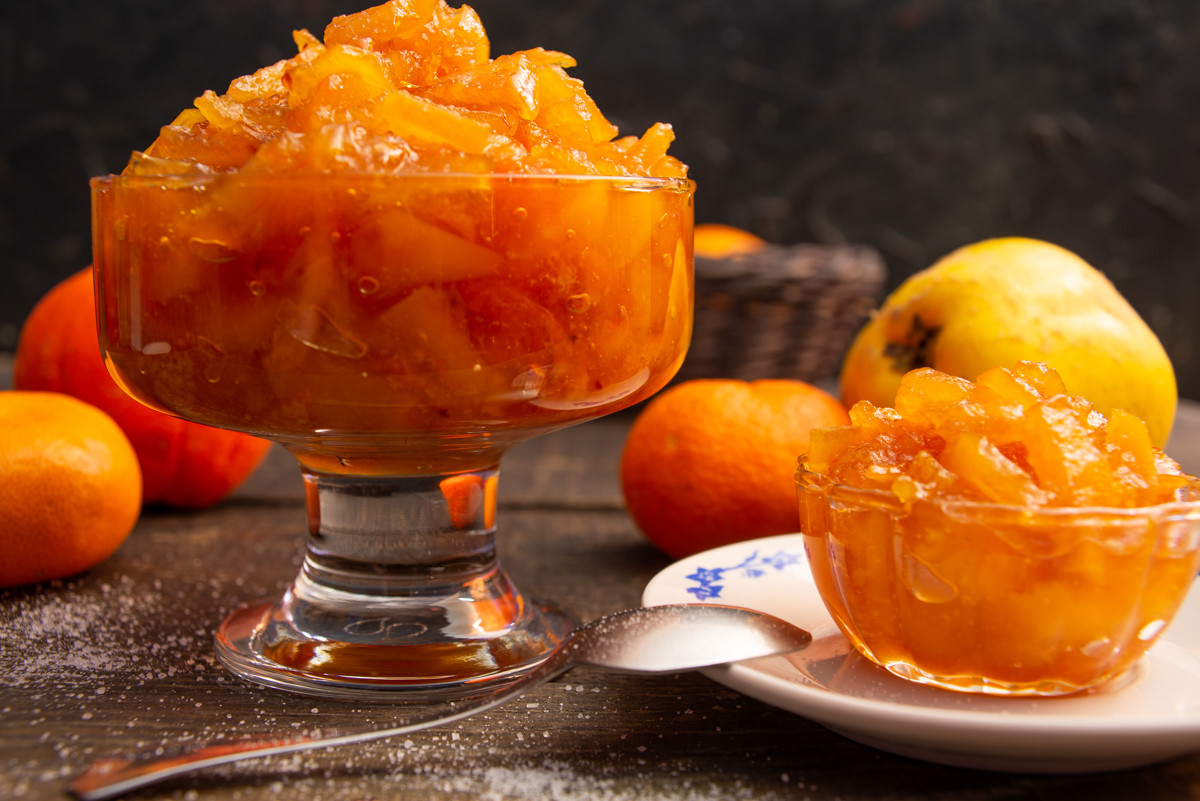
Quince and Mandarin Jam
Ingredients for Quince and Mandarin Jam
- 500 g quince
- 500 g mandarins
- 200 g granulated sugar
- 150 ml water
How to Make Quince and Mandarin Jam
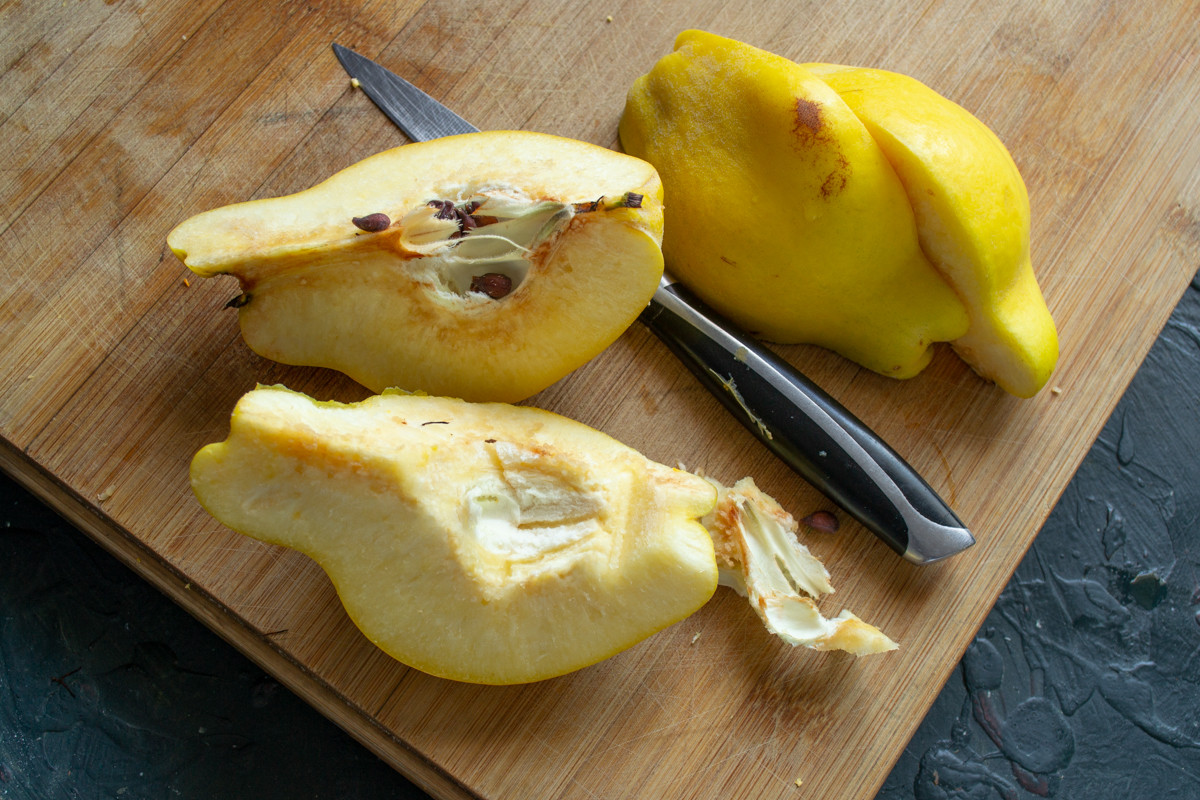
Cut the fruits into four parts, remove the seeds.
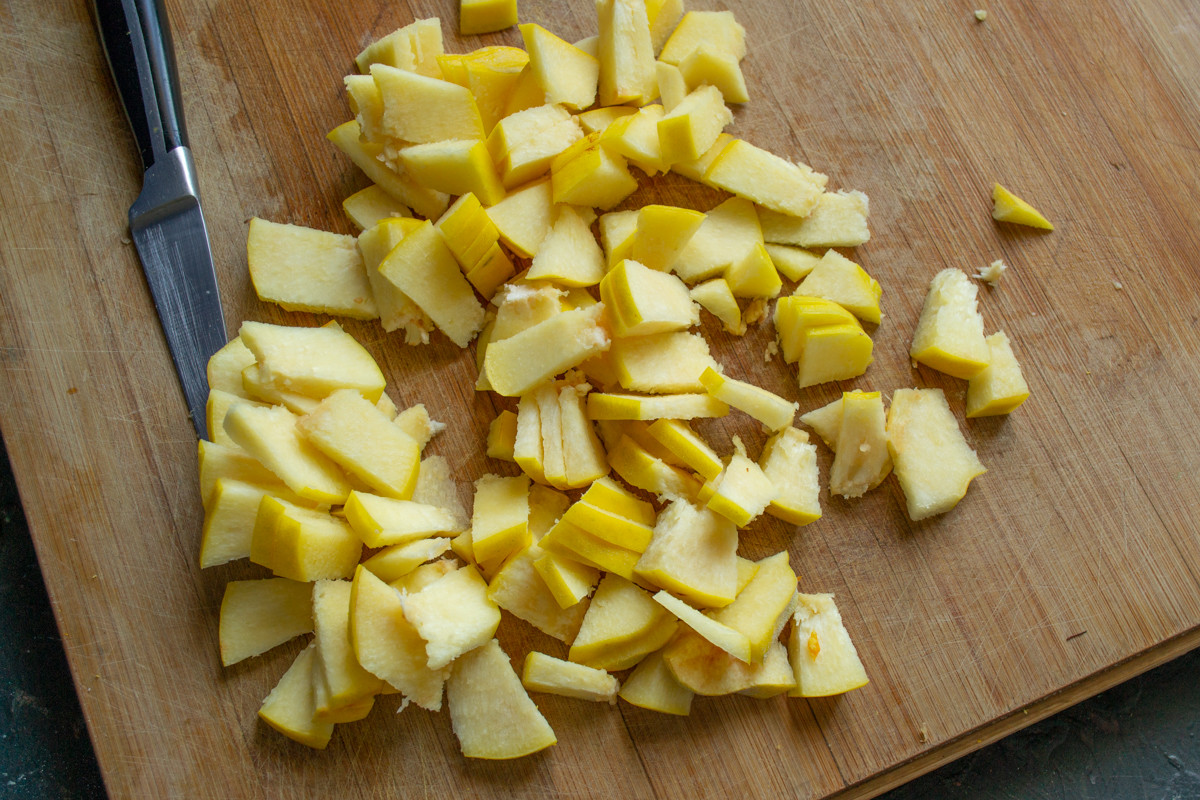
Finely chop the cleaned quince into pieces about 2-3 millimeters thick.
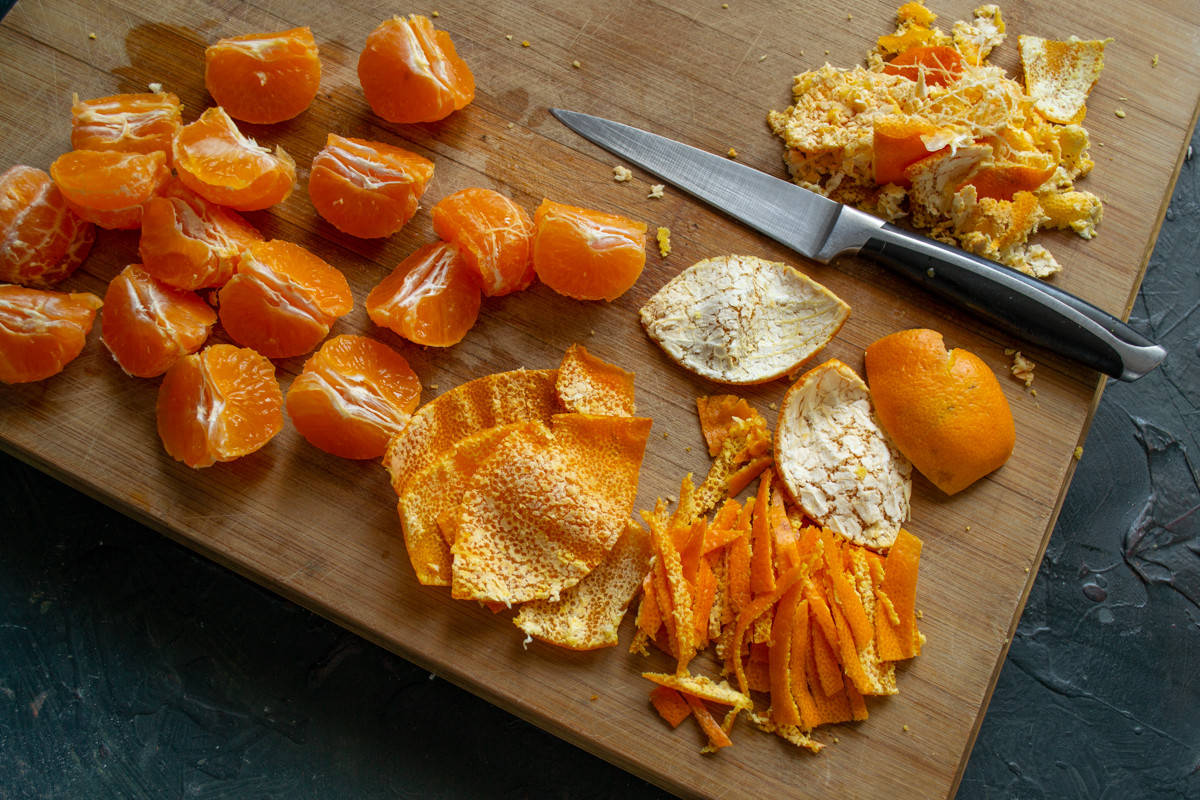
Cut each mandarin into 4 parts, separate the peel.
Thoroughly wash the quince, rubbing off the fuzzy coating from the skin. Cut the fruits into four parts and remove the seeds. By the way, you can dry the quince seeds; a decoction made from them has a calming effect. The flesh of the quince is not juicy but very aromatic. Its taste is tart, slightly sweet, and sometimes astringent. Quince is used to make marmalade; interestingly, the word “marmalade” comes from the Portuguese name for quince – “marmelo”.
Finely chop the cleaned quince into pieces about 2-3 millimeters thick. If you cut them thicker, the cooking time will increase.
Wash the mandarins thoroughly and place them in boiling water for a couple of minutes, then rinse them well again. Cut each mandarin into 4 parts and separate the peel. With a knife, scrape the white pith from the peel, leaving only the thin orange zest. Cut the cleaned peel into thin strips. Remove the white fibers from the mandarin segments and separate them.
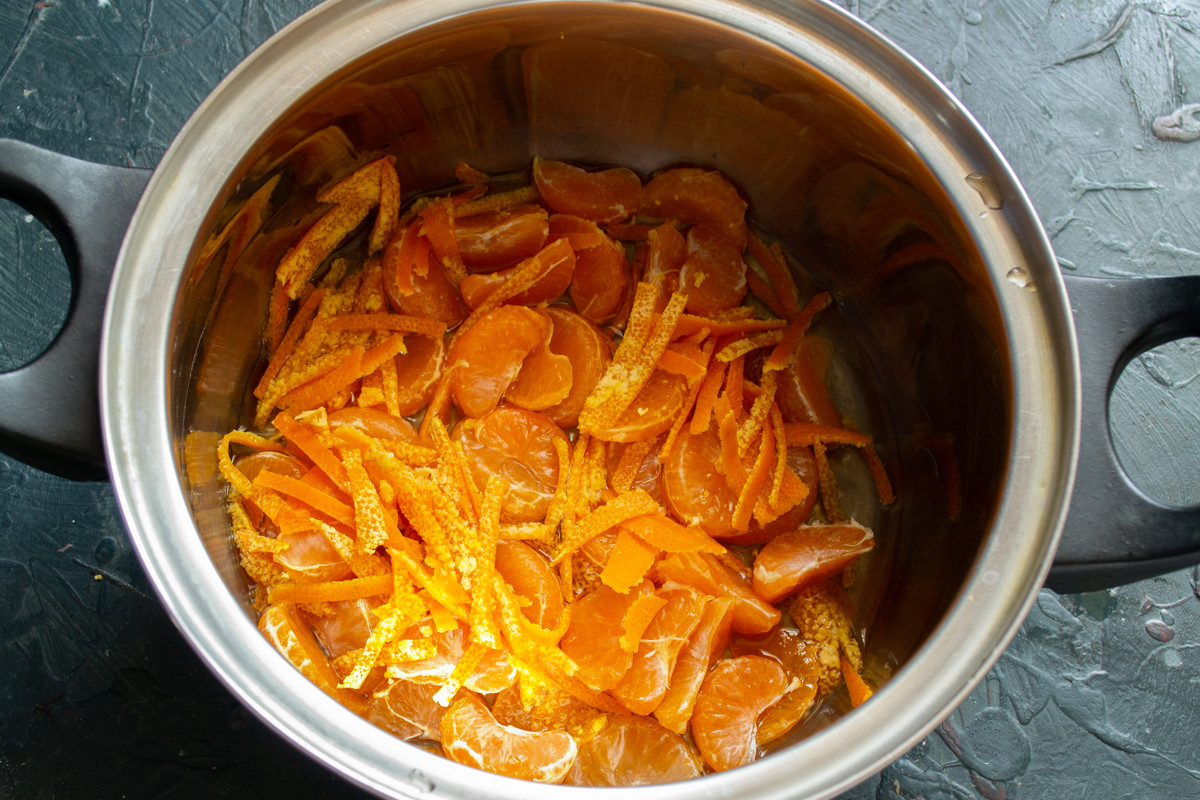
Place the mandarin peel and segments in a heavy-bottomed pot.
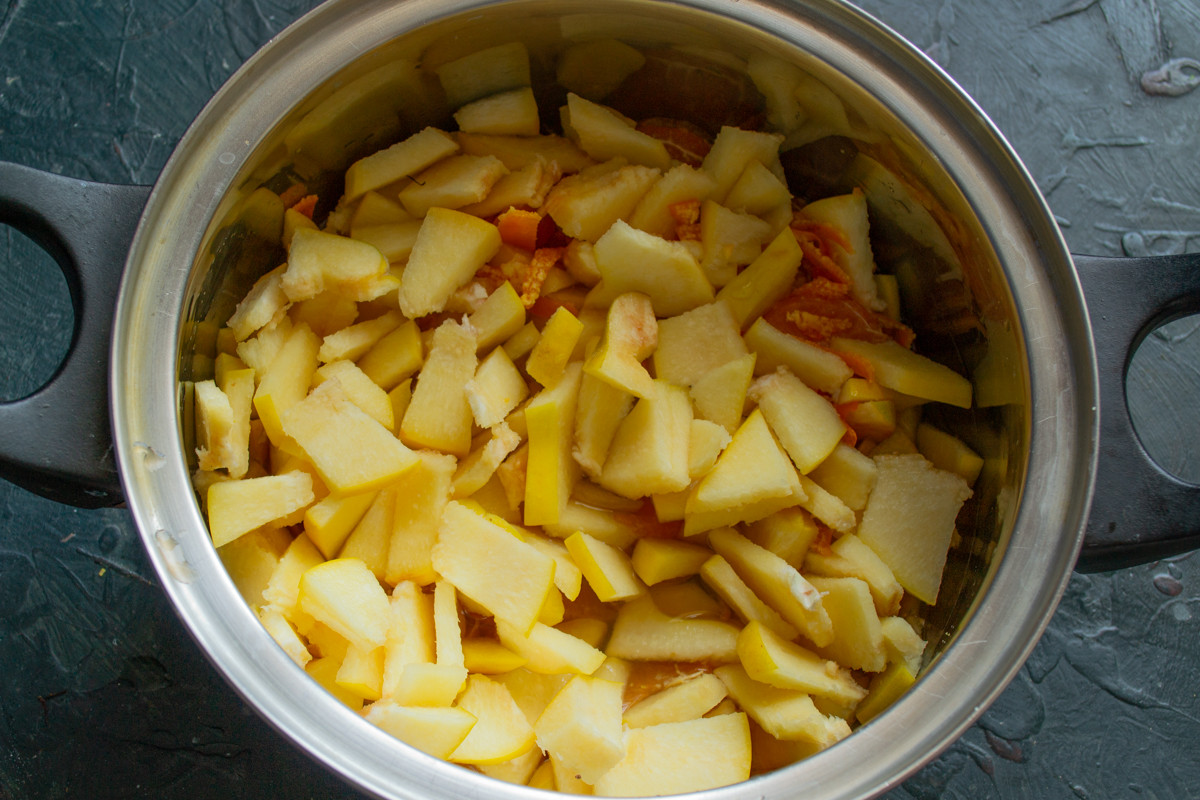
Add the chopped quince and stir.
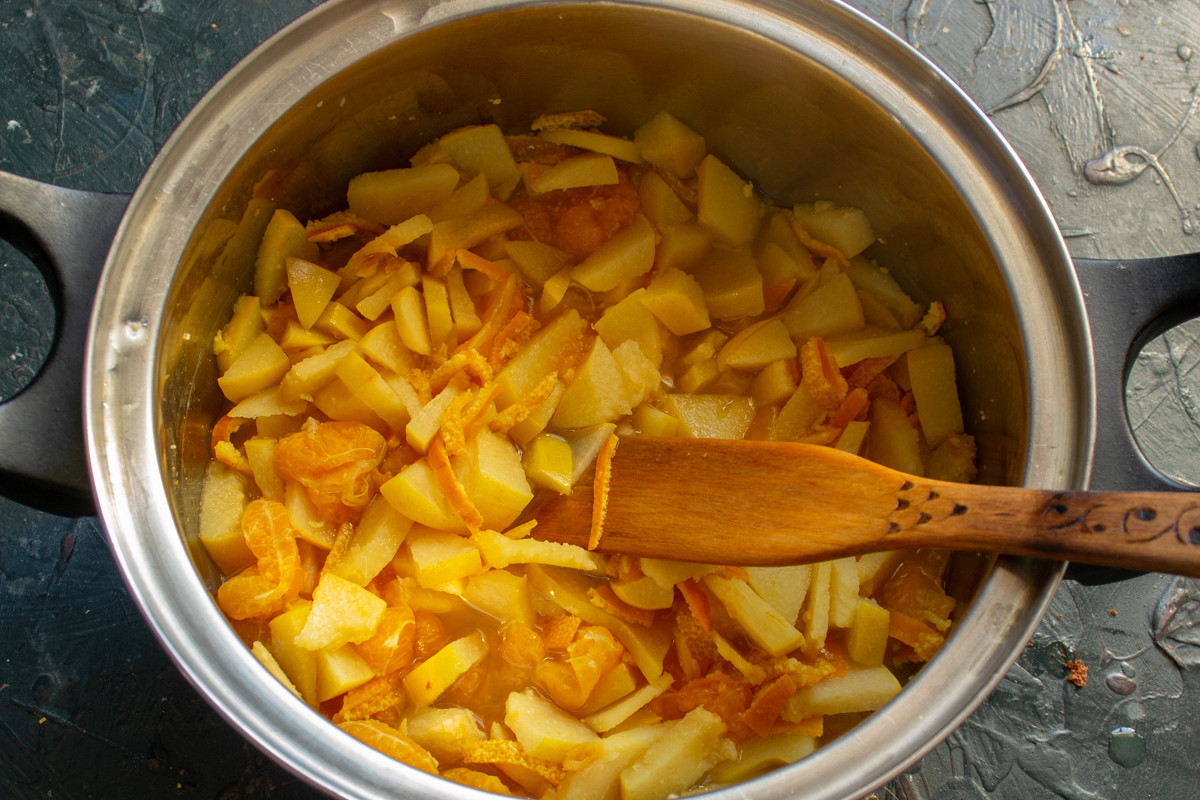
Cover the pot with a lid and bring to a boil.
Place the mandarin peel and segments in a heavy-bottomed pot and add the water.
Add the chopped quince and stir.
Cover the pot with a lid and bring to a boil. Simmer over low heat for 30 minutes, until the peel and quince pieces become soft. This might take a little longer, depending on the variety of quince.
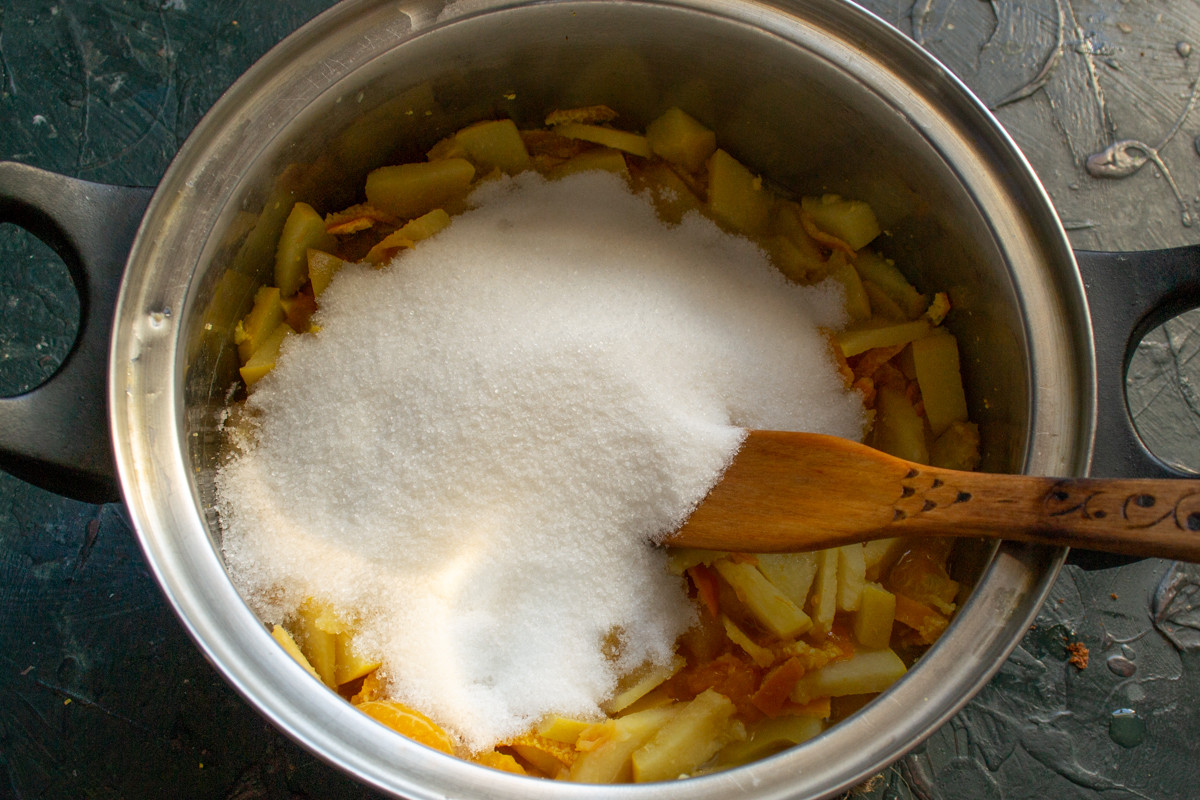
When the fruit and peel are soft, add the granulated sugar.
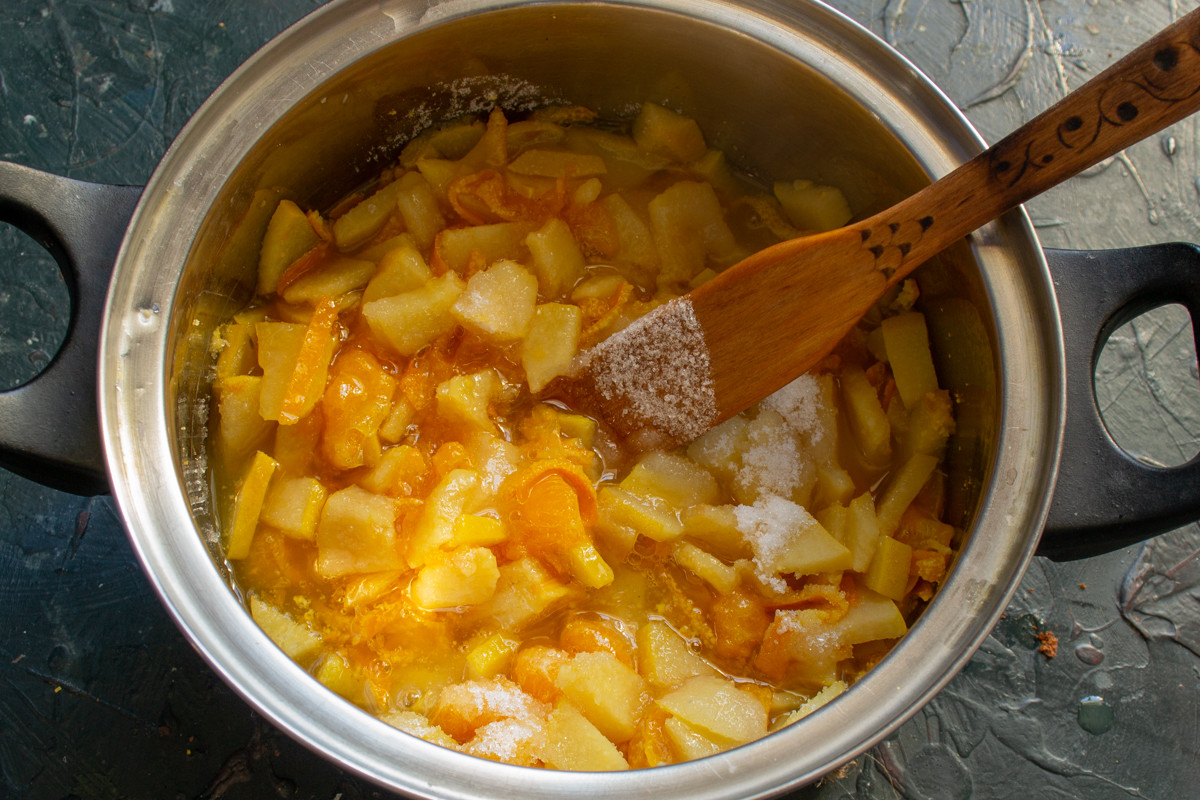
Let the fruit sit with the sugar for a couple of minutes to allow the sugar to dissolve and turn into syrup.
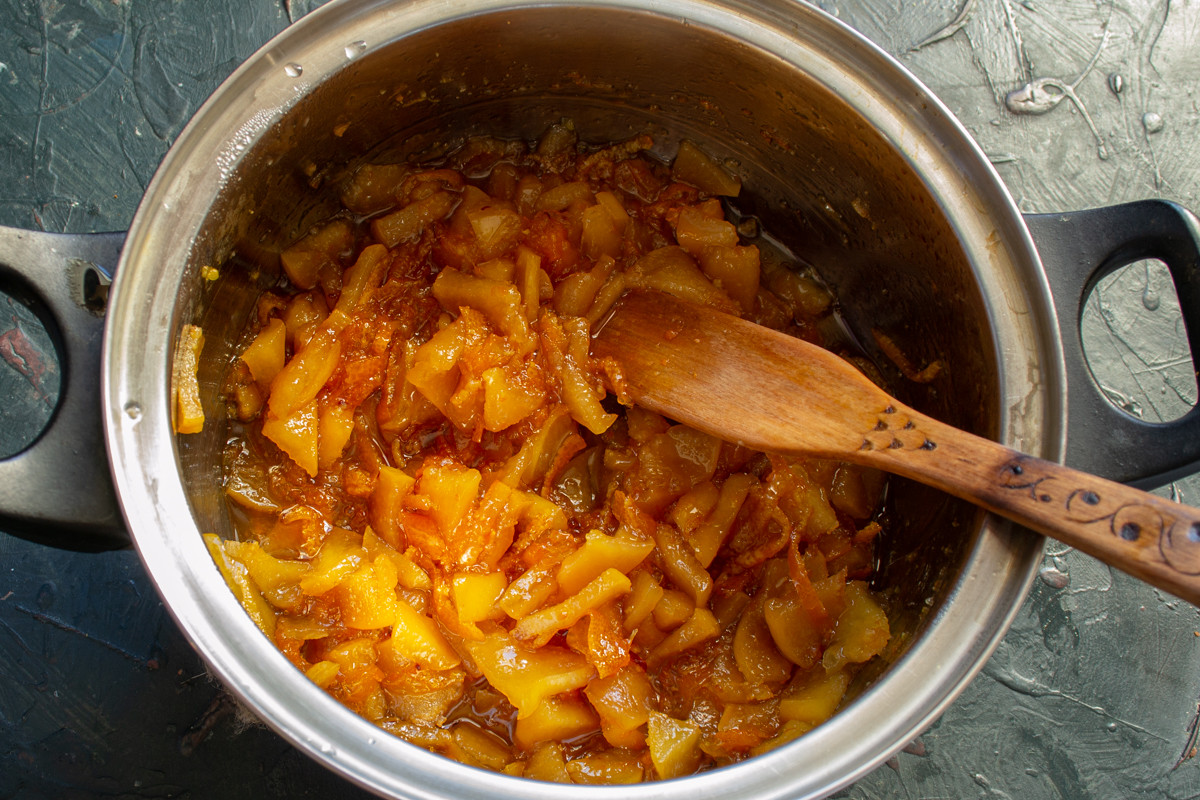
Return the pot to the stove, bring the jam to a boil, and simmer over low heat for another 20-30 minutes.
When the fruit and peel are soft, add the granulated sugar. You can add more or less sugar to your taste.
Let the fruit sit with the sugar for a couple of minutes to allow the sugar to dissolve and turn into syrup.
Return the pot to the stove, bring the varenye (a traditional Eastern European fruit preserve) to a boil, and simmer over low heat for another 20-30 minutes, until it thickens and the pieces of quince and mandarin peel become translucent. Those concerned about vitamin preservation can skip this recipe; jams are not made for vitamins, although trace elements and other beneficial substances will remain, and a significant portion of vitamins won’t evaporate either.
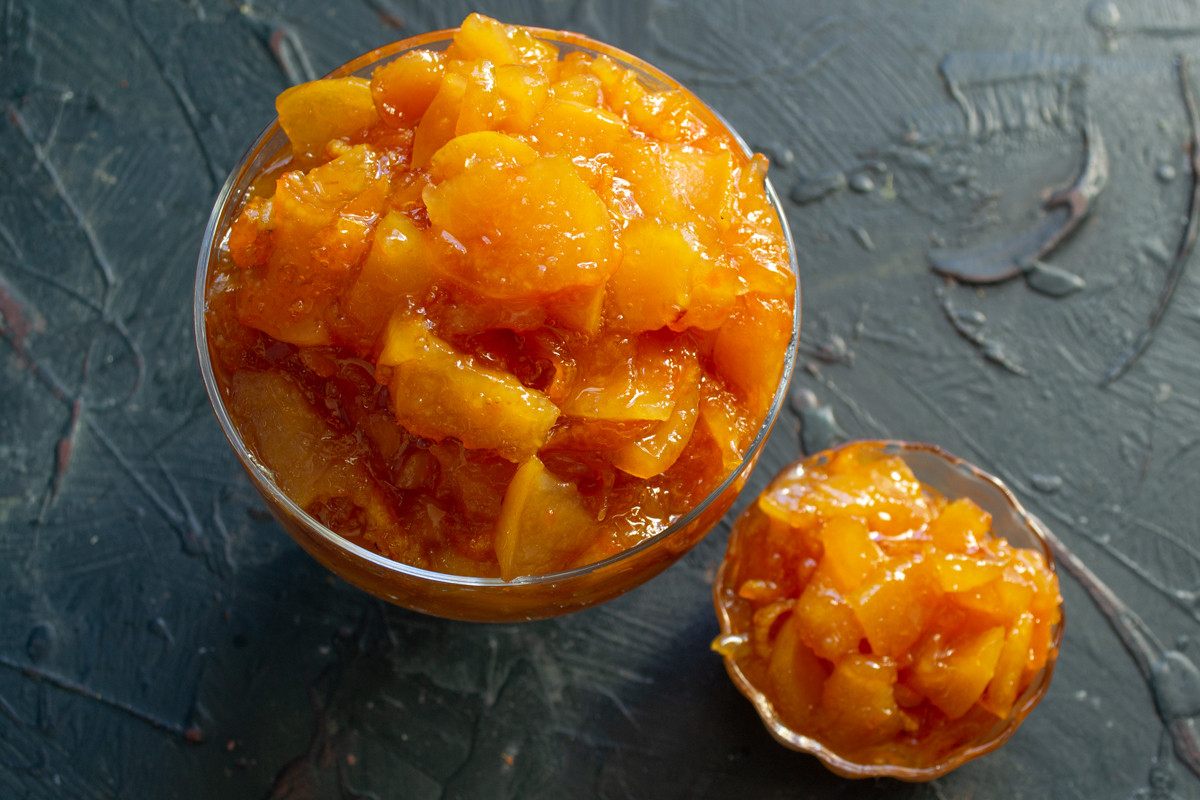
Transfer the cooled quince and mandarin jam to dry, sterile jars, and cover with paper or dry lids.
Transfer the cooled quince and mandarin jam to dry, sterile jars. Cover with paper and tie, or seal with dry lids. Store at room temperature. If you cover the jars only with waxed paper or parchment paper and tie with a string, over time the jam will become similar to tsukaty (candied fruits).
And there you have it—a beautiful jar of sunshine to brighten up any day! This Quince and Mandarin Jam is wonderfully versatile. Spread it on warm toast, spoon it over yogurt or oatmeal, or pair it with a sharp cheese for an elegant appetizer. Stored properly, it will keep for months, though it rarely lasts that long! We hope you enjoy the process of making this aromatic 'varenye' as much as you'll enjoy its incredible taste. Happy preserving!
0 comments