
Step into the world of traditional Eastern European charcuterie with Solonina Kazatskaya, a cherished Cossack-style cured pork belly. This dish is a testament to the age-old art of food preservation, born from the need to sustain through long journeys and harsh winters. More than just a method, it's a culinary tradition that transforms a simple cut of pork belly into a delicacy bursting with savory, aromatic flavors. In this recipe, we'll explore not one, but three incredible spice rubs—from a fragrant garlic-caraway mix to a fiery chili blend—allowing you to customize this historic treat to your own taste. Get ready to create a truly special and long-lasting delicacy in your own kitchen!
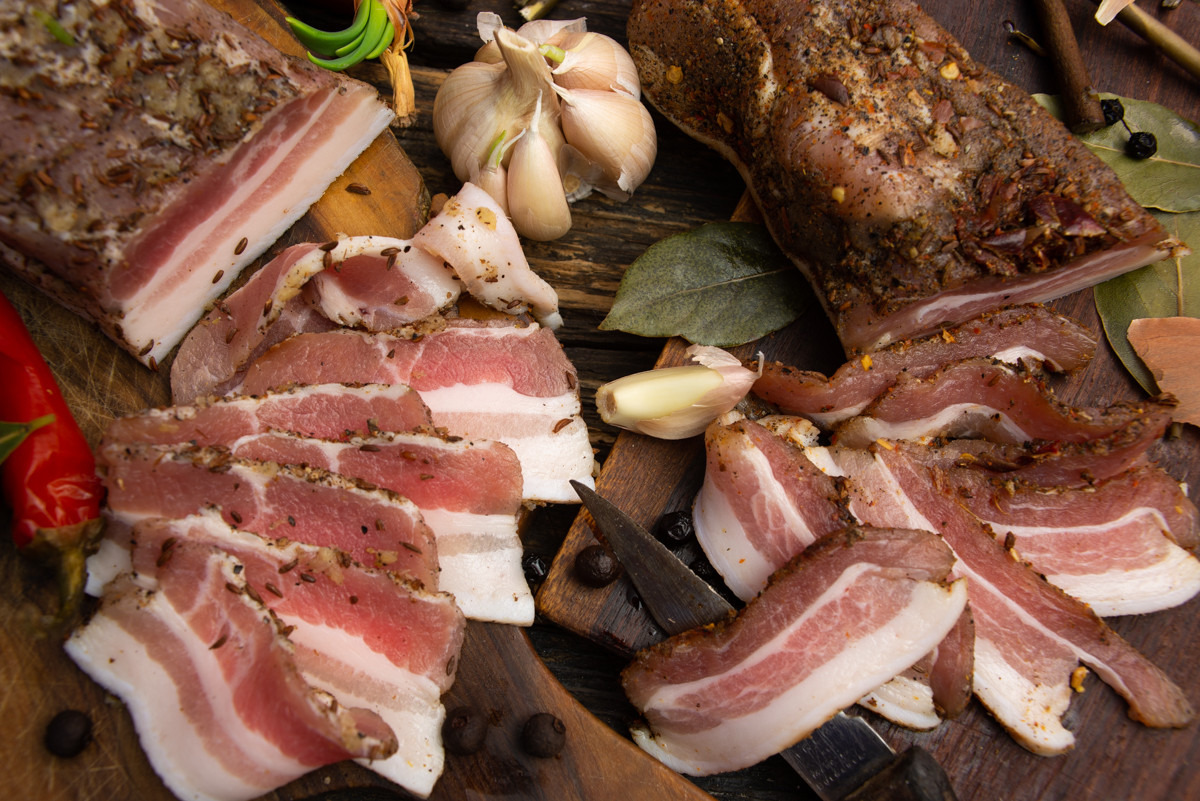
Solonina kazatskaya
Ingredients for Solonina Kazatskaya
- 2 kg pork belly, skin-on
- 200 g salt
- 60 g sugar
- 1.5 L water
- bay leaf, chili pepper, peppercorns
- 3 tablespoons caraway seeds
- 1 tablespoon chili flakes
- 1 head of garlic
- ground black and red pepper
How to Make Solonina Kazatskaya
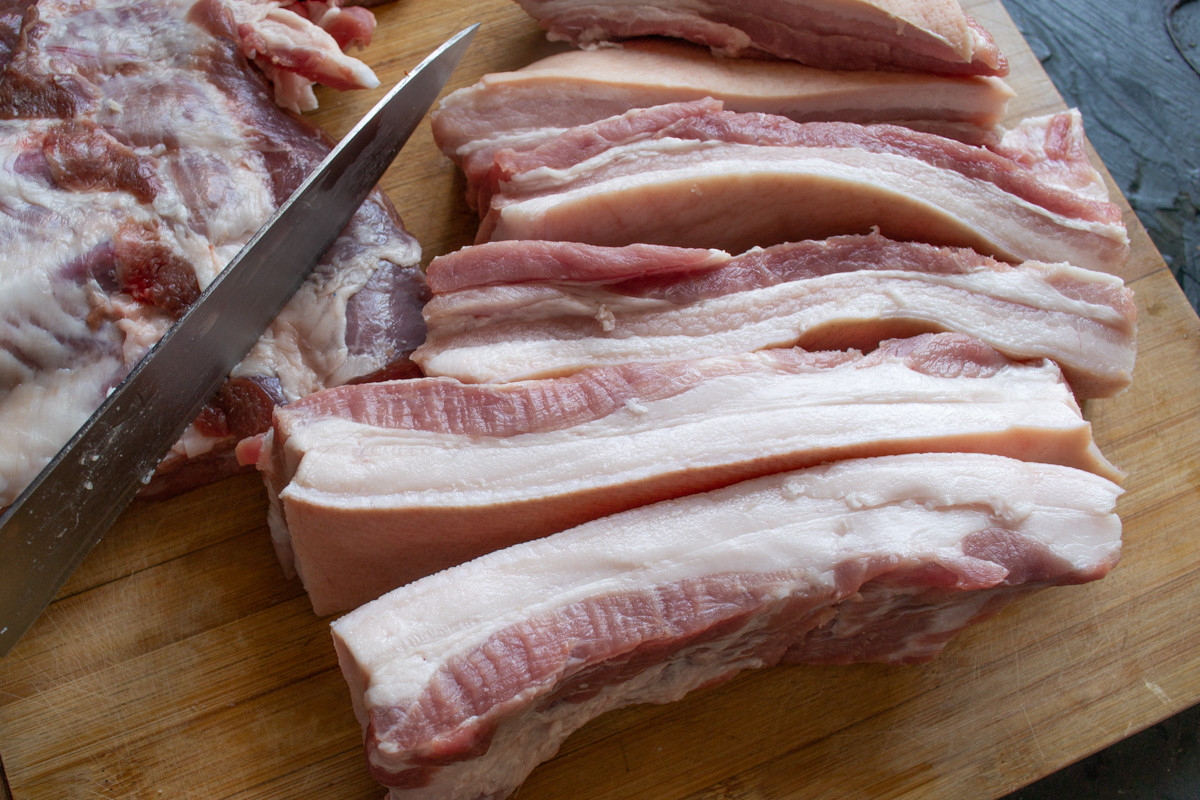
Cut the pork into strips approximately 25 centimeters long and 7 centimeters wide.
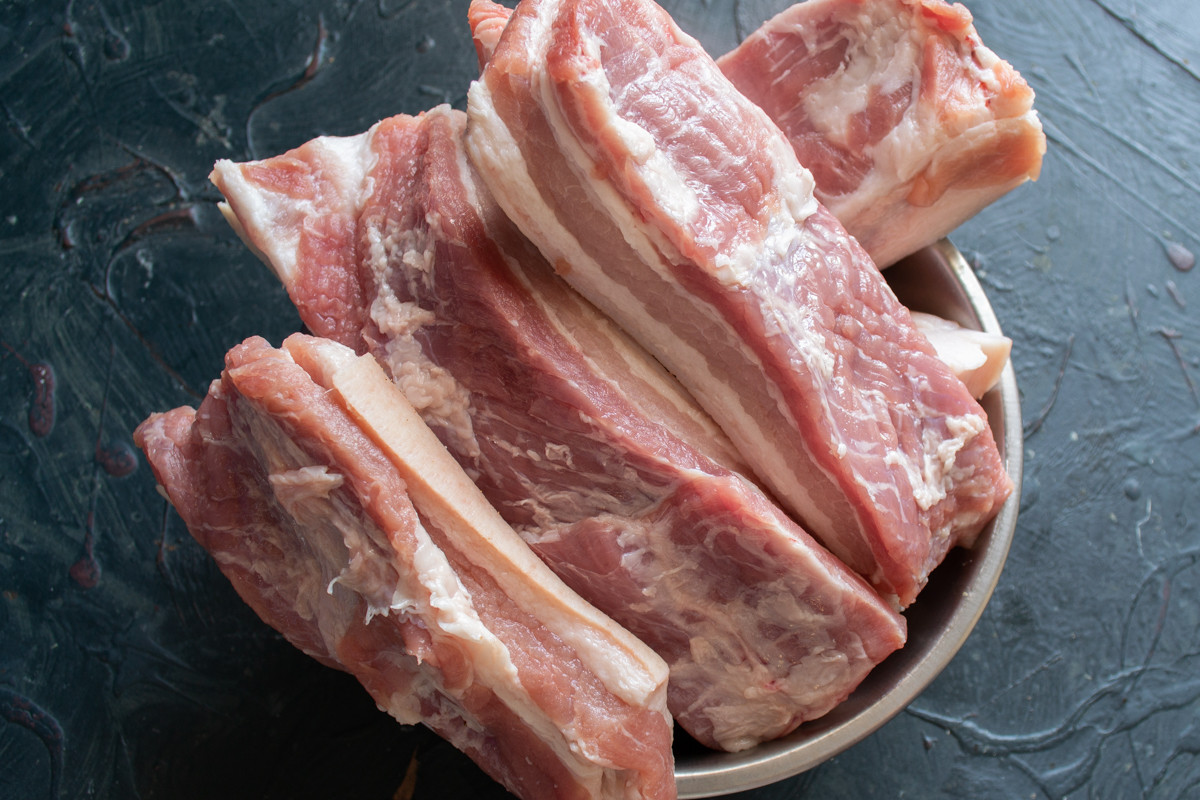
For the brine, you will need 100 g of salt per 1 kg of pork.
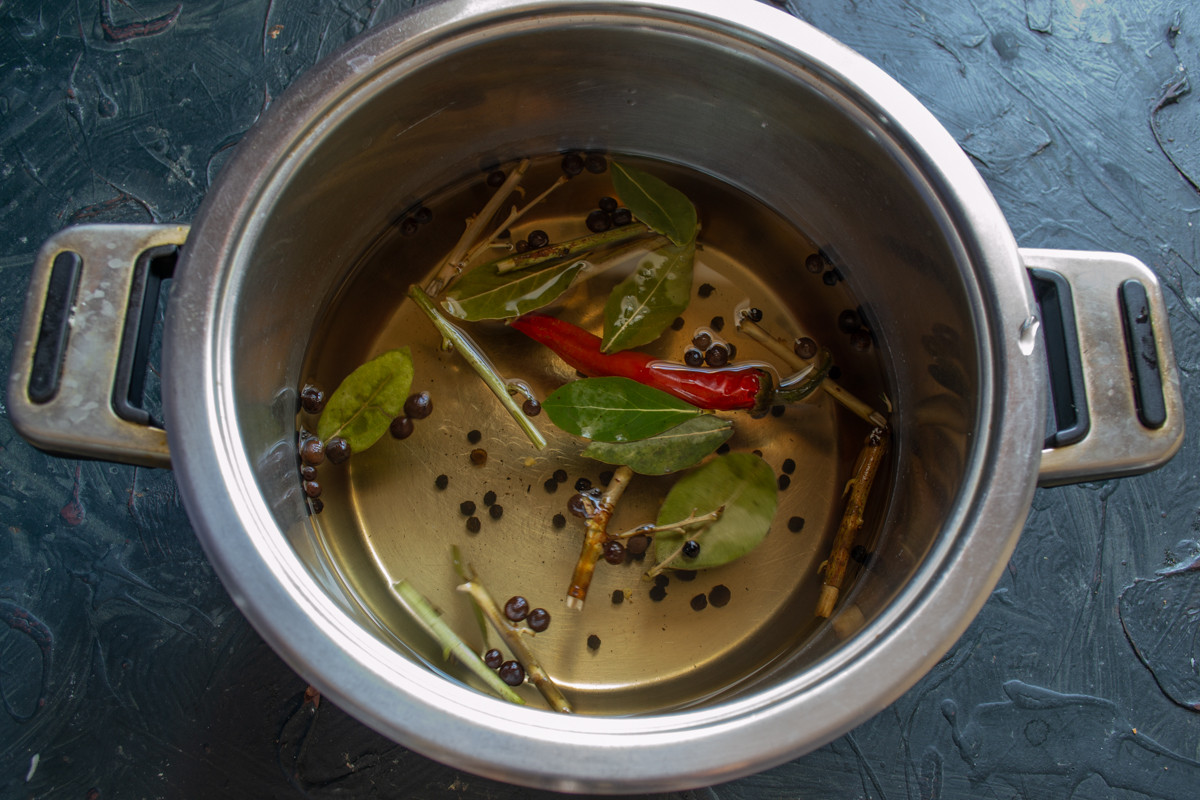
Bring to a boil and simmer for 10 minutes.
Pork belly is the abdominal cut of a pig. In this recipe, we use a skin-on cut from a young pig, with the skin singed. Cut the pork into strips about 25 centimeters long and 7 centimeters wide.
Weigh the prepared meat. For the brine, you will need 100 g of salt per 1 kg of pork.
Pour 1.5 liters of water into a pot. Break the bay leaf twigs and add them along with 10-12 bay leaves. The twigs are very aromatic, so never throw them away if you buy bay leaves in ‘bouquets’. Add a tablespoon of a mix of allspice and black peppercorns, and a chili pepper pod. Bring to a boil and simmer for 10 minutes to let the spices release their aromatic compounds into the brine.
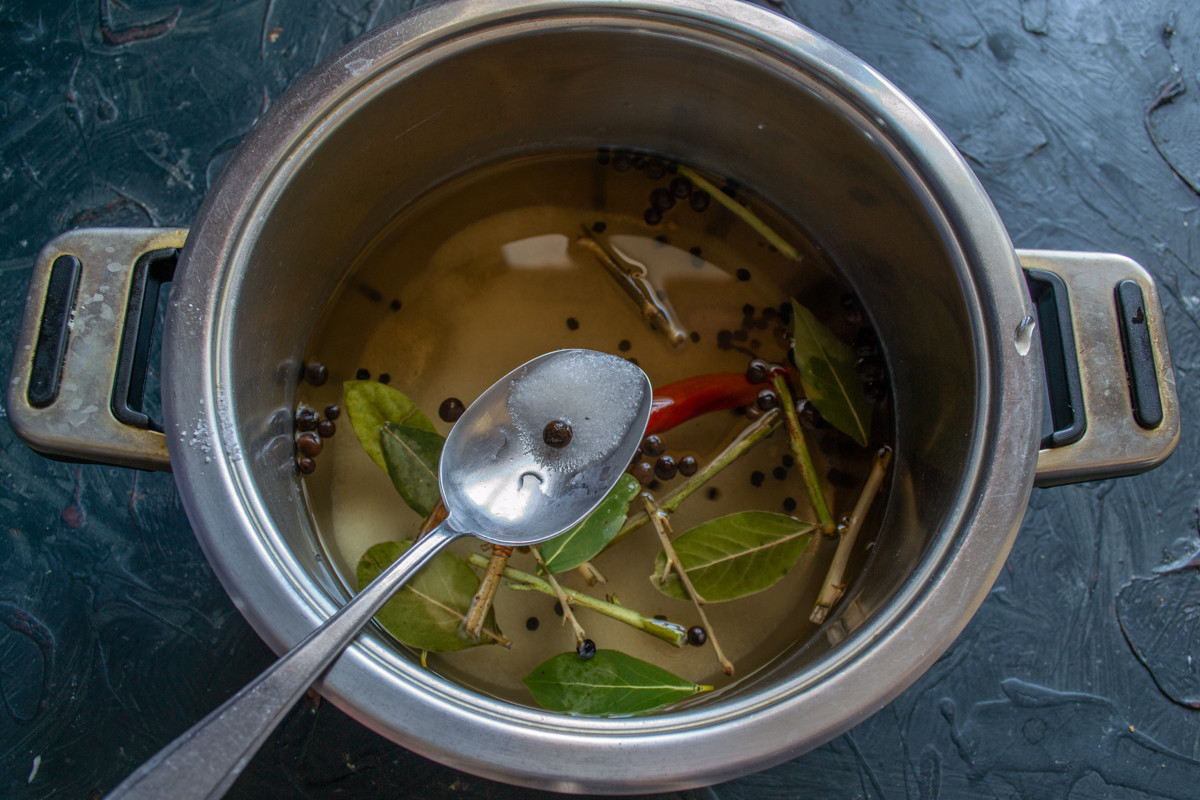
Cool the brine to 40 degrees Celsius and add the salt and sugar.
Cool the brine to 40°C (104°F) and add the salt and granulated sugar. Don’t be intimidated by the sugar; its taste is not noticeable in the final product. Stir thoroughly until the crystals are completely dissolved, then cool the brine to room temperature.
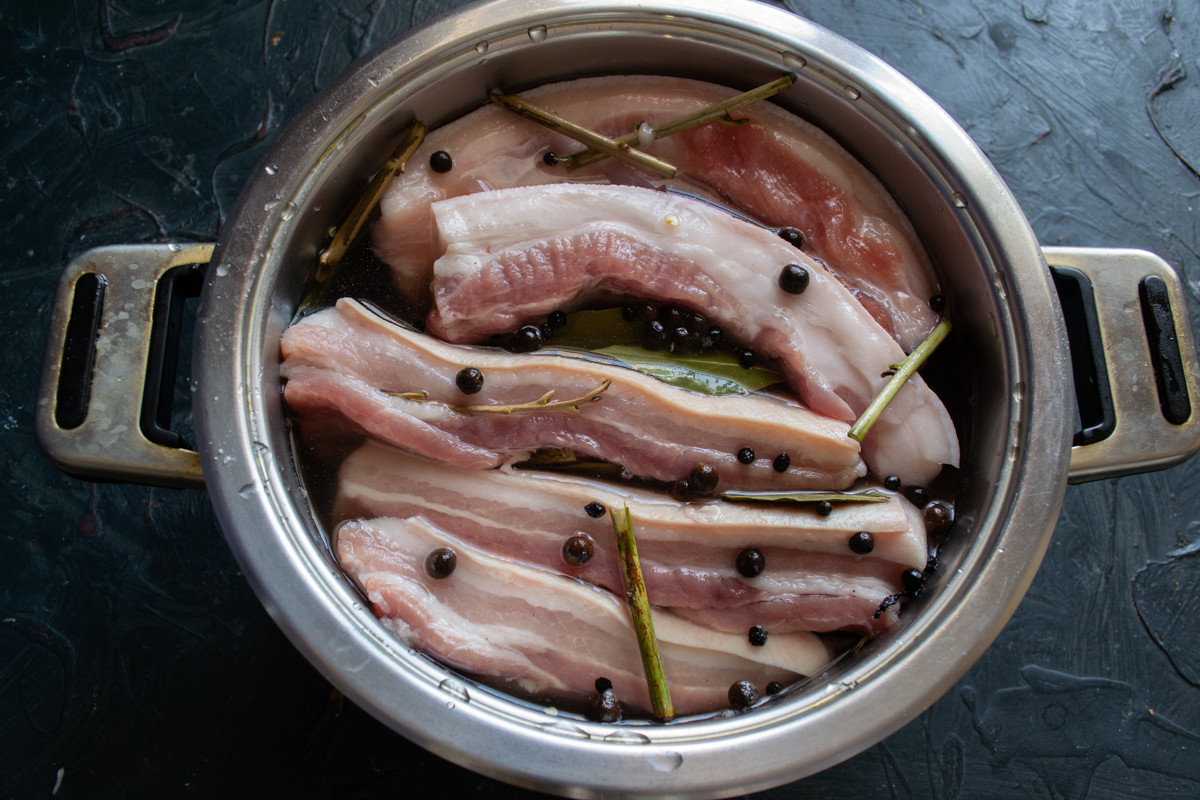
Place the prepared pork belly loosely into the brine.
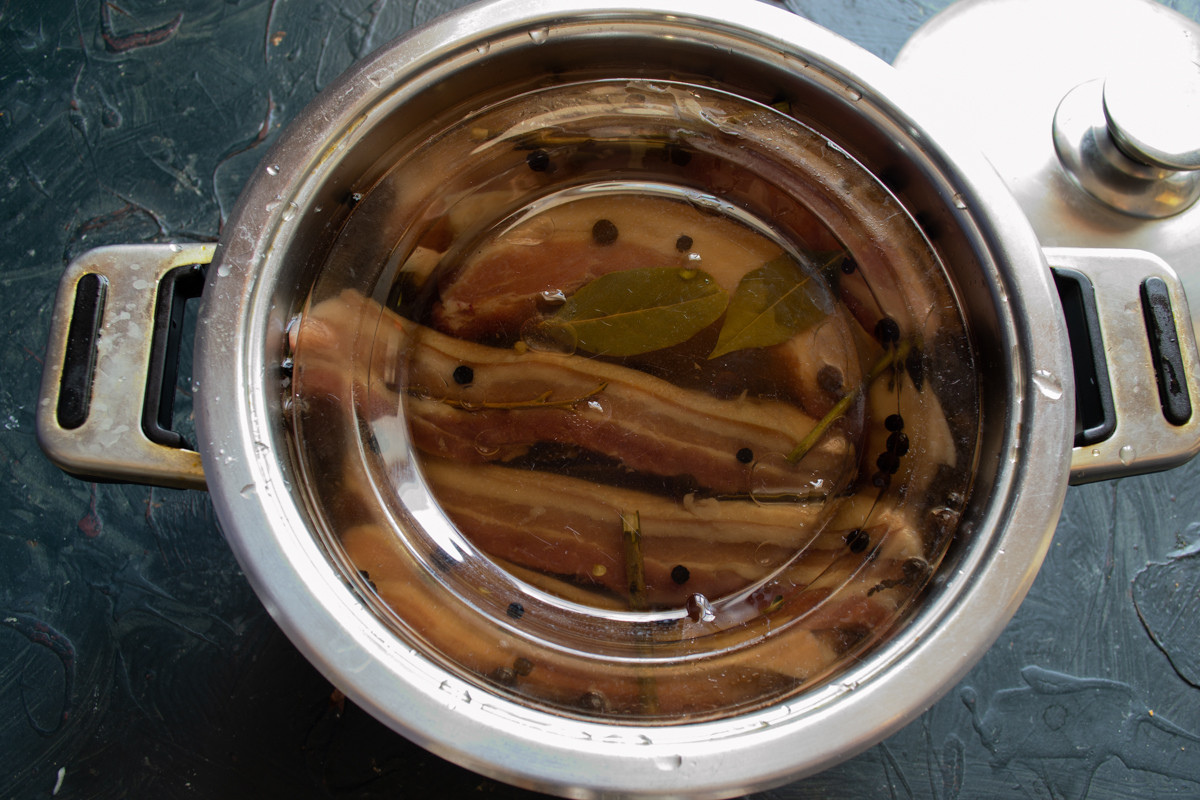
Place a small weight on top.
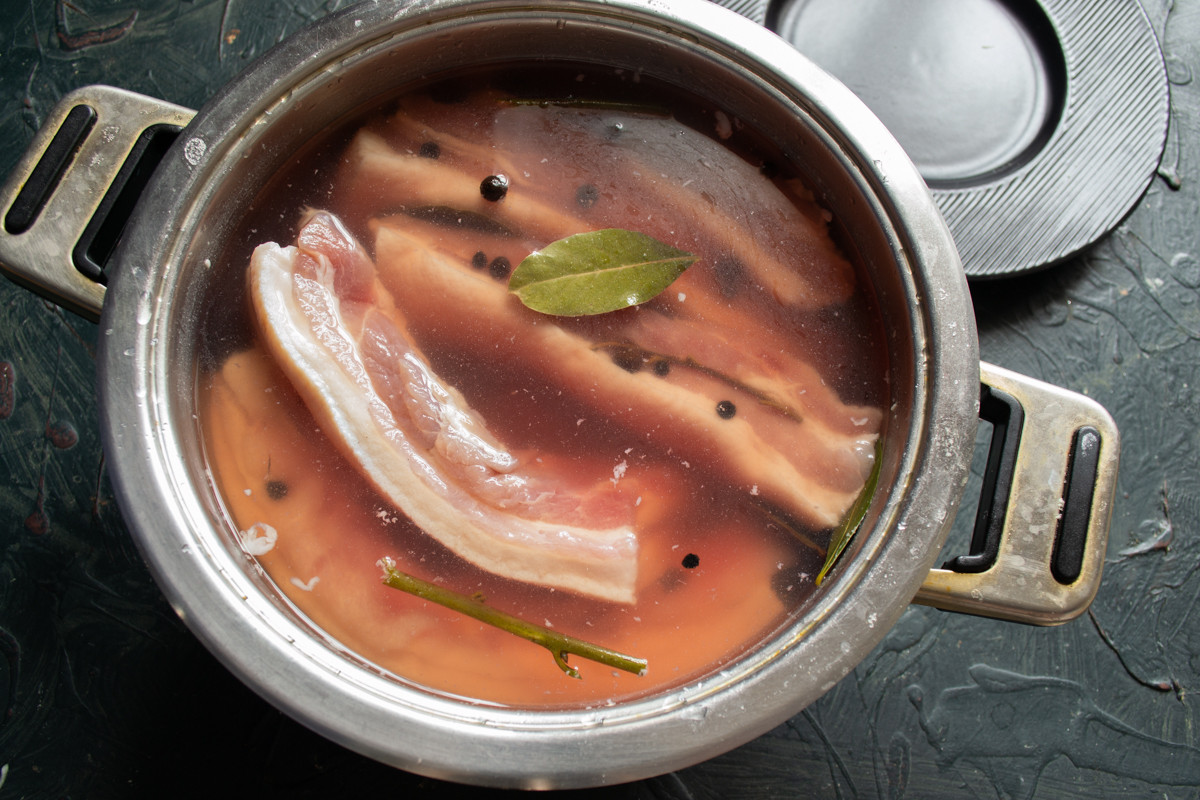
Then, move the container to the refrigerator and leave it there for 72 hours.
Place the prepared pork belly loosely into the brine. The pieces should float freely and not be pressed against each other. Choose a container that is spacious enough for this.
Place a small weight on top, such as a plate, to keep the meat from floating. Leave it at room temperature for 48 hours.
Then, move the container to the refrigerator and leave it there for 72 hours.
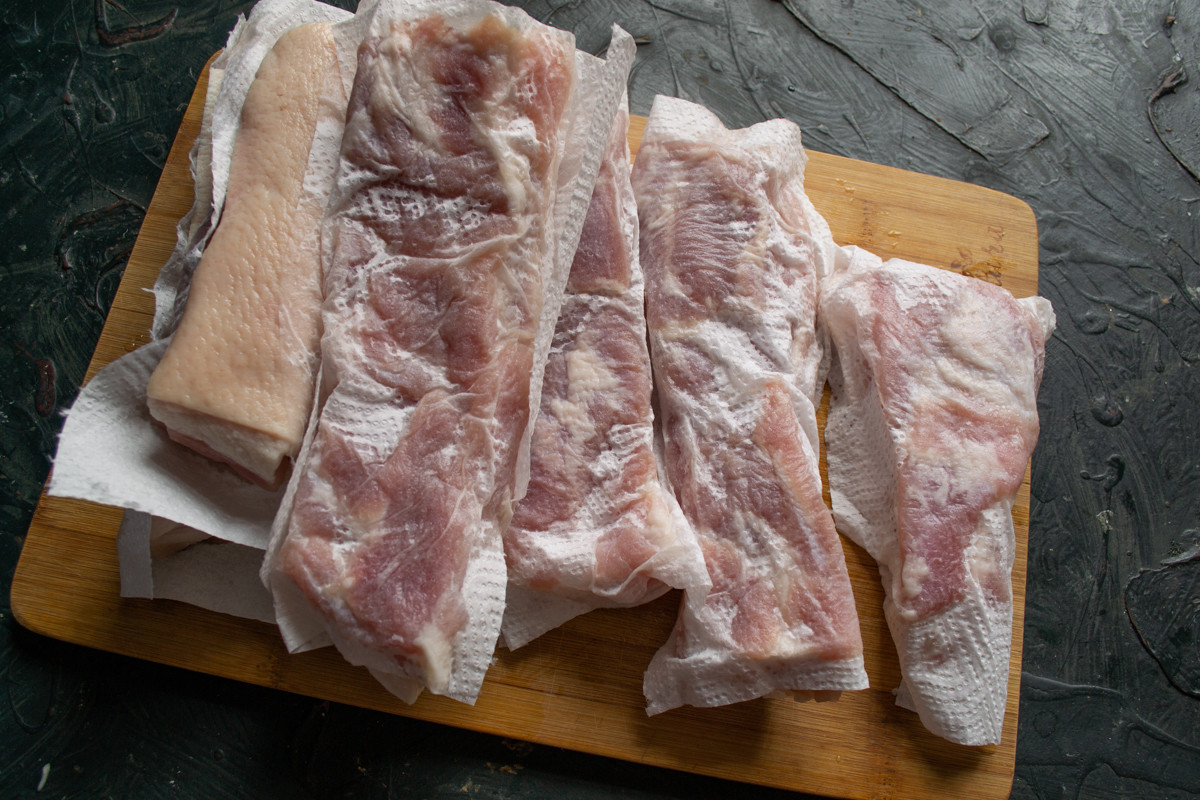
Wrap the pieces of meat in paper towels, changing the towels a couple of times to ensure the pieces are thoroughly dry.
Remove the pork from the brine. Wrap the pieces of meat in paper towels, changing the towels a couple of times to ensure the pieces are thoroughly dry.
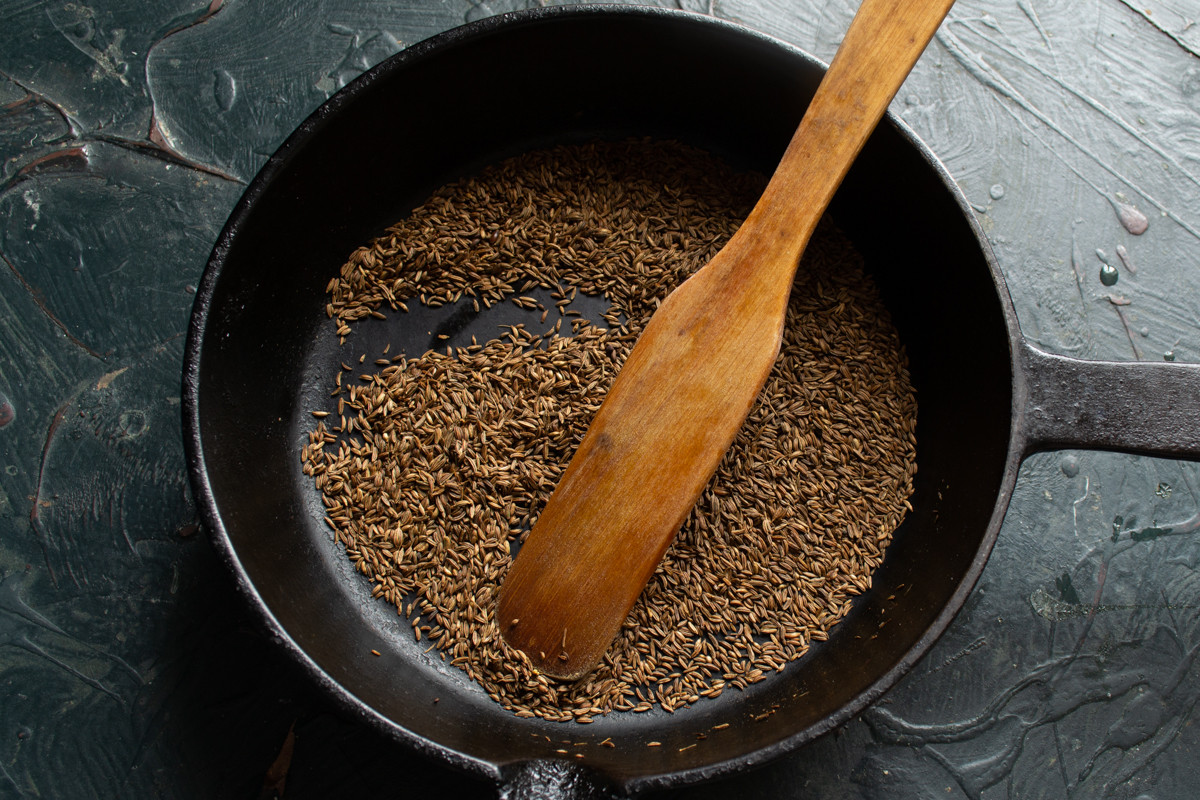
Pour caraway seeds into a cast-iron skillet.
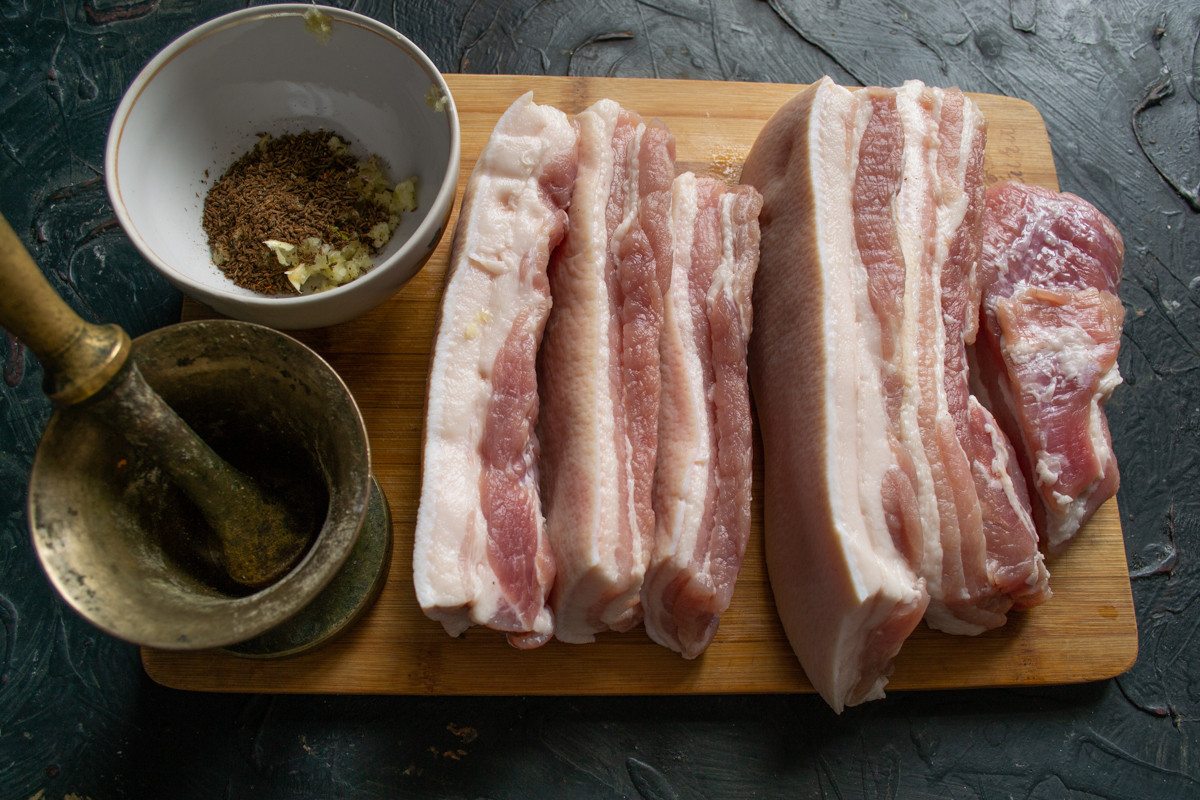
Grind one tablespoon of toasted caraway seeds in a mortar and mix with garlic.
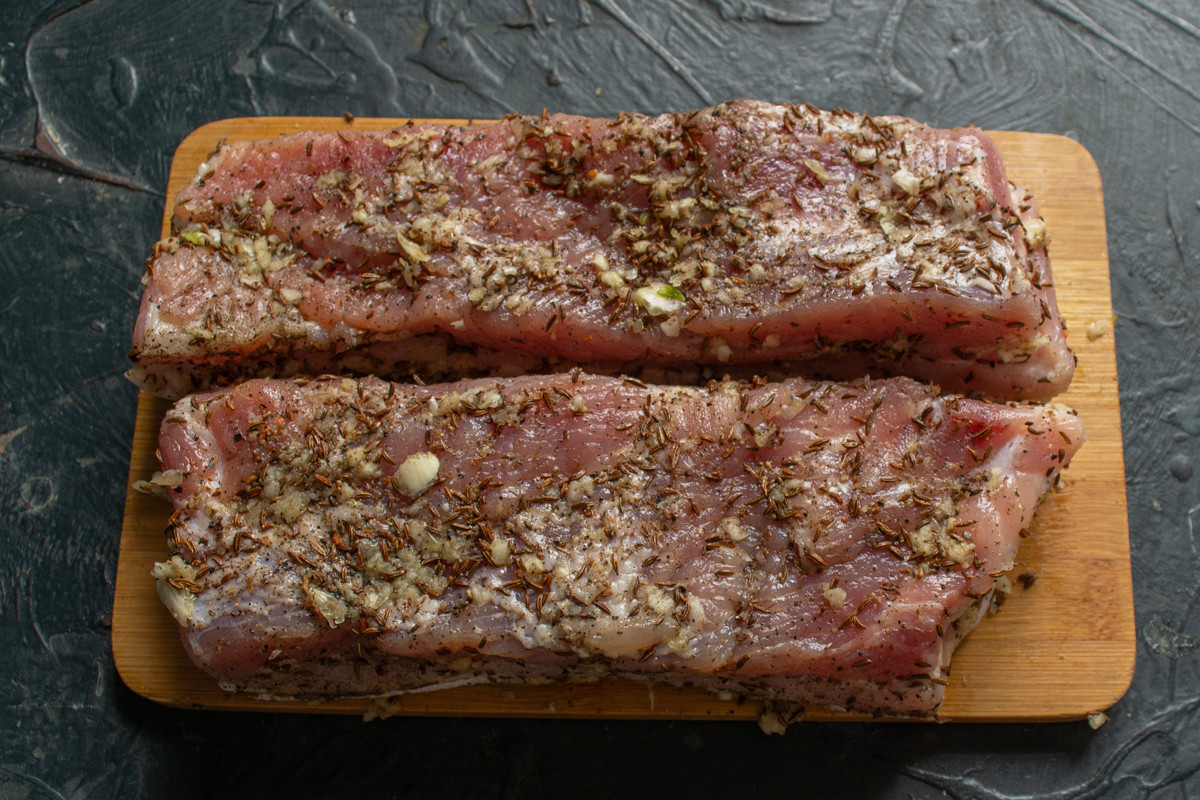
Rub two pieces of the cured pork with the caraway and garlic mixture.
Pour caraway seeds into a cast-iron skillet. Toast them until the first wisp of smoke appears. Transfer the caraway seeds to a board and let them cool.
This recipe for solonina kazatskaya (a traditional Cossack-style salt-cured pork) comes in three variations. The first is with garlic and caraway. Press the garlic cloves through a garlic press. Grind one tablespoon of toasted caraway seeds in a mortar and mix with the garlic.
Rub two pieces of the solonina with the caraway and garlic mixture.
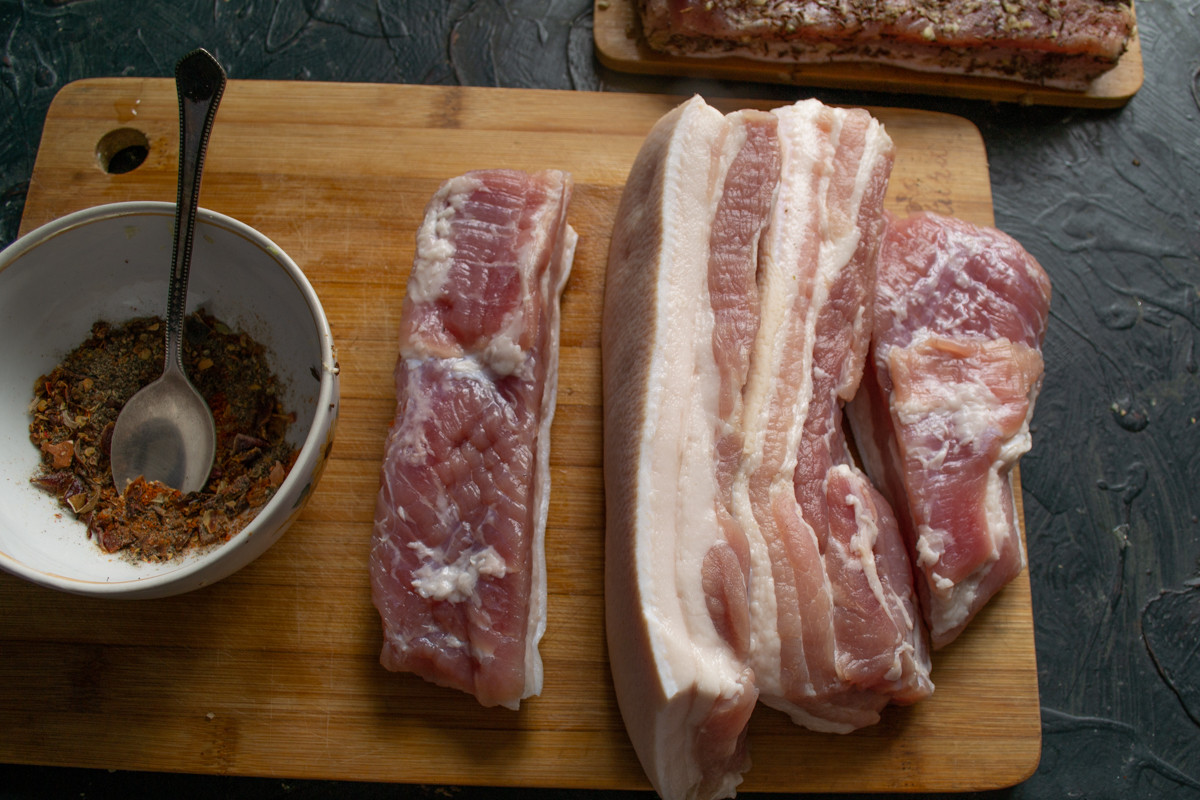
Mix half a tablespoon each of ground black and red pepper, and add chili flakes.
The second variation is spicy, one might even say fiery—this solonina is for those who like it hot. Mix half a tablespoon each of ground black and red pepper, and add chili flakes. Rub the spices into the pieces of pork.
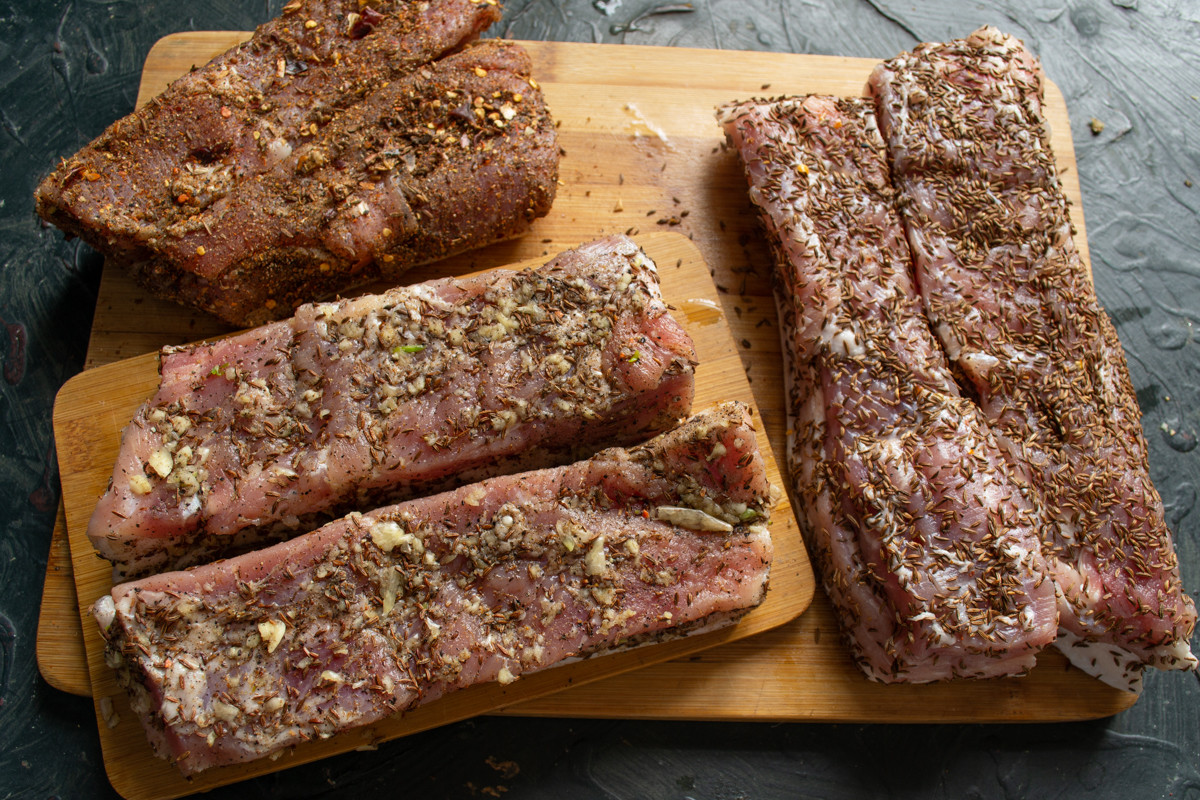
Lightly crush the caraway seeds in a mortar and coat the cured pork.
And the third curing option is relatively neutral—just caraway. Lightly crush the caraway seeds in a mortar and coat the solonina.
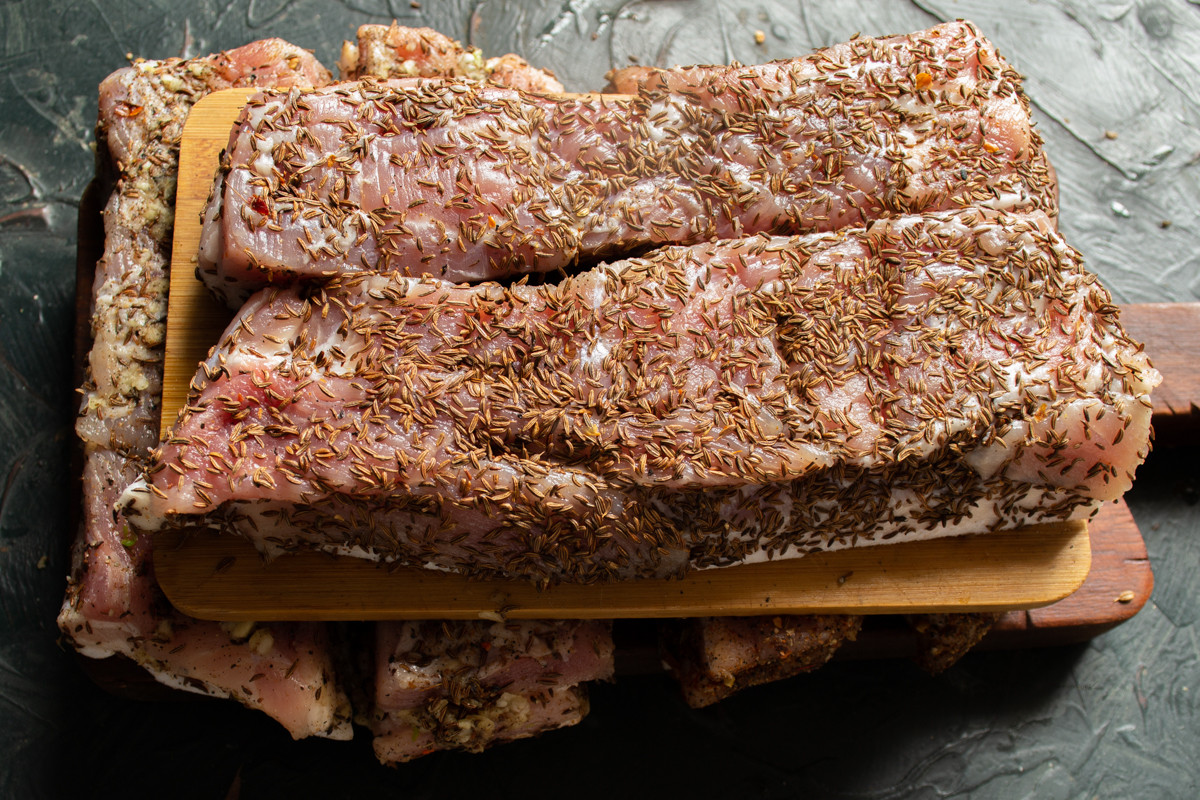
Place the seasoned meat on boards and refrigerate for 48 hours.
Place the seasoned meat on boards and refrigerate for 48 hours. Then, wrap it in plastic wrap and store it in the freezer. It can be stored for up to 12 months. I recommend eating the garlic-seasoned one first.
Congratulations on mastering the art of making Solonina Kazatskaya! You've not only prepared a delicious treat but also connected with a rich culinary history. To serve, slice the cured pork belly thinly and enjoy it on a slice of dark rye bread, perhaps with a side of sharp mustard or horseradish. It's a fantastic appetizer, a perfect companion to a cold beer or vodka, and a star on any charcuterie board. Store your solonina tightly wrapped in the freezer, and it will be ready for any occasion. We hope you enjoy every savory bite and feel inspired to explore more traditional preservation recipes!
0 comments