
Sauerkraut, or kvashenaya kapusta as it's known in many Slavic countries, is more than just a dish; it's a cherished tradition and a staple of Eastern European cuisine, especially during the long winter months. This crunchy, tangy fermented cabbage is not only delicious but also packed with probiotics and vitamins. Forget the store-bought versions! Our recipe will guide you through making your own sauerkraut at home, anytime you want. The addition of a little sugar helps kickstart the fermentation, while caraway seeds impart a wonderful, aromatic flavor that perfectly complements the cabbage. Let's dive into the simple, magical process of kvashenie (fermentation) and fill your kitchen with the wholesome goodness of homemade sauerkraut!
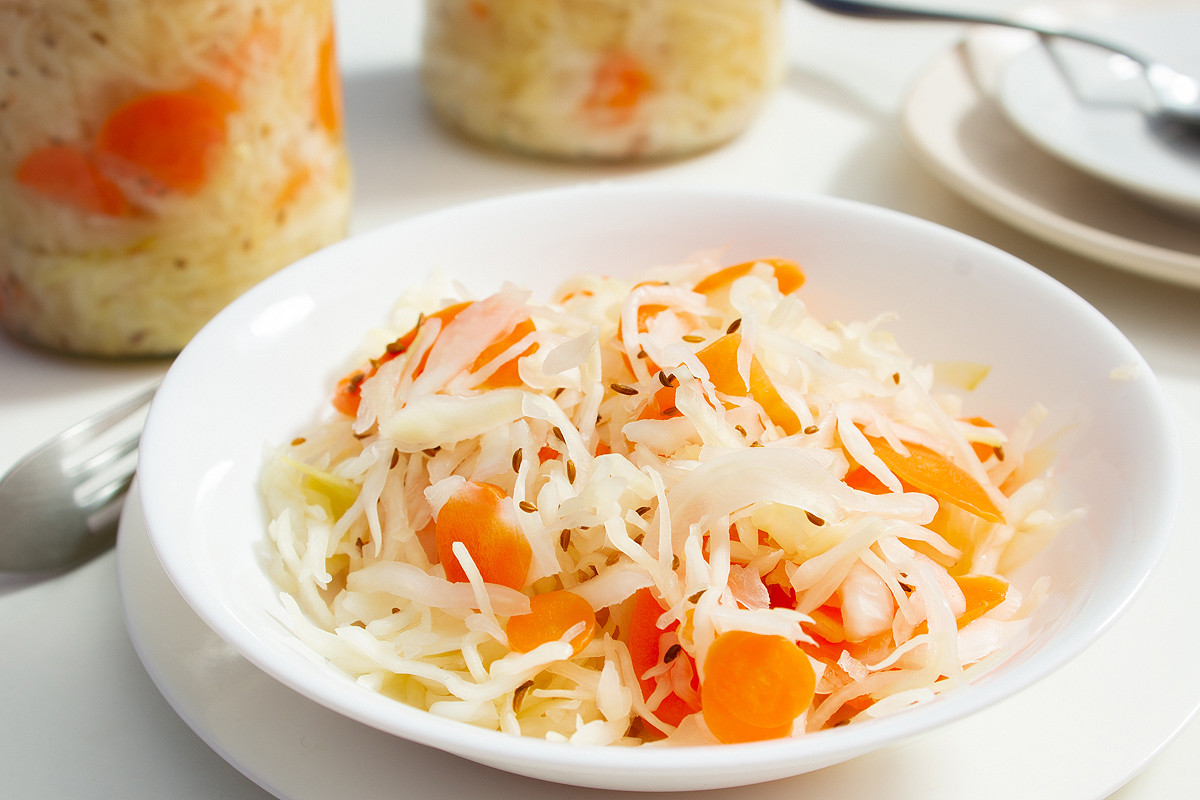
Making sauerkraut all year round: a recipe with sugar and caraway seeds
Ingredients for Sauerkraut with Sugar and Caraway Seeds
- 1.5 kg white cabbage
- 300 g carrots
- 30 g salt
- 15 g sugar
- 1 tablespoon caraway seeds
- filtered water
How to make kvashenaya kapusta (Russian-style sauerkraut) with sugar and caraway seeds
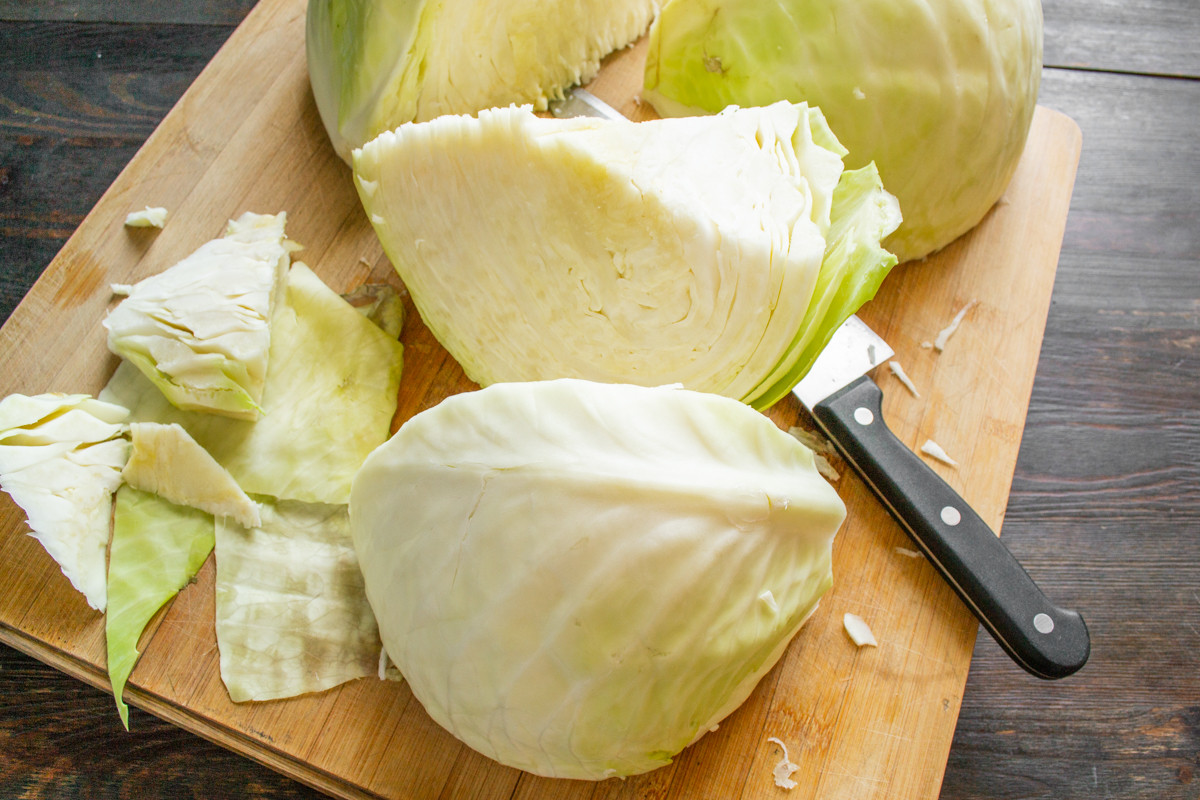
Cut the cabbage head into 4 parts, remove the core.
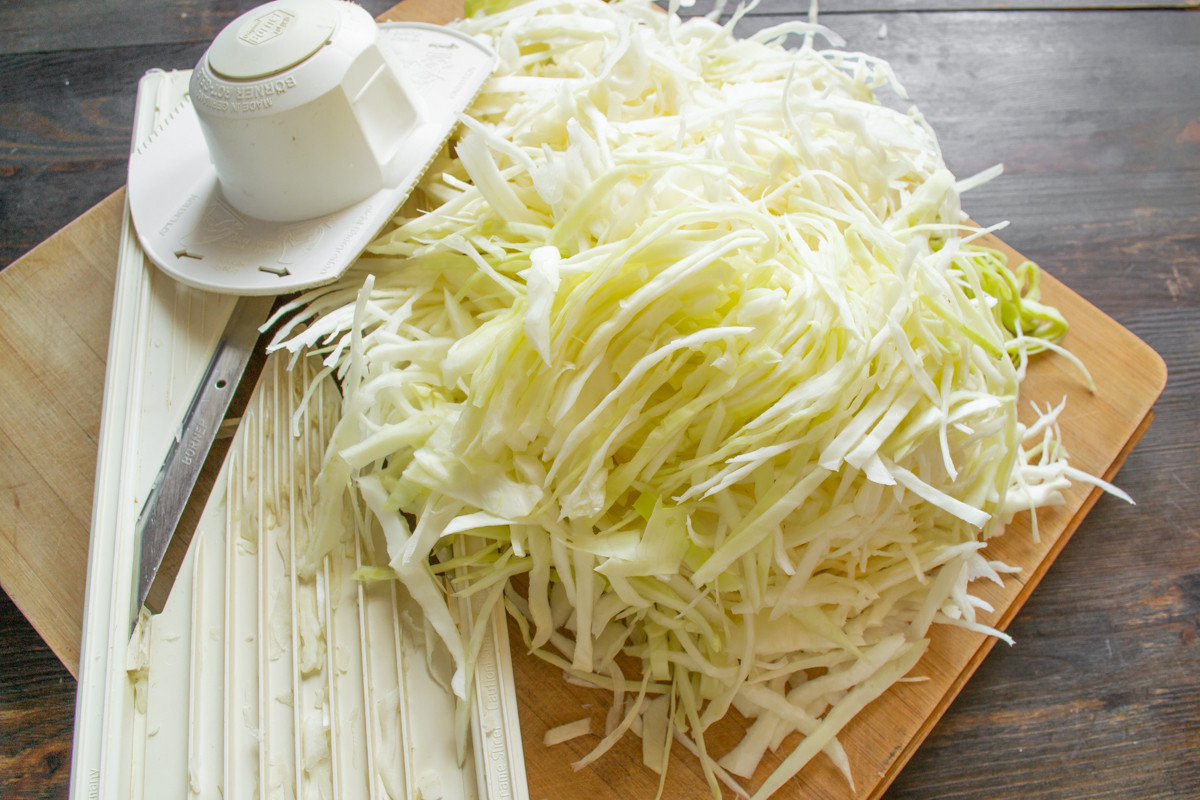
Shred the cabbage with a knife or a vegetable slicer.
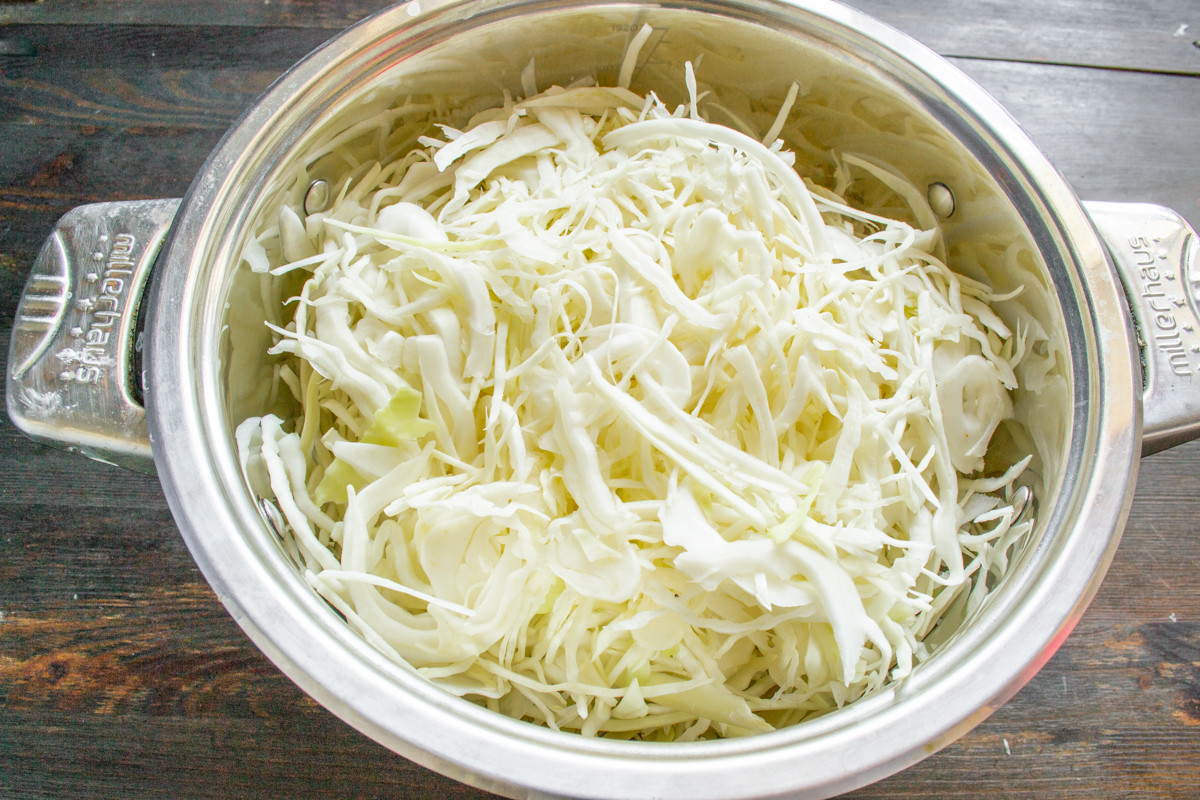
Place the shredded cabbage into a prepared container.
Remove the outer leaves from the cabbage head. Cut the head into 4 parts and remove the core. For kvashenie (a traditional Slavic fermentation process) all year round, only early cabbage is unsuitable. Dense heads of cabbage that you can buy in a store or at a market in early spring are suitable for fermenting. You might need to add a little water, as the cabbage may have dehydrated slightly during winter storage.
Shred the cabbage with a knife or a vegetable slicer. The thinner the shreds, the better the final result.
You can ferment cabbage in a glass or plastic container, or conveniently in a large enameled or stainless steel pot. Place the shredded cabbage into the prepared container.
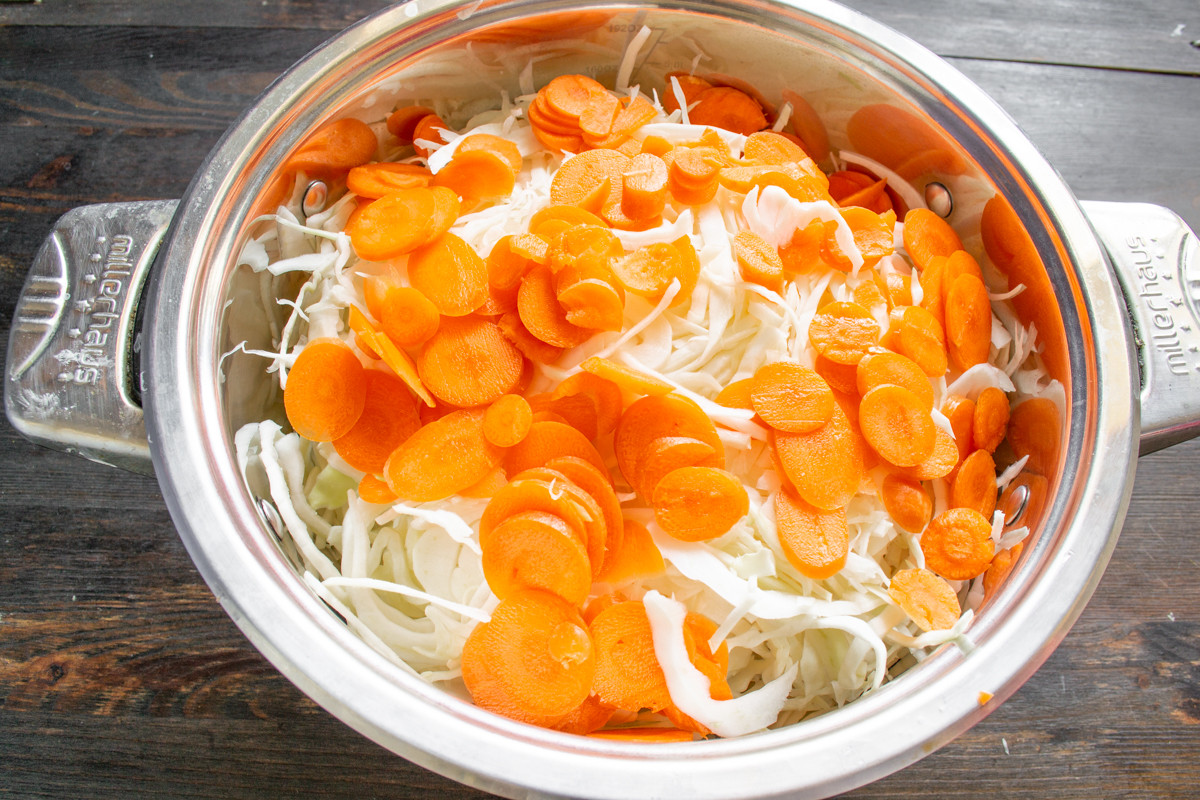
Slice the peeled carrots into thin rounds.
Wash the carrots thoroughly with a brush and scrape them. Slice the peeled carrots into thin rounds. Add the sliced carrots to the cabbage.
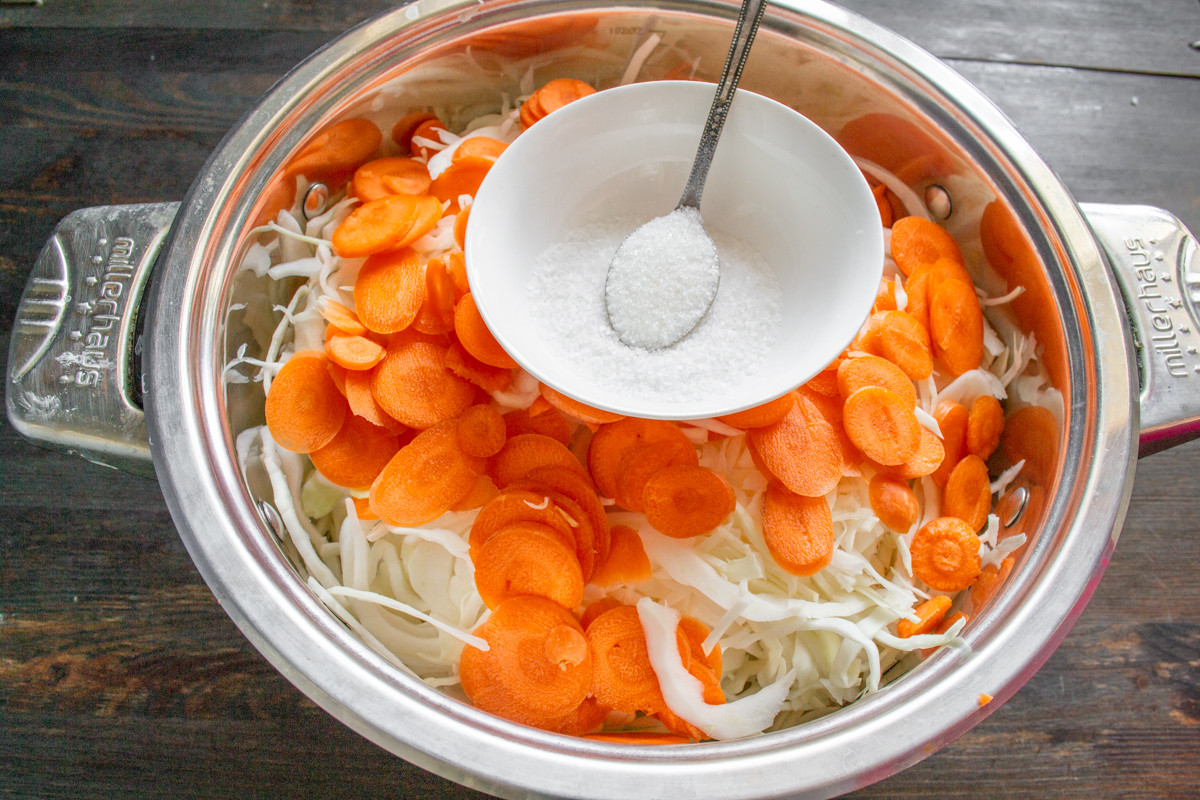
Mix the granulated sugar and salt.
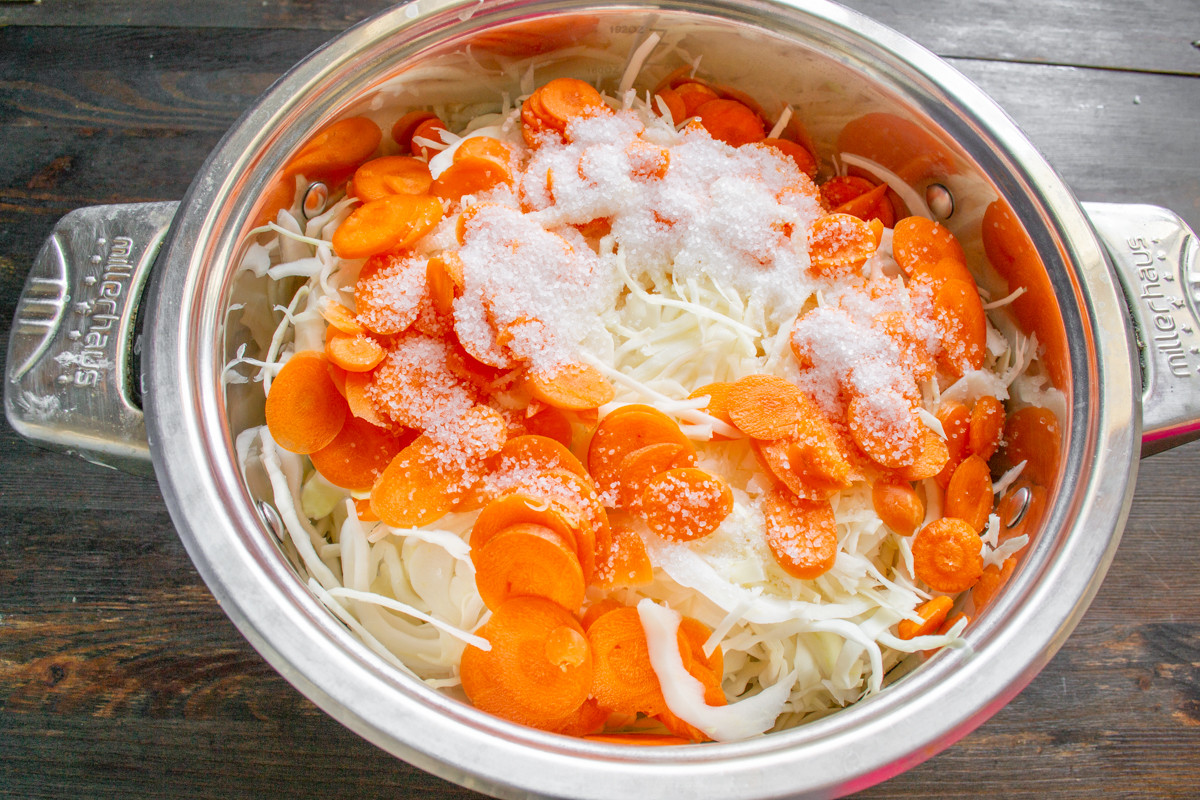
Sprinkle the salt and sugar over the vegetables.
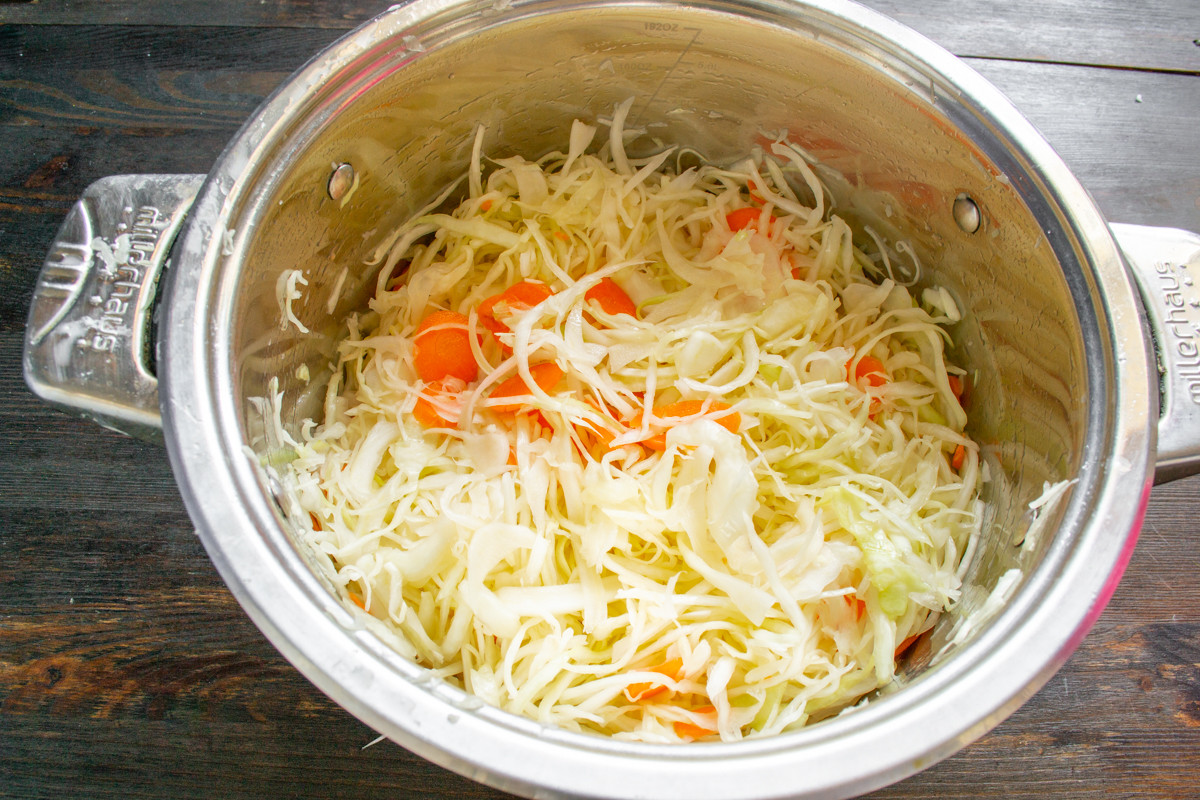
Rub the vegetables with salt and sugar by hand.
Mix the granulated sugar and salt. Typically, you should use 20-25 g of salt per 1 kg of the vegetable mixture, but you can use a little less. I believe that the less salt, the healthier the food, so I calculate about 17 g per 1 kg.
Sprinkle the salt and sugar over the vegetables. By the way, this recipe uses sea salt. You can use any salt for fermenting except iodized salt. Iodine inhibits bacterial growth, which is not the desired outcome for fermentation.
Rub the vegetables with salt and sugar by hand until the mixture reduces in volume by about half. There’s no need to wear gloves; this encourages the growth of beneficial yeast and bacteria.
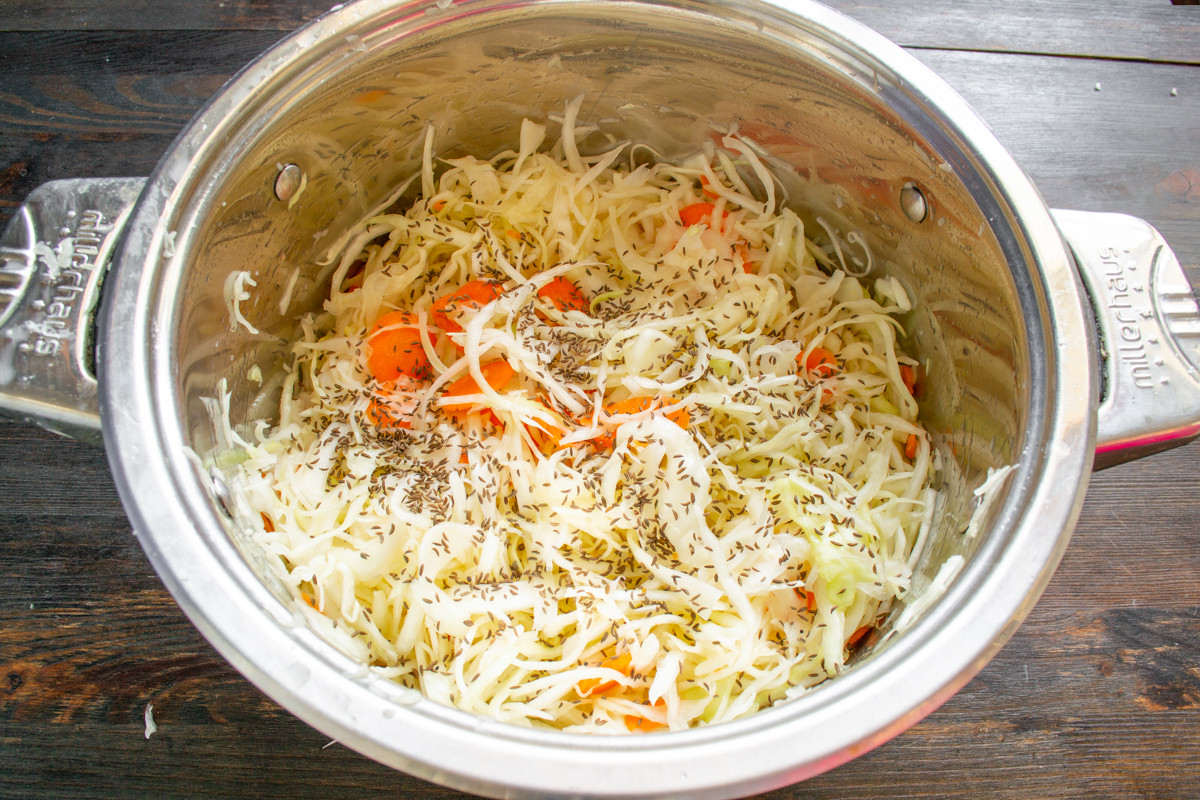
Add the caraway seeds to the pot.
Add the caraway seeds to the pot and mix everything well again.
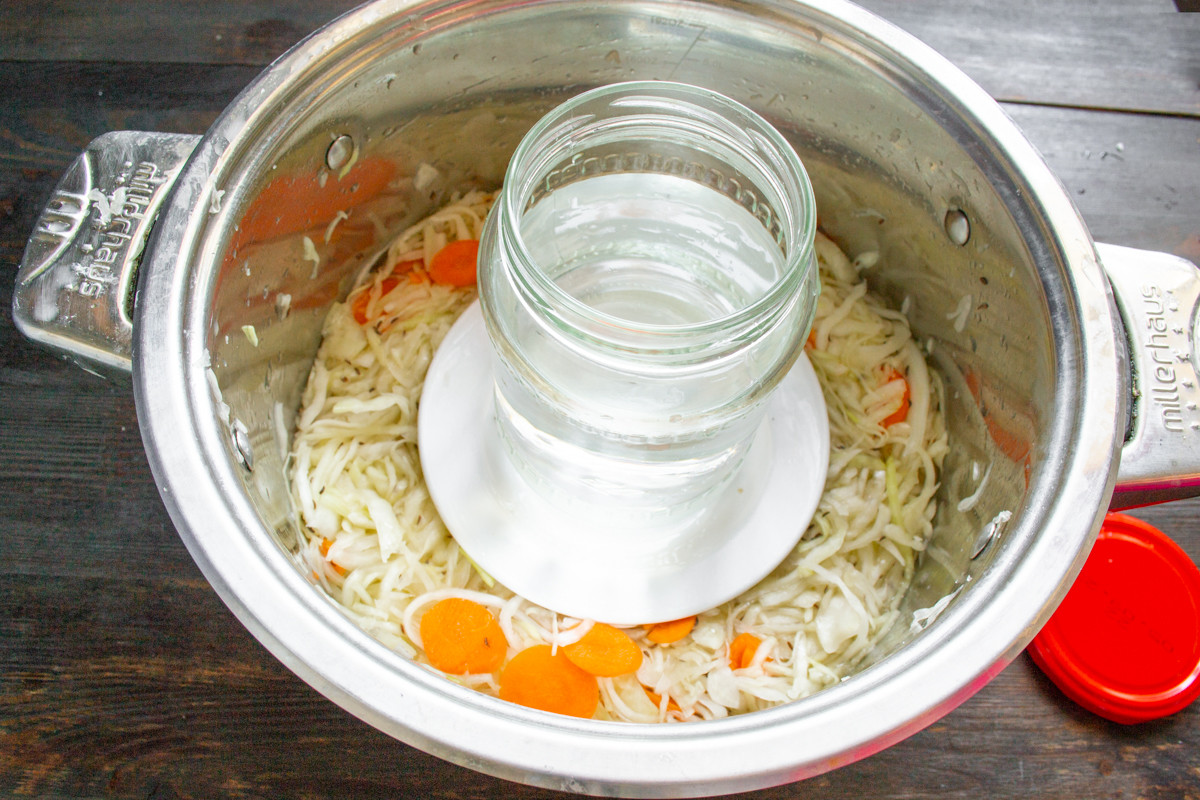
Pour in cold water just enough to cover the vegetables.
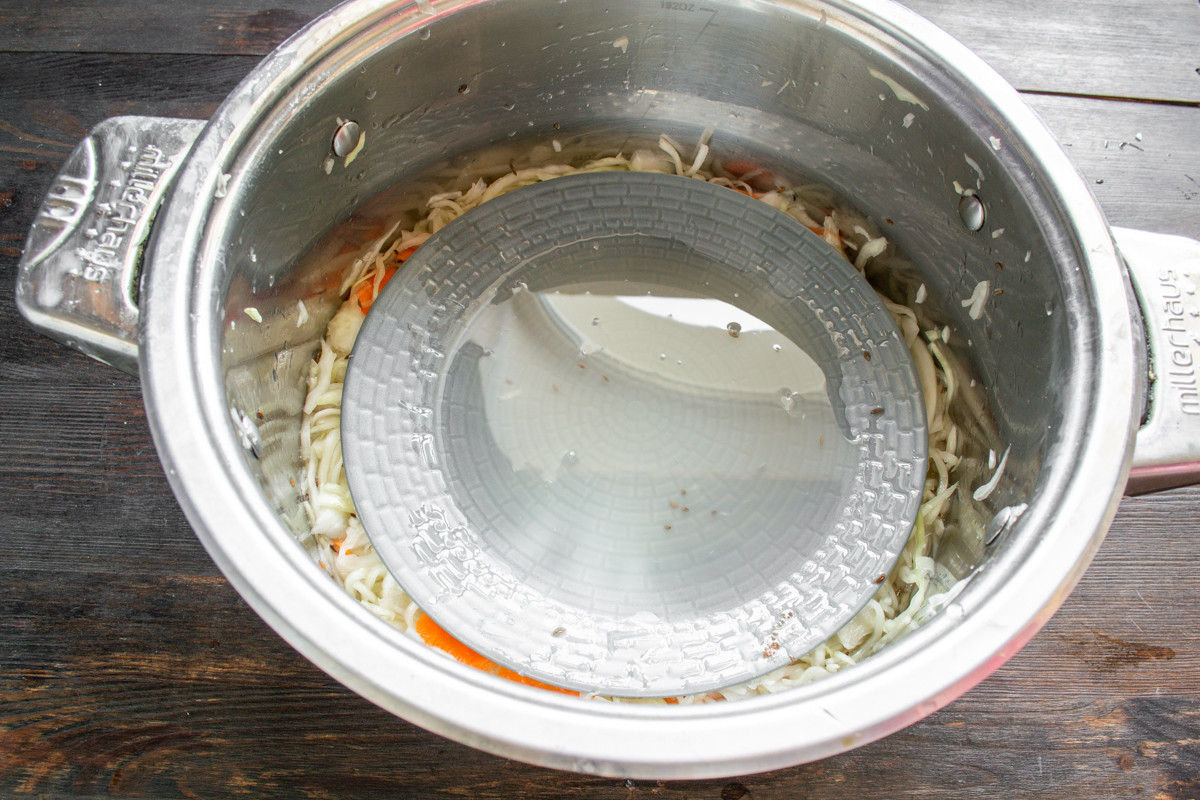
Cover the pot with a towel or a lid with a hole.
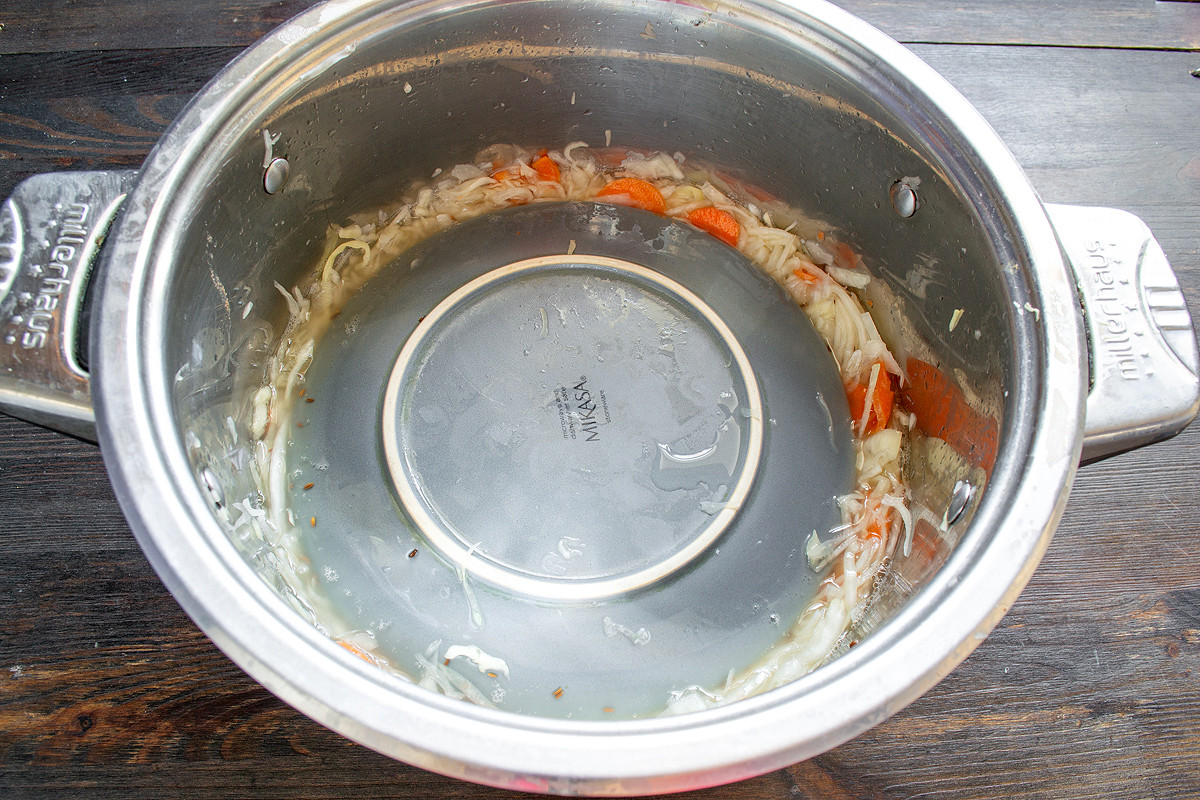
Stir the cabbage once a day.
Press the cabbage down. Pour in cold water just enough to cover the vegetables. Don’t add too much water; a small amount is sufficient to help the fermentation process. Use spring or filtered water. Press the cabbage down with a plate and place a weight on top.
Cover the pot with a towel or a lid with a hole. Leave it for 3-4 days at room temperature (20-25°C or 68-77°F).
On the 2nd day, bubbles will appear on the surface, and a characteristic smell will develop – fermentation has begun! Stir the cabbage once a day.
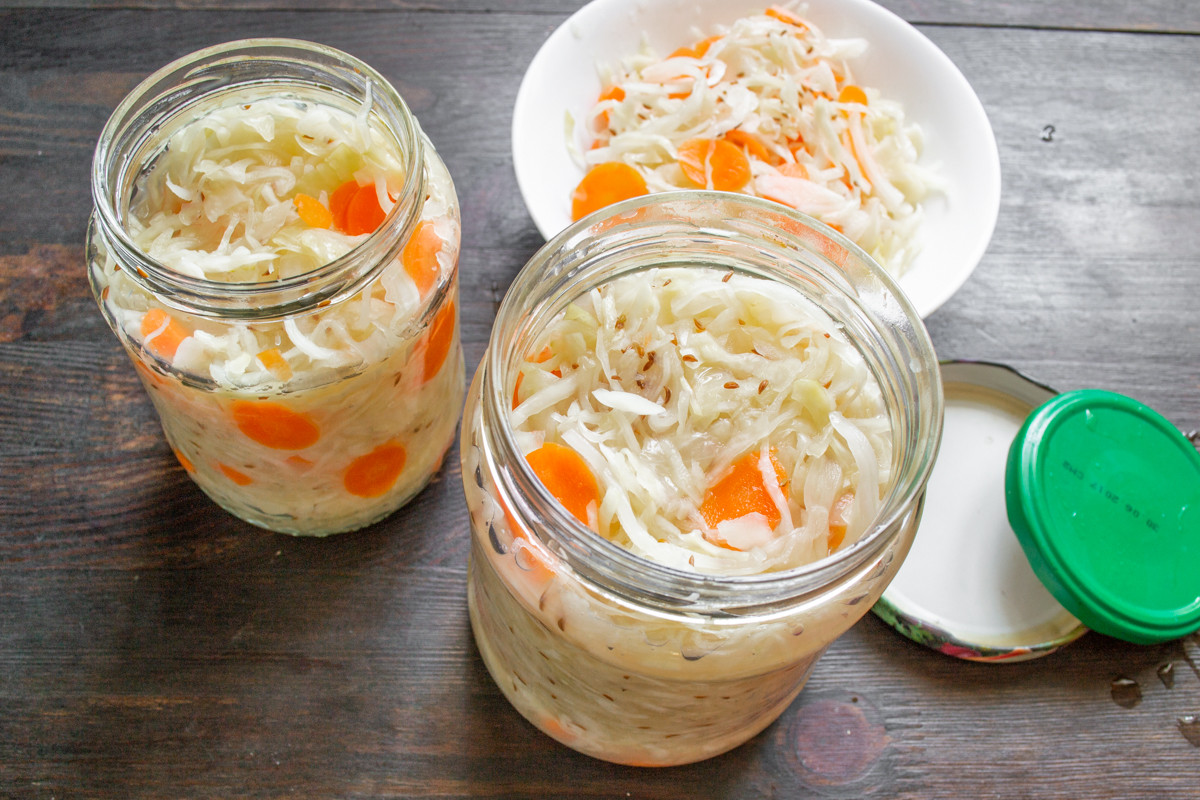
When you like the taste, transfer the cabbage to jars.
Next, you need to move the cabbage to a cold place – the bottom shelf of your refrigerator or a cool pantry. The temperature in every home is different, so you need to monitor the process, tasting and smelling it. When you are happy with the taste, transfer the cabbage to jars, pack it down tightly, and place it in the refrigerator.
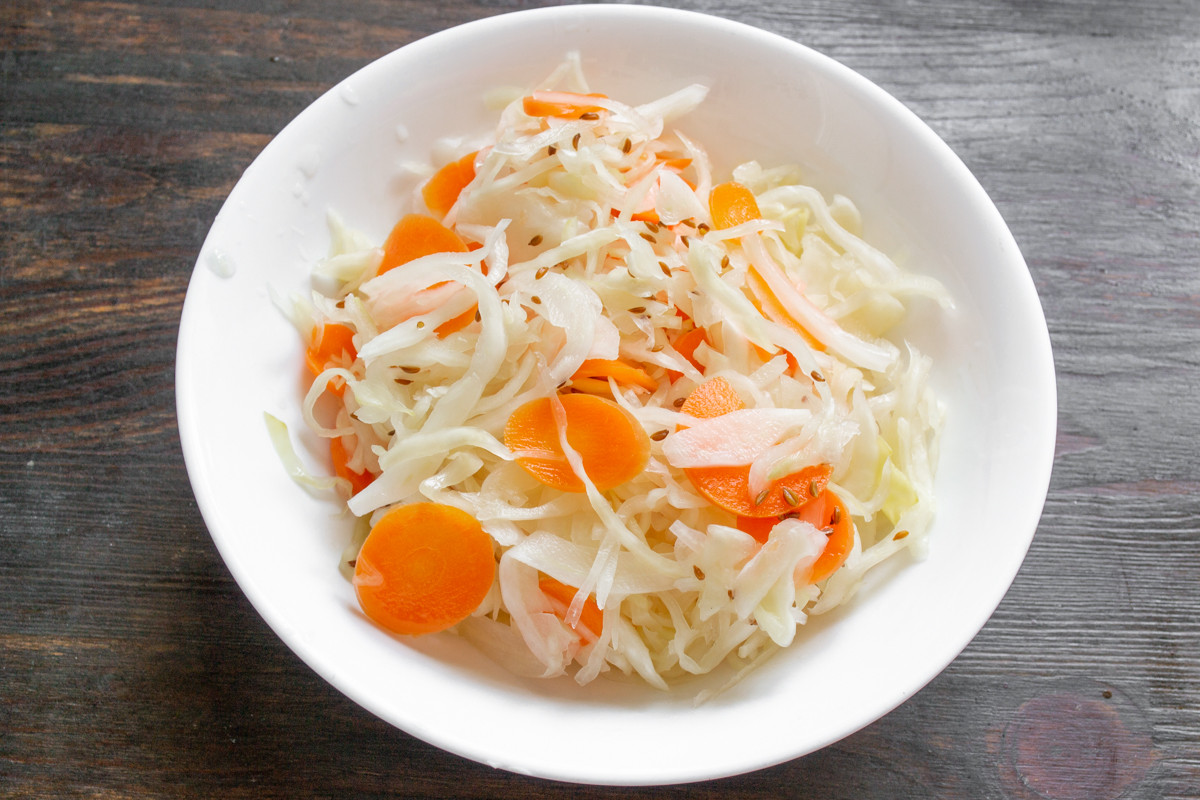
After a week, the sauerkraut is ready!
After a week, the sauerkraut is ready!
And there you have it – a jar full of vibrant, crunchy, and incredibly flavorful homemade sauerkraut! Now that you've mastered the art of kvashenie, you can enjoy this healthy probiotic-rich food all year round. Serve it as a side dish with hearty meats like sausages or roasted pork, add it to salads for a tangy kick, or use it as a key ingredient in traditional dishes like shchi (cabbage soup) or bigos (hunter's stew). Store your sauerkraut in the refrigerator for several months, and remember that its flavor will continue to develop and deepen over time. Don't be afraid to experiment with other spices like dill seeds or juniper berries in your next batch. Happy fermenting!
0 comments