
There's a special kind of magic in preserving the vibrant flavors of summer to enjoy during the cold winter months. This recipe for natural, sugar-free raspberry juice is a perfect example of that magic. Raspberries, with their delightful sweetness and tartness, are packed with vitamins and have been cherished in Eastern European homes for generations as a natural remedy and a delicious treat. By making this juice without any added sugar, you get to savor the pure, unadulterated taste of the berry. It's a healthy, wonderful way to bottle up sunshine for later.
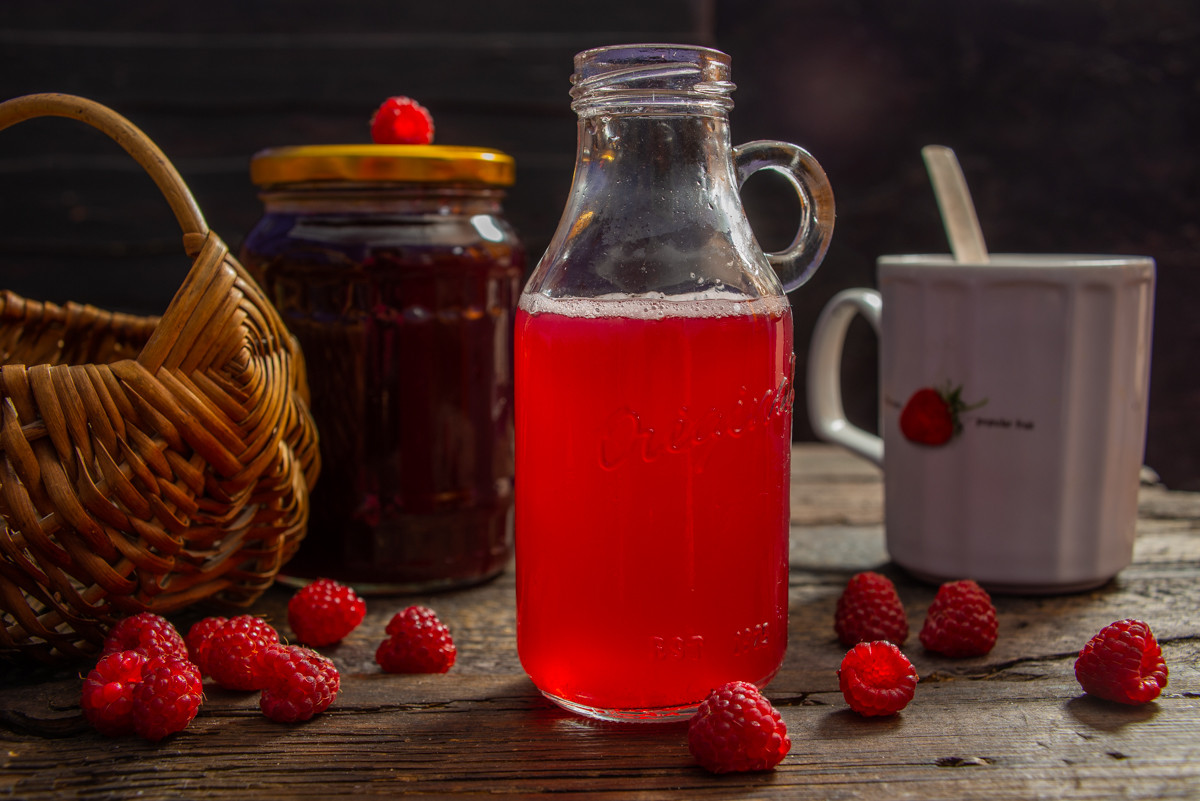
Natural sugar-free raspberry juice for winter
Ingredients
- 2 kg (about 4.4 lbs) raspberries
- 400 g (about 1 2/3 cups) water
How to Make Natural Sugar-Free Raspberry Juice for Winter
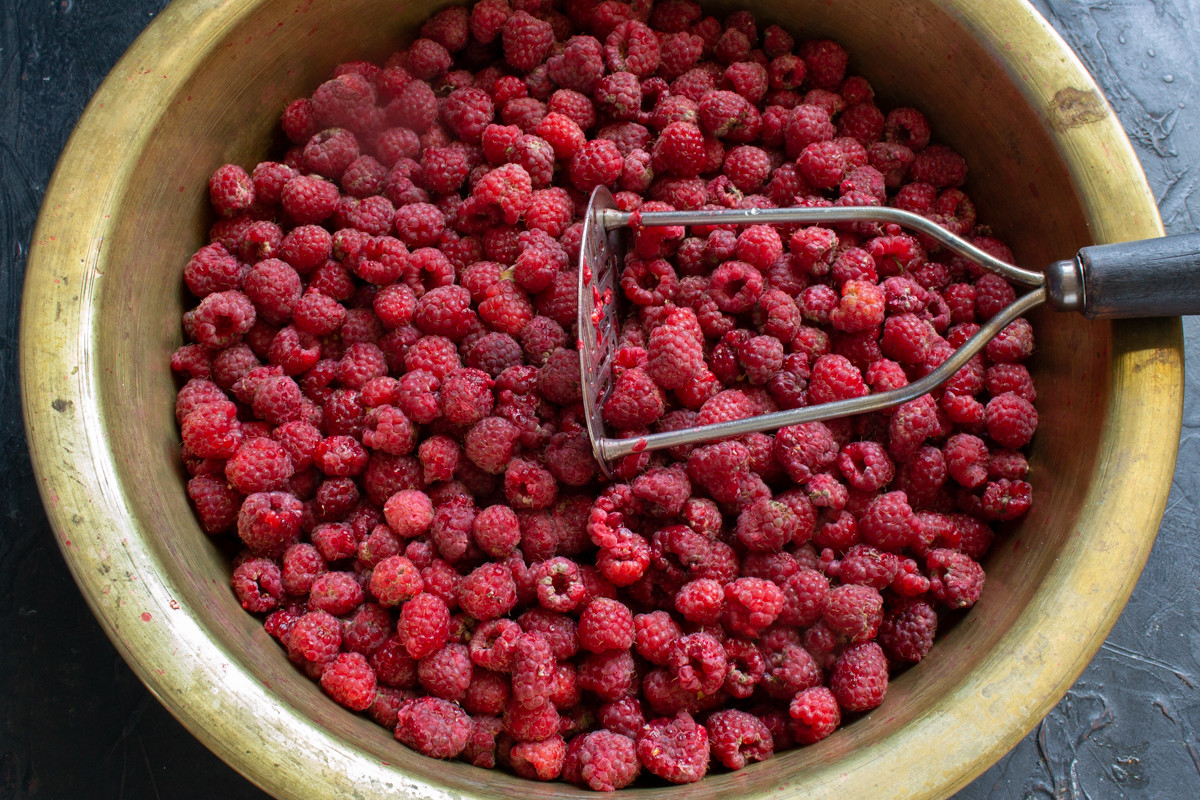
Use only freshly picked berries to make the juice.
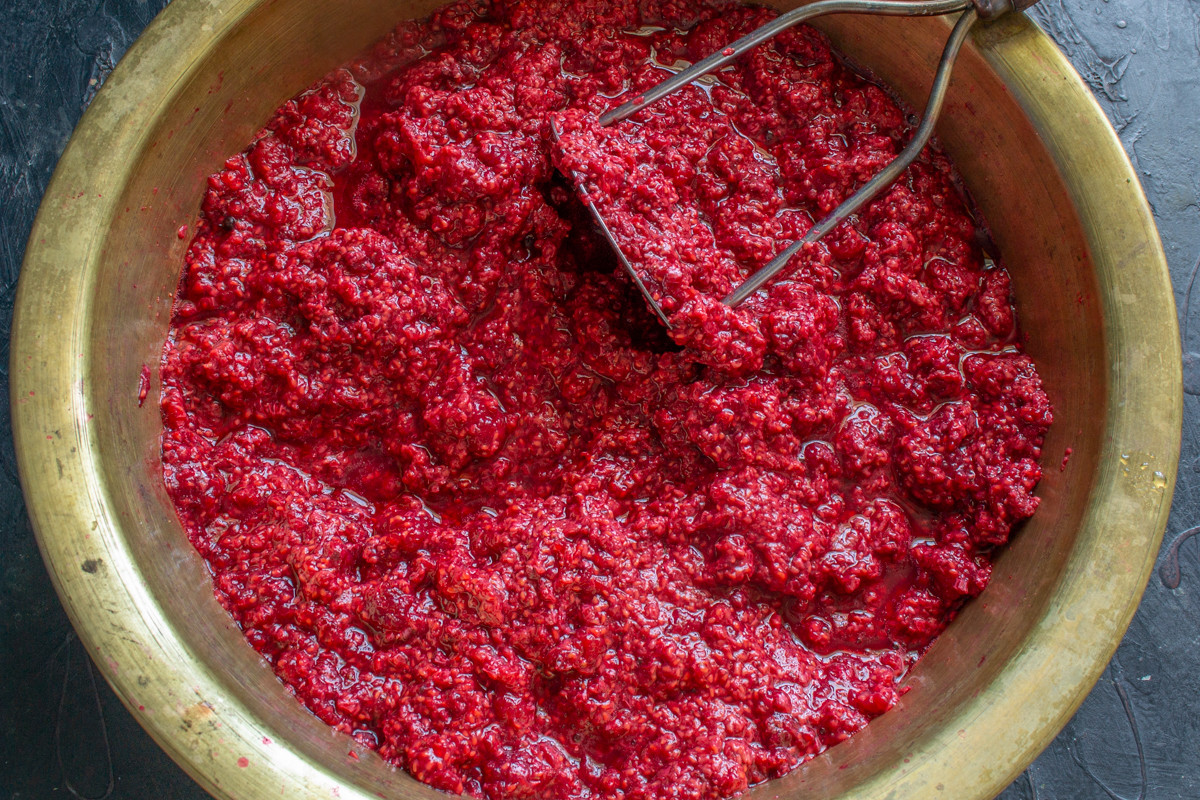
Add the prepared raspberries to the hot water.
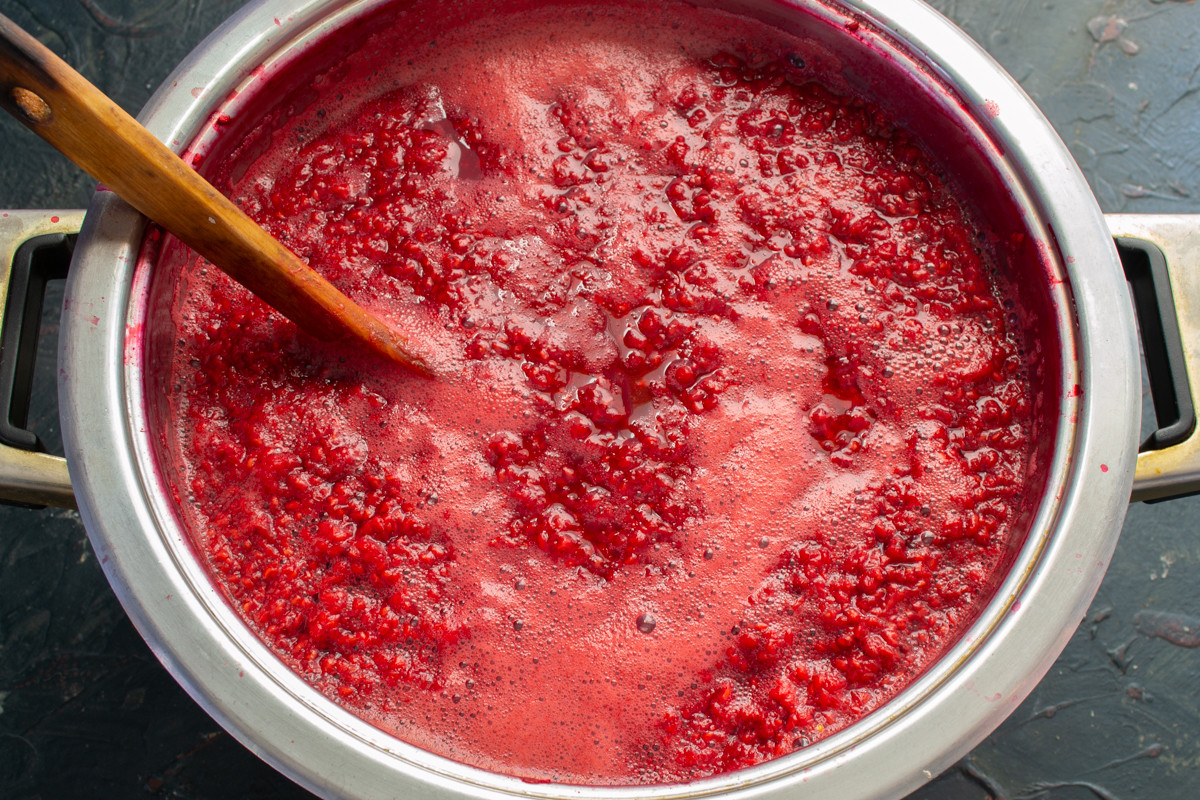
Heat the raspberries with water to 60-70 degrees Celsius.
For making the juice, use only freshly picked berries. If you find raspberry beetle larvae in your berries, soak the raspberries in a 2% table salt solution – 20 g of salt per 1 liter of water. When the larvae float to the surface, remove them, and rinse the berries under clean running water. When processing, remove the stems and sepals from the raspberries. By the way, if the berries are healthy and clean, you don’t need to wash them.
Pour water into a large pot or a copper basin. Heat the water to 60°C (140°F). Add the prepared raspberries to the hot water, stir, and mash with a potato masher.
Heat the raspberries with water to 60-70°C (140-158°F). Cover the pot with a lid and leave it for 30 minutes.
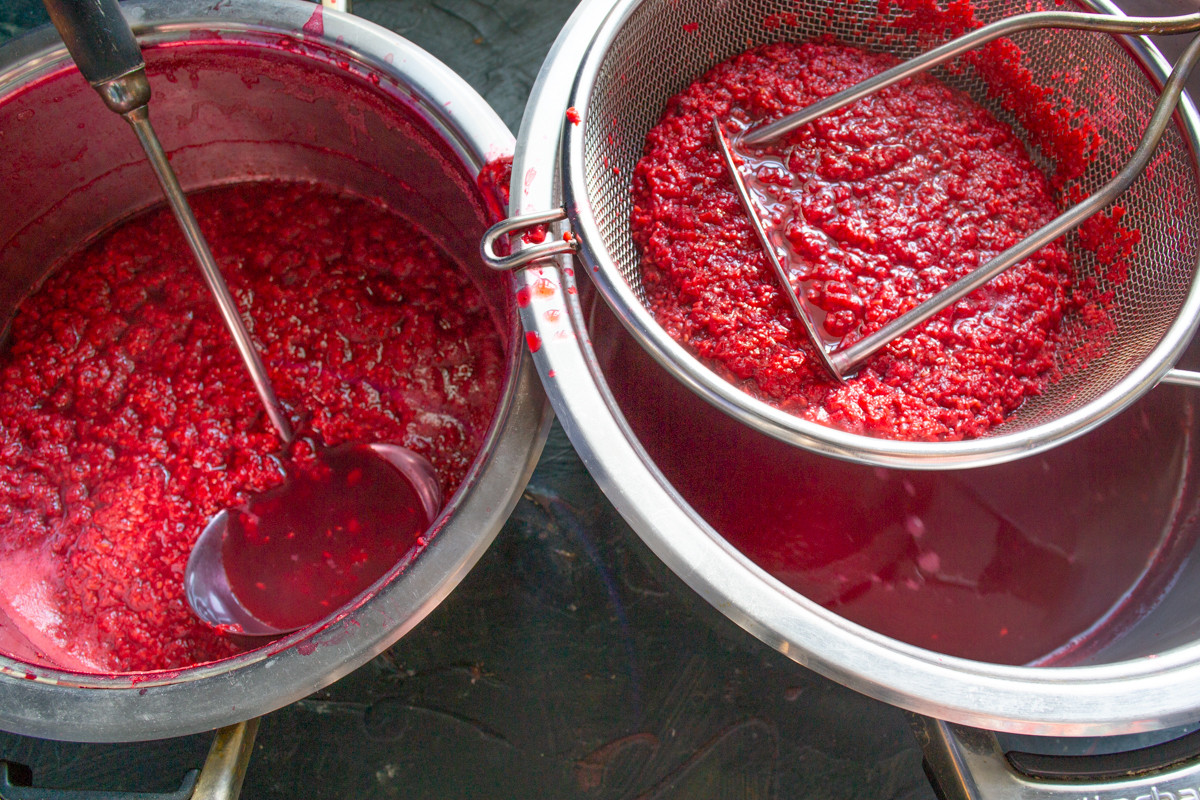
Extract the juice: pour the raspberry puree with juice through a fine sieve or a colander lined with cheesecloth.
Extract the juice: pour the raspberry puree with the juice through a fine sieve or a colander lined with cheesecloth. Squeeze out the juice. The remaining seeds and pulp on the sieve can be covered with hot water, brought to a boil, and strained through a filter. This will make a raspberry kompot (a traditional Eastern European fruit drink). Add sugar to taste and drink it hot or cold.
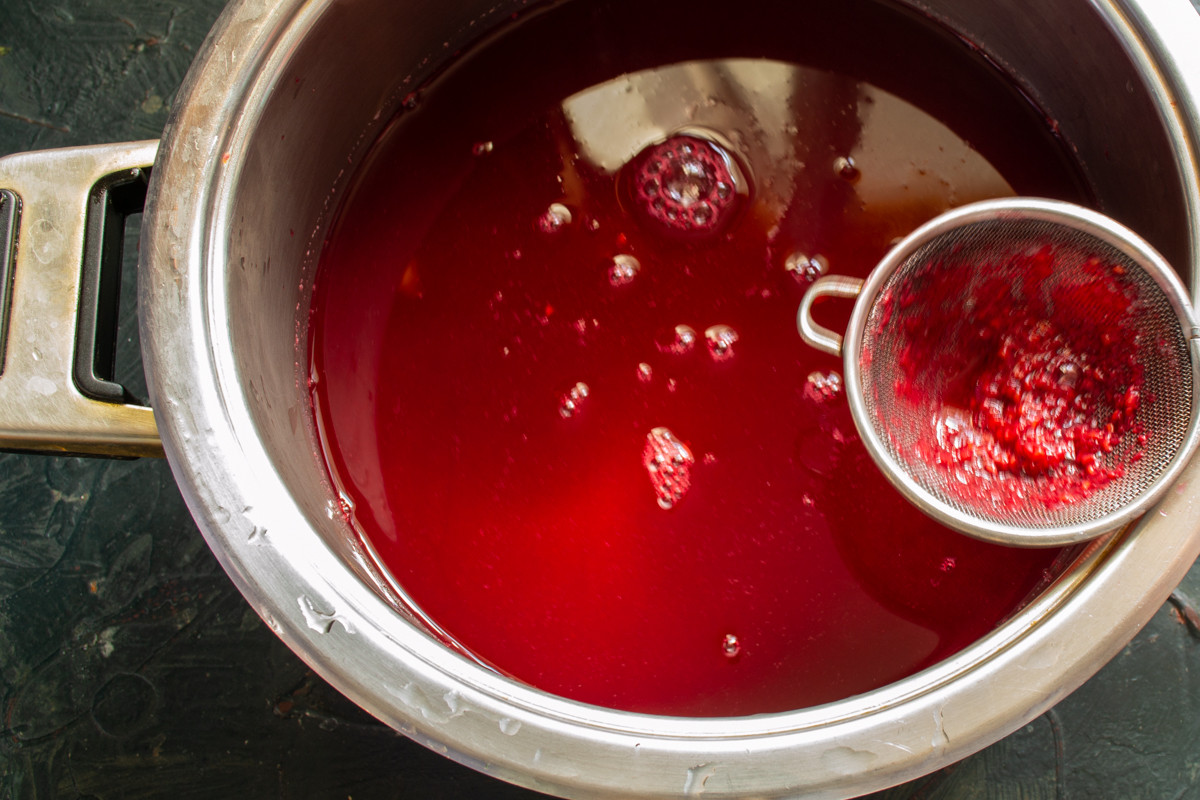
Filter the collected juice again to ensure it is clear and free of seeds.
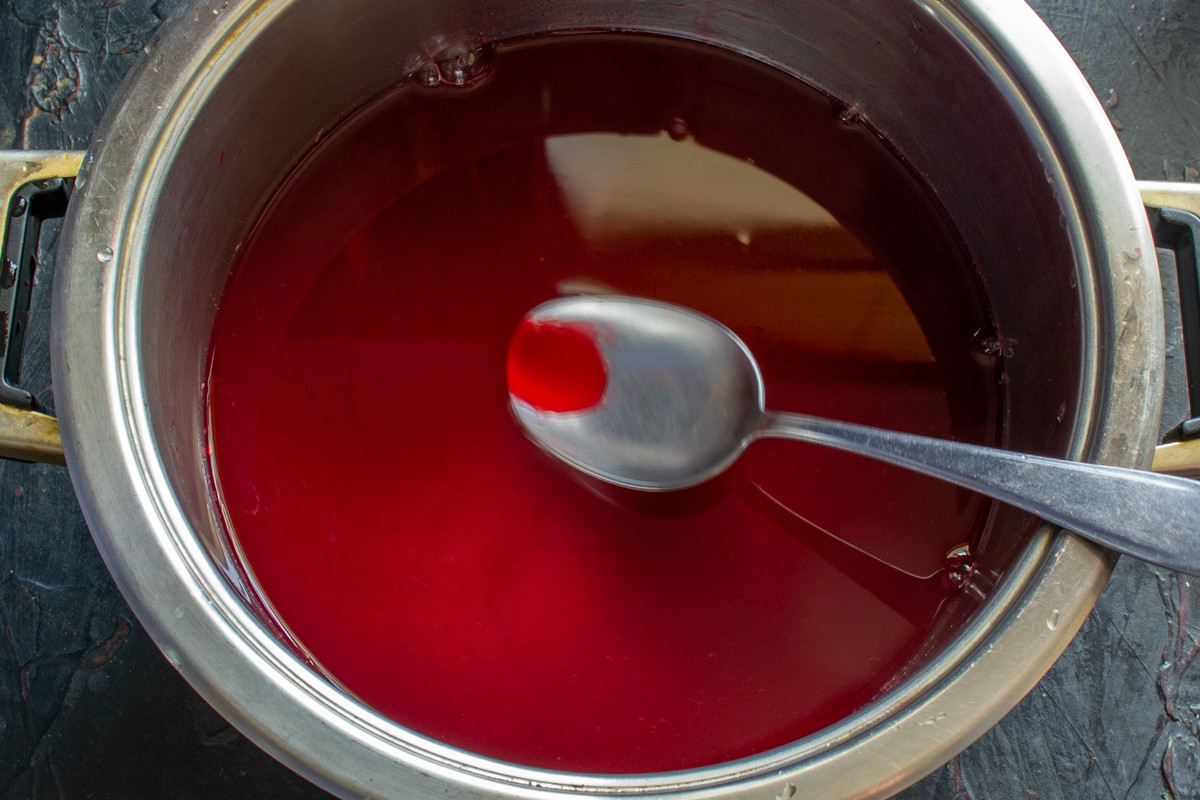
Heat the filtered juice to a boil.
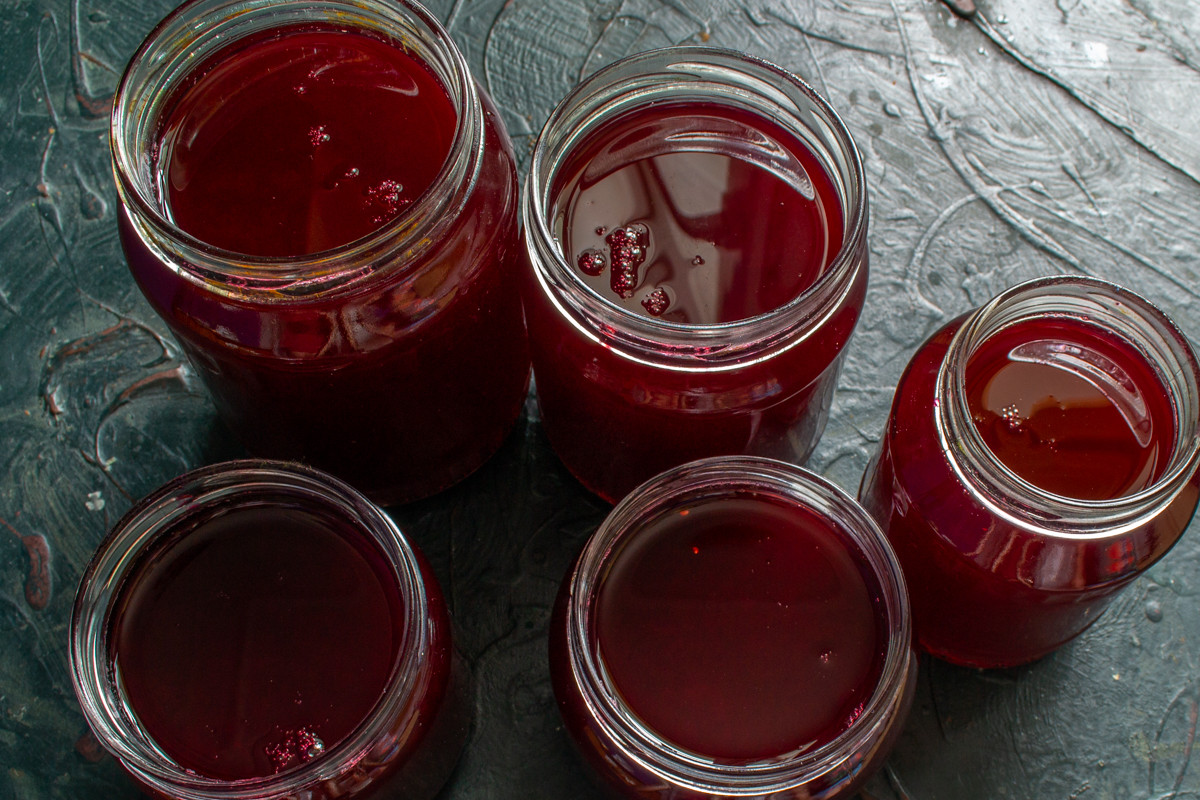
Pasteurize at 85 degrees: half-liter jars for 15 minutes, liter jars for 20 minutes, three-liter jars for 30 minutes.
Filter the collected juice one more time to make it clear and free of seeds. You can strain it through a coffee filter or a very fine sieve.
Heat the filtered juice to a boil.
Wash the jars or bottles for preserving in warm water with baking soda or dish soap, then rinse with clean hot water. Place the jars upside down on an oven rack. Heat the oven to 100°C (212°F). Dry the jars for 10 minutes. Pour the boiling juice into the hot jars. Immediately seal them with pre-boiled lids. Place a towel in a large pot for sterilization. Place the jars with juice in the pot, leaving a small distance between them. Pour in water heated to 60°C (140°F). The water should completely cover the jars – overflowing the lids! Heat to 85°C (185°F). Pasteurize at 85°C (185°F): half-liter jars (approx. 1 pint) for 15 minutes, liter jars (approx. 1 quart) for 20 minutes, and three-liter jars (approx. 3 quarts) for 30 minutes.
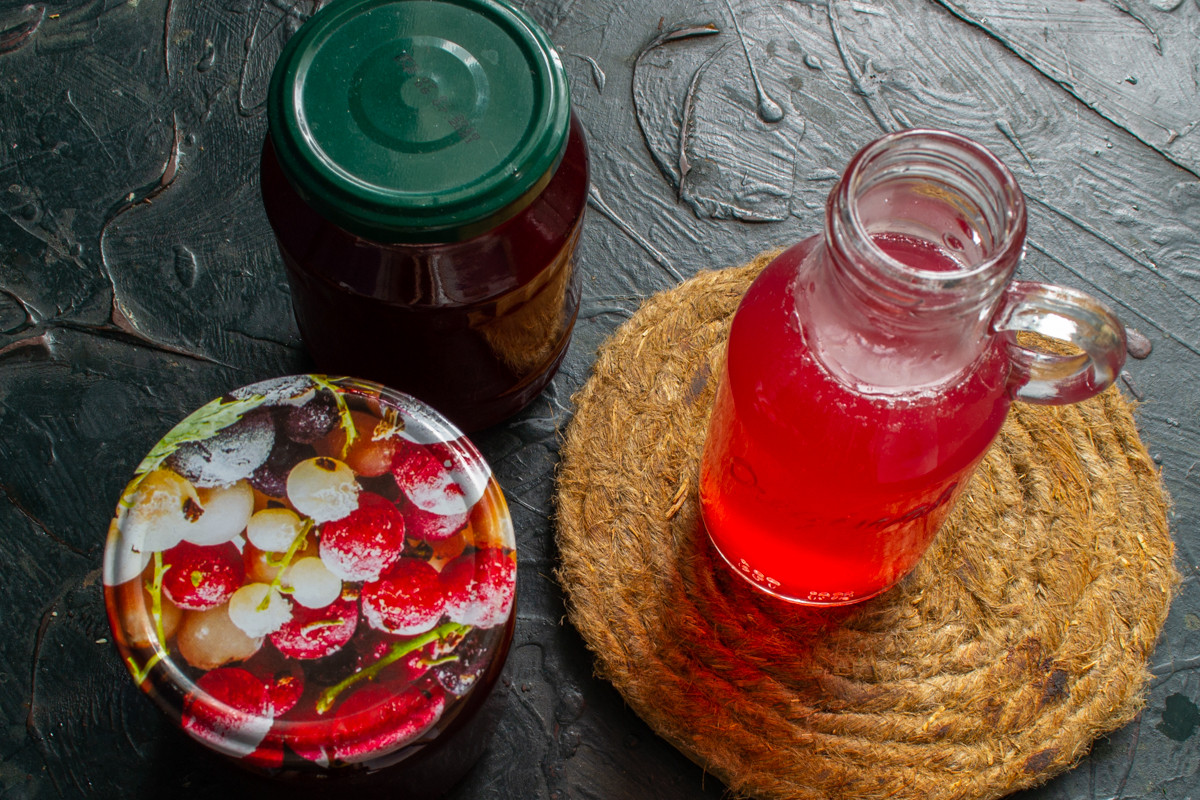
Store the cooled preserves in a dark, dry place at a storage temperature of +4 to +12 degrees.
Remove the jars with a jar lifter and turn them upside down. Wrap them in a warm blanket and leave them to cool completely. Store the cooled preserves in a dark, dry place, at a storage temperature between +4°C and +12°C (39°F to 54°F).
And there you have it – beautiful, jewel-toned raspberry juice ready to brighten up your winter days! This homemade preserve is incredibly versatile. Enjoy a glass on its own for a vitamin boost, add a splash to your morning tea, or use it as a flavorful base for sauces and desserts. Stored properly in a cool, dark place, these jars of summer will last you through the season. We hope you enjoy the simple, rewarding process of creating this delicious, healthy treat for you and your loved ones. Happy canning!
0 comments