
Welcome to the wonderful world of home canning! This recipe for pickled cucumbers and zucchini with citric acid is a staple in many Eastern European households, offering a brilliant way to preserve the fresh tastes of summer for the cold winter months. Unlike many Western recipes that rely on vinegar, this method uses citric acid, which results in a milder, less pungent tang that allows the natural flavors of the vegetables to shine through. The combination of crunchy cucumbers, tender zucchini, spicy chili, and aromatic garlic creates a perfectly balanced, irresistible snack or side dish. Get ready to fill your pantry with these beautiful, delicious jars of sunshine!
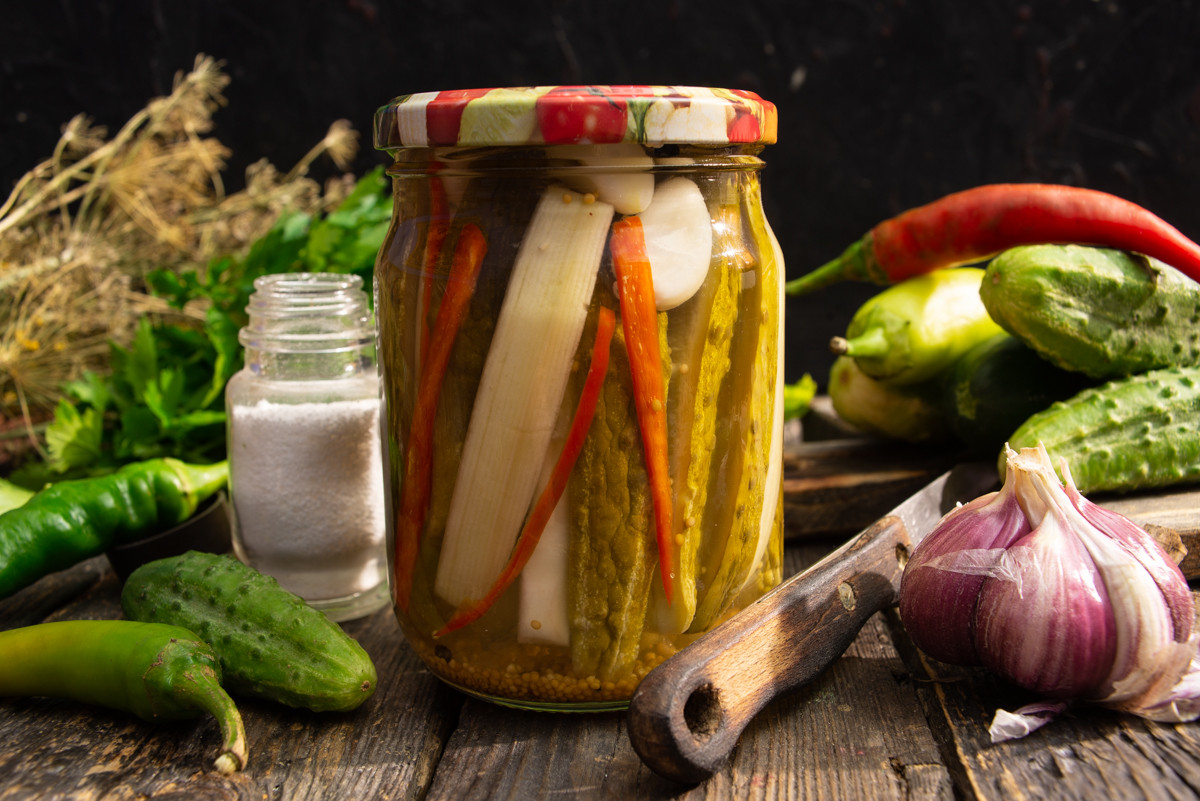
Pickled cucumbers and zucchini with citric acid
Ingredients for Pickled Cucumbers and Zucchini with Citric Acid
- Prickly cucumbers (pickling variety)
- Zucchini
- 1 red chili pepper
- 3 cloves of garlic
- 10 g non-iodized salt
- 20 g granulated sugar
- 1/3 teaspoon citric acid
- 2 teaspoons mustard seeds
- Zontik ukropa (dill umbel, the flowering head of the dill plant)
- Filtered water
How to Make Pickled Cucumbers and Zucchini with Citric Acid
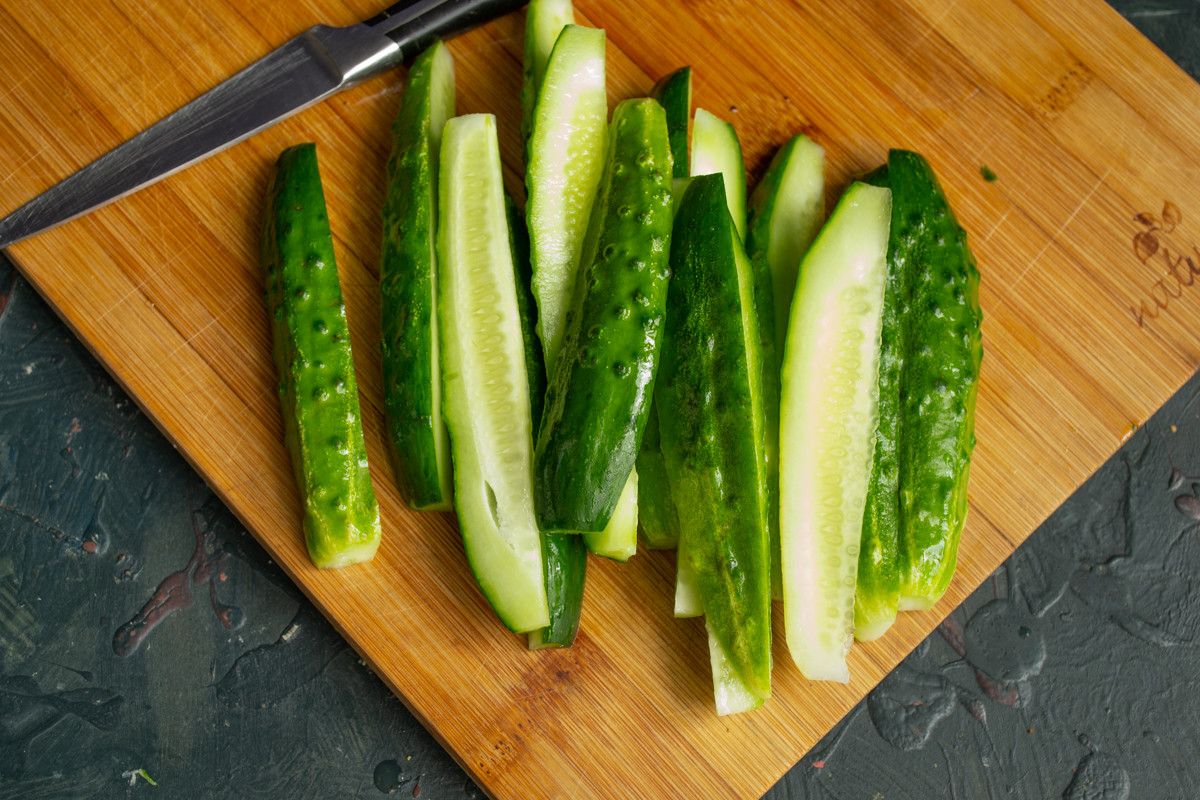
Slice the cucumbers into thin strips lengthwise.
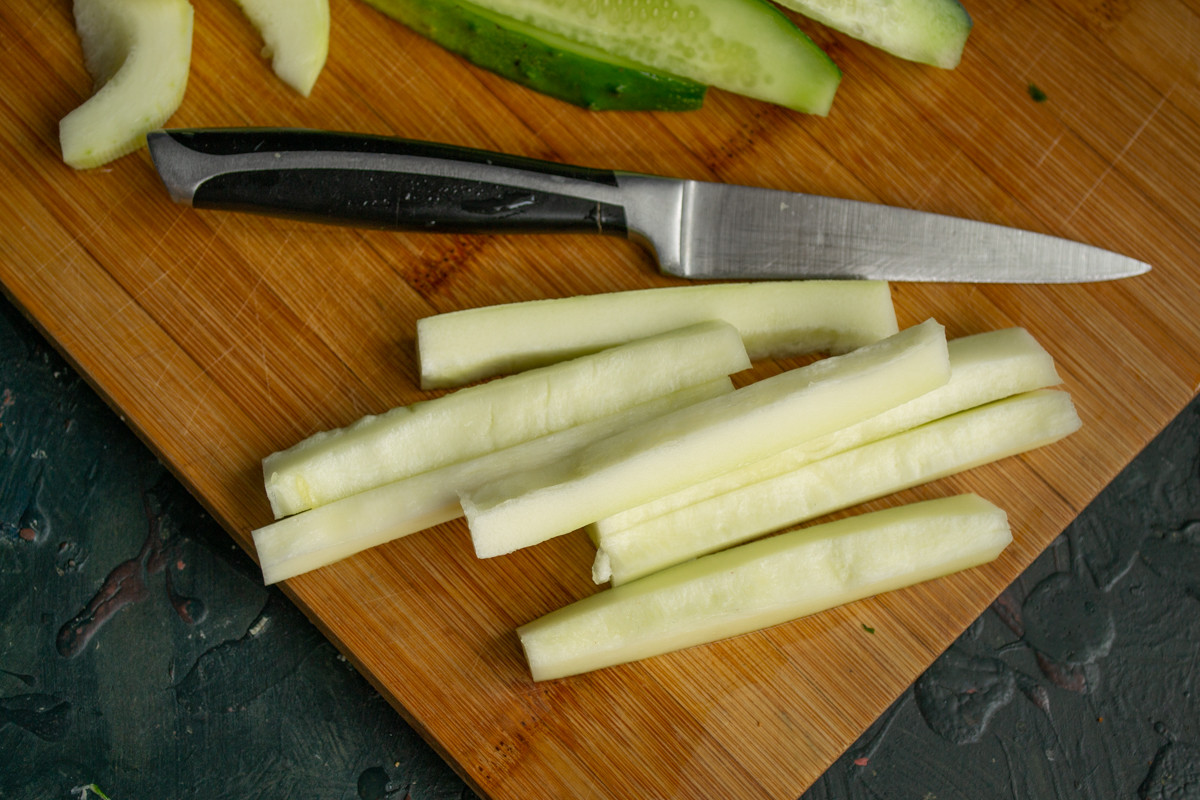
Slice the firm part of the zucchini into thin strips, just like the cucumbers.
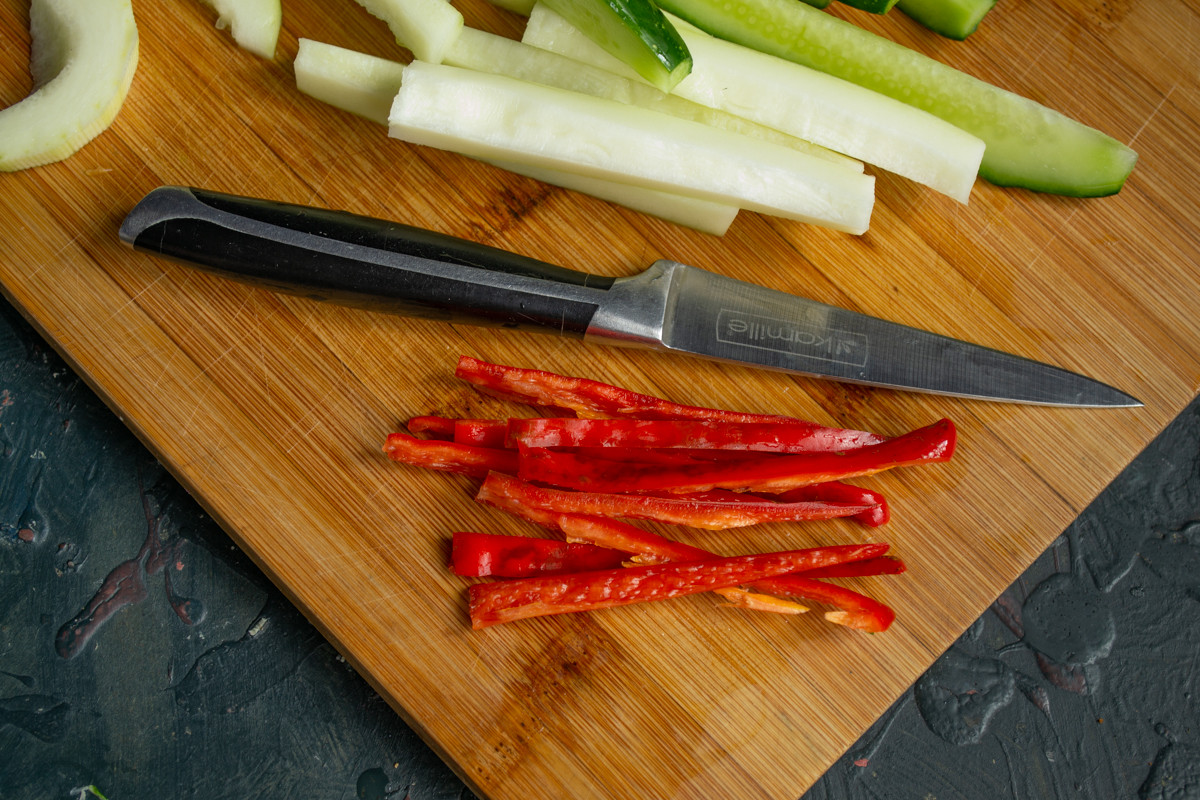
Slice the chili lengthwise into long strips.
Soak small, prickly cucumbers in cold water, wash them, and trim the ends. Slice the cucumbers into thin strips lengthwise.
Peel the zucchini and use a spoon to remove the soft pulp and seeds. Slice the firm part of the zucchini into thin strips, similar in size to the cucumber strips.
Roll a red chili pepper between your palms to loosen the seeds, then cut off the stem and shake the seeds out. Slice the chili lengthwise into long strips.
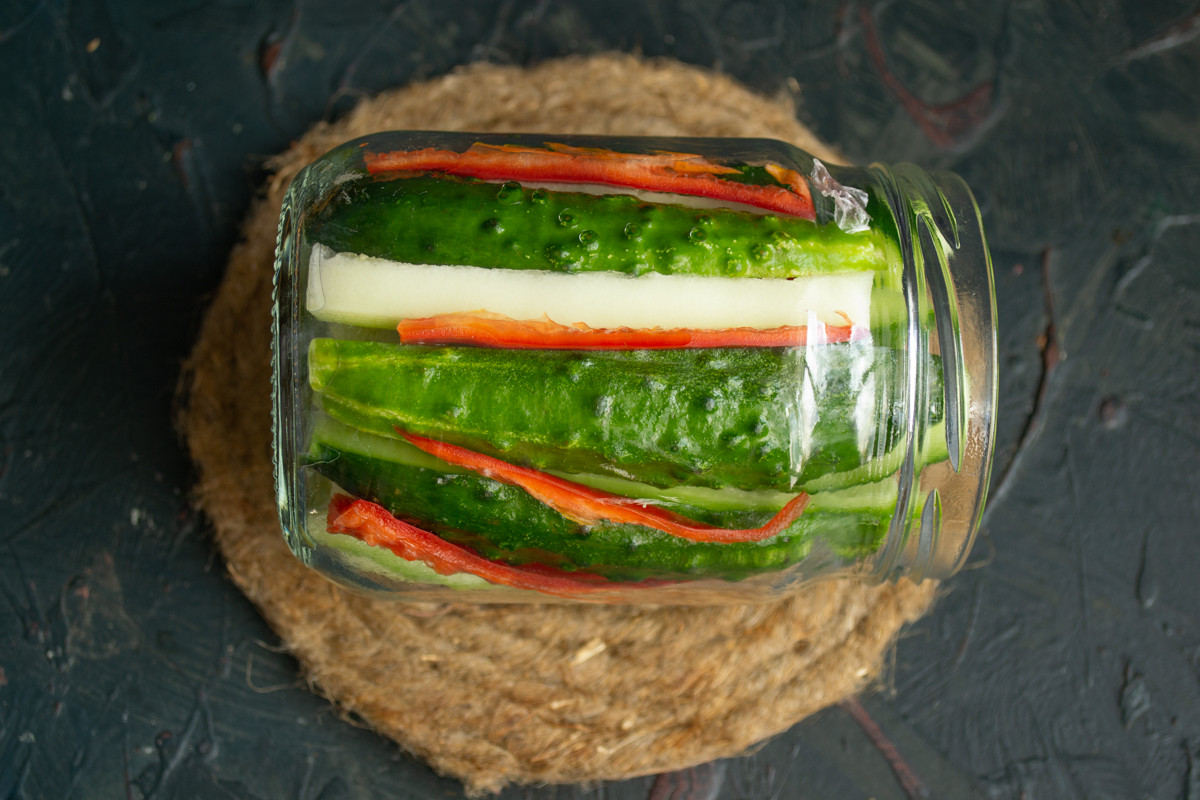
Fill the jar with slices of cucumber, zucchini, and chili.
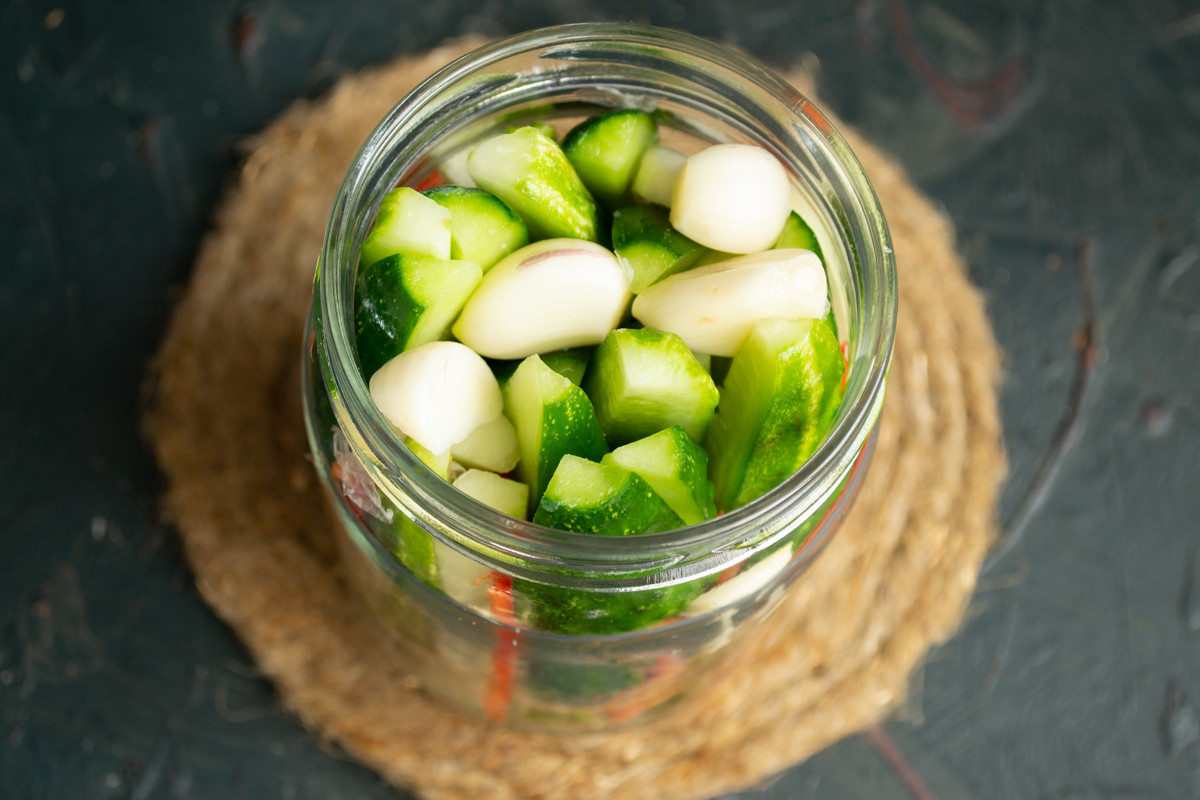
Add the peeled garlic cloves.
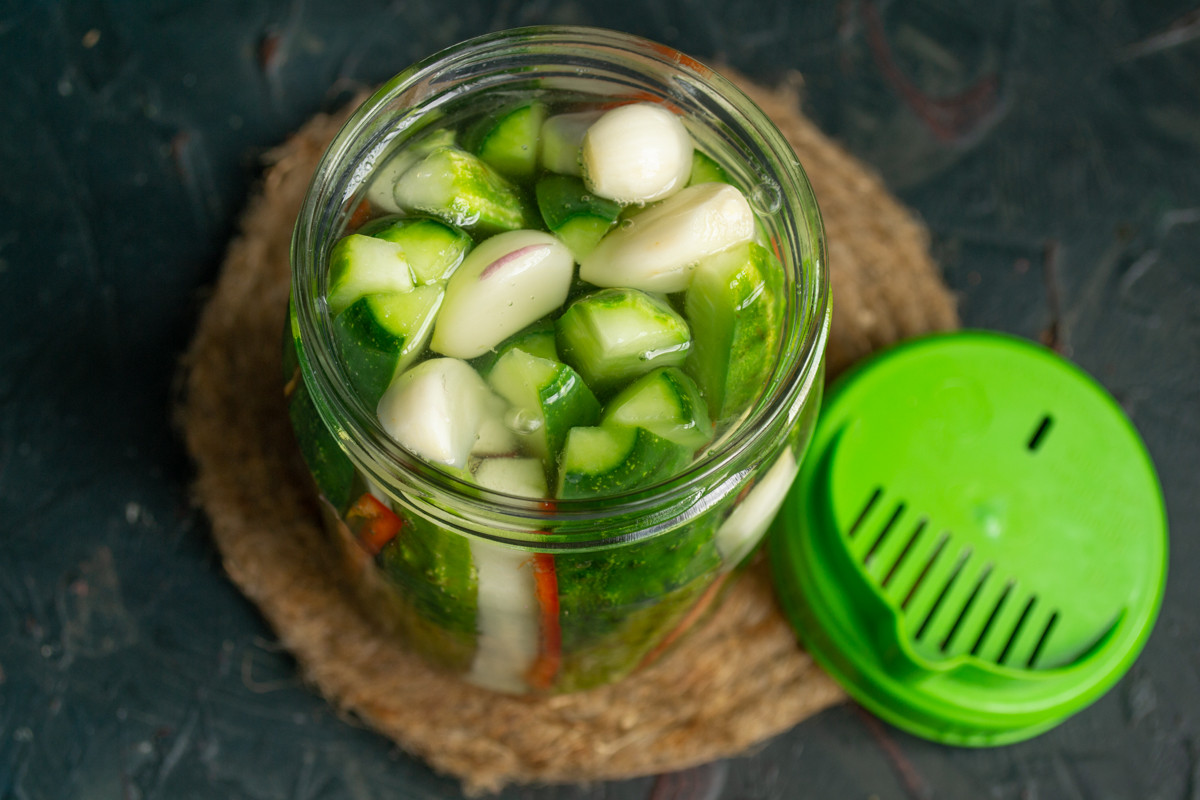
Pour boiling filtered or spring water into the jar.
Wash a jar thoroughly and rinse it with boiling water. Sterilization is not necessary since the vegetables are raw and not sterile. Fill the jar with the cucumber, zucchini, and chili strips, alternating them to create a striped pattern.
Add the peeled garlic cloves.
Pour boiling filtered or spring water into the jar. Place a straining lid on top and drain the water into a saucepan. Pour fresh boiling water over the vegetables again, cover with a clean lid, and wrap with a towel to keep them warm.
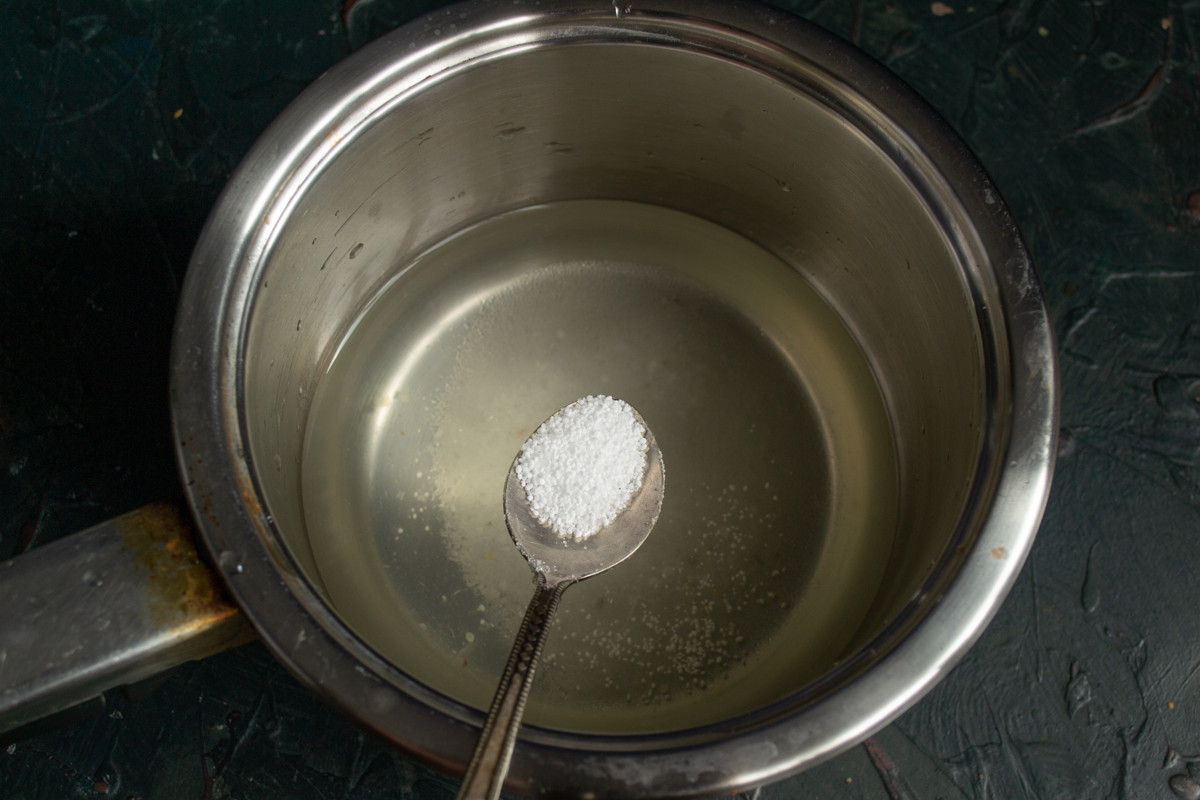
Add granulated sugar, non-iodized salt, and citric acid.
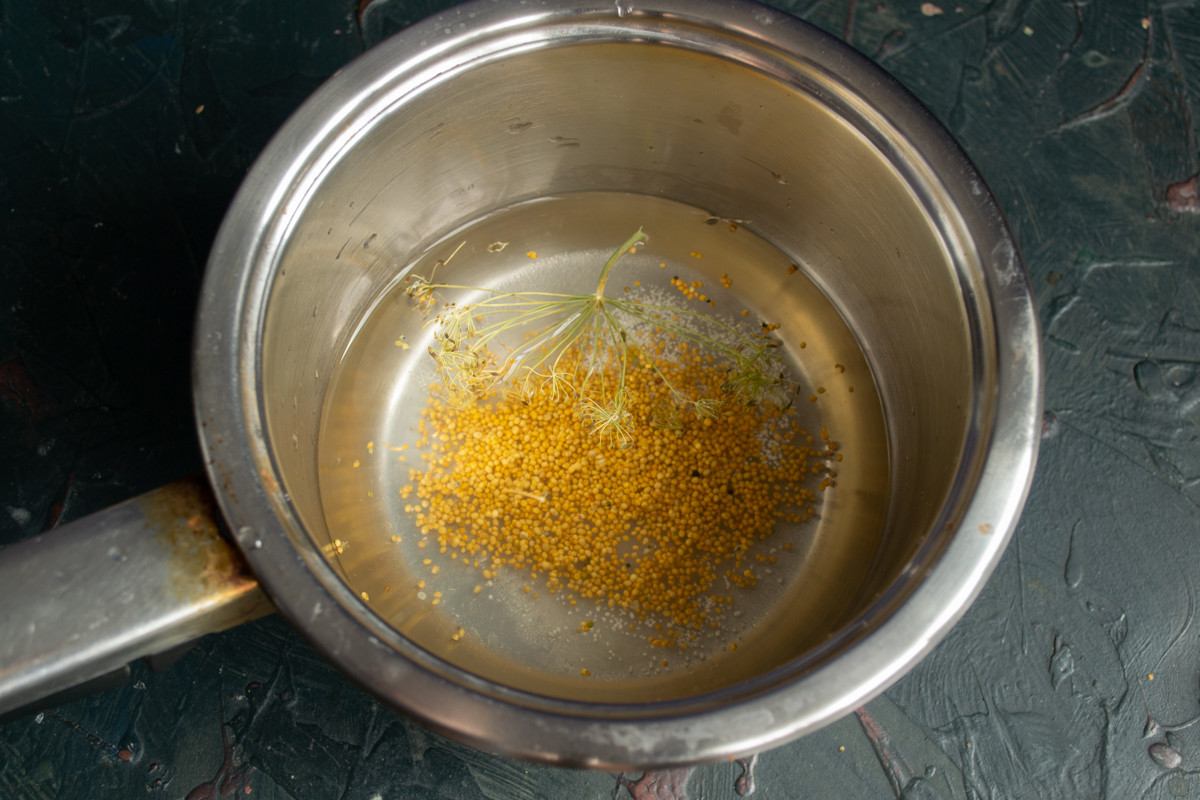
Bring the pickling brine to a boil and simmer for 3 minutes.
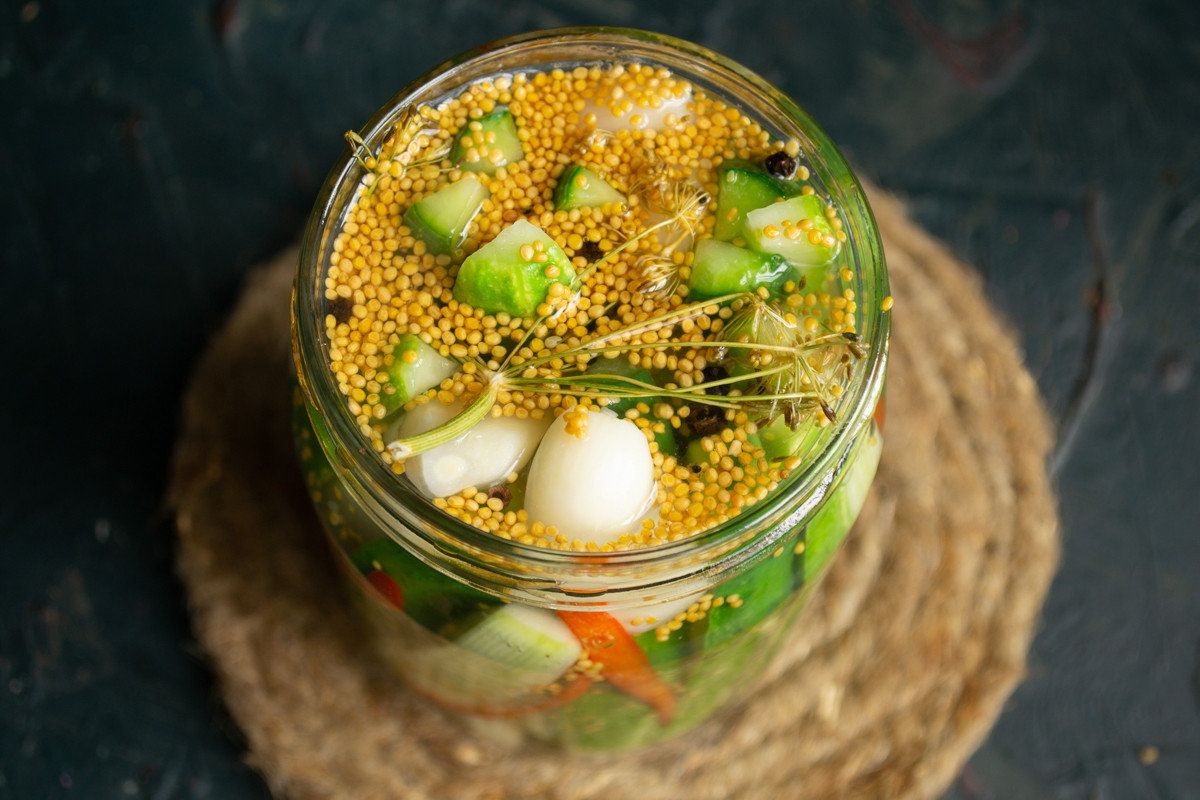
Drain the water from the vegetables and pour in the boiling brine.
To the drained water in the saucepan, add granulated sugar, non-iodized salt, and citric acid. Typically, you use 1 teaspoon of citric acid per 1 liter of water. If you prefer a tangier marinade, use 1.5 teaspoons. A tightly packed one-liter jar will need about 400-500 ml of water, so you’ll need half the amount of citric acid. For a half-liter jar, add 1/4-1/3 of a teaspoon. Stir and taste the brine—it should be to your liking. Feel free to adjust the sugar, salt, or acid levels!
Add mustard seeds, a zontik ukropa (dill umbel, the flowering head of the plant), and a few black peppercorns if desired. Bring the brine to a boil and let it simmer for 3 minutes.
Drain the hot water from the vegetables and immediately pour in the boiling brine.
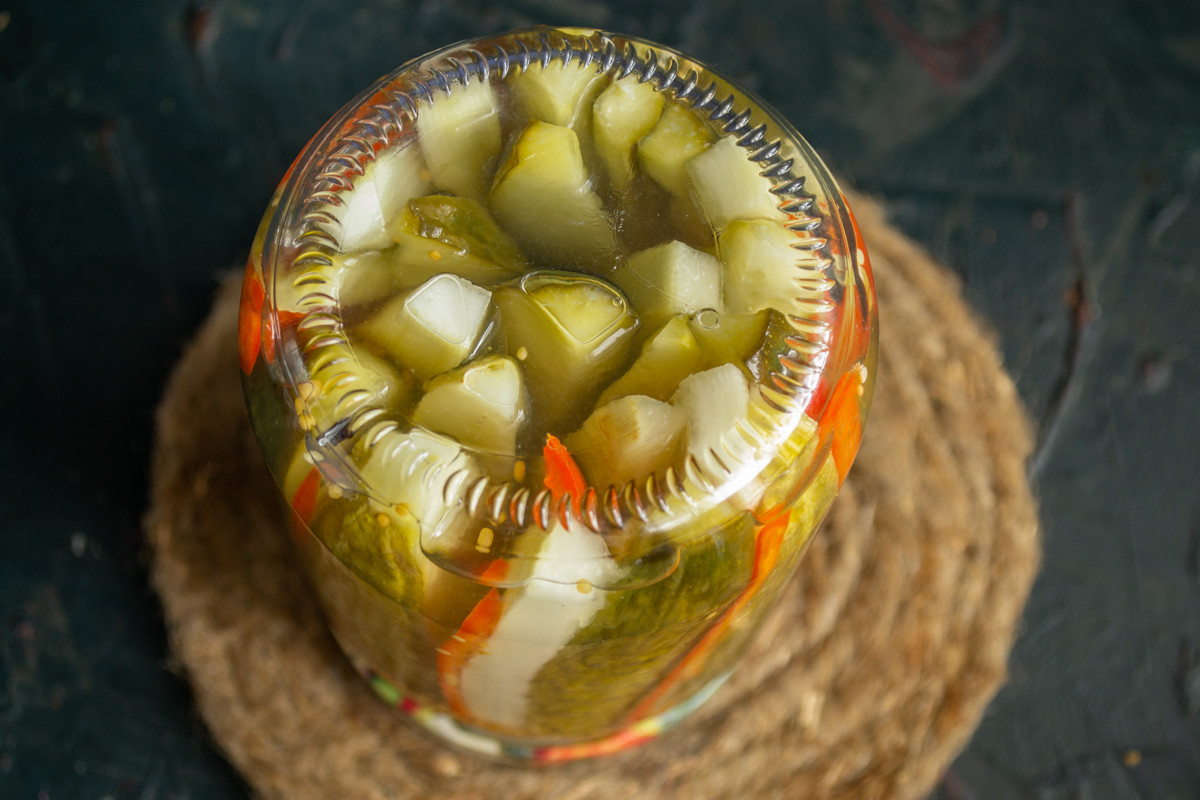
Seal tightly with a sterilized lid and turn the jar upside down.
Seal the jar tightly with a boiled lid and turn it upside down. Wrap the jar snugly in a ‘shuba’ (a thick blanket or coat) and leave it to cool completely. This slow cooling process allows for pasteurization. The cucumber skins will gradually change from bright green to an olive green color. This method of pasteurization, combined with the preservatives (citric acid, salt, and sugar), is sufficient for storing the pickles in a cool, dry place. The vegetables will be sweet and sour, crunchy, and ready to eat in about 40 days.
And there you have it—a jar of beautiful, crunchy pickled vegetables ready to be stored away for winter! The traditional 'shuba' method of wrapping the hot jars in a blanket is a charming and effective way to ensure they are safely pasteurized. These pickles are incredibly versatile; serve them as a classic appetizer, a side dish with hearty meals like roasted potatoes or grilled meats, or chop them up to add a zesty crunch to salads and sandwiches. Remember, the flavors will continue to develop and deepen over the next month, so a little patience will be rewarded. Enjoy the satisfaction of creating your own delicious preserves!
0 comments