
Welcome to a taste of Georgia with this incredible recipe for homemade Beef Kupaty with Pomegranate! Kupaty are traditional, hearty sausages beloved in Caucasian cuisine for their rich and spicy flavor. This particular version introduces a delightful twist: the addition of bright, juicy pomegranate seeds. This unique combination of savory beef, aromatic spices, and the sweet-tart pop of pomegranate creates a truly unforgettable taste experience. Making sausages at home might seem daunting, but it's a wonderfully rewarding process, and this recipe breaks it down into simple, manageable steps. Get ready to impress your family and friends with sausages that are bursting with flavor and tradition!

Beef kupaty with pomegranate.
Ingredients for Beef Kupaty with Pomegranate
- 250 g lean beef
- 30 g cured salo (cured pork fatback) with paprika and pepper
- 50 g onion
- 1/2 teaspoon coriander seeds
- 1 teaspoon meat curry powder
- 3 tablespoons pomegranate seeds
- 30 ml cold water
- salt, pepper to taste
- 1 m narrow pork casing
- spices for broth
How to Make Beef Kupaty with Pomegranate
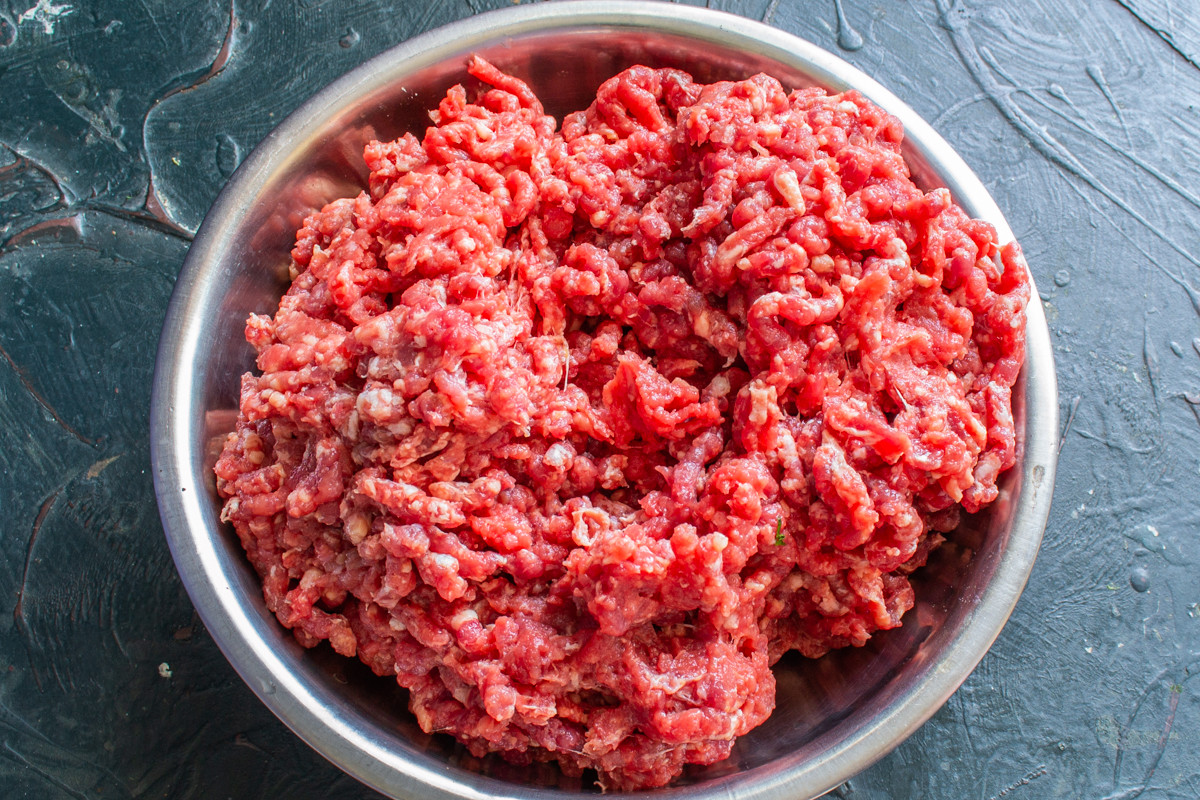
Grind the chilled beef pulp through a meat grinder with a fine-holed plate.
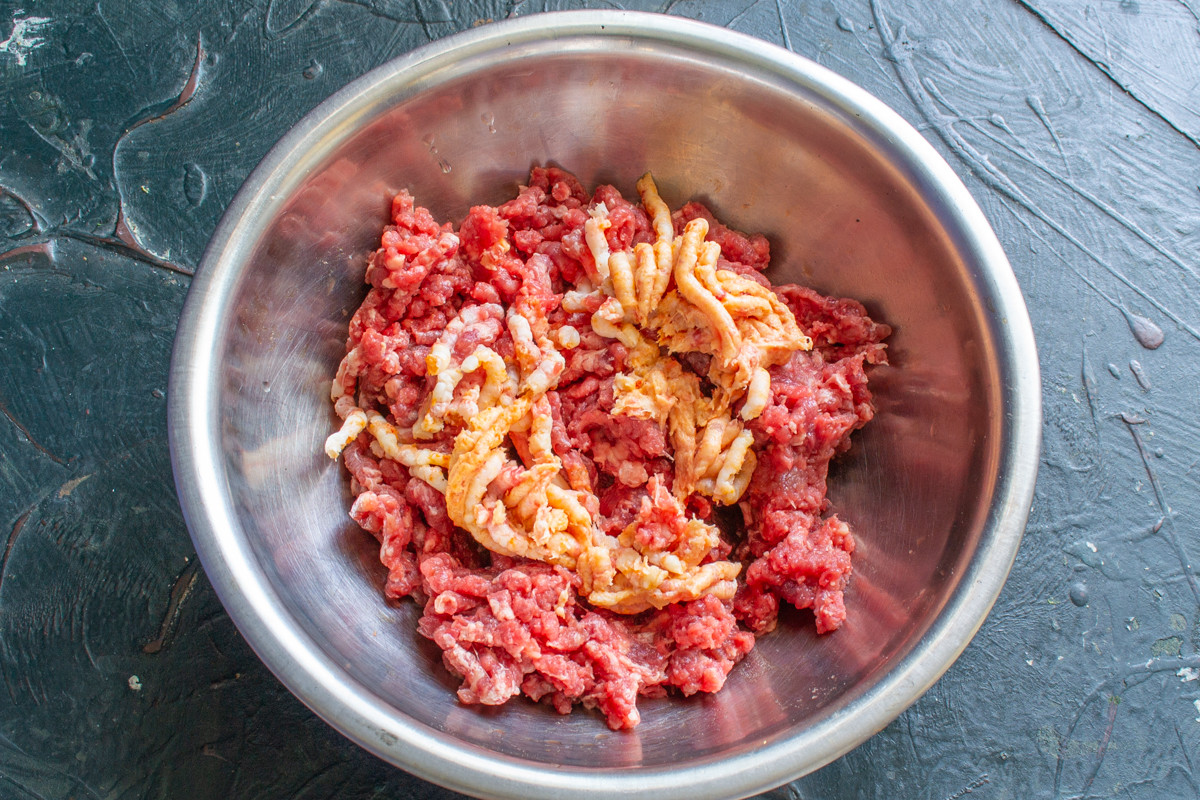
After the meat, grind the cured salo.
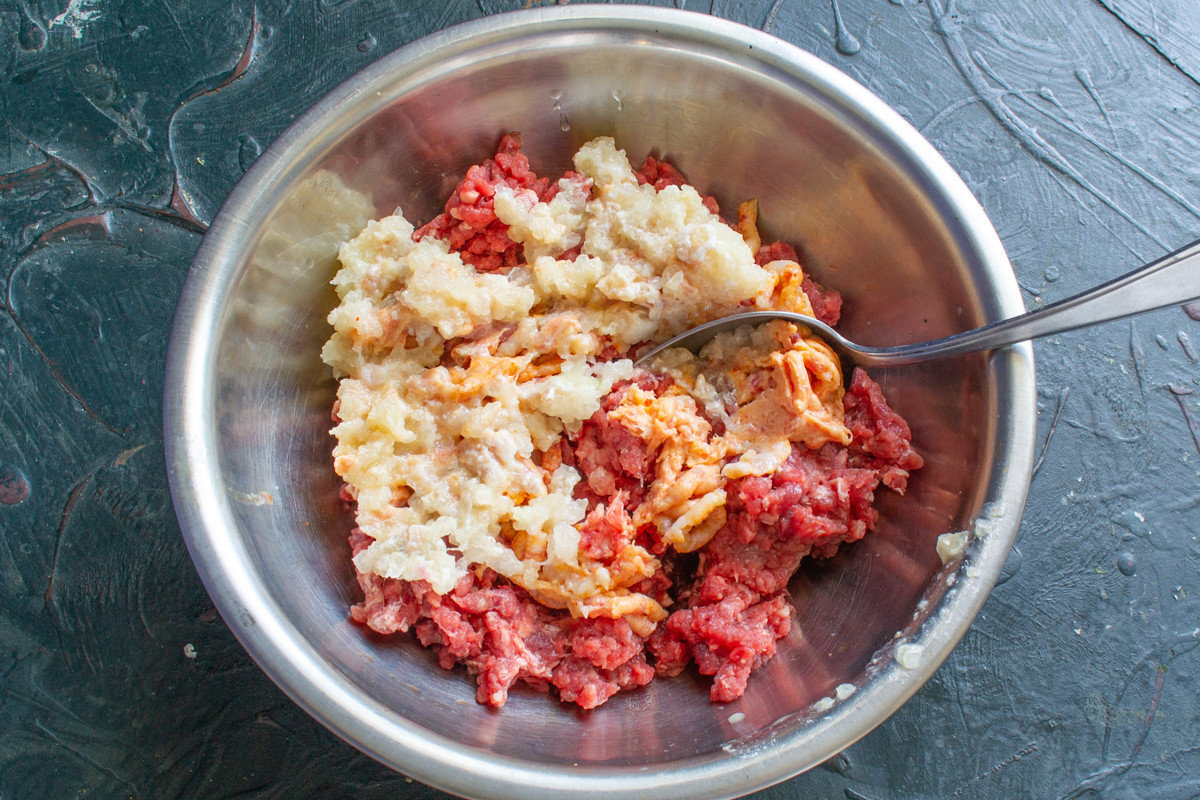
After the meat and salo, pass the diced onion through the meat grinder.
Grind the chilled lean beef through a meat grinder with a fine-holed plate. Use lean meat for this recipe.
Next, grind the cured salo (a traditional Eastern European cured pork fat). In this recipe, I use a spicy Hungarian-style cured salo, which I find works perfectly. You can use ready-made pork shpik (a type of firm pork fatback) or simple cured salo to prepare the minced meat.
After the meat and salo, pass the diced onion through the meat grinder. The onion will help clean the meat remnants from the grinder’s walls, doing some of the cleanup work for you.
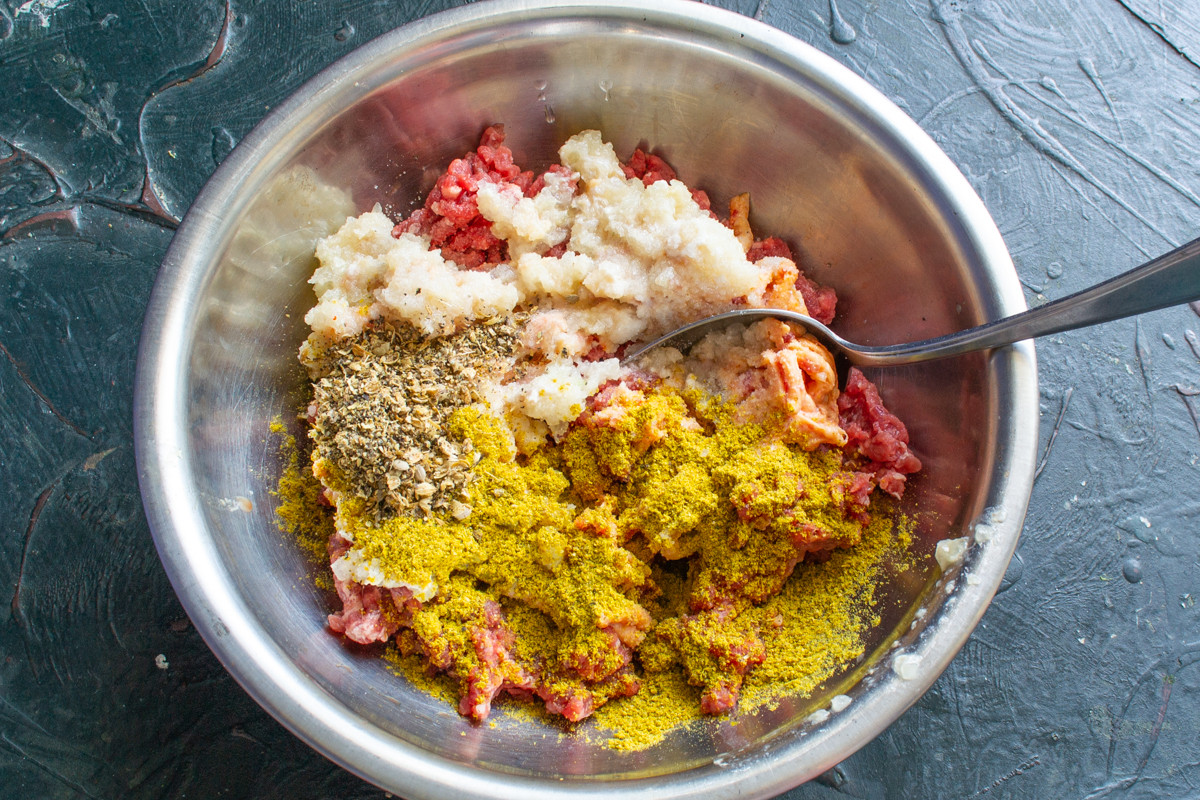
Add the crushed coriander and meat curry powder to the minced meat.
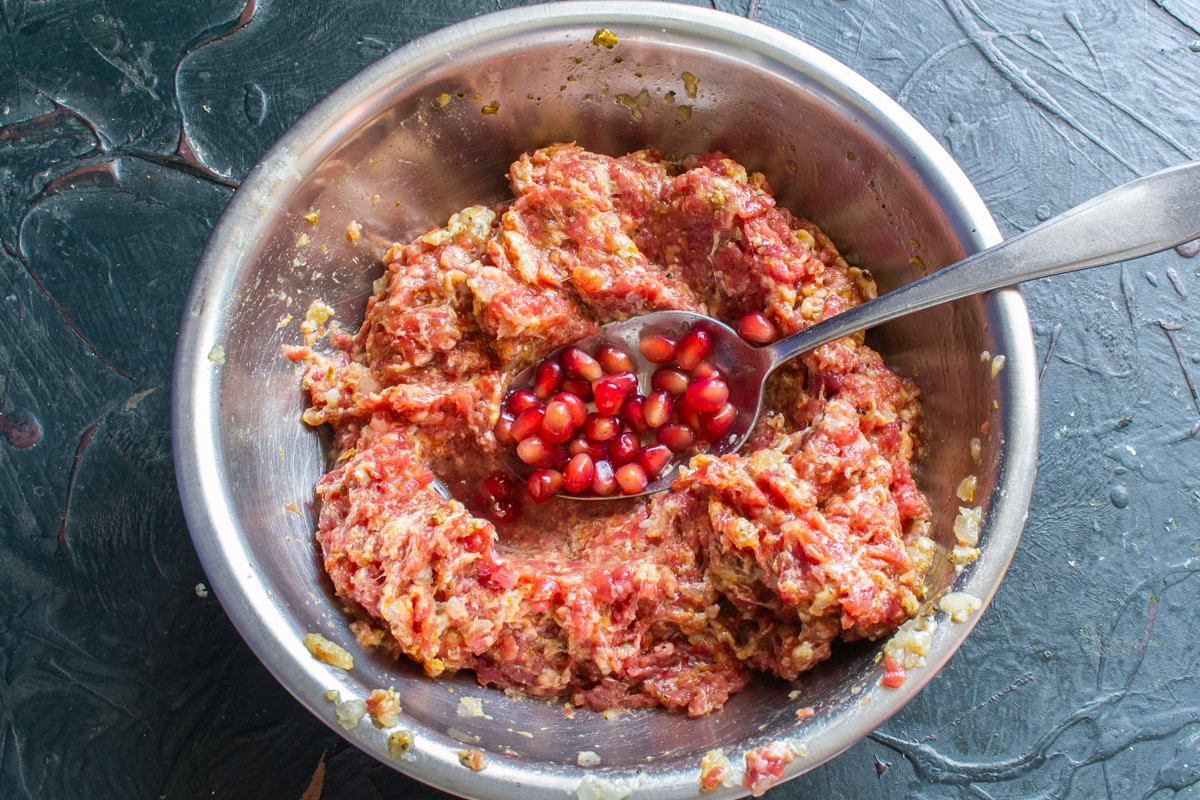
Knead the minced meat for a few minutes like dough, then add the pomegranate seeds.
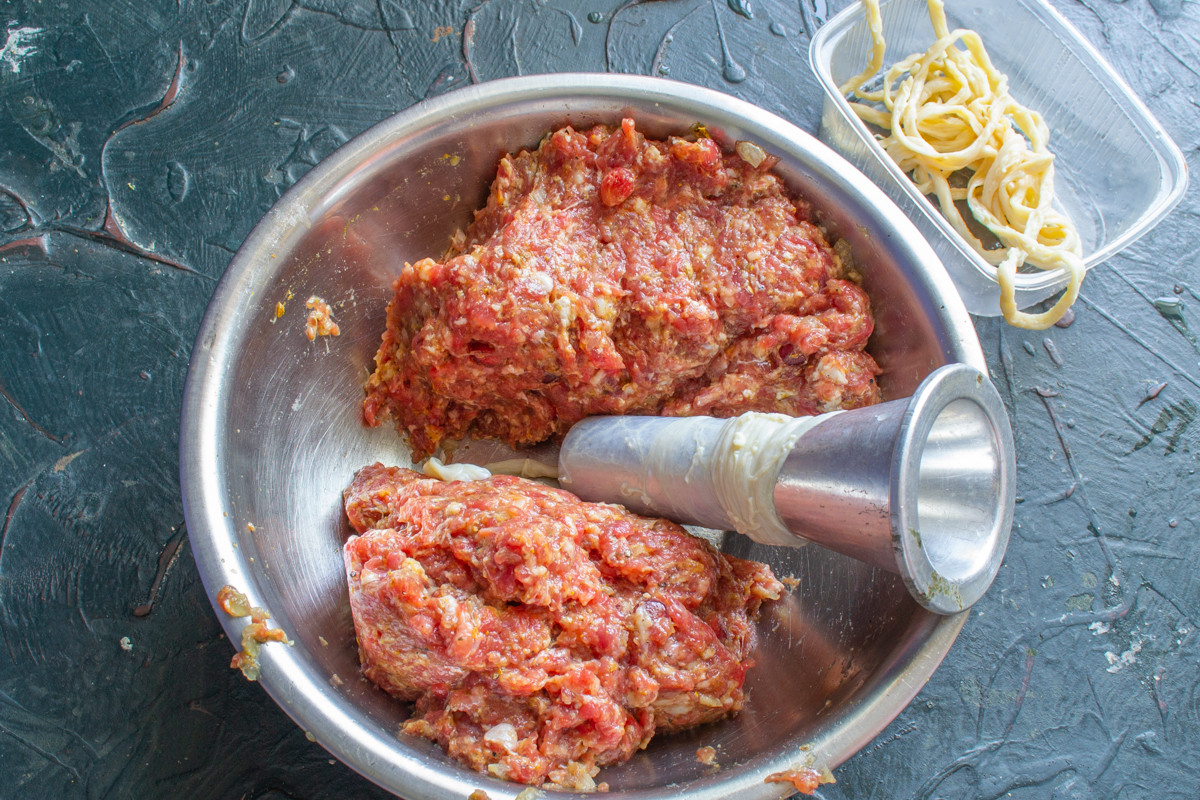
Divide the minced meat in half.
Time to season. Crush the coriander seeds in a mortar. Add the crushed coriander and meat curry powder to the minced meat. Pour in cold, or preferably ice-cold, water. Add salt to taste, keeping in mind that the mixture already contains salted salo!
Knead the minced meat for several minutes as you would dough, then add the pomegranate seeds. An easy way to deseed a pomegranate: cut it in half. Place it cut-side down in your palm. Tap the top with the handle of a knife or fork, and the seeds will easily fall into a bowl.
Carefully mix the pomegranate seeds into the minced meat. Divide the mixture in half. Cut the narrow pork casing into pieces 40-50 centimeters long. I use prepared casings; I soak them in cold water for a minute to rinse off the salt crystals. Thread a piece of casing onto the sausage stuffer attachment.
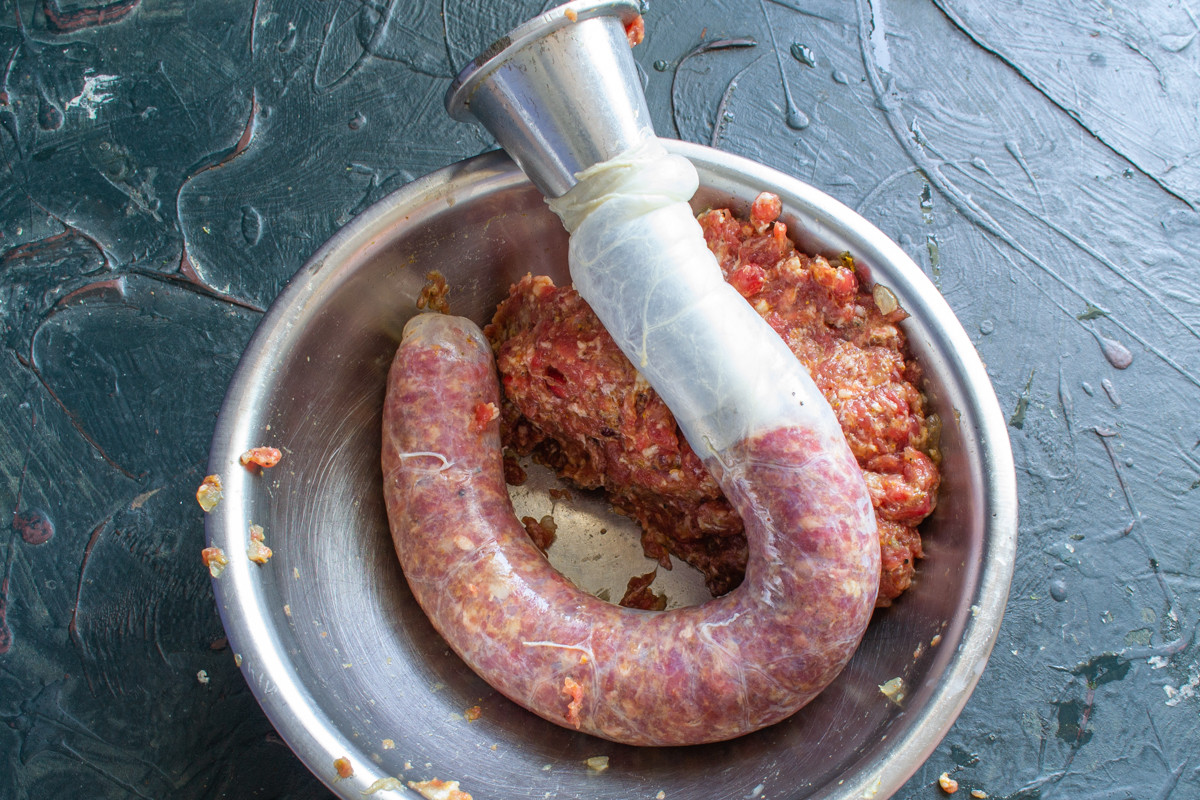
Manually stuff the casing with the minced meat.
Manually stuff the casing with the minced meat. This type of sausage is often called “hand-stuffed.” Distribute the filling evenly, ensuring the casing is not packed too tightly. Tie the ends into a knot or secure them with kitchen twine.
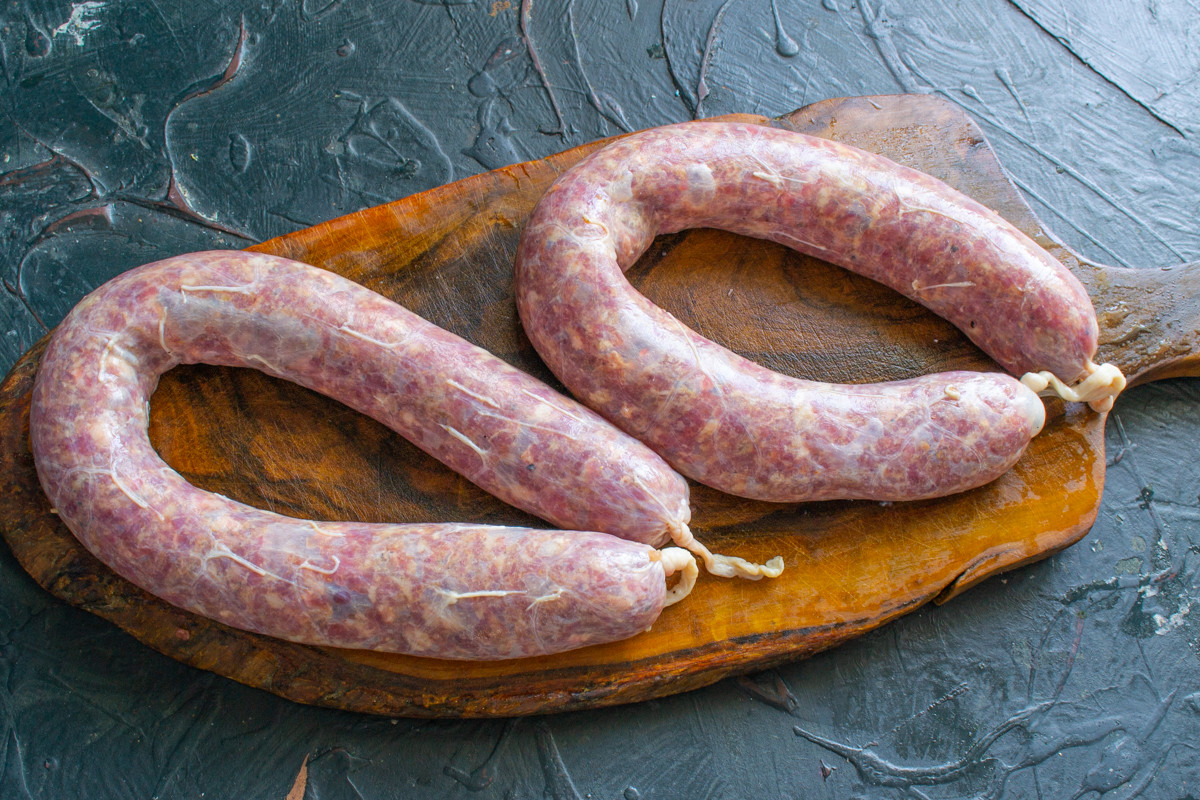
In the same way, fill the second casing and tie the ends securely.
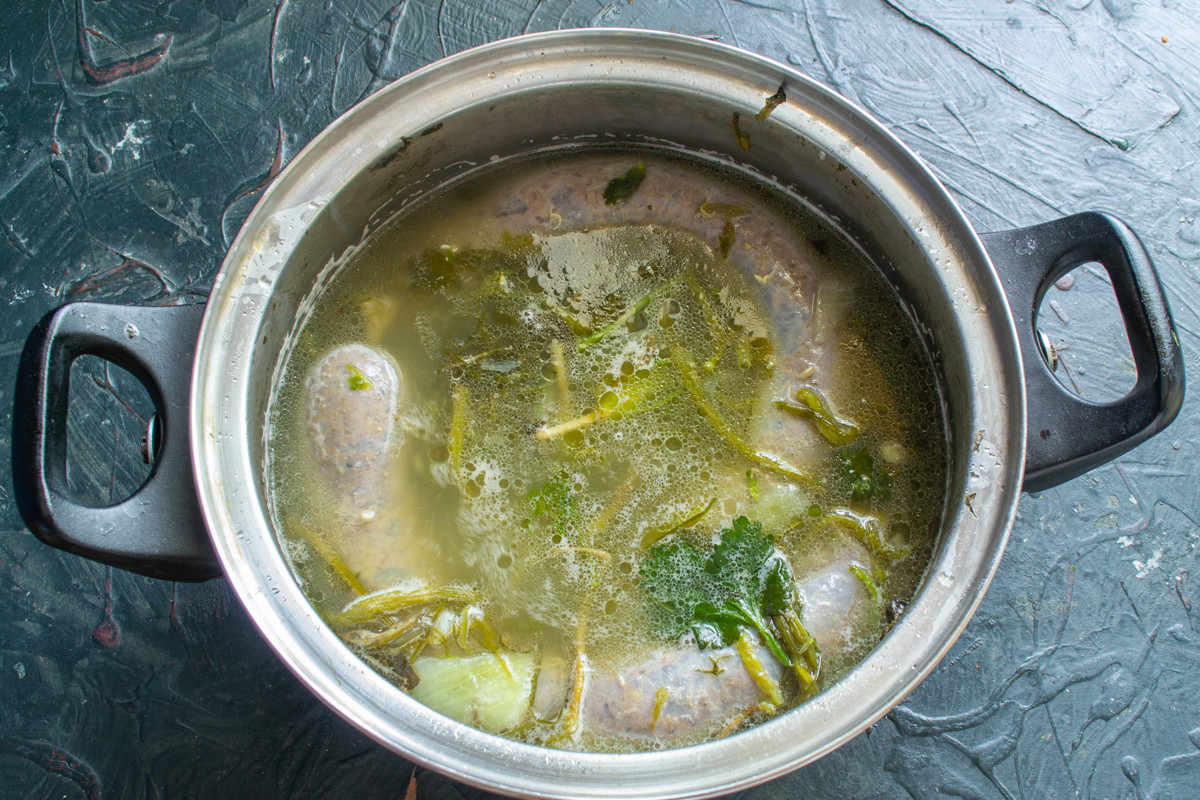
Place the kupaty in boiling water for 2-3 minutes, then remove with tongs.
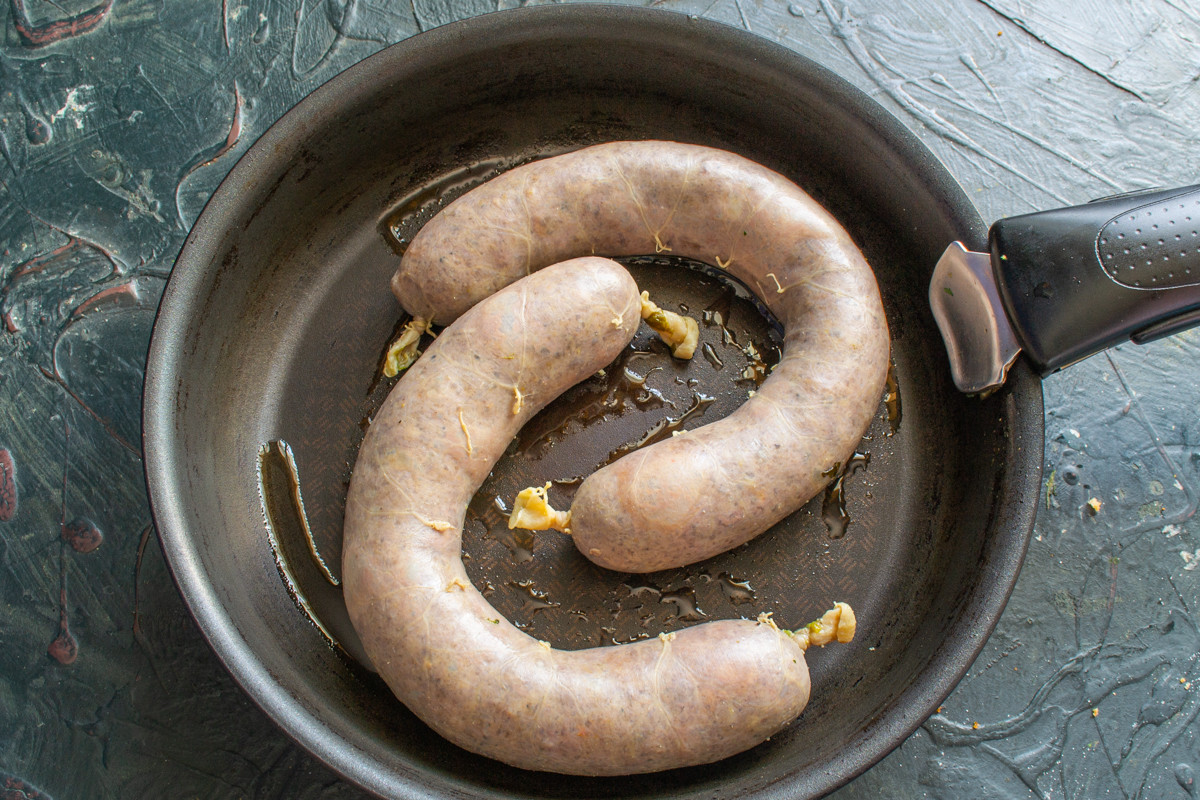
Fry the sausages in a preheated pan greased with vegetable oil, or on a grill.
Fill the second casing in the same way, tying the ends securely. The sausages should not be stuffed too tightly to prevent them from bursting during cooking.
First, the kupaty (a type of Georgian sausage) need to be boiled. You can use ready-made meat broth or boil water with spices, root vegetables, and herbs, and add salt. Place the kupaty in the boiling water for 2-3 minutes, then remove with tongs. Hang them or lay them on a board to dry.
Fry the sausages in a preheated pan greased with vegetable oil, or cook them on a grill. The cooking time depends on the size of the casing, but it usually takes about 20 minutes.

Serve the beef kupaty with pomegranate straight from the pan.
Serve the beef kupaty with pomegranate immediately, straight from the pan. Garnish with fresh vegetables, pickled red onions, lavash (a thin, unleavened flatbread), or white bread.
And there you have it – your very own homemade Beef Kupaty with Pomegranate, hot and ready to be devoured! The aroma alone is enough to transport you to a festive Georgian feast. For the most authentic experience, serve these juicy sausages straight from the grill or pan, accompanied by traditional sides like fresh lavash bread, tangy pickled onions, and a simple tomato and cucumber salad. Don't be afraid to experiment with the spices to make the recipe your own. We hope you enjoy every bite of these delicious sausages and the satisfaction of making them from scratch. Happy cooking!
0 comments