
Step back in time with a beloved classic from Eastern European festive tables! This Herring Appetizer, often called 'poor man's caviar,' is a testament to culinary ingenuity. Born from an era of scarcity, this creamy, savory herring and carrot pâté was cleverly crafted to resemble the luxurious taste and texture of red caviar. Today, it remains a cherished recipe, not for its budget-friendliness, but for its unique, delicious flavor and the warm nostalgia it brings. Perfect for holiday gatherings, parties, or any special occasion, these elegant canapés are sure to impress your guests and become a new favorite.

Festive Herring Appetizer.
Ingredients for the Festive Herring Appetizer
- 2 lightly salted herring fillets (from 1 medium herring)
- 130 g butter
- 1 carrot
- 1 baguette
- milk, vegetable oil, and butter for frying
- olives and green onions for garnish
How to Make the Festive Herring Appetizer
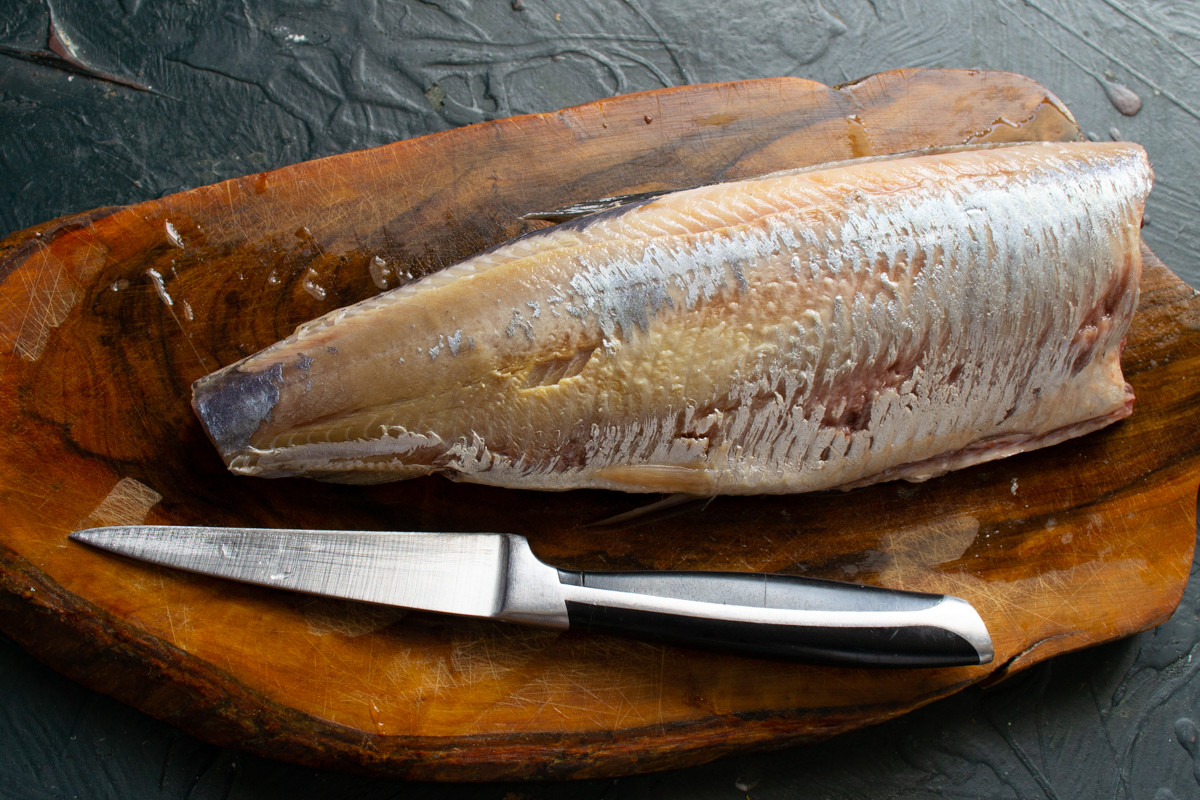
Cleaning the herring.
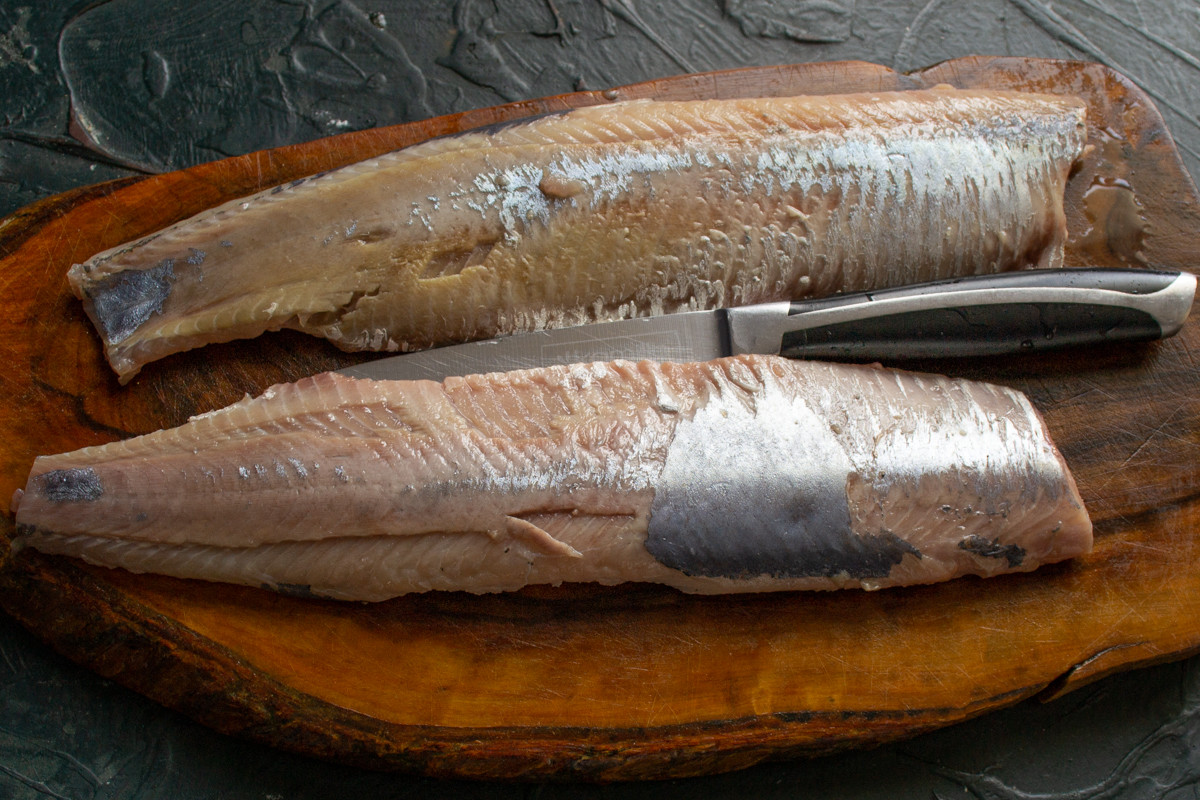
Separate the two fillets from the backbone, removing small bones by hand or with tweezers.
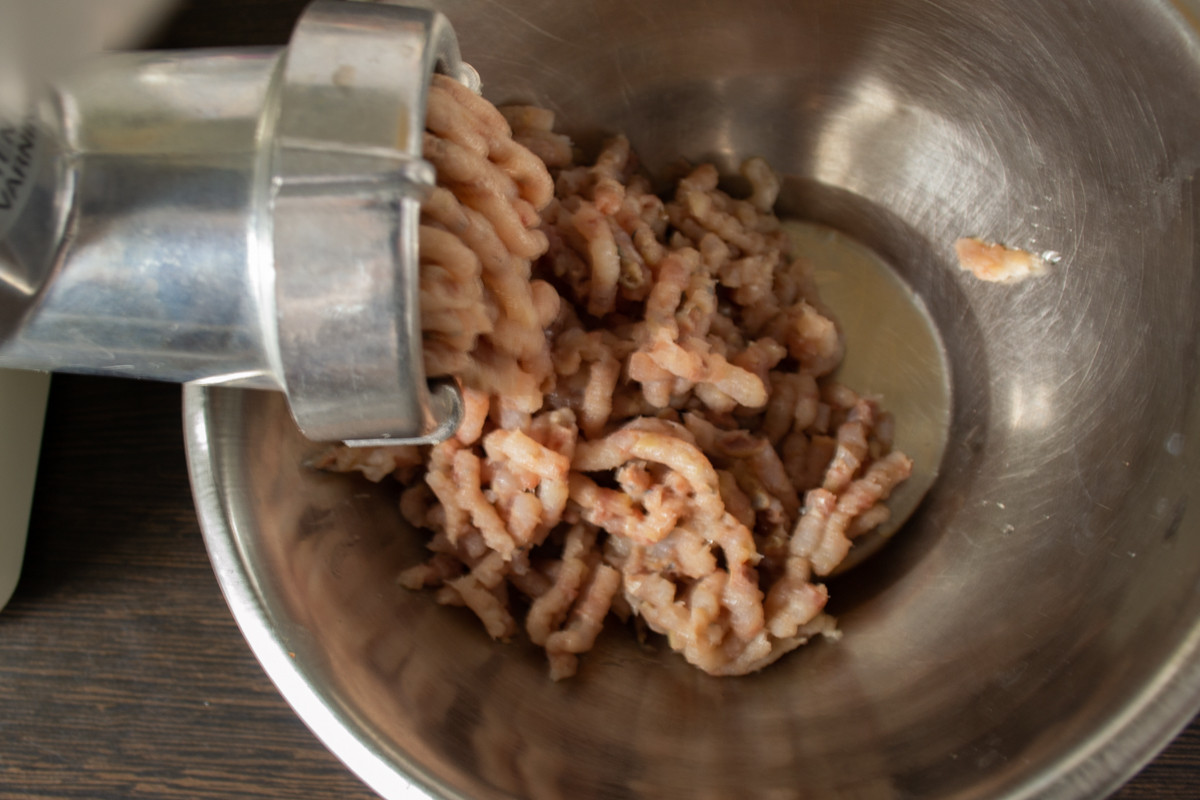
Pass the deboned herring fillet through a meat grinder (using the fine plate).
Prepare the herring: cut off the head and tail, slit the belly, remove the innards, and thoroughly rinse the fish under cold running water. Pat it dry, place it on a cutting board, and make an incision along the spine. Peel the skin off from head to tail, first on one side, then on the other.
Separate the two fillets from the backbone, and remove any small bones by hand or with tweezers. For this recipe, one fillet from a large herring is sufficient. If you prefer a saltier taste, use the whole herring, slightly increasing the amount of butter in the recipe.
Pass the deboned herring fillet through a meat grinder (using the fine plate). If you don’t have a meat grinder, you can finely chop the fillet with a meat cleaver or a wide knife on a cutting board.
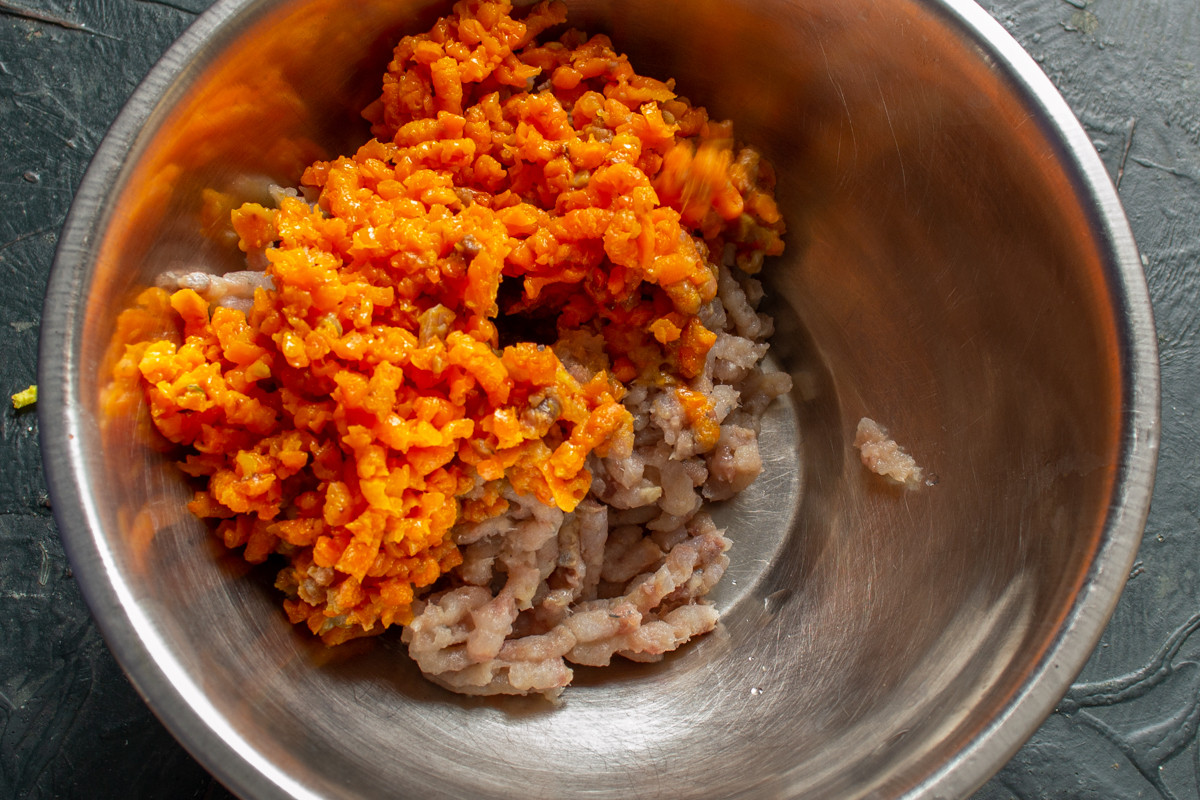
Pass the cooled carrot through the meat grinder after the herring.
Grate the carrot, sauté it in vegetable oil for 5 minutes, and let it cool. Once cooled, pass the carrot through the meat grinder after the herring.
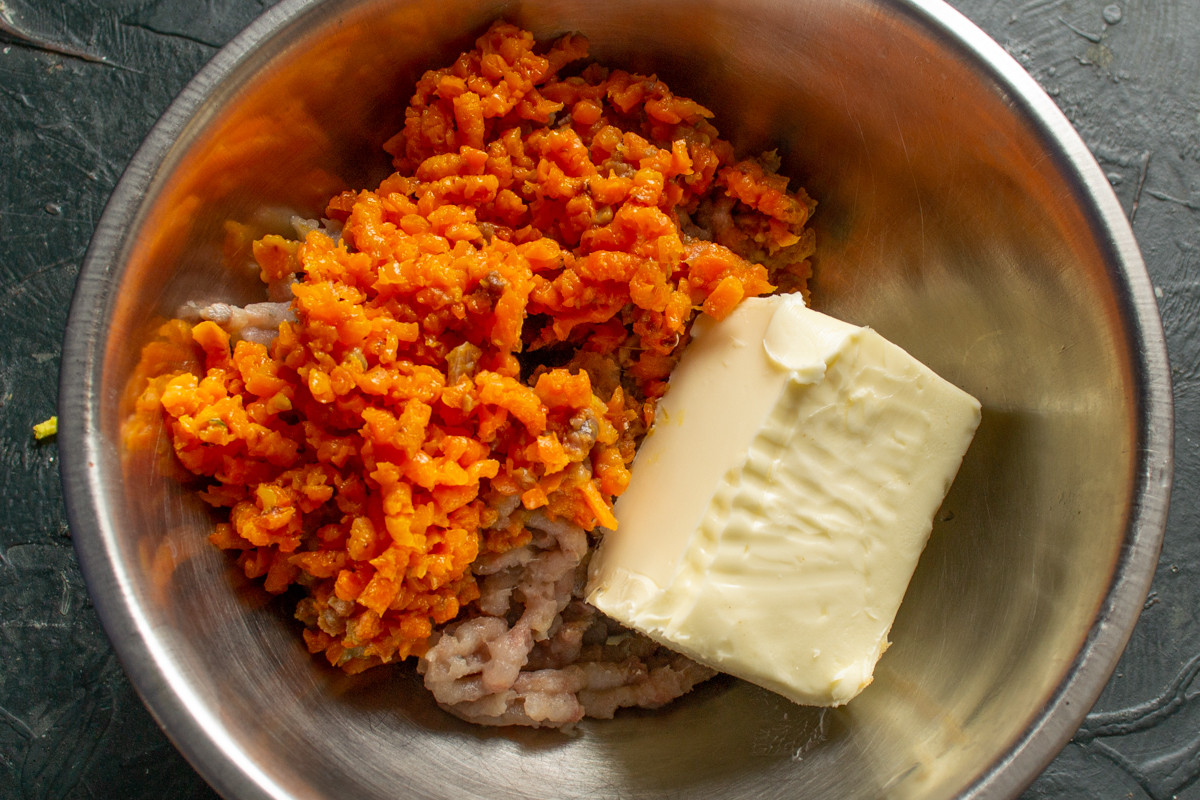
Add the softened butter to the herring and carrot mixture.

Thoroughly mix the herring pâté.
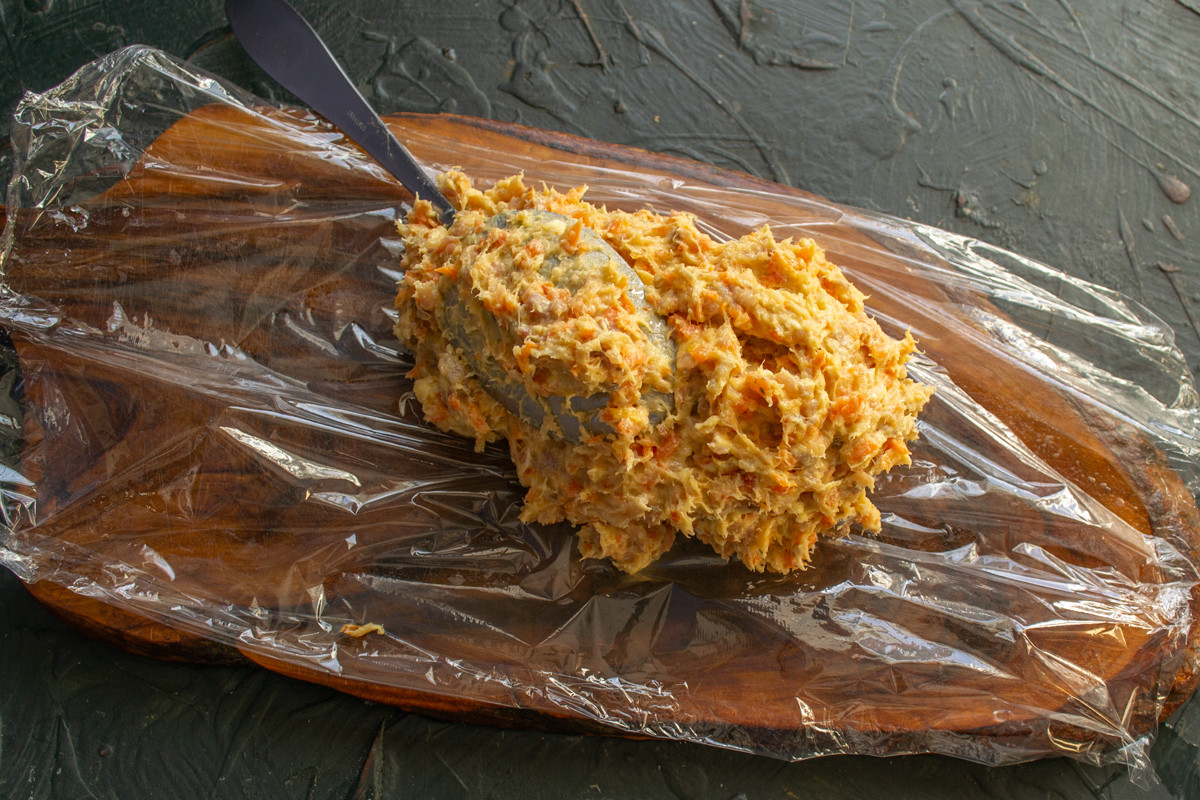
Spread the herring pâté onto plastic wrap.
Take the butter out of the refrigerator about an hour beforehand to let it soften at room temperature. Add the softened butter to the herring and carrot mixture.
Thoroughly mix the herring pâté. Now, it needs to be chilled until firm.
Place two layers of plastic wrap on a cutting board and spread the herring pâté on top.
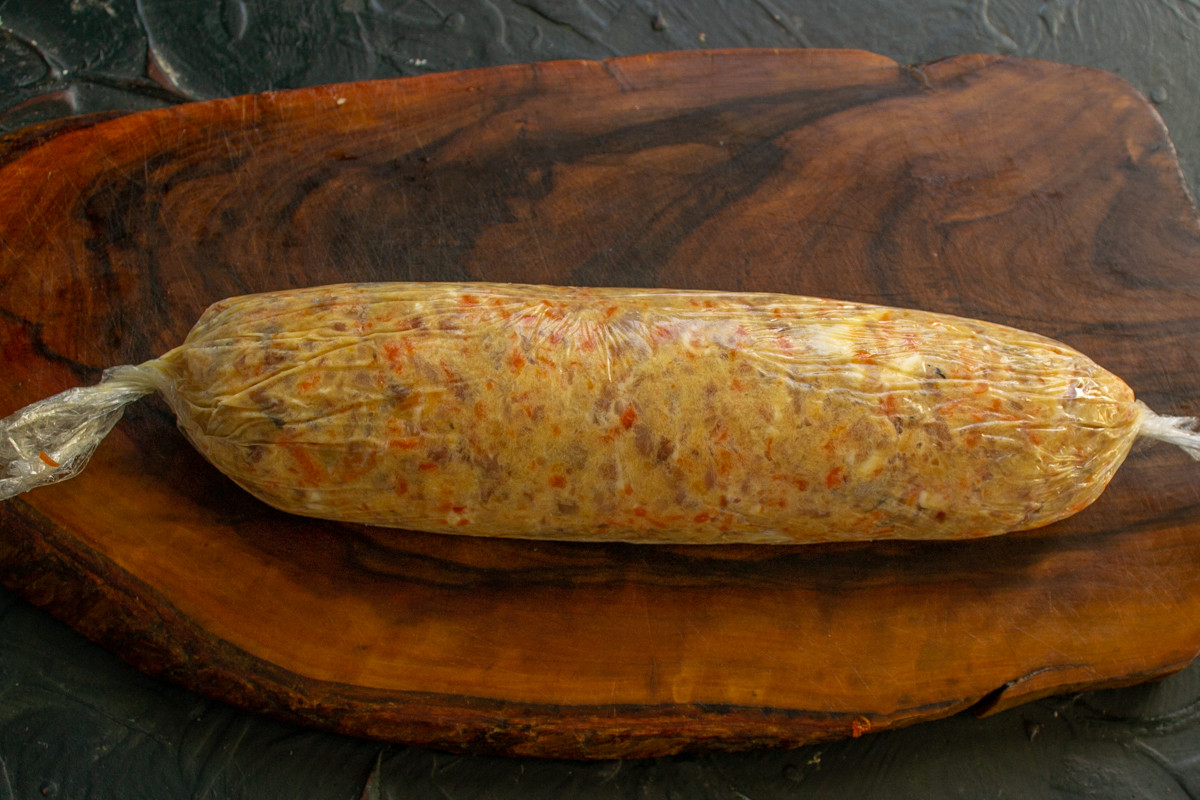
Form a long log, wrapping it tightly in the plastic wrap.
Form a long log, wrap it tightly in the plastic wrap like a candy wrapper. Twist the ends of the wrap to create a log about 4-5 centimeters thick. Place the herring pâté in the freezer if you need to prepare the appetizer quickly, or in the refrigerator, where it will set in 2-3 hours.

Place the sliced baguette in a deep dish and pour cold milk or cream over it.

Fry the baguette slices in the melted butter until golden brown.

Slice the chilled herring pâté into pieces about a centimeter thick.
Slice the baguette into 1-centimeter-thick pieces. Place the sliced baguette in a deep dish and pour cold milk or cream over it. You can also use a cookie cutter to cut out shapes from slices of toast bread.
Grease a frying pan with vegetable oil and add a piece of butter. Fry the baguette slices in the melted butter until golden brown on both sides.
Place the toasted baguette slices on a board to cool. Slice the chilled herring pâté into pieces about a centimeter thick.

Place a slice of the pâté on a cooled toast, and top with an olive secured with a cocktail pick.
Place a slice of the pâté on a cooled toast, top with an olive secured with a cocktail pick, garnish the appetizer with green onion, and serve.
And there you have it – a simple yet elegant appetizer with a rich history. This herring pâté is wonderfully versatile; try serving it on dark rye bread or crackers for a different texture. Don't hesitate to adjust the seasonings to your liking – a pinch of black pepper or a squeeze of lemon juice can add a lovely brightness. We hope this recipe brings a touch of warmth and tradition to your table. Enjoy sharing these delightful bites with your loved ones! Bon appétit!
0 comments