
Ever wondered what to do with that leftover pickle brine? In many Eastern European households, not a drop goes to waste! This recipe for homemade mustard with pickle brine is a brilliant example of that resourceful spirit. The brine, or "rassol" as it's known, is packed with tangy, savory flavors from fermentation, herbs, and spices. By using it as a base for mustard, you create a condiment with an incredible depth and complexity that water or plain vinegar simply can't match. Get ready to make the most flavorful, zesty, and wonderfully pungent mustard you've ever tasted!
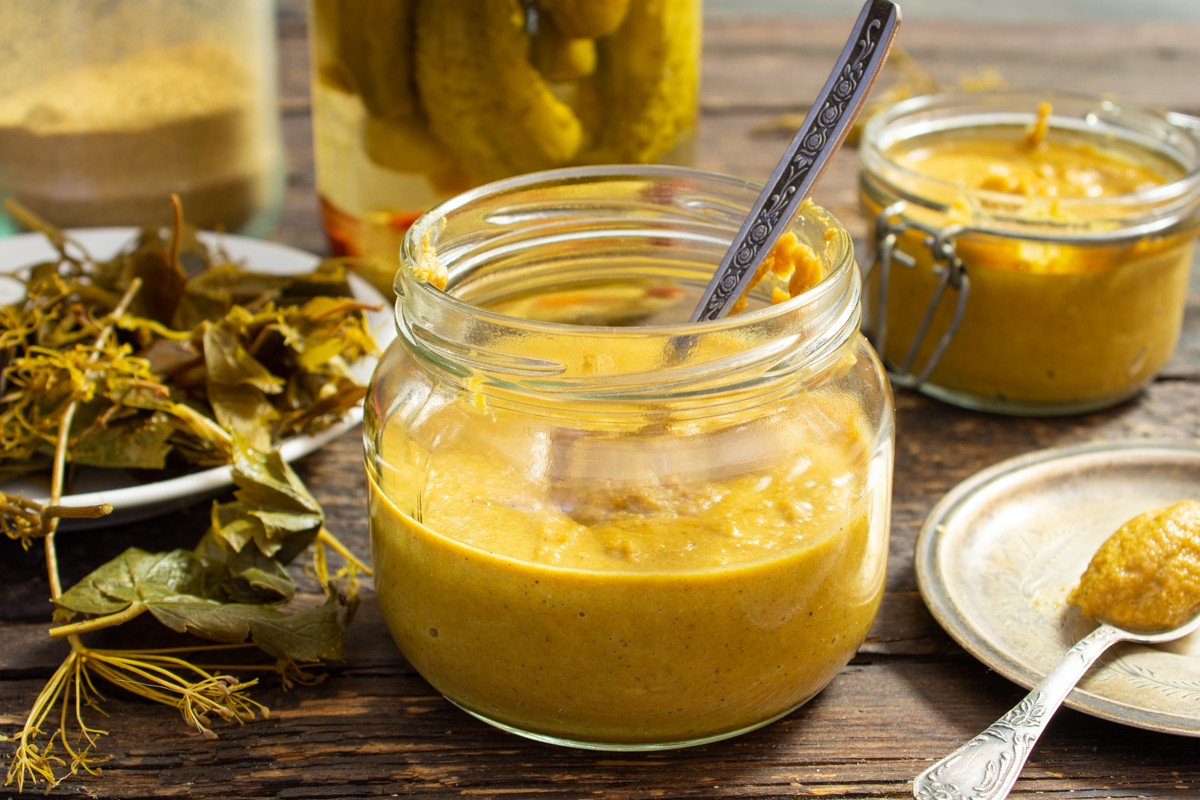
Homemade Mustard with Pickle Brine.
Ingredients for Homemade Mustard with Pickle Brine
- 100 g mustard powder
- 150-200 g pickle brine
- 30 g olive oil
- 1 tablespoon apple cider vinegar
- 1 teaspoon ground turmeric
- 1 teaspoon asafoetida (optional)
- salt and sugar to taste
How to Make Homemade Mustard with Pickle Brine
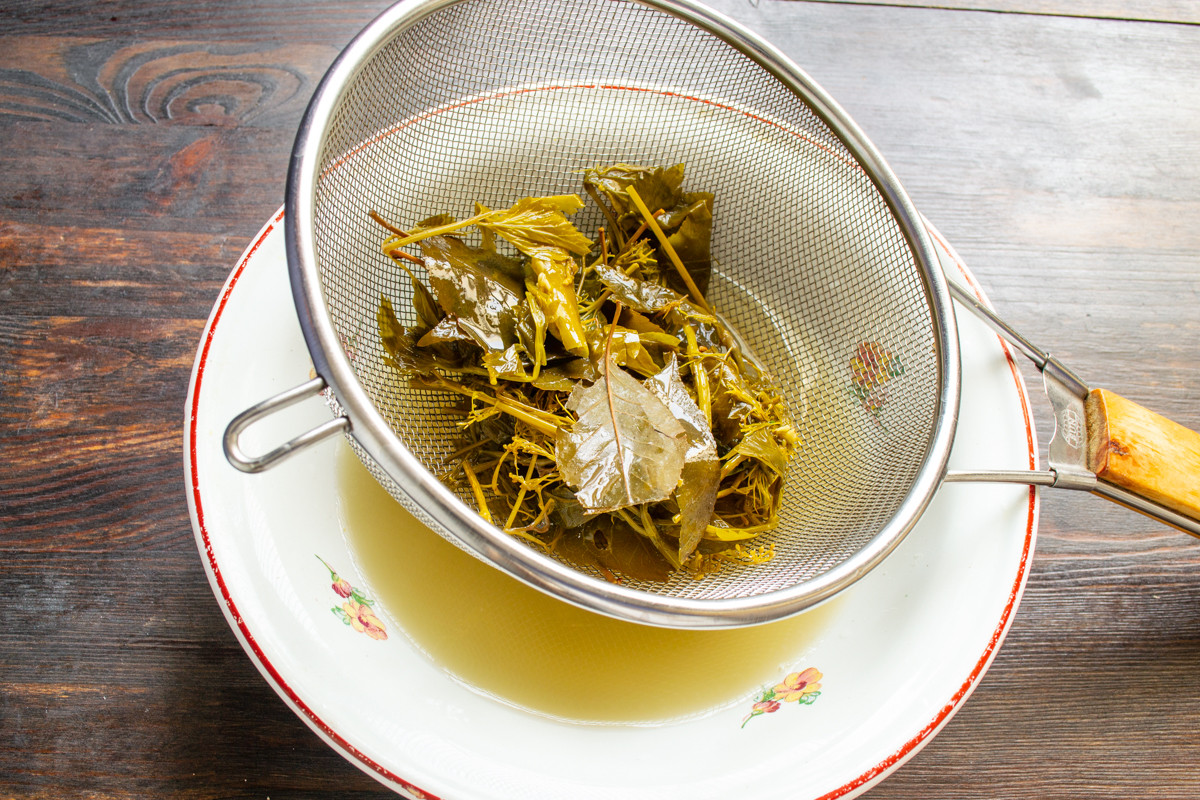
Straining the pickle brine.
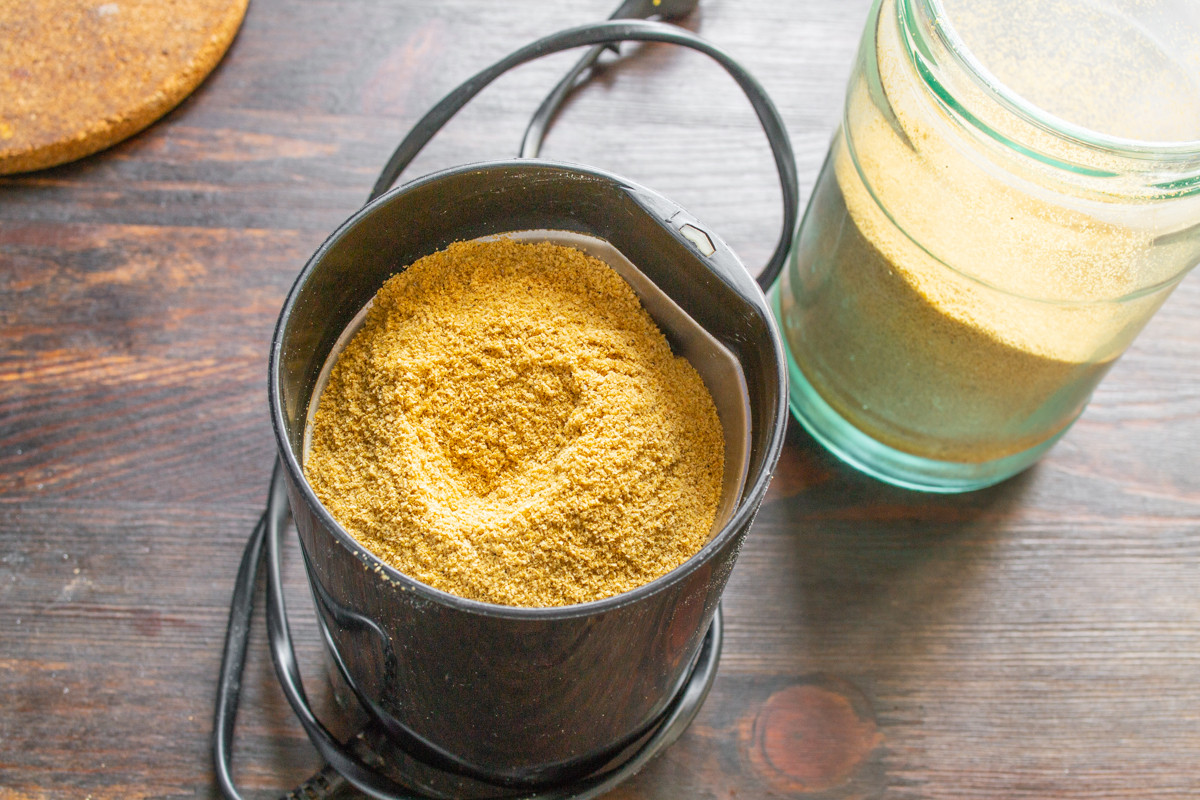
Grind the mustard powder in a coffee grinder.
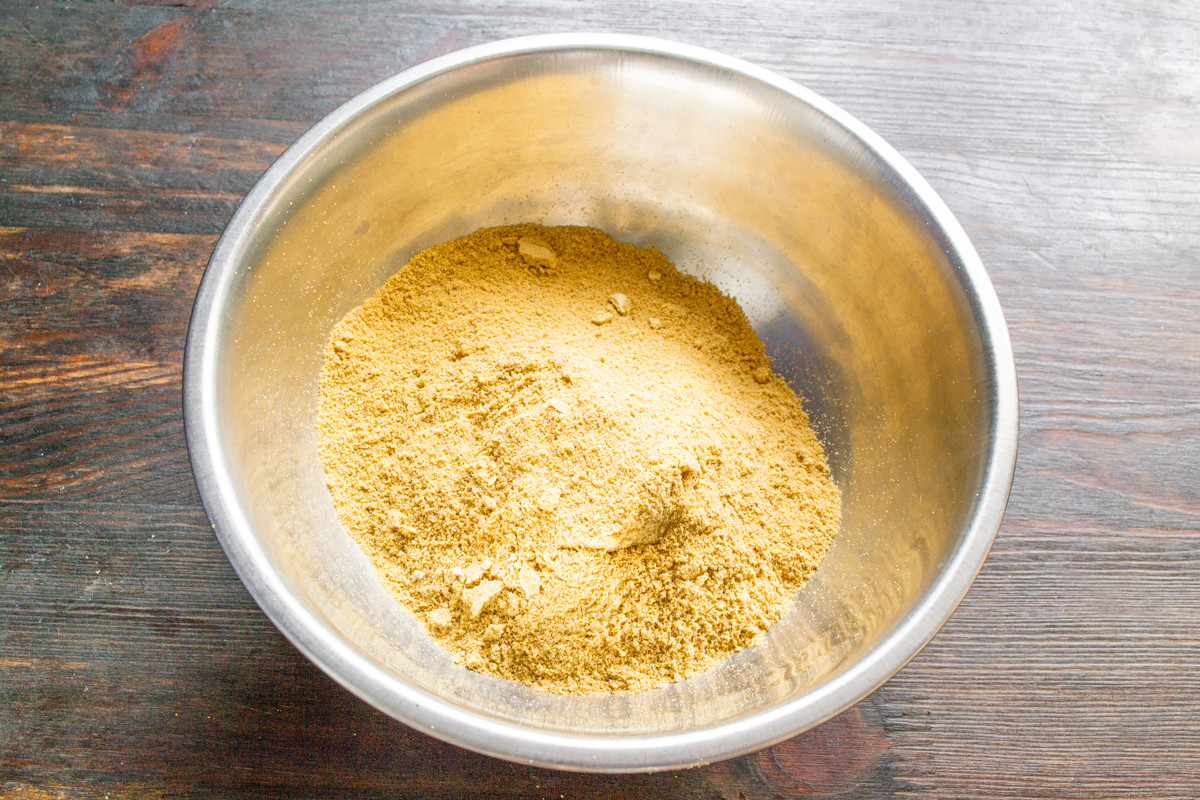
Measuring out the required amount of mustard powder.
Strain the pickle brine. This recipe uses rassol (brine) from kvashenye ogurtsy (lacto-fermented pickles). Brine from marinated pickles also works, but that’s a completely different story. If you use marinade, you don’t need to add vinegar and sugar!
Mustard powder can vary. From my experience, the finer the grind, the tastier the mustard. If the powder is too coarse, use a coffee grinder to process it in several batches. Don’t open the lid immediately; let the dust settle.
Measure out the required amount of mustard powder.
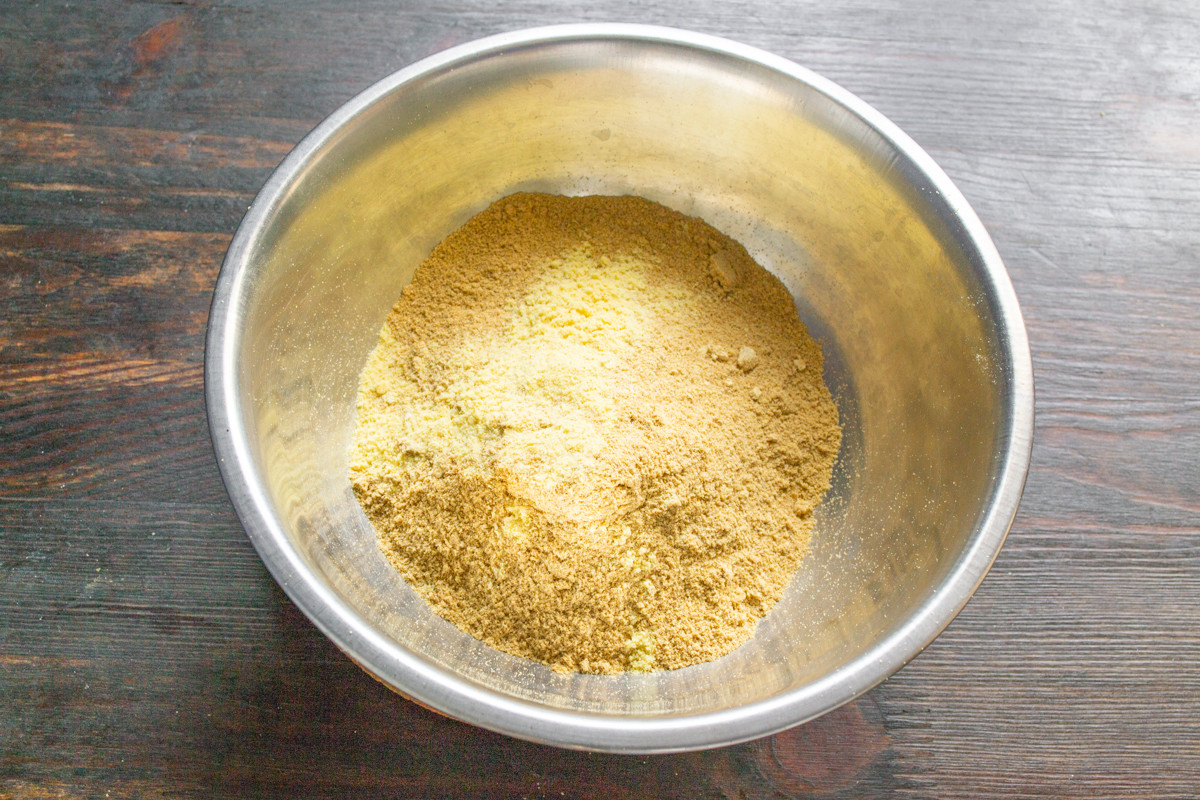
In this recipe, I added an Indian spice – asafoetida.
In this recipe, I added an Indian spice – asafoetida, often called “devil’s dung.” It’s a very specific spice that pairs well with mustard, but it’s an acquired taste. Feel free to skip this step if you’re not a fan of its aroma.
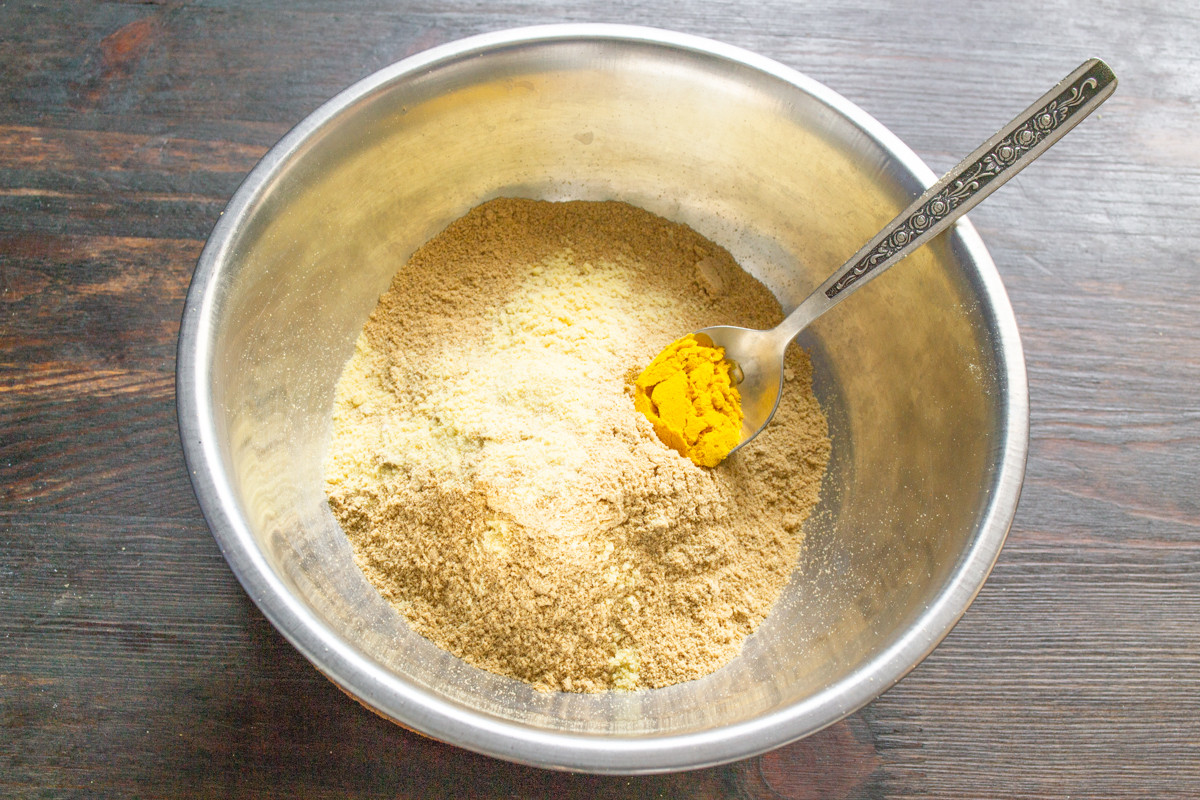
Adding ground turmeric.
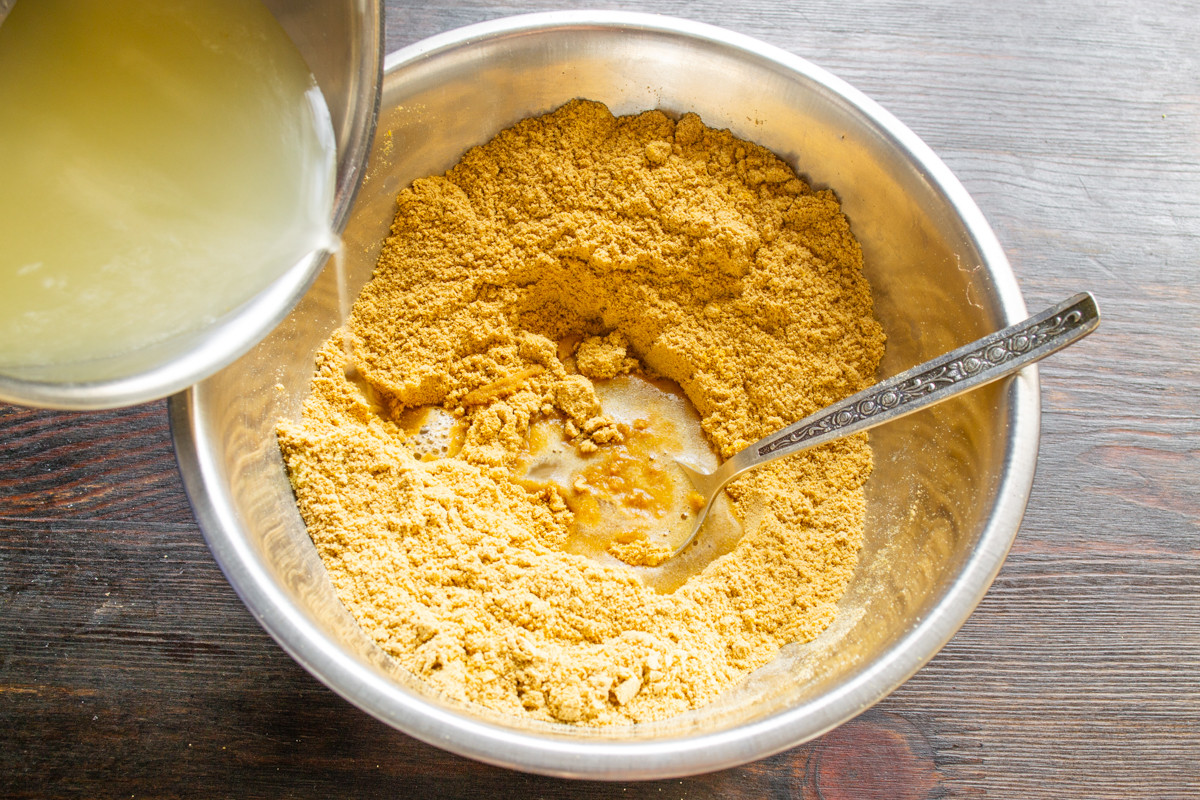
Pouring the hot brine into the bowl with mustard.
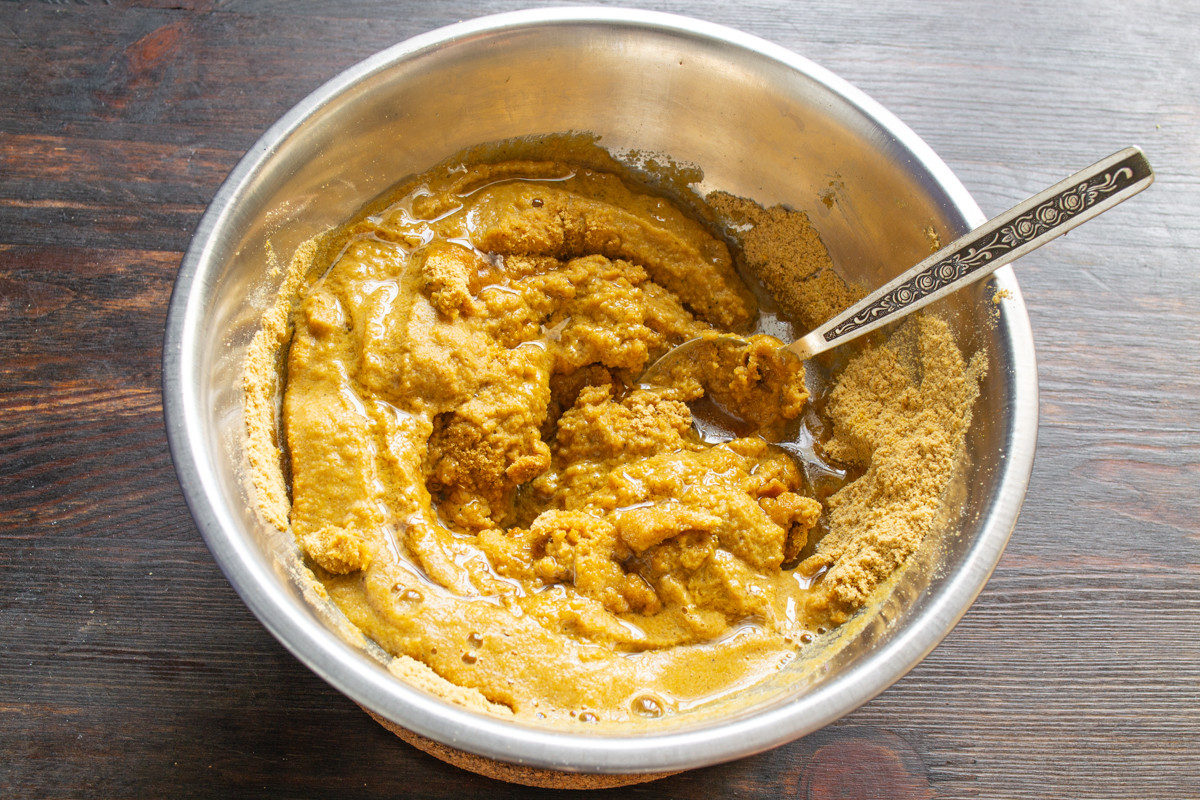
Pouring in the olive oil.
Add the ground turmeric. Turmeric is a natural colorant widely used in the food industry. It will mix with the mustard and give the condiment an appetizing color.
Pour the strained pickle brine into a saucepan. Heat the brine to about 60°C (140°F); it should be hot but not boiling. Pour the hot brine into the bowl with the mustard powder.
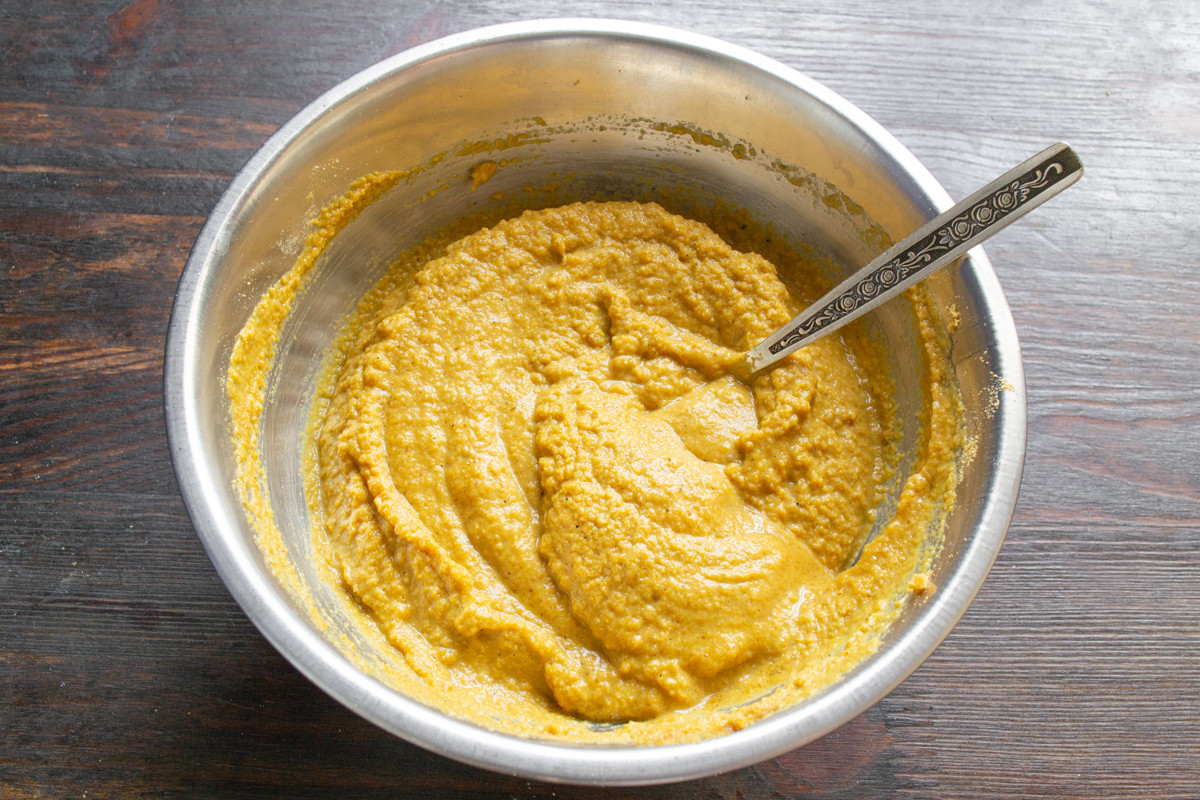
Mix the ingredients with a spoon. Pour in the olive oil. Any vegetable oil will do; whether it’s cold-pressed or refined doesn’t matter much. The bitterness of the olive oil won’t be noticeable, as the mustard itself is pungent.
Adding a tablespoon of apple cider or white wine vinegar.
Add a tablespoon of apple cider or white wine vinegar. Season with salt and add sugar or sweeten with liquid honey to taste. Mix well and taste. At this stage, it won’t be fiery or sharp, just a slightly bitter mixture, so you can adjust the salt/sugar/vinegar to your liking.
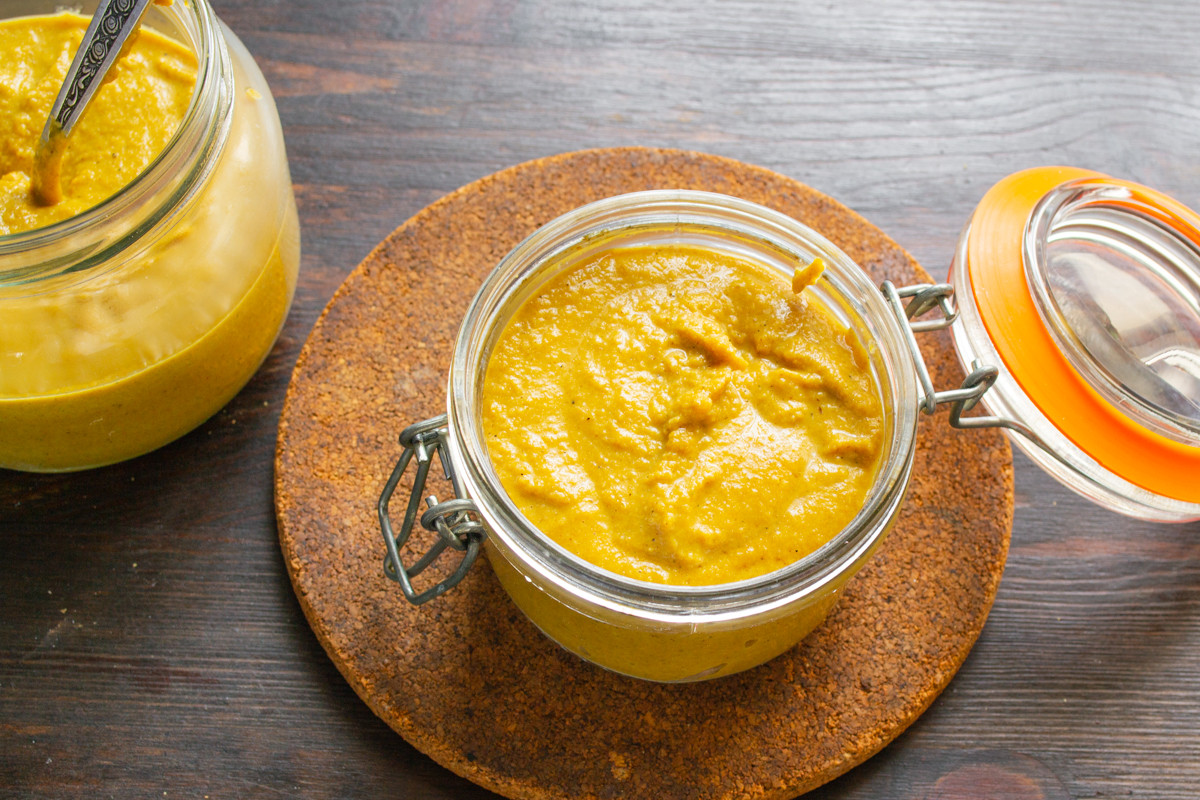
Put the mustard in jars, close them tightly, and refrigerate.
To store the homemade mustard, use clean, dry glass jars; there’s no need to sterilize them. Spoon the mustard into the jars, seal them tightly, and place them in the refrigerator. In about 24 hours, the mustard will be ready – it will have developed its “kick.”
And there you have it – a jar of vibrant, fiery homemade mustard, created from an ingredient you might have otherwise discarded! This isn't just a condiment; it's a taste of culinary resourcefulness. Serve it alongside grilled sausages, spread it on sandwiches, or whisk it into a vinaigrette for a salad with a kick. Don't be afraid to let it sit in the fridge for a day or two; the flavors will meld and the heat will intensify. Enjoy this simple, delicious, and sustainable addition to your kitchen!
0 comments