
As summer fades and the first chill of autumn arrives, many gardens are left with unripe green tomatoes. In Eastern European tradition, nothing goes to waste! This recipe transforms those firm, end-of-season tomatoes into a spectacular winter preserve. Pickled green tomatoes are a beloved classic, known for their crunchy texture and bold, tangy flavor, perfectly balanced with the spicy warmth of horseradish and garlic. They are not just a way to preserve the harvest but a delicious appetizer in their own right, perfect for enlivening any meal.
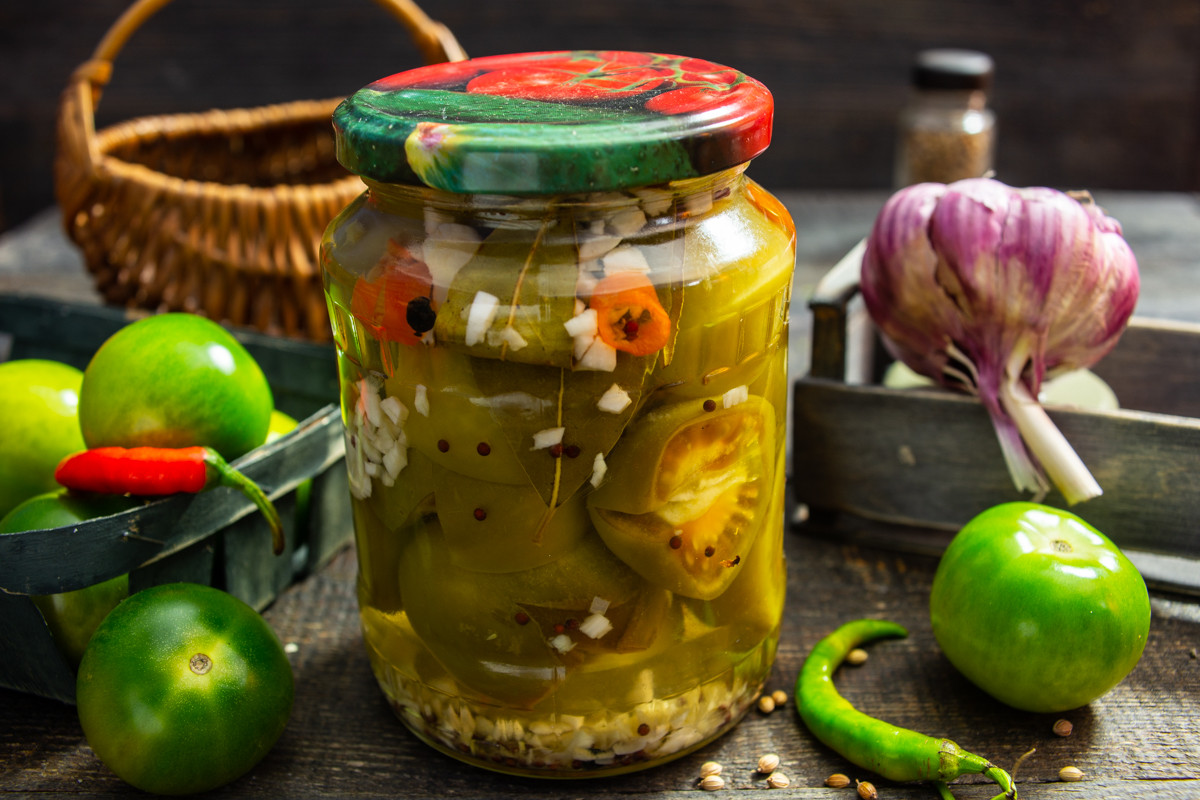
Pickled Green Tomatoes with Horseradish and Garlic
Ingredients for Pickled Green Tomatoes with Horseradish and Garlic
- 2 kg (4.4 lbs) green tomatoes
- 4-5 garlic cloves
- 1 large chili pepper
- 30 g (1 oz) horseradish (a small, narrow root)
For the Brine
- 1 L (4 cups) water
- 40 g (3 tbsp) sugar
- 20 g (1 tbsp) salt
- 30 ml (2 tbsp) apple cider vinegar
- Mustard seeds, black peppercorns
- Bay leaf
How to Make Pickled Green Tomatoes with Horseradish and Garlic
Thoroughly wash small, firm green tomatoes that are free of visible damage and blemishes in cold water.
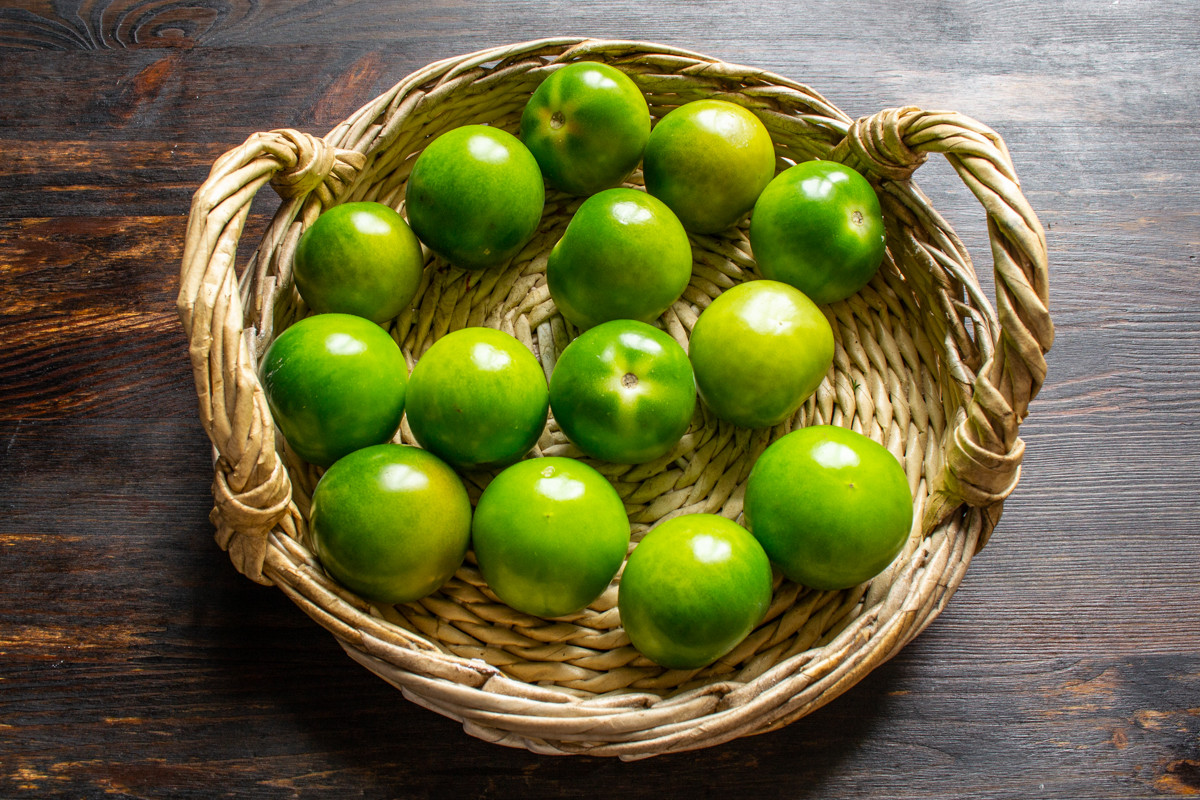
Thoroughly wash small, firm green tomatoes without any visible damage or spots under cold water.
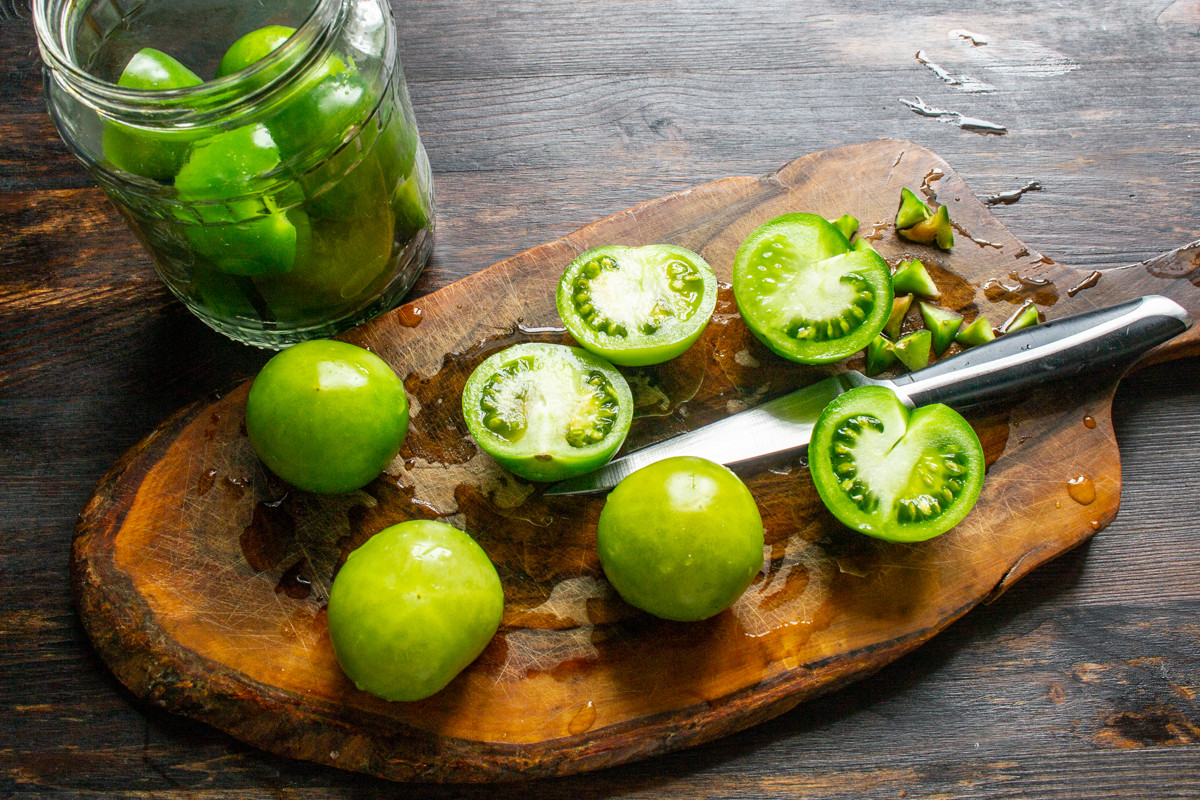
Cut the tomatoes in half, removing the tough part near the stem.
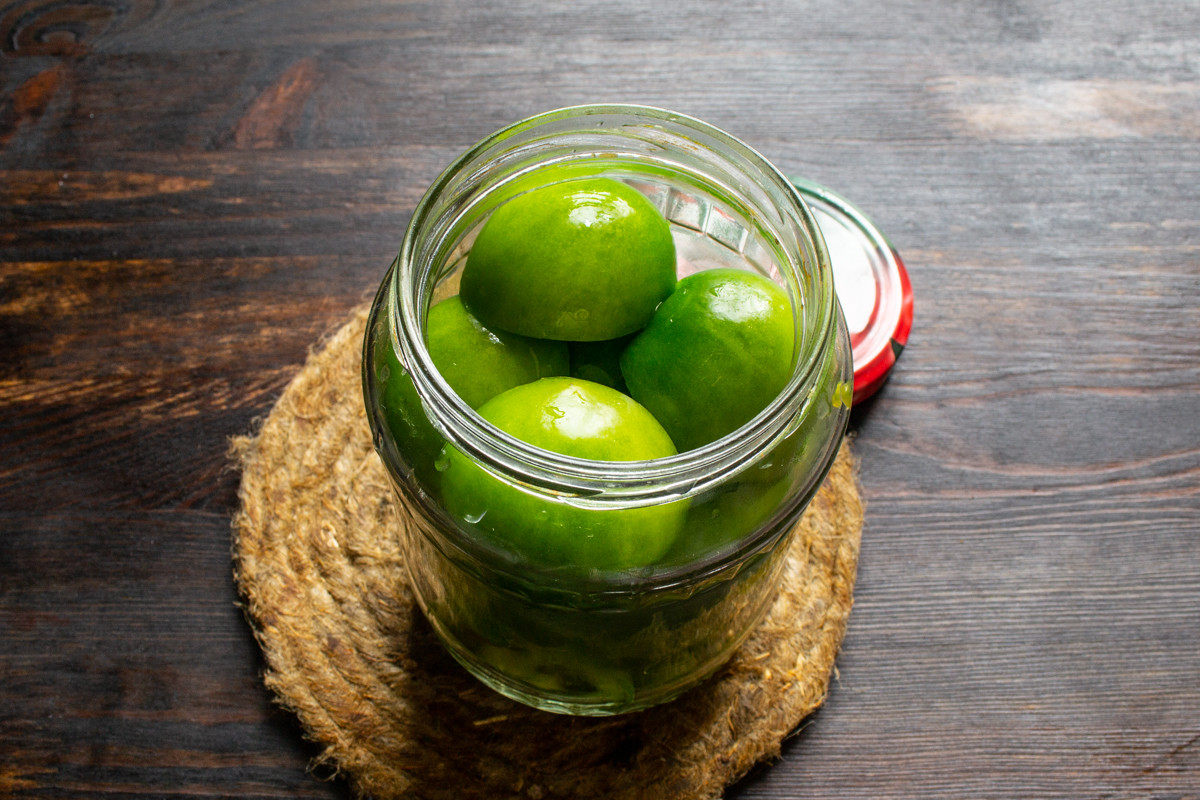
Place the tomatoes into the prepared jars with the cut sides facing down.
Cut the tomatoes in half and remove the core near the stem. Smaller tomatoes can be left whole; just pierce the top with a toothpick.
Wash the jars thoroughly with baking soda or dish soap, then rinse with boiling water. Sterilization is not strictly necessary at this stage. Pack the tomatoes into the prepared jars, cut side down. Fill the jars up to the shoulder.
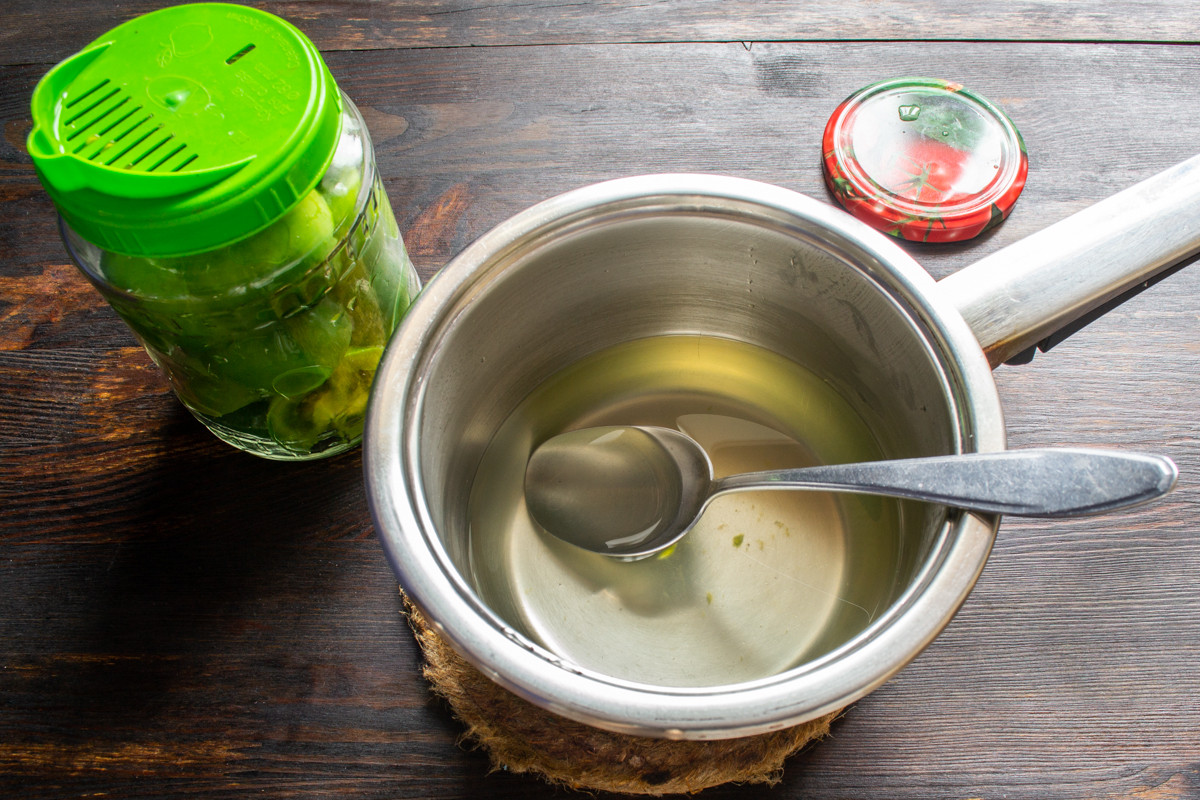
Pour boiling water into the jar and let it sit for a few minutes.
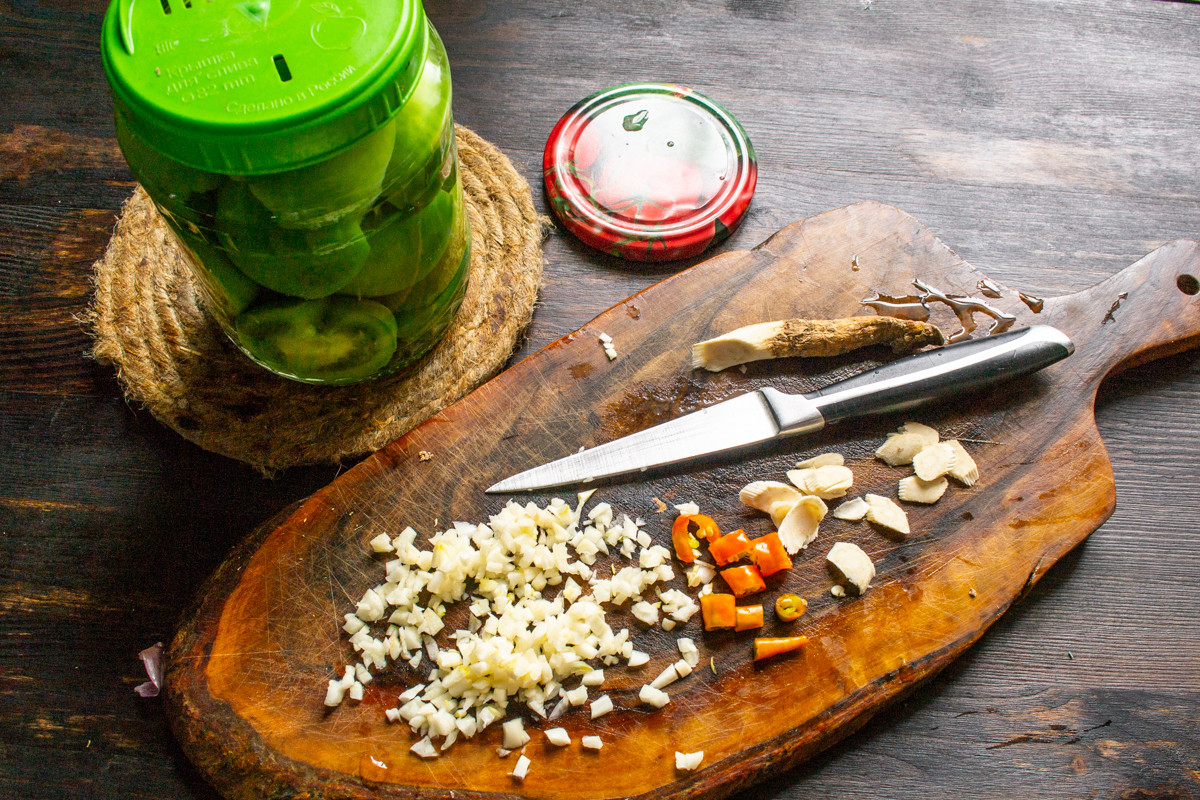
Finely chop the garlic cloves.
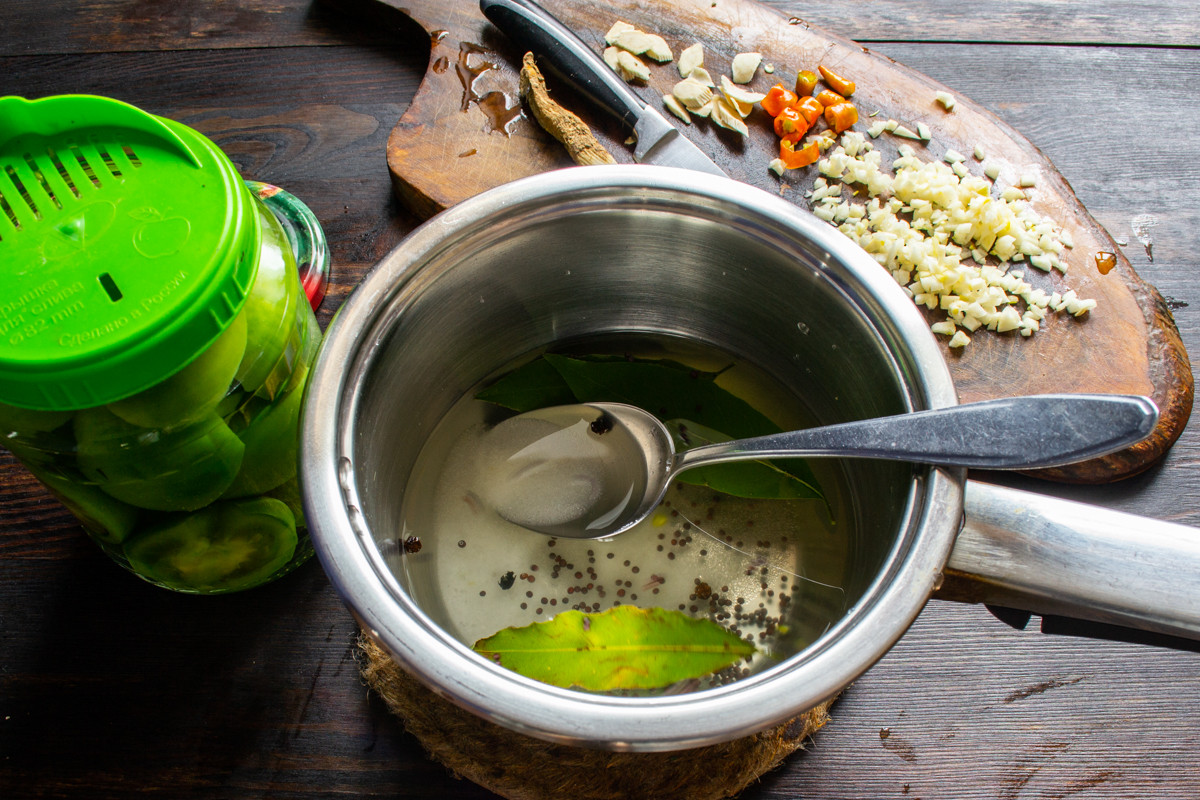
Preparing the brine.
Pour boiling water into the jars and let them sit for a few minutes. Drain the water, then pour fresh boiling water over the tomatoes again. Cover the jars with a towel.
Finely chop the garlic cloves. Scrape the horseradish root and slice it into thin rounds. Slice the chili pepper into rings. If the pepper is very hot, remove the seeds.
Prepare the brine. Pour water into a saucepan. Add sugar and salt. Add mustard seeds, bay leaves, and a teaspoon of black peppercorns. Bring to a boil.
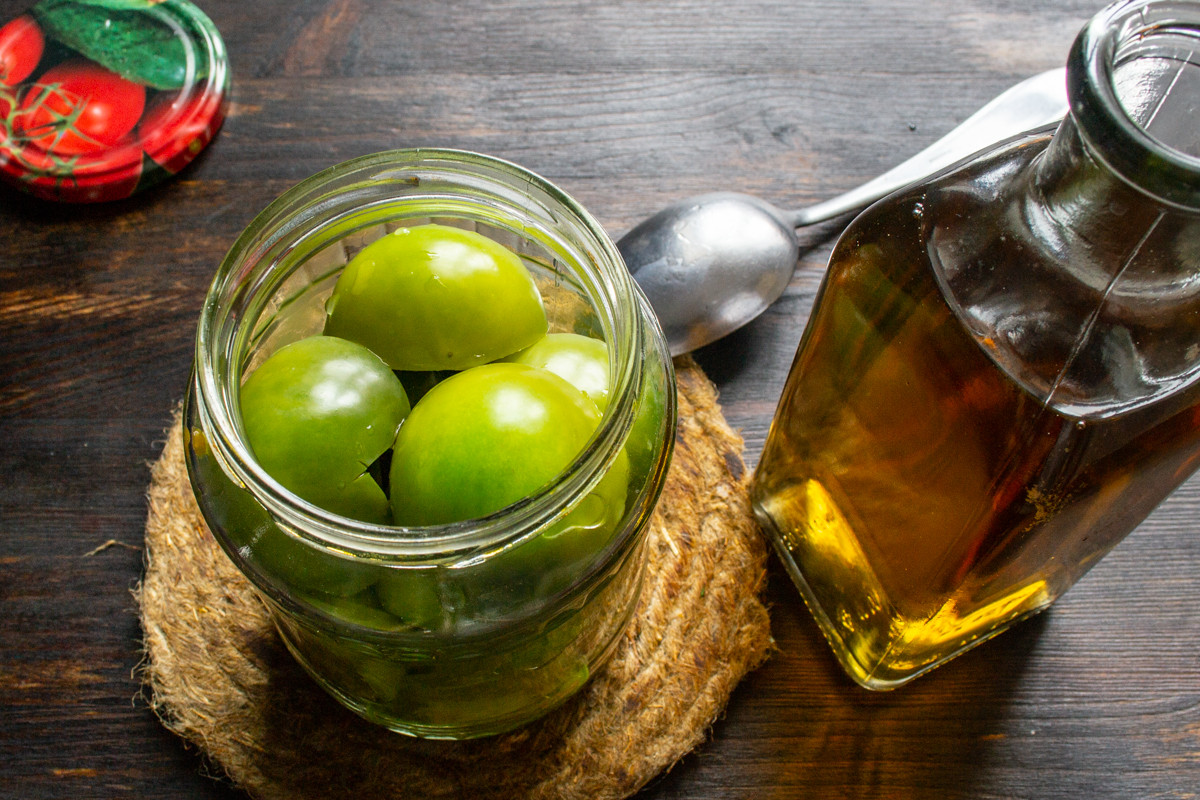
Pour the vinegar into the jars in equal portions.
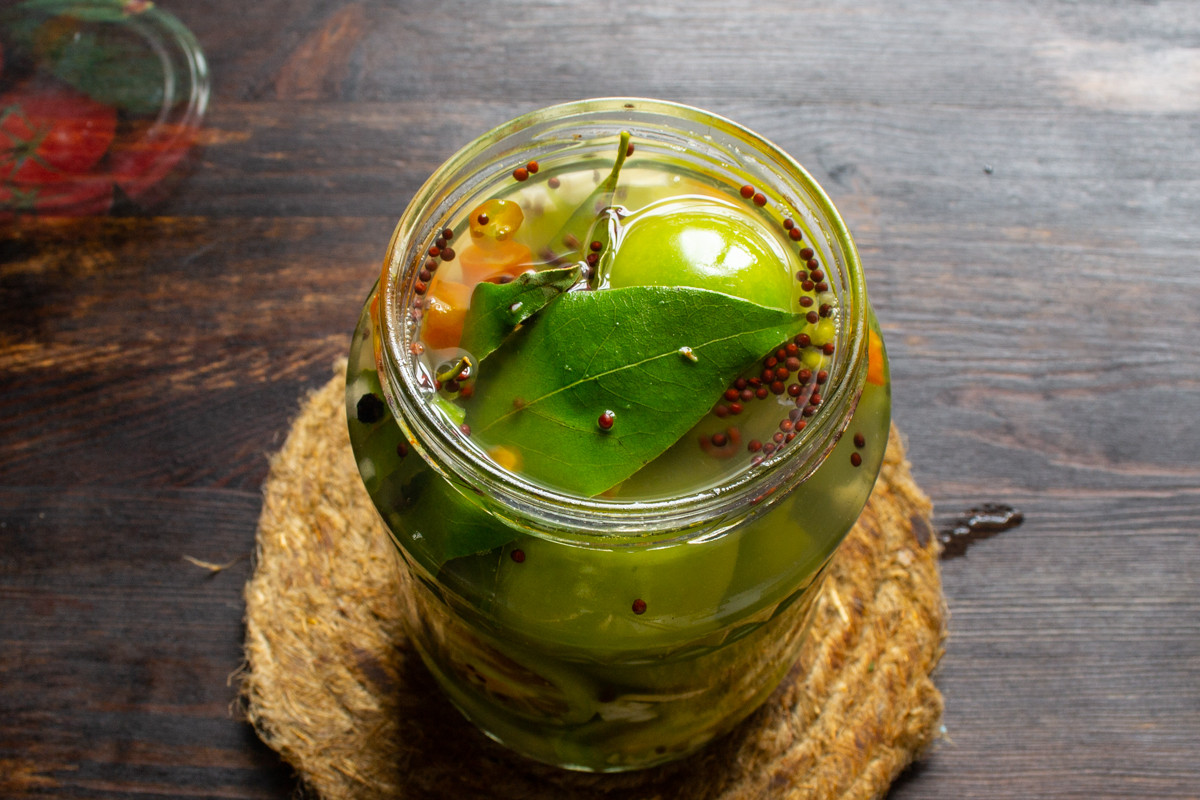
Fill the jar so that the tomatoes are completely covered by the brine.
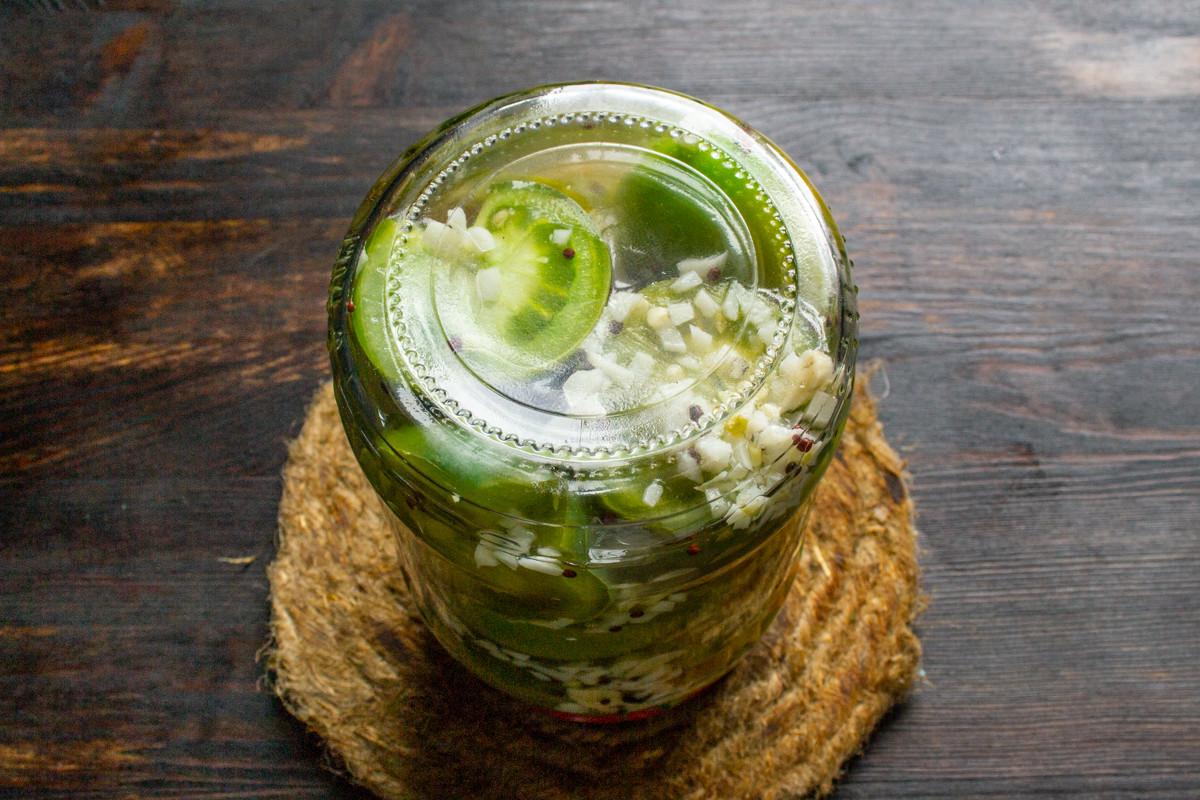
Tightly screw on the sterilized lids.
Pour the vinegar into the jars in equal portions. If you are using a single three-liter jar, pour all the vinegar into it. If you are using several one-liter or 750g jars, divide the vinegar proportionally.
Add the chopped garlic, horseradish, and chili to the boiling brine. Bring everything to a boil together and immediately pour the boiling brine into the jars with the tomatoes and vinegar. Fill the jars so the tomatoes are completely submerged in the brine.
Tightly screw on the sterilized lids. There are two ways to pasteurize your preserves. The first method is natural pasteurization. Immediately wrap the hot, inverted jars in a blanket or throw. Leave them in a warm place until they have completely cooled. Depending on the size and number of jars and the room temperature, this can take from several hours to a full day. Once cooled, move the jars to a cold cellar for storage.
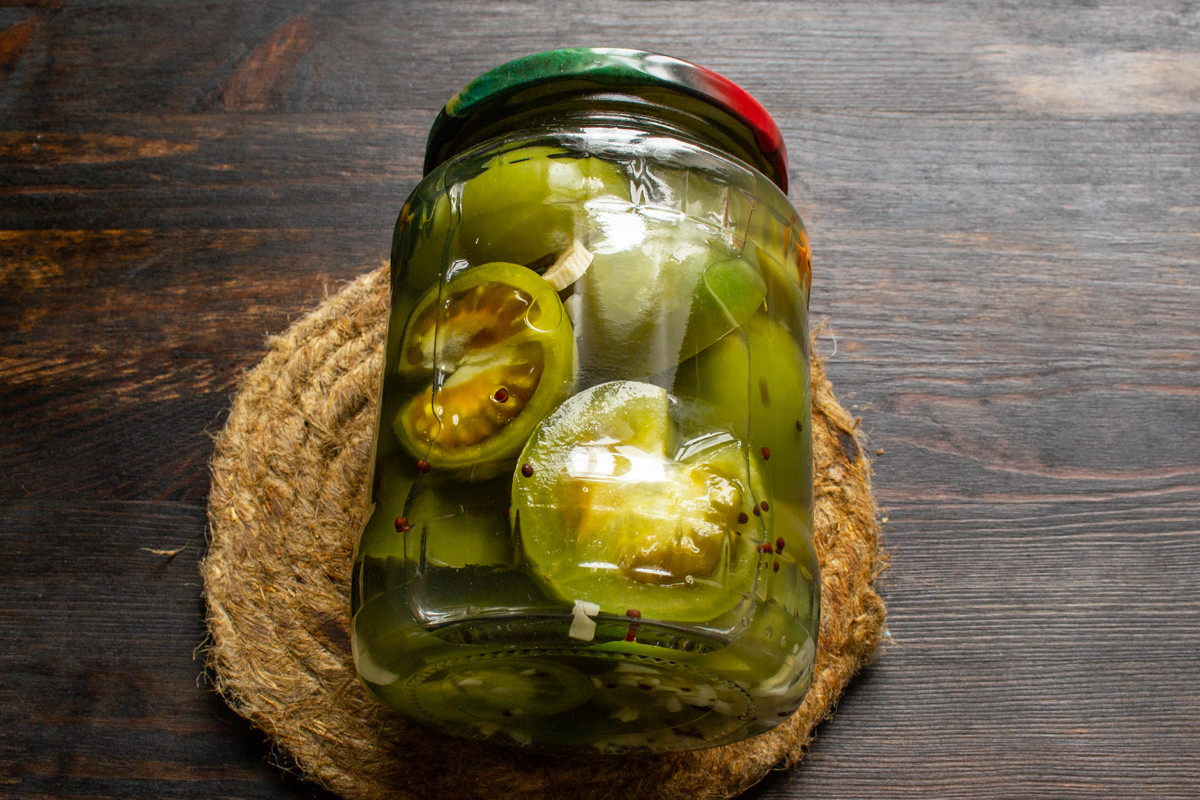
Bon appétit and may your pantry be full for the winter!
The second method is pasteurization in a pot. Place a wooden rack in a wide pot for sterilization. Place the jars on the rack and fill the pot with hot water. Heat to 85°C (185°F) – a kitchen thermometer will be helpful here. Pasteurize one-liter jars for 15 minutes, then remove them with tongs, turn them upside down, and let them cool. Store in a cool place.
Bon appétit, and may your pantry be full for the winter!
There's a special kind of satisfaction in lining your pantry shelves with jars of homemade preserves, and these pickled green tomatoes are a true gem. Once they've had a few weeks to mature, their flavor will be absolutely irresistible. Serve them as a zesty side dish with hearty roasted meats or potatoes, chop them up for a unique relish, or enjoy them the traditional way—as a crisp, flavorful zakuska (a savory appetizer) alongside a chilled drink. We hope you enjoy this taste of the harvest all winter long. Happy canning!
0 comments