
Welcome to a taste of authentic Belarusian comfort food! Today, we're making Bigos, a legendary hunter's stew cherished across Eastern and Central Europe, especially in Belarus and Poland. This isn't just a meal; it's a rich tapestry of flavors, weaving together the tang of sauerkraut, the subtle sweetness of fresh cabbage, the savory depth of pork belly, and the smoky aroma of sausages. Bigos is a dish that takes its time, simmering slowly to allow every ingredient to meld into a hearty, soul-warming stew. Perfect for a cold day or a festive family gathering, this Belarusian version is a celebration of rustic, traditional cooking at its finest.
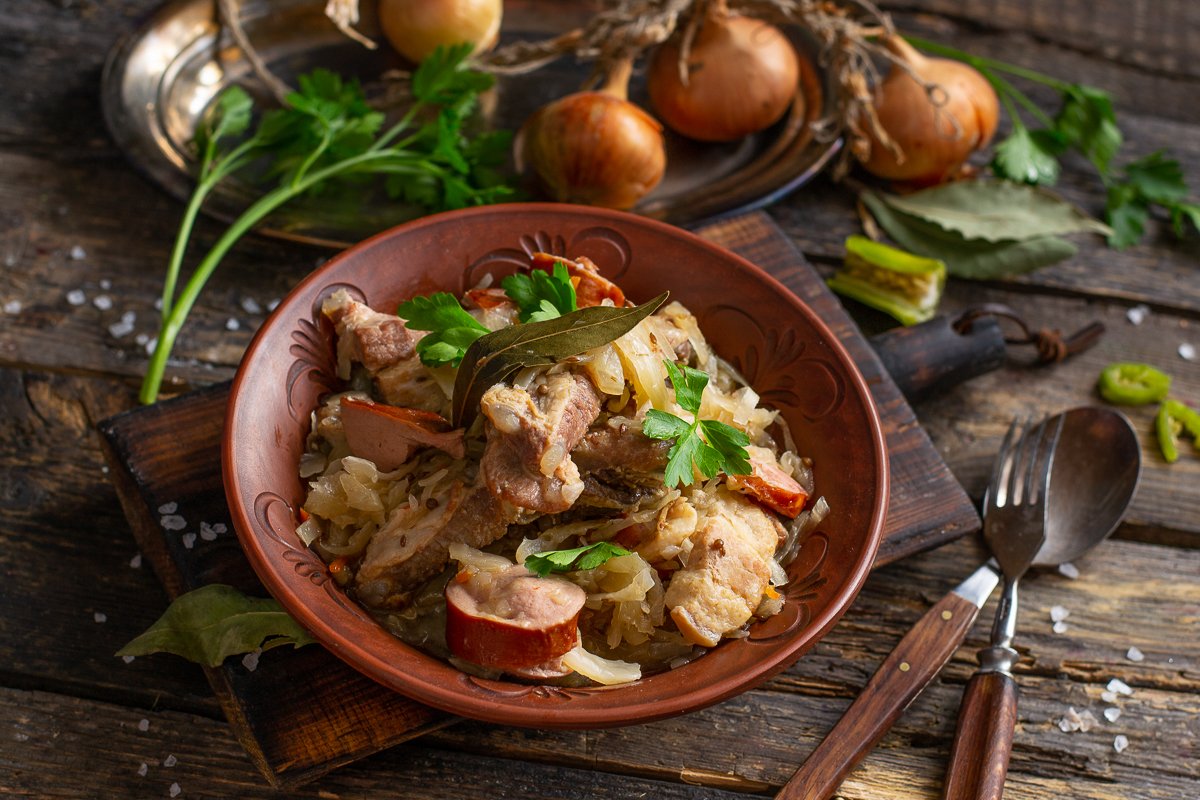
Belarusian Bigos with fresh cabbage and sauerkraut
Ingredients for Belarusian Bigos with Fresh Cabbage and Sauerkraut
- 0.5 kg sauerkraut
- 0.5 kg fresh cabbage
- 0.5 kg pork belly
- 300 g smoked sausage
- 300 g pork sardelki (thick sausages, similar to frankfurters)
- 150 g onion
- 4 bay leaves
- 1 tsp caraway seeds
- 2 tsp sweet ground paprika
- 30 ml vegetable oil
- 1 cup dry white wine
- dried thyme, pepper, salt
How to Cook Belarusian Bigos with Fresh Cabbage and Sauerkraut
Let’s start with the sauerkraut — we’ll do a little prep work to get rid of any unpleasant smell during cooking. First, place the sauerkraut in a deep bowl, cover it with cold water, rinse, and then transfer it to a colander to drain well under running water.
Next, put the sauerkraut in a saucepan, cover it with hot water, close the lid, and bring it to a boil quickly over high heat. Cook for 2-3 minutes, drain, and rinse again under running water. Repeat this procedure twice. It’s a good idea to turn your kitchen exhaust fan to full power during this time.
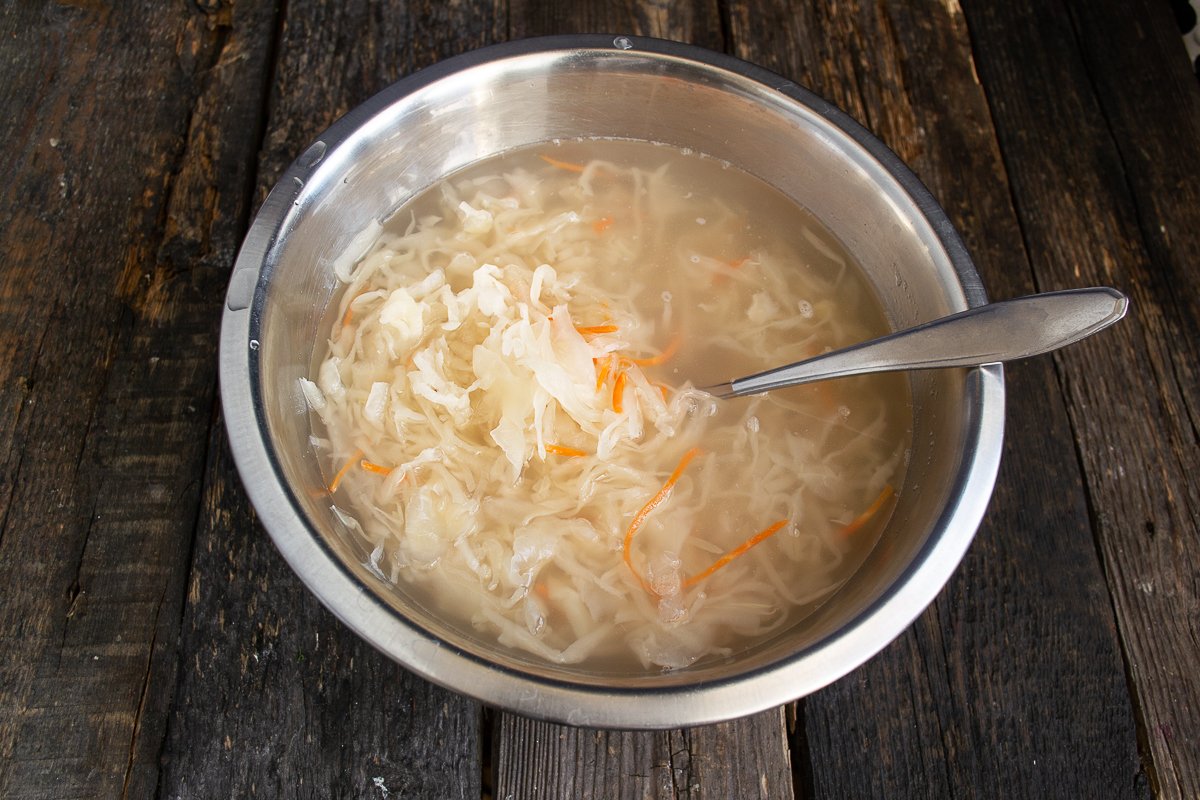
Preparing the sauerkraut
Cut the raw pork belly, which can include ribs, into large pieces. This recipe uses pork belly with the skin on; during the long stewing process, the skin will become tender.
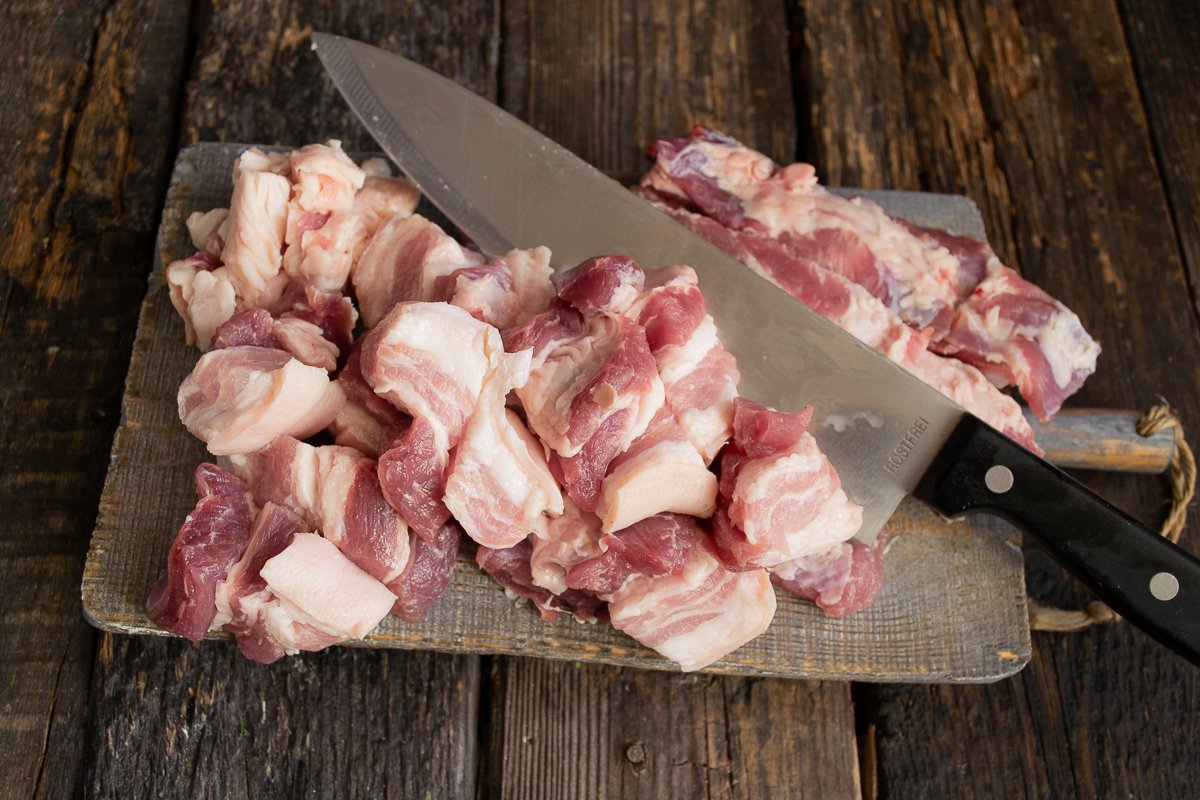
Cut the raw pork belly into large pieces
Trim a little fat from the pork belly and dice it into small cubes. Pour vegetable oil into a Dutch oven, add the finely chopped onion and the diced pork fat. Sauté the onion while rendering the fat.
Then, add the chopped pork belly and quickly sear it over high heat until golden brown.
Shred the fresh cabbage into thin strips and place a layer of it over the seared pork belly.
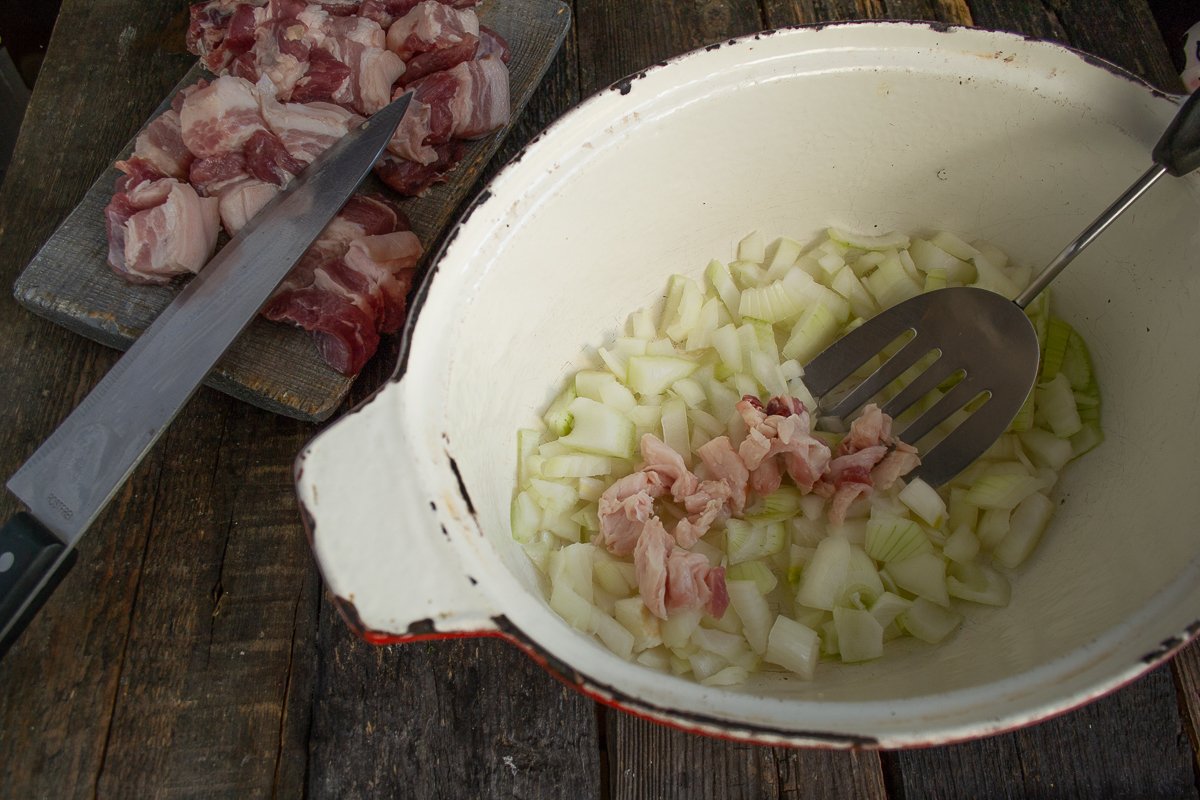
Cut off a little fat and dice it finely. Sauté the onion and render the fat
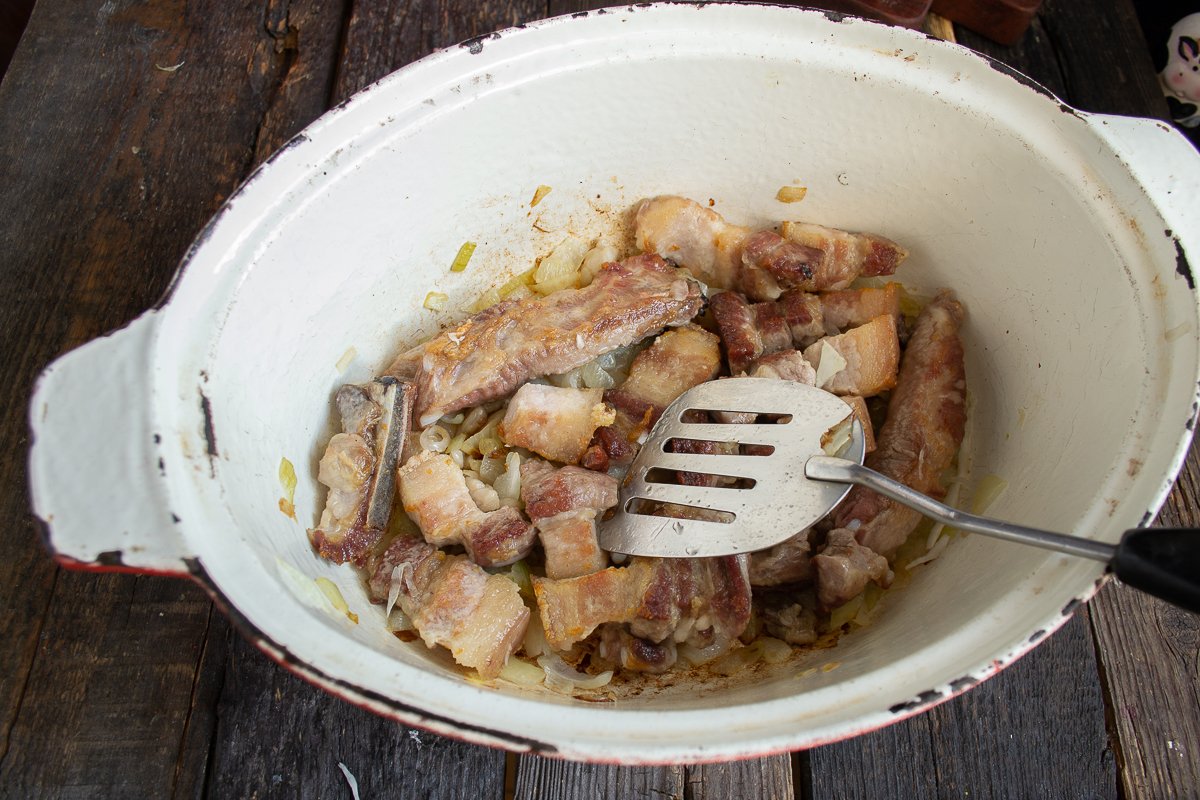
Add the chopped pork belly and quickly sear over high heat
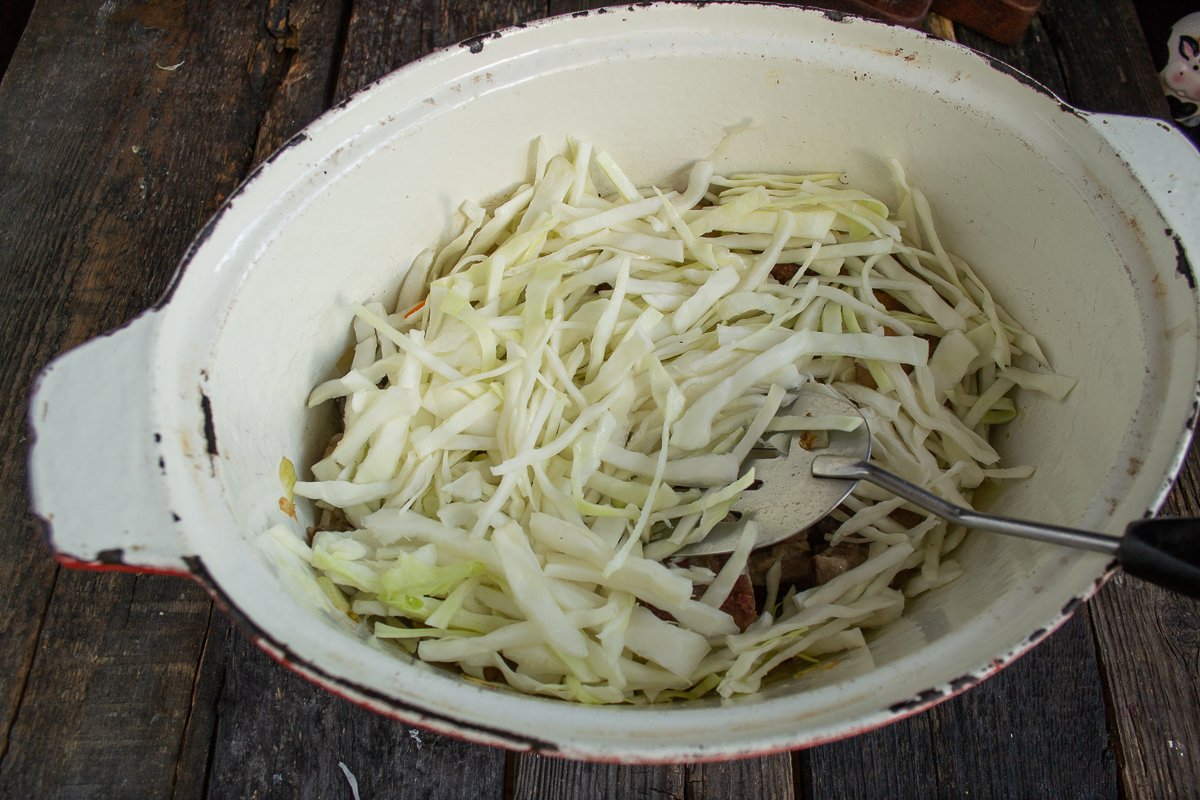
Place a layer of shredded fresh cabbage on top of the seared pork belly
On top of the fresh cabbage, lay out thickly sliced smoked sausage and pork sardelki (thick sausages, similar to frankfurters).
Drain the parboiled sauerkraut in a colander, let the water run off, and then cover all the ingredients in the Dutch oven with a layer of the sauerkraut.
At this stage, pour in the dry white wine, and sprinkle in the sweet ground paprika, caraway seeds, bay leaves, salt, and pepper to taste. Add a pinch of thyme. Thyme is very aromatic and, combined with white wine and smoked meats, it gives the dish a unique spirit!
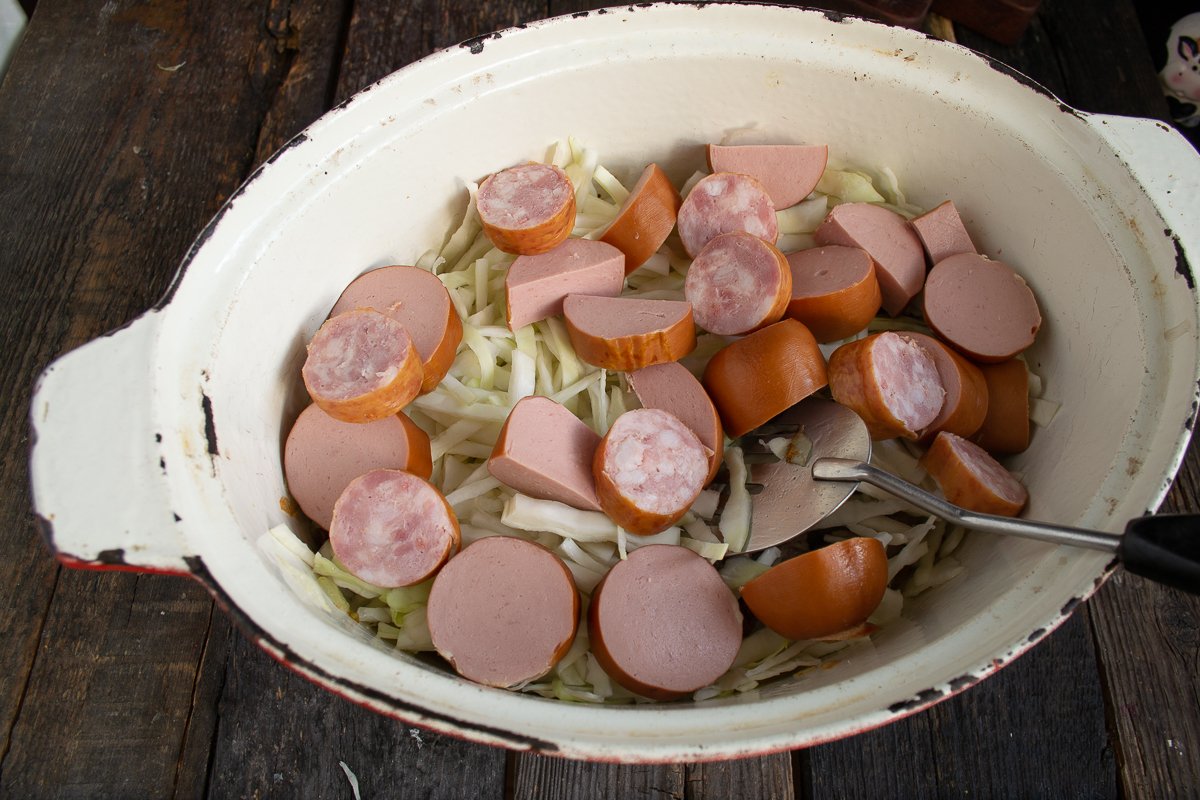
Place the sliced smoked sausage and pork sardelki on top of the cabbage
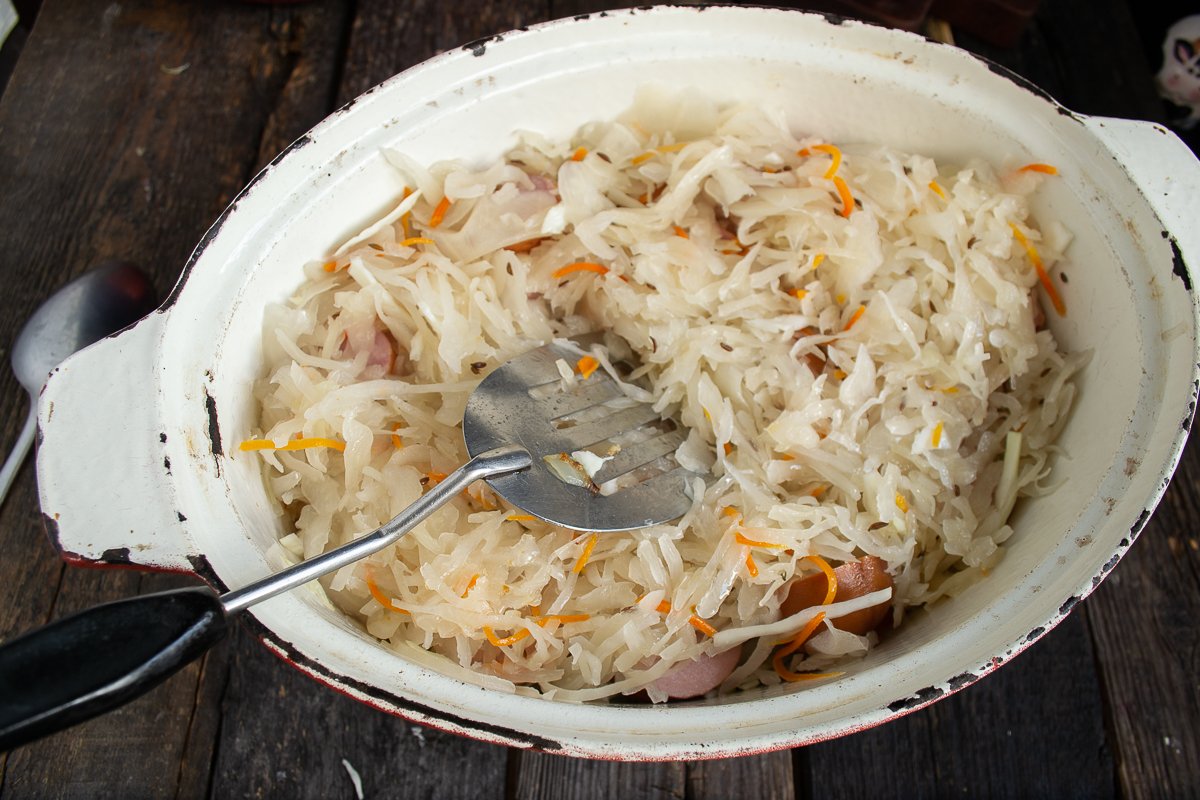
Cover all ingredients in the Dutch oven with a layer of prepared sauerkraut
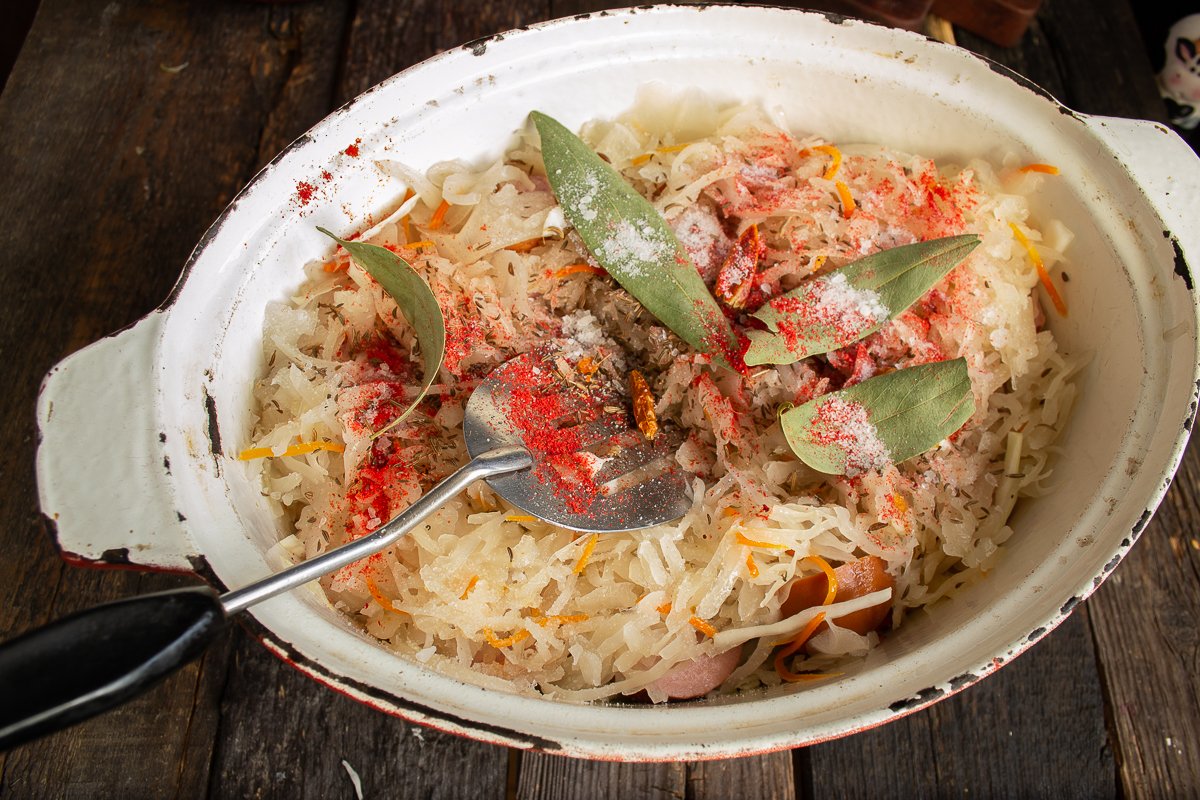
Pour in the dry white wine and add the spices
Now, cover the Dutch oven tightly. Cook for about 15 minutes over high heat until the Bigos comes to a boil, then reduce the heat and simmer on low for 2 hours.
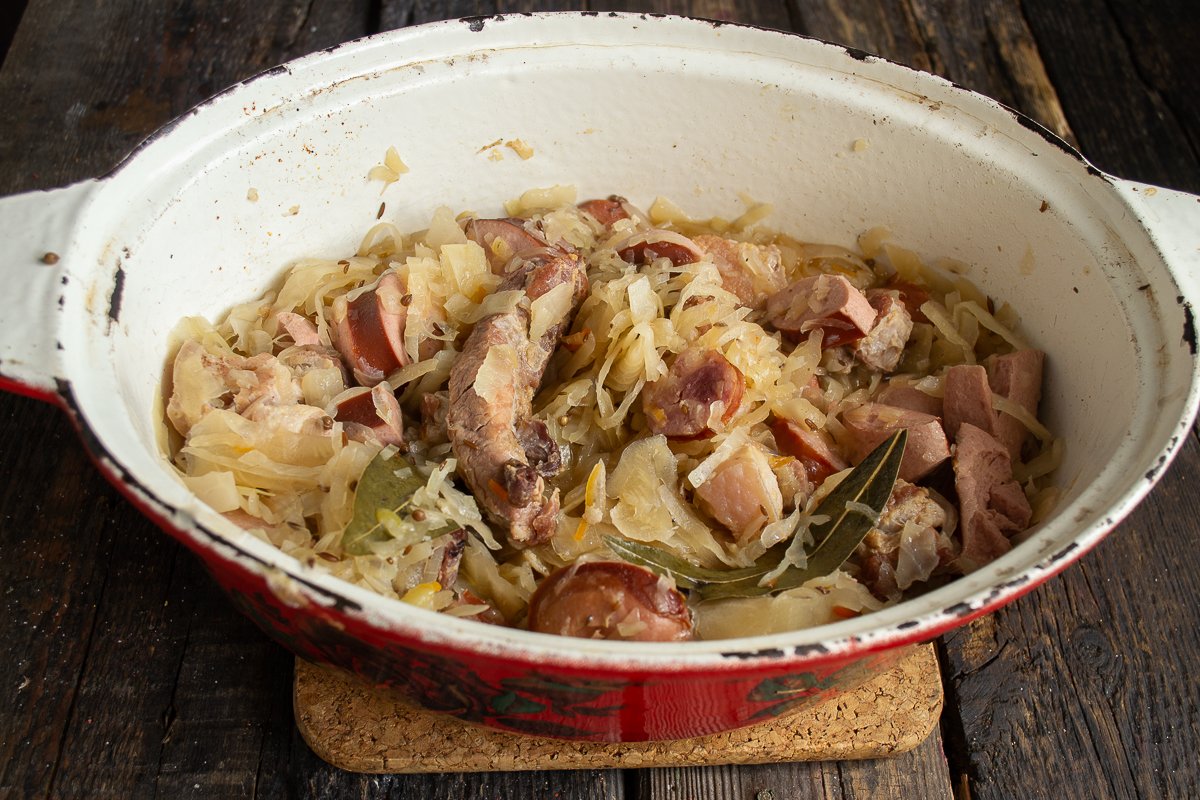
Cook the Bigos over high heat with the lid on until it boils, then simmer over low heat for 2 hours
Let the finished Belarusian Bigos cool slightly and rest for a bit, then serve, garnished with fresh herbs. Enjoy your meal!
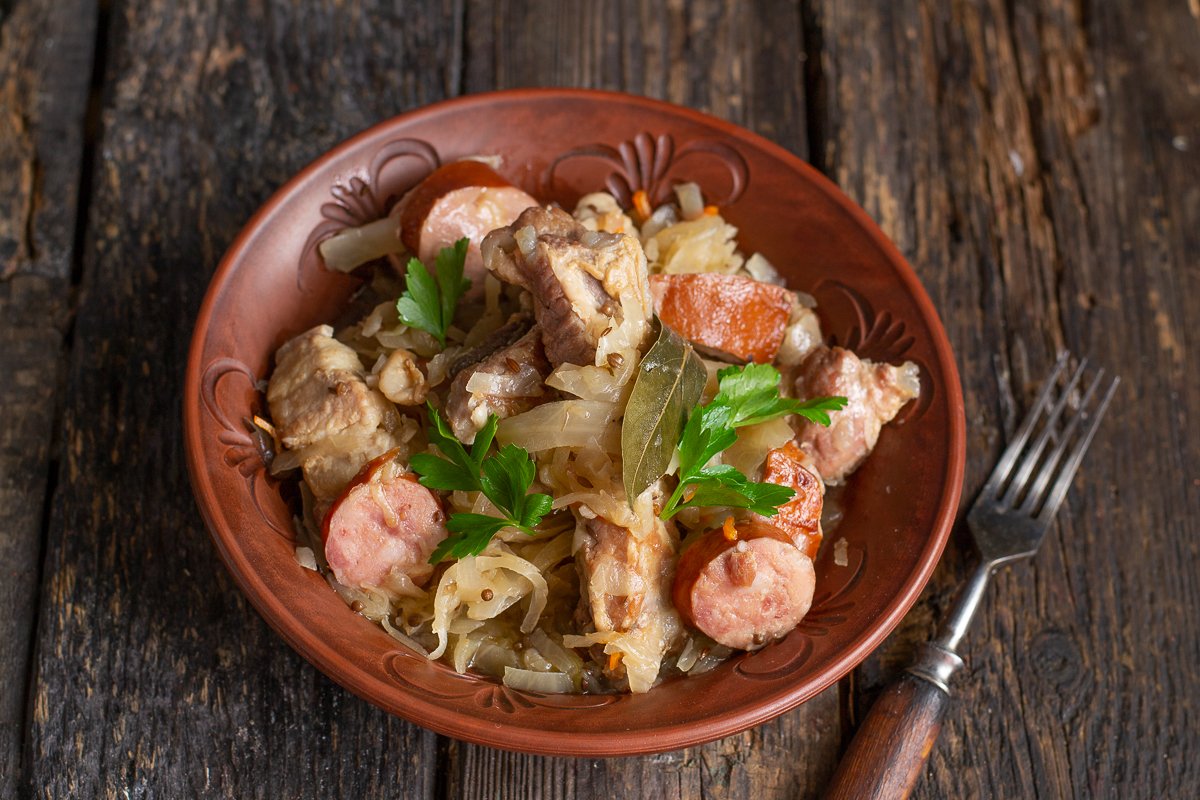
Let the finished Belarusian Bigos cool slightly and rest. Done!
And there you have it—a steaming pot of Belarusian Bigos, rich with history and flavor. This dish is traditionally served hot, often with a side of dark rye bread to soak up the delicious juices or with simple boiled potatoes. For an extra touch of authenticity, add a dollop of sour cream on top. One of the magical things about Bigos is that it tastes even better the next day, as the flavors continue to deepen and mature. So don't hesitate to make a large batch! We hope you enjoy this hearty and comforting taste of Belarusian heritage. Happy cooking!
0 comments