
Every family has its own treasured recipe for borscht (traditional Eastern European beet soup): some guard their culinary secrets closely, while others gladly share them. This rich beef and beet borscht turns out incredibly fragrant, thick, and hearty thanks to a savory vegetable sauté spiked with adjika (a spicy Caucasian chili paste). The tradition of simmering this deeply satisfying meat soup goes back generations, where vibrant beets and garden vegetables created not only an unmistakable ruby color, but also brought warmth to the whole family. Thick smetana (sour cream), fresh herbs, and a crusty slice of rye bread make the ultimate companions for your meal.
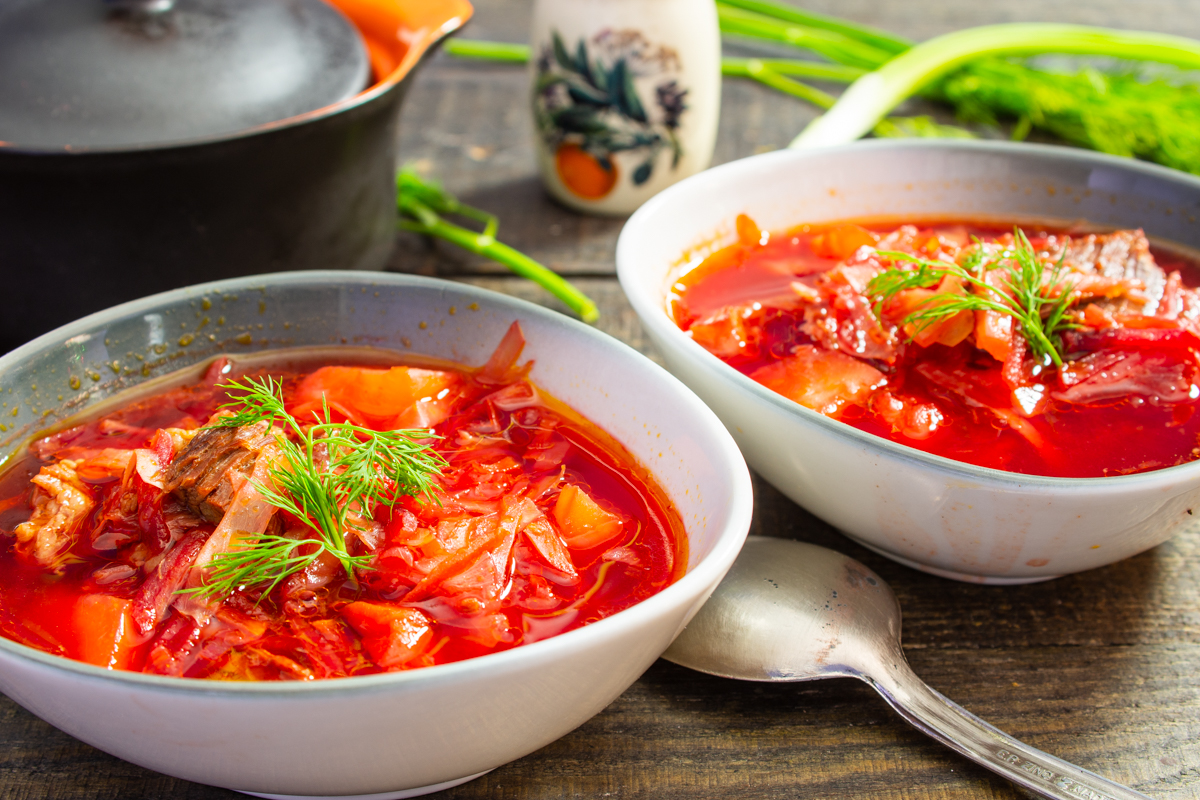
Appetizing homemade beef borscht garnished with fresh herbs and spices in deep bowls.
Ingredients
- 800 g (1.75 lbs) lean boneless beef
- 1 boiled or roasted beet
- 200 g (7 oz) white cabbage
- 2 medium potatoes
- 1 carrot
- 1 onion
- 1 tbsp concentrated tomato paste
- 1 tbsp neutral vegetable oil
- 2 cloves garlic
- Roots, herbs, and spices for the broth (bay leaf, peppercorns, dried herbs)
- 1 tsp hot chili adjika (spicy Caucasian chili paste, or substitute sambal oelek or harissa)
- Sugar and salt to taste
Instructions
Start with the beef broth. Cut the meat into small pieces and place them in a pot. Add your broth aromatics: bay leaf, peppercorns, and dried herbs. Simmer over low heat for 2 hours after it comes to a boil, seasoning with salt to taste. Remove the meat from the broth and set it aside, then strain the broth through cheesecloth or a fine-mesh sieve.
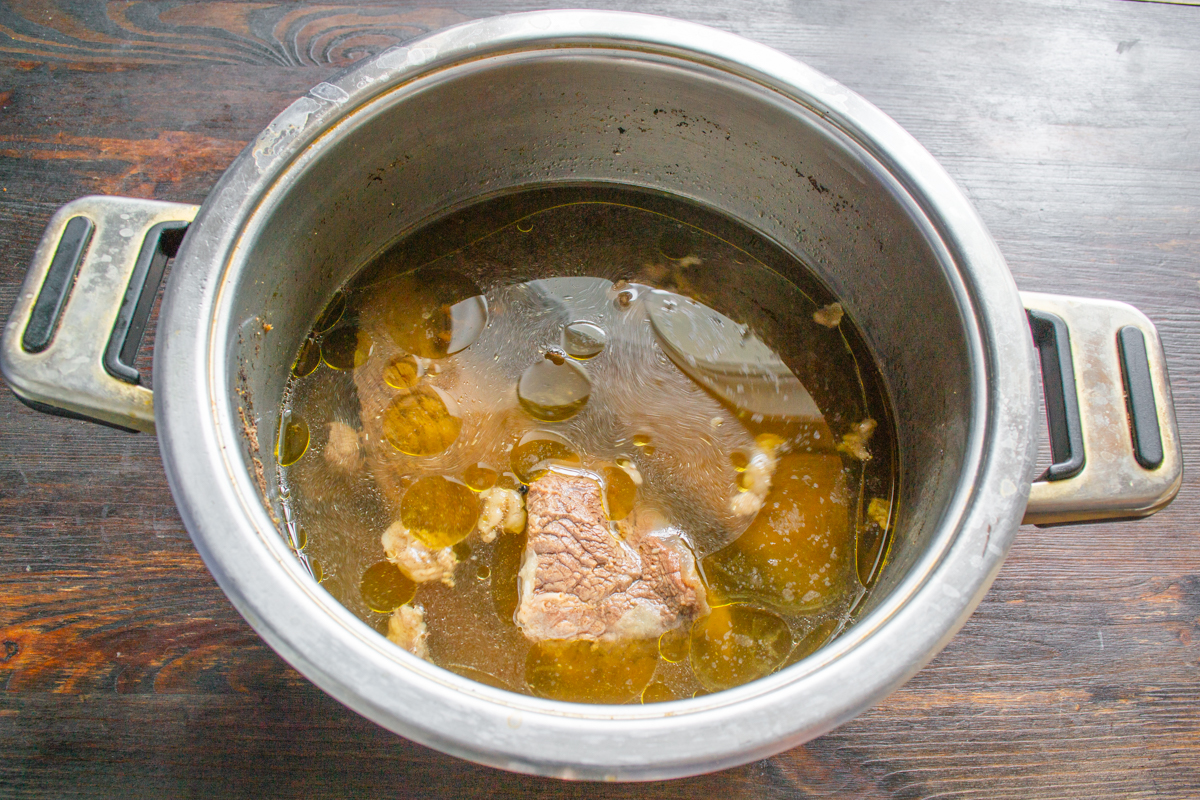
Rich, strained beef broth infused with spices in a soup pot for the borscht.
Once the broth is ready, you can start building the borscht. Pour neutral vegetable oil into a heavy-bottomed pot. Toss the chopped onion into the hot oil and add 1 teaspoon of adjika (a spicy, garlicky Caucasian chili paste) or any other hot chili paste or seasoning. You can easily find similar spicy pastes at Indian, Korean, or Chinese specialty markets. Sauté the onion with the adjika for a few minutes until softened and translucent.
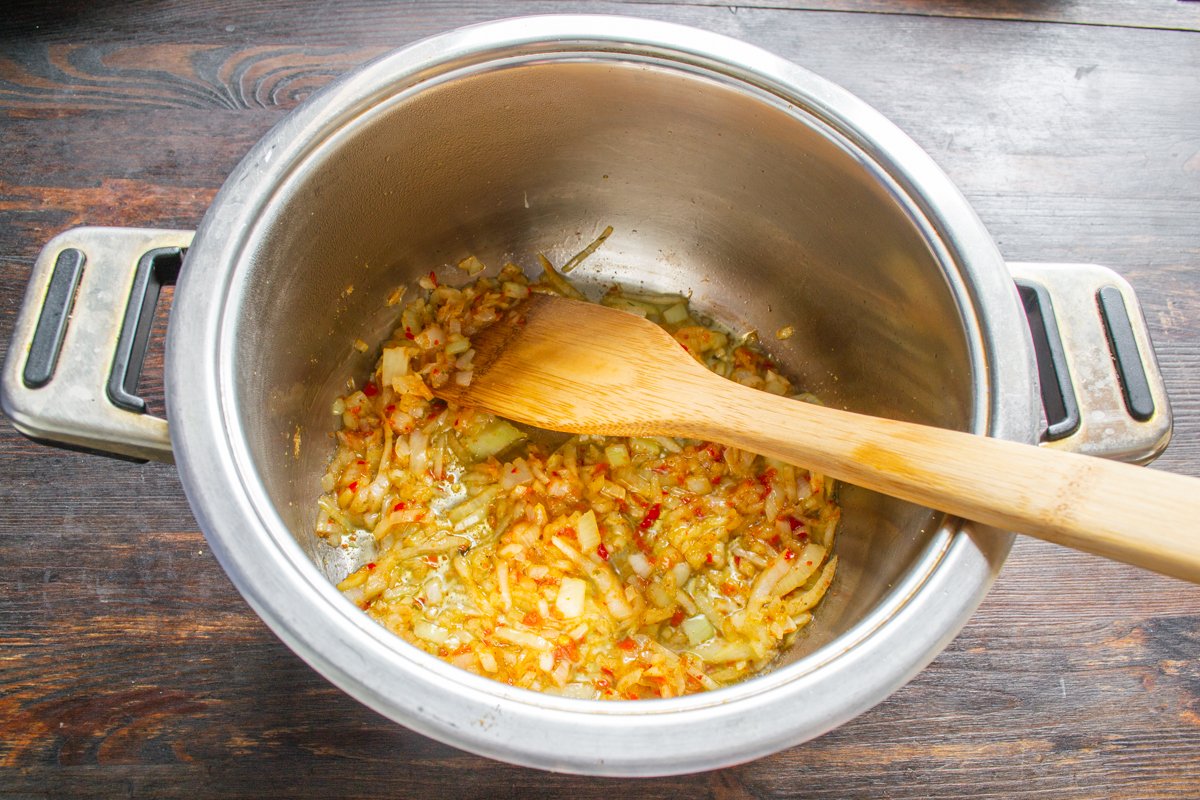
Chopped onions sautéed with spicy adjika paste to build a flavorful base for the borscht.
Coarsely grate the carrot and add it to the sautéed onion. Cook everything together for 5–7 minutes—letting it caramelize slightly will make the soup even more flavorful.
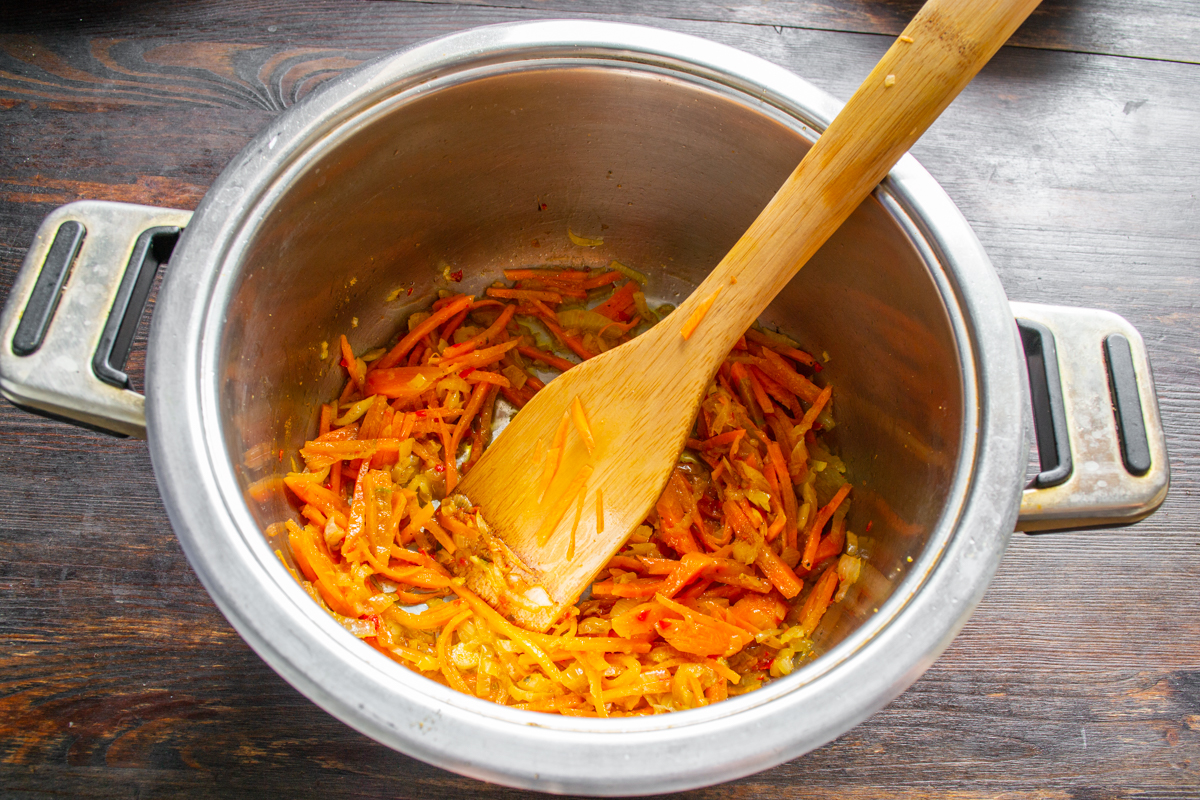
Grated carrots sautéed with the onions until tender and golden.
Stir in 1 tablespoon of concentrated tomato paste. If you aren’t using concentrated paste, substitute with 3–4 tablespoons of tomato purée or one finely chopped fresh tomato.
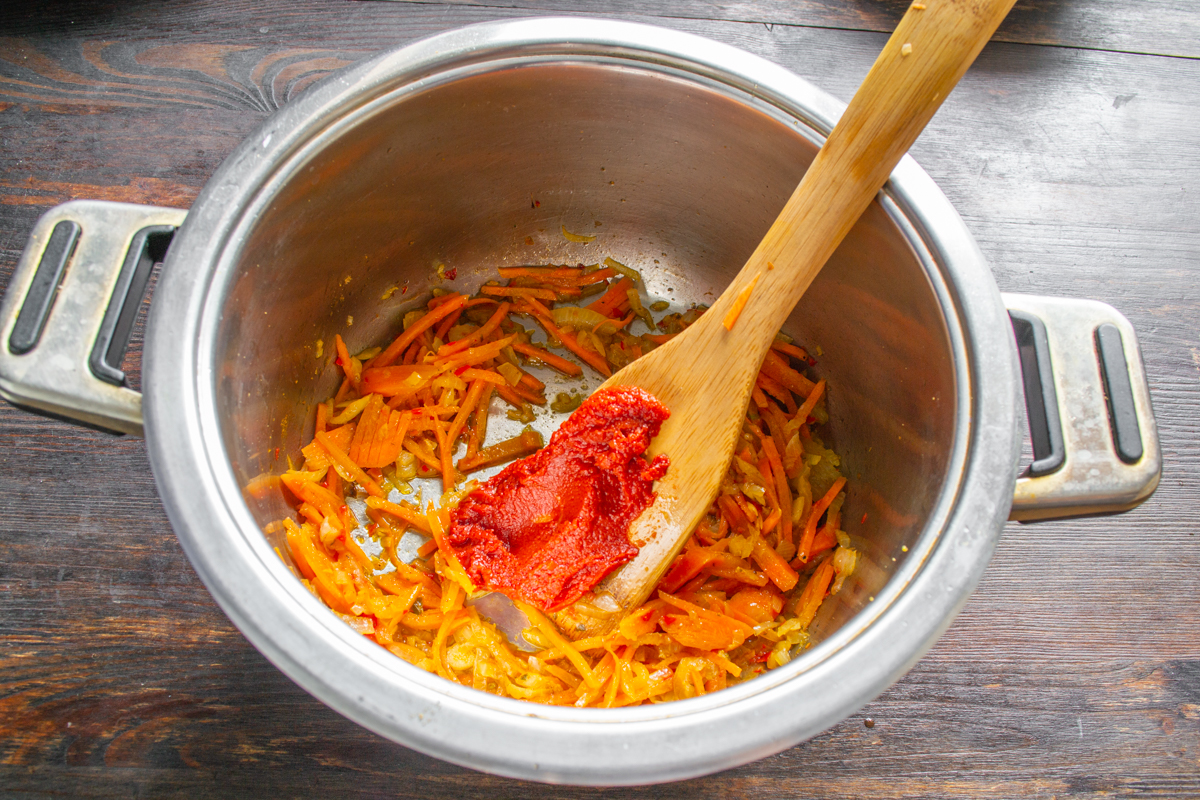
A spoonful of rich tomato paste added to the sautéed onions and carrots for deep flavor.
Sauté the vegetables with the tomato paste for 1 minute, then add the peeled potatoes cut into large cubes.
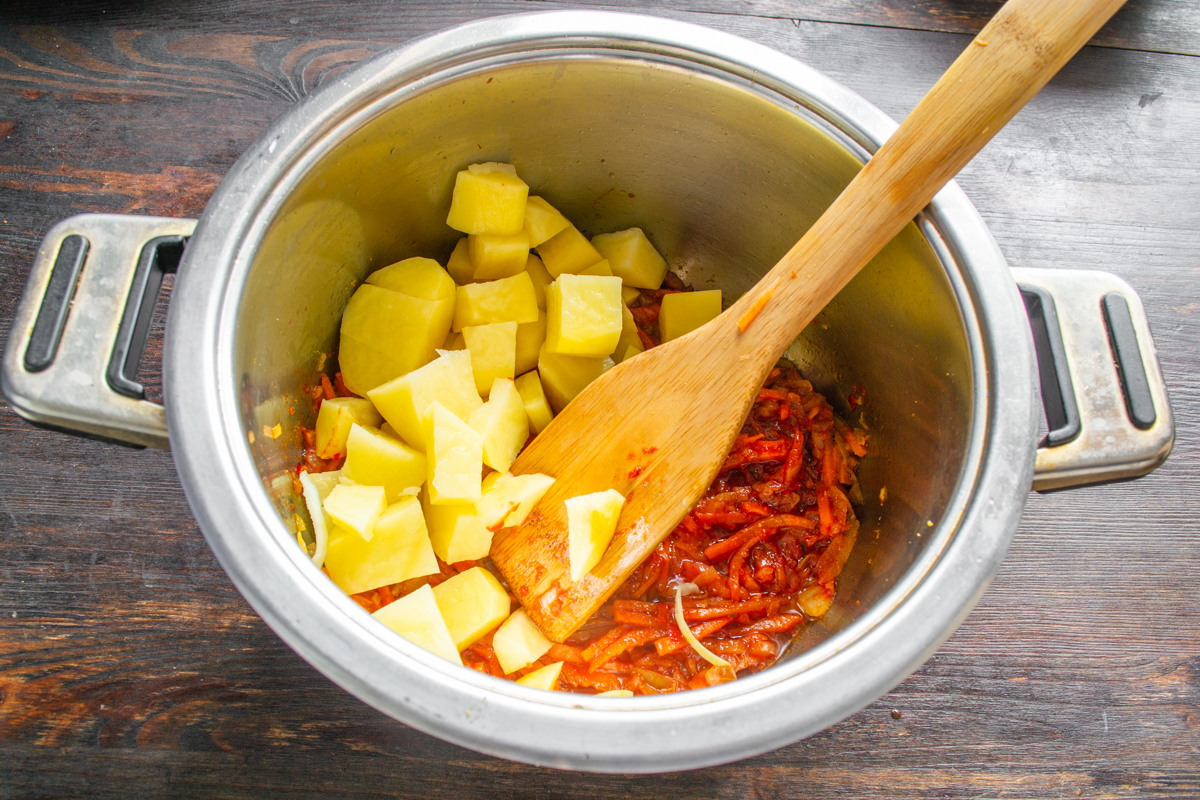
Large cubes of potato added to the sautéed vegetable base before pouring in the broth.
Shred the white cabbage into thin strips (no wider than 4 mm or about 1/8 inch). Add the shredded cabbage to the pot with the other ingredients.
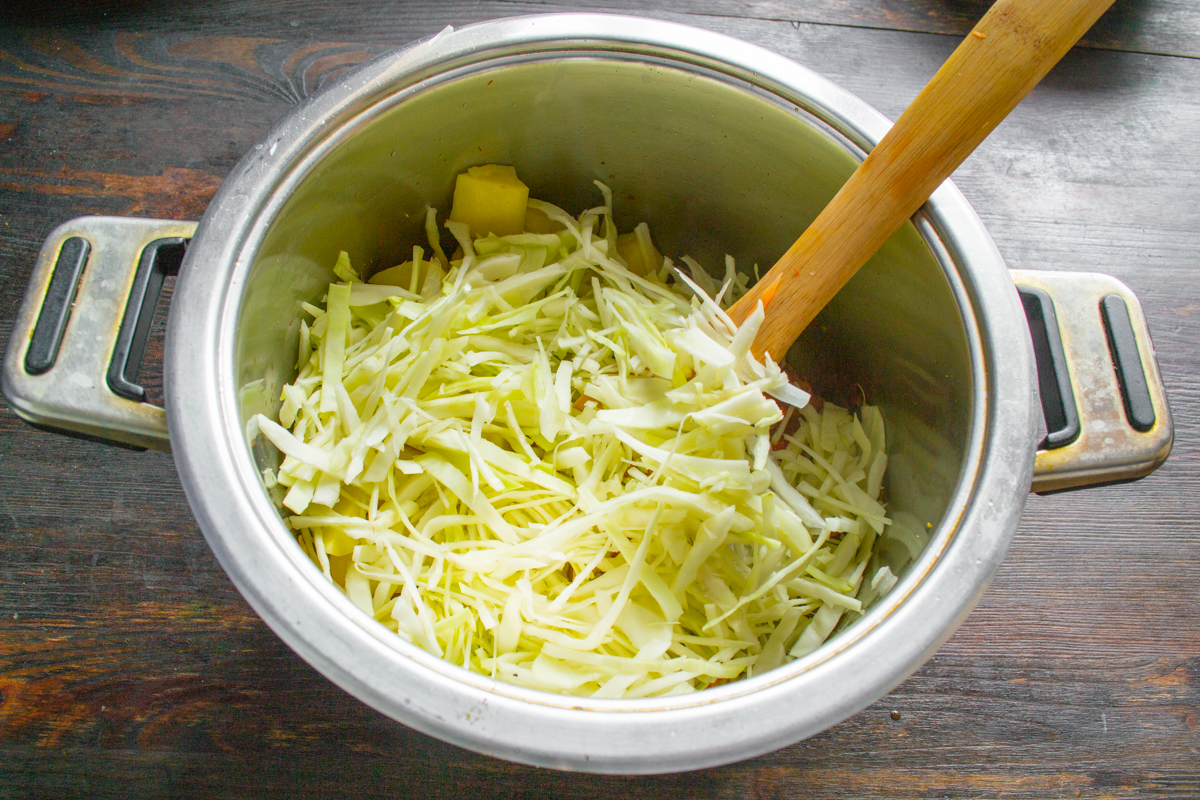
Fresh white cabbage thinly shredded and added to the pot of vegetables.
Pour in the hot beef broth.
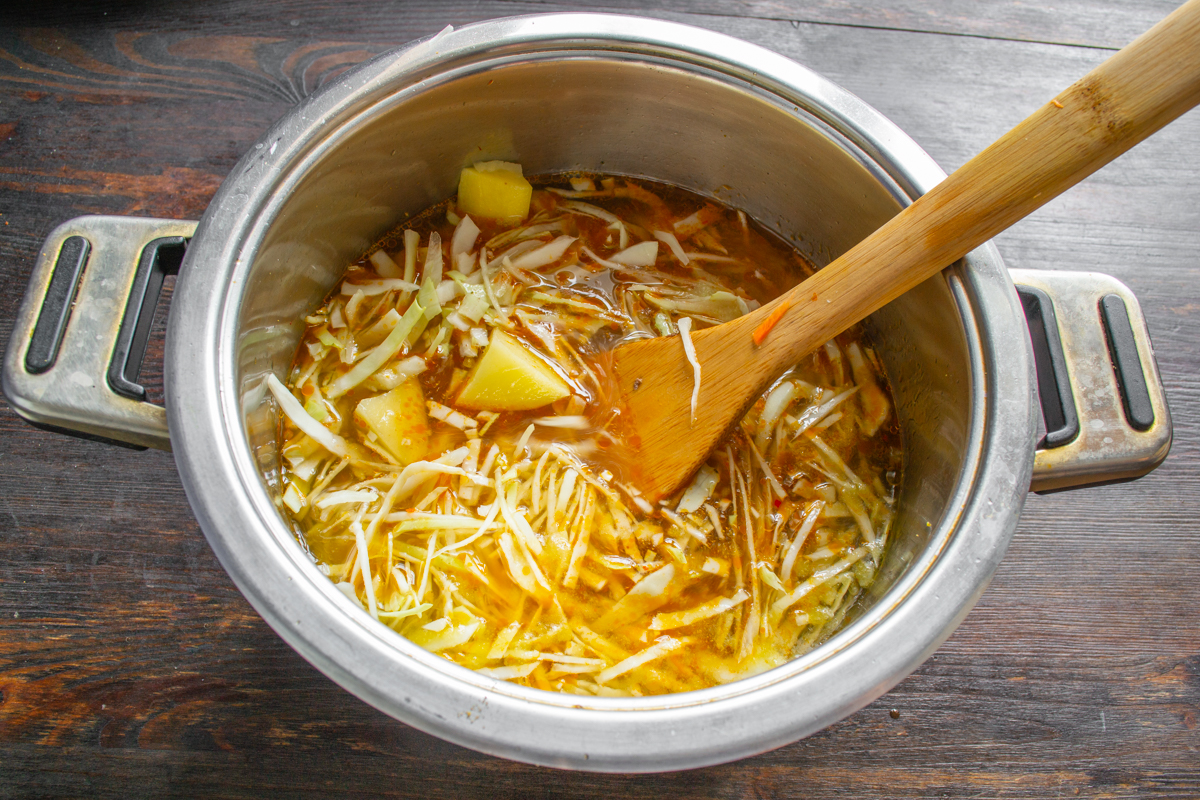
Hot beef broth poured into the pot over the cabbage and vegetables to simmer.
Season with salt to taste and add a pinch of sugar if desired. Bring to a boil, then simmer gently over low heat for 30–35 minutes. During this time, the cabbage will become tender and the vegetables will infuse the broth with their rich juices and aromas.
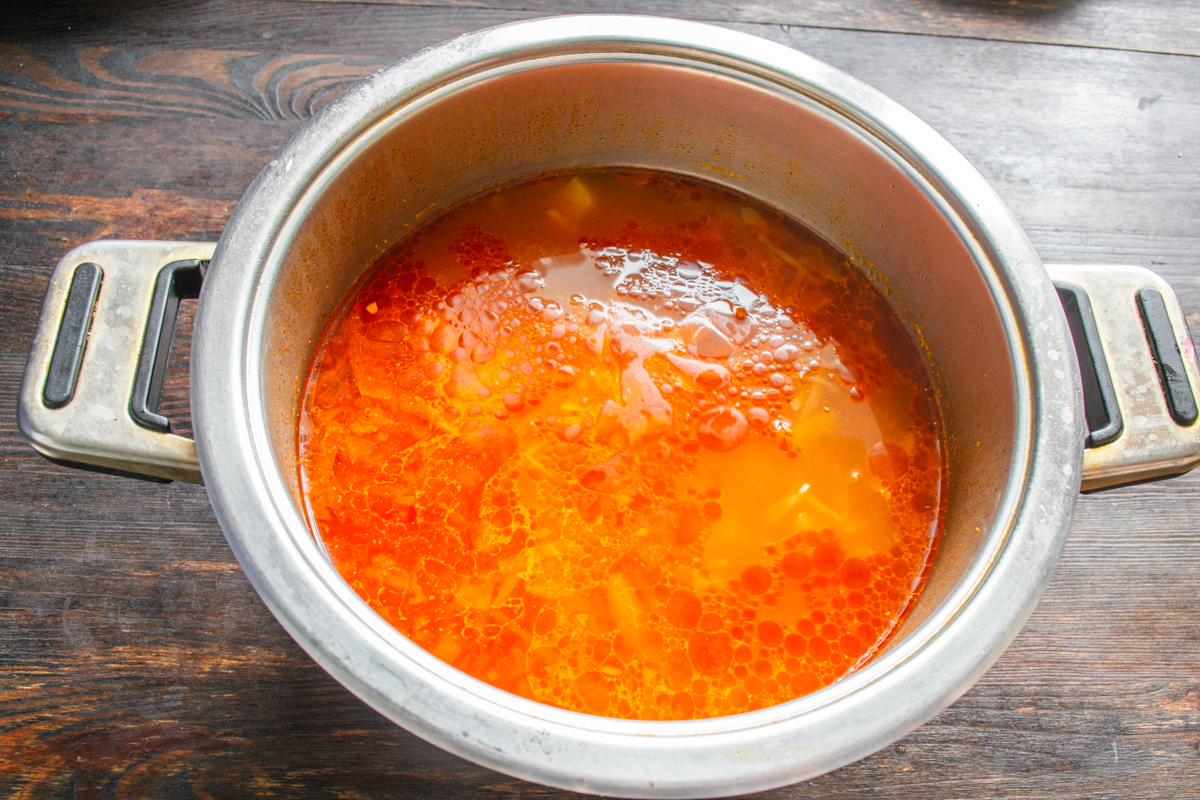
Borscht simmering gently until the cabbage is tender and all the flavors meld.
Cut or shred the cooked beef by hand into large bite-sized pieces. Once the vegetables are tender, return the cooked meat to the pot.
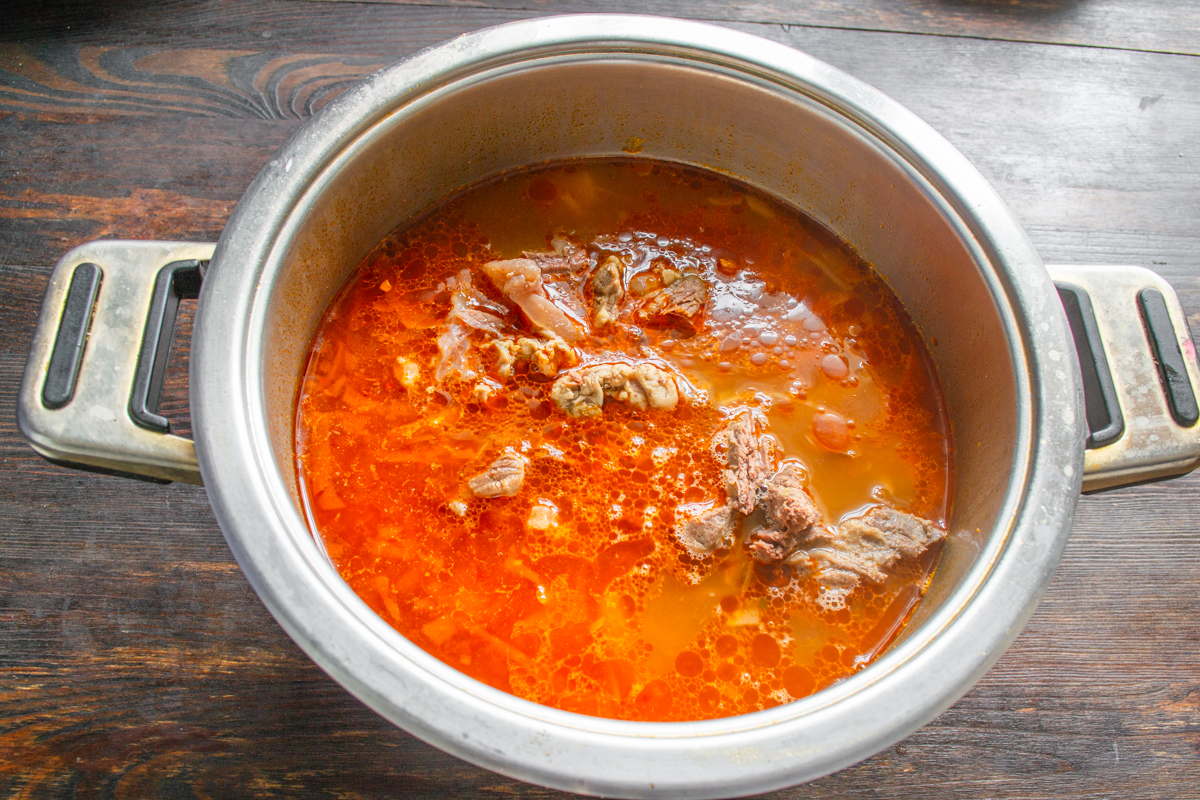
Pieces of tender cooked beef added back into the pot with the nearly finished soup.
Coarsely grate the boiled or roasted beet. Remove the pot from the heat, stir the grated beet into the borscht, and mix well.
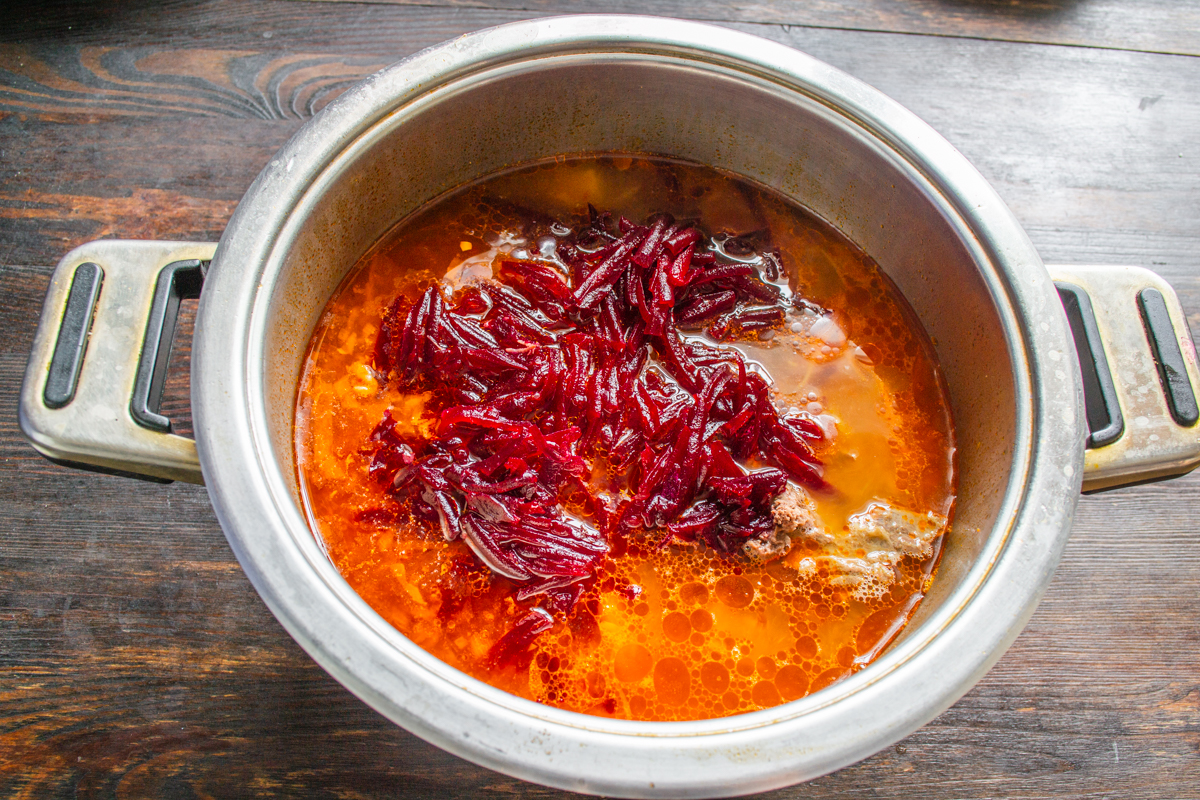
Coarsely grated cooked beet added to the borscht after removing the pot from the heat.
Mash 2 cloves of garlic into a paste with a pinch of salt. Stir this garlic paste into the borscht at the very end.
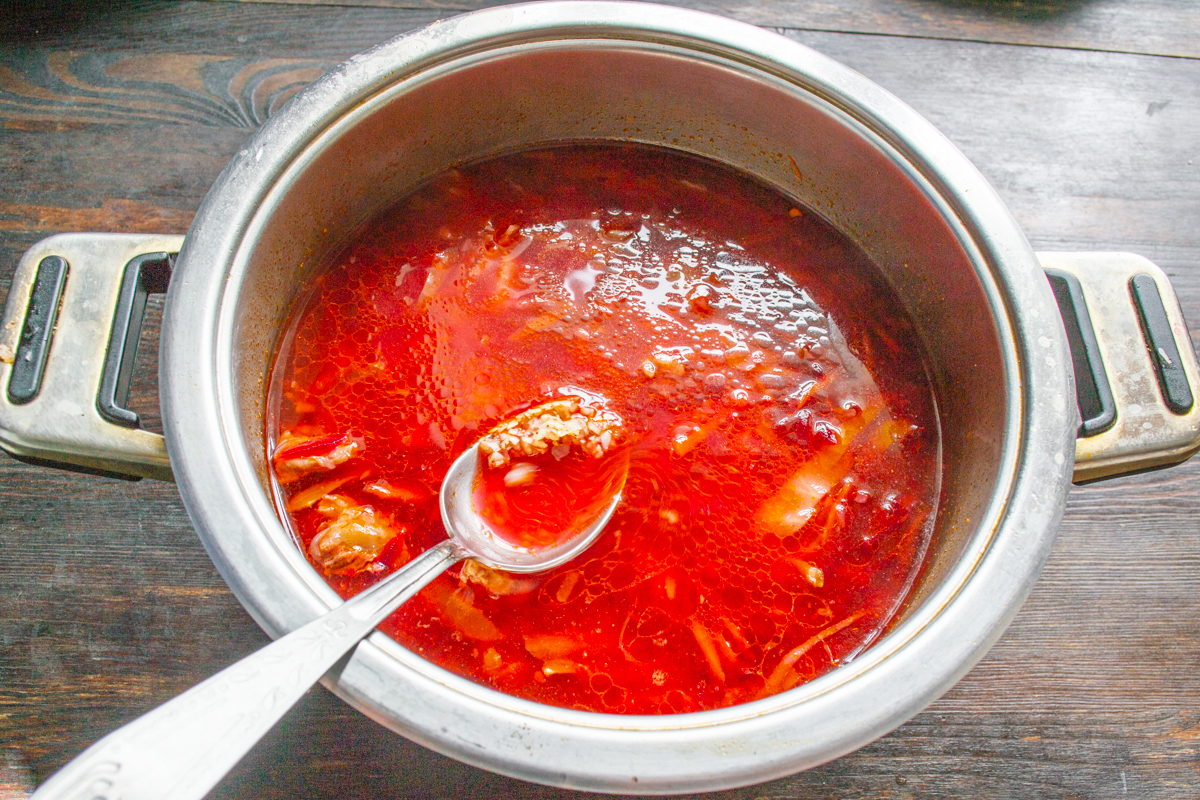
Garlic mashed with salt added at the very end for a bright, pungent aroma.
Ladle the hot borscht into bowls, making sure each gets a generous piece of beef. Top with a dollop of smetana (rich Eastern European sour cream) and a scattering of chopped scallions. Serve with dark rye bread—for an irresistible touch, rub the bread crust with a raw garlic clove and spread it with butter!
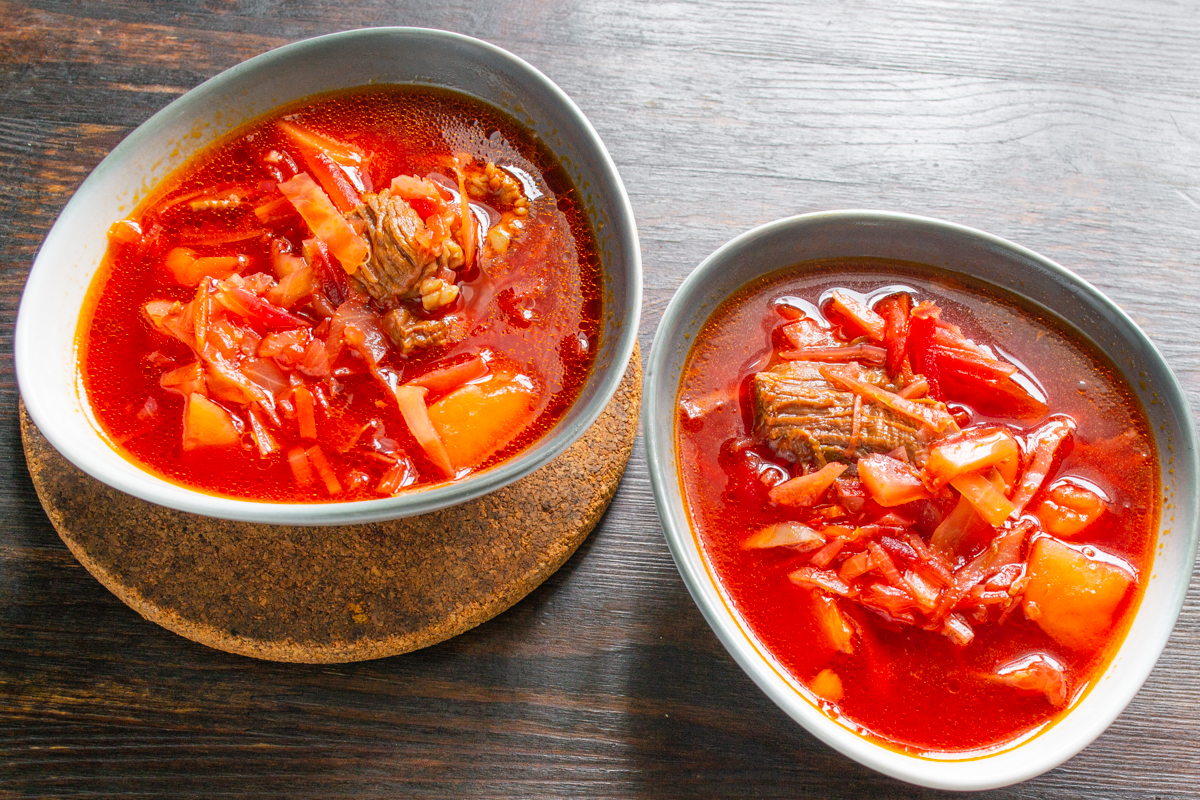
Fragrant beef and beet borscht ladled into bowls and ready to serve.
To let the rich flavors fully bloom, allow the beef and beet borscht to rest covered for at least 20 minutes after turning off the stove. Serve the soup piping hot in deep bowls, generously topped with fresh smetana (sour cream), fragrant scallions, and slices of rye bread rubbed with fresh garlic.
Beef and beet borscht tastes even better the next day, once the vegetables and meat broth become completely infused with the garlic and spices. Store it in the refrigerator in a tightly covered pot for up to four days, and reheat over medium-low heat to preserve its vibrant ruby-red color.
0 comments