
There are countless delicious ways to cook potatoes, and one of the simplest is making savory potato pancakes—known as draniki across much of Eastern Europe. The name comes from the traditional preparation method: the Slavic word "drat" literally means "to tear" or "scrape," referring to how potatoes were grated on sharp, prickly graters. Thankfully, there is no need to scrape your knuckles raw grating tubers into a fine pulp on the smallest holes. Trust me, if you make potato draniki with rolled oats using a standard coarse grater, they turn out wonderfully flavorful with a fantastic, hearty texture. The oats absorb the excess moisture so the batter never gets watery, meaning you don't have to squeeze out and discard all that nutritious potato juice.
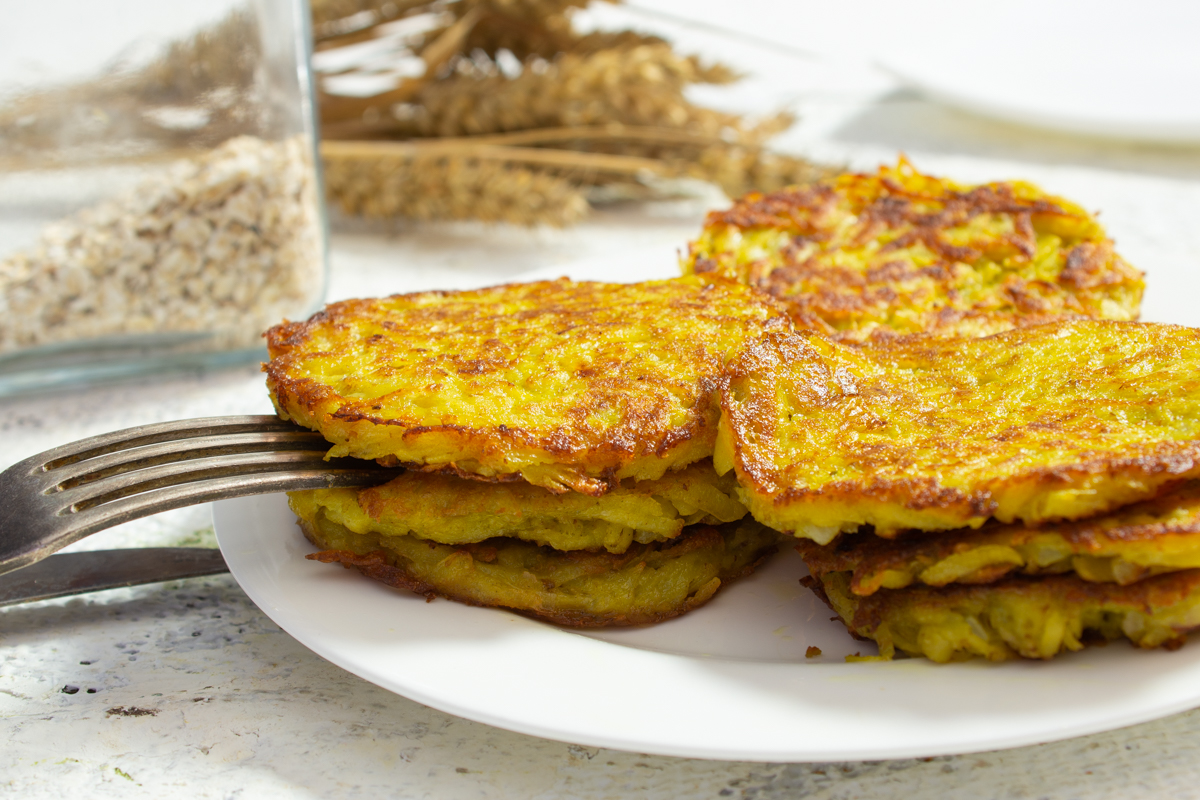
Crispy and hearty potato pancakes with rolled oats make the ultimate savory breakfast.
Ingredients
- 4 large potatoes
- 1 egg
- 1 onion
- 2 tbsp quick-cooking rolled oats
- salt to taste
- 1/2 tsp ground turmeric
- vegetable oil, for frying
How to Make Potato Pancakes (Draniki) with Rolled Oats
Peel the potatoes and grate them using the large holes of a box grater. One large potato weighing 120–150 g (4.2–5.3 oz) is generally enough per serving, though that ultimately depends on your appetite.
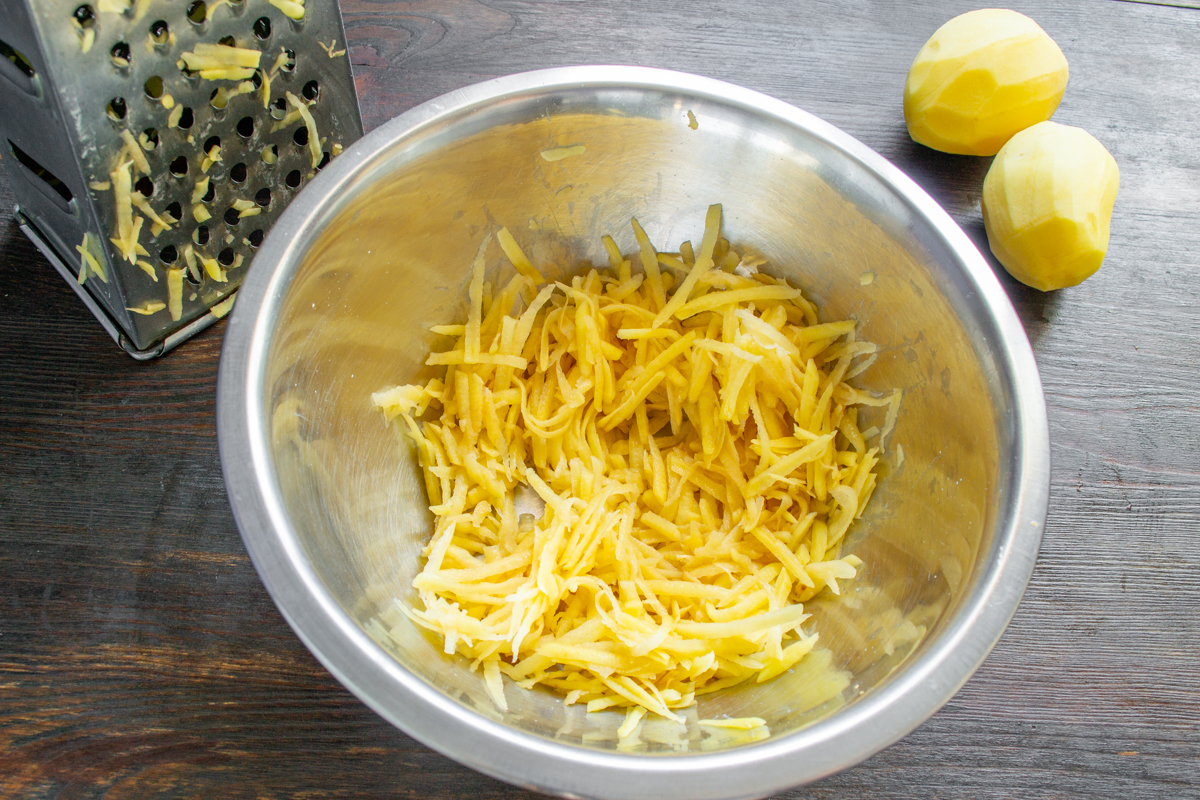
Coarsely grate the peeled potatoes to maintain a hearty texture.
Season the grated potatoes with salt. One teaspoon of medium-grain table salt is plenty for the listed amount of ingredients.
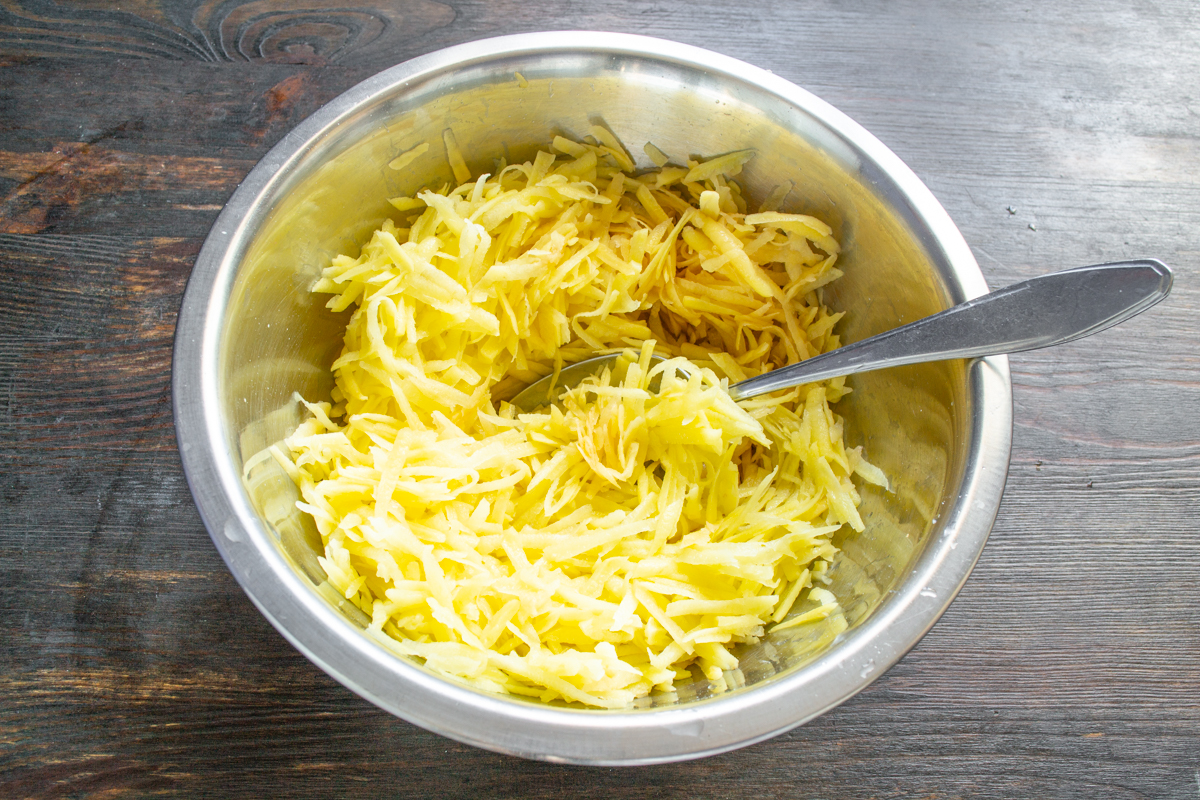
Sprinkle with salt to help the potatoes release their natural juices.
Finely dice the yellow onion and add it to the grated potatoes. In my opinion, the more onion, the better—potatoes and onions are best friends forever. Toss the potatoes, onion, and salt together. They will start releasing liquid right away, which is completely normal. Do not squeeze out the liquid!
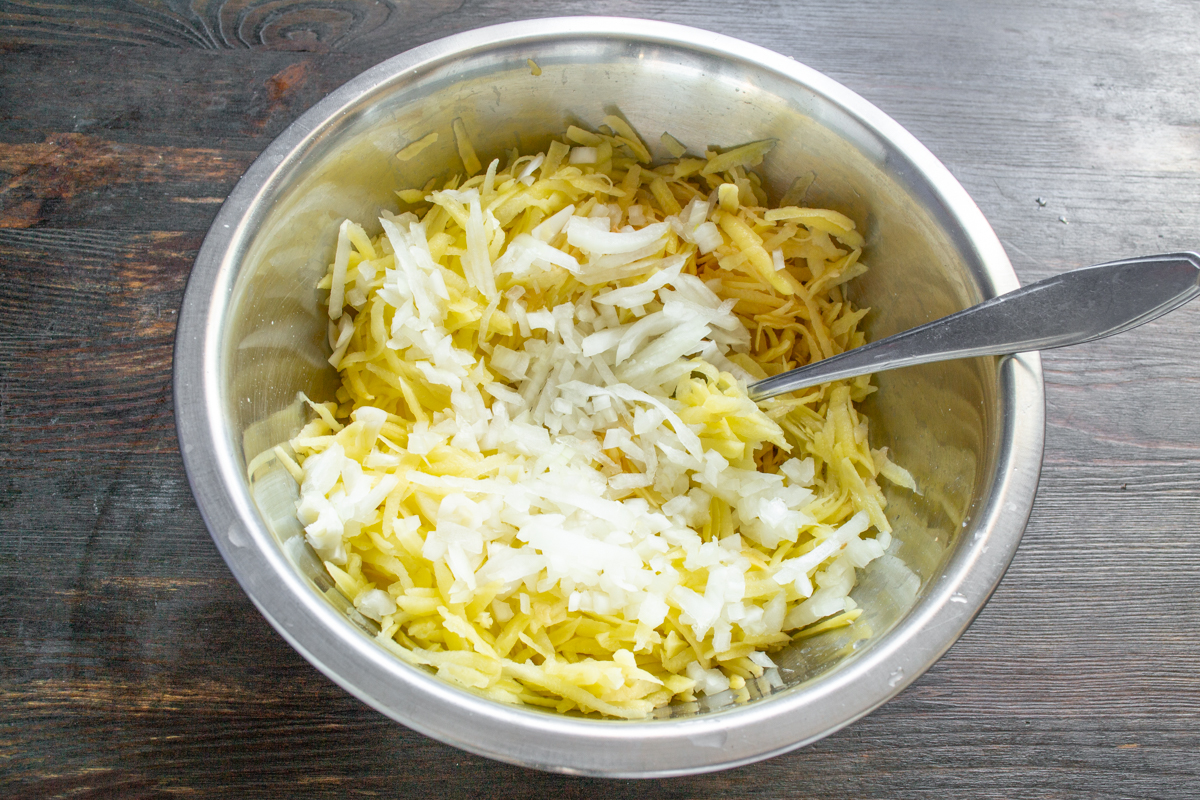
Mix the diced onion with the potatoes for extra moisture and savory aroma.
Crack in a large egg and mix well. The egg acts as a binder. Since we grated the potatoes coarsely, a good binder is essential to keep the pancakes from falling apart in the skillet.
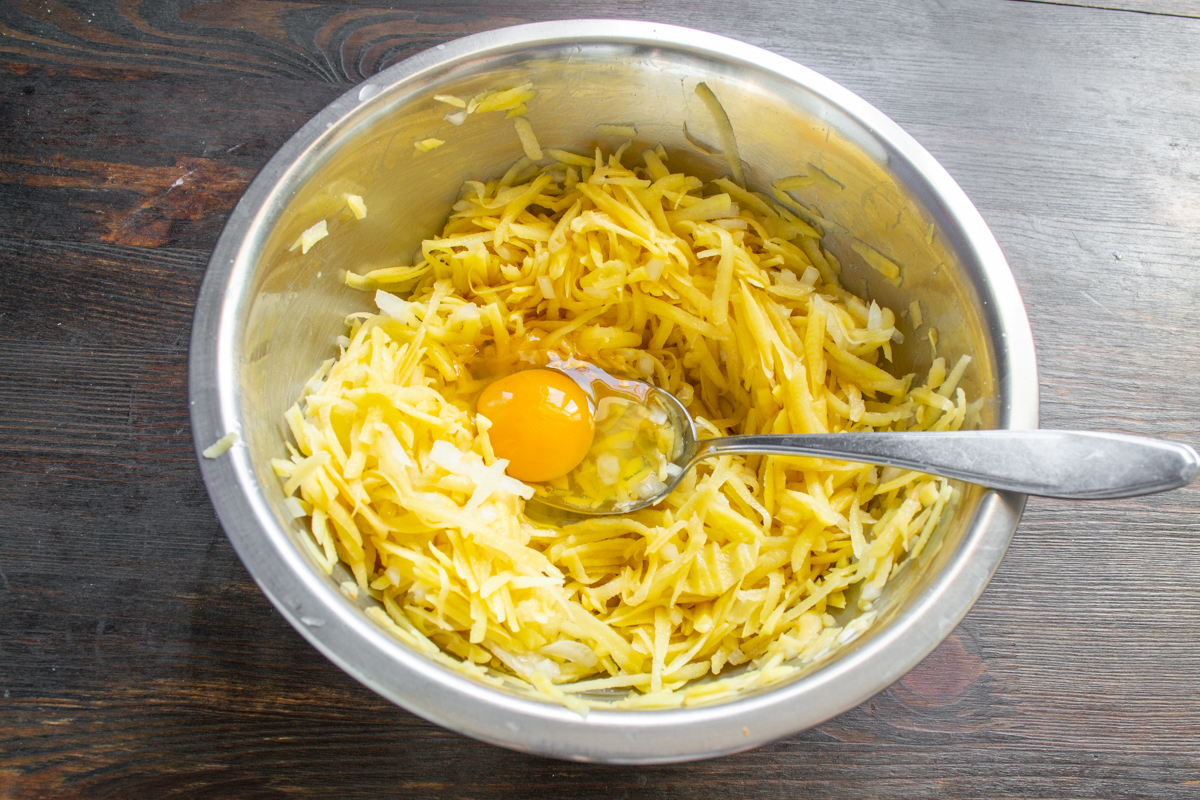
The egg binds the ingredients together so the pancakes hold their shape in the pan.
At this point, if you lift the potato mixture slightly, you will notice quite a bit of liquid pooling at the bottom of the bowl. Rather than draining it, we want to absorb and bind that flavorful liquid, and quick-cooking rolled oats (known locally as Hercules oats) are the best tool for the job. Add 2 slightly rounded tablespoons, or about 15–20 g (0.5–0.7 oz), of quick-cooking rolled oats. Using oats—provided they are certified gluten-free—keeps this recipe naturally gluten-free.
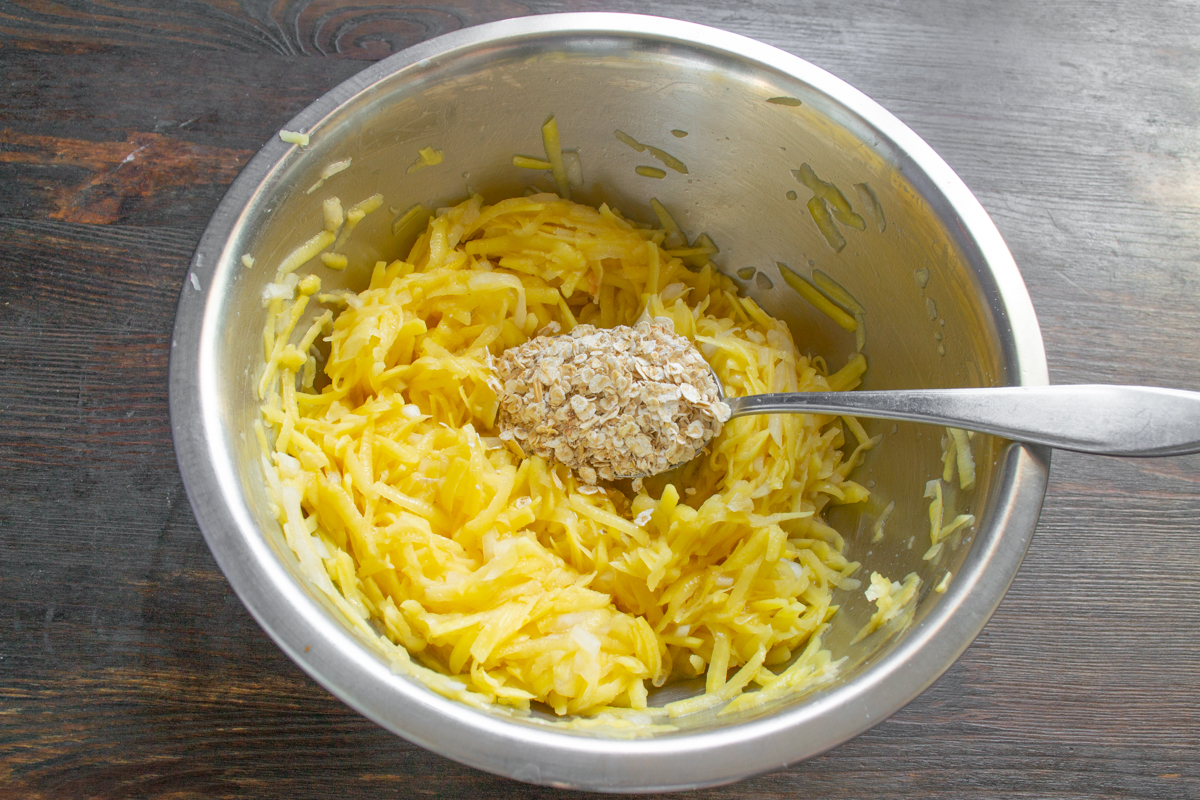
Rolled oats absorb excess liquid while keeping the dish naturally gluten-free.
Mix the ingredients thoroughly and let the mixture rest for 10 minutes so the oats can soak up the liquid and soften.
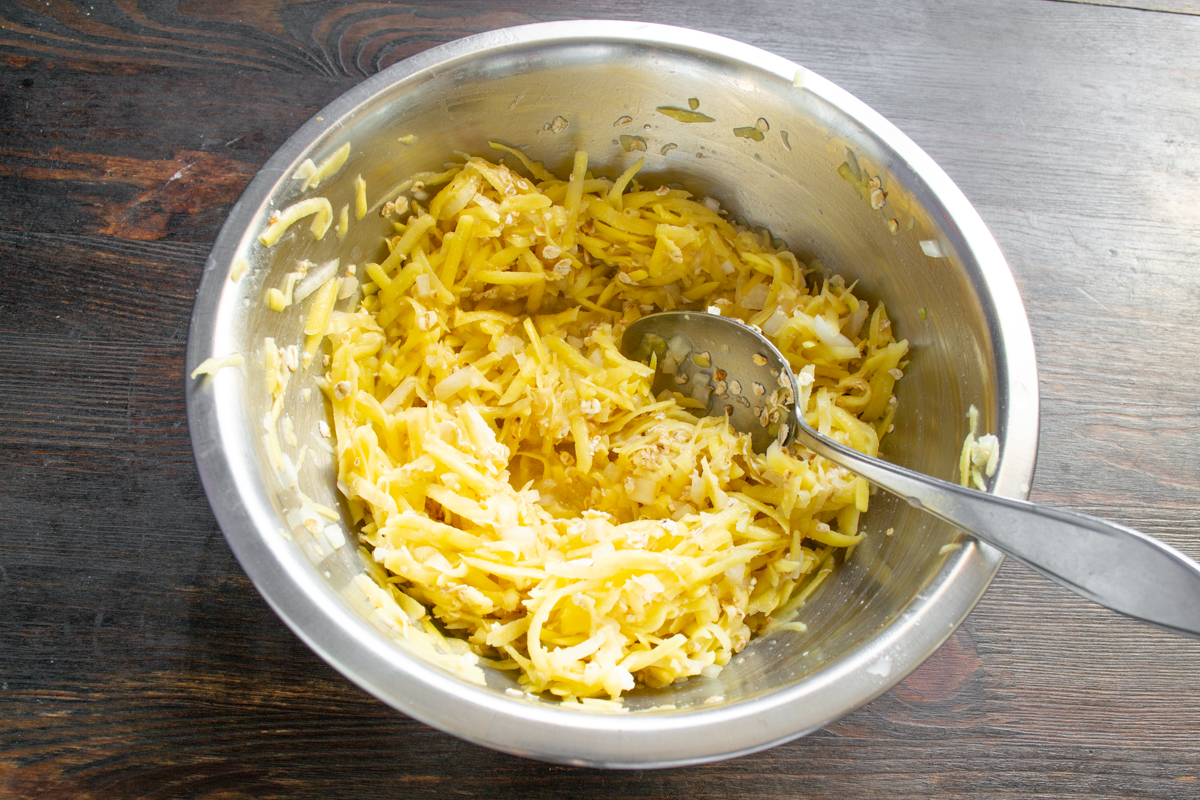
Let the batter rest for 10 minutes so the oats can soften and swell.
Sprinkle in the ground turmeric and stir to combine. This ingredient is optional, but it gives the batter a lovely, appetizing hue and ensures your draniki fry up to a gorgeous golden color.
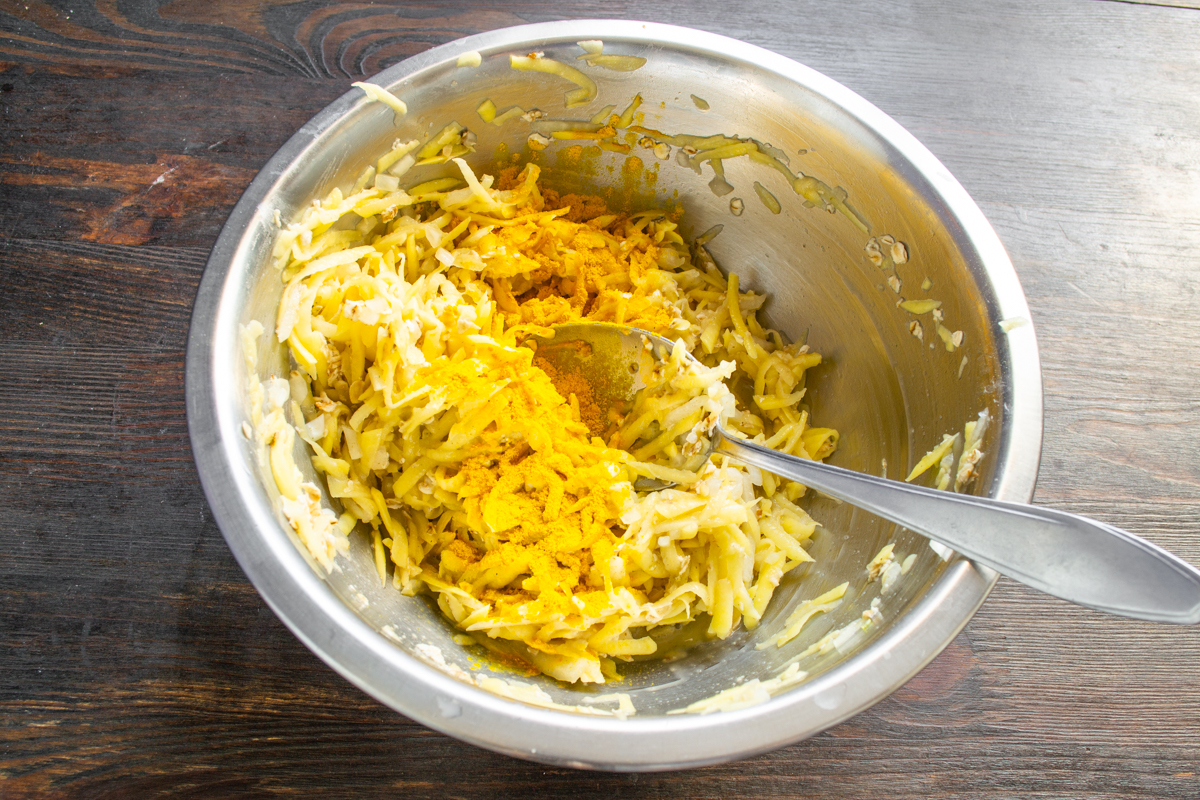
Ground turmeric gives the finished potato pancakes a vibrant golden color.
Pour a few tablespoons of neutral refined vegetable oil into a heavy-bottomed skillet and heat it until very hot. It is crucial for this recipe to use a generous amount of oil and get it properly hot before cooking! Carefully spoon the batter into the hot oil and fry over medium heat. If you put the batter into cold oil, the potato pancakes will soak up the grease like a sponge—leaving them heavy, overly caloric, and far less tasty.
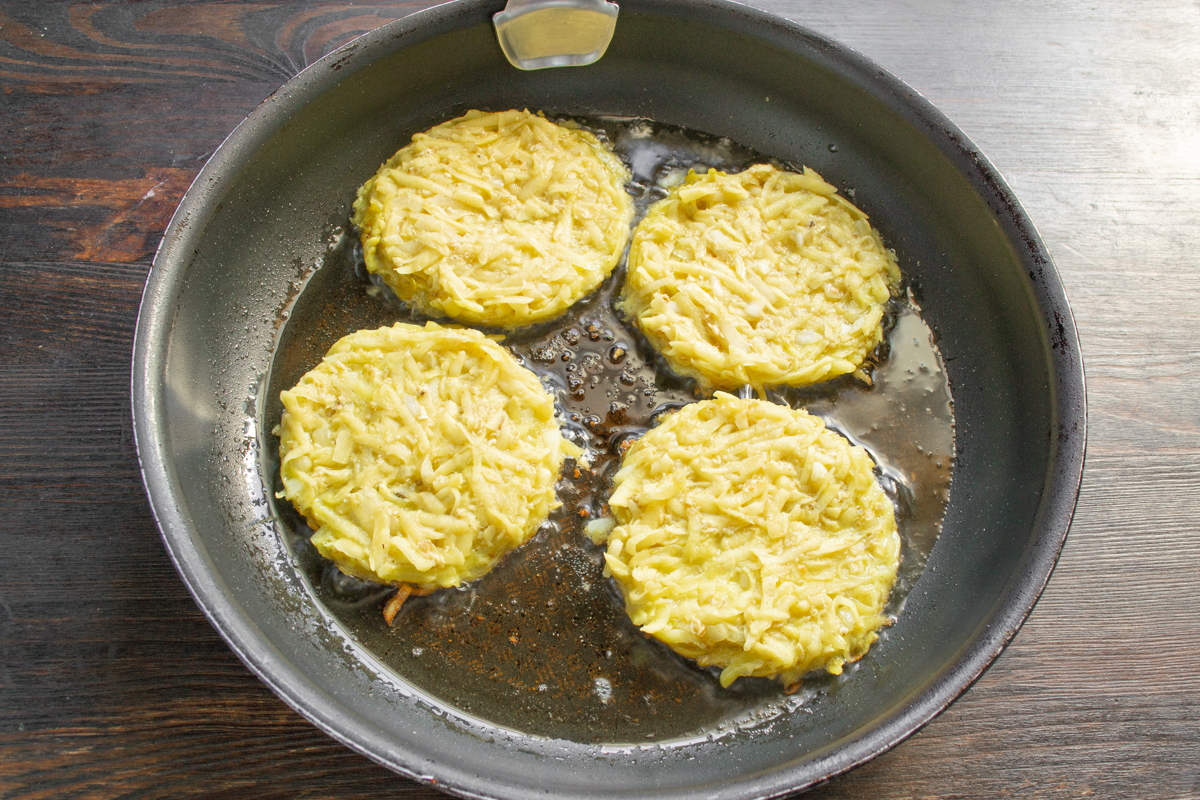
Spoon the batter into hot oil and fry over medium heat.
Flip the pancakes and fry on the other side until deeply golden and crisp.
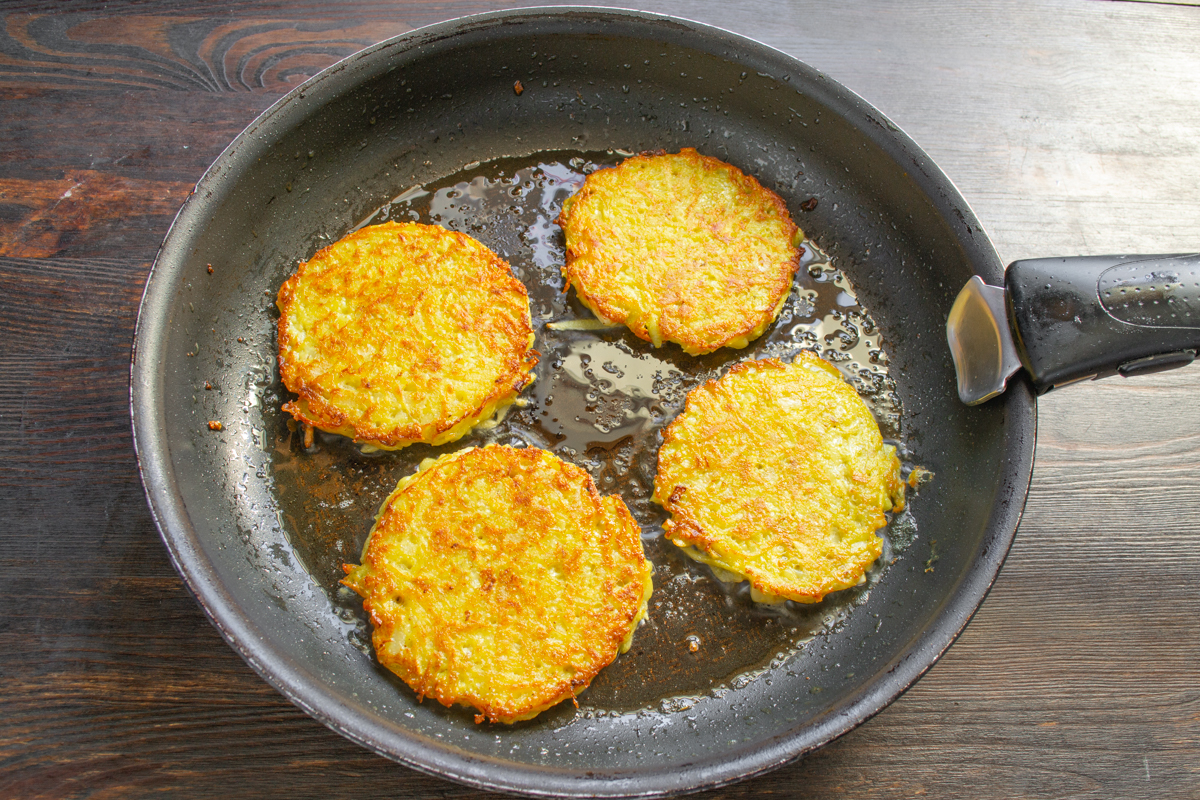
Flip the pancakes and fry until the second side is deeply golden and crisp.
Transfer the finished draniki from the skillet onto paper towels to drain any excess oil.
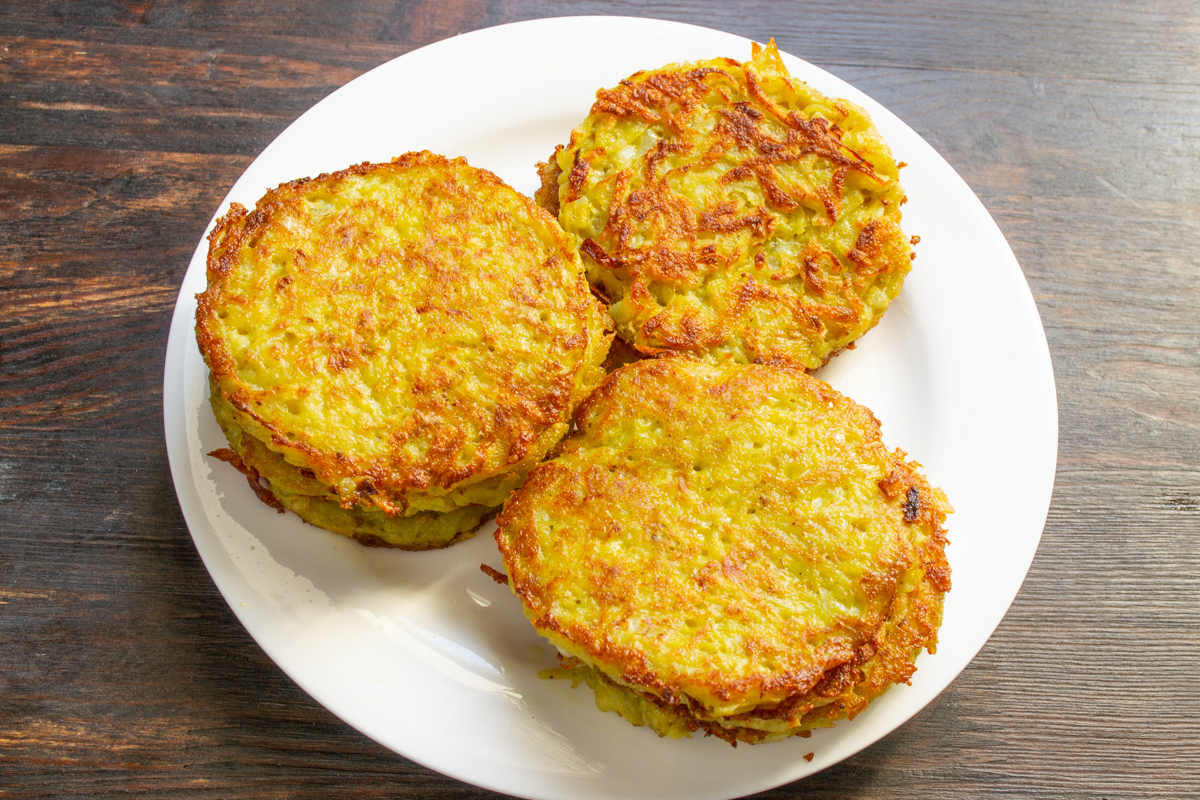
Transfer the finished pancakes onto paper towels to absorb excess frying oil.
Serve these golden potato and oat draniki immediately after frying, while their edges are at peak crispness. The most traditional and foolproof accompaniment is a generous dollop of cool, rich smetana (Eastern European sour cream) sprinkled with finely chopped scallions or fresh dill. If you want to dress them up, try serving them alongside lightly cured salmon, slices of ripe avocado, or wild mushrooms sautéed with onions.
If you happen to have leftovers for the next day, store them in an airtight container in the refrigerator. To bring back their original crunch, skip the microwave—instead, reheat them gently in a dry, heavy-bottomed skillet under a lid, or pop them into a preheated oven for a few minutes. Adding rolled oats not only binds the batter without a speck of wheat flour, but also makes the dish much more satisfying and rich in wholesome fiber.
0 comments