
Tomato paste in a can or tube has already endured intense heat. During production, tomatoes cook down for hours until very little moisture remains in the concentrate. Yet, a few extra minutes in a hot skillet noticeably transform the flavor of a future sauce or beef stew. The goal here is not to sear the tomatoes for a crust. The purpose is much simpler: cooking out that metallic, raw-concentrate tang to unlock a warmer, deeper, and more savory flavor profile.
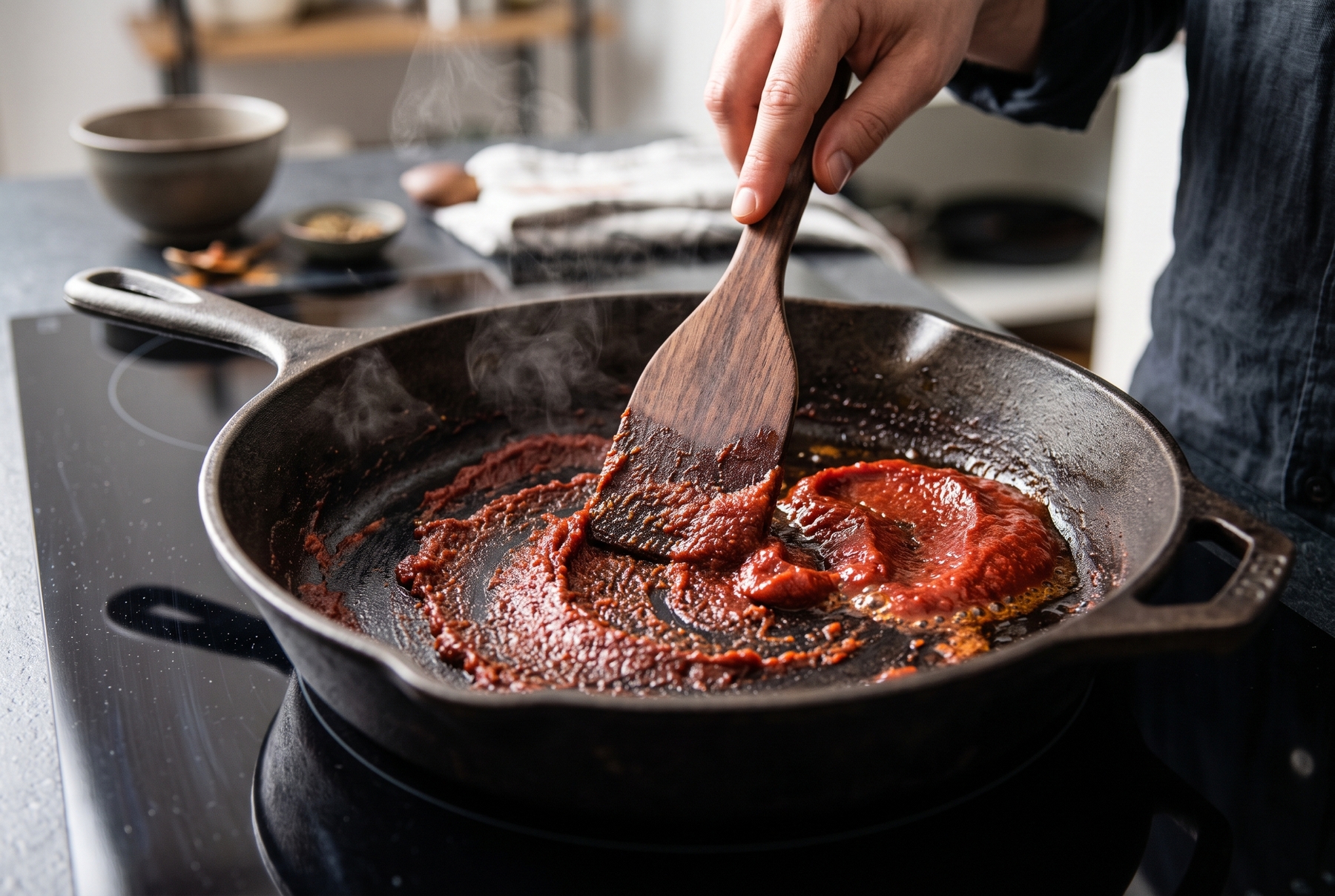
Cooking tomato paste in a hot skillet evaporates excess moisture, replacing its raw, acidic bite with a deep, savory aroma.
Table of Contents
- What Happens When You Cook Tomato Paste
- How to Caramelize Tomato Paste Properly on the Stovetop
- How to Tell When Tomato Paste Is Ready
- The Fine Line Between Caramelized and Burnt
- When You Can Skip Cooking the Paste
- Common Mistakes
- Dishes Where Caramelized Paste Shines Brightest
- Quick Cheat Sheet: When to Add the Liquid
What Happens When You Cook Tomato Paste
Dropping a spoonful of paste into a hot skillet with a slick of fat triggers an immediate transformation. Remaining water evaporates first: the paste dries out, thickens, and concentrates even further. At the same time, the aroma shifts. That sharp, acidic note that hits your nose upon opening a fresh can softens and steps into the background, giving way to a warm, toasted scent.
Next comes the browning, a stage where culinary terms often blur. Tomato paste contains both natural sugars and amino acids, meaning heat triggers multiple chemical processes at once: caramelization (the breakdown of sugars) and the Maillard reaction (the interaction between sugars and amino acids). In a home skillet, these reactions happen simultaneously, making it impossible to separate one from the other by eye. In practice, the result matters most: harsh acidity retreats while a sweeter, noticeably roasted flavor emerges.
The difference in the finished dish comes not just from the darker color, but from giving the paste a few minutes of direct contact with a hot surface before water, broth, or wine hits the pan. Color is merely one indicator; the direct heat application does the heavy lifting.
How to Caramelize Tomato Paste Properly on the Stovetop
This technique requires no special equipment—everything happens right in the same pan used for building the base of the dish.
When to Add the Paste
The standard sequence begins with cooking oil, followed by aromatics like onions, carrots, meat, or spices. Tomato paste joins the pan after these ingredients, while liquid waits until the paste has thoroughly toasted. This ensures the concentrate gets its own dedicated, albeit brief, moment on the hot surface.
There is a common catch here. If excess moisture pools in the skillet—released by sweating vegetables or thawed meat—the paste will steam in that liquid rather than fry. Steaming achieves very little. The solution involves either letting the excess water evaporate until the pan returns to a dry sizzle, or pushing the vegetables to the perimeter to clear a hot, bare spot in the center. Toasting the paste in a separate small skillet also works well.
Finding the Right Heat Level
Relying strictly on a timer rarely works. Medium to medium-high heat provides the sweet spot: the paste actively heats through and dries out without scorching onto the pan within the first few seconds. Overly high heat darkens the exterior of the paste long before the interior warms through.
Giving an exact cooking time is impossible. It depends on the volume of paste, the cookware (thin stamped aluminum behaves very differently from heavy cast iron), the burner’s output, and the other ingredients sharing the pan. Relying on sight and smell beats counting seconds. Typically, tomato paste takes 2 to 4 minutes to caramelize, though this serves only as a rough guideline.
Does Tomato Paste Need Oil to Caramelize?
A small amount of fat helps immensely. Oil conducts heat evenly and carries fat-soluble aromatic compounds—like lycopene and other flavor molecules in tomatoes—that water simply cannot unlock. One teaspoon (5 ml) of oil per couple of tablespoons of paste suffices. However, if browned meat or sautéed vegetables have already left enough rendered fat coating the bottom of the pan, adding extra oil is unnecessary.
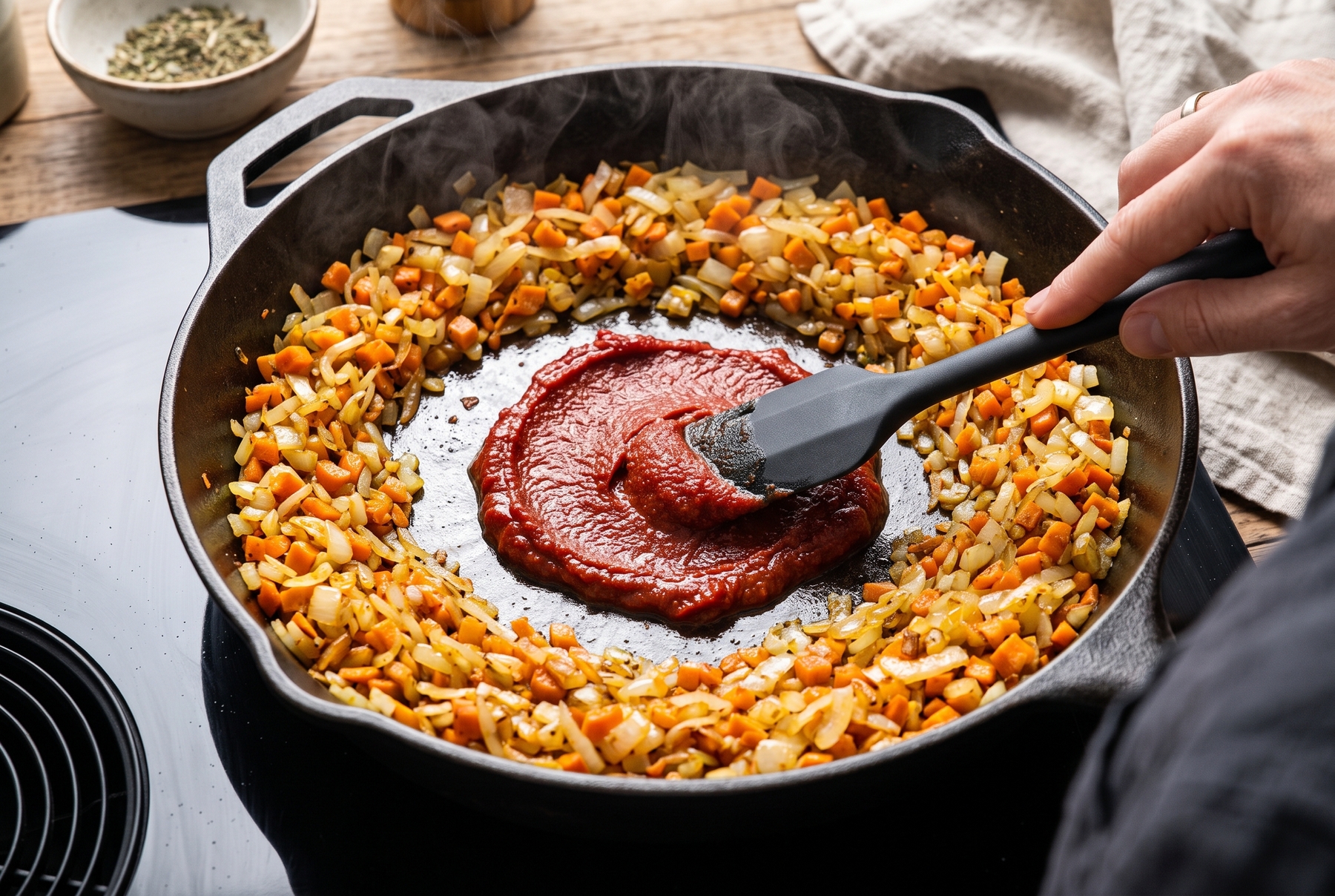
Pushing sautéed onions and carrots to the perimeter of the skillet clears a hot surface for caramelizing the tomato paste.
How to Tell When Tomato Paste Is Ready
Monitoring color, aroma, and how the paste behaves against the metal provides the clearest cues for doneness.
Color
The paste darkens noticeably, shifting from a bright crimson to a deeper brick-red, sometimes bordering on maroon. No universal “correct” shade exists. Different brands vary: some start out lighter and tangier, while others come out of the jar dense and dark. Therefore, the relative shift matters more than the absolute shade—the paste simply needs to look visibly deeper than when it started.
Aroma
Scent serves as the most reliable indicator. The sharp, tinny smell of raw concentrate vanishes. In its place, a sweet, roasted aroma develops, already reminiscent of a slow-simmered marinara. When the scent rising from the skillet makes you want to taste a spoonful right away, the paste is ready for liquid.
Pan Behavior
As it cooks, the paste thickens, turns matte, and begins clinging slightly to the skillet, leaving a dark film—known as a fond—wherever it touches the bottom. This is a great sign; that thin layer holds concentrated flavor that will later dissolve into the sauce. However, those pan drippings must remain dark brown, never black and flaky. The moment dry, charred patches appear, bitterness is seconds away.
The Fine Line Between Caramelized and Burnt
Tomato paste crosses the line from deeply toasted to scorched in a heartbeat. A high concentration of solids and sugars is the culprit. With very little water left to buffer the temperature, the paste burns rapidly.
Scorching is immediately obvious: black specks appear, acrid smoke rises, a dry crust forms, and a harsh bitterness overwhelms the tomato flavor.
Paste that has just started darkening too quickly is still salvageable. Pouring in the recipe’s liquid (water, broth, or wine) right away cools the pan, while scraping the bottom with a wooden spatula releases the browned layer. Those caramelized bits will dissolve and infuse the liquid with deep flavor. Conversely, if the paste has already turned black and smells acrid, trying to mask the flaw with sugar is pointless—the bitterness remains, merely hiding behind sweetness. Tossing the burnt batch and restarting this two-minute step is far easier.
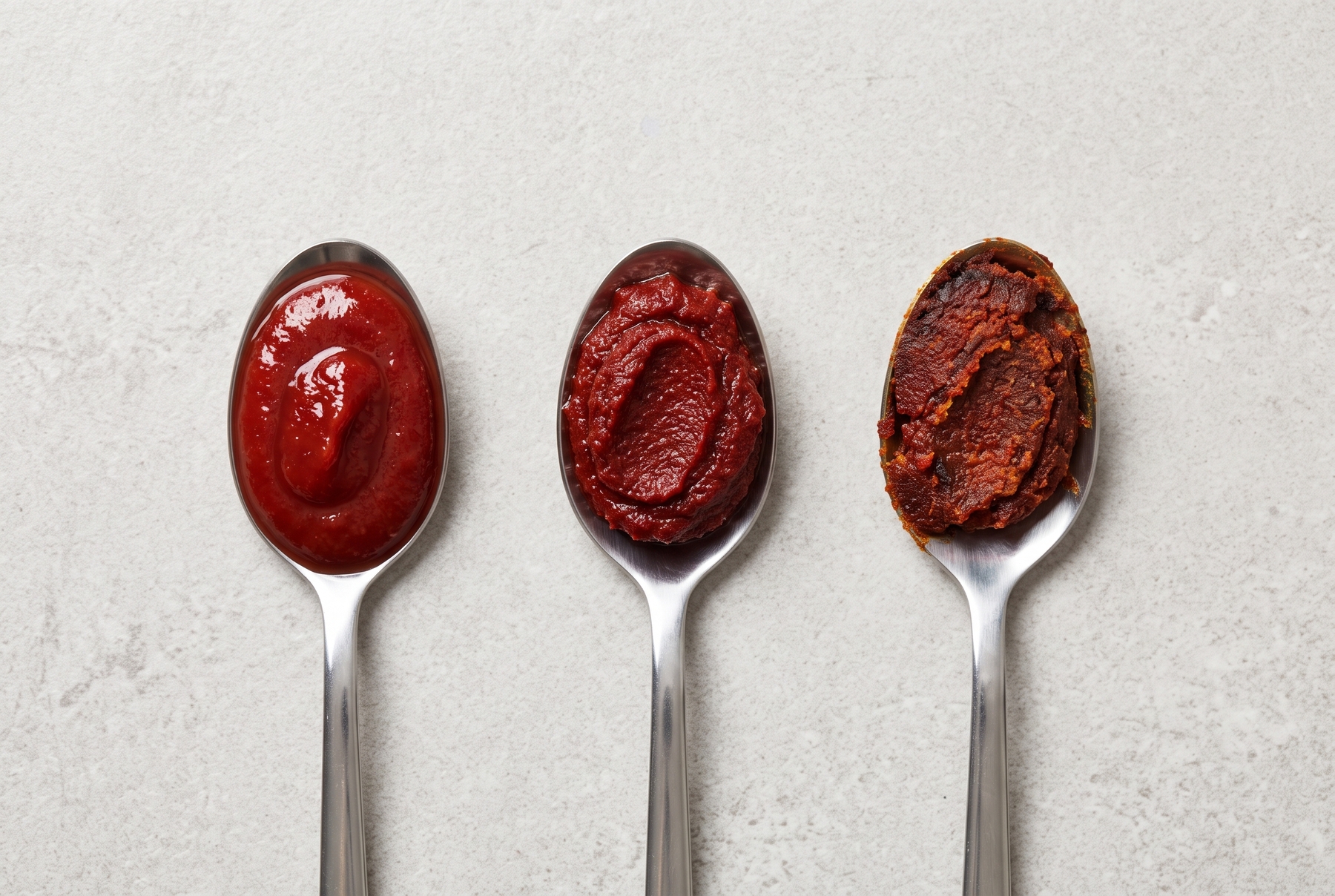
As tomato paste cooks, caramelization shifts its color from bright crimson to a deep brick-red.
When You Can Skip Cooking the Paste
Toasting tomato paste is a culinary tool, not a mandatory ritual. In several dishes, the concentrate opens up beautifully without a separate frying stage, making extra pan work unnecessary.
Stirring paste directly into the liquid works well when:
- the dish simmers or braises for a long time (such as a soup or a 90-minute stew), allowing the paste to cook out gradually;
- a recipe calls for a bright, punchy, and fresh tomato profile rather than a deep, roasted undertone;
- only a tiny amount of paste is used primarily for color or a subtle acidity boost;
- the cooking method specifically relies on diluting paste in water or broth before pouring it into the pot.
Uncooked paste is not a mistake; it simply delivers a different flavor profile—sometimes the exact one a dish needs.
Common Mistakes
Adding liquid immediately. Pouring broth or water in right after the paste prevents any direct contact with the hot skillet. The paste merely dissolves into the liquid, skipping the caramelization process entirely.
Cranking the heat too high. Intense heat scorches the outer layer of the paste before the interior warms through. It looks dark on the outside, yet tastes like raw concentrate laced with char.
Waiting for a dark brown color. A common misconception suggests that darker always means better. In reality, peak flavor arrives well before the paste turns mud-brown. Following your nose beats chasing the darkest possible shade.
Leaving a large portion in one clump. Scooping a hefty mound of paste into the pan causes the center to steam in its own moisture while the edges burn. Spreading the paste into a thin, even layer across the skillet ensures uniform heating.
Watching the clock instead of the pan. Stovetops, cookware materials, and paste brands vary too much for strict timing to work. The three true markers of doneness are color, aroma, and the absence of char.
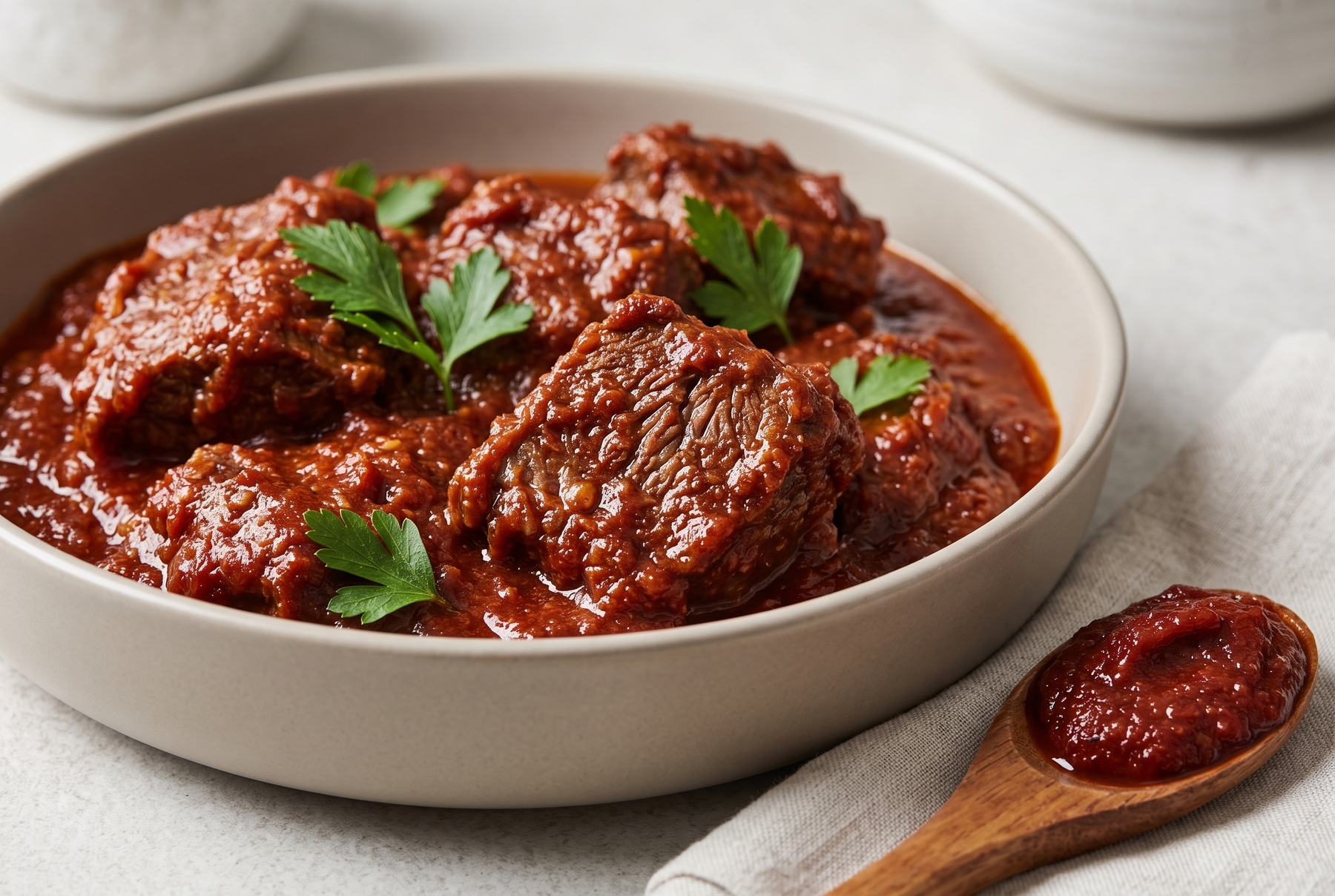
Pre-toasted tomato paste gives braised meats and stews a velvety texture and a rich, warm flavor profile.
Dishes Where Caramelized Paste Shines Brightest
Beef Stews and Braises
In hearty braises, toasted tomato paste teams up with the browned meat drippings coating the bottom of the Dutch oven. Together, they build a rich, dark gravy base that water-diluted paste could never replicate.
Bolognese and Rich Meat Sauces
Classic meat sauces rely on layered flavors: browned meat, sautéed aromatics, wine, tomatoes, and time. Caramelizing the tomato concentrate adds another distinct layer of umami depth, making those few minutes of frying unmistakable in the final dish.
Goulash, Gravies, and Homestyle Skillet Meals
Many home cooks know the look of raw paste whisked into water: a cloudy, pinkish liquid. Compare that to the same paste toasted alongside onions, beef, and a pinch of paprika until dark and fragrant. The second approach yields a velvety gravy free from the harsh, metallic tang of raw concentrate.
Soups, Borscht, and Solyanka
In traditional Eastern European soups like borscht (a vibrant beet and cabbage soup) and solyanka (a thick, tangy soup made with cured meats and pickles), no single rule applies. Frying the paste with the sautéed vegetables creates a rounded, warm, and integrated flavor. Stirring it straight into the broth delivers a brighter, sharper, and fresher acidity. Both techniques have loyal followings across different kitchens, making any debate over which method is “authentic” entirely pointless.
Pasta and Pizza Sauces
Here, the technique depends entirely on the desired outcome. For a thick, rich winter pasta sauce with sweet, roasted notes, toasting the paste is essential. For a light summer marinara or a classic Neapolitan pizza sauce that celebrates bright, fresh tomato acidity, frying the paste is counterproductive—it pulls the flavor away from freshness.
Quick Cheat Sheet: When to Add the Liquid
The pan is ready for liquid as soon as the paste darkens noticeably, dries out slightly, and swaps its sharp, canned tang for a warm, roasted tomato aroma.
- The color shifts to a deeper brick-red without turning black;
- The harsh, metallic scent of a freshly opened can disappears;
- A sweet, toasted-tomato aroma fills the kitchen;
- The paste looks matte and leaves a thin, dark film on the pan;
- No acrid smoke or bitter smell is present.
Once these cues align, pouring in the liquid and immediately scraping the bottom of the pan with a spatula releases all those caramelized bits—that fond holds the backbone of the sauce’s flavor. No timer is necessary; success simply means catching the moment when color and aroma deepen, right before bitterness sets in.
0 comments