
This is the simplest recipe for homemade apple marmalade (in Eastern European cuisine, "marmalade" refers to a firm, sliceable fruit terrine or paste rather than a citrus spread), a clever staple that has long rescued home cooks during the peak of the dacha (country cottage) harvest season. You can use any apples you have on hand, even bruised orchard windfalls, as slow baking unlocks all of their deep, rich aroma. This tender oven-baked apple marmalade takes about an hour to bake, but requires a little patience: it needs to rest for about 24 hours to firm up so you can slice it into neat wedges. There is virtually no added sugar required—adjust the sweetness entirely to your taste, or skip the sweetener altogether if your apples are naturally sweet.
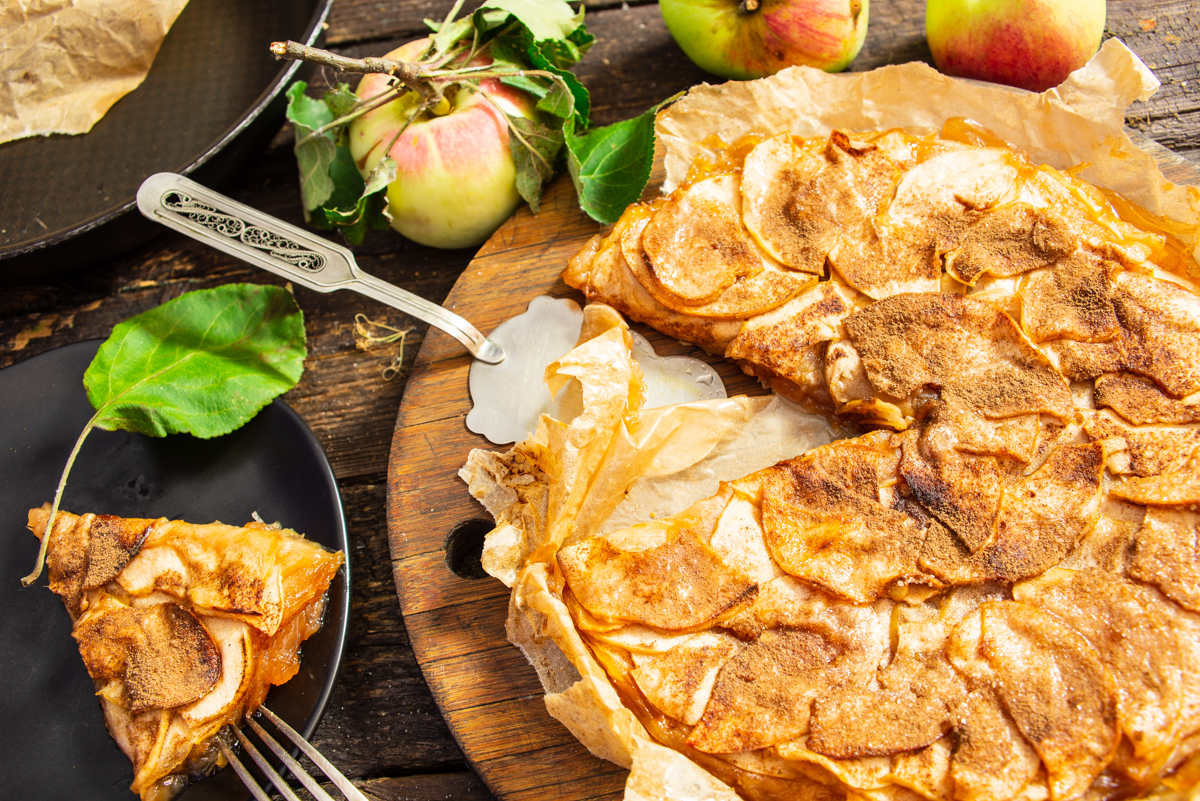
Tender homemade apple marmalade baked in the oven until caramelized. A wonderful treat to serve with tea.
Ingredients
- 2 kg (4.4 lbs) apples
- 4 tbsp sugar
- Ground cinnamon
How to Make Oven-Baked Apple Marmalade
You can use windfall apples for this recipe—the ones with slightly bruised sides. Often, these fallen apples are the sweetest and most flavorful, yet impossible to store for long. That is precisely why resourceful home cooks invented this baked apple marmalade (a traditional firm, sliceable fruit terrine rather than a spreadable jam). Wash the apples thoroughly, core them, and trim away any bruised spots or dark blemishes. Minor damage from falling is completely fine, as long as the fruit isn’t spoiled or rotten.
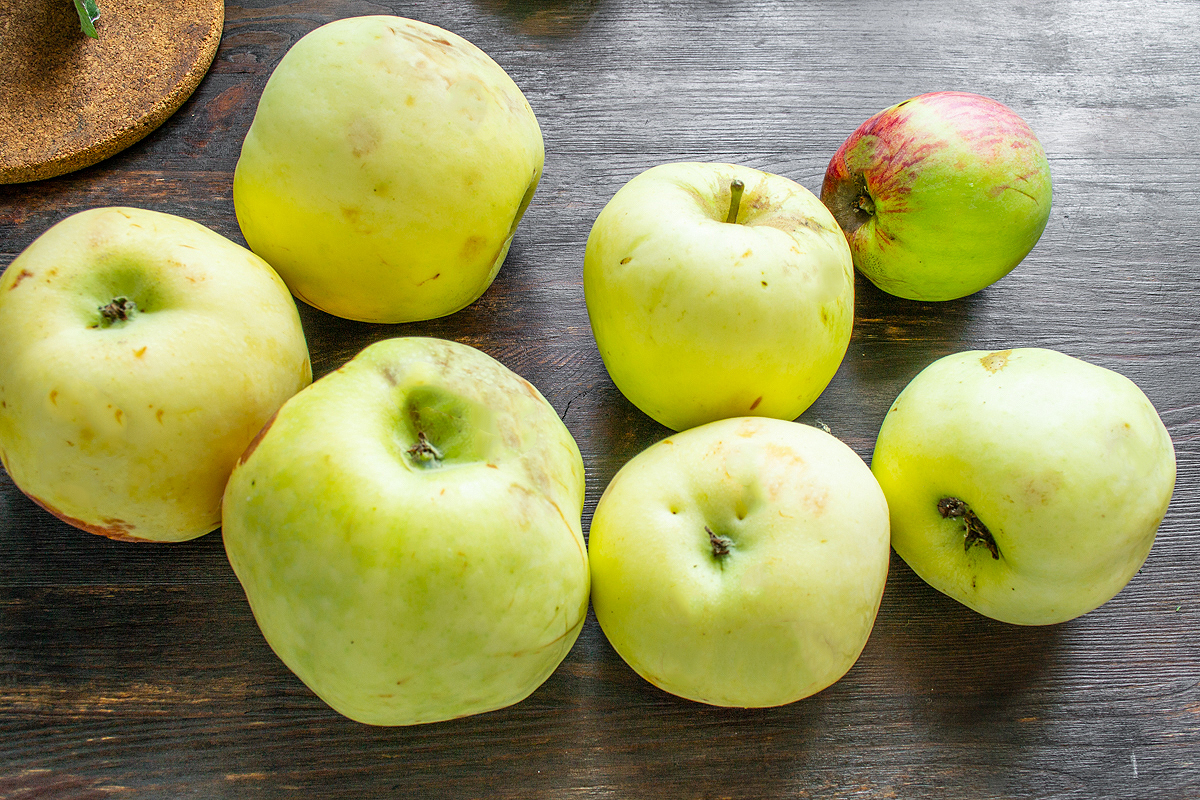
Any apples work great for this recipe, even orchard windfalls with minor blemishes.
Pour cold water into a bowl and squeeze in the juice of half a lemon if your apples brown quickly in the air and that bothers you. Drop the prepped apples directly into this acidulated water to keep them bright and pale.
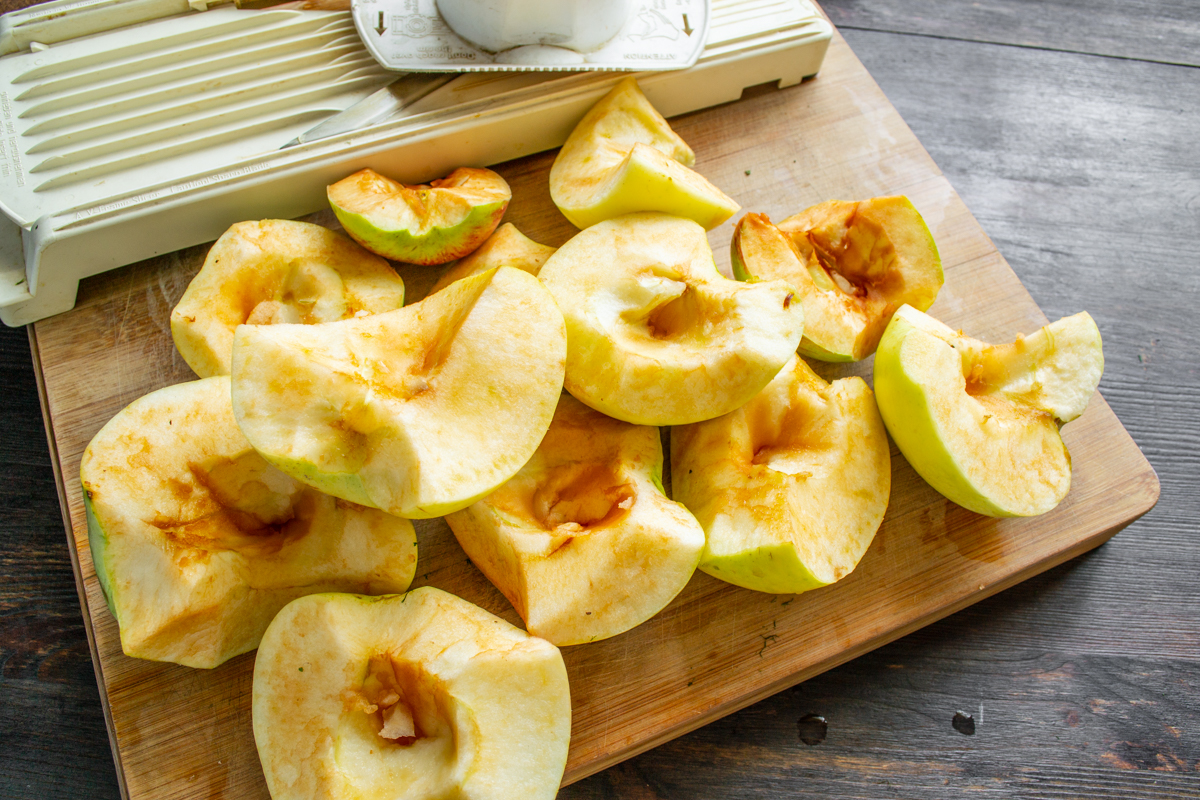
Wash the apples thoroughly, removing the cores and any bruised spots.
Prepare the baking dish for the marmalade. Any deep, heavy-bottomed ovenproof skillet or baking pan will work well. Cut a sheet of parchment paper, crumple it up in your hands, and line the skillet. Crumpled parchment molds much more easily and snugly into the corners of the pan.
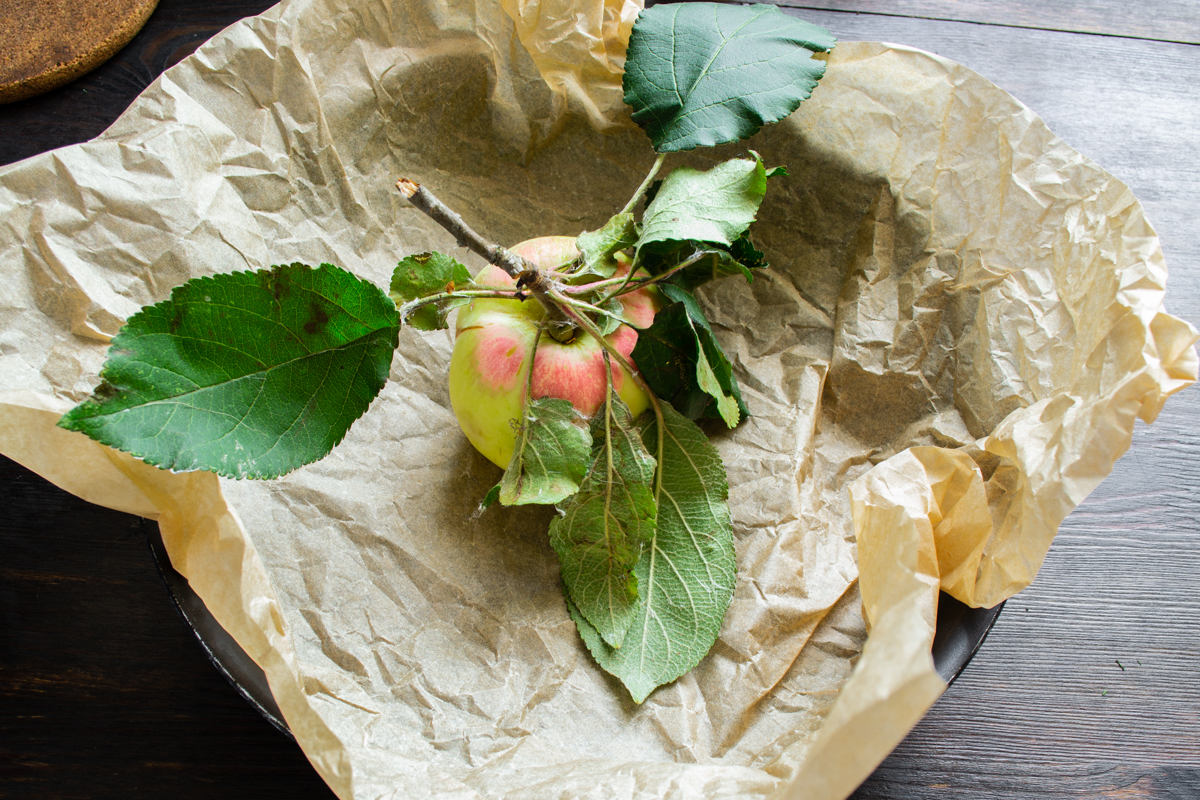
Crumpled parchment paper fits much more easily and snugly into the bottom of a deep pan.
Slice the prepped apples into paper-thin pieces using a mandoline or vegetable slicer; the thinner the slices, the better the texture.
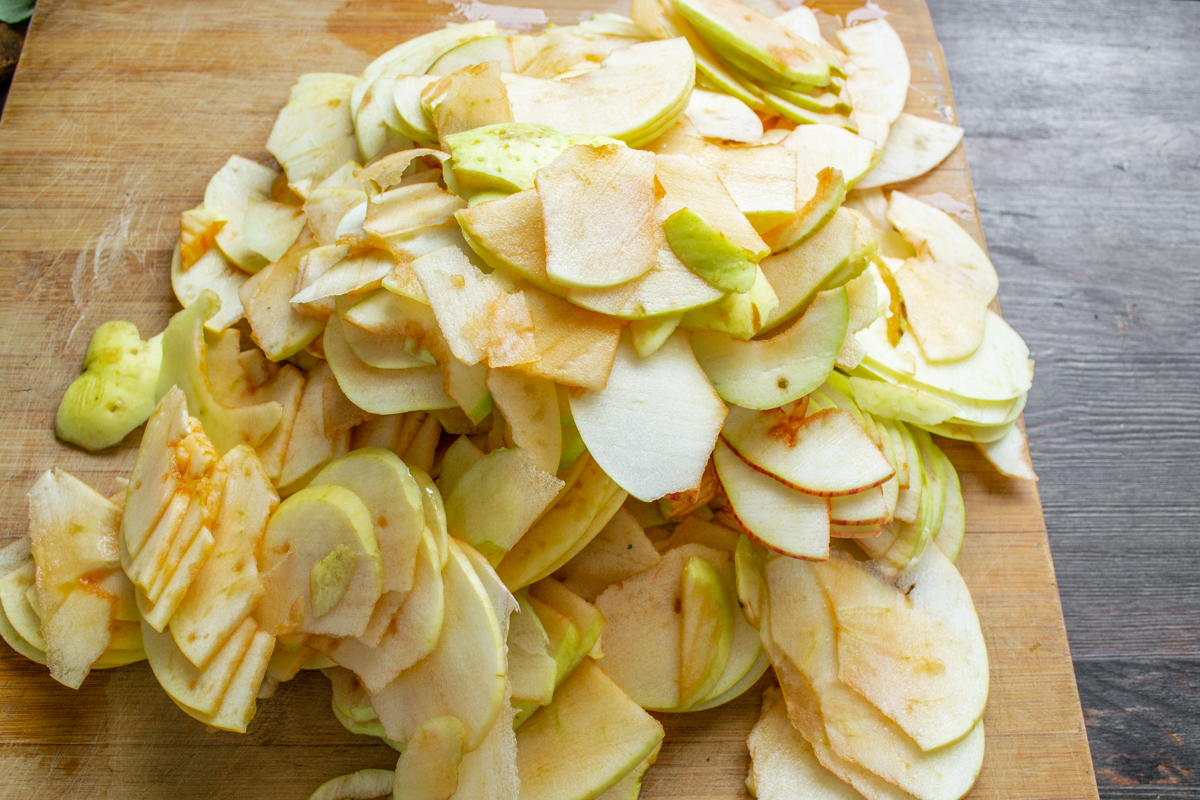
Slice the apples as thinly as possible using a mandoline slicer or a sharp knife.
Assemble the marmalade by arranging a layer of overlapping apple slices across the bottom of the lined pan.
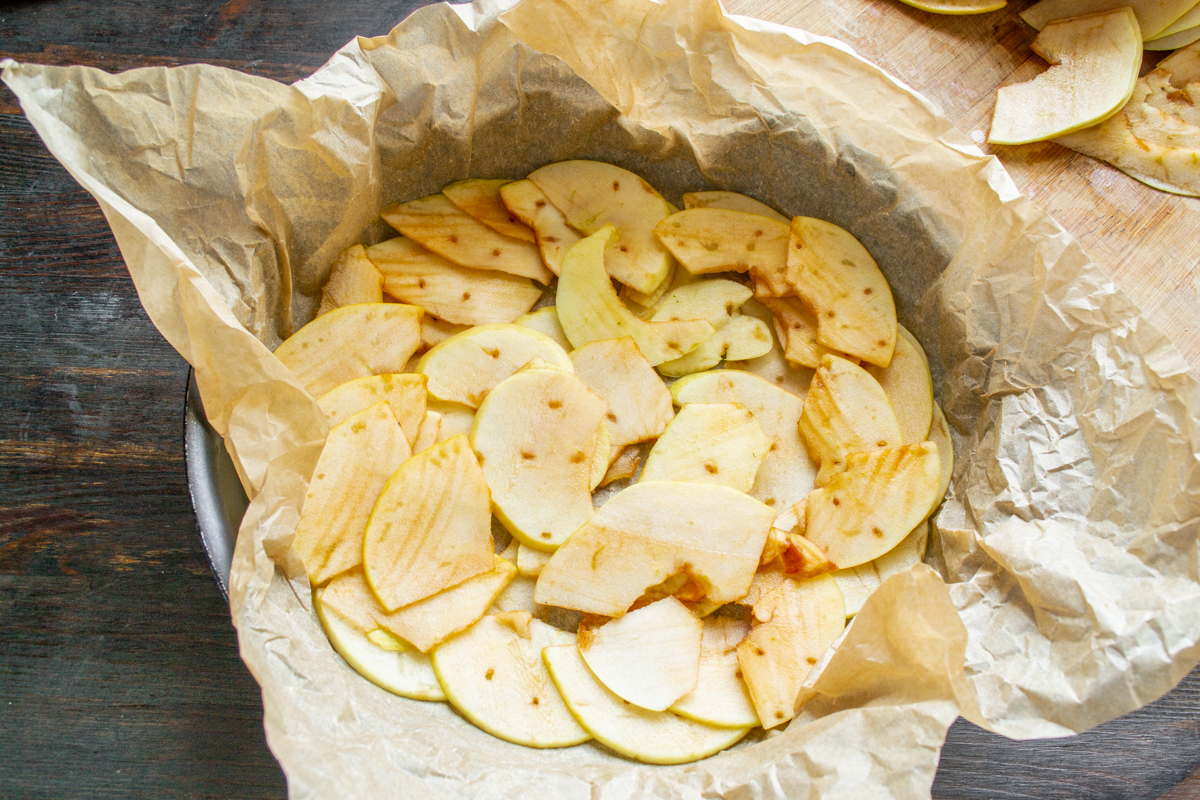
Arrange the thin apple slices in an overlapping layer across the bottom of the pan.
Build several more layers of apples, sprinkling them lightly with sugar every few layers. If your apples are quite tart, feel free to increase the amount of sugar.
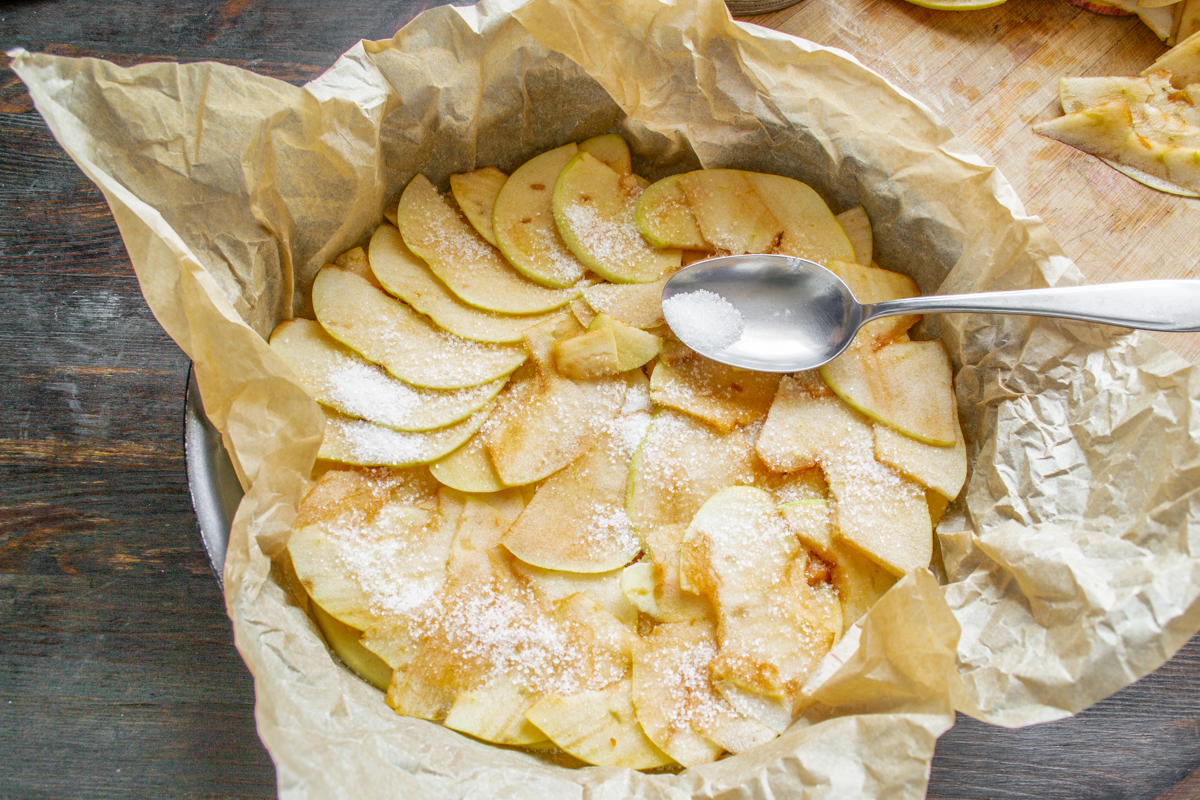
Lightly sprinkle the apples with sugar every few layers.
Alternate the apple layers and sugar until the pan is filled all the way to the top. Press down firmly with your hands to compact the fruit. Leave the edges of the parchment paper overhanging the sides—you will use these handles to easily lift the finished marmalade out of the skillet.
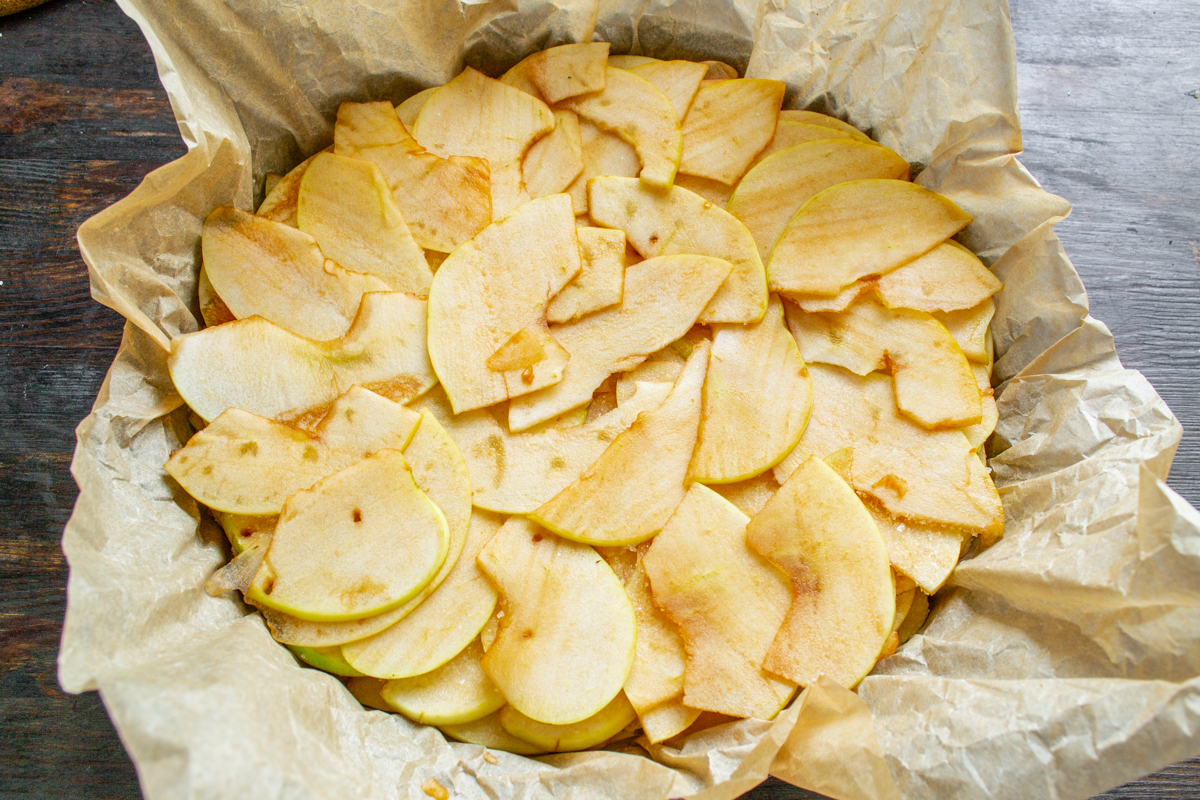
Fill the pan all the way to the top, pressing the layers down firmly with your hands.
Dust the very top layer of apples generously with sugar and ground cinnamon using a fine-mesh sieve. Instead of plain cinnamon, you can also use pumpkin pie spice, which adds warm notes of cloves, nutmeg, and other aromatics.
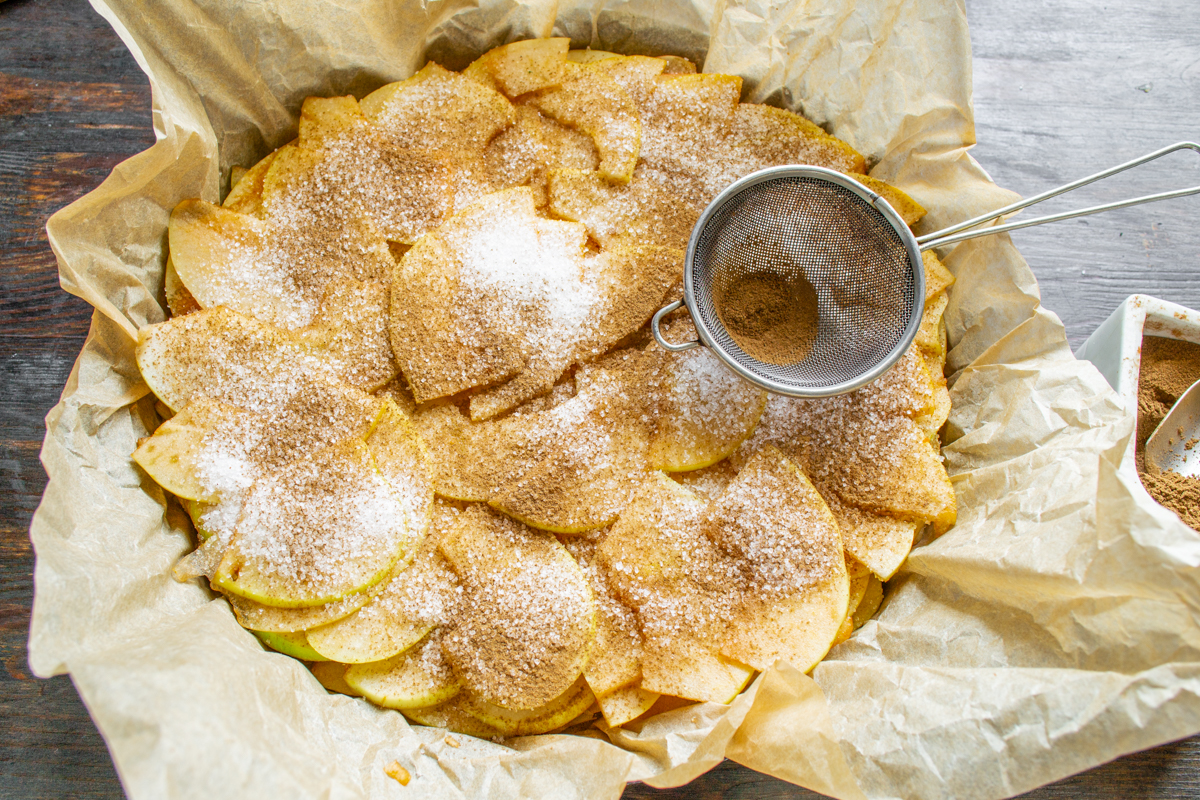
Generously dust the top layer with sugar and ground cinnamon for a delicious crust.
Preheat the oven to 165°C (330°F). Place the skillet with the apples on the middle rack of the heated oven and bake for about 1 hour. Keep an eye on it and trust your nose. The exact baking time depends on the size of your pan and the thickness of the apple layers. My “cake” was about 5 cm (2 inches) thick and baked through in an hour. If you smell the apples starting to scorch, lower the oven temperature to 145°C (295°F).
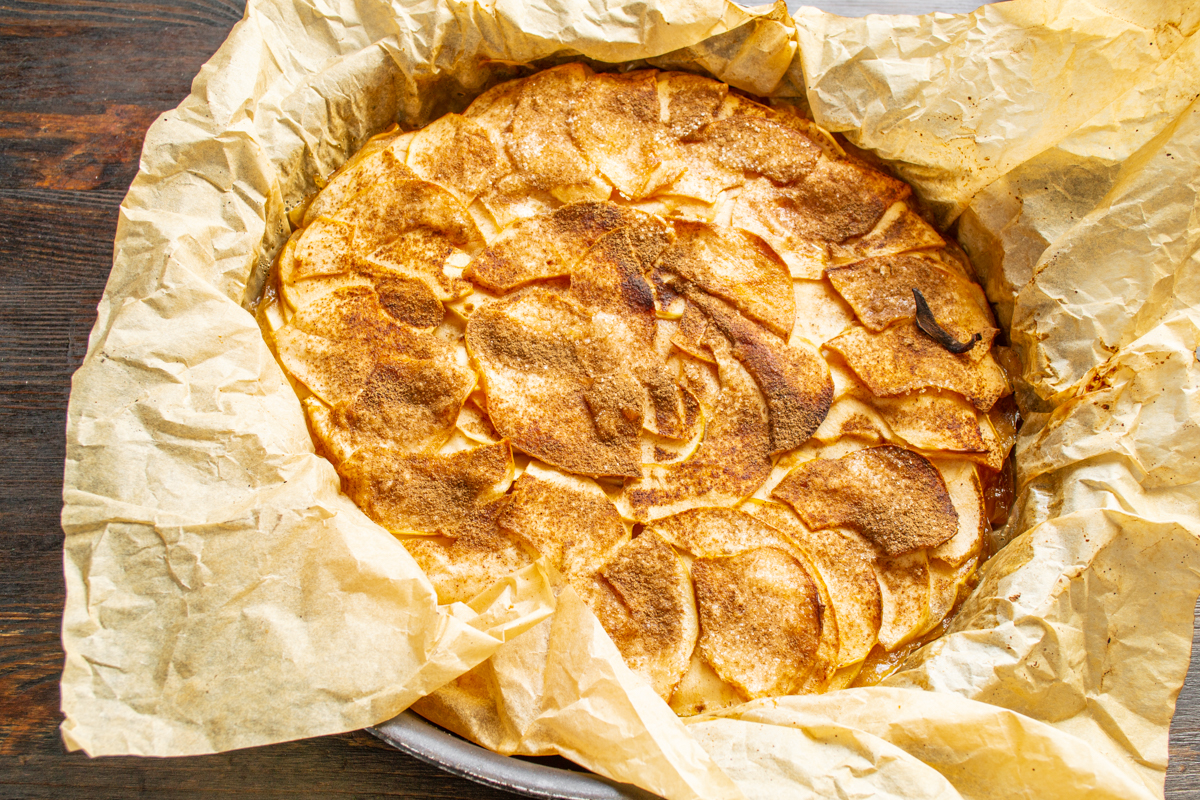
Bake for about an hour at 165°C (330°F) until tender and golden brown.
Remove the finished apple marmalade from the oven and let it cool completely. Allow it to rest and settle undisturbed for 24 hours so the layers fuse together. You can store it at room temperature for a few days without any issue, though I guarantee you will eat it long before then. It is wonderful eaten plain—like a classic baked apple, only much richer. In the refrigerator, this baked apple marmalade will keep well for several days.
Finished oven-baked apple marmalade is an incredibly cozy and comforting dessert. Cut it into thin slices and serve alongside a cup of strong black tea or herbal infusion. It also pairs remarkably well with soft cheeses like Brie or Camembert, turning a simple afternoon tea into an elegant tasting experience. For a festive presentation, lightly dust the slices with powdered sugar or garnish with fresh mint leaves. Store this treat in an airtight container in a cool spot or in the refrigerator, where it will easily keep for several days and become even firmer over time. If you enjoy culinary experiments, try scattering finely chopped walnuts or a pinch of freshly grated nutmeg between the apple layers next time. This simple variation gives the dessert a lovely texture and deep, warming spice notes.
0 comments