
People usually measure chili peppers with a single yardstick: mild burn or intense heat. This has bothered me for a long time. A pepper possesses distinct character far beyond its spice level, offering notes of apricot, freshly cut grass, campfire smoke, prunes, petrichor, and sometimes even hints of cocoa. At a market in Oaxaca, I smelled dried chiles that carried the rich scent of raisins and tobacco, while right next to them lay green pods bursting with a crisp cucumber aroma.
Distinguishing between chili pepper varieties becomes much easier when we temporarily set aside those heroic heat numbers. The shape and color hint at the botanical type, the aroma previews the flavor, and the culinary role determines whether a dish needs a generous handful or just a tiny pinch on the tip of a knife. Cooks overlook this culinary role most often.
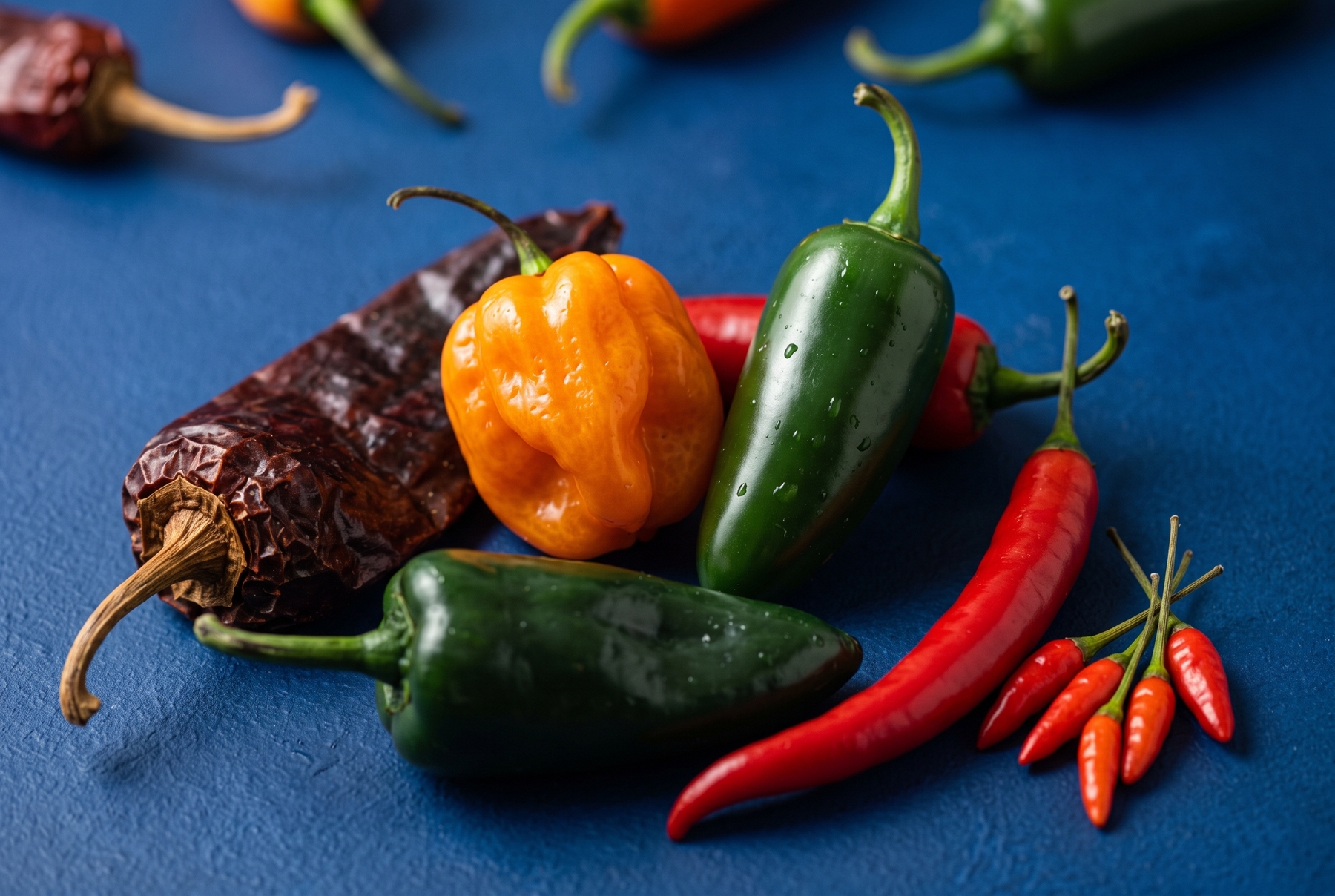
A diverse array of chili varieties: from fresh green jalapeños to fiery orange habaneros and dried anchos.
Table of Contents
- Why One Pepper Tickles the Tongue While Another Takes Your Breath Away
- 5 Chili Pepper Species Worth Knowing
- How to Read a Pepper by Sight
- Flavor and Aroma Profiles of Different Chili Peppers
- Common Chili Peppers Found in Grocery Stores
- How to Taste an Unfamiliar Pepper Safely
- Choosing the Right Chili Pepper for Different Dishes
- How to Substitute One Chili Pepper for Another
- Common Mistakes Beginners Make
- A One-Week Tasting Plan to Understand Chilies
Why One Pepper Tickles the Tongue While Another Takes Your Breath Away
Capsaicin Explained
Capsaicin drives the burn: this odorless, colorless compound tricks the nerve endings in the mouth. It binds to the exact receptors that detect high temperatures, sending an urgent “fire” signal to the brain even though nothing in the mouth has actually heated up. This mechanism explains why cold salsa still brings beads of sweat to your forehead.
The burn either builds in a slow wave or strikes immediately, depending on the variety, the capsaicin concentration, and the specific part of the pepper eaten. Water offers no relief here. Capsaicin dissolves in fat rather than water, so drinking a glass of water merely spreads the fiery oil across the entire mouth. Dairy proteins and fats, conversely, bind to capsaicin and pull it away from the receptors: yogurt, sour cream, a piece of cheese, or a spoonful of ice cream work best. Indian cuisine pairs fiery curries with yogurt-based raita for this exact reason.
What the Scoville Scale Reveals and What It Hides
The Scoville Scale was invented to compare peppers by their heat levels: a sweet bell pepper sits at zero, while pure capsaicin climbs to 16 million units. These numbers serve well as a rough guide, yet they say nothing about flavor.
One pepper might burn moderately while smelling so intoxicating that you want to lean in for another inhale. Another might pack such ferocious heat that its natural aroma vanishes entirely behind the burn once it hits the pot. Furthermore, the actual heat fluctuates wildly in the kitchen: the pod’s freshness, the quantity used, the specific anatomy included, the style of the cut, and the cooking time all shift the outcome. The exact same pepper behaves like two completely different ingredients in a raw salsa versus a long-simmered stew.
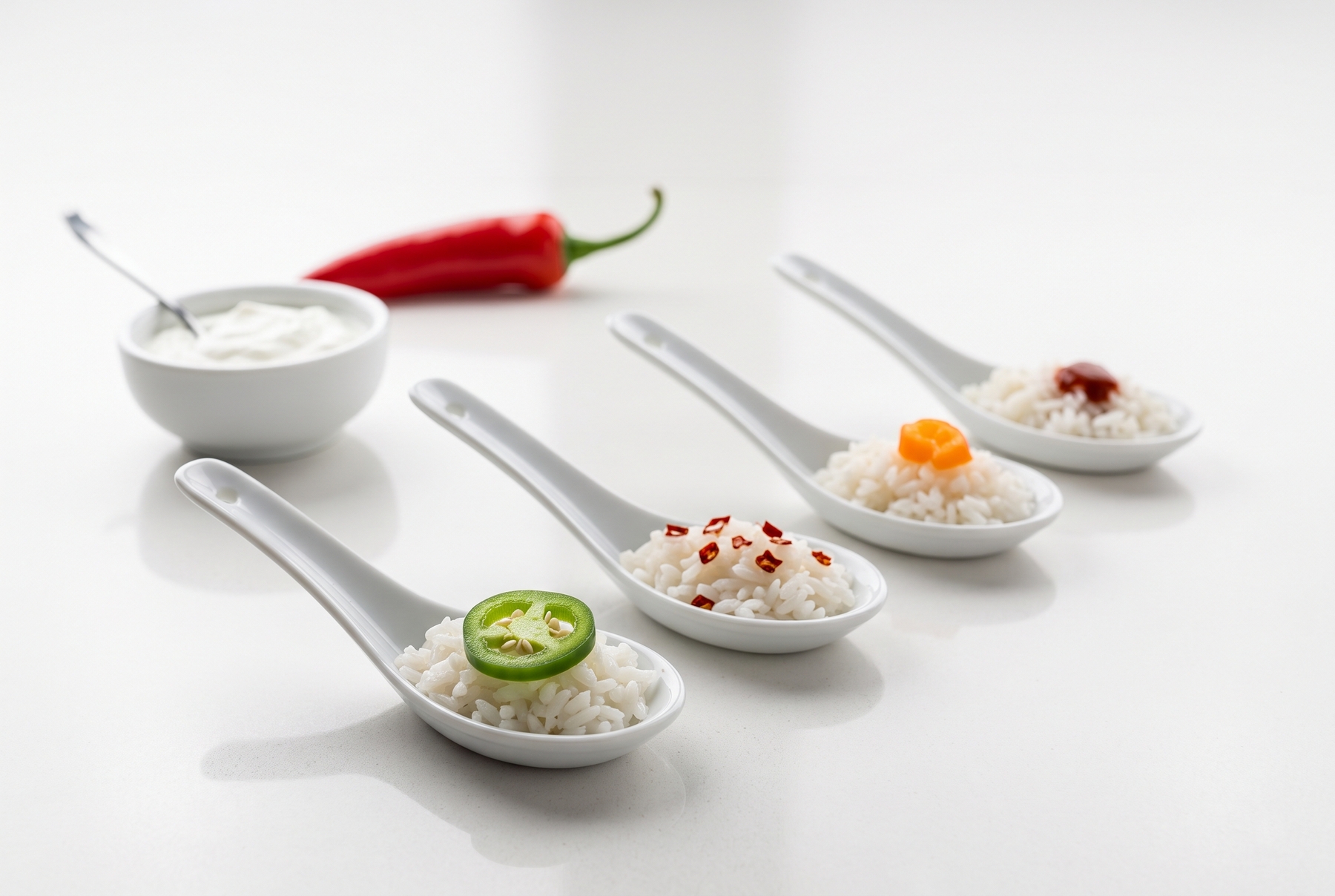
Tasting an unfamiliar pepper works best alongside a neutral food like rice, keeping sour cream nearby to tame any unexpected burn.
5 Chili Pepper Species Worth Knowing
Five domesticated species of chili peppers exist. Botanists classify them as distinct species, though in the kitchen it helps to think of them as families: within each group, the peppers share similar aromas and ways of delivering heat. Memorizing the Latin names is unnecessary, though the taxonomy helps predict what an unfamiliar pod will do.
Capsicum Annuum: The Familiar Entry Point
This represents the largest and most approachable group, encompassing jalapeños, serranos, poblanos, cayennes, Hungarian wax peppers, and nearly all paprika varieties. The range is vast, stretching from mild poblanos meant for stuffing to dry cayenne ground into powder. Thai bird’s eye chilies often land in this category too; botanists still debate the classification, though the argument matters little at the stove. That smooth, elongated pod sitting in the supermarket produce aisle almost certainly belongs to this family, making it the best place to start.
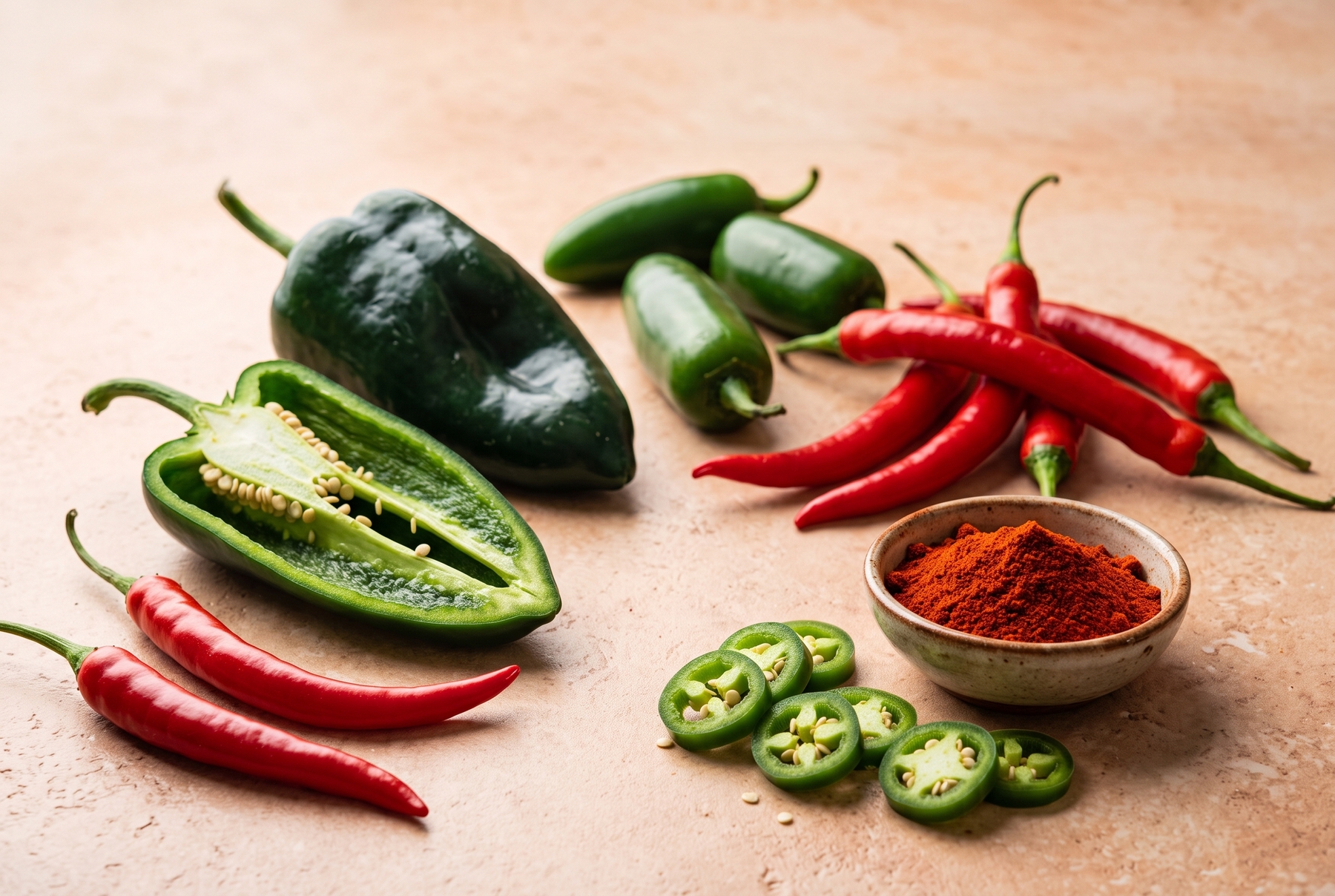
Capsicum annuum represents the most common species, encompassing jalapeños, poblanos, cayennes, and paprika peppers.
Capsicum Chinense: Tropical Fruit and Serious Heat
Habanero, Scotch bonnet, Trinidad Scorpion, and Carolina Reaper headline this group. The species name misleads: these peppers originated in the Amazon basin, not China. They smell of mango, apricot, blossoms, and the tropics, and they burn with serious intensity. The lush aroma draws you in right before a long, relentless heat takes over. The Scoville record-breakers grow right here in this family. Beginners should tread carefully with these varieties, as misjudging the dose happens easily and leaves no room for retreat.
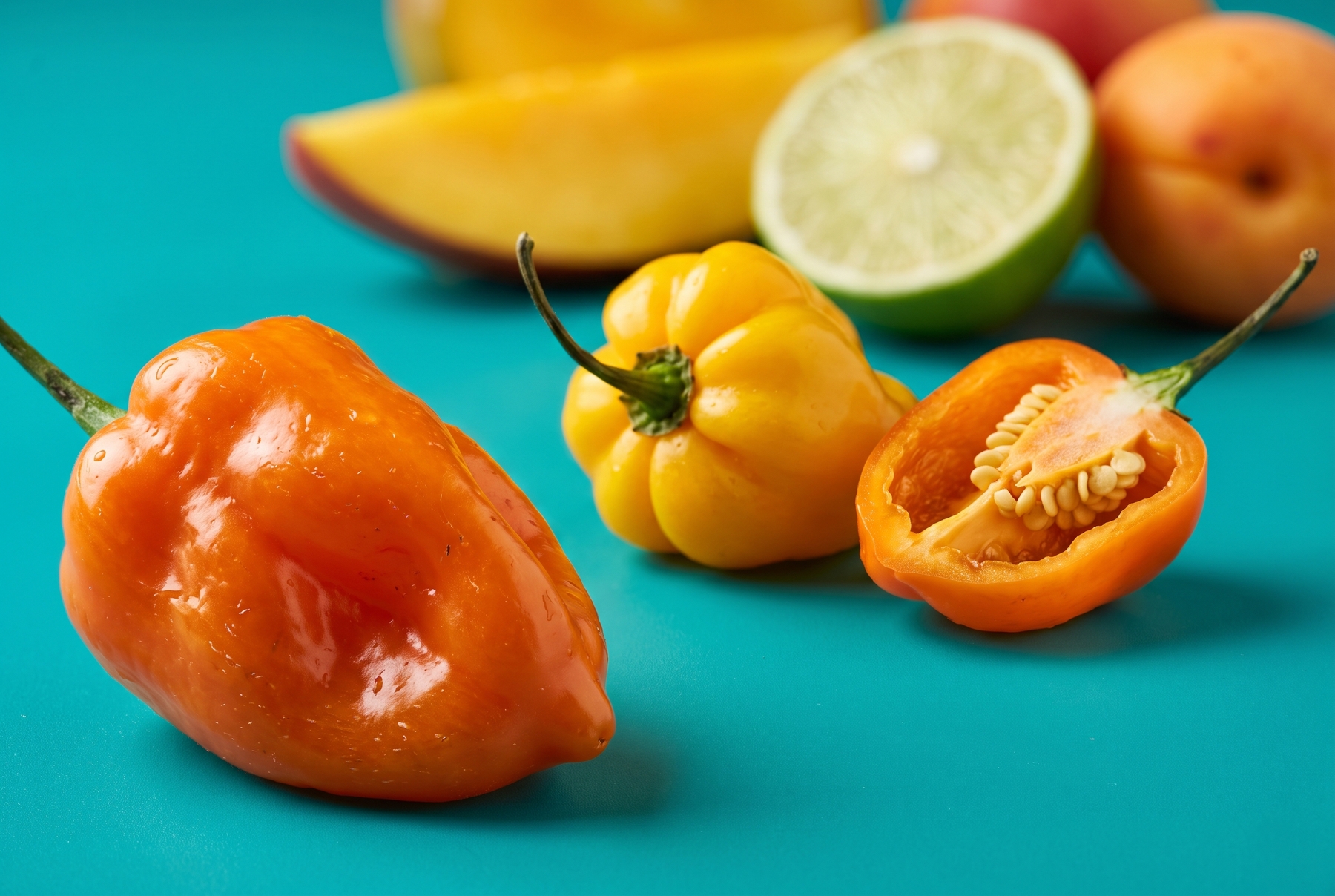
Capsicum chinense peppers are prized for their vibrant tropical and fruity aroma paired with intense heat.
Capsicum Frutescens: Small and Direct
Tabasco, piri-piri, and malagueta define this category. These tiny pods deliver a straight, focused punch. Complex aromas remain absent here, replaced instead by honest, immediate heat. Cooks frequently drop them into hot sauces, chili oils, vinegar marinades, and rapid stir-fries. Famous Tabasco sauce relies on this exact pepper, fermenting the mash inside oak barrels.
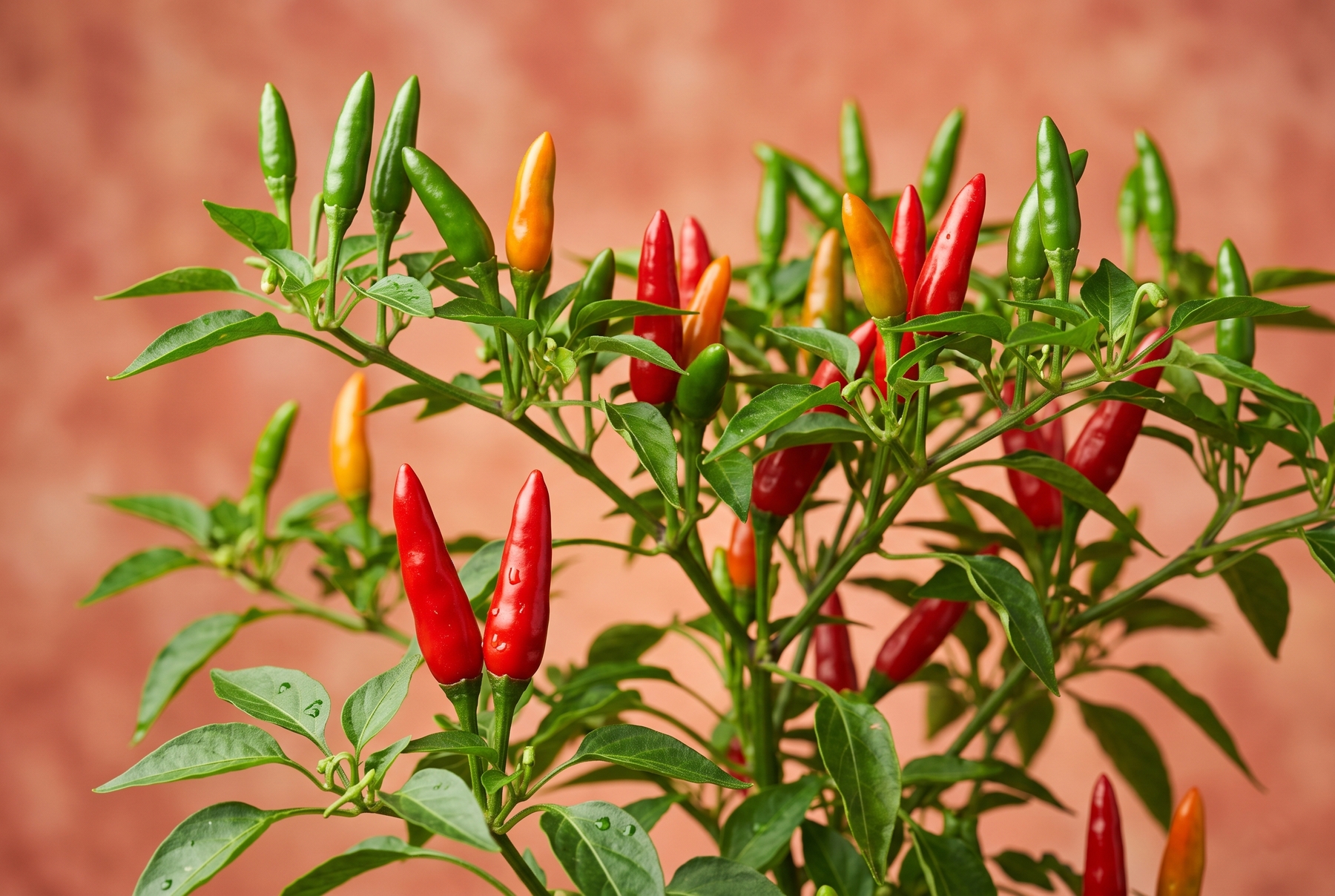
The small pods of Capsicum frutescens grow upright and deliver a fast, direct punch of heat.
Capsicum Baccatum and Capsicum Pubescens: For the Initiated
These two less common families play a vital role in Latin American cooking. Capsicum baccatum includes Peru’s ají amarillo and ají panca, prized for their fruity tang. Capsicum pubescens features the rocoto (or locoto), a thick-walled pepper with striking black seeds native to the Andean highlands. Regular supermarkets outside South America rarely stock them, though Latin American specialty grocers often carry them frozen or in jars. Their distinct flavors anchor Peruvian cuisine so deeply that substituting a neutral hot chili rarely works.
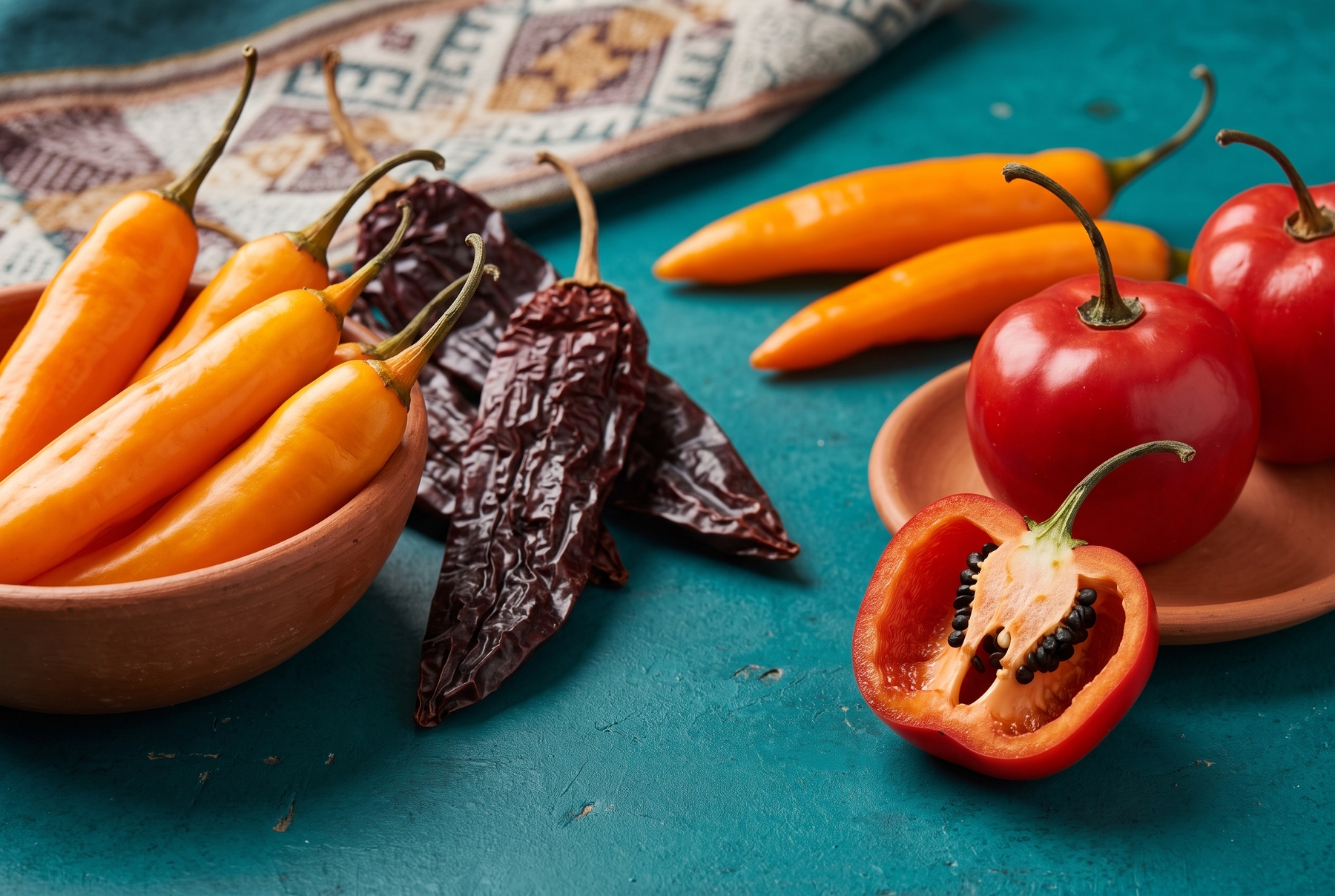
South American varieties on display: the fruity ají amarillo and the highland rocoto with its signature black seeds.
How to Read a Pepper by Sight
Supermarket price tags rarely specify the exact species or cultivar of a chili pepper, forcing shoppers to rely on broader visual clues.
Size, Shape, and Skin
Small size never guarantees mildness: a tiny Thai chili often burns far more fiercely than a plump jalapeño. No absolute rule exists, only reliable indicators. Thin walls, an elongated shape, and glossy skin usually promise above-average heat. Wrinkled, seemingly shriveled skin frequently signals a superhot variety. Thick, fleshy walls typically belong to milder peppers suited for roasting or salads.
Color and Ripeness
Color primarily reflects ripeness. Green peppers come off the plant early, offering a fresh, grassy flavor with a sharp edge. Red peppers stay on the vine to ripen fully, developing sweeter, deeper, and more rounded notes. Yellow and orange varieties frequently lean toward fruity profiles. Still, this observation is not an ironclad law: genetics outweigh color, meaning an unripe green habanero remains far more dangerous than any fully ripe red jalapeño.
Fresh, Dried, Smoked, and Ground
Processing transforms a single pepper variety into entirely different culinary ingredients. Fresh pods bring moisture and a crisp, green vibrancy. Drying mutes those grassy notes while concentrating deeper flavors of raisins, prunes, and dried stone fruit. Smoking infuses campfire aroma, while grinding distributes heat rapidly and evenly across a dish.
Learning the specific culinary names makes navigating dried chilies much easier:
- Paprika: ground sweet or hot dried peppers.
- Chipotle: smoke-dried ripe red jalapeño.
- Ancho: dried ripe poblano.
- Korean Gochugaru: sun-dried red peppers deseeded and crushed into coarse flakes, offering a sweet profile with subtle smokiness.
- Turkish Pul Biber: a broad term for crushed red pepper flakes, most famously Aleppo and Marash, known for their fruity, moderate warmth.
A single visit to a good spice shop teaches more about chilies than a page full of Scoville charts.
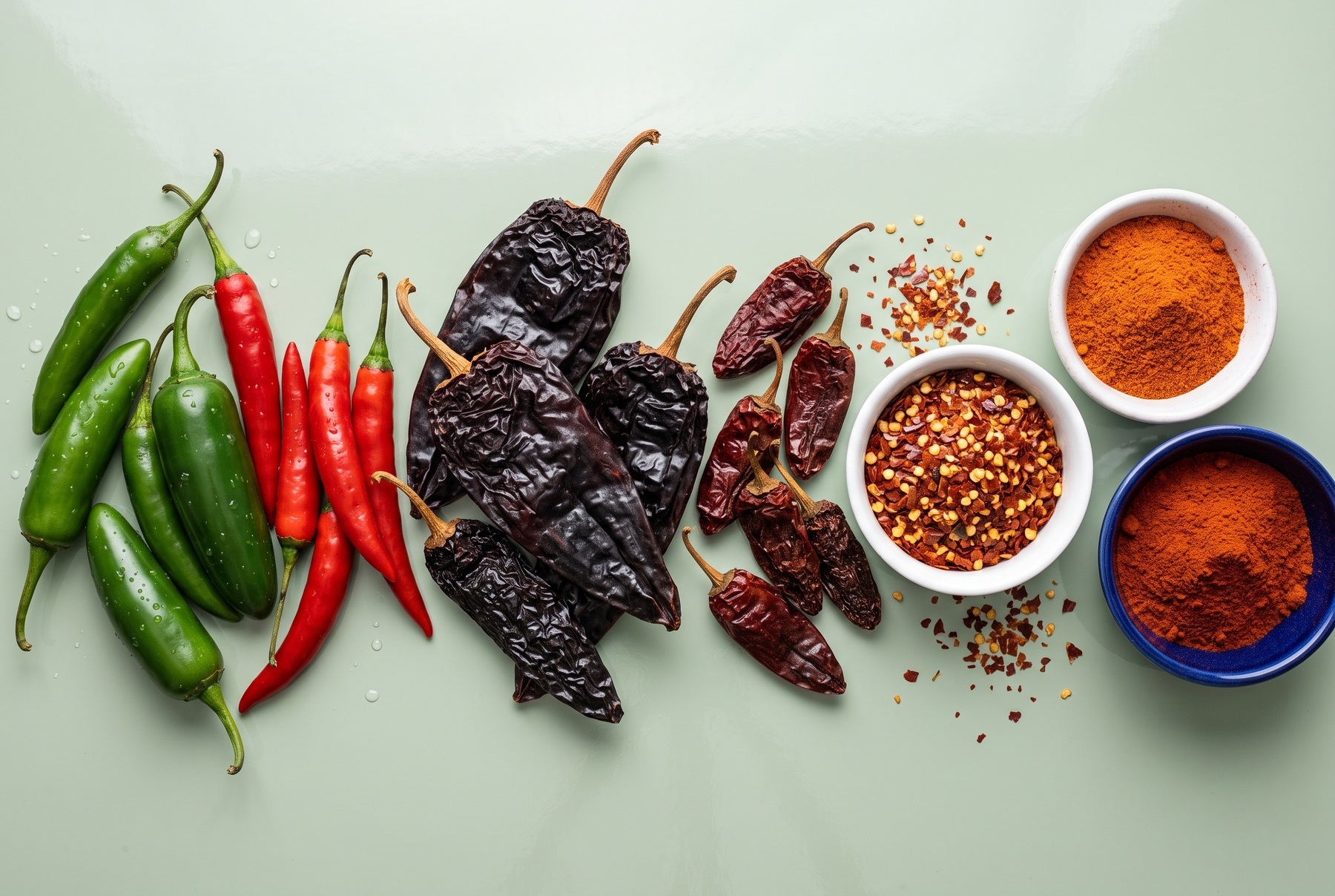
Fresh pods, dried chilies, crushed flakes, and fine powders allow cooks to control both flavor depth and how quickly the heat releases.
Flavor and Aroma Profiles of Different Chili Peppers
Visuals hint at a pepper’s general category, while the aroma reveals which ingredients will pair best with it. Learning to navigate four main flavor profiles transforms how you season food.
Grassy and Fresh. Jalapeño, serrano, and green Thai chilies lead this group. They smell like freshly cut garden greens and belong in dishes that demand brightness: salsas, marinades, tacos, and vegetable soups.
Fruity and Floral. Habanero, Scotch bonnet, and ají amarillo shine here. Their tropical aroma pairs naturally with mango, pineapple, citrus, chicken, white fish, and beans.
Smoky and Dark. Chipotle, ancho, and pasilla define this profile. They bring notes of campfire, raisins, cocoa, and prunes. These chilies elevate braised meats, beans, hearty stews, and rich tomato or chocolate sauces. Traditional Mexican mole often combines several of them at once.
Purely Hot. Cayenne, small dried red chilies, and many standard chili powders serve this purpose. They prove convenient when a recipe simply needs controlled heat: adding a small pinch, tasting the dish, and adjusting upward keeps the spice level predictable.
Common Chili Peppers Found in Grocery Stores
Any grand map of species and aromas eventually meets the reality of the local grocery store.
Most often, a generic “chili pepper” sign sits above a bin of nameless, elongated red or green pods. With the cultivar unlisted, the heat level remains a gamble. Starting with a small piece, inspecting the interior ribs and seeds, and keeping the recipe flexible works best when the exact variety remains a mystery.
The jalapeño serves as an ideal introduction to fresh chilies. Moderate, juicy, and distinctly grassy, it brings a predictable character to the cutting board. It shines in fresh salsa, burgers, quick pickles, nachos, and chicken marinades. Ruining a dinner with a jalapeño takes real effort.
Bird’s eye and Thai chilies pack a sharp punch in a tiny frame, making them indispensable in Southeast Asian cooking. They also demand respect. For a multi-serving pot of curry or soup, starting with half a pod—or even a third—prevents disaster, as more can always go in later.
The habanero smells like a tropical vacation and punishes overconfidence. Its mango-like aroma precedes a powerful, lingering burn. Blended into a fruit-based hot sauce, it tastes extraordinary, though handling it requires gloves and restraint. A single pod often suffices for an entire large pot.
Dried flakes, cayenne, smoked paprika, and bottled hot sauces offer great alternatives when fresh pods are unnecessary. Crushed red pepper flakes contain bits of skin and seed that release heat slowly during cooking, whereas fine cayenne powder delivers an immediate jolt. Bottled sauces contribute vinegar acidity and salt alongside the heat, while chili pastes offer thicker, more concentrated depth. Smoked paprika focuses on campfire aroma and vibrant color, leaving the pure burn to cayenne.
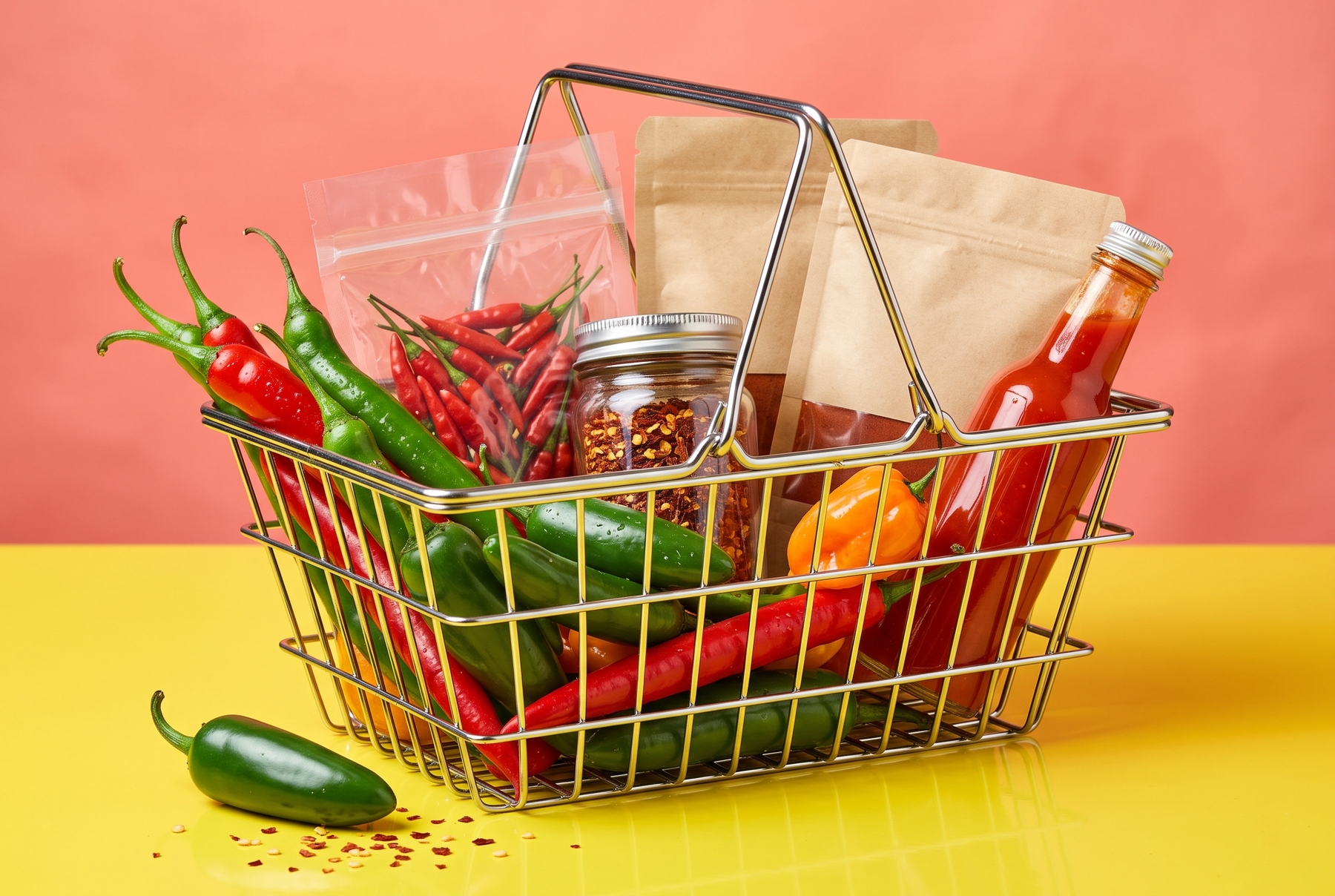
Supermarkets offer a wide range of chili options, from fresh jalapeño pods to dried flakes and bottled hot sauces.
How to Taste an Unfamiliar Pepper Safely
Approaching an unknown pod requires the same methodical technique regardless of its botanical family. Bravado only gets in the way here, whereas a simple five-step routine keeps your palate intact:
- Smell the whole pod first. The exterior and stem area often hint at whether the pepper leans fruity, grassy, or smoky.
- Slice the pod lengthwise and inspect the interior ribs: thicker, denser white membranes signal a much more serious burn.
- Cut a paper-thin sliver from the tip—the mildest end—and tuck it into a spoonful of neutral food like plain rice, mashed potatoes, or yogurt. Eating a raw piece straight off the board invites trouble, as an unfamiliar variety might pack ten times the expected heat.
- Wait before judging. Capsaicin builds gradually, often taking 10 to 20 seconds to reveal its true peak.
- Assess the warmth and scale the amount to fit the whole pot. If the cultivar remains a mystery or displays classic superhot traits (tiny size, wrinkled skin, thin walls), introducing a microscopic amount directly into the cooking dish and building slowly proves safest.
Where the Heat Actually Lives
Contrary to popular belief, the seeds are not the primary source of heat; instead, the burn concentrates in the placenta, the pale pithy ribs that anchor the seeds to the inner wall. The capsaicin-producing glands sit right inside this tissue. Seeds produce no capsaicin of their own, merely absorbing the fiery oil from sitting pressed against the placenta. When a recipe calls for gentler warmth, scraping out the white membranes along with the seeds using the tip of a knife tames the pepper significantly. The outer flesh remains much milder than the core.
Gloves, Knives, Cutting Boards, and Eyes
Wearing disposable gloves when prepping hot varieties prevents painful accidents. Capsaicin clings stubbornly to skin oils, meaning a casual eye rub hours after dinner can still trigger an intense burn. Keeping hands away from the face is essential, as is washing the knife and cutting board immediately with warm, soapy water so the next ingredient prepped on that surface does not pick up unintended heat.
Blenders demand even greater caution. Blending hot liquids in a sealed pitcher causes steam to expand rapidly, building pressure that can blow the lid off and spray scalding chili puree across your hands and face, while releasing an aerosolized cloud of capsaicin that sears the eyes and lungs. Letting the mixture cool until merely warm, filling the pitcher no more than halfway, holding a folded kitchen towel over the lid, and keeping your face turned away prevents kitchen emergencies. Using an immersion blender directly inside the pot offers a much safer alternative. Checking the manufacturer’s manual is also wise: sealed bullet-style blenders and vacuum pitchers are generally not designed to handle hot liquids at all.
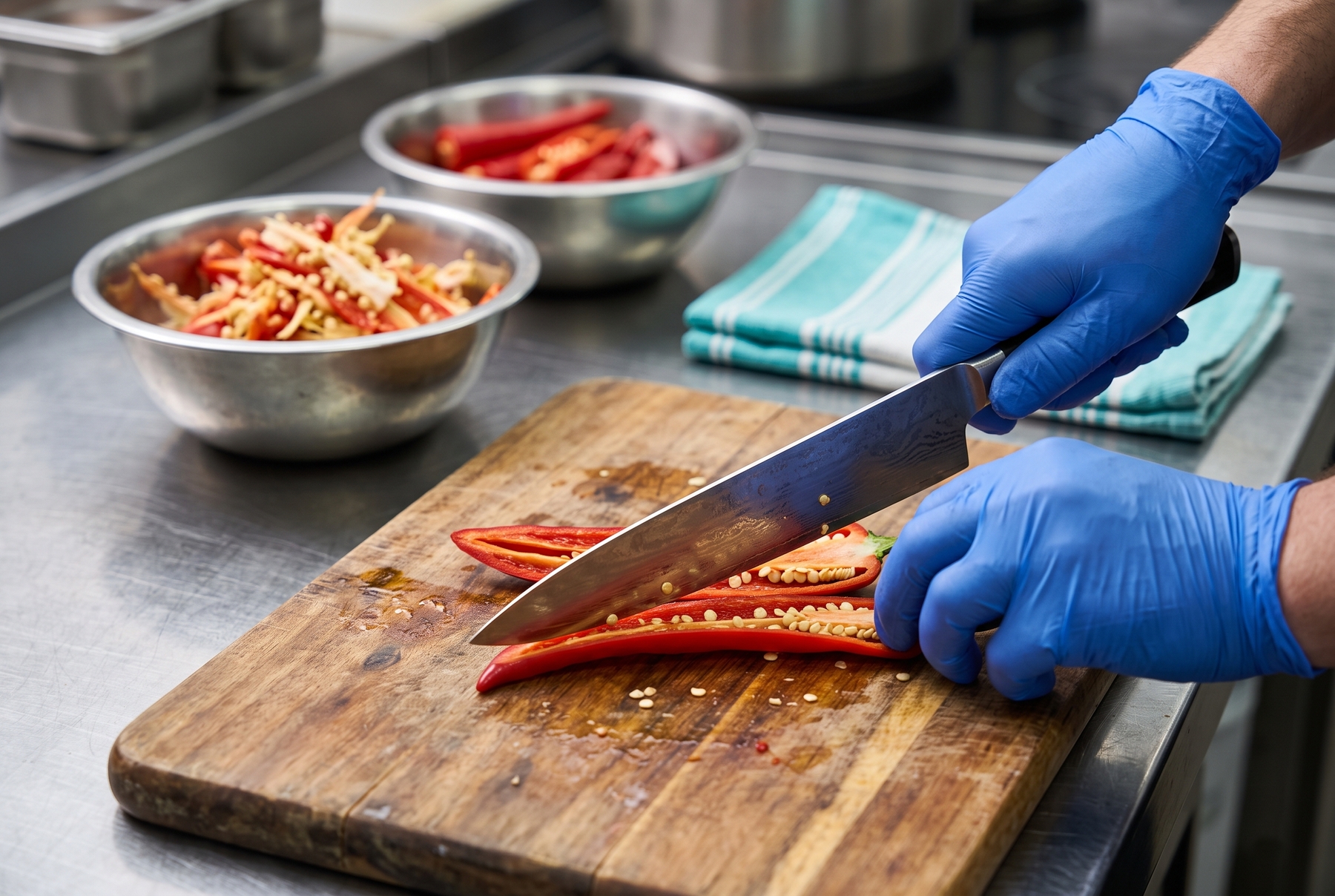
Wearing disposable gloves when prepping hot chilies prevents capsaicin from transferring to your skin and eyes.
Choosing the Right Chili Pepper for Different Dishes
For Brightness and Crunch — Green, grassy pods (such as jalapeño or serrano)
- Best applications: fresh salsas, crisp salads, tacos, light summer soups, and quick marinades.
- Why it works: these dishes rely on moisture, vegetal juiciness, and the snappy texture that only raw or lightly cooked fresh produce can provide.
For Deep, Savory Richness — Dried and smoked chilies (such as chipotle or ancho)
- Best applications: thick stews, pot beans, braised meats, and long-simmered tomato sauces.
- Why it works: dried pods infuse a dish with campfire smoke and a velvety, dark-fruit sweetness. A fresh green pepper simply lacks the structural depth to anchor a heavy braise.
For Tropical, Fruity Sauces — Habanero (and its aromatic relatives)
- Ideal base pairings: sweet fruits (mango, peach, or citrus), a splash of vinegar, and a pinch of salt and sugar.
- Serving suggestions: this sweet-heat profile cuts beautifully through rich grilled chicken, flaky white fish, or seared shrimp. Restraint remains key here, as these varieties pack extreme heat!
How to Substitute One Chili Pepper for Another
Finding the exact chili called for in a recipe happens less often than we might like. Swapping peppers based solely on Scoville numbers falls short: using a tiny sliver of habanero will never replicate a whole jalapeño, because you lose the green crunch, introduce an uninvited tropical aroma, and shift the entire character of the dish. Still, when dinner is already on the stove, a practical substitution guide saves the meal:
- Jalapeño → serrano (use less) or any mild fresh green chili;
- Thai bird’s eye → a smaller pinch of ground cayenne or another sharp, thin-walled red chili;
- Habanero → Scotch bonnet or a few drops of a fruit-forward Caribbean hot sauce;
- Chipotle → smoked paprika paired with a tiny pinch of cayenne for heat;
- Ground cayenne → crushed red pepper flakes, allowing extra simmering time for the coarser flakes to release their heat.
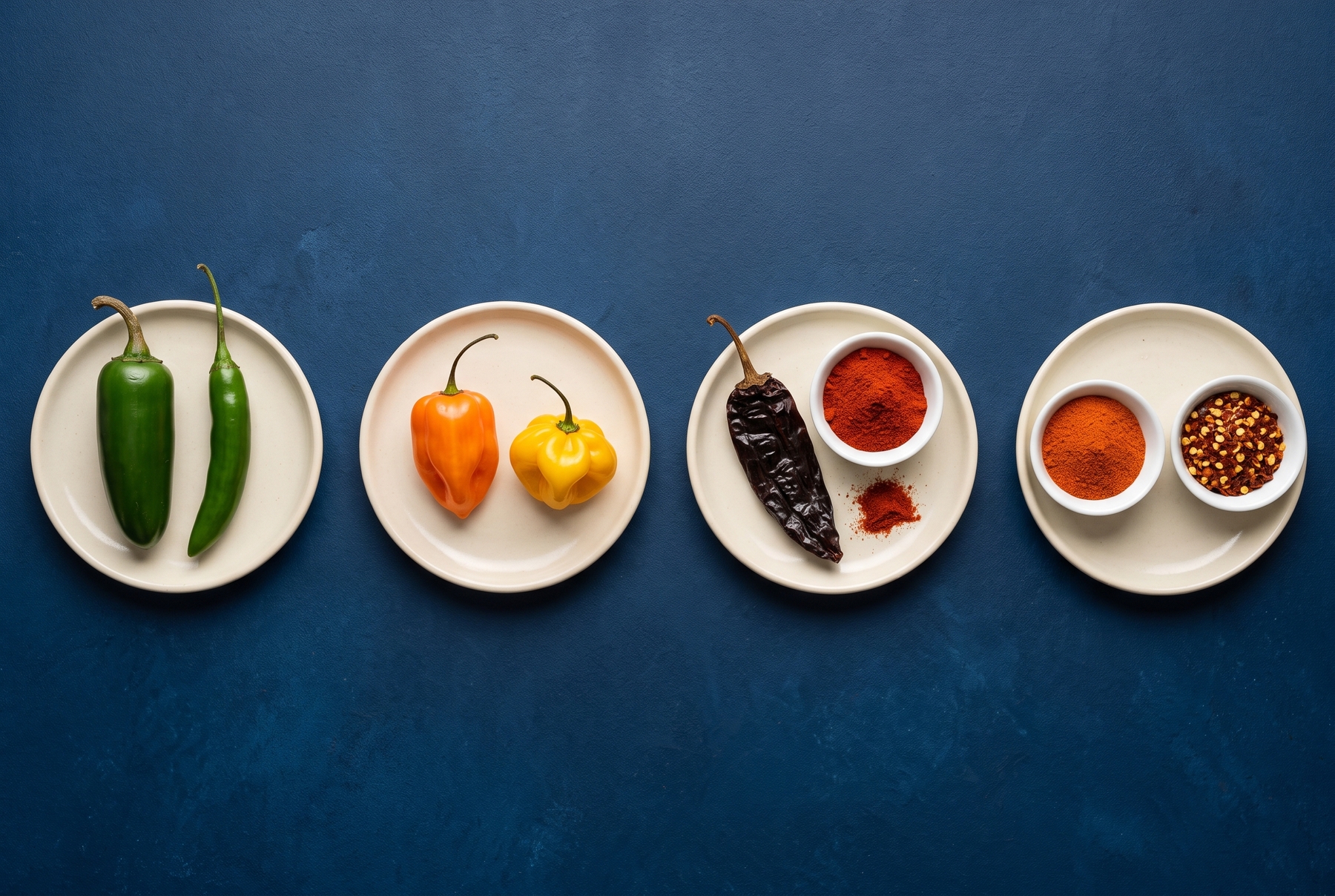
When substituting chili varieties, matching the overarching flavor profile matters just as much as matching the heat level.
Common Mistakes Beginners Make
Tossing the entire pod into the pot at once ranks as the most frequent error. Heat goes in effortlessly, yet pulling it back out once the dish is too spicy is nearly impossible.
Judging a pepper by its seeds alone also leads cooks astray. Assuming a pod becomes mild the moment the seeds hit the trash ignores the fiery white placenta and the inherent strength of the cultivar.
Dry-toasting superhot chilies in a hot skillet without ventilation turns the kitchen into a hazard zone. Capsaicin vaporizes into the air, triggering immediate coughing fits and watering eyes. Opening a window and flipping on the exhaust hood must happen before the pan heats up.
Finally, buying a novelty “world’s hottest” sauce as an entry point teaches pain tolerance rather than palate discernment.
A One-Week Tasting Plan to Understand Chilies
Reading about chili peppers never teaches as much as tasting them firsthand. A simple one-week home tasting project requires only standard supermarket ingredients and builds lasting kitchen intuition.
Days 1–2. Pick up one fresh green chili and one fresh red chili (a green and red jalapeño or Fresno work well). Smell both, slice them into thin rings, and tuck a couple of slices into two identical bowls of plain rice or yogurt. Compare the profiles: notice where the grassy bite sits, where the ripened sweetness emerges, and how quickly the warmth builds.
Days 3–4. Line up crushed red pepper flakes, ground cayenne, and smoked paprika. Place a pinch of each into three separate spoons and smell them carefully without rubbing the powders between your fingers (cayenne lingers under fingernails for a full day and inevitably finds its way to your eyes). Next, stir each pinch into a spoonful of sour cream or warm olive oil and taste them side by side. Notice how pure, sharp heat differs from campfire smoke and sweet, earthy warmth.
Days 5–7. Blend two simple sauces. Make the first a bright green table sauce: jalapeño, cilantro, lime juice, and salt. Make the second either fruity or smoky: habanero blended with ripe mango, or canned chipotle puréed with roasted tomato. By the end of the week, the mental map of chili flavors clicks into place naturally.
Chilies elevate the sweetness of ripe tomatoes, wake up a pot of humble beans, lend grown-up complexity to sweet fruit, and anchor rich braised meats. The guiding question in the kitchen remains simple: what role is this pepper playing on the plate? Letting a tiny piece of smoked chipotle rest on the tongue for a second reveals the whole story: raisins and woodsmoke arrive first, followed only later by a steady, comforting warmth.
0 comments