
In terms of nutrient concentration, seeds outpace almost everything else sitting next to them on the pantry shelf. A handful of hulled pumpkin seeds packs more protein than a chicken egg, while a single tablespoon of ground flaxseed exceeds the daily dietary benchmark for alpha-linolenic acid. While the numbers are completely accurate, they easily lead to the wrong conclusion.
That same density means a high concentration of everything else—calories first and foremost. At around 550 kcal per 100 g (3.5 oz), the rule of “the healthier it is, the more you can eat” simply does not apply here. Marketing, however, suggests the exact opposite: buying seeds in bulk bags, measuring them out by the spoonful, adding them to every meal, and expecting results akin to a medical treatment.
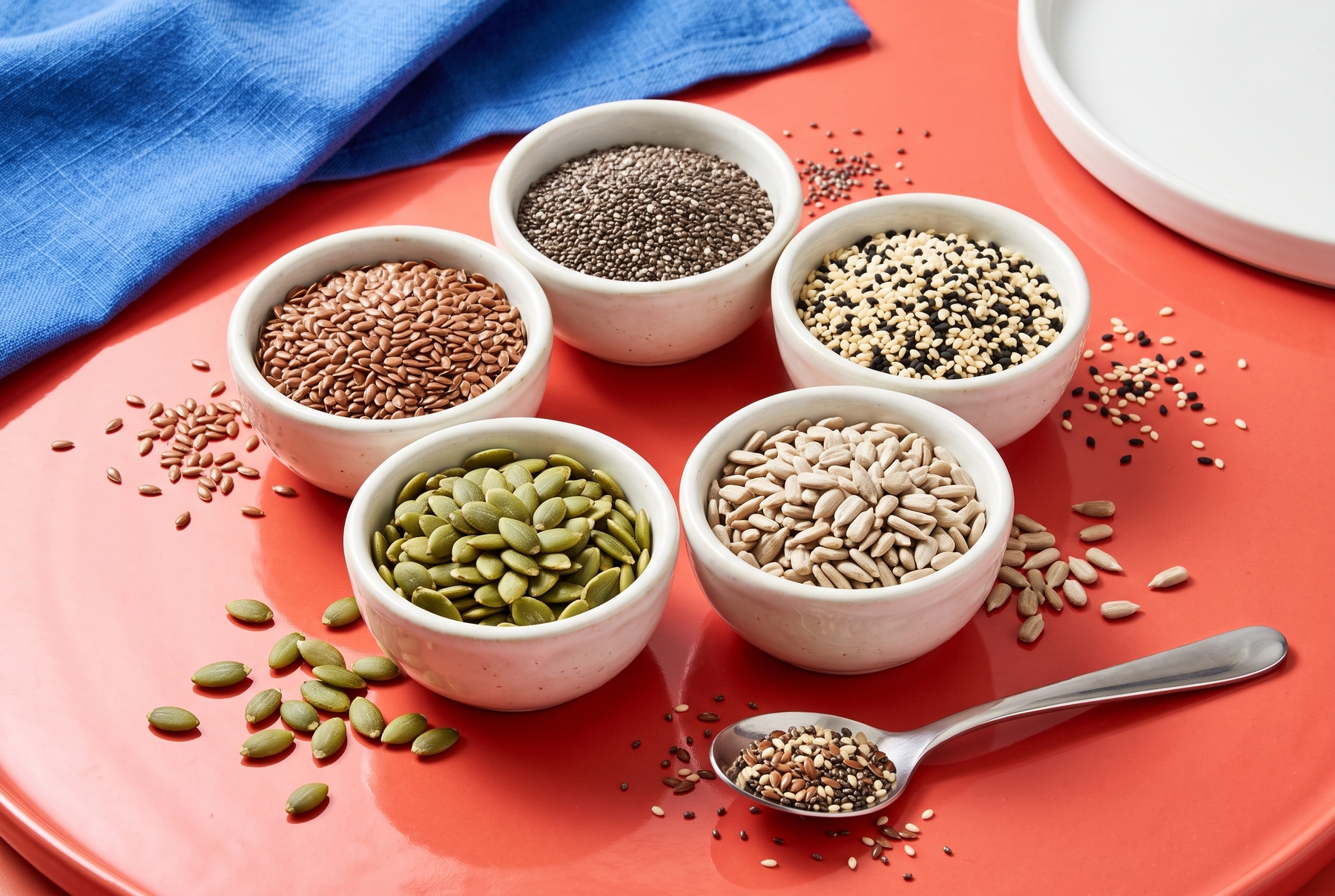
Each seed offers a distinct nutritional profile: pumpkin seeds are rich in magnesium, flaxseeds deliver plant-based omega-3s, and sesame seeds provide calcium.
Table of Contents
- What Makes a Seed Nutritious and Why the "Healthiest" Seed Does Not Exist
- Flaxseed: Form Matters More Than Reputation
- Chia Seeds: A Genuinely Useful Food Beneath a Layer of Hype
- Sesame Seeds: A Tiny Seed With a Long List of Nuances
- Pumpkin Seeds: Everyday Nutrition Without the Superfood Crown
- Sunflower Seeds: A Pantry Staple Overlooked Because It Is Too Familiar
- Hemp Seeds and the Rest of the Trendy Aisle
- Poppy Seeds in Pastry, Sesame on Bread, and Sunflower Kernels in Salad
- Why Overeating Seeds Is So Easy
- 5 Ways to Work Seeds Into Everyday Meals
- When to Exercise Extra Caution
- How Many Seeds to Eat per Day: Do You Need an Exact Number?
- How to Eat and Store Seeds: Do You Need to Soak, Grind, or Roast Them?
- How to Choose Seeds at the Grocery Store
- Quick Reference Guide: 5 Seeds for Specific Culinary Tasks
What Makes a Seed Nutritious and Why the “Healthiest” Seed Does Not Exist
A plant needs a seed as its startup capital. Because the tiny root and first leaf must emerge before the plant learns to feed itself, a complete survival reserve comes packed inside the hull: fats (the most compact form of energy), protein for building cellular structures, minerals for enzyme function, and dietary fiber within the outer coat and mucilaginous layers.
Nutrient density describes how many nutrients a food provides per calorie. Seeds deliver an abundance of nutrients, yet they carry plenty of calories, too.
Different seeds bring their own distinct strengths to the table, making it impossible to crown a single variety as the healthiest of them all. Flaxseed delivers fiber, alpha-linolenic acid, and lignans; pumpkin seeds stand out for their magnesium, zinc, and protein; sunflower seeds lead the pack in vitamin E. Sesame seeds rack up impressive calcium numbers—though with a few caveats discussed below. Chia seeds win on soluble fiber and their remarkable ability to hold water.
What seeds do not do is “detox the body,” “boost metabolism,” replace medical treatment, or act as an insurance policy against disease. Fiber supports gut function and satiety, alpha-linolenic acid is an essential fatty acid, and magnesium and zinc participate in hundreds of enzymatic reactions. Science understands these mechanisms well, yet most advertising promises stretch far beyond what clinical research actually confirms.
Flaxseed: Form Matters More Than Reputation
A 100 g (3.5 oz) serving of whole flaxseeds contains roughly 42 g (1.5 oz) of fat, 18 g (0.6 oz) of protein, and 27 g (1 oz) of fiber. Alpha-linolenic acid makes up the bulk of those fats at around 22 g (0.8 oz). A single tablespoon of ground flaxseed—approximately 7 g (0.25 oz)—provides about 1.5 g (0.05 oz) of this essential fatty acid.
Packaging usually skips one crucial caveat: the human body converts alpha-linolenic acid into long-chain omega-3s (EPA and DHA) at a very stingy rate of just a few percent. Understanding that flaxseed functions strictly as a source of plant-based omega-3 is essential; it does not replace fatty fish.
Lignans tell a separate story. Flaxseed ranks as the richest dietary source of these compounds, which gut bacteria convert into enterolignans. Although a vast body of research has accumulated over the years, conclusions regarding their specific health effects remain cautious. For that reason, lignans should not serve as the primary argument for eating flaxseed; its fiber and fatty acids offer far more straightforward benefits.
Flaxseeds: Whole or Ground
A whole flaxseed is smooth and slippery. Teeth slide right off its hull, chewing it thoroughly is nearly impossible, and a significant portion passes straight through the digestive tract intact—just as nature intended.
Grinding flaxseeds in small batches—2 to 3 tablespoons at a time in a coffee or spice grinder—yields the best results. Once ground, the internal fats are exposed to air, causing the seed to oxidize just like any other fat-rich food. Storing ground flaxseed in a tightly sealed jar in the refrigerator keeps it fresh for a couple of weeks. Relying on your nose is the easiest way to judge freshness: fresh flax smells nutty and slightly grassy, whereas rancid flax gives off the sharp scent of old linseed oil or drying paint.
The German Federal Institute for Risk Assessment (BfR) considers an intake of up to 15–20 g (0.5–0.7 oz) of ground raw flaxseed per day safe for adults. This upper limit stems from cyanogenic glycosides and cadmium, both of which the flax plant naturally accumulates from the soil.
Where Benefits Tip Into Excess
The gut rarely greets a sudden spike in dietary fiber with enthusiasm. Bloating, rumbling, heaviness, and occasionally the exact opposite of the desired digestive effect often follow.
While the World Health Organization advises adults to consume at least 25 g (0.9 oz) of dietary fiber daily, reaching that number gradually over one to two weeks works far better than forcing it into a single breakfast. Adequate hydration is equally important, since fiber binds water as it moves through the intestines.
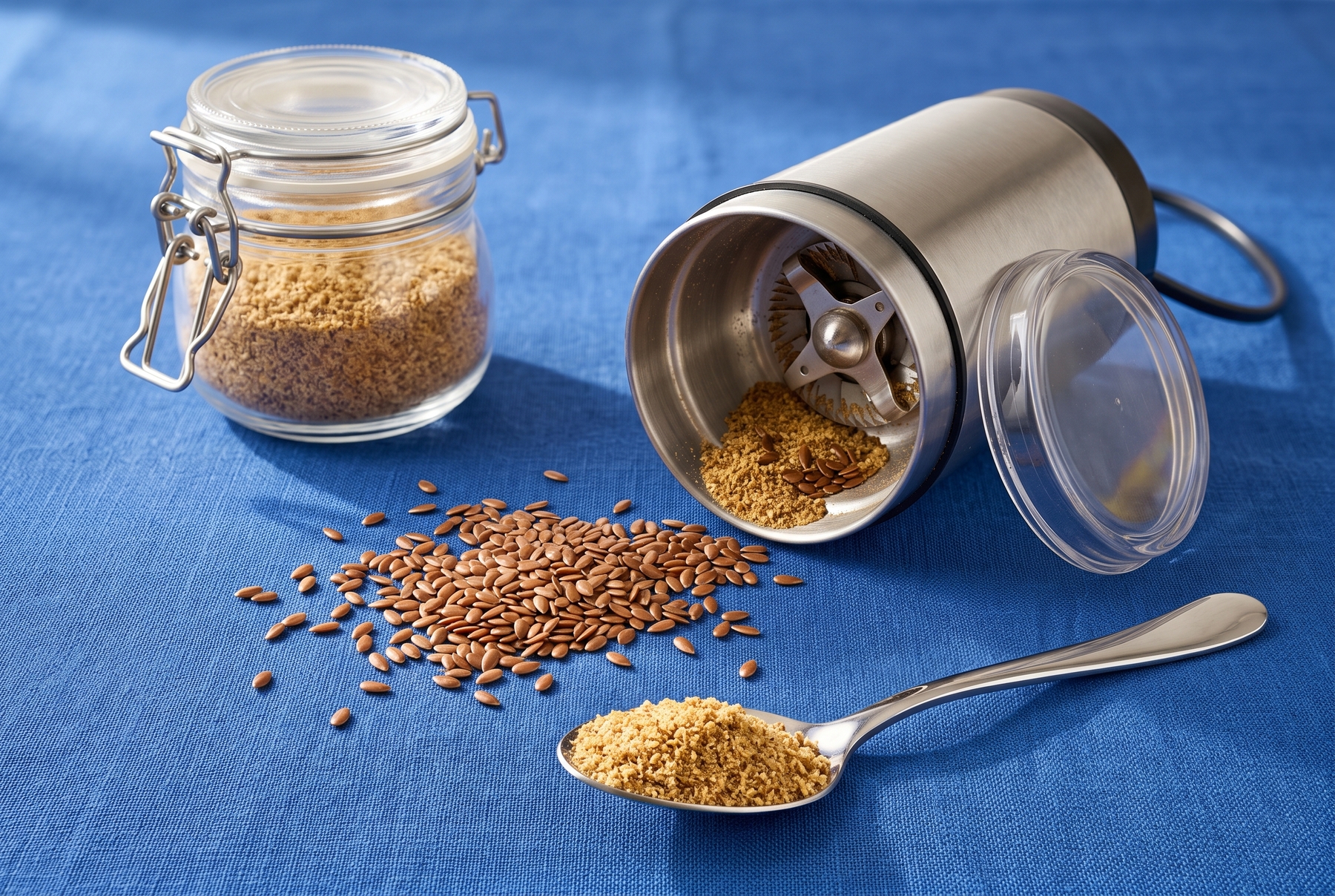
Because whole flaxseeds are difficult to digest, grinding them in small batches right before eating ensures optimal nutrient absorption.
Chia Seeds: A Genuinely Useful Food Beneath a Layer of Hype
Dismissing chia seeds as mere hype would be a mistake. Every 100 g (3.5 oz) packs roughly 34 g (1.2 oz) of fiber, 31 g (1.1 oz) of fat, 17 g (0.6 oz) of protein, and a notable amount of calcium. They are a genuinely nutritious food, even if their superfood reputation has noticeably outpaced their actual role in a balanced diet.
Why They Turn Into a Gel
Soluble fiber coats the outer shell of a chia seed, swelling upon contact with water to form a clear, mucilaginous halo. Because the seeds can absorb up to 27 times their own weight in liquid, they function first and foremost as a convenient thickening agent in the kitchen.
A reliable ratio for chia pudding uses 2 tablespoons of chia seeds to 120 ml (4 fl oz) of dairy or plant-based milk; stirring the mixture twice at a five-minute interval prevents a dense clump from forming at the bottom before it goes into the refrigerator for two hours or overnight. Replacing a single egg in baking requires combining 1 tablespoon of ground chia seeds with 3 tablespoons of water and letting the mixture rest for 10 minutes until it turns thick and gelatinous.
Why Eating Chia Seeds Dry Is a Bad Idea
This rapid swelling ability carries a distinct downside. At a 2014 American College of Gastroenterology conference, physicians presented a striking case: a man swallowed a tablespoon of dry chia seeds followed by a glass of water, and the resulting gel expanded directly inside his esophagus, where he had an existing stricture. Removing the blockage required an emergency endoscopy.
Because this represents an isolated clinical case, drawing sweeping conclusions about chia seeds is unnecessary, and stirring a spoonful into yogurt poses no problem for healthy eaters. Still, allowing the seeds to swell in liquid beforehand rather than swallowing them dry remains the safest approach. Anyone with swallowing difficulties or esophageal strictures should consult a physician before adding chia to their diet.
Food safety regulators have no major concerns regarding chia seeds, either: in 2019, the European Food Safety Authority (EFSA) concluded that chia seeds are safe under assessed conditions of use and declined to set a maximum intake level, though it did note the potential for allergic reactions.
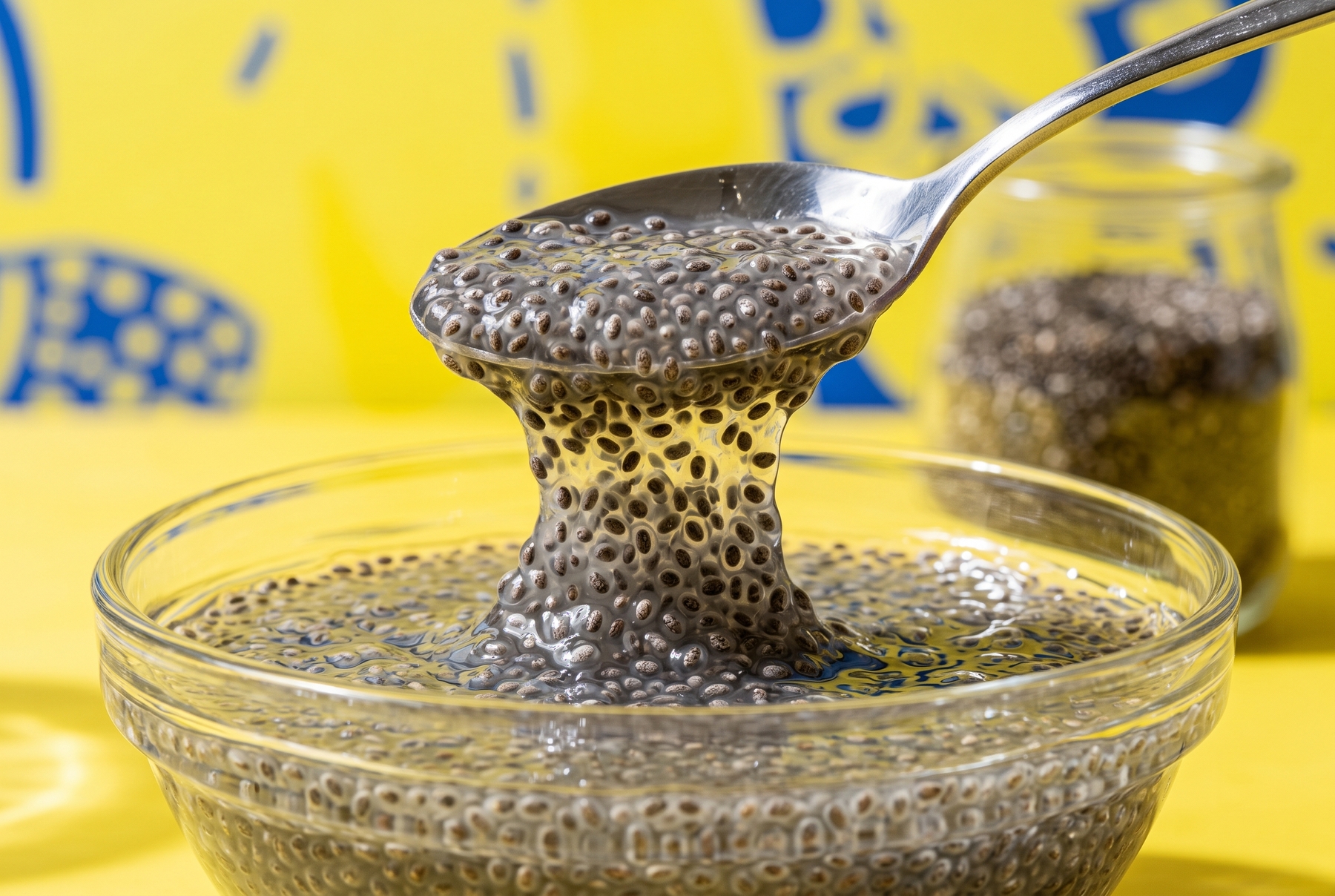
The soluble fiber coating chia seeds binds with water to form a thick, glossy gel.
Sesame Seeds: A Tiny Seed With a Long List of Nuances
Fats make up roughly half the weight of sesame seeds, alongside about 17 g (0.6 oz) of protein per 100 g (3.5 oz). Their famous calcium content, however, tells a much more complicated story.
Unhulled sesame seeds contain around 975 mg of calcium per 100 g (3.5 oz)—a statistic that migrates from article to article as proof that sesame can replace dairy milk. While the argument sounds convenient, the majority of that calcium sits locked inside the outer hull in the form of calcium oxalate, a compound the body absorbs poorly. Phytates, which bind to minerals in the digestive tract, further hinder absorption. Consequently, the impressive calcium figure on a nutrition label does not reflect how much mineral the body actually takes in.
White, Black, Hulled, and Unhulled
Hulled sesame seeds are paler, softer, and milder in flavor, and they toast much faster in the pan; removing the hull also strips away a significant portion of the calcium, though the exact drop depends on the seed variety, processing method, and nutritional database referenced. Unhulled seeds offer a more pronounced crunch and a slight bitterness, delivering extra fiber and holding their texture wherever structure matters—such as a crust on seared fish or a topping for artisan bread.
Black sesame seeds are noticeably more aromatic and bitter. In Japanese cuisine, cooks use them to make gomasio (a toasted sesame and salt condiment) as well as thick, glossy pastes for desserts. From a culinary standpoint, the color primarily transforms the flavor profile and visual appeal of a dish.
Tahini Counts, Too
Sesame seeds are just as valuable in paste form. Tahini—a rich paste ground mostly from hulled sesame seeds—is a complete whole-food ingredient in its own right. A 100 g (3.5 oz) portion of tahini contains roughly 600 kcal, translating to about 90 kcal per tablespoon.
A classic tahini sauce comes together in a single minute using 2 tablespoons of tahini, the juice of half a lemon, 1 minced garlic clove, salt, and water added drop by drop. One chemical reaction always startles beginners: when the first splash of liquid hits the paste, the tahini seizes into a stiff, grainy lump that resists the spoon and looks hopelessly ruined. Continuing to whisk in cold water gradually relaxes the emulsion into a silky, ivory-colored cream.
Major food safety authorities—including the US FDA, the EU, and the Eurasian Economic Union—classify sesame as a priority allergen that must be declared on food labels in any trace amount, right alongside peanuts, tree nuts, and gluten-containing grains. Anyone with a sesame allergy must carefully check ingredient lists on everything from sandwich bread to bottled sauces and breadings.
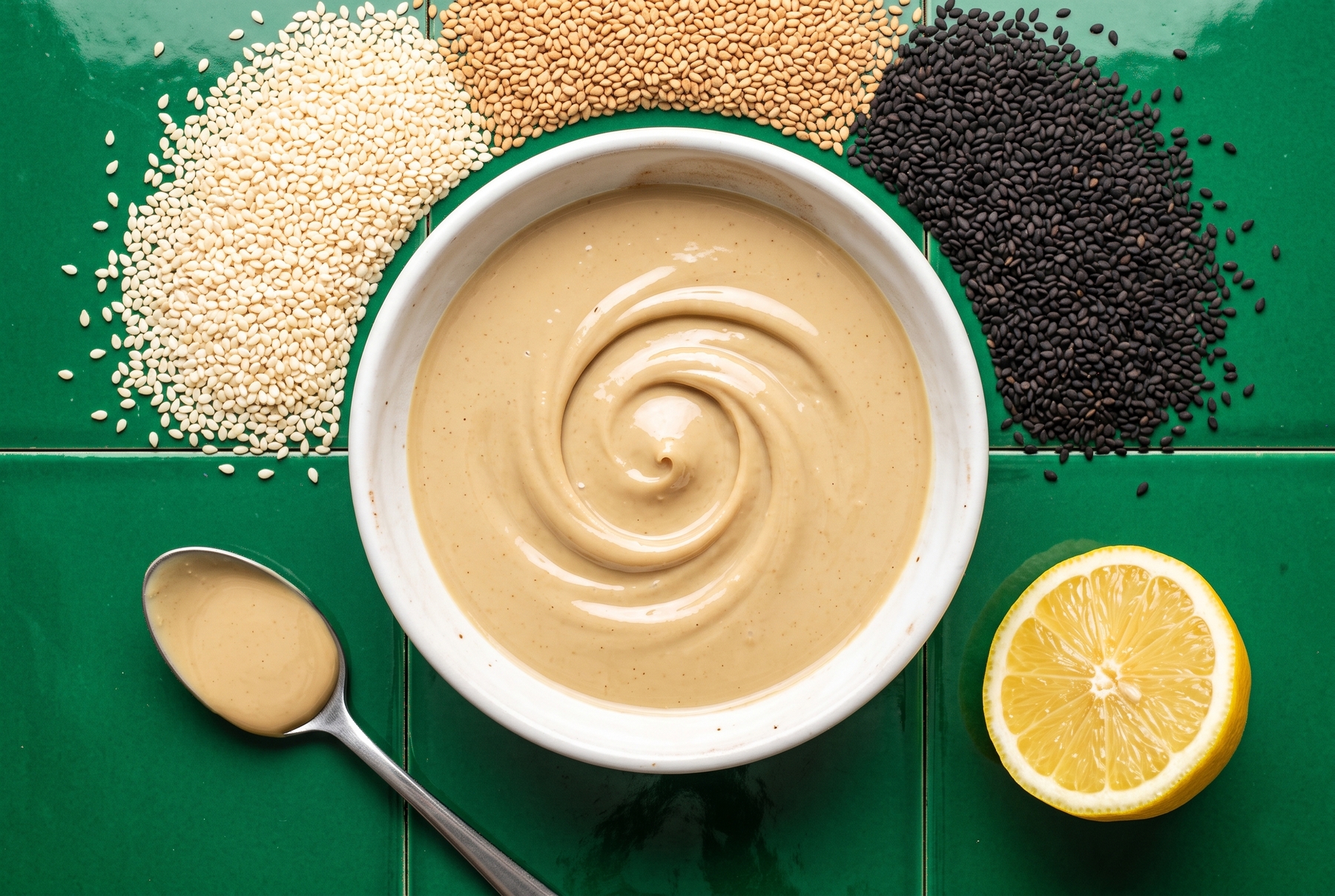
Tahini is a nutrient-dense sesame paste that serves as a rich base for sauces and dressings.
Pumpkin Seeds: Everyday Nutrition Without the Superfood Crown
Hulled pumpkin seeds—often sold as pepitas—deliver around 30 g (1.1 oz) of protein per 100 g (3.5 oz), nearly 50 g (1.8 oz) of fat, roughly 590 mg of magnesium, and about 8 mg of zinc. A standard 30 g (1 oz) handful supplies approximately 9 g (0.3 oz) of protein and a substantial share of the daily value for magnesium.
Best of all, pumpkin seeds sit on the shelves of almost every regular supermarket, quietly competing in nutritional value with far more expensive health-food products.
In the kitchen, their versatility shines: a handful adds texture to a bitter greens salad, garnishes a pureed squash or cauliflower soup right before serving (since they soften within five minutes in hot liquid, scattering them into the bowl rather than the pot preserves their crunch), bulks up morning oatmeal or bread dough, replaces pine nuts in pesto, and finishes roasted vegetables.
Raw or Roasted
Raw pumpkin seeds are pliable and mildly grassy. Roasting transforms them completely: the Maillard reaction develops a deep, nutty aroma, causing the seeds to puff up and pop against the skillet as their texture turns crisp and brittle.
Declaring roasted seeds nutritionally useless has no scientific basis; while heat degrades a fraction of heat-sensitive compounds and accelerates fat oxidation at high temperatures, moderate roasting leaves the core nutritional value intact. Roasting them in the oven at 160–170 °C (320–340 °F) for 8–10 minutes, or tossing them in a dry skillet over medium heat until the first pops and nutty aromas appear, is all it takes.
Store-bought roasted snacks present a completely different issue: sodium. Commercial packages often contain so much added salt that an evening of snacking easily consumes a massive share of the daily sodium limit. Furthermore, pre-roasted seeds go rancid much faster than raw ones.
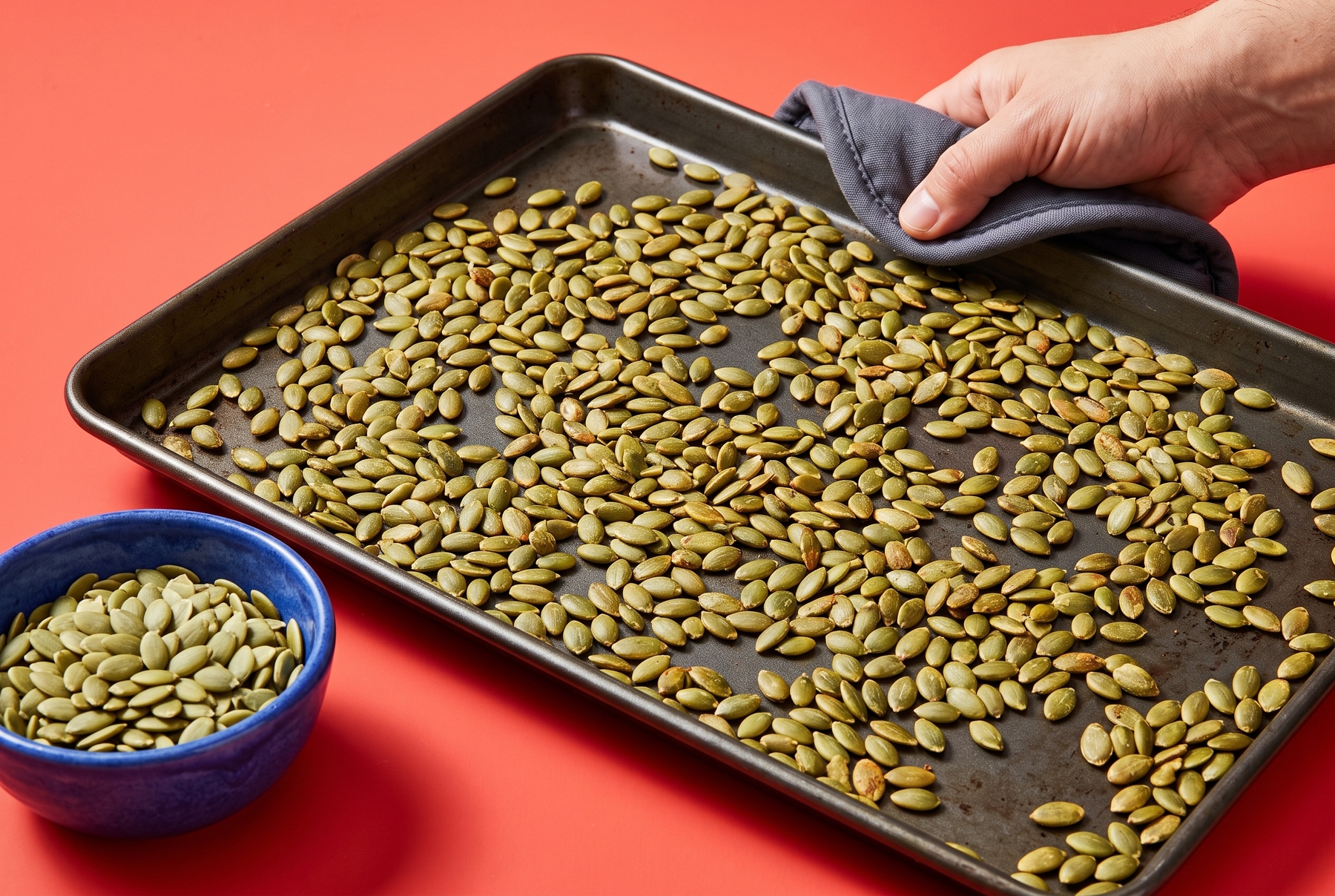
Roasting pumpkin seeds moderately at 160–170 °C (320–340 °F) unlocks their deep, nutty flavor.
Sunflower Seeds: A Pantry Staple Overlooked Because It Is Too Familiar
Hulled sunflower kernels provide about 20 g (0.7 oz) of protein and 51 g (1.8 oz) of fat per 100 g (3.5 oz), while outperforming nearly everything else in the aisle for vitamin E: at roughly 35 mg per 100 g (3.5 oz), a single handful covers a major portion of the daily requirement. They also contribute selenium, magnesium, and folate.
In Eastern Europe, roasted sunflower seeds are sold at every corner kiosk as a beloved everyday pastime, yet this humble staple boasts a more compelling nutrient profile than half the items in a boutique health-food aisle.
Everything depends on how they are eaten. Scattering a handful of unsalted, hulled kernels over a crisp cucumber and dill salad adds welcome crunch and micronutrients. Mindlessly finishing a bag of salted, roasted seeds while watching a show, however, quietly delivers upwards of 500 kcal and a heavy dose of sodium. Quantity is the real issue here, as eating sunflower seeds straight from the bag makes effortless overconsumption almost inevitable.
Seeking out exotic replacements for sunflower seeds in pursuit of a “healthier” lifestyle is entirely unnecessary. They are local, inexpensive, and deeply nutritious.
Hemp Seeds and the Rest of the Trendy Aisle
Hulled culinary hemp seeds (hemp hearts) contain roughly 32 g (1.1 oz) of protein and 48 g (1.7 oz) of fat per 100 g (3.5 oz). With a tender, almost creamy texture and a delicate nutty flavor, they require neither grinding nor soaking, making them effortless to scatter over yogurt, salads, smoothies, or cooked porridge.
Their main practical drawback is price. For the exact same cost, sunflower seeds deliver a comparable amount of protein. From a nutritional standpoint, hemp hearts are simply a pleasant whole food; expecting a distinct medicinal effect from culinary hemp is unrealistic.
Other trendy varieties—basil seeds, amaranth, black cumin (nigella), and whatever captures the spotlight next season—contribute culinary variety rather than unique, irreplaceable nutrients. Expanding a seed collection makes sense only when a new bag solves a specific flavor or texture challenge in your cooking.
Poppy Seeds in Pastry, Sesame on Bread, and Sunflower Kernels in Salad
Seeds do not require a dedicated wellness ritual. Poppy seeds swirled into a pastry roll, sesame seeds crusted onto a loaf of bread, sunflower kernels tossed into a salad, and pumpkin seeds scattered over soup all contribute meaningfully to a balanced diet.
At our family home in Bologna, generations blended in a charming way: crusty Italian sesame bread sat on the exact same table as my grandmother’s traditional Eastern European poppy seed roll—which we called makovnik and sliced into thick, generous slabs. Nobody sat around analyzing the nutritional profile of the seeds; the food simply belonged on the table.
Measuring out a daily spoonful of a single medicinal seed is completely unnecessary; rotating a few varieties across everyday meals achieves the exact same nutritional result.

Seeds fit effortlessly into everyday meals when tossed into a fresh salad, baked into pastries, or whisked into a sauce.
Why Overeating Seeds Is So Easy
Most of the seeds discussed above pack roughly 550–580 kcal per 100 g (3.5 oz). A 30 g (1 oz) handful equals about 170 kcal, an amount easily overlooked in the total calorie count of a morning meal. A 200 g (7 oz) bag finished over the course of an evening, however, exceeds a thousand calories.
The format makes all the difference. When used as a culinary ingredient, seeds land on the plate via a measured spoon and register as part of the meal. Eaten straight from a snack bag, they bypass conscious tracking entirely: the hand reaches in while the eyes stay fixed on a screen, and the package empties before the brain even notices.
Treating seeds as an intentional component of a dish or a portioned snack works best—especially when dealing with a whole bag rather than a single spoonful.
5 Ways to Work Seeds Into Everyday Meals
- A tablespoon of ground flaxseed stirred into morning oatmeal or pancake batter
- A handful of pumpkin seeds scattered over a bowl of pureed soup right before serving
- Sesame seeds mixed into the breading for fish or chicken in place of some breadcrumbs
- Tahini whisked into a savory vegetable drizzle instead of a mayonnaise-based dressing
- Sunflower kernels tossed into a crisp salad of bitter greens and sliced apple
When to Exercise Extra Caution
Several situations cannot be resolved by generic internet advice: confirmed food allergies (where sesame appears far more frequently than other seeds), certain gastrointestinal disorders, swallowing difficulties and esophageal strictures, medications that must be taken separately from high-fiber foods, and any individualized dietary restrictions prescribed by a physician.
This article intentionally omits a checklist of medical diagnoses and treatment protocols. Whenever a dietary decision depends on an individual’s clinical history, that call belongs to a doctor who has actually examined the patient.
How Many Seeds to Eat per Day: Do You Need an Exact Number?
A universal “therapeutic dose” of seeds does not exist, and attempts to prescribe one usually mean someone is trying to sell a package.
Official dietary guidelines remain quite modest here. In the Dietary Guidelines for Americans, nuts and seeds fall into the protein foods group, where a single standard ounce-equivalent serving of nuts or seeds equals just 14 g (0.5 oz). That figure serves as a nutritional accounting unit rather than a mandatory daily prescription.
Meanwhile, the German Federal Institute for Risk Assessment caps raw ground flaxseed intake for adults at 15–20 g (0.5–0.7 oz) per day. These two numbers address entirely different concepts: the first measures nutritional contribution to a diet, while the second establishes a toxicological safety threshold for a specific seed.
In everyday cooking, aiming for one to two tablespoons of seeds per day in total—rather than eating that amount of each individual variety—offers a sensible rule of thumb. Rotating different seeds and folding them into regular meals keeps things simple.
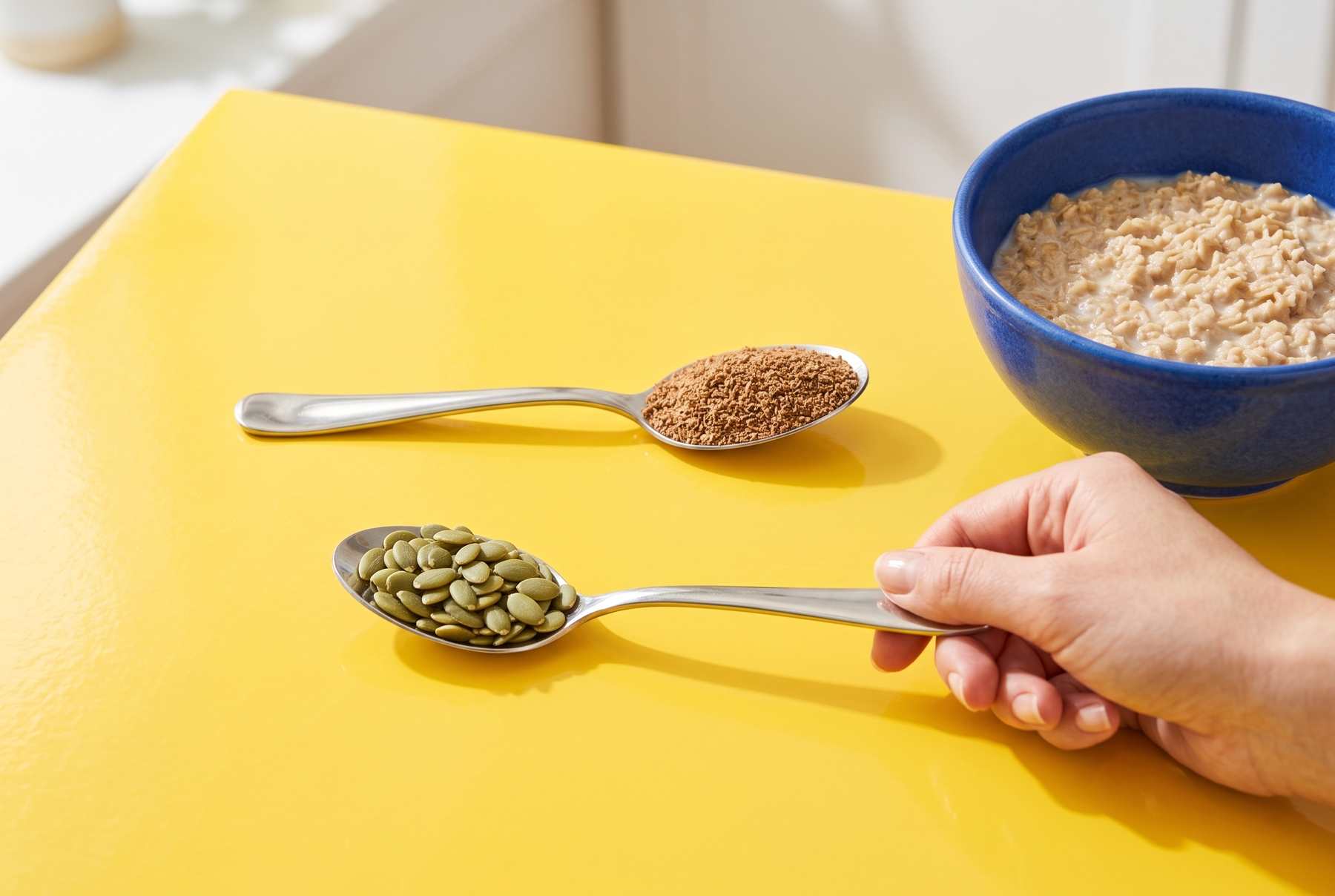
An optimal daily intake is 1 to 2 tablespoons of seeds used as a complement to regular meals.
How to Eat and Store Seeds: Do You Need to Soak, Grind, or Roast Them?
Soaking
Soaking is genuinely necessary for chia seeds (to create a pudding gel) and partially useful for flaxseeds. For sesame, sunflower, and pumpkin seeds, soaking slightly reduces phytate levels, though the actual nutritional gain within a varied diet remains minimal. Popular claims about mandatory “seed activation” are largely exaggerated.
Grinding
Flaxseed benefits most from grinding: because whole flaxseeds largely pass through the digestive tract intact, accessing the fats and soluble fiber locked beneath the hull requires breaking the coat. Even so, whole flaxseeds are not entirely useless. Grinding sesame seeds into powder or tahini unlocks a much deeper aroma, chia seeds perform well in both whole and ground formats, and pumpkin and sunflower kernels need no grinding at all unless they are being blended into a sauce.
Roasting
Roasting sharpens a seed’s aroma and amplifies its crunch, even if a small fraction of heat-sensitive compounds breaks down in the process. Pitting “healthy raw seeds” against “harmful roasted seeds” misses the point: the nutritional gap between a raw seed and a roasted seed is far smaller than the gap between eating a sensible handful and devouring a whole bag in one sitting. Keeping the heat moderate and staying right by the stove is crucial, as less than thirty seconds separates a fragrant nutty toast from acrid bitterness.
Storage
Oil-rich seeds go rancid easily, and the process accelerates with heat, light, and finer grinding. The warning signs are unmistakable: a stale, musty odor reminiscent of oil paint or putty, followed by a scratchy, bitter aftertaste. Trying to salvage rancid seeds is pointless, as toasting only amplifies the off-flavors.
Storing whole seeds in opaque, airtight containers in a cool, dark pantry preserves their quality, while ground flaxseed and hulled hemp hearts belong in the refrigerator or freezer.
How to Choose Seeds at the Grocery Store
Evaluating the actual product inside the bag matters far more than reading the word “superfood” on the front label. The color should be uniform without darkened spots; a layer of broken dust and crumbs at the bottom signals rough transit and damaged kernels, while clumped seeds indicate exposure to moisture.
Checking the ingredient list on seed blends is the next step. Pre-packaged “salad seed mixes” regularly hide added salt, sugar, cheap vegetable oils, and artificial flavorings that the front of the pouch never mentions—in many commercial “omega breakfast blends,” sugar casually sits as the third ingredient. Finally, paying attention to both expiration dates and store display conditions protects against rancidity: a clear bag that has spent a month sitting on a sunlit shelf near the store window is best left behind.
Quick Reference Guide: 5 Seeds for Specific Culinary Tasks
| Seed | Nutritional Highlights | Flavor and Texture | Best Culinary Uses | What to Watch Out For |
|---|---|---|---|---|
| Flaxseed | Fiber, alpha-linolenic acid, lignans | Neutral, lightly nutty, mucilaginous | Grind and stir into oatmeal, batter, or yogurt | Passes through undigested if whole; oxidizes quickly once ground; raw intake has a recommended daily limit |
| Chia | Soluble fiber, fats, calcium | Nearly flavorless, gelatinous in liquid | Puddings, egg substitute, thickening agent | Do not eat dry by the spoonful; let swell in liquid first |
| Sesame | Fats, protein, calcium, copper | Nutty; slightly bitter when unhulled | Toppings, breading, tahini paste | Major food allergen; calcium in the hull is poorly absorbed |
| Pumpkin | Protein, magnesium, zinc, unsaturated fats | Sweetly nutty; crisp when roasted | Salads, pureed soups, bread dough, pesto | High sodium in commercial snacks; store in a cool place |
| Sunflower | Vitamin E, protein, selenium, magnesium | Familiar, rich, and buttery | Salads, hot cereals, baking, snacking | Easy to overeat straight from the bag; choose unsalted varieties |
The best seeds are the ones that fit seamlessly into everyday meals, taste genuinely good on the plate, and appear on the table in sensible portions. The length of the health claims printed on the packaging has nothing to do with it.
Buying flax, chia, sesame, and five other specialty bags all at once “for your health” serves little purpose. Keeping ground flaxseed and pumpkin seeds on hand—plus a jar of sesame seeds when the mood strikes—means rotating two or three staples that actually get used up within a month, doing far more for a diet than a forgotten collection gathering dust on the top shelf.
0 comments