
A home cook might know more about food safety than the line cook at the neighborhood cafe—memorizing safe poultry temperatures, sanitizing cutting boards after handling raw meat, and chilling soup rapidly. Yet that very same person can end up standing over the trash can every evening, holding a container of perfectly good food.
Knowledge does not cancel out fear. Sometimes it actually feeds it: the more a person reads, the more reasons they find to distrust the refrigerator, the knife, an egg, someone else’s plate, and their own hands.
Anxiety has an unpleasant trait: checking never satisfies it. Washing hands once triggers the urge to wash them again a minute later, scrubbing until the skin feels tight and raw. Probing a chicken breast with a thermometer and seeing the right number still invites doubt: what if the tip hit a pocket of fat? Even when a meal is cooked, cooled, and stored by the book, the leftovers still go into the trash the next day, “just in case.”
Telling someone to “just stop worrying” is pointless and often hurtful. The real goal is different: gradually reducing excessive safety checks without abandoning sensible kitchen hygiene.
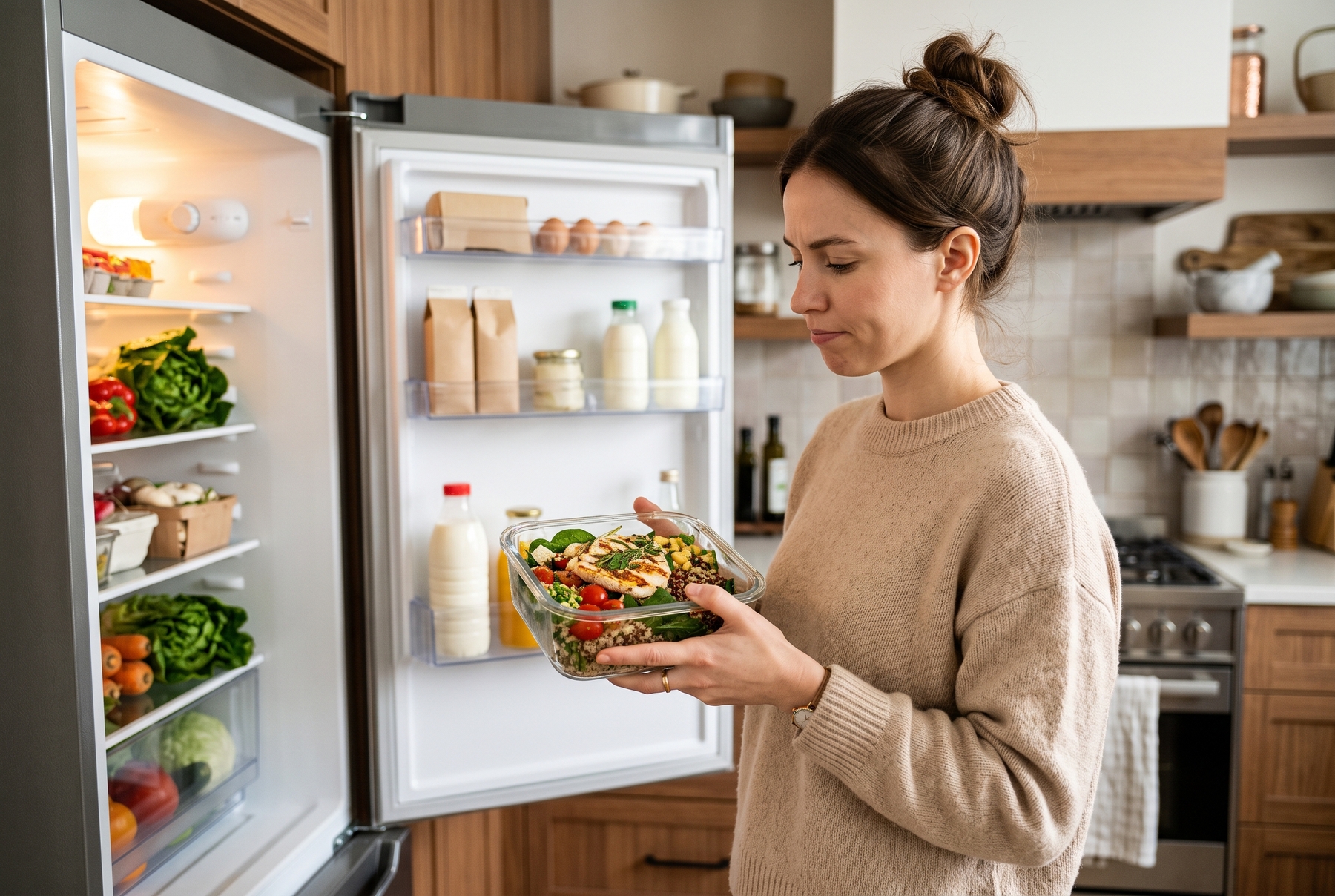
Anxiety causes home cooks to doubt the safety of properly prepared meals and toss good food into the trash.
Table of Contents
- Where Caution Ends and Anxiety Begins
- Distinguishing Food Safety From the Demands of Anxiety
- Preparation: Mapping Specific Fears Instead of Vague Worries
- 6 Steps to Reducing Anxious Rituals Around Food
- What Practice Looks Like With Everyday Ingredients
- Handling Intrusive Thoughts After the Meal Is Over
- How Loved Ones Can Help Without Feeding the Fear
- When Fear of Food Contamination Calls for Professional Help
- A Gentle 7-Day Practice Plan
Where Caution Ends and Anxiety Begins
Everyday food safety is fairly boring. It involves a few basic actions, each performed once, after which the cook focuses on the meal rather than their internal state. Washing hands, separating raw and cooked ingredients, checking the temperature, and refrigerating leftovers on time—that is the whole routine.
Anxious safety looks entirely different. It relies not on a completed action, but on an internal feeling that “now it is definitely clean.” That feeling is fickle: today it arrives after the second handwashing, and tomorrow it does not arrive at all. Then the dishes go through a third wash cycle, and hands turn red from scalding water.
Signs That Fear Is Dictating the Rules
- Hands and surfaces undergo repeated washing in a row until a feeling of total certainty arrives;
- Meat or eggs remain off-limits even after thorough cooking;
- Everything cooks “with a margin of safety” until meat turns to dry fibers and egg yolks become rubbery;
- Food faces constant sniffing, even when fresh and properly stored;
- Perfectly good groceries go into the trash “just in case”;
- Eating at a friend’s house or a restaurant becomes impossible;
- A designated cup, fork, and plate appear at home for one person’s exclusive use;
- Grocery store packaging triggers an urge to avoid touching it with bare hands;
- Loved ones face regular requests to confirm that a meal is safe to eat.
A single item from this list proves nothing. Plenty of people sniff milk, which is a normal household habit. What matters more is how much time these habits consume and what a person has already given up because of them. When preparing dinner takes two and a half hours and half the grocery store is crossed off the menu, it is no longer about being tidy.
To put it plainly: the fear of contamination—including the fear of catching an illness or getting food poisoning—shows up across very different conditions, ranging from heightened anxiety without any clinical diagnosis to obsessive-compulsive disorder (OCD). The root causes vary, and unpacking them works best with a qualified professional in an office rather than through an article online.
Why Constant Food Checks Never Bring Lasting Relief
The cycle is straightforward: a frightening thought appears, anxiety follows, and then the person washes, checks, seeks reassurance, or avoids the food altogether. Right after the check, relief genuinely arrives—shoulders drop, and the tension fades for a moment.
What happens next is the crux of the problem. The brain remembers not that the food was safe, but that the washing saved the day. That association locks in. Next time, the anxiety arrives faster and demands a little more: three washes instead of two. Gradually, the repetitions multiply, even though each new step initially feels completely reasonable.
Years of conversations on this topic reveal one consistent detail. Anxiety almost never speaks in the voice of fear. It speaks in the voice of responsibility: “I am just being careful,” “better safe than sorry,” “I am protecting my family.” Arguing with that voice is tough because, on the surface, it sounds right.
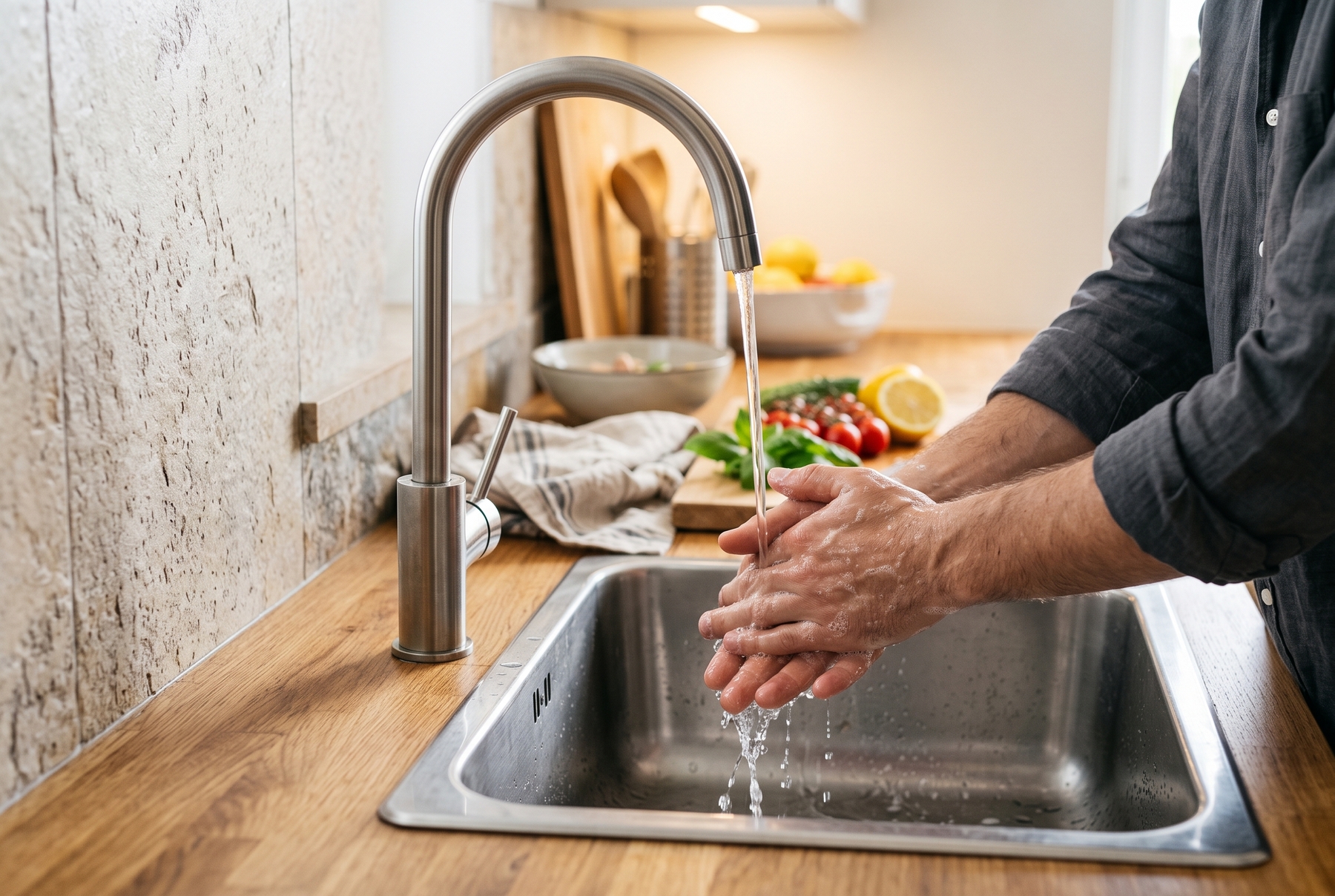
Washing hands for 20 seconds is a sufficient hygiene rule that does not require endless repetition.
Distinguishing Food Safety From the Demands of Anxiety
Easing the fear of contamination does not mean giving up handwashing. The most helpful first step is defining a short list of rules in advance and refusing to expand it when anxiety spikes.
The Baseline Protocol: 5 Non-Negotiable Rules
The World Health Organization (WHO) boils household food safety down to five core principles: keep clean, separate raw and cooked, cook thoroughly, keep food at safe temperatures, and use safe water and raw materials. In a home kitchen, that looks like this:
- Washing hands with soap for about 20 seconds before cooking and after touching raw meat, poultry, fish, or eggs;
- Keeping raw food separate from ready-to-eat food by using different cutting boards, or washing a single board thoroughly with hot, soapy water between tasks;
- Cooking meat to a safe internal temperature. According to the U.S. Department of Agriculture’s Food Safety and Inspection Service (FSIS), the benchmarks are 74 °C (165 °F) for whole poultry, poultry parts, and ground poultry; 71 °C (160 °F) for ground beef, pork, and lamb; and 63 °C (145 °F) for whole cuts of meat, followed by a 3-minute rest. The WHO household guidelines use a general benchmark of 70 °C (158 °F);
- Keeping the refrigerator at 4 °C (40 °F) or below, and refrigerating cooked food within 2 hours (or within 1 hour when ambient temperatures exceed 32 °C / 90 °F);
- Rinsing fruits and vegetables under running water while rubbing them by hand, scrubbing firm produce with a clean brush, and drying them afterward. Soap, dish detergent, bleach solutions, and commercial “produce washes” are not recommended because porous foods absorb chemical residues.
Adding new rules to this baseline over time is counterproductive. Boundaries work best when set in advance, not in the middle of an anxious spiral demanding one more check.
Spotting the Difference Between a Safety Rule and an Anxious Ritual
Washing hands after handling raw meat is normal; washing them five times in a row until they “feel completely clean” is another story. The same applies to a cutting board: a thorough wash is plenty, whereas treating it as permanently biohazardous and banishing it to the balcony is unnecessary. A food thermometer does its job once it hits the target number; probing the meat over and over because “the sensor might be lying” crosses into ritual territory. And when leftovers go into the fridge on time, throwing them out the next morning despite proper storage serves no practical purpose.
A ritual begins where an action is repeated not to follow a safety standard, but to chase absolute certainty.
Why Aiming for “100 Percent Certainty” Backfires
Absolute guarantees do not exist in the kitchen, behind the wheel, or at the pharmacy. People without a pronounced fear of contamination do not possess 100 percent certainty about their dinner, either. They simply do not set that as a goal: they take sensible precautions and live with the tiny remaining uncertainty, barely noticing it.
Anxiety demands proof that does not exist, rather than actual safety. That demand fuels familiar what-ifs: “what if something lingered on the eggshell,” “what if the center wasn’t hot enough,” “what if the line cook touched the rim of the plate with dirty fingers,” or “what if the greens weren’t washed properly.”
Answering every single one of those thoughts is a losing battle. Reassurance acts like just another ritual: it calms the nerves for ten minutes while reinforcing the habit of seeking relief. Instead of launching into a new internal debate, a simple statement works better: “I followed the standard safety rule. Anxiety is asking for this extra check.”
Why Reading About Food Poisoning Only Makes Things Worse
Searching for symptoms, reading horror stories, looking at microscopic photos of bacteria, or combing through restaurant reviews for mentions of food poisoning functions just like washing hands for the third time. At its core, doomscrolling is the exact same compulsive checking—just performed on a smartphone.
Competing with the internet is futile. A search engine will dig up a rare, terrifying exception for any ingredient on earth, including a glass of tap water and a packet of table salt.

Reading stories about food poisoning during or after a meal fuels anxiety and creates new reasons for doubt.
Preparation: Mapping Specific Fears Instead of Vague Worries
Shock therapy rarely helps. Teasing from family members, ambush tests like “just eat it and see that nothing happens,” or attempts to smash through the fear all at once usually amplify the anxiety and layer on a heavy dose of shame.
Building a map of specific situations offers a much gentler starting point.
Listing Concrete Scenarios and Rating Them From 0 to 10
A blanket statement like “I am afraid of germs” is too broad to work with. Concrete kitchen scenes make the fear manageable:
- Cracking a raw egg;
- Picking up a package of raw meat at the store;
- Chopping vegetables on a shared cutting board after it has been washed;
- Eating an egg with a runny yolk;
- Tasting a dish cooked by a relative;
- Ordering a meal at a cafe;
- Drinking from a mug washed by someone else;
- Eating properly stored leftovers from yesterday.
Assigning a number from 0 to 10 next to each line measures how much anxiety that specific scenario triggers. The scale is not a scorecard for self-judgment; it is a tool for picking a realistic starting point.
Uncovering Hidden Rituals
Many protective habits fly under the radar because they look like minor quirks: asking a partner the same question twice, snapping a photo of the stove knobs before leaving the house, taking three temperature readings instead of one, pouring an extra capful of dish soap into the sink, trimming a “suspicious” edge off a piece of food, or abandoning a meal after a single intrusive thought. Writing these down brings them into focus.
Choosing a Moderate First Step
Starting with the most terrifying item on the list is a recipe for burnout. A scenario rated around a four to six works best: the anxiety is noticeable, but resisting the usual safety ritual feels achievable.
6 Steps to Reducing Anxious Rituals Around Food
Clinicians call this approach Exposure and Response Prevention (ERP). It is a cornerstone of Cognitive Behavioral Therapy (CBT) and stands as the gold-standard psychological treatment for obsessive-compulsive disorder, endorsed by clinical bodies like the UK’s National Institute for Health and Care Excellence (NICE). Below is a simplified adaptation for independent practice when worries are mild. Severe symptoms call for individualized guidance from a licensed therapist, which no article can replace.
Step 1. Agree on the Baseline in Advance
Before stepping into the kitchen, the exact plan goes down on paper: how many times hands will be washed, how the ingredients will be prepped, what thermometer reading counts as done, and which checks will not be repeated. Setting the rules requires a calm head at the kitchen table—not a split-second decision when fingers are already reaching for the faucet.
Step 2. Perform the Action Without the Extra Safety Net
This means rinsing the vegetables once using a standard, safe method and cooking them without returning to the sink. It means cracking an egg, washing hands once, and moving on with the recipe. Or eating a meal cooked by a partner without interrogating them about every step they took at the counter.
An exercise never involves violating actual food safety rules. The goal is trimming away the redundant insurance policies, not abandoning hygiene.
Step 3. Sit With the Anxiety
The minutes that follow will feel uncomfortable, and that is part of the process: a knot in the stomach, mild nausea, mental flashes of contamination, and a powerful urge to rewash everything. Anxiety feels like an alarm bell signaling real danger, but its presence proves nothing about the food.
A brief mindfulness practice helps bridge the gap. Naming the experience in plain language (“this is an anxious thought”), noticing where the tension sits in the body, and gently steering attention back to the immediate sensory environment—the rhythmic tap of the knife on the board, the aroma of warm olive oil, the way chopped onions turn translucent at the edges—keeps a cook grounded. Breathing exercises or short meditations are not meant to erase the fear; they simply help a person ride out the urge without slipping back into the ritual.
Step 4. Measure Success by Actions, Not Calmness
A successful practice session sounds like this: “I followed my plan and skipped the extra check.” It does not sound like: “I felt zero fear.” Sometimes anxiety fades in 20 minutes; other times it lingers all evening. Waiting around for the nervousness to vanish easily morphs into a brand-new ritual, where a person sits and constantly monitors their pulse to see if the dread has lifted.
Step 5. Repeat the Process
A single victory does not rewire a deeply ingrained habit. Repeating the exact same scenario until it feels unremarkable—before moving up to the next item on the list—is what builds lasting change. This process typically unfolds over weeks, not days.
Step 6. Gradually Invite More Uncertainty
Practicing uncertainty might mean resisting the urge to ask a partner how many minutes the chicken spent in the oven. It might mean walking away without double-checking the snap on a storage container lid, reaching for a regular mug from the cabinet instead of the “safe” personal one, or refusing to scan the body for stomachache symptoms an hour after dinner.
The practice is all about letting go of excessive guarantees while keeping the five baseline food safety rules intact.
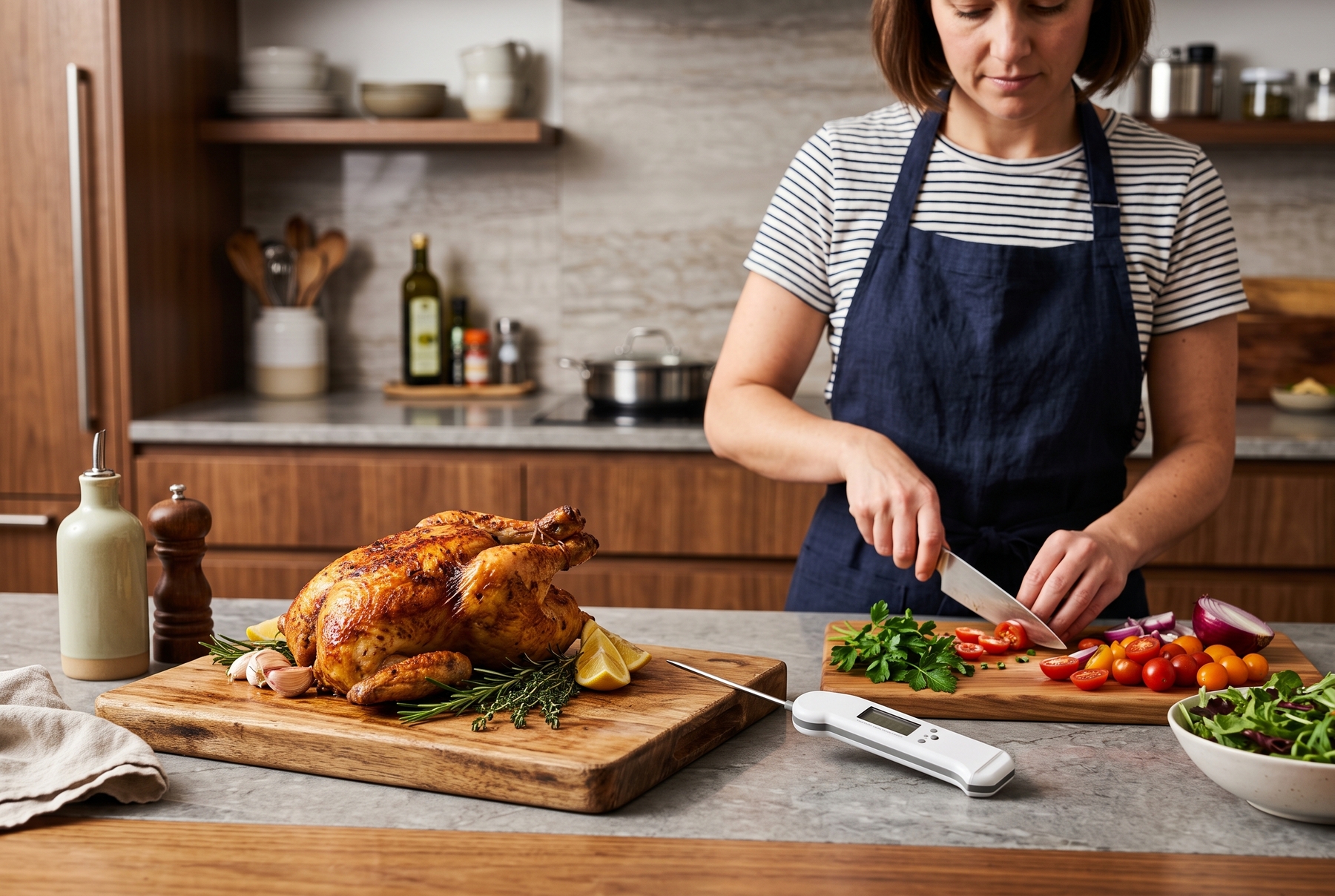
A digital kitchen thermometer objectively confirms that meat is safely cooked without unnecessary guesswork.
What Practice Looks Like With Everyday Ingredients
Eggs
The starting line might be holding a closed carton of eggs, then boiling or frying an egg until both the white and yolk are completely firm. The next step: cracking the shell, washing hands once, and skipping the second round of disinfecting the countertop. For someone hoping to enjoy soft, runny yolks again, buying pasteurized eggs and checking local food safety guidelines is a smart middle ground, as recommendations on raw or undercooked eggs vary by country. Anyone in a high-risk medical group should consult a doctor before taking that step.
Raw Meat
The starting point often involves disposable gloves, a dedicated apron, and scrubbing the counter three times. The path forward focuses on stripping away those extra layers: following one pre-planned prep routine, taking a single reading with a digital thermometer, and accepting the result without probing the meat again. A kitchen thermometer is actually a fantastic ally because it takes the guesswork out of meat color and juices. The line between a helpful tool and a compulsion is simple: insert the probe, see the target number, and put the thermometer away.
Fruits and Vegetables
Progress here means moving from multiple soap washes and half-hour soaks back to a simple rinse under running tap water while rubbing the produce by hand. Dry with a clean kitchen towel, chop, and eat.
Dishes and Cutlery
The progression moves from guarding a personal mug and fork to using shared household dishes after a normal run through the dishwasher or sink. That comfort zone starts at home, expands to a friend’s dinner table, and eventually reaches a neighborhood cafe.
Food Cooked by Others
The easiest entry point is a dish prepared by a trusted partner or close friend. From there, the ladder climbs to cooking together in the same kitchen, eating at a dinner party, visiting a familiar restaurant, and finally trying a brand-new spot. Choosing where to eat should not turn into a two-hour forensic investigation of health department records and online reviews—just a quick decision and a reservation.
Handling Intrusive Thoughts After the Meal Is Over
A uniquely exhausting phase often begins once the plate is empty, when the fear of food poisoning sets in after eating. A person starts monitoring their stomach, waiting for nausea, touching their forehead to check for a fever, and mentally replaying the entire cooking process to see if a tasting spoon brushed against a raw edge.
Making a pact with oneself before sitting down to eat helps break this habit: once the meal is over, the internal investigation is closed. No quizzing the cook, no looking up incubation periods online, no taking temperatures, and no scanning the body every five minutes.
Intrusive thoughts can simply hang in the air unanswered. A few grounded responses help acknowledge the worry without turning into a repetitive mantra:
- “Maybe the meal was completely safe, and maybe I won’t get 100 percent certainty right now.”
- “I followed the basic kitchen rules, so I am not doing any post-meal checks.”
- “The anxiety can hang around if it wants, while I go on with my evening.”
The goal is never to convince the brain that zero risk exists. The goal is to stop chasing a level of proof that real life cannot provide.
How Loved Ones Can Help Without Feeding the Fear
Emotional support and participating in anxious rituals can look very similar in the moment, but they lead in opposite directions.
What genuinely helps: calmly acknowledging that the person feels anxious; noticing concrete victories (“I saw you only washed your hands once today”); following standard kitchen hygiene together as a household; and avoiding rushing, teasing, or springing surprise tests on them.
What locks the problem in place: reassuring them for the twentieth time that the soup is safe; delivering a play-by-play report of how dinner was prepped; rewashing clean plates to calm their nerves; agreeing to toss fresh food into the trash; and reorganizing the entire family kitchen around the fear.
Setting a healthy boundary works best when it is warm and firm: “I can see this is making you anxious. We already checked it once according to our house rule, so we aren’t going to check it again. I am right here with you, though.”

Gradually letting go of anxious rituals brings back the joy of calm cooking and sharing meals with loved ones.
When Fear of Food Contamination Calls for Professional Help
Reaching out to a healthcare professional is essential when a person’s diet shrinks noticeably, weight starts dropping, or entire food groups disappear from the kitchen; when cooking a simple meal takes hours; when hands chap and bleed from constant scrubbing; when fear prevents eating out, working, traveling, or socializing; when panic attacks strike; when the whole household gets pulled into safety rituals; or when intrusive thoughts and compulsions cannot be paused through willpower alone.
The right person to look for is a clinical psychologist, psychotherapist, or psychiatrist who specializes in anxiety and obsessive-compulsive disorders and practices Cognitive Behavioral Therapy (CBT), specifically Exposure and Response Prevention (ERP). Nobody will promise overnight miracles, and a steady, gradual pace is completely normal.
One crucial medical caveat: people who are immunocompromised, pregnant, elderly, or caring for young children, as well as those managing certain chronic illnesses, must follow stricter clinical food safety guidelines than the general public. Skipping those medical precautions for the sake of an anxiety exercise is unsafe; any adjustments should be mapped out directly with a physician.
A Gentle 7-Day Practice Plan
- Pick one moderate fear (rated around 4 to 6) from the personal fear map;
- Write down the standard, sensible food safety rule for that specific kitchen task;
- Identify one redundant ritual to trim away;
- Practice that scenario several times over the course of the week;
- Track success by whether the action was completed, not by how calm it felt;
- Keep the exercise at the same level after a tough day rather than raising the stakes;
- Review the week on day seven to see if checking and avoidance dipped even slightly.
This seven-day outline is not designed to cure food anxiety in a week. Think of it simply as a week of observation and a first gentle workout in the kitchen.
Real food safety rests on a handful of steady, reliable habits that fit on an index card taped to the fridge door. Anxiety, on the other hand, issues hundreds of shifting demands every week, making them impossible to satisfy by design.
The aim is never to fall in love with bacteria or throw caution to the wind. The aim is to get back to cooking a simple omelet, slicing a cucumber on a shared cutting board, pulling a plate from the cabinet, and accepting a homemade meal from a friend without hours of mental cross-examination.
Progress rarely looks like the sudden disappearance of fear. More often, it looks like this: the egg is cracked, the shell is in the bin, hands have been washed once, butter is already sizzling in the skillet, and anxiety sits quietly in the corner watching the edges of the omelet set.
0 comments