
Good nutmeg goes unnoticed in a dish. That is a strange reputation for a spice everyone recognizes by name, yet almost no one can describe on its own. Tasting a freshly grated shaving reveals resin, warmth, and a dry bitterness—something halfway between a pine splinter and an old wooden tea chest. By itself, it is not exactly delicious.
Now imagine that same shaving in a béchamel. The sauce suddenly gains volume and the distinct impression that the cook knew exactly what they were doing. Yet the word “nutmeg” never crosses the diner’s mind. Adding just one pinch too many shifts the entire picture: the sauce starts smelling like a medicine cabinet, a harsh spicy note overtakes the creamy softness, and nothing can pull it back. Fractions of a gram (a few hundredths of an ounce) separate these two states.
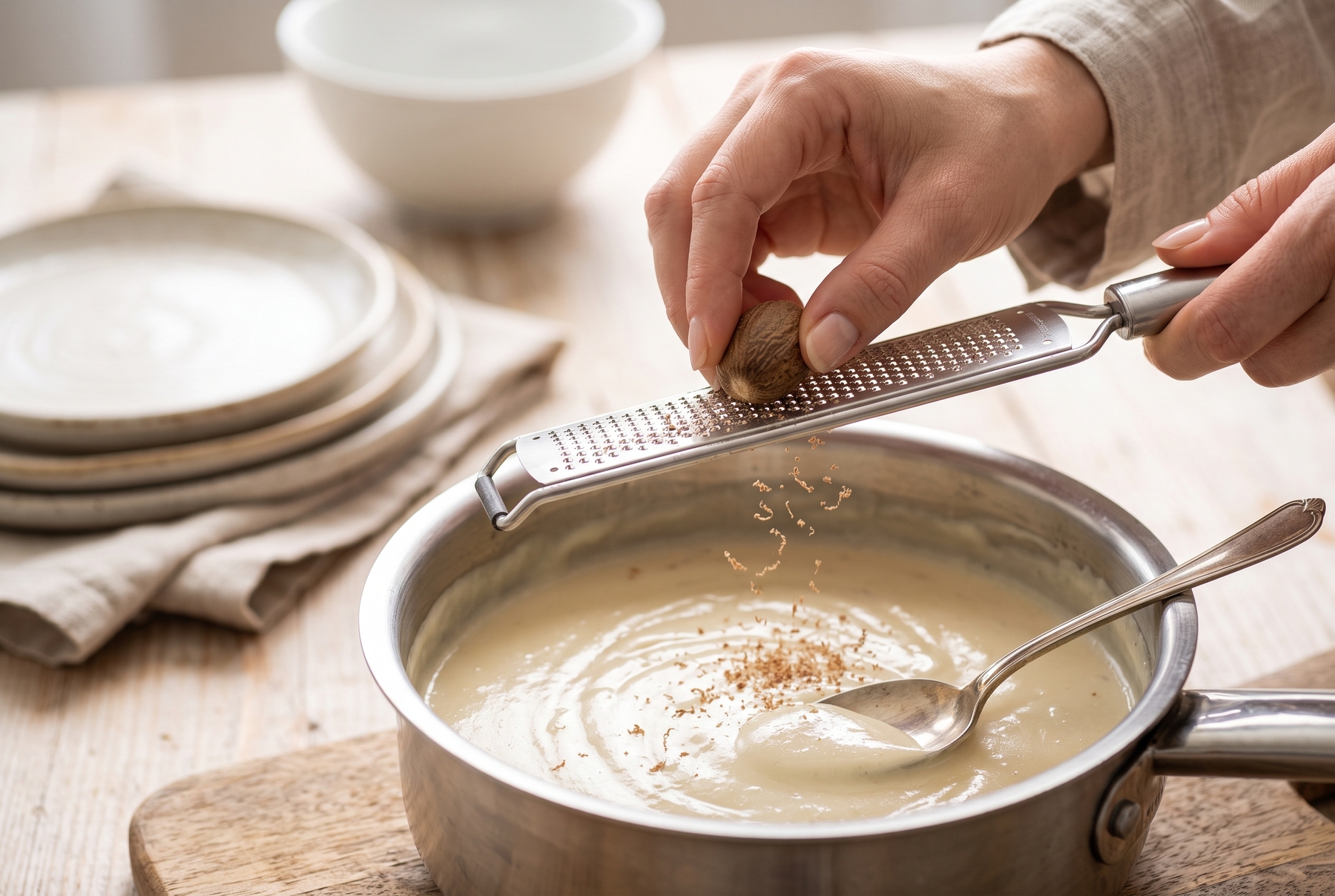
Freshly grated nutmeg unlocks deep, warm complexity in cream-based sauces.
Table of Contents
- The Spice Everyone Knows, Yet Few Taste Alone
- How a Simple Seed Became Currency, Then a Pantry Staple
- Why It Works From Inside the Flavor, Not on Top of It
- Where to Use Nutmeg: Dishes Where It Truly Belongs
- Beyond Europe: Where Else This Spice Feels at Home
- Desserts: When Nutmeg Belongs and When It Just Adds Noise
- Dishes Where Nutmeg Doesn't Belong
- Whole vs. Ground Nutmeg: A Bigger Difference Than It Seems
- The Scale of One Pinch Too Many
- When to Add Nutmeg During Cooking
- Nutmeg Substitutes—and When to Skip Them
- 5 Questions Before Reaching for the Grater
The Spice Everyone Knows, Yet Few Taste Alone
Nutmeg is the dried seed of the tropical tree Myristica fragrans—more precisely, the kernel inside the fruit. The same fruit yields a second spice: mace, the reddish, lacy aril wrapping the kernel. The tree originates from the Banda Islands (part of the Moluccas) in Indonesia, though growers now cultivate it in Grenada and other tropical regions.
Wood and resin best describe its aroma. It feels warm and slightly sweet, carrying a peppery undertone and a distinct camphor note in the background. That cool camphor quality makes an overdose so glaring: in tiny amounts, it reads as depth; in large amounts, it tastes like a pharmacy.
Two common labels need dispelling right away. Nutmeg belongs exclusively to neither sweet baking nor savory meat cookery. Its true specialty lies in fat, dairy protein, starch, and egg. Cream, butter, potatoes, flour, cheese, and egg yolks form its natural company. Everything else is only an occasional match.
A quick sniff test proves the difference between whole and ground. Smelling a jar of ground nutmeg sitting in the cabinet since last winter reveals a dusty, muted sweetness devoid of edges. Running a whole nutmeg across a fine grater tells another story. The contrast mirrors the difference between dry lumber and freshly sawn pine: the fresh grating is sharp, resinous, and almost stings the nose. Volatile compounds escape quickly from powder, and a finer grind accelerates the loss by exposing a much larger surface area to the air.
How a Simple Seed Became Currency, Then a Pantry Staple
Recounting the entire history of the spice trade is unnecessary, but a few historical facts explain why nutmeg wove itself so tightly into European cooking.
For centuries, the Banda Islands remained the only place on earth where this tree grew. The Portuguese reached the local trade early but failed to hold a monopoly. Instead, the Dutch East India Company seized control of the production centers by force. They maintained their monopoly by burning unauthorized plantations and brutally suppressing the local population rather than relying on the romance of spice caravans. In the 18th and 19th centuries, smugglers broke the monopoly, the tree took root in other tropical zones, and the price gradually dropped to supermarket levels.
Yet the culinary habit endured, cementing itself for a purely pragmatic reason: nutmeg packs more punch per unit of weight than almost any other spice. When an ingredient costs a fortune, cooks learn to get by with the bare minimum. And with nutmeg, the bare minimum happens to work best.
Flavor affinity sealed the deal. European cooking relied heavily on milk, cream, butter, potatoes, eggs, cabbage, and minced meat. Nutmeg complements every single one of these almost without exception. An expensive spice happened to match the character of the cheapest everyday staples—a coincidence the kitchen never ignores.
Why It Works From Inside the Flavor, Not on Top of It
Nutmeg’s aromatic compounds are fat-soluble; they disperse poorly in water but dissolve eagerly into fat. In a cream sauce, buttered mashed potatoes, or a cheesy egg custard, fat distributes the spice evenly, holds onto it, and releases it gradually on the palate, making it feel like an intrinsic part of the dish. In a lean vegetable broth, it merely floats as a disconnected spicy spot.
Heat amplifies the aroma. The hotter the dish, the more actively volatile compounds evaporate and reach the nose, making nutmeg much more pronounced in steaming food. That same sauce cooled to room temperature might seem almost neutral, only for the spice to return upon reheating—sometimes stronger than intended.
A simple test illustrates how it works. When tasting a béchamel, if the immediate thought is, “Oh, nutmeg,” the pot already holds too much. The proper dose triggers a different reaction: the flavor feels complete, though the taster cannot quite pinpoint why.
This requires a shift in mindset. Home cooks often add spices so diners can recognize them. Here, the goal is the exact opposite: nutmeg must remain in the background. Blind tasting panels—where tasters describe a sample by its attributes without knowing the recipe—demonstrate this best. The ideal dosage occurs when a panelist notes an extra warmth and complexity but never names nutmeg specifically. That elusive “something” is the exact target.
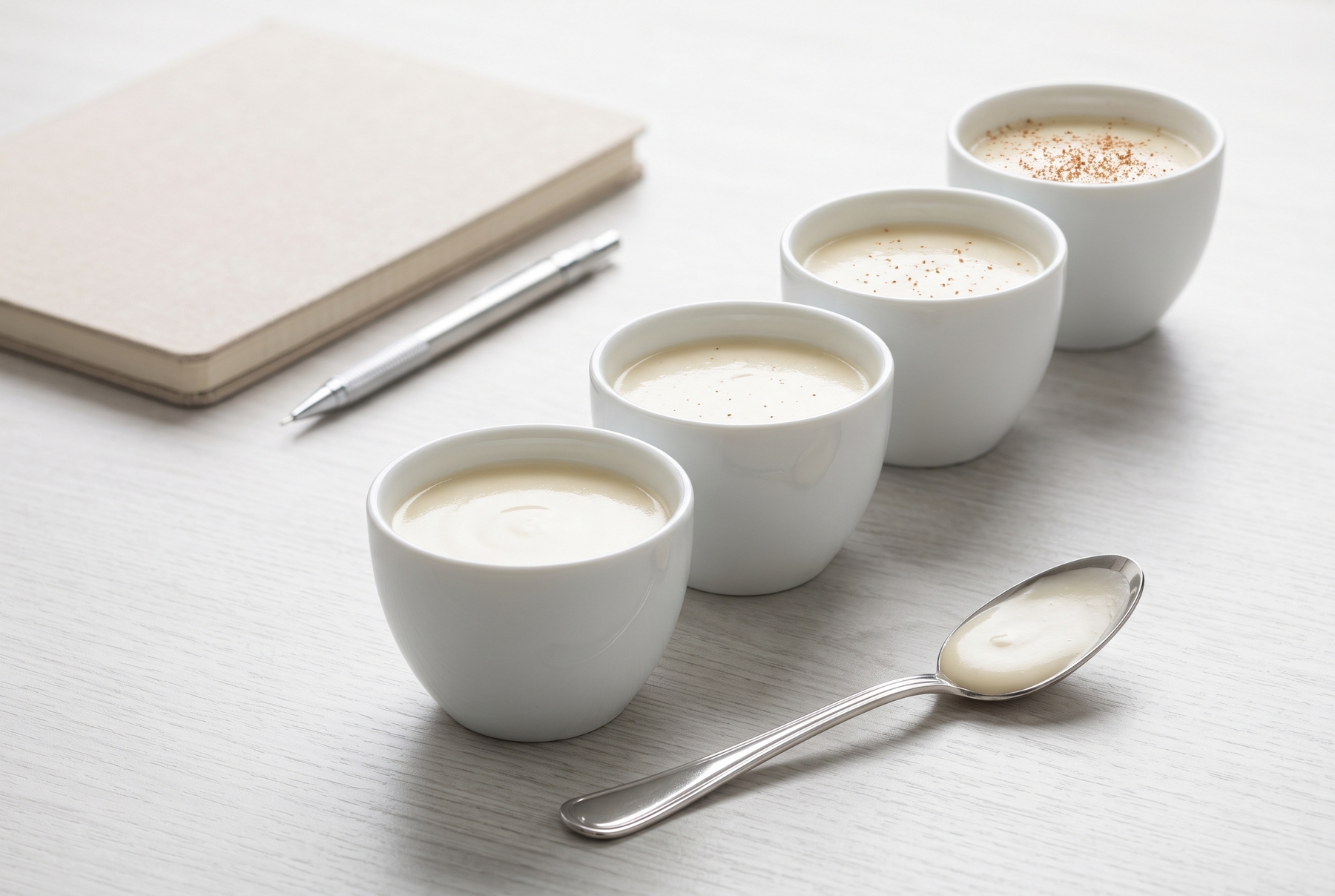
Blind tasting helps pinpoint the ideal spice dosage without risking an overpowering batch.
Where to Use Nutmeg: Dishes Where It Truly Belongs
Nutmeg in Béchamel and Creamy Dairy Dishes
On its own, béchamel tastes slightly sweet, a bit floury, and rather flat. Nutmeg mutes the lingering starchy note—which persists even after properly cooking the roux—and highlights the milk and butter.
Quantity guideline: For 500 ml (about 2 cups) of sauce, 3 to 5 passes of a whole nutmeg across a fine grater suffice. That equals roughly a scant quarter teaspoon by volume, though counting passes proves much more reliable.
Grating the nutmeg in after the sauce thickens, just a couple of minutes before pulling it off the heat, yields the best result before tasting. When using pre-ground nutmeg, starting with half that amount—about 0.25 to 0.3 g (0.01 oz)—prevents accidents; its aroma is weaker, making it much easier to accidentally dump in too much.
Nutmeg and Potatoes in All Creamy Forms
Starch acts like a sponge, muting whatever enters it, which explains why mashed potatoes happily absorb so much butter and salt. Against a backdrop of nutmeg, the butter and cream stand out more vividly while the potato flavor remains intact.
This principle applies to mashed potatoes, gratins, and creamy potato bakes. For 1 kg (2.2 lbs) of potatoes, 4 to 6 passes on a grater do the job; with pre-ground nutmeg, starting around 0.3 to 0.4 g (0.014 oz) is safest. Pushing past that threshold makes the mash smell perfumey, as if someone dropped cosmetics into the pot. Once that scent settles into finished potatoes, nothing can remove it.
Comparing it to black pepper highlights how it functions. Black pepper in mashed potatoes is unmistakable: it remains a separate flavor, and coarse flakes register physically on the tongue. Nutmeg works the opposite way: it dissolves, gives nothing away, yet leaving it out makes the potatoes seem dull. Fortunately, the two never clash and work well together.
Spinach and Green Vegetables With a Creamy Base
Pairing spinach with nutmeg is an old, reliable trick, with one caveat: the dish requires fat. Cream, butter, cheese, or eggs must be present. Spinach on its own tastes grassy and slightly metallic, with an iron-like finish. Nutmeg softens that metallic edge.
Simply wilted spinach dressed with lemon and olive oil needs no nutmeg at all. That preparation relies on brightness, and a warm, woody note only muddies the profile.
The flavor benchmark is simple: greens should still taste green. If the spice registers first after a spoonful of creamed spinach, the hand on the grater was too heavy.
Eggs, Cheese, and Savory Custards
Quiches, soufflés, cheese-and-egg fillings, and thick omelets all share a common weakness: their flavor is rich but monotonous. Eggs, cream, and cheese create a dense, salty-savory profile that feels flat across the palate. Nutmeg breaks up that monotony without stealing the spotlight.
For a custard base of 4 eggs and 200 ml (generous 3/4 cup) of cream, two or three passes on the grater are plenty; for ground nutmeg, about 0.15 to 0.2 g (0.005 oz) works well.
Sharp cheeses demand caution. Aged cheddar, blue cheese, and cured meats already carry bold aromas. They need barely a whisper of nutmeg, and often none at all. Mild mozzarella, ricotta, or young, gentle cheeses leave far more room for the spice to shine.
Minced Meat, Pâtés, and Sausage Mixtures
European charcuterie recipes have long included nutmeg in sausage mixes, pâtés, meat fillings, and meatloaves. Ground meat releases a heavy, fatty aroma when heated, and warm spice lightens that richness.
This tradition frequently spawns the lazy rule that “nutmeg goes well with meat,” a frustratingly persistent generalization. In minced meat, a pinch of nutmeg disperses evenly into the fat, becoming indistinguishable as a solo note. Sprinkling that exact same pinch onto a seared steak leaves a gritty layer of spicy dust on the crust that refuses to meld with the beef. The first approach works; the second ruins a good steak.
As a benchmark, 1 kg (2.2 lbs) of minced meat typically takes about 1 to 2 g (0.04 to 0.07 oz or 1/2 to 1 tsp) of ground nutmeg, which is already quite generous.
Beyond Europe: Where Else This Spice Feels at Home
Looking at a few culinary traditions illustrates how differently a single spice integrates into the kitchen.
In Indian cooking, nutmeg (jaiphal) joins garam masala in small proportions. Rather than playing a solo role, it acts as one of several warming components in a complex blend alongside cardamom, cinnamon, and cloves.
In Grenada, nutmeg has long been a flagship local ingredient; the island ranks among the world’s largest producers, and cooks use the spice generously in everything from rum punches to desserts. Mace from the same fruit sees wide use there as well.
Middle Eastern spice blends like baharat frequently include nutmeg, again as a warm background element rather than a leading note.
Comparing these traditions to a French béchamel reveals a fascinating contrast. In the white sauce, nutmeg acts as an invisible foundation. In a spice blend, it sings as one voice in a chorus, indistinguishable on its own. Meanwhile, in Caribbean cooking, it steps boldly to the front because local palates welcome it as a signature regional flavor.
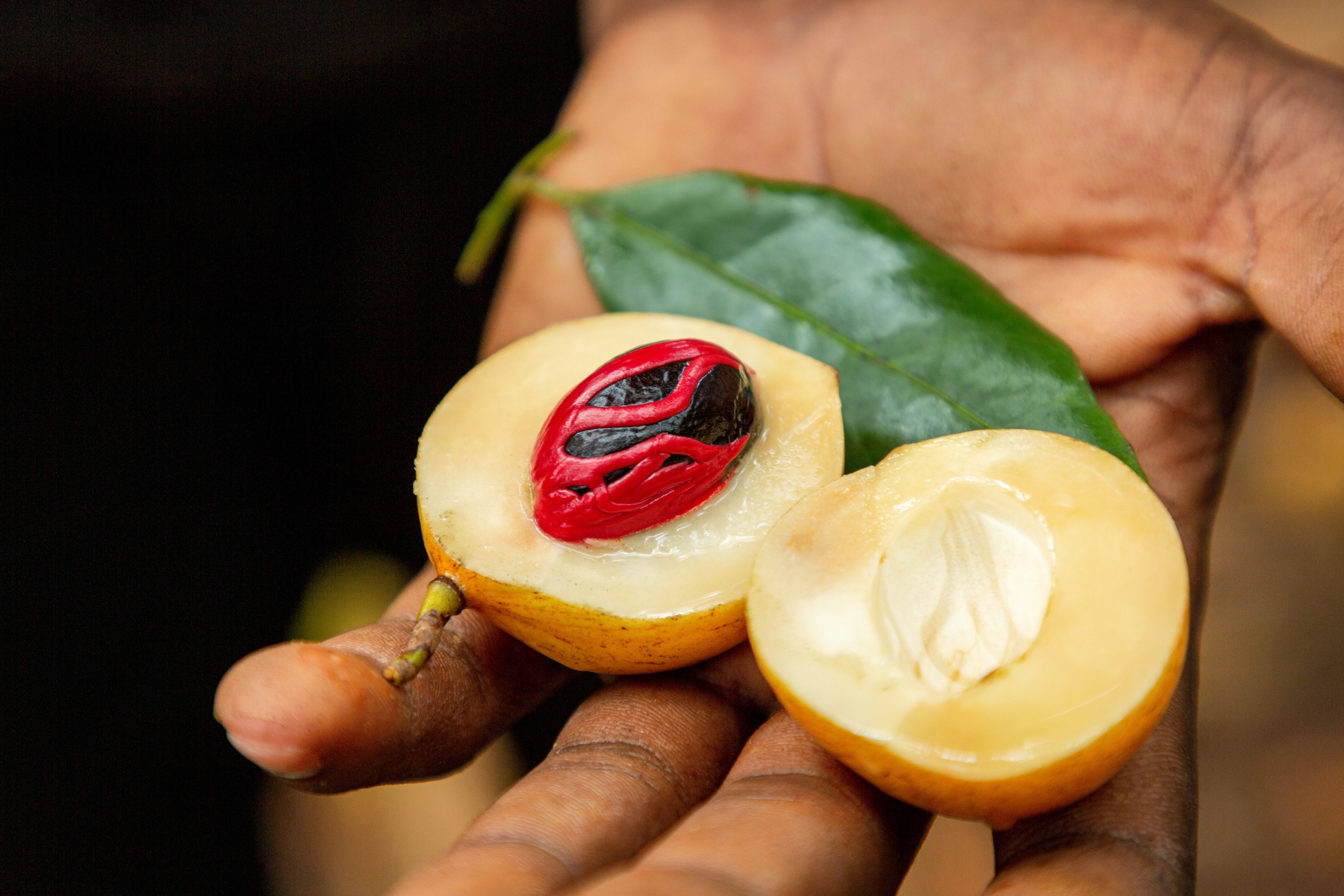
The fruit of Myristica fragrans: a bright red lacy aril called mace wraps around the dark nutmeg kernel.
Desserts: When Nutmeg Belongs and When It Just Adds Noise
In sweet baking, nutmeg behaves nothing like cinnamon, and confusing their roles leads to muddled desserts. Cinnamon registers on the palate as inherently sweet, even without sugar. Nutmeg offers no such illusion. It brings a woody, resinous warmth rather than sweetness, functioning in desserts as structural depth rather than the primary aroma.
It shines brightest alongside a dairy or egg base. Pastry cream, rice pudding, panna cotta, baked quark or ricotta puddings (zapekanka, a traditional Eastern European baked farmer’s cheese pudding), and creamy pie fillings welcome it. Among fruits, it pairs best with pears and apples; it also flatters pumpkin, which behaves more like a creamy vegetable than a fruit anyway.
This brings up a classic baking mistake. Bakers often feel tempted to dump cinnamon, cloves, ginger, and nutmeg into a batter all at once simply because the recipe calls for “warm spices.” All four occupy roughly the same warm register. Tossed together without thoughtful proportions, they merge into a generic, muddy hum where no single spice stands out, making every autumn pie taste identical. Achieving real complexity requires choosing one lead spice and adding one or two supporting players in noticeably smaller fractions.
Dishes Where Nutmeg Doesn’t Belong
While strict bans rarely apply in cooking, blindly shaking nutmeg into certain categories out of habit consistently ruins the food.
Fresh vegetable dishes. Salads, quick stir-fries, and anything built around crunch and brightness reject nutmeg. A warm, woody note drags crisp greens toward the heavy territory of winter stews.
Delicate fish without cream. Steamed cod, grilled zander, or any flaky white fish finished with lemon possesses a subtle flavor that nutmeg simply steamrolls. In a cream sauce or fish gratin, however, dairy fat binds the nutmeg, softening its impact around the seafood.
Bright tomato sauces. The acidity and umami of fresh tomatoes clash with nutmeg’s camphor edge. The combination creates a disjointed sauce where sourness and spice sit in separate corners. Bolognese and similar meat ragùs tell a different story: beef and dairy fat step between the tomato and the nutmeg, bridging the gap.
Heavily spiced dishes. If a pot already holds curry powder, a cumin-coriander base, or a full bouquet of stewing spices, grating nutmeg over the top is pointless. It either vanishes completely or picks a fight with the existing aromatics.
Owning a jar of spice never obligates the cook to turn every Tuesday dinner into Christmas.
Whole vs. Ground Nutmeg: A Bigger Difference Than It Seems
For the home kitchen, whole nutmeg wins in almost every category; the only catch is having to grate it.
The aromatic difference is obvious from the first pass. Freshly grated shavings smell sharp, resinous, and alive with a bright camphor bite. Powder from a jar opened six months ago smells dull and dusty, its top notes long gone. Dosing whole nutmeg is also much easier: counting passes across a grater beats trying to balance a fraction of a teaspoon on the tip of a knife.
Whole nutmeg lasts practically forever; buying just one or two nuts keeps a kitchen stocked for months. Specialty nutmeg grinders are unnecessary: any rasp-style microplane works brilliantly, and in a pinch, the finest punctate side of a standard box grater gets the job done. Holding the nut by its end and grating directly over the pot proves easiest.
Storing whole nutmegs in a tightly sealed jar in a dark cupboard away from the stove protects their oils. Heat, light, and constant airflow strip the aroma quickly. Ground nutmeg has a much shorter lifespan; manufacturers print expiration dates on the tins, but a noticeable portion of the aroma vanishes just a few months after breaking the seal. Checking the calendar is unnecessary—the nose knows best. If the jar smells like nothing, the spice is dead.
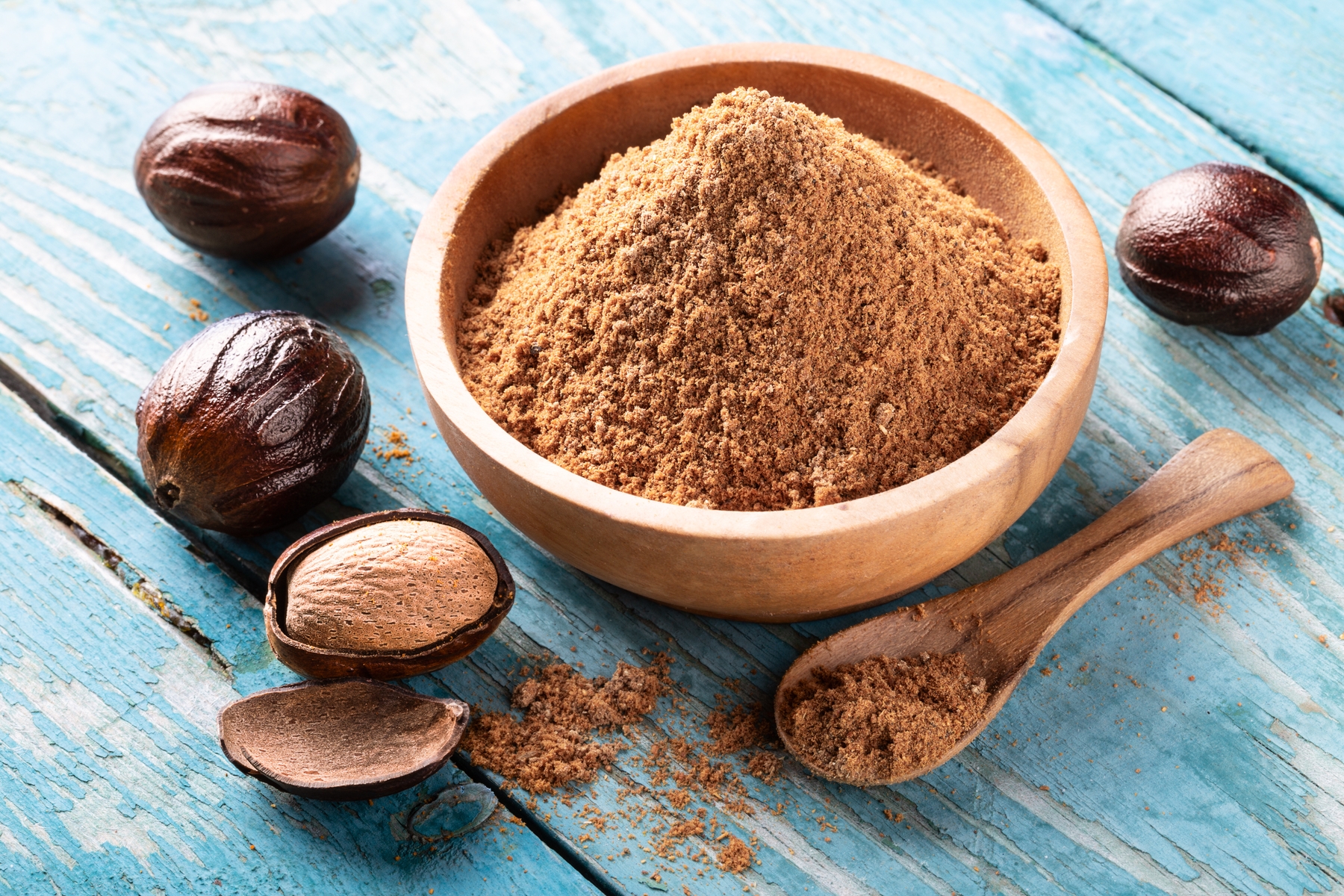
Whole nutmeg retains its volatile essential oils significantly longer than pre-ground powder.
The Scale of One Pinch Too Many
Overdosing a dish with nutmeg happens in a blink: a mere two extra passes on the grater separate “not enough” from “way too much.” The threshold is razor-thin and easy to cross without noticing. In normal cooking, the only casualty is flavor—a ruined sauce, nothing more. Consuming several grams at once moves beyond culinary failure into toxicology: massive doses can trigger nausea, dizziness, a racing heart, and psychoneurological symptoms due to the compound myristicin. (For context, that requires eating dozens of servings of sauce in one sitting, making accidental poisoning impossible.) A standard pinch in a béchamel poses zero danger.
Tracking how the spice builds in 1 liter (about 1 quart) of cream sauce illustrates the progression:
- One to two passes on the grater. Barely registers. The sauce tastes slightly less flat, though no one could pin the improvement on a specific spice.
- Three to five passes. The sweet spot. A warm depth emerges, the sauce tastes complete, yet the nutmeg itself remains incognito.
- Six to eight passes. The spice steps out from behind the curtain. Certain dishes tolerate this level, though the creamy character now takes a back seat.
- Beyond eight. A harsh perfumey note takes over, leaving a bitter trail on the tongue and the distinct impression of a medicine cabinet. Fixing it is nearly impossible: diluting the pot with extra cream and flour is the only option, which throws off both the texture and the salt balance.
Starting with less than seems necessary is the safest strategy. Stirring the spice in, letting the dish bubble gently for a minute or two, and tasting before deciding to add more prevents disaster. Tasting immediately after grating is a trap: the spice has not yet released its aroma into the fat, tricking the cook into thinking it needs more, doubling the dose, and ruining the batch.
By volume, ground nutmeg packs more densely than fluffy fresh shavings while delivering a staler flavor. Swapping one for the other at a one-to-one ratio never works.
When to Add Nutmeg During Cooking
No universal rule exists for timing, and trying to invent one only causes confusion.
Prolonged simmering dulls the sharpest top notes while allowing the nutmeg to meld seamlessly throughout the dish. Grating it in at the very end keeps the aroma bright, assertive, and easy to spot. Timing therefore depends entirely on how noticeable the spice should be at the table.
In a cream sauce, nutmeg goes in 2 to 3 minutes before pulling the pan from the burner, once the base has thickened. In mashed potatoes, folding it in alongside the hot butter and warm cream allows the fat to capture the oils immediately. In a casserole or gratin, mixing it into the liquid base before sliding the dish into the oven works best, as the long bake requires time for the spice to bloom. In minced meat, kneading it in before shaping the patties or loaf ensures even distribution. In a pastry cream or custard, stirring it in near the end of cooking—once the mixture thickens and leaves the direct heat—protects its delicate aromatics.
Fat carries nutmeg through a dish and anchors its aroma, while heat makes it bloom. Consequently, nutmeg unfolds much more smoothly and predictably in a piping hot cream sauce than in a lean, lukewarm dish.
Nutmeg Substitutes—and When to Skip Them
A true one-to-one substitute does not exist because nutmeg performs entirely different jobs depending on the recipe.
When a recipe simply needs general warm spice (such as in a meat filling or pâté), allspice or a tiny pinch of ground cloves comes closest. Both hit the palate much harder than nutmeg, so using half the called-for amount prevents them from taking over.
When seeking depth in a cream sauce, reaching for another spice rarely solves the problem. White pepper, infusing the milk with a bay leaf, or swirling in a knob of high-quality butter at the finish works far better. The sauce will take a slightly different direction, yet it will never taste flat.
When looking for aroma in sweet baking, cinnamon, cardamom, or ginger step in nicely, provided the baker accepts that the dessert’s character will shift.
The closest true relative to nutmeg is mace, the lacy outer hull of the exact same seed. It shares a family resemblance: slightly more delicate, less camphor-heavy, with a subtle floral lift. In pale cream sauces and delicate dishes, mace mimics nutmeg better than any other option—and sometimes outperforms the original because it leaves the white sauce pristine and unfreckled. Still, mace remains a distinct spice rather than “nutmeg in another outfit.”
If no suitable substitute sits in the cupboard, leaving it out entirely is the smartest move. A dish without nutmeg tastes slightly simpler; a dish with a clumsy substitute just tastes wrong.
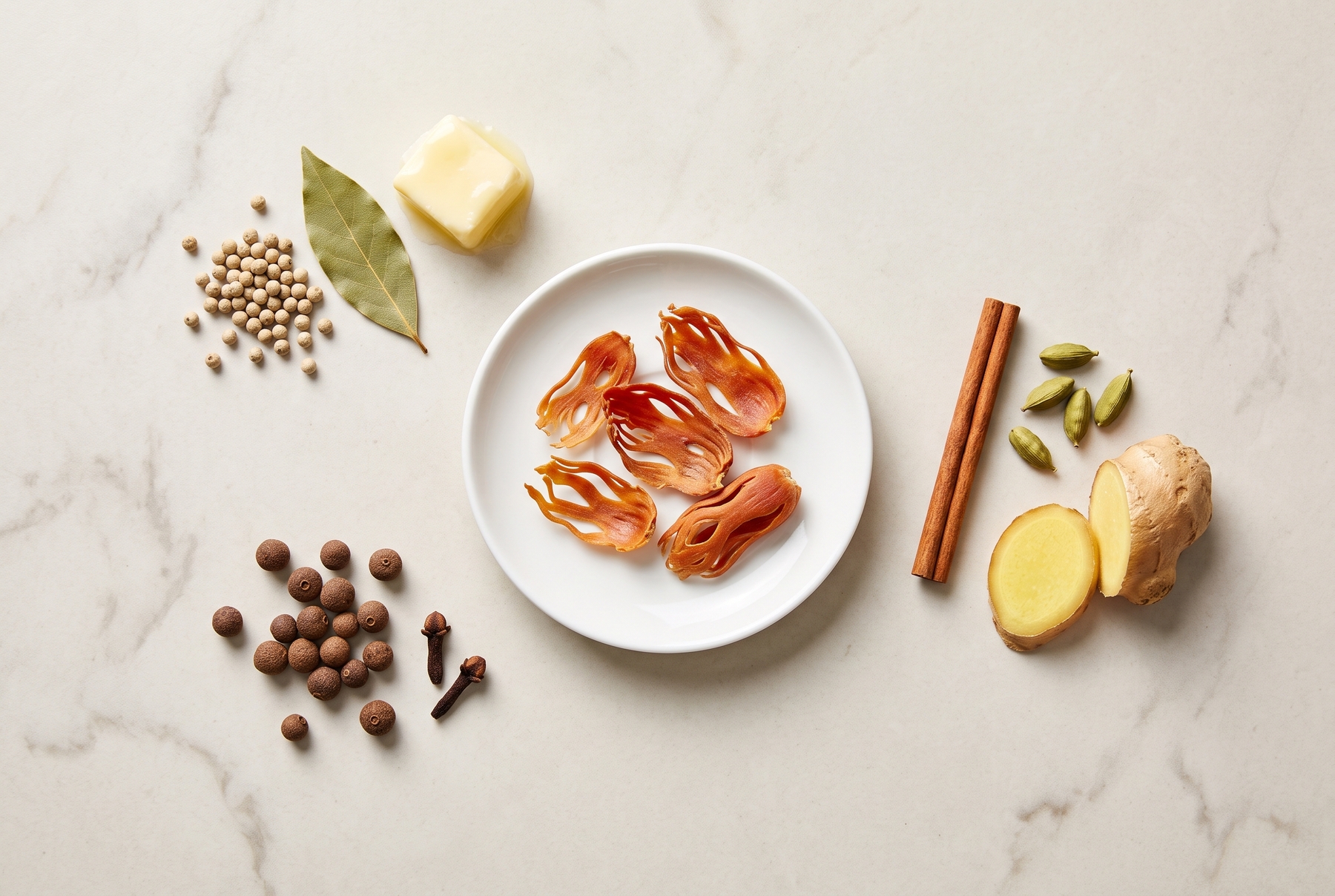
Mace and other warming spices serve as practical alternatives depending on the dish.
5 Questions Before Reaching for the Grater
Instead of memorizing a long chart, running through a quick mental checklist works for any dish on the stove, even when cooking without a recipe.
- Does the dish have a creamy, dairy, egg, or starchy base? If not, the odds of nutmeg working drop sharply.
- Does the food genuinely lack warm depth, or does it just need salt? Half the time a dish seems to beg for spice, a pinch of salt and a squeeze of acid actually solve the problem.
- Is a dominant spice or complex blend already in the pot? If so, nutmeg only adds clutter.
- What drives the flavor here: the crisp freshness of the main ingredient or slow-cooked aromatic complexity? Nutmeg ruins freshness but bolsters complexity.
- Is it possible to start with a single pass on the grater and taste? If not (for instance, if the dish is already sealed in pastry), skipping it is safer.
Four “yes” answers out of five mean grate away. Two mean put the jar back.
Nutmeg became one of the most ubiquitous spices on the planet not because it magically improves everything it touches. It simply happened to form a natural alliance with milk, butter, eggs, and starch—and requires barely a whisper to make its presence felt.
Buying a whole nutmeg is worthwhile not for the sake of dusting it over every meal, but for a single kitchen experiment: make a classic béchamel without nutmeg and taste a spoonful. Then grate three quick passes over the pot, stir, wait sixty seconds, and taste again. The contrast between those two spoonfuls from the exact same pan explains more about this spice than any article ever could.
0 comments