
Sometimes a pinch of salt scattered over a plated dish transforms the food more dramatically than all the seasoning added during cooking. The ingredient remains the same. The chemical makeup of the salt is identical. Yet the sensation on the palate shifts completely. The secret lies not in some mystical salinity of pretty crystals, but in where the crystal lands, how quickly it dissolves, and what happens during that very first bite. Finishing salt is neither a mandatory luxury item nor a chef’s gimmick meant solely for food styling. Its purpose is entirely practical: keeping salt on the surface of the food right where it makes the biggest impact.
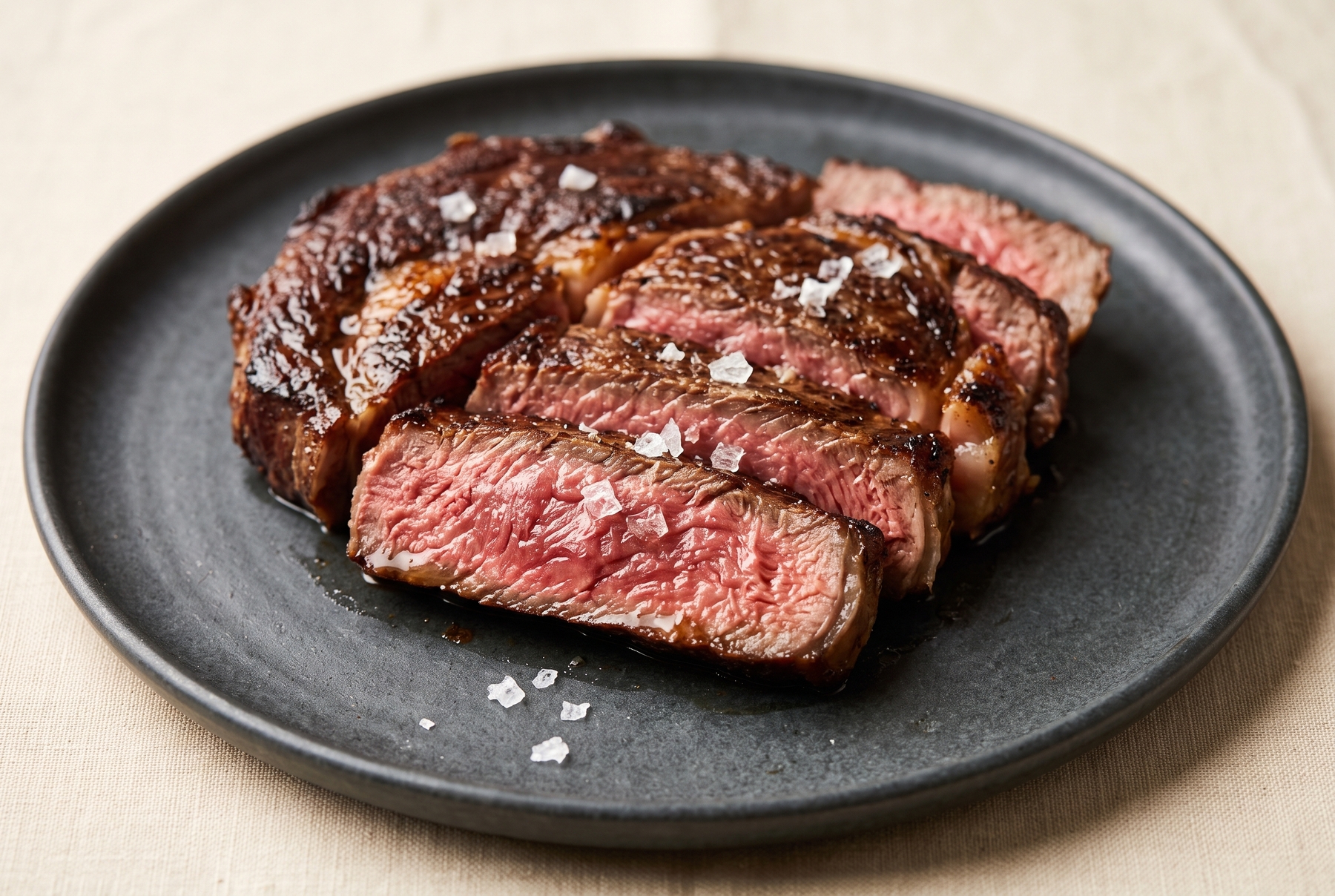
Coarse salt flakes on sliced steak create textural contrast and deliver bright bursts of flavor.
Table of Contents
What Is Finishing Salt
Finishing salt refers to any salt added at the very end of the process, either right before serving or directly onto the plated dish.
Everyday cooking salt works from the inside out. Seasoning pasta water, salting meat before searing, or building a sauce allows the salt to dissolve evenly, penetrate the ingredients, and form the baseline flavor. Finishing salt has a different job. Rather than seasoning food to its core, it delivers a final accent—distinct bursts of salinity, a fleeting crunch, and sometimes a subtle aroma riding on top of the main flavor profile.
There is no official regulatory category called “finishing salt,” so looking for that exact phrase on a label is unnecessary. The term describes an application rather than a specific product, though certain crystal structures excel in this role. The same coarse sea salt can work in a soup pot or on top of a sliced tomato. In the pot, however, its delicate structure dissolves and vanishes, whereas on the tomato, it remains intact and performs its magic.
Why Coarse Crystals Feel Different
Fine salt blankets food in an even layer, dissolving almost instantly into surface moisture to create uniform salinity across every bite. Large flakes behave differently. Scattering unevenly across the surface, they allow the tongue to encounter a bright crystal one moment and an unseasoned spot the next. This contrast creates vibrant pops of flavor instead of a flat, salty background.
Many finishing salts also introduce a brief textural contrast, shattering between the teeth a split second before melting away. That tiny crunch tricks the brain into perceiving the dish as more dynamic and complex, even when the total sodium content is lower than in a uniformly seasoned meal.
Ultimately, finishing salt provides a final sensory and textural highlight rather than foundational seasoning. It transforms what the tongue and teeth experience at the very surface of the food.
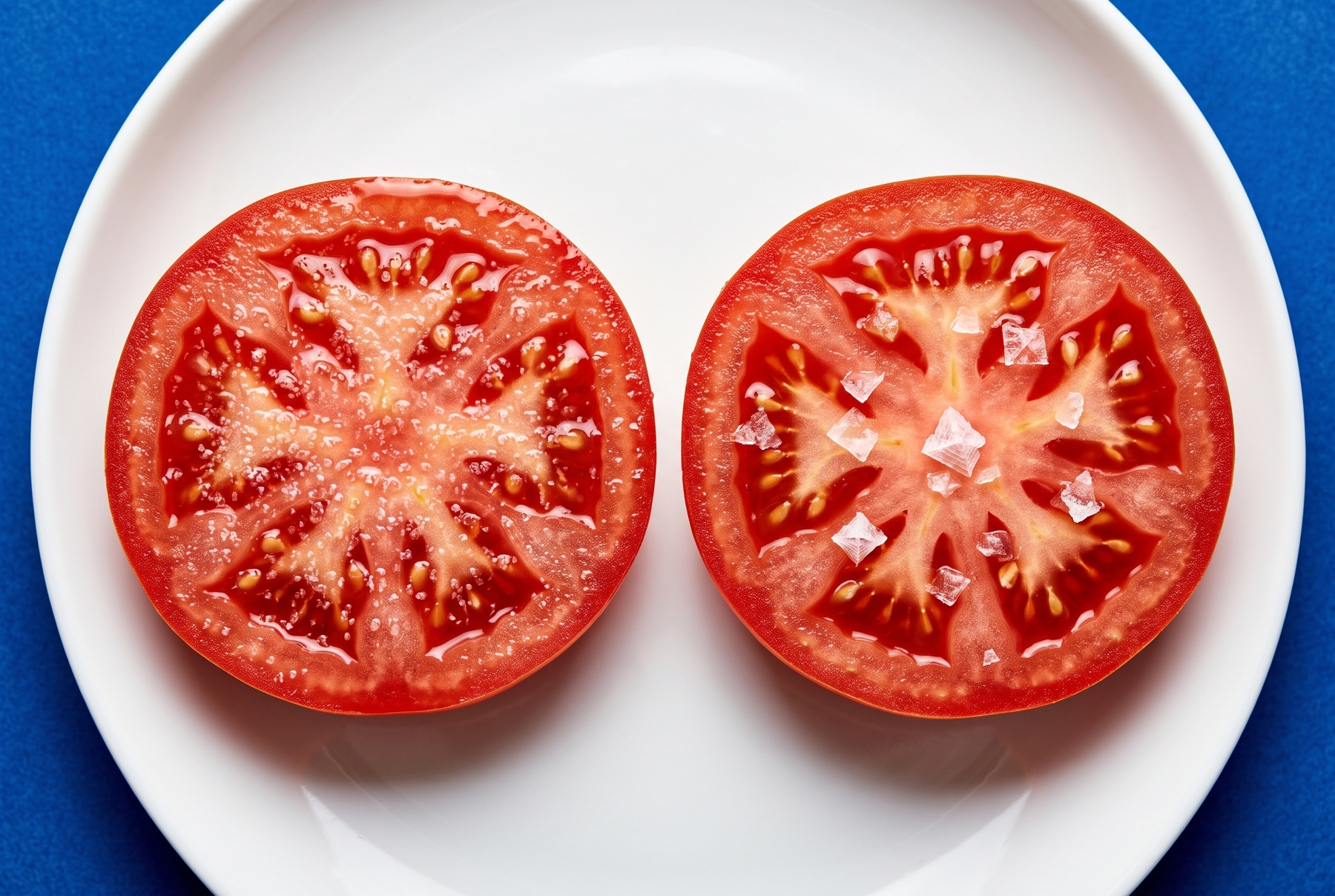
Fine salt dissolves quickly and spreads evenly, whereas flaky salt delivers targeted bursts of salinity.
Types of Finishing Salt
Dozens of artisanal salts crowd the market, each backed by a producer claiming unmatched uniqueness. Home cooks do not need an exhaustive catalog. Understanding a few primary categories and their practical differences is more than enough.
Flake Salt
Thin, delicate flakes—most famously shaped like hollow pyramids or flat shards—define this category. Pinching them between the fingers feels natural, their placement on the plate is easy to see, and they shatter instantly on the palate to deliver a quick, clean burst of brine. This format is ideal for finishing because the flakes are effortless to portion by hand and manage to crunch just before dissolving.
Maldon, famous for its fragile pyramid-shaped crystals, is the most recognizable benchmark. Yet equating a single British brand with the entire category overlooks fantastic flake salts harvested in France, Cyprus, Portugal, and beyond. A great flake salt distinguishes itself not by the logo on the box, but by a clean taste and a crisp, shatter-prone texture.
Flaky finishing salt elevates almost any dish with an exposed surface: soft-boiled eggs, fresh tomatoes dressed with olive oil, sliced avocado, salad greens, seared steaks or fish straight from the pan, roasted vegetables, and warm buttered toast. Dark chocolate and caramel represent another classic pairing, where a few flakes provide a savory contrast that cuts through heavy sweetness.
Fleur de Sel and Related Sea Salts
Fleur de sel translates from French as “flower of salt.” Harvesters skim this paper-thin crust of crystals by hand from the very surface of salt evaporation ponds. Classic production regions include Guérande in Brittany and the Camargue in southern France.
Because fleur de sel crystals are small, slightly moist, and delicate, cooks traditionally reserve them for final seasoning rather than tossing them into a boiling pot. Romanticizing them, however, is unnecessary. In a home kitchen, how a crystal sits on the food matters far more than a charming tin or marketing tales of Atlantic breezes. While the salt is undeniably good, overpaying strictly for pedigree makes little culinary sense.
Coarse Crystalline Salt
Not every large-grained salt belongs on a finished plate. Biting into a dense chunk of rock salt or an overly hard sea salt crystal can be jarring; instead of shattering delicately, it grinds against the teeth and leaves a harsh, overly salty core in the mouth.
Effective finishing salt either crumbles effortlessly between the fingertips and teeth or serves a specific structural purpose in tiny amounts—like the sturdy, toothsome crystals clinging to the crust of a pretzel or focaccia. If a crystal feels as hard as aquarium gravel and resists the pressure of your fingers, it has no business on a finished dish.
Smoked and Infused Salts
Smoked and infused varieties pair salinity with distinct aromatics. Smoked salts carry the scent of real woodsmoke, citrus salts burst with zest, and herb blends bring notes of rosemary or thyme.
One rule governs their use: the aroma must support the dish rather than hijack it. Smoked salt naturally complements baked potatoes, eggs, grilled meats, rich fish, and charred vegetables. Citrus and herb-infused salts shine brightest on crisp salads, delicate white fish, and raw vegetables.
Infused salts almost always require a lighter hand than pure sea salt. An extra pinch of smoked salt easily overwhelms subtle ingredients, leaving the meal tasting like a campfire rather than dinner.
Colored and Specialty Salts
Pink Himalayan, black volcanic, French grey (sel gris), and Persian blue salts catch the eye immediately, standing out sharply against pale foods. Yet striking colors, exotic origins, and dramatic names reveal nothing about how well a salt performs at the table. Trace minerals give Himalayan salt its pink hue, but they make up a tiny fraction of a percent; expecting measurable health benefits from these microscopic traces is unrealistic, as it offers no nutritional advantage over standard salt. In blind tastings, most colored salts taste virtually identical to pure sea salt.
Selection should come down to flavor, crystal structure, and how the salt behaves on a specific dish. If black lava salt offers a pleasant crunch while contrasting beautifully against a poached egg, it earns its place. If its only value is looking pretty for a camera, it adds nothing to the eating experience.
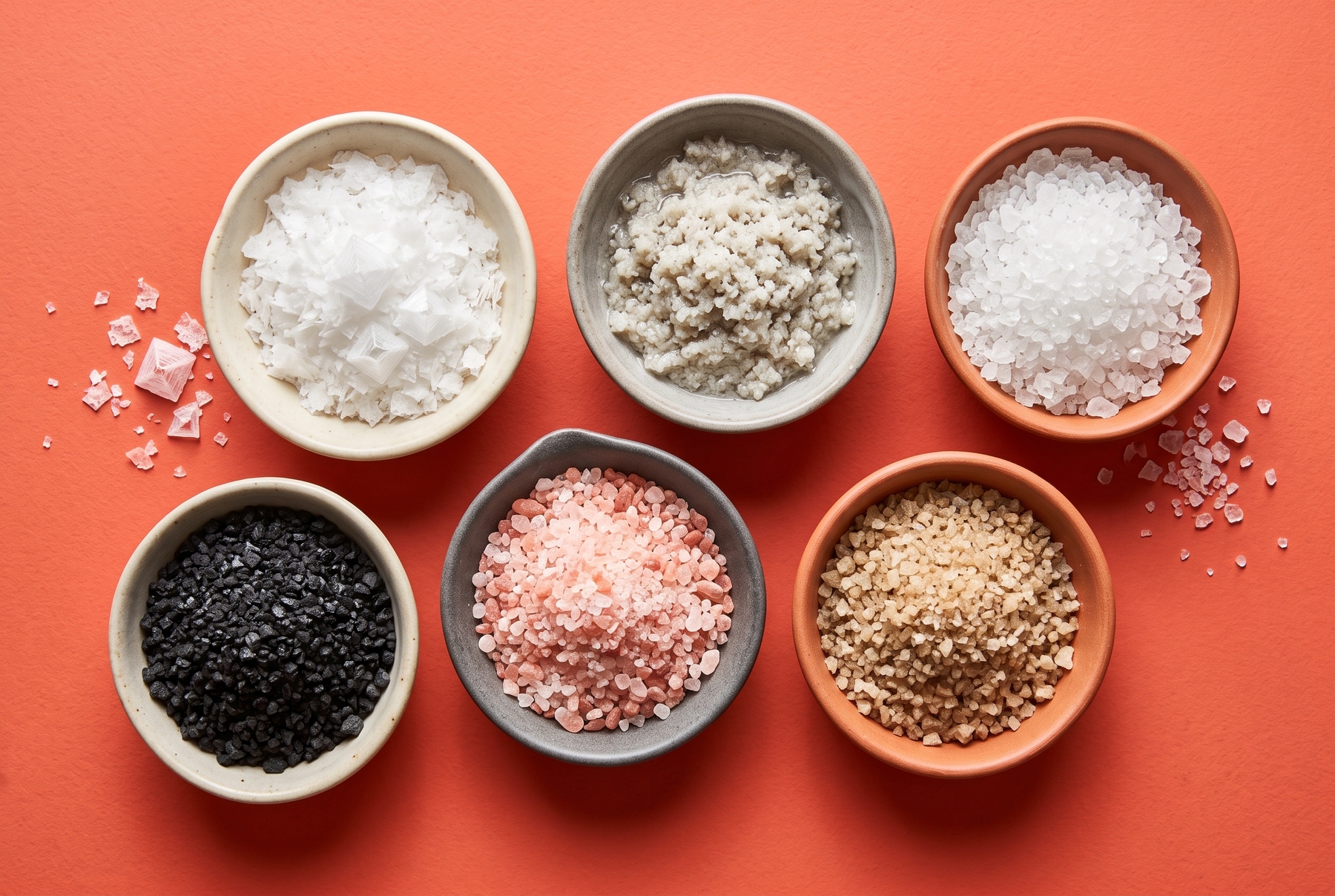
Different varieties of finishing salt: flaky sea salt, coarse crystalline, French grey, pink Himalayan, and black volcanic.
Finishing Salt and Cooking Salt Serve Different Purposes
Replacing everyday cooking salt entirely with finishing salt is a mistake.
Seasoning during the cooking process builds foundational flavor. The salt has time to dissolve, migrate through the ingredients, and season them far more deeply than a last-minute scatter of flakes ever could. Finishing salt layers bright accents on top of that foundation. Neither can do the other’s job.
Consider a steak. Salting the meat before searing—ideally a few hours ahead—allows the seasoning to penetrate the muscle fibers and season the interior. Scattering a few flakes over the sliced meat after it rests provides bright, salty punctuation marks and a delicate crunch right on the cut surface. The first step builds flavor; the second creates excitement. Tomatoes respond the same way: a pinch of fine salt draws out excess moisture and concentrates sweetness over a few minutes, while flaky salt added right before serving brings texture and localized bursts of brine.
Years in professional kitchens reveal a common bad habit: cooks dumping expensive finishing salt onto an under-seasoned dish hoping to rescue it. That trick never works. When the baseline seasoning falls flat, pretty flakes on top cannot fix the problem; they merely create jarring salty spots against a bland backdrop, making the oversight even more obvious. Finishing salt is an enhancer for properly cooked food, not a crutch for bad seasoning.
How to Use Finishing Salt Properly
Mastering finishing salt requires no complex culinary technique, just four simple habits.
Add It at the Very End
Tossing flaky salt into a hot, wet dish too early causes it to dissolve, destroying the exact texture that makes it special. The crunch vanishes, leaving behind ordinary dissolved sodium. Scattering finishing salt at the last possible second, right before the plate hits the table, preserves its integrity.
Sometimes partial melting works in the cook’s favor: flakes landing on a piping-hot baked potato melt slightly around the edges while leaving crispy centers intact. Still, waiting until the final moment guarantees the best structural contrast.
Season with Your Fingers, Not a Shaker
Adopting the restaurant habit of seasoning by hand changes everything. Taking a small pinch, gently crumbling the crystals between thumb and forefinger, and raining them over the plate from a height of about 20–30 cm (8–12 inches) ensures even distribution.
Dropping salt from a slight height prevents awkward clumps in one spot, while using bare fingers provides tactile feedback to gauge the exact amount and stop in time. Shakers and grinders strip away that control, either clogging up or dumping far too much at once.
Start with Less Than You Think
Because finishing salt sits completely undiluted on the exterior of the food, it hits the tongue immediately. Consequently, even a tiny amount registers much more intensely than the same weight of salt stirred into a stew.
Starting with just a few crystals, tasting a bite, and deciding whether the dish needs more is the smartest approach. Adding another pinch takes seconds, whereas scraping excess salt off a plated meal is often impossible.
Match the Salt to the Surface Area
The exact same pinch of salt behaves very differently on a single egg yolk, across a wide platter of greens, or atop a thick-cut ribeye. What overwhelms the egg will completely disappear in the salad.
Measuring in precise grams makes no sense here because plates and portions vary wildly. A visual and sensory cue works better: crystals should surprise the palate every few bites rather than forming a continuous salty crust. If the food looks dusted in a uniform white frost, the hand was too heavy.
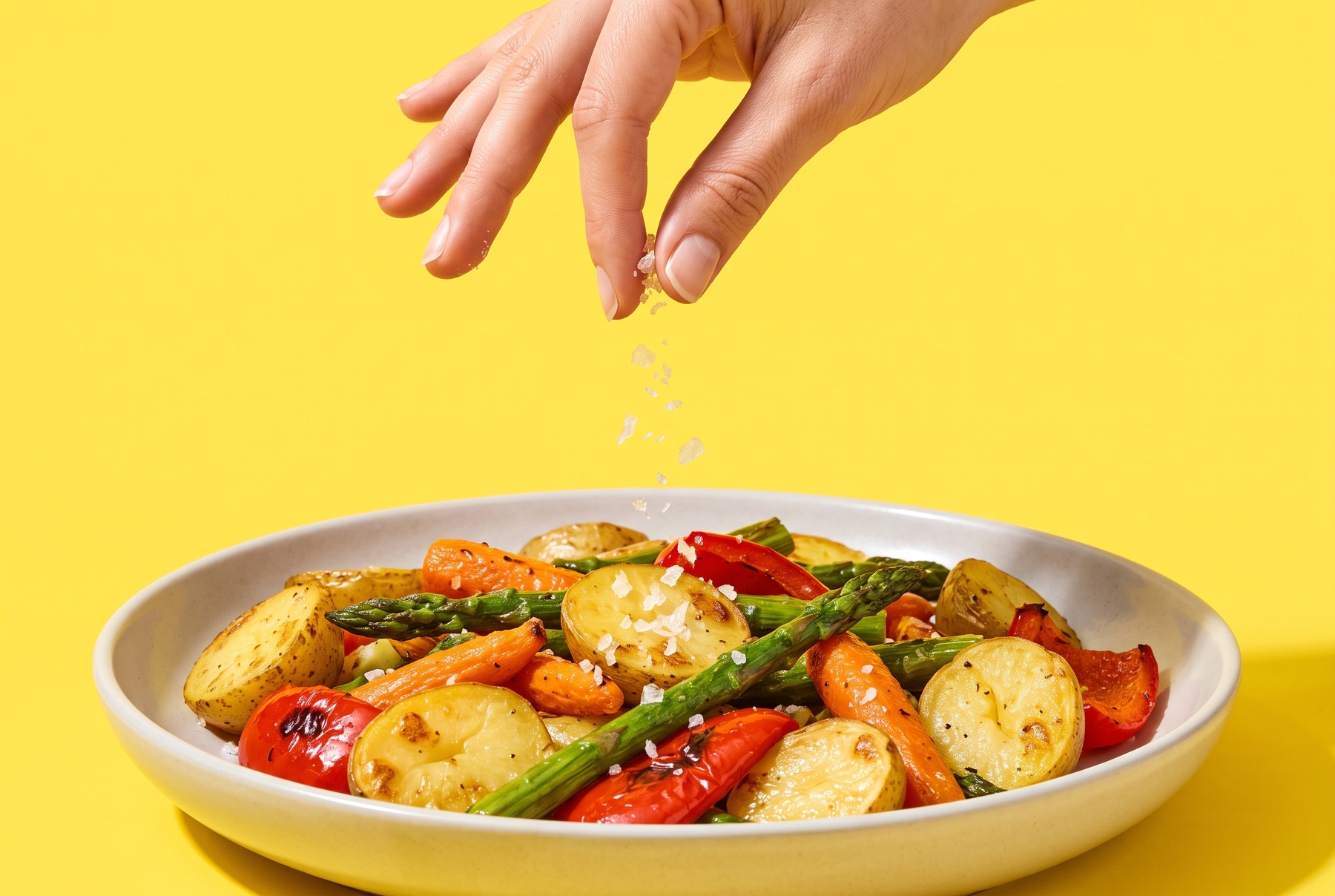
Scattering finishing salt by hand from a slight height right before serving preserves crystal structure and crunch.
Best Foods for Finishing Salt
Specific pairings illustrate how this ingredient shines. Certain foods benefit primarily from the crunch, while others crave a sharp contrast against rich fats or heavy sweetness.
- Seared meats and fish: delivers bright bursts of brine and crisp texture right on the sliced surface;
- Eggs: rich, velvety yolks practically beg for a sharp, crunchy contrast;
- Fresh tomatoes and crisp vegetables: a light scatter amplifies their natural sweetness;
- Salads: creates dynamic pops of salinity among the greens instead of a flat, salty dressing;
- Baked potatoes and roasted root vegetables: offers a delicate crunch against hot, creamy interiors;
- Bread, toast, and cultured butter: fat carries salt exceptionally well, making every crystal stand out;
- Soft cheeses: cuts through dense, creamy textures with bright mineral notes;
- Caramel, dark chocolate, and cookies: balances sugar and sharpens deep roasted flavors.
When Finishing Salt Is a Waste
In certain culinary environments, expensive crystals lose their entire purpose. Whenever salt dissolves completely into a liquid or batter—such as soups, simmering sauces, pasta water, or bread dough—crystal geometry ceases to matter. Tossing pricey pyramid flakes into a stockpot yields the exact same result as using standard coarse salt, just at a fraction of the value.
Heat and liquid erase crystal structure instantly. Reserving flaky salt strictly for exposed surfaces ensures the investment actually reaches the plate.
Common Mistakes to Avoid
- Trying to fix bland food at the table: relying on finishing salt to rescue an under-seasoned dish creates jarring salty spikes against a dull background rather than balanced flavor;
- Getting carried away by aesthetics: scattering too many large, photogenic crystals quickly ruins a meal;
- Seasoning too early: applying delicate flakes long before serving allows moisture to dissolve them, eliminating the expected crunch;
- Choosing rock-hard crystals: using dense grinding salts as a garnish forces guests to crunch down on unpleasant, pebble-like grains;
- Falling for marketing hype: assuming an expensive or brightly colored salt automatically tastes better;
- Overusing infused varieties: dusting dishes with aggressive smoked or truffle salts when the underlying ingredients clash with those aromas.
One final rule applies: a finishing pinch should make a dish more engaging, never leave a guest wondering why they just bit into a piece of marine geology.
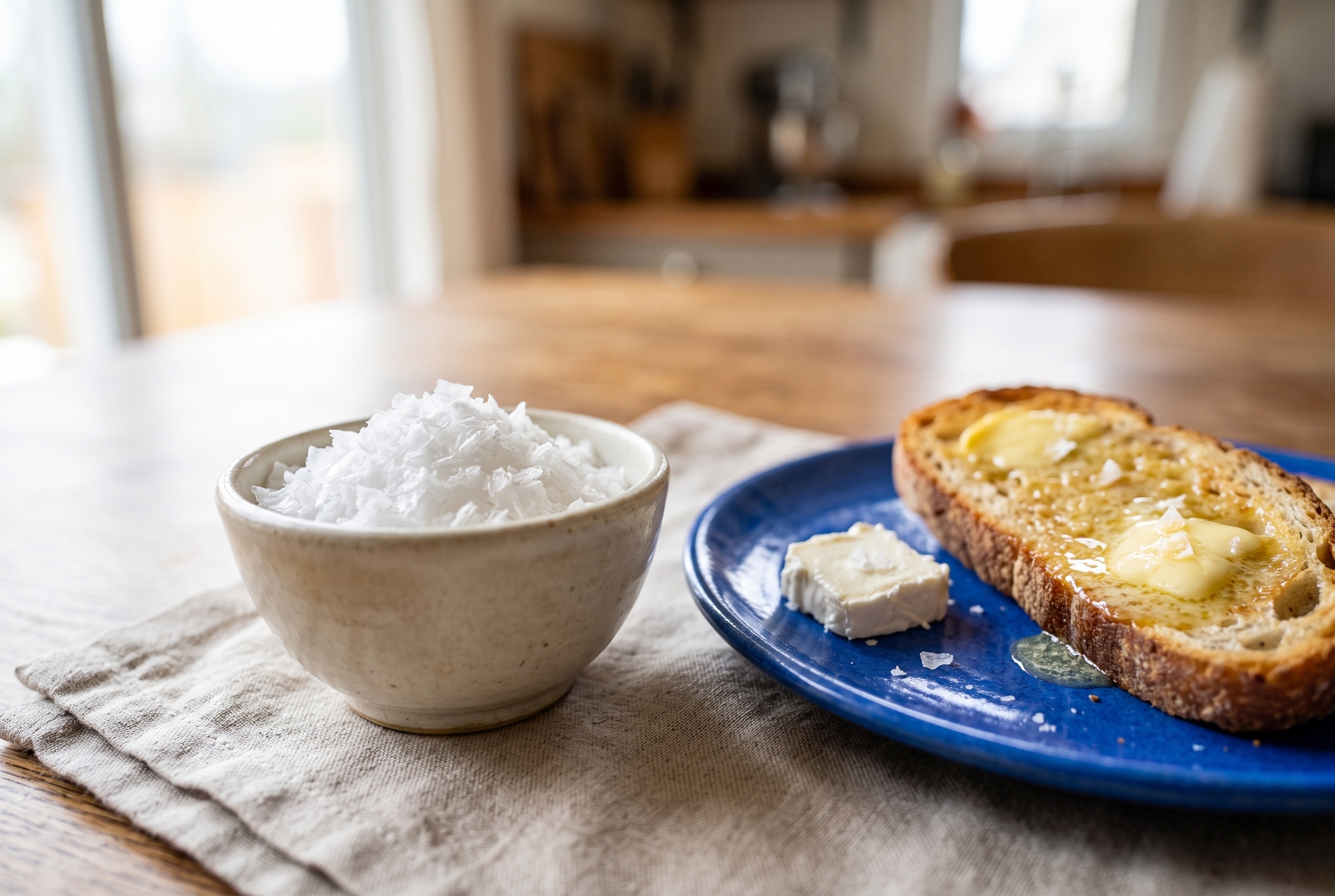
Versatile flaky salt crumbles easily between the fingers and suits everything from hot main courses to simple buttered toast.
How to Choose One Finishing Salt for Your Kitchen
Stocking a home kitchen does not require curating a museum of tiny glass jars; a single smart purchase covers almost every base. Buying one box of pure, clean-tasting flaky sea salt handles 90% of culinary scenarios effortlessly.
Evaluating a salt comes down to three practical criteria: crystal size and fragility (the flakes should crumble easily between your fingers), a clean brine flavor free of harsh metallic bitterness, and a straightforward ingredient list. Grandiose packaging claims about ancient seabeds and miracle minerals can be safely ignored.
Smoked, infused, and brightly colored salts belong on the back burner for now. Exploring those specialty jars makes sense only when a cook has a specific dish in mind that genuinely calls for woodsmoke, herbs, or a dramatic visual contrast. Starting a kitchen collection with them is unnecessary.
Finishing salt acts as a culinary micro-adjustment tool, where value comes not from rarity or price tag, but from precise timing. On a warm slice of beefsteak tomato or seared flank steak, three or four delicate flakes are often enough: half melt into the surface juices, and the rest deliver that unmistakable, fleeting crunch.
0 comments