
This simple, deeply flavorful homemade asparagus and cheese pie is a wonderful centerpiece for your table. In this recipe, we make a special oil-based shortcrust pastry using canola oil—it turns out lighter and much more pliable than traditional butter pastry. Tender green asparagus, prized for its delicate flavor and vitamins, pairs beautifully with sharp Cheddar. As it bakes, a scattering of sesame seeds adds a subtle nutty aroma and an irresistible, crispy golden crust.
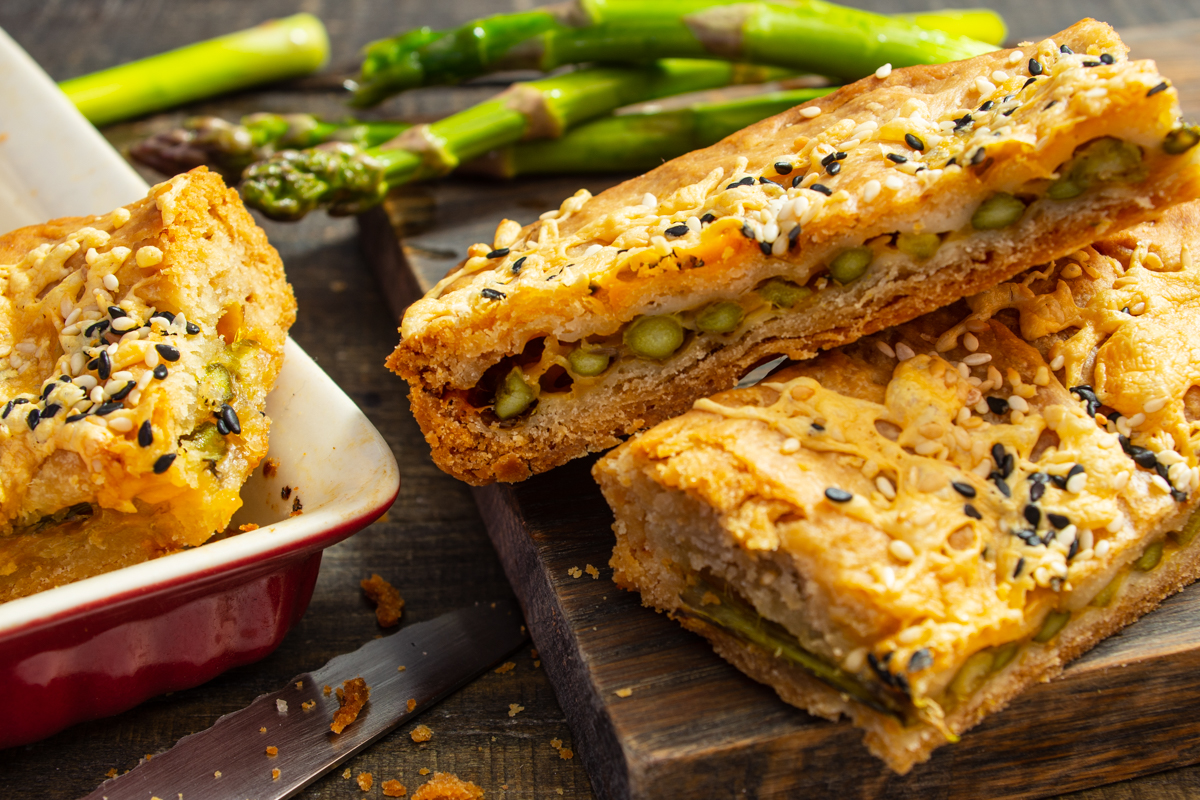
An inviting homemade pie filled with fresh asparagus and topped with a golden cheese crust—ideal for lunch or dinner.
For the Dough
- 130 g (approx. 1 cup) all-purpose wheat flour
- 1/4 tsp baking powder
- 40 g (2 1/2 tbsp) water
- 40 g (3 tbsp) canola oil (or any neutral vegetable oil)
- Pinch of salt
- Black and white sesame seeds
For the Filling
- 100 g (3.5 oz) fresh green asparagus
- 40 g (1.5 oz) hard cheese (such as Cheddar)
Instructions
Prep the asparagus. Snap off the bottom 2–3 cm (about 1 inch) of each stalk. The lower end of the asparagus is woody and inedible, though you can save it for making vegetable broth. Using a vegetable peeler, peel the lower 5 cm (2 inches) of the stalks; the upper part and the tips don’t need peeling. Submerge the trimmed asparagus in cold water.
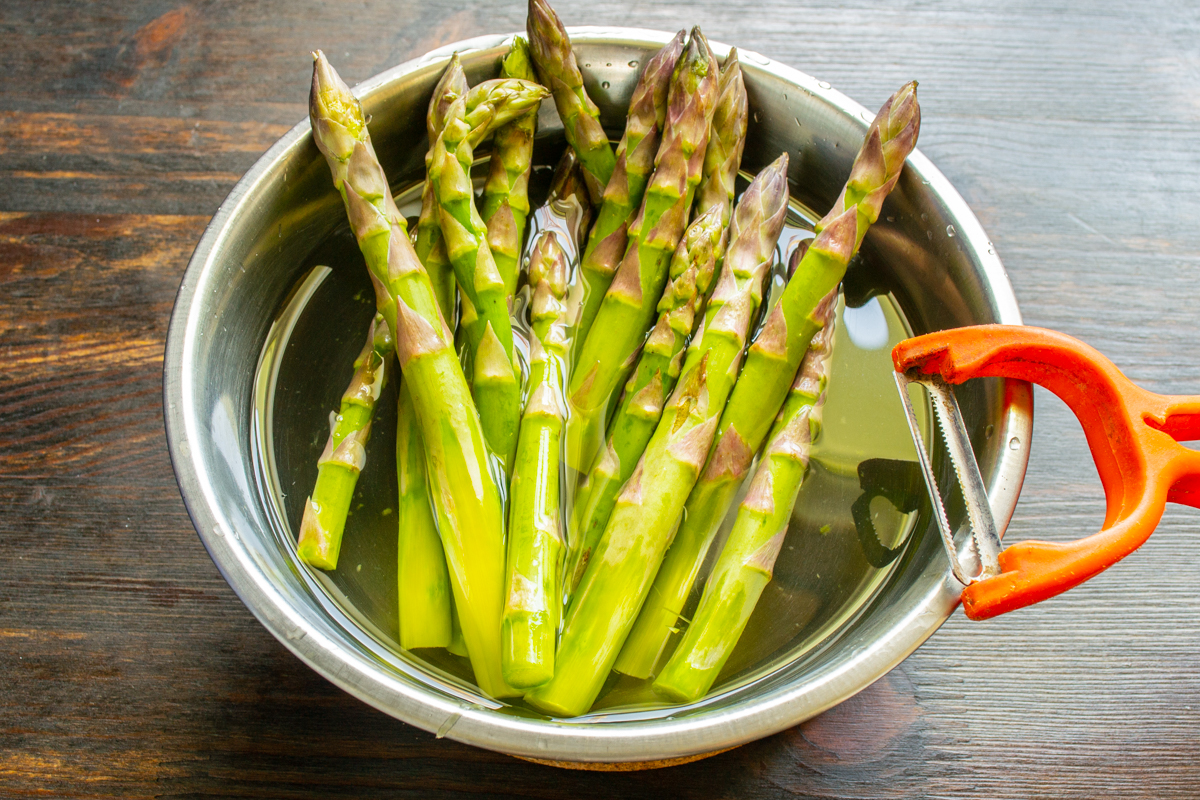
Keep the peeled asparagus in cold water to preserve its freshness and crispness.
Make the canola oil shortcrust pastry. Pour the water into a saucepan, add the salt, and warm it gently until the salt dissolves. Pour in the canola oil (rapeseed oil). You can substitute the canola oil with any neutral-flavored vegetable oil.
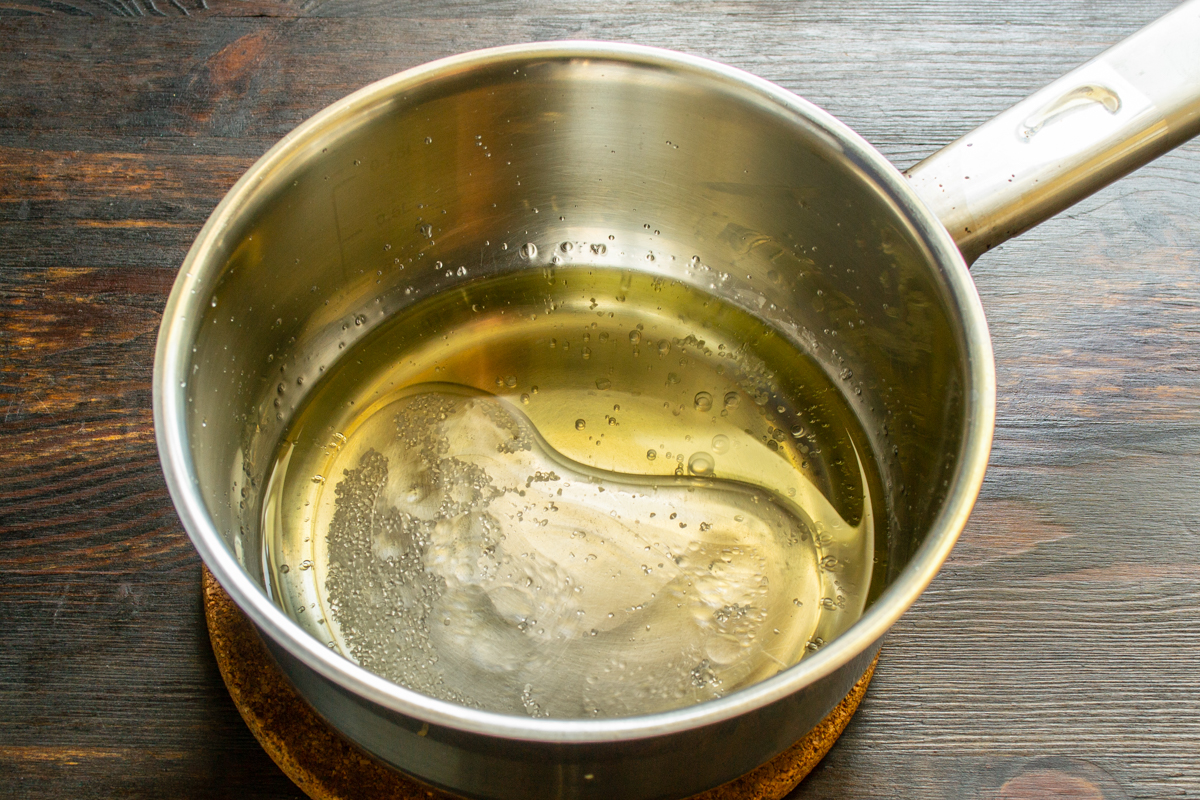
Canola oil gives the pastry a wonderful texture; you can replace it with any neutral vegetable oil.
Ensure the oil and water mixture is lukewarm, not hot. Whisk together the all-purpose wheat flour and baking powder, then add the dry ingredients to the warm liquid.
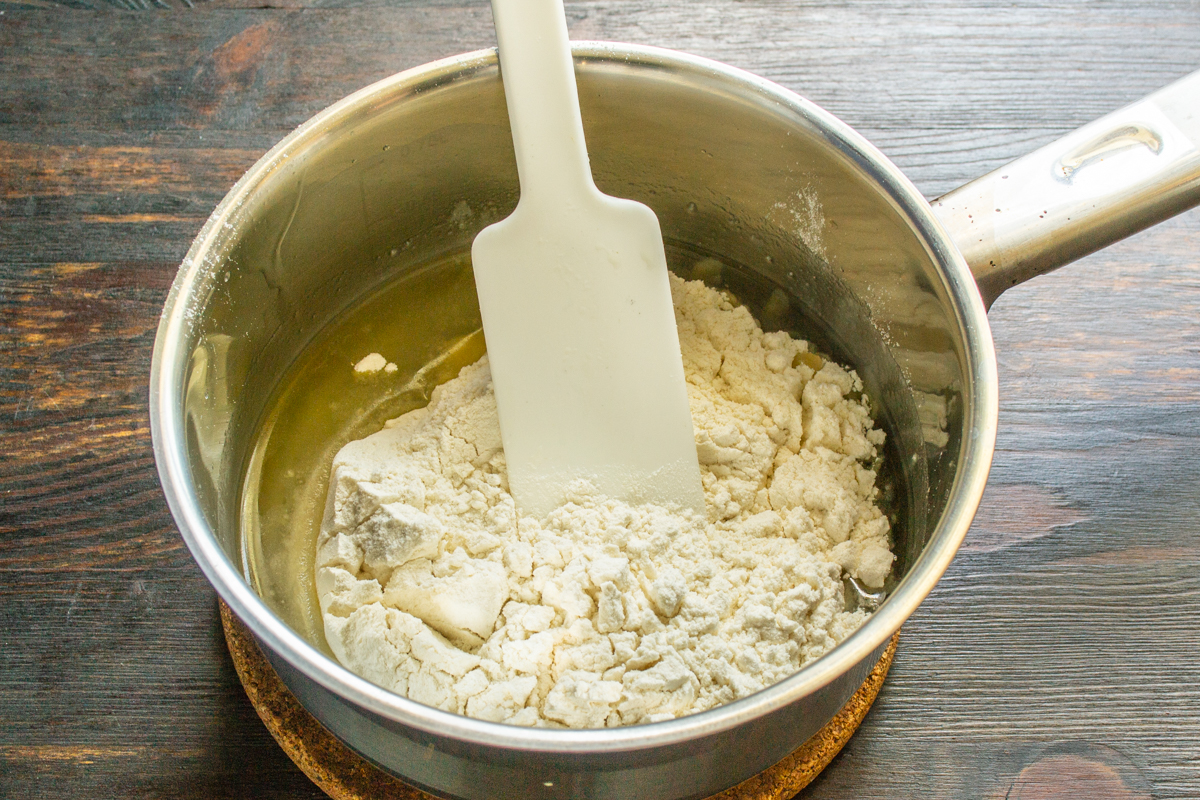
Combine the dry ingredients with the warm oil mixture to bring together a soft dough.
Quickly knead the dough; it comes together soft and pliable, quite different in texture from classic butter- or margarine-based shortcrust pastry.
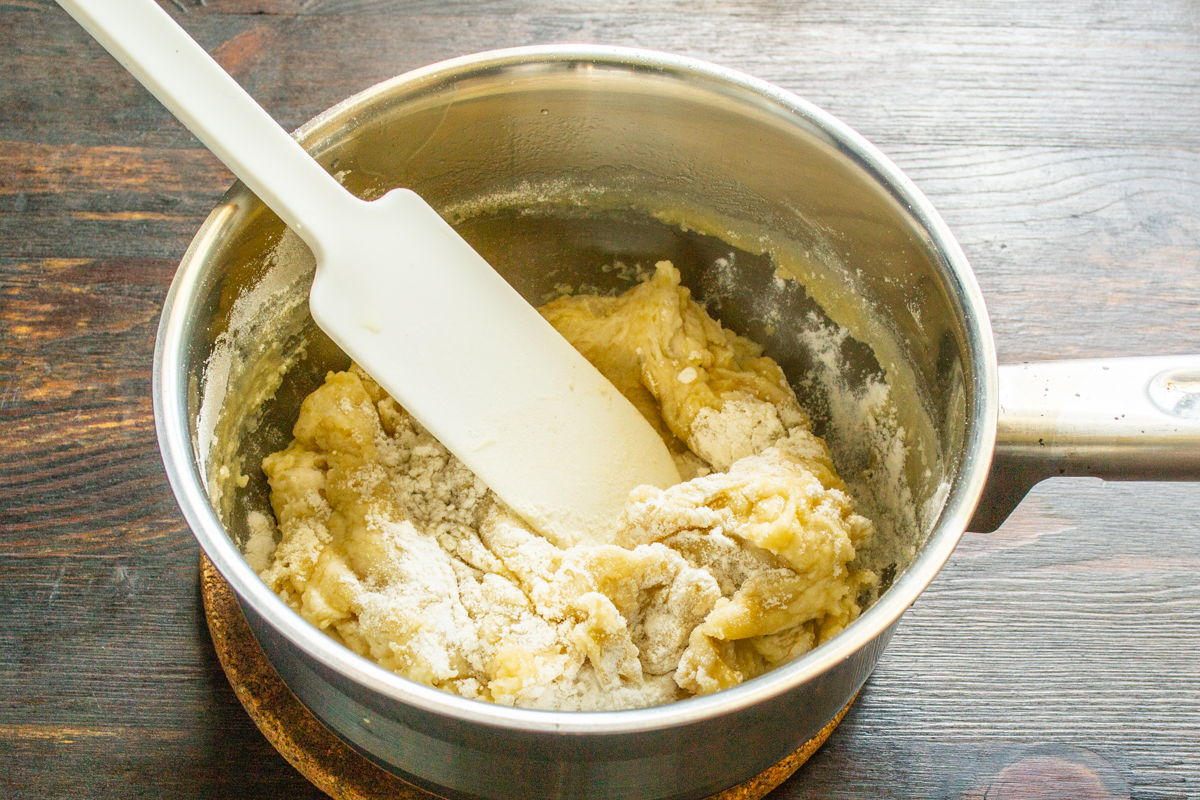
Pastry made with vegetable oil turns out remarkably pliable and easy to work with.
Gather the finished dough into a ball and divide it into two roughly equal portions.
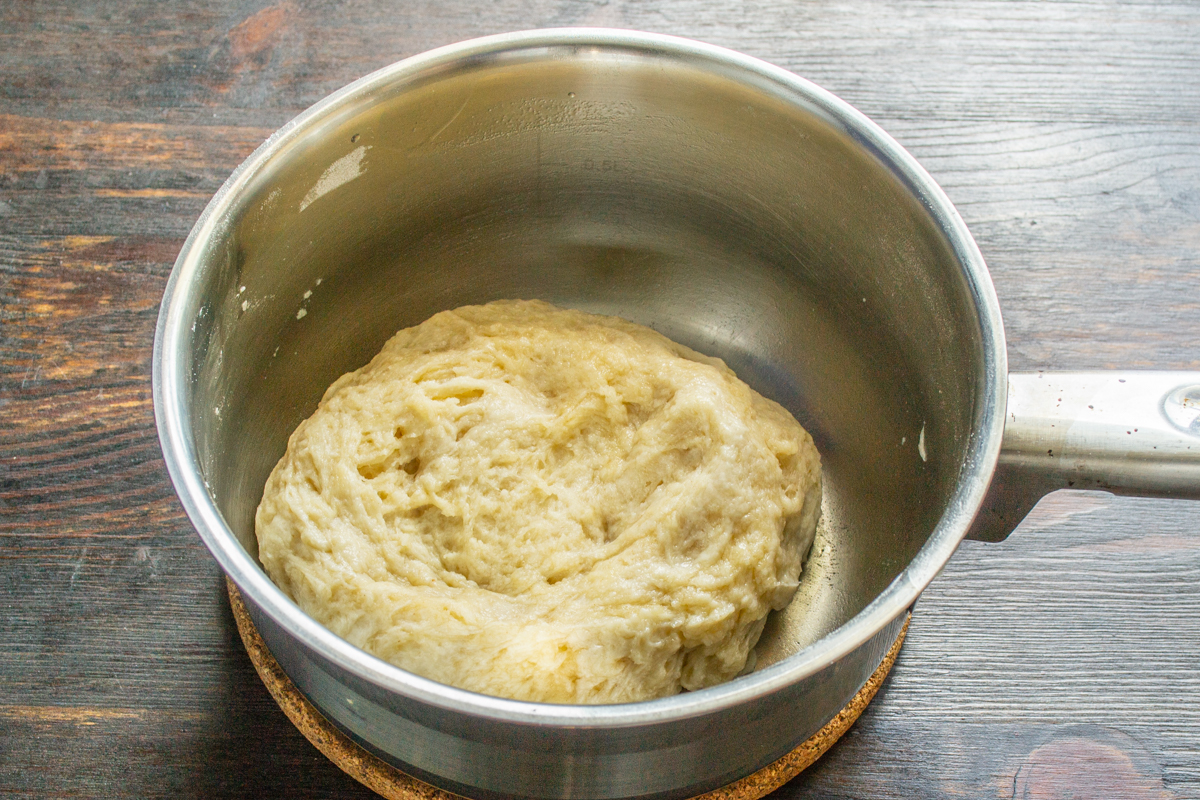
The finished dough doesn't need a long rest; you can start rolling it out right away.
Roll out half of the dough, or press it directly with your hands across the bottom of an ovenproof baking dish, working it slightly up the sides to form a rim.
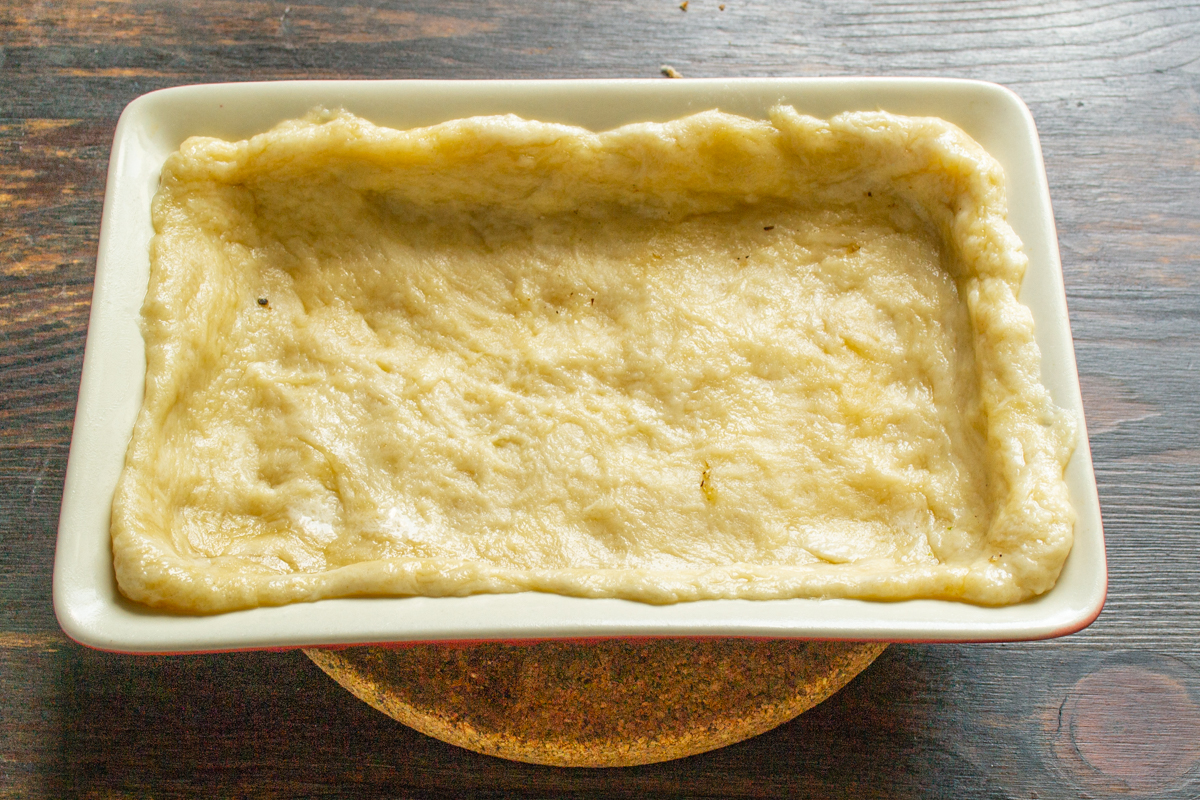
Press half of the dough across the baking dish, forming a low rim to hold the filling.
Finely grate the hard cheese. Set aside one tablespoon of the grated cheese for the topping. Scatter the remaining cheese over the dough base, spreading it into an even layer.
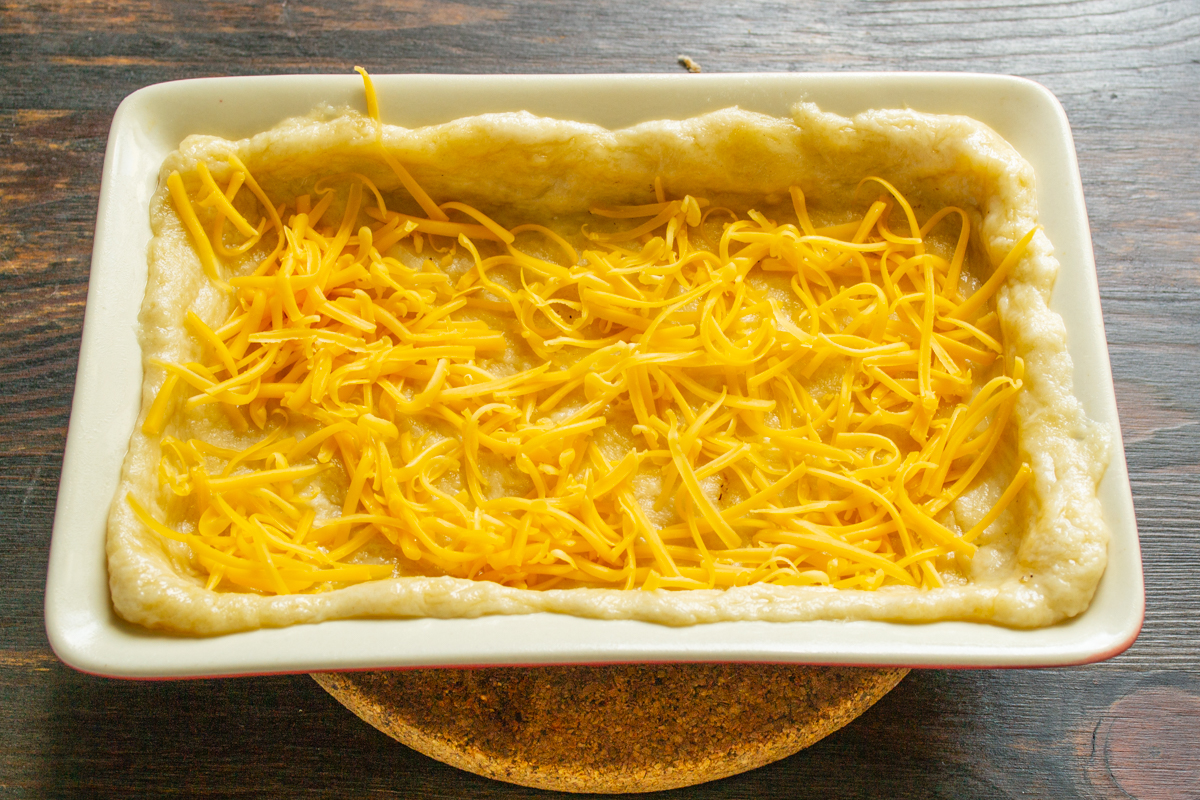
Spread the finely grated hard cheese evenly over the base—it creates a savory layer beneath the asparagus.
Cut the prepared asparagus spears to fit your baking dish. Arrange the stalks snugly side by side in a neat row over the bed of cheese.
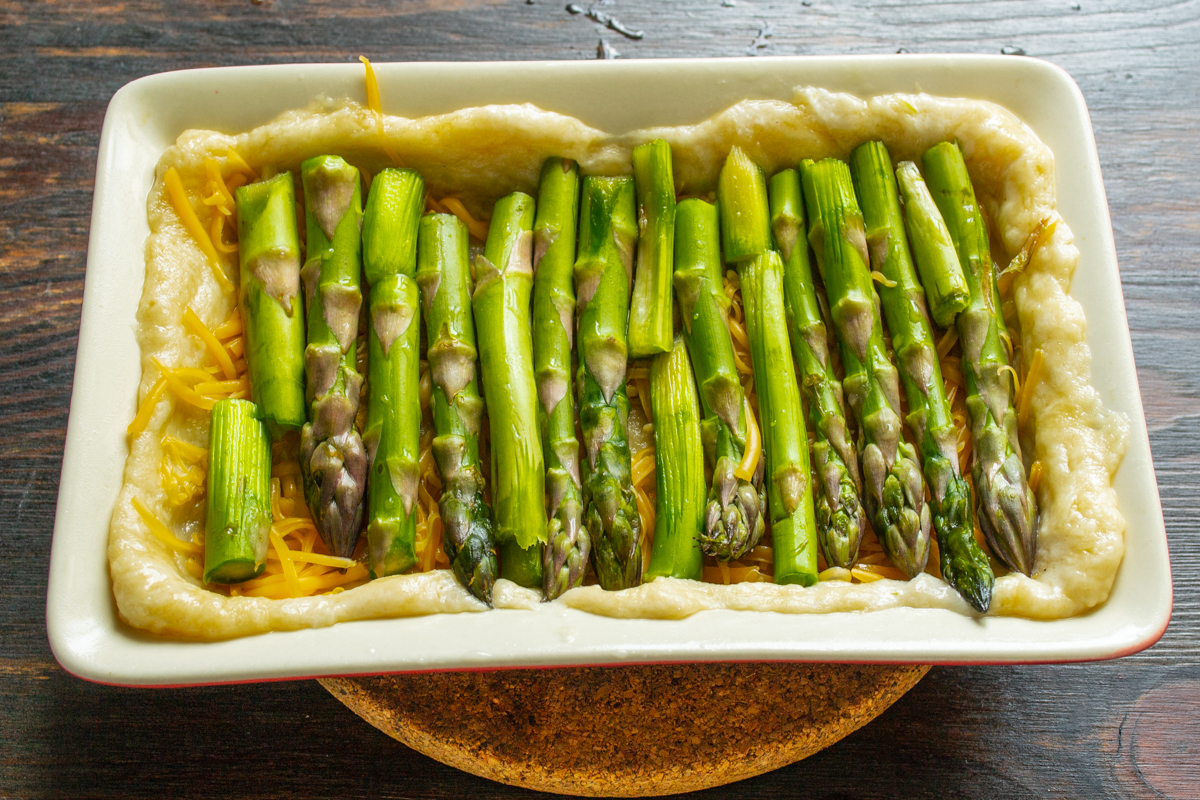
Lay the prepared asparagus snugly side by side for a juicy filling and a clean cross-section when sliced.
Roll out the second half of the dough. Drape it over the asparagus filling and pinch the top and bottom edges together all the way around to seal the pie.
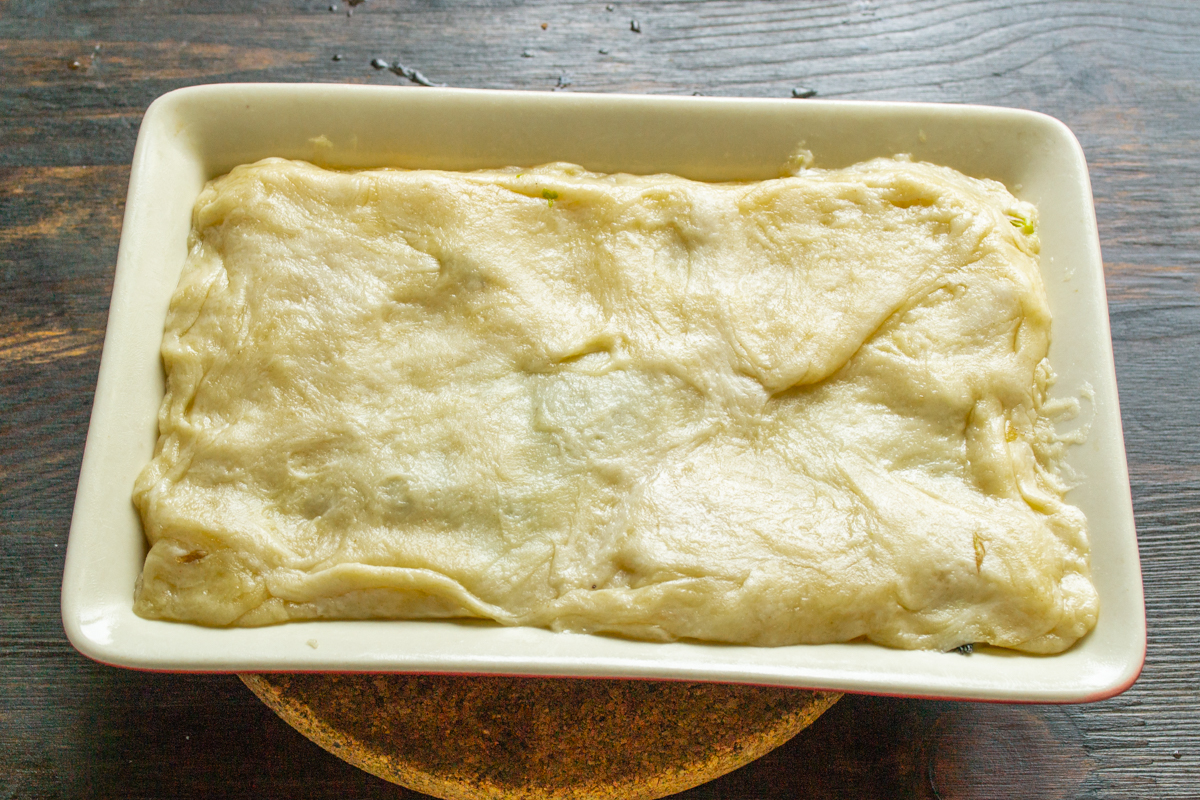
Cover the filling with the second half of the dough and neatly pinch the edges all the way around to seal.
Use a sharp knife to cut a few small slits across the top crust so steam can escape during baking.
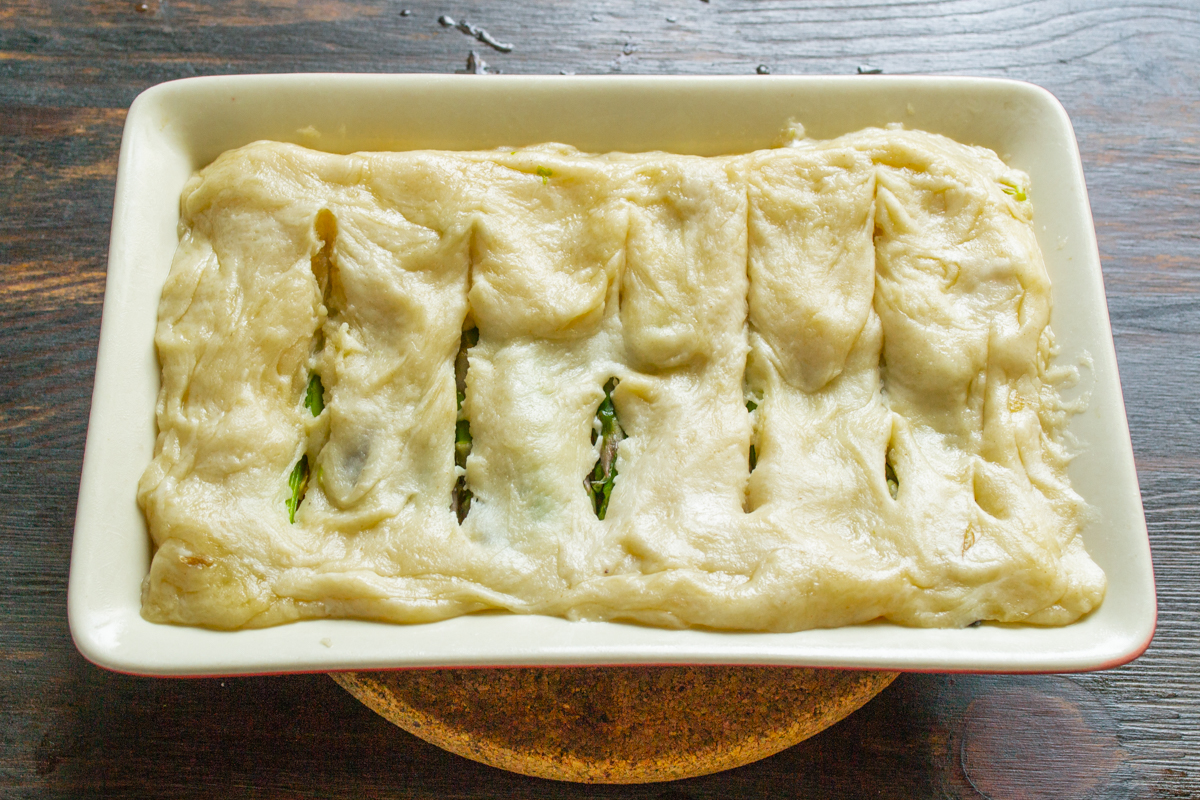
Cut several small slits across the surface so excess moisture can escape and the crust doesn't puff up.
Preheat your oven to 180°C (350°F). Place the pie into the hot oven and bake for 30–35 minutes.
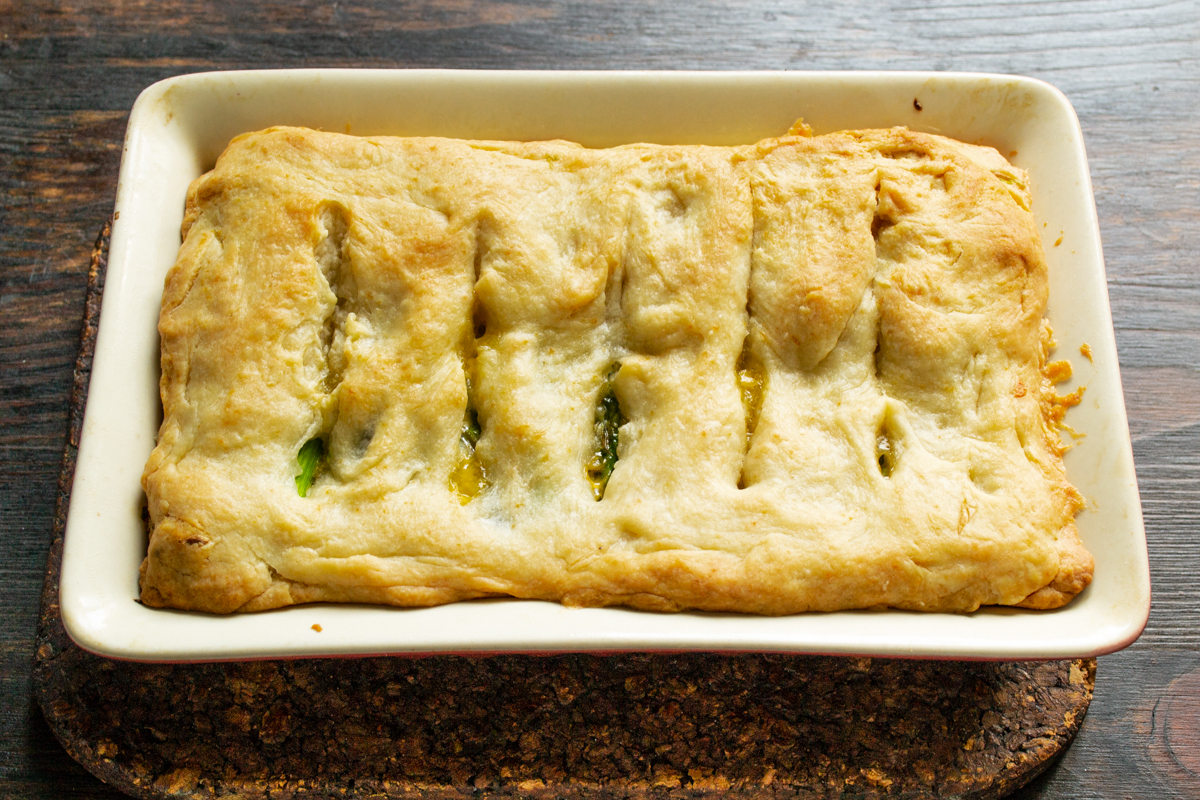
After 30 minutes, the pie is nearly done and has taken on a light golden hue.
Do not turn off the oven! Remove the pie, scatter the reserved grated cheese along with the black and white sesame seeds over the top, and return it to the oven.
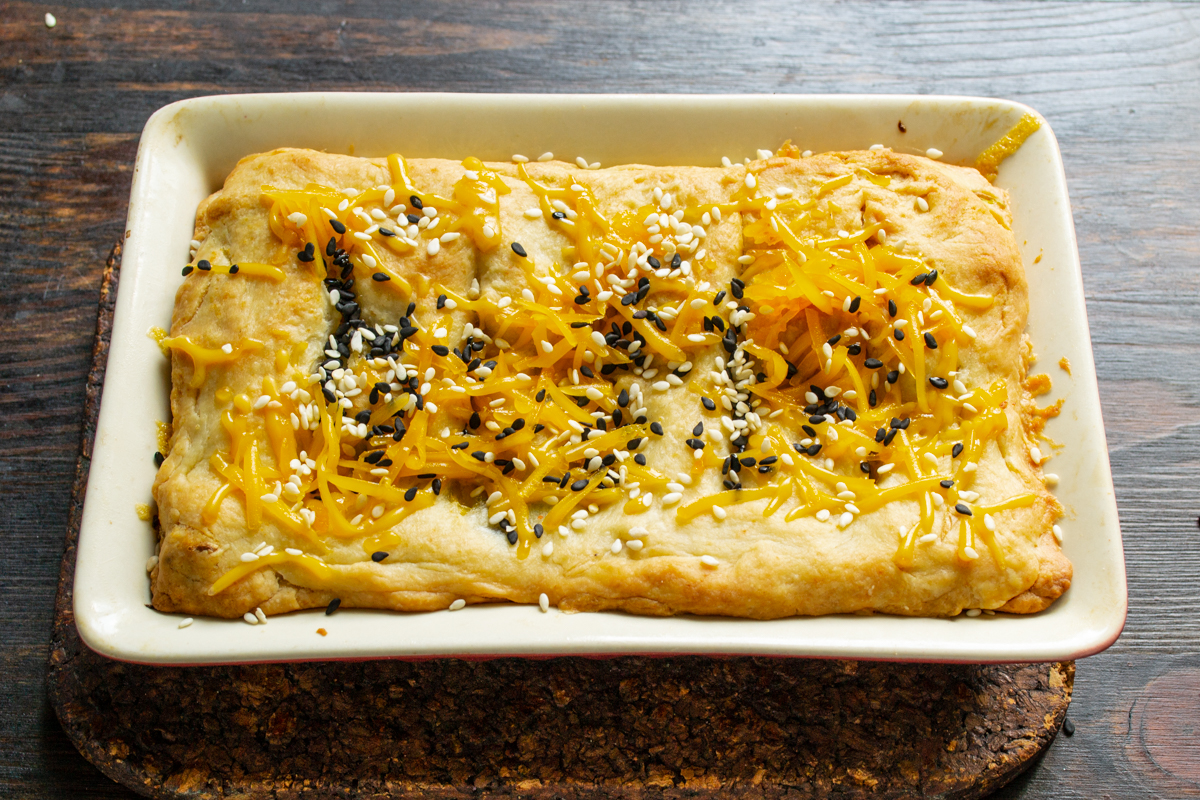
Sprinkle the surface with the reserved cheese and a mix of black and white sesame seeds for aroma and crunch.
Bake for another 7–10 minutes until the cheese melts into an inviting golden crust. Total baking time depends on the size of your baking dish and the quirks of your specific oven. It may vary slightly from the recipe, so keep an eye on the pie—its aroma and golden color are your best guides.
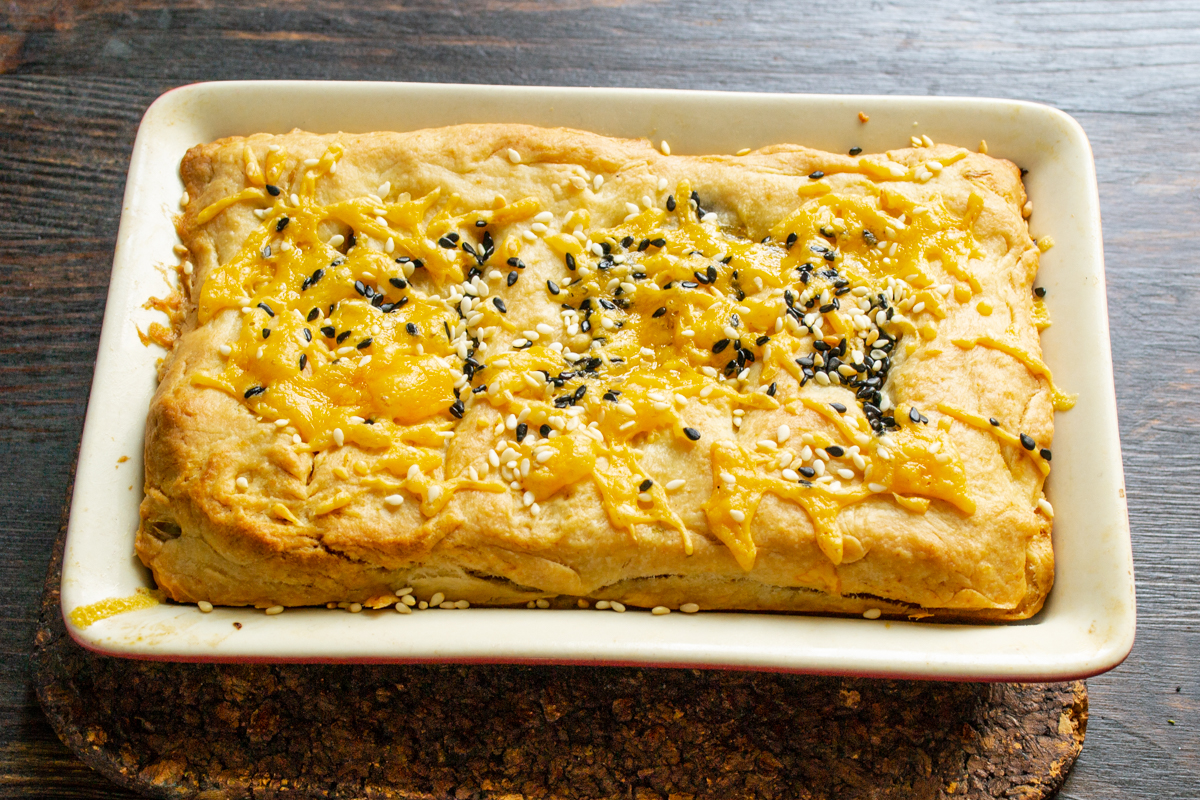
After the final bake, the cheese melts into an appetizing golden crust.
Transfer the finished asparagus and cheese pie to a wire rack to cool. It is delicious at any temperature—hot, warm, or cold, it disappears down to the last crumb. Enjoy!
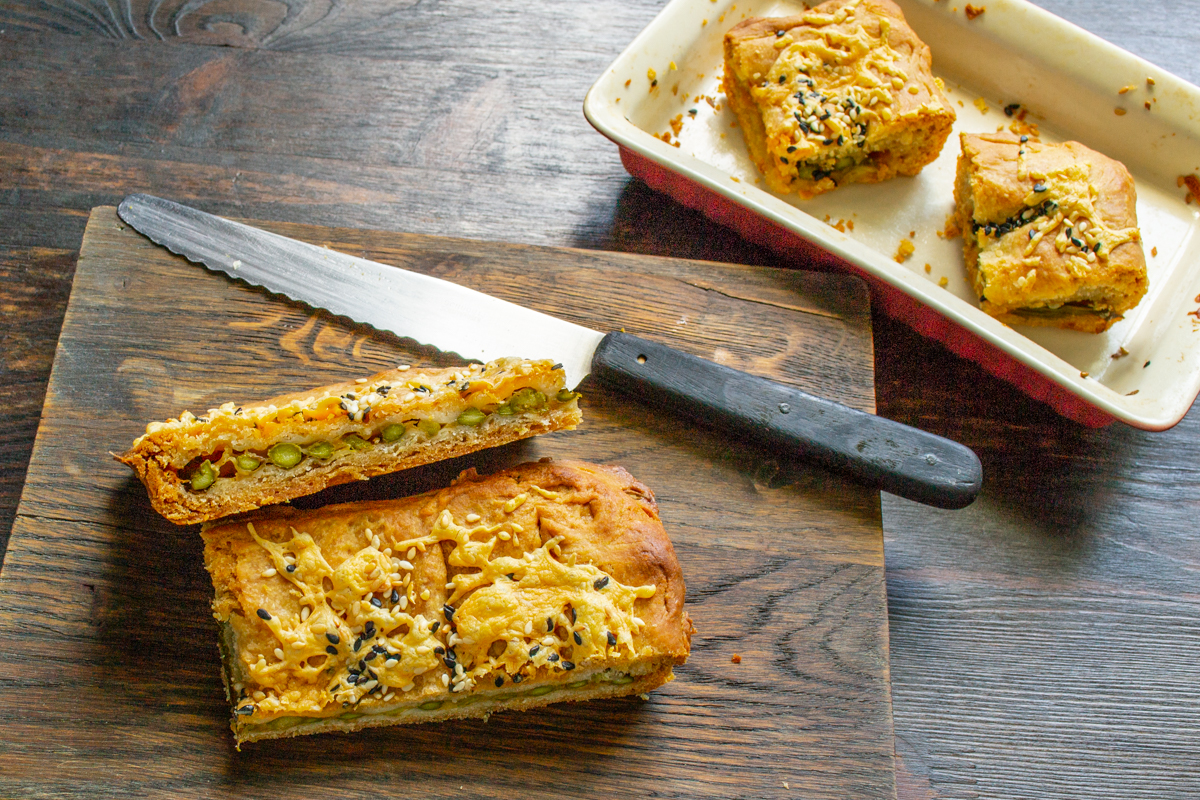
The pie tastes equally wonderful hot or cold. Just look at how neatly the asparagus spears line up inside.
If you are short on time, you can easily make this asparagus and cheese pie using store-bought puff pastry. Simply thaw the pastry first, roll it out lightly, and brush the top with a beaten egg before baking for a glossy, golden finish. If you want to play with flavors and textures, try tucking a few sun-dried tomatoes into the filling or adding a pinch of freshly grated nutmeg to highlight the creamy notes of the cheese.
Serve the pie slightly cooled, once the melted cheese layer has had a moment to set. It keeps wonderfully until the next day: just reheat slices in the oven or in a dry skillet covered with a lid to bring back the pastry's crispness. Pair it with a crisp green salad or a cup of light vegetable broth.
0 comments