
We are making a fluffy, perfectly separated beef and dried apricot plov—a dish that unites centuries-old traditions with true home comfort. The word "plov" originates from the Turkish "pilav," which translates to a thick rice porridge. However, our version will be a fluffy masterpiece where every grain of rice stands alone. There are over two hundred official varieties of this dish, but pairing beef with dried apricots gives it a special elegance, typical of Central Asian festive tables. The sweet notes of the dried fruit perfectly balance the heat of the red pepper and the earthy aroma of cumin (zira), creating a unique flavor profile you won't easily forget.
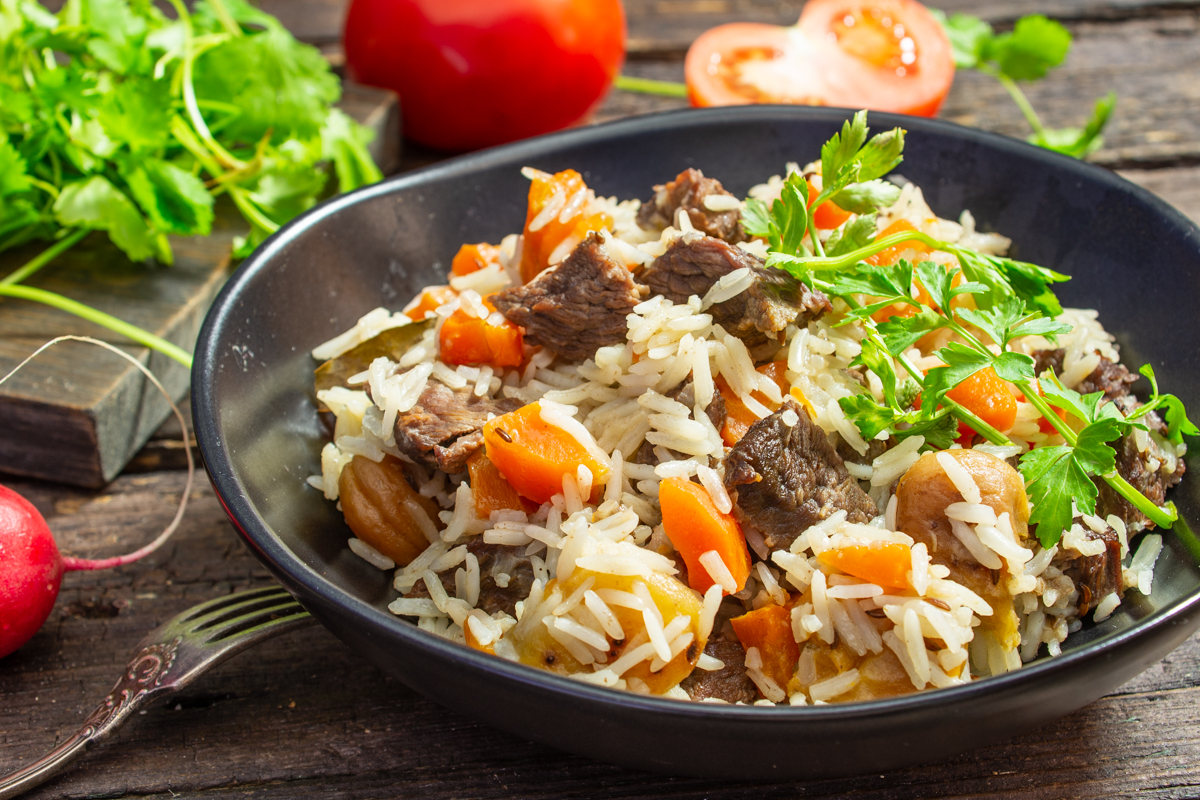
Aromatic and fluffy beef and dried apricot plov is the perfect combination of tender meat and subtle fruity sweetness.
Ingredients
- 600 g (1.3 lbs) lean beef
- 200 g (1 cup) long-grain white rice (Jasmine or Basmati)
- 80 g (3 oz) dried apricots
- 1 onion
- 1 carrot
- 2 garlic cloves
- 1 tsp cumin (zira)
- Ground red pepper
- 30 g (2 tbsp) vegetable oil
- Bay leaves, salt
How to Make Beef and Dried Apricot Plov
Slice lean beef into 2-3 cm (1-inch) pieces against the grain. Pour refined, neutral vegetable oil into a heavy-bottomed pot, Dutch oven, or traditional kazan. Heat the oil over medium heat for 5 minutes. Carefully drop the diced meat into the hot oil. Sear over high heat for 10 minutes. Do not stir immediately—let the beef develop a nice crust first.
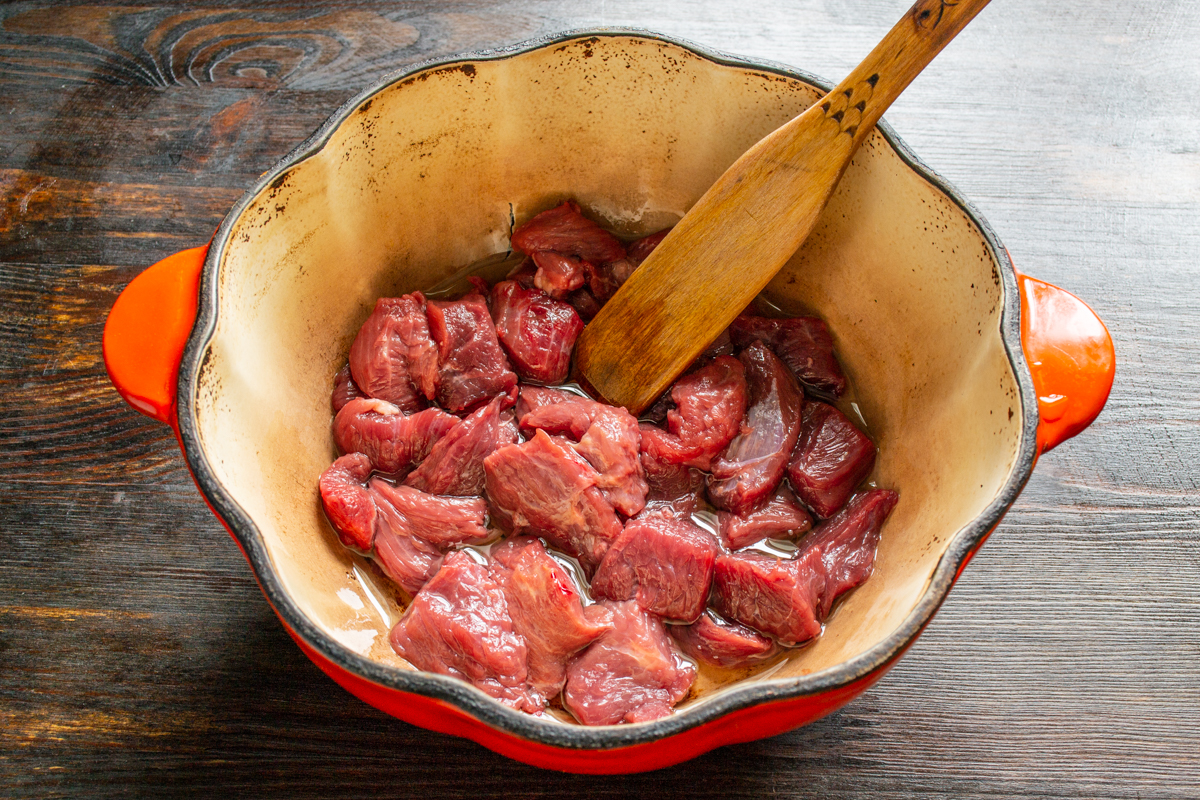
Sear the beef over high heat until a crust forms, sealing the juices inside the meat.
If your pot is on the smaller side, remove the seared meat and sauté the vegetables in the same oil. If you have enough space, leave the meat in the pot. Finely dice the onion and mince the garlic. Push the seared beef to one side of the pot and add the onion and garlic to the empty space. Sauté the onions for 5 minutes.
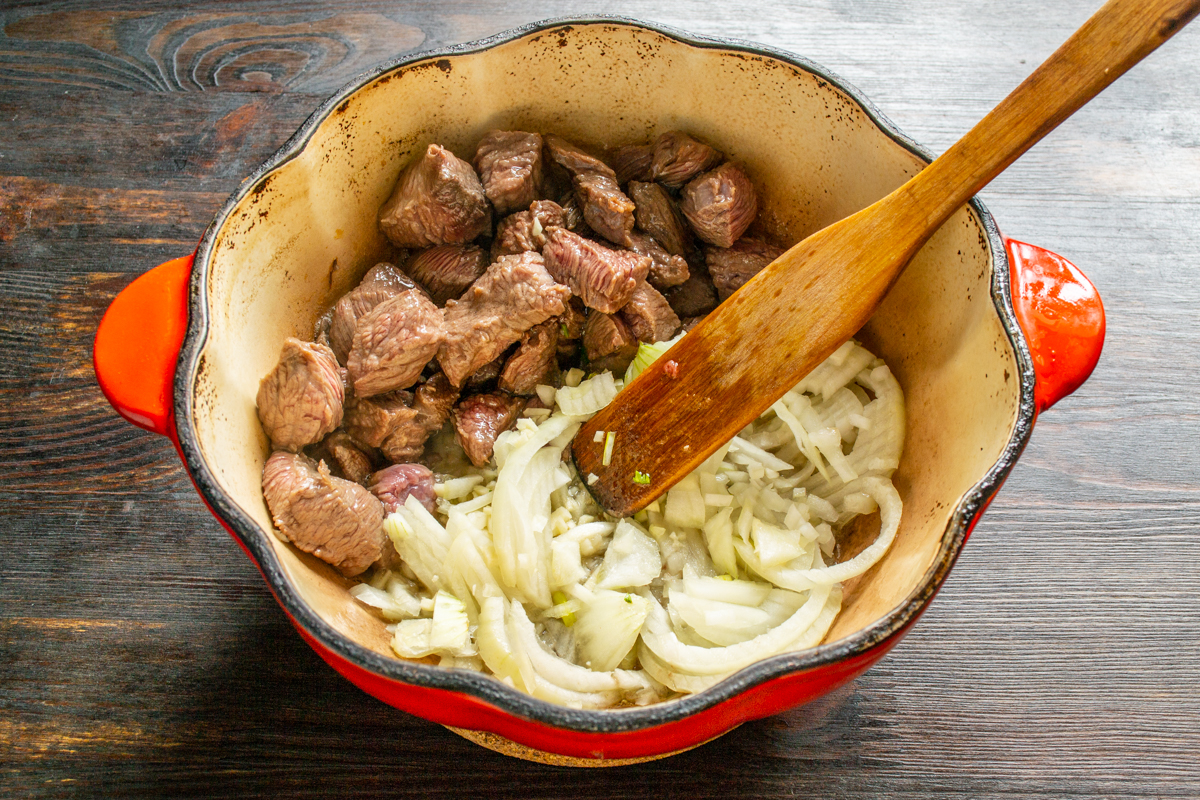
Onion and garlic create the flavor foundation. Sauté them alongside the meat until the vegetables soften.
Cut the carrots into 1 cm (1/2-inch) cubes. Push the onions toward the meat and add the diced carrots to the cleared space. Sauté for 5 minutes. Stir the vegetables and meat together. Sprinkle with cumin (zira), ground red pepper to taste, and a few bay leaves. Sauté everything together for a few more minutes to let the spices bloom.
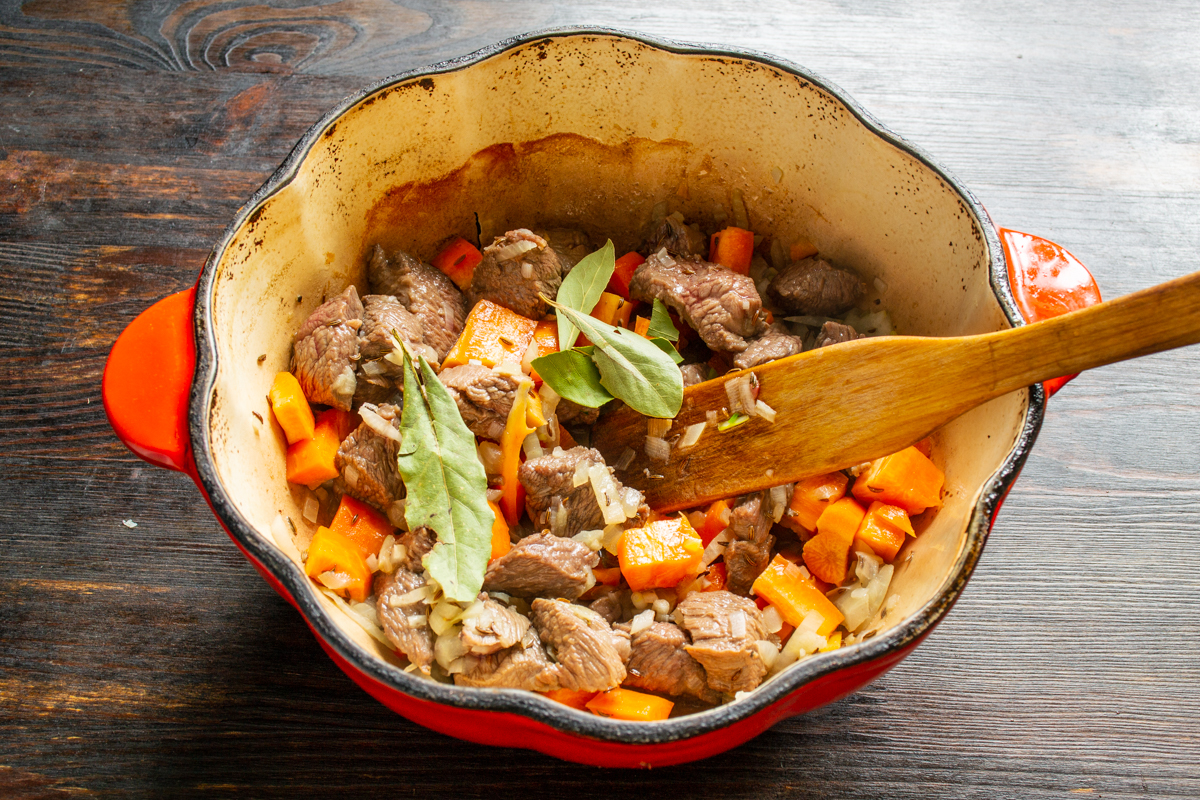
Carrots and traditional cumin give the plov its signature color and unmistakable Eastern aroma.
Pour in enough hot water to submerge the ingredients by about 1.5 cm (1/2 inch). Simmer the beef over low heat for one hour. The exact time depends on the cut and age of the meat; veal or young beef will cook faster. After about 50 minutes, add thoroughly washed dried apricots and cook everything together for the remaining 10 minutes.
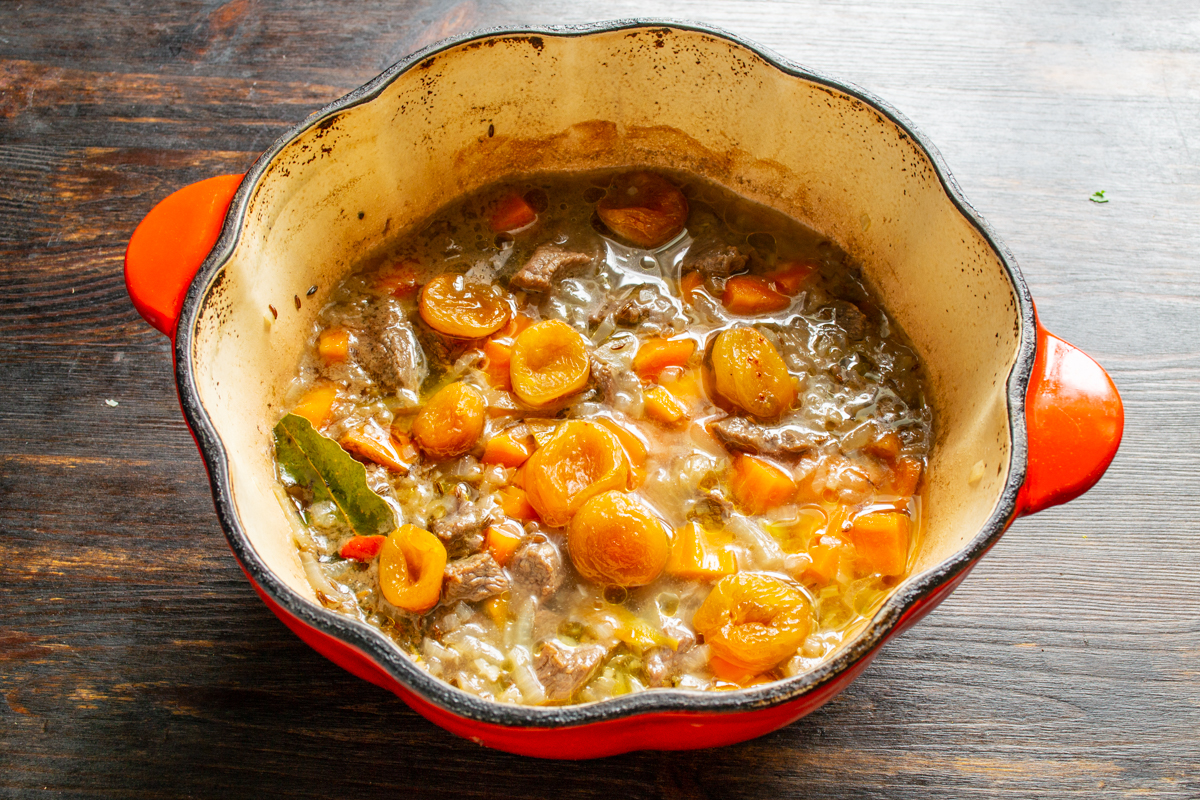
Add the dried apricots at the end of the meat's simmering time so they absorb the juices without turning to mush.
Add the long-grain white rice. This recipe uses basmati. Spread the rice over the meat and vegetables in an even layer. If the water has mostly evaporated, pour in just enough hot water to barely cover the rice. If you add too much water, the plov will turn out mushy instead of light and fluffy.
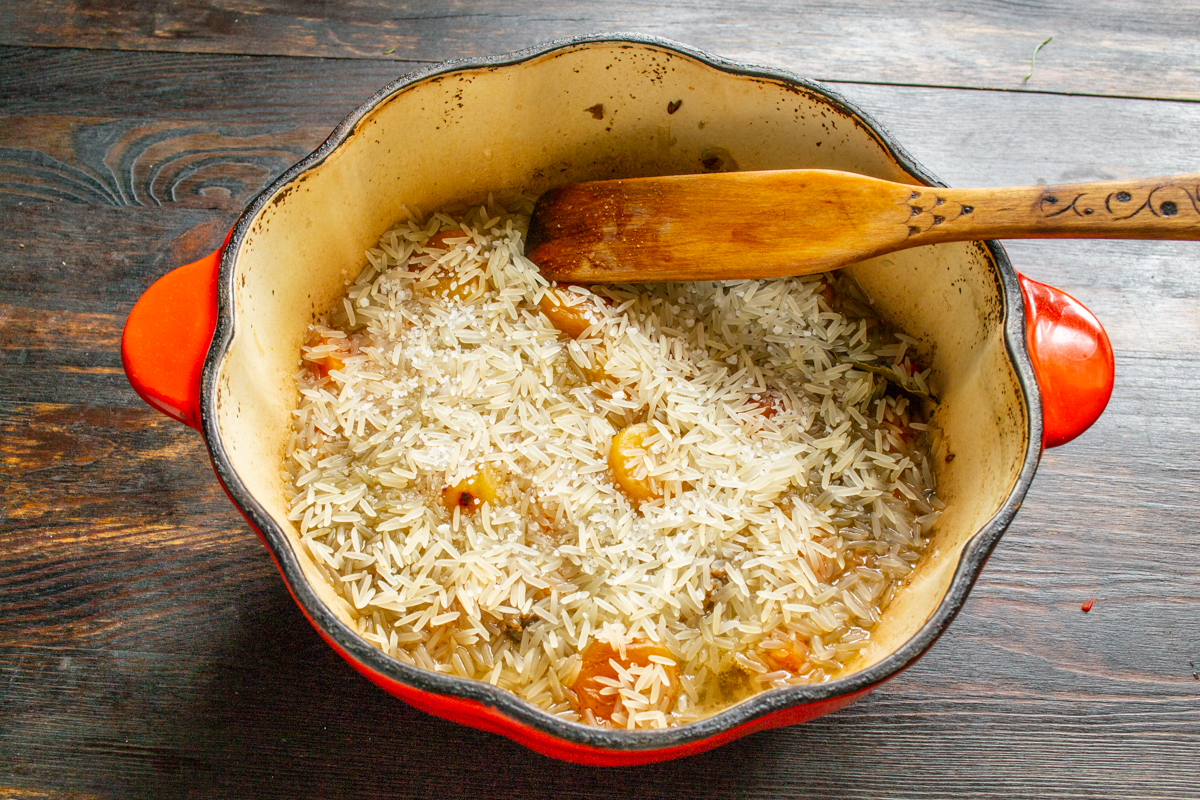
Use Basmati rice for maximum fluffiness. Distribute it evenly over the meat.
Bring to a rapid boil. At this stage, season the plov with salt to taste. Cover the pot with a tight-fitting lid and cook for 15 minutes. Turn off the heat and let the plov steam and rest for about 30 minutes, wrapping the pot in a thick towel or blanket to keep it warm.
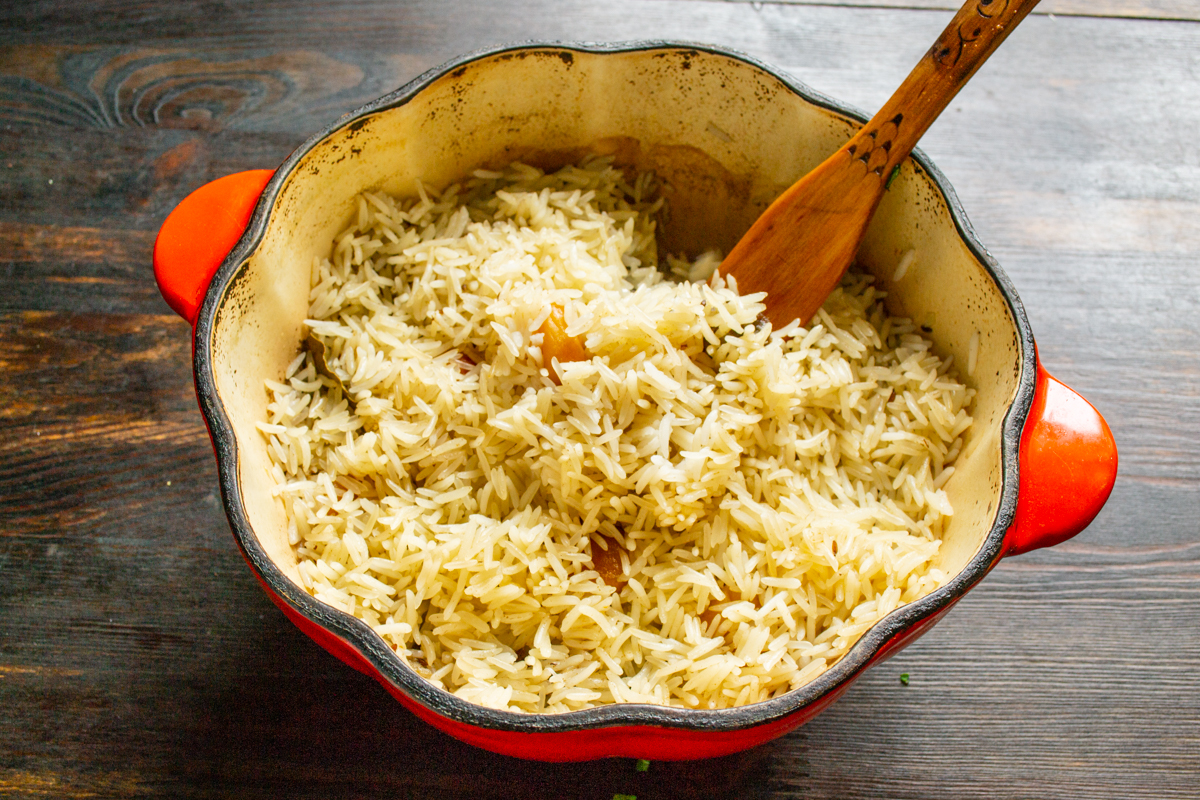
Once the plov has rested under the lid, the rice absorbs all the moisture and becomes incredibly aromatic.
Gently fluff and stir the plov, mound it onto a platter, and garnish with fresh herbs.
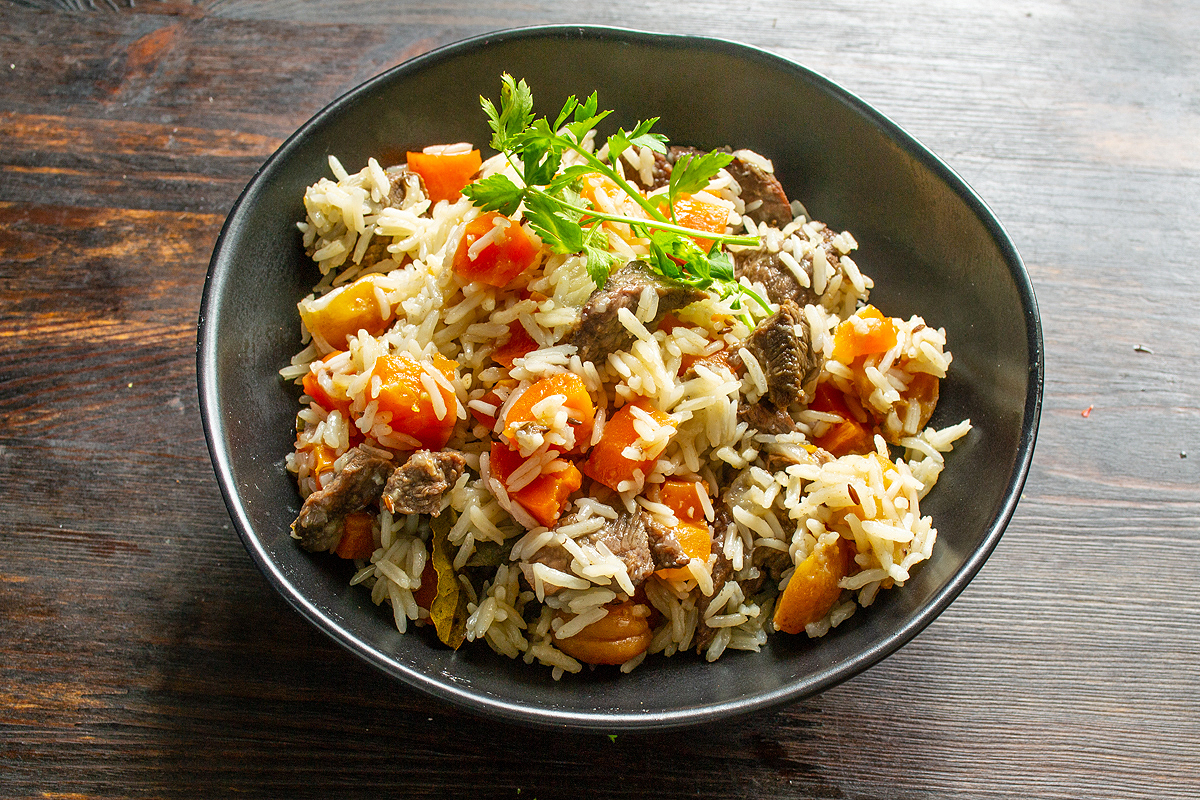
Mound the plov on a plate, ensuring the pieces of meat and dried apricots sit on top for a beautiful presentation.
Serve the beef and dried apricot plov on a large communal platter, mounding the golden rice in the center and arranging the juiciest pieces of meat and bright apricots on top. The perfect accompaniment to this meal is a traditional "achik-chuchuk" salad made of ripe tomatoes and thinly sliced red onions; its crisp freshness beautifully cuts through the rich flavor of the meat. If you want to add even more color, sprinkle the dish with pomegranate seeds or finely chopped cilantro just before serving. If you have any plov left over after dinner, don't worry—it becomes even more aromatic the next day. Store it in the refrigerator in an airtight container. When reheating, add a couple of tablespoons of water and warm it over low heat with the lid on to bring back the original softness of the rice. Remember, the main secret of this dish lies in the "resting" phase: do not rush to open the lid right after cooking. Let the rice absorb all the savory juices and aromas of the zirvak (the rich meat and vegetable broth base), and the result will be truly royal.
0 comments