
This delicate and spiced chicken liver pâté with powdered milk is the perfect foundation for a satisfying snack or an elegant breakfast. Chicken liver has long been prized by chefs for its tender texture and high nutritional value, and when paired with Herbes de Provence, it takes on a truly Mediterranean flair. Using powdered milk isn't just a convenient pantry trick; it’s a clever technique to achieve a concentrated creamy finish without adding excess moisture. The aroma of sautéed onions and garlic, alongside a subtle hint of dry red wine, transforms humble offal into a true gastronomic masterpiece that catches the eye with a warm golden hue from a pinch of turmeric.
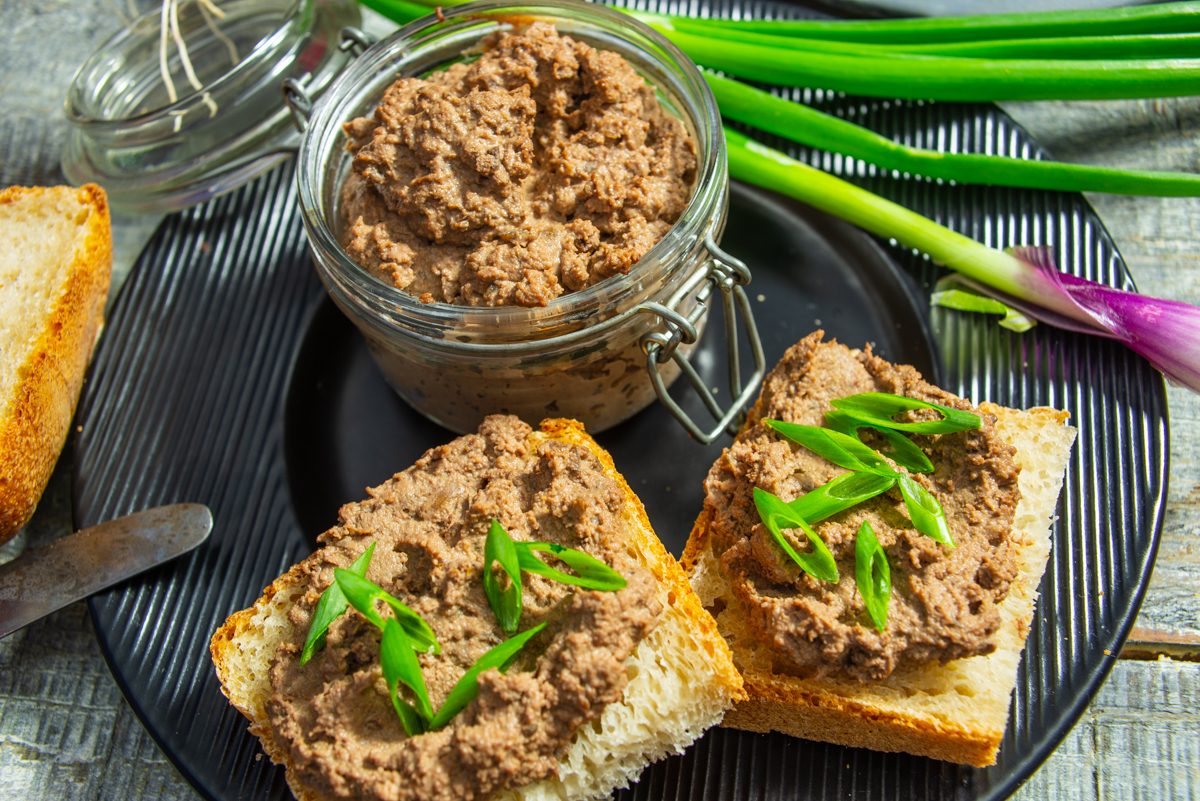
This homemade chicken liver pâté turns out incredibly smooth and aromatic. A perfect addition to fresh bread for breakfast.
Ingredients
- 500 g (1.1 lbs) chicken liver
- 80 g (2.8 oz) onion
- 1 clove garlic
- 100 ml (3.4 fl oz) dry red wine
- 100 g (3.5 oz) unsalted butter
- 30 g (1 oz) powdered milk
- 1 tsp Herbes de Provence blend
- 1/2 tsp ground turmeric
- 25 g (1 tbsp) cooking oil
- Salt to taste
How to Make Chicken Liver Pâté with Powdered Milk
Rinse the chicken livers thoroughly under cold water and trim away any excess fat or connective tissue. Drop the prepared livers into boiling salted water. Simmer for 5 minutes after the water returns to a boil, then transfer to a colander and rinse with warm running water. Let them drain for a few minutes until relatively dry.
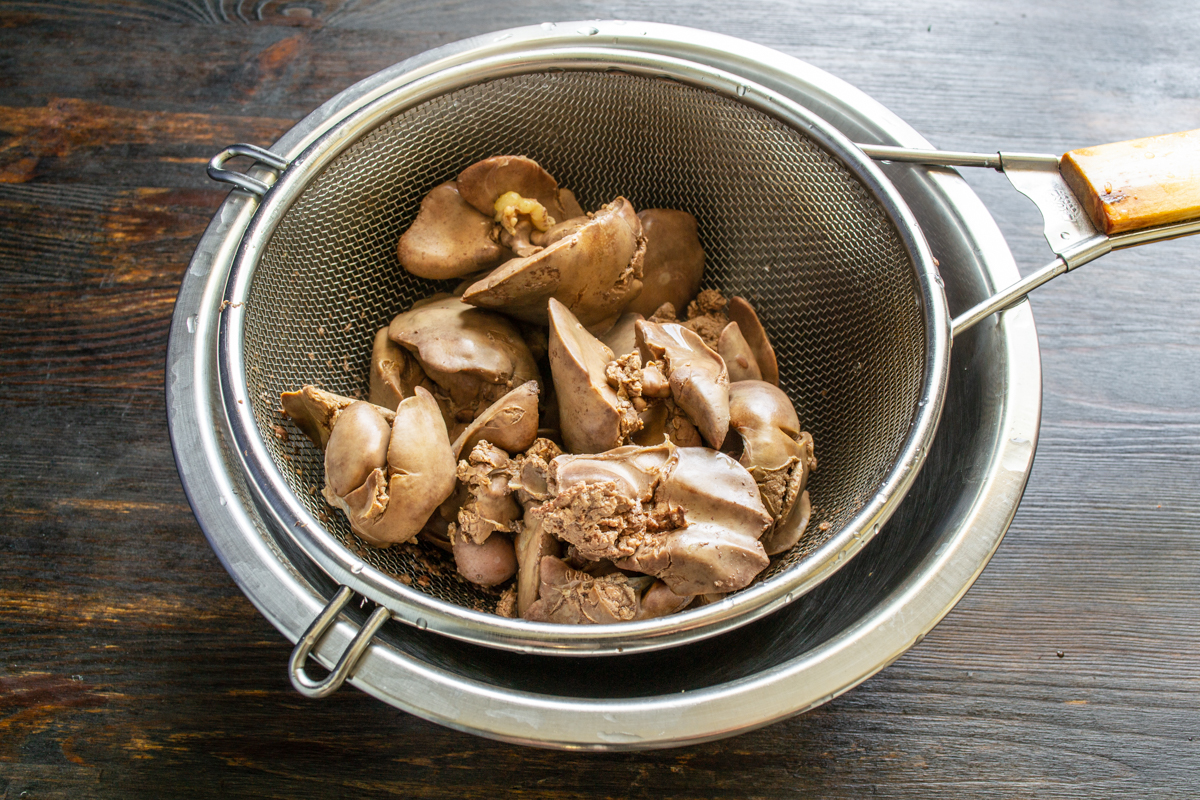
After boiling, be sure to let the livers drain in a colander so excess moisture doesn't ruin the texture of the future pâté.
Finely chop the onion. Heat a splash of cooking oil in a skillet, add the onion, and toss in a minced garlic clove. Sauté for 5 minutes. Add the blanched livers and sprinkle with a blend of Herbes de Provence.
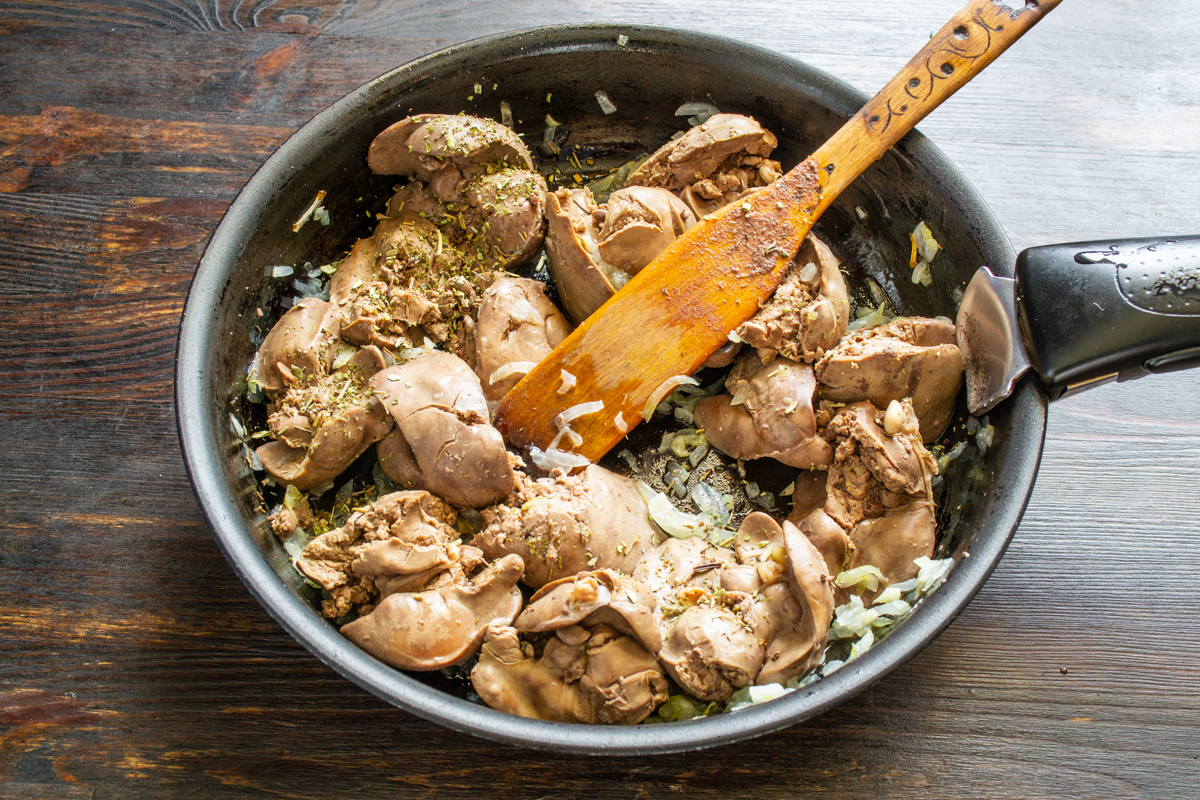
Herbes de Provence give the liver a special aroma. Sauté everything together to meld the flavors.
Pour in the dry red wine.
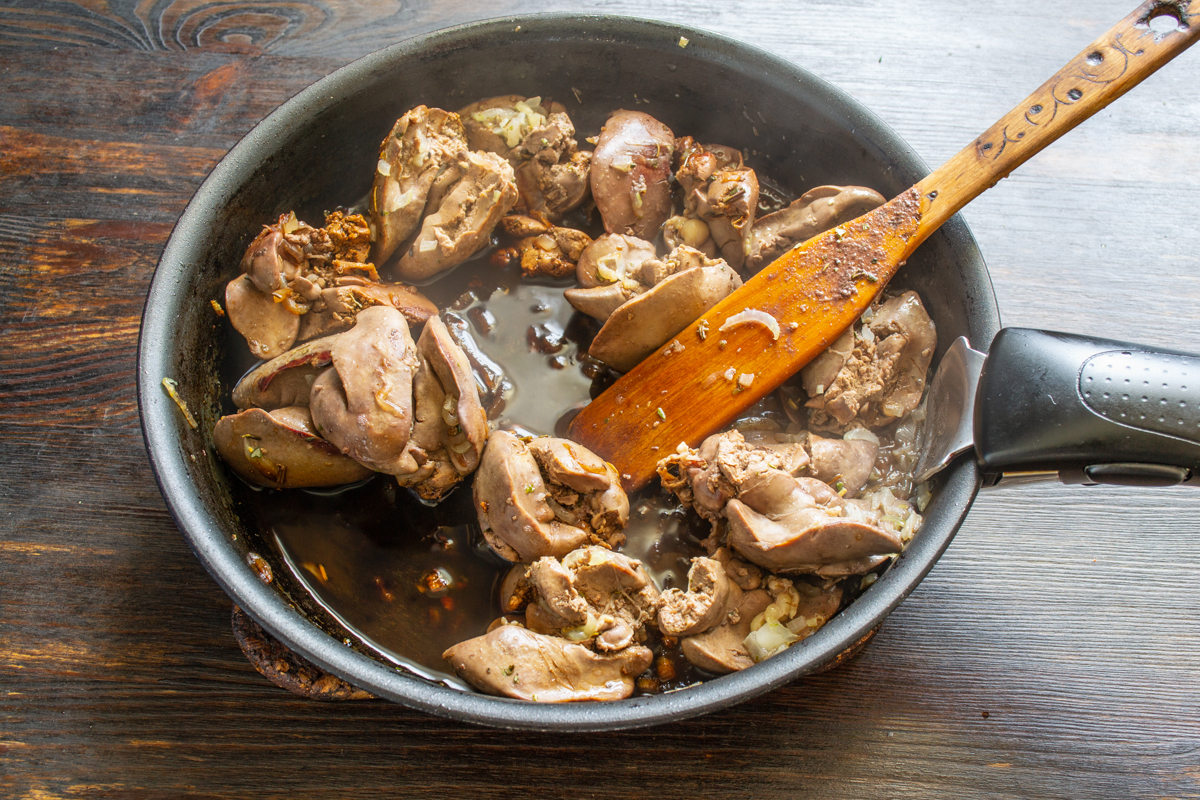
Dry red wine is the secret ingredient that gives the liver pâté a deeper, more refined flavor.
Cook the livers with the wine over high heat until the liquid has completely evaporated. The high heat ensures the wine reduces quickly without overcooking the livers. Turn off the heat and let the mixture cool slightly.
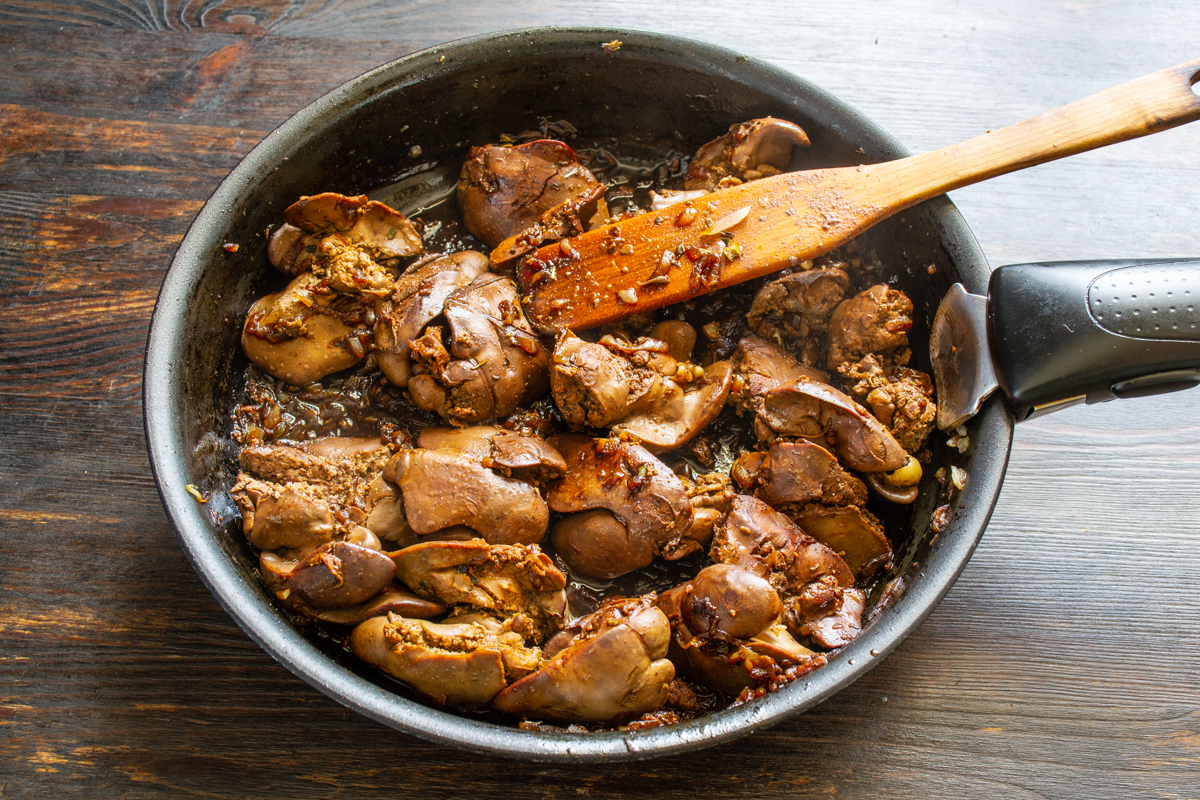
Wait for the wine to evaporate completely over high heat. The liver should become glazed but remain juicy inside.
Pass the cooked livers, onions, and seasonings through a meat grinder fitted with a fine plate. For an exceptionally silky pâté, grind the mixture twice.
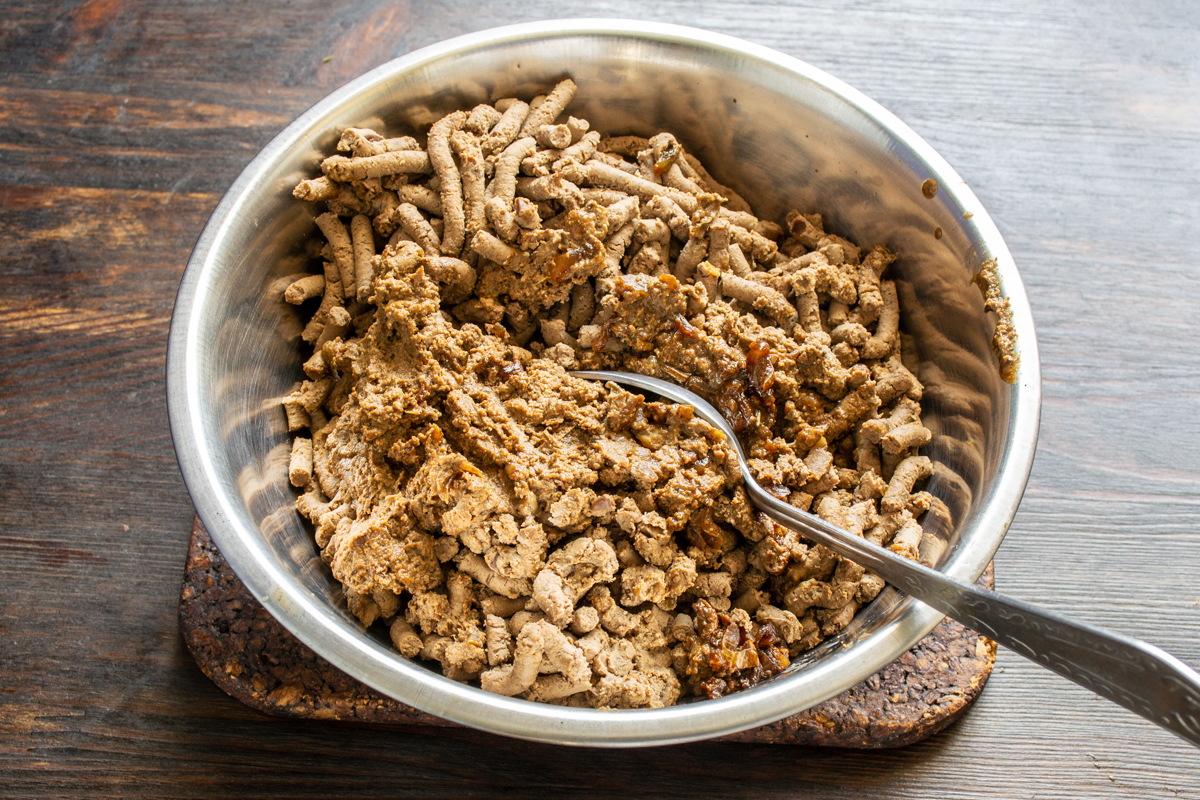
For the most delicate consistency, you can run the mixture through the fine plate of a meat grinder twice.
Add the butter, diced into small cubes. Always use a high-quality butter with at least 82% fat for the best flavor. The ground liver should still be slightly warm so the butter softens effortlessly and blends smoothly into the pâté.
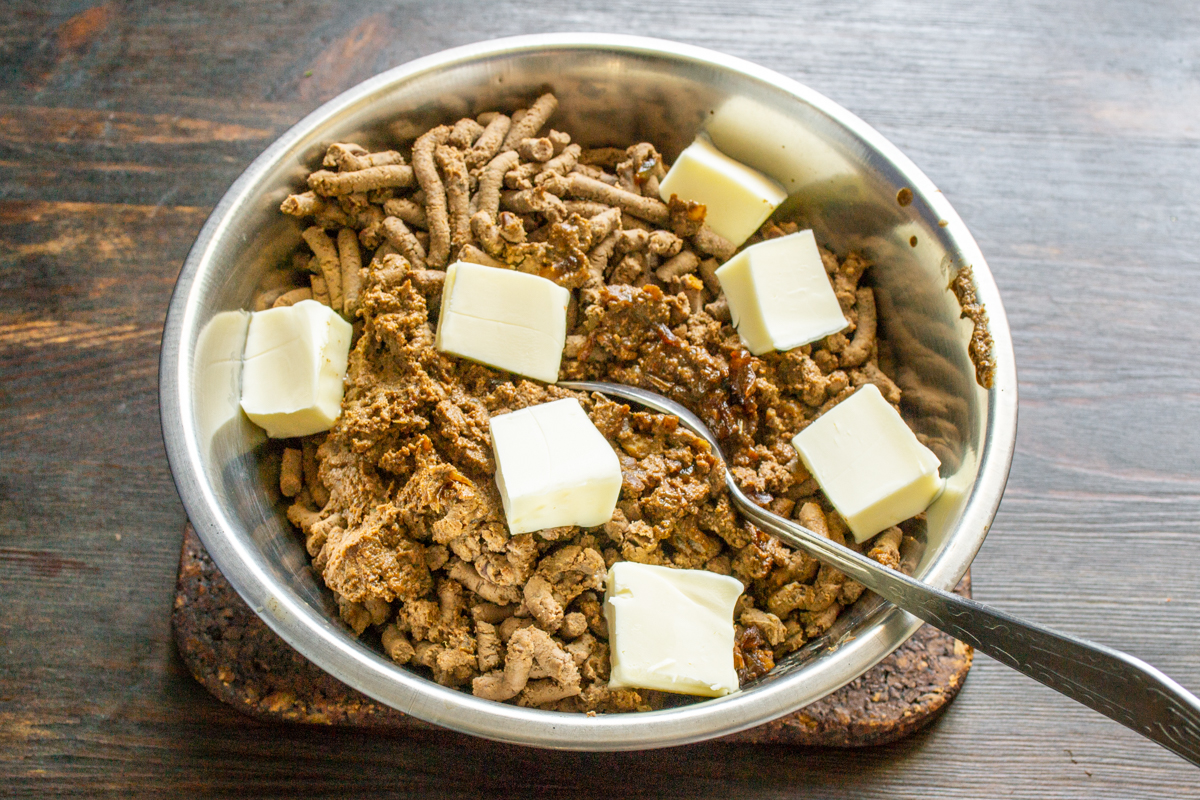
Use high-quality butter with at least 82% fat. It should melt from the warmth of the liver, creating a creamy structure.
Place the powdered milk in a cup. Pour in 150 ml (about 5 oz) of warm boiled water and whisk until no lumps remain.
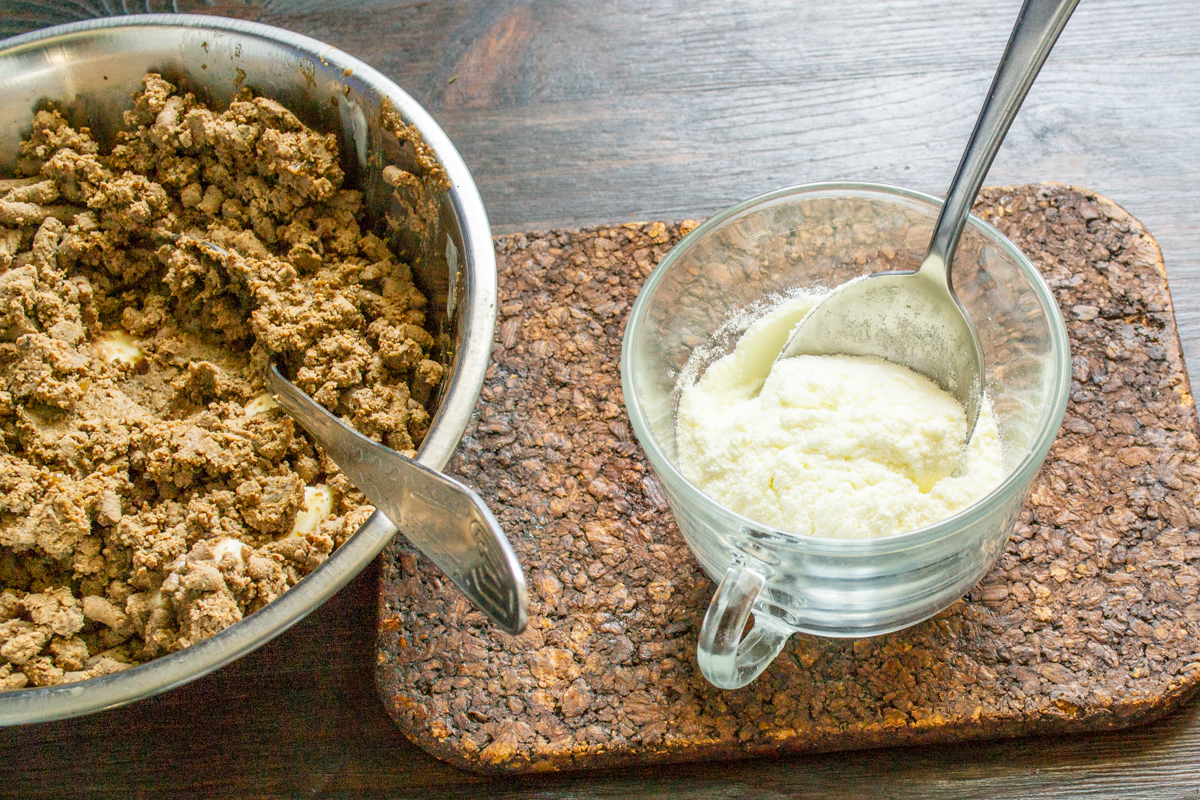
Powdered milk gives the pâté a pleasant creamy taste without the excess liquid typical of regular milk.
Fold the reconstituted milk into the pâté mixture. You can substitute heavy cream for the milk if preferred; just briefly bring it to a boil and let it cool to room temperature first.
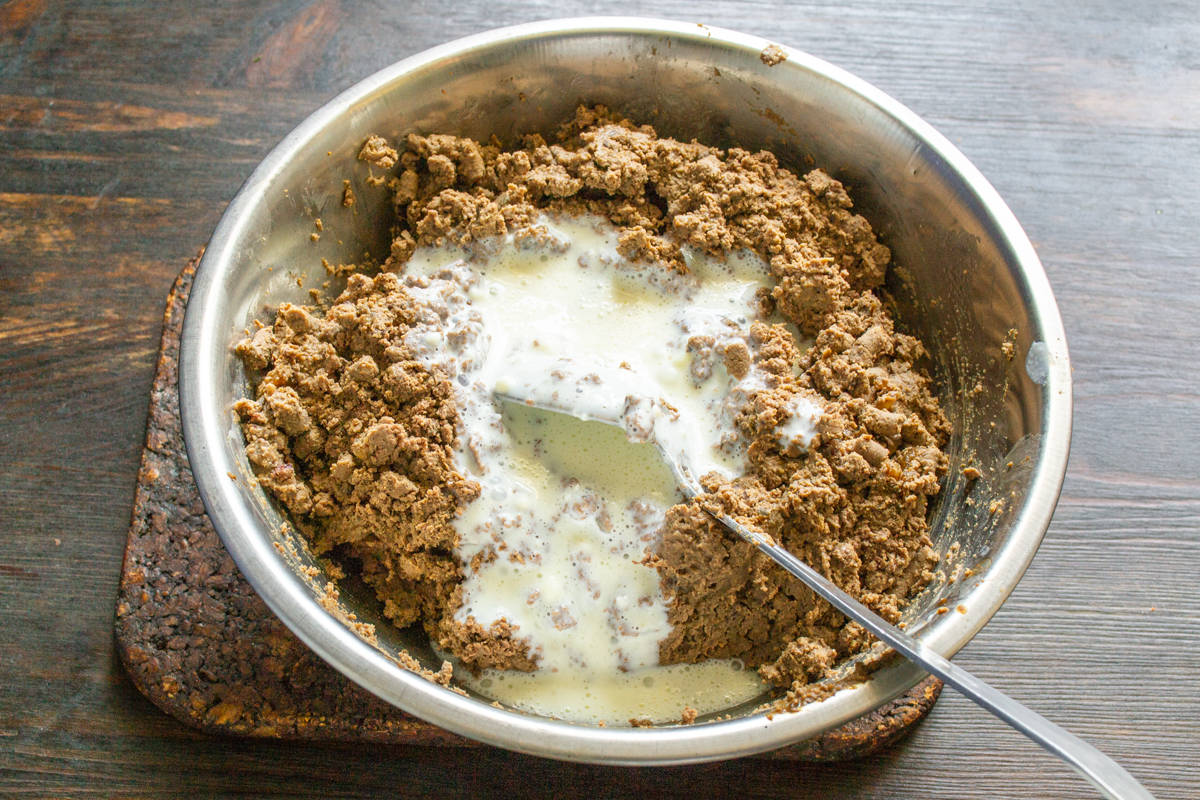
Reconstituted milk or cream helps adjust the thickness of the pâté. Pour it in gradually until you reach the desired consistency.
Sprinkle in the ground turmeric and season with salt to taste. Mix the pâté thoroughly.
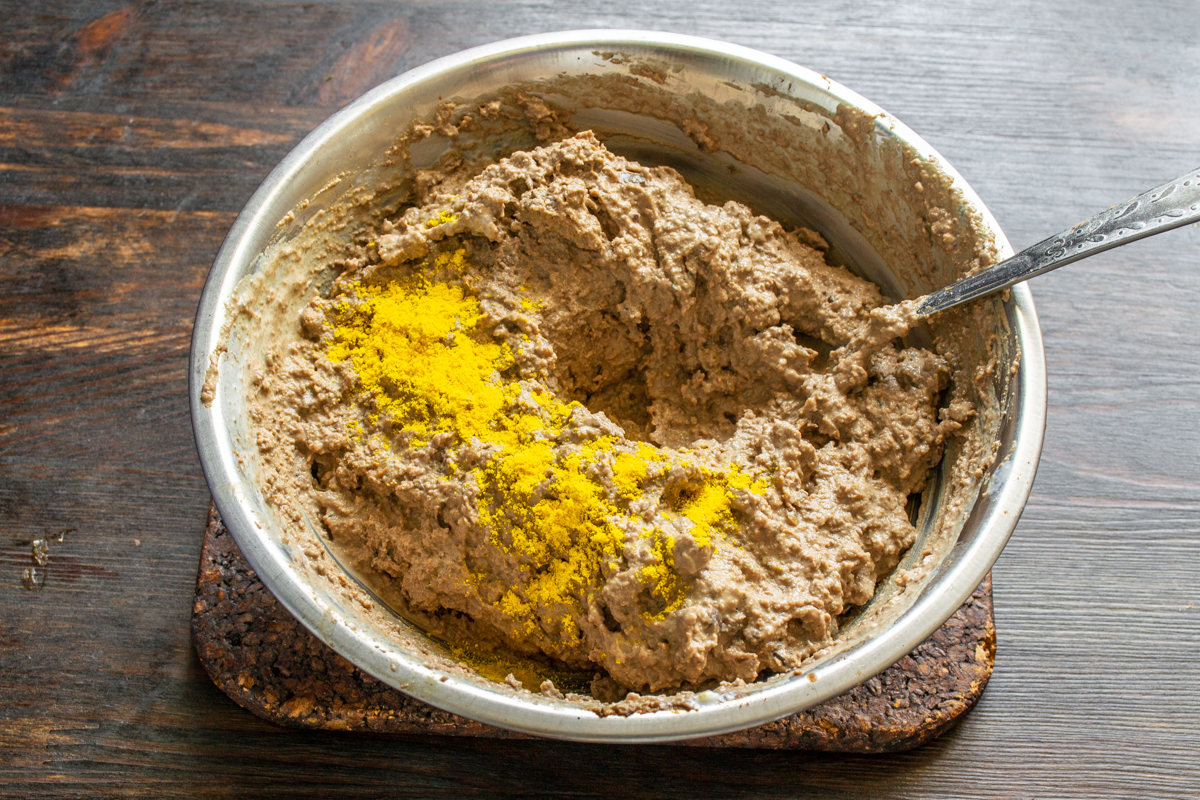
Turmeric is not only healthy, but it also gives the pâté a warm golden hue and a subtle spicy note.
At this stage, you can use an immersion blender to puree the pâté even further. If the mixture seems too thick, try blending in a little more reconstituted powdered milk or cream.
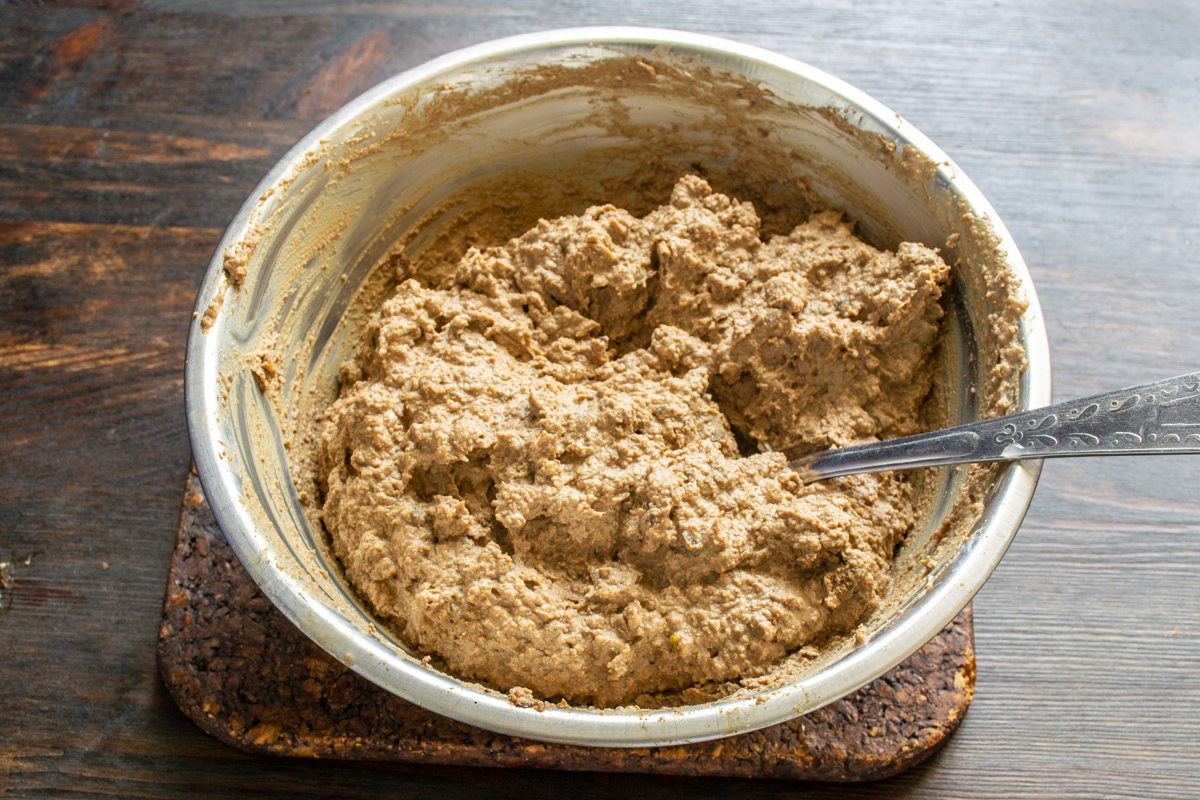
After thorough mixing or blending, the pâté becomes silky smooth and is completely ready to be chilled.
Transfer the finished chicken liver pâté to a dry, airtight glass jar. To prevent a crust from forming, smooth the surface and pour a tablespoon of melted butter over the top. The butter will solidify and create a protective seal.
Let the pâté chill in the refrigerator for a few hours or up to a full day. Spread it over a thick slice of fresh crusty bread, garnish with chopped green onions, and enjoy!
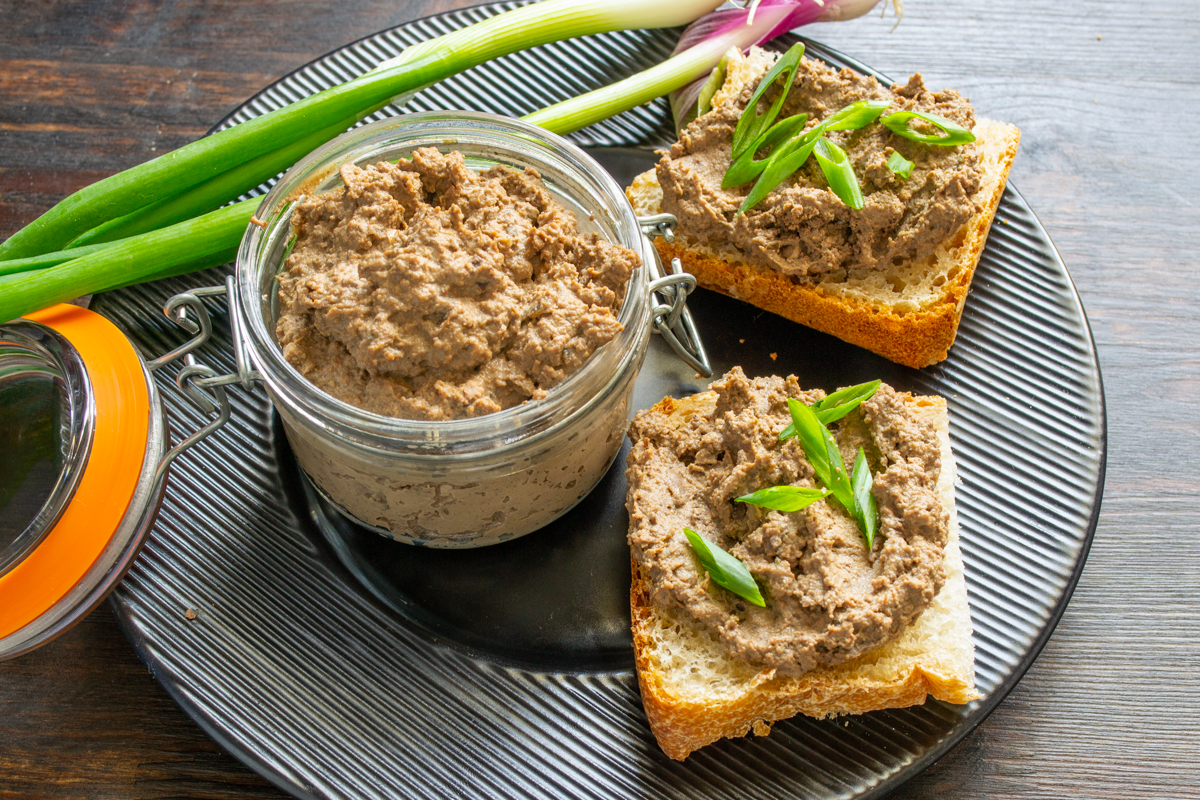
Store the pâté in a glass jar in the refrigerator. Garnish with fresh herbs before serving for a vibrant flavor.
For the perfect presentation, serve this chicken liver pâté with lightly toasted baguette slices or hearty rye bread. You can garnish the spread not only with green onions but also with capers, pomegranate seeds, or a thin layer of lingonberry jam—the sweet and sour notes beautifully balance the rich liver flavor. If you are preparing this for a holiday table, try serving it in small ceramic ramekins, sealing the top with melted aromatic butter and a sprig of fresh thyme.
By the way, you can portion the pâté into small containers and freeze it; it maintains its flavor perfectly in the freezer for up to two months. Kept in the refrigerator under a butter seal, it stays fresh for up to five days. To ensure the texture is always wonderfully creamy, take the pâté out of the fridge 15–20 minutes before serving. The butter seal will soften slightly, and the pâté will be much easier to spread, allowing its rich bouquet of aromas to fully blossom.
0 comments