
Lazdjan sauce (or ladjan) is the soul of Uyghur cuisine—a fiery, aromatic paste often referred to as Eastern adjika (a spicy Caucasian chili paste). Traditionally, this condiment accompanies the famous lagman (a Central Asian pulled noodle dish), but its versatility allows you to pair it with almost anything. The base consists of just three ingredients: hot peppers, garlic, and oil, though every region in Central Asia brings its own touch to the recipe. In this version, we use dried chilies, which develop a deep, smoky aroma when soaked, while the addition of a whole lemon creates the perfect balance between scorching heat and refreshing acidity. Making this sauce is a true ritual, filling the kitchen with spicy aromas that instantly awaken your appetite.
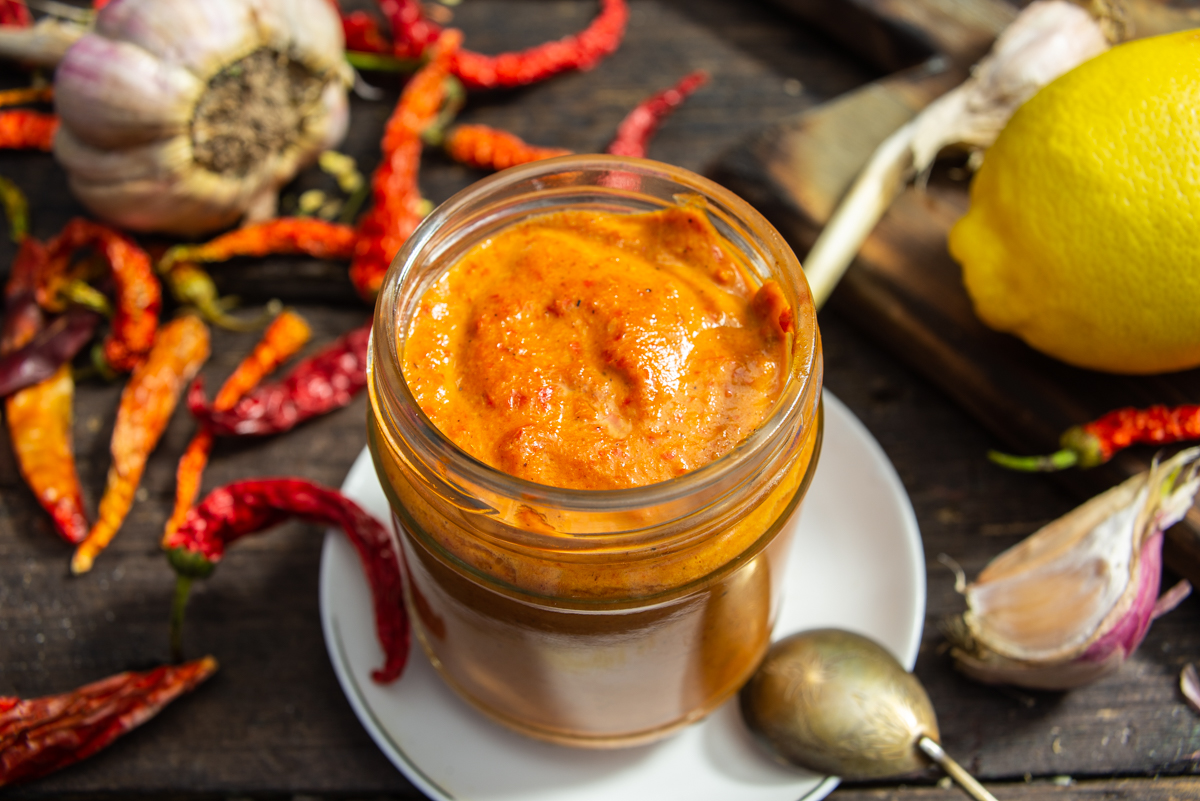
Homemade Lazdjan sauce is the perfect addition to meat dishes and soups. Its bold flavor and heat will captivate any fan of spicy cuisine.
Ingredients
- 1 cup dried chili peppers (whole pods)
- 4-5 garlic cloves
- 1 lemon
- 100 g (about 1/2 cup) vegetable or olive oil
- 1 tbsp sea salt
- Spice blend, to taste (optional)
How to Make Lazdjan Sauce
Remove the seeds from the dried chili peppers: snap off the stems and empty the pods. The seeds easily pour out of the dried pod. The chili variety matters—the higher it is on the Scoville scale, the spicier the seasoning will be. You can adjust the flavor with the amount of vegetable oil and lemon juice, but some varieties are so fiery that no amount of oil can save you. To protect your eyes, nose, and hands from the hot peppers, I highly recommend wearing thin rubber gloves and a medical mask. This simple protection will keep you safe from the irritating capsaicin.
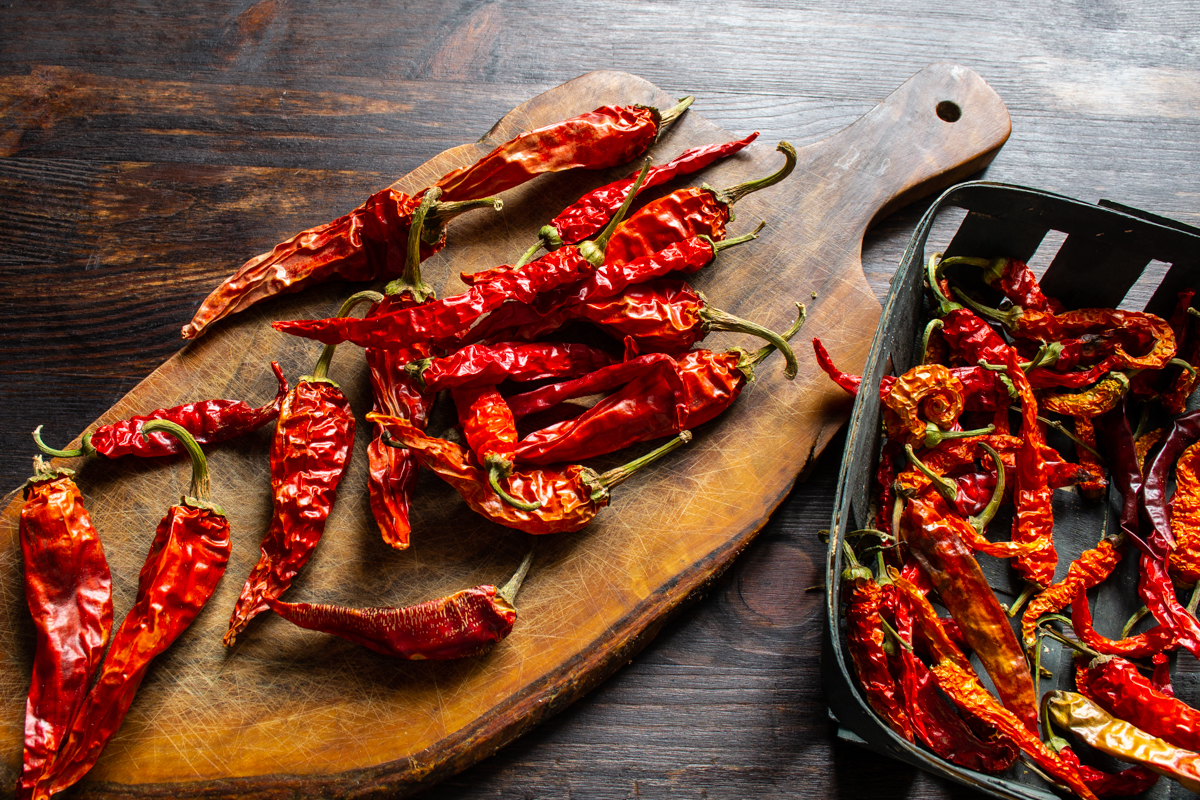
High-quality dried chili is best for Lazdjan. The specific variety will directly determine the final heat of the sauce.
Rinse the cleaned peppers under cold water to wash away any dust and debris. Place the rinsed chilies into a saucepan. Don’t worry if a few seeds remain; the blender will process everything smoothly.
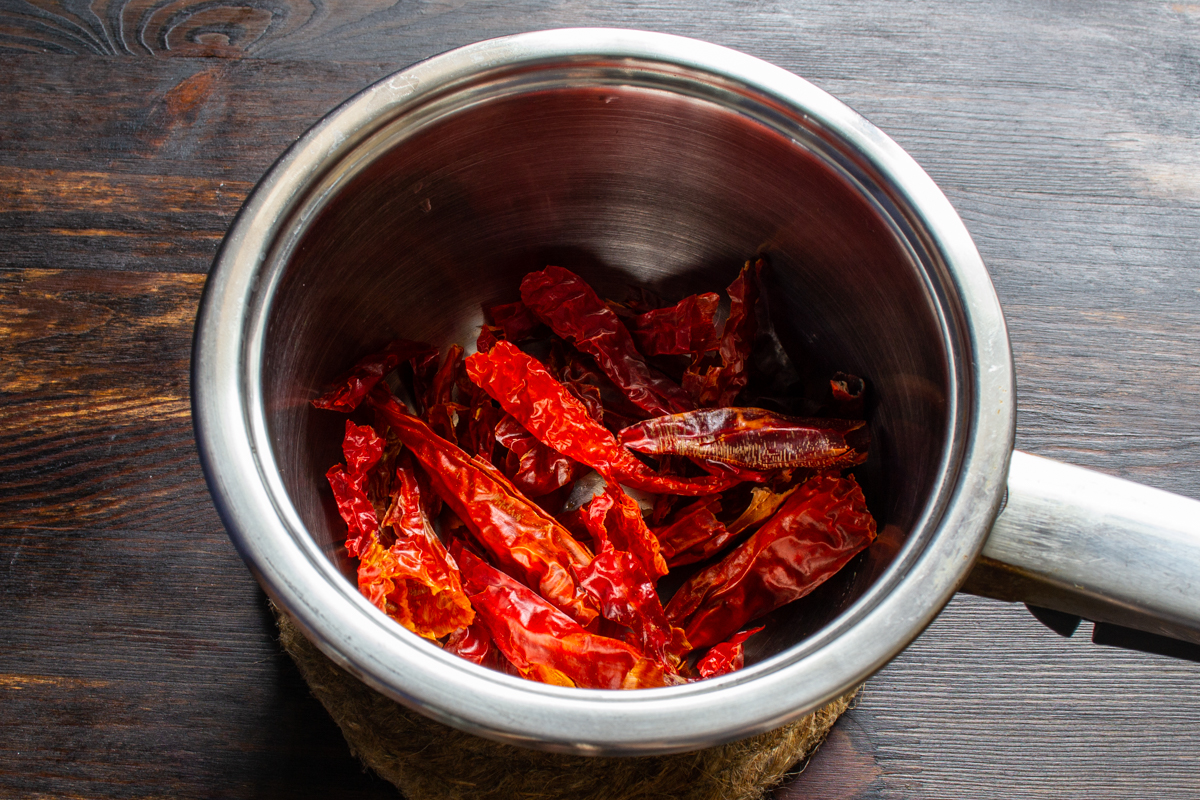
Thoroughly rinse the peppers to remove any dust. Don't worry if a few seeds are left inside—the blender will make the mixture smooth.
Pour boiling water over the peppers. Bring the mixture back to a boil, then remove from heat and let it soak in the hot water for half an hour. During this time, the chilies will plump up, soften, and be ready for further use.
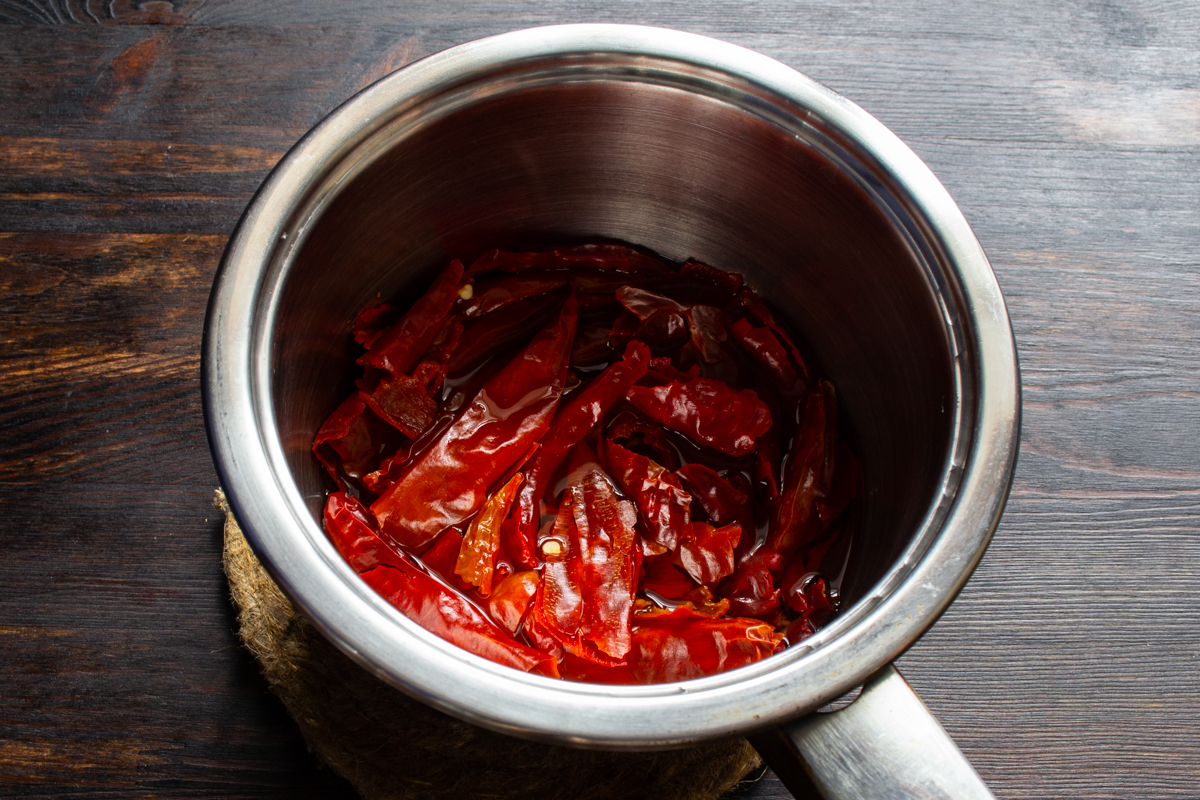
Pour boiling water over the peppers and let them soak for 30 minutes. This is necessary to soften the pods so they blend easily.
Drain the water from the peppers, but reserve a little of the steeping liquid as it might be useful later. Peel the garlic and slice the cloves into thin slices. Add the sliced garlic to the peppers.
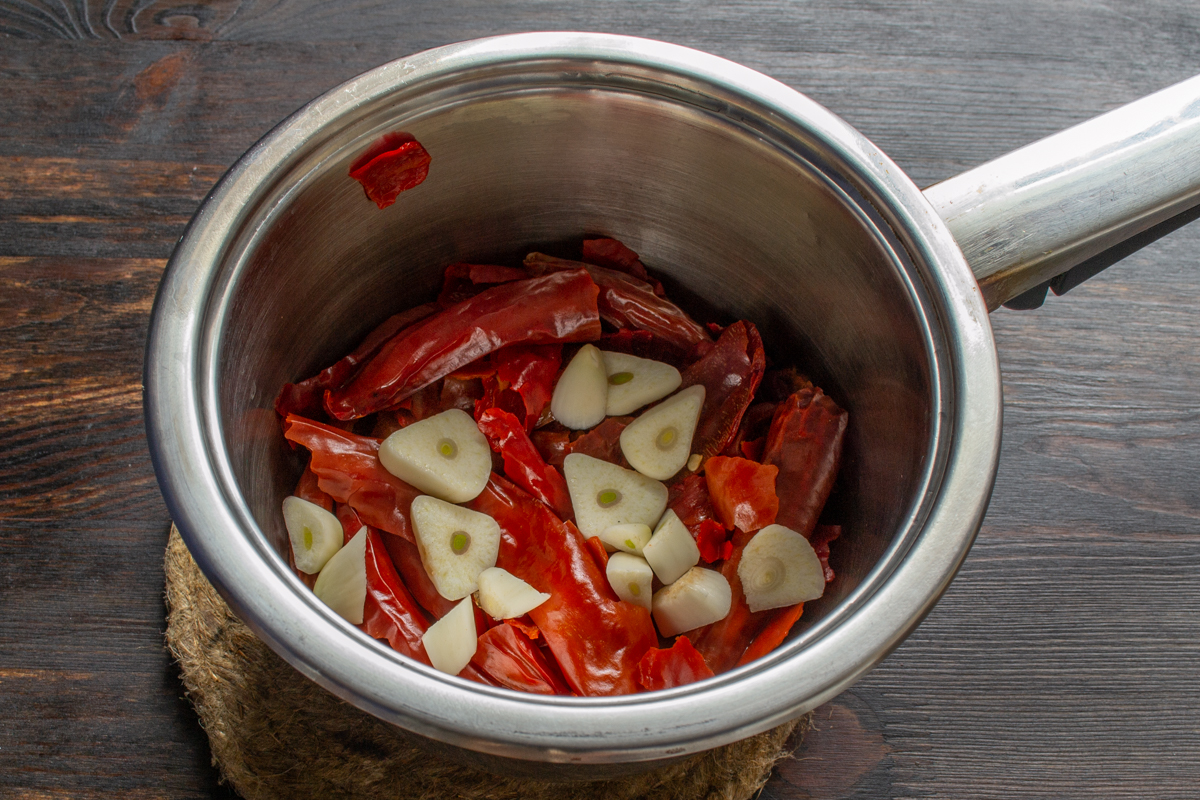
Drain the water, but reserve a little of the steeping liquid just in case. Add fresh garlic to the peppers for aroma.
Peel the lemon and remove the seeds. Add the flesh of one whole small lemon into the saucepan with the peppers and garlic.
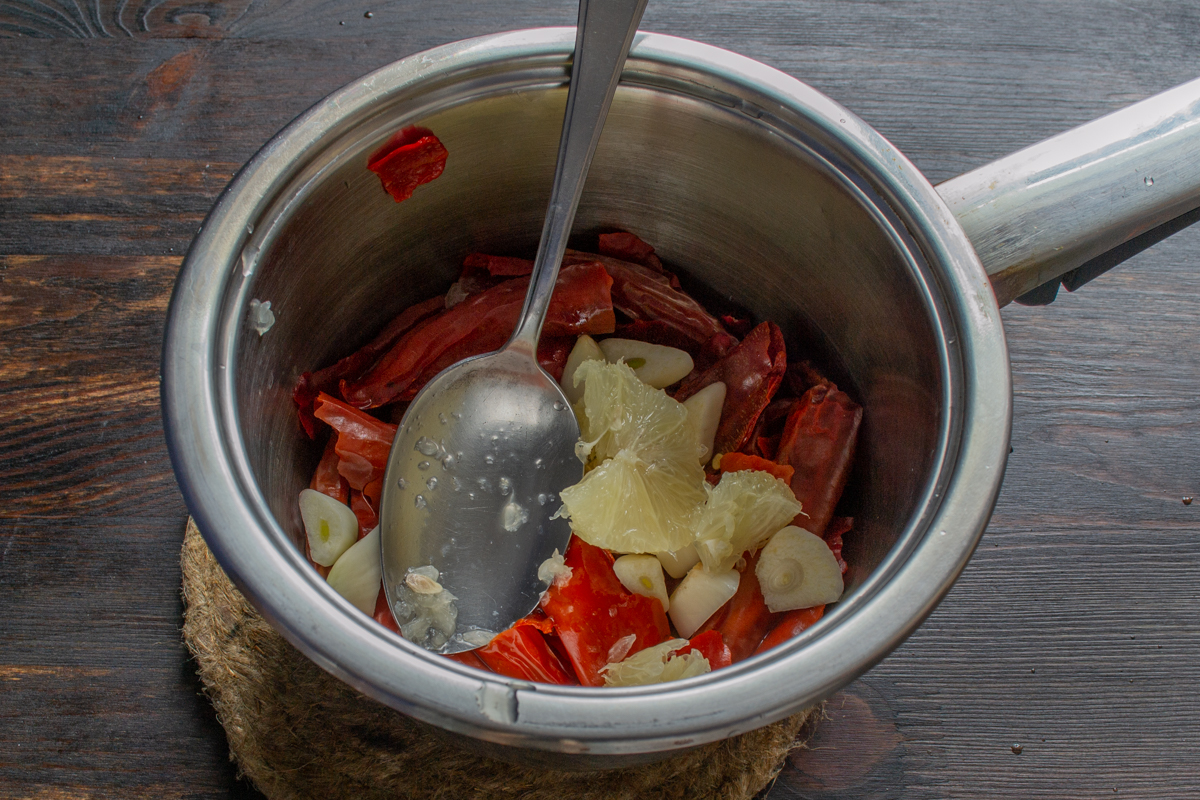
Lemon juice and flesh will help balance the heat and add a pleasant citrus note.
Sprinkle in half a tablespoon of a dry spice blend. In this recipe, I use Indian curry powder, but you can use your favorite spices—for example, Khmeli Suneli (a traditional Georgian spice mix).
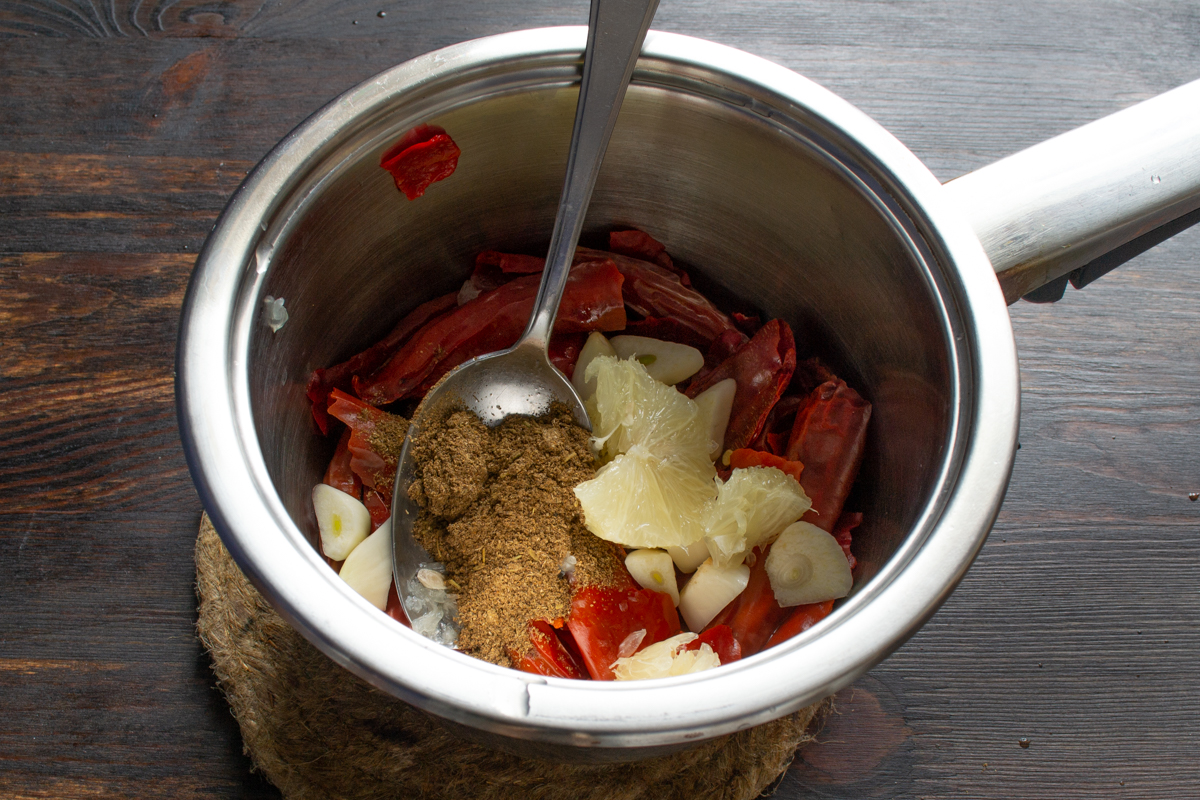
Half a tablespoon of curry powder will give the sauce an Eastern flair. You can also use Khmeli Suneli.
Pour in the vegetable or olive oil. The variety and quality of the oil are up to you. For a budget-friendly option, regular vegetable oil works perfectly; for a more premium touch, use cold-pressed olive oil.
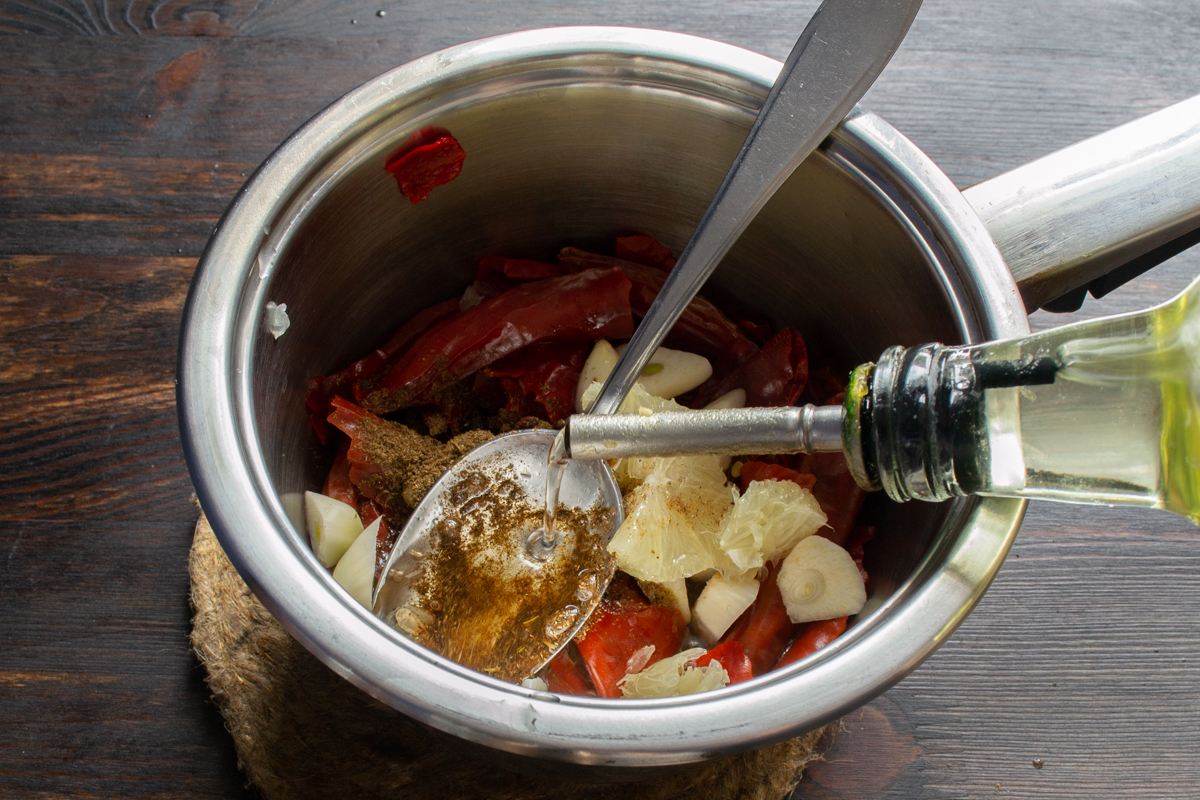
Oil mellows the heat of the peppers. Cold-pressed olive oil will give the flavor a more refined touch.
Add coarse sea salt. I put a lot of salt in Lazdjan because the sauce itself is extremely spicy, and I only add it to dishes a little at a time. Sea salt is an excellent preservative; the seasoning will keep in the fridge for a couple of months without spoiling.
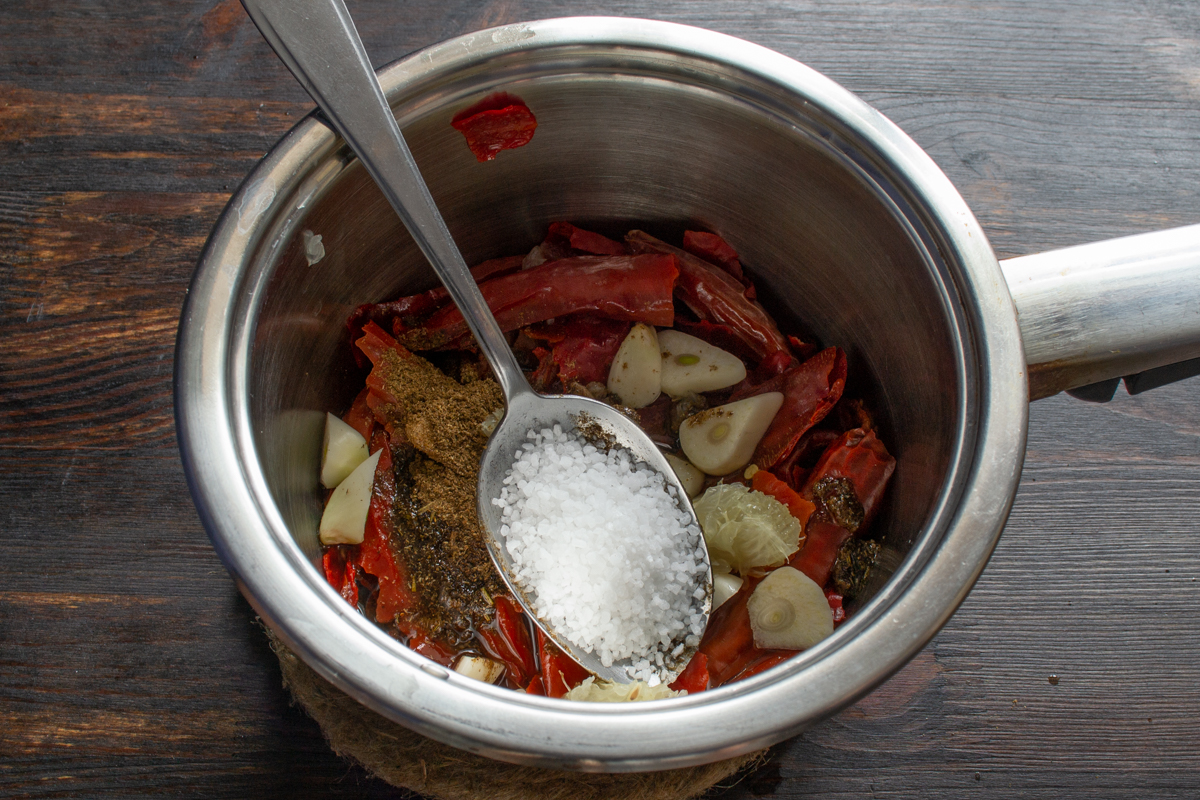
Sea salt not only enhances the flavor but also acts as an excellent preservative, allowing the sauce to keep longer in the fridge.
Pour in a few tablespoons of the reserved chili steeping liquid. Blend the sauce with an immersion blender until it reaches a smooth, creamy consistency.
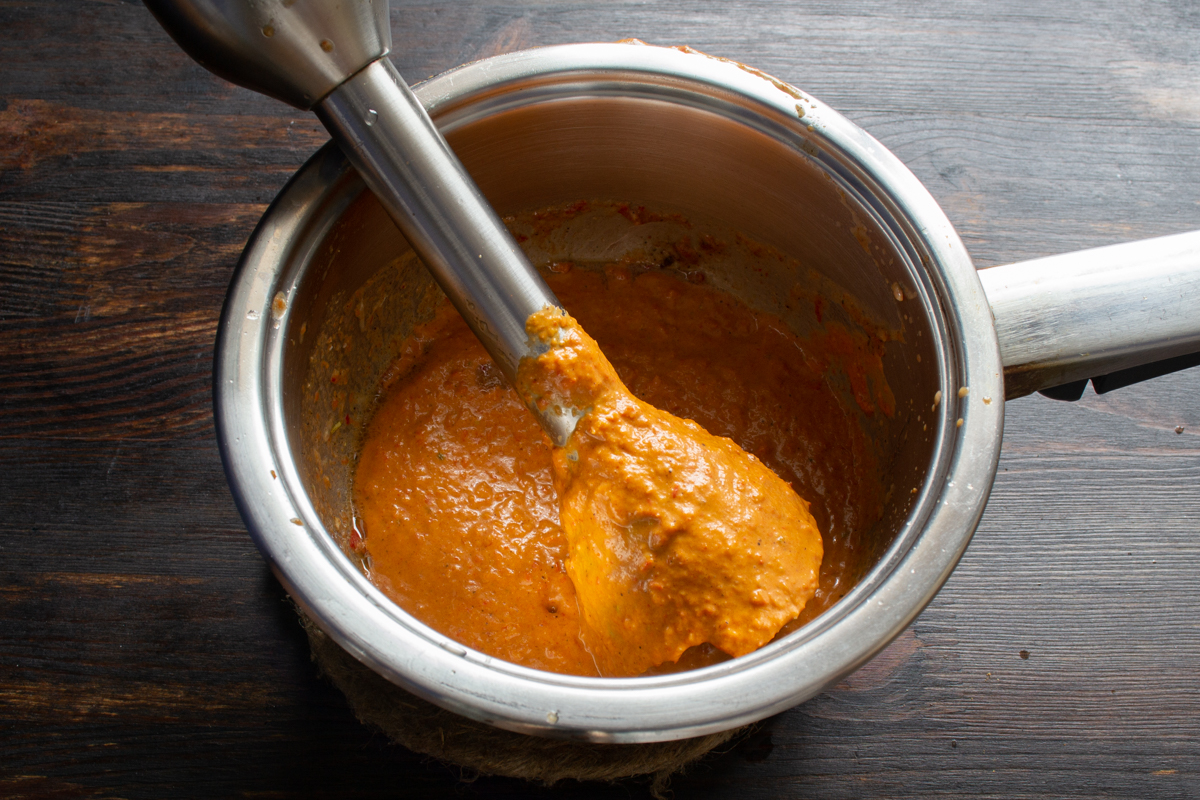
Blend the mixture into a thick, smooth cream. If the sauce is too thick, add a little of the reserved steeping liquid.
Transfer the finished sauce into a clean, dry jar. Screw the lid on tightly and store it in the refrigerator.
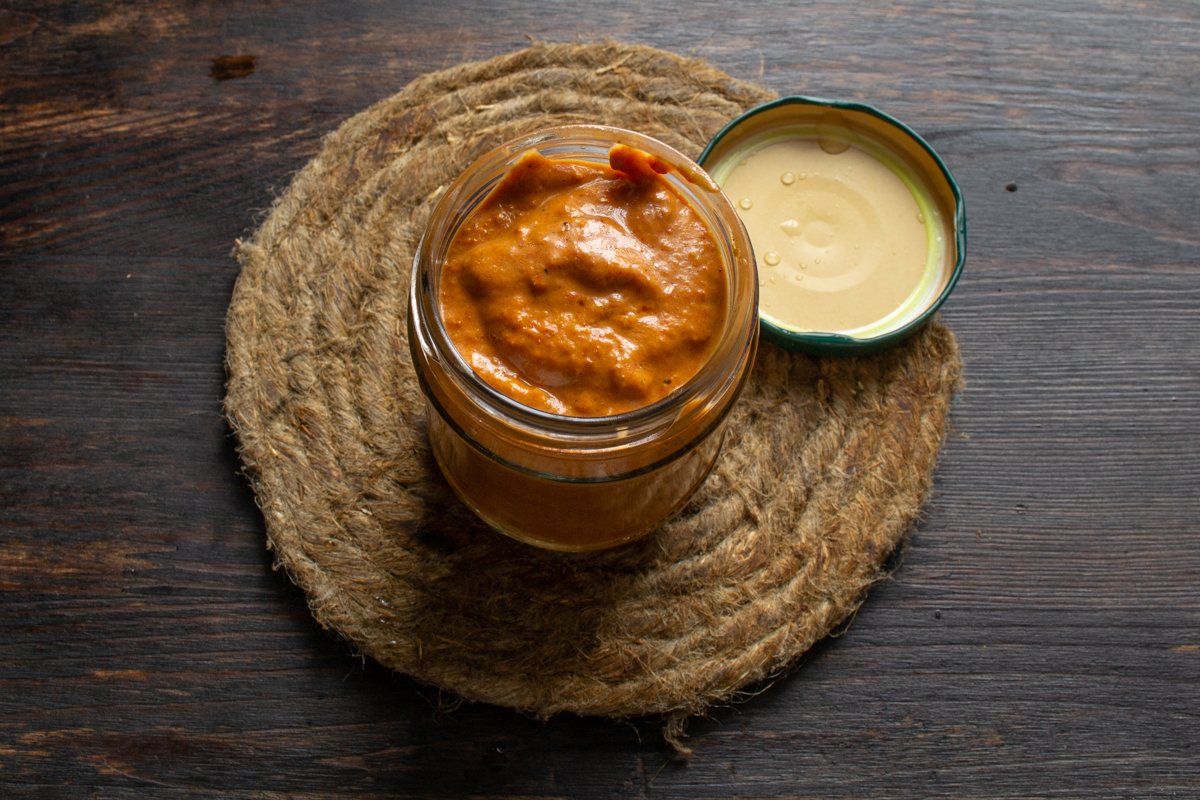
Transfer the finished Lazdjan into a dry jar. It is now ready to be stored in the refrigerator.
The finished Lazdjan sauce reveals its best flavor after steeping in the refrigerator for at least a few hours. Thanks to its high salt and oil content, it can be stored in a tightly closed glass jar for up to two months, only becoming more fragrant over time. If you want to experiment with the texture, try not blending the ingredients into a perfectly smooth puree; leaving small pieces of pepper gives the condiment a more authentic look.
Beyond the classic pairings with pelmeni (dumplings) or lagman, try using Lazdjan sauce as a marinade for roasting chicken wings or pork ribs. Just a couple of tablespoons mixed with honey or soy sauce will create a mouthwatering, glazed crust on the meat. This seasoning also works wonderfully as a topping for vegetable stews or simple boiled rice, turning an ordinary side dish into an exquisite meal with an Eastern character. Be sure to keep a jar of this 'liquid fire' on hand for those moments when your food needs an extra punch of flavor.
0 comments