
Walnut adjika is more than just a sauce; it is the true quintessence of Caucasian flavors. The tradition of adding ground nuts to spicy pastes comes to us from Abkhazia and Georgia, where the harmony of fiery peppers and a soft, buttery texture is deeply appreciated. The walnuts not only mellow out the aggressive heat of the chili but also create a deep, complex aroma that unfolds gradually. This raw, unheated seasoning based on fresh celery greens and garlic retains maximum vitamins and essential oils from every ingredient. It yields an incredibly thick, highly spiced paste that will become an indispensable addition to your table.
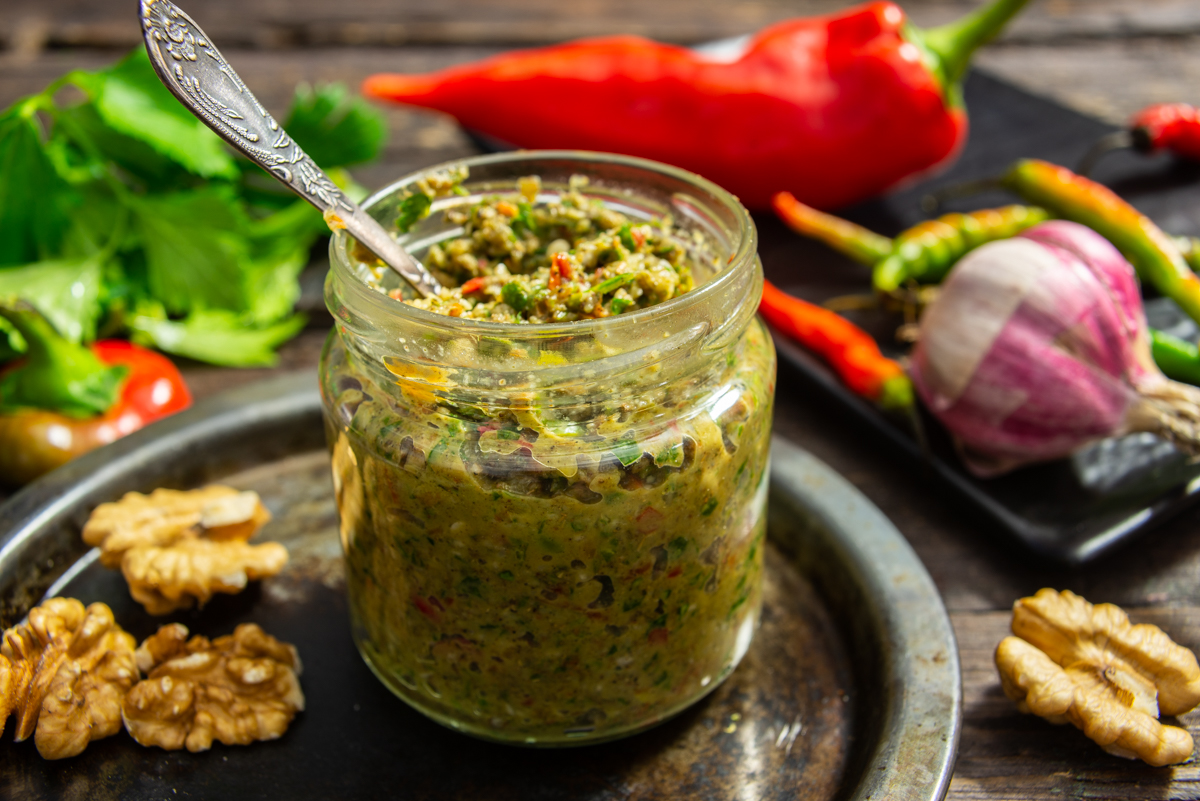
Homemade walnut adjika is an incredibly aromatic and thick condiment that pairs perfectly with meat.
Ingredients
- 250 g hot peppers
- 50 g chili peppers
- 80 g garlic
- 50 g walnuts
- 50 g celery
- 20 g table salt
- 2 teaspoons khmeli-suneli (traditional Georgian spice blend)
- 15 g apple cider vinegar
How to Make Walnut Adjika
Thoroughly wash the thin celery stalks and leaves under running water. Dry the greens in a salad spinner or on paper towels. Chop the celery and place it in the blender bowl. You can quickly make this raw adjika using a meat grinder or a food processor.
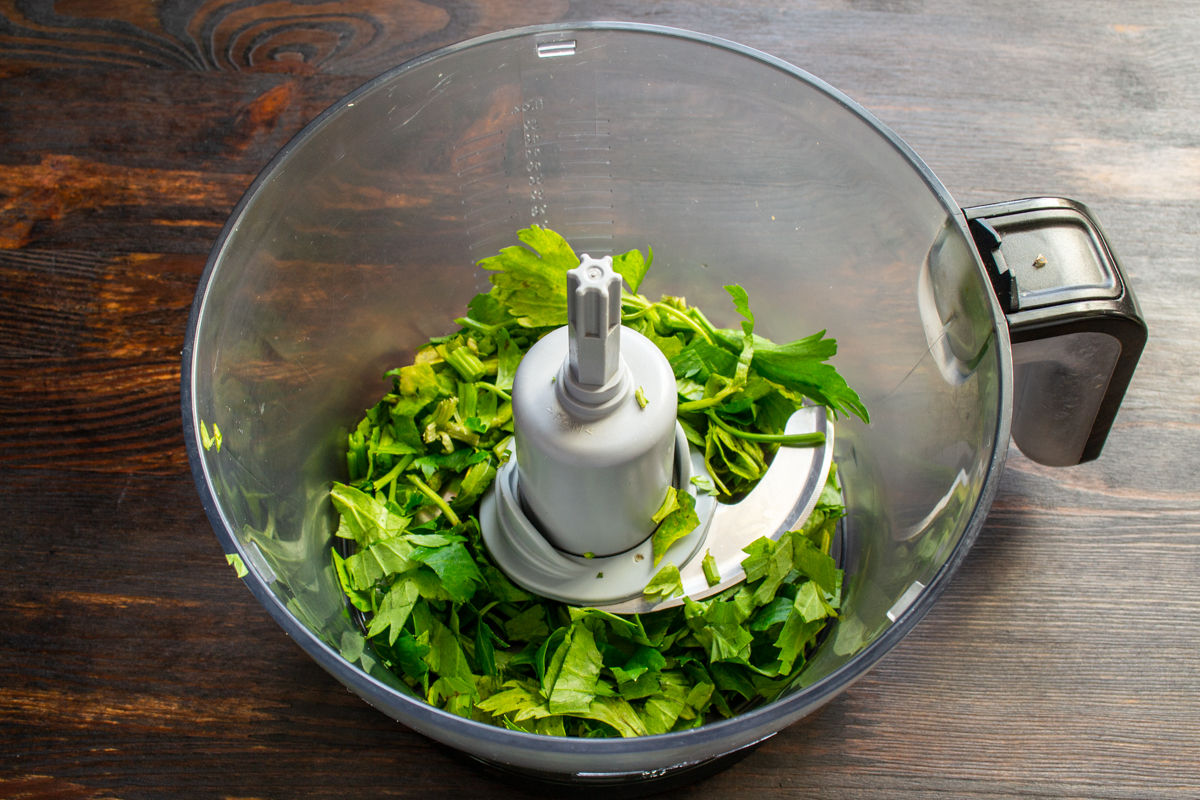
Begin by blending the celery greens, which give this appetizer its fresh, vibrant aroma.
Halve the hot peppers, removing the stems and seeds. Rinse the pepper halves with water, pat them dry, and dice them. Transfer the diced peppers to the bowl right after the celery. You can swap some of the hot peppers for sweet bell peppers if you prefer a milder adjika.
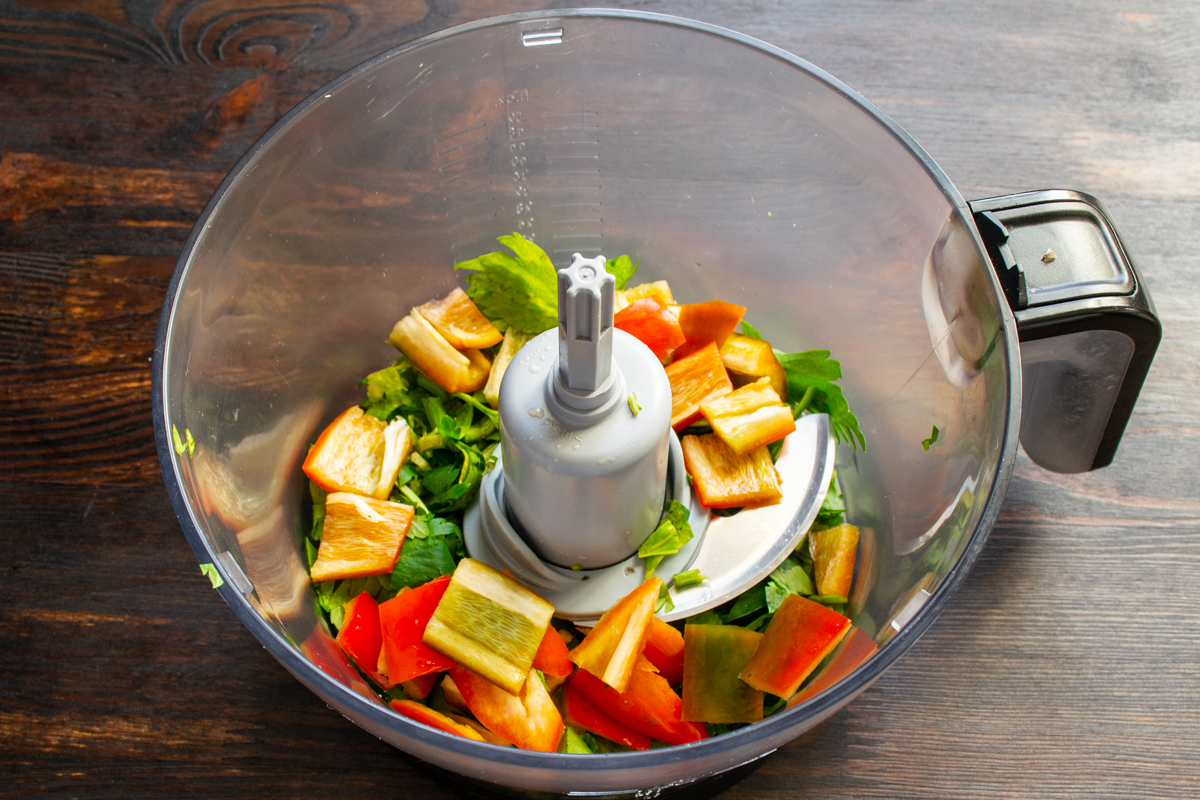
Follow the celery by tossing the seeded and chopped hot peppers right into the bowl.
Slice the chili peppers lengthwise and use a knife to scrape out the seeds and membranes. It is completely fine if a few seeds remain. Finely chop the chilies and toss them into the bowl. Wear thin medical gloves while handling the chilies to prevent the spicy oils from irritating your skin, and avoid touching your face.
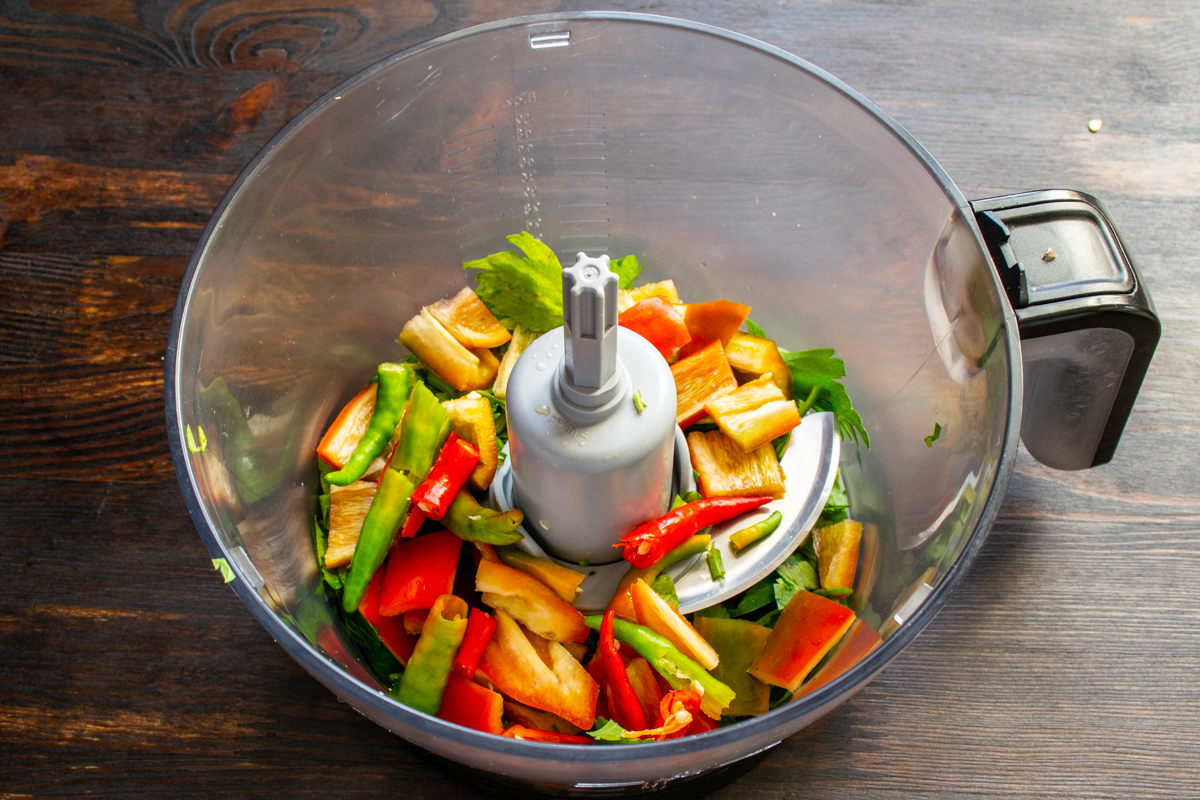
Add finely chopped chili peppers to give the adjika its signature fiery heat.
Crush the garlic bulb with your hand and separate it into cloves. Gently smash each clove with a knife and peel off the skin. Chop the garlic and add it to the blender bowl.
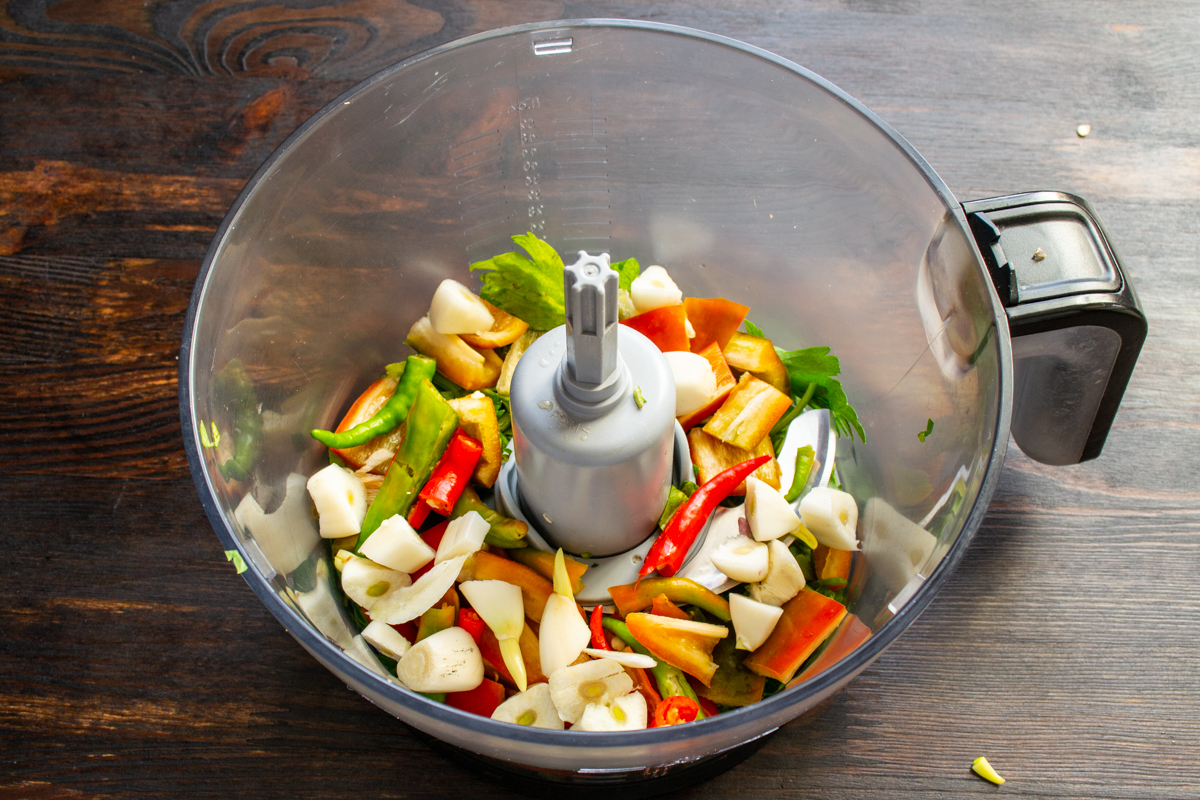
Toss in the fresh garlic—it adds sharpness and fills the sauce with a bright, pungent flavor.
Place the walnuts in a colander and rinse them under cold running water. Spread the washed nuts on a baking sheet and toast them in a preheated oven for a few minutes. Let them cool completely, then add the walnuts to the rest of the adjika ingredients.
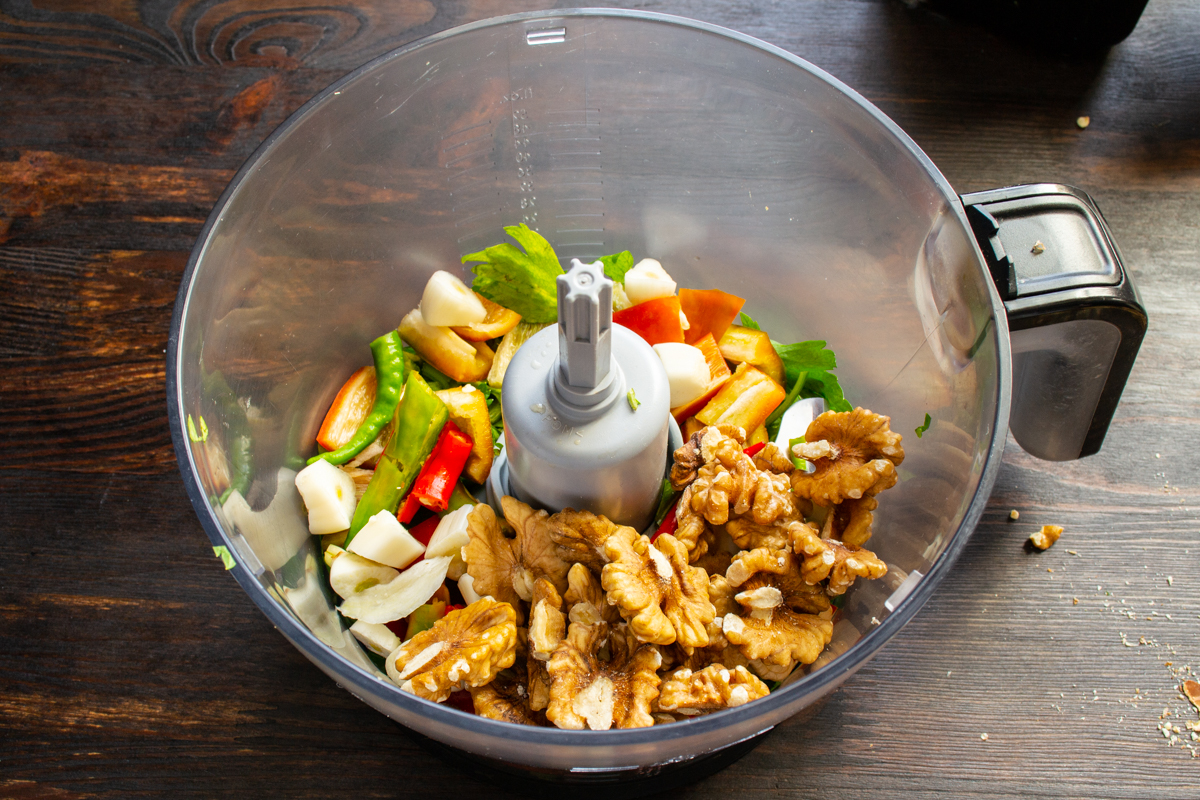
Walnuts give the adjika a thick, buttery texture and create a truly unique flavor profile.
Pulse the ingredients a few times, scraping down the sides of the bowl with a spatula to ensure a smooth, uniform consistency.
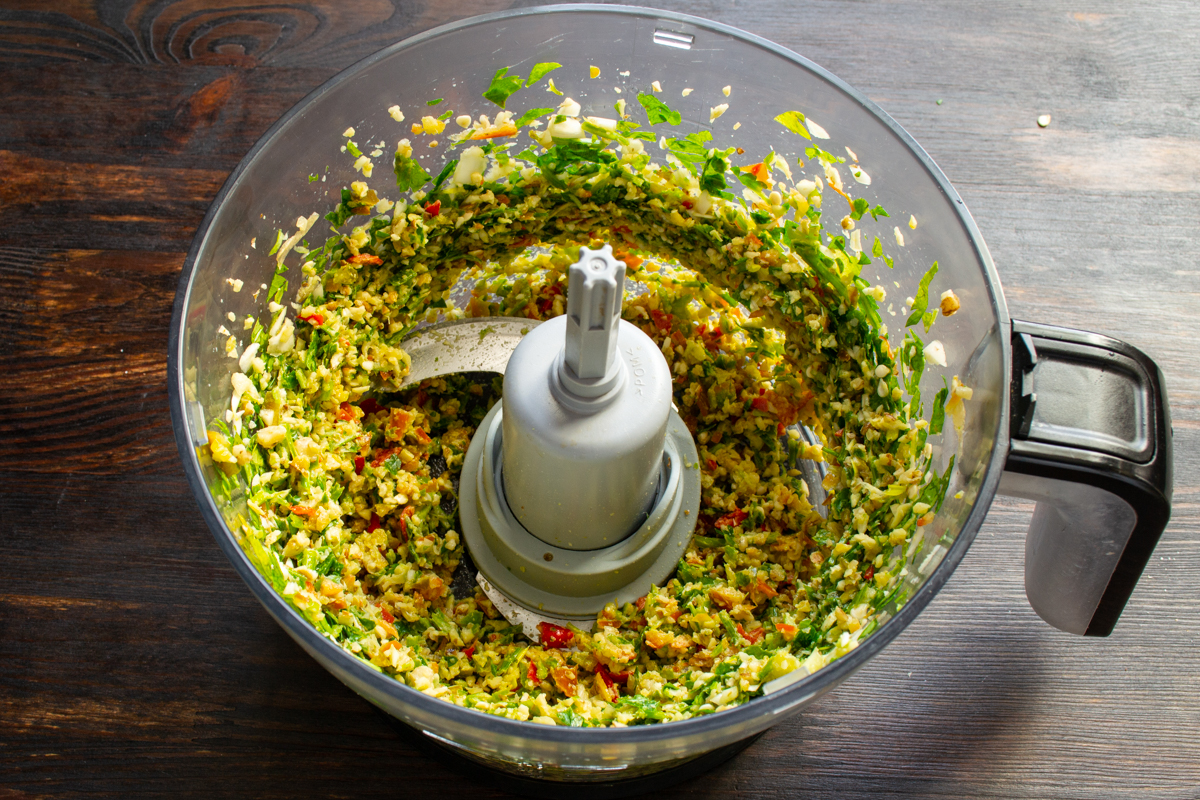
Pulse the blender to transform the vegetables and nuts into a thick, highly aromatic paste.
Season with table salt and add the khmeli-suneli (a traditional Georgian spice blend). You can use any spice mix you like, but authentic adjika relies heavily on the unique flavor of khmeli-suneli.
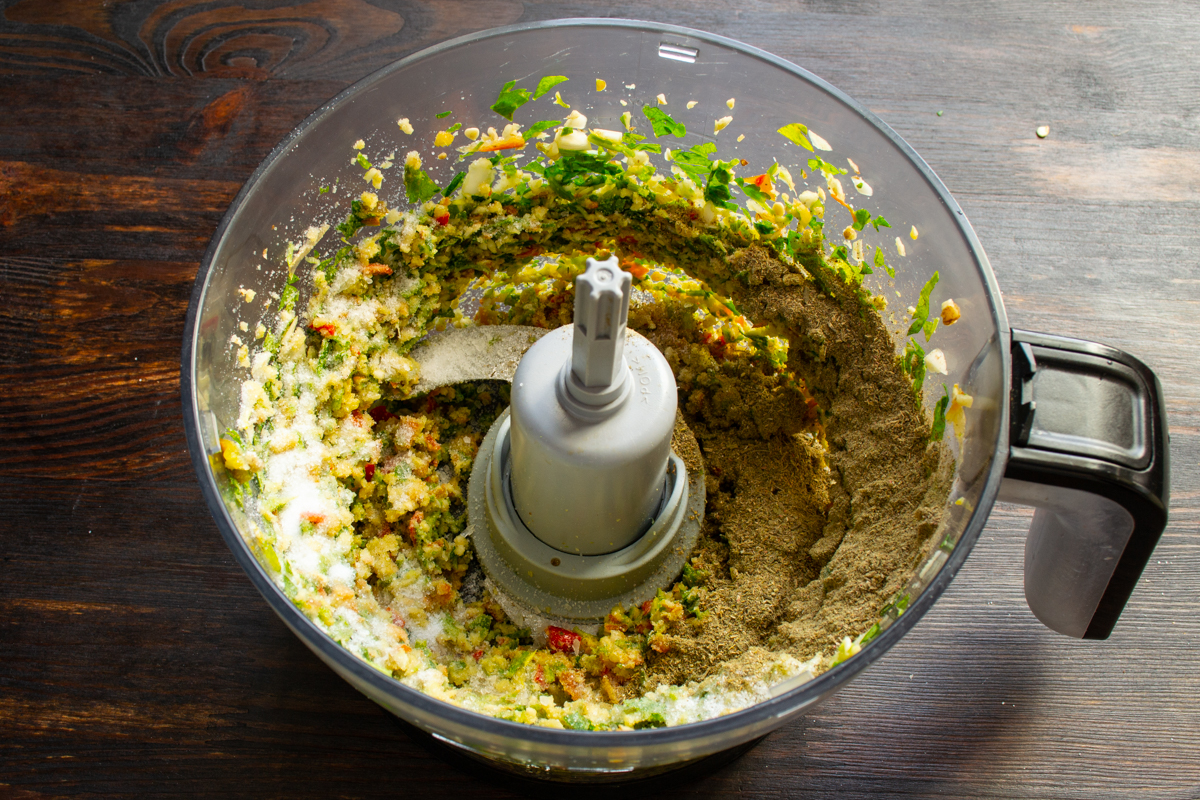
Season the mixture with salt and khmeli-suneli—this spice blend is an absolute classic for authentic adjika.
Pour in the apple cider vinegar. This recipe uses homemade apple cider vinegar with honey, which beautifully complements the spices and acts as a natural preservative. Blend the adjika for a few minutes until it transforms into a thick, uniform paste.
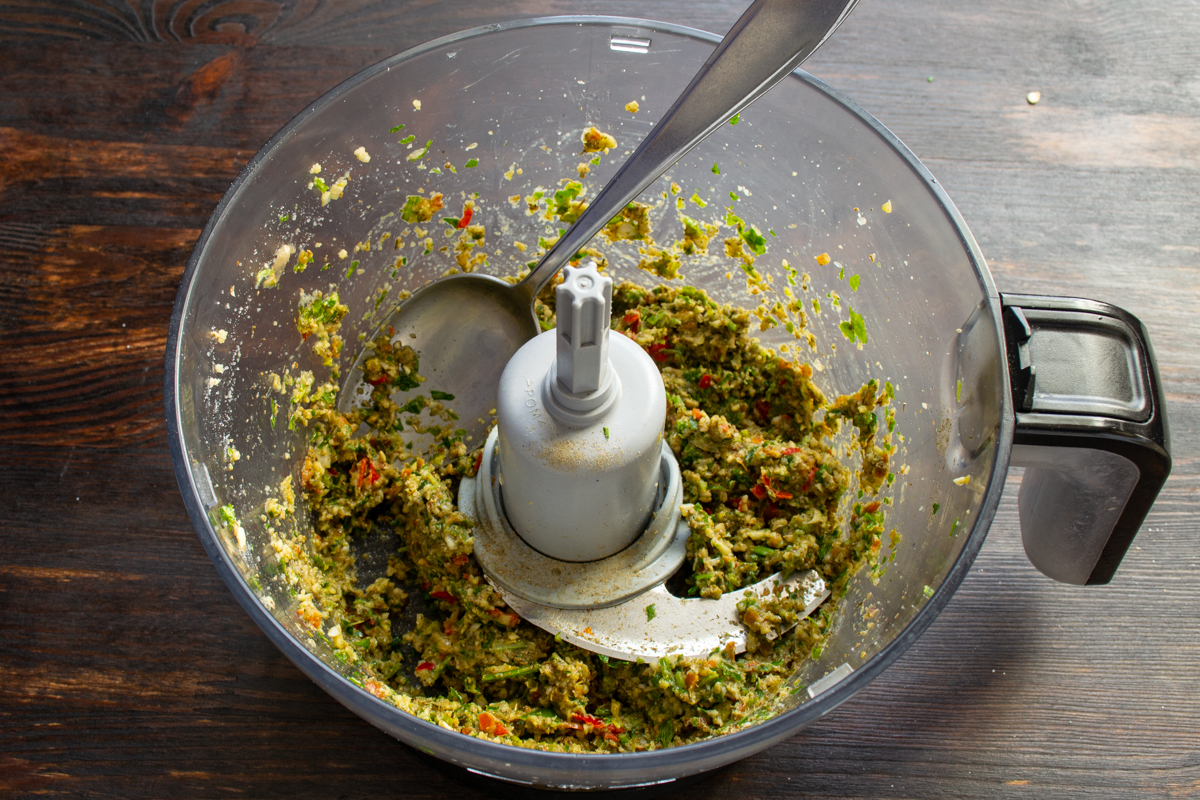
Apple cider vinegar acts as an excellent preservative and helps marry all the flavors into a single bouquet.
Wash your jars thoroughly with dish soap or a warm baking soda solution, then rinse clean with hot water. Place the washed jars upside down on an oven rack. Heat the oven to 100°C (212°F). Pack the adjika tightly into the cooled jars, pressing down along the sides to eliminate any air pockets. Seal with dry, sterilized lids and store in the refrigerator.
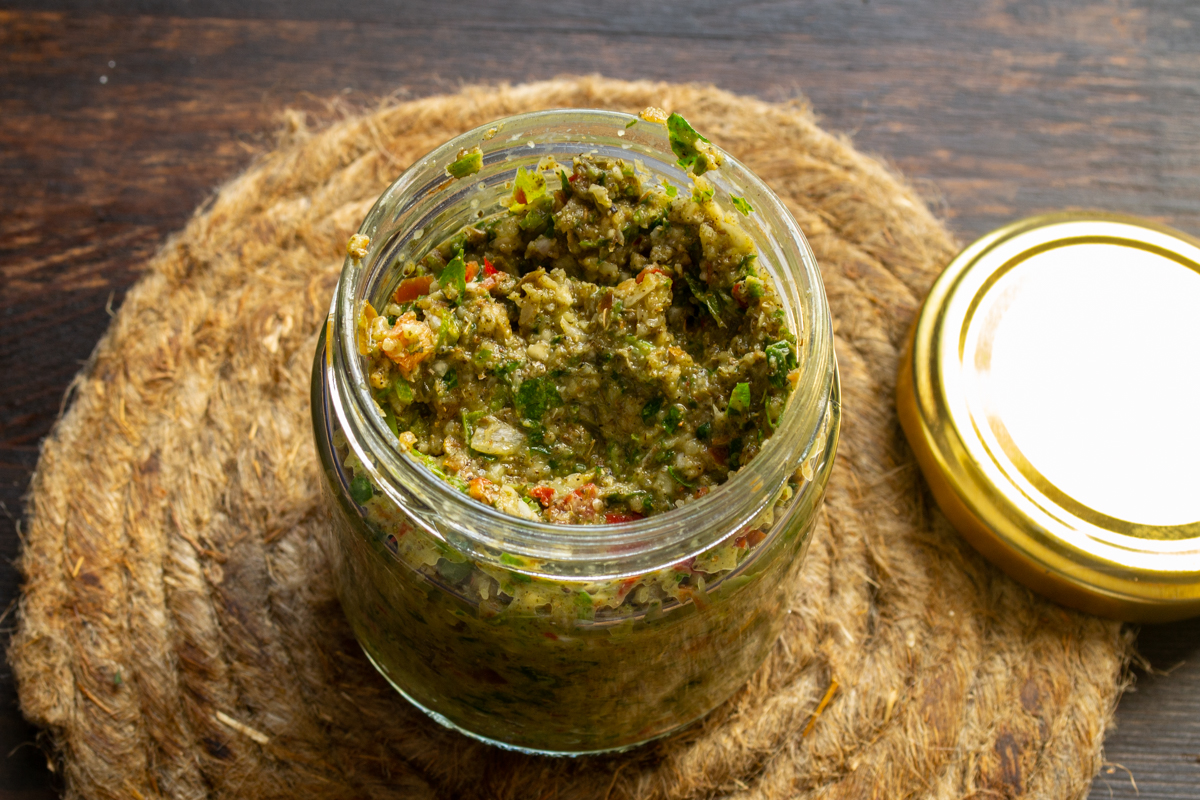
Pack the finished adjika into sterilized jars, pressing it down tightly to remove any excess air.
Walnut adjika truly shines after resting in the refrigerator for at least 24 hours, as this allows the flavors of the peppers, garlic, and khmeli-suneli (traditional Georgian spice blend) to fully meld together. Serve it alongside roasted meats, use it in poultry marinades, or simply spread a thin layer over fresh lavash (thin flatbread). If you want to experiment, try adding some fresh cilantro or swapping part of the hot peppers for sweet paprika for a milder sauce. Store these types of preserves between +2°C and +4°C (35°F to 39°F), making the bottom shelf of your refrigerator the perfect spot. A tightly sealed jar prevents oxidation and preserves the fiery character that walnut adjika is famous for, keeping it fresh for several months. Just remember to always use a clean, dry spoon when scooping out this aromatic paste.
0 comments