
Salt-cured pork belly with garlic and parsley is more than just an appetizer; it is a true symbol of homely comfort and hospitality. In the Russian culinary tradition, the art of dry curing salo (cured pork fatback or belly) has been passed down through generations, as this method perfectly preserves the rich flavor of high-quality meat. For this recipe, a fresh cut with thin pink ribbons of meat works best. After a long curing process, it takes on the delicate texture of artisanal ham. The combination of pungent garlic, fresh herbs, and earthy caraway creates an irresistible aroma that instantly awakens the appetite and brings to mind traditional rustic feasts.
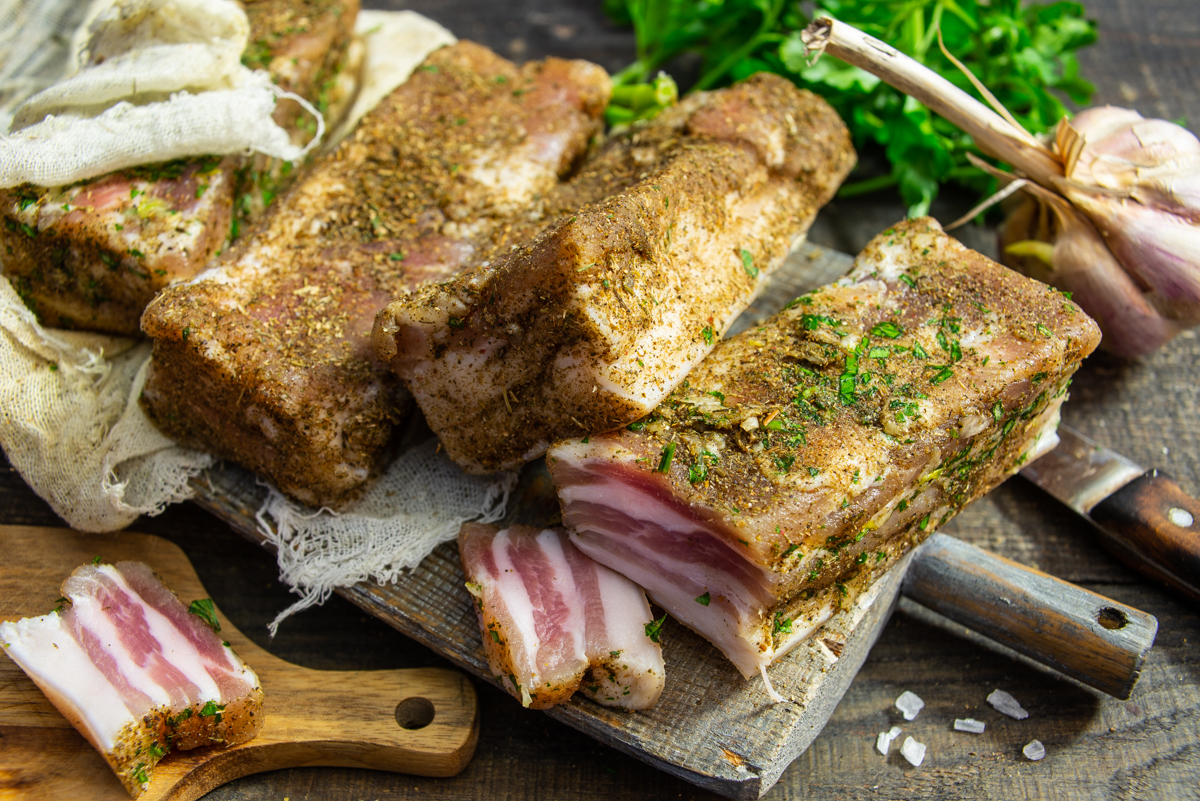
Aromatic pork belly, dry-cured at home, turns out incredibly tender and spiced—an absolutely perfect appetizer.
Ingredients
- 1 kg (2.2 lbs) pork belly
- 70 g (2.5 oz) salt
- 25 g (0.9 oz) sugar
- 3-4 garlic cloves
- small bunch of fresh parsley
- ground blend of bay leaf and caraway seeds
- bay branches and leaves
How to Make Salt-Cured Pork Belly with Garlic and Parsley
Prep the pork belly. Trim away any silver skin, but leave the rind intact. Cut the belly into strips about 4-5 centimeters (1.5-2 inches) wide. Rinse under cold water and scrape the rind with a knife to clean it thoroughly. For curing, a cut with good meat-to-fat marbling about 4 centimeters thick works best—it turns out incredibly delicious, much like a rustic ham.
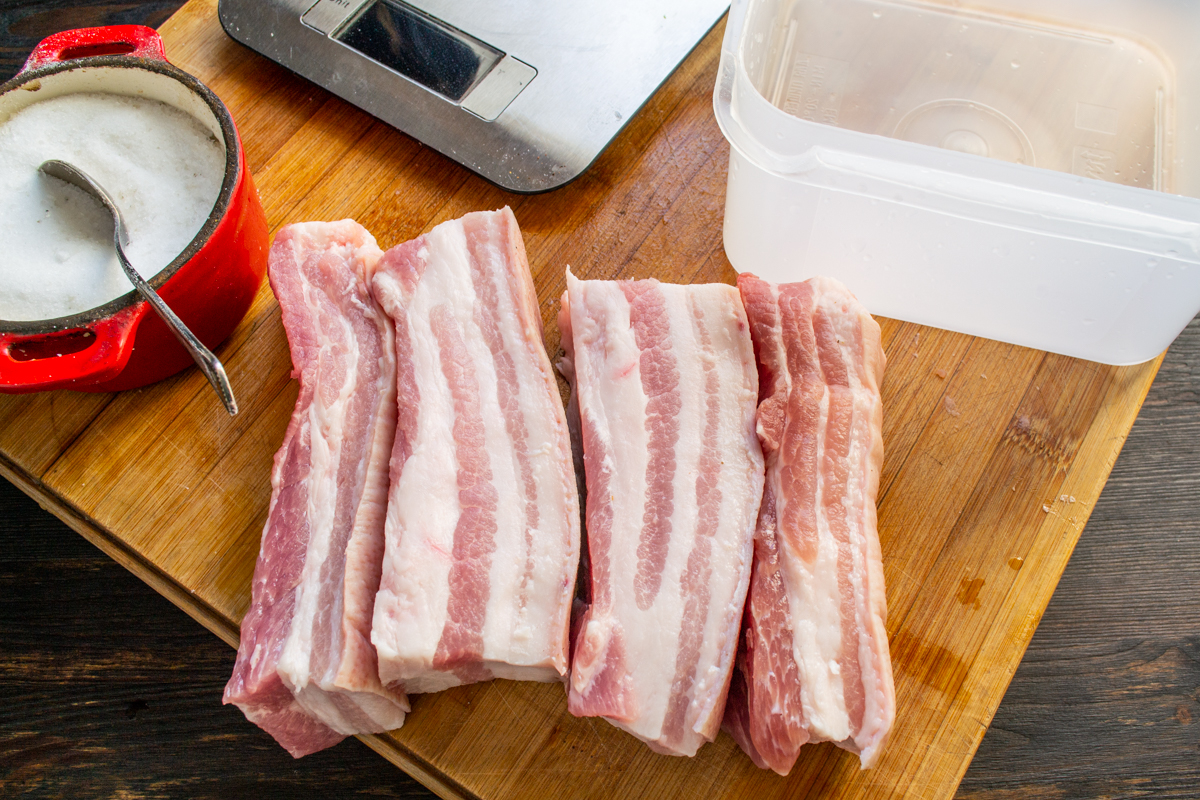
For the best dry cure, select fresh pork belly with nice, even streaks of meat and fat.
Grab a plastic container with a tight-fitting lid for the curing process. Arrange the pork belly pieces in the dry container.
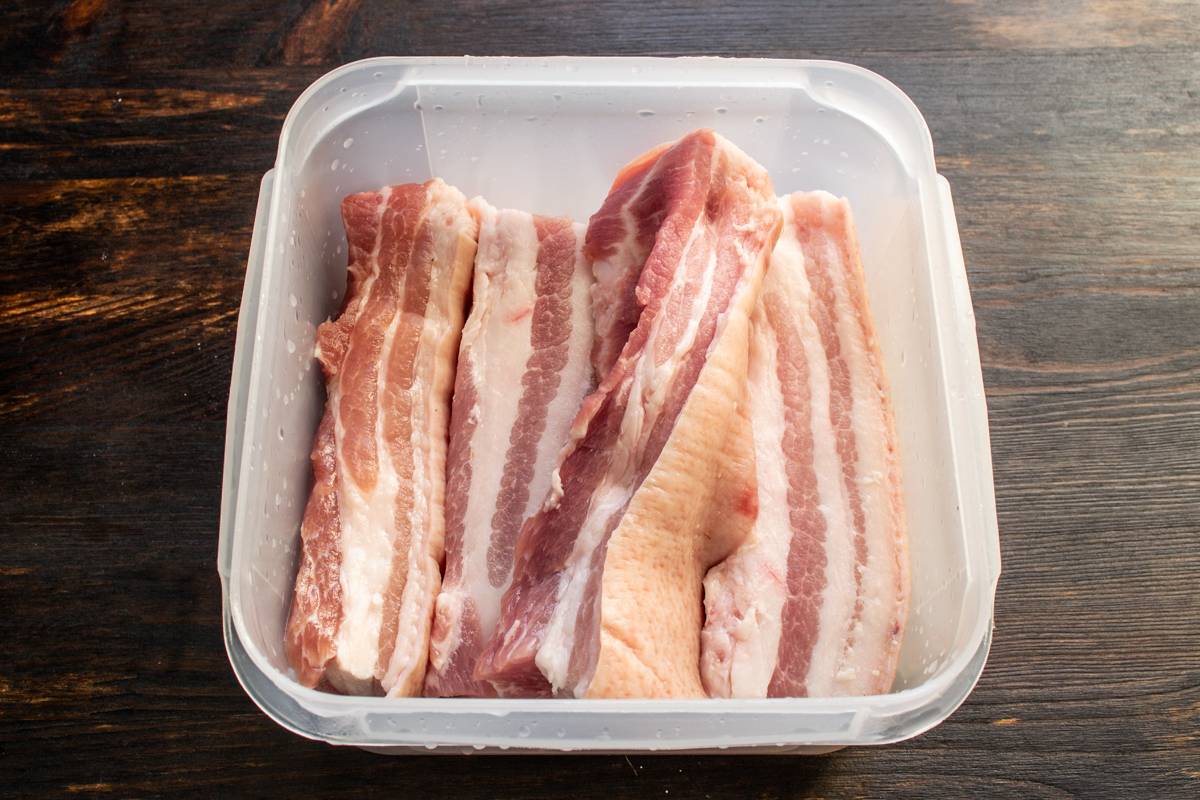
A food-safe container with a tight-fitting lid is ideal for the dry curing process.
Mix the table salt and sugar together. Cover the pork belly entirely with this curing mixture, tossing the pieces so the salt coats the pork on all sides. Additive-free sea salt works beautifully here as well.
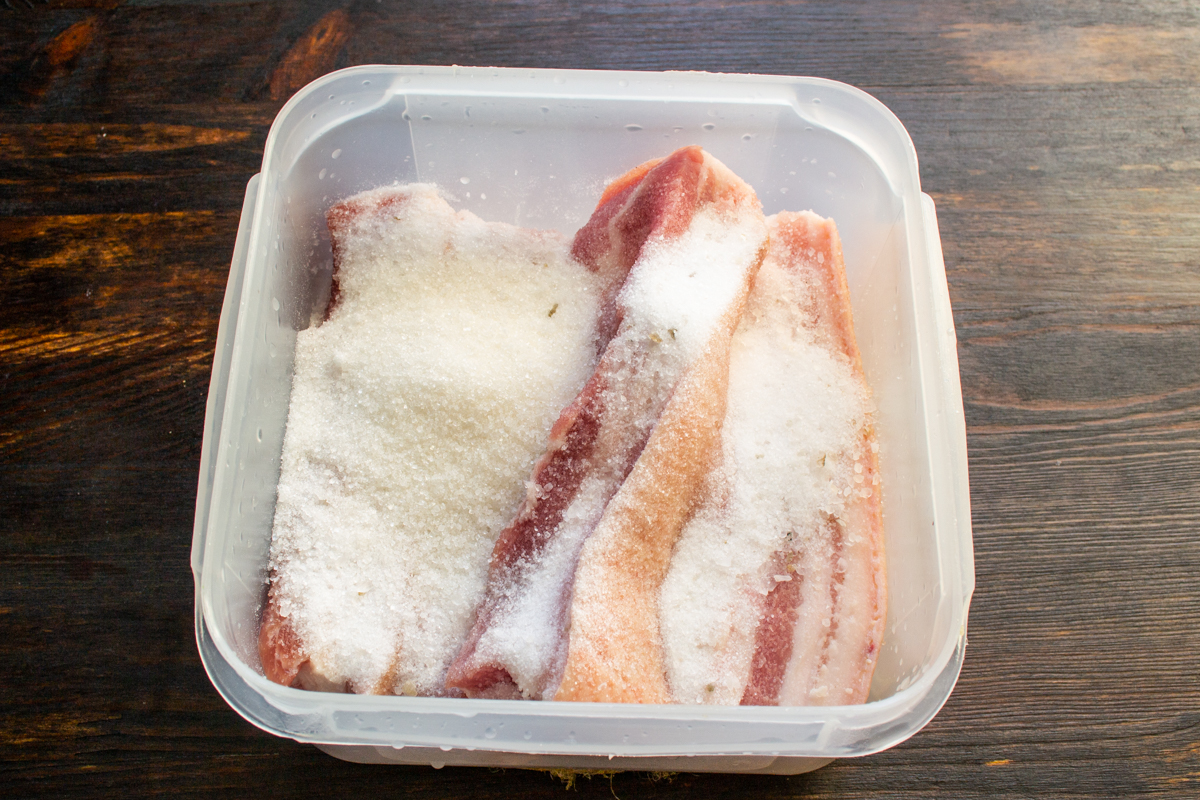
A blend of salt and sugar ensures an even cure and helps preserve the perfect meat texture.
Toss in the bay leaves and snapped bay branches. The branches actually hold even more aromatic essential oils than the leaves themselves.
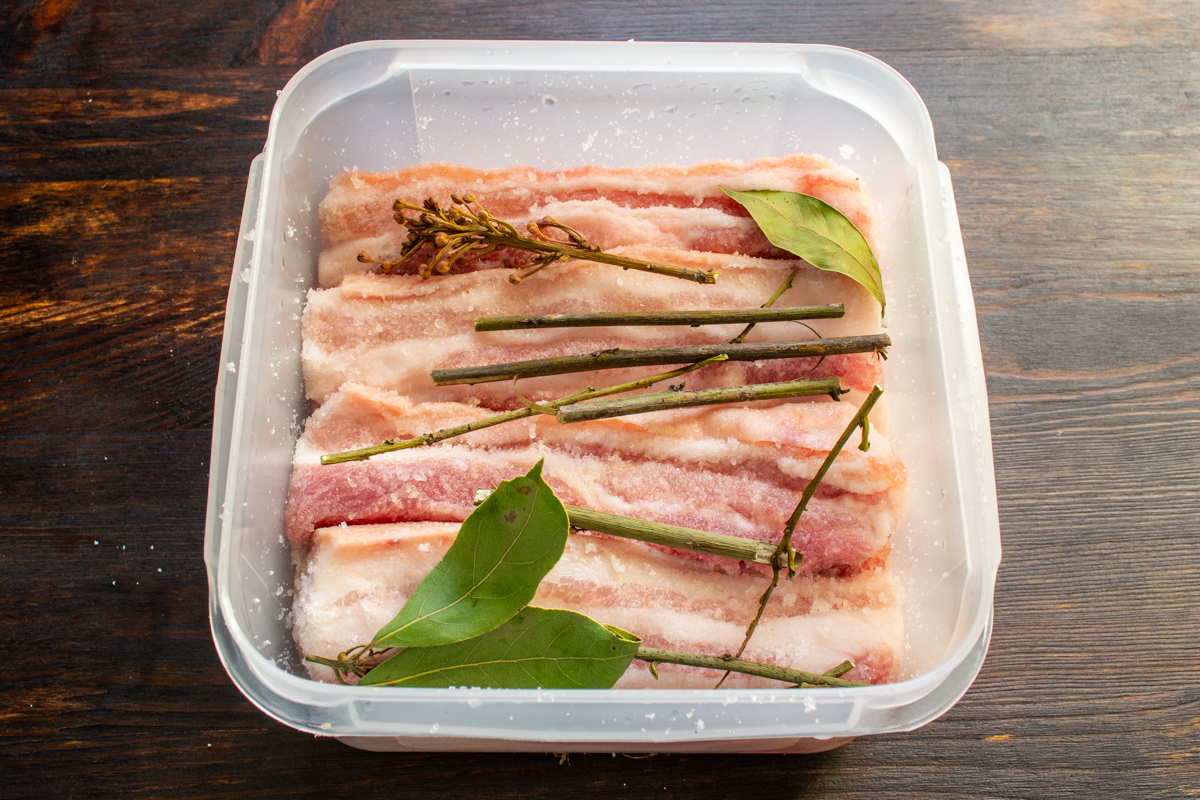
Bay branches infuse the natural brine and meat with a deeper, more robust aroma than just the leaves.
Seal the container tightly. Let it sit at room temperature for 24 hours, giving it a good shake periodically. Within a day, the salt and sugar will completely dissolve to form a natural brine. Depending on the meat, more or less liquid will release; either way, the brine should cover just under half of the contents.
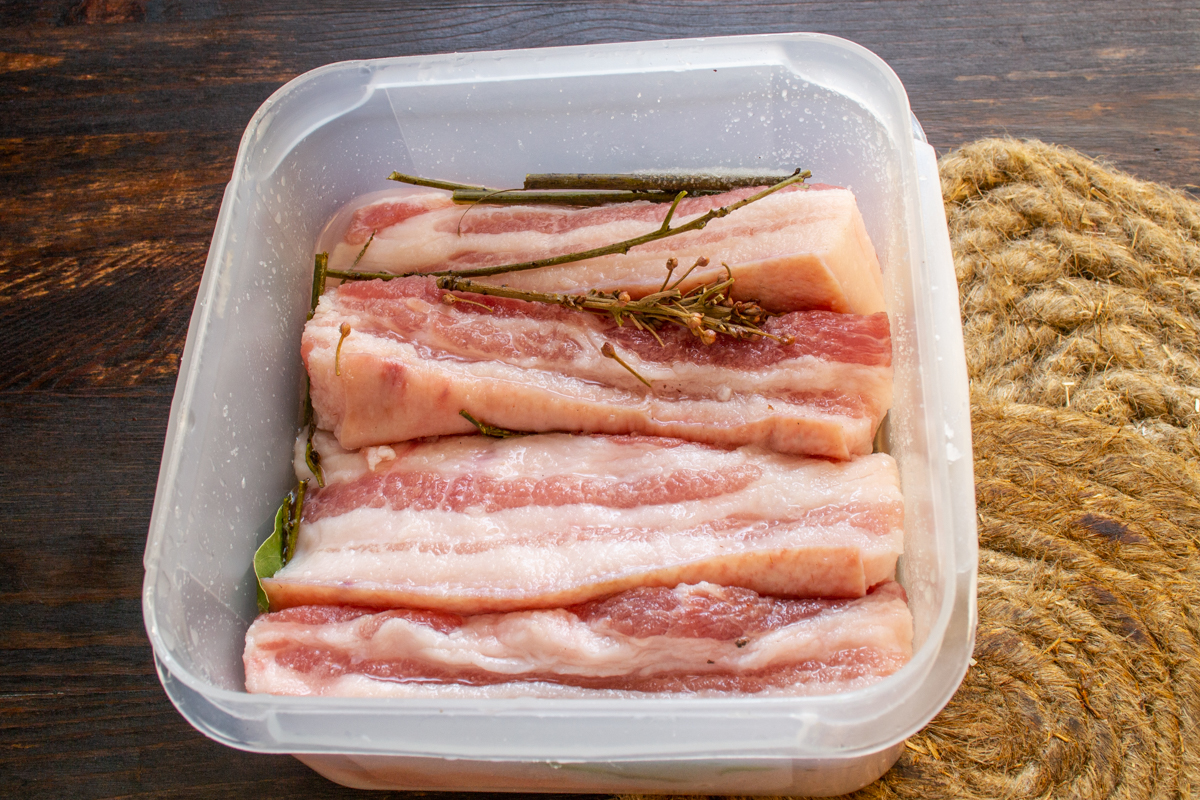
After a day, the salt dissolves and draws moisture from the meat, creating a natural curing brine.
After 24 hours, transfer the pork belly to the bottom shelf of your refrigerator or a cold root cellar for 7 days. You need to flip the pieces regularly; I usually turn them once every two days.
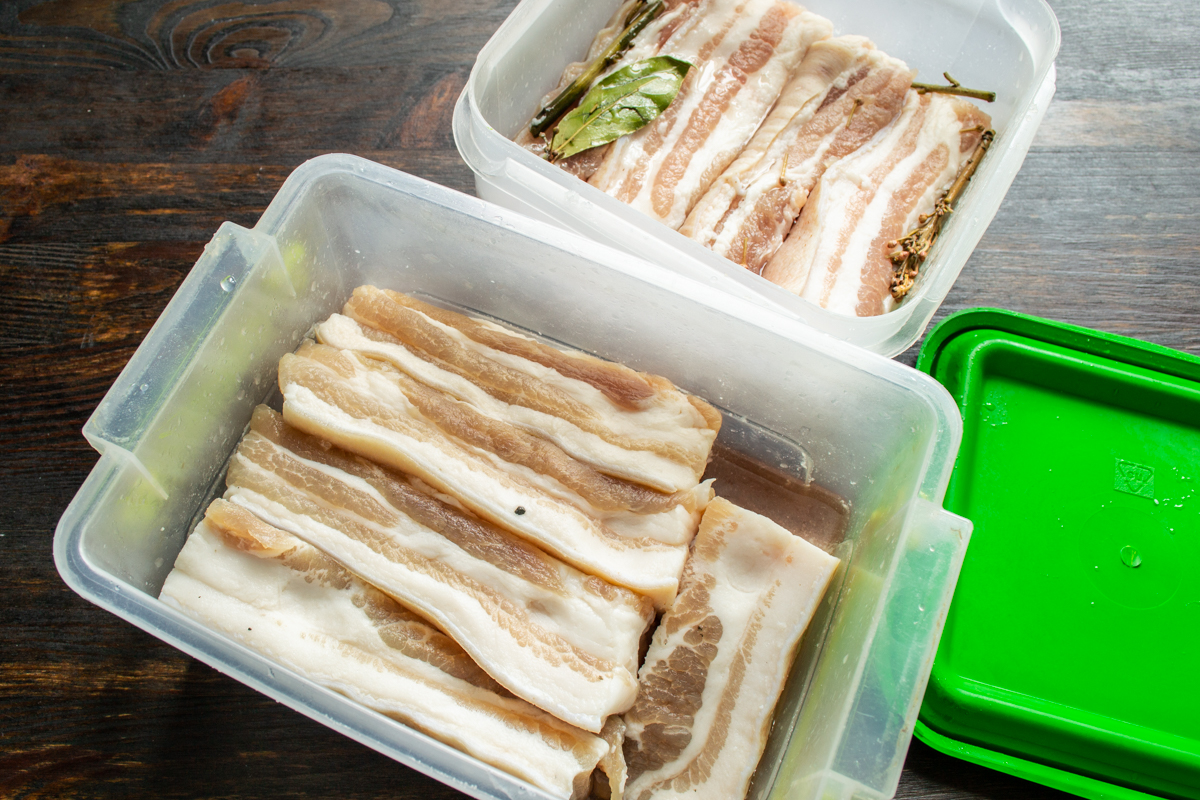
The meat needs to age in the refrigerator for about a week, flipping the pieces occasionally for an even cure.
A week later, remove the cured pork from the container. Pat the pieces completely dry with paper towels.
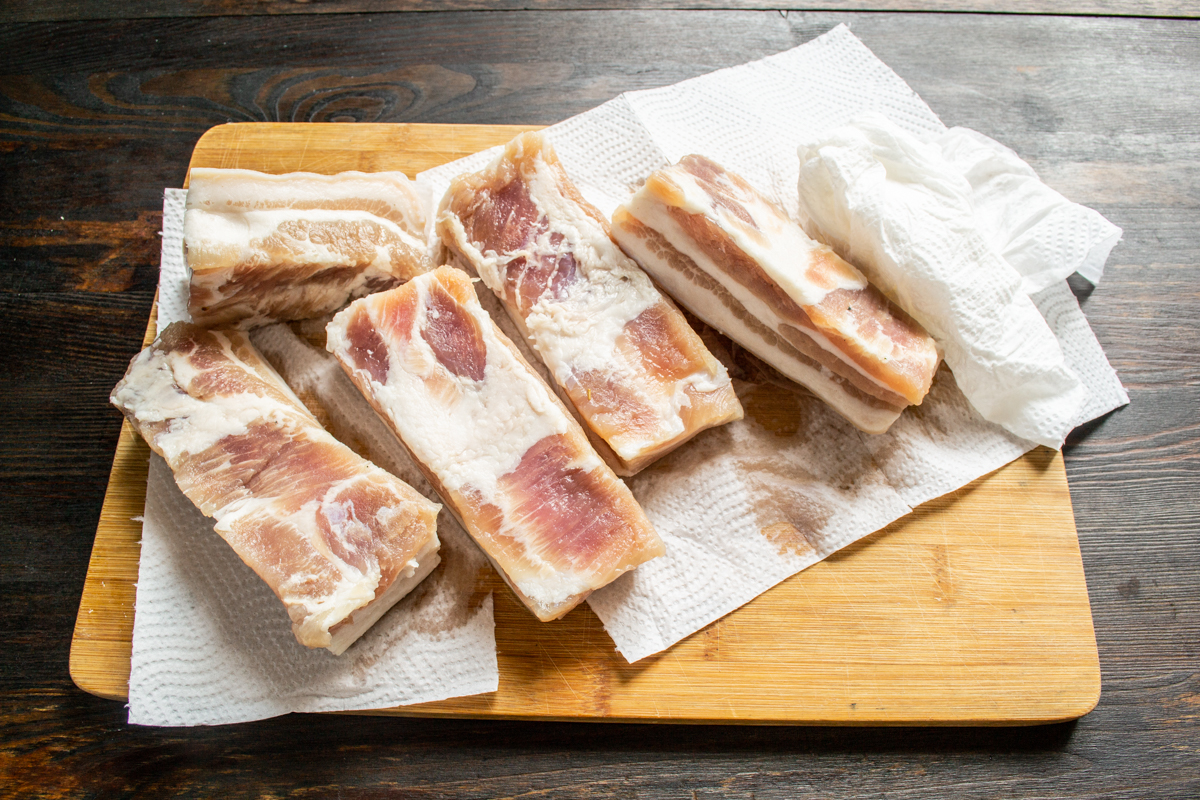
Before rubbing the pork belly with spices and garlic, it is essential to pat away any excess moisture completely.
Peel a few garlic cloves and mince them finely. Grind the garlic with a pinch of coarse salt in a mortar and pestle until it forms a thick, puree-like paste.
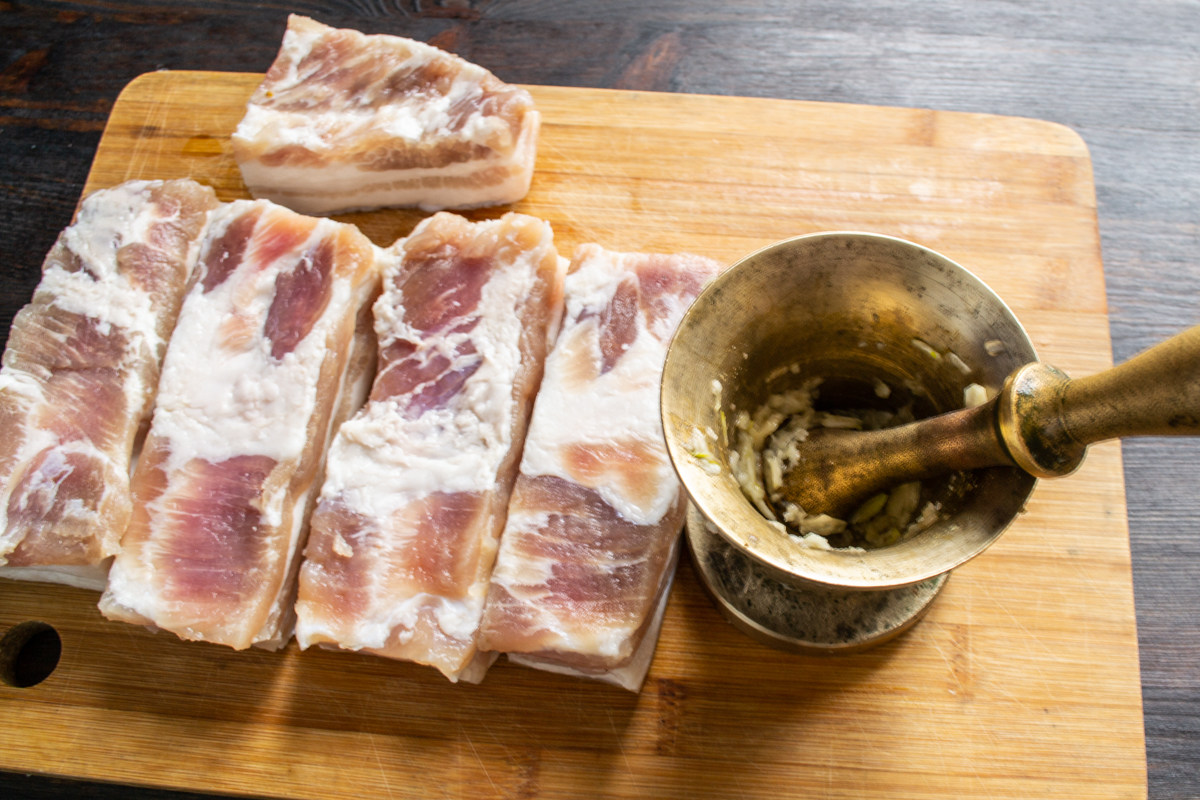
Garlic ground with salt in a mortar releases its essential oils much better, imparting massive flavor to the meat.
Rub the garlic paste generously into the pork belly. Finely chop a small bunch of parsley and sprinkle the fresh herbs all over the meat.
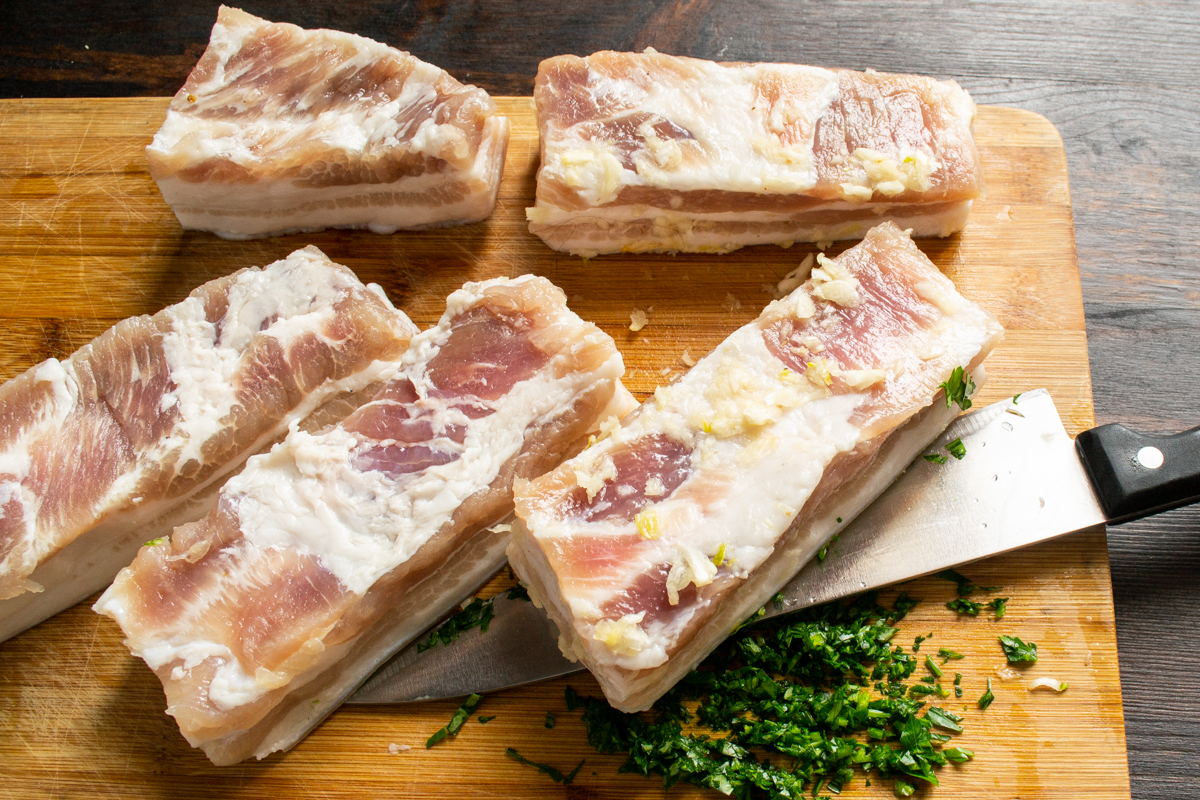
Fresh chopped parsley and pungent garlic paste are the ultimate classic pairing for homemade rustic salo.
Grind dried bay leaves and caraway seeds in a spice grinder to a fine powder. Dust the seasoned pork belly with this bay-caraway blend. By the way, if you do not plan to eat the whole batch soon, it is better to season only a few small pieces with garlic and parsley. Tightly wrap and freeze the remaining plain cured belly, seasoning it freshly as needed.
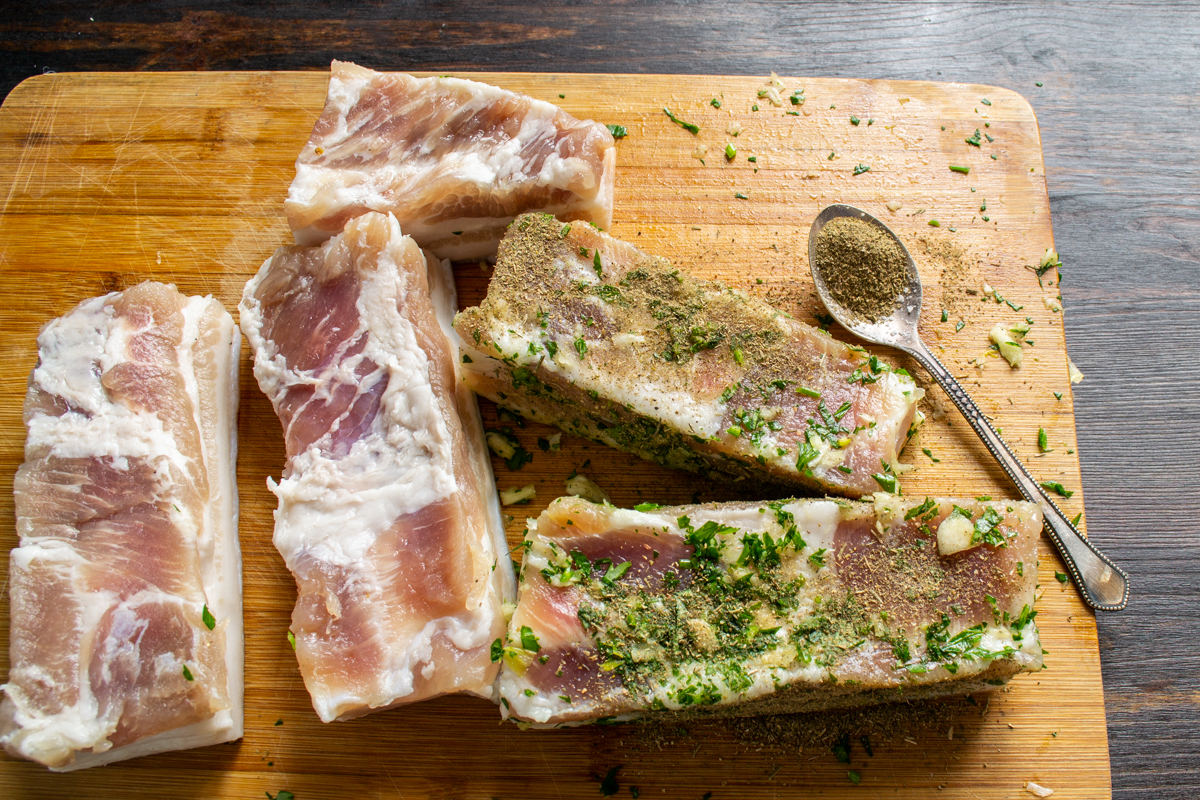
A fine powder of ground bay leaves and earthy caraway beautifully finishes the flavor profile of the cured belly.
Wrap the fully seasoned pork belly in cheesecloth or a clean cotton cloth. Place it on a board or wire rack in the fridge and leave it for 24 hours. The next day, unwrap the meat, wrap it tightly in plastic wrap, and transfer it to the freezer (-18 to -24 degrees Celsius) for a final 24 hours.
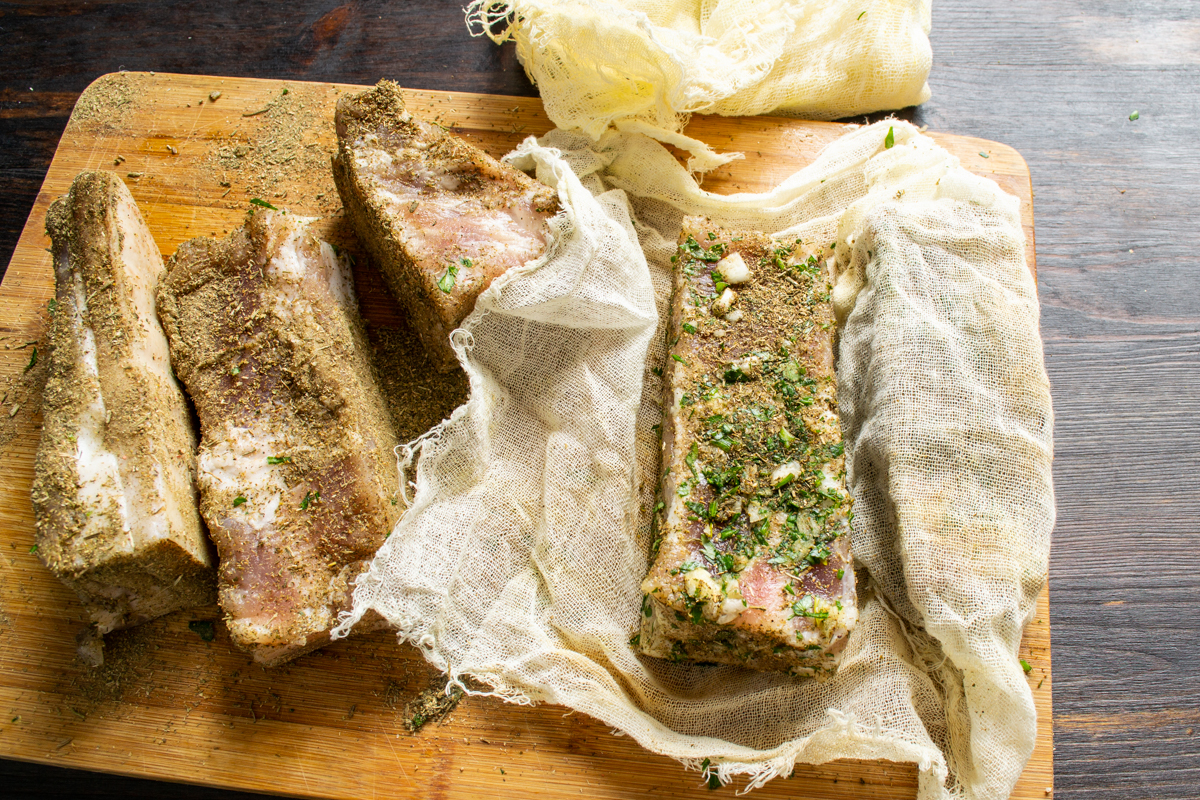
Wrapping the meat in cheesecloth helps the spices absorb better, prepping the pork for its final freeze.
Once the salt-cured pork belly with garlic and parsley is completely frozen, it reaches an ideal density, allowing you to slice it into translucent, melt-in-your-mouth pieces. This savory delicacy is best served on a slice of fresh rye bread or alongside a piping hot bowl of rich borscht. To impress your guests, try pairing the slices with pickled red onions or homemade mustard—this beautifully highlights the deep flavor of the pork and aromatic herbs. For long-term storage, wrap the remaining pieces in parchment paper before keeping them in the freezer. It is crucial to avoid heavy plastic bags during the aging process so the meat can 'breathe' and retain its quality. If you love culinary experiments, try adding a touch of smoked paprika or dried dill to the spice mix next time for an entirely new flavor profile.
0 comments