
A children’s birthday party. Eight seven-year-olds sit at the table, and I solemnly bring out a pitcher of homemade compote (a traditional simmered fruit drink) with almost no sugar. Dark cherry-colored, with real berries resting at the bottom. The children look at it as if I poured them cough syrup, and they ask for cola in unison. I went through this with my oldest daughter. Standing in the middle of the kitchen with that pitcher made me feel completely foolish.
When parents think about how to wean a child off soda, they usually blame sugar. But sugar only tells part of the story. A child’s brain gets hooked on something else: the sensory fireworks. Bubbles that pop and tingle the tongue. The burning cold of ice against the teeth. A slight tartness that makes the cheeks pucker. A toxic-bright color visible from across the room. Forbidding all this feels pointless, and a bit cruel. Assembling those same fireworks at home, using different components, proves much more interesting.
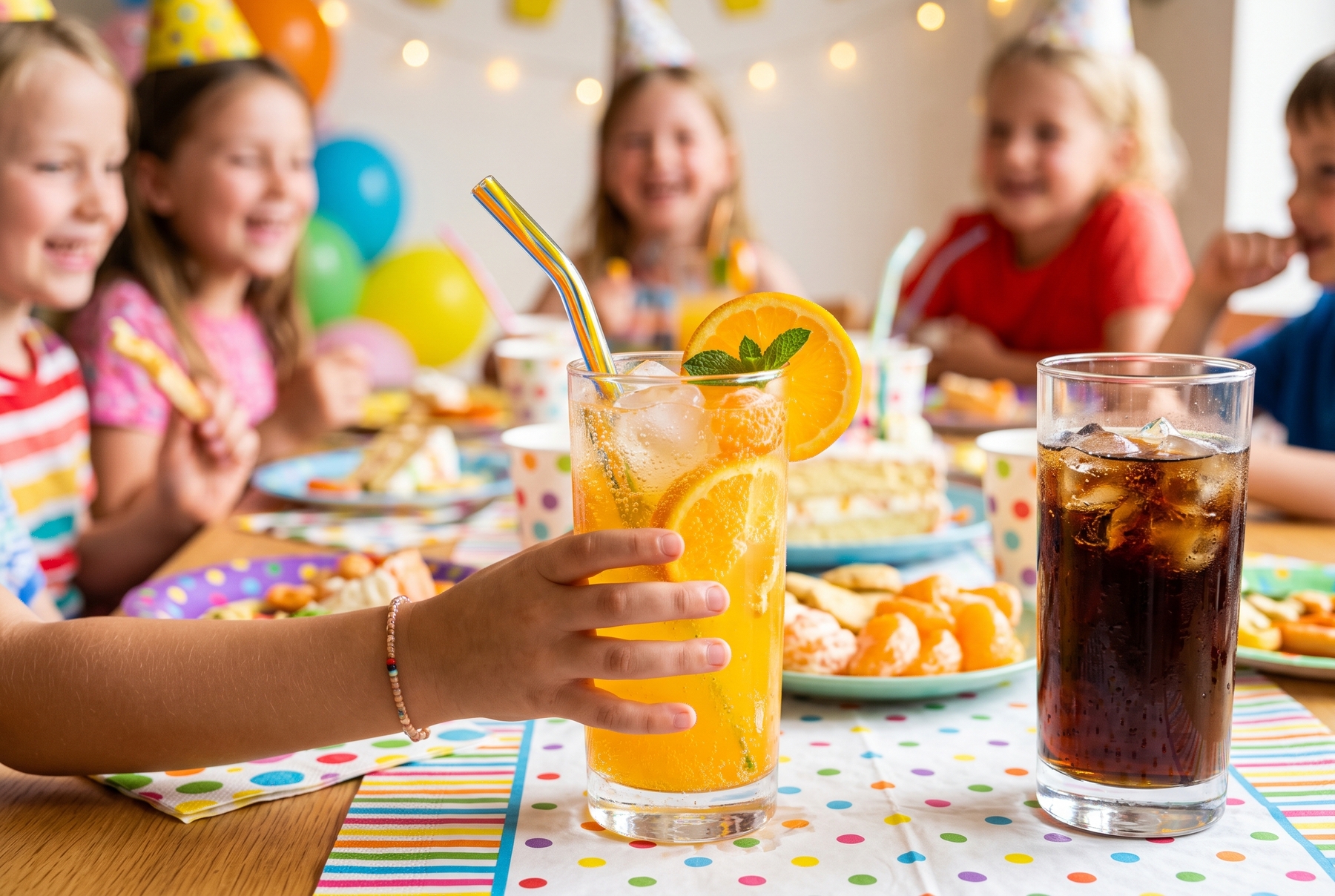
The bright and festive presentation of homemade lemonade with orange slices and a colorful straw easily distracts children from unhealthy store-bought soda.
Table of Contents
Why Replacing Soda With Water Simply Fails
The most common parenting mistake looks perfectly logical. A child drinks something sweet, so we pour plain water instead. Or a pale, warm mors (a traditional Russian berry drink), boiled in the morning and cooled to room temperature. From an adult’s perspective, this seems fair. From a child’s perspective, you took away the celebration and slipped them emptiness.
Water feels like a punishment after cola. This happens not because water is bad, but because the brain expected an explosion and received nothing: no cold, no bubbles, no color. Warm mors loses for the exact same reasons. It feels proper, homemade, and full of vitamins. Yet it remains completely uninteresting to the tongue.
Then the psychology of the forbidden fruit kicks in. The stricter the ‘no soda’ rule is at home, the sweeter the drink becomes at a friend’s house, during school recess, or at the movies. A child never argues with you out loud. They simply chug two cans where you cannot see them, and they carry their first pocket money straight to the energy drink vending machine. Sounds familiar?
Changing just the liquid is never enough; the entire ritual around the glass requires an overhaul. That specific moment when you open something cold, hear the fizz, and take the first sip matters immensely. Giving a child that exact sensation in a different package removes the contents of the glass as a reason to argue.
The Anatomy Of A Child’s Love For Soda
Soda possesses several details that a child registers long before tasting it.
First come the bubbles. Carbon dioxide, dissolved in water under pressure, transforms into a light tingling on the tongue. Receptors perceive this irritation almost like a flavor, and the brain quickly associates it with pleasure. This explains the difference: nobody wants warm, flat cola, but an ice-cold, fizzy one disappears in a minute.
Next comes the balance of sweet and sour. If lemonade contained only sugar, it would taste nauseatingly sweet. That explains why manufacturers add acid (such as phosphoric acid in cola, or citric acid in lemonades). Acid reduces the cloying sweetness and makes the flavor full-bodied and lively. We replicate this exact trick at home, only using lemon, lime, or orange.
Thirdly, the color, the can, and the straw play a major role. Sometimes all of this matters more than the flavor itself, as frustrating as that seems. A child drinks with their eyes and hands before their tongue. A bright package, a familiar bottle silhouette, a bendy straw. Half the taste of soda lives right there, rather than in the liquid.
This leaves us with three levers: bubbles, the sweet-and-sour balance, and presentation. We pull all three at once.
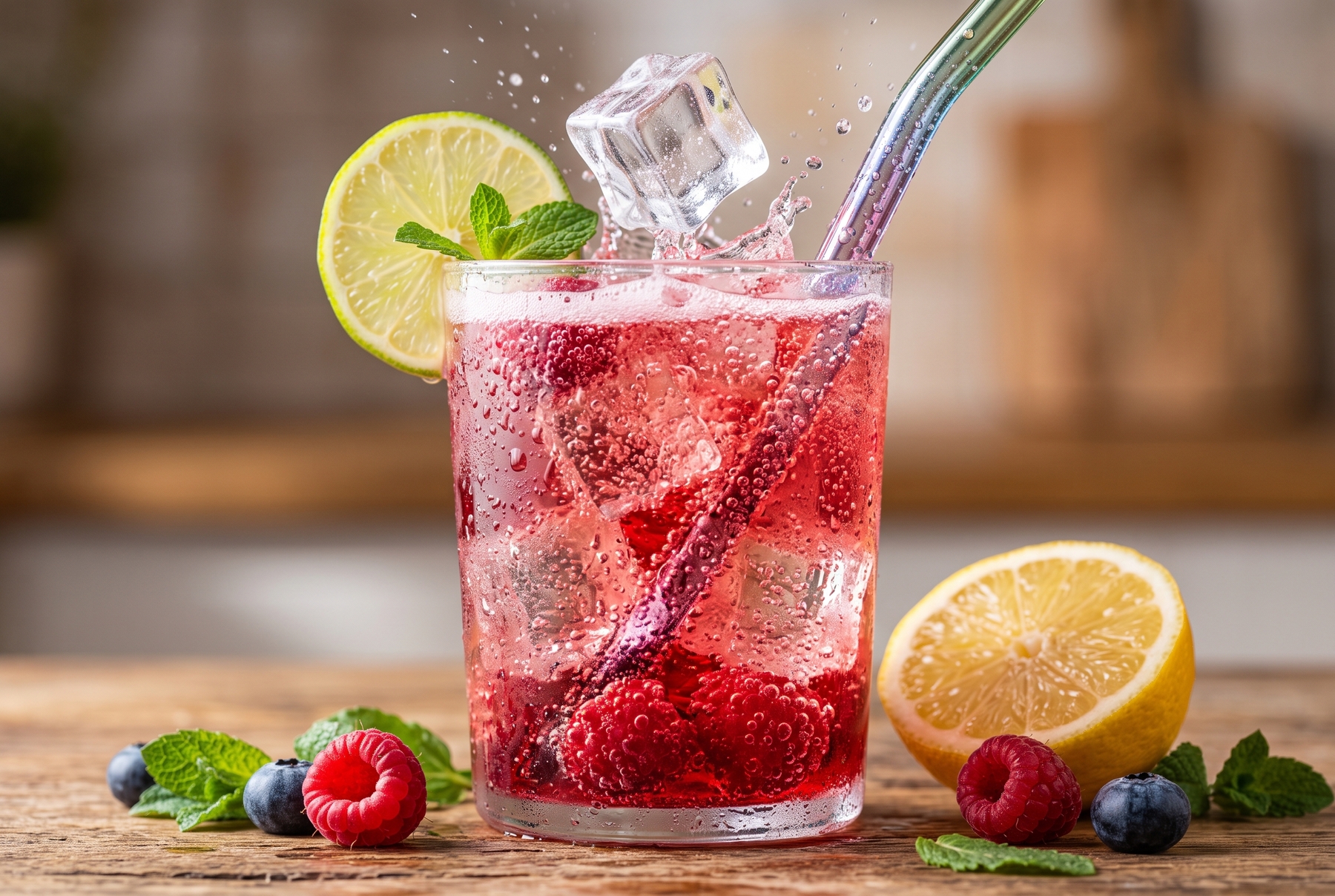
The secret to a child's love for soda lies in the tingling bubbles and icy freshness. A homemade berry drink with ice completely recreates this sensation.
The Rule Of Three: Flavor, Appearance, Experience
At home, a drink requires assembling rather than just pouring. It works like a miniature performance.
Everything starts with temperature. Ice remains mandatory, without exceptions. Warm homemade lemonade loses even to a mediocre store-bought one, because the cold itself forms part of the pleasure: it invigorates, pinches slightly, and makes the flavor brighter. Dropping four or five ice cubes into a glass and letting them clink against the crystal gets half the job done.
Color follows next. Raspberry puree dyes water a thick fuchsia. Orange delivers a sunny orange hue. Mint and lime transform the drink into a cool green. The brightness must be visible from the other end of the table, otherwise the child refuses to believe it tastes good.
Then comes the glassware. Speaking frankly: a beautiful glass works better than any lecture about the benefits of vitamins. A double-walled glass (where ice melts slower and appears to float beautifully in the air) does wonders. Using a reusable straw, whether glass or metal, elevates the experience. A paper umbrella, an orange slice on the rim, or a couple of berries at the bottom all help. An adult views this as nonsense. A child views this as a restaurant experience.
Homemade Soda For Kids: Gathering The Bubbles
Starting with carbonated water that lacks a harsh salty profile provides the best foundation. Taking neutral mineral water, without strong salinity or a pronounced ‘mineral’ aftertaste, guarantees success. Salty medicinal water ruins any syrup, so reading the label helps: the calmer the water’s own taste, the better.
Next comes the building phase. Mashing fresh berries (like raspberries or strawberries) with a fork or blending them, then pressing them through a sieve to remove seeds, creates magic. This puree functions as both coloring and flavor simultaneously.
Here is a simple recipe for a homemade ‘Fanta’ suitable for a children’s party.
Ingredients for one large glass:
- 50 ml (1.7 oz) fresh orange juice (from half a large orange)
- 2 tbsp mandarin puree
- 150 ml (5 oz) cold carbonated water
- 4–5 ice cubes
- 1 orange slice for the glass rim
Instructions:
- Dropping ice into the glass and topping it with the mandarin puree starts the process.
- Pouring the orange juice and stirring slightly allows the puree to dissolve.
- Adding the carbonated water slowly down the side of the glass comes next. Pouring down the side prevents the bubbles from escaping all at once, keeping the drink fizzy longer.
- Garnishing the rim with an orange slice and inserting a straw finishes the drink.
The first sip delivers a cold, slightly prickly sensation from the bubbles, alongside a truly orange flavor. Seeing a child’s eyes widen and hearing them ask for more means everything went perfectly.
Hidden Sweetness: Tricking The Receptors
Going completely sugar-free right from the start rarely works, and fighting that battle on the first day serves no purpose. The softer goal involves replacing sugar with less harmful alternatives and gradually reducing the total amount.
Natural syrups save the day here. Jerusalem artichoke syrup offers a soft sweetness and an almost neutral flavor. Date syrup gives off caramel notes and pairs wonderfully with berries. A drop of honey works well in warm drinks, but honey requires caution: some children have allergies, and babies under one year old should never consume it. Adding any of these options little by little, literally a teaspoon at a time, and tasting along the way yields the best results.
Herbs introduce freshness. Mint invigorates and cools. Tarragon provides that recognizable childhood lemonade flavor, green and sweet, but now without artificial dyes. Basil, especially the purple variety, pairs beautifully with strawberries. A couple of leaves per glass suffice: rubbing them between the fingers before dropping them into the water releases their essential oils.
Now comes the main objective. Reducing the sweetness gradually ensures long-term success. Removing a portion of the syrup every week (about 10–15% of the previous amount) works perfectly. A child’s receptors possess flexibility; they adapt to a new level in a few days and stop demanding the previous cloying sweetness. After a month or six weeks, a drink that initially seemed bland feels completely normal. Cutting the sweetness abruptly always leads to a rebellion and a swift return to the store-bought can.
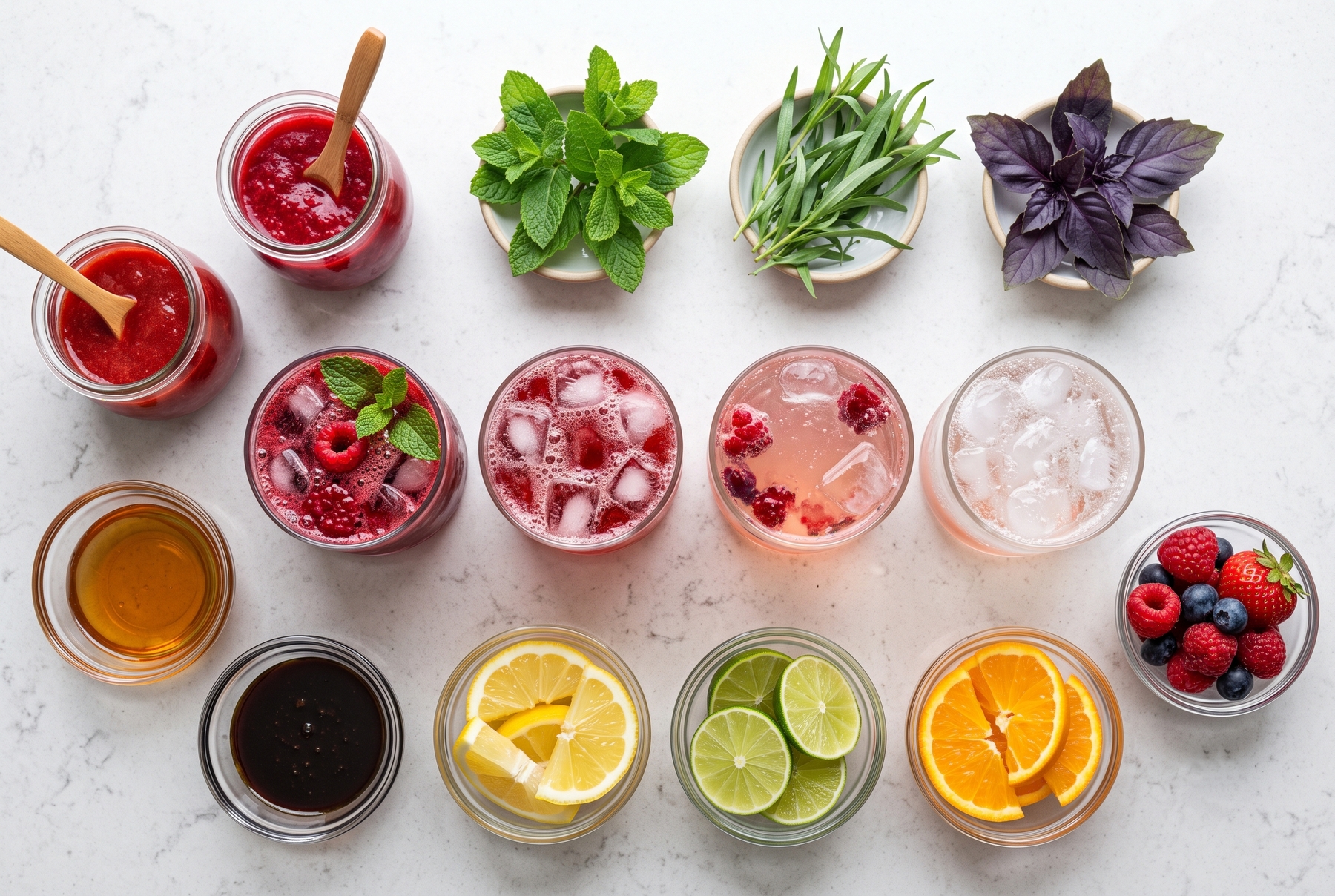
Fresh berries, mint, tarragon, basil, and natural syrups provide the perfect foundation for creating delicious and safe homemade lemonades.
Playful Drinks For Kids: Letting The Child Play Chemist
One specific trick exists that almost no child can resist. The magic of color.
Brewing Anchan tea (blue Thai butterfly pea flower tea) creates a rich blue, almost inky infusion. Letting the child squeeze a little lemon into the glass sparks the magic. Right before their eyes, the blue shifts and becomes violet, then lilac, then almost pink. This relies on natural pigment rather than artificial dye: butterfly pea flowers change hue when exposed to acid. Mesmerized, children repeat this ten times in a row and easily finish the entire glass in the process.
The second trick proves even simpler. Ice treasures. Freezing berries, mint leaves, or thin slices of lemon or kiwi in ice cube trays creates a stunning visual. In clear water, such cubes look like jewels, and as they melt, they tint and flavor the drink. A child watches them as if they were alive.
The third and most reliable method involves setting up a home bar. Placing small bowls on the table with puree, syrups, fruit slices, ice, and a bottle of sparkling water creates an interactive station. Stepping back allows the child to mix, pour, and experiment with proportions on their own. Drinks made with their own hands are consumed with a completely different appetite, even if the results taste strange. My youngest son once combined strawberry with tarragon and felt incredibly proud of himself. The flavor remained highly debatable, but he drank it down to the last drop.
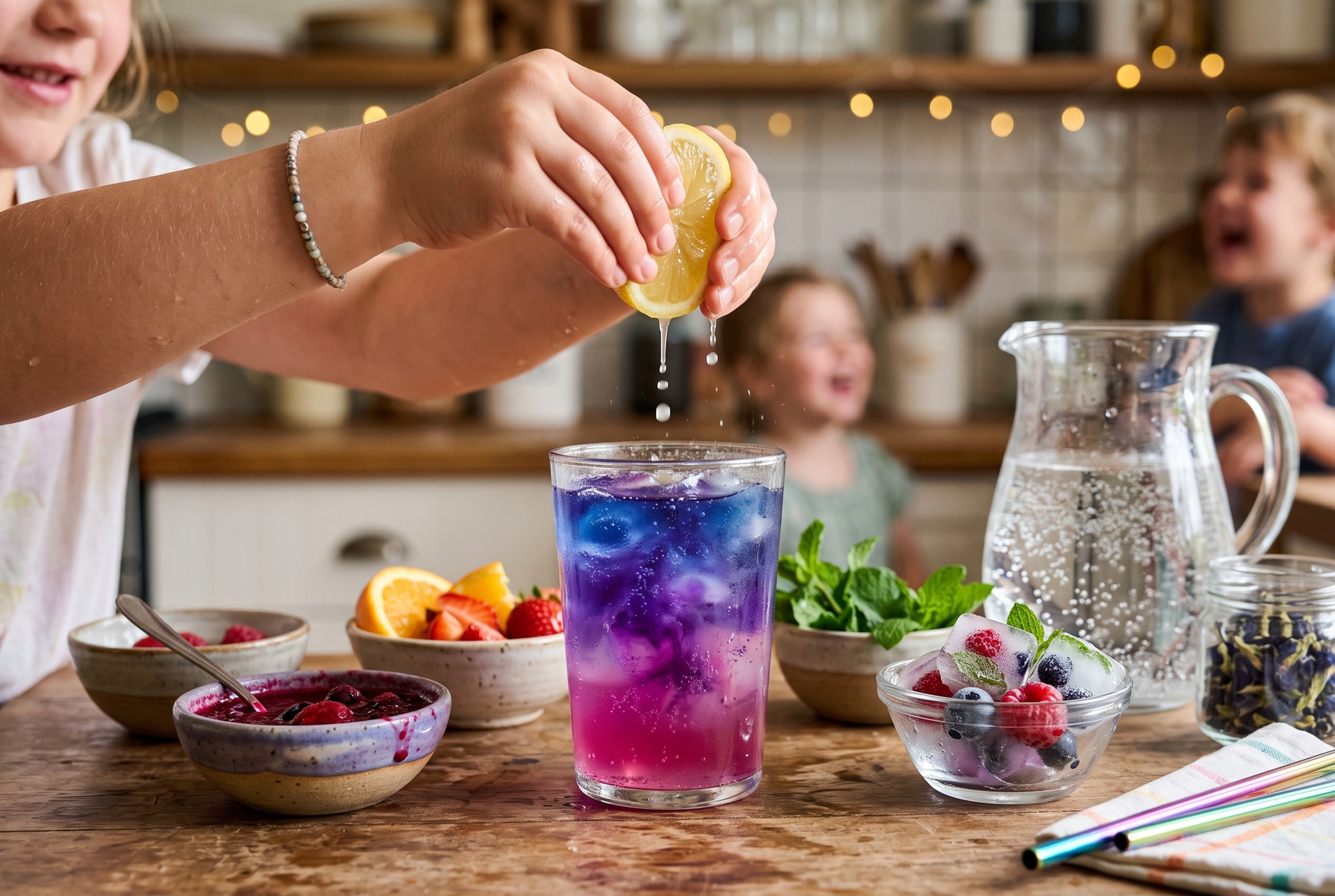
Interactive drinks turn ordinary hydration into a game. Natural blue Thai Anchan tea instantly changes its color to lilac upon contact with lemon juice.
What To Swap For A Child’s Soda: A Parent’s Cheat Sheet
Keeping a ready-to-go kit in the refrigerator prevents the phrase ‘Mom, I’m thirsty’ from catching anyone off guard. The drink comes together in a minute rather than turning into a separate cooking ordeal.
The minimum stock includes:
- A bottle of neutral carbonated water
- Berry puree in a small jar (raspberry or strawberry, keeps cold for a couple of days)
- One natural syrup of choice (Jerusalem artichoke or date)
- Lemon and orange
- A bunch of mint in a glass of water, treated like a bouquet
- Ice cube trays with frozen berries inside
This kit allows you to assemble almost any homemade soda alternative without staying at the fridge for more than five minutes.
School presents a separate story. At home, the drink remains beautiful, cold, and full of bubbles. By the third period, it risks warming up and going flat. The right drinkware saves the day. A wide-mouth thermos or a double-walled bottle keeps the drink cold for hours and prevents the drink from losing its fizz too early. Dropping a couple of ice cubes with frozen berries inside and adding a straw completes the setup. During recess, such a bottle looks much more interesting than a classmate’s can of cola, and honestly, this works better than any lecture about the dangers of sugar.
Tested on three children. The eldest now reaches for carbonated water with lime on her own, and the middle child still considers the blue tea that turns pink from lemon to be the greatest magic trick in the world.
0 comments