
Georgian-style chicken gizzards, widely known as kuchmachi, are a wonderful example of how simple offal can be transformed into an exquisite delicacy through the masterful use of spices. Traditionally, this dish was prepared in the rural regions of Georgia using all parts of the bird, but the gizzard version is prized for its unique, dense texture. The main secret to success here lies in patience: slow, prolonged simmering makes the muscle tissue tender while preserving a pleasant chewiness. The aroma of khmeli suneli (a traditional Georgian spice blend) combined with the sharpness of garlic instantly transports your imagination to a cozy Tbilisi courtyard, full of hospitality and warmth.
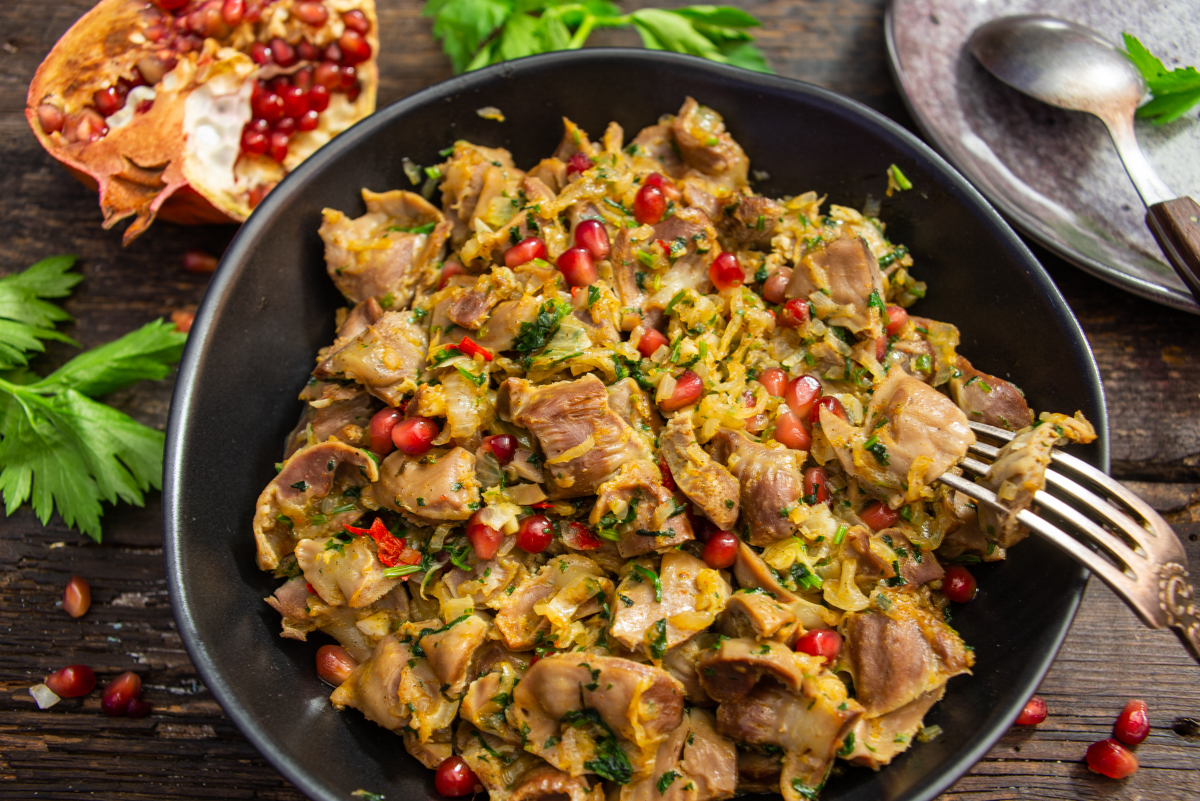
Fragrant Georgian-style chicken gizzards garnished with pomegranate seeds and fresh cilantro make a perfect hot appetizer.
Ingredients
- 1 kg (2.2 lbs) chicken gizzards
- 150 g (5.3 oz) onions
- 40 g (1.4 oz) fresh cilantro
- 4 cloves of garlic
- 1/2 hot red pepper pod
- 1/2 small pomegranate
- Khmeli suneli (Georgian spice blend)
- Ground red pepper
- Vegetable oil
- Root vegetables and spices for the broth
How to Make Georgian-Style Chicken Gizzards
Sort the chicken gizzards and clean them thoroughly, trimming away excess fat and any unwanted parts. Pay special attention to any yellow spots and membranes—these can contain bile and will make the dish bitter! Rinse the cleaned gizzards well, first in a bowl of water, then under cold running water.
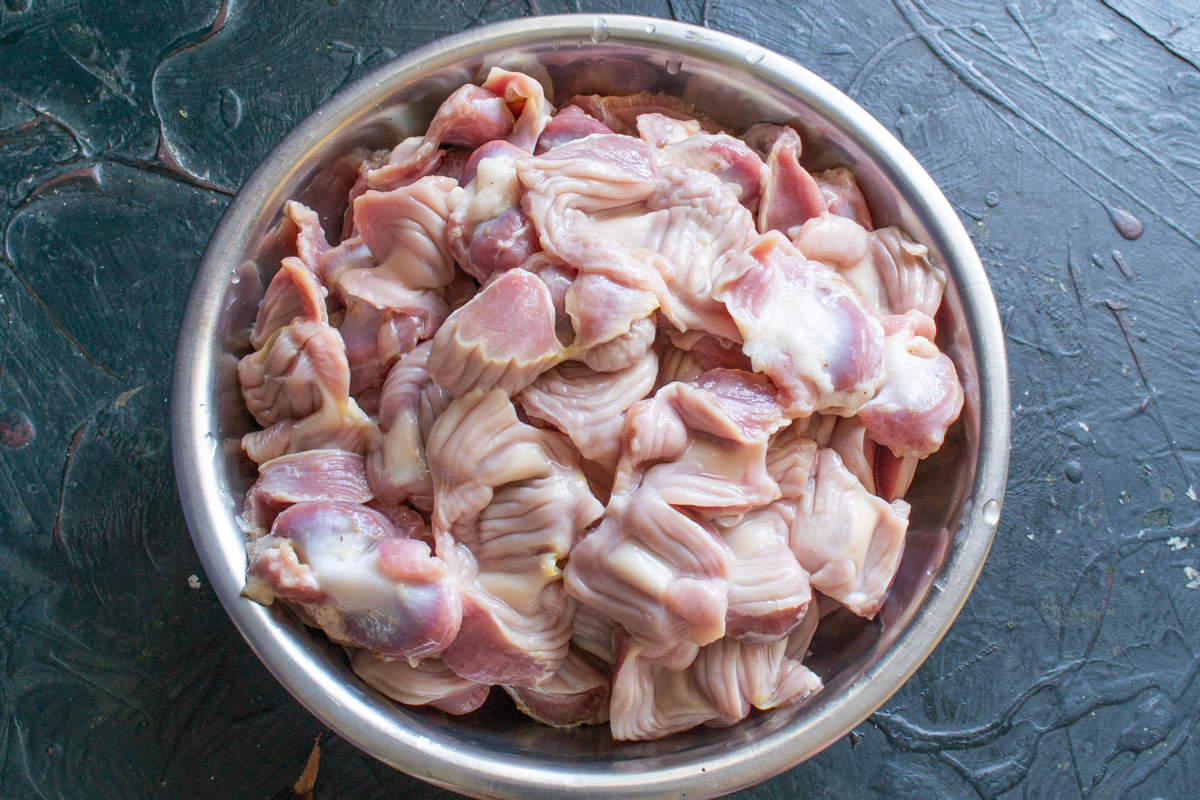
Before cooking, the gizzards must be thoroughly cleaned of fat and yellow membranes to avoid bitterness.
Place the prepped gizzards into a pot. Add root vegetables and spices for the broth: a small bunch of cilantro with roots attached, a carrot, an onion, a few bay leaves, and a teaspoon of whole black peppercorns.
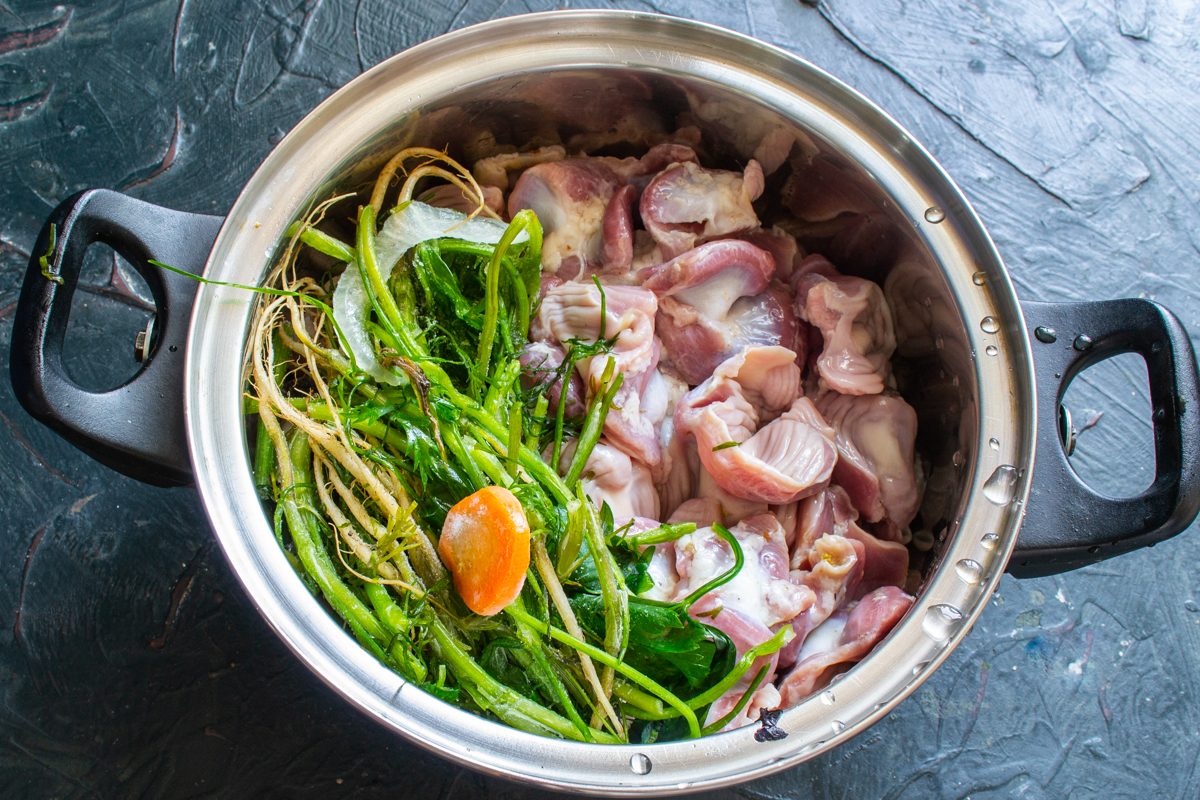
For a rich and aromatic broth, add cilantro roots, carrot, onion, and bay leaves to the gizzards.
Pour in about 2 liters (8.5 cups) of cold water and season with salt to taste.
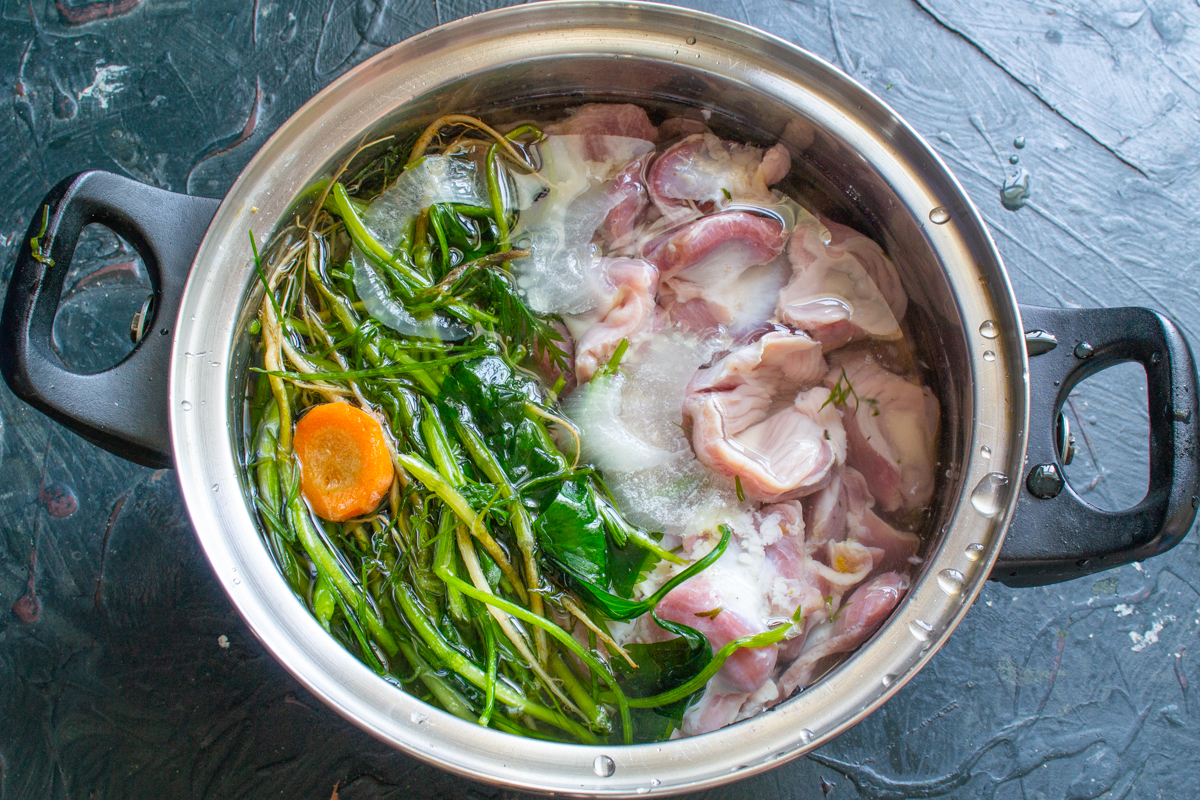
Cover the prepped ingredients with cold water and season with salt to taste before boiling.
Bring to a boil. Simmer the chicken gizzards over low heat for about 2 hours. While some offal, like chicken livers, cooks very quickly, gizzards require patience. You need at least an hour and a half. During this time, the muscle tissue will soften while retaining a pleasant chew—it will be delicious!
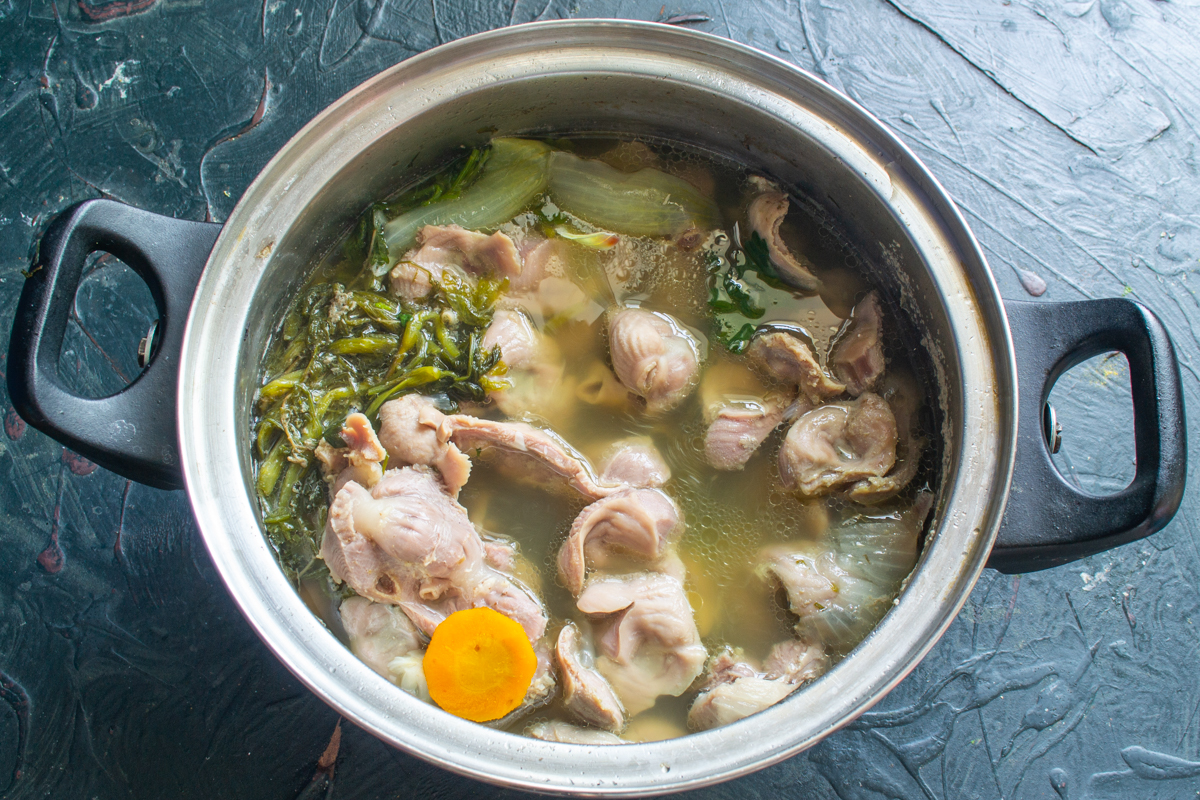
Simmer the gizzards over low heat for at least an hour and a half to two hours until they become tender and soft.
Remove the gizzards from the pot and strain the broth. Reserve this flavorful broth for making soups or sauces; it is just as rich and tasty as any regular meat stock.
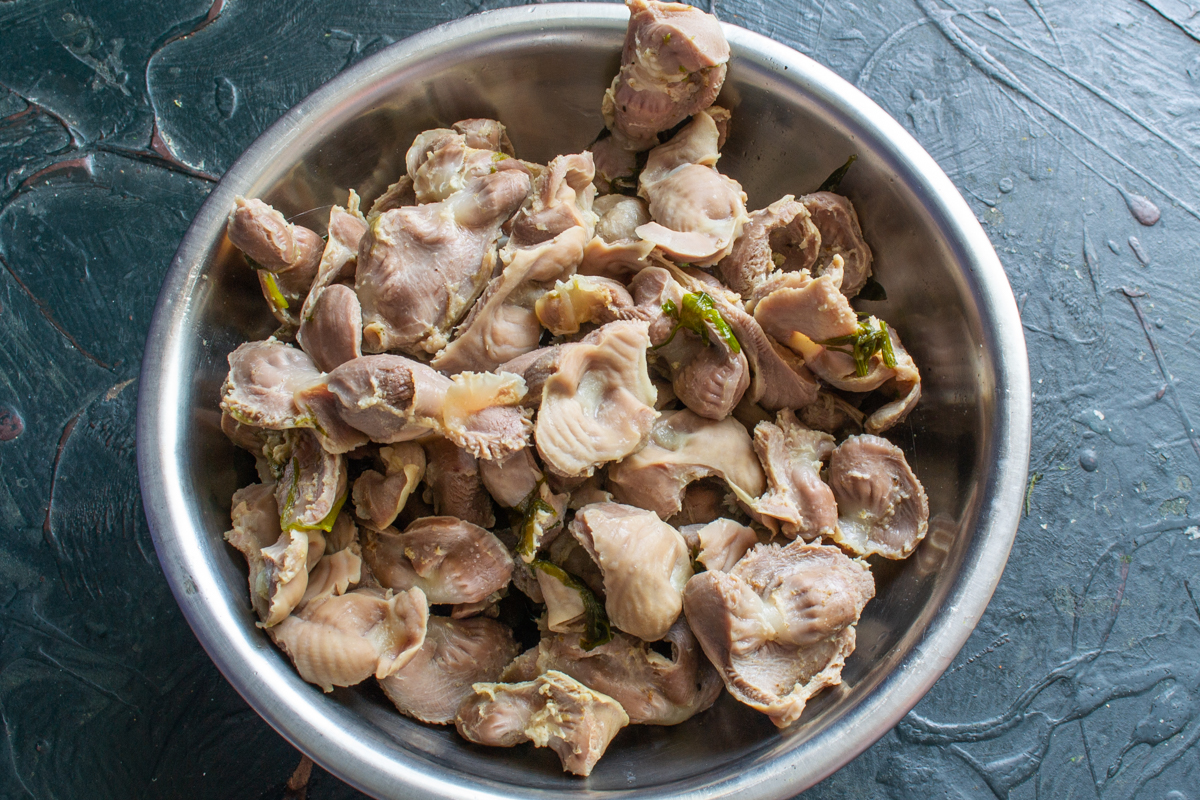
Remove the boiled offal from the broth. The broth itself can be used to make soups or sauces.
Chop the boiled gizzards into small, bite-sized pieces.
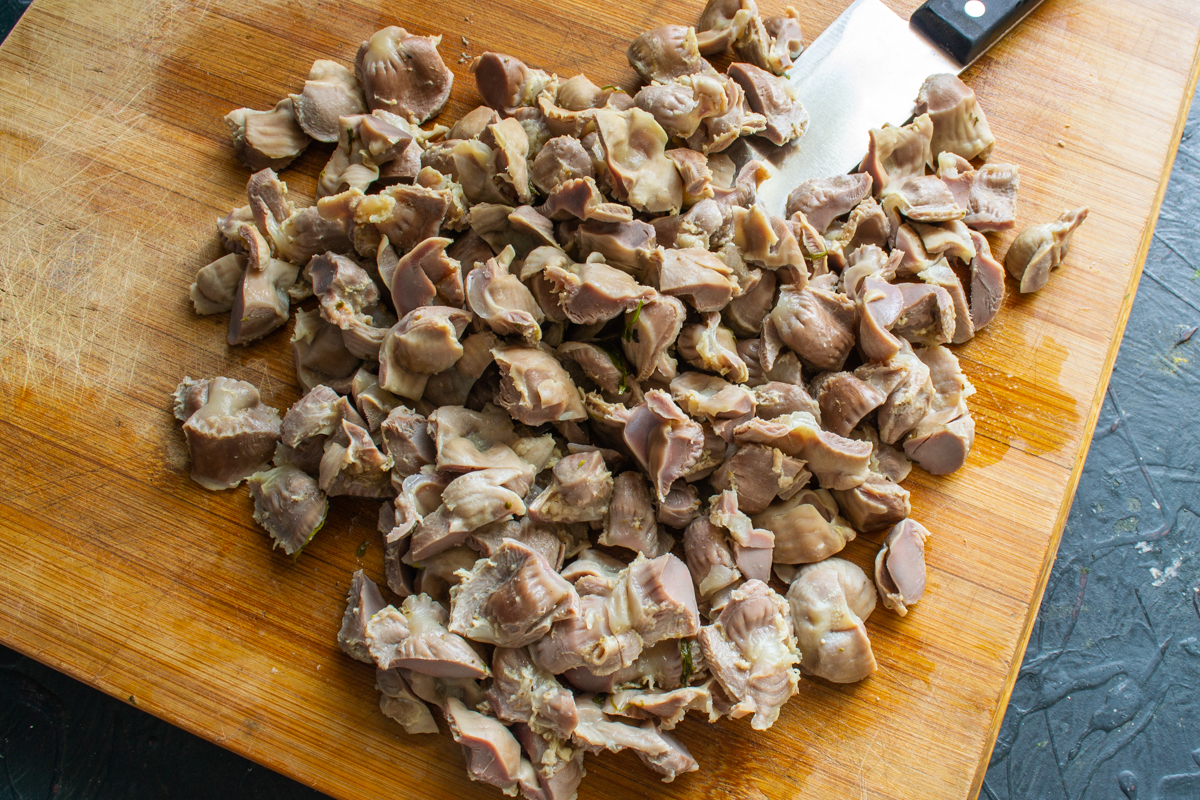
Chop the tender boiled gizzards into small, bite-sized pieces.
Finely dice the onion. Don’t skimp on the onions for this appetizer—the more, the better! Heat a few tablespoons of olive oil in a skillet and add the chopped onions. Sprinkle with salt and stir in a teaspoon of khmeli suneli (a traditional Georgian spice blend). Sauté over low heat for about 10 minutes until the onions are soft and translucent.
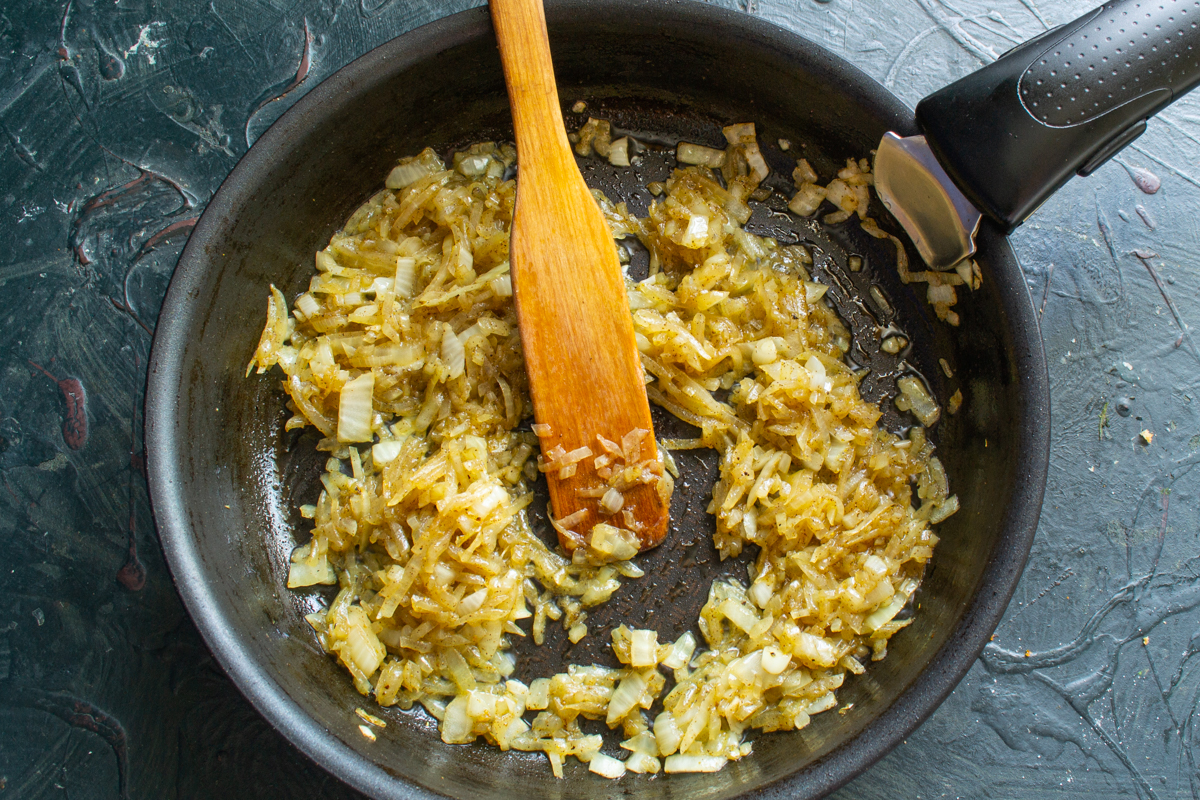
Sauté the onions with khmeli suneli until translucent. The onions add juiciness and sweetness to the appetizer.
Add the chopped chicken gizzards to the sautéed onions.
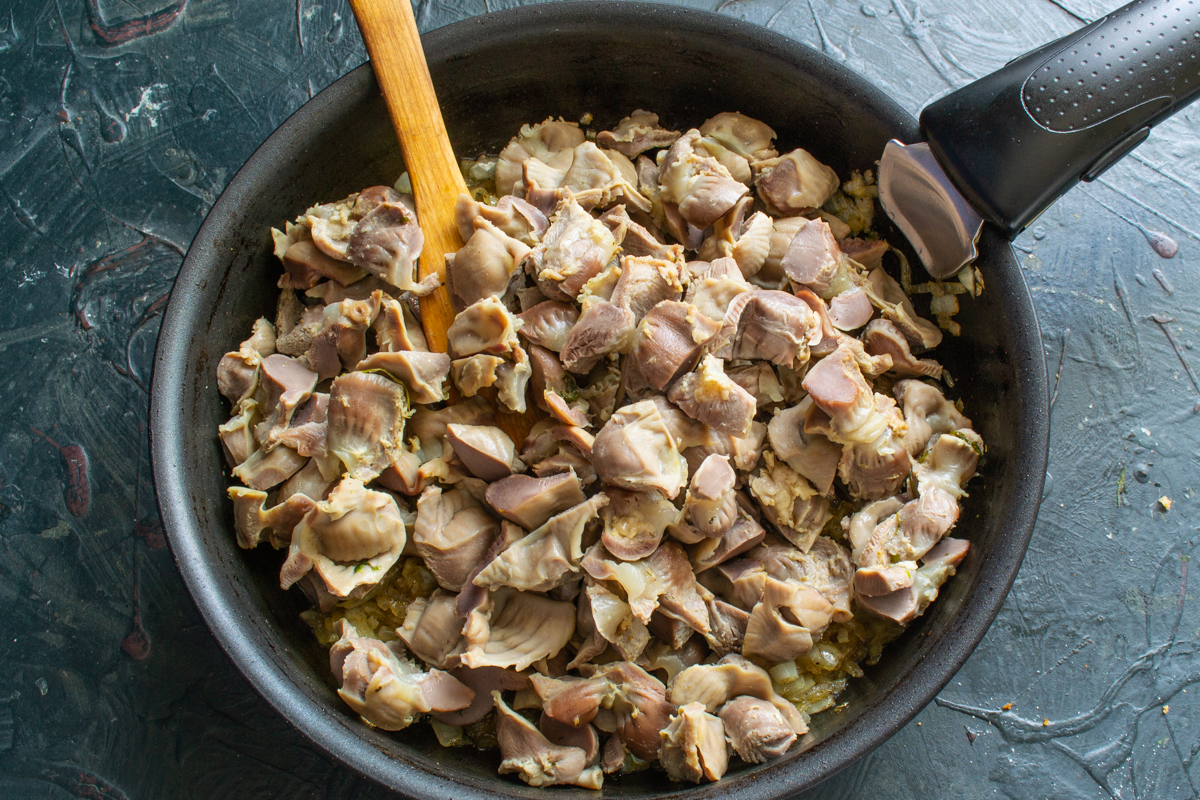
Add the prepped gizzard pieces to the sautéed onions for further braising.
Halve the hot red pepper and remove the seeds. Finely chop both the pepper and the garlic, then crush them in a mortar with a pinch of salt. Stir this spicy garlic paste into the skillet.
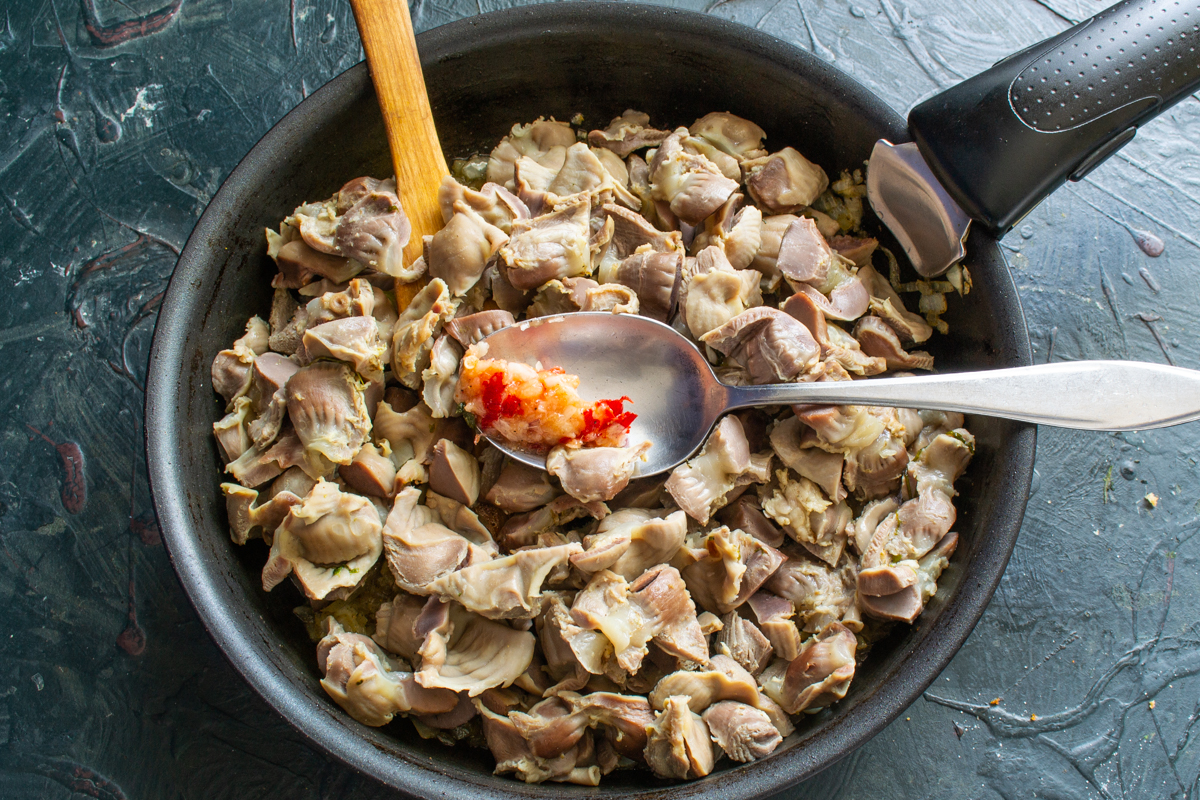
Garlic crushed with hot red pepper gives the dish its characteristic Georgian flair and heat.
Finely chop a large bunch of fresh cilantro. Fold the chopped cilantro into the skillet and season with ground red pepper.
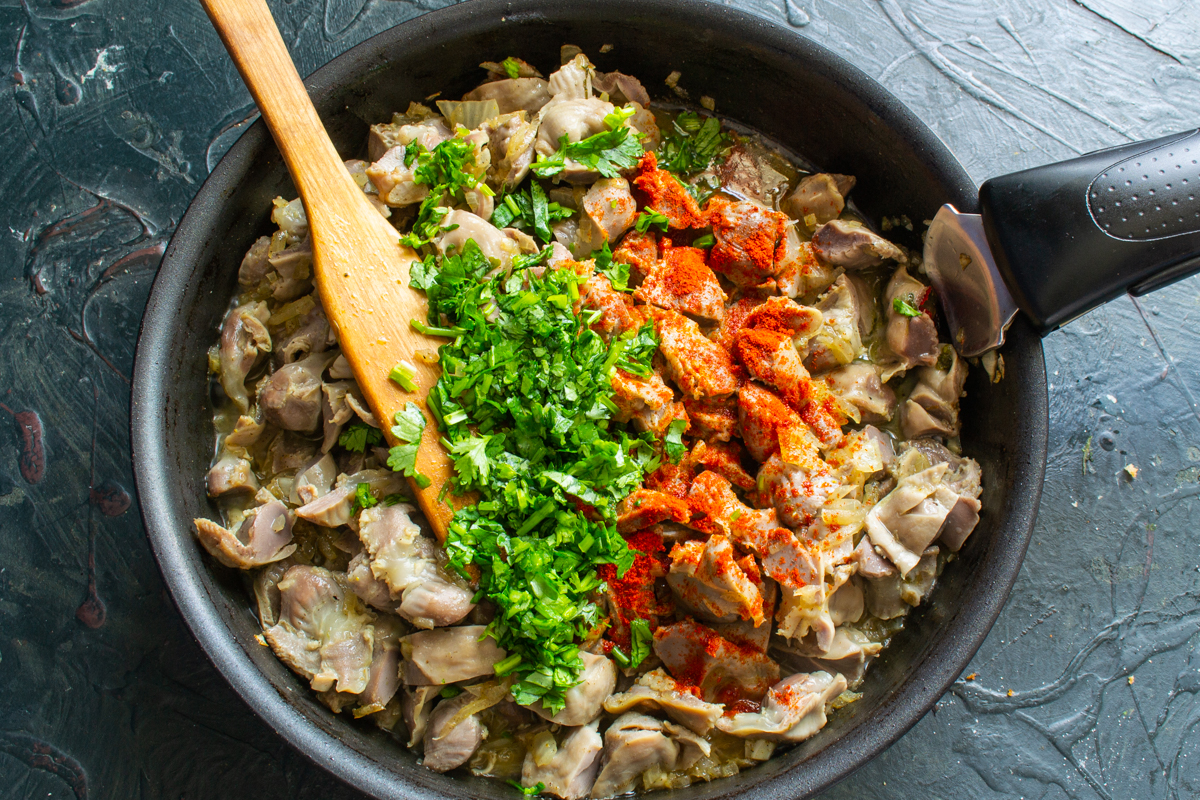
Generously sprinkle the dish with finely chopped fresh cilantro and ground red pepper for flavor.
Mix everything thoroughly and gently heat over medium-low for 10 minutes, allowing the meat to absorb all the vibrant spices, juices, and flavors.
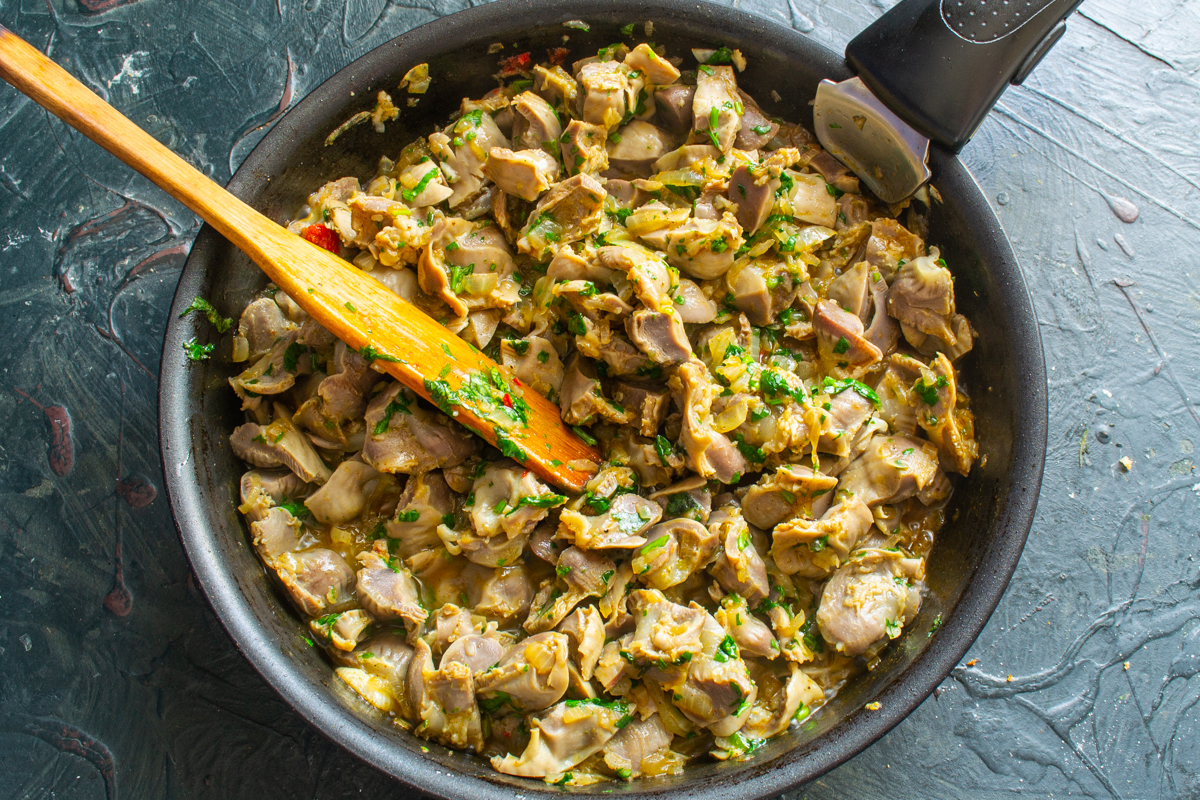
Mix all the ingredients thoroughly and heat for 10 minutes to allow the flavors and aromas to meld.
Cut the pomegranate in half. Hold one half cut-side down in your palm and gently whack the skin with something heavy—the seeds will easily fall out. Toss the pomegranate seeds in with the chicken gizzards.
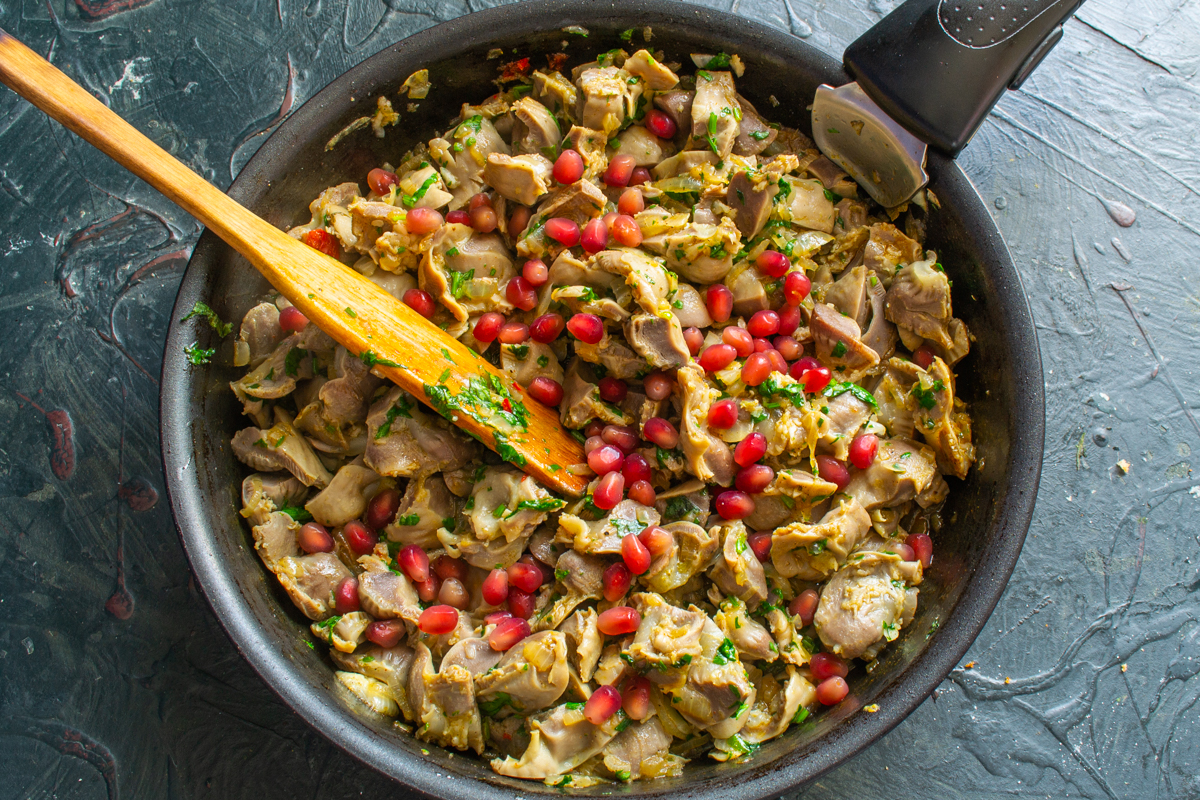
Pomegranate seeds add a pleasant tartness to the dish and make the presentation truly festive.
Transfer the kuchmachi (Georgian-style chicken gizzards) to a large serving plate, garnish with extra cilantro and ground pepper, and serve hot with crusty white bread or lavash (flatbread).
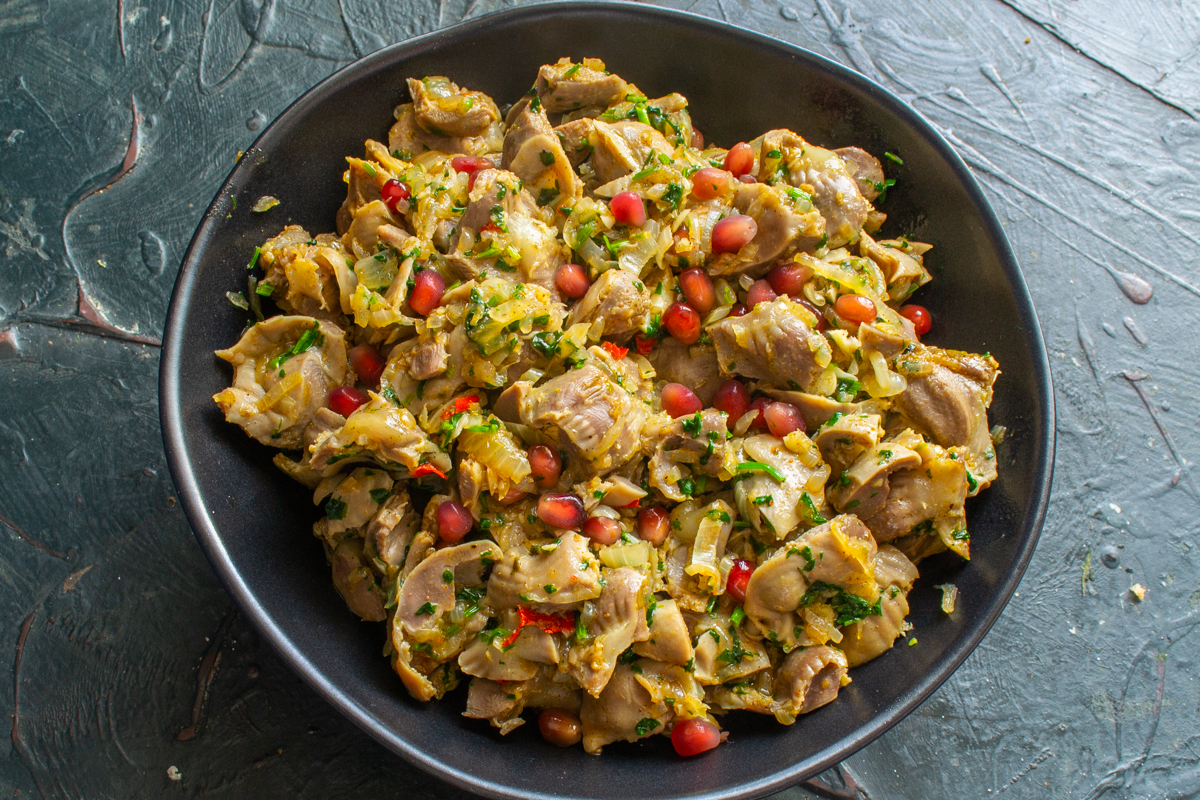
Serve the kuchmachi hot with lavash. This dish pairs perfectly with traditional Georgian bread.
It is recommended to serve these Georgian-style chicken gizzards in an authentic clay dish called a ketsi, which keeps the food hot for a long time and allows it to continue absorbing the aromas of the herbs. Freshly baked lavash (flatbread) or mchadi (Georgian corn tortillas) make the perfect accompaniment for scooping up the spicy sauce from the bottom of the plate. To highlight the Caucasian flair, pair the appetizer with a glass of robust red wine, such as Saperavi, which beautifully balances the sharp garlic and the tart pomegranate seeds.
If you have any kuchmachi left over after the feast, don't worry—the dish becomes even richer the next day as the meat fully absorbs the onion juices and spices. Store it in an airtight container in the refrigerator for up to 48 hours. When reheating in a skillet, splash in a couple of tablespoons of the reserved boiling broth to restore the appetizer's original juiciness. This dish is not only delicious but also an excellent source of protein and iron, making it a valuable addition to a balanced diet.
0 comments