
A bucket of spices and an overnight soak in vinegar do not improve chicken. A proper marinade never hides the ingredient under thick layers of seasoning; instead, it manages salt, moisture, crust, and aroma. Everything else simply adjusts to the specific cut of meat and the chosen cooking method.
After 15 years behind the stove, I stopped believing in overly complex blends of 20 ingredients. The juiciest piece on the plate will almost certainly be a chicken breast prepared with salt, a spoonful of oil, and a handful of thyme. The process takes just 40 minutes and requires no rare equipment—only a bowl, your hands, and a refrigerator.
A good chicken marinade serves a few distinct and simple purposes. Understanding exactly how salt, fat, acid, and aroma function makes it much easier to build a custom marinade for breasts, thighs, wings, or a whole bird, rather than strictly copying someone else’s recipe step by step.
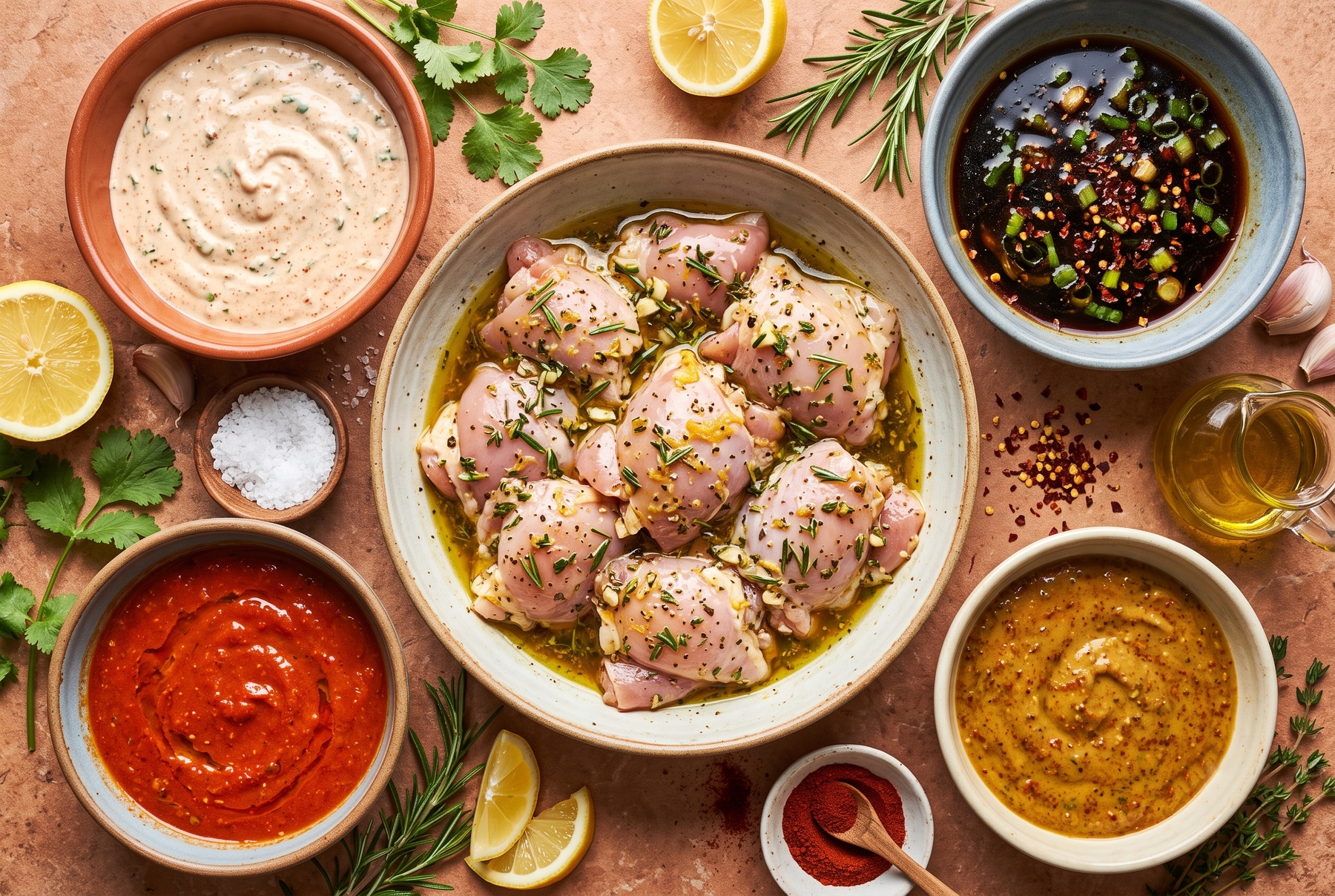
Various chicken marinade options, ranging from gentle fermented dairy to deeply savory soy and rich tomato blends.
Table of Contents
- What a Marinade Actually Does to Chicken
- An Easy-to-Remember Marinade Formula
- Ideal Marinating Times for Various Chicken Cuts
- Classic Marinades That Never Fail
- Unusual yet Effortless Marinades
- Matching the Marinade to the Cooking Method
- Why Chicken Turns Out Dry, Sour, or Flavorless
- Handling Raw Chicken: Safety Without the Paranoia
- Cheat Sheet: 8 Bulletproof Formulas
- How to Transform a Marinade Into a Pan Sauce
- Tailor the Marinade to the Chicken, Not the Chicken to the Marinade
What a Marinade Actually Does to Chicken
Salt Always Works First
Salt acts faster and more powerfully in a marinade than any spice. It alters the protein structure so the meat retains significantly more moisture during cooking. This scientific reaction ensures that even a lean chicken breast remains remarkably juicy inside after searing.
The difference between salting right before hitting the pan and giving the salt proper time is massive. Salting a minute before cooking leaves the seasoning on the surface, drawing moisture out and creating a pool of pinkish liquid in the pan. Salting an hour or two in advance and chilling the meat allows the salt to penetrate deeply. The surface dries out beautifully, and the meat holds onto its natural water. This is why salt in a marinade acts as the primary foundational element rather than a final garnish.
A simple baseline requires about 1% salt by weight, meaning 10 g (0.35 oz) per 1 kg (2.2 lb) of meat. Including soy sauce, a ready-made paste, or mayonnaise in the marinade naturally requires reducing the added salt.
Acid Shines in Moderation
Lemon juice, vinegar, yogurt, kefir (a cultured, fermented milk drink), wine, and tomatoes all provide acid. They function quite differently from what commercial ‘meat tenderizer’ packets promise. Acid does not magically make meat tender on its own. It denatures the exterior proteins, but excessive acid causes those muscle fibers to tighten aggressively. The moisture escapes, leaving the surface dry and grainy. A chicken breast left too long in pure lemon juice feels exactly like a rubber eraser.
Gentle acids—like yogurt, kefir, or ayran (a savory, salty yogurt-based beverage)—work far more delicately than harsh options like vinegar or pure lemon juice because their overall acidity levels are lower. Dairy-based marinades forgive a two-hour rest or even an overnight soak, while a lemon juice marinade ruins a chicken breast if left longer than 30 to 40 minutes.
Fat and Spices Deliver the Aroma
Oil does not make meat juicier by itself. It dissolves the fat-soluble compounds in spices and garlic, distributing those flavors evenly across the surface and helping them cling to the chicken instead of washing down the sink. Without fat, paprika and thyme smell distinctly muted.
A key guideline I constantly repeat to culinary interns is that a raw marinade must smell significantly punchier than the final dish, as a large portion of the aroma evaporates with the steam. If a raw marinade smells exactly how you want the finished meal to taste, the food on the plate will ultimately taste bland.
Sugar and Honey: Great for Crusts, but Prone to Burning
Sugar and honey deliver gorgeous color and a glossy sheen. Moderate heat—an oven set to 200 °C (390 °F)—caramelizes them into a beautiful, sticky crust. Intense open flames cause sugar to burn long before the meat cooks through, creating an acrid, bitter exterior over a raw center.
In a practical kitchen setting, honey and sugar excel in ovens and skillets, but they demand extreme caution on a charcoal grill. Brushing a sweet glaze onto the meat during the final minutes over the coals works beautifully, rather than mixing it into the raw marinade from the very beginning.
An Easy-to-Remember Marinade Formula
Every highly effective marinade relies on five core components: salt, aroma, fat, a gentle acid, and time. Remembering this basic framework simplifies cooking—swapping herbs, spices, or pastes completely changes the flavor profile without requiring a brand new recipe.
Base Marinade Proportions per 1 kg (2.2 lb) of Chicken
A reliable starting point easily adjusts to the specific ingredient at hand:
- Salt: 8–10 g (0.3 oz), or substituting 2 tablespoons of soy sauce for a portion of the salt;
- Fat: 2–3 tablespoons of neutral or olive oil;
- Gentle acid: 2–3 tablespoons of yogurt or kefir (for long marination);
- Strong acid: 1–2 tablespoons of fresh lemon juice (for up to one hour);
- Aroma: 3–4 crushed garlic cloves, 1–2 teaspoons of dried spices, a handful of fresh herbs;
- Time: Ranging from 30 minutes to overnight, heavily depending on the chicken cut and the acid type.
Incorporating soy sauce, a savory paste, mayonnaise, or mustard requires cutting back on or entirely eliminating extra salt, as these ingredients pack plenty of sodium already.
How to Know Your Marinade Is Perfectly Balanced
Tasting the raw, clean marinade before adding the chicken is crucial. It must taste assertively salty—slightly saltier than pleasant—because the meat will absorb a significant portion. The aroma should feel vibrant, and the tanginess or heat should hit the palate without burning the throat. Vinegar must not overpower the balance, and raw garlic should not scorch the tongue. Flinching at the acidity means it needs more oil or yogurt to mellow out. A flat flavor simply means it desperately needs more salt.
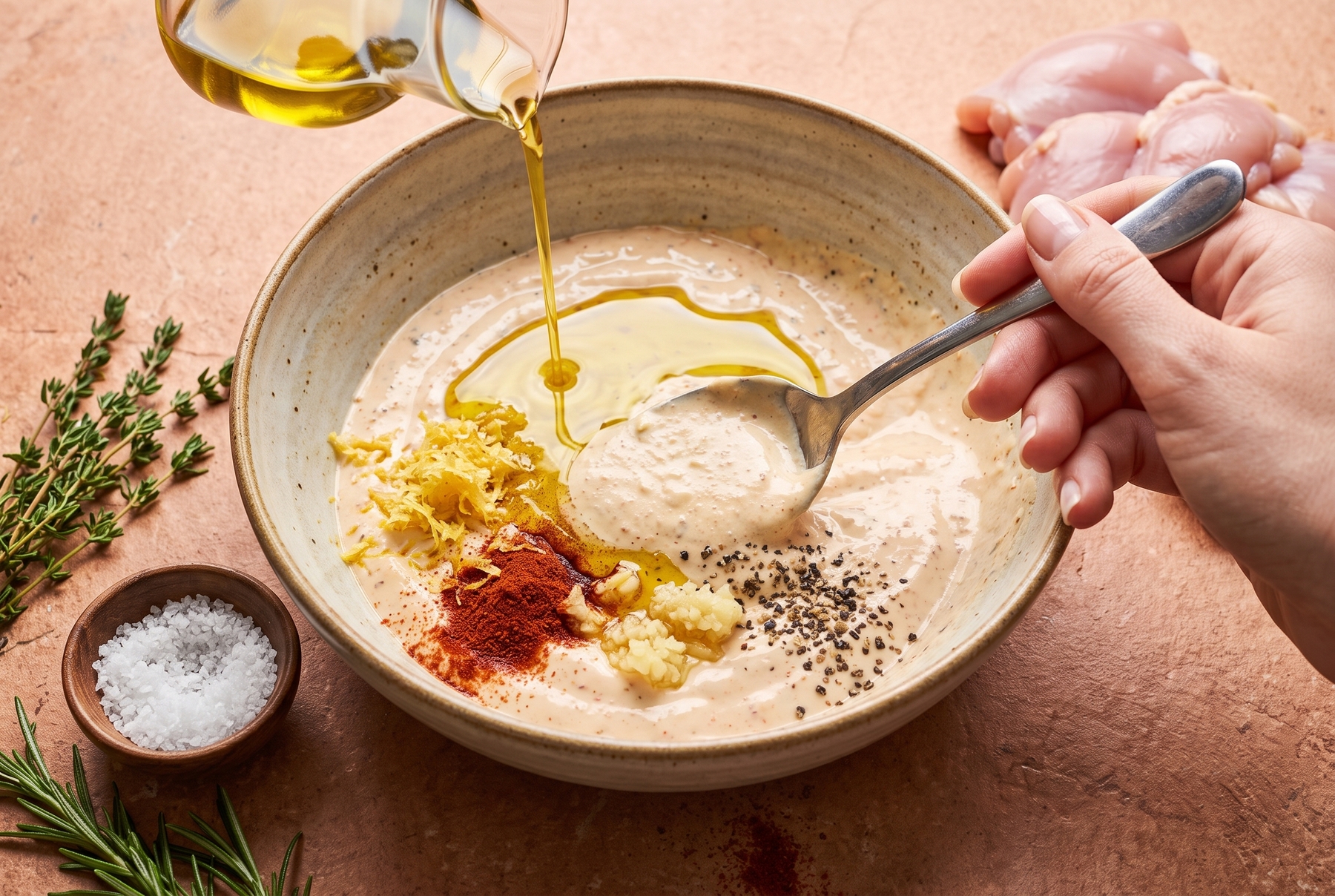
Adding a splash of neutral oil helps unlock the potent aromas of dried spices, crushed garlic, and citrus zest, distributing them perfectly across the meat.
Ideal Marinating Times for Various Chicken Cuts
Marinating Chicken Breasts
Chicken breasts require careful attention: they lack fat and dry out effortlessly. A gentle marinade needs only 30 to 60 minutes to work its magic. Using lemon or vinegar demands caution—a strict maximum of 30 minutes prevents the surface from turning rubbery. Salt and oil ultimately matter far more here than acidity.
Marinating Chicken Thighs and Drumsticks
Thighs and drumsticks handle preparation much more forgivingly. Their higher fat and connective tissue content welcomes long soaking times, boldly spiced dairy mixtures, and sugary glazes. Two hours is perfectly standard, and they easily survive an overnight stay in the refrigerator. Dark meat tastes dramatically better when cooked to an internal temperature of 75–80 °C (165–175 °F), which is higher than for breast meat; this extra heat melts the collagen, rendering the meat incredibly tender.
Marinating Chicken Wings
Wings demand a stellar crust. The marinade acts primarily as a foundation for deep color and future crispiness, utilizing soy sauce, honey, paprika, fiery pastes, and dry rubs. The skin must remain dry before hitting high heat, so patting marinated wings dry—or even air-drying them uncovered in the fridge—yields superior results.
Marinating a Whole Bird
A whole chicken needs more than just an external marinade, as flavor rarely penetrates through the skin deep into the breast meat. A flawless roast requires a three-step technique: dry-brining the entire bird in advance, sliding seasoned butter or oil under the breast skin, and applying a light external marinade for beautiful coloration. Salt nestled under the skin works much more effectively than letting the entire bird float aimlessly in a liquid bath.
A quick time reference eliminates all the guesswork:
- 30 minutes: Breasts, thin cutlets, and rapid marinades;
- 2 hours: Thighs, drumsticks, wings, dairy-based, and highly spiced mixtures;
- Overnight (8–12 hours): Whole birds, kebab thighs, and gentle acids. Safely executing a long marination requires strict refrigeration and the absolute omission of harsh vinegar or lemon juice.
Classic Marinades That Never Fail
Lemon, Garlic, Olive Oil, and Herbs
This Mediterranean foundation pairs perfectly with almost everything: breasts, thighs, oven roasting, or grilling. It calls for the juice and zest of half a lemon, crushed garlic, high-quality olive oil, fresh thyme or rosemary, and kosher salt. It comes with one strict rule: never leave lemon on the meat for too long, or the breast will toughen. Allow 30 minutes for white meat and one hour for dark.
Kefir or Yogurt with Onion and Spices
A gentle, fermented-dairy base makes brilliant kebabs and roasted chicken. Kefir works much more delicately than vinegar: its acidity is mild, and the milk proteins expertly lock in moisture. Finely grated onion releases potent juices and aromas. Ground cumin, paprika, black pepper, and salt complete the profile. Chicken thighs happily sit in this mixture overnight in the fridge.
Soy Sauce, Ginger, Garlic, and a Touch of Honey
This combination works wonders for wings, thighs, pan-frying, and roasting. Soy sauce brings salt and deep umami, ginger and garlic deliver an aromatic punch, and a spoonful of honey guarantees a gorgeous gloss. Two warnings apply here: the soy sauce provides enough salt on its own, and the honey will burn quickly on an open flame. This marinade strongly prefers the controlled heat of an oven over a roaring charcoal grill.
Mustard, Oil, and Paprika
This rapid, everyday household marinade pulls incredible color from the oven. Combining mustard (smooth or whole grain), oil, smoked or sweet paprika, garlic, and salt creates a flawless emulsion. The mustard acts as an emulsifier, a mild acid, and a culinary glue for the spices. After just 40 minutes, the flavor clings securely to the surface, and the oven transforms the chicken into a magnificent burnt-copper masterpiece.
Onion, Black Pepper, and Salt
A minimalist classic beloved by kebab purists who fiercely distrust vinegar. It relies on a heavy hand of onions—either grated or sliced and squeezed—coarsely cracked black pepper, and coarse salt. The onion does not act as a miraculous tenderizer; its enzymes are too weak. Instead, it provides abundant moisture, sweetness, and that signature savory aroma. The meat can rest in this mixture for a few hours or a full overnight shift.
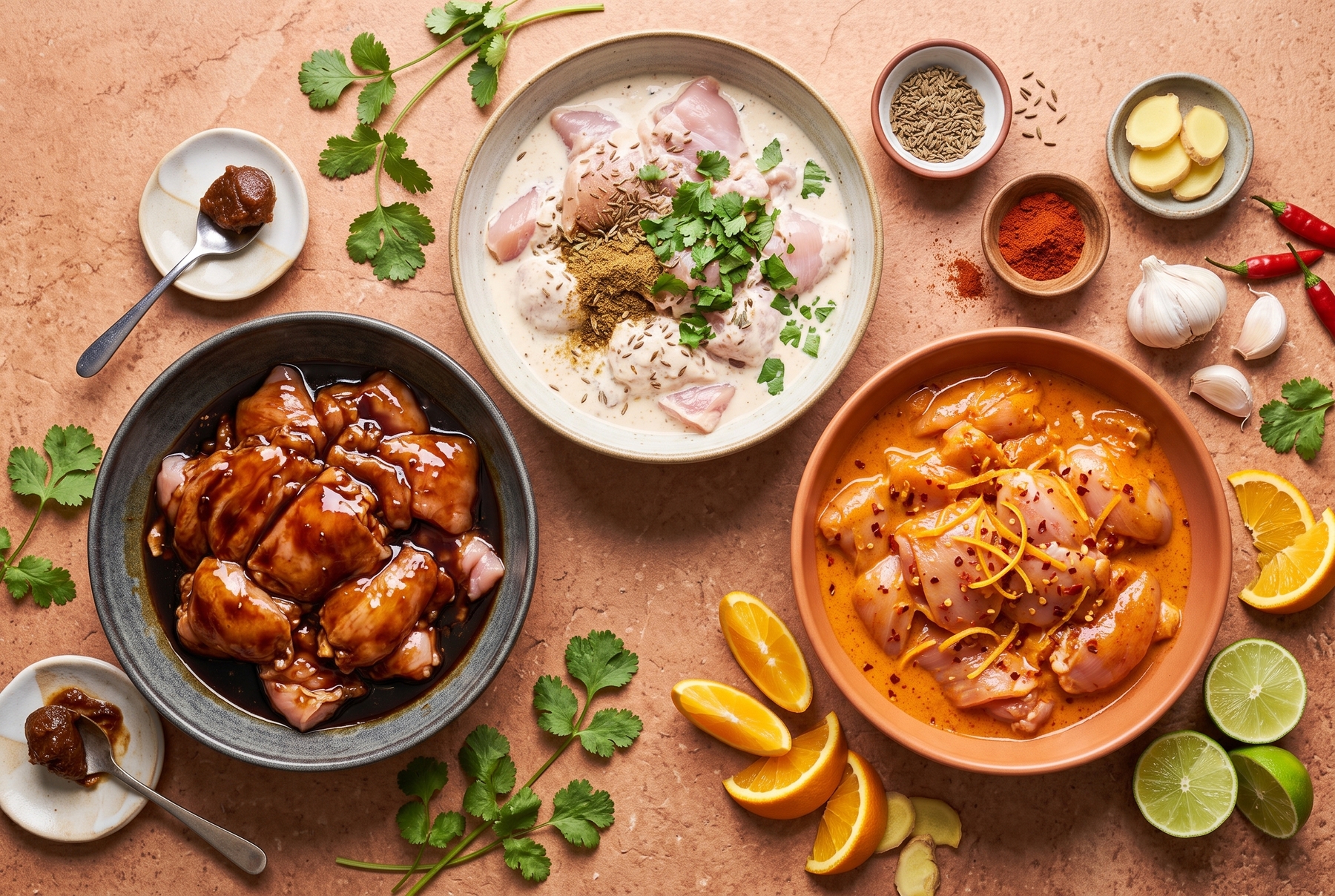
Raw chicken resting in three distinct and highly popular marinades: a classic Asian soy blend, a gentle kefir base, and a vibrant orange citrus mixture.
Unusual yet Effortless Marinades
Miso, Honey, and Rice Vinegar
Miso paste delivers a heavy dose of concentrated umami and salt, honey guarantees a caramelized glaze, and rice vinegar introduces a mellow, smooth acidity. This combination heavily favors thighs and wings, especially in a hot oven where the sugars transform into a brilliant, sticky crust rather than turning to ash. Factoring in the salt from the miso means additional salt is rarely necessary.
Orange, Chili, and Smoked Paprika
A sweet and spicy profile built perfectly for the grill or the roasting pan. Mixing orange juice and zest, fresh or dried chili, smoked paprika, garlic, oil, and salt creates magic. The balance remains delicate: adding too much orange quickly pushes the flavor into dessert territory. Keeping the salt and heat forward balances the sweetness, and brushing the sugary components on near the end of grilling ensures perfection.
Ayran, Cumin, and Cilantro
This mix targets lovers of bold Caucasian and Central Asian flavor profiles. Ayran operates similarly to kefir but brings extra salinity; cumin offers that iconic earthy, smoky essence; and fresh cilantro injects vibrant freshness. This pairs beautifully with thighs for charcoal kebabs and whole drumsticks. Tossing in sliced onions elevates the dish, and it comfortably marinates overnight.
Coconut Milk, Lime, and Curry
A mellow, highly aromatic marinade designed for roasting and slow braising. Combining rich coconut milk, fresh lime juice, curry powder or paste, crushed garlic, grated ginger, and a pinch of sugar yields incredible results. The coconut fat carries the heavy spices while keeping the meat impossibly tender. One caveat: it performs poorly in a dry skillet due to the high moisture and sugar content. It vastly prefers a hot oven or a gentle simmer in a sauté pan.
Tomato Paste, Garlic, Coriander, and Oil
A highly accessible blend built from ingredients found in virtually any grocery store around the globe. Mixing concentrated tomato paste, garlic, ground coriander, sweet paprika, oil, and salt creates a robust paste. The tomato provides vibrant color, a slight acidic tang, and a thick body that clings stubbornly to the meat. It absolutely shines in the oven, where the tomato dries into a concentrated, deeply savory crust. A thick marinade adheres to the chicken rather than melting away into the roasting pan.
Matching the Marinade to the Cooking Method
The Skillet
Pan-frying demands less sugar and significantly less liquid. Excess surface moisture remains the ultimate enemy of a good crust: until the water fully evaporates, the meat cannot brown; it merely stews in its own juices and turns an unappetizing gray. Pulling the chicken from the marinade and thoroughly patting it dry with paper towels fixes this issue instantly. A bone-dry surface hitting hot fat produces that glorious sizzling sound and a golden, crackling exterior.
The Oven
Roasting opens the door to far wider possibilities: thick pastes, mustard, yogurt, tomato, and heavy paprika all perform brilliantly. Standard roasting usually happens around 180–200 °C (350–390 °F). If a marinade relies heavily on honey or sugar, applying that sweet glaze during the final 10 to 15 minutes prevents the exterior from blackening before the center cooks through.
The Grill and Coals
The fiercest enemies of an open flame are sugar, honey, mayonnaise, and dripping fat. These elements instantly flare up, blanketing the meat in acrid, bitter soot before the interior even warms. Choosing drier marinades with minimal sweetness solves this, saving the sugary glazes for the very end. Maintaining moderate heat ensures the crust develops at the exact same pace the center reaches perfect doneness.
Marinades for Chicken Kebabs (Shashlik)
A flawless kebab relies on a collection of tiny details rather than a magical marinade: equal chunk sizes, correct timing, proper salt levels, mild acidity, and expertly managed charcoal heat. Cutting the meat into even pieces (around 40–50 g or 1.5 oz each) guarantees they finish cooking simultaneously. Keeping the acid incredibly mild (kefir, ayran, onion juices, or a mere drop of lemon) protects the texture, as kebabs often marinate for hours in the fridge, where harsh acids destroy muscle fibers. Ultimately, no marinade can salvage a kebab cooked over dying embers or a raging inferno: mastering the coals matters more than mixing the spices.
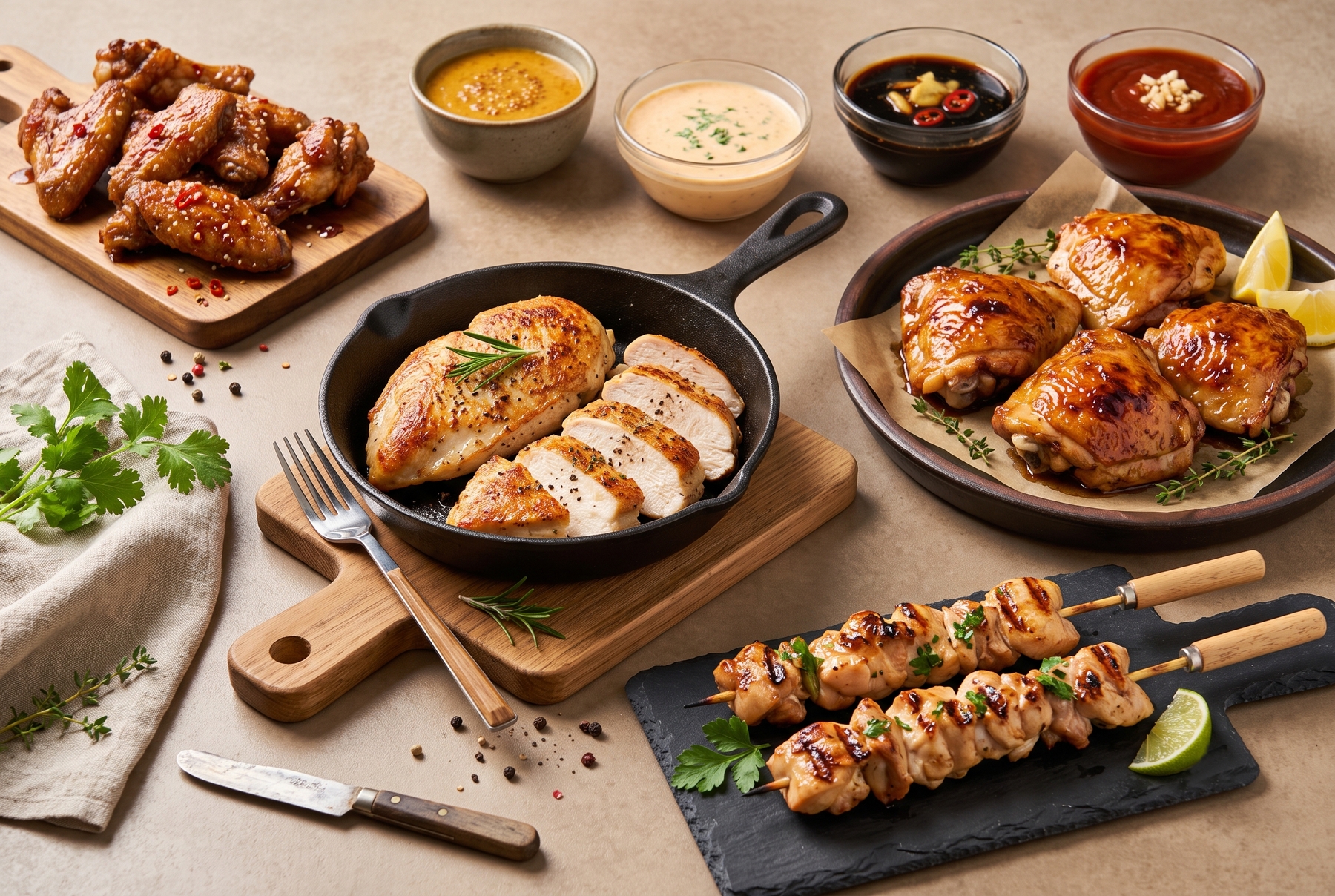
A perfectly chosen marinade guarantees an incredibly juicy chicken breast, a deeply appetizing crust on the wings, and phenomenally tender charcoal kebabs.
Why Chicken Turns Out Dry, Sour, or Flavorless
Most kitchen failures stem from the exact same easily avoidable mistakes. Drowning the meat in excessive vinegar or lemon juice—especially delicate breasts—aggressively tightens the surface, forcing all the natural juices out. Prolonged marinating in harsh acids turns the meat dangerously mushy and cotton-like. Skimping on salt leaves a beautiful-smelling marinade that never penetrates the meat, resulting in incredibly bland chicken hiding beneath an aromatic crust. Hitting a hot pan with soaking wet meat produces a sad, gray, steamed exterior instead of a caramelized sear. Exposing heavy sugars to brutal heat creates a bitter, charred shell hiding a raw center. Threading unevenly sized chunks onto a skewer guarantees the small pieces turn into dry jerky while the larger ones finally cook through.
Flavor deserves a separate mention. Excellent chicken should never smell like a chaotic ‘everything but the kitchen sink’ spice blend. Dumping curry powder, khmeli-suneli (a complex Georgian spice blend), dried Herbes de Provence, and smoked paprika into the exact same bowl buries the chicken under a muddy, confusing aroma. Sticking to a single, clear flavor profile yields vastly superior results.
Handling Raw Chicken: Safety Without the Paranoia
This is the boring technical section, but without it, none of the culinary magic matters. Marinating chicken must happen exclusively inside a refrigerator: bacteria multiply with terrifying speed on raw poultry sitting at room temperature. Kept cold, chicken safely marinates for up to 48 hours. Raw poultry should never sit on a kitchen counter for more than two hours total, and in hot environments exceeding 30 °C (85 °F), pushing past one hour becomes genuinely risky.
Never pour the liquid that housed raw chicken directly over cooked meat as a finishing sauce: it harbors the exact same bacteria found on the raw bird. Creating a safe sauce requires aggressively boiling the used marinade for several minutes, or far more simply, setting aside a portion of the pristine, untouched marinade before the chicken ever goes in. Cutting boards, knives, and hands must be washed with hot soapy water immediately after handling raw poultry, keeping raw and cooked environments strictly segregated. Rinsing raw chicken under the tap remains a terrible idea: the splashing water violently scatters bacteria all over the sink and surrounding counters, while proper cooking heat annihilates those pathogens far more reliably than water ever could.
The most crucial number in any kitchen is 74 °C (165 °F). Chicken must reach this exact internal temperature in its thickest part. This specific threshold instantly neutralizes Salmonella and Campylobacter; it is the gold standard relied upon by food safety organizations worldwide. Judging doneness by meat color or clear juices is dangerously misleading, particularly near the bone. Thighs benefit significantly from being pushed even higher, reaching 75–80 °C (165–175 °F): the extra heat actually renders them noticeably softer and juicier. Trusting a reliable instant-read digital thermometer consistently beats trusting the human eye.
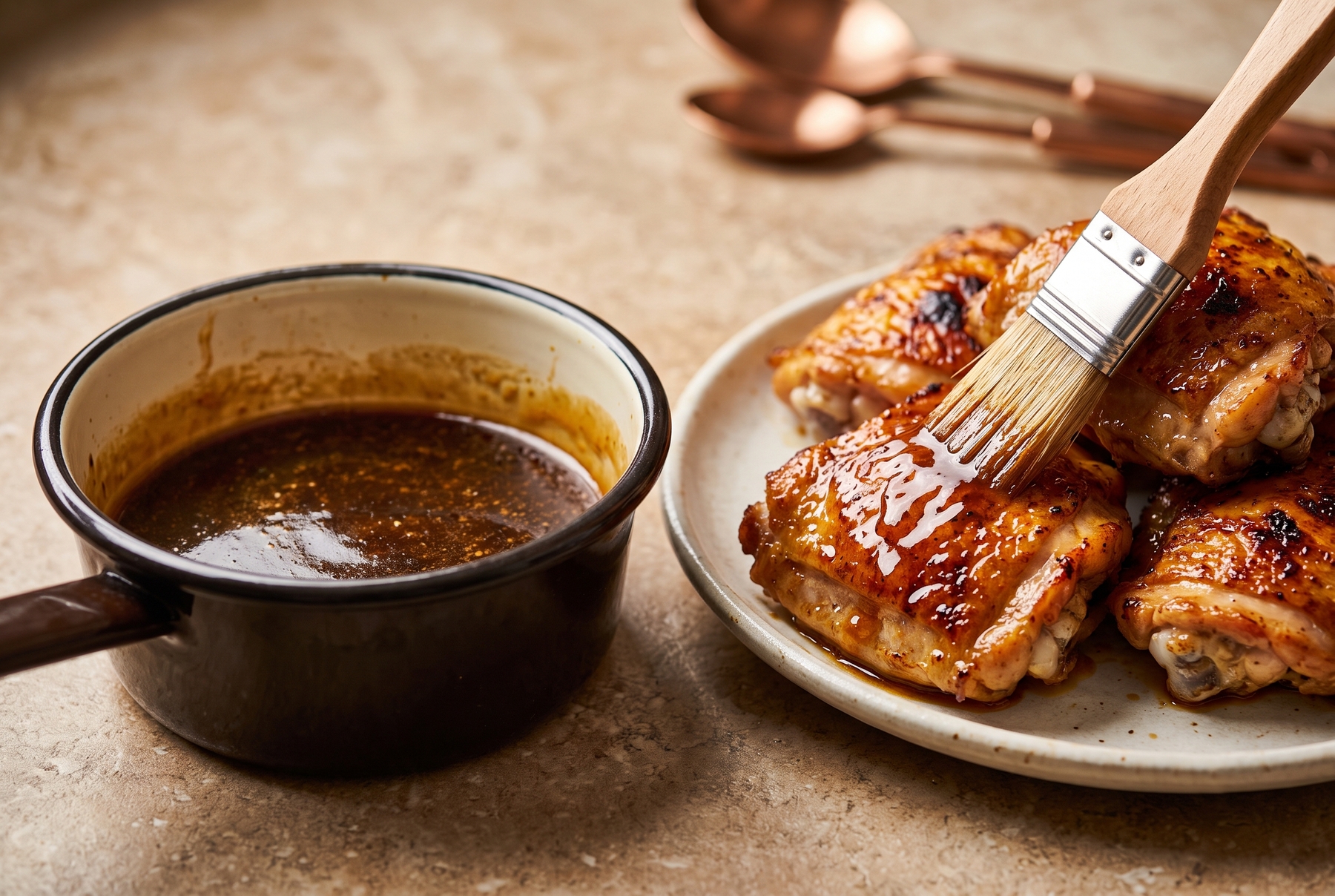
The leftover clean marinade can be boiled down and transformed into a thick, glossy glaze for an incredibly appetizing crust.
Cheat Sheet: 8 Bulletproof Formulas
- The Quick Breast (30 minutes). Lemon, olive oil, garlic, fresh thyme, and salt. Keep the lemon exposure remarkably brief: half an hour is plenty for delicate white meat.
- Juicy Oven Thighs (2 hours or overnight). Plain yogurt, garlic, paprika, ground cumin, and salt. Yogurt beautifully mellows the sharpness while the paprika delivers a deeply even color.
- Crusted Wings (1–2 hours). Soy sauce, honey, garlic, ginger, and paprika. The honey guarantees a glossy shine, the soy sauce lays down a salty umami foundation; pan-frying or roasting yields the best texture.
- Charcoal Kebabs (Overnight). Kefir or ayran, abundant onions, cumin, black pepper, and salt. Gentle lactic acid handles glowing coals far better than harsh vinegar ever could.
- The Mellow Roast (1 hour). Sour cream or yogurt, a touch of mustard, oil, salt, and a pinch of paprika. Zero intense heat or aggressive acidity; designed perfectly for gentle oven roasting.
- Spicy Grill Masters (1–2 hours). Fresh orange juice and zest, chilies, smoked paprika, garlic, oil, and salt. Save brushing on the sweetest components for the absolute final minutes on the grill.
- The Vinegar-Free Vinaigrette (1–2 hours). Minimal lemon or plain yogurt, generous olive oil, garlic, fresh herbs, and salt. Tailor-made for diners who vehemently dislike sharp, acidic tangs.
- The Mayo-Free Miracle (1 hour). Whole grain mustard, oil, sweet paprika, garlic, and salt. Delivers phenomenal color and a robust crust without relying on a heavy mayonnaise base.
How to Transform a Marinade Into a Pan Sauce
Throwing away a highly seasoned marinade feels like a culinary crime, as half the flavor lives in that bowl. However, serving raw liquid that touched poultry is incredibly dangerous. Two brilliant solutions exist. First: simply set aside a clean portion of the freshly whisked marinade before adding the raw chicken, and serve it chilled or gently warmed at the end. Second: take the contaminated marinade, bring it to a rolling, violent boil in a saucepan, and let it reduce for several minutes.
Building a rich pan sauce from a thoroughly boiled marinade is incredibly simple. Reduce it rapidly with a pat of butter or a splash of oil until it visibly coats the back of a spoon: this creates a sticky, savory glaze perfect for the final minutes of oven roasting. Alternatively, after taking the boiled liquid off the heat, whisk in a spoonful of cool yogurt—never into boiling liquid, or it will instantly curdle. This yields a wonderfully creamy, tangy sauce perfectly suited for roasted meat.
Tailor the Marinade to the Chicken, Not the Chicken to the Marinade
The legendary ‘universal perfect marinade’ simply does not exist. Honestly, cooking is far easier that way. Certain formulas heavily favor lean breasts, while others elevate fatty thighs; some demand the gentle heat of an oven, while others thrive over roaring charcoal. Accounting for the specific cut of meat, the chosen cooking method, and the available time allows any cook to instantly break down a complex recipe into familiar, manageable components: salt, aroma, fat, gentle acid, and time.
From there, the process remains wonderfully straightforward: match the marinade to the specific task, pull the chicken breast precisely at 74 °C (165 °F), and mandate a few minutes of crucial resting time under a loose tent of foil. Slicing the meat against the grain after confirming the temperature reveals perfection: the interior remains bright white, remarkably dense yet springy under the knife, and the cut surface glistens with moisture rather than crumbling into dry, stringy fibers.
0 comments