
There is a strange misconception that a true holiday begins with the host boiling beets on December 30, rolling out puff pastry, and hating everyone, including the Olivier salad (a traditional Russian potato salad), by midnight. I respect this heroism, but I do not share it. Guests do not see who boiled the beets. They see overcooked fish, a salad chopped in irritation, and a gray-faced host spending the entire evening running between the kitchen and the table.
Using store-bought shortcuts for a holiday table is not a surrender; the supermarket simply takes on the dirty work. Let them peel, boil, and freeze. There is only one condition: the store-bought base removes the tedious labor, but you still create the flavor. Making the convenience food the star of the show will make your table smell like plastic packaging.
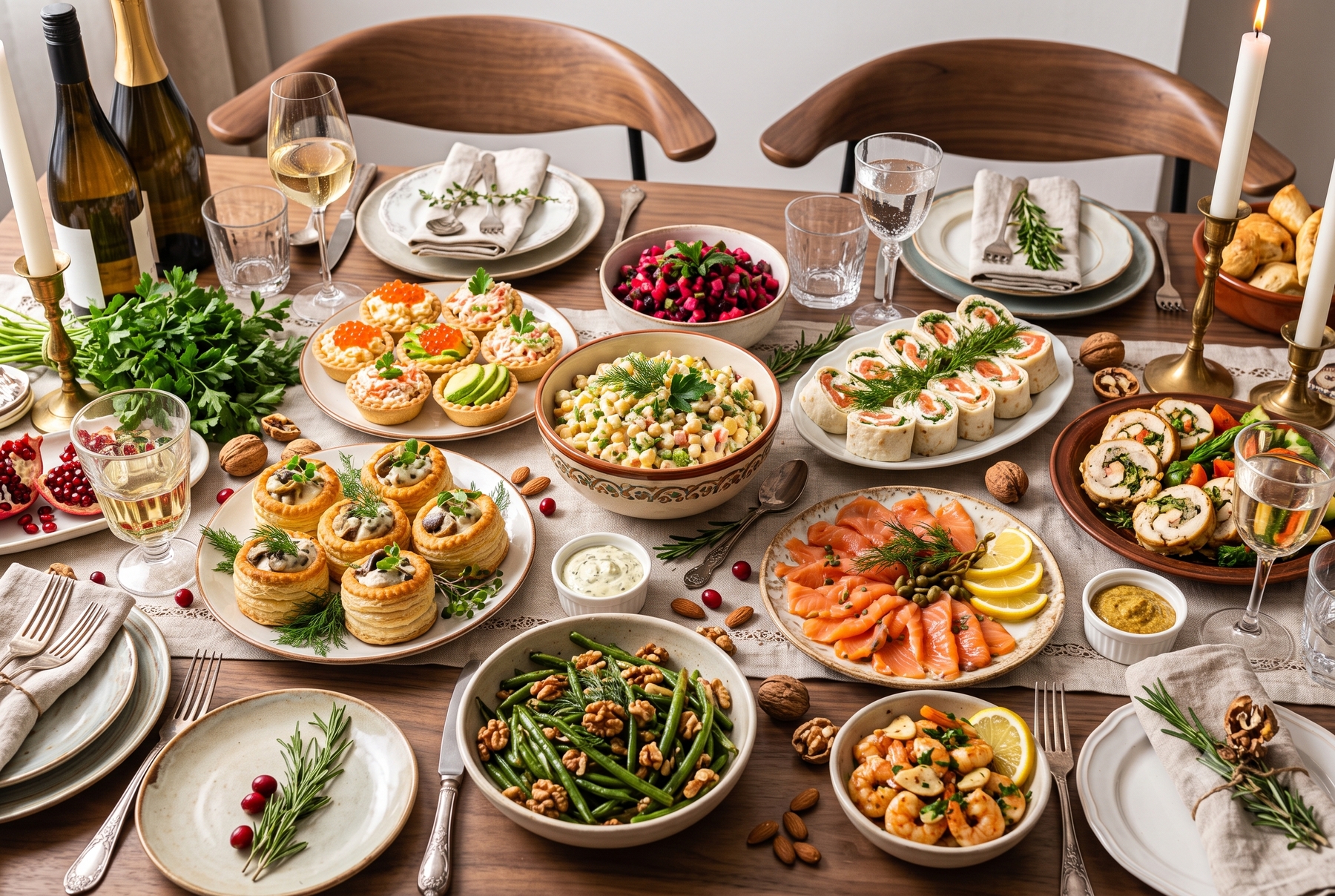
A beautiful presentation of ready-made appetizers, salads, and cold cuts transforms ordinary convenience foods into an exquisite holiday feast.
Table of Contents
- The Store Provides the Base, You Perfect the Flavor
- Baking and Appetizers for the Holiday Table: 4 Shortcuts That Work Best
- Salads for the Holiday Table: 5 Shortcuts That Do Not Compromise Homemade Taste
- Fish and Seafood: Less Prep Work, Better Presentation
- Meat and Poultry: 5 Times Convenience Foods Are Justified
- Side Dishes and Vegetables: 5 Purchases That Eliminate Peeling and Washing
- Sauces: 4 Jars That Save Energy
- Desserts: 5 Shortcuts That Save the Most Time
- What to Avoid When Aiming for a Homemade Holiday
- Cheat Sheet: The 10 Best Purchases for a Holiday Table
- The Final Checklist: 5 Questions Before Buying
The Store Provides the Base, You Perfect the Flavor
It is worth buying items that take too long, are messy, or are pointless to make by hand the day before a feast. The flavor remains your responsibility: a sauce, a filling, fresh herbs, acidity, and serving temperature all make a difference. A simple combination works beautifully: a store-bought base, something fresh on top, and a proper presentation. This is enough for most dinner parties. I have hosted dozens of events this way, and the question about who boiled the beets has never once come up.
Baking and Appetizers for the Holiday Table: 4 Shortcuts That Work Best
Ready-Made Puff Pastry: Almost Unnoticed
Very few people make puff pastry at home, and rightfully so, as it requires hours of working with butter and chilling the dough. A store-bought sheet rarely raises eyebrows. Vol-au-vents, mini-pies, cheese puffs, mushroom pastries, chicken pockets, spinach bites, and tartlets for salads can all be prepared without a night shift at the stove.
Mistakes usually happen in two areas. The first is a watery filling. Mushrooms and onions require sautéing first to release moisture, otherwise, there will be a puddle at the bottom. The second is the oven. The pastry needs a hot oven, around 200 °C (400 °F), so the layers rise and the edges turn dark gold. A properly baked puff pastry is dry on the bottom and rustles when broken.
Yeast Dough: More Controversial, but Sometimes Saves the Evening
Yeast dough is trickier, as it behaves differently depending on the brand. However, for pirozhki (small baked or fried buns), rasstegai (open-topped pies), and cabbage or meat rolls, a store-bought base works well when handled correctly. Allowing the dough to warm up and proof for about 30 minutes, adding a moisture-free filling, brushing with egg wash, and sprinkling with sesame seeds transforms it. They should not be pulled out pale; giving the sides a nice golden-brown crust is essential. A golden-crusted pie with a stable filling raises no questions.
Lavash and Tortillas: Do Not Mask Them, Use Them Right
Guests easily recognize lavash (a thin Middle Eastern flatbread). That is perfectly fine. A lavash roll has long been a staple on the holiday table, and there is nothing to be ashamed of. Smoked salmon with cream cheese and dill, chicken with greens, or a garlic cheese spread are all excellent options. Three things matter here: a tight roll, a couple of hours wrapped in plastic film, and a sharp knife. A neat slice is far more important than the origin of the flatbread.
Tartlets: Convenient, if You Avoid the Cheapest Ones
Shortcrust tartlets are denser and hold wet fillings well, while wafer ones are lighter but turn soggy quickly. The cheapest ones give themselves away with a margarine smell straight out of the package; smelling them before buying is a serious recommendation. Cold fillings work best: cod liver with egg, cheese spreads, chicken with mushrooms, or beets with cheese and walnuts. Filling them right before serving keeps them crisp.
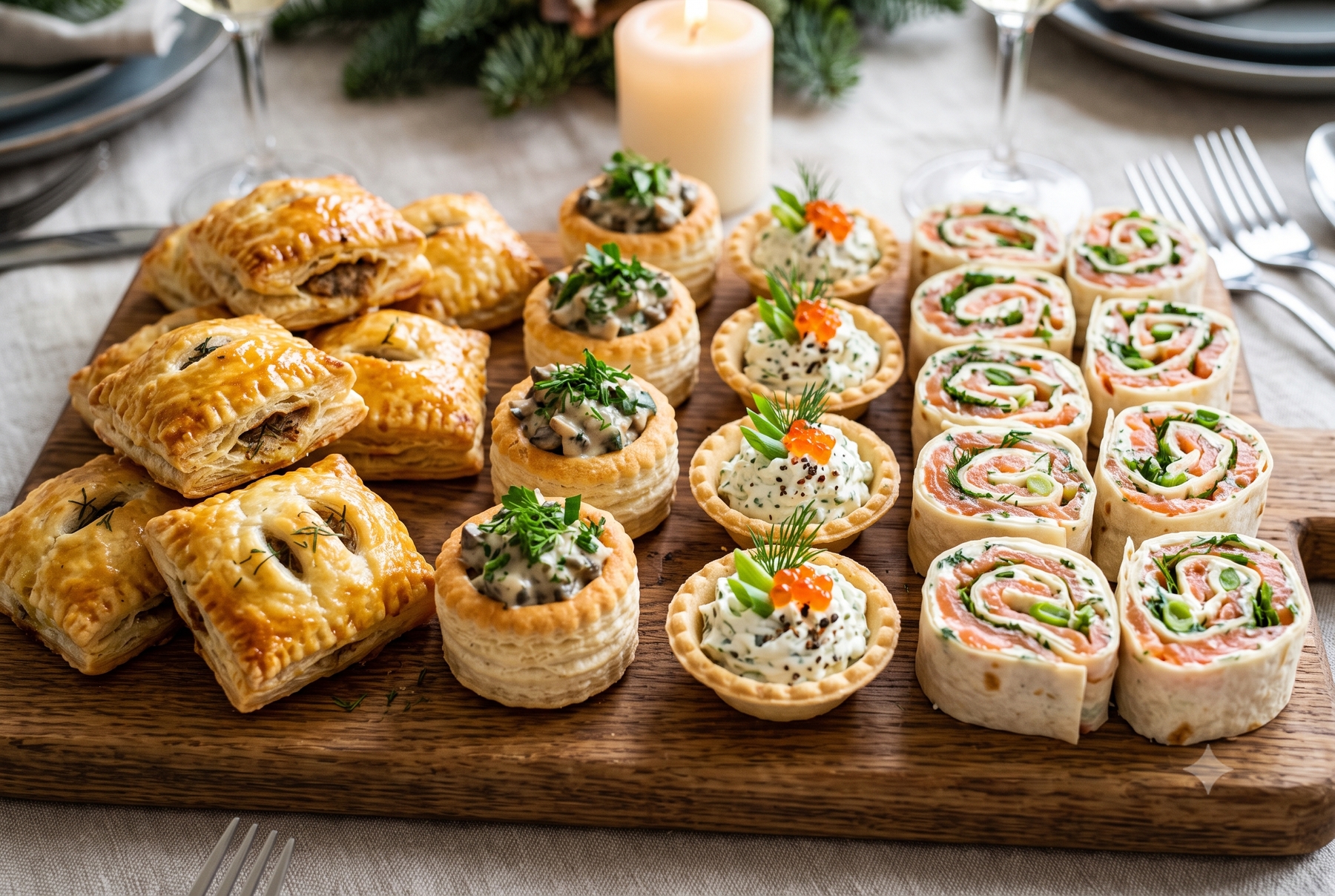
Simple preparations using store-bought puff pastry, lavash flatbread, and ready-made tartlets save hours of work before a holiday party.
Salads for the Holiday Table: 5 Shortcuts That Do Not Compromise Homemade Taste
Vacuum-Packed Boiled Beets: Minus a Pot and Pink Hands
Vacuum-packed beets save an hour, a pot, and pink hands. In a Shuba (traditional layered salad with herring, potatoes, carrots, and beets), a Vinegret (Russian beet and potato salad), or a salad with prunes and cheese, the difference is usually imperceptible. There is one small detail: patting the cubes dry with a paper towel after opening the package prevents the salad from turning mushy and dyeing everything around it.
Boiled Potatoes and Carrots: Acceptable, but Check the Texture
Firmness is crucial for Olivier and Vinegret salads. A good cube bounces back and holds its shape, while a bad one crumbles into mush and smells like a refrigerator. A watery vegetable will quickly ruin a salad. Checking the date and feeling the package is necessary: the vegetables must be firm, with no cloudy liquid at the bottom.
Herring Fillets: Less Odor and Fewer Bones Before the Party
Not everyone knows how to fillet a herring at home, and doing it before a party leaves a lingering smell throughout the kitchen. Buying fillets in a light brine is a smart move, but avoid the pre-sliced ones in oil and onions, as that marinade easily hides tired fish. Drying the fillets and slicing them yourself is the best approach. For Forshmak (a traditional chopped herring spread), adding a tart apple, onion, and egg mellows out the sharp brine flavor.
Peas, Corn, and Beans: The Classics
Canned peas have been a staple in Olivier salads since Soviet times, and without them, the dish simply feels wrong. Draining the liquid completely and rinsing the beans is essential. Choosing tender, sweet marrow peas over large, starchy ones makes a big difference. In salads, Vinegrets, and bean appetizers, a canned ingredient does not detract from the dish.
Korean-Style Carrots and Croutons: Accents, Not the Base
Korean-style carrots (a tangy, garlicky, and spicy shredded carrot salad) have a loud, recognizable flavor. Using too much turns any dish into a Korean carrot salad. Dosing them carefully works best: a handful in a lavash roll, or a small amount in a layered appetizer. Adding croutons right before serving ensures they stay crunchy, and choosing plain ones over artificial smoke-flavored bacon avoids overpowering the entire dish.
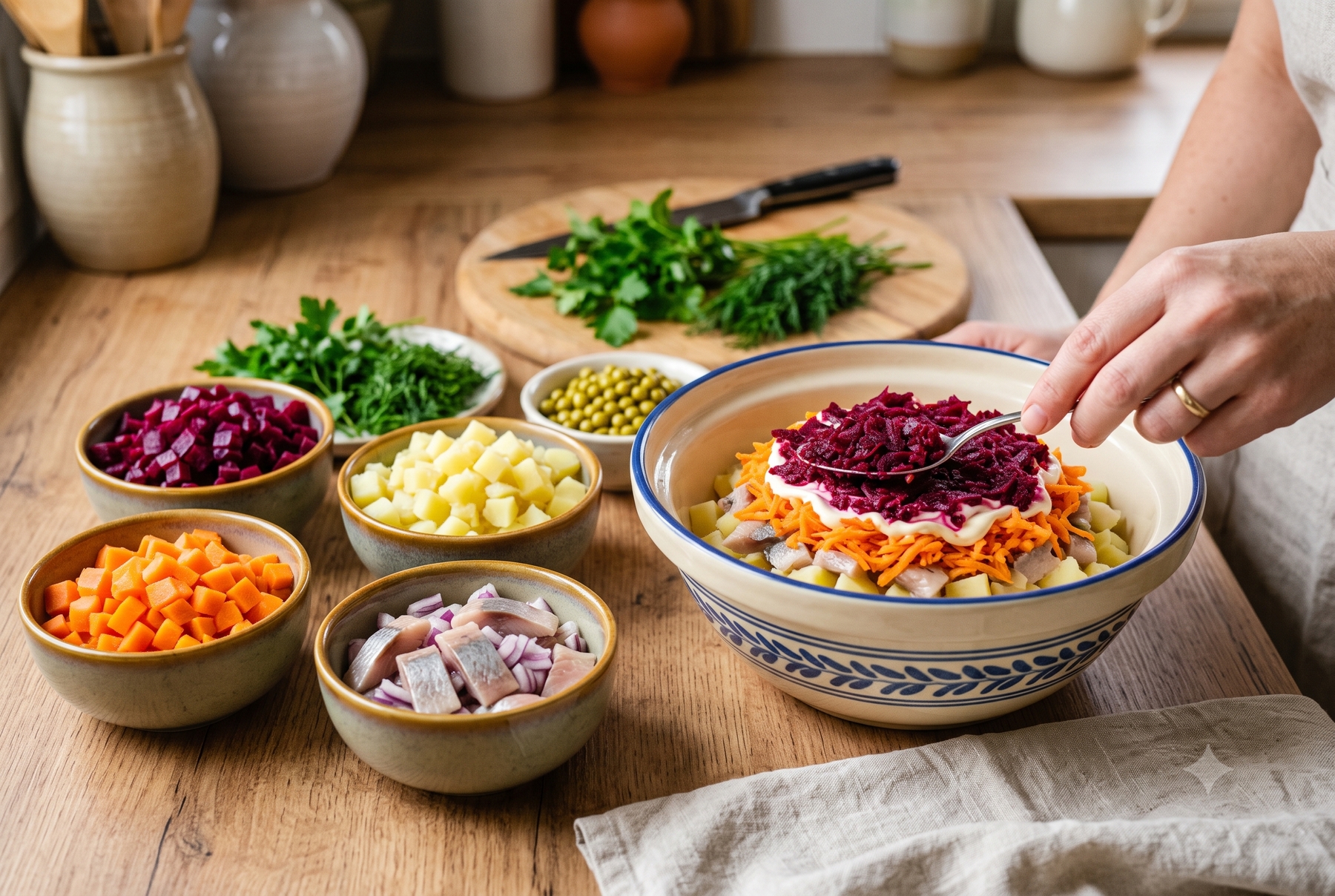
Relying on vacuum-packed boiled vegetables and prepped herring fillets eliminates messy prep work and speeds up the assembly of beloved salads.
Fish and Seafood: Less Prep Work, Better Presentation
Peeled Shrimp: Do Not Boil Them to Rubber
Most frozen shrimp are already cooked and only need to be warmed up. Boiling them again for 10 minutes turns them into erasers. Thawing them, patting them dry, and tossing them into a hot pan with butter and garlic for a couple of minutes, followed by a squeeze of lemon and fresh herbs, is all it takes. The aroma draws guests to the kitchen before the plate even reaches the table.
Skinless and Boneless Fish Fillets: Fewer Scales in the Kitchen
Cod, pike-perch, trout, or salmon fillets save half an hour of messy scaling work. The only danger is drying them out. Baking the fish covered in cream, sauce, vegetables, lemon slices, or cheese prevents this. The fish is done when the meat flakes into opaque segments under gentle pressure from a fork, not when the mandatory 40 minutes have passed.
Lightly Salted Red Fish: The Plate Matters More Than the Slices
Serving fish straight out of the package gives away its store-bought origin. Avoiding this is simple: presenting thin slices alongside fresh dill, a touch of lemon zest, capers, cream cheese, and cucumber transforms the dish. Five minutes of work ensures the platter looks beautifully assembled rather than just unpacked.
Crab Sticks: Skip the Real Crab Legend
Trying to pass them off as real crab is unnecessary, as no one will believe it anyway. However, for a crab salad, rolls, or tartlets, they work perfectly. Opting for chilled rather than frozen ones yields a more tender texture with less excess water.
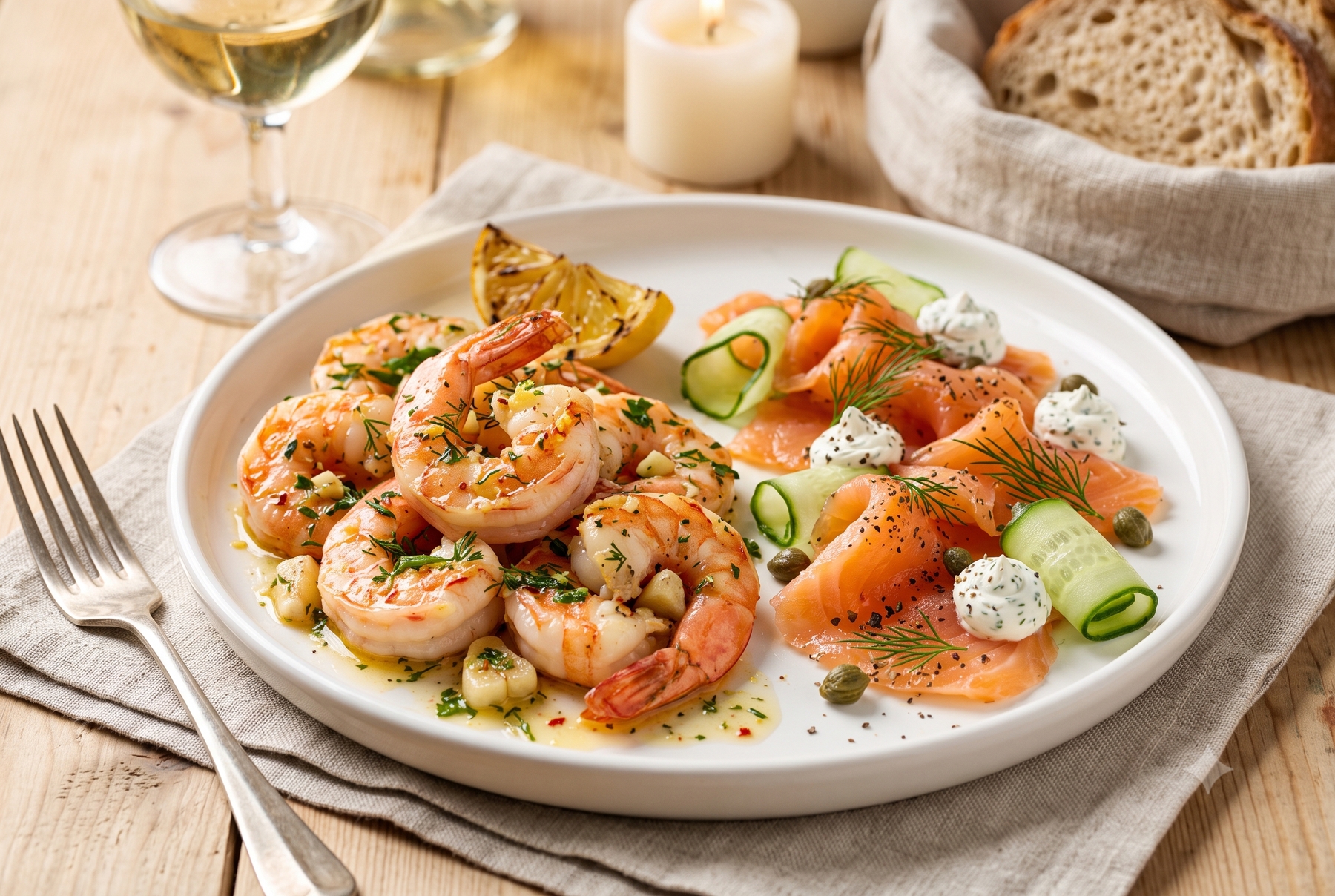
A quick pan-fry of pre-cooked shrimp with garlic and an elegant restaurant-style plating of cured red fish with capers and fresh greens.
Meat and Poultry: 5 Times Convenience Foods Are Justified
Boneless Chicken Thighs: A Hot Dish Without the Knife Work
Thighs forgive mistakes that breasts do not; the fat and connective tissue retain juiciness even for a forgetful cook. Already trimmed thigh fillets save half an hour of knife work. Whether rolled with cheese and mushrooms, skewered in the oven, or roasted as a main dish with potatoes, thighs do not dry out as quickly as breasts.
Pre-Ground Meat: Buy Fresh and Always Upgrade
Choosing ground meat requires a critical eye: it should have an even color without gray spots and a neutral smell. The next step is eliminating that pre-packaged odor by adding sautéed onions, garlic, fresh herbs, and milk-soaked bread or heavy cream. After this upgrade, meatballs, stuffed mushrooms, and meatloaf no longer smell like the supermarket meat aisle.
Bacon, Pancetta, and Ham: Just a Little for Aroma and Salt
Wrapping a slice of bacon around a chicken roll, adding pancetta to potatoes, or mixing ham into a julienne works wonders. One high-quality slice is far better than half a pack of wet, cheap ham. Cheap ham with a damp sheen and the smell of liquid smoke reveals itself in the very first bite.
Marinated Meat in Buckets: A Last Resort
Industrial marinades rely heavily on vinegar, salt, and onions to mask the quality of the raw meat, making these buckets something to avoid. If already purchased, treating it like a roast rather than a kebab is the safest bet. Baking it with potatoes and vegetables or using it as a filling helps tame the overpowering vinegar flavor.
Pre-Made Patties and Nuggets: Almost Always Noticeable
For an adult holiday table, this is the weakest option. The dense, bready texture and identical breading flavor are instantly recognizable. Leaving them as an emergency backup in the freezer or serving them at the kids’ table is a much better plan.
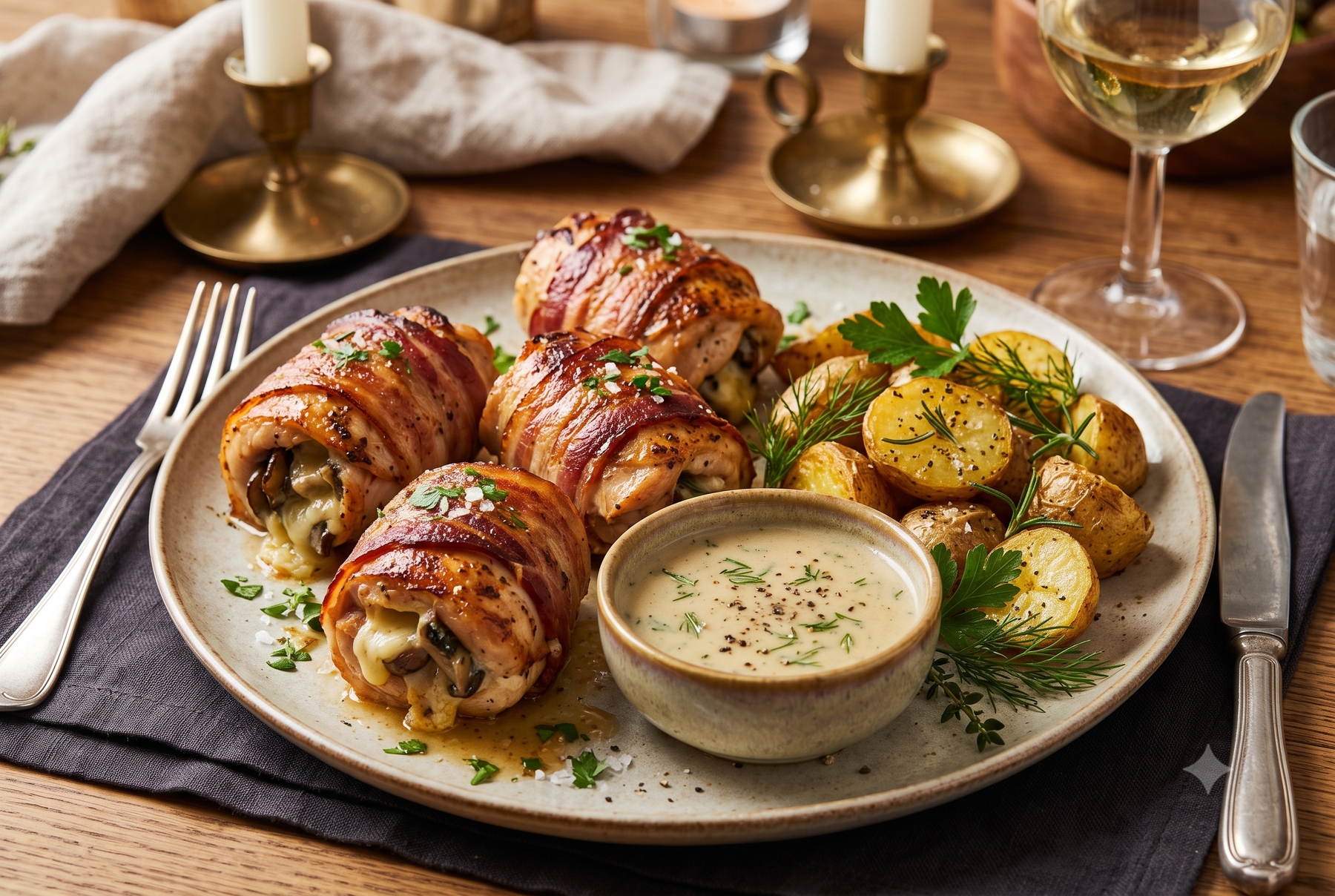
Juicy boneless chicken thighs wrapped in bacon roast much faster and deliver a far more tender result than a whole bird.
Side Dishes and Vegetables: 5 Purchases That Eliminate Peeling and Washing
Frozen Green Beans: A Pot-Free Side Dish
Green beans do not need to be boiled into gray-green mush, and that is the main rule. Tossing them into a hot pan with butter and garlic for three to four minutes does the trick. Finishing them with salt, lemon, and sesame seeds or crushed nuts adds great flavor. The pods should remain bright and offer a slight crunch.
Broccoli and Vegetable Mixes: They Need Sauce or Cheese
Simply boiled frozen vegetables look sad and smell like a cafeteria. However, baking them in a gratin under a layer of cheese, in a casserole, or alongside fish bathed in a creamy sauce removes that freezer-bag aroma. Heat, fat, and cheese transform a basic frozen mix into a proper holiday side dish.
Pre-Sliced Button Mushrooms: Minus Twenty Minutes at the Cutting Board
For julienne, tartlets, or pie fillings where a large volume of mushrooms is required, pre-sliced ones save about twenty minutes. However, the cut edges darken quickly, and they spoil faster than whole mushrooms. Using them on the day of purchase is essential.
Frozen Mushrooms: Evaporate the Water First
Frozen wild mushrooms release a lot of liquid. The correct sequence involves placing them in a dry, hot pan until the water evaporates to a quiet sizzle, and only then adding oil, onions, and heavy cream. Pouring oil in right away results in the mushrooms boiling in a gray puddle instead of frying.
Salad Mixes: A Base, Not a Finished Salad
A bag of salad leaves dumped into a bowl still looks exactly like a bag of salad leaves. Tossing in cherry tomatoes, cheese, nuts, and a homemade dressing of olive oil, mustard, and lemon ensures the salad stops looking like a bagged side dish. Dressing it right before serving prevents the leaves from wilting within half an hour.
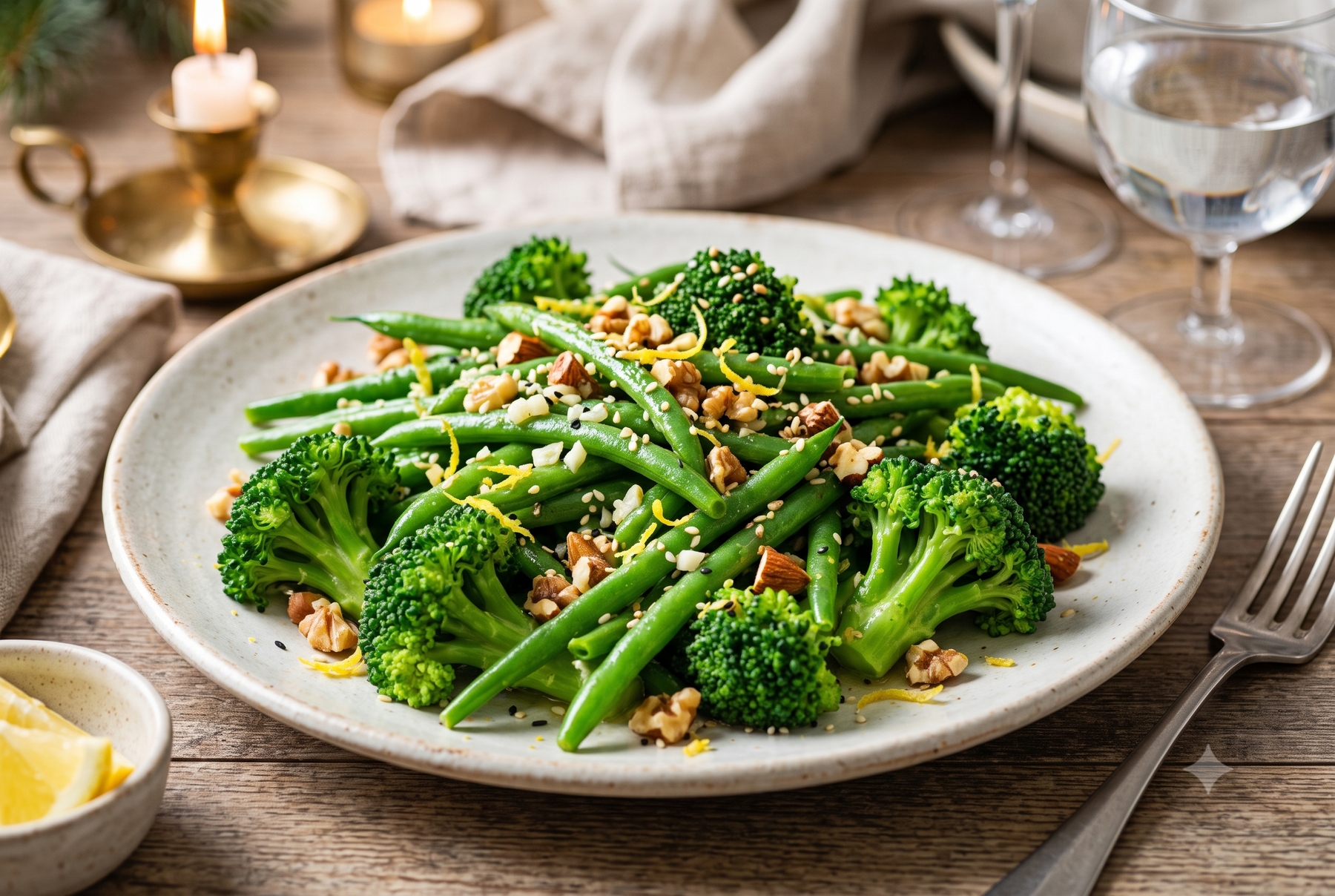
Frozen broccoli and green beans transform into a vibrant, flavorful side dish in just five minutes with the addition of garlic, nuts, and a squeeze of lemon.
Sauces: 4 Jars That Save Energy
Mayonnaise: No Blender Heroics Needed for Olivier
Making homemade mayonnaise on your last legs the night before a holiday is entirely unnecessary. Uniformly dicing the ingredients, applying the dressing moderately, and letting the Olivier chill in the fridge for a couple of hours matter much more. For this classic salad, those details are far more important than whipping mayonnaise with your final breath.
Mustard, Horseradish, and Adjika: Quick Sauces Without the Fuss
Mixing a spicy base with sour cream or yogurt and adding a drop of lemon and fresh herbs creates magic. This yields a vibrant sauce for Kholodets (meat aspic), roasted meats, chicken, or an appetizer spread in just two minutes. A single jar of horseradish can elevate both a traditional aspic and a beautiful roast.
Passata and Canned Tomatoes: A Solid Winter Base
After cooking down onions, garlic, and spices, canned tomatoes simmer into a rich, thick sauce for meatballs, fish, or casseroles in half an hour. In winter, they easily outshine pale, out-of-season fresh tomatoes, offering guaranteed acidity and sweetness straight from the jar.
Pesto: Delicious, but Full of Character
Pesto boasts an instantly recognizable flavor, requiring careful portioning: a thin spread in a meat roll, a dab under some cheese, or a spoonful alongside chicken. Putting three pesto-flavored dishes on the same table turns a diverse holiday feast into a single-sauce tasting menu.
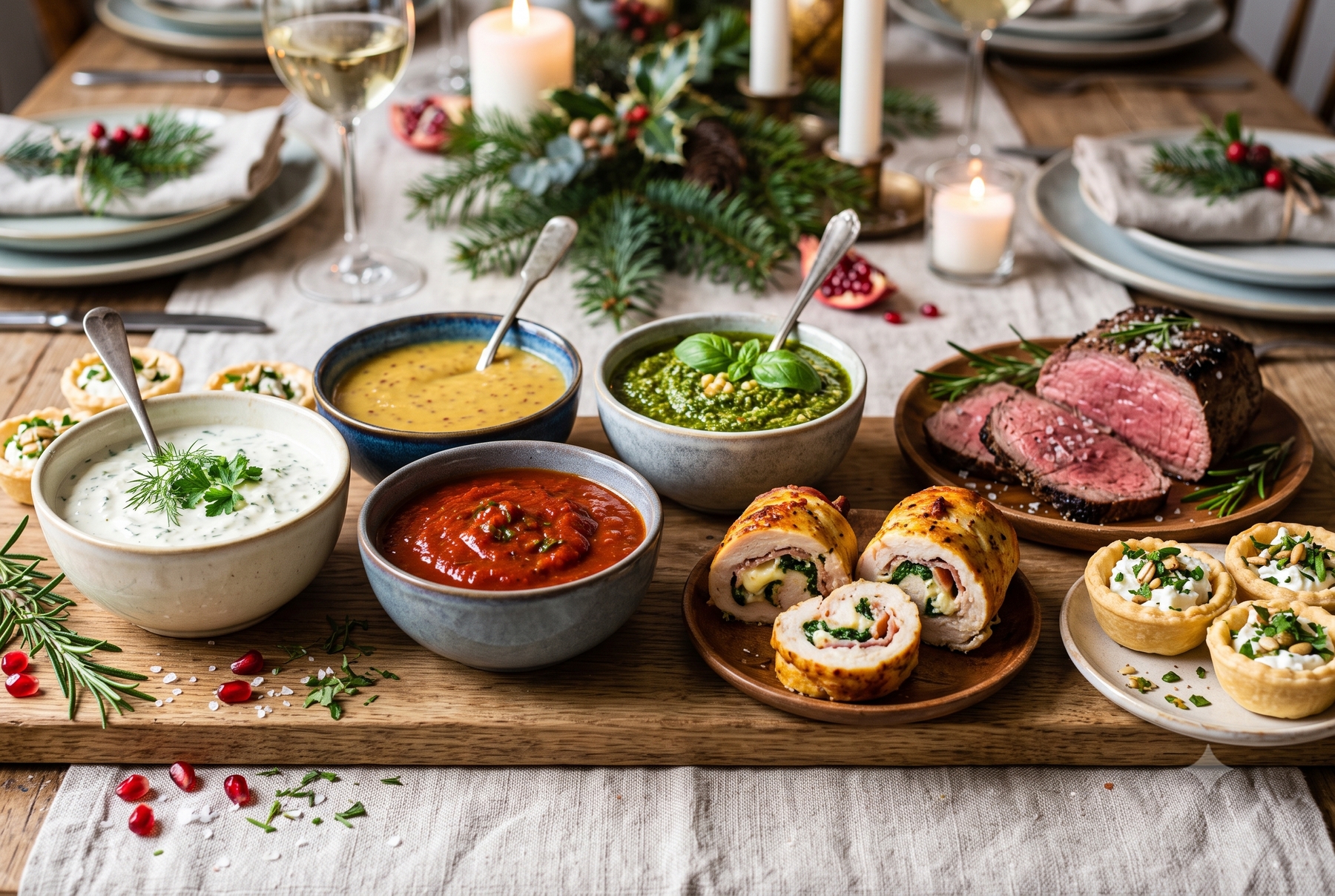
Store-bought jars of pesto, adjika, or tomato passata are easily upgraded with fresh herbs and spices for a flawless homemade flavor.
Desserts: 5 Shortcuts That Save the Most Time
Frozen Berries: A Quick Dessert Sauce
Warming berries with sugar and lemon juice, then thickening them with a pinch of cornstarch dissolved in cold water, works beautifully. Within 10 minutes, the sauce turns glossy, gently coats the back of a spoon, and smells of hot, jammy fruit. It pairs perfectly with ice cream, cakes, or as a cake layer filling.
Ice Cream: Build a Dessert, Do Not Just Scoop It
Plain vanilla ice cream straight from the tub is boring. However, serving it with a hot berry sauce, crushed nuts, and a sprig of mint completely transforms it. The difference comes down to just three minutes of effort.
Pre-Made Sponge Cake Layers: Controversial, but Sometimes a Lifesaver
Cheap cake layers often taste dry and smell like cardboard, so illusions should be set aside. Salvation lies in a good soaking syrup—like coffee or fruit juice—and a rich, flavorful frosting. Allowing the assembled cake to rest in the refrigerator overnight ensures the layers absorb moisture and stop crumbling.
Cake Layers for Napoleon and Medovik: Frosting is Everything
Baking 12 individual layers from scratch is a half-day affair. Using pre-made layers combined with a proper homemade custard or sour cream frosting and an overnight stay in the fridge yields a cake where the knife glides softly and the layers do not shatter. Adding citrus zest, berries, or nuts to the frosting brings out flavors that never existed in the box.
Store-Bought Pastries: Do Not Pass Them Off as Homemade
Bakery-case éclairs will never pass for a homemade creation, and they do not need to. Serving them honestly makes sense: arranging them on a dessert platter, dusting with powdered sugar, and placing a berry sauce on the side. They remain a wonderful part of the feast without needing a fake story about a grandmother’s secret recipe.
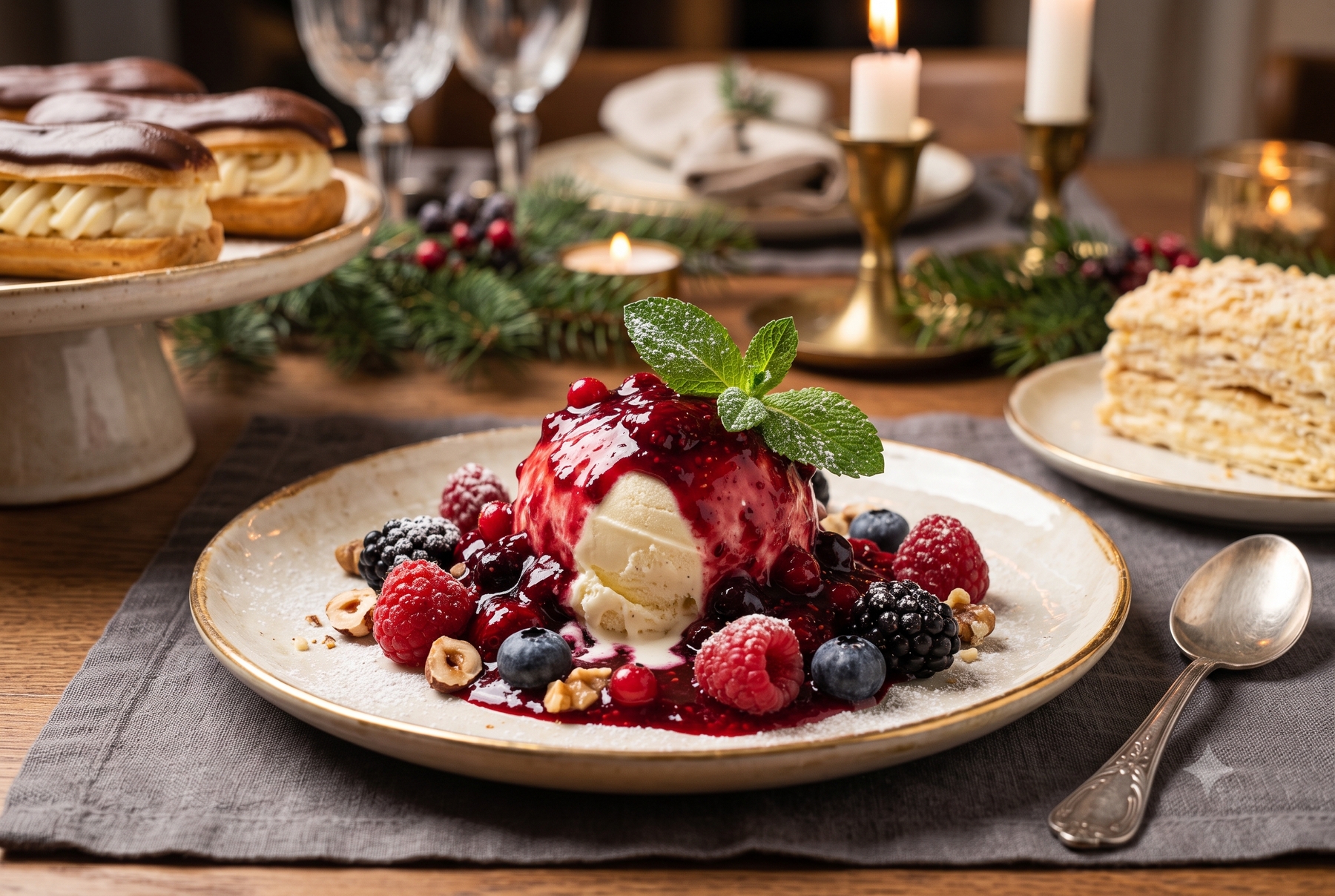
Store-bought ice cream paired with warm berry sauce and beautifully plated pre-made pastries eliminate the need to bake desserts late at night.
What to Avoid When Aiming for a Homemade Holiday
Pre-made deli salads give themselves away with industrial knife work and a heavy hand on the mayonnaise. Supermarket Kholodets (meat aspic) often relies on gelatin, making it bounce like rubber. Fully pre-cooked stuffed fish or roasted chicken almost always ends up dry inside. Frozen dumplings and French fries carry a casual format that belongs on a busy weeknight, not in the center of a feast. While I will not demonize them—they have saved me before—these are emergency rations, not part of a master plan.
Cheat Sheet: The 10 Best Purchases for a Holiday Table
- Ready-made puff pastry: vol-au-vents, cheese puffs, tartlets
- Vacuum-packed boiled beets: Shuba, Vinegret
- Herring fillets: Shuba, Forshmak
- Peeled shrimp: a hot appetizer with garlic
- Boneless chicken thighs: meat rolls, main roasts
- Frozen berries: a quick dessert sauce
- Canned peas, corn, and beans: salads
- Green beans or broccoli: a fast side dish
- High-quality shortcrust tartlets: cold appetizers
- Pre-made cake layers: Napoleon, Medovik
The Final Checklist: 5 Questions Before Buying
- Does this product actually save time, or just promise to?
- Are the expiration date and storage conditions acceptable?
- Does the packaging smell like anything other than the food itself?
- Will this shortcut serve as a base, rather than the dominant flavor?
- Is there an opportunity to add freshness through herbs, acidity, a sauce, or plating?
If a product requires more effort to disguise than it would take to cook from scratch, it is a bad shortcut. Leave it on the shelf.
Smart grocery shopping leaves you with enough energy for the things that truly stand out on the table: flavor, assembly, presentation, and a relaxed host when dinner begins. My personal test is simple: if by 10:00 PM on December 31 the kitchen is already clean, the oven radiates the smell of garlic and puff pastry, and your hands are not shaking from exhaustion, then the shopping was planned correctly. Even better, the trash can is nearly empty, holding only a few packages and absolutely no beet peels.
0 comments