
Georgian chicken satsivi is a traditional dish from sunny Georgia, named after the sauce of the same name. There are countless recipes for satsivi sauce, as many as there are cooks. However, there are a few crucial rules that I believe make all the difference. Do not thicken the sauce with flour; instead, be generous with the walnuts. The more nuts you use, the thicker the sauce will be. Utskho-suneli (blue fenugreek) is an absolute must, as are fresh cilantro and garlic. The very word 'tsivi' translates from Georgian as 'cold', which highlights the main feature of this treat: it is served exclusively chilled. The aroma of freshly ground walnuts combined with pungent cilantro creates that very magic associated with a hospitable Caucasian feast.
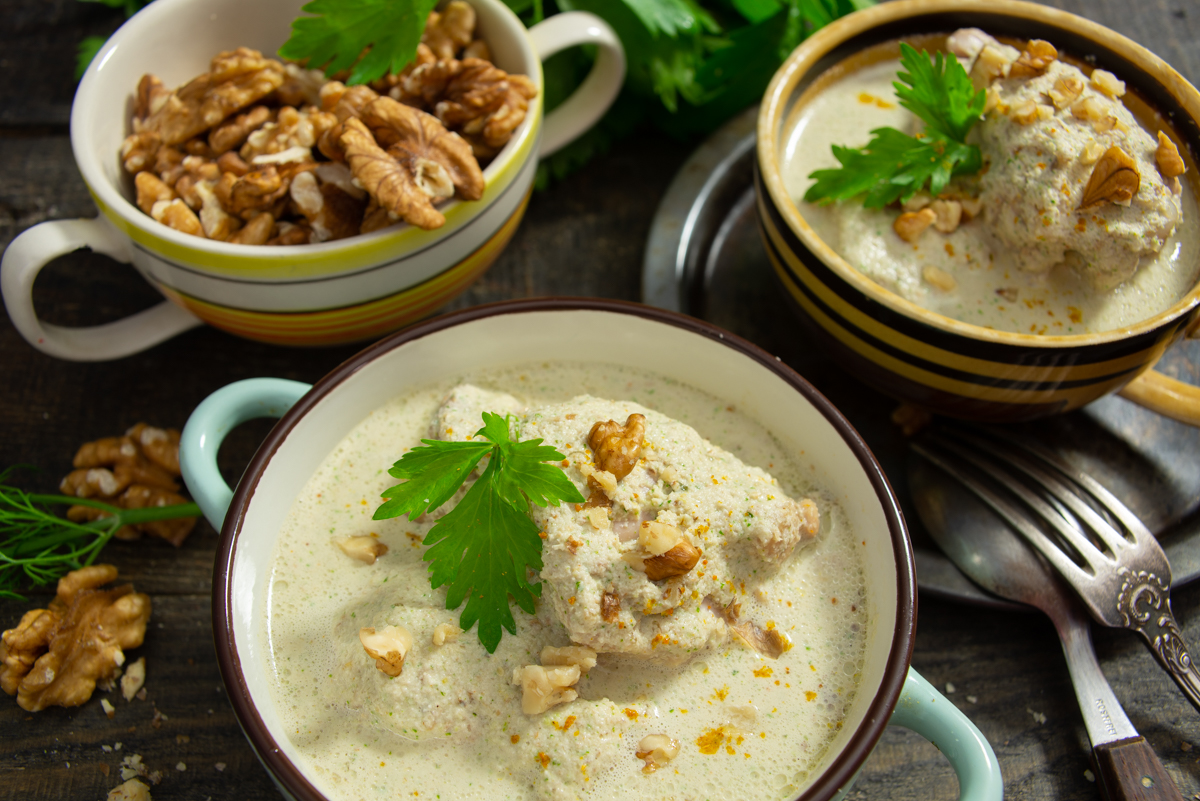
Classic Georgian chicken satsivi with a thick walnut sauce and fresh cilantro is the perfect dish for a festive table.
Ingredients
- 1 kg (2.2 lbs) chicken
- 150 g (5.3 oz) walnuts
- 4 garlic cloves
- 30 g (1 oz) fresh cilantro
- Utskho-suneli (blue fenugreek)
- Aromatics and root vegetables for the broth
- Salt to taste
Instructions
Place the chicken cut into portion-sized pieces (or just chicken thighs, as in this recipe) into a heavy-bottomed pot. Pour in 1 liter (4 cups) of cold water. Add aromatics and seasonings: cilantro roots and stems, garlic scapes, a whole onion, bay leaf, black peppercorns, and a bunch of celery and parsley. Season with salt to taste. Alternatively, you can boil a whole chicken, let it cool in the broth, remove the meat from the bones, and chop it finely.
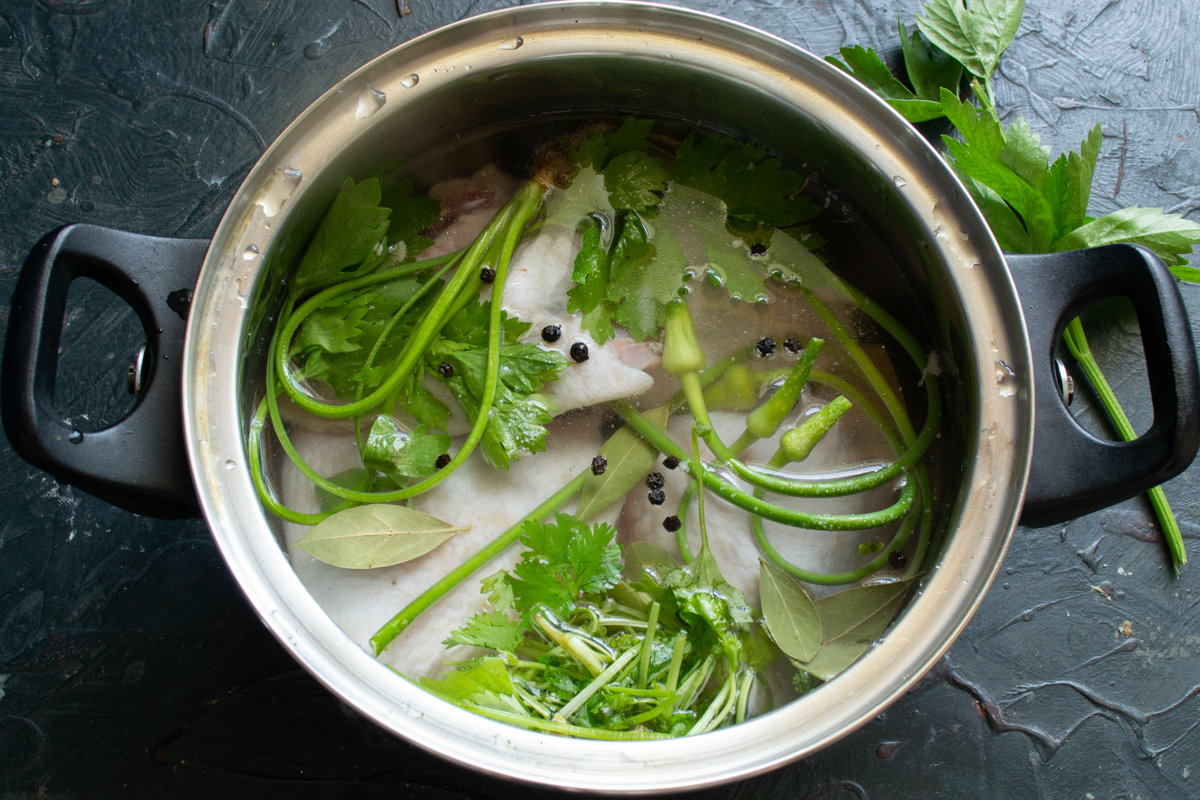
Boil the chicken with garlic scapes, cilantro, onion, and spices to create an aromatic base.
Bring the broth to a boil. Simmer gently over low heat for about 1 hour. You do not need to skim the foam; the clarity of the broth does not matter for this recipe.
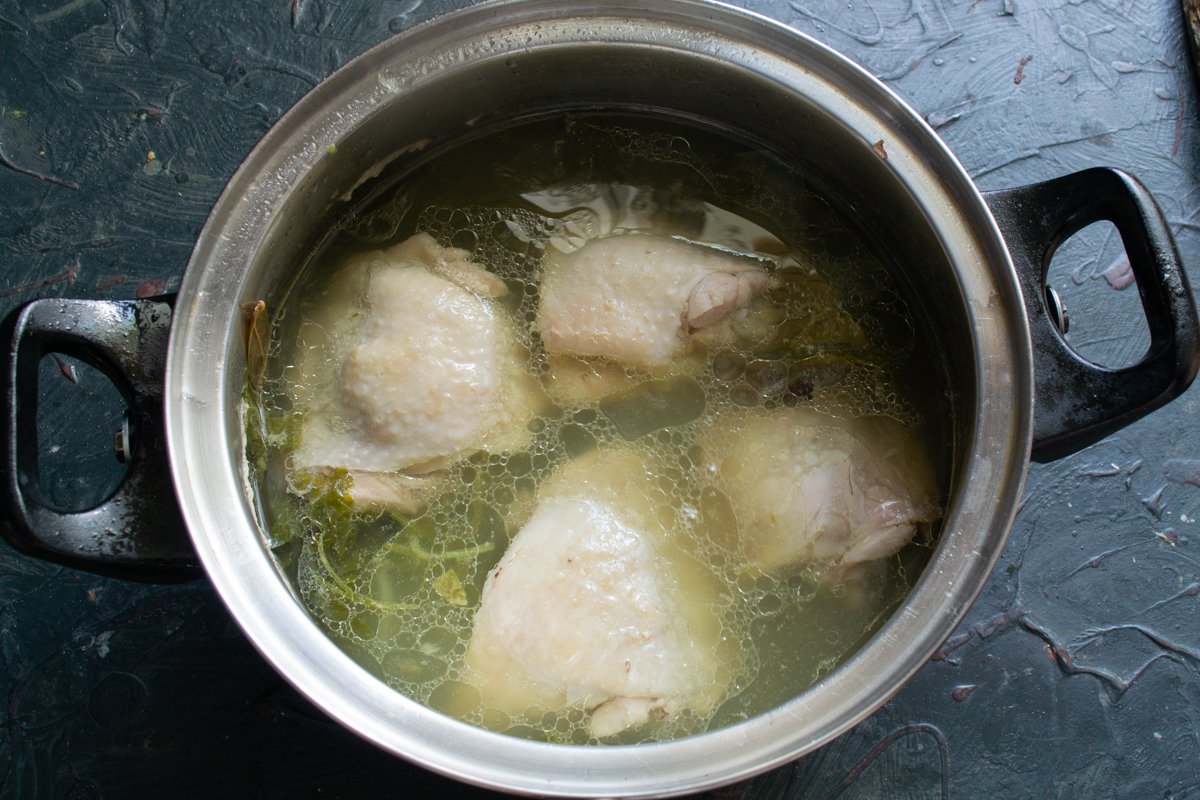
Simmer the chicken gently for about an hour, allowing it to absorb the aromas of the herbs and root vegetables.
Remove the chicken from the broth. Discard the skin and separate the meat from the bones. Shred the boiled chicken into large, bite-sized pieces. Strain the broth through a fine-mesh sieve, discarding the cooked herbs and vegetables.
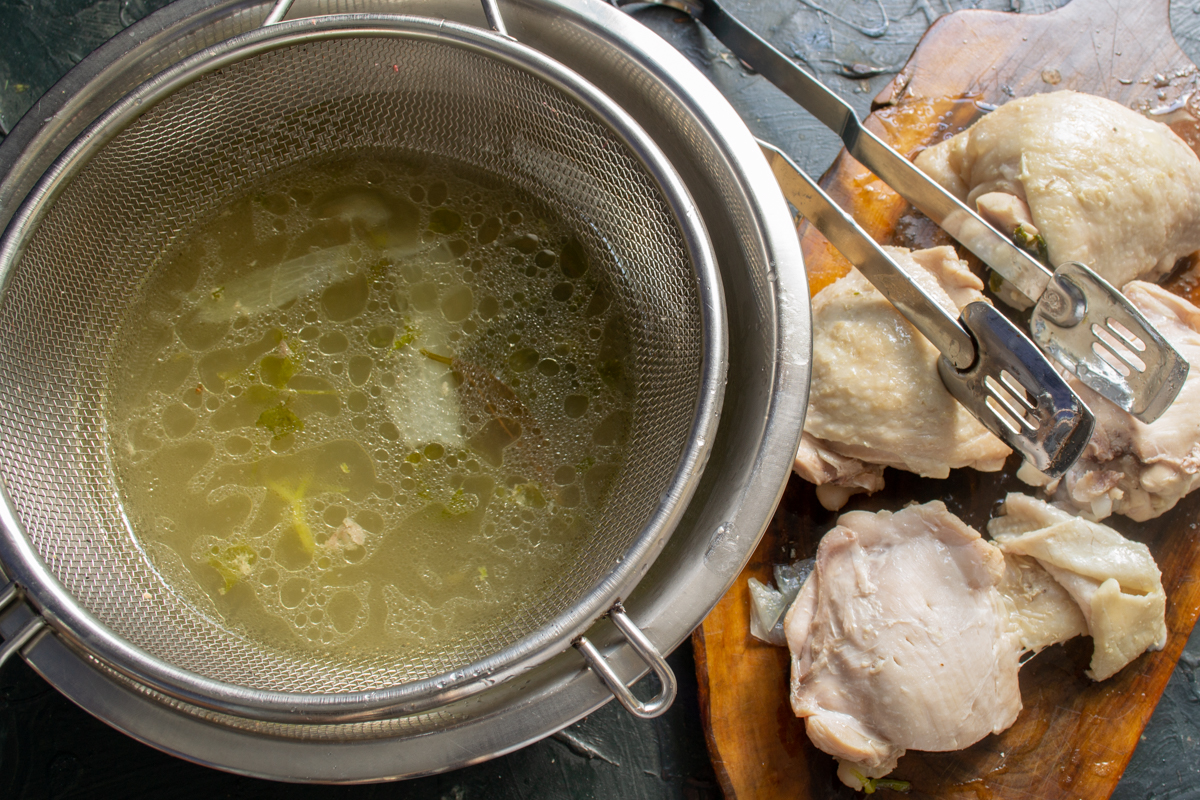
Strain the broth through a sieve, then separate the meat from the skin and bones, shredding it into large pieces.
Rinse the walnuts with cold water and drain them in a sieve. Toast the nuts in a dry skillet or in a preheated oven until they release a rich, nutty aroma. If you are using store-bought shelled walnuts, I strongly recommend processing them this way: always wash and toast them. Shelled nuts are like unwrapped chocolate bars, and you would not eat an unwashed carrot straight from the market.
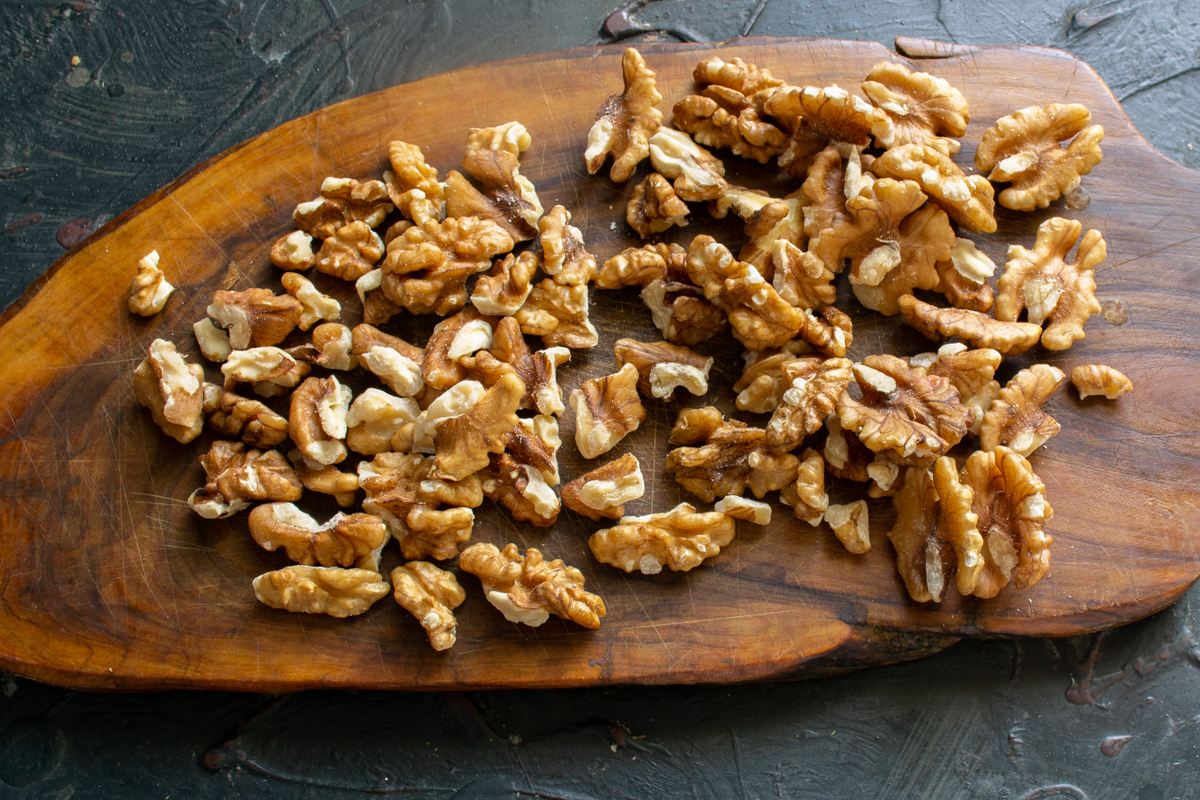
Rinse the walnuts thoroughly and toast them in a skillet until they release a rich, nutty aroma.
Assemble the satsivi sauce. Place the toasted walnuts into a deep bowl or a food processor. Add peeled garlic cloves and a generous bunch of fresh cilantro.
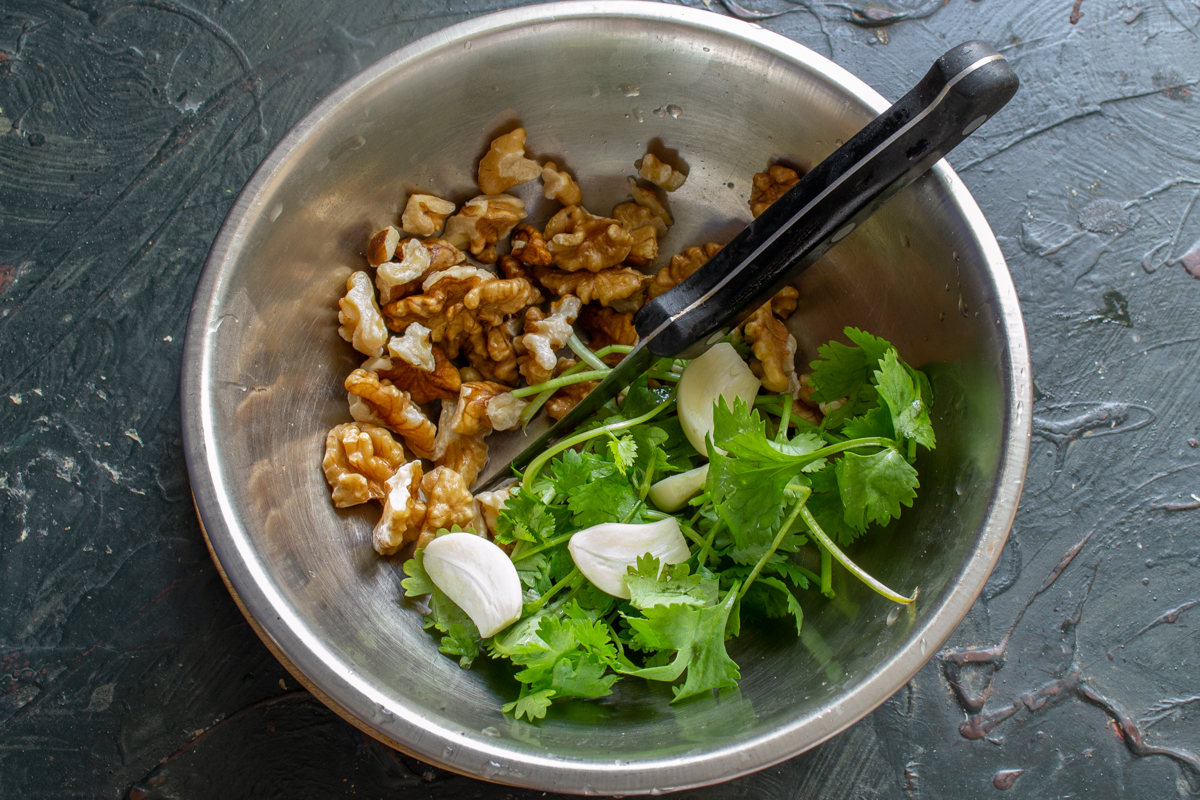
The base for the sauce: toasted walnuts, fresh garlic cloves, and a generous bunch of cilantro.
Pour in two cups (480 ml) of the strained chicken broth. Grind the fenugreek seeds in a mortar. You will need about 1/3 teaspoon of fenugreek powder; do not add more, or the sauce will become bitter.
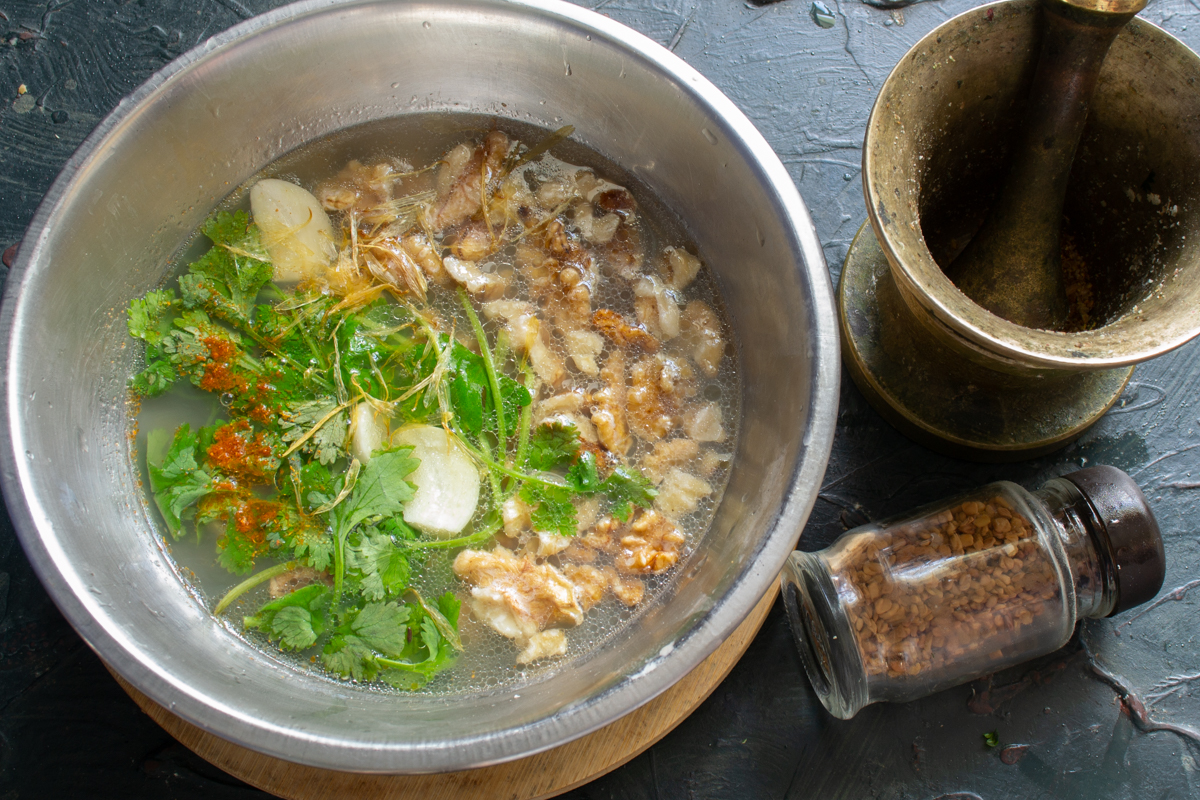
Add the strained broth and crushed fenugreek seeds to the walnut mixture for a spiced flavor.
Blend the sauce with an immersion blender until smooth and creamy. At this stage, the sauce will be quite thin, but it will thicken gradually. Taste and adjust the seasoning with salt and pepper.
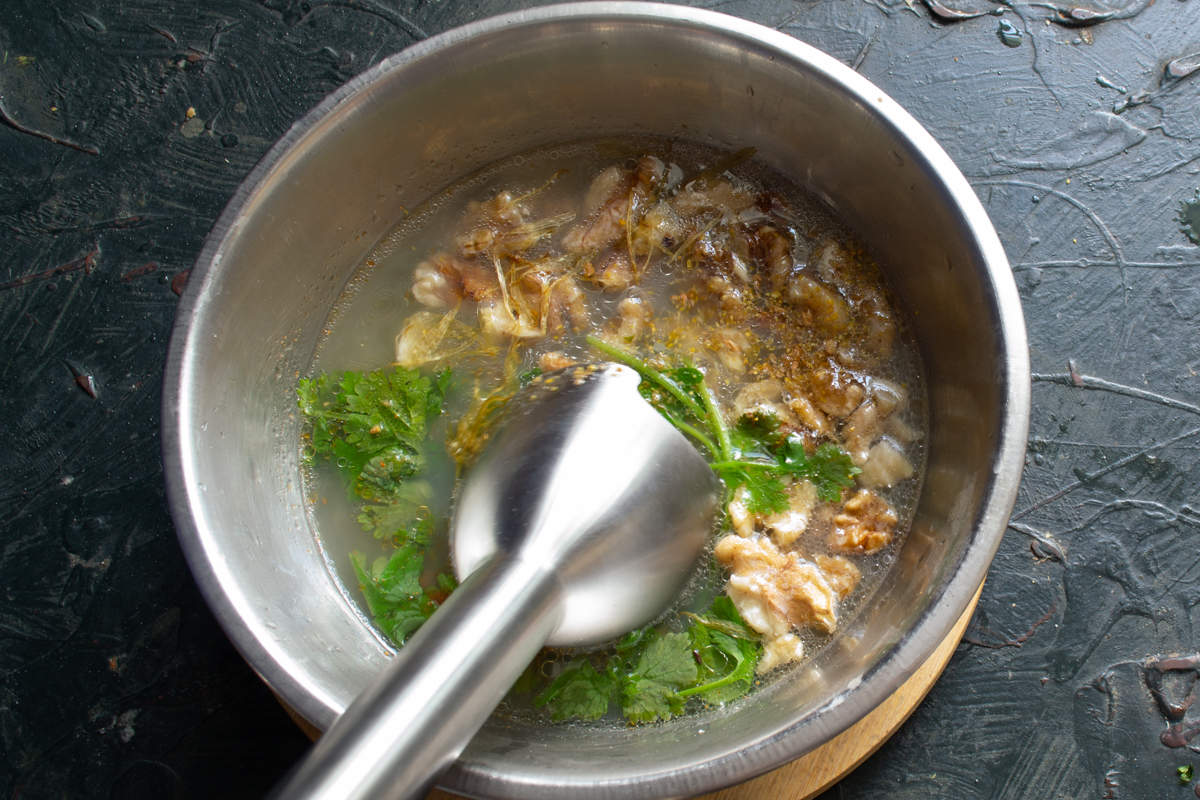
Blend the sauce until perfectly creamy. It will be thin at first but thickens as it rests.
Pour the prepared sauce over the boiled chicken pieces. Place the Georgian chicken satsivi in the refrigerator. Let the dish chill for several hours, preferably overnight. By the next day, the chicken will fully absorb the flavors of the rich walnut sauce, resulting in an incredibly delicious dish with a thick satsivi sauce.
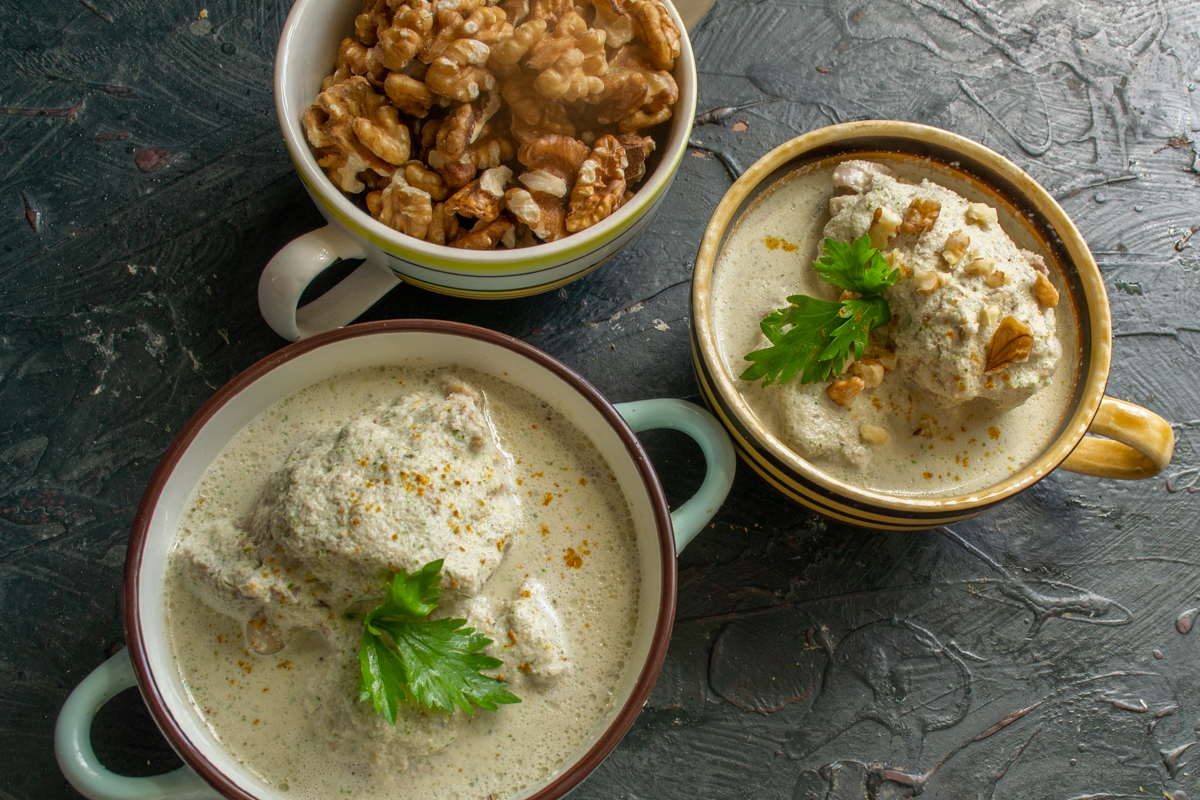
Pour the finished sauce over the chicken pieces and place the dish in the refrigerator for several hours to marinate.
Georgian cuisine is rich in spices, yet every seasoning has its perfect place. Utskho-suneli (blue fenugreek) pairs best with poultry, whether it is chicken, turkey, or game. You can buy ready-made ground seasoning, or grind the fenugreek seeds yourself in a mortar. By the way, if you briefly toast the fenugreek in a dry skillet beforehand, its aroma will open up even more. Serve the chicken satsivi with traditional shoti (Georgian canoe-shaped bread) or mchadi (cornbread) so you do not leave a single drop of the precious sauce on your plate. For a more striking presentation, drizzle the finished dish with a few drops of walnut oil or garnish it with pomegranate seeds. Remember that this dish stores perfectly in the refrigerator for two to three days, becoming even richer and more flavorful over time.
0 comments