
Oven-baked ribs with adjika are the perfect way to throw a proper BBQ feast without leaving your kitchen. The secret to this dish lies in the pairing of fiery adjika (a traditional Caucasian chili paste) and the mellow sweetness of honey, which transforms into a glossy caramel glaze as it bakes. The aroma of garlic and khmeli suneli (a Georgian spice blend) fills the room right from the marinating stage, while slow-roasting at a moderate temperature makes the pork incredibly tender—literally falling off the bone at the slightest touch. If you add a few drops of liquid smoke, the meat will take on that rustic campfire flavor we all crave.
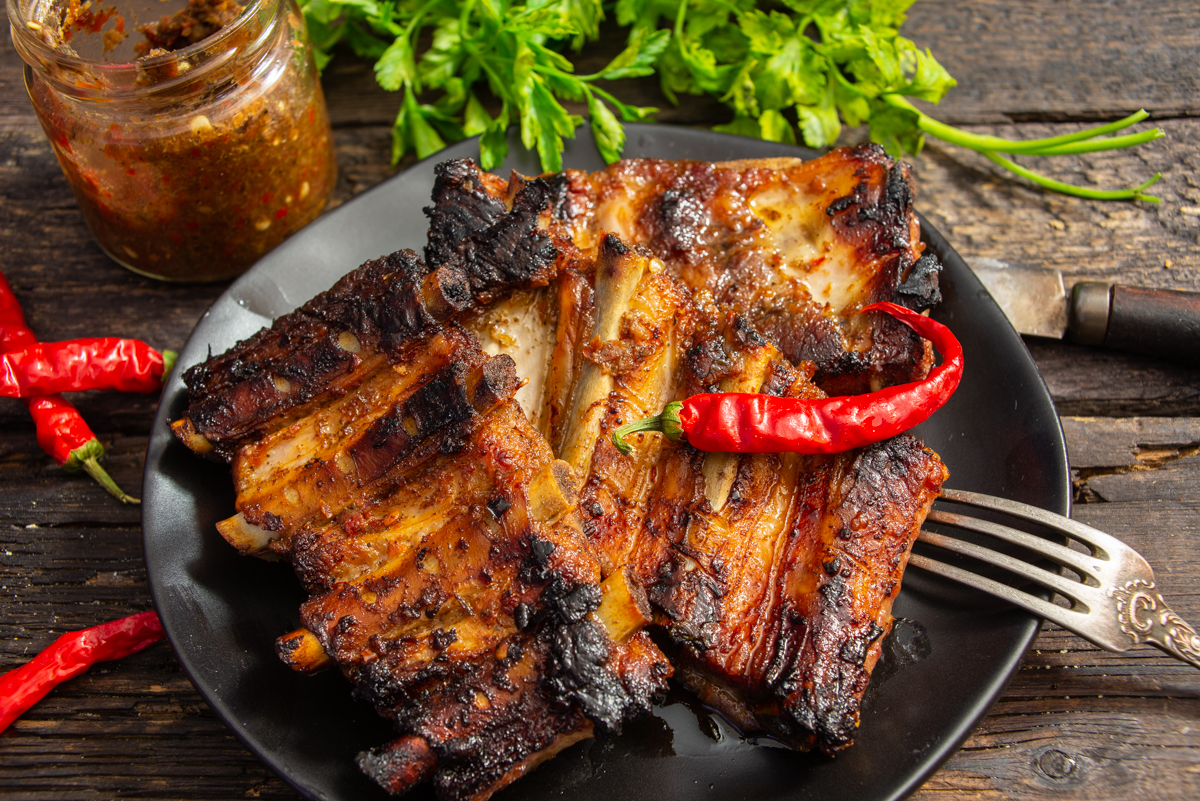
Golden, spiced ribs with adjika make the perfect main course for a festive table or a hearty family dinner.
Ingredients
- 1 kg (2.2 lbs) pork ribs
- 2 tbsp hot pepper adjika (spicy Caucasian chili paste)
- 2 tbsp vegetable oil
- 1 tbsp honey
- Salt, to taste
How to make oven-baked ribs with adjika
Cut the racks of ribs into portions that fit your baking sheet. Peel off the thin membrane on the back so it does not interfere with cooking—the membrane shrinks when heated. Score the meat on both sides with a sharp knife.
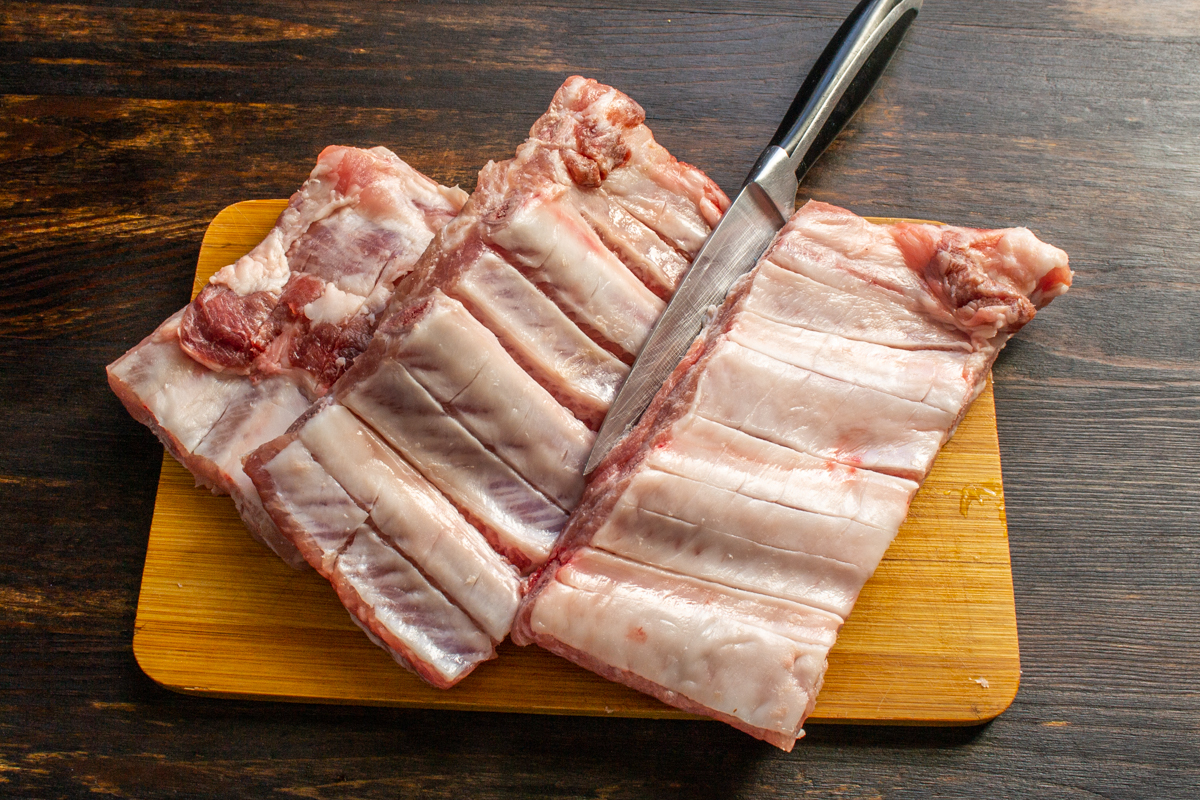
Be sure to remove the membrane and score the meat: this helps the marinade penetrate deeply and prevents curling during cooking.
Place the ribs in a large bowl, add spicy adjika (a traditional Caucasian chili paste), and season with salt to taste. I make my own adjika from sun-dried hot peppers, running them through a meat grinder with garlic, salt, and khmeli suneli (a Georgian spice blend). This homemade paste keeps perfectly in the fridge, providing a fragrant seasoning for any dish all winter long.
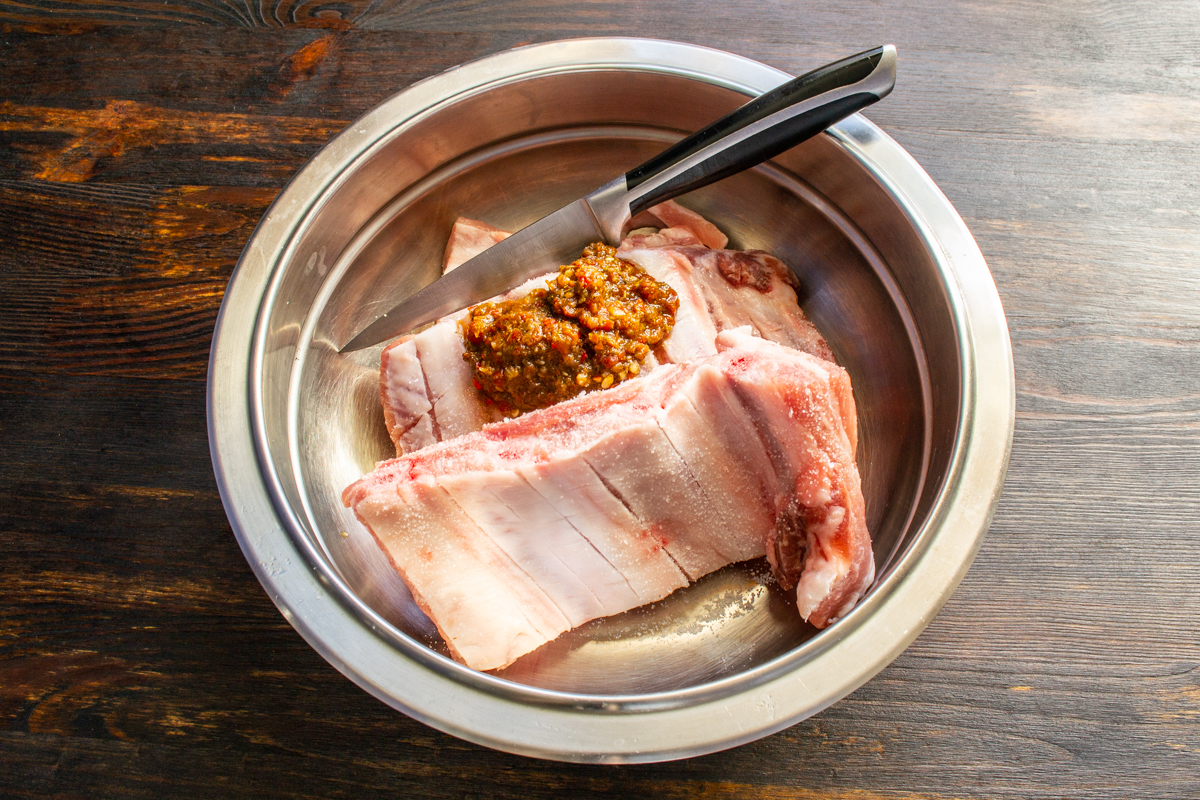
Homemade adjika made with hot peppers, garlic, and khmeli suneli gives the dish a unique Caucasian flair.
Pour in a neutral vegetable oil, mix well, and vigorously rub the seasonings into the ribs. Cover the bowl with plastic wrap and let them marinate for a few hours. You can even leave them in the adjika marinade for up to 24 hours.
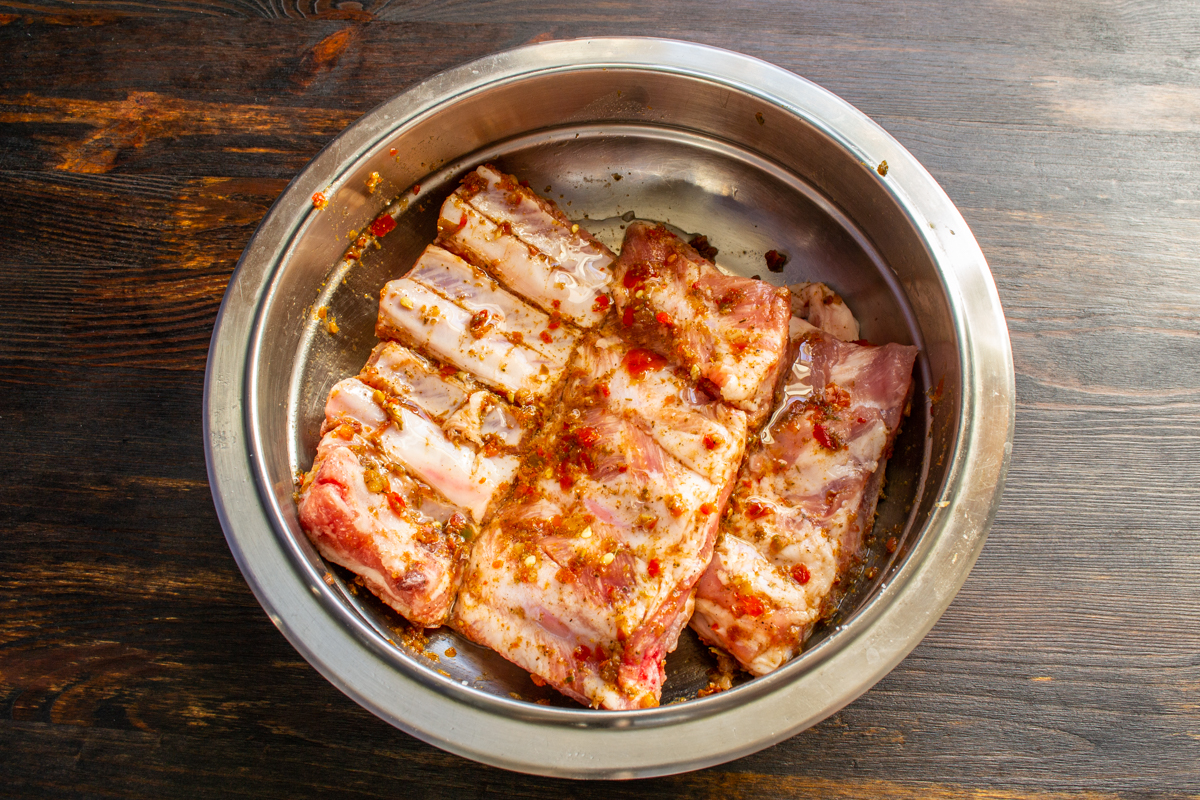
Rub the spices thoroughly into the meat. A long marinade (up to 24 hours) will make the ribs incredibly tender.
Line a shallow baking dish with parchment paper so that the edges hang over the sides. Arrange the marinated ribs on the paper. You can use aluminum foil instead of parchment, just remember not to seal the meat completely airtight; leave small openings for the steam to escape.
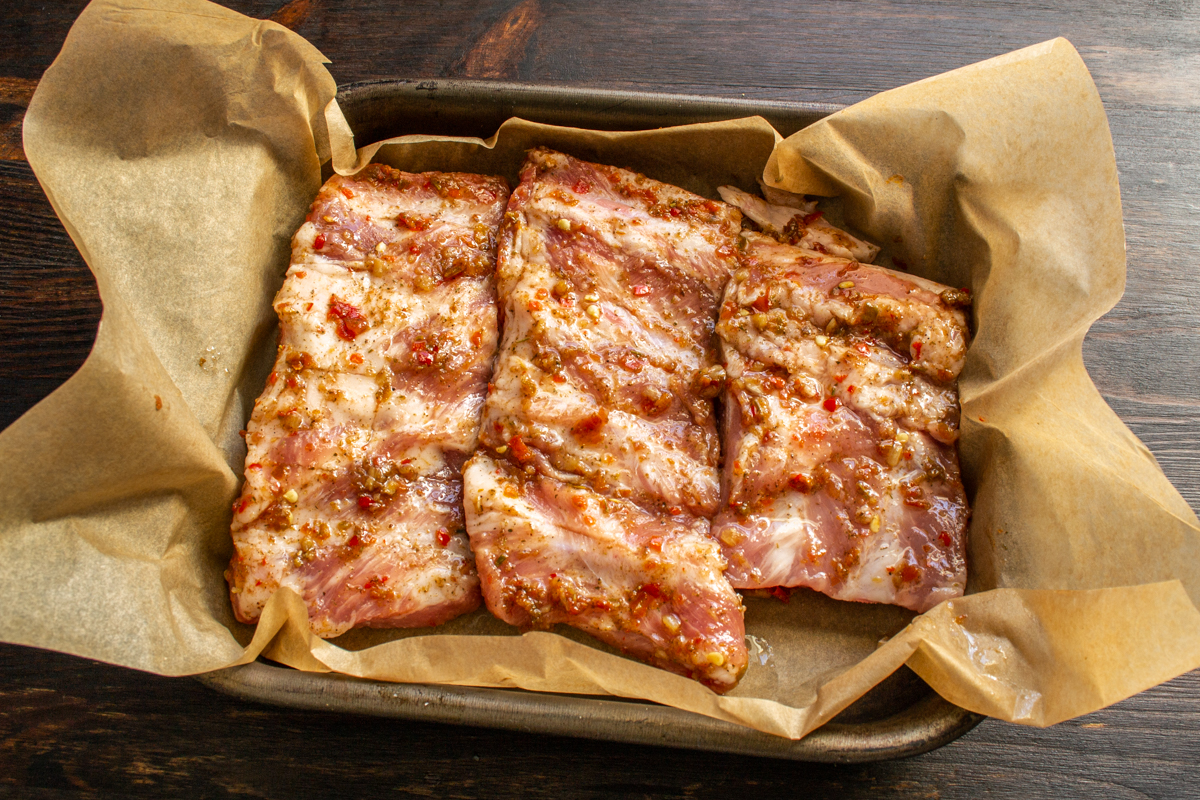
Using parchment paper helps trap the juices and makes cleaning the baking dish much easier later on.
Fold the overhanging parchment paper over the ribs, leaving slight gaps. Preheat your oven to 170°C (340°F) and place the dish inside.
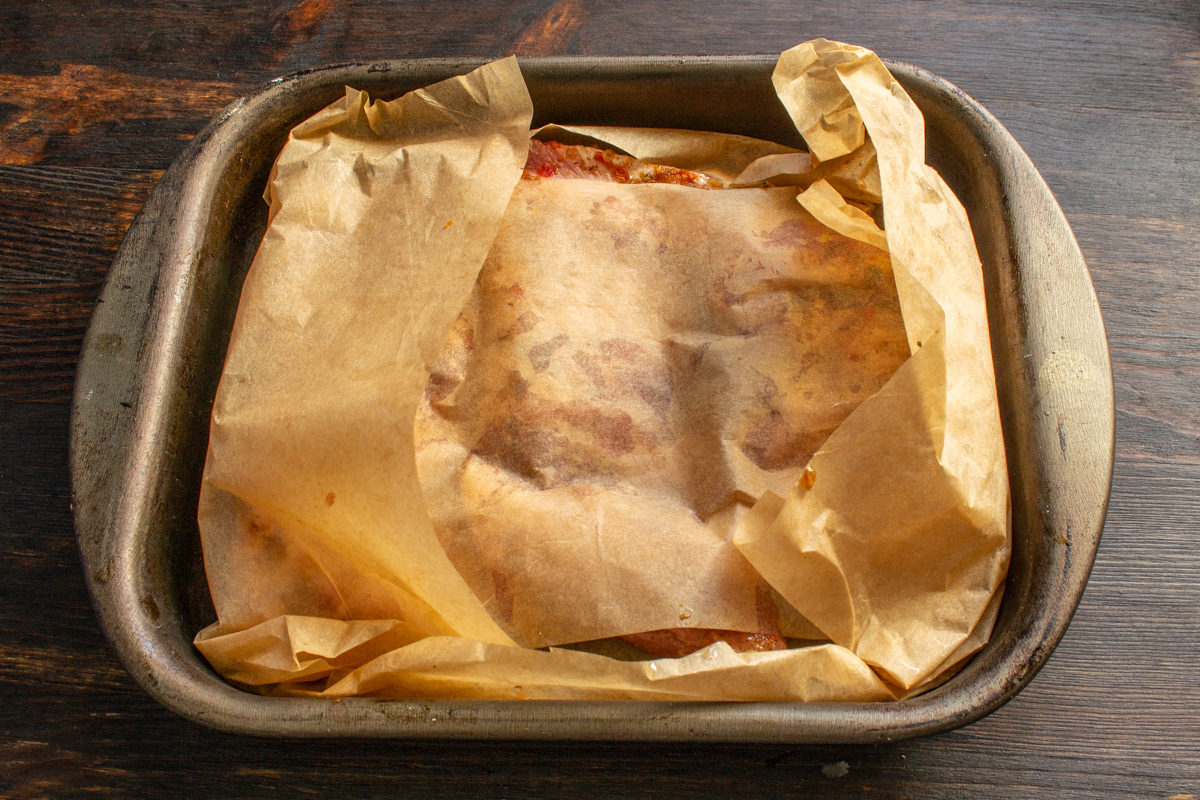
Do not seal the meat completely—small openings allow excess steam to escape, preventing the meat from boiling.
After 1 hour, take the dish out of the oven and open the parchment paper. The baking time depends on the specific cut and thickness of the meat, so it might need a little more time.
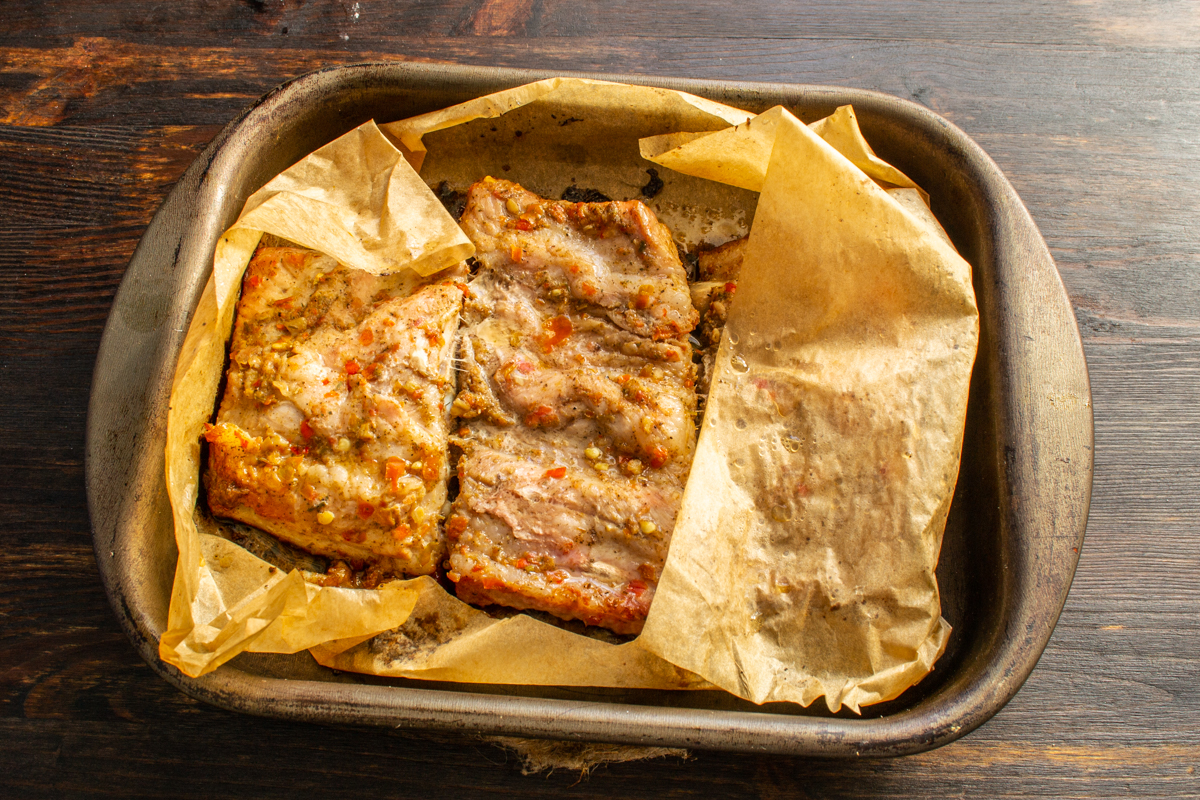
After an hour of slow cooking at a moderate temperature, the meat becomes tender and pulls away from the bone.
Add a tablespoon of the natural meat juices released during baking to the honey. If your honey is thick, the warm pan juices will gently melt it, just like a water bath. Pour this honey glaze evenly over the ribs.
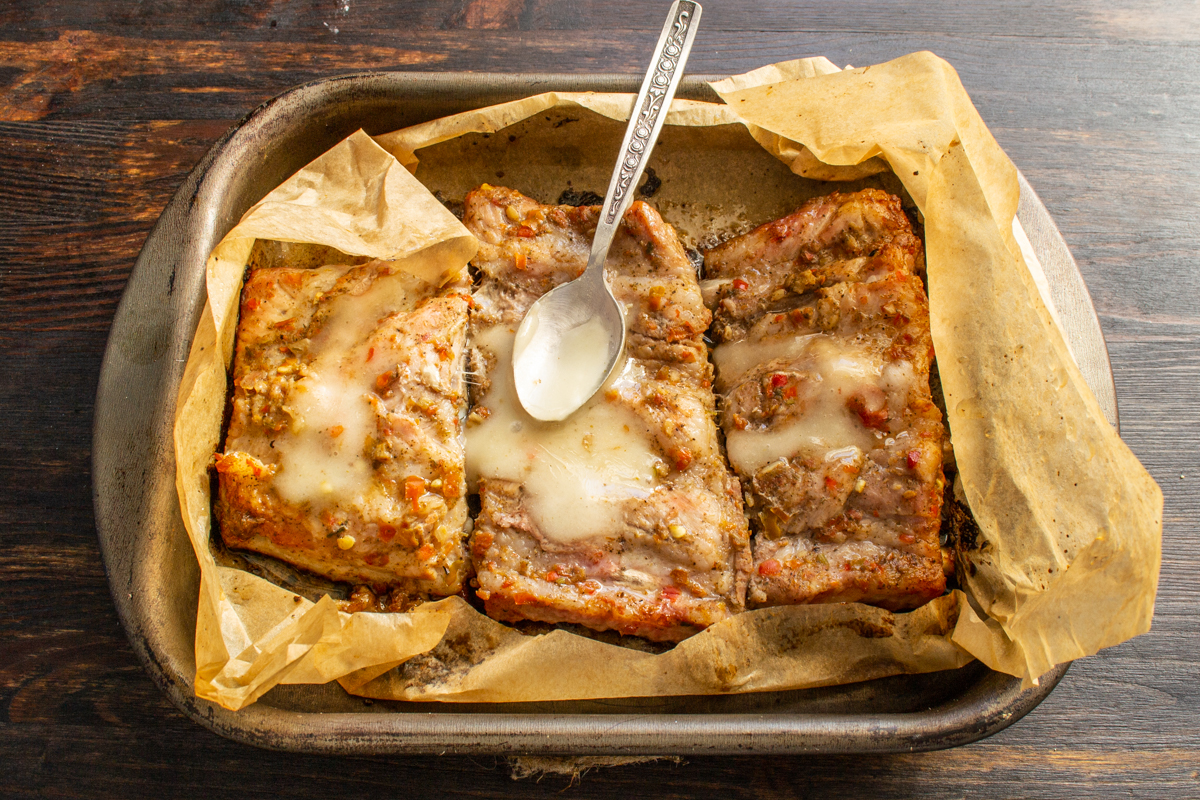
A mix of honey and pan juices creates that appetizing caramel crust that makes this dish so special.
Brush the glaze all over the ribs using a silicone pastry brush.
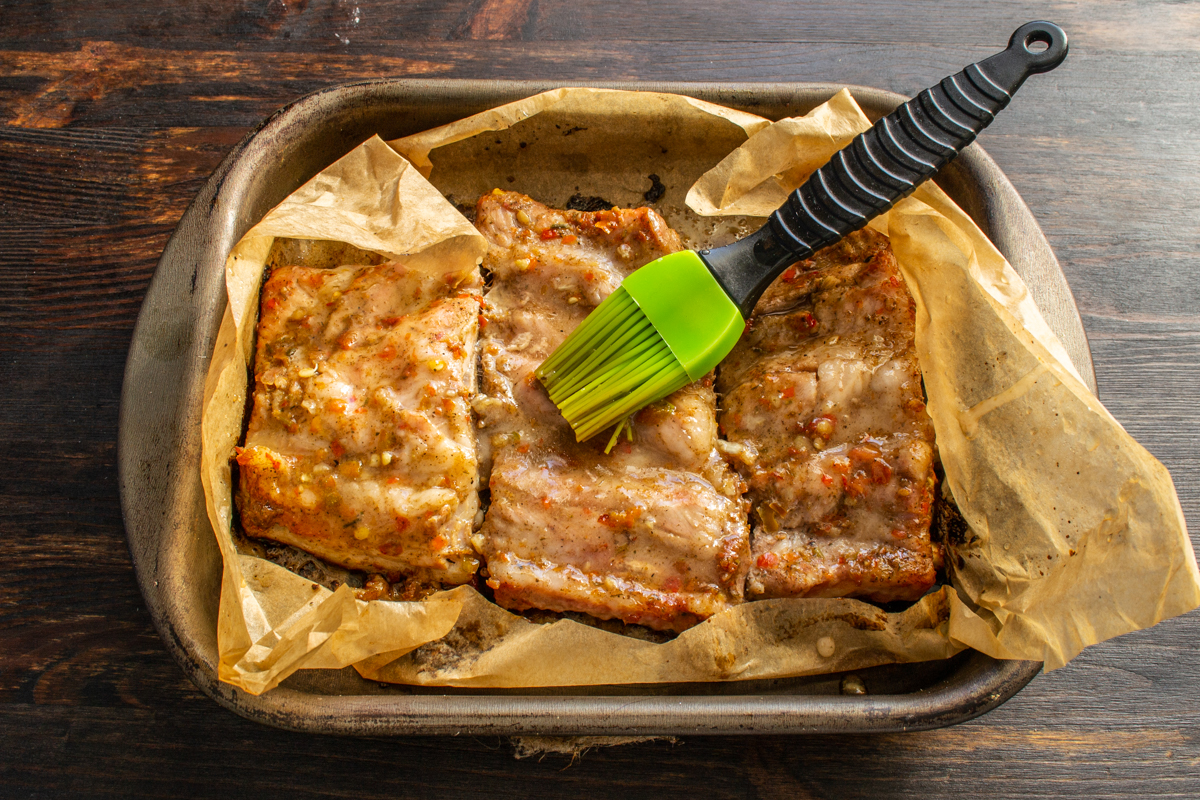
A silicone brush helps distribute the glaze in a thin, even layer for the perfect glossy finish.
Return the baking dish to the oven, now cranked up to 200°C (400°F), for 10-15 minutes. You can also turn on the broiler for a few minutes to get a deep, beautiful char, giving them an authentic BBQ look.
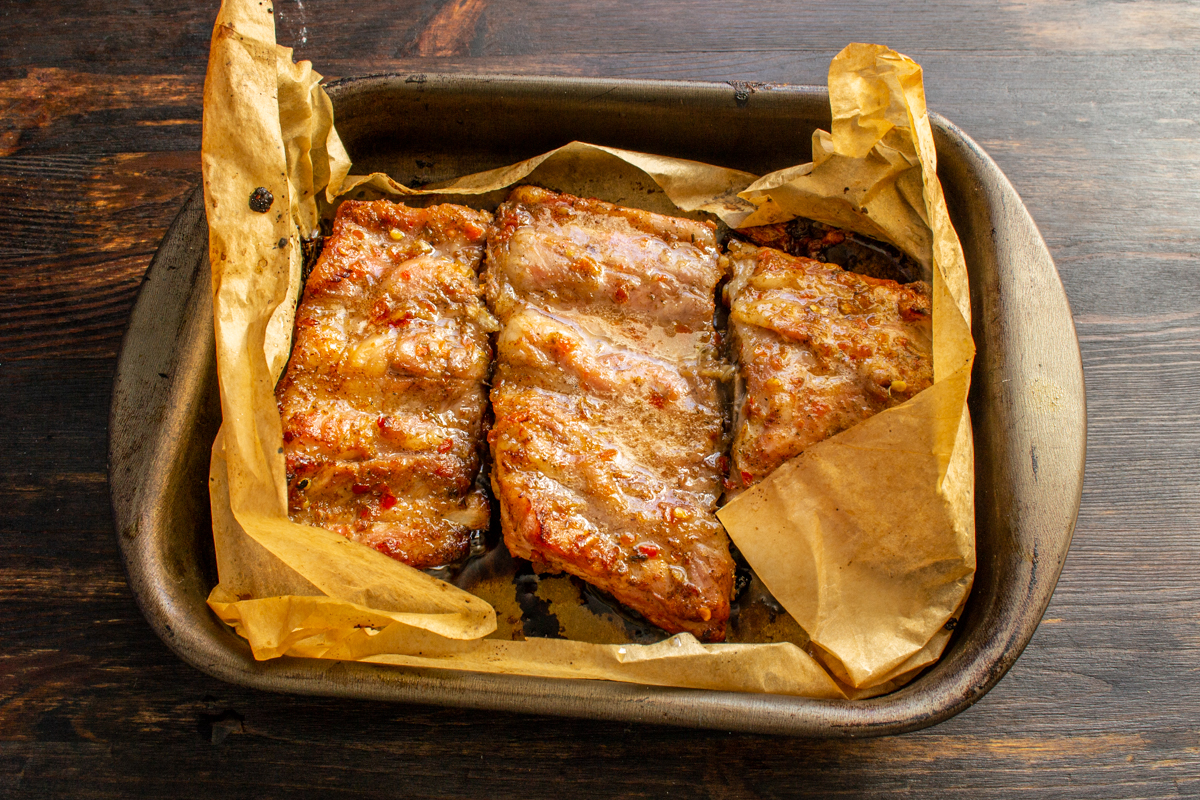
Now, return the meat to a hot oven. At this stage, keep a close eye on it so the sugars in the honey do not burn.
Serve the hot ribs immediately, straight from the oven. They taste like they just came off a campfire—absolutely finger-licking good! Enjoy your meal!
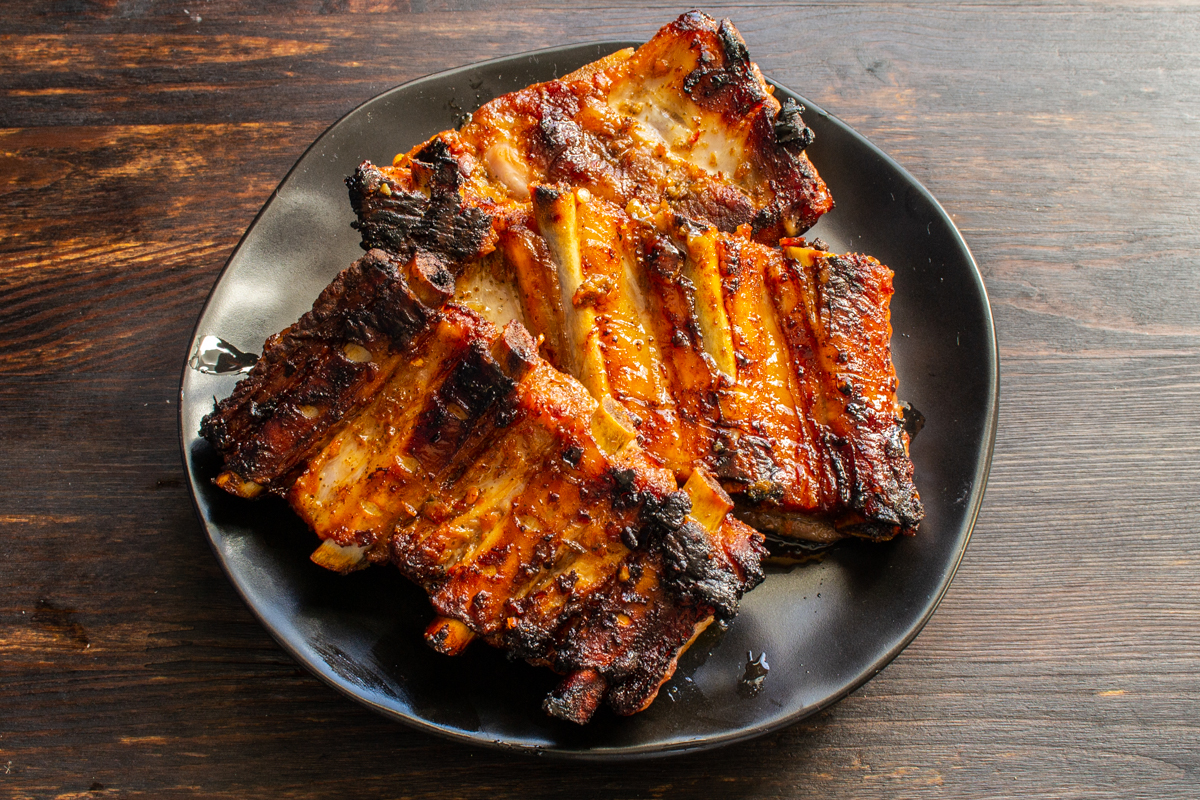
Serve the ribs piping hot. They come out with a smoky flavor, as if straight off a campfire.
These oven-baked ribs with adjika are best served with a light side dish to balance the rich, heavy meat. A fresh Greek-style vegetable salad is an excellent choice: large wedges of ripe tomatoes, crunchy cucumbers, and sweet bell peppers, dressed with olive oil and lemon juice, topped with fragrant feta cheese. This fresh vegetable bed highlights the juiciness of the pork and adds a crisp bite to the meal. If you have leftovers, store them in an airtight container in the fridge for up to two or three days. To revive that fresh-out-of-the-oven taste, reheat the ribs in the oven or in a covered skillet with a tiny splash of water—this helps retain the moisture inside the meat fibers. For a fun twist next time, try swapping the honey for apricot jam; the fruity tartness paired with the spicy adjika creates a completely new, sophisticated flavor profile.
0 comments