
We are canning a crucial source of plant-based protein for the winter—peas. The peas are shelled from unripe green pods. This is a very delicate product: if you are just a couple of days late with the harvest, the peas will become starchy and tough. For our preserve, peas with a diameter of 6-8 mm, thin skins, and a bright emerald color are absolutely ideal. In this recipe, we are making vinegar-free canned green peas, replacing the harsh vinegar with mild citric acid. This method preserves the natural flavor of the legumes, making them virtually indistinguishable from fresh ones, which is especially valuable for winter salads and soups.
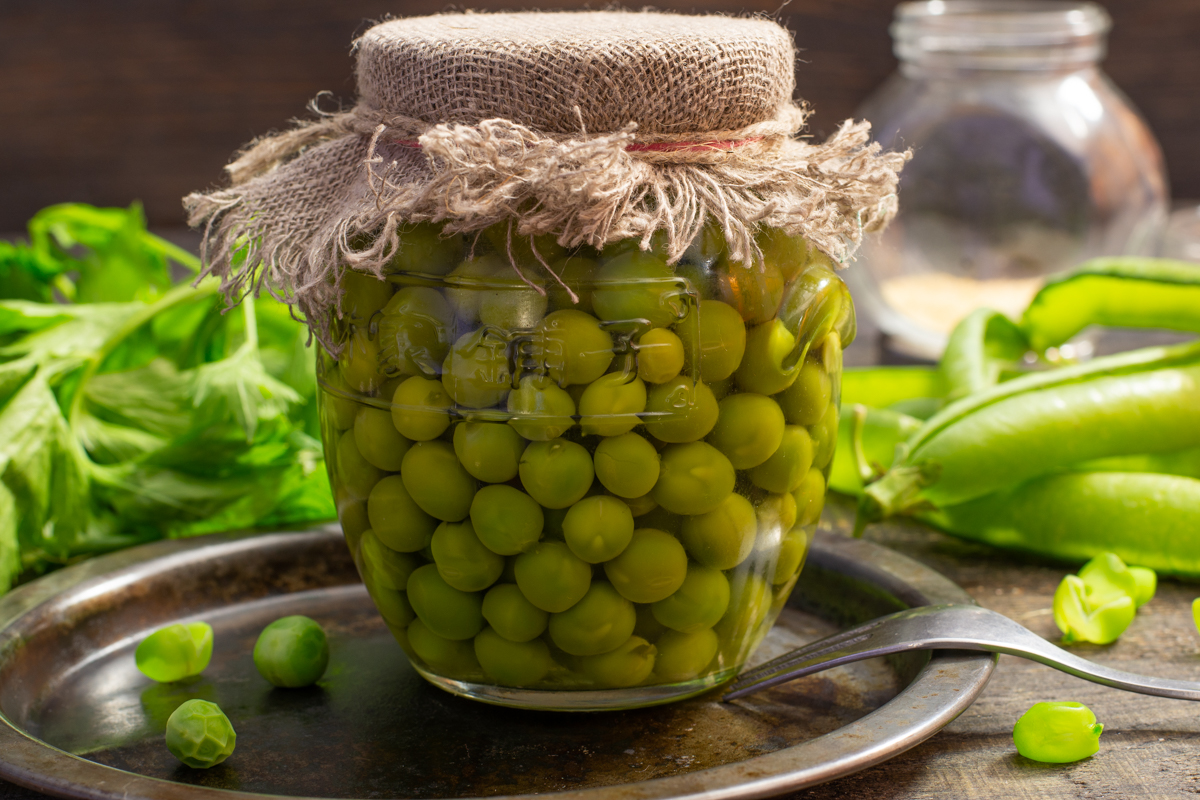
The finished canned peas are tender and sweet, perfect for salads and side dishes, and completely vinegar-free.
Ingredients
- young green peas in pods
- 1 liter (4 cups) water
- 3 g (about 1/2 tsp) citric acid
- 30 g (about 1.5 tbsp) salt
- 15 g (about 1 tbsp) sugar
How to Make Canned Green Peas
Shell the peas. For canning, the peas should be 6-8 millimeters in diameter. Discard any damaged or pest-bitten ones, keeping only the uniformly colored, tender, and sweet peas.
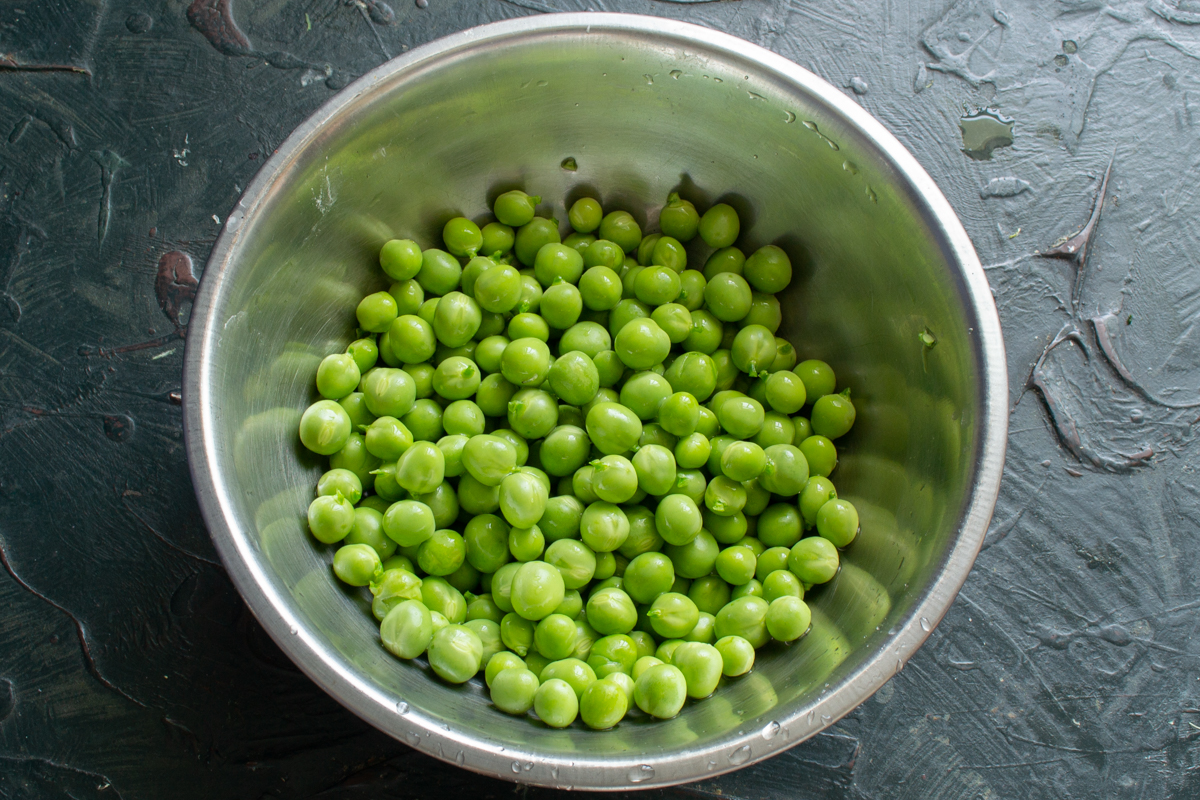
Choose young, tender peas for canning, making sure to remove any damaged ones.
Cover the shelled peas with cold water and let them sit for a few minutes. Then, drain the peas thoroughly in a colander.
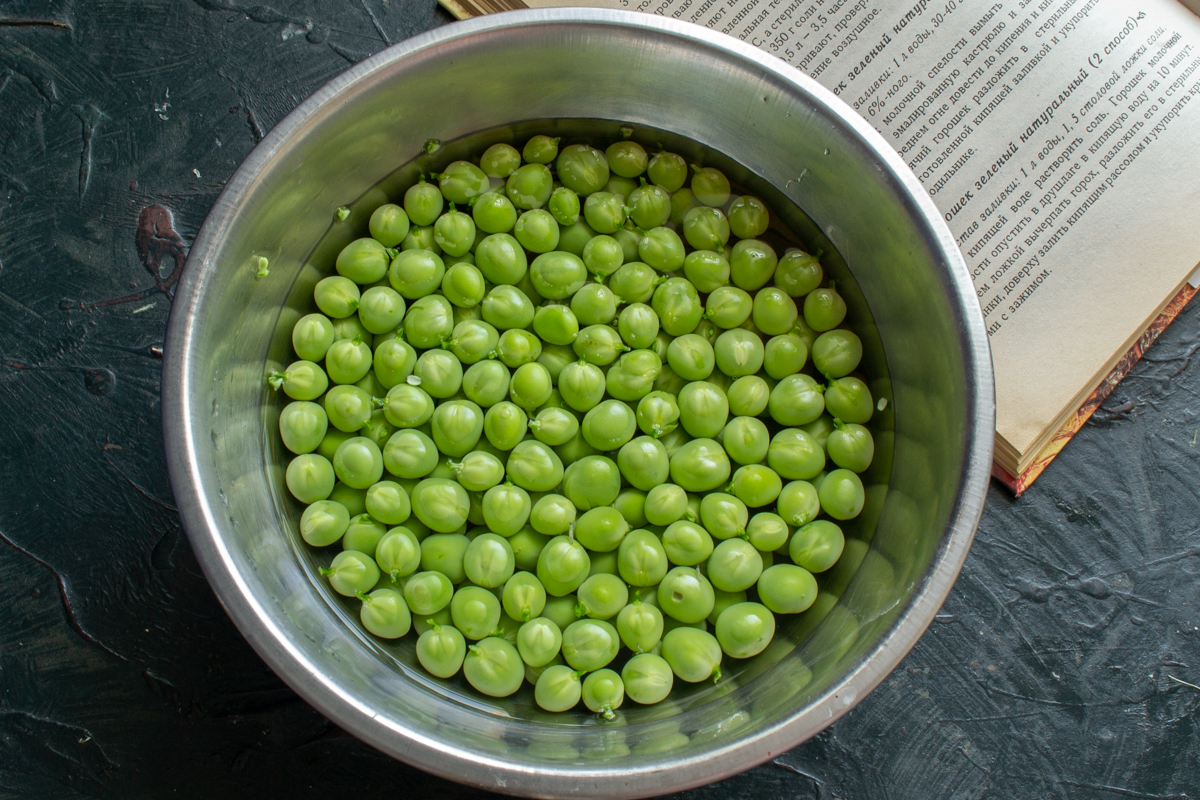
Thoroughly rinse the peas and let them drain completely in a colander before cooking.
Pour one liter of filtered or spring water into a pot. Add the sugar and salt, stirring until completely dissolved. Bring the brine to a boil, let it simmer for 3 minutes, and filter if necessary.
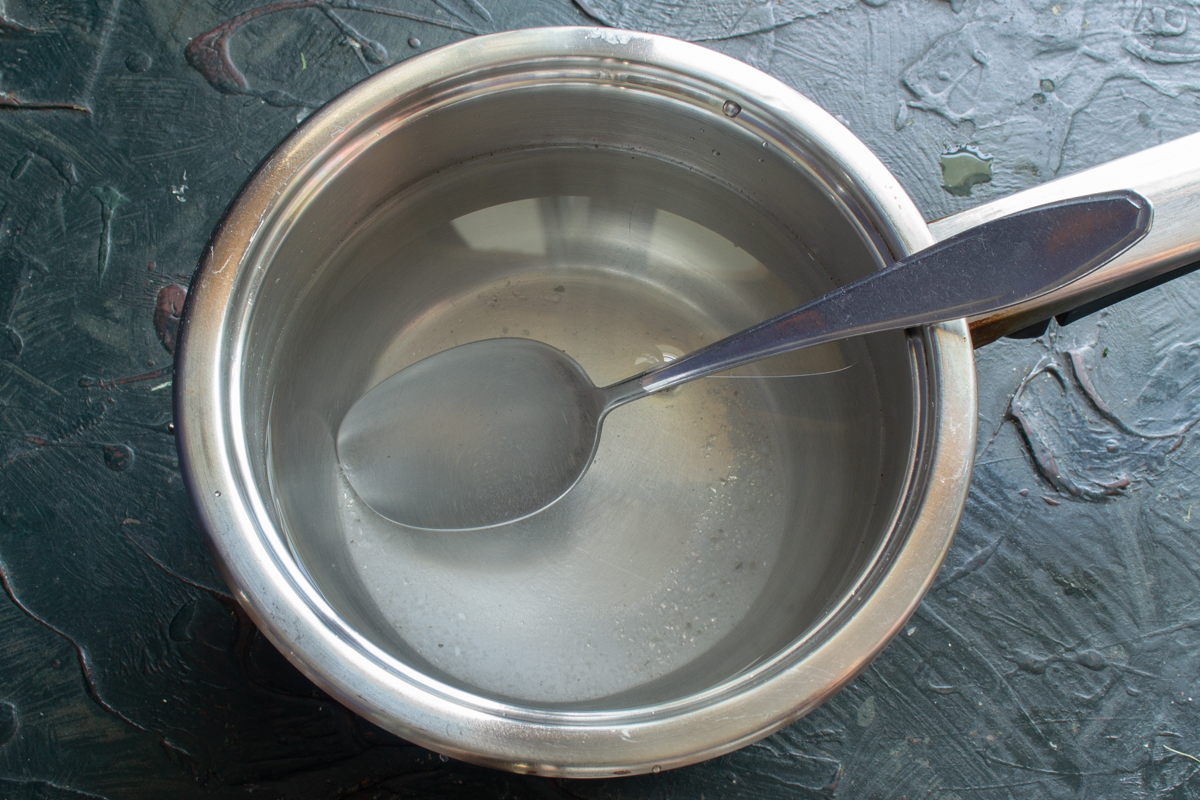
Dissolve the sugar and salt in water and bring the brine to a boil. If the water is not perfectly clear, filter it.
Drop the cleaned peas into the boiling brine. Bring back to a boil and cook for about 10 minutes. The time depends on the size and ripeness of the peas. If they are small, sweet, and juicy, 5-7 minutes is enough. If the peas are larger, starchier, and denser, they will need more time—taste them to check for doneness.
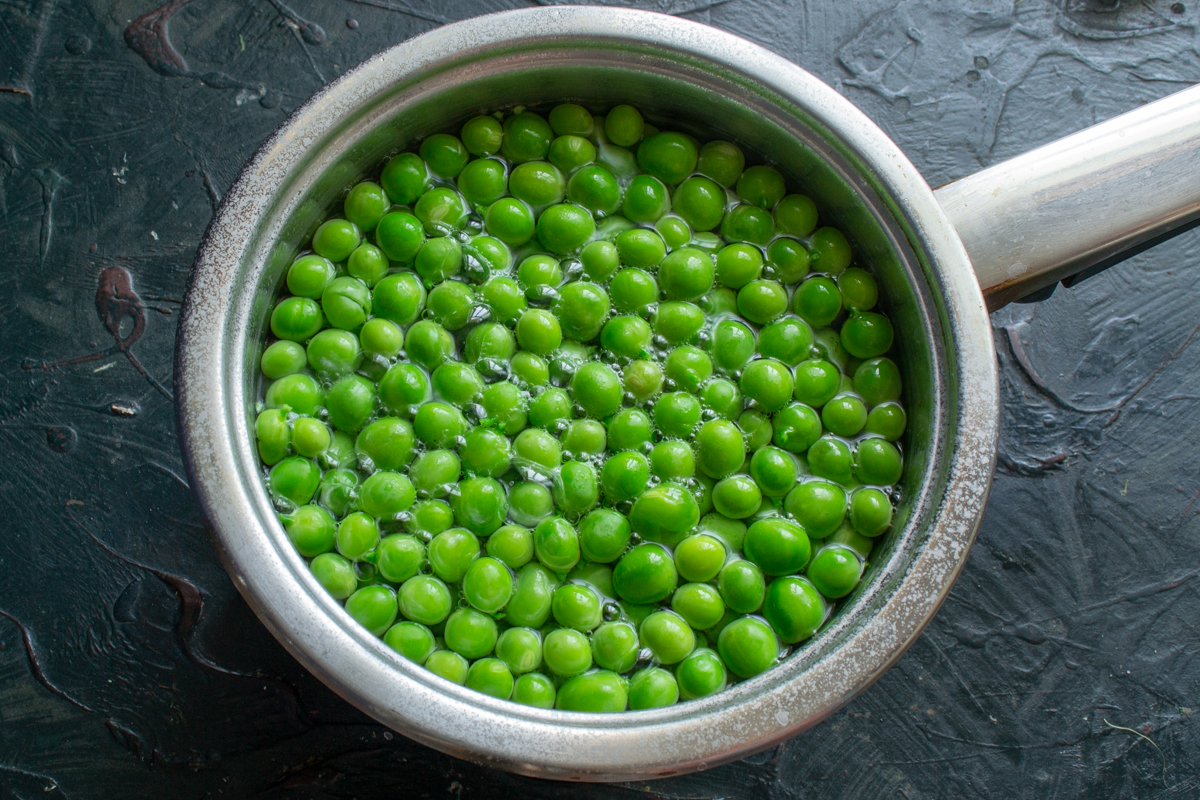
Boil the peas in the hot brine. Cooking time depends on ripeness: young peas only need a few minutes.
Remove the cooked peas from the boiling brine using a slotted spoon.
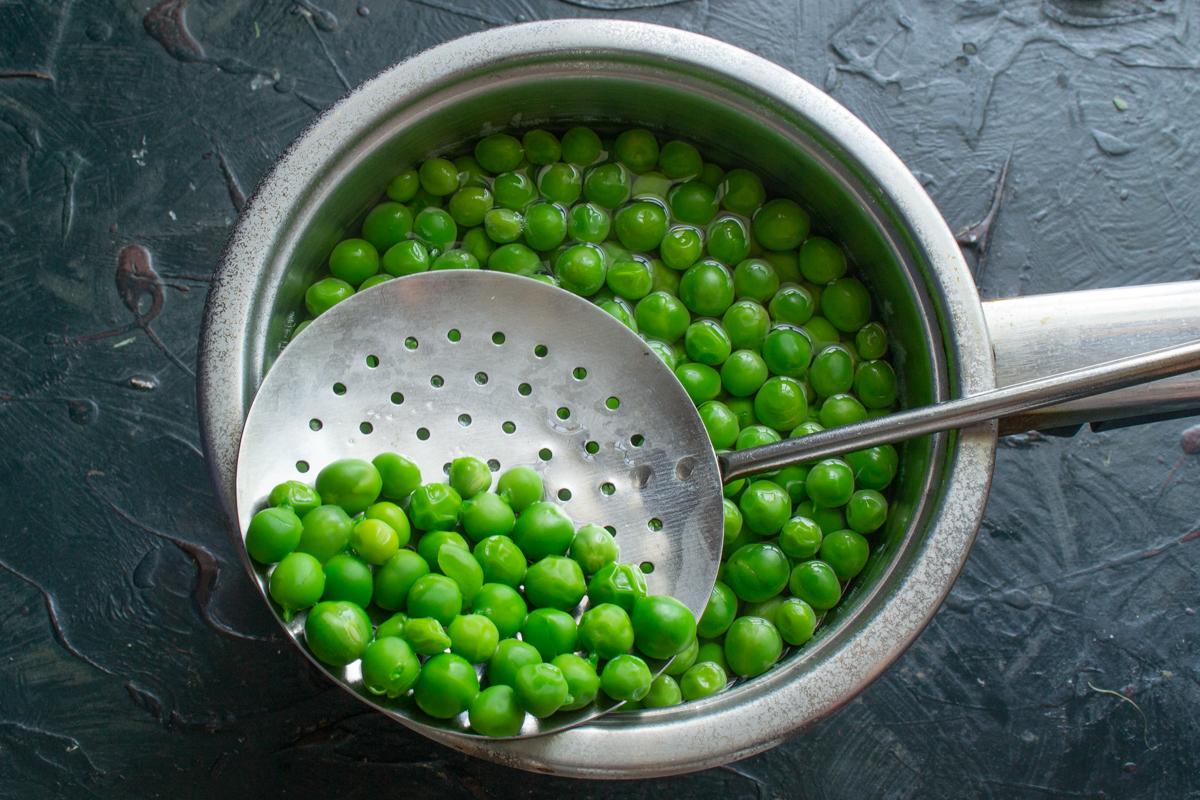
Once the peas are tender, carefully remove them from the brine using a slotted spoon.
Wash your canning jars thoroughly with warm water and baking soda. Rinse with boiling water. Dry the prepared jars in an oven preheated to 100 degrees Celsius (212 F) for about 10 minutes—place the jars upside down on the rack first, then turn on the heat. Boil the lids. Transfer the blanched peas into the hot, dry jars.
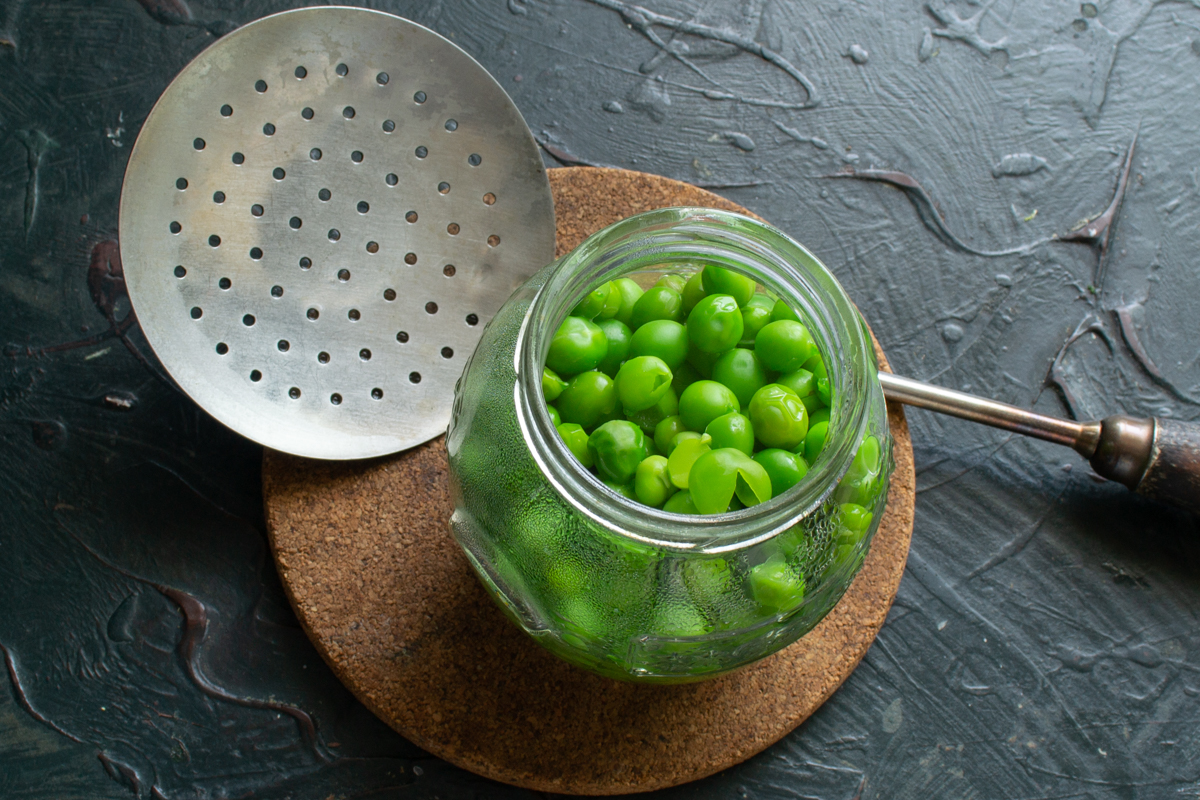
Immediately distribute the hot peas into the pre-sterilized, dry canning jars.
To the remaining brine, add citric acid at a ratio of 3 grams per 1 liter of liquid. Bring the brine back to a boil and pour it into the jars with the peas. Fill the jars up to the shoulders, leaving about 2 centimeters (3/4 inch) of headspace.
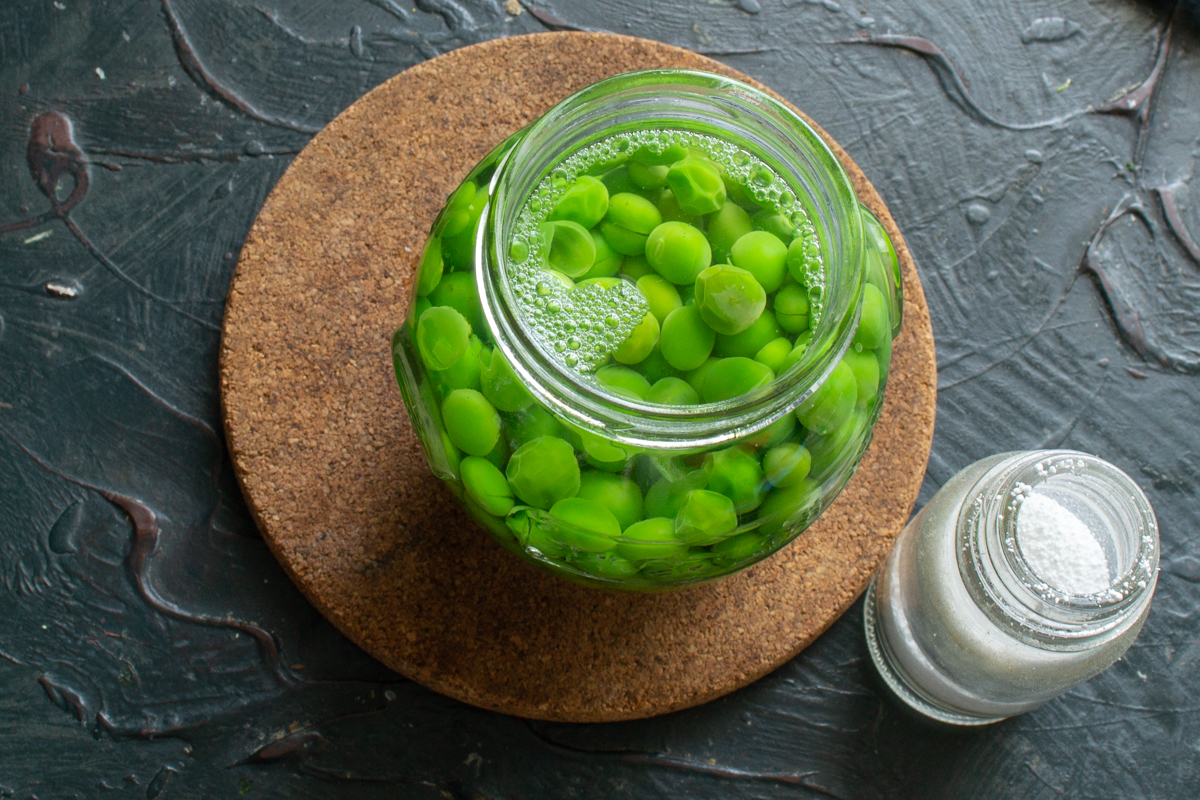
Add citric acid to the hot brine and pour it over the peas, leaving some headspace at the top.
Cover the jars with the boiled lids. Place a wooden rack or a cotton cloth at the bottom of a large pot. Set the filled jars inside. Pour in water heated to 60-65 degrees Celsius (140-150 F) so that it covers the lids of the jars. Bring to a boil. Sterilize half-liter (1-pint) jars for 15-20 minutes.
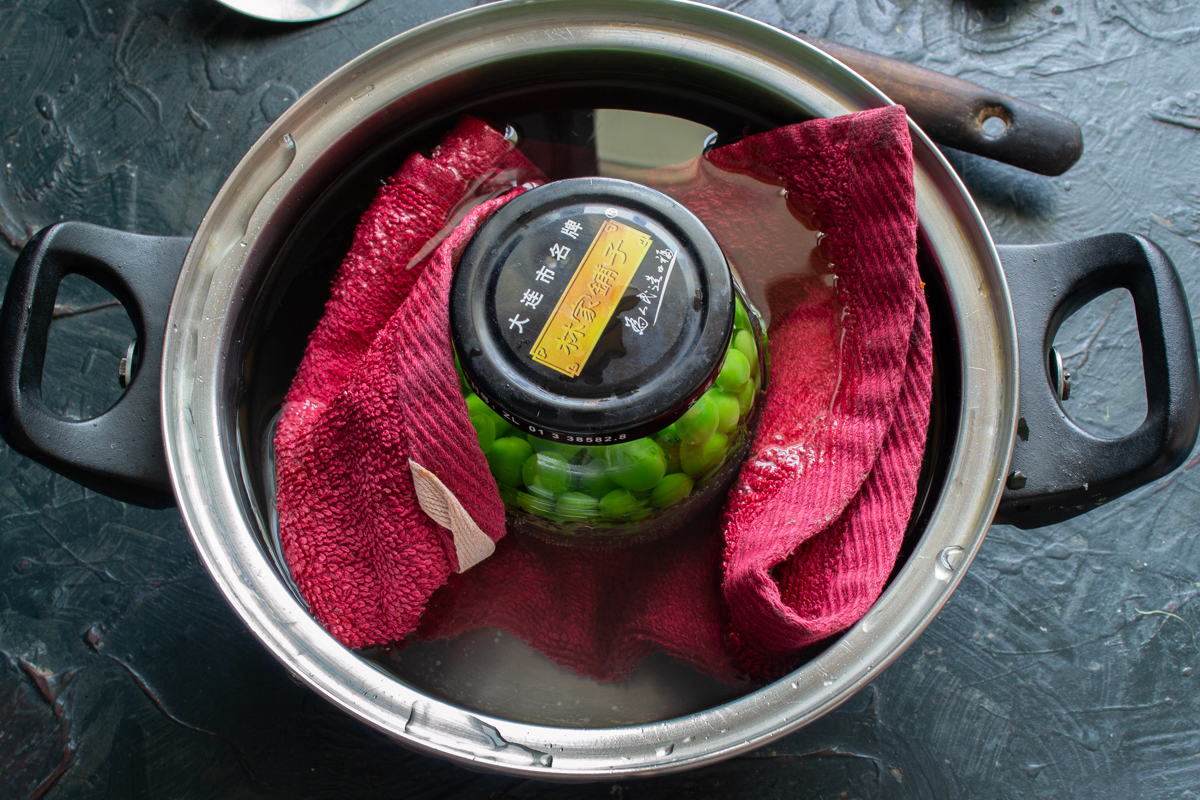
Place the filled jars in a pot of warm water and sterilize for about 20 minutes after boiling for safe storage.
Carefully remove the jars from the pot using canning tongs. Turn them upside down to rest on their lids. Cover the jars with a blanket or heavy towel. Once completely cooled, store them in a dark, cool place or in the refrigerator.
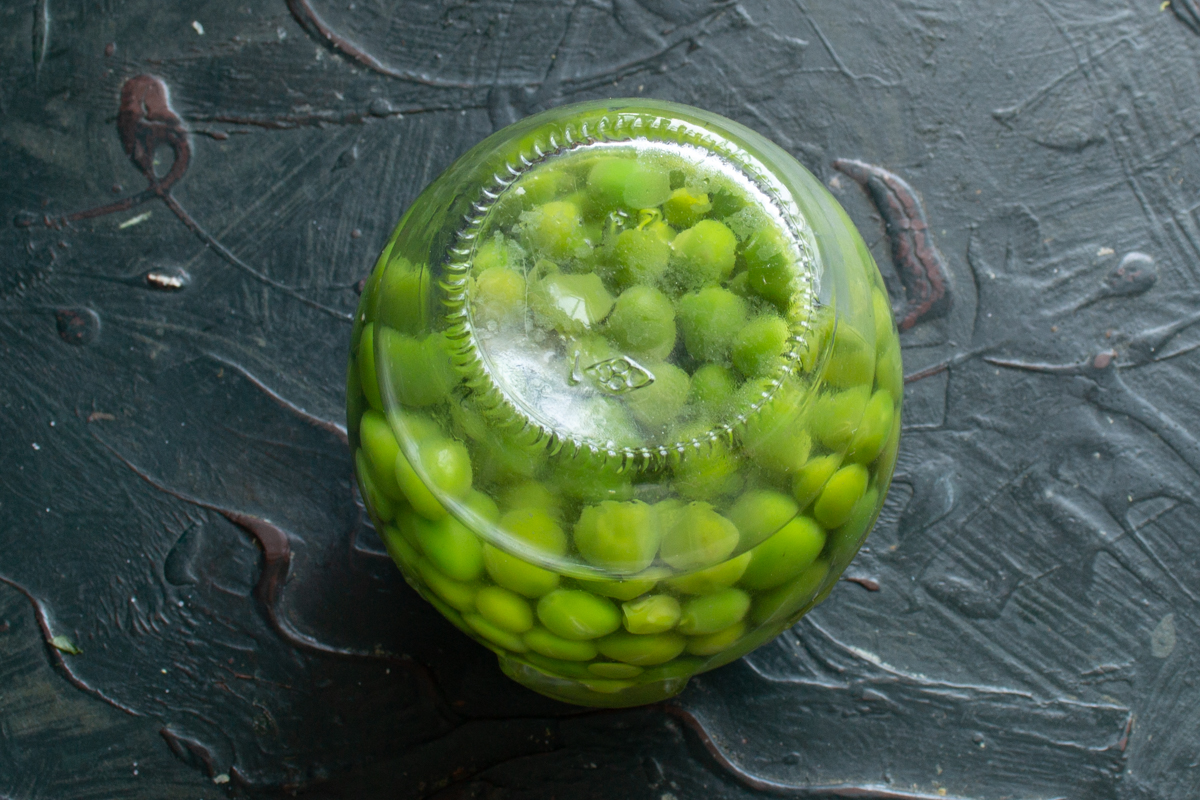
Turn the jars upside down and wrap them in a blanket. Slow cooling is a crucial step in the home canning process.
Peas contain about 25 percent protein and 4 percent fiber, are rich in vitamin B, and serve as an important source of plant-based protein. Green peas are highly perishable; you cannot keep them fresh for long, so they must be frozen or canned. To ensure your vinegar-free canned green peas maintain a crystal-clear brine, be sure to remove any burst or damaged peas before boiling, as their escaping starch will turn the liquid cloudy. Store your finished jars in a cool, dark place, such as a cellar or the refrigerator. If you want to experiment, try adding finely chopped mint or a drop of olive oil when serving—this will beautifully highlight their natural sweetness. Remember that home canning requires strict adherence to sterilization times; do it right, and your hard work will delight your family until the next harvest.
0 comments