
Unleavened dough khachapuri filled with tvorog (farmers cheese), cheese, and cilantro is a true symbol of hospitality that is incredibly easy to recreate in your own kitchen. There are countless recipes for this dish, almost as many as there are variations of the famous borscht. In different regions of Georgia, from mountainous Svaneti to coastal Adjara, people keep their own unique secrets for kneading the dough and balancing the filling proportions. Using a hot-water unleavened dough here is a real lifesaver for those who value their time: it turns out incredibly elastic, doesn't tear when rolled out, and instantly becomes crispy when fried, filling your home with the mouthwatering aroma of fresh pastry and melted cheese.
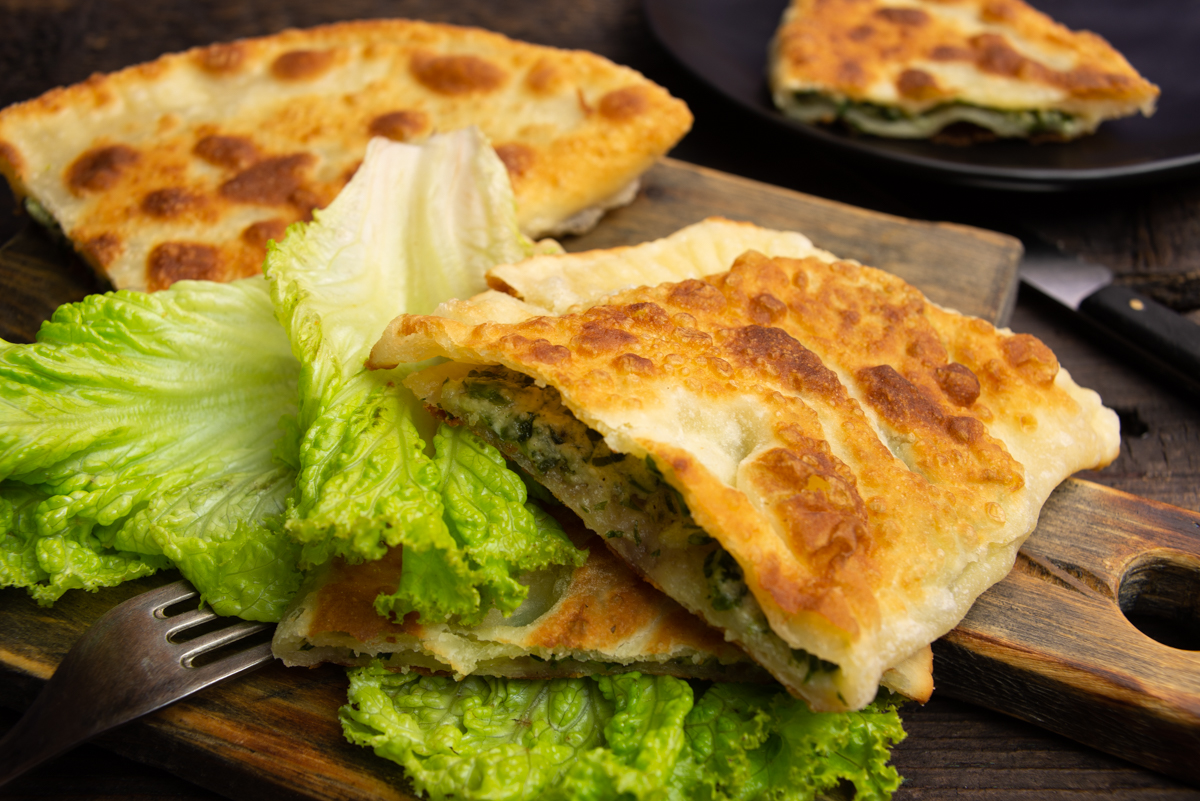
Appetizing khachapuri with a crispy crust and a tender cheese filling.
Dough Ingredients
- 400 g all-purpose flour
- 1 chicken egg
- 200 g water
- 35 g vegetable oil
- oil for frying
Filling Ingredients
- 120 g cheese
- 160 g tvorog (farmers cheese)
- 4 tablespoons finely chopped cilantro
- salt and black pepper
How to Make Unleavened Dough Khachapuri
Bring the water and vegetable oil to a boil. Pour the all-purpose flour into the boiling liquid. Quickly mix the ingredients with a wooden spoon or spatula. Crack the egg into the dough.
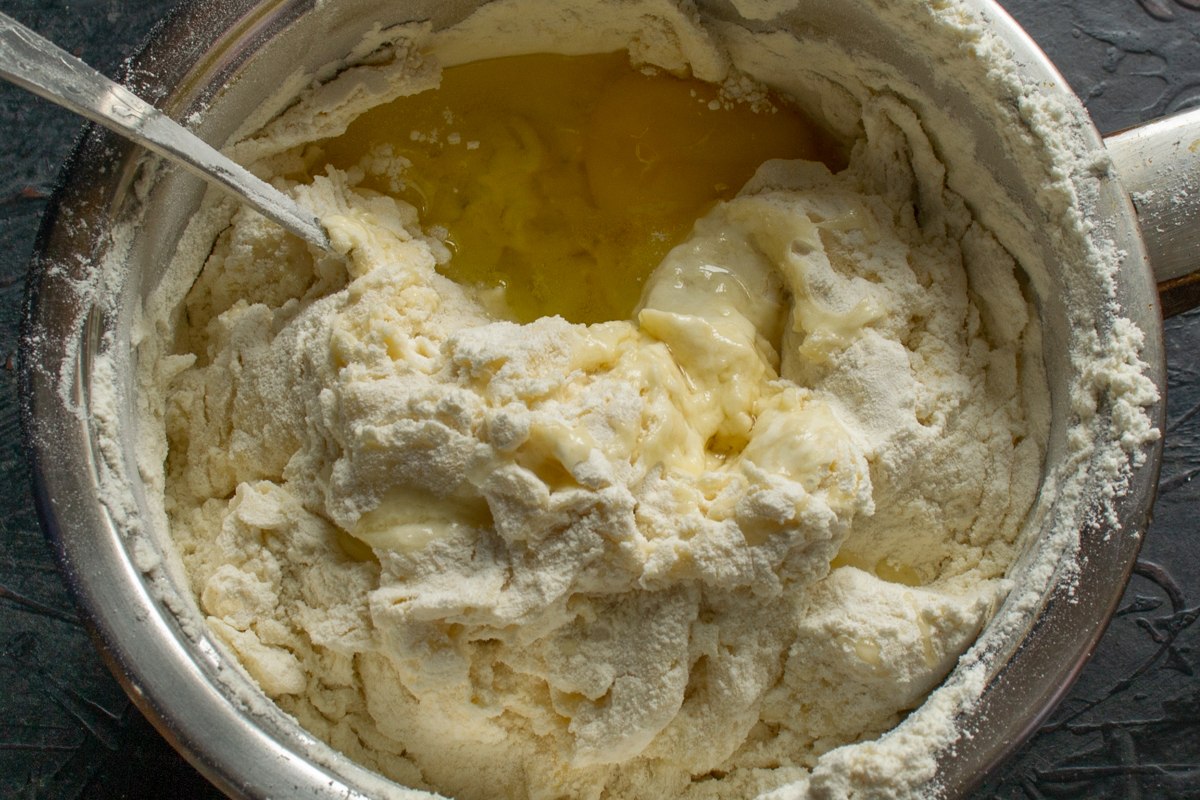
Incorporate the egg into the slightly cooled dough and mix thoroughly until smooth.
Knead the dough for a few minutes, wrap it in plastic wrap, and let it rest at room temperature for 30 minutes.
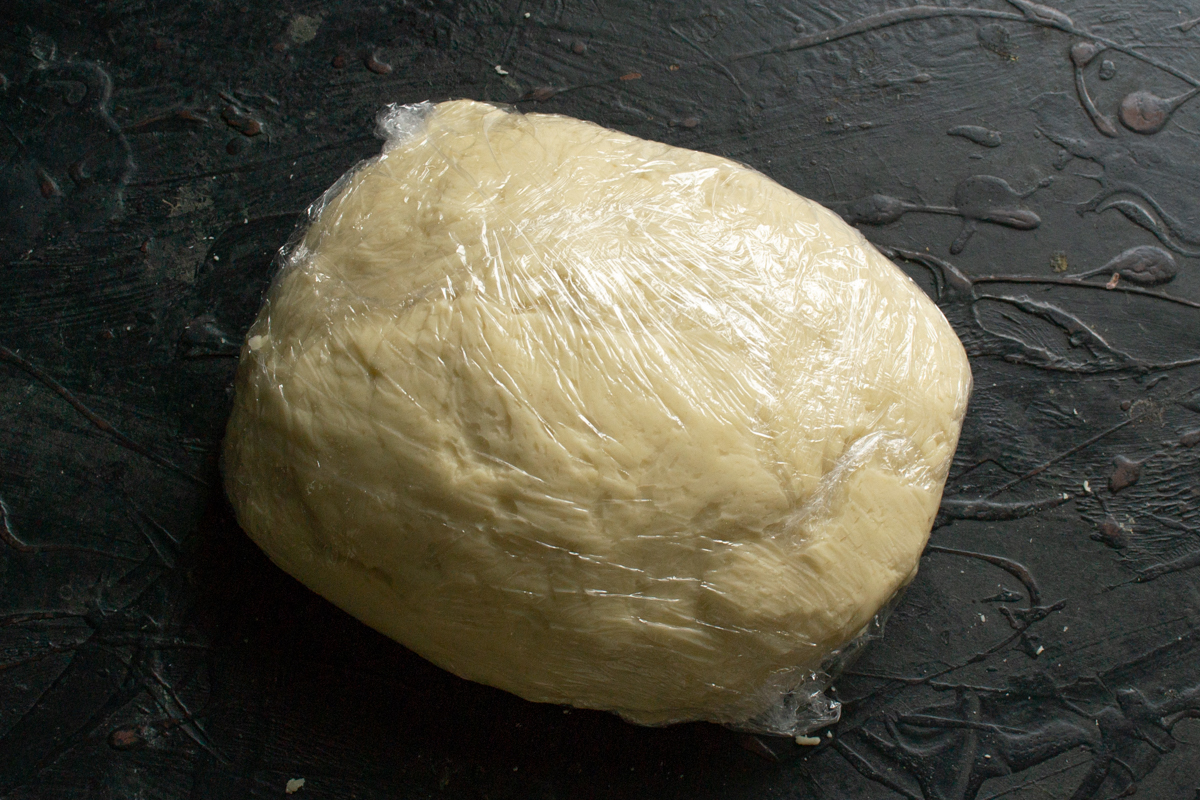
Let the dough rest for 30 minutes covered in plastic wrap to make it more elastic.
While the dough is resting, prepare the filling. Finely grate the cheese. You can use any type of cheese you have in your fridge—whatever is available will work just fine.
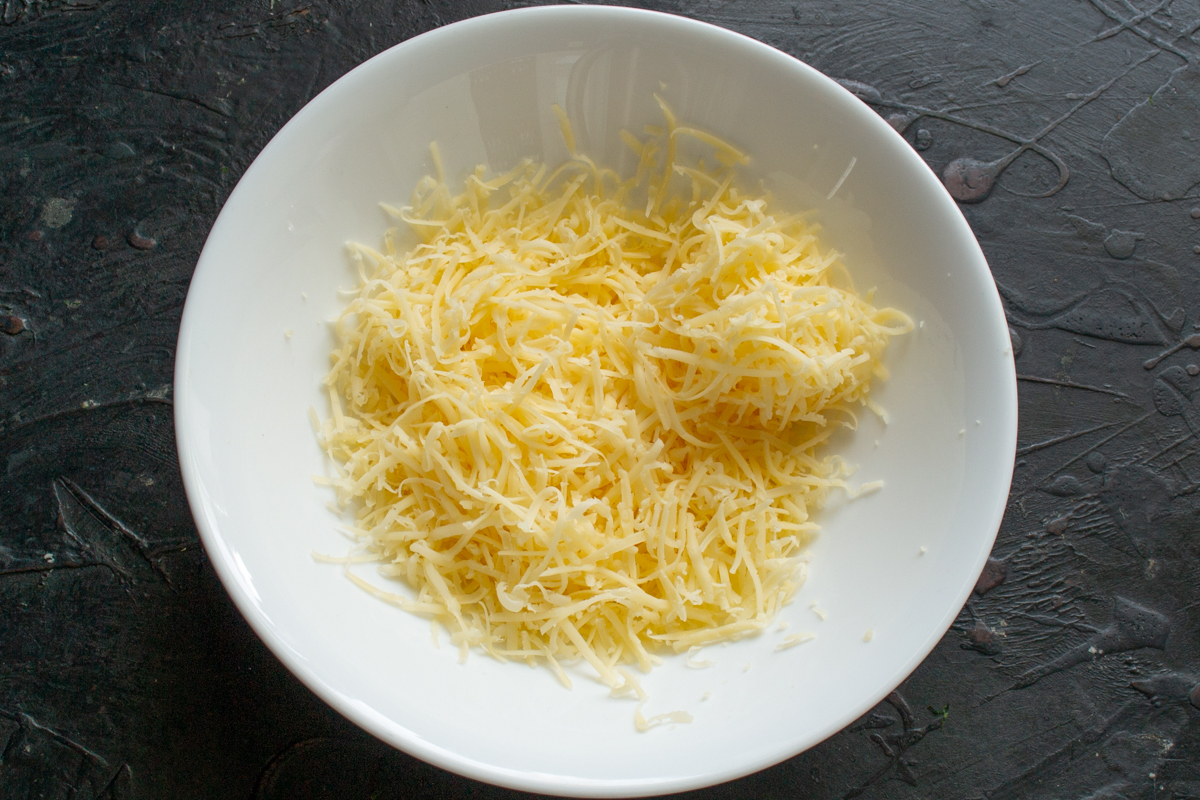
For the filling, you can use any available firm or semi-firm cheese.
Add the tvorog (farmers cheese) to the grated cheese. For this recipe, it is best to use dry, homemade farmers cheese that is mild and not sour.
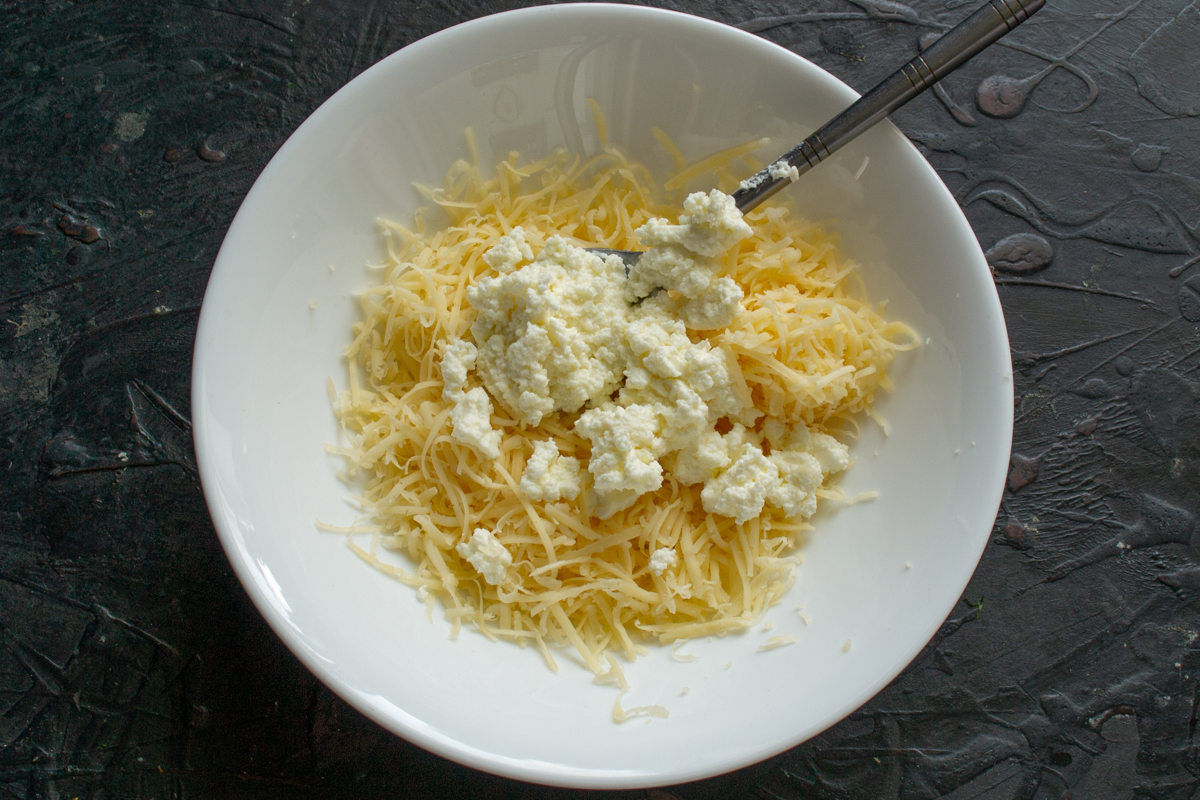
Mix the cheese with dry, mild farmers cheese to create the perfect filling texture.
Add finely chopped cilantro. Season the filling with salt and freshly ground black pepper to taste. Keep in mind the saltiness of your cheese when adding salt!
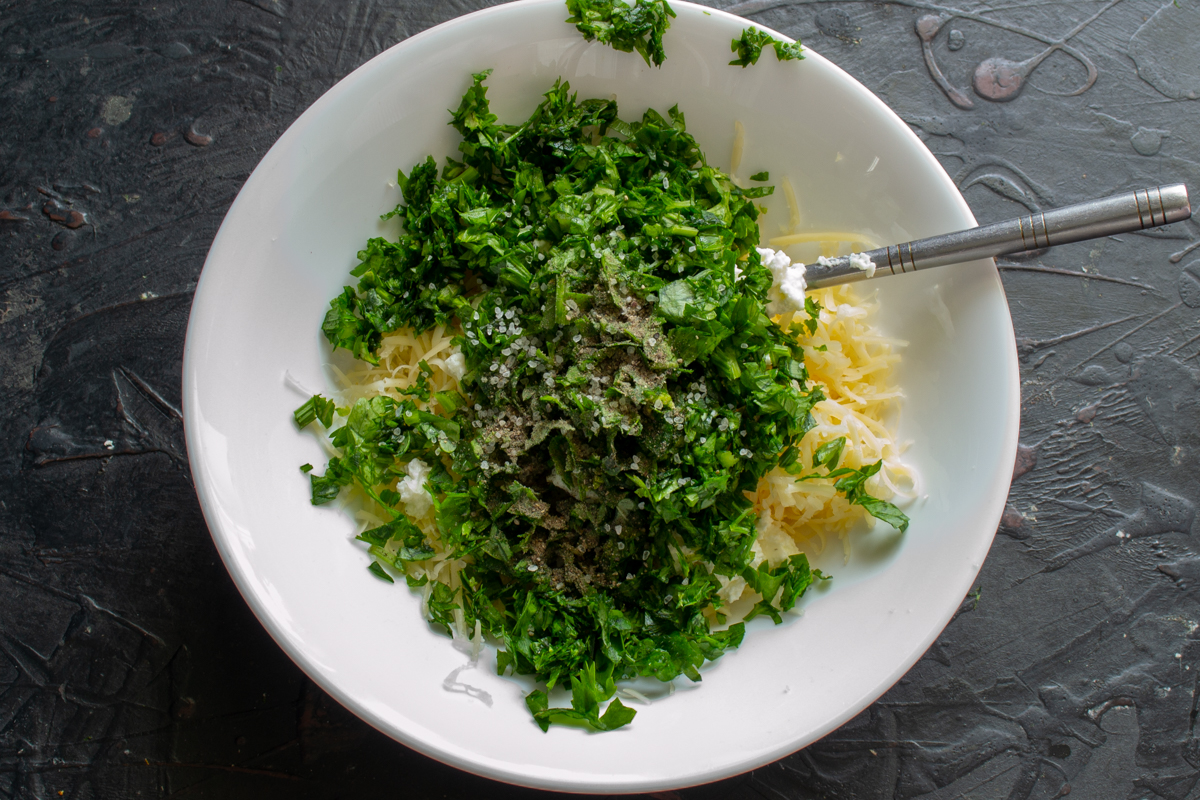
Add finely chopped cilantro, salt, and pepper to taste, keeping the cheese's saltiness in mind.
Mix the filling thoroughly. The farmers cheese and grated cheese help the ingredients bind together so they don’t crumble.
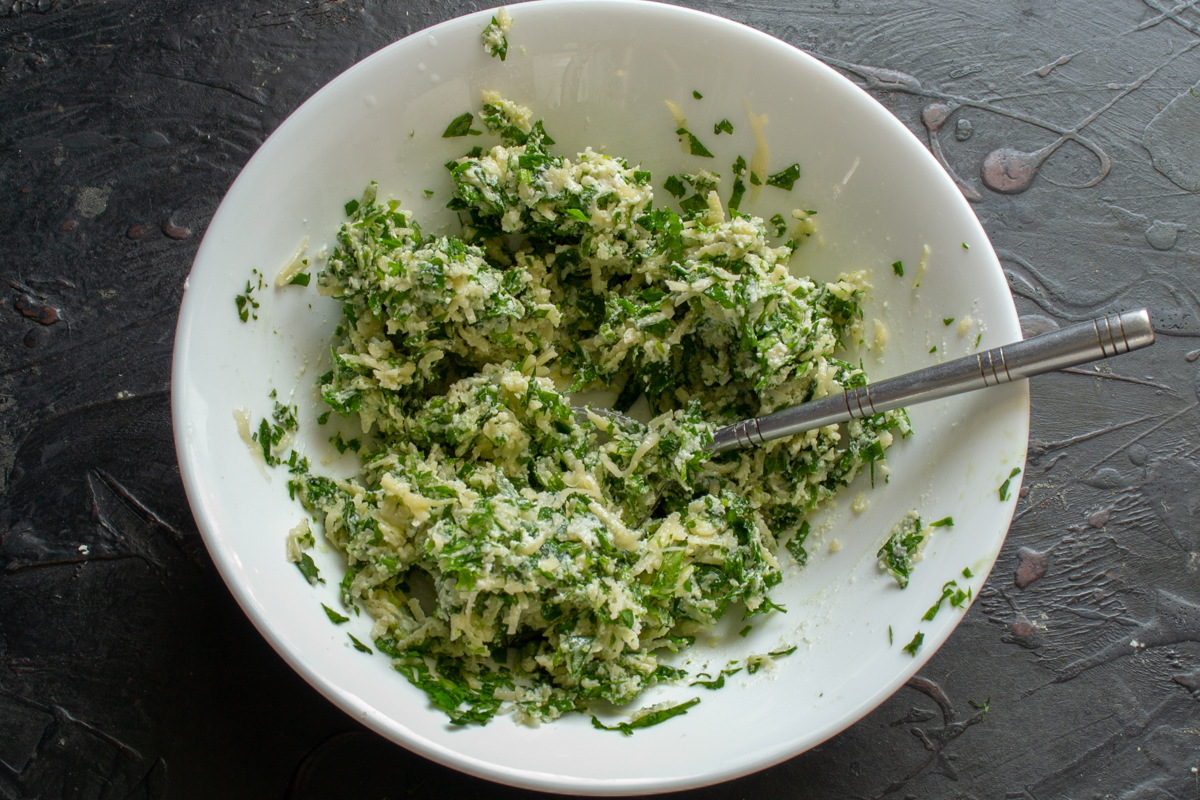
The thoroughly mixed filling is ready to be used.
Assemble the pastries. Divide both the dough and the filling into 4 equal parts.
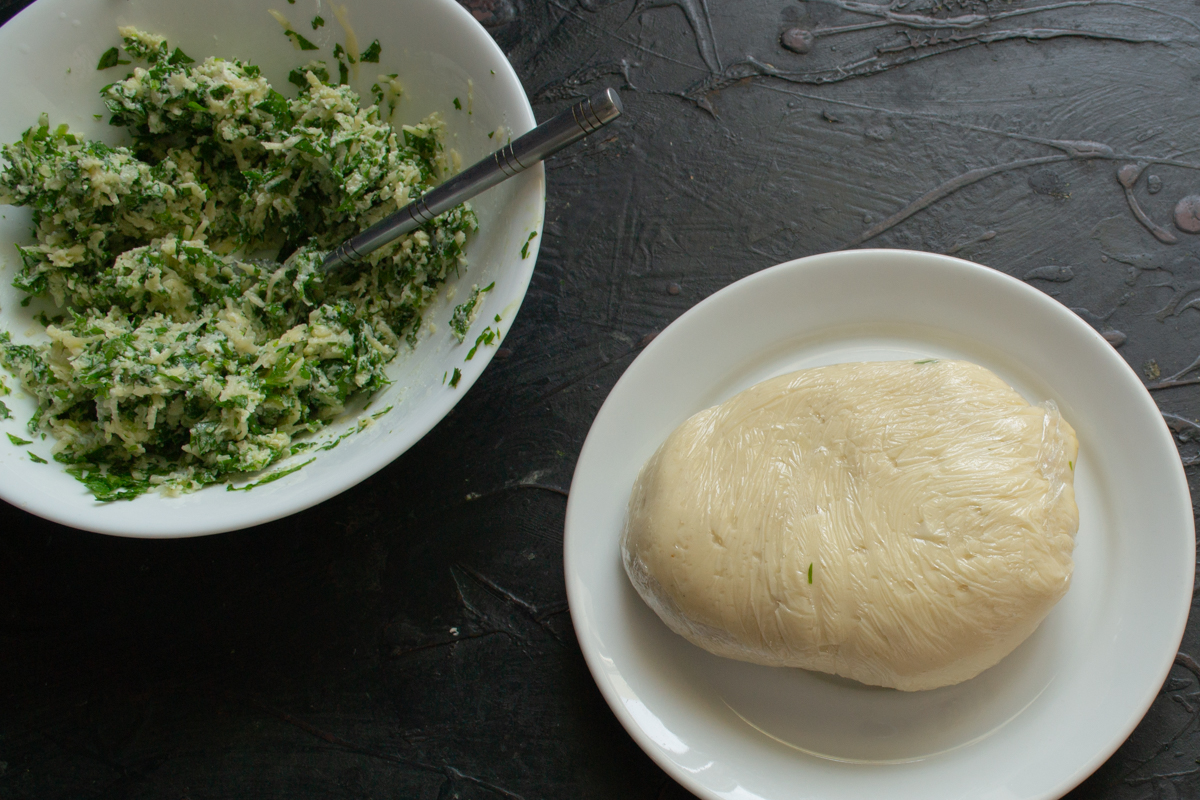
Divide the dough and filling into equal parts to form the pastries.
Dust your cutting board with flour. Take the dough pieces and roll them into small balls.
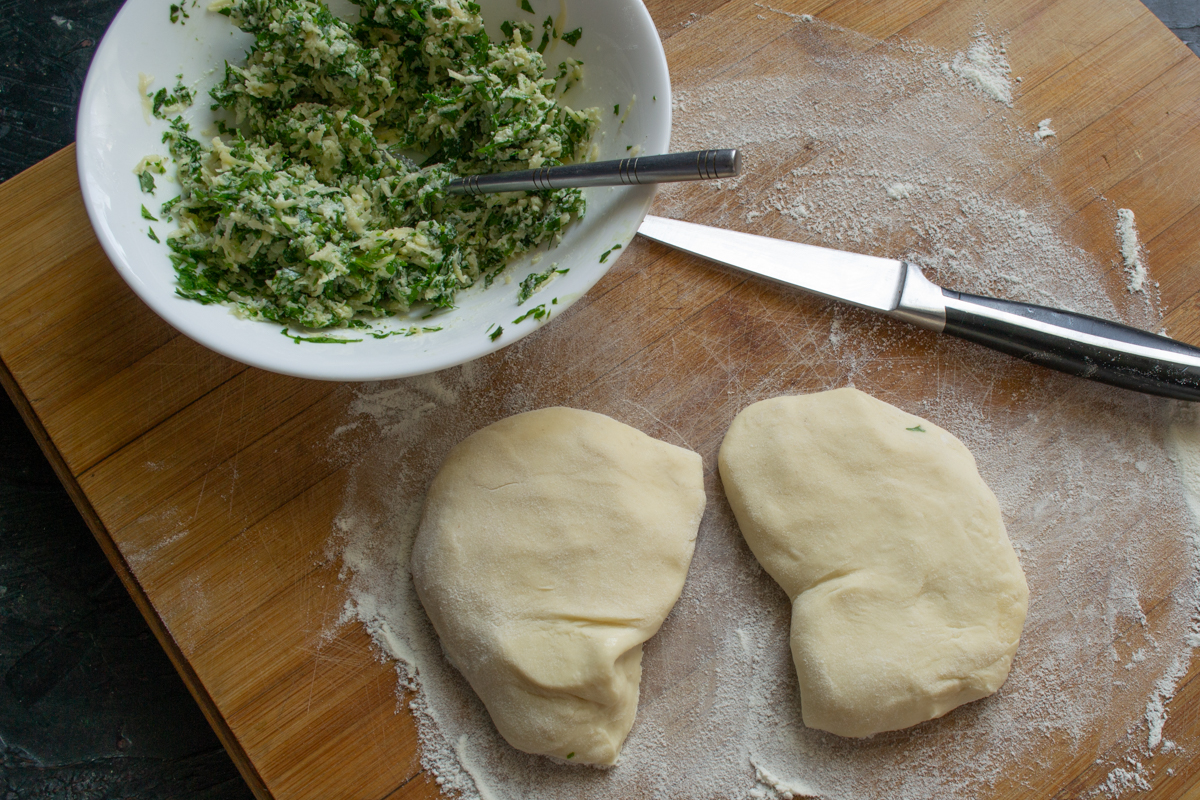
Roll the dough into neat balls before you begin rolling out the flatbreads.
Roll out thin flatbreads, dusting with flour as needed, flipping and rolling again until you get a circle about 18 centimeters (7 inches) in diameter. The thickness should be 2-3 millimeters (1/8 inch). This dough is easy to roll out and doesn’t tear.
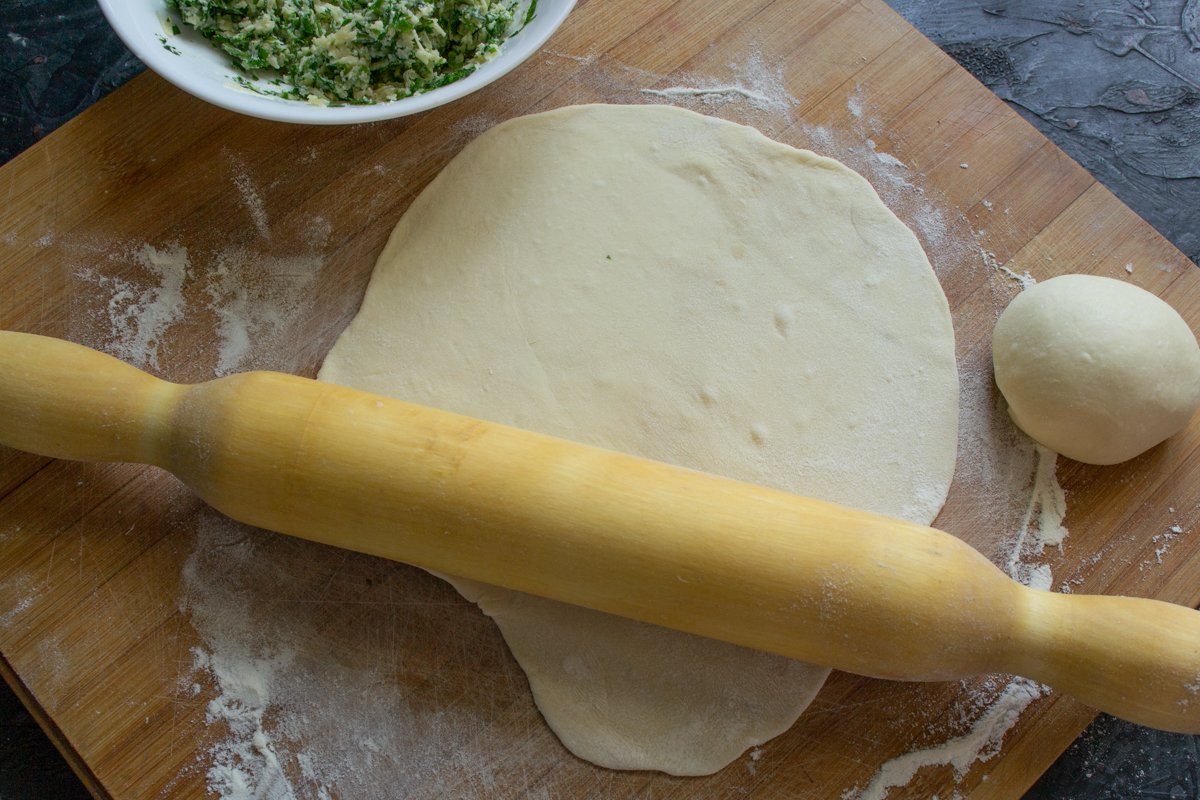
Roll the flatbread to about 18 cm (7 inches) in diameter. The dough is elastic and will not tear.
Spread the filling over one half of the flatbread, leaving a border of about 1 centimeter (1/2 inch) around the edge.
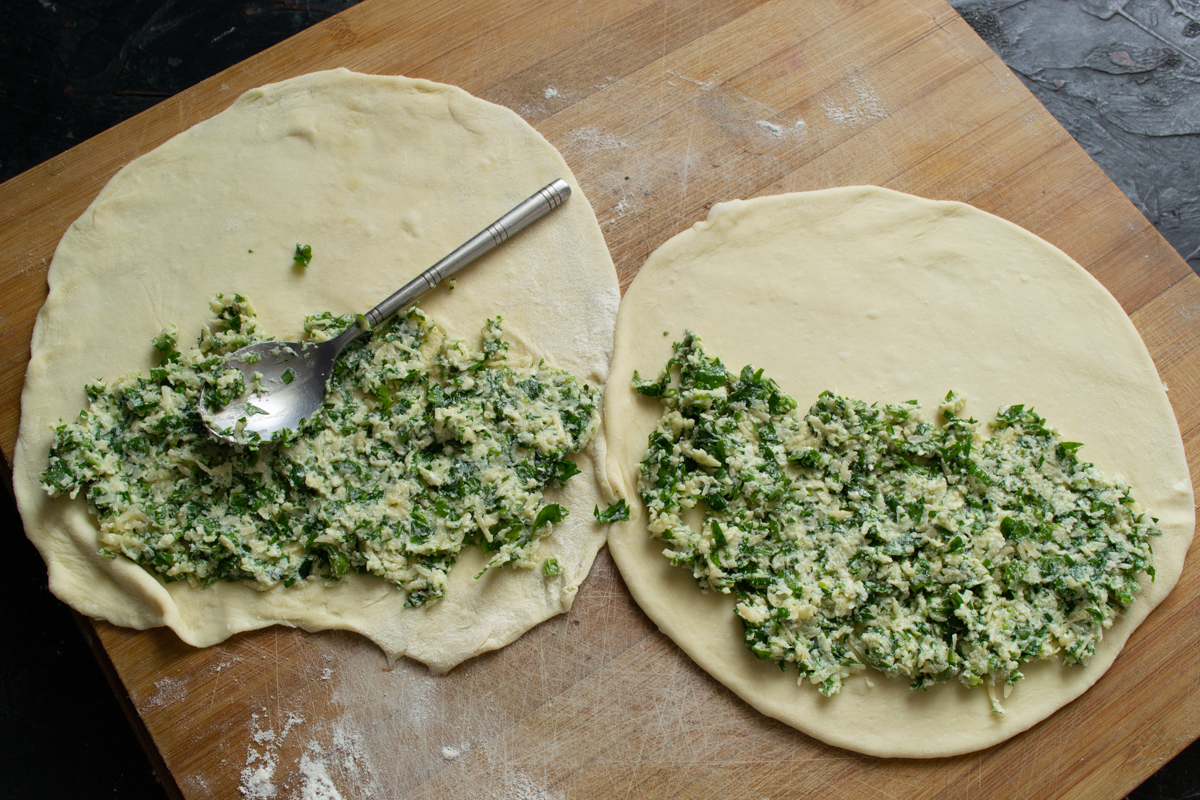
Evenly spread the cheese mixture on one half of the dough, leaving a border around the edge.
Fold the other half of the flatbread over the filling and press down slightly to release any trapped air.
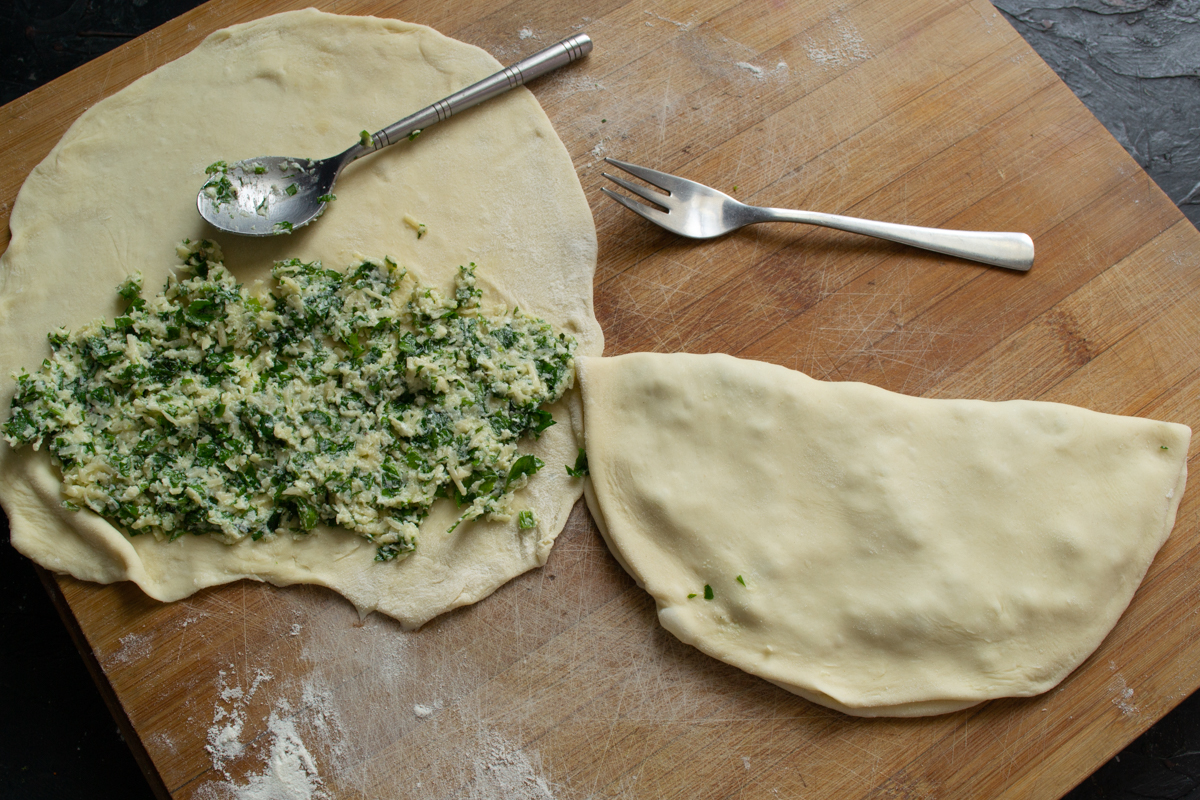
Cover the filling with the other half of the dough and gently press out any excess air.
Crimp the edge of the pastry with a fork. The dough seals well and securely without any additional wash, thanks to the egg in it.
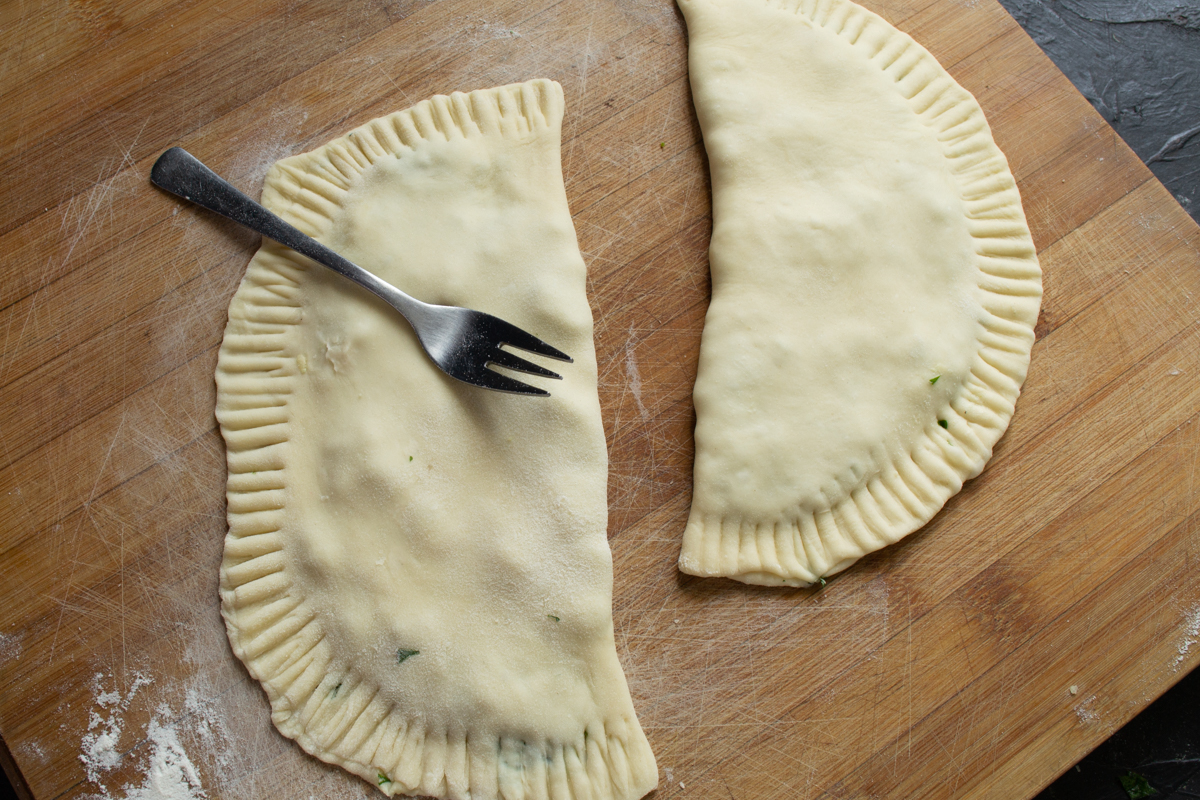
Press the edges with a fork to secure the seal and create a beautiful pattern.
Pour refined, neutral vegetable oil (suitable for frying) into a large, heavy-bottomed skillet. The oil layer should be about 1.5 centimeters (1/2 inch) deep. Heat the oil thoroughly; you can drop a tiny ball of dough into it to check when it has reached the right temperature. Carefully place the khachapuri into the hot oil, frying 2 pieces at a time.
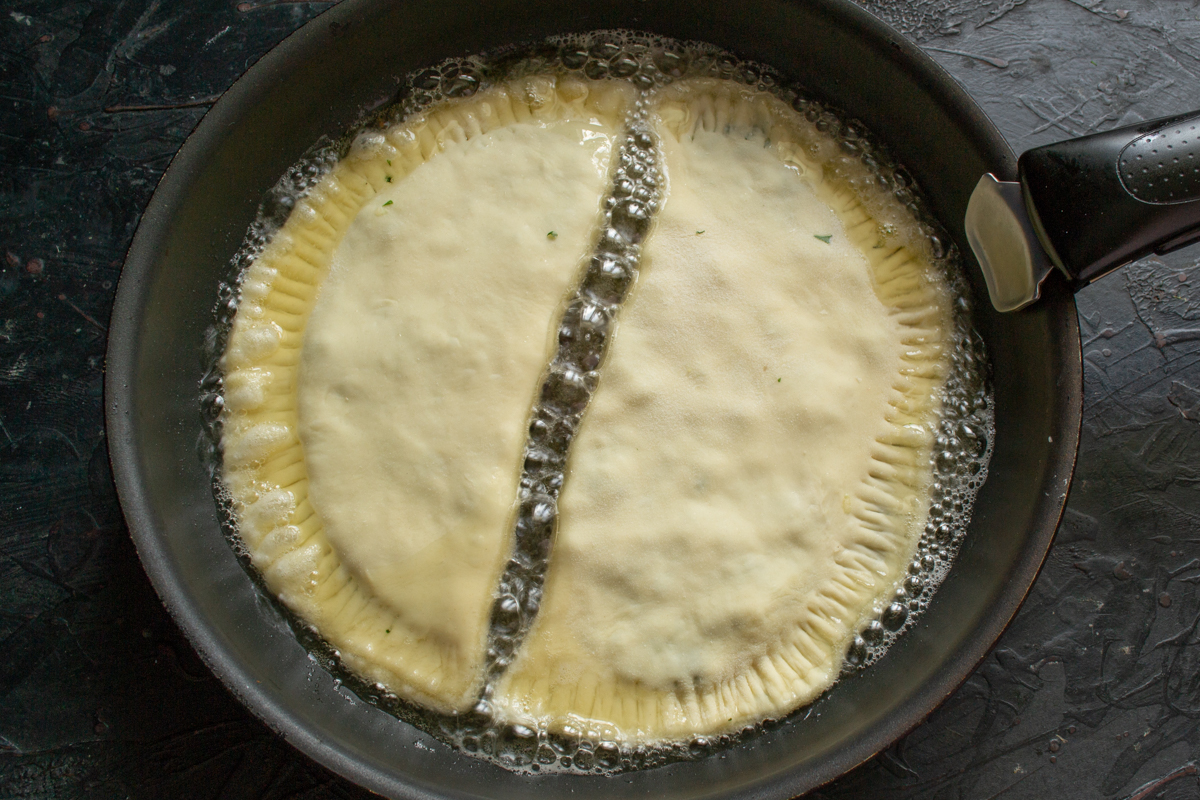
Fry the khachapuri in well-heated oil until a golden crust forms.
Fry until golden brown. Carefully flip them over and fry until fully cooked on the other side.
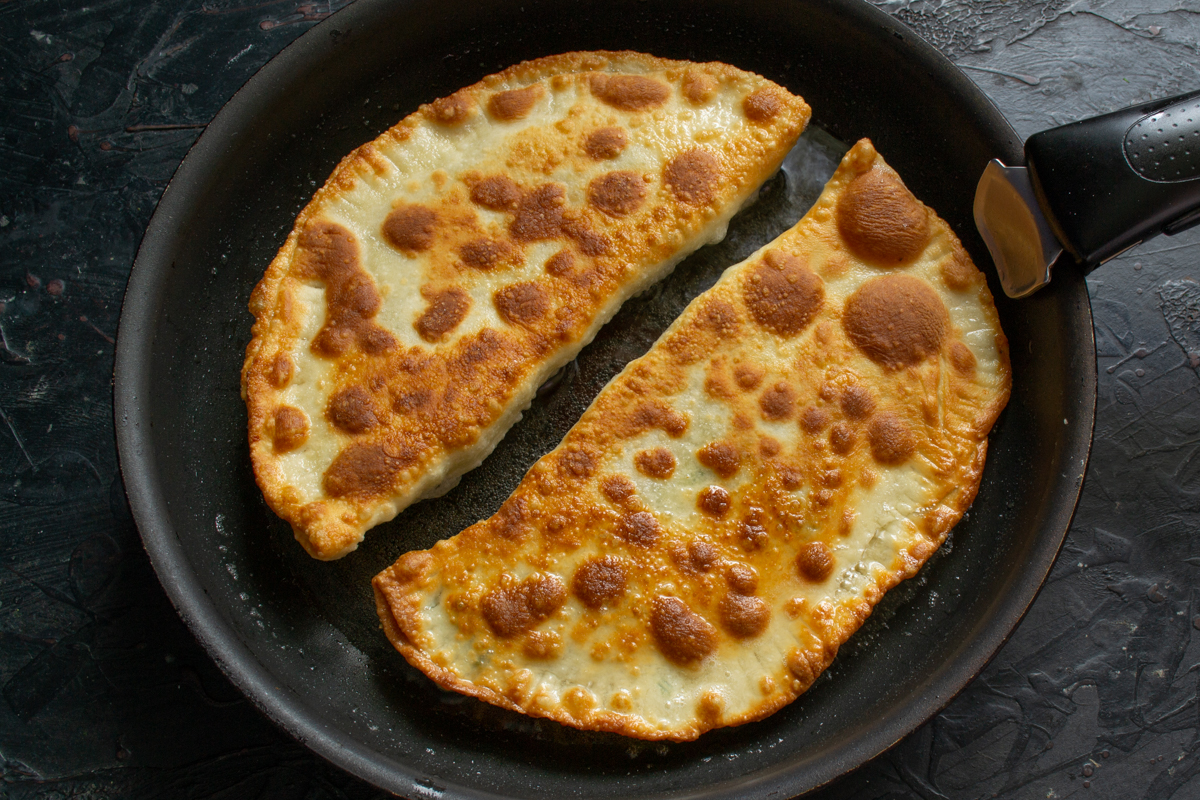
Carefully flip them over and cook until done on the second side.
Transfer the cooked khachapuri to paper towels so that any excess oil is absorbed.
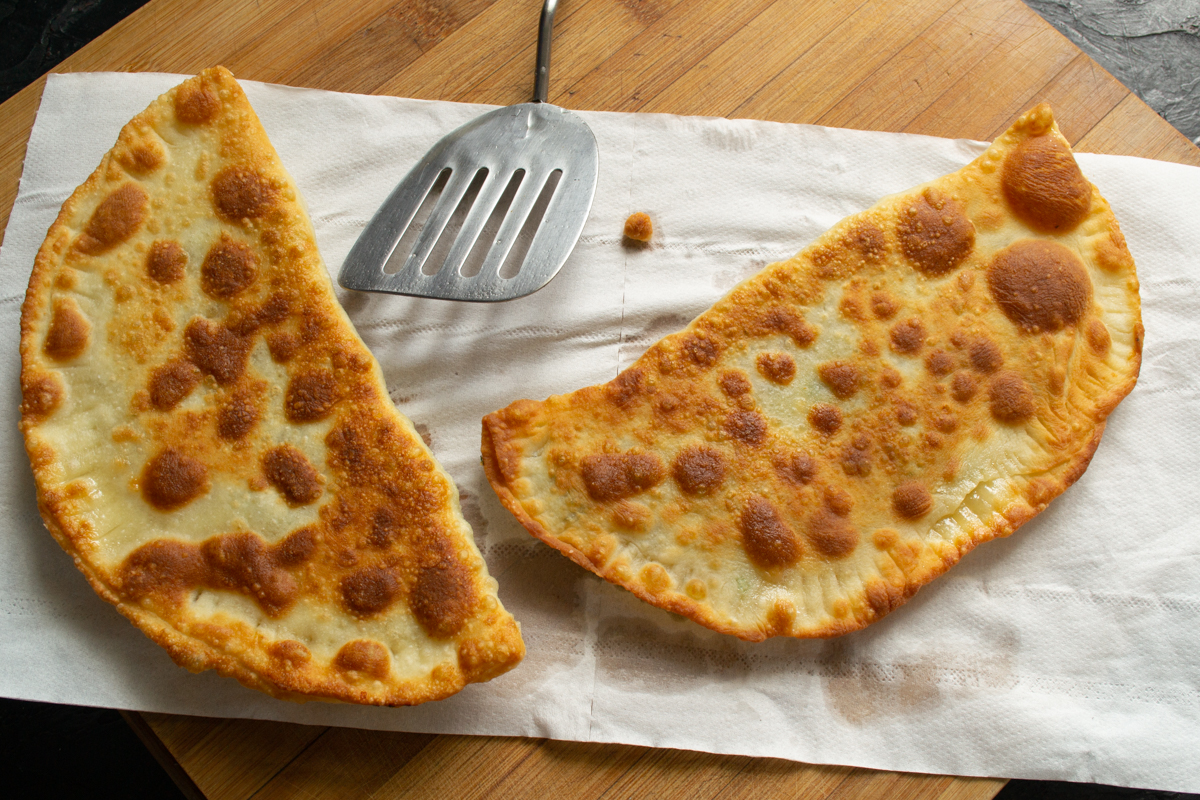
Place the hot pastries on paper towels to absorb any excess vegetable oil.
Serve the hot khachapuri with a green salad and fresh vegetables. Be sure to eat these pastries while the filling is still warm and the cheese is beautifully gooey.
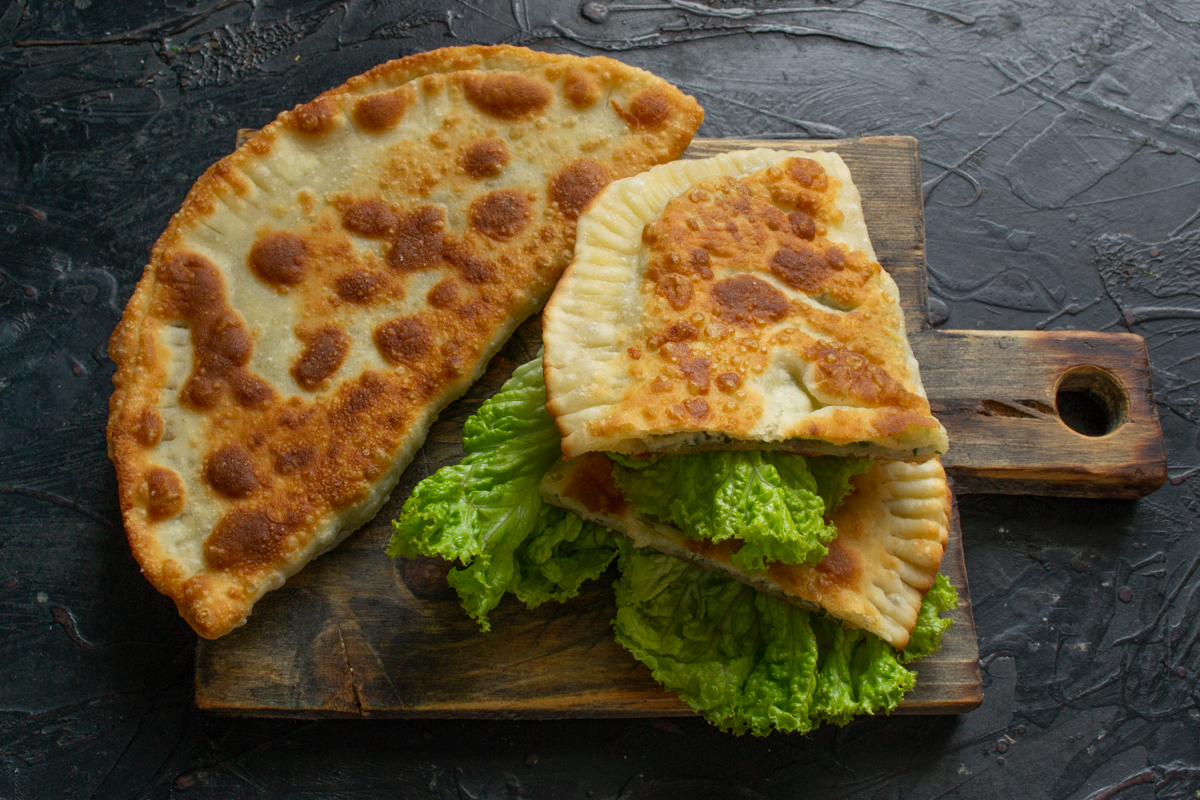
Serve the khachapuri hot, while the cheese inside is still gooey and tender.
To let your unleavened dough khachapuri reach their maximum flavor potential, serve them immediately while the filling remains gooey and tender. Traditionally, these flatbreads pair wonderfully with strong tea or cool matsoni (a fermented milk drink similar to yogurt), while fresh herbs and juicy tomatoes make for a perfectly light accompaniment. If you want to experiment, try adding a little garlic or walnuts to the filling—this will give the dish characteristic Caucasian notes and additional depth of flavor.
If you have a few left over after your meal, don't worry: unleavened dough khachapuri keep well in the fridge until the next day. To restore their original texture, it is best to reheat them in a dry skillet covered with a lid over low heat—this way, the crust will become crispy again, and the cheese inside will melt perfectly. The main secret to success here lies in the quality of the tvorog (farmers cheese): choose the driest possible product so the filling doesn't run and retains its beautifully granular structure inside the golden pocket.
0 comments