
Lisbon airport gift shops sell a specific magnet: a yellow pastry and a small boat. In souvenir stalls, you find the same pair, sometimes joined by a tin of sardines in a festive can. Following this logic, the entirety of Portuguese cuisine fits into two tiny images. This is convenient for a suitcase, but it bears no resemblance to the truth.
Authentic Portugal is salty. It smells of street grill smoke, salt cod soaked in cold water, and olive oil pooling at the bottom of a clay bowl. It is rustic where soup is simmered from potatoes and cabbage, monastic where a dozen egg yolks go into the dough, and coastal almost everywhere. Furthermore, it is incredibly regional: Porto, Alentejo, Algarve, Madeira, and the Azores cook so differently that they feel like five distinct countries under a single flag.
The following list abandons the principle of finding the most photographed items. These fifteen Portuguese dishes represent fifteen distinct destinations. Bacalhau (salt cod) leads to Lisbon, tripe with white beans guides to Porto, and a bay leaf skewer points to Madeira. Tasting these specific dishes provides a far better experience than chasing the most photogenic plates.
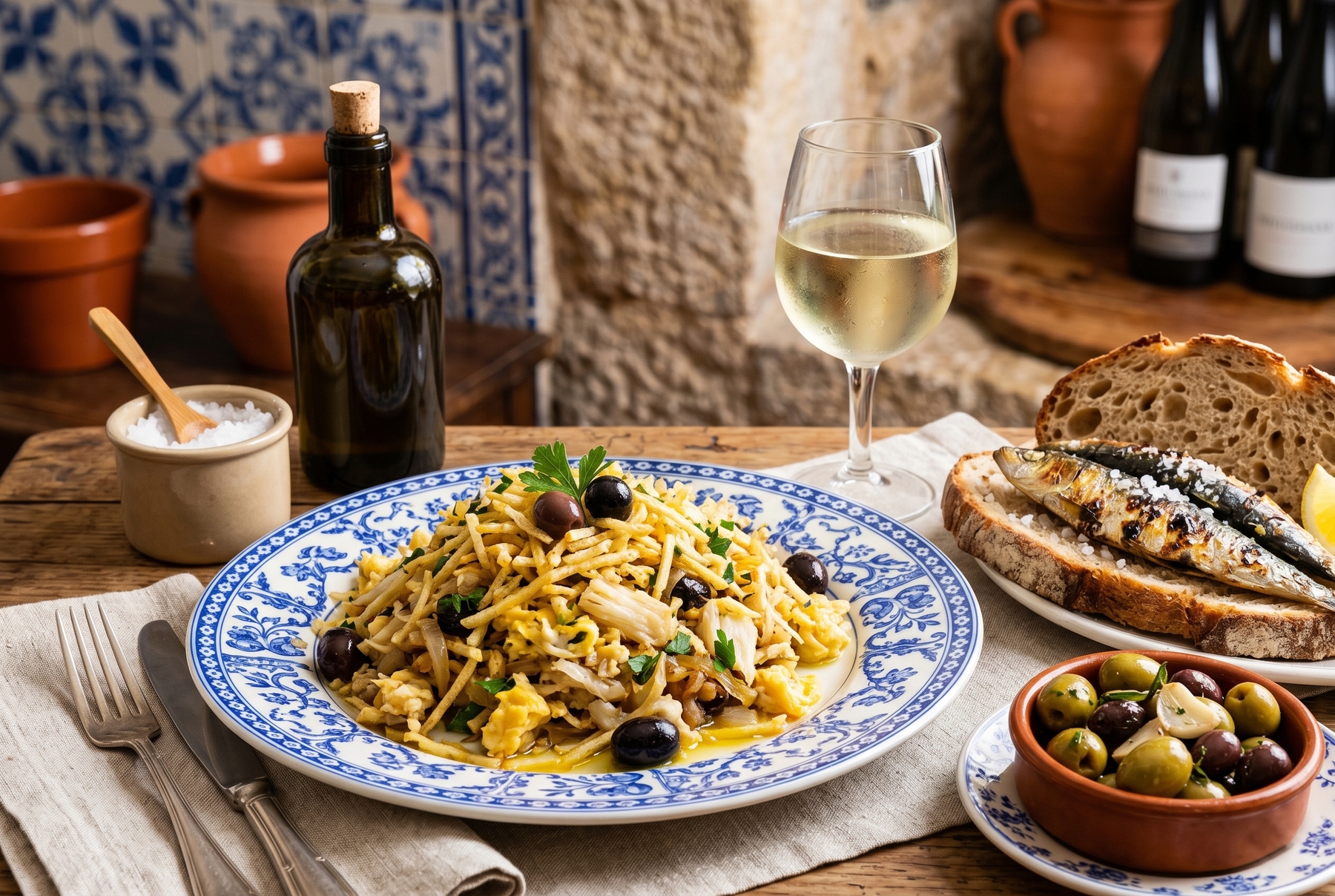
A typical Portuguese table featuring delicate Bacalhau à Brás, juicy grilled sardines with bread, olives, and a glass of chilled white wine.
Table of Contents
- The Flavor Map of Portuguese Cuisine
- 1. Bacalhau à Brás: Salt Cod, Potatoes, and Eggs in Perfect Chaos
- 2. Pastel de Nata: The Pastry That Refuses to be Eaten Cold
- 3. Caldo Verde: The Soup That Echoes the Countryside
- 4. Francesinha: The Porto Sandwich That Knows No Limits
- 5. Sardinhas Assadas: Charcoal-Grilled Sardines and the Scent of June
- 6. Polvo à Lagareiro: Octopus, Potatoes, and Generous Olive Oil
- 7. Cataplana de Marisco: Seafood in a Copper Shell
- 8. Arroz de Marisco: The Rice That Has No Obligation to be Paella
- 9. Bifana: The Underestimated Pork Sandwich
- 10. Prego: The Same Concept, But With Beef
- 11. Amêijoas à Bulhão Pato: Clams, Garlic, and Cilantro
- 12. Cozido à Portuguesa: A Massive Pot of National Character
- 13. Alheira: The Sausage With a Double Life
- 14. Tripas à Moda do Porto: A Dish That Demands Trust
- 15. Espetada da Madeira: Beef on a Bay Leaf Skewer
- Queijo da Serra: The Cheese Eaten With a Spoon
- Arroz Doce and Leite-Creme: A Quiet Sweet Finale
- What to Drink With Portuguese Food
- How to Read a Menu in Portugal and Avoid Ordering the Wrong Thing
- What to Bring Back Home
- One Dish From the City, One From the Region, One Recommended by a Neighbor
The Flavor Map of Portuguese Cuisine
The Ocean, Salt, and Bacalhau
The central paradox of the Portuguese table stands out immediately: the number one fish in a country with Europe’s best access to fresh catch is dried and salted, caught far from its own shores. Fishermen hauled cod from the icy waters of the North Atlantic, near Newfoundland. Lacking refrigerators, the journey home took weeks, and salt, which Portugal always had in abundance, provided the salvation. This created a culinary habit spanning five centuries.
The church further cemented this tradition. The Catholic calendar contained over a hundred fasting days when meat was forbidden, but salted cod escaped the ban. Thus, bacalhau became the “fiel amigo” (faithful friend), the one you could rely on any day of the year. Local lore claims there are as many recipes for cod as there are days in the year. While no one has seriously counted, the sheer scale of its culinary footprint remains undeniable.
Where to Taste Portuguese Cuisine: Why the Tavern Outshines the Grand Restaurant
The best food in Portugal usually appears in places with paper tablecloths. A tasca (a small family-run eatery), a marisqueira (a seafood restaurant), a market with a counter where food sizzles right in front of you, or a pastry shop serving only one type of coffee offer the truest experiences. A grand restaurant with a tasting menu has its own charm, but the soul of the country does not reside there. Seeking out spots where locals gather for their working lunch rarely leads to disappointment.
The Sweet Legacy of Monasteries
When a Portuguese dessert suspiciously features an abundance of egg yolks, sugar, and puff pastry, culinary historians typically point toward the monasteries. According to a popular theory, nuns used egg whites for household chores like starching habits or clarifying wine, leaving mountains of leftover yolks that inevitably went into baking. People gladly retell this story, although it is not considered the definitively proven cause of yolk-heavy desserts. This dense, yolk-centric tradition genuinely spread across the country during the 19th century when monasteries began closing and their recipes found their way into secular hands.
However, Portuguese cuisine does not begin with sweets. Approaching the country’s defining flavor naturally starts with cod: a humble, historic ingredient that remains nearly mandatory for anyone exploring the local table.
1. Bacalhau à Brás: Salt Cod, Potatoes, and Eggs in Perfect Chaos
This dish offers the best entry point into the world of bacalhau for a first-time taster. Flaked salt cod mixes with onions, impossibly thin potato matchsticks, and eggs, catching a quick sear in the pan before a handful of black olives finishes the plate. Legend states that a tavern owner in Lisbon’s Bairro Alto neighborhood invented the dish in the late 19th century to utilize fish trimmings. His name, Brás, remained attached to the creation forever.
Texture dictates everything here. It resembles neither an omelet nor a hash. The mixture needs to remain moist and slightly creamy, holding together without setting into a dense pancake. A poor version reveals itself through dryness and aggressive saltiness. The second trap in tourist-heavy spots involves using pre-packaged potato sticks instead of fresh ones. These turn soggy in the mixture, release excess grease, and ultimately ruin the dish.
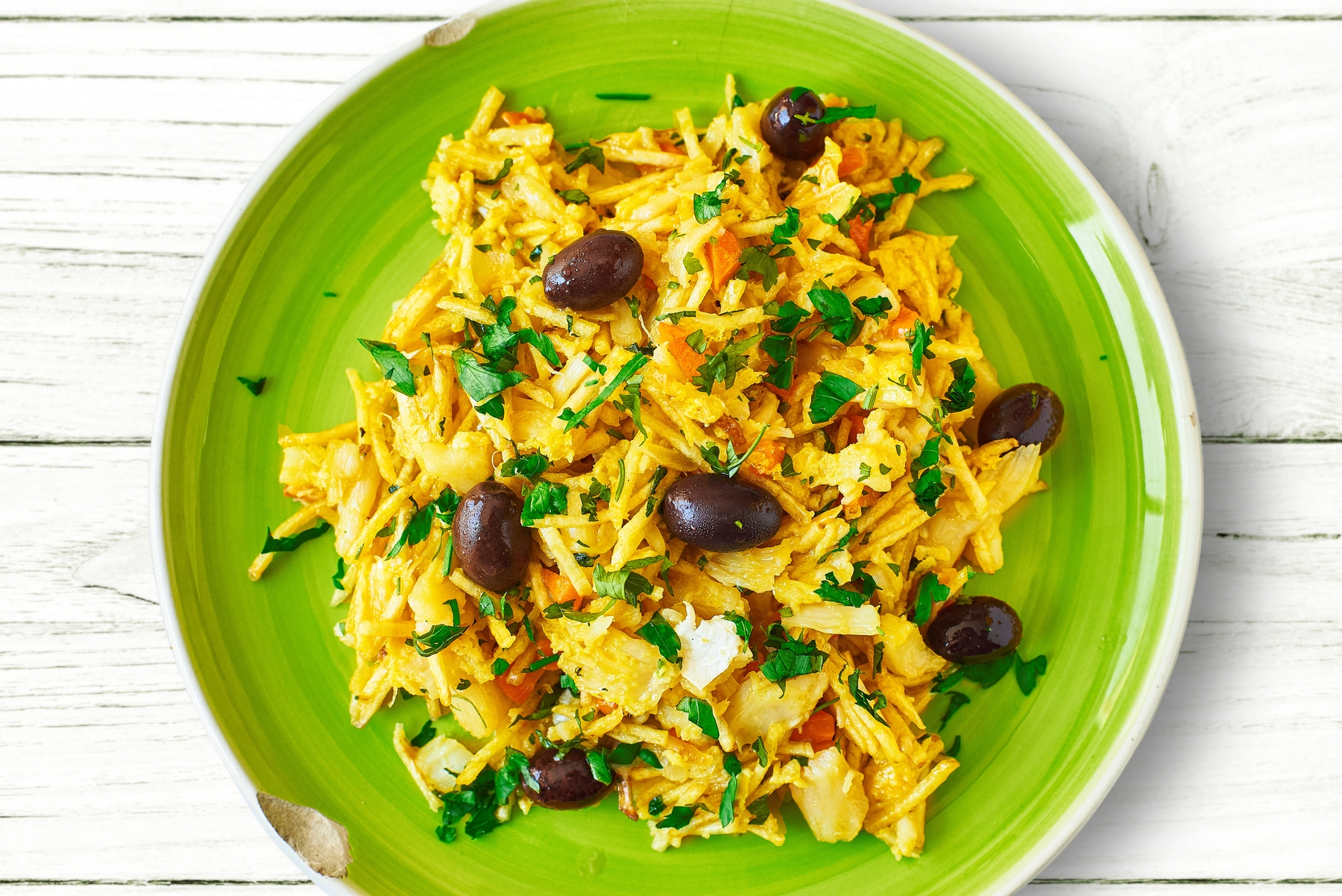
Bacalhau à Brás, a classic Portuguese dish featuring shredded salt cod, crisp potato matchsticks, onions, and eggs, garnished with black olives.
2. Pastel de Nata: The Pastry That Refuses to be Eaten Cold
Volumes have been written about it, leaving little to add beyond pure delight, but precision still matters. A high-quality pastel de nata (Portuguese custard tart) makes itself known through specific traits, not just a pretty picture. The puff pastry shatters into a million crisp flakes at the first bite. The warm, yolk-rich custard barely trembles. The top displays dark, scorched blisters from intense heat; without them, the flavor falls flat. Adding cinnamon remains optional, and a shaker often sits right on the table.
Its roots trace back to Belém in Lisbon, near the Jerónimos Monastery, and the very same workshop attached to a former sugar refinery has guarded its recipe behind closed doors since 1837. Debating who baked the very first one feels unnecessary. A simpler truth holds more weight: a cooled pastel loses half of its magic. Grabbing one while it remains hot from the baking sheet and eating it on the spot is the only true way.
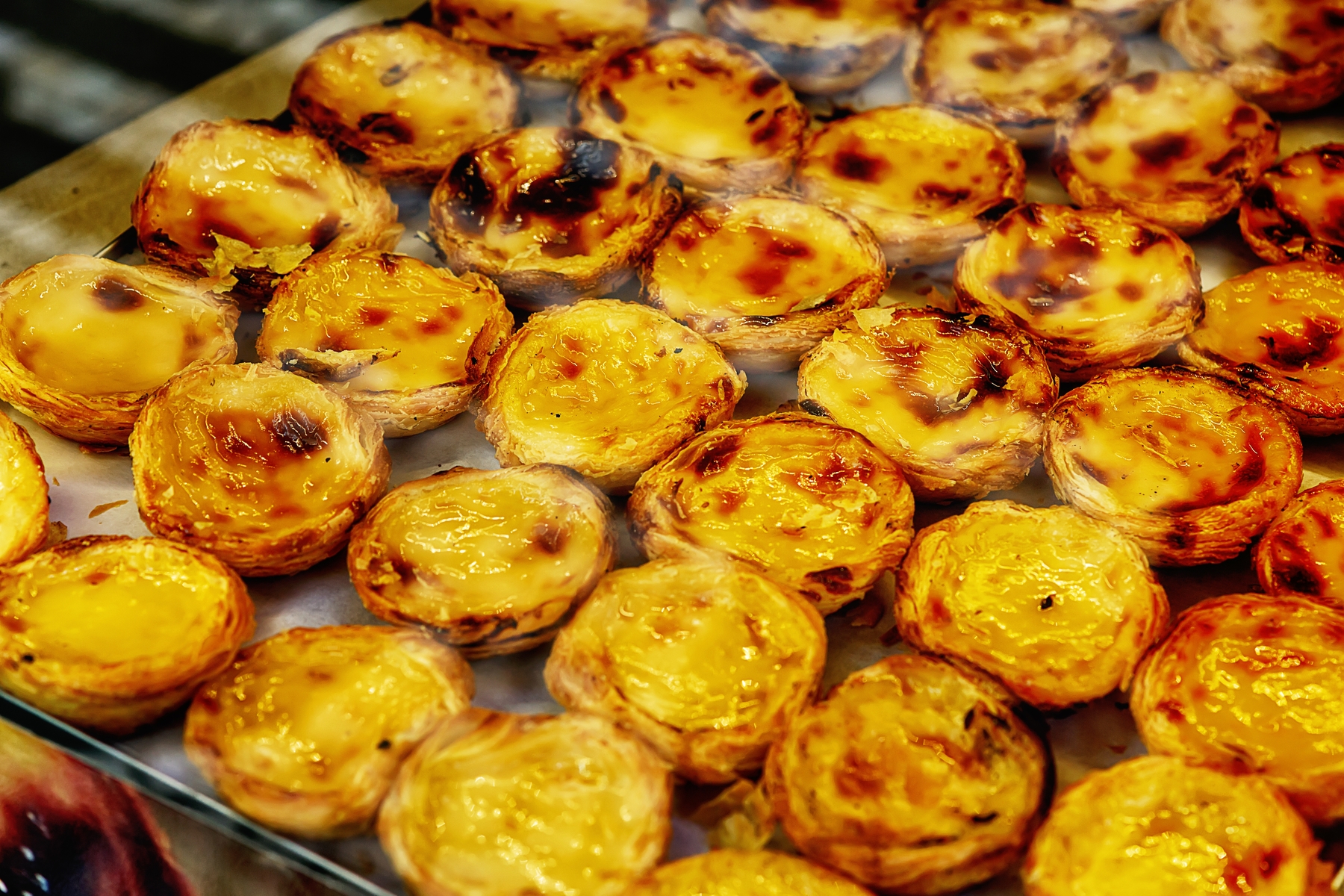
The famous Portuguese pastel de nata custard tarts boasting an appetizing caramelized crust, best enjoyed warm from the oven.
3. Caldo Verde: The Soup That Echoes the Countryside
The minimalism of the northern Minho region fits perfectly into a single bowl. A smooth, puréed potato base meets finely shredded, almost thread-like collard greens and a slice of smoky chouriço (Portuguese smoked sausage). A drizzle of olive oil finishes the top, with a thick slice of rustic bread resting nearby. It seems like the simplest thing to cook, but this very simplicity trips up many kitchens.
A proper caldo verde avoids watery textures and never attempts to be a heavy meat stew. The base must remain velvety and coat the spoon, the greens soft but not boiled to a mush, and the sausage leaving a trail of smoke rather than overwhelming the bowl. Poured into plastic bowls between dances at street festivals, it often tastes better than any restaurant version.
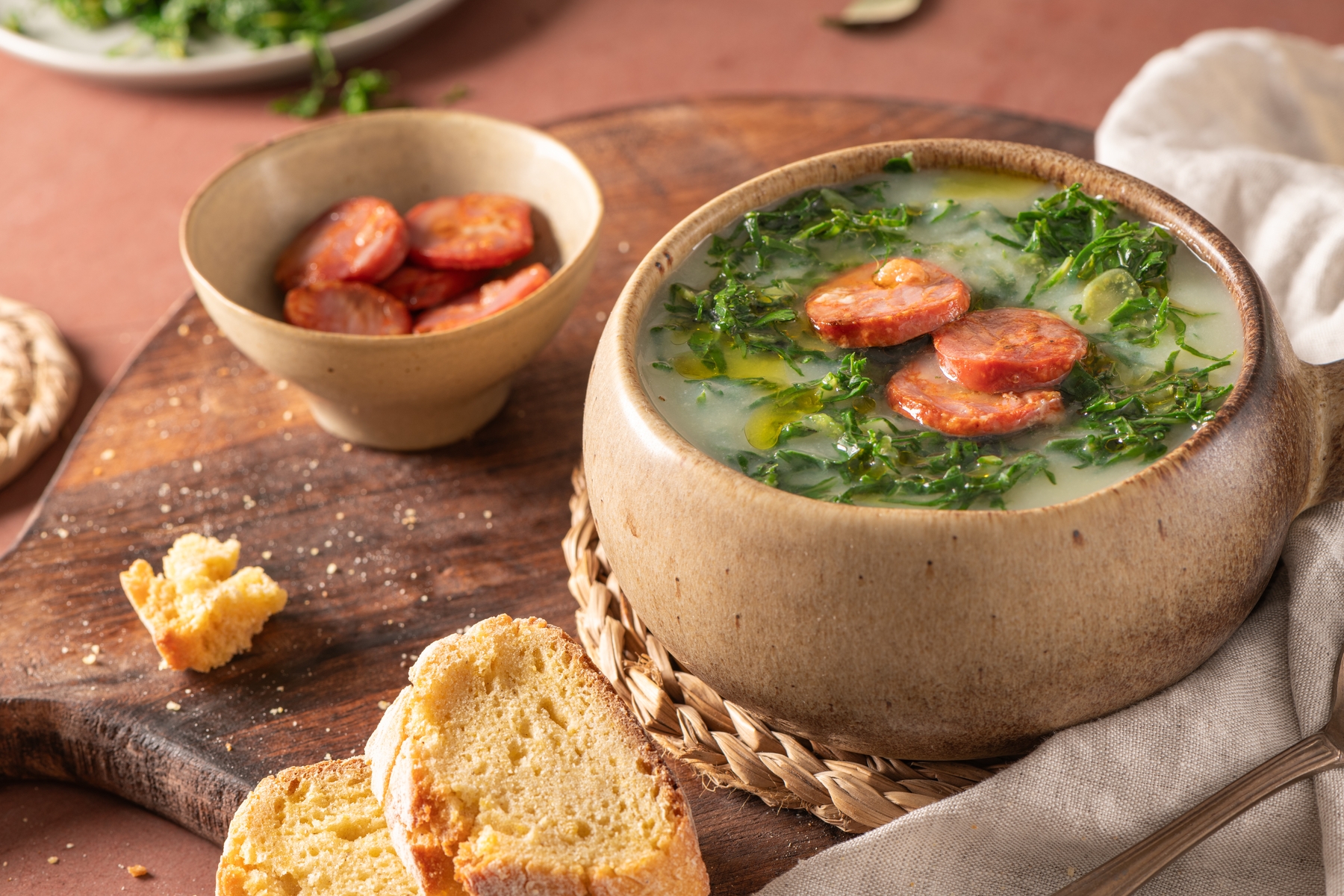
The thick, rustic Caldo Verde soup made from puréed potatoes and shredded collard greens, topped with slices of spicy chouriço.
4. Francesinha: The Porto Sandwich That Knows No Limits
Approaching a francesinha without irony proves difficult. Toasted bread, a layer of ham, a steak, and both smoked and fresh sausage all sit buried beneath melted cheese and drenched in a piping hot tomato and beer sauce. An egg sometimes crowns the top, while french fries form a moat around the edges. Daniel da Silva, returning from France and Belgium in the 1950s, invented it by transforming the French croque-monsieur into a local behemoth. This offers no light snack; it stands as a true culinary endurance test.
The entire purpose lies in the sauce. Thick, dark, carrying the slight bitterness of beer and often a spark of piri-piri (spicy chili pepper), it binds this meat tower together and drips down into the fries waiting to absorb it. Sitting down for a francesinha demands a serious appetite. Planning a city tasting marathon afterward remains highly ill-advised, as the chances of continuing are slim.
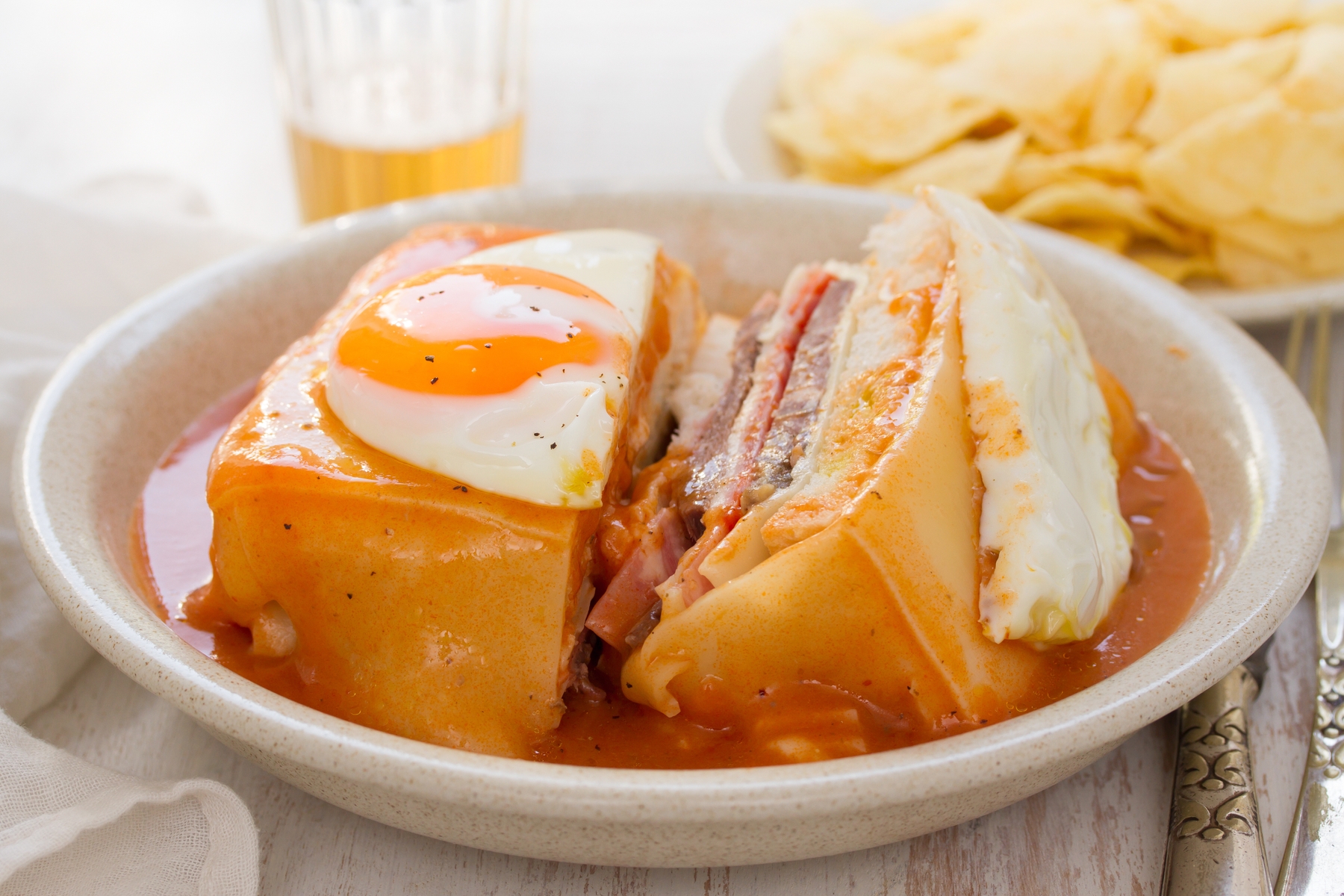
Francesinha, a massive sandwich from Porto loaded with assorted meats, drenched in a thick beer sauce, covered in melted cheese, and topped with a fried egg.
5. Sardinhas Assadas: Charcoal-Grilled Sardines and the Scent of June
The sardine season stretches roughly from late spring to October. June represents the festive peak: this is when sardines are eaten en masse and absolutely everywhere. During this month, Lisbon celebrates the Santos Populares (Popular Saints’ festivals): on the night of June 12th to the 13th, for Santo António, the entire old city steps up to the grills. Porto throws its own night, São João, from June 23rd to the 24th. Smoke rolls through the narrow streets, and the scent arrives a full block before the fire comes into view.
The presentation stays remarkably austere. Whole sardines, coarse salt, and glowing coals are all it takes. Cooks place them on a thick slice of bread that absorbs the juices and oil, or on a simple plate alongside roasted bell peppers. A split, crispy skin and juicy flesh that easily pulls away from the spine with your fingers reveal a perfectly cooked sardine carrying that essential smoky spirit. Overcooked sardines become dry and bitter, which is why a skilled grill master works quickly.
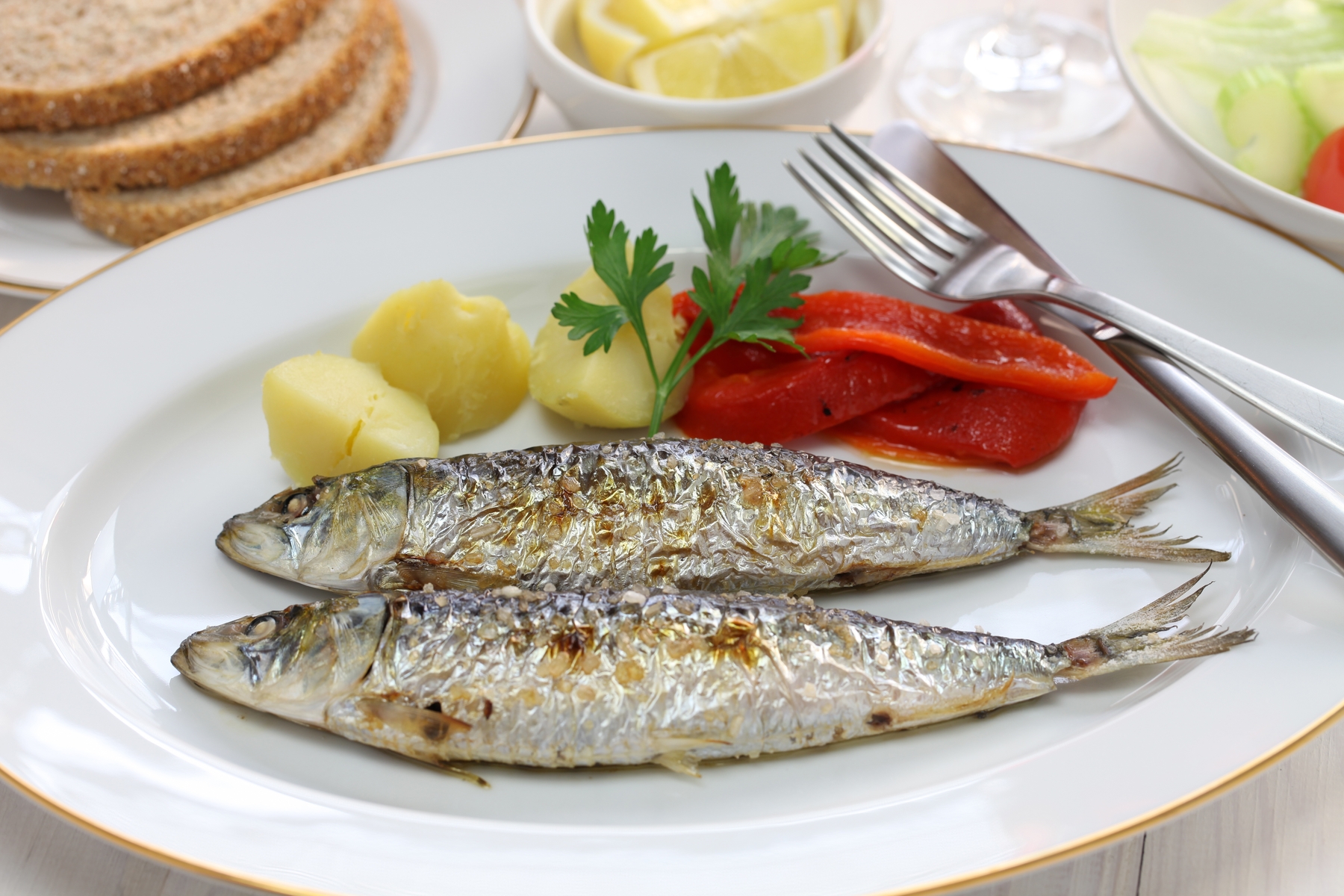
Traditional summer sardines charcoal-grilled with coarse salt, served alongside sweet roasted peppers and boiled potatoes.
6. Polvo à Lagareiro: Octopus, Potatoes, and Generous Olive Oil
This dish easily unites tourists and locals because missing the mark is quite difficult. It features roasted octopus, “punched” potatoes (batatas a murro—small tubers boiled, slightly crushed, and sent to the oven), an abundance of garlic, and a lavish pour of olive oil. It sounds rustic but looks almost elegant on the plate, despite the complete absence of fancy garnishes or complex sauces.
The kitchen faces only one real test here: the texture of the octopus. It must cut smoothly and yield easily to the bite, rather than bouncing back like rubber. If a tentacle feels rubbery and squeaks against the teeth, it was either undercooked or rushed over high heat. A proper polvo remains tender inside with slightly caramelized edges, and the oil pooling at the bottom of the plate practically begs to be soaked up with bread to the very last drop.
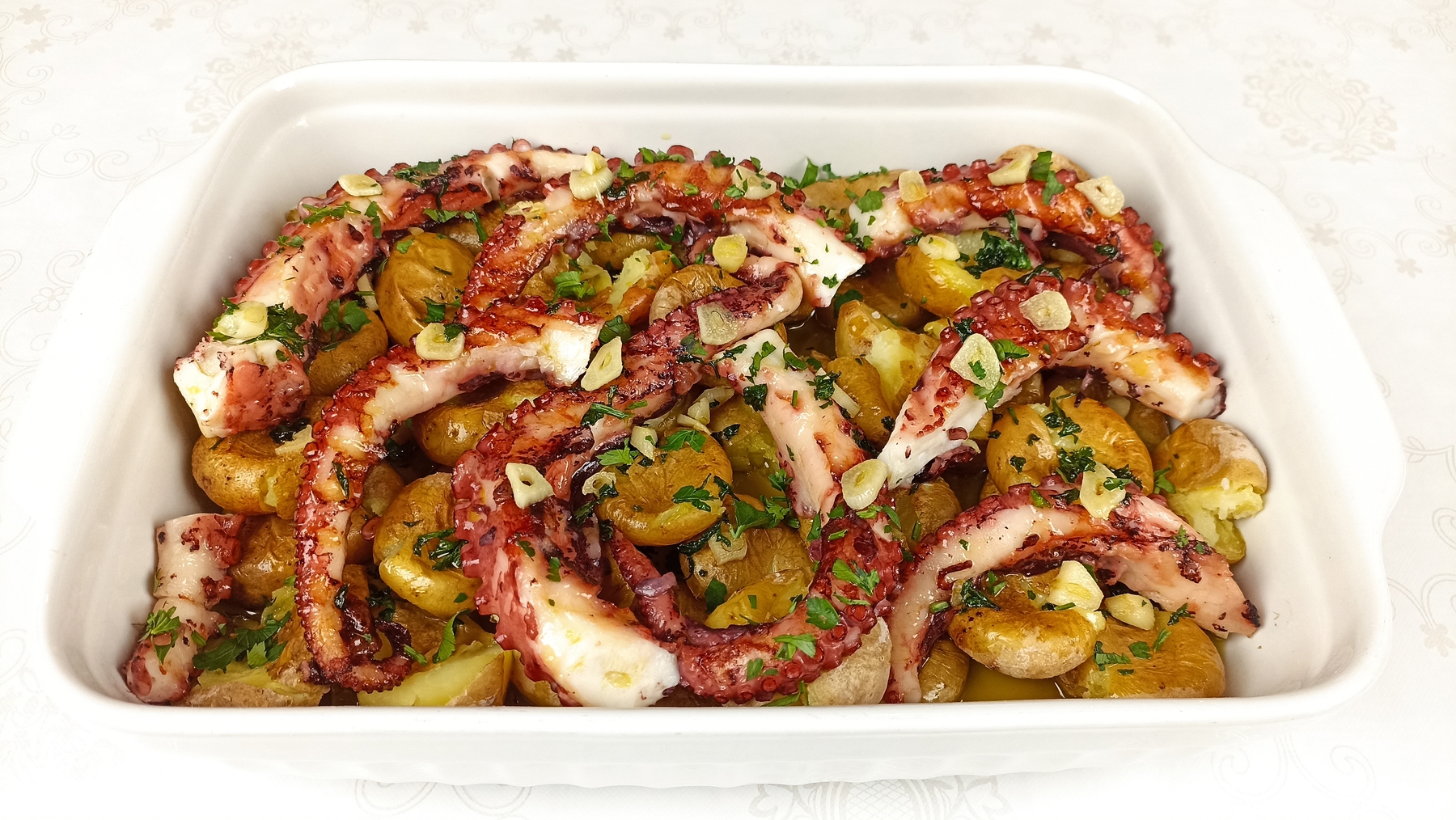
Incredibly tender octopus, Polvo à Lagareiro, oven-roasted with baby potatoes, garlic, and a generous pour of rich olive oil.
7. Cataplana de Marisco: Seafood in a Copper Shell
The word cataplana refers to both the dish and the cooking vessel itself. This clam-shaped copper pot seals tightly, much like two hands cupped together. It holds its strongest ties to the Algarve, Portugal’s southern coast. Inside, seafood steams in its own juices along with wine, tomatoes, and herbs, ensuring nothing escapes: the rich liquids and aromas remain locked under the lid until it reaches the table.
The ingredients shift from place to place: some kitchens focus on clams and shrimp, while others introduce fish or even pork. Ordering a cataplana to share between two people makes the most sense, given the generous portions. One detail demands absolute attention: the broth at the bottom. Diners enthusiastically sop it up with bread, and it frequently outshines the seafood itself.
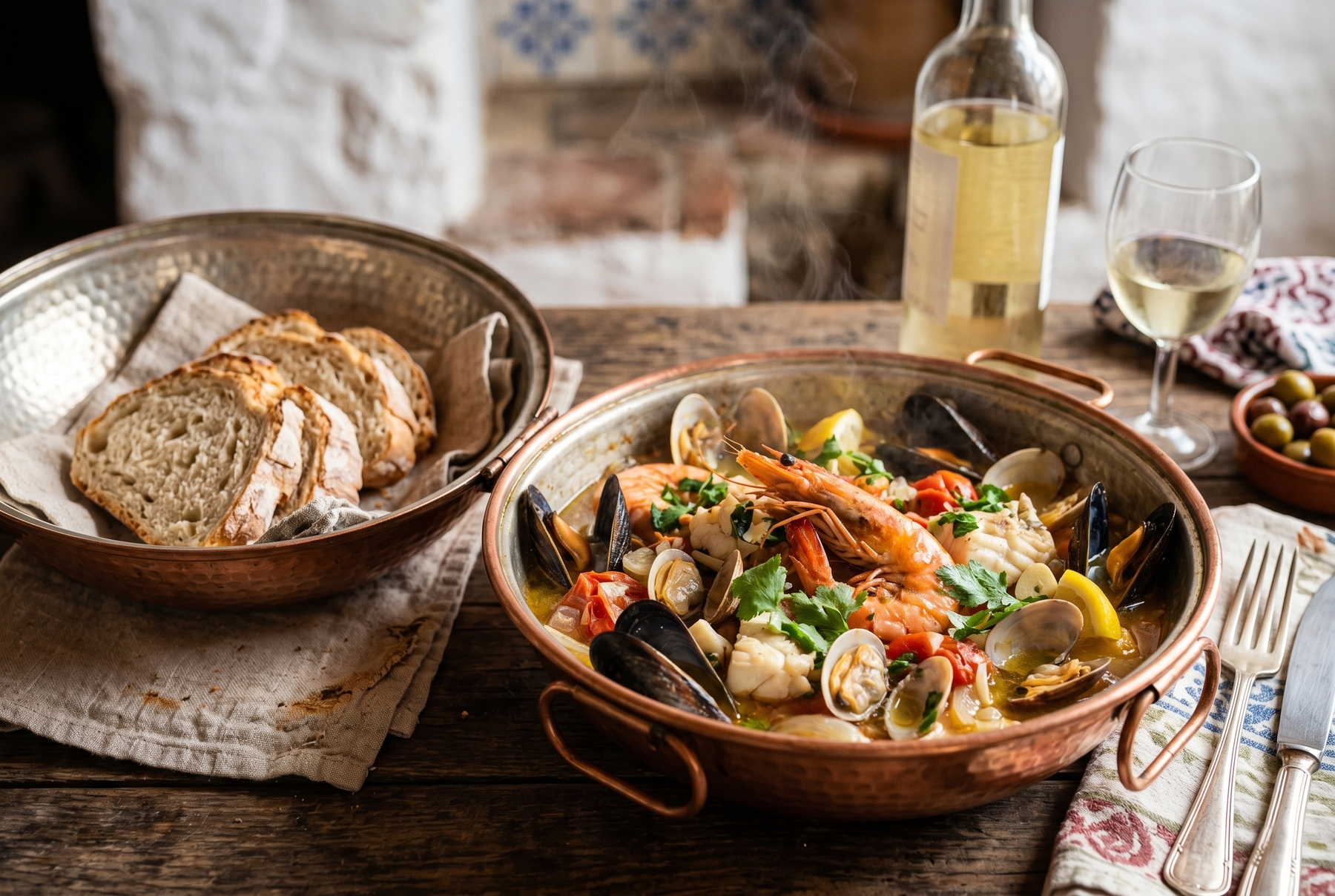
An aromatic cataplana loaded with shrimp, mussels, and fish, cooked in a traditional copper shell on the southern coast of Portugal.
8. Arroz de Marisco: The Rice That Has No Obligation to be Paella
Comparing this to paella happens almost instinctively. However, that is a false trail. Portuguese seafood rice almost always remains wet, flowing, and submerged in a highly aromatic broth, acting more like a risotto or a very thick soup than dry rice with a toasted crust. Waiters often bring it out in a clay pot or a cataplana, where it continues to bubble right before your eyes.
The broth requires depth, enriched with tomatoes and fresh cilantro. Seafood goes in generously, never just for decoration. The rice itself maintains a very slight resistance in the center of the grain, avoiding the dreaded collapse into a starchy paste. Overcooked rice stands as the primary tragedy in tourist-trap eateries.
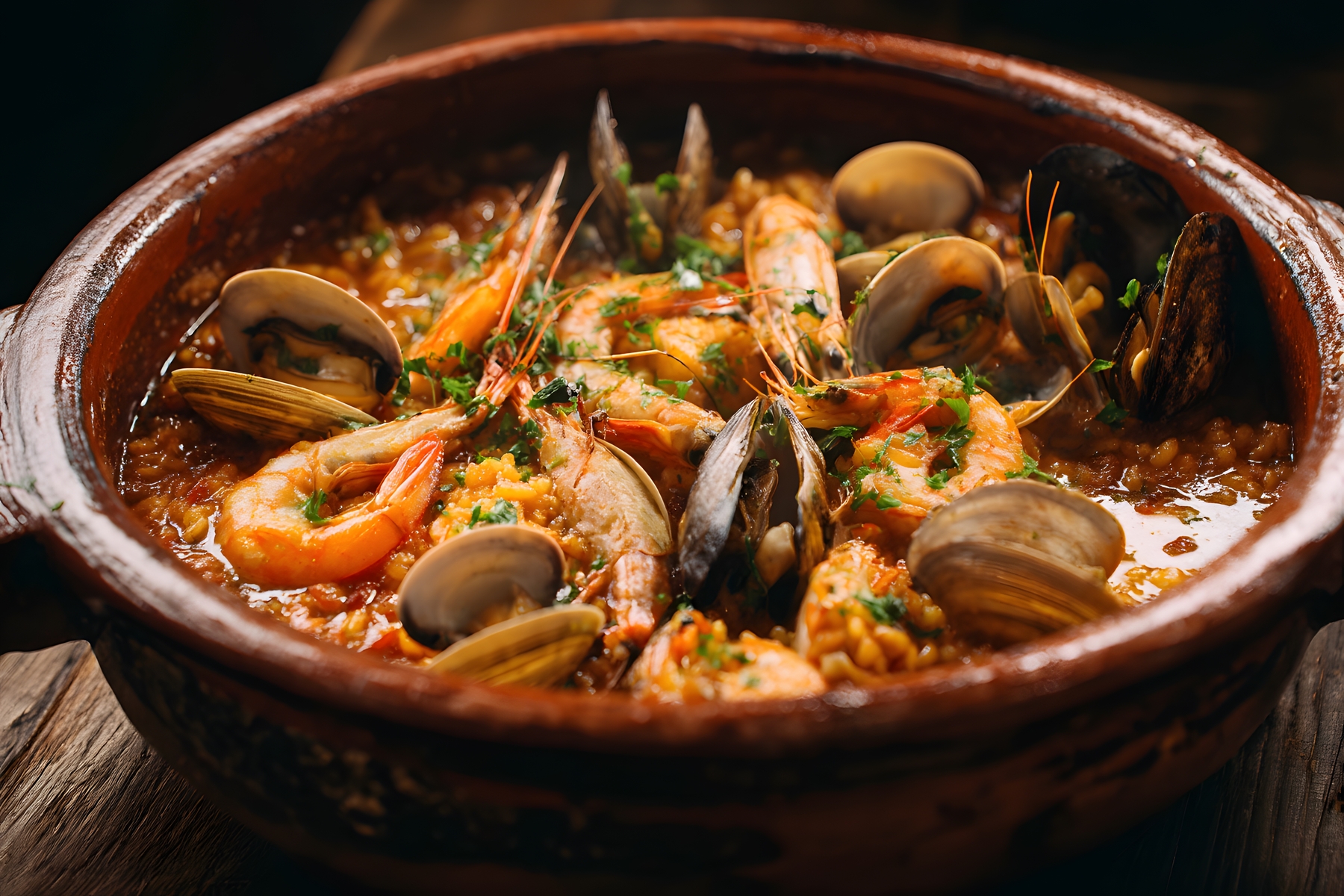
Moist and juicy Portuguese seafood rice, Arroz de Marisco, simmering in a rich, flavorful broth with fresh herbs.
9. Bifana: The Underestimated Pork Sandwich
This represents the most honest Portuguese street food. Thin slices of pork, slowly simmered in a marinade of garlic, wine, and paprika, find their way into a soft bread roll, topped with mustard or hot sauce, and nothing else. It carries zero pretense. Yet, a bifana often speaks volumes more about Portugal than a formal dinner ever could. In Lisbon, cooks slice it thinner and serve it with more gravy; in Porto, it gets a denser, more garlic-heavy treatment, leaving endless room for debate over which version reigns supreme.
Seeking it out in the right spots is crucial: simple bars, market stalls, train station joints, and high-turnover counters. Places moving dozens of rolls and mountains of meat per hour guarantee a fresh, piping hot bifana. The pork needs to stay juicy and tender, while the bun must remain soft yet sturdy enough to hold the savory liquids without turning to mush by the third bite.
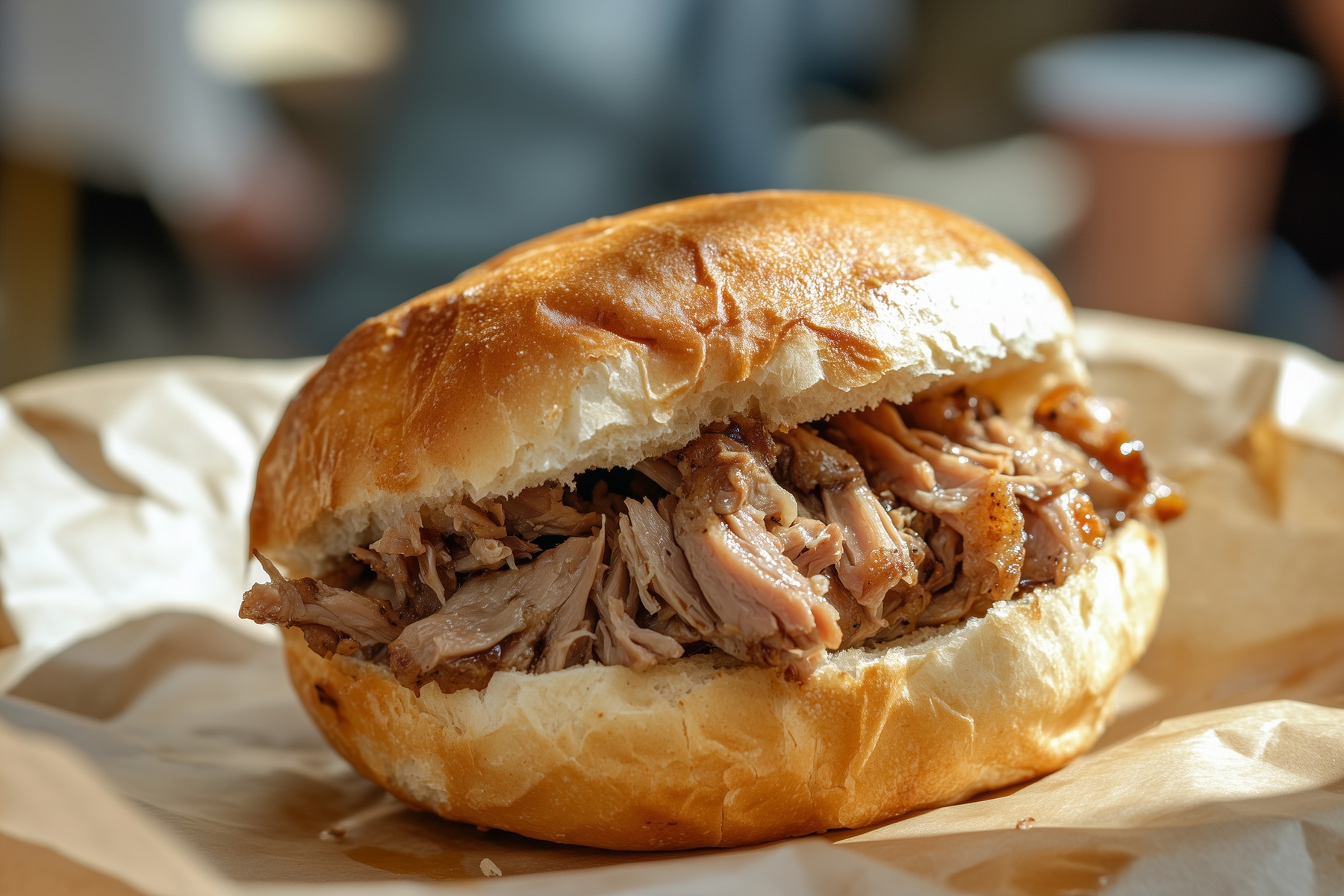
The bifana, an immensely popular Portuguese street food featuring juicy pork marinated in wine and garlic, served inside a fresh, crusty roll.
10. Prego: The Same Concept, But With Beef
Structurally, the prego serves as the bifana’s sibling: meat in a bun, plenty of garlic, and perhaps a swipe of mustard. However, substituting pork with a beef steak gives the dish a distinctly different, more straightforward, and meatier character. The word “prego” translates to “nail,” which some associate with the garlic pounded into the meat, while others link it to the aggressive way the steak is tenderized before frying.
The prego comes with a beautiful local tradition. Diners frequently use it to conclude a massive seafood feast, serving as a final punctuation mark, almost like a “dessert” after mountains of shrimp and clams. This perfectly captures local culinary humor: closing out a pescatarian banquet with a beef sandwich acting as the sweet finish.
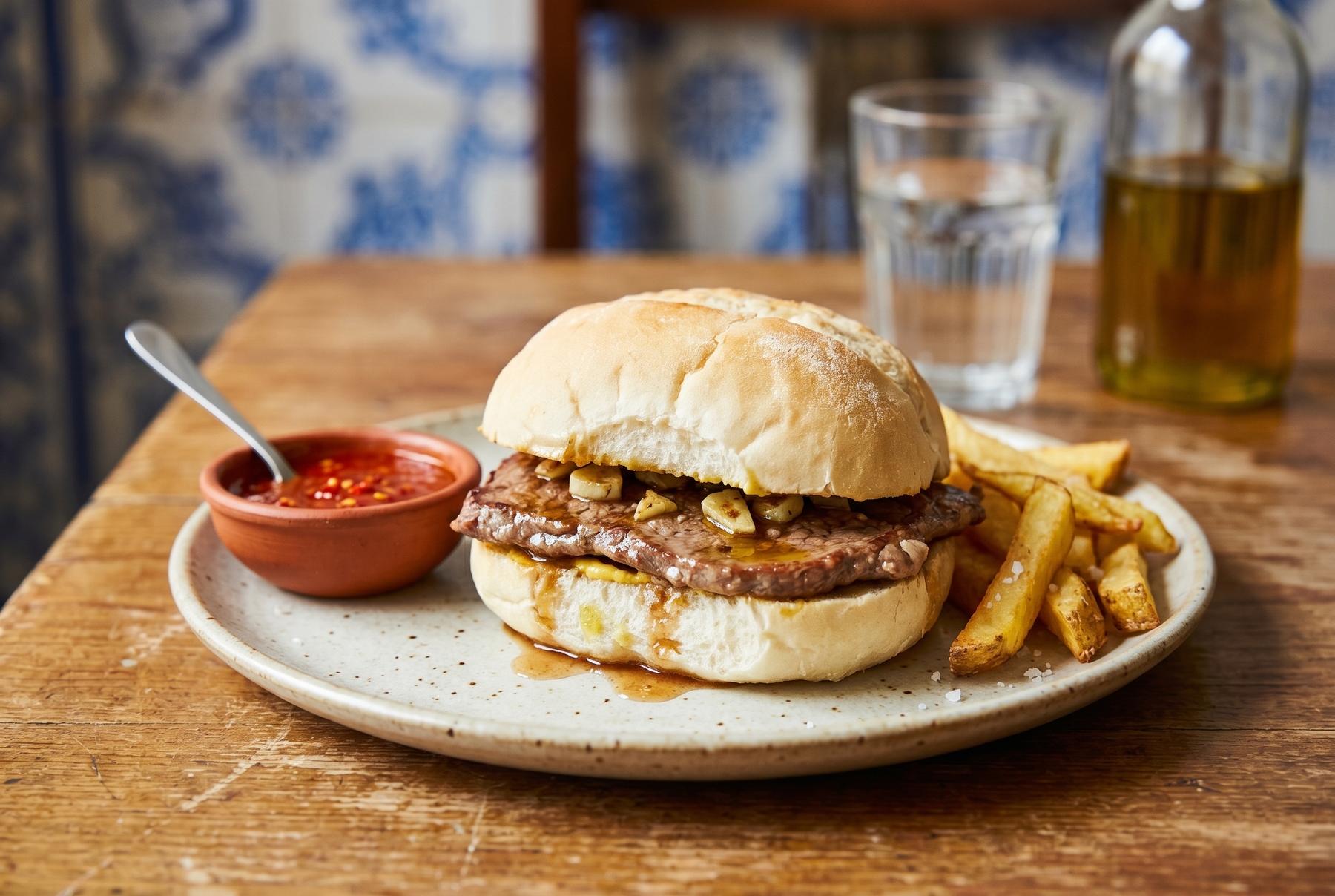
A hearty prego featuring a thin beef steak, garlic, and piri-piri sauce, perfectly complemented by a side of crispy french fries.
11. Amêijoas à Bulhão Pato: Clams, Garlic, and Cilantro
This dish delivers a masterclass in Portuguese simplicity. Clams steam open in a bright sauce of olive oil, garlic, white wine, and cilantro, finishing with a squeeze of fresh lemon. The dish honors Raimundo António de Bulhão Pato, a 19th-century poet and renowned gourmand, though a chef dedicating the plate to him likely invented the recipe rather than the poet himself. History has unfortunately forgotten the chef’s name.
Half the pleasure here resides in the sauce. Empty shells act as natural tongs, while crusty bread mops up the garlicky puddle at the bottom until the plate shines. Freshness has only one indicator: the smell must be purely of the sea, lacking any heavy fishy odor. Before cooking, the shells must remain closed or snap shut when tapped; afterward, they should fully open. Any clam staying shut after cooking goes straight to the bin.
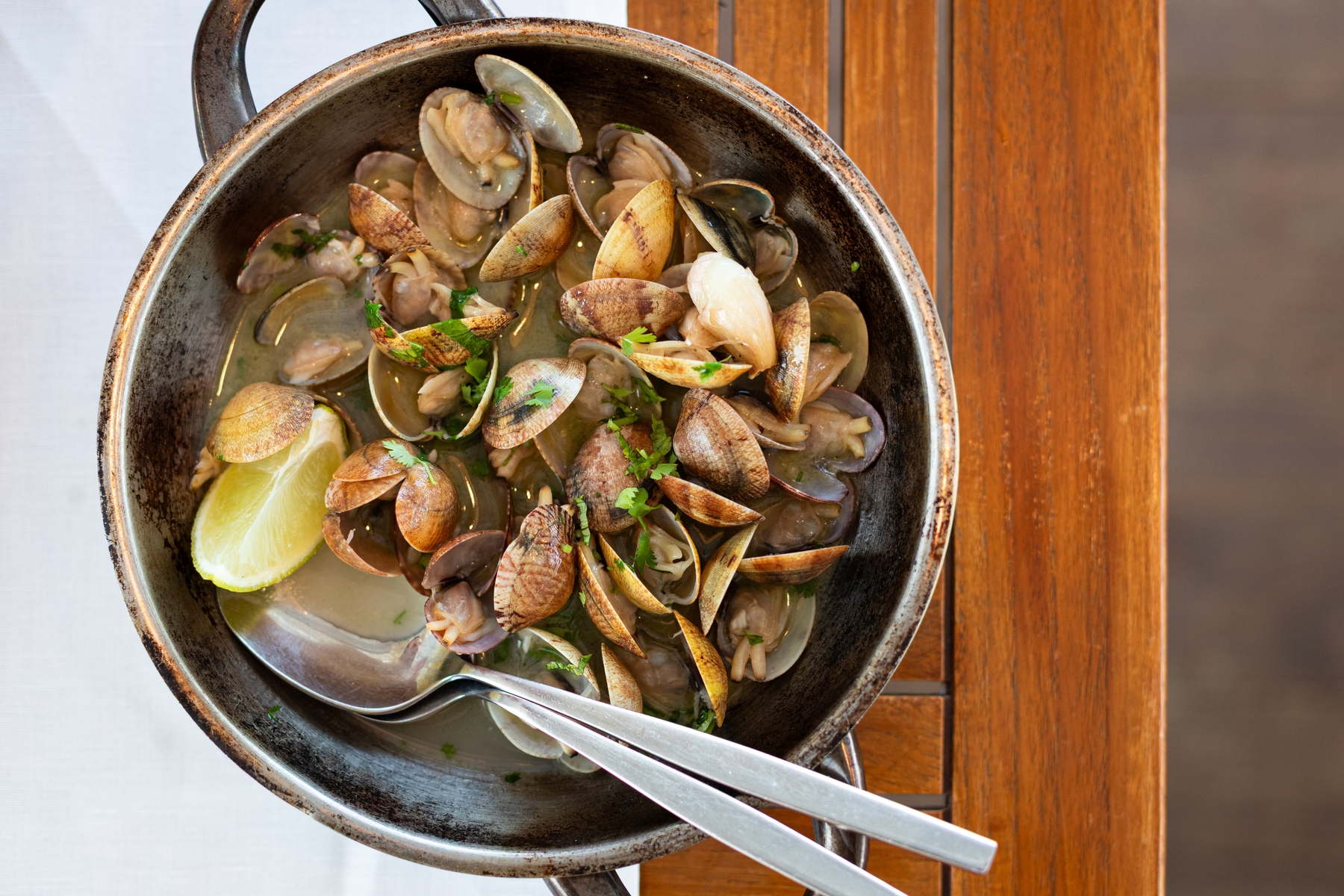
Fresh clams cooked in a light sauce of white wine, garlic, olive oil, and fragrant cilantro.
12. Cozido à Portuguesa: A Massive Pot of National Character
This dish celebrates abundance and the family table. A single pot gathers several types of meat, sausages (smoky chouriço, blood morcela, and flour-based farinheira), vegetables, and beans or potatoes. The exact composition varies wildly from house to house and region to region, but the core idea remains universal: a generosity piled onto the plate that makes standing up from the table immediately afterward quite difficult.
Local exotic variations also exist. In Furnas on the Azores, cooks bury the pot in the hot volcanic soil, letting it slow-cook for hours using the earth’s natural heat. Ordering cozido during the midday heat or right before a long hike across the hills remains a rookie mistake. This food demands a cool day and a slow, lingering afternoon sitting.
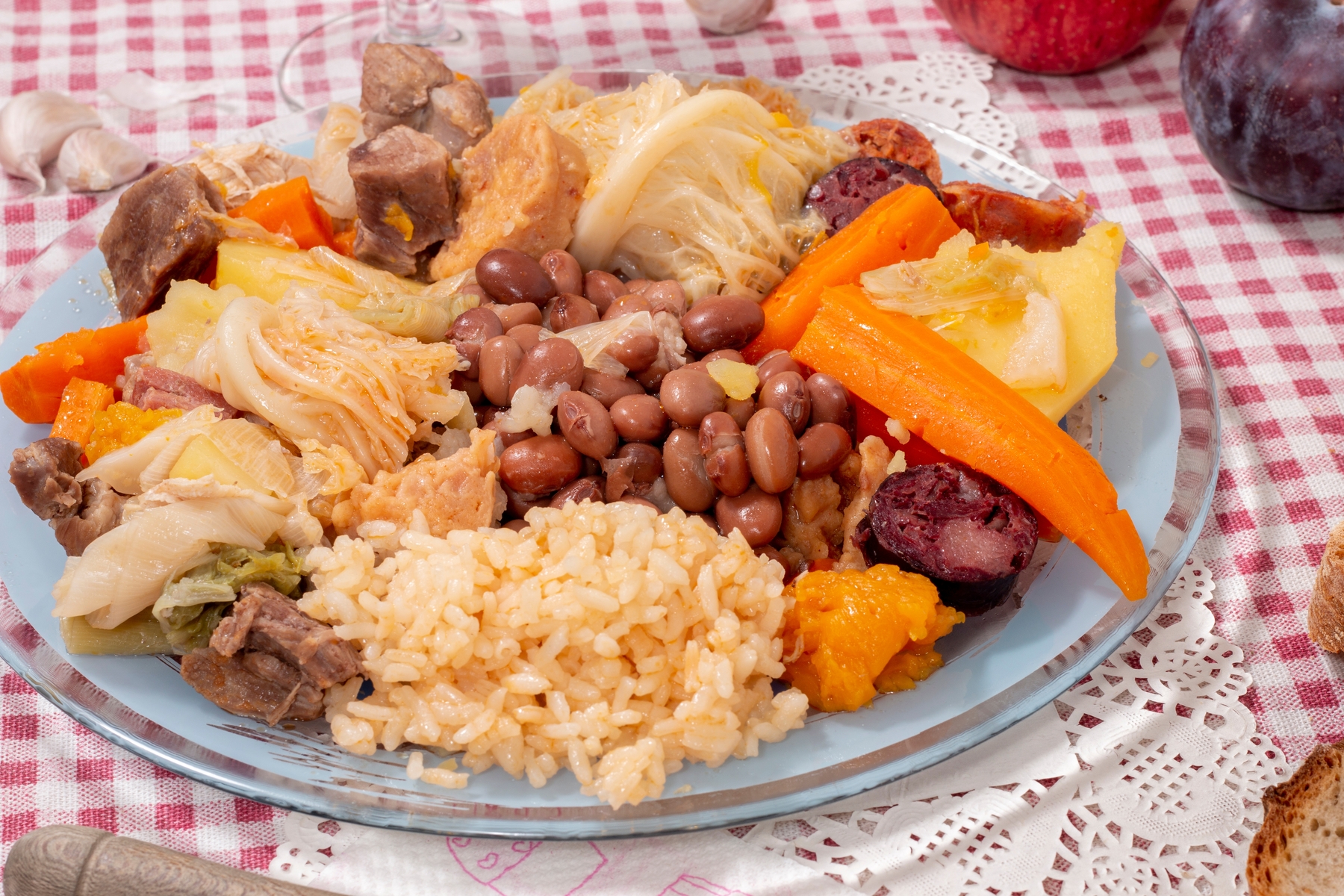
Cozido à Portuguesa, a traditional hearty assortment of boiled meats, cabbage, carrots, beans, rice, and savory sausages.
13. Alheira: The Sausage With a Double Life
It looks like an ordinary sausage, but cutting into it reveals a soft, bread-like texture laced with prominent garlic. Its complex history demands to be retold. The most famous origin story credits the alheira to Conversos (Jewish people forced to convert to Christianity) during the Inquisition. They avoided eating pork, but a lack of hanging pork sausages in the smokehouse would easily betray a family. Consequently, they began crafting sausages from poultry and game mixed with bread, making them visually indistinguishable from pork versions. The dish is strongly associated with the city of Mirandela and the Trás-os-Montes region.
Today, alheira frequently includes pork, having long shed its kosher origins. Flavor-wise, it remains soft and spiced, with a bread base that makes it significantly more filling than standard cured meats. Kitchens typically serve it fried alongside a fried egg and potatoes, securing its spot on the menu of nearly every tasca across the nation.
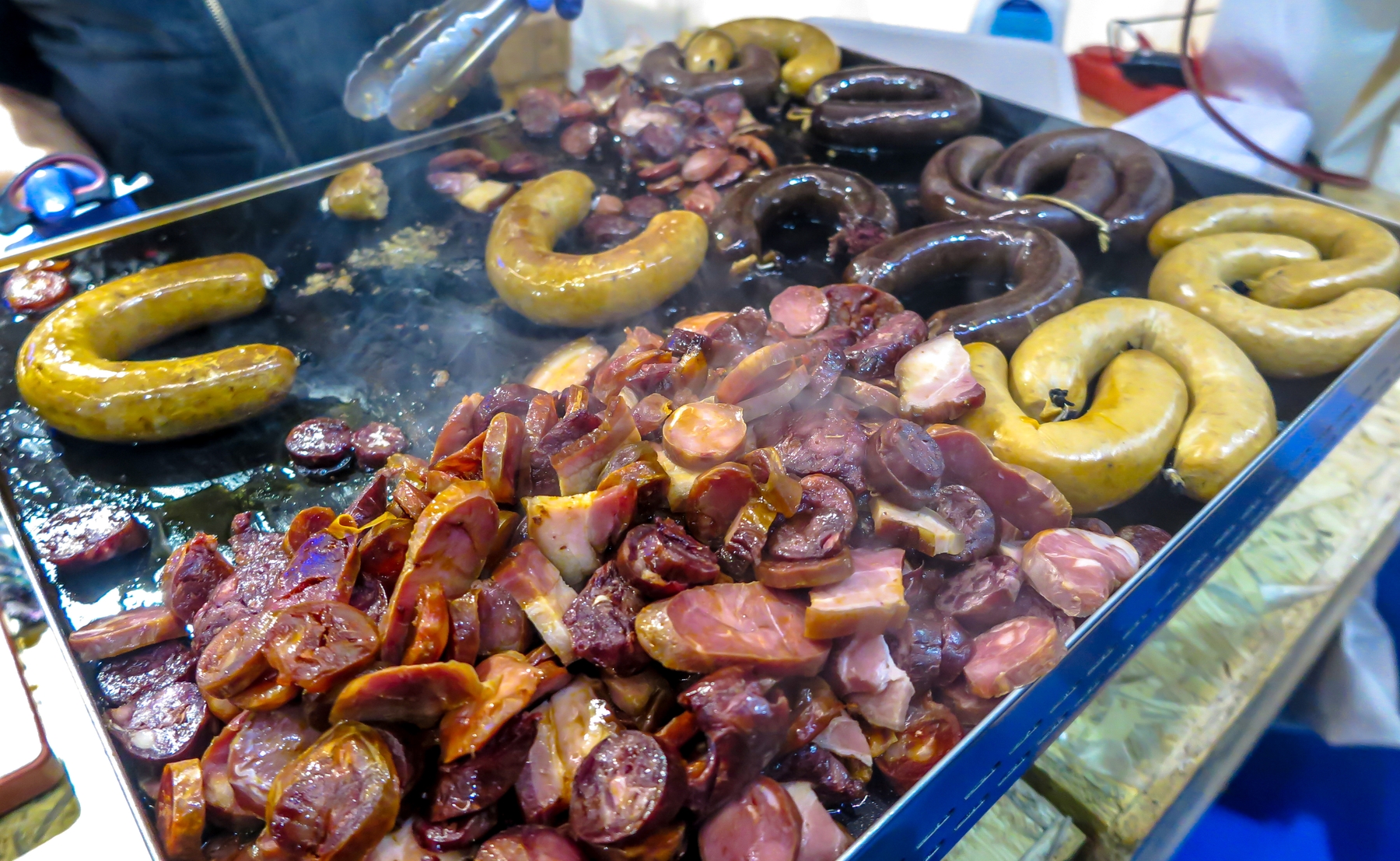
Traditional Alheira sausage made with garlic and bread crumb filling, grilling alongside other cured meat delicacies.
14. Tripas à Moda do Porto: A Dish That Demands Trust
Porto-style tripe serves as a prime example of humble ingredients evolving into a city’s culinary pride. Stewed beef tripe, white beans, various meats and sausages, and carrots all arrive plated with white rice. Legend traces it back to 1415: when outfitting the fleet for the conquest of Ceuta, Porto’s residents allegedly surrendered all their prime meat to the sailors, leaving only offal for themselves, which birthed this iconic stew. Since then, citizens proudly bear the nickname “tripeiros” (tripe eaters). While documents cannot fully verify this tale—and beans likely arrived in Portugal much later in the 17th century—the story endures.
Well-executed tripe turns incredibly tender, suspended in a thick, rich broth carrying a whisper of smoke from the sausages. Meticulous cleaning dictates everything: the tripe must be soaked and scrubbed with salt and lemon. Skipping this crucial step invites an aggressively pungent odor. Porto traditionally designates Thursday as tripe day, and ordering it during a blazing heatwave usually proves to be a poor idea. However, dishes exactly like this often leave the most profound impressions on a journey.
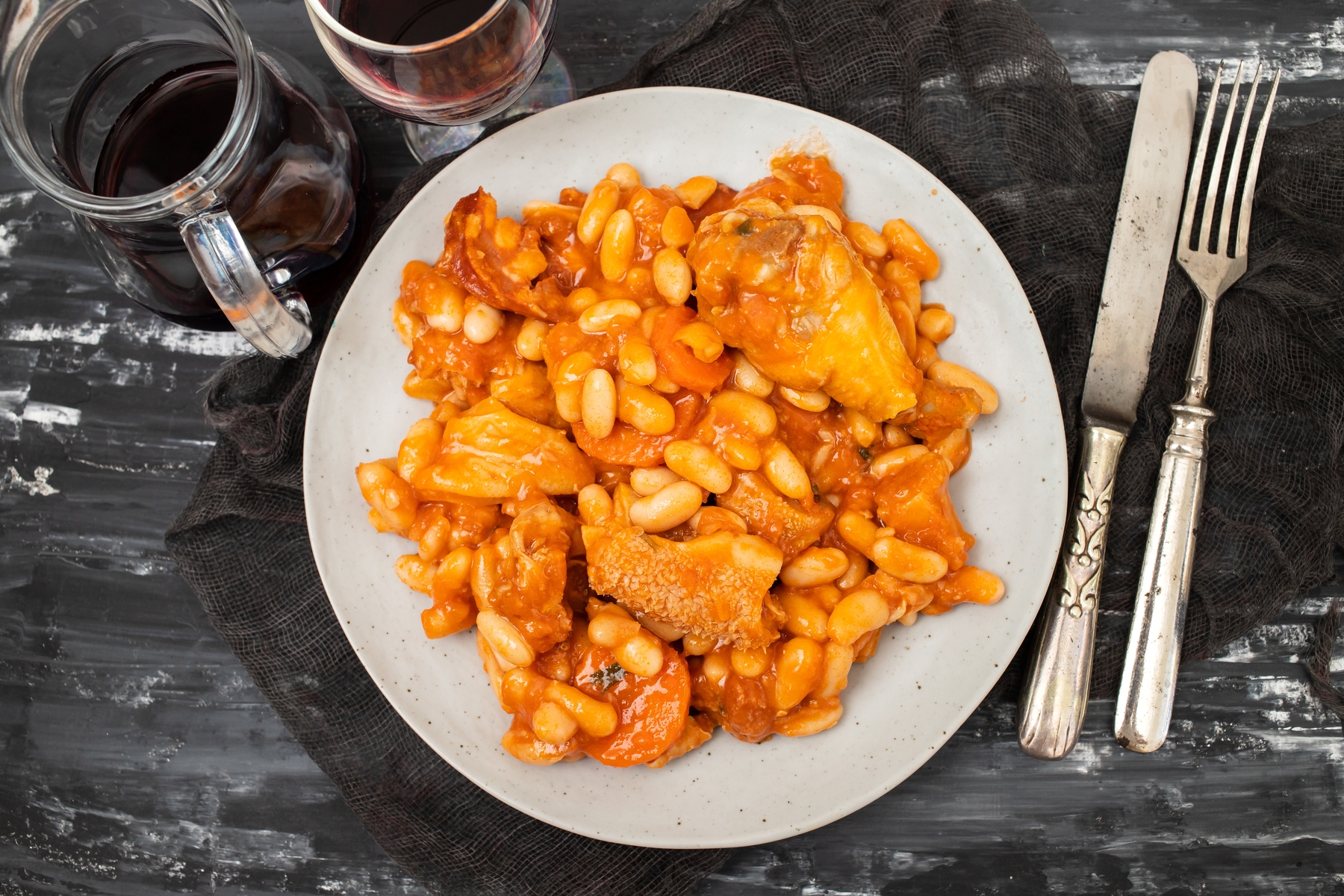
The famous Porto-style tripe stew with white beans and sausages, serving as the culinary calling card of Portugal’s northern capital.
15. Espetada da Madeira: Beef on a Bay Leaf Skewer
Moving on to Madeira. The espetada features beef cut into large cubes, rubbed with garlic and coarse salt, threaded onto a freshly cut bay laurel branch, and roasted over hot coals. The heart of this tradition beats in the village of Câmara de Lobos and its surroundings. As a restaurant staple, it expanded across the island around the mid-20th century. Before then, locals mostly reserved it for feast days and fairs, as beef remained a rare luxury.
The secret entirely resides in the skewer. As it heats up, the bay branch infuses the meat with an aroma that store-bought spices can never replicate. Restaurants frequently hang the skewer on a hook directly over the plate, letting the juices drip down. Diners strategically place bolo do caco (a garlic butter flatbread) and milho frito (fried cubes of cornmeal polenta) underneath to catch every drop. The entire experience relies purely on smoke, salt, meat drippings, and bay leaf.
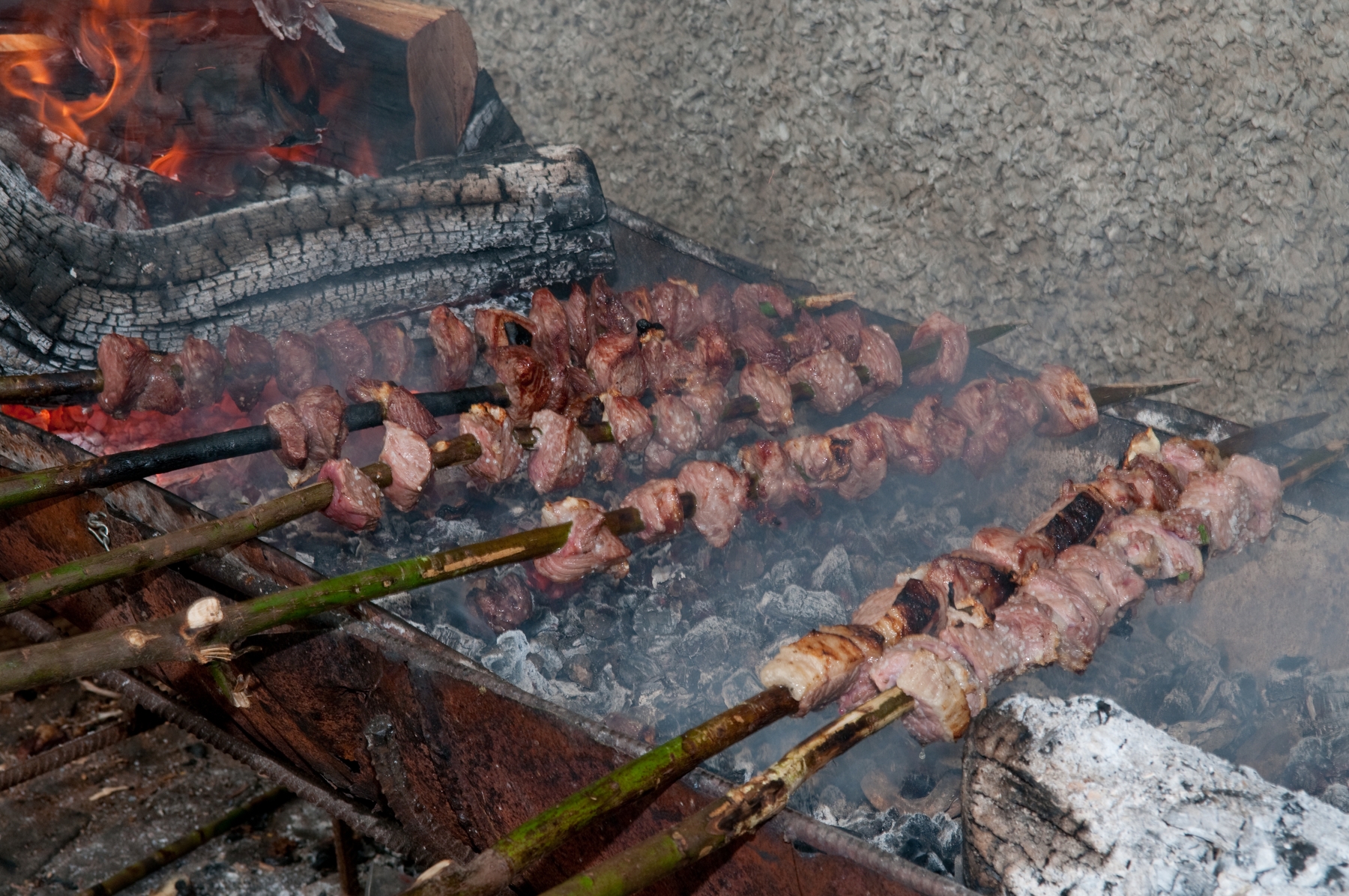
Espetada, traditional beef skewers threaded onto bay laurel branches, roasting over hot glowing coals in Madeira.
Queijo da Serra: The Cheese Eaten With a Spoon
Beyond the fifteen dishes, one essential cheese detour is absolutely necessary. Queijo da Serra, or more accurately Serra da Estrela, originates from the country’s central mountains and holds DOP status. Artisans craft it from the raw milk of local sheep breeds, mainly from November to March, coagulating it not with animal rennet but with thistle flowers. This specific detail makes the cheese suitable for vegetarians avoiding animal enzymes.
At perfect maturity, the interior becomes so liquid and creamy that slicing it proves impossible; instead, you cut off the top “lid” and scoop out the center with a spoon. Scanning the label for the word “amanteigado” (buttery) ensures you get the softest, most melt-in-the-mouth version. Serving it with rustic bread and a glass of local wine works beautifully, especially when paired with a touch of honey or quince marmalade. It provides a phenomenal pause between larger courses when heavy dishes no longer appeal.
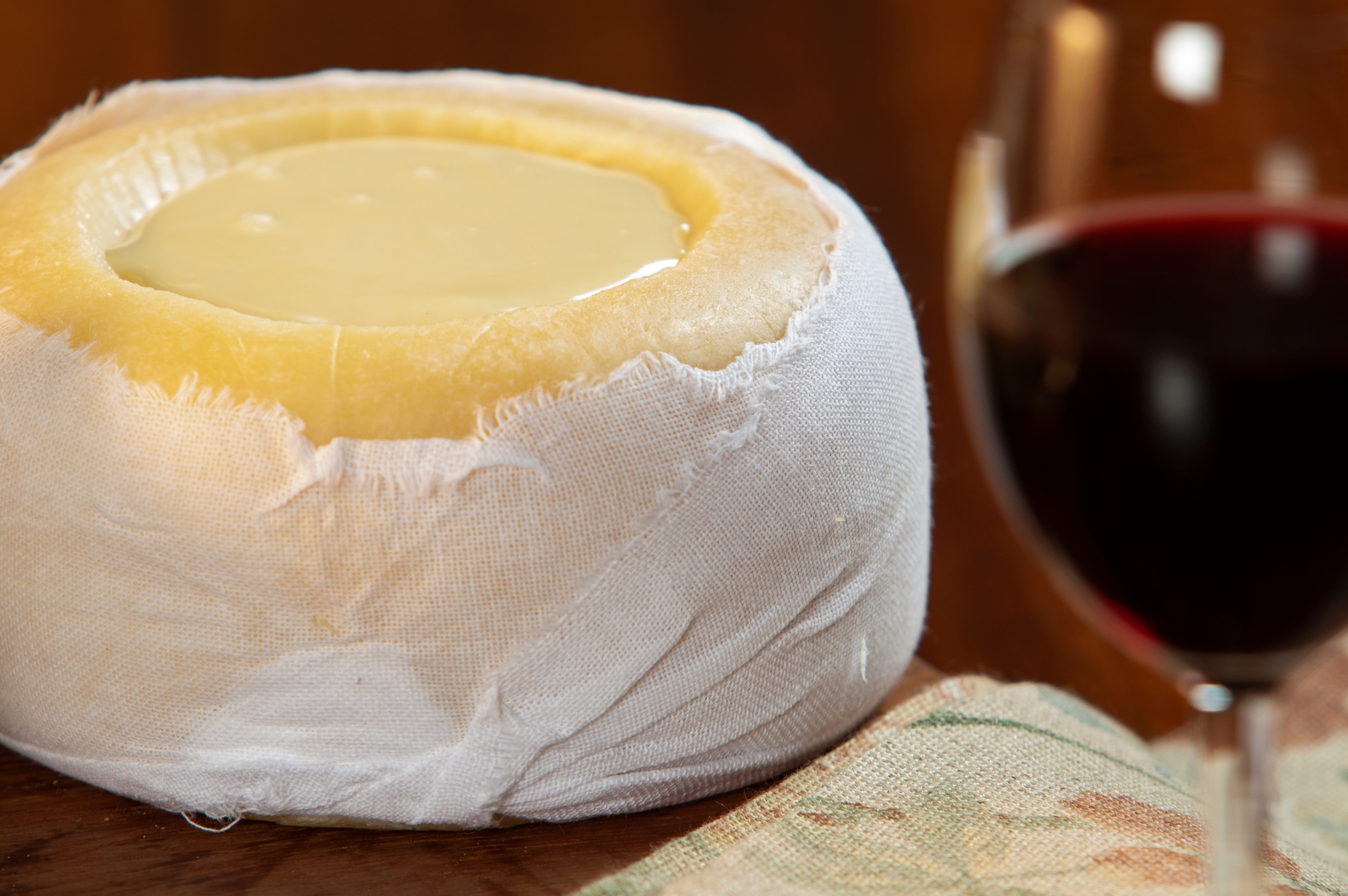
The famous soft sheep’s milk cheese, Queijo da Serra, eaten with a spoon after removing the top rind.
Arroz Doce and Leite-Creme: A Quiet Sweet Finale
After the flashy pastel de nata, seeking out something more domestic makes perfect sense. Arroz doce (sweet rice pudding) infused with lemon zest and cinnamon frequently sports intricate patterns dusted on top. Leite-creme, a rich custard boasting a thin caramelized shell, stands as a close cousin to crème brûlée. Both are egg-heavy, creamy, and lack showcase shine—exactly how families prepare them for holidays at home.
While pastel de nata claims fame on every street corner, locals quietly prepare these classics at home for celebrations. The sugar crust on a leite-creme must shatter loudly under the spoon, yielding to a cool custard beneath. A proper arroz doce features whole, intact grains of rice and a cinnamon aroma that hits your senses before the spoon even reaches your mouth.
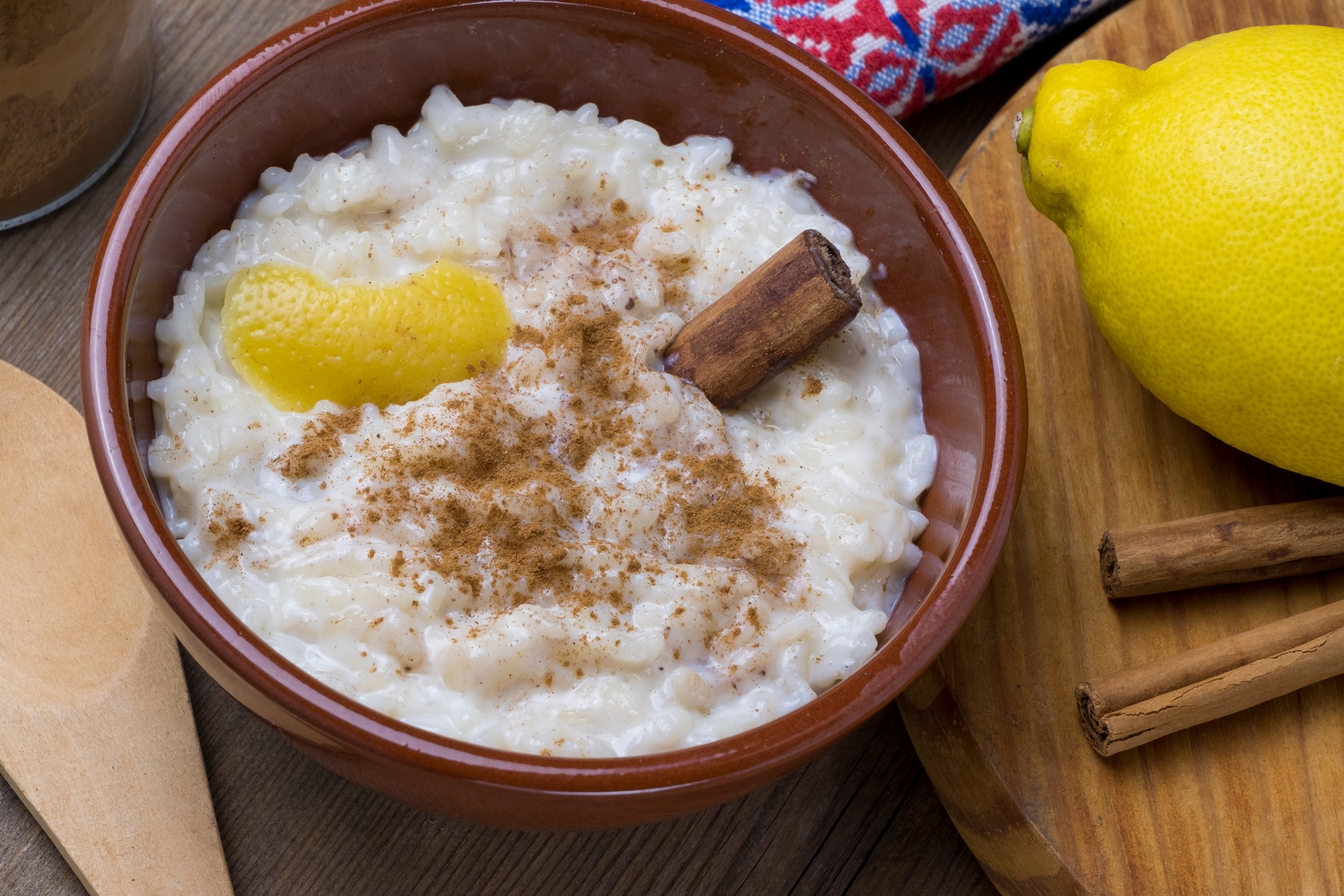
The delicate traditional dessert, Arroz Doce, a homemade sweet rice pudding dusted with fragrant ground cinnamon.
What to Drink With Portuguese Food
A few simple guidelines are enough. For lighter dishes and seafood, grab a Vinho Verde—a young wine from the north, slightly prickly on the tongue, carrying an almost effervescent spark. Pair desserts and cheeses with Port wine from Porto, the fortified and sweet nectar that carved endless vineyards along the Douro River. On Madeira, tasting actual Madeira wine reveals a completely different profile than a dusty bottle from duty-free. And inside an everyday tavern, never fear ordering the simple house wine from a jug: it often complements a heavy tripe stew or fried fish far better than a grand vintage.
How to Read a Menu in Portugal and Avoid Ordering the Wrong Thing
10 Words Worth Knowing
- bacalhau — cod;
- polvo — octopus;
- sardinha — sardine;
- marisco — seafood and shellfish;
- porco — pork;
- vaca — beef;
- queijo — cheese;
- arroz — rice;
- sopa — soup;
- sobremesa — dessert.
Where to Proceed With Caution
Several situations often leave unprepared guests staring at unexpectedly high bills. Seafood frequently prices out by weight, with display numbers indicating the cost per kilogram (2.2 lbs), so asking exactly what your portion will weigh—especially with large shells and crustaceans—is essential. The bread, olives, and cheese brought to the table unprompted represent the “couvert,” and they carry a charge: if you do not want them, leave them untouched to avoid paying. Dishes labeled “para dois” (for two) truly aim at feeding a group, making them nearly impossible for a solo diner to finish. Finally, restaurants clustered around major tourist hotspots featuring encyclopedic menus and photographs in six languages demand caution. While not universally bad, understanding the rules of the game upfront saves a lot of frustration.
How to Spot a Lively Restaurant
A short menu beats an encyclopedia. Locals sitting at neighboring tables suggest authenticity more than tourists wrestling with luggage. Changing seasonal items, the smell of wood-fired grills drifting from the kitchen, and a rapid turnover of seafood in the display case ensure nothing sits around all day. A confident waiter who instantly recommends the day’s best catch without hesitation guarantees you are in the right spot.
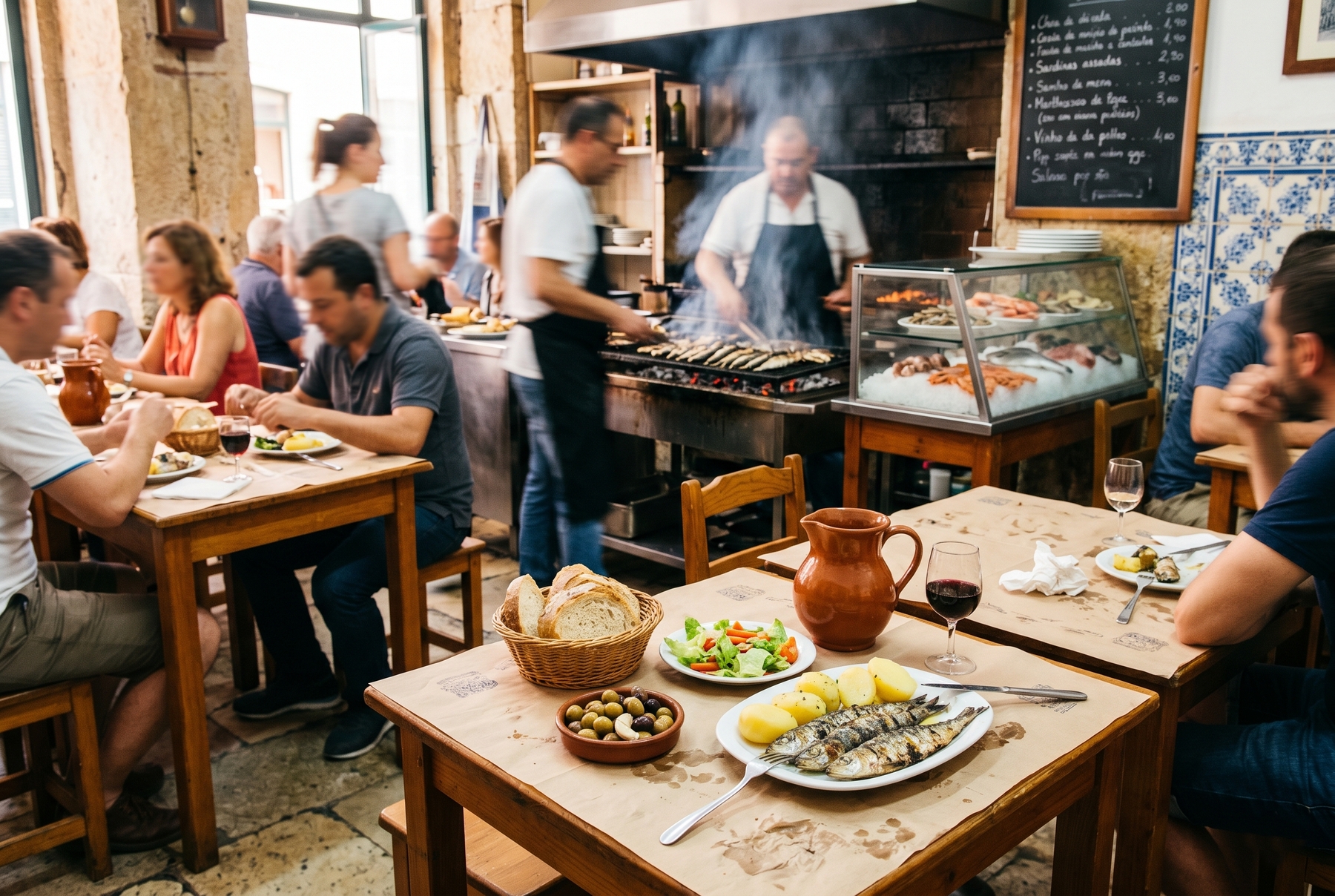
The lively atmosphere of a typical Portuguese tavern (tasca), where fresh fish grills over hot coals right in front of the guests.
What to Bring Back Home
For those who wish to extend the flavors of Portugal at home, a few reliable goods travel well. High-quality canned fish, especially sardines or tuna preserved in olive oil, have long elevated themselves to artisanal products in Portugal, boasting tins beautiful enough to display on a shelf. Add premium olive oil, sea salt (search for flor de sal), spicy piri-piri sauce, and traditional cookies or sweets. Cheese also travels beautifully, provided it complies with transport regulations. One last crucial note: always check customs and baggage import rules before flying, as regulations frequently shift, and verifying them beforehand beats surrendering a prized purchase at security.
One Dish From the City, One From the Region, One Recommended by a Neighbor
These fifteen Portuguese dishes are not simply checkboxes on a tourist itinerary. Portugal lives in the smoke of coastal fish grills and in the heavy, simmering pots of Porto. A warm custard tart in a pristine bakery and a noisy tavern serving a dripping bifana both capture its soul equally. Attempting to cram them all into a single lunch is both impossible and entirely unnecessary.
Embrace a rule of three for every city. Choose one iconic dish of the specific town, one regional specialty representing the broader area, and one wild card recommended by the person sitting at the next table—because they invariably know much better than any guidebook ever could.
0 comments