
The strangest thing about restaurant plating is not the smoke escaping from under a cloche, the tweezers, or a piece of slate replacing a plate. It is the fact that in a decent restaurant, all of this serves a purpose. A stone retains temperature. Steam carries the aroma to the face before the fork reaches the mouth. A tall arrangement stands perfectly straight because it was assembled by someone who repeats this motion 200 times an evening.
At home, all these mechanics break down at the very first question. Is it comfortable to eat? I have seen dozens of home dinners where the host spent an hour on a composition, and the guest hesitated for a good ten minutes to touch it, afraid to ruin the design. Plating can elevate an evening. Or it can turn the host into an exhausted director backstage at their own table, monitoring a sauce sliding onto the tablecloth instead of engaging in conversation. The real question is when it is worth the effort, and when it is more honest to bring out a large bowl and let everyone serve themselves.
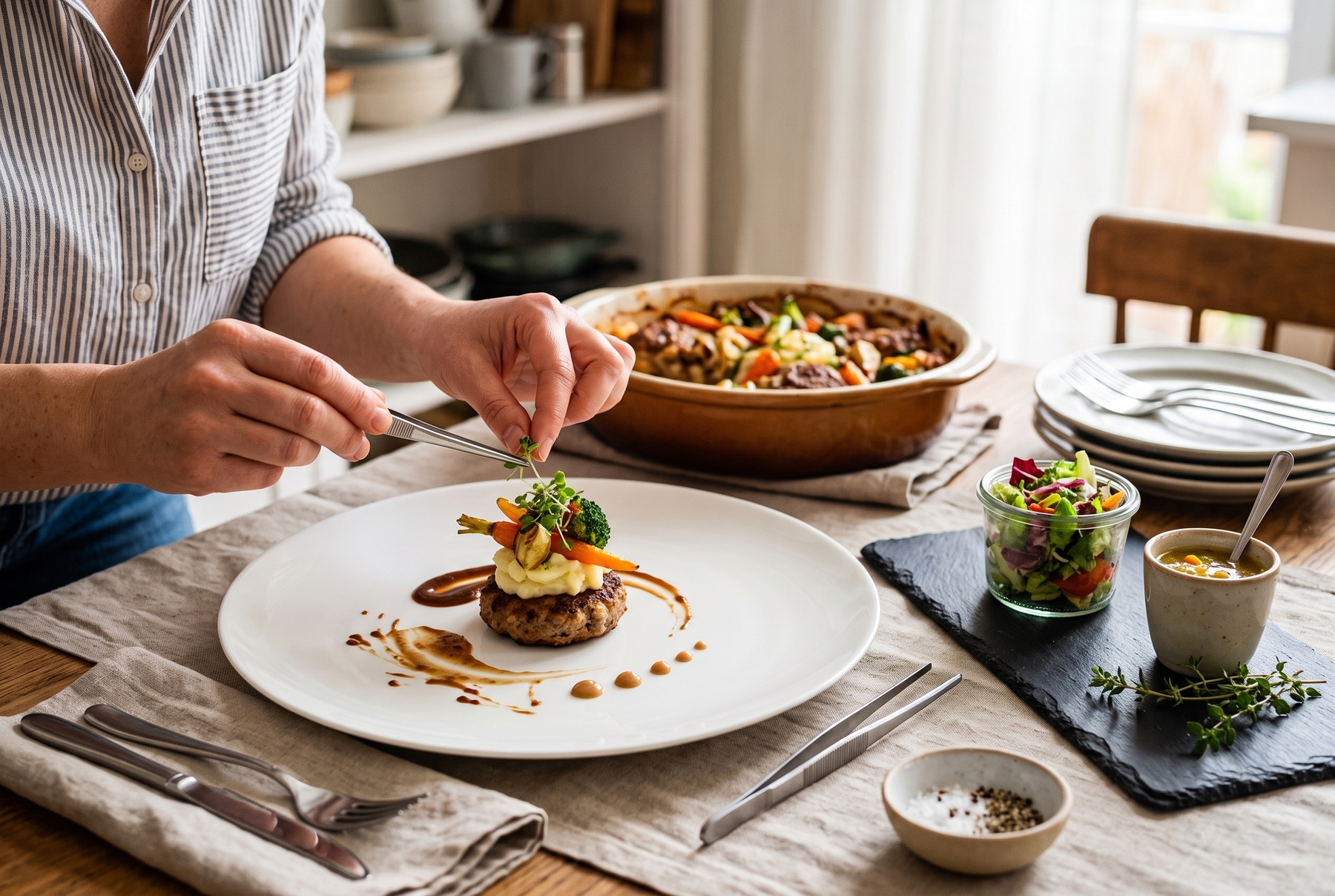
Using culinary tweezers for the final garnish with fresh herbs is an example of complex restaurant plating done at home.
Table of Contents
- Presentation Drives the Experience, Not Just the Aesthetics
- When Unusual Home Plating Makes Sense
- When It Is Easier to Keep It Simple
- How to Tell if a Dish Benefits from Unusual Plating
- What Formats of Unconventional Plating Work at Home
- How to Avoid Making a Bad Copy of a Restaurant Dish at Home
- Cheat Sheet: Which Format Fits Which Occasion
- What to Prep in Advance to Make Plating Look Effortless
- Plating as a Gesture of Care, Not a Storefront Window
Presentation Drives the Experience, Not Just the Aesthetics
Food presentation sets the expectation, the pace, and where the guest looks first. It reveals whether the host thought ahead about how the food would be eaten. Lumping everything together is rarely the best approach.
Beautiful table setting accounts for the entire environment: the tablecloth, cutlery, glasses, and lighting. Restaurant plating focuses on the plate and the sequence in which flavors enter the mouth. Interactive presentation pulls the guest into the process, allowing them to assemble, pour, or break things apart themselves. A family-style table places everything in the center, stripping away ceremony, while a buffet removes chairs and leaves one hand free for a glass. These are different tools, and they function differently.
What Changes When a Dish Is Presented Differently
Focus shifts. Along with it, portion size, flavor sequence, the guest’s role at the table, and the feeling that today is not just an ordinary Tuesday change. Soup poured into small glasses and served before the main course reads as an aperitif: it is consumed almost standing up, between conversations, and awakens the appetite instead of ruining it. That same appetizer placed on a communal board transforms from a single portion into an excuse to reach across the table and ask about that green spread.
Size matters too. A small portion makes a promise: try this, there is more to come. A large, hot baking dish sends the opposite signal: eat as much as you want, I will feed you. These are different messages, and choosing between them requires intention.
Appropriateness Trumps Originality
Creative plating is justified when it makes a dish clearer, tastier, more convenient, or better suited to the occasion. If none of these apply, and the only motivation is to mimic that trendy spot downtown, the effort feels hollow.
If explaining how to eat a dish takes longer than actually eating it, the presentation has failed. A guest arrives to eat and talk, not to listen to a plating briefing.
When Unusual Home Plating Makes Sense
Sometimes, unconventional food presentation at home genuinely helps.
When There Is an Occasion, but No Need for a Banquet
An intimate birthday. An anniversary. A Friday that deserves to stand out from Thursday. A massive menu is not required for this: presenting a single dish slightly differently is enough to signal that today is special, without spending three days at the stove. Those same meatballs, served on a shared wooden board with three sauces in small ramekins, suddenly read as an event. The meatballs remain unchanged, but they no longer look like a standard weeknight dinner.
When a Simple Dish Begs for an Accent
Dramatic food presentation works best with straightforward food. Potatoes, cheese, roasted vegetables, chicken, blini (thin crepes), herring, homemade pâté, or a simple salad. A familiar dish is easily refreshed with an unusual presentation, provided it does not mask a weak flavor. There is a trap here, though. Plating does not fix flavor. If a pâté is bland, neither a rustic board nor a sprig of thyme will save it: it simply becomes beautifully presented blandness. Taste always comes first.
When Guests Love to Participate
A taco station. Bruschetta that everyone builds to their liking. A board with blini fillings: caviar, lightly salted fish, sour cream, green onions, and jam for those with a sweet tooth. Ice cream with bowls of toppings. A homemade ramen bar where you keep the broth piping hot, and guests add their own toppings. This format is incredibly convenient for a group of friends: people are occupied, conversation flows naturally, and the host avoids running around with plates. But there is a caveat. For a formal dinner or for a guest who arrived starving, a DIY meal is irritating. Not everyone wants to assemble their own dinner.
When Presentation Solves a Practical Problem
Sometimes a plating format is chosen for logistics rather than aesthetics. Pre-assembled plates save time: guests do not have to wait while you serve ten people. A family-style table eliminates seating awkwardness and the question of who to serve first. A miniature format allows guests to taste four flavors where only one would normally fit, while vertical plating saves space on a cramped table where plates would otherwise overlap. These sound like boring details, but they often determine whether you actually sit at the table or spend the evening running between the kitchen and the living room.
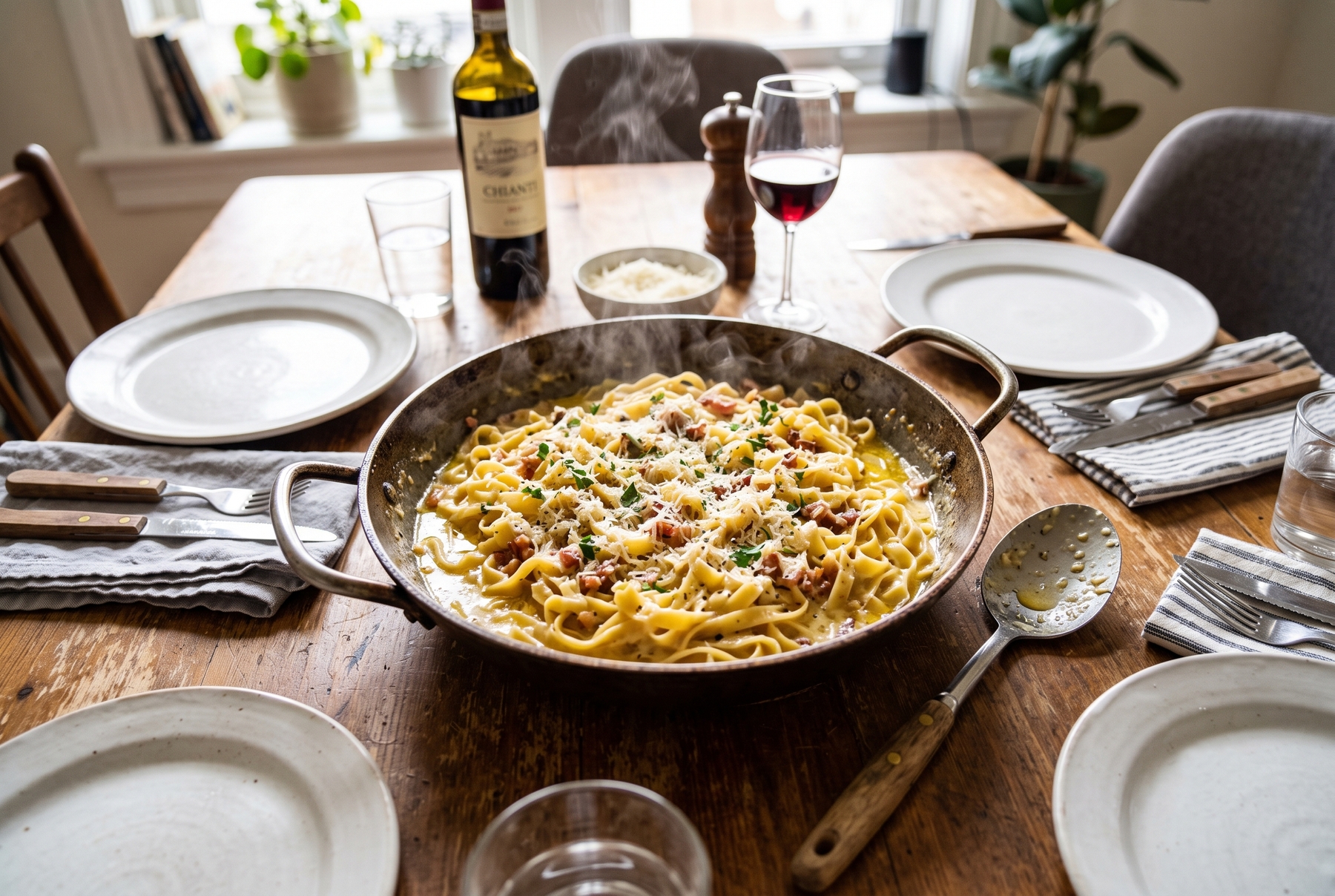
Serving a hot dish straight in a skillet or baking dish preserves the right temperature and creates a cozy atmosphere.
When It Is Easier to Keep It Simple
Not every dinner requires stage direction. Truth be told, half of all failed home plating attempts happen because someone felt embarrassed by a simple table.
When the Dish Needs to Be Hot
This is where beautiful arrangements lose to a pot and a ladle. Pasta, risotto, steak, draniki (potato pancakes), syrniki (quark pancakes), or pan-fried fish. While you meticulously build a composition and carry plates one by one, the risotto at the far end of the table turns into a dense lump, and the crust on the fish gets soggy from its own steam. For food like this, temperature outweighs beauty. Hot food must reach the table hot, not perfectly arranged. Simple presentation is more honest here: place a large dish on the table, put a serving spoon next to it, and let people eat while it sizzles.
When Children, the Elderly, or Hungry Guests Are at the Table
Look at the people at your table. A child needs to understand how to eat without searching for the main ingredient under a pile of microgreens and crumbs. An elderly guest needs their food to be warm and not fall apart halfway to their mouth. A hungry guest is simply infuriated by a complex structure: they want to scoop and eat, not figure out which edge to start from. It all comes down to basic comfort: a guest should know how to begin, where to place their utensils, and whether they can ask for seconds without ruining your artistic vision.
When Plating Interferes with Flavor
Bad plating usually reveals itself quickly. A mountain of microgreens that obscures the actual food. A sauce smeared with a brush for a photo, leaving not enough to actually dip into. A crispy element plated too early, turning soggy. Hot meat served on a cold stone slab that draws out all its heat. Everything served in mason jars, even when the dish requires a proper plate with edges. It might look neat in a photograph, but it can be highly impractical in the mouth. It is easy to forget this when getting carried away.
When You Are Exhausted Before the Doorbell Rings
A host has limits too: you can end up hating your own idea by the time the doorbell rings. If achieving an effect requires standing with tweezers for 40 minutes, arranging sauce droplets with a ruler, ask yourself what matters more: geometry on a plate or emerging to greet your guests completely drained, spending the whole evening obsessing over dishes. A single precise accent is better than a handful of small details that drain your energy.
How to Tell if a Dish Benefits from Unusual Plating
Before trying to make things beautiful and opting for an unconventional presentation, run the idea through three filters.
The Flavor Filter
Does the presentation enhance the aroma or hide it? Does it ruin the texture: does the crispy part stay crispy, and does the delicate part remain uncrushed under the weight of the garnish? Is it easy to pick up a bite containing a bit of everything, or do the ingredients slide apart, forcing you to chase them individually? Is there enough sauce for actual dipping, not just for looks? A good example: pouring hot broth into a bowl with pre-arranged noodles and herbs right in front of the guest. It arrives hot and releases its aroma exactly at the moment of serving. That same broth, poured in advance, arrives barely warm and covered with a film.
The Convenience Filter
Home plating usually stumbles on these minor details. Does it require extra dishes that you have nowhere to wash later? Will the sauce drip onto the tablecloth or a guest’s lap? Can this be eaten sitting down, standing up, with one hand, or in a cramped space? A New Year’s table in an apartment, where plates are already stacked two layers high, and a backyard summer dinner, where the wind blows microgreens away, demand entirely different food. A cocktail party calls for one-bite food because the guest’s other hand holds a glass. A tiny kitchen is unforgiving of formats that require carving meat right at the table.
The Meaning Filter
The main question is: why do it this way? To highlight the season (the first spring radish begs for coarse salt and good butter, not a culinary foam). To showcase a specific region or a family story. For a specific party theme. Or simply because you saw it on a social media feed and wanted to recreate it? Recreating a feed is fine, but with an adjustment: what a five-person crew assembled under studio lighting looks very different when done solo under a kitchen bulb.
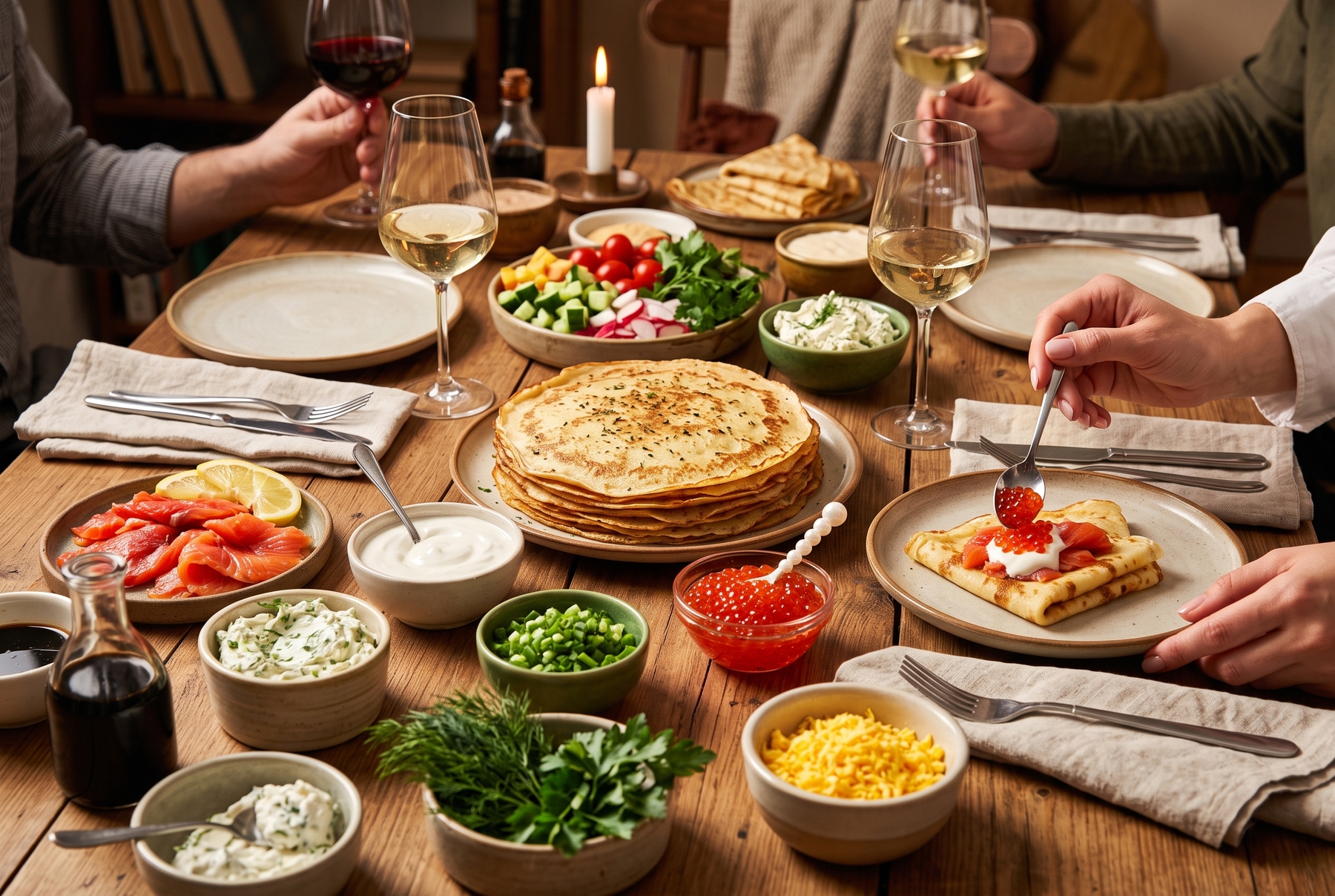
Crepes with an array of fillings in separate small bowls offer an excellent build-your-own meal format that engages guests.
What Formats of Unconventional Plating Work at Home
A Shared Board Instead of Individual Plates
Charcuterie, cheese, vegetables, fish, bread, or desserts. A board shines where there is long conversation and no strict seating arrangement: an aperitif, an unhurried evening, or a gathering where guests come and go. To prevent it from looking like a dump, keep a few rules in mind. Place contrasting textures side by side: something soft next to something crunchy. Create variations in height so the eye does not get bored. Keep sauces in separate ramekins rather than letting them spread into puddles on the wood. And do not pack the board to the brim: when there is negative space between items, the board looks curated rather than piled high.
Miniature Portion Versions
Miniature pies, cream soup in shot glasses, salad in small tumblers, tartlets, or bite-sized desserts. This is convenient for a cocktail party or a tasting mood when guests want to try a bit of everything. There is one weak spot: the mini-format does not suit dishes that rely on generosity and heat. A miniature portion of stew will get cold before it is even carried to the table, and instead of a hearty gesture, it gives the hint that seconds are not an option.
Build-Your-Own Meals
Blini (crepes) with an array of fillings. Baked potatoes with bowls of toppings. Homemade shawarma or wraps that everyone rolls themselves. Bowls, tacos, and bruschetta. This format lifts half the workload off the host and gives guests the freedom to build their plate exactly how they like it. Someone who despises onions simply skips them, and you do not have to memorize everyone’s dietary restrictions. Bonus: while guests are busy assembling their food, you get a couple of minutes to breathe.
Presentation with a Short Ritual
Pouring broth into a bowl in front of the guest. Drizzling hot sauce directly at the table. Opening a parchment packet used to bake fish, releasing a fragrant cloud of steam. Torching the sugar crust on a crème brûlée or breaking a pie crust to reveal the filling. A ritual works when it is brief, safe, and requires no briefing. If it involves a blowtorch, a safety lecture, and three rehearsals, guests will feel anxious rather than delighted. Be exceptionally careful with open flames at the table: the trick is charming right up until someone reaches their sleeve across the fire.
Unexpected but Practical Dishware
Mugs, tumblers, wooden boards, baking sheets, small bowls, or jars. They save the day when they enhance convenience: a cream soup in a mug feels comforting to hold, and an appetizer board sits perfectly in the center of the table. However, quirky containers quickly reveal any attempt to disguise mediocre food. A separate note on safety: not every jar or decorative ceramic piece is meant to handle boiling water, acidic ingredients, or hot fat. Standard glass can shatter from a sudden temperature shift, and questionable glazes react poorly to lemon juice. If in doubt, just grab a normal plate.
How to Avoid Making a Bad Copy of a Restaurant Dish at Home
Most domestic plating failures begin the same way: someone spots a technique in a dining room or online and tries to replicate it literally.
Mistake One: Copying Form Without Context
Behind every beautiful restaurant plate is a kitchen brigade, morning prep work, calibrated lighting, specialized dishware, and a flawless pacing system. None of this exists at home, and that is perfectly fine. Rather than recreating an image pixel by pixel, take the core idea and adapt it for a home setting. Deliver the same meaning, but adjust for the fact that you are cooking alone on a single stove for eight guests.
Mistake Two: Making It Look Good Only from Above
Plating must be functional, not just photogenic from a top-down angle. A neat stack collapses the second a fork touches it. A sauce beautifully swooshed on the rim never actually makes it into the mouth, and a garnish that looks stunning on camera gets in the way of eating. Check the composition not with your eye from above, but with a fork from the inside: consider what happens when the guest reaches the middle and the bottom of the plate.
Mistake Three: Forgetting Why People Gathered
Guests did not come to take an exam in table etiquette. Unconventional presentation should never make a person feel clumsy because they cannot figure out which side to approach it from. A guest should know exactly how to start eating at first glance and never fear ruining a composition with an awkward movement. If they are afraid, the structure is far too fragile.
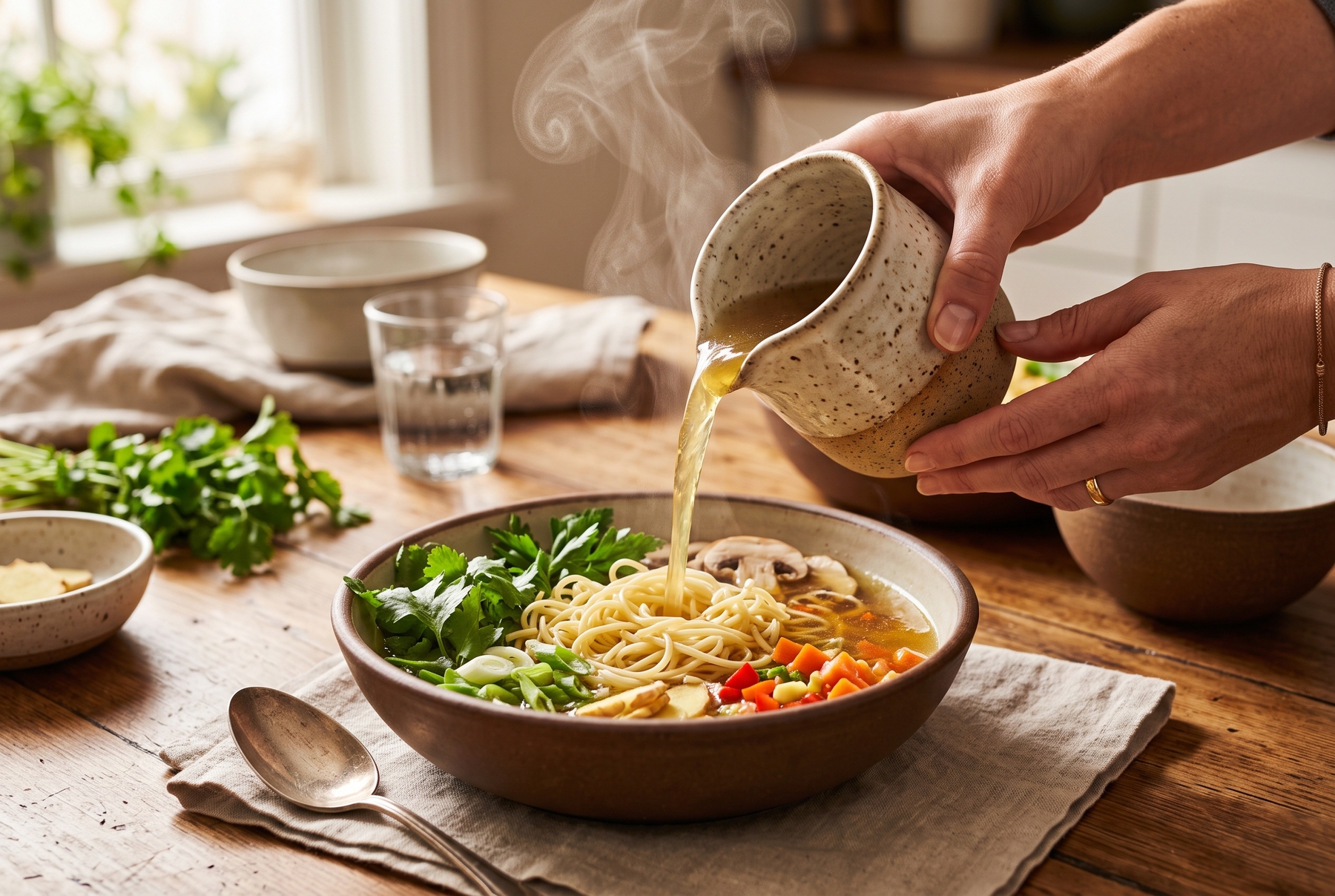
Presentation with a short ritual: pouring hot broth into a bowl right at the table preserves the fresh herb aroma and temperature.
Cheat Sheet: Which Format Fits Which Occasion
Roughly speaking, but highly effective:
- Romantic Dinner. One or two dramatic accents, individual plating, minimal interaction. Focus on temperature, lighting, a rich sauce, and dessert, rather than complex structural plating.
- Gathering of Friends. Shared boards, build-your-own stations, large centerpieces, and sauces on the side. Freedom and movement matter more than geometry.
- Family Celebration. A comforting, familiar main course as the foundation, plus one unusual element: an unconventionally presented appetizer or a striking final dessert.
- Cocktail Party or Cramped Kitchen. Mini-portions, one-bite food, stable glasses and plates. Avoid anything that requires cutting at the table or perishes within 20 minutes.
What to Prep in Advance to Make Plating Look Effortless
The “it just came together naturally” effect always relies on solid preparation.
Rehearsal Without Fanaticism
Assemble one portion in advance, a day before or at least a few hours ahead. Time how long the assembly takes. Check if the sauce splits, if the garnish holds up, and if it is actually comfortable to eat with your own forks. A single rehearsal uncovers almost all the flaws that would otherwise surface in front of guests at the worst possible moment.
One Main Effect Instead of a Scatter of Small Ones
Let the unconventional presentation apply to just one dish or one phase of the evening. An appetizer on a board, with the rest served normally. Or a standard dinner ending with a small ritual for dessert. When everything is over-the-top, the eye gets tired, and the host runs out of steam.
Dishware, Sauces, Napkins, and Cutlery
The success of plating is often decided by boring details. Are there enough serving spoons for shared dishes so guests do not have to pass a single one around? Where should people discard used skewers (place an empty glass nearby, and the problem is solved). What should they use to pick up appetizers from the board? Where are the napkins, and are there enough of them for finger food? Does the wooden board slide on the table (slip a damp towel underneath, and it stays firmly in place). These details are invisible in photos, but they separate a relaxed evening from a chaotic one.
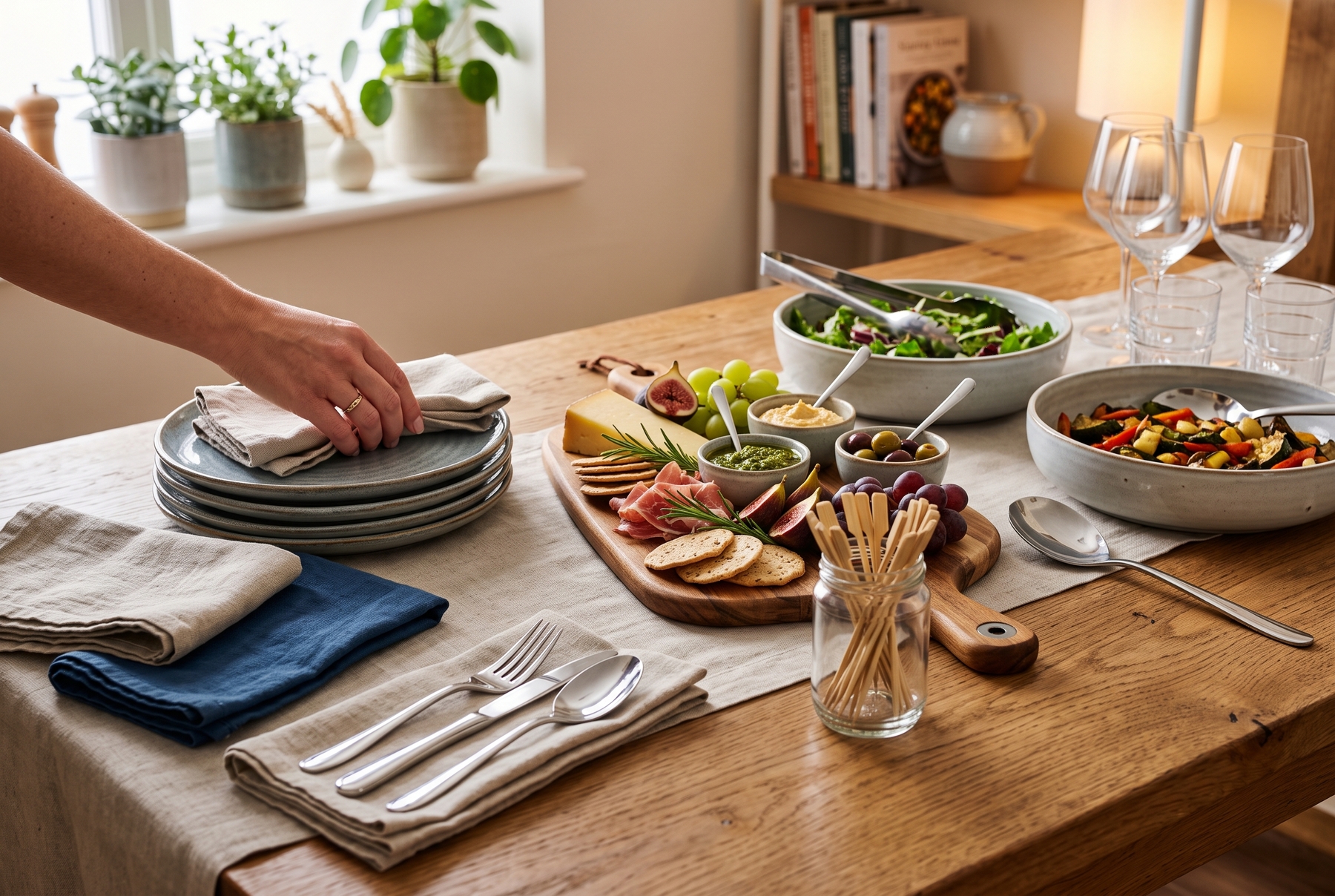
An aesthetic communal board with appetizers and sauces saves table space and encourages long, friendly conversations.
Plating as a Gesture of Care, Not a Storefront Window
Home plating relies on a simple calculation: who is sitting at the table, what the occasion is, what will get cold quickly, and how much energy you have left. Geometry is secondary here. Successful presentation tells the guest, “I thought about how to make this comfortable and delicious for you,” rather than, “Look at what I can do.” The difference is subtle, but it is read instantly, even before a word is spoken.
Before carrying the food to the table, run a quick checklist:
- does it taste better this way than on a regular plate;
- is it more convenient to eat;
- is it obvious at first glance how to approach it;
- will it get cold while you arrange the beautiful details;
- do you have enough energy left to be a normal host rather than an entertainer;
- does this specific style suit these particular guests.
If the answer is “no” to half of these points, the best presentation for today is the simplest one. A large, hot baking dish in the center, a stack of plates, a ladle resting nearby, and the first person reaching for seconds no longer needs to ask for permission.
0 comments