
Walnut and lemon biscotti are more than just cookies; they are a true culinary legend originating from the Italian city of Prato, where they are traditionally called 'cantucci'. The name 'biscotti' literally translates to 'baked twice', which explains the unique hard texture of the treat. During the baking process, your kitchen will be filled with the deep aroma of lemon essential oils and warming spices, while the absence of fats in the dough makes the structure porous and dry. This delicacy is perfect for those who appreciate baked goods with character: they stay fresh for weeks and only get better with time, absorbing flavors when stored in a tightly sealed jar.
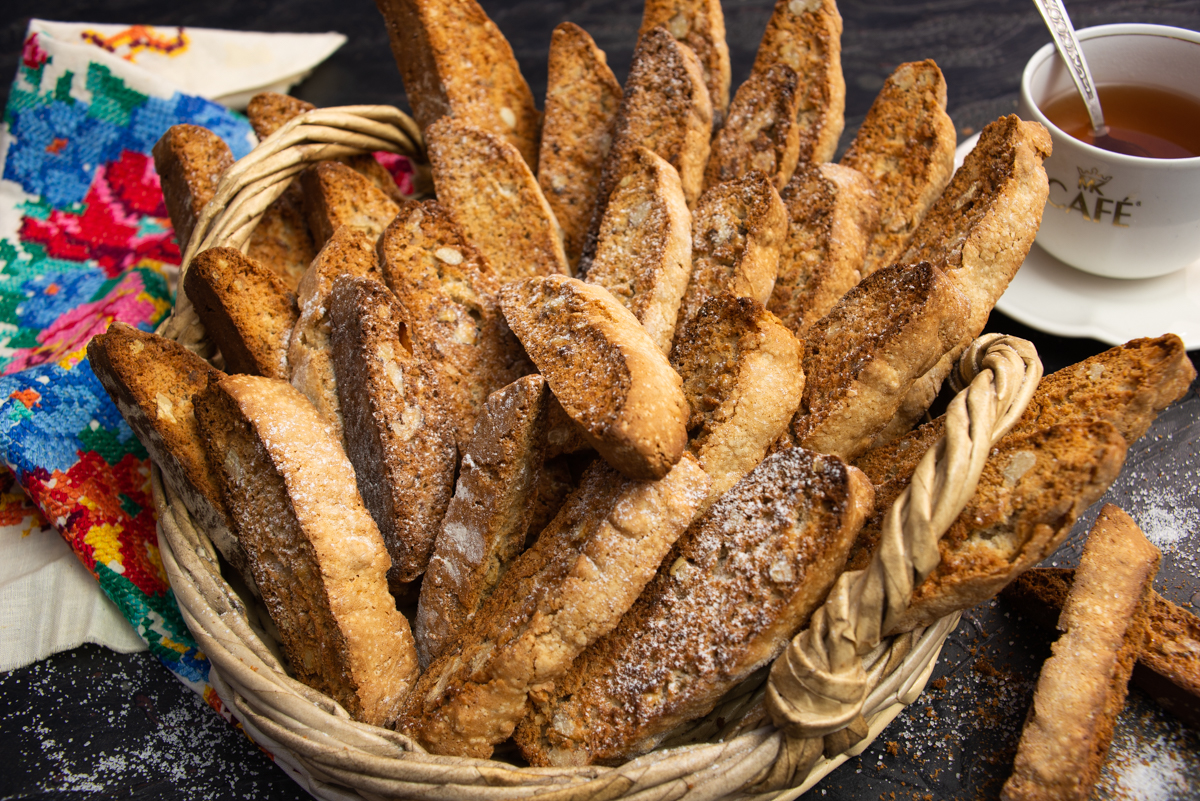
Crispy and aromatic walnut biscotti with a delicate lemon note is an Italian coffee pastry classic.
Ingredients
- 3 chicken eggs
- 250 g granulated sugar
- 250 g high-grade wheat flour
- 150 g walnuts
- 50 g cashews
- 1 lemon (zest only)
- 1 teaspoon baking powder
- 1 teaspoon ginger powder
- 1 teaspoon ground cinnamon
- Powdered sugar
How to Make Walnut and Lemon Biscotti
Crack three eggs into a bowl. Pour in the granulated sugar. You can substitute white sugar with brown sugar or add a teaspoon of malt syrup to the white sugar.
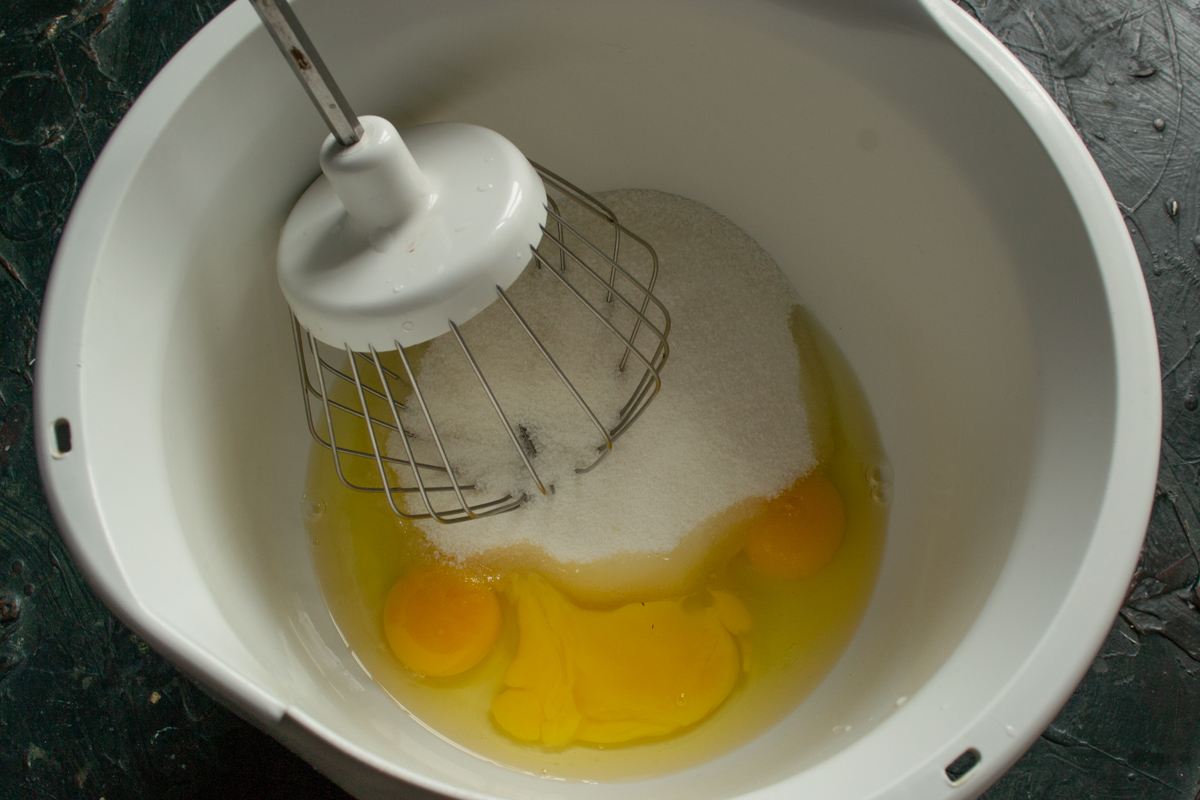
Begin preparing the dough: crack the eggs and add the sugar. You can use cane sugar for a caramel flavor.
Toast the walnuts and cashews in the oven for a few minutes. Let them cool, then lightly crush them with a rolling pin or chop them roughly with a knife. You want visible nut pieces, so avoid turning them into a fine crumb.
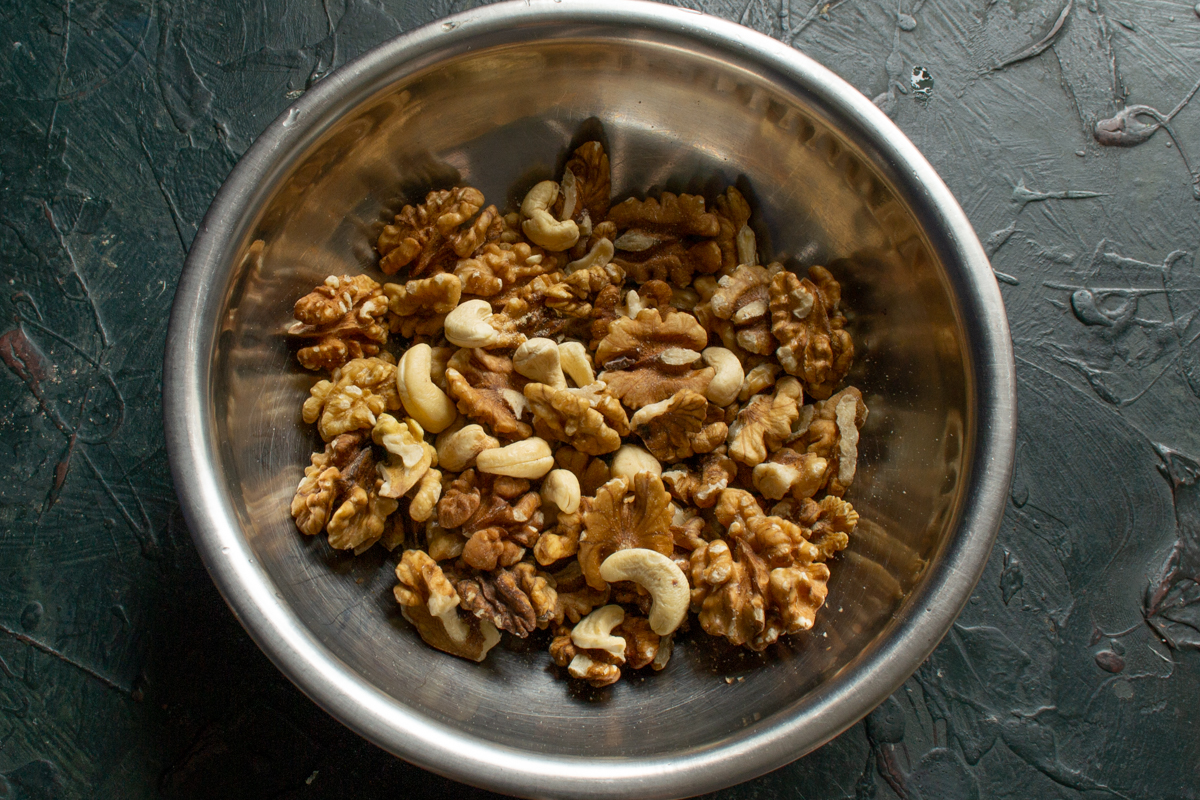
Toast the nuts in the oven and chop them roughly. It is important to preserve their texture so whole pieces remain in the cookies.
Sift all-purpose flour into a bowl. Add the ground cinnamon and ground ginger. Toss in the baking powder, and add vanilla if desired. Mix the dry ingredients well.
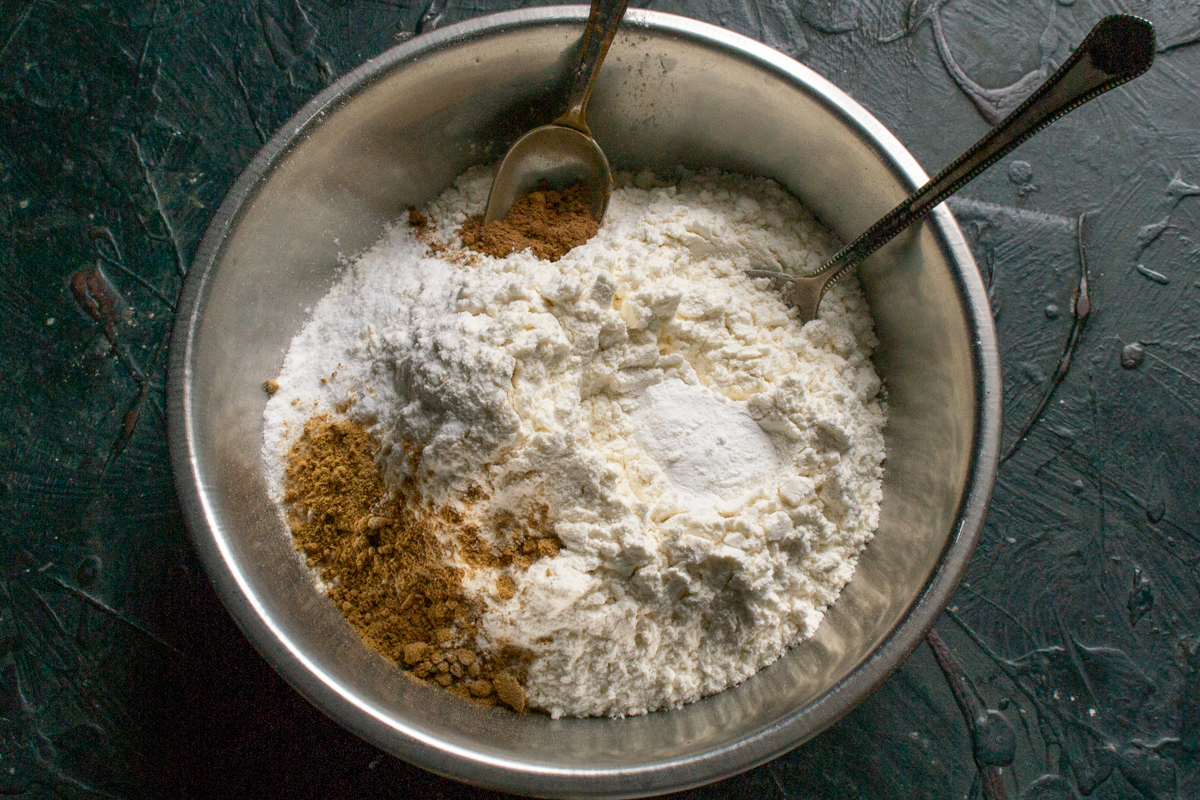
Sift the flour and mix it with the spices. Cinnamon and ginger give the cookies a warming aroma.
Whisk the eggs and sugar together until the sugar granules completely dissolve.
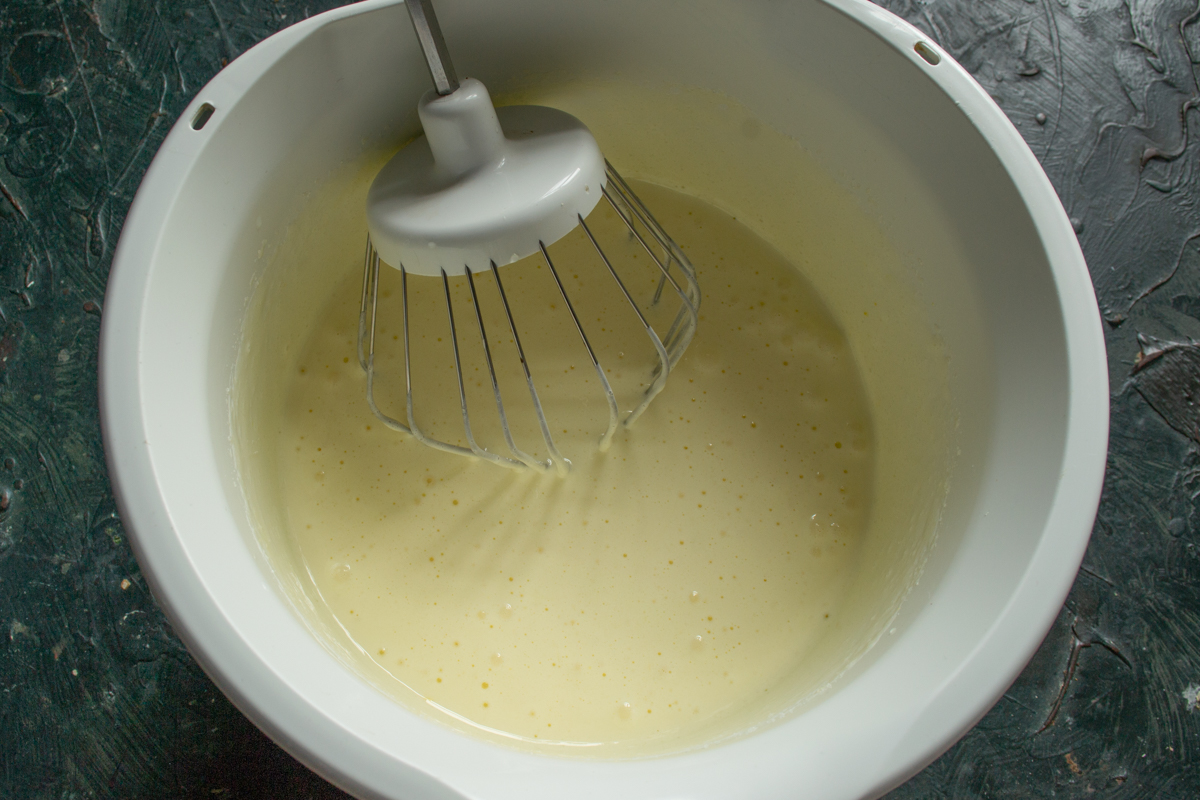
Thoroughly whisk the eggs and sugar until the granules completely dissolve and a smooth, light mixture forms.
Wash the lemon thoroughly and plunge it into boiling water for a minute. Grate the lemon zest on a fine grater. Make sure to grate only the thin yellow layer, as the white pith is bitter. Stir the lemon zest into the batter.
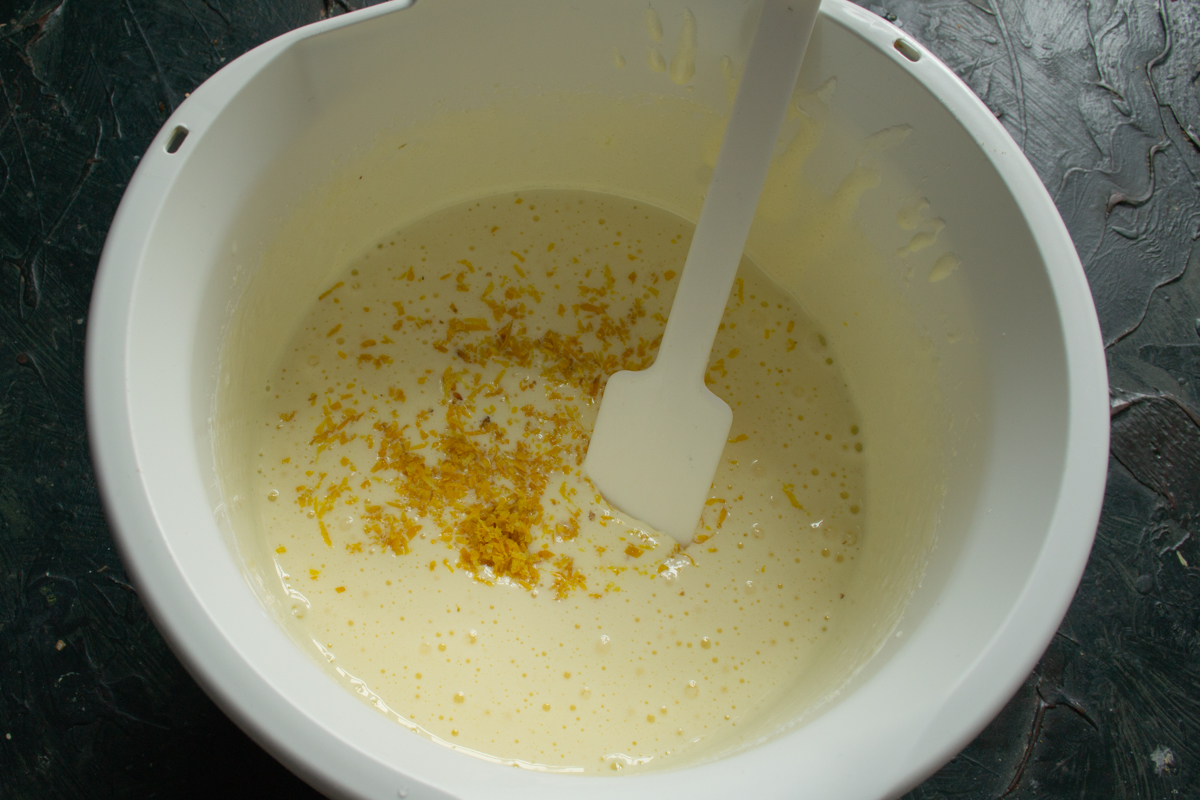
Grate only the yellow layer of the lemon zest. This gives the biscotti a bright citrus aroma without any unwanted bitterness.
Fold in the dry ingredients in small batches. Mix thoroughly to ensure no hidden pockets of flour remain at the bottom.
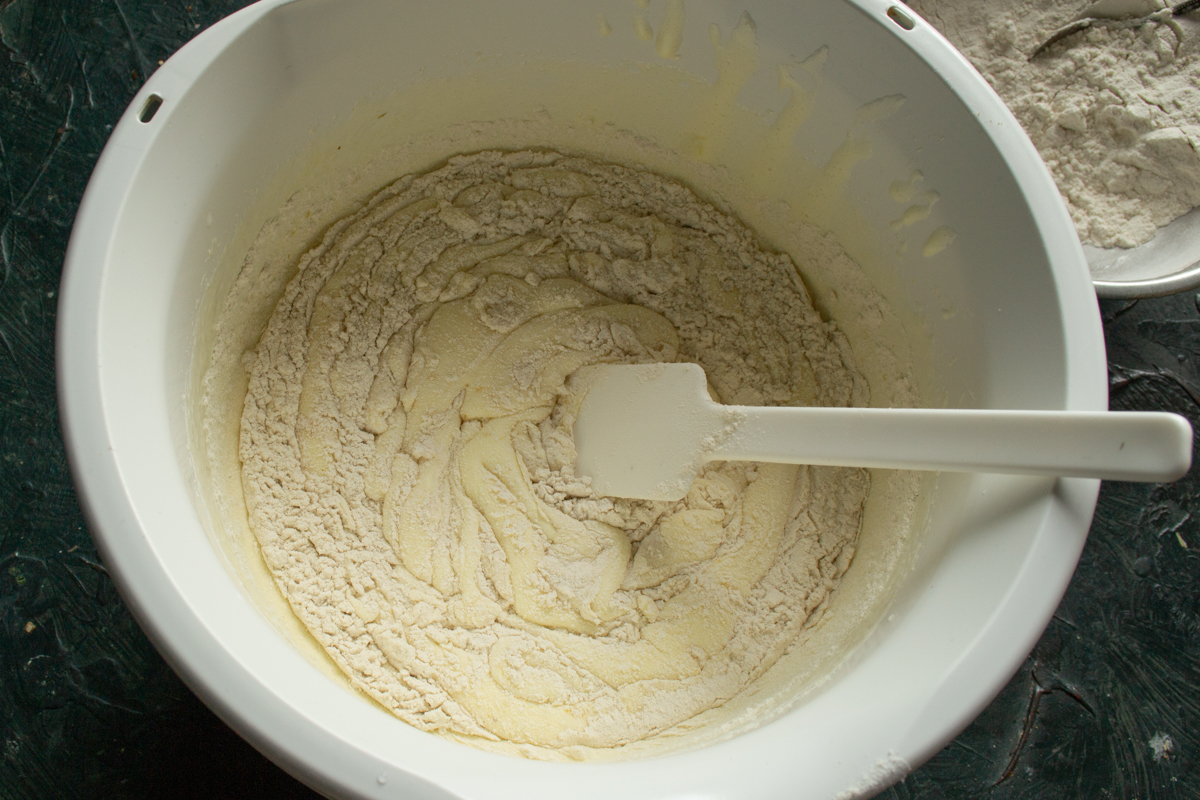
Gradually fold the flour mixture into the liquid ingredients, mixing gently with a spatula.
Fold in the chopped nuts.
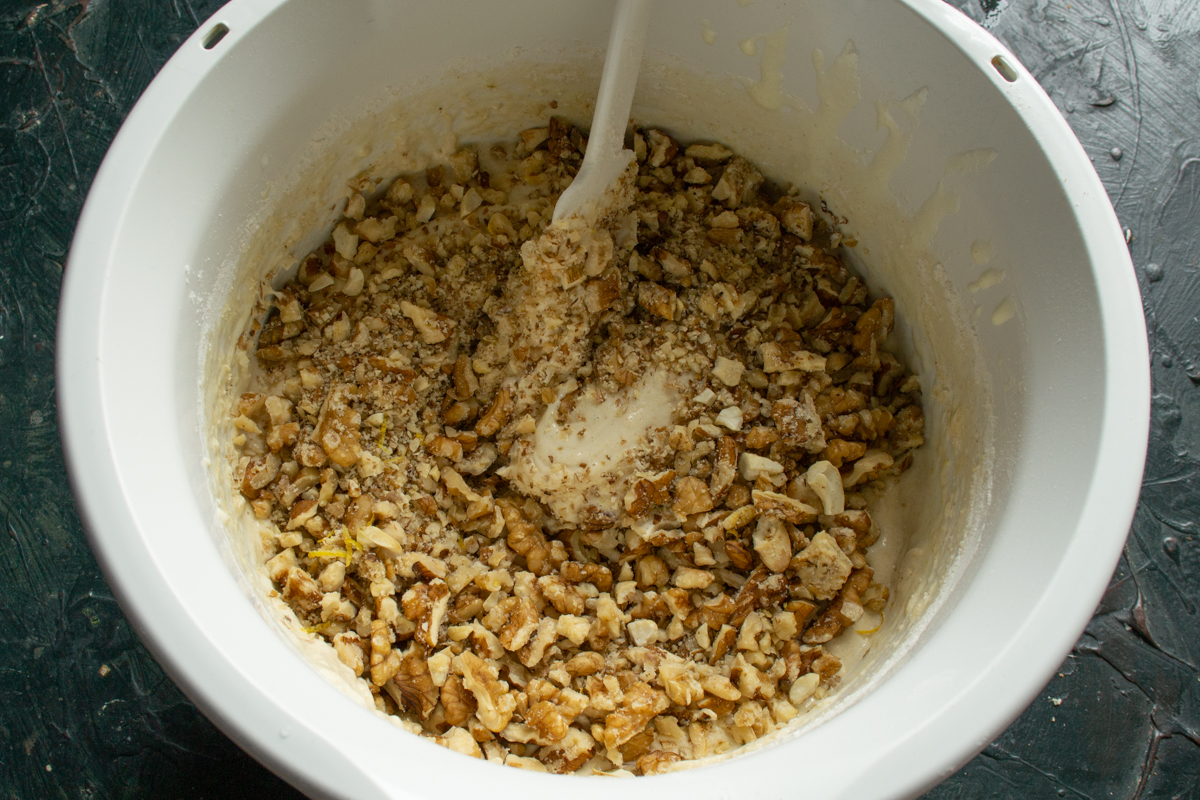
Fold in the prepared nuts. At this stage, it is crucial to distribute them evenly throughout the dough.
Knead the dough. Biscotti dough needs to be mixed thoroughly; preserving the airy structure of the eggs is not important for this recipe.
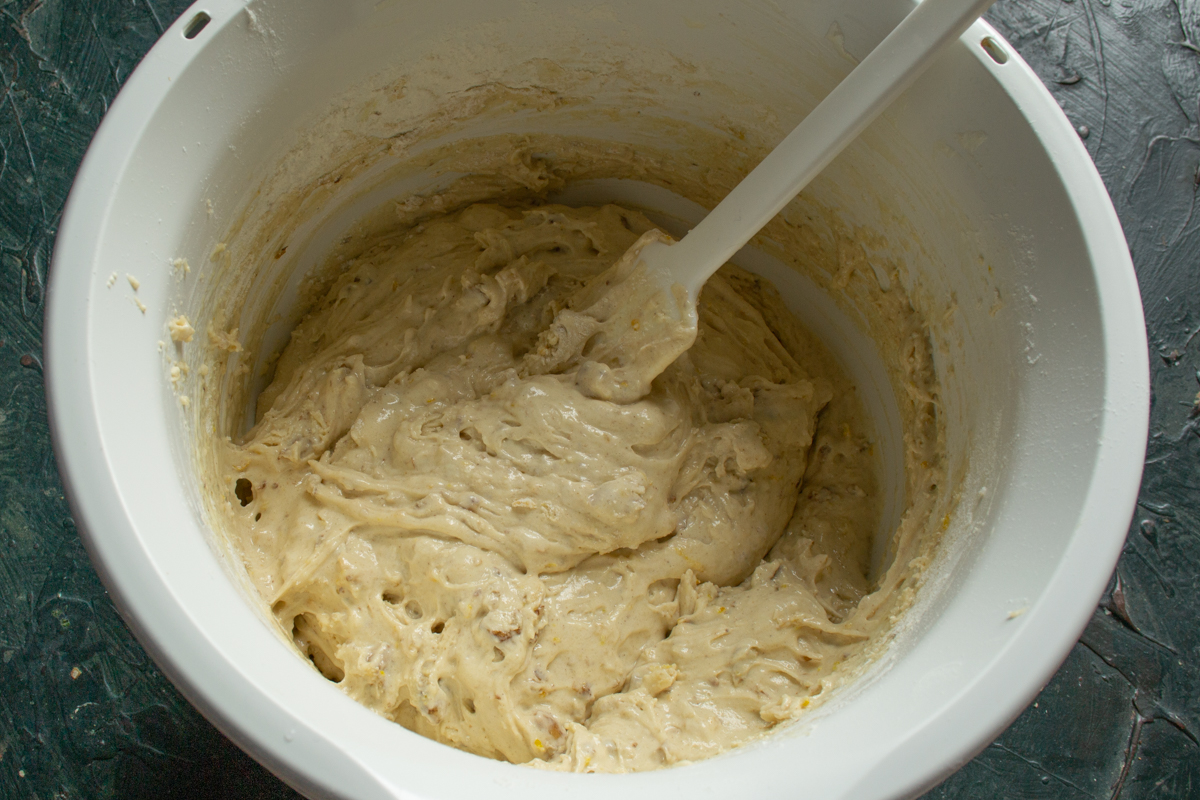
The biscotti dough should be quite dense. Mix it thoroughly until completely homogeneous.
Line a baking sheet with parchment paper. Dust your work surface with wheat flour. Turn out about half of the dough and shape it into a long log. Carefully transfer the log to the parchment and neaten its shape. Form a second log with the remaining dough. The sizes may vary; precision is not crucial here.
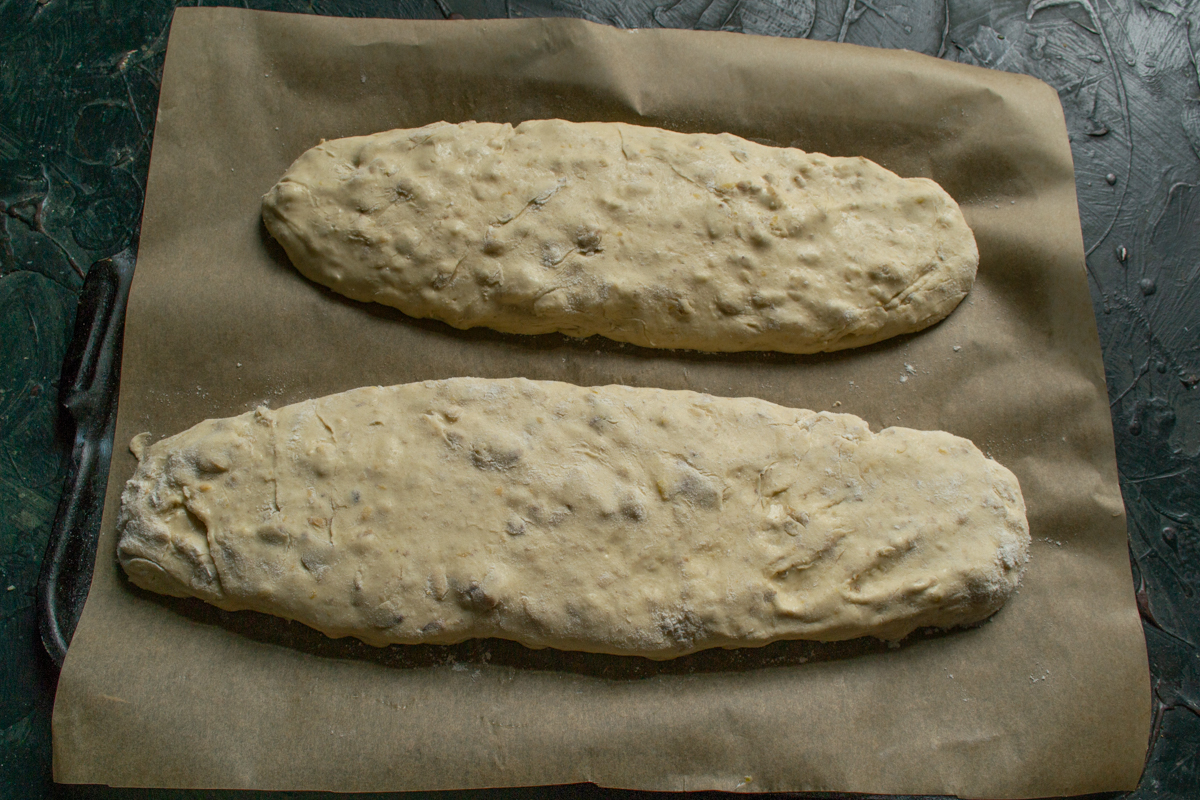
Shape the dough into two oblong logs. Do not worry about perfect dimensions; this will give the cookies a rustic, homemade look.
Bake the biscotti in an oven preheated to 180 degrees Celsius (350 degrees Fahrenheit). The first bake takes 20 to 25 minutes. The dough should rise and turn a light golden color.
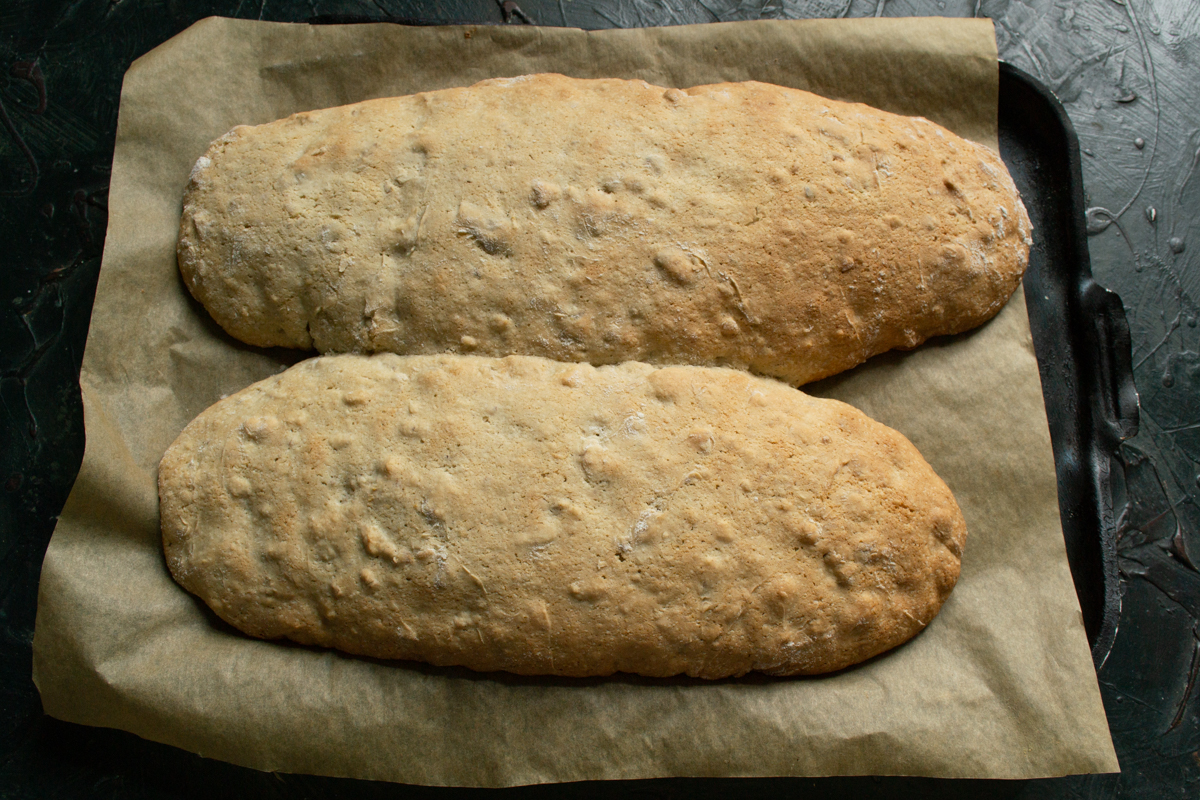
After the first baking stage, the dough should rise and take on a pleasant light golden hue.
Do not turn off the oven! Remove the baked logs from the oven and let them rest for 5 minutes. Transfer them from the paper to a cutting board and slice them with a serrated knife into pieces slightly over a centimeter (about 0.5 inch) thick.
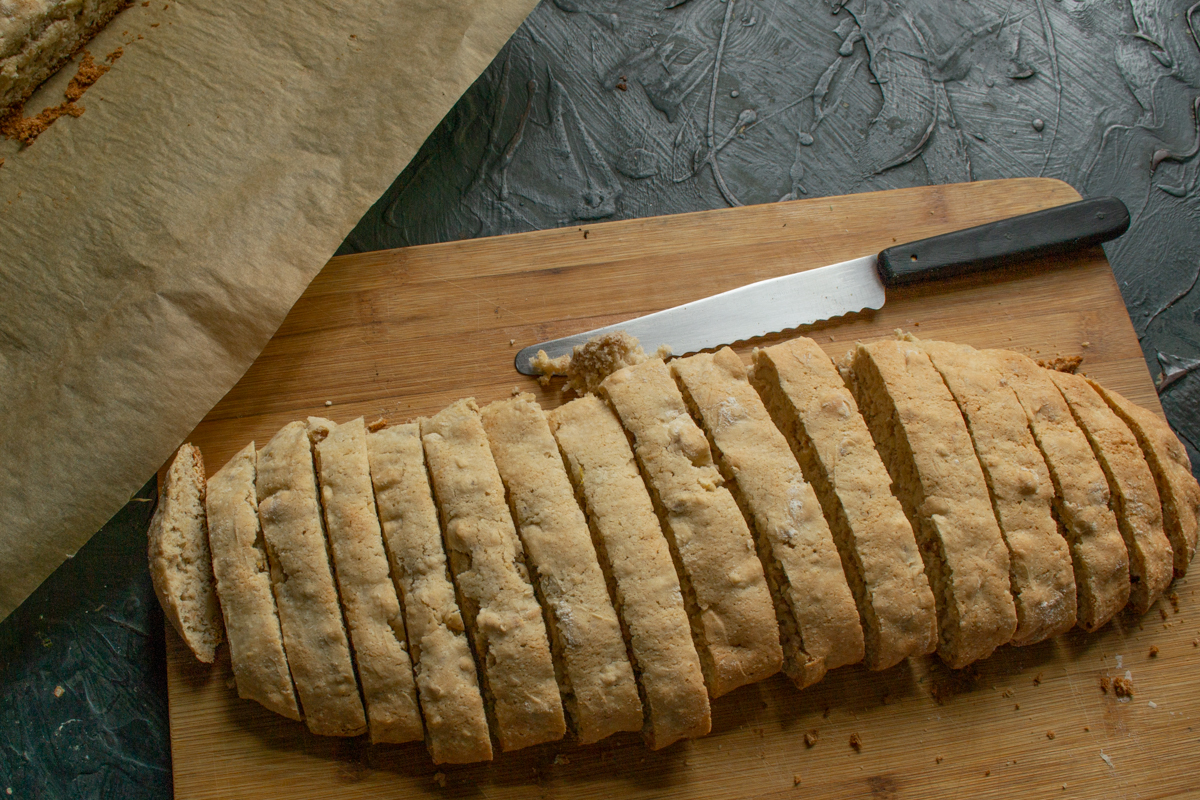
Slice the cookies at a slight angle. Use a serrated bread knife to ensure the slices are even and do not crumble.
Arrange the biscotti slices flat on the parchment-lined baking sheet.
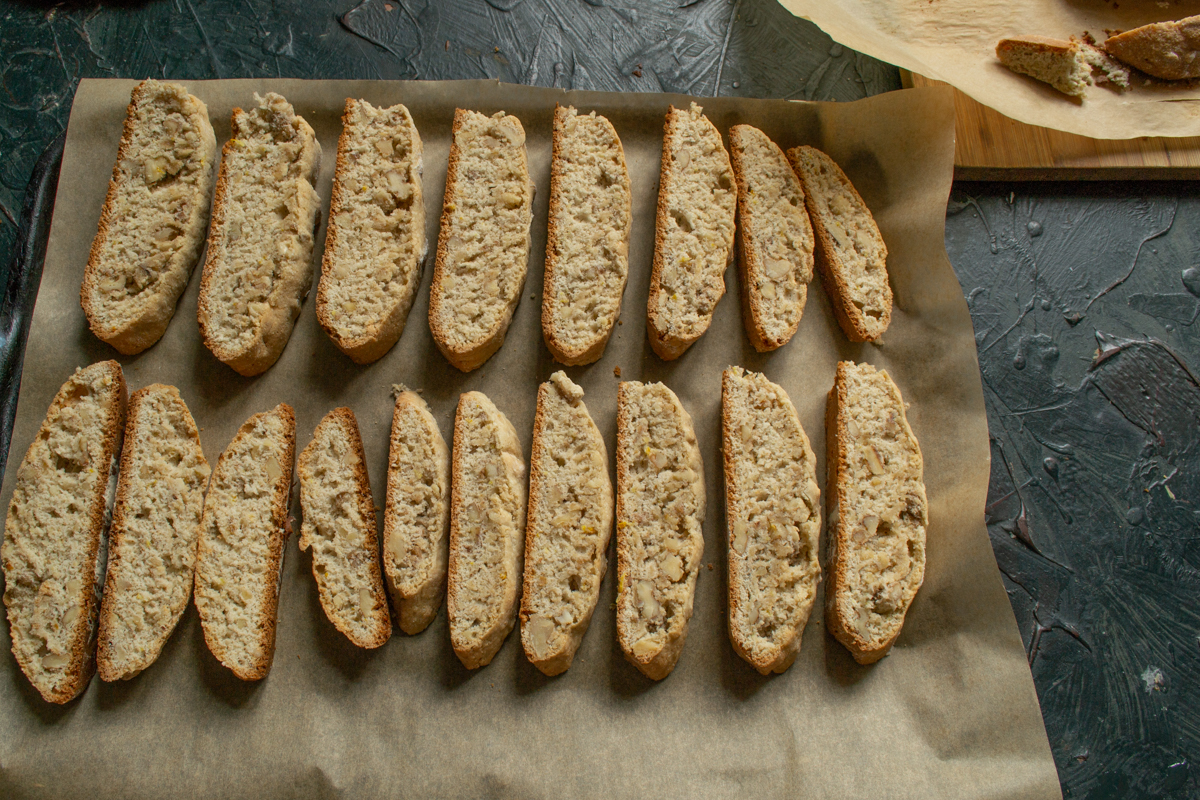
Arrange the sliced pieces flat on the baking sheet. Now they will transform into true crispy biscotti.
Return the cookies to the hot oven. Bake for another 15 minutes. If using a gas oven, I recommend flipping the cookies and rotating the pan after 7 minutes.
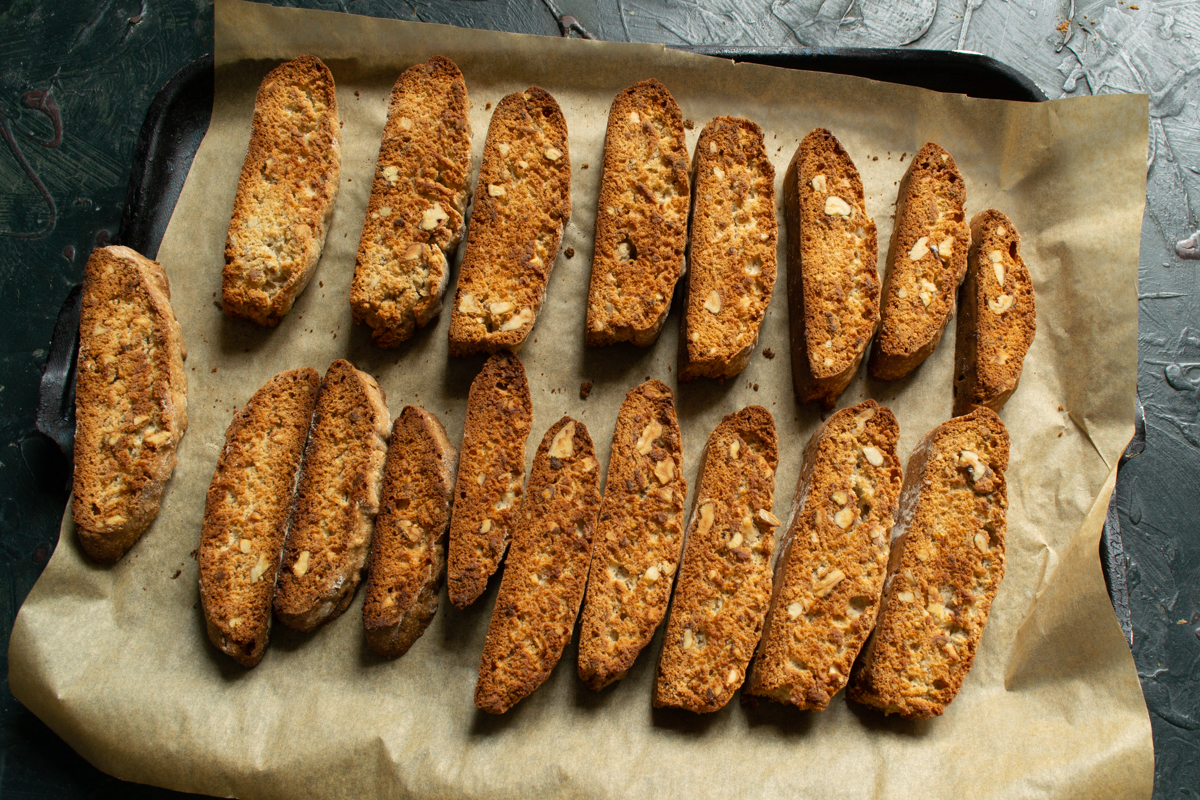
The second bake is complete. The cookies have hardened and developed a rich color. Let them cool completely.
Transfer the finished biscotti to a basket and dust with powdered sugar. These dry cookies are traditionally served with a cup of coffee; dunking them is highly recommended! Enjoy!
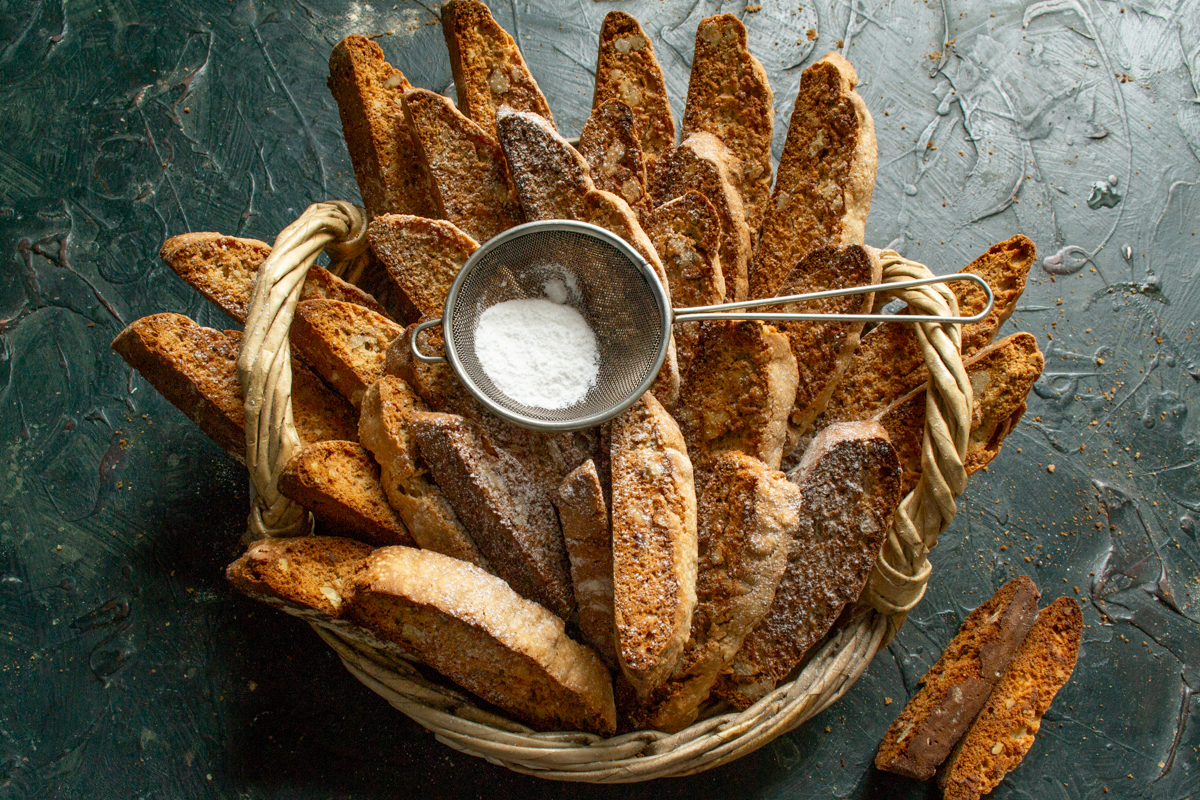
The final touch is a dusting of powdered sugar. This not only decorates the cookies but also adds a pleasant sweetness.
To make your walnut and lemon biscotti look truly professional, use a serrated knife for slicing. This helps preserve the integrity of the large nut pieces and prevents the baked log from crumbling. They are best served alongside hot beverages: in Italy, it is customary to dip these cookies into sweet wine or strong coffee so they soften slightly and fully reveal their flavor profile. If you want to diversify the flavor palette, try substituting walnuts with roasted hazelnuts or almonds, and use orange zest paired with dark chocolate chips instead of lemon. Store the finished biscotti in a tin or glass container in a dry place. This way, they will remain crisp and crunchy for up to a month, turning every tea time into a little gastronomic journey.
0 comments