
Chicken breast pâté with walnuts and carrots is a refined take on a classic homemade appetizer, where lean poultry gains new depth thanks to the buttery richness of toasted walnuts. The tradition of transforming boiled meat into delicate spreads has deep roots in European culinary history, but it is the addition of carrots, gently braised in olive oil, that gives this dish its warm golden hue and subtle natural sweetness. The aroma of fresh dill and black pepper instantly whets the appetite, while the ability to adjust the consistency with broth allows you to create either a rustic, chunky texture for country bread or an airy, silky cream worthy of a festive table.
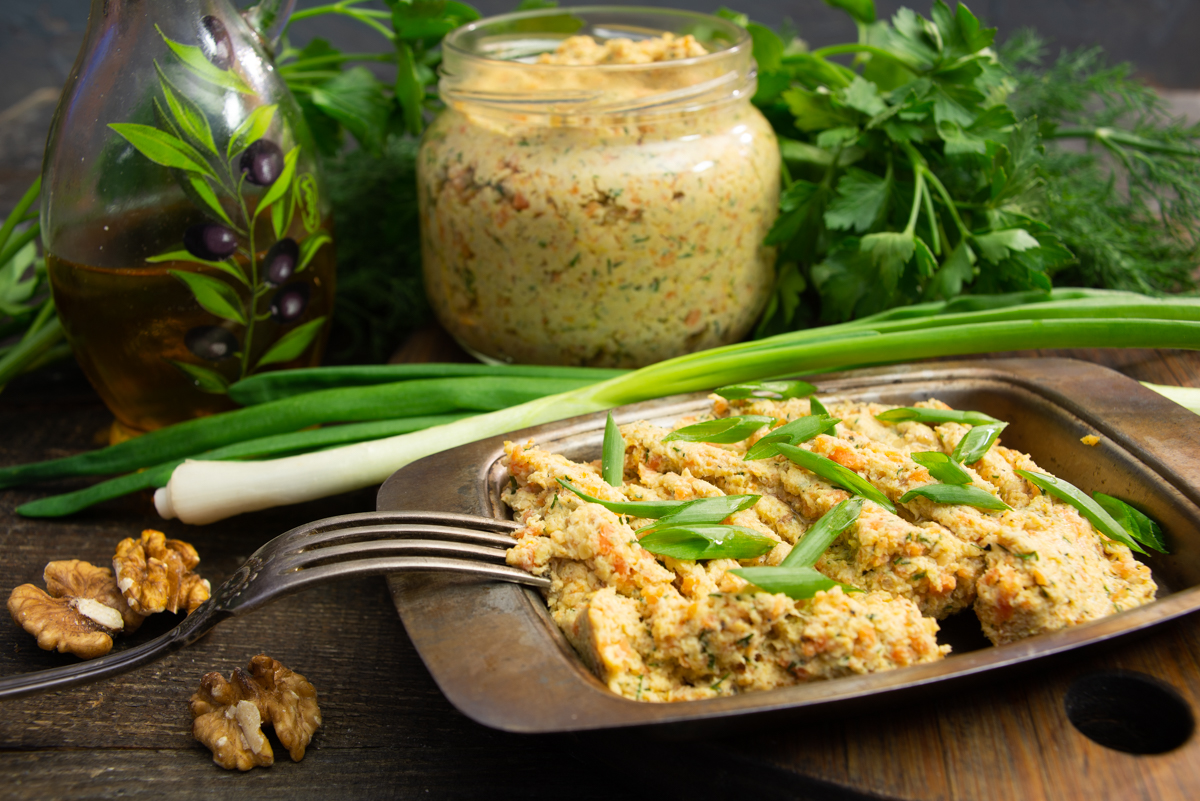
Homemade chicken breast pâté with walnuts and carrots is the perfect hearty appetizer for any occasion.
Ingredients
- 300 g (10.5 oz) chicken breast fillets
- 150 g (5.3 oz) carrots
- 100 g (3.5 oz) walnuts
- 50 ml (1.7 fl oz) extra virgin olive oil
- 1 tsp dried parsley
- A small bunch of fresh dill
- Salt and black pepper to taste
How to Make Chicken Breast Pâté with Walnuts and Carrots
Place the chicken breast in a small saucepan. Pour in enough cold water to cover the meat completely. Season with salt to taste, then add spices and herbs. The chicken cooks quickly, so the aromatics for the broth should reflect this: a pinch of ground black pepper, a crushed garlic clove, and fresh dill and parsley sprigs.
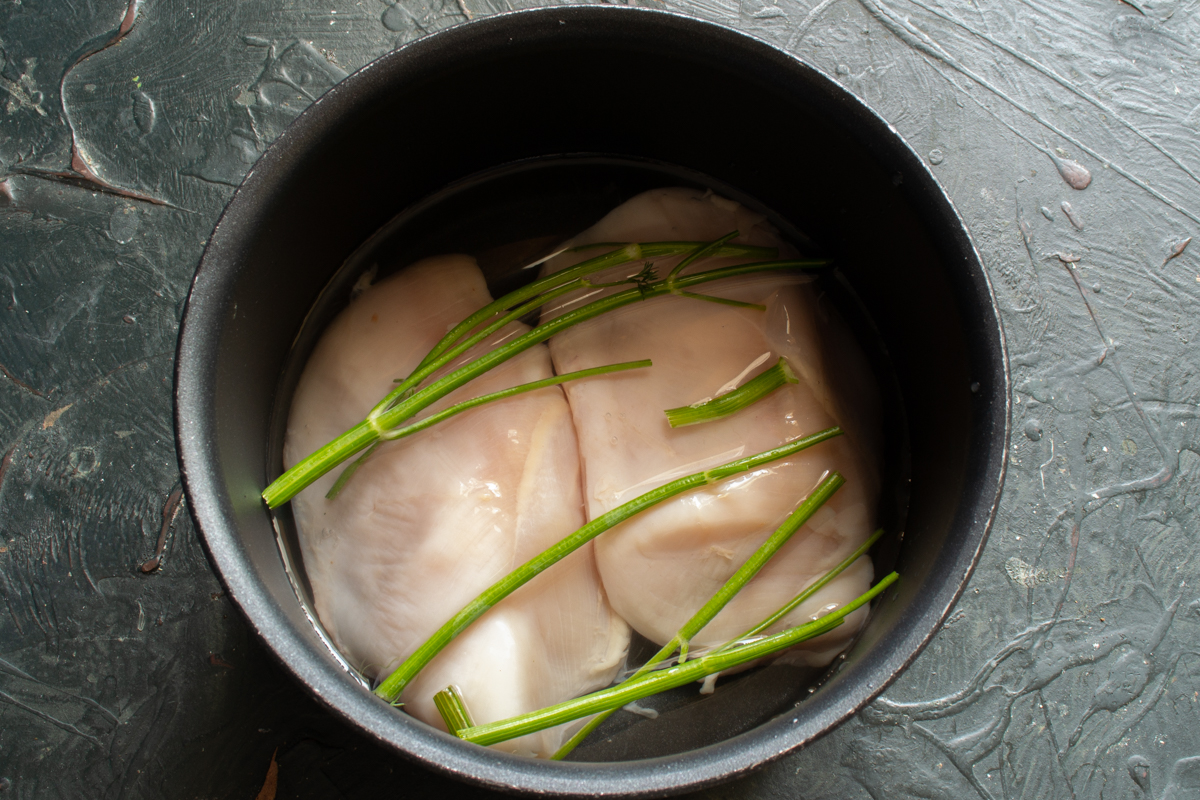
First, boil the chicken breast in a small amount of water with spices and fragrant fresh herbs.
Bring to a boil, cover with a lid, and simmer the chicken over low heat for 7-8 minutes. Leave the chicken in the broth for another 10 minutes to stay juicy.
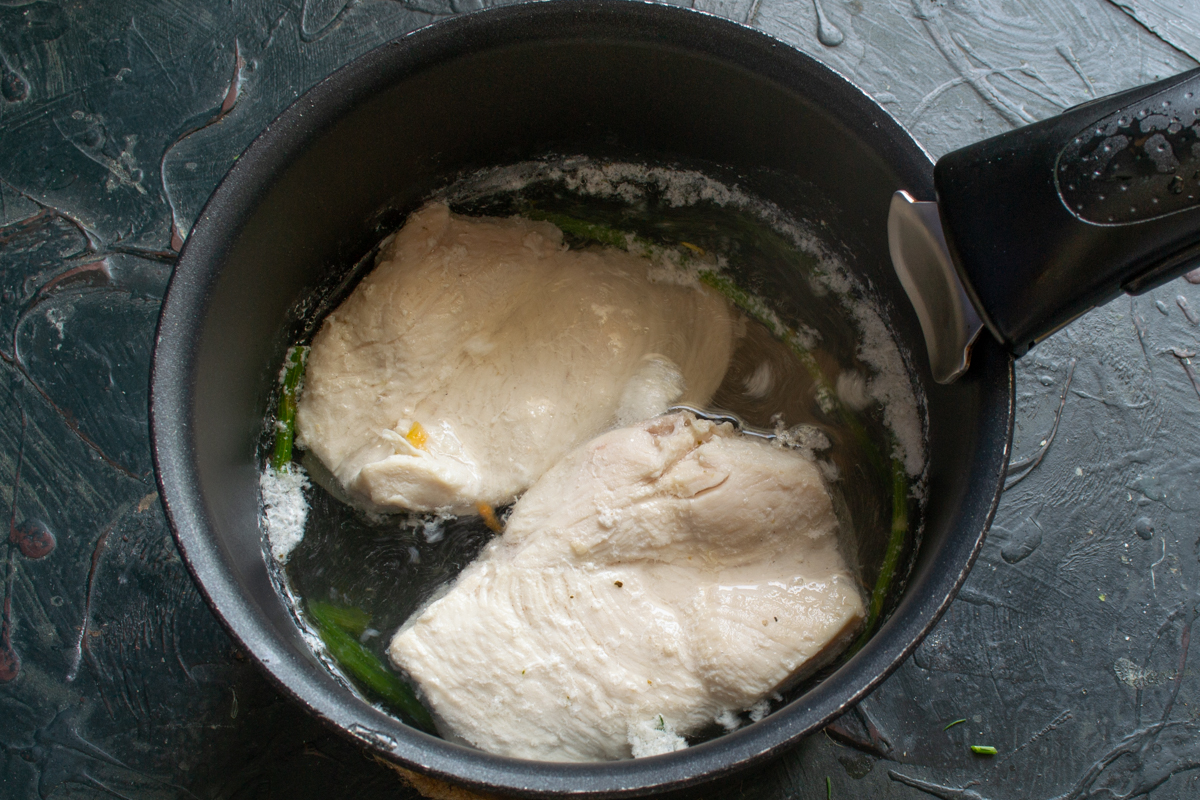
Leave the cooked chicken in the broth for a while so the meat absorbs the flavors and remains juicy.
Peel and grate the carrots on a coarse grater. Pour a little olive oil into a heavy-bottomed skillet and add the grated carrots. Season with salt and dried parsley. Cover with a lid. Simmer over low heat for 10-12 minutes, stirring a couple of times to prevent the carrots from burning.
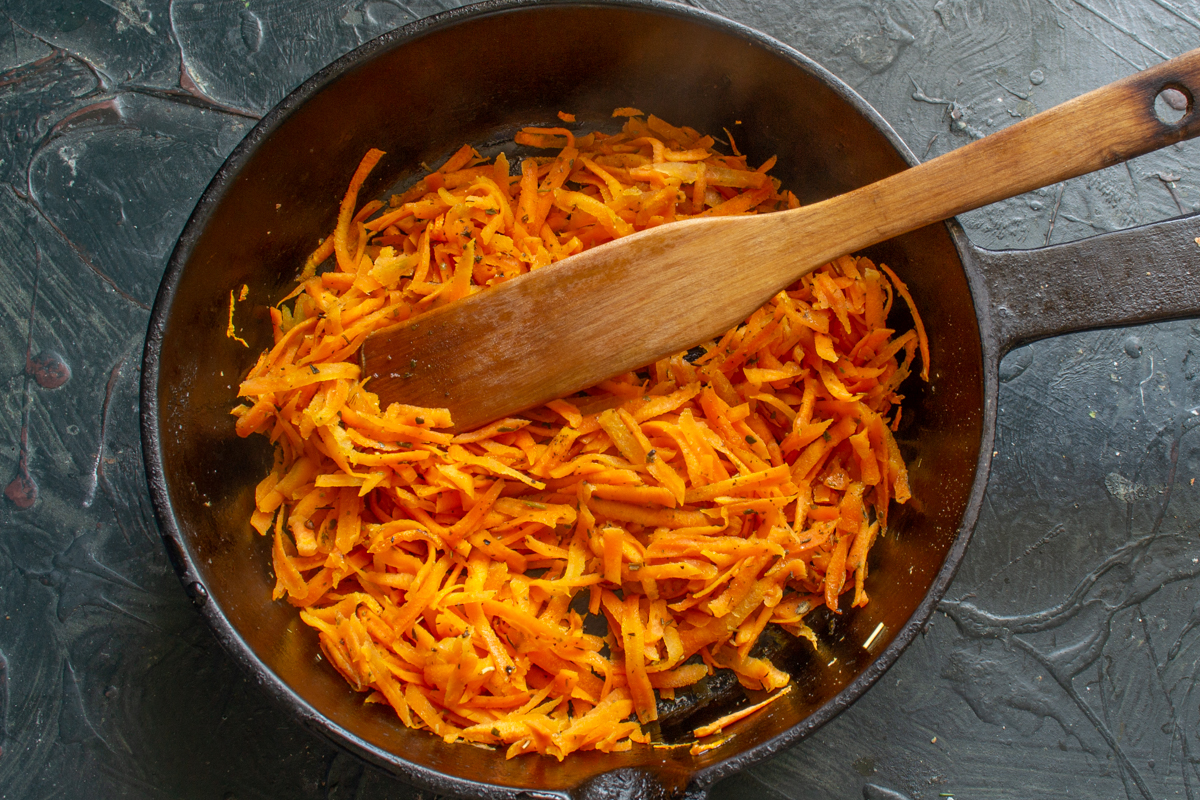
Braise the carrots in olive oil under a lid until soft, adding dried parsley for aroma.
Spread the walnuts on a baking sheet and toast in the oven preheated to 180°C (350°F) for 7 minutes. Let the nuts cool, then process them into fine crumbs in a blender or food processor.
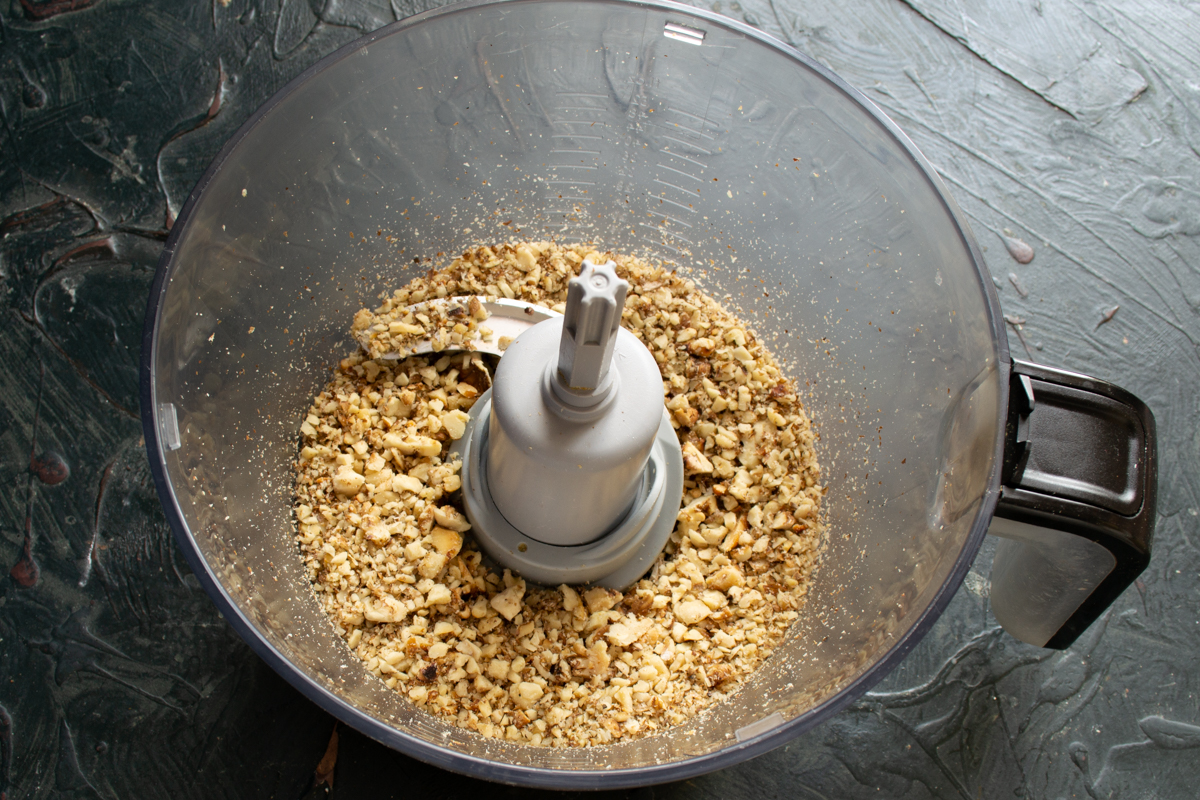
Process the oven-toasted walnuts into fine crumbs to give the pâté its signature flavor.
Add finely chopped fresh dill to the ground walnuts. You can use any herbs for this pâté, as long as they pair well together. For example, thyme and rosemary with parsley work beautifully. And you can add a touch of fennel to dill and parsley.
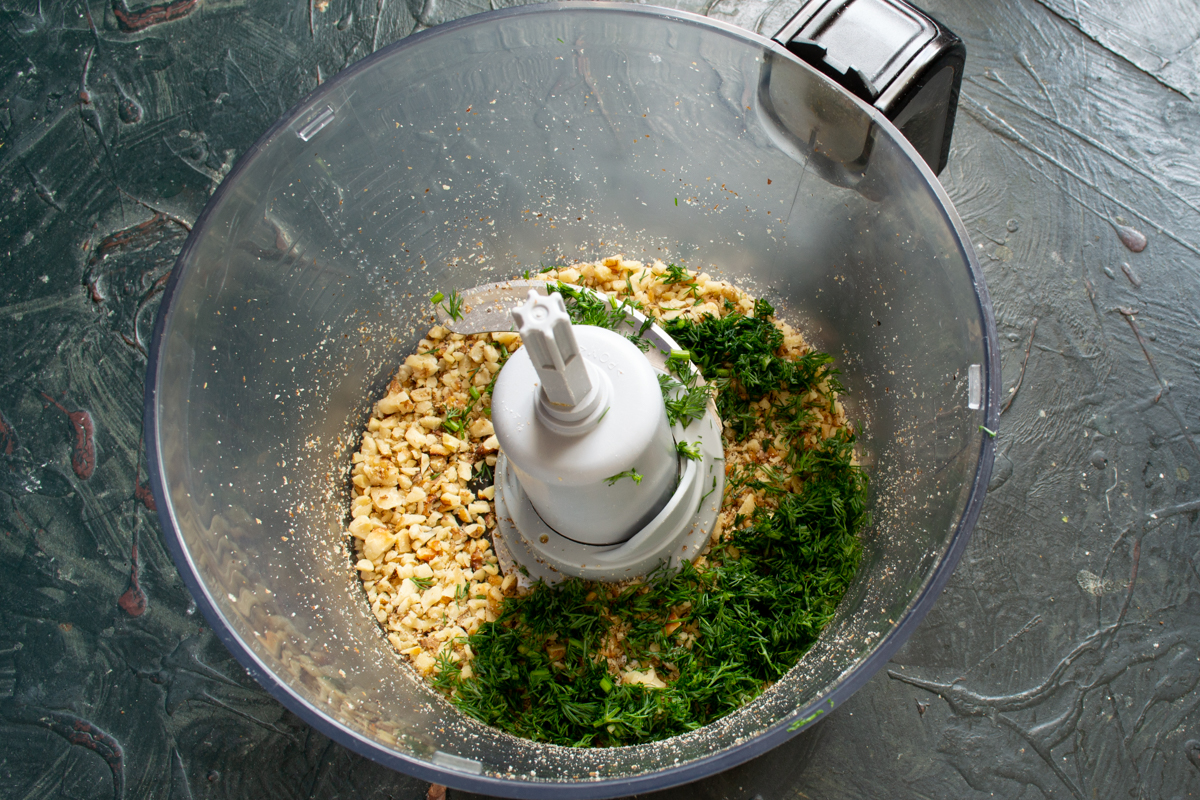
Add fresh dill to the walnuts. Feel free to experiment with herbs by adding thyme or fennel.
Add the braised carrots to the bowl with the nuts and herbs.
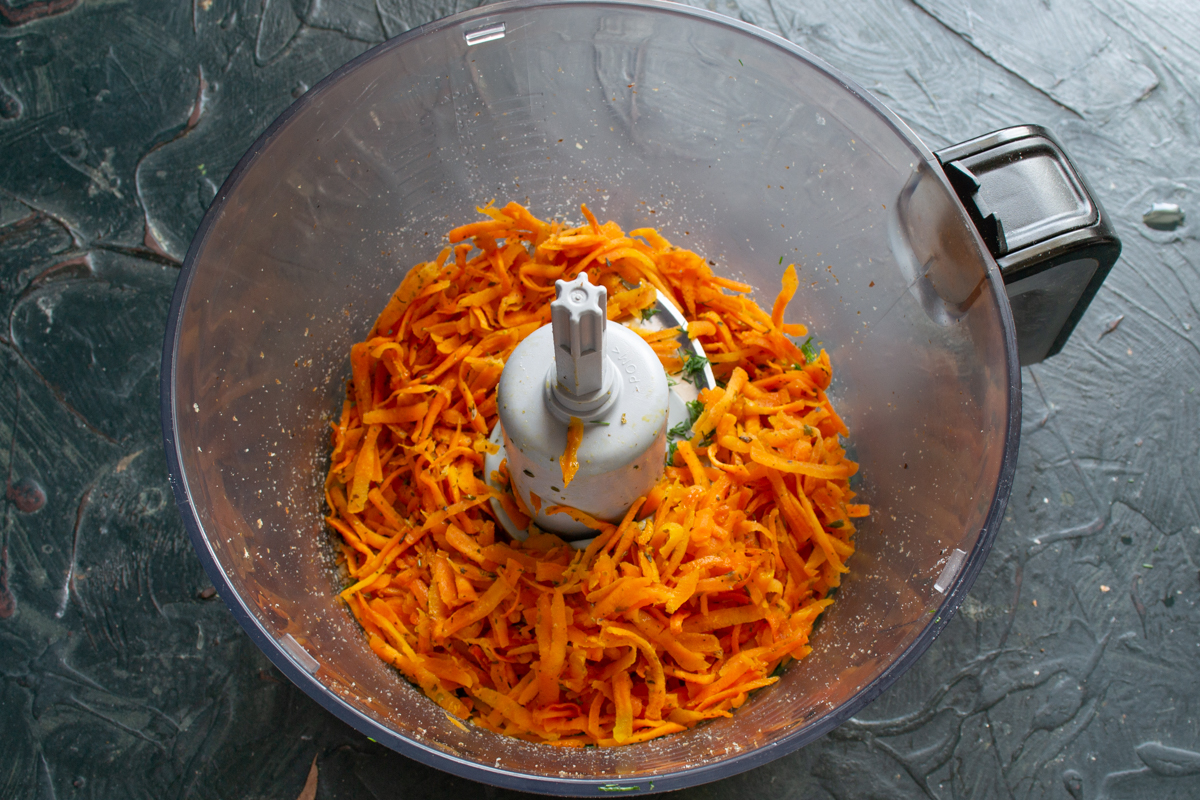
Combine the braised carrots with the walnut and herb mixture before the final blending.
Pour in extra virgin olive oil. This type of oil is incredibly aromatic, with a pleasant, subtle bitterness, and is highly nutritious.
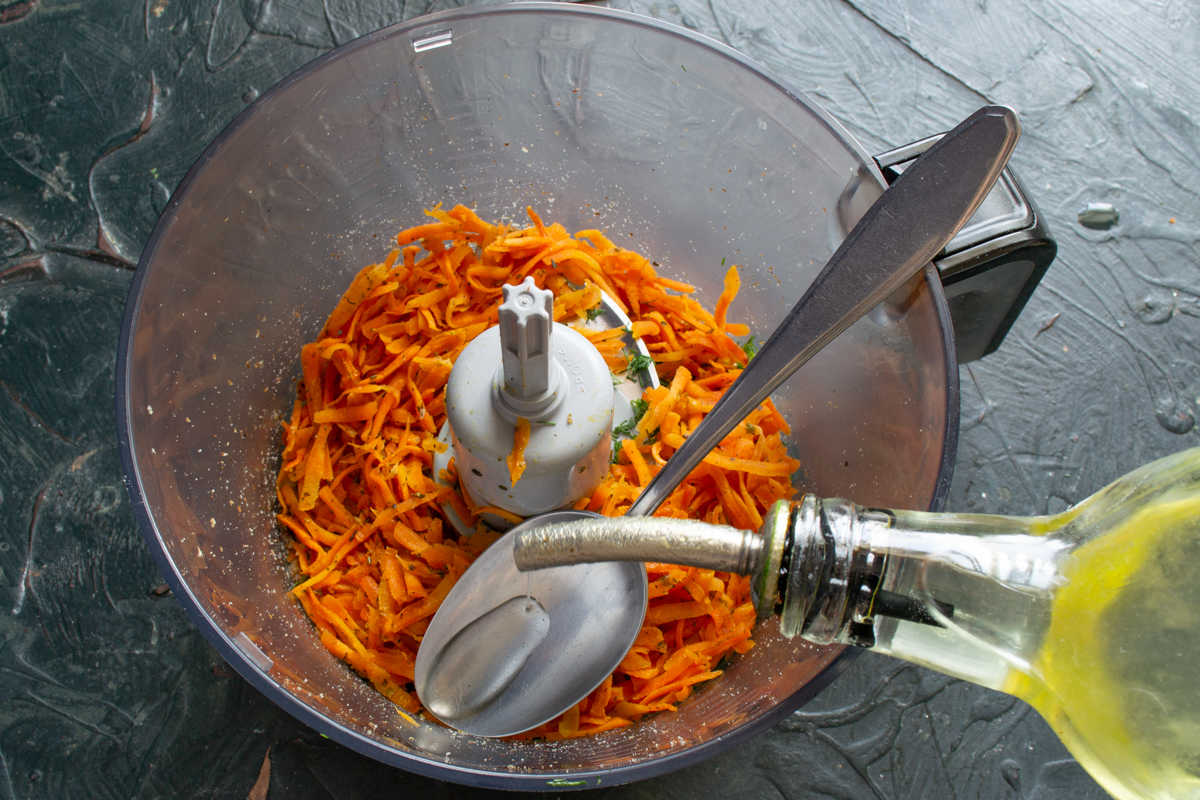
Extra virgin olive oil will make the pâté's texture silkier and add nutritional value.
Remove the chicken breast from the broth and place it on a cutting board. Once the chicken cools, dice it and add it to the rest of the ingredients.
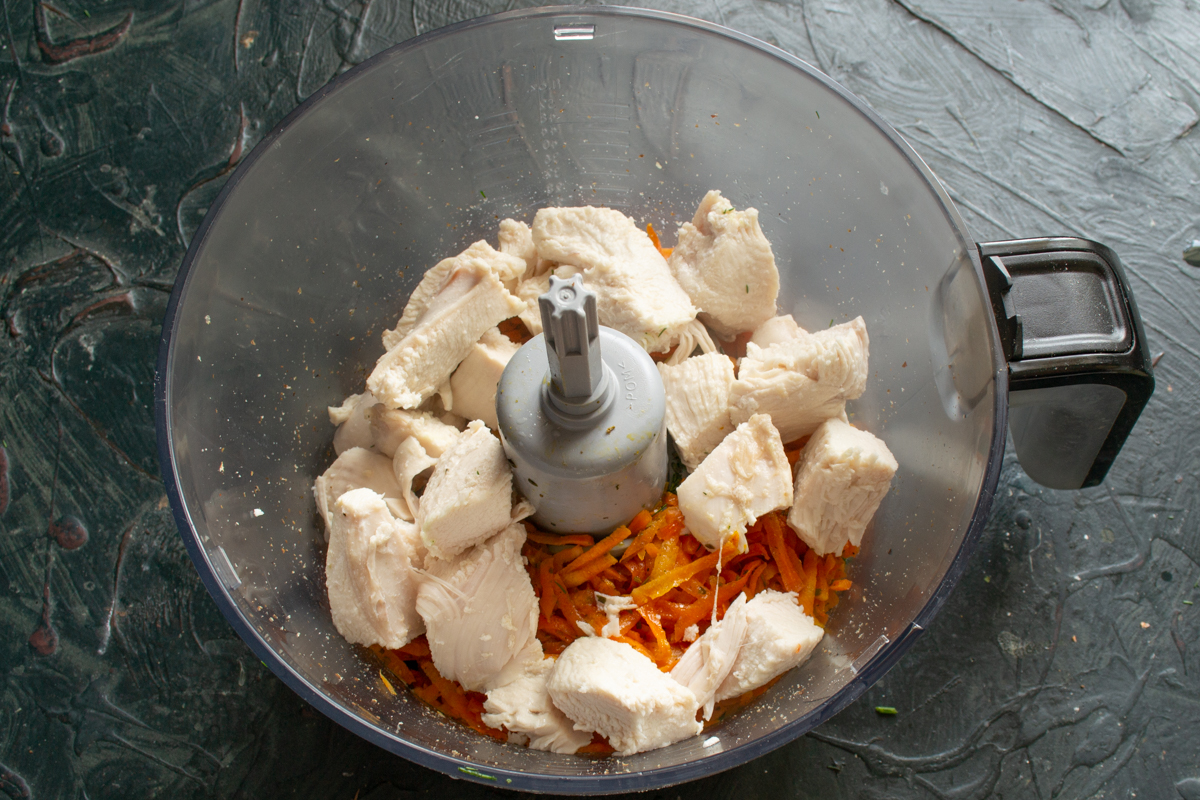
Dice the cooled chicken meat and add it to the blender bowl with the rest of the ingredients.
Pour in 100-150 ml (about 3.5-5 fl oz) of the chicken broth. Add ground black pepper and blend the ingredients for a few minutes. The consistency of the chicken pâté is entirely up to you. After a couple of minutes, you will get a pâté with a rustic texture—distinct pieces of nuts, carrots, and chicken will remain.
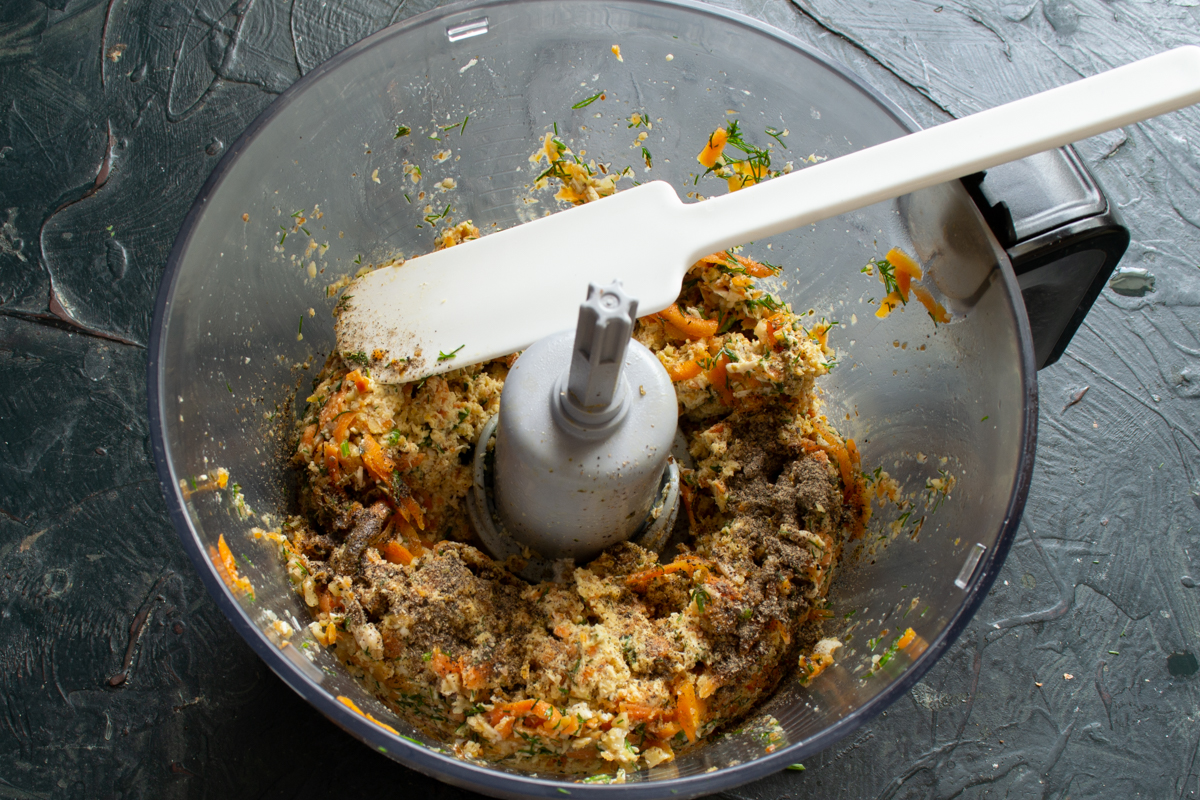
Pour in a little broth and blend the mixture. At this stage, you can adjust the thickness of your future pâté.
If you pour in a little more broth and blend for about 5 minutes, you will get a silky, smooth pâté that is easy to spread on a sandwich.
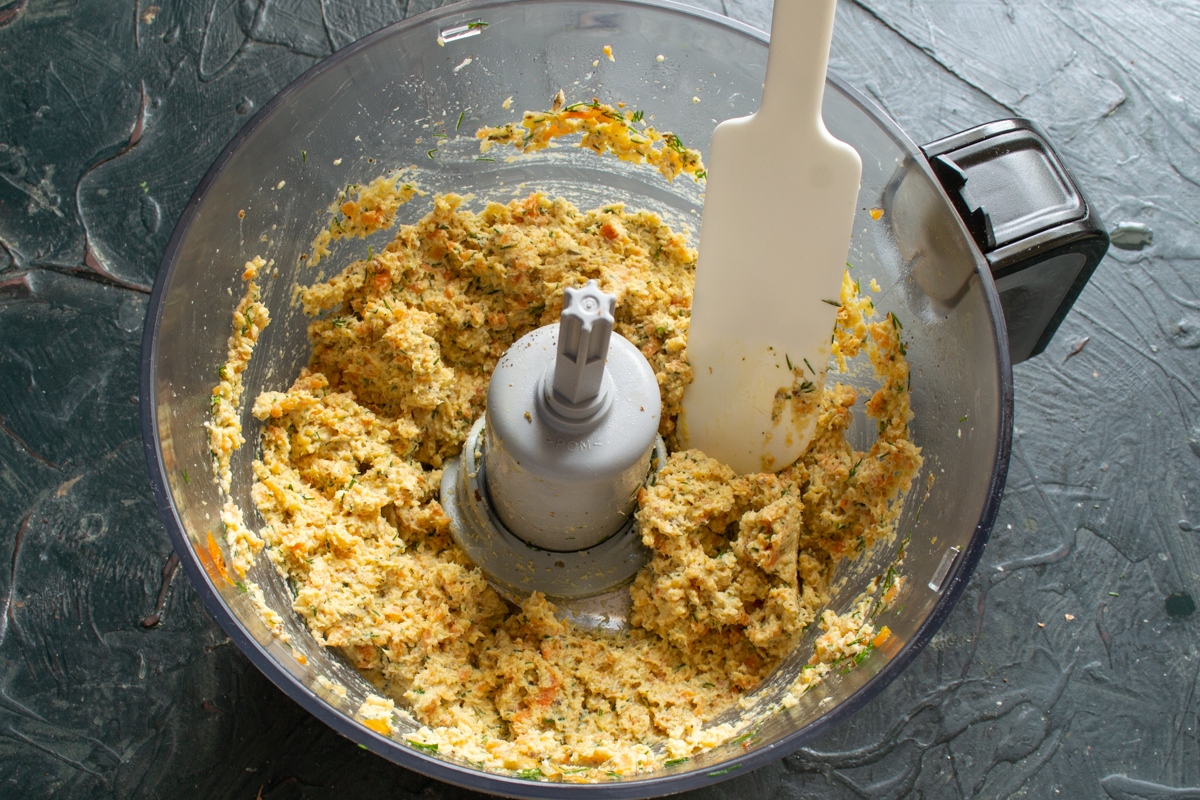
To achieve a delicate consistency that is easy to spread, blend the pâté for about 5 minutes.
Transfer the finished chicken breast pâté with walnuts and carrots into a clean, dry jar. I recommend pouring a thin layer of olive oil on top to prevent the pâté from drying out.
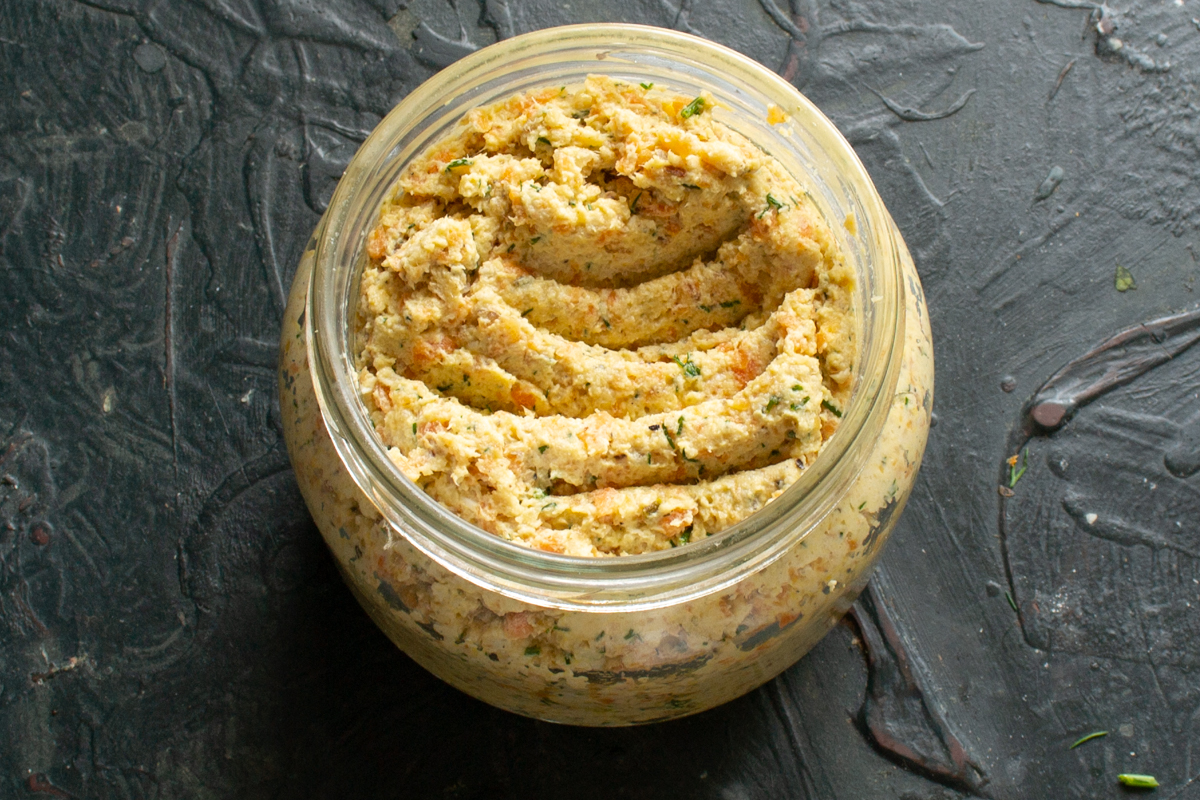
Transfer the finished pâté to a jar. A layer of olive oil on top will help the product stay fresh longer.
Store the chicken breast pâté in the refrigerator for about a day or slightly longer. This dish comes together quickly, and it is best enjoyed fresh. Scallions, crunchy fresh radishes, or cucumbers make the perfect addition to this healthy breakfast.
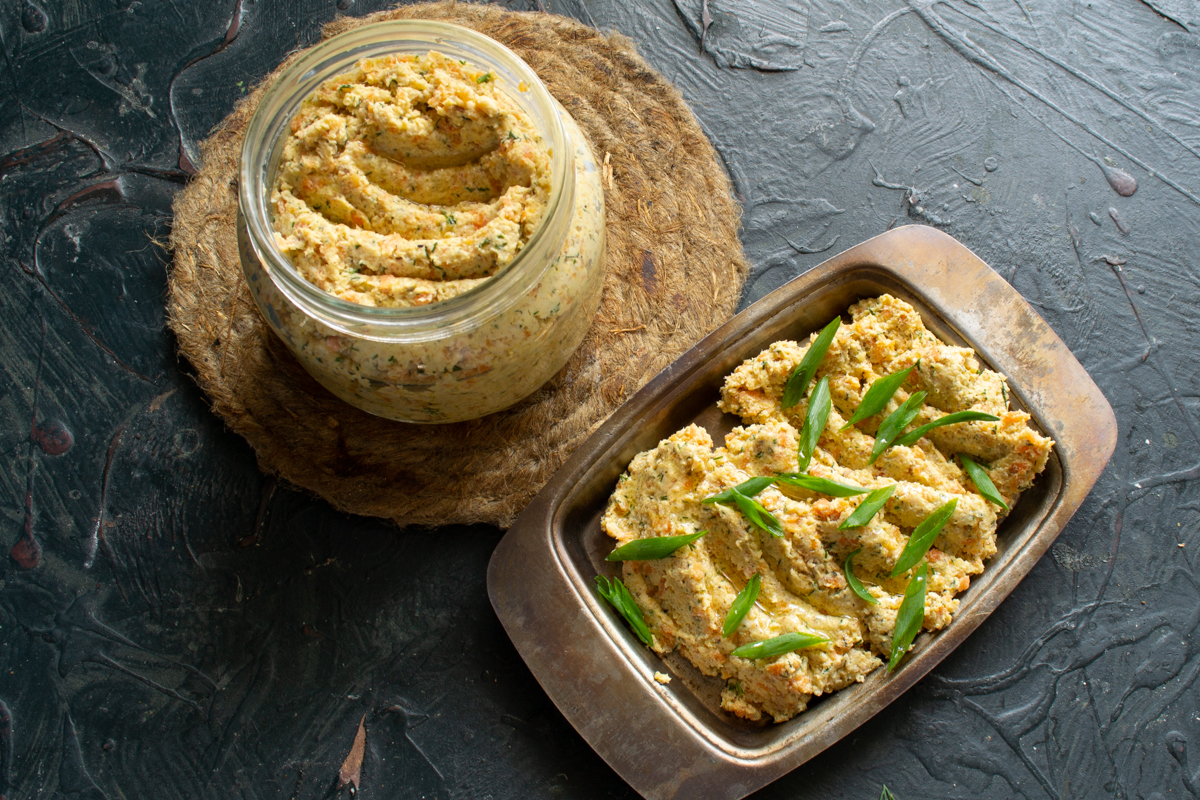
Serve the pâté garnished with fresh scallions. It makes a wonderful addition to crispy toast.
For this chicken breast pâté with walnuts and carrots to truly shine, serve it on slices of toasted whole-grain bread or inside crispy tartlets. Pickled capers, thin slices of fresh cucumber, or even a drop of lingonberry sauce make excellent accompaniments, creating a delightful sweet-and-sour contrast. If you feel like experimenting with the base, try replacing some of the walnuts with toasted hazelnuts—this will add a noble, dessert-like aroma to the appetizer. Store the finished chicken breast pâté in a glass container, making sure to cover the surface with a thin layer of high-quality extra virgin olive oil to prevent oxidation and preserve the product's delicate texture. Since this recipe contains no artificial stabilizers, try to consume the appetizer within 24 to 36 hours. If the pâté seems too thick after chilling in the refrigerator, simply let it rest at room temperature for 10-15 minutes before serving so the olive oil and meat juices can regain their pliability.
0 comments